
18 Travel Map Tattoo Ideas With Meaning (September 2026)
Travel map tattoo ideas are the easiest way to carry a whole travel history on your skin without writing down a single date. A world map, a contour pattern, a route line between two cities or a set of coordinates does the work that a paragraph of travel writing cannot: it sits there every day and quietly says where you have been and where you are headed.
Short answer, because it gets asked more than anything else here: a map tattoo symbolizes travel, exploration and direction. It marks the places you have been, the places you still want to see, or a specific place that changed something in you. A compass adds guidance, coordinates add precision, and a hometown outline adds roots. Most people choose it because the story is personal rather than decorative, and the design usually reads better when the artist is given one clear idea instead of a whole atlas.
The eighteen designs below are grouped by the feeling they give off, not by popularity ranking. Sizes are given as a rough guide because bodies and canvases differ, but treat every number as a starting conversation with your artist, not a specification.
1. Minimalist World Map on the Inner Forearm
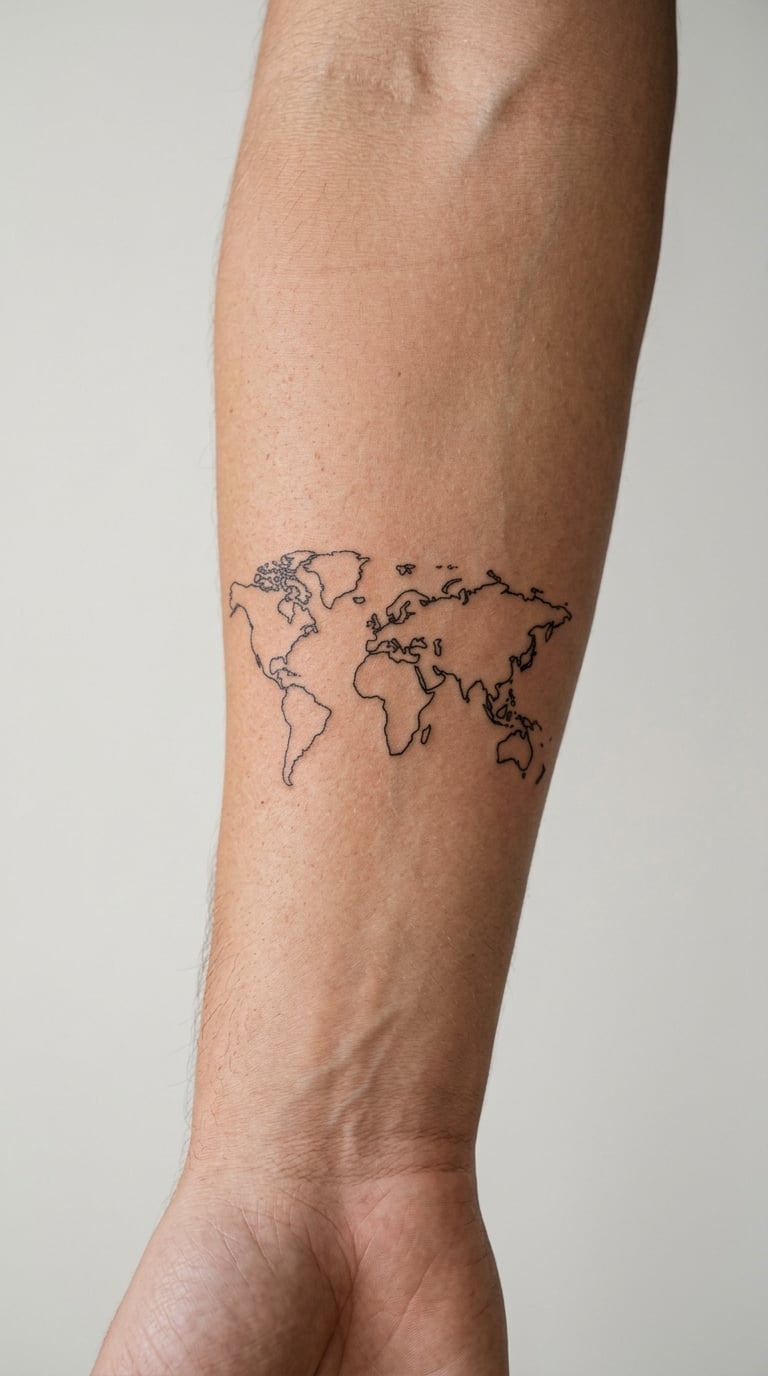
This is the one most first-time tattooers end up with: a flat world map drawn in one thin line weight, no shading, no labels, no grid. It reads as a diagram rather than a decoration, which is exactly why it holds up in a decade.
On the inner forearm it works because the area is long and flat, so continents can be stretched without looking distorted. Most people go three to five inches across, which is the smallest size where country outlines stay recognisable. Fine line fades faster than bold work, so expect a touch-up in year two or three.
Pain and time: inner forearm runs about a 5 out of 10, and a small map like this is usually one session of an hour or two.
2. Topographic Contour Lines Wrapping the Calf
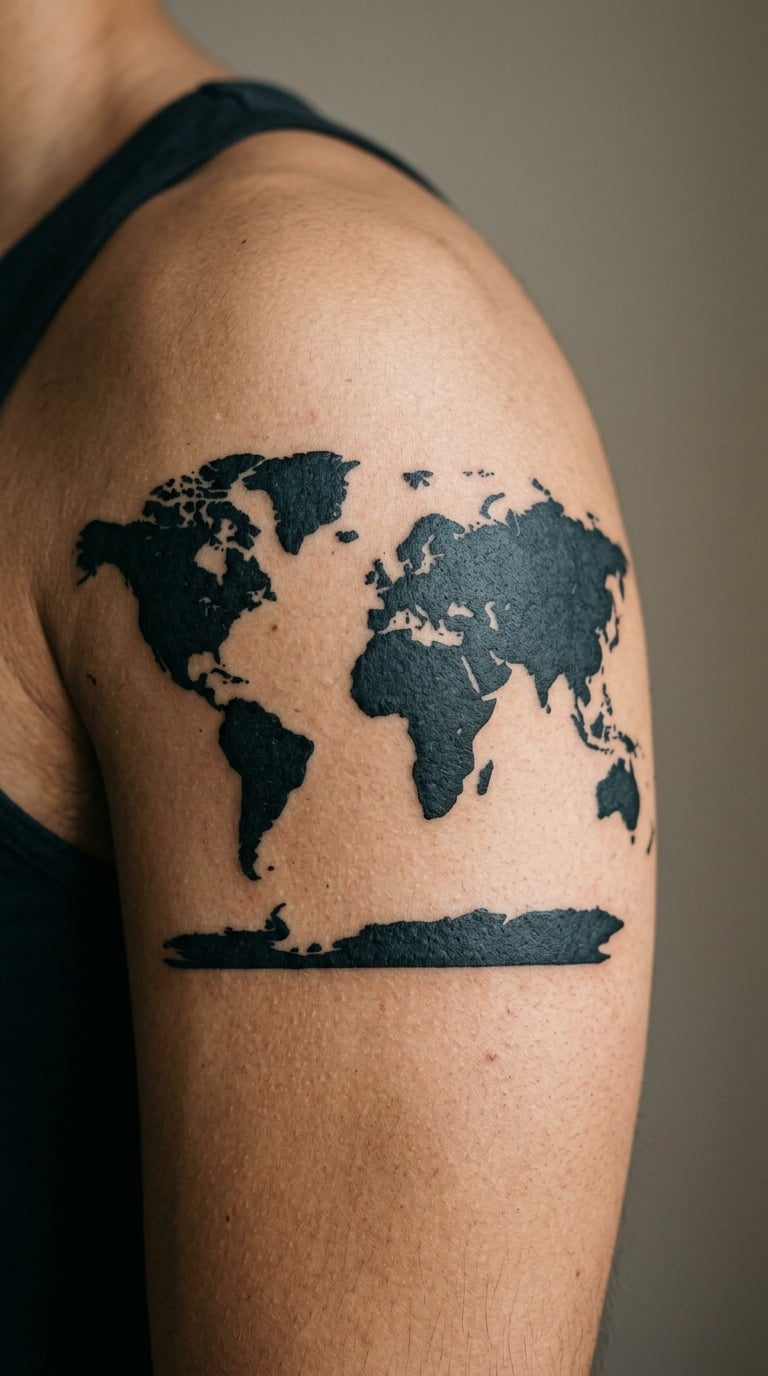
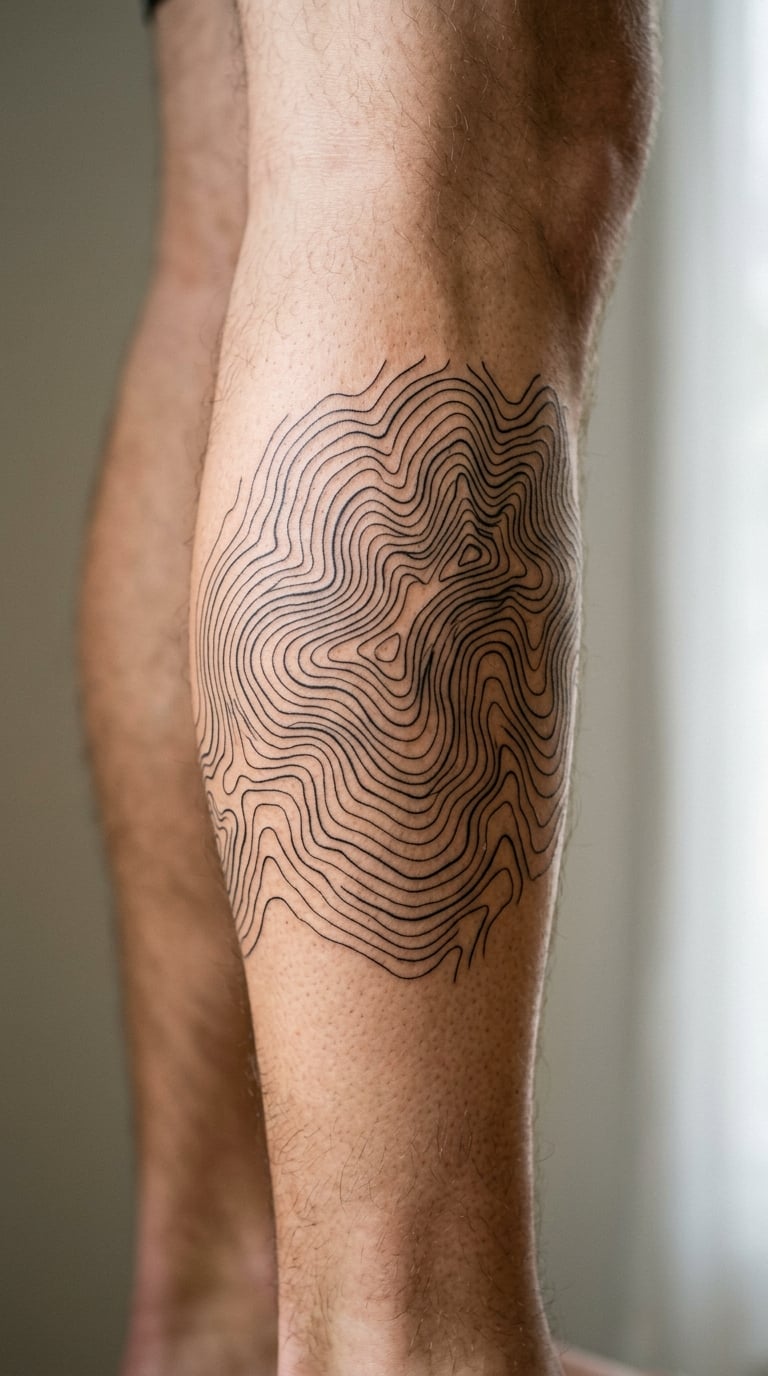
Contour lines are the map equivalent of a landscape photo. Nobody asks where the lines came from, so it becomes a mood piece: calm, layered, a bit mysterious. It is also the design that suits people who want a map tattoo but do not want a literal globe.
Wrapping the calf means the artist maps a patch of real terrain rather than a continent, so any ridge or valley will do. Ask for consistent line spacing, because contour work with uneven gaps looks like a mistake rather than a choice. This style holds its line beautifully since there is no tiny detail to lose.
Pain and time: the calf is one of the more uncomfortable spots, closer to a 6 or 7 out of 10, and a full wrap can take two sessions.
3. Compass Rose with Coordinates on the Wrist
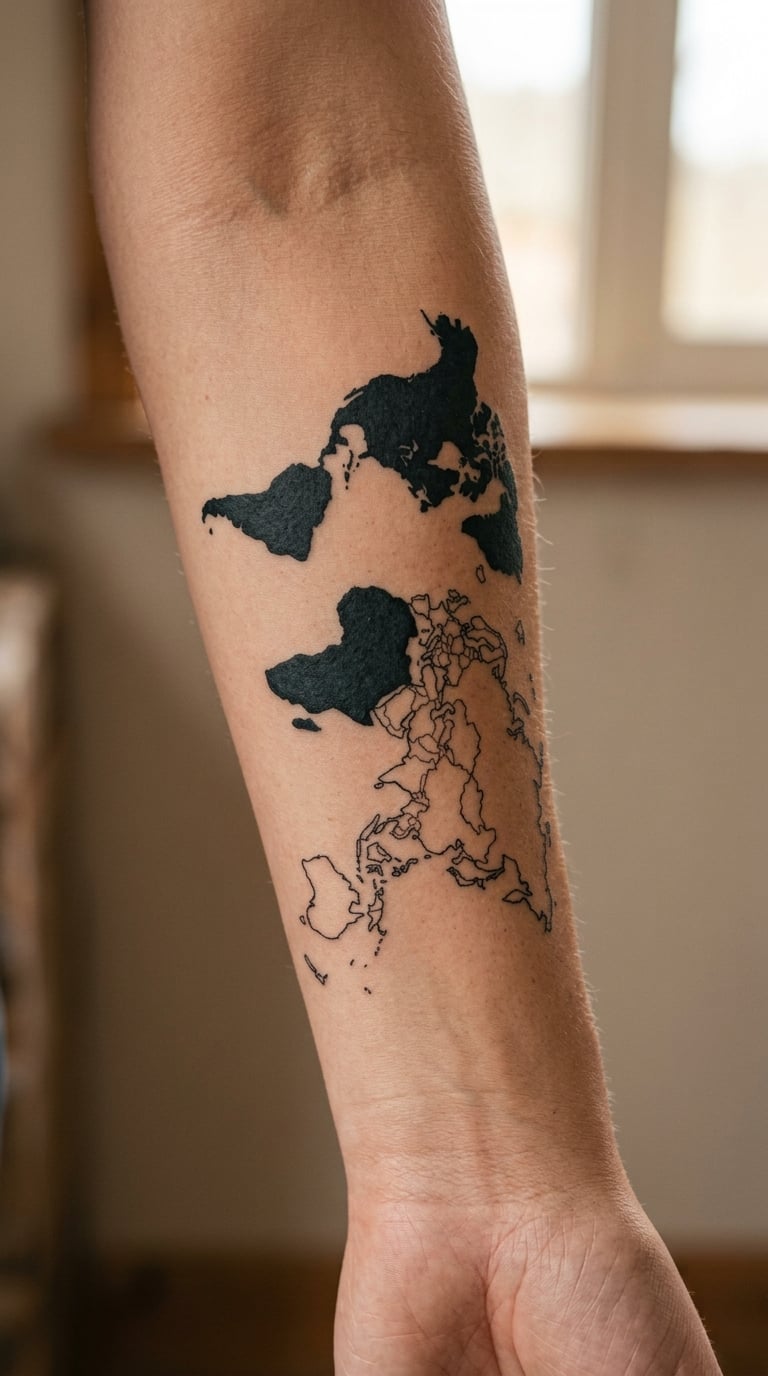
A compass rose with one set of coordinates underneath is the most personal design on this list. The coordinates can be anywhere that matters: a birth town, a first flat, a hospital, a mountain you drove four hours to see in bad weather.
Keep the compass itself simple, with four points and a small circle, and let the numbers do the talking. On the inner wrist, aim for two to three inches across so the digits stay legible. This is a fiddly design because the numerals need to be right, so pick an artist who has done linework-heavy small pieces before.
Pain and time: wrists sting, roughly 6 out of 10, mostly from nerve-rich skin near the thumb side. Budget two hours.
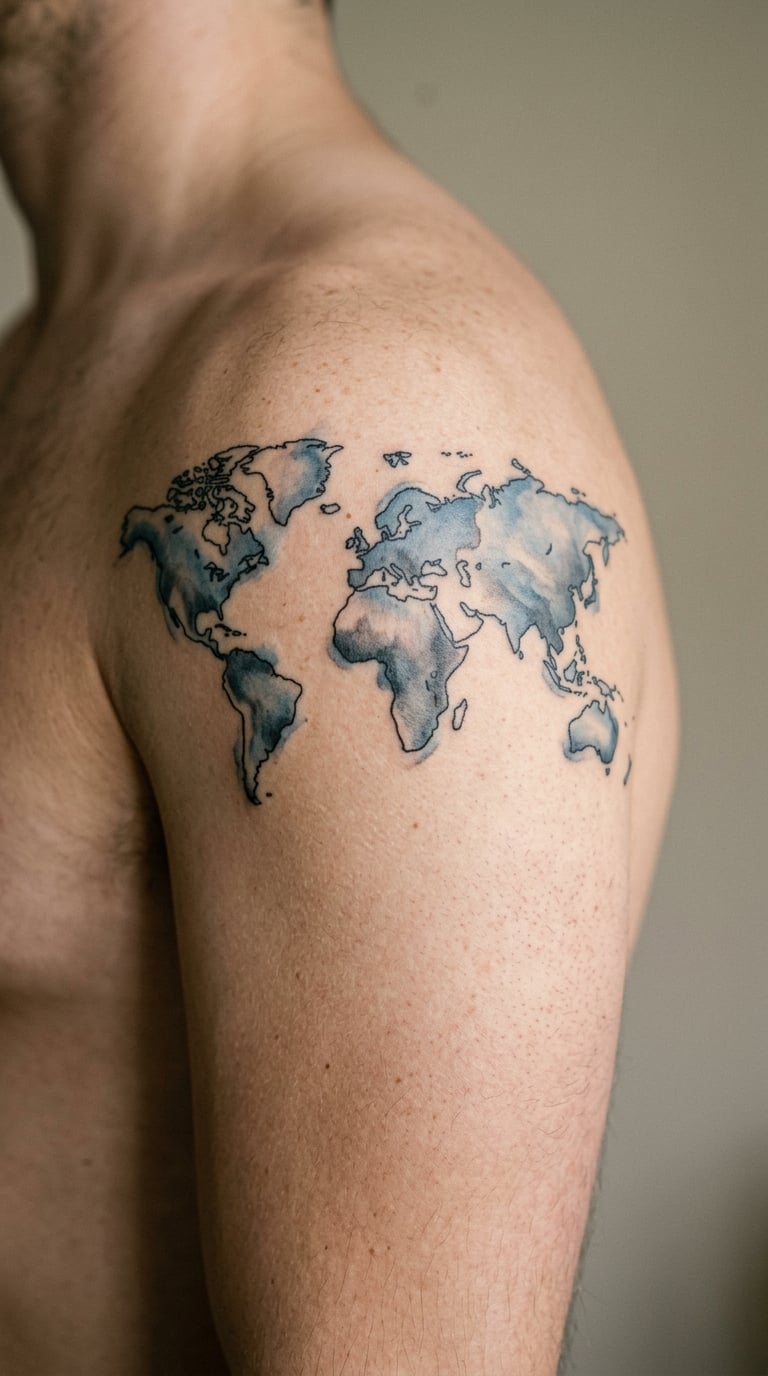
4. Watercolour World Map Across the Back
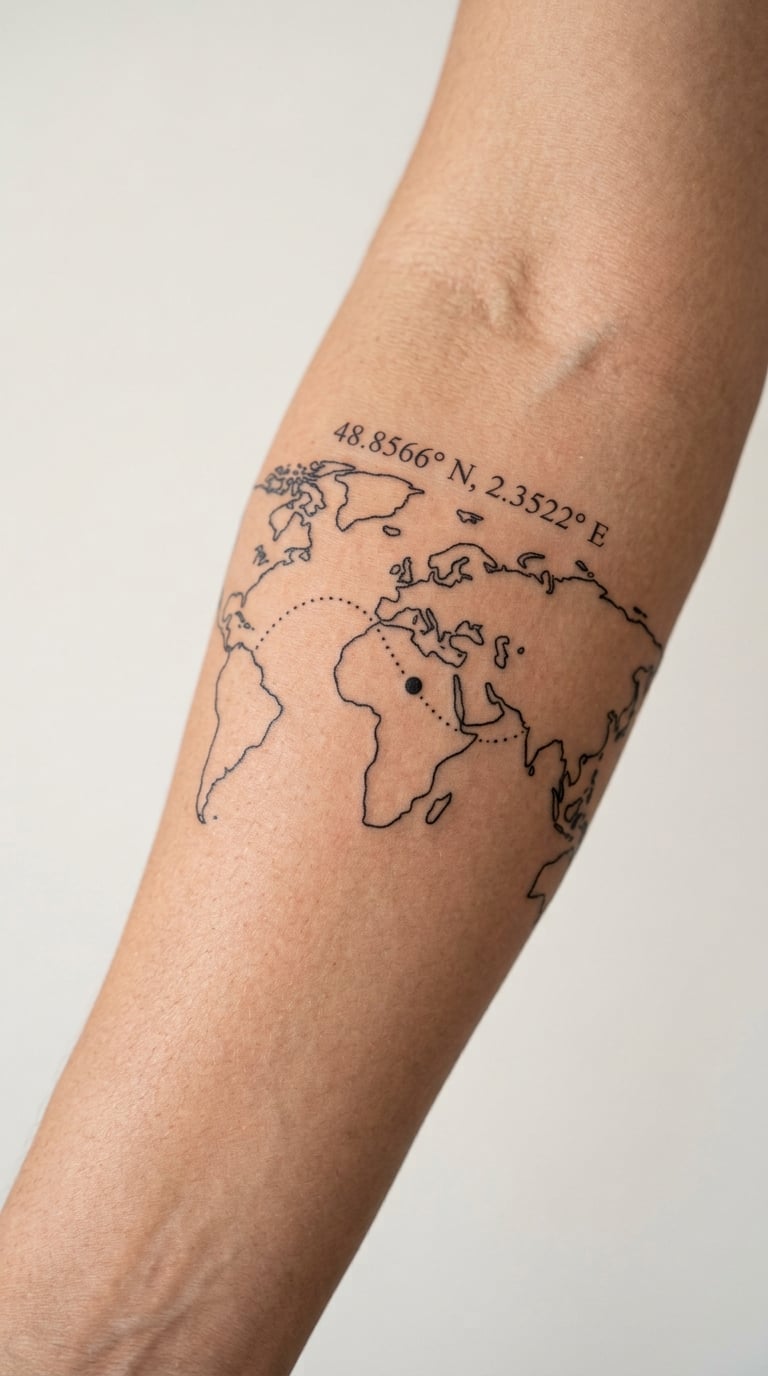
The watercolour version is the softest read of a world map and the most forgiving if your shapes are slightly wonky, since pigment bleed disguises imperfect edges. Plenty of travellers want the memory feeling rather than the atlas feeling, and this is that.
A back piece gives you real width, so the map can spread from shoulder blade to shoulder blade, roughly ten to fourteen inches. It needs a second and sometimes third session, and colour tattoos on the back mean longer healing and a stricter sun rule for the first few months. Outlines stay strongest; the wash will soften over time, which most people like.
Pain and time: the back is intense in the shoulder area and more manageable lower down, around a 7 out of 10. Two to three sessions.
5. Old World Nautical Chart on the Upper Arm
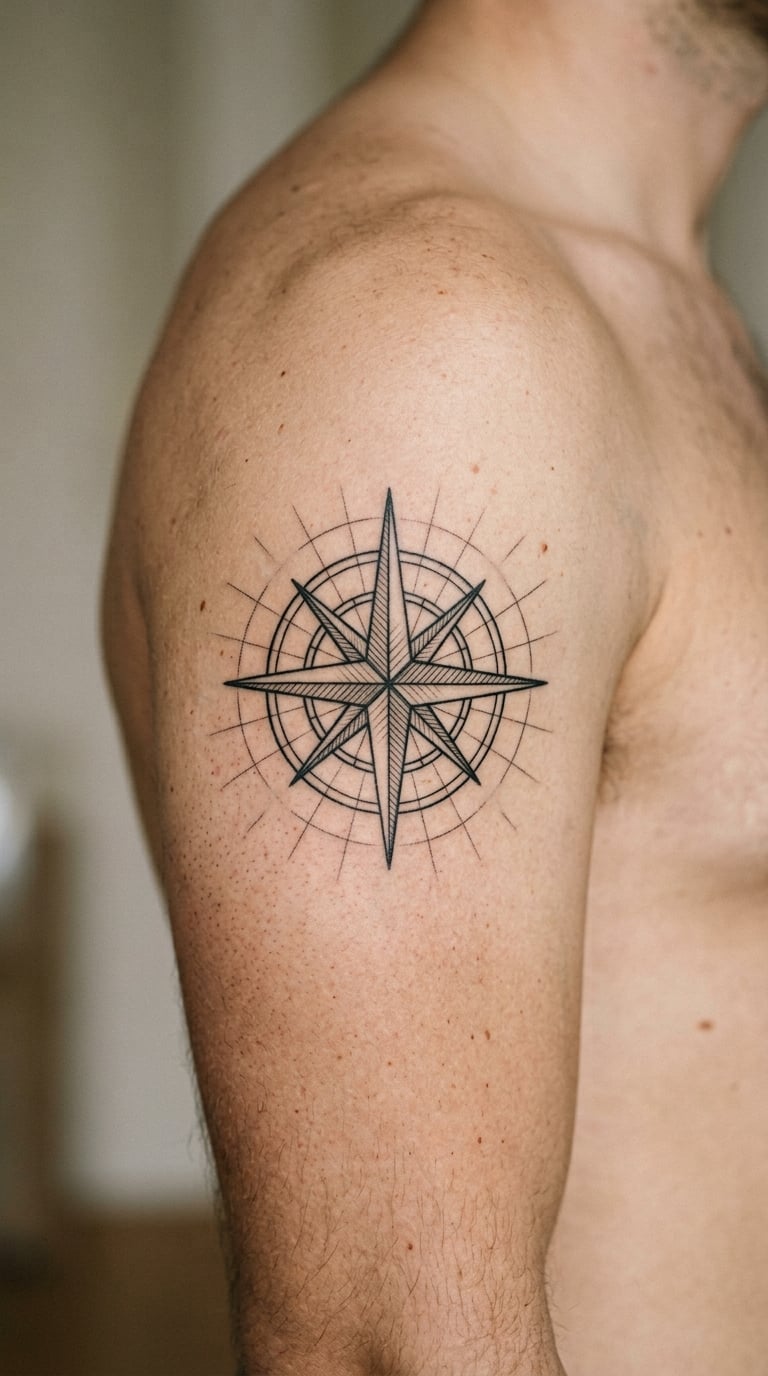
Nautical charts are the original travel tattoo, long before anyone drew a globe. Rhumb lines radiating from compass points, a sea serpent or a sailing ship, hand-drawn hatching for depth. It suits people drawn to the old sea-route aesthetic rather than the modern minimalist one.
The outer upper arm gives a flat, slightly curved surface, which works for a chart roughly five to seven inches tall. Sepia and brown ink gives instant age, though it darkens toward orange over the years. Avoid stacking more than two or three chart elements, because nautical detail turns to noise fast at this size.
Pain and time: the outer arm is one of the easier placements, near a 4 out of 10, and takes about an hour and a half.
6. Dotwork World Map Along the Ribs
Dotwork solves the fading problem. Stippled continents read as a soft grey gradient from a distance and hold their edges much longer than a hairline outline, so this is the version to pick if you plan on wearing it for decades without touching it up.
Ribs give you a long curved strip, ideal for an elongated projection that bends with the body. A map running from the side of the chest to the waist reads better than one that wraps all the way around, because the spine side has nowhere to hide the distortion. Dot spacing is dense, so plan on a longer session than the size suggests.
Pain and time: ribs hover around a 7 out of 10, on and off. Two sessions, and do not plan to sleep well afterwards.
7. Route Line Between Two Cities on the Ankle
Two dots and a line between them is the quietest map tattoo here, and often the most meaningful: the town you grew up in and the city you moved to, or two airports connected by a year of your life. It reads as a map to strangers and as a whole biography to you.
The ankle is narrow, so keep the design vertical and under two inches. A dashed line handles the curve of the ankle better than a solid one because it breaks up the stretch. Ankle tattoos fade faster than arm tattoos, partly from sun exposure and partly from the constant movement of the foot.
Pain and time: the ankle bone is a real ouch, around 7 out of 10, but it is over quickly. Forty-five minutes to an hour.
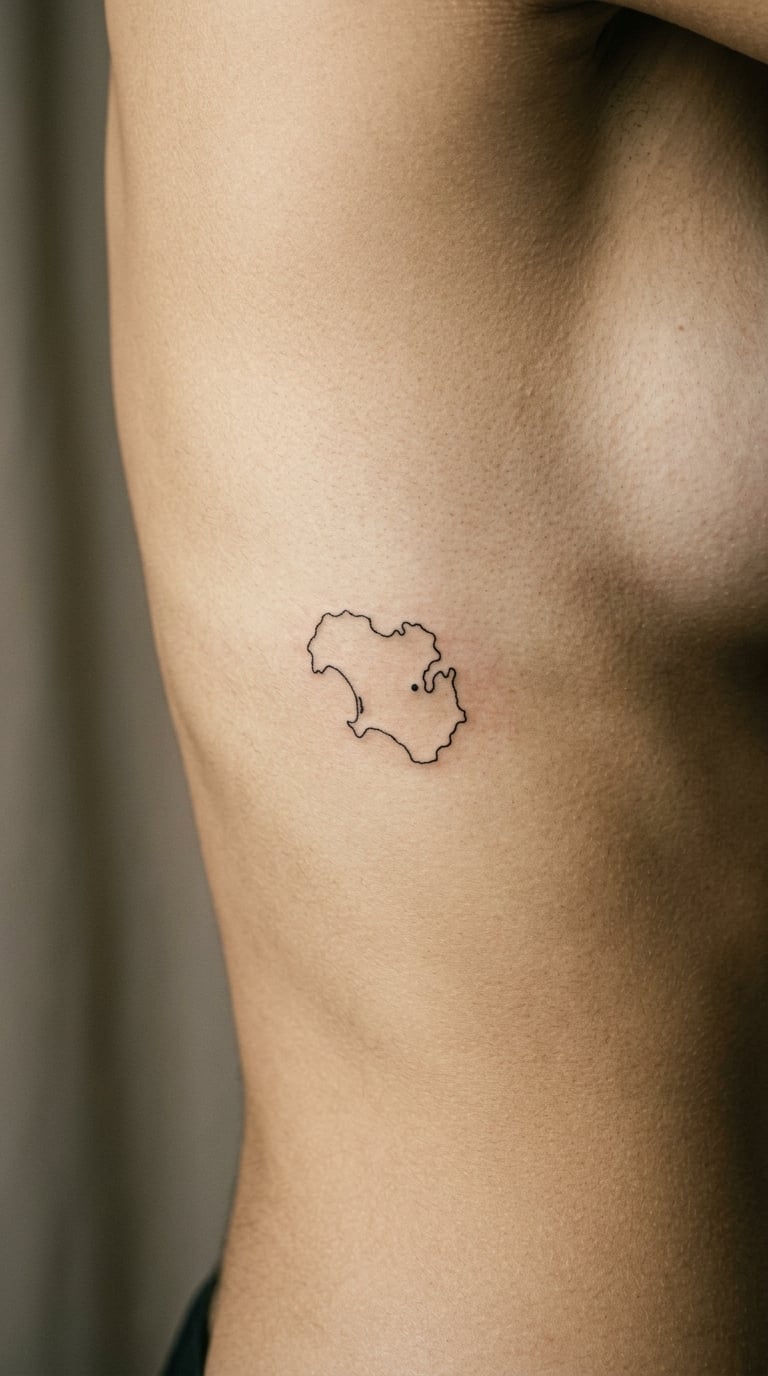
8. Birthplace Country Outline on the Bicep
One country, one dot inside it for the city you were born in. This is the version people choose when they want a map that says something about home rather than a globe, and it is the most requested travel map tattoo design for family reasons.
The bicep is a forgiving curved area and country outlines are simple shapes, so a small fine-line outline works here. Give the artist the correct national outline rather than a rough memory, because borders carry weight and a wrong coastline is the kind of detail you will notice for the rest of your life. Four to five inches is plenty.
Pain and time: the bicep is mild, about 3 out of 10. One session, roughly an hour.
9. City Street Grid on the Sternum
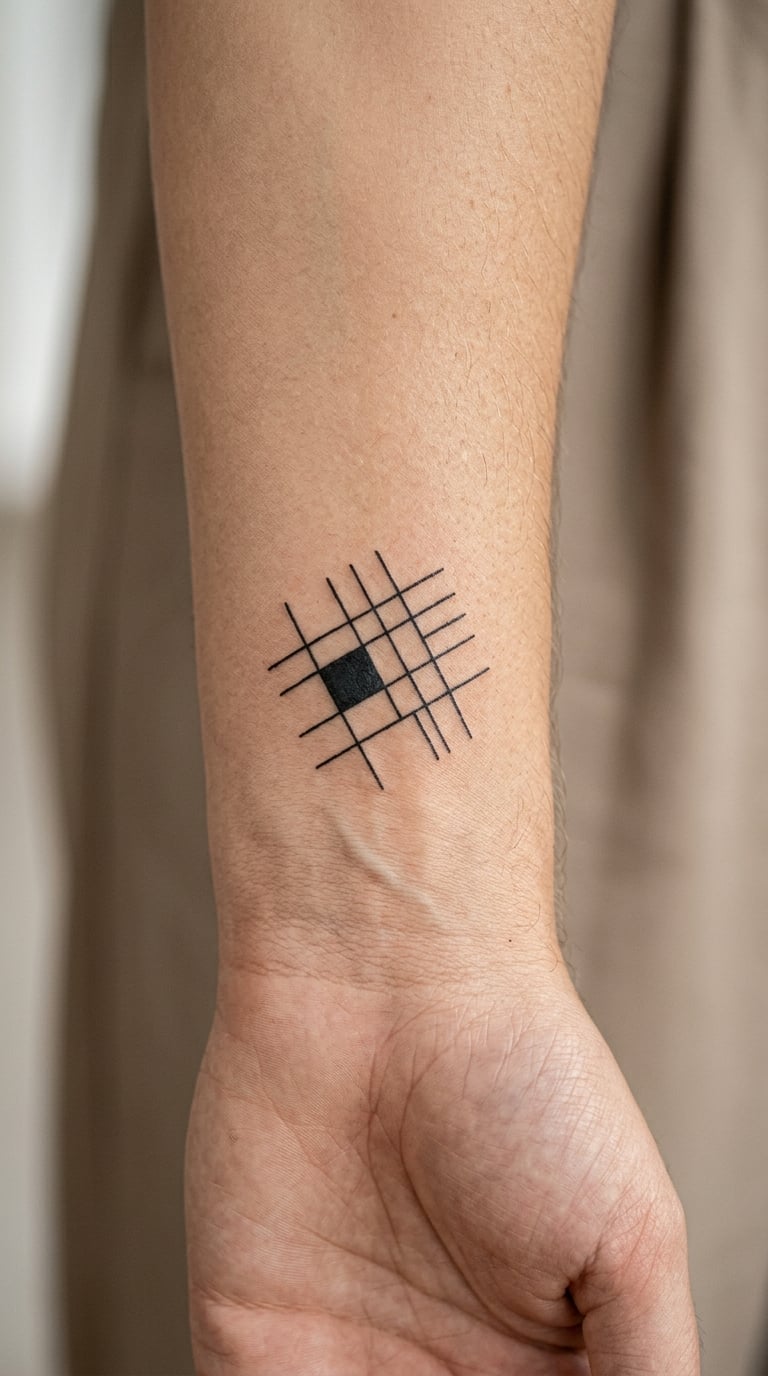
A street grid is cartography at its most abstract. Every block and crossing is real, but nobody looks at it and identifies a city, so you get a piece that is dense and architectural without being a diagram of anywhere in particular.
Centred on the sternum it sits in the line of sight when you wear a scoop neck, which is a deliberate choice rather than an accident. Grid work has a lot of right angles, so the design needs clean, confident linework and a slight perspective or the whole thing flattens. The sternum is a bony, sensitive area, and the gap between the ribs hurts more than the bone itself.
Pain and time: around an 8 out of 10 on the sternum, one of the tougher spots for a first piece. One long session, two hours minimum.
10. Mountain Pass Route Map on the Thigh
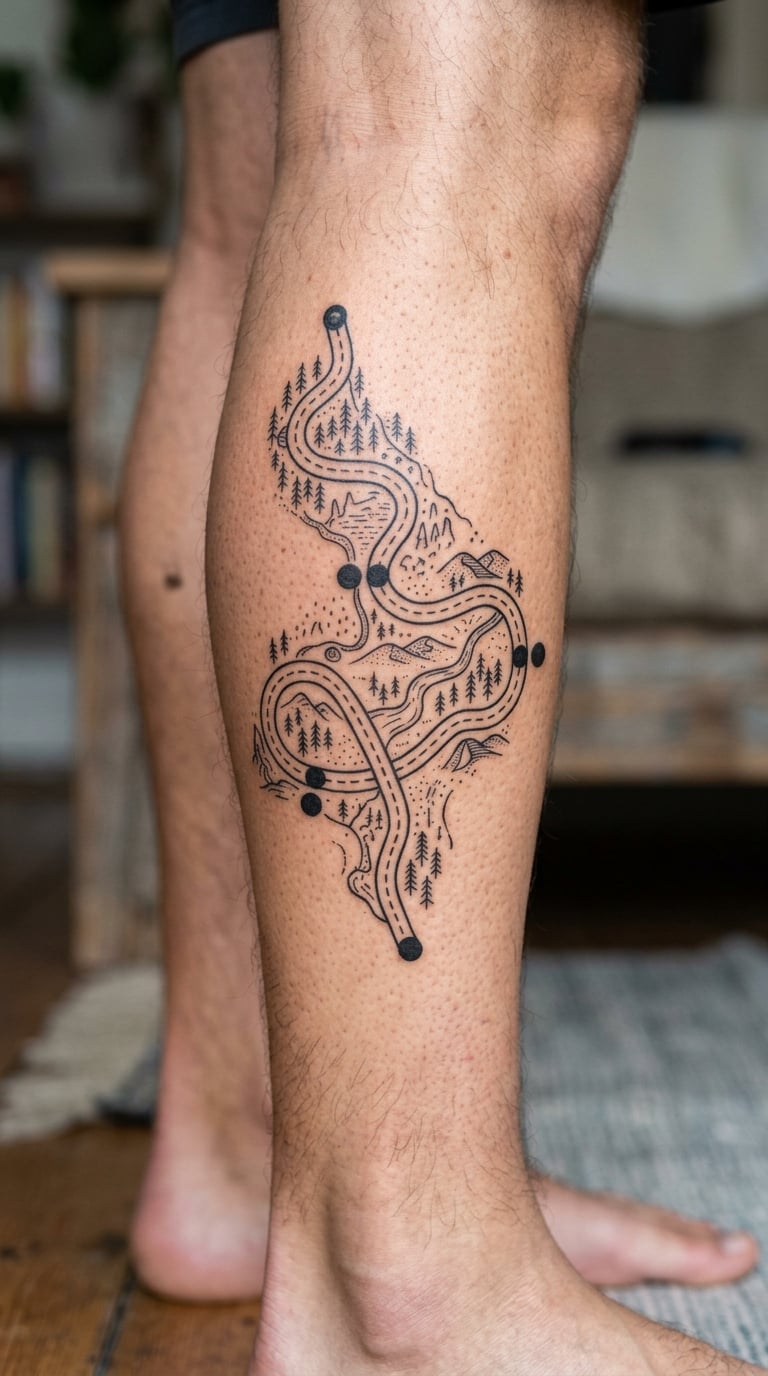
Route maps of a single road trip, complete with switchbacks and a destination marker, are underrated. A long road is a good metaphor and a good shape, and this design gives you a story rather than a shape for its own sake.
The outer thigh has both space and a natural curve, so a road can run diagonally from hip to knee across seven or eight inches. Keep the line width heavier than you would for a world map, since switchback curves are where fine line fails first. This one also ages well enough that it can become part of a future leg piece rather than something you have to cover.
Pain and time: the thigh is about a 4 out of 10. One session of one to two hours.
11. Dashed Flight Path Between Two Airports on the Forearm
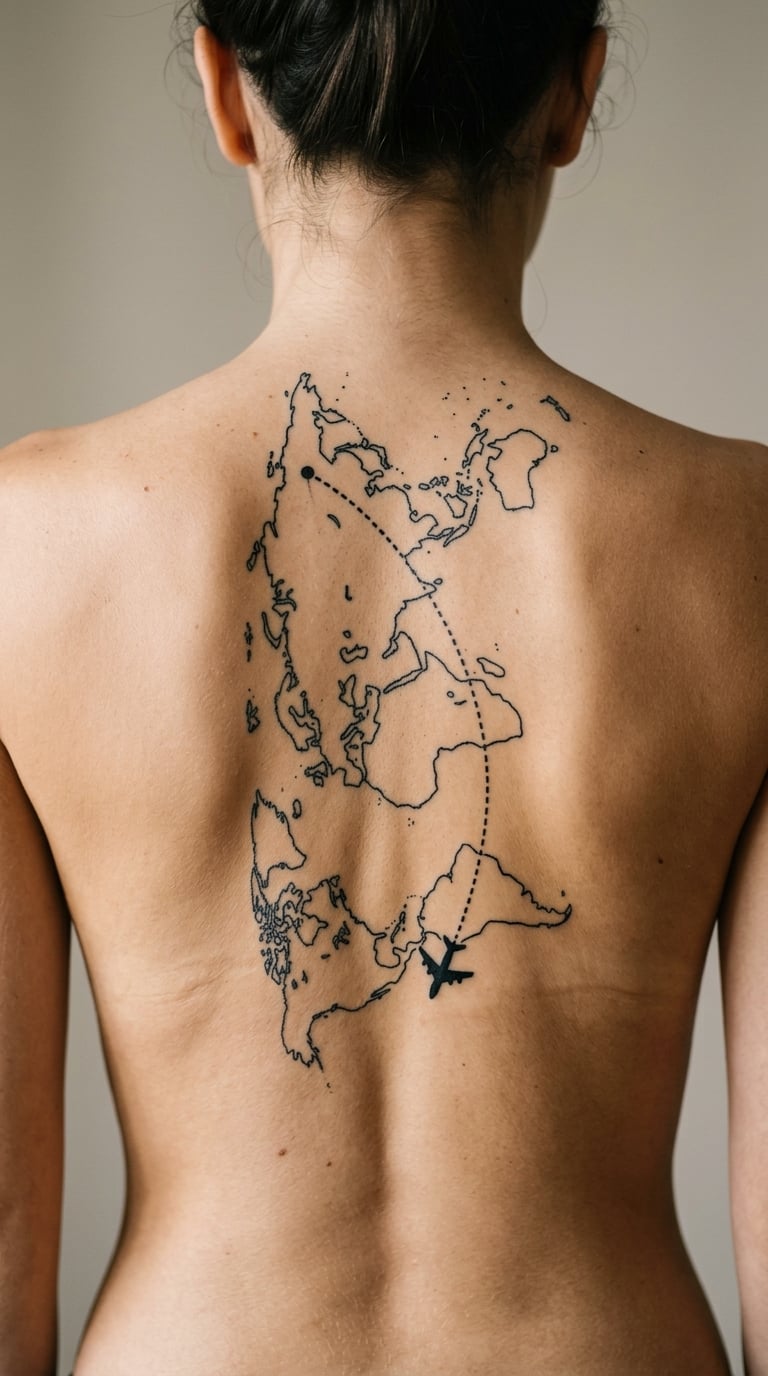
Two airplane silhouettes and a dashed arc between them marks a departure. People get this for a move abroad, a military deployment, or the year they stopped coming home, and it is the design that reads most clearly to someone who has never seen a map tattoo before.
On the inner forearm, angle the arc along the bone rather than across it, because the arm is narrow and a flat line looks like a scar. A dashed path hides small irregularities better than a solid rule. This is also a good candidate for a colour detail, a single red dot at the destination, but only if you are committed to touch-ups.
Pain and time: inner forearm, about 5 out of 10. One session of an hour to an hour and a half.
12. Star Map of a Northern Sky on the Upper Back
A celestial chart is a map of somewhere you cannot physically stand, and people who love the idea of travel but not the idea of a globe often land here. The constellation lines give it structure and the empty black between stars keeps it quiet.
Between the shoulder blades you have about a ten-inch-wide field, enough for a real patch of sky with room around it. Getting the star positions honest matters if the sky means something to you, so send the real chart you want. Colour on a star map is a mistake more often than not: pale yellows and blues fade into a smudge within a few years.
Pain and time: the space between the shoulder blades is one of the more sensitive zones, about 7 out of 10. Two sessions.
13. Transit Map of One City on the Calf
Subway maps are the design most tattooed people can actually read on sight. Bold straight lines, coloured or black stations, a rectangle of nothing in the middle where the river is. It says a specific city to anyone from there and simply looks like good geometry to everyone else.
The inner calf is long and the leg is easy to conceal at work, which is why commuters pick it. Use bold line weight and a simple palette; thin transit lines blur into a grey band within a couple of years. If your city has a metro with a distinctive shape, a condensed version of the whole network fits into about six inches of leg.
Pain and time: the inner calf runs about 6 out of 10 and a dense network takes time. Two sessions.
14. Treasure Map Scroll on the Outer Forearm
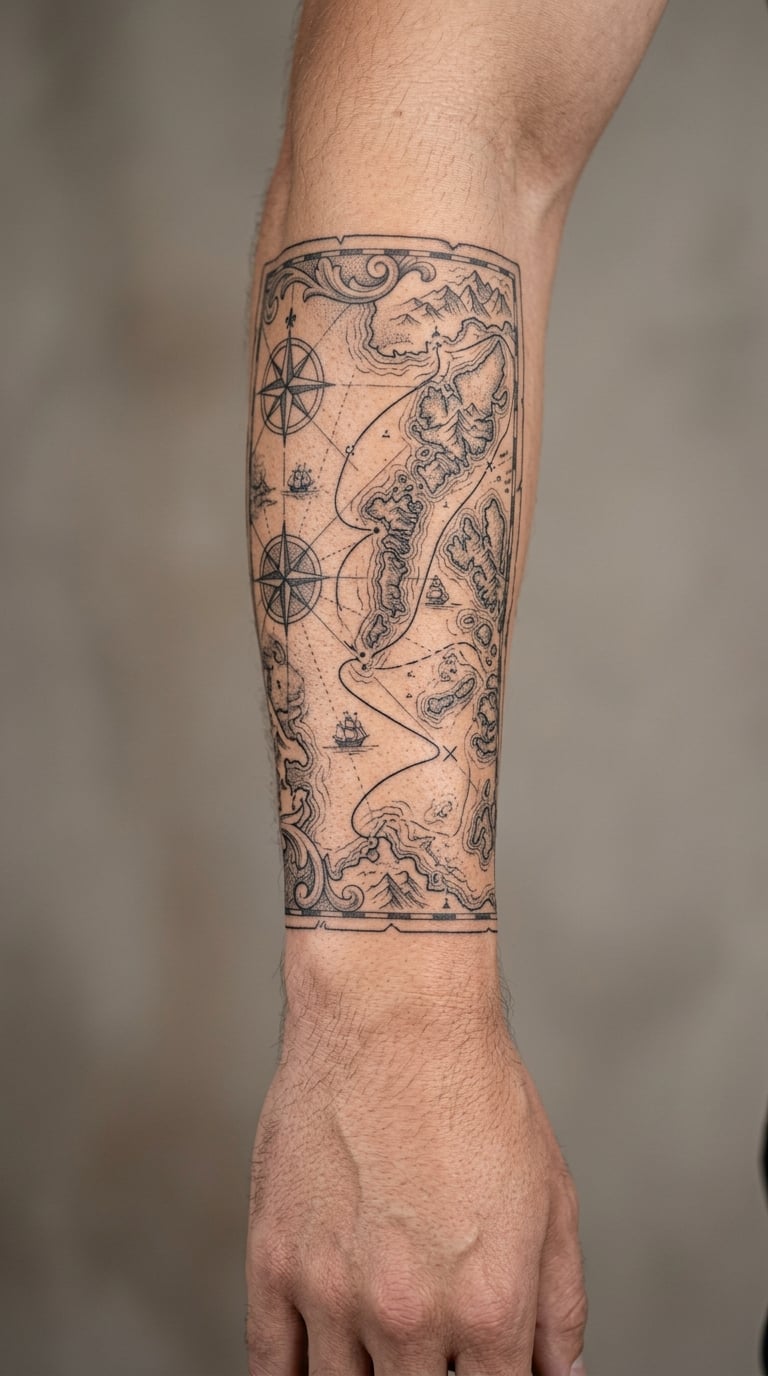
The treasure map is a fun choice and the least literal one on this list. Nothing about it is a real journey, which is exactly the appeal: it is a travel tattoo you can wear if you would rather not broadcast your actual whereabouts.
Keep the scroll shape narrow so it does not balloon on the forearm, around four inches long by two wide, and let the cross marker be the only heavy element. Dashed trails, a coastline and a small compass are enough; every extra icon takes space you do not have. Fade resistance is good because most of the drawing is linework rather than fine shading.
Pain and time: outer forearm, roughly 4 out of 10. One session, about ninety minutes.
15. Latitude and Longitude Globe on the Outer Thigh
A globe with a full grid wrapped around it, like a schoolroom model, is the most three-dimensional map design you can get. The grid gives an artist a lot to work with and gives the finished piece a sense of being curved rather than printed flat.
Keep the sphere about six inches across so the grid squares stay square enough to read as a globe. The outer thigh is a good home for it because the curve of the muscle mimics the curve of the earth, and the size can be reduced to four inches on a smaller frame. A globe with no land detail, grid only, is the version that ages best.
Pain and time: outer thigh, about 4 out of 10. One session of one to two hours.
16. Antique Atlas Grid on the Back of the Arm
An atlas fragment is the closest thing to tattooing a page from a book. Fine grid squares, a decorative border, muted brown ink and coastlines that belong to a country you cannot name. It suits people who like objects and paper and the look of something genuinely old.
There is no placement pressure here, which is the appeal. On the back of the upper arm it reads like a label applied to the skin, and a fragment four by five inches is a realistic size. Ask for thinner line work than feels comfortable; the grid is what will fade first if the artist goes heavy.
Pain and time: the back of the arm is low on the pain scale, near 3 out of 10. One session, one to two hours.
17. Island Chain Dotted Route on the Shoulder
Small island chains strung across the shoulder cap is an under-used shape. Each island is a dot of ink, the line between them is a thin dotted route, and the whole thing wraps naturally with the deltoid without looking forced.
This is the design to choose if your travels have been coastal or island hopping rather than city to city. Shoulder cap placement means the composition should run front to back rather than sit as a single blob. Dots and short strokes are far more fade-resistant than tiny coastline detail, so this is a safe choice for a first fine-line piece.
Pain and time: the shoulder cap is around 5 out of 10, and a sitting position helps. One session of an hour.
18. Family Roots Map on the Upper Thigh
Three countries, three markers, thin lines between them. This is the ancestry version of the travel map, and it is the one design here that people describe as a family tattoo rather than a travel tattoo, because the map is where the family came from.
Upper outer thigh gives you room for a simplified outline about seven inches across, which is plenty when you only need three landmasses. Keep the borders simplified but accurate, because this design carries cultural weight and an incorrect line reads as careless. Markers should be small filled circles, nothing more.
Pain and time: upper thigh, about 4 out of 10. One session of one to two hours.
What a map tattoo actually means
Most people who get a travel map tattoo describe the same three things: where they have been, where they want to go, and the idea that they can find their way. The meaning is not fixed by the design, so a world map can mean the same as a single country outline. What changes the meaning is the specific place, the date behind it, and whether you are the only one who knows.
Why the compass shows up so often
A compass tattoo is a direction symbol before it is a travel symbol, which is why it shows up in tattoos for people who have barely travelled at all. It carries ideas of guidance, self-direction and a decision already made, and for many men it is a small, unshowy piece that still means something specific. Pairing a compass with a map or a set of coordinates makes it read as travel rather than as direction alone.
World map, globe and homeland shapes
A world map tattoo is the broadest statement you can make: the whole world, open to you. A globe version adds the planet itself, which many people read as belonging rather than going. An earth tattoo without any travel context often means connection to the planet or to a particular country, so if that is your intention, make the country obvious rather than leaving a whole globe on your arm.
Where travel map tattoo ideas land and how big to go
Size is decided by detail, not by ambition. A coastline you can recognise at three inches cannot become four inches with a coastline you can recognise at ten, so pick the smallest version where your real map still looks like itself. Shrinking a world map past about three inches turns continents into blobs, and that is where most disappointing map tattoos come from.
The area under three inches across should be treated as a symbol: a compass, coordinates, a single country shape. Between three and eight inches you can carry a continent outline, a city grid or a route. Above eight inches you are into back pieces and panels, which need a different conversation about sessions and aftercare entirely.
Matching the style to the spot: travel map tattoo ideas by placement
Match the shape of the design to the shape of the canvas. Wide flat areas such as the forearm, back and thigh take wide designs. Curved or narrow areas such as the ribs, ankle, sternum and shoulder cap take elongated, vertical or scattered compositions. And anything on the lower leg or the outer arm sees far more sun, so expect less crisp linework in ten years and choose bolder strokes there.
How to brief an artist on a custom travel map tattoo
Send more than a screenshot. An artist can work from a clear image, but a vector file, a high-resolution chart or a screenshot at full zoom makes the difference between recognisable coastlines and guesses. Tell them the projection you want, the exact coordinates or place names, and the finished size, and ask what detail they will need to drop at that size. Good artists will tell you what will not survive, and they are usually right.
Fine line fades faster than bold linework
The single most common regret in map tattoos is picking fine line because the reference image was fine line. Hairline coastline work on the ankle or the ribs is usually soft within five years, while dotwork, bold contour lines and solid black stay readable far longer. If you care about the piece in a decade, choose the heavier style now, because a touch-up three years in is a small job but an avoidable one.
Adding new places later instead of covering up
This is the question that comes up most, and the answer is that most map tattoos are designed for it without being advertised. Leave a deliberate gap, keep the border lines running past the landmass, or have the piece drawn so a neighbouring shape can slot in beside it later. People ask for a tattoo they can continuously add to, and the answer is that this only works if the original design leaves room on purpose.
Things to know before you book a map tattoo
- Artist choice matters more than the concept. Map work is linework work. Look for healed photographs of small detailed pieces rather than portfolio shots from the day of the tattoo, and ask how many map pieces the artist has done before.
- Healing is a two-week job, not a two-hour one. Fresh ink stays raised and tender for days. Wash it, keep it out of sun, leave films and tight clothes alone, and follow your artist’s aftercare sheet rather than internet advice.
- Sun is the enemy of fine line. New tattoos need weeks of protection, and forearm and lower leg designs need lifelong sunscreen. Unprotected summer sun is the fastest way to lose a small map.
- Cost follows detail and size, not style name. What moves a quote is finished size, how much fine detail survives at that size, and how many sessions it needs. Get the quote broken into those parts.
- Book the whole piece, not the first sitting. Large map pieces run into a second or third session so the artist can finish healed sections properly. Agree the full plan and the outline stage before the first needle.
- Check the accuracy of anything with a name on it. Country outlines, border lines and coordinates carry real weight. Have the artist trace your source rather than drawing from memory.
Frequently Asked Questions
What does a map tattoo symbolize?
A map tattoo symbolizes travel, exploration and direction. A world map or globe usually represents the whole world being open to you, a compass adds guidance and self-direction, a coordinate set marks one exact place, and a country outline speaks to home, roots or ancestry. Because the design is generic, the personal meaning comes from which place you chose and why.
Where should I put a compass or map tattoo?
Put a compass on the inner forearm or wrist for a small piece, and a full world map across the back or outer thigh when you want size. The ribs suit tall vertical designs, the calf suits route lines and contour work, and the shoulder cap suits scattered island shapes. Pick a spot you can see and hide easily at work, and avoid lower legs if you want the linework to stay crisp.
Is a detailed map tattoo a good first tattoo?
A detailed map is a demanding first piece. Coastlines, grids and small numerals take longer, hurt more in places like the ribs and sternum, and need two or three sessions. If you want a first tattoo with a travel story, a single country outline or a compass with coordinates is a much safer bet, and you can always add the big map later.
How do you add new places to a map tattoo later?
You add to a map tattoo only if the original was planned for it. Ask for a deliberate gap between landmasses, border lines that run past the edge, or a composition with spare negative space. A full world map with no spare room has nowhere to put a new marker, and the only fix is covering it or living with it exactly as it is.
Do small map details fade over time?
Yes, and location matters. Fine hairline coastline work softens fastest on the ankle, the ribs and the lower leg, usually within five years, because those areas see more sun and more movement. Bold contour lines, dotwork and solid black hold up far better. Whichever style you pick, plan on one touch-up session a few years in to sharpen any lettering or coordinates.
Conclusion
Start by picking the place, not the style. Decide whether the piece is about the whole world, one country, one city or one exact coordinate, and let the placement follow from the shape of that answer. Take reference images and a vector file to the consult, and ask what detail will be lost at the size you want.
Whichever of these travel map tattoo ideas you lean towards, the work is in the briefing and the aftercare, not in the shopping around. Book the artist whose healed linework you trust, agree the full size and session plan before the first sitting, and then protect it from the sun so it still looks like the picture you fell for.