
20 Memorial Tattoo Ideas for a Friend: Best Tributes 2026
Memorial tattoo ideas for a friend work best when the design comes from something only the two of you recognised: a photograph, a place you drove past every summer, a line of handwriting, a dog with one odd ear. A generic angel or a stock infinity symbol can carry grief too, but a design tied to a real shared memory usually means more to the person wearing it.
These twenty ideas cover the range most people land on. Some are fine-line and small enough for a first tattoo, some are solid blackwork that will still read in twenty years, and a few are matching designs for when a group of friends is carrying the same loss. Every entry includes where it sits best, how big it realistically is, what it costs to sit through, and how to make it yours. This guide was updated for 2026 with attention to how these pieces look healed rather than fresh.
One honest note first. Grief makes decisions feel urgent, and a rushed design is the most common regret I hear about. Waiting a season, or waiting years, is completely fine, and so is deciding not to be tattooed at all. Nothing here is a test you can fail.
If you are collecting pieces that will sit alongside other memorial work, our guide to 20 fingerprint tattoo ideas for memorial designs is worth a look too, since a real print behaves very differently from a drawn one.
20 Memorial Tattoo Ideas for a Friend: Quick Guide
| Idea | Style | Best placement | Size | Pain |
|---|---|---|---|---|
| Fine-line portrait | Fine line, soft blackwork | Inner forearm, upper arm | 3-5 in (8-13 cm) | Medium |
| Handwritten name and date | Fine line script | Inner wrist, inner arm | 2-3 in (5-8 cm) | Low to medium |
| Shared place silhouette | Minimalist fine line | Outer upper arm, calf | 2-4 in (5-10 cm) | Low |
| Favorite sky constellation | Dotwork | Collarbone, shoulder, arm | 2-3 in (5-8 cm) | Low to medium |
| Watercolor flower with initial | Watercolor | Shoulder, thigh, rib | 3-4 in (8-10 cm) | Medium |
| Memorial initial in blackwork | Blackwork | Calf, forearm, upper arm | 2-4 in (5-10 cm) | Medium |
| Coordinates | Micro lettering | Side of forearm, inner arm | 1-2 in (3-5 cm) | Low to medium |
| Pet portrait tribute | Micro-realism, fine line | Ribcage, arm, thigh | 2-3 in (5-8 cm) | Medium |
| Compass rose | Fine line | Inner upper arm, chest | 2-3 in (5-8 cm) | Medium |
| Matching heart outlines | Minimalist line | Wrist, ankle, behind ear | 0.5-1 in (1-2 cm) | Low |
| Song lyric in script | Fine line script | Inner forearm, ribs, back | 2-5 in (5-13 cm) | Medium |
| Rooted tree with dates | Blackwork, grey wash | Calf, thigh, forearm | 3-5 in (8-13 cm) | Medium to high |
| Mountain range | Blackwork | Forearm, calf, ribs | 4-6 in (10-15 cm) | Medium to high |
| Single ocean wave | Fine line, blackwork | Outer arm, ankle, ribs | 2-4 in (5-10 cm) | Low to medium |
| Paired sun and moon | Fine line | Upper back, chest, arm | 3-5 in (8-13 cm) | Medium |
| Laurel wreath with fingerprint | Fine line | Forearm, calf, thigh | 2-3 in (5-8 cm) | Medium |
| Outline portrait with negative space | Single-needle contour | Outer thigh, arm, ribs | 3-4 in (8-10 cm) | Medium |
| Roman numeral date with laurel | Fine line, ornamental | Inner bicep, forearm, rib | 2-4 in (5-10 cm) | Low to medium |
| Forget-me-not sprig | Realistic colour | Wrist, ankle, shoulder | 2-3 in (5-8 cm) | Low to medium |
| Abstract line portrait | Minimal blackwork | Upper arm, thigh, back | 4-6 in (10-15 cm) | Medium to high |
1. Fine-Line Portrait from a Shared Photograph
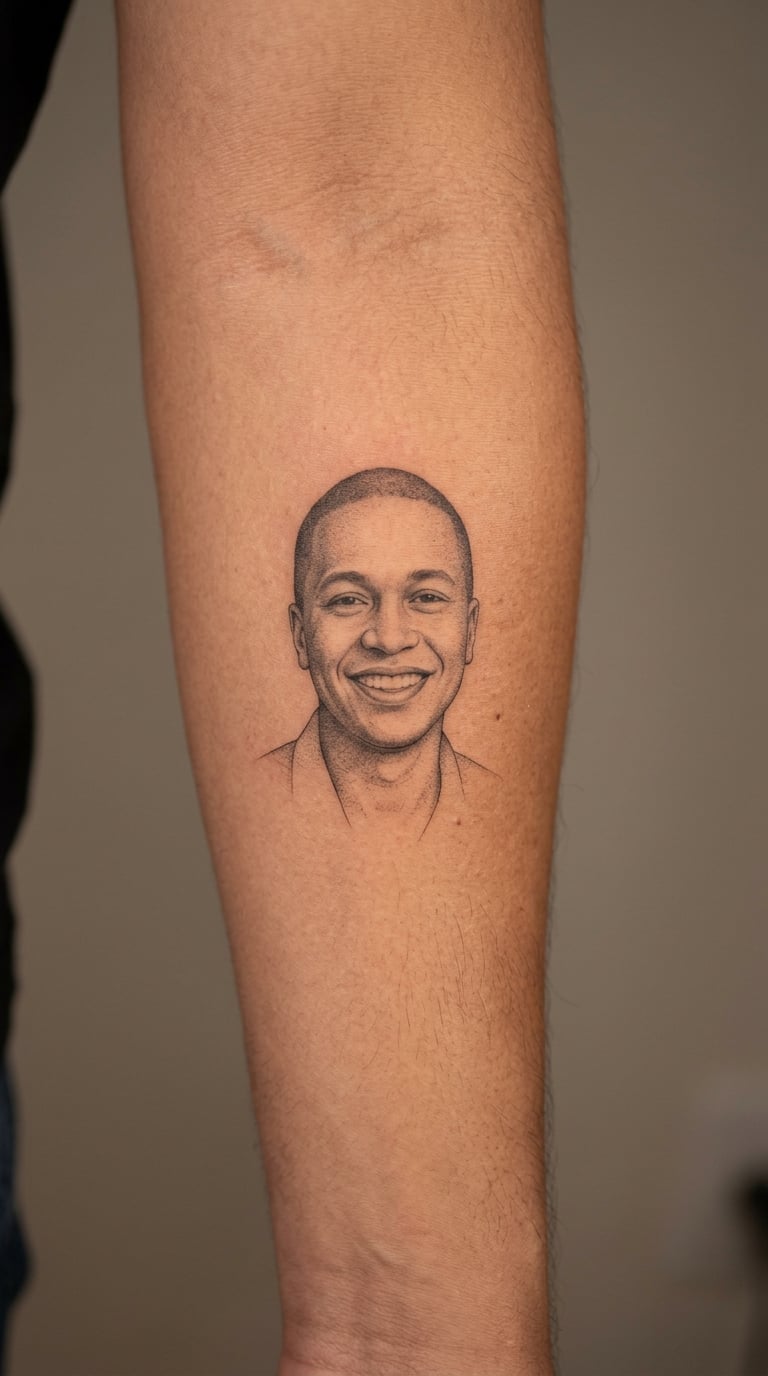
A fine-line portrait memorial tattoo starts with one photograph and ends up cropped tight, usually to the eyes, the smile, or a three-quarter turn of the head. The artist traces the light and shadow rather than the outline, so the piece reads as shading before it reads as a face.
People choose this because a likeness is the most literal way to keep a specific person close, without anyone else needing context.
Placement: inner forearm, upper arm, or the ribcage if you want it private. Size: 3-5 in (8-13 cm) tall, and smaller if you crop to the eyes. Style: fine line or soft blackwork.
Pain: medium on the forearm, and the brow and cheekbone sting more than the jaw. Fine line softens and spreads over the years, so ask for slightly heavier line than looks right in the drawing. Make it yours: bring the original photograph, not a screenshot, and mark on a print which features matter most to you.
2. Handwritten Name with a Preserved Date
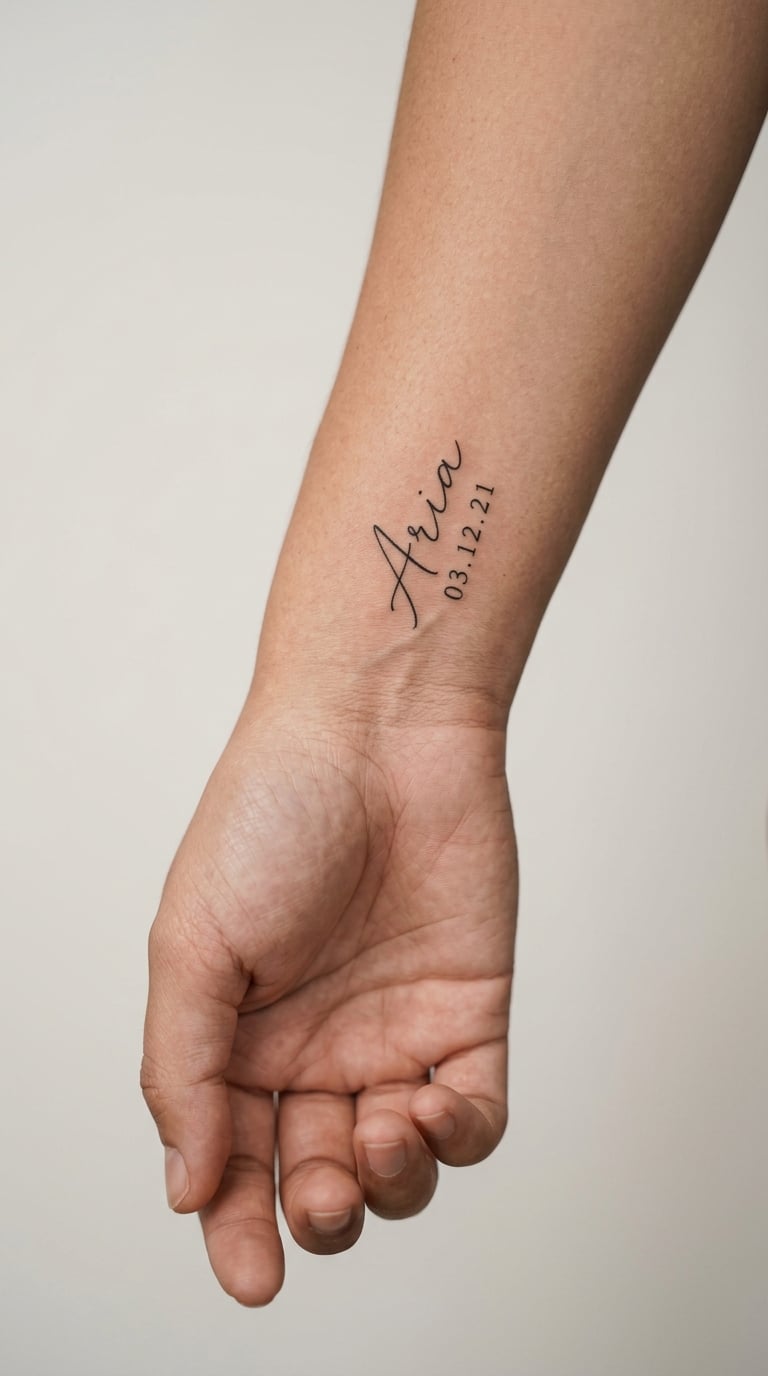
A name in script is the most requested memorial design there is, and the least forgiving one. The good version copies actual handwriting: someone writes the name on paper, and the artist transfers those exact curves rather than picking a font.
The date underneath is usually a birthday, a passing date, or the day you met, and it is the part people regret most when a digit is wrong. Write it out longhand three times before you hand it over.
Placement: inner wrist, inner forearm, or the back of the arm where it stays visible to you but easy to cover. Size: 2-3 in (5-8 cm) across. Style: fine line script, single needle.
Pain: low to medium, and the wrist hurts less than people expect. Inner forearm lettering ages faster than arm lettering because hands and wrists crease, wash often, and see sun. Make it yours: send a clear photo of the handwriting, or a signature off an old card.
3. Minimal Silhouette of a Shared Place
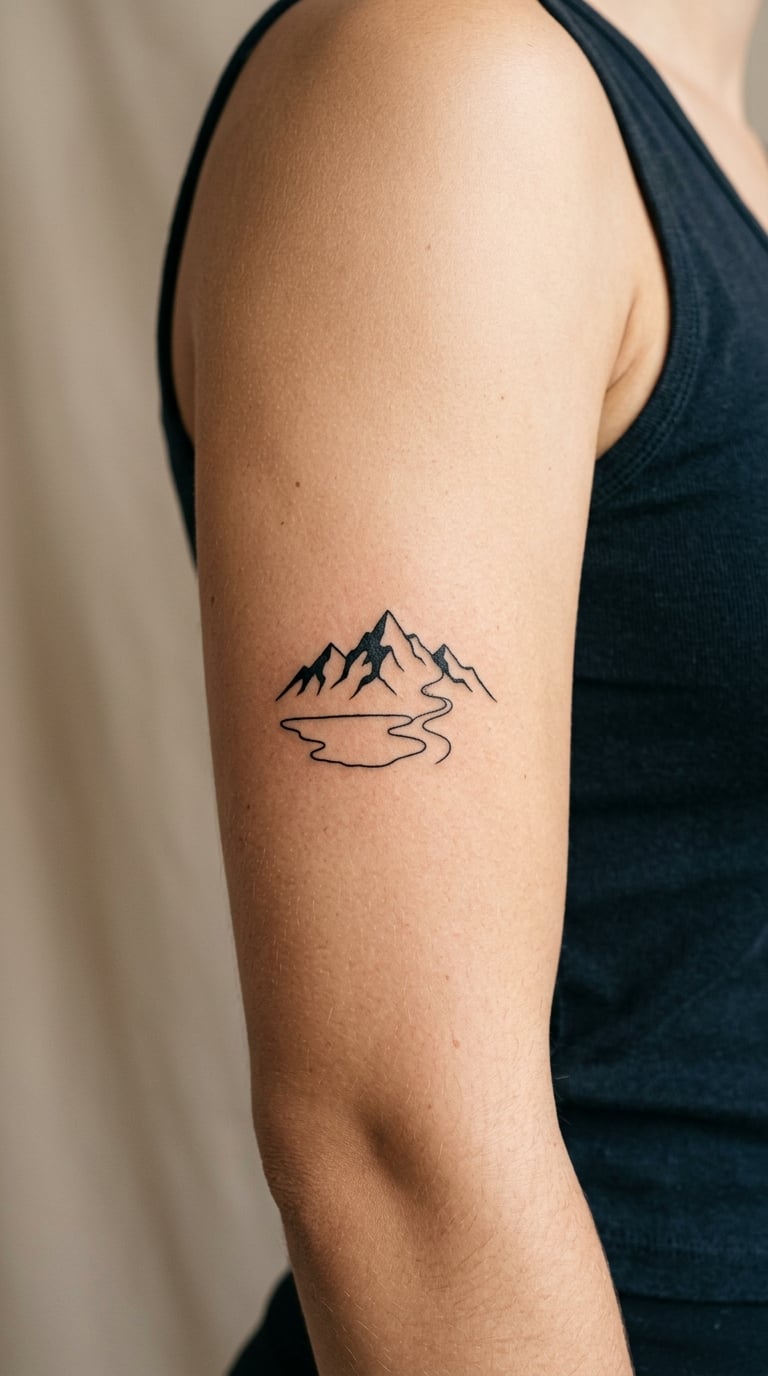
Reduce a place you both knew to its outline: a ridgeline, a bridge, a stand of trees, a pier with one post. Minimalist fine-line work strips out everything that is not the shape, which is what keeps a small piece legible.
It suits friendships built around somewhere rather than someone doing something. A cabin, a beach, the road between two towns, the view from a kitchen window all work.
Placement: outer upper arm, calf, or shoulder. Size: 2-4 in (5-10 cm) wide. Style: minimalist fine line, one consistent line weight.
Pain: low on the outer arm, and the calf is a slightly firmer surface. A flat-topped ridgeline holds up better than a busy treeline, which turns to grey fuzz after a decade. Make it yours: sketch the view from memory first, then hand the sketch to the artist alongside a photo of the real place for accuracy.
4. Tiny Constellation from a Favorite Sky
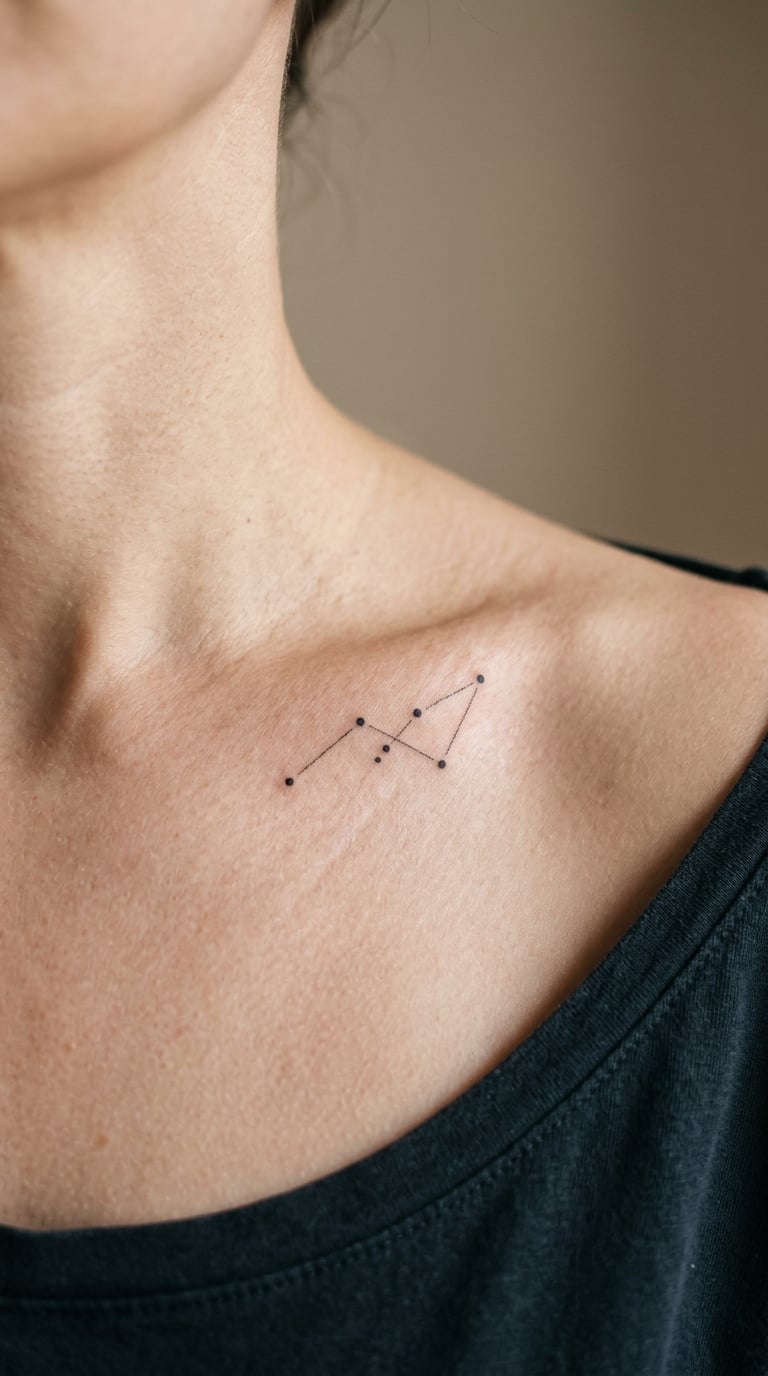
A dotwork constellation copies the pattern of stars you actually saw rather than a famous cluster. You can use the sky from a night you both remember, or the sky on a date that means something to the two of you.
What it means is yours to decide. Some people treat it as a map back to one night, others as a promise to find the same sky again. I would not accept a fixed symbolic reading from anyone who was not there.
Placement: collarbone, shoulder, upper arm. Size: 2-3 in (5-8 cm) across. Style: dotwork with hairline connections.
Pain: low to medium, and the collarbone is a sensitive edge. Dots spread slightly as skin ages, so keep gaps wider than you think you need. Make it yours: add the date underneath in small numerals, or one warm colour dot for the star that mattered most.
5. Watercolor Flower with a Hidden Initial
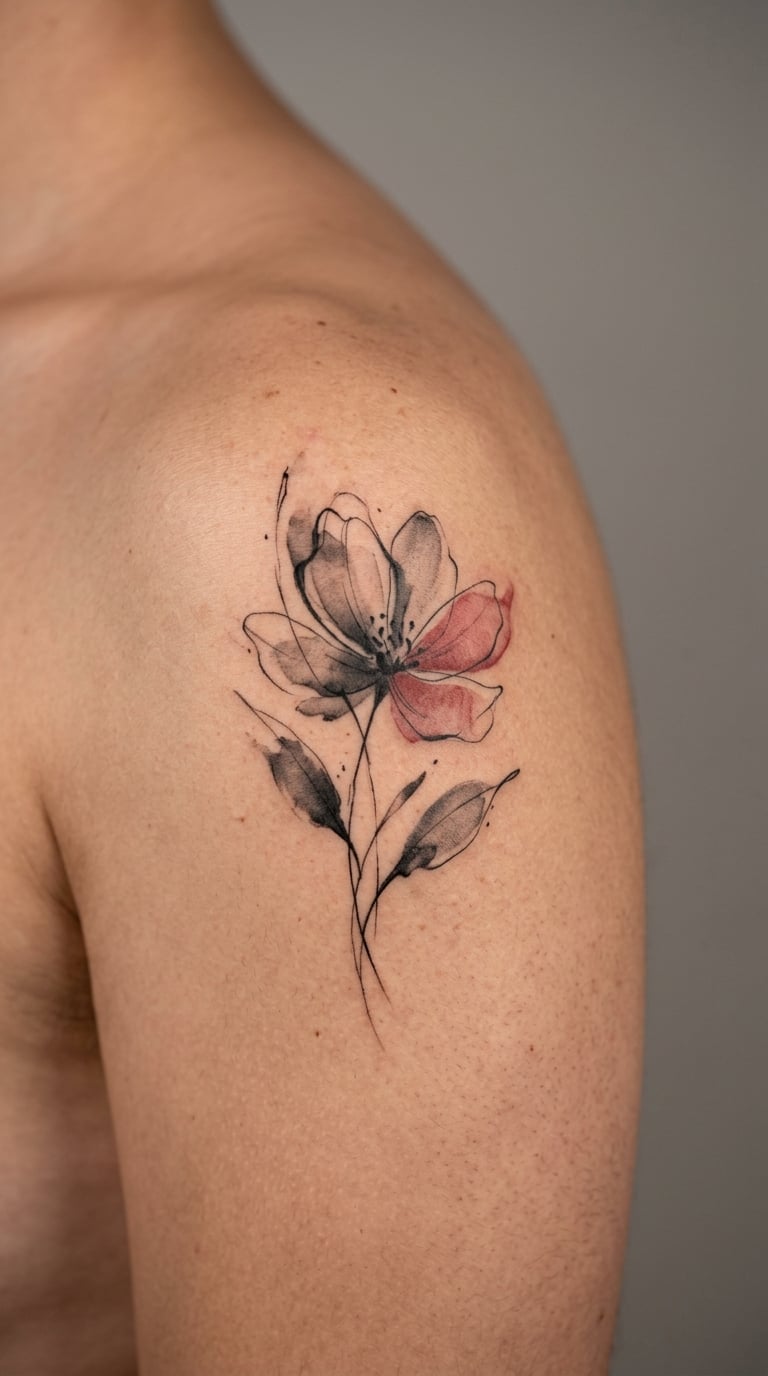
Watercolor work bleeds pigment into soft edges outside the line, which is why it reads as a painting rather than a drawing. For a memorial it works best as a single stem, one bloom, and a lot of untouched skin around it.
Pick the flower because of a real association, not because of a symbol chart. A bloom from a garden they tended, a flower from a funeral spray, a weed from a field you drove past, any of those carries more than a stock lily.
Placement: shoulder, outer thigh, ribcage, or the back of the arm. Size: 3-4 in (8-10 cm). Style: watercolor, with restrained colour.
Pain: medium, since colour work takes longer in one pass. Watercolour shading fades faster than line, so expect a touch-up in the shaded areas within a couple of years. Make it yours: tuck the first letter of their name into the stem, or use a single petal in a colour they always wore.
6. Memorial Initial in Blackwork
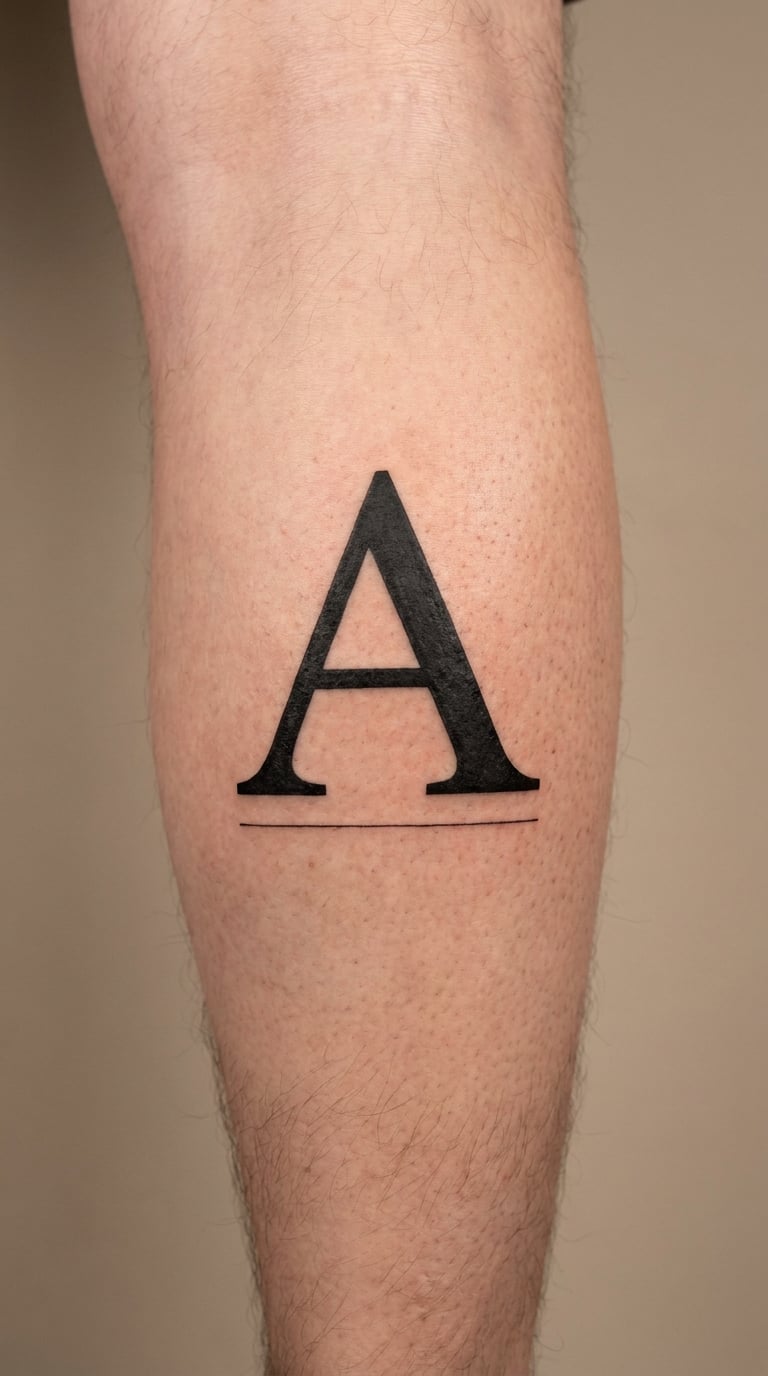
A single letter done properly is one of the quietest memorial options there is. Blackwork means solid, saturated ink with clean edges, so the shape of the letterform does all the work without a portrait, a name, or a date anywhere in sight.
People choose a single initial when the relationship was loud but the wearer is private. It is also the most economical way to fill a gap in an existing piece.
Placement: calf, forearm, upper arm, or the back of the shoulder. Size: 2-4 in (5-10 cm) tall. Style: blackwork, optionally with a hairline flourish.
Pain: medium, and the calf gives a little more than the ribs. Solid black ages by fading in the middle of large fills, so ask the artist to leave a thin gap of skin inside the stroke. Make it yours: use a serif style that matches the era of something they owned, or add a small mark beneath it such as a date in hairline numerals.
7. Coordinates of a Meaningful Location
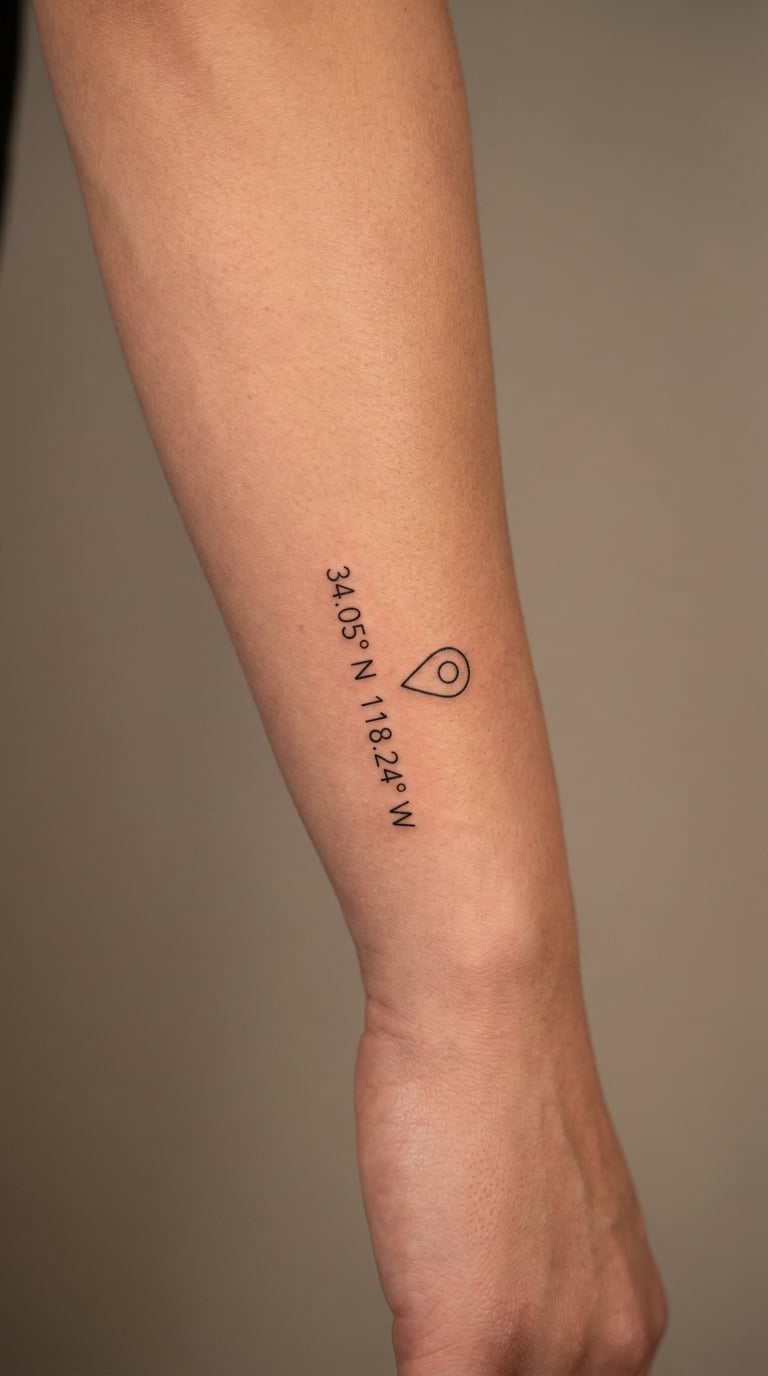
Coordinates compress a whole place into a few numbers: where a home was, where you met, where you scattered ashes, or the campsite they always booked. Paired with a small outline pin, it is readable as a location to anyone who has seen coordinates and still personal to you.
This one is a true micro design. At about 1-2 in (3-5 cm) it can sit almost anywhere, including the side of a finger, though finger skin is the fastest to blur.
Placement: side of the forearm, inner arm, above the ankle. Size: 1-2 in (3-5 cm) wide. Style: micro lettering, single needle.
Pain: low to medium, longer only because the line count is high. Numbers with loops and degrees signs lose definition within roughly five years if the line is too thin. Make it yours: use coordinates rounded to four decimal places and check them twice, or pair them with the place name in a smaller script underneath.
8. Pet Portrait Inspired by Their Animal
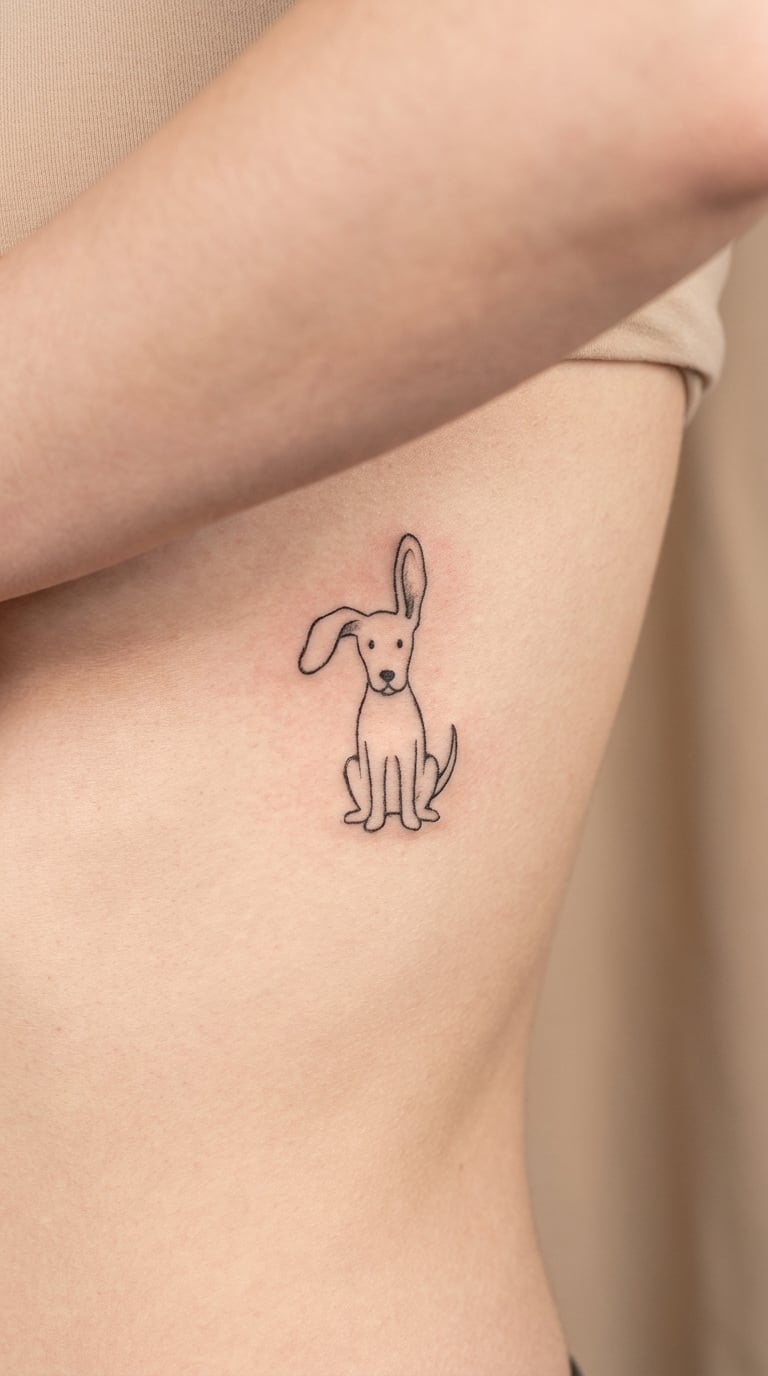
Sometimes the strongest memorial for a friend is their animal. A dog that slept on your feet for fifteen years is a genuine relationship, and a portrait of that dog remembers the whole household in one image.
Micro-realism gives you a recognisable animal in a small footprint, while fine line keeps it graphic. Both work, but the likeness depends on getting one or two specific features exactly right.
Placement: ribcage, inner arm, outer thigh, or behind the ear. Size: 2-3 in (5-8 cm). Style: micro-realism or fine line.
Pain: medium, and the ribcage is more sensitive than the arm. Fine hair detail inside the ears and muzzle blurs with age, so build the likeness around shape, ear set, and posture instead. Make it yours: capture the markings, the ear that folded, the tail that curled, and give the artist a straight-on photo in good light.
9. Compass Rose with a Personal Direction
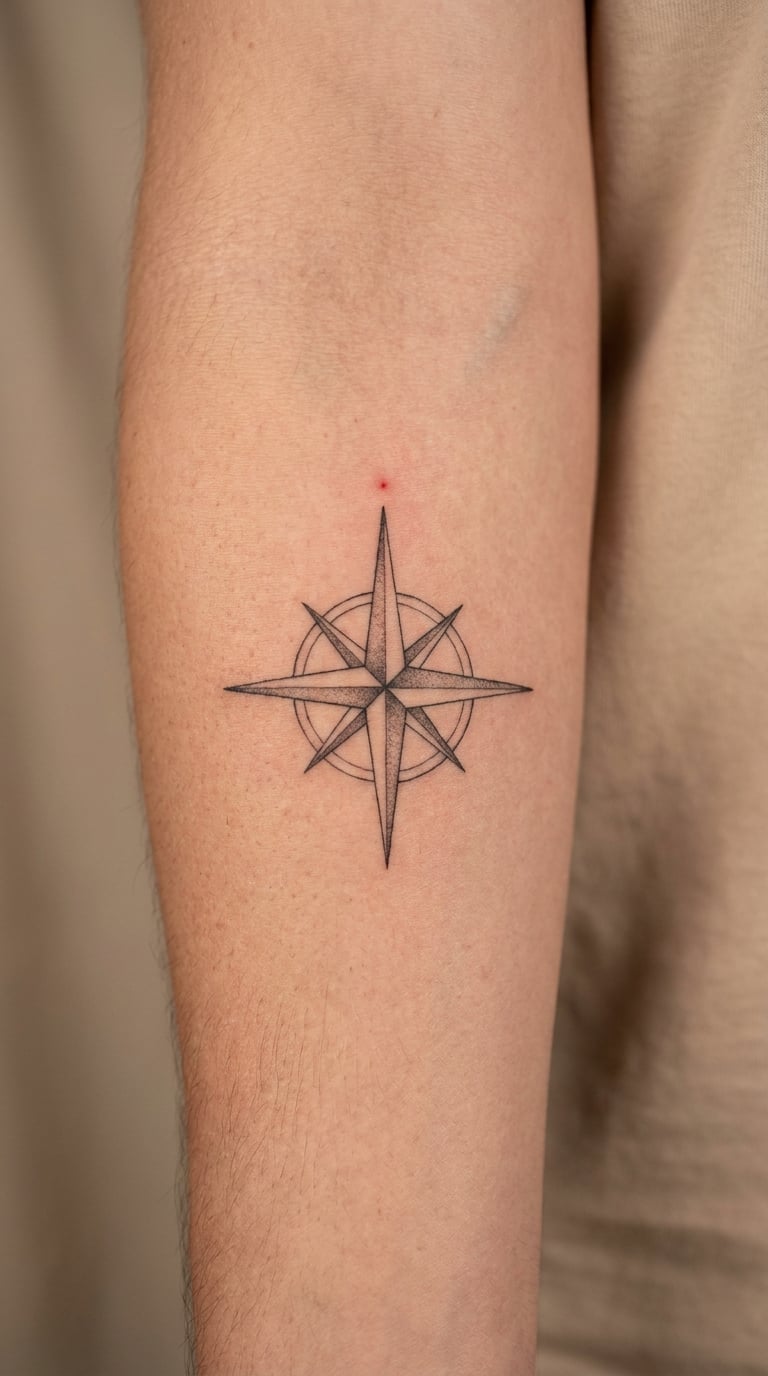
A compass rose is a fixed motif with no built-in meaning, which is exactly why it works as a tribute. You decide what it points to: a town they were from, a destination you never got to share, a family house, a direction you would have gone together.
Keep the geometry honest. A clean eight-point star with thin rays and no ornament reads well at small sizes, while a densely engraved nautical compass turns into a solid block once it is under two inches.
Placement: inner upper arm, chest, or the outer calf. Size: 2-3 in (5-8 cm) across. Style: fine line with light linework shading.
Pain: medium on the inner arm, higher on the ribs. Hairline rays blur fastest, so the artist should keep the internal spokes at least as heavy as the outer points. Make it yours: fill one point in a single colour, or set a small pair of coordinates beneath the north point.
10. Matching Micro Heart Outlines
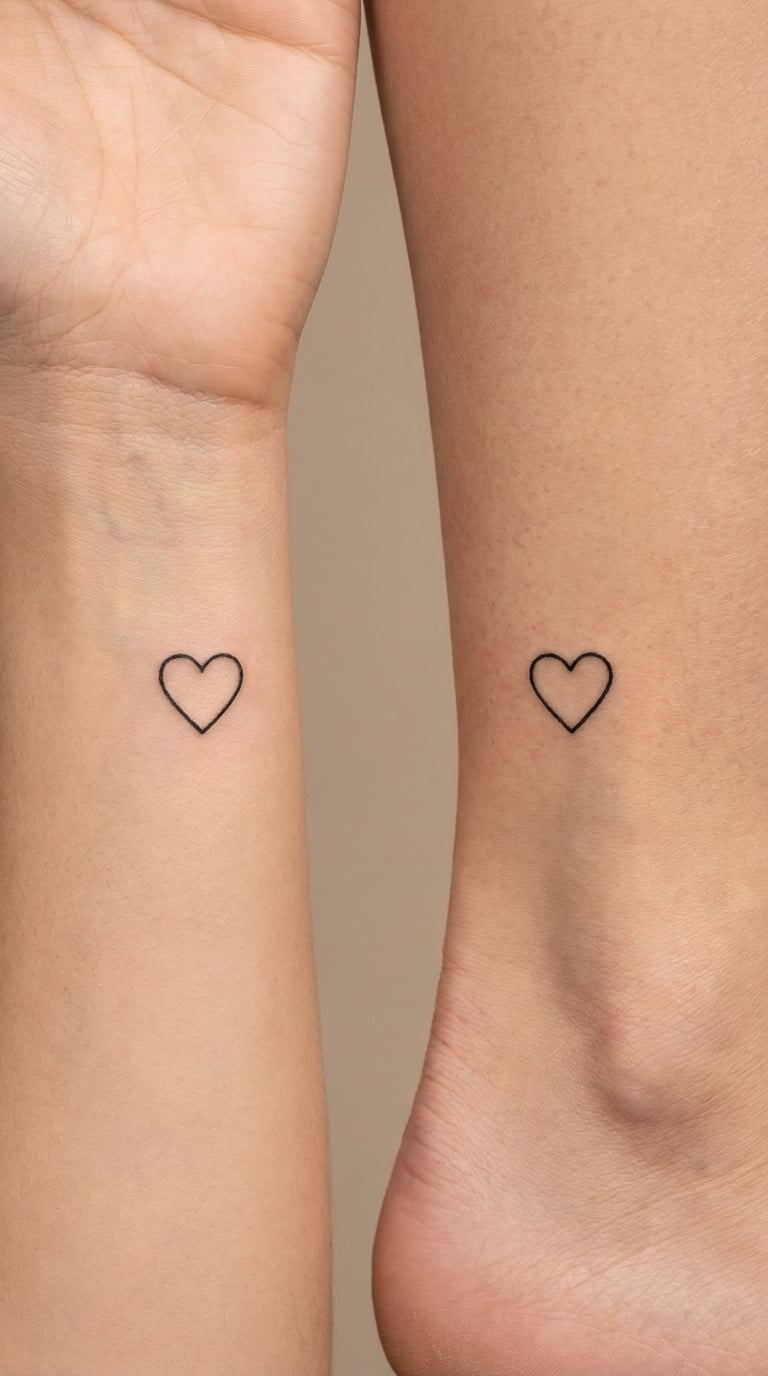
Two people who are carrying the same loss can each get a small outline heart in the same place. It is the least complicated design on this list and one of the few that makes the tribute visible to other people, if they know to look.
The catch is placement. Matching works only if the two of you agree on the location, and the size has to be large enough to keep a recognisable outline.
Placement: wrist, ankle, behind the ear, or the inner arm. Size: 0.5-1 in (1-2 cm) across. Style: minimalist single-line outline.
Pain: low, and behind the ear is a spot people describe as more intense than it looks. Very small hearts on the fingers and hands lose their outline within a few years, so pick a flat area. Make it yours: have each person add one tiny distinguishing detail, such as a single stitch line, so the pair reads as related rather than identical.
If your group is full of inside jokes instead of grief, our collection of 46 matching tattoo ideas you can get with your best friend covers the lighter end of the same idea, and the opposite best friend tattoo ideas cover split designs that only make sense as a pair.
11. Meaningful Song Lyric in Script
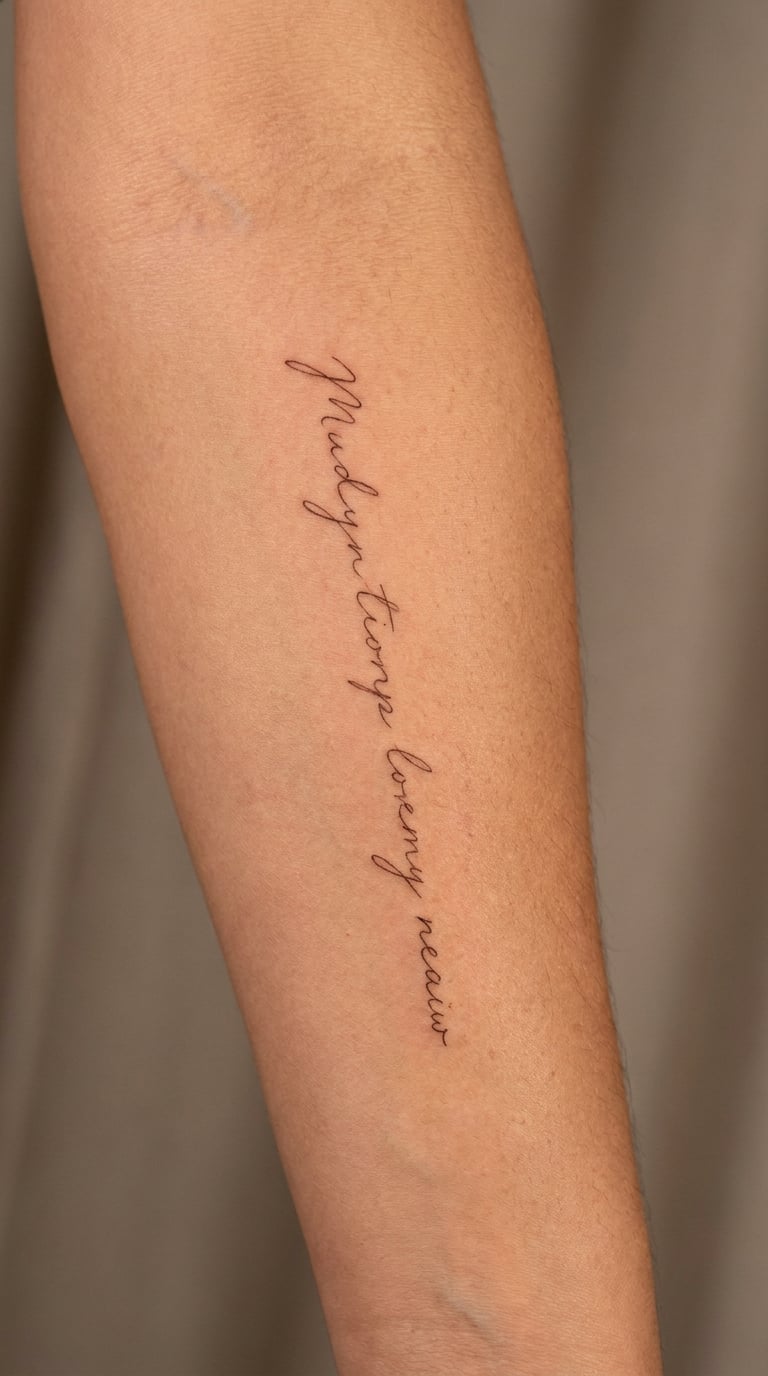
A line from a song you both played on repeat is one of the most honest tributes available, because it remembers a moment rather than a symbol. Keep it short. Two to five words carry more weight than a full verse, and they stay readable.
On the legality side, keep the fragment short and do not reproduce a recognisable melody, chart, or logo. An artist can refuse a request for a long lyric block, and it saves the session to ask first.
Placement: inner forearm, ribs, or between the shoulder blades where it stays private. Size: 2-5 in (5-13 cm). Style: fine line script, or hand-lettered capitals for something more direct.
Pain: medium, and the ribs take longer because the skin is thin and the client breathes. Script on the inner forearm is prone to blurring, so the artist should go a needle width heavier than a paper-thin hand. Make it yours: use the last line they hummed, or add the year the song came out beneath it in tiny numerals.
12. Rooted Tree with Tiny Dates
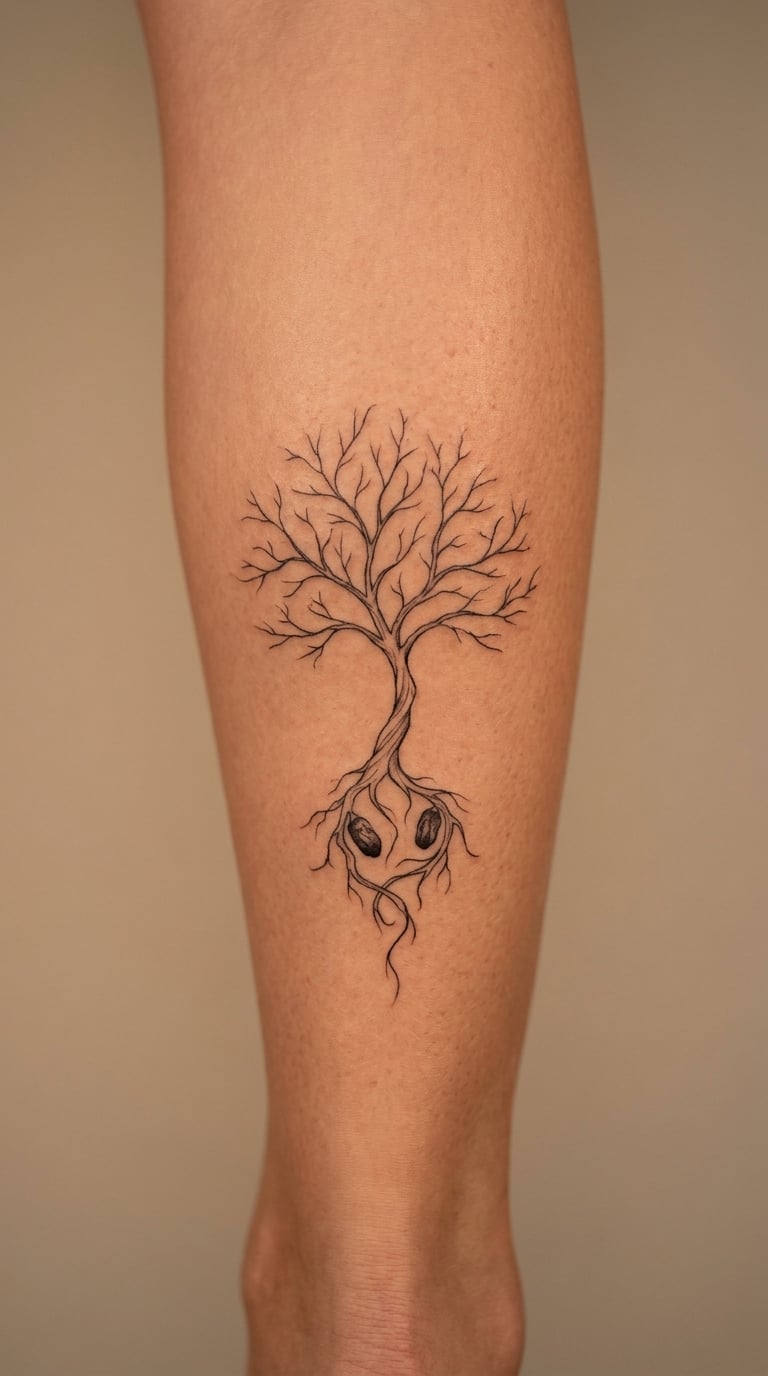
A rooted tree is a memorial about continuity rather than a person, which makes it a good fit when you want something that feels rooted in a place or a family. The design is built upward from visible roots, with the canopy left lighter than the base.
Grey wash under the roots gives depth without going full blackwork, and the branch structure can follow a real tree: the one outside the house, the one in the park where you used to sit.
Placement: calf, outer thigh, forearm, or the back of the upper arm. Size: 3-5 in (8-13 cm) tall. Style: blackwork with grey wash shading.
Pain: medium to high over the calf, and longer sessions mean more of the session is uncomfortable. Root and branch hairlines are the first thing to soften, so a heavier trunk keeps the design readable. Make it yours: place one date in the roots and one in the canopy, or have a small initial hidden in the negative space between branches.
13. Minimal Mountain Range in Blackwork
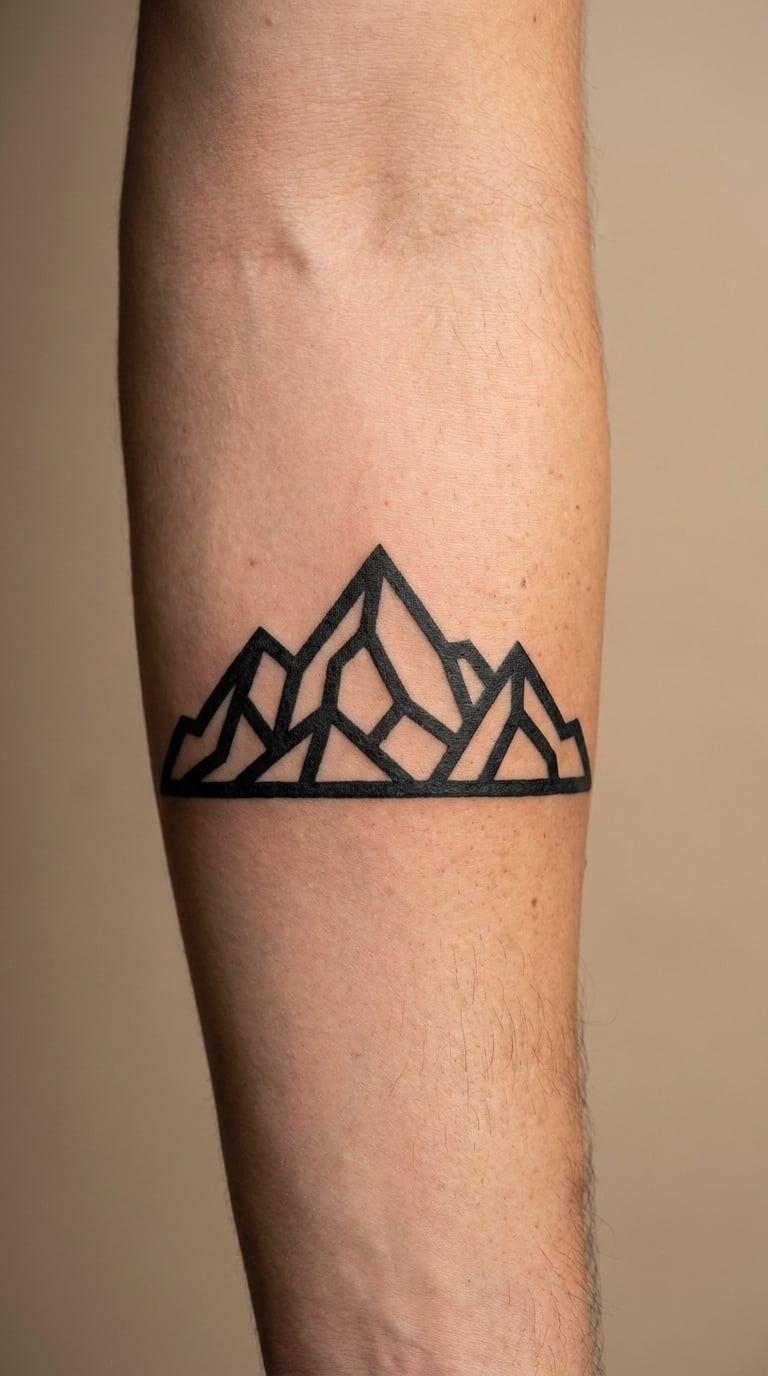
A graphic mountain range built from solid black peaks and clean white gaps is a strong forearm piece. The trick is restraint: three or four peaks with a straight baseline read as deliberate, while seven peaks across four inches look busy by the time they heal.
This suits friendships tied to a trip, a drive, a hiking habit, or simply a place you both planned to go and did not get to.
Placement: forearm, calf, ribs, or upper arm. Size: 4-6 in (10-15 cm) wide. Style: solid blackwork with negative-space snow lines.
Pain: medium to high across a wide forearm because it is a long session in one area. Large solid fills develop a faded centre over a decade, so the artist should build the black in layers and expect one free touch-up. Make it yours: draw the real ridgeline from memory as the peak shapes, then hide a small set of coordinates inside the lowest valley.
14. Wave Marking a Shared Water Memory
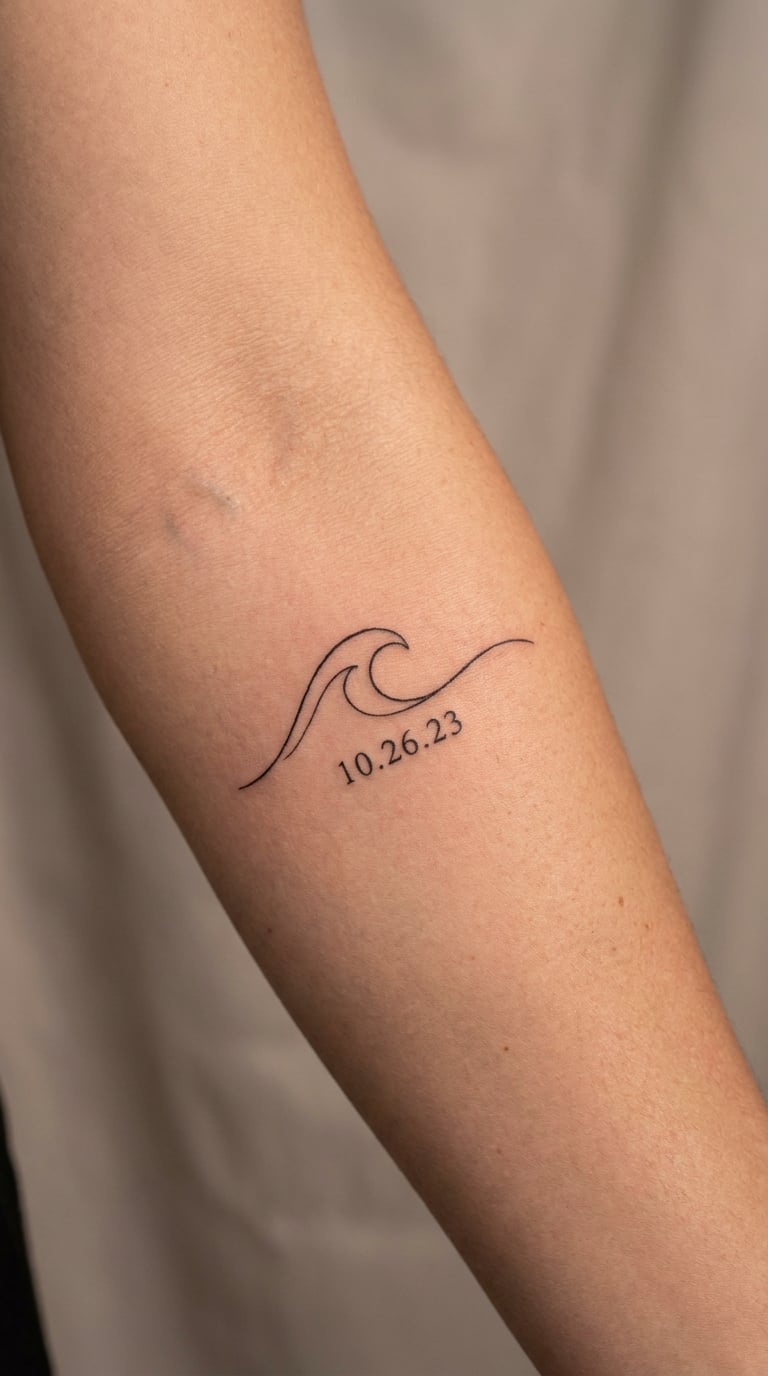
One wave, drawn with a long sweeping curve and plenty of empty skin around it, marks a shared water memory better than a full seascape would. A lake, a sea, a river, a specific break of surf all have a different shape, and using the right one matters more than the detail count.
This is a common design for friends from coastal towns, and it also works for a single lake cabin that mattered to both of you.
Placement: outer arm, ankle, ribs, or the back of the calf. Size: 2-4 in (5-10 cm) wide. Style: fine line, or a bolder blackwork crest.
Pain: low to medium, and the ankle area gets tender near the bone. Foam and spray details are the first to blur, so keep them sparse and let the main curve carry the piece. Make it yours: add the date of the trip under the curve, or work a set of coordinates into the spray behind the crest.
15. Sun and Moon as a Paired Tribute
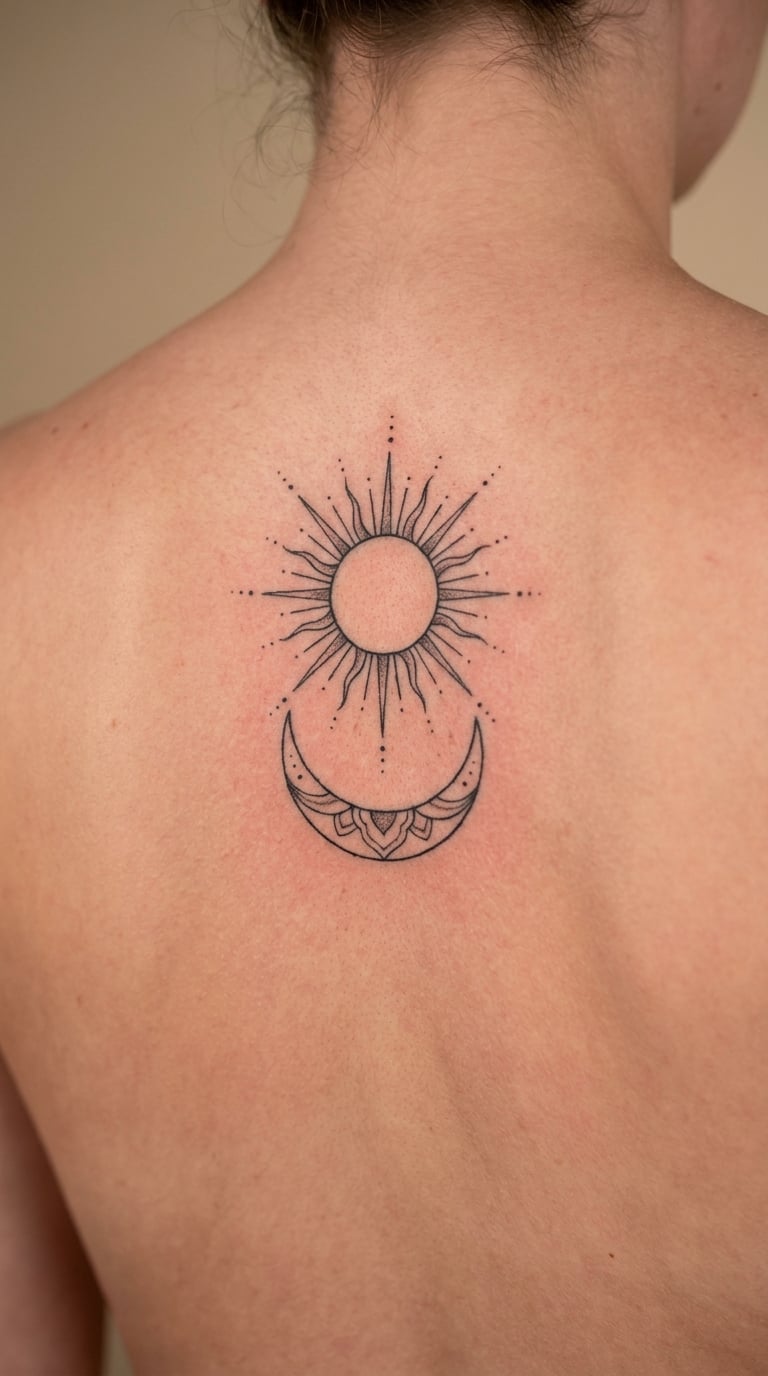
Sun and moon are usually sold with fixed claims about life and death, and for some people that framing fits. Plenty of people choose the pairing for a different reason entirely, such as two people who were opposite, or a friend who was up at every hour.
A balanced composition has the two shapes at similar visual weight with clear space between them, which reads as a pair rather than a chart.
Placement: upper back between the shoulder blades, chest, or upper arm. Size: 3-5 in (8-13 cm) across. Style: fine line, or blackwork with solid discs.
Pain: medium on the back, and the upper back is one of the more sensitive areas for a long session. Fine radiating rays soften fastest, so the artist should keep the disc edges strong and the rays sparse. Make it yours: put the times of sunrise and sunset on a meaningful day beneath the pair, or use one warm ink and one cool grey instead of two colours.
16. Laurel Wreath with a Fingerprint Center
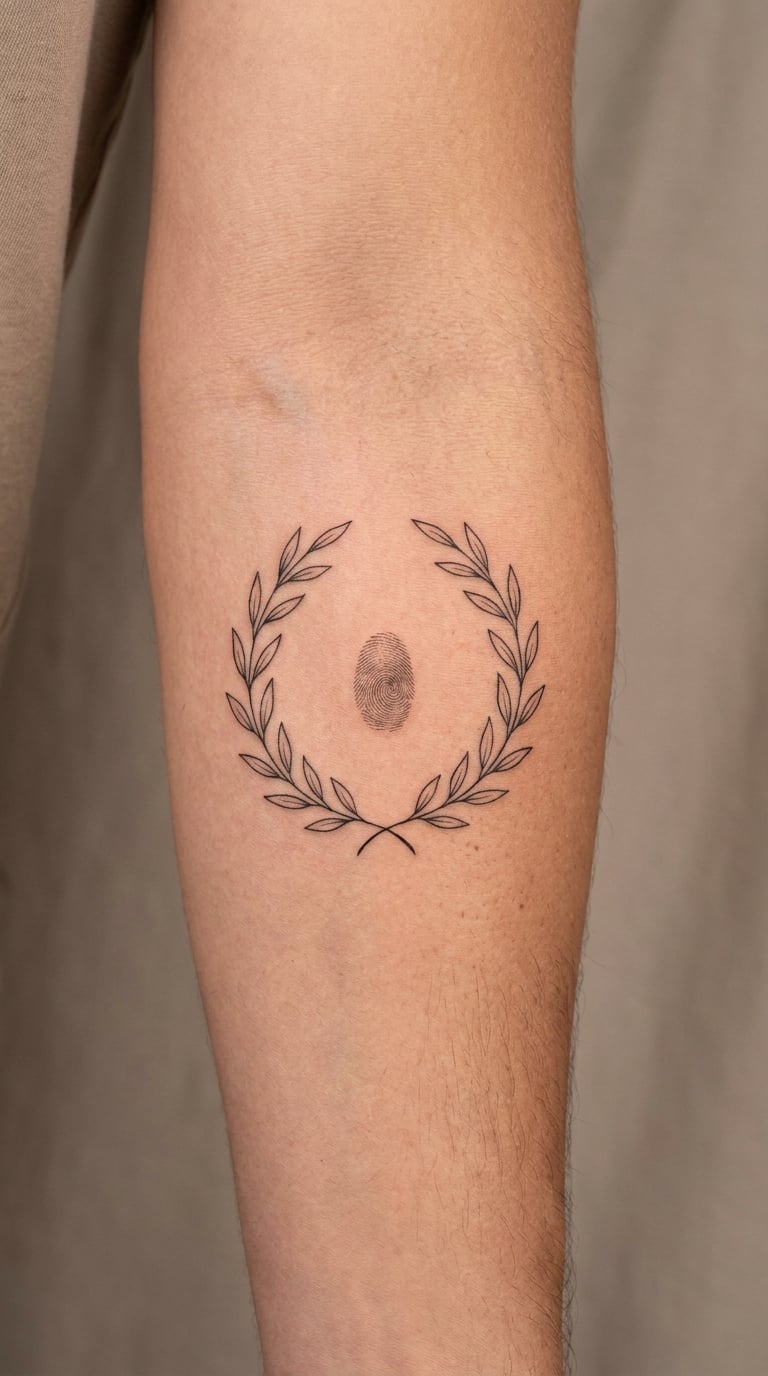
A laurel wreath gives the piece structure and balance, and a real fingerprint in the middle gives it something no artist can invent. Together they make a layered memorial that looks composed rather than assembled.
A printed fingerprint off a document works fine. Print it at actual size, crop it to the ridges you want, and hand it over as a clean scan rather than a phone photo of paper.
Placement: forearm, calf, outer thigh, or the back of the upper arm. Size: 2-3 in (5-8 cm) across. Style: fine line wreath with a stippled centre.
Pain: medium, and the outer thigh is the firmest surface on this list. Fingerprint ridges are hairline, so they soften within several years, and the wreath is what keeps the design recognisable. Make it yours: use a family fingerprint of two people by overlapping them, or have the wreath broken at the top rather than closed.
17. Simple Outline Portrait with Negative Space
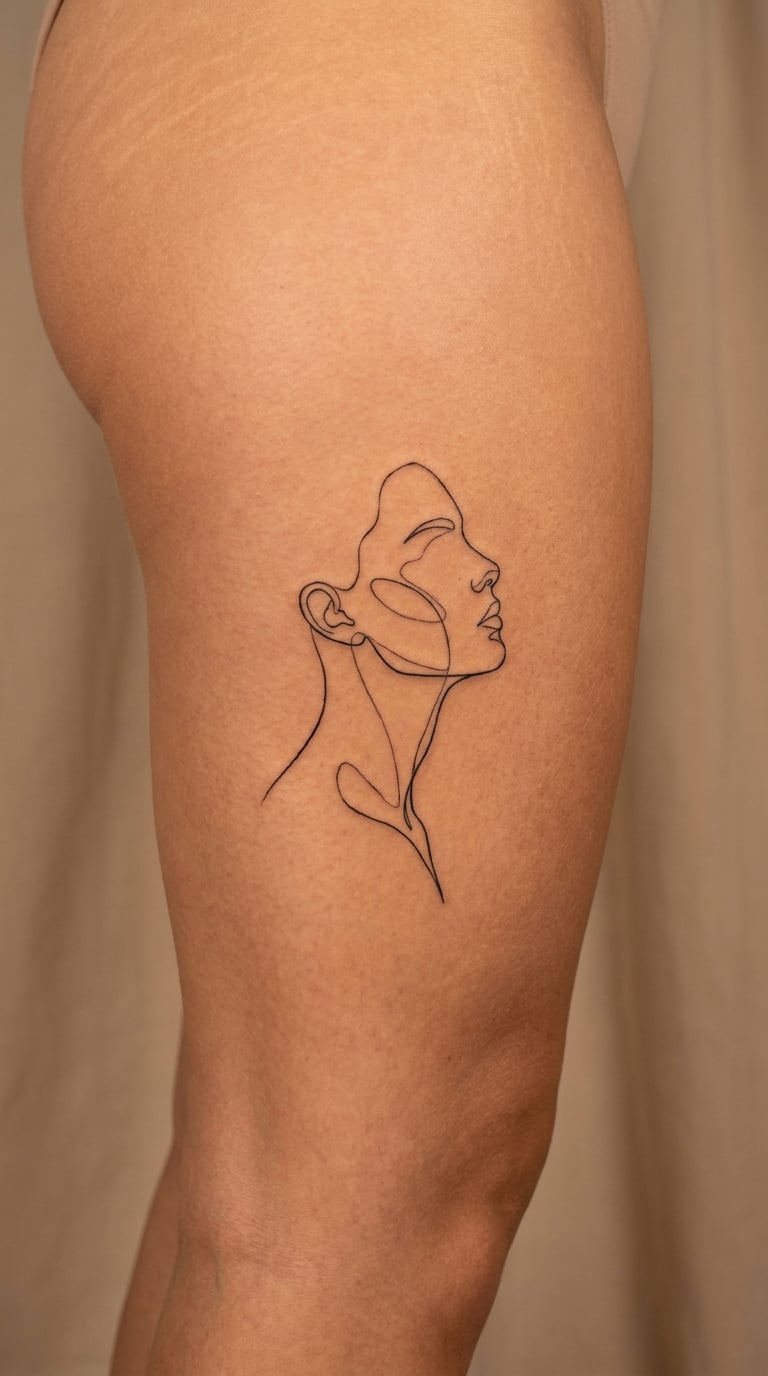
A contour portrait is made almost entirely of empty skin. The artist draws a jawline, a brow, a hairline, a shoulder, and leaves the rest alone, so the eye completes the face. It is the opposite of a shaded portrait and often the more striking result.
Profiles work best because there is less to hide. A front-facing face in pure outline is hard to keep recognisable at small sizes.
Placement: outer thigh, upper arm, ribs, or the back of the shoulder. Size: 3-4 in (8-10 cm) tall. Style: single-needle contour, minimal shading.
Pain: medium, and quick because the line count is low. Contour work depends on unbroken lines, so any hand or finger movement shows up as a wobble, and the thigh and upper arm are the easiest places to hold still. Make it yours: let the design include one distinctive feature only, such as a specific hairstyle shape or a jawline, and leave the eye as open space.
18. Roman Numeral Date with Laurel Detail
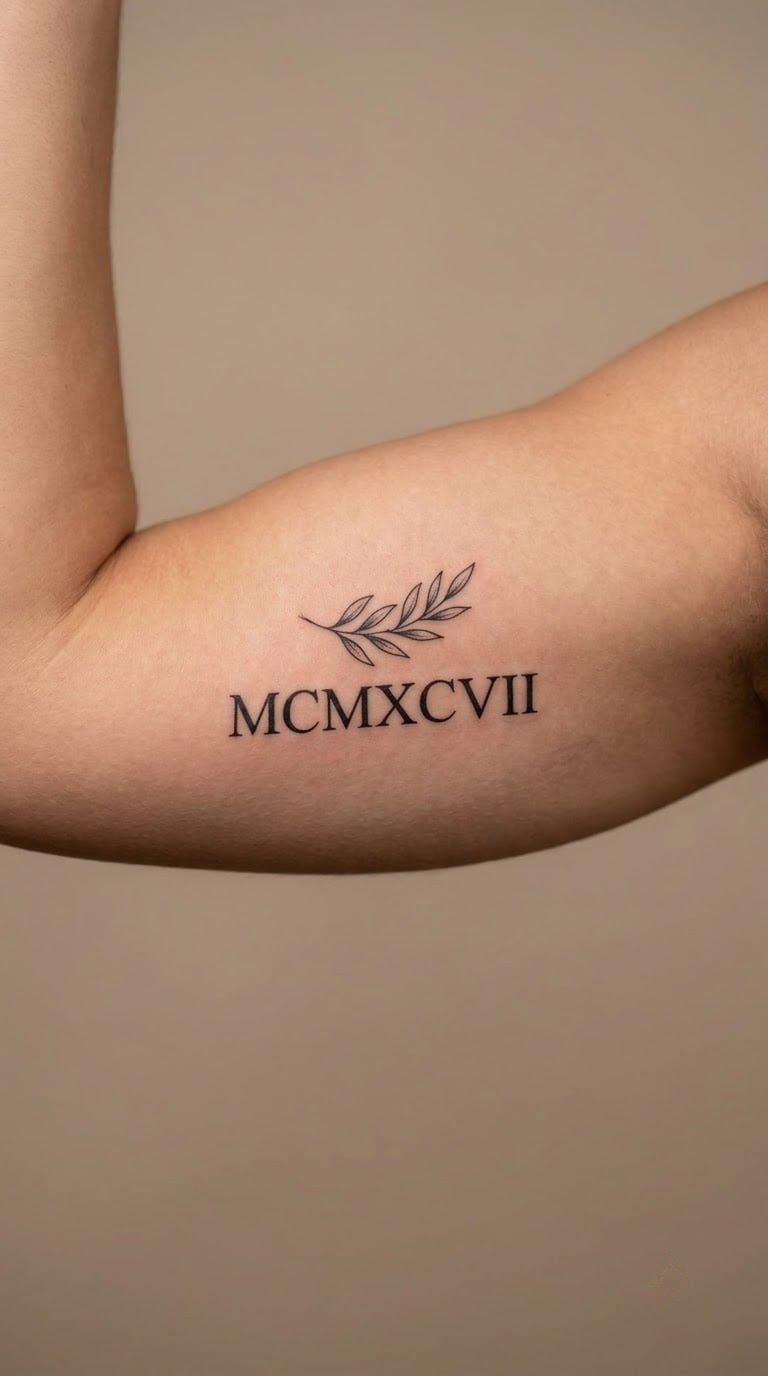
Roman numerals have been carrying dates on skin for a long time, and they do it well because the forms are simple and even. A restrained version is the numerals alone; adding one small laurel sprig softens the formality without crowding the line.
Dates written in numerals need more care than dates written as numbers, because a misread character is harder to catch. Say the date out loud to the artist, then read it back from the stencil.
Placement: inner bicep, forearm, ribs, or the back of the arm. Size: 2-4 in (5-10 cm) wide. Style: fine line serif numerals, or engraved ornamental capitals.
Pain: low to medium, and the inner bicep is a comfortable spot for long lettering. Ornamental capitals fill in and thicken, while hairline serifs thin out, so the middle weight is the one to protect. Make it yours: use the friendship start date rather than the passing date, or run a laurel sprig under one end of the numerals to frame them.
19. Color Painted Forget-Me-Not Sprig
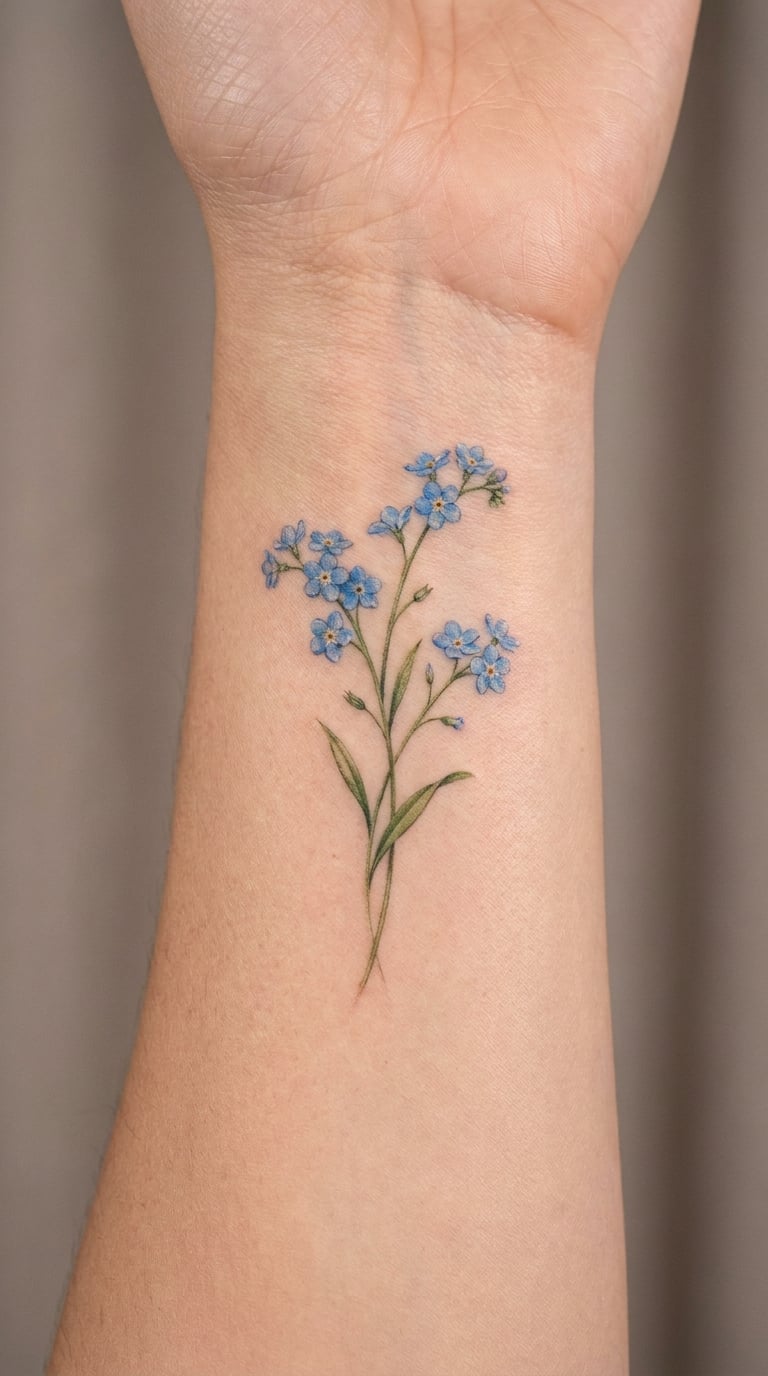
Forget-me-nots carry a remembrance association in flower symbolism, and a small painted sprig with a yellow centre and fine green leaves is a gentle alternative to heavier blackwork. The colour is what makes it feel alive rather than sombre.
Blue forget-me-nots are also among the pigments tattooists discuss most often when clients react to ink, so mention any known sensitivities at the consultation rather than at the end of the appointment.
Placement: wrist, ankle, shoulder, or behind the arm. Size: 2-3 in (5-8 cm) long. Style: realistic colour botanical, or loose watercolour.
Pain: low to medium, and colouring is quicker than shading because layers are light. Fine stems and the yellow centres fade fastest, so expect the soft blue to hold longer than the crisp edges. Make it yours: add a small hidden initial inside one leaf, or set the sprig at the angle it grew in the garden it came from.
20. Abstract Line Portrait in Minimal Blackwork
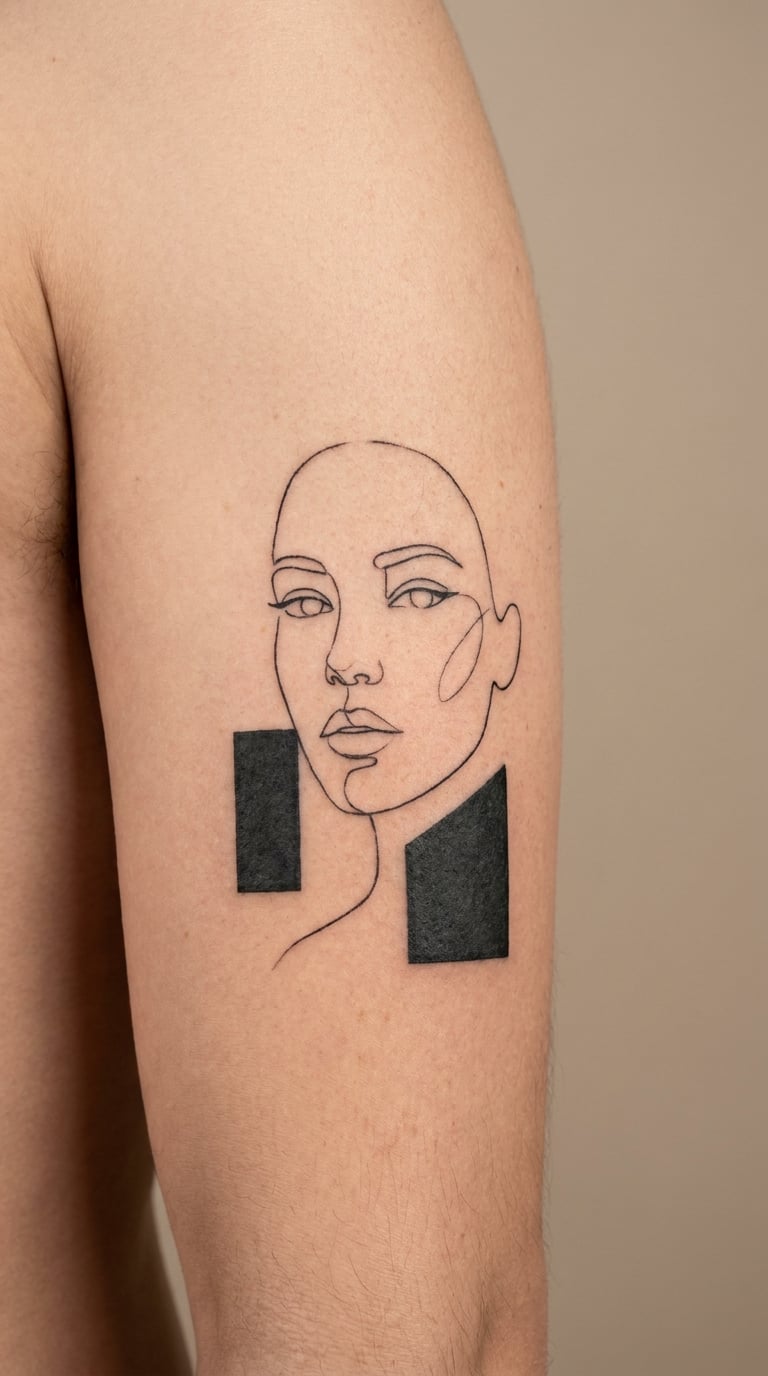
An abstract portrait takes a handful of facial contours and one or two solid black shapes, then stops. It is a contemporary way to keep a likeness without committing to a full shaded face, and it holds up better over time because there is no fine shading to fade.
It is the one design on this list that needs the most open space around it. Crowding it is the fastest way to lose the effect.
Placement: upper arm, outer thigh, or the back of the shoulder. Size: 4-6 in (10-15 cm) tall. Style: minimal blackwork with solid fills.
Pain: medium to high, since this is a large piece with long unbroken passes. Solid black shapes hold their edge for years, while the sparse lines soften first, which is the effect the style relies on. Make it yours: agree in advance which two features must be readable, and ask the artist to leave the rest implied rather than adding detail to fill space.
How to Choose the Right Design
Start with the memory, not the symbol
Write down three specific things you shared: a place, an object, a habit. The design usually comes from one of them, and readers on tattoo forums consistently prefer a design rooted in a real detail over a stock symbol. If you cannot explain where a symbol came from in one sentence, it is probably not your design yet.
Let your existing tattoos set the size floor
If your arm already carries a three-inch piece, a one-inch memorial will look like an afterthought beside it. If you are starting fresh, smaller is more forgiving. Either way, check that line weight in the new design matches or clearly contrasts with the old work rather than sitting in between.
Choose placement for readability, not just privacy
People on tattoo forums report the same pattern repeatedly: inner forearm and wrist lettering stays visible to the wearer, while ribs, the spine, and the back stay private and show fewer signs of daily wear. Pick the one you actually want, and check it in a mirror or on a friend before you commit.
Match the artist to the style
Fine line, blackwork, micro-realism, and realistic colour are different practices. A portfolio full of bold illustrative work is not the same as a portfolio full of delicate single-needle pieces, and an artist will do their best work in the style they already practise. Book a consultation and bring references for what you want, not for the whole arm.
Use a first-tattoo option if this is your first
Fine-line name with a date, a small silhouette, a tiny heart outline, or coordinates in a flat area are the most forgiving first designs. They take under an hour, they sit where skin is thick and steady, and they leave room to add to later without a sleeve-shaped decision.
Check what survives at ten years
Ask the artist to draw the design at a smaller version of itself. If the tiny trial loses every detail, the full-size version will lose them too in a decade. Hairline detail, dots, thin serifs, and light script all soften; solid black, bold linework, and simple shapes hold.
Cost and Session Time
Tattoos in the US are priced by the hour, and memorial pieces fall into a fairly predictable set of bands. A micro design such as coordinates, a small heart, or a single word usually takes 20 to 45 minutes and lands in the low hundreds at most studios. A small fine-line piece, a name, or a lyric fragment needs 60 to 90 minutes and sits in the mid to upper hundreds.
A detailed portrait, an abstract line portrait, or a rooted tree is a three-to-five-hour job and runs into the high hundreds and beyond. Anything larger than about six inches across, or a full sleeve, is a multi-session project, and most studios will not book it in one sitting.
Rates vary a great deal by city and by artist, and a shop minimum means the smallest piece still costs a set amount. Travel, a deposit, and the cost of a touch-up after healing are worth asking about at the consultation rather than assuming.
Aftercare Basics
- Follow your artist’s aftercare instructions first. They take priority over anything general, because the artist knows how deep the work went and what inks were used.
- Wash gently, twice a day. Lukewarm water and a mild unscented soap, then pat dry with something clean rather than rubbing.
- Protect it for the first few days. A clean wrap or a loose bandage for sleep, and clean loose clothing over the area.
- Stay out of swimming pools, hot tubs, and open water. Until the tattoo has healed and any scabbing has fully resolved.
- Keep direct sun off it while it heals. Once healed, a tattoo that never sees sun holds its ink far better, and that matters most for the pale colours in the forget-me-not and watercolor designs.
- Watch it without fussing. Mild redness, swelling, and itching are common early on. If something looks wrong to you or gets worse instead of better, contact your artist first, then your doctor.
Frequently Asked Questions
What is a good memorial tattoo idea for a first tattoo?
A small fine-line name with a date, a simple place silhouette, or a pair of coordinates in a flat area are the easiest first memorial tattoos. They take under an hour, they sit on thicker skin, and they are simple enough to heal cleanly. A solid blackwork initial is also a safe first piece if you want something bolder without committing to a portrait. Avoid anything with very fine detail at this size, because it softens within a few years.
Should a memorial tattoo for a friend match another tattoo?
It can, and for a group carrying the same loss it often means more than a solo piece. Matching works best when everyone agrees on the design, the size, and the body location before anyone books, since a mismatched placement defeats the point. Many groups keep the design identical but add one small private detail, such as a date, so the tribute is shared without looking mass produced.
Are memorial quote tattoos a good choice?
They work when the words are short and specific to the two of you. Two to five words from a song you both played on repeat, or an inside joke in small script, carries more than a full line of verse. Script lettering is the part that ages fastest, particularly on the inner forearm, so ask the artist to go a needle heavier than the paper-thin version of your handwriting. Keep the fragment short and avoid reproducing anything you would not want reprinted.
What size should a memorial tattoo be?
For a first memorial piece, two to four inches (5-10 cm) is the range that ages best. Small enough to sit comfortably on the forearm, calf, or upper arm, and large enough that a face or a line of text stays recognisable. Below one inch, hairline detail blurs quickly. Above five inches, you are committing to a multi-hour session and a piece you will have for life, which is worth thinking about carefully with your artist.
How do I choose a memorial symbol that feels personal?
Skip the symbol charts and start from the memory instead. Write down three specific things you shared: a place you drove past, an object they owned, a habit you had. One of them is usually your design, and it will feel personal because you can explain where it came from in a sentence. If a symbol such as an infinity loop or a bird only means something because a website said it does, keep looking.
Conclusion
If this is your first tattoo and the loss is recent, start small: a fine-line name with a date, a place silhouette, or a few coordinates in a flat area. Those designs are quick, forgiving, and easy to add to later.
If you already collect ink and want the tribute to sit properly in a body of work, a coordinated portrait, a blackwork mountain range, or an abstract line portrait gives you something with more presence.
Either way, save the references that matter, bring the photograph or the handwriting or the coordinates with you, and book a consultation with an artist who already works in the style you have in mind. These 20 memorial tattoo ideas for a friend all start with the same thing: a memory that is yours alone.