
20 Best Side Rib Tattoo Ideas for Women (September 2026)
A side rib tattoo runs along the outer rib cage, usually between the bottom of the bust and the waistline, where a curved canvas lets the design follow the body’s own lines. These side rib tattoo ideas for women cover everything from a single fine-line rose to a full blackwork snake, and each one lists the placement, size, style and honest pain rating so you can picture it before you book.
Autumn and early winter are the busiest booking months, because a lot of people want new work healed before summer. If you are planning a piece for 2026, most studios run a three to six week wait, and a two to four hour session for anything mid-size. Read the whole list first, then pick two or three that pull you in the same direction.
Quick guide: side rib tattoo ideas for women at a glance
| Idea | Style | Best placement | Size | Pain |
|---|---|---|---|---|
| Cherry blossom branch | Fine line | Floating ribs | 4-6 in | Medium |
| Single-line rose | Minimalist | Lower rib | 2-3 in | Low to medium |
| Lavender sprig | Fine line | Lower rib | 2-3 in | Low to medium |
| Watercolor peony | Watercolor | Underbust to waist | 6-9 in | High |
| Blackwork snake | Blackwork | Underbust upward | 7-10 in | High |
| Colour koi | Colour realism | Ribcage | 6-8 in | High |
| Hummingbird | Colour realism | Underbust | 3-4 in | Medium to high |
| Butterfly, open wings | Fine line | Lower rib | 2-3 in | Low to medium |
| Moon phases arc | Minimalist | Floating ribs | 4-5 in | Medium |
| Zodiac constellation | Dotwork | Ribcage | 4-6 in | Medium to high |
| Handwritten script line | Script | Lower rib | 3-5 in | Medium |
| One-word script | Script | Lower rib | 1-2 in | Low to medium |
| Roman numeral date | Minimalist | Lower rib | 2-3 in | Low to medium |
| Half sacred geometry | Geometric | Ribcage | 5-7 in | Medium to high |
| Ornamental filigree | Ornamental | Floating ribs | 6-8 in | High |
| Red spider lily | Black and grey | Lower rib | 4-6 in | Medium to high |
| Birth flower trio | Soft colour | Underbust | 3-5 in | Medium |
| Dotwork dragonfly | Dotwork | Lower rib | 2-3 in | Low to medium |
| Crescent moon and star | Minimalist | Lower rib | 1-2 in | Low |
| Abstract watercolor wrap | Watercolor | Back to waist | 8-12 in | High |
1. Fine-Line Cherry Blossom Branch Along the Floating Ribs
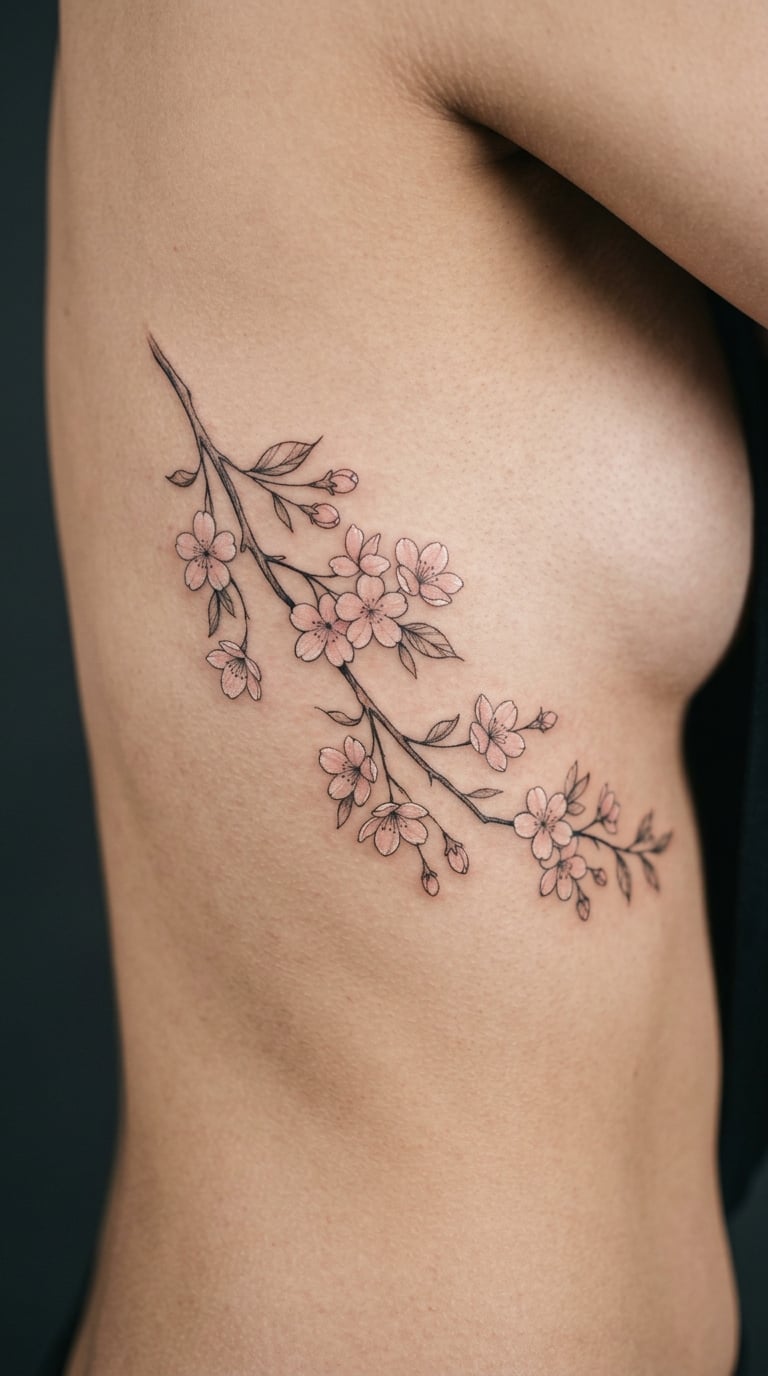
A thin branch with a few open blossoms and drifting petals, drawn in one-weight black line and touched with a wash of pale pink in the centres. The branch angles upward, following the arc under the arm rather than sitting flat.
Cherry blossom is one of the most requested motifs for this placement. In Japanese tradition it carries renewal and the short life of beauty, so a lot of people choose it as a first tattoo that marks a chapter ending.
Placement: floating ribs, starting near the waist and drifting up toward the underarm. Size: 4 to 6 inches (10 to 15 cm). Style: fine line with light colour accents. Pain: medium. The lower third near the waist is the softest part of the run; the top near the armpit is where breathing makes it harder. Fine lines on the ribcage blur over a decade, so expect a touch-up rather than a rewrite.
Make it yours: add the year it was planted, or one falling petal per person who matters.
2. Minimalist Single-Line Rose on the Lower Rib
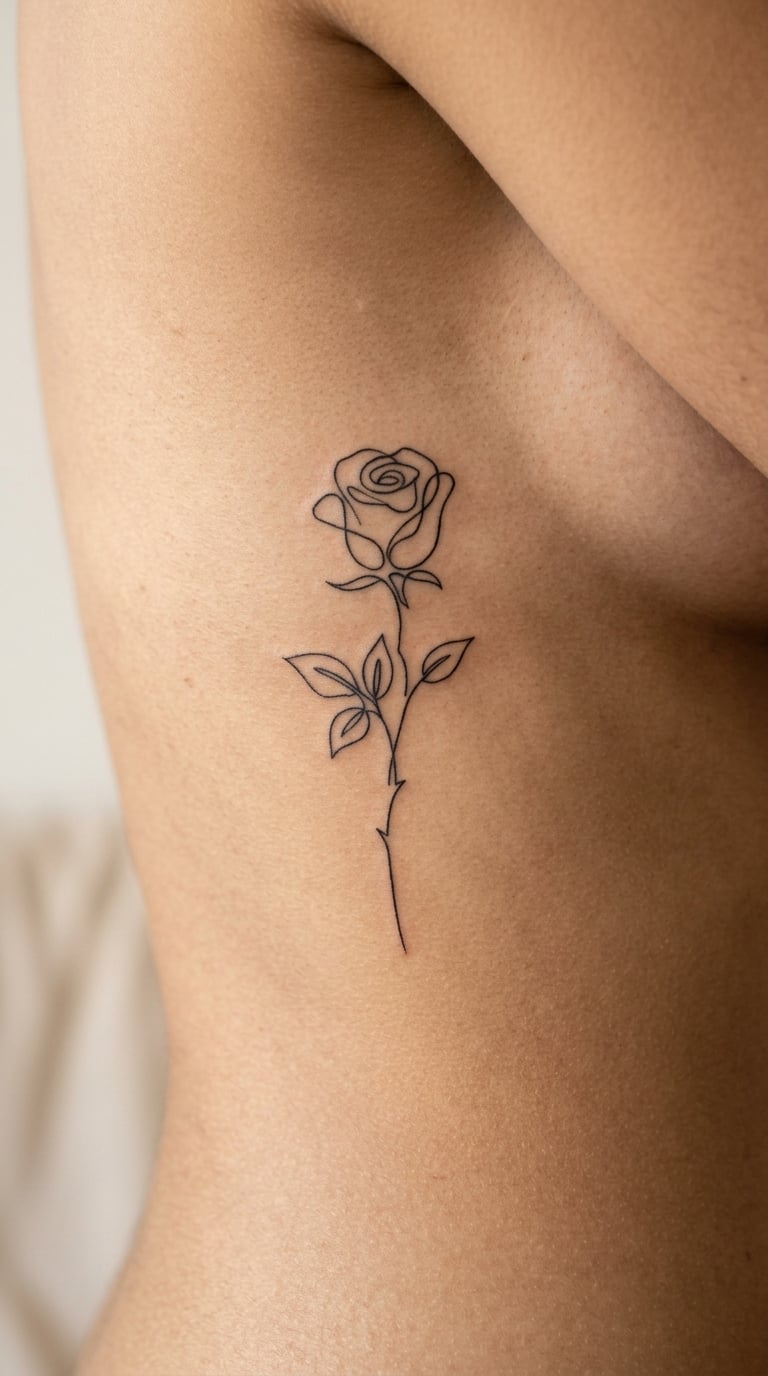
One unbroken line spirals from stem to bloom in a few centimetres of space. There is no shading, no stem, no leaves, just the spiral and the smallest hint of a leaf at the base.
People ask for this one when they want a floral look that is not obviously a bouquet. A rose is the most-quoted flower for enduring love, and the single-line version keeps it from reading as a dated design.
Placement: lower rib, just above the waistline where the skin is warmest and usually a little thicker. Size: 2 to 3 inches (5 to 8 cm). Style: minimalist line art. Pain: low to medium, the most forgiving area in this whole list. The single line needs almost no shading passes, so the session is short and the skin is barely worked.
Make it yours: choose the stem to trail down toward your hip bone, or turn the spiral the other way to mirror a piece on your opposite side.
3. Lavender Sprig in Fine Line
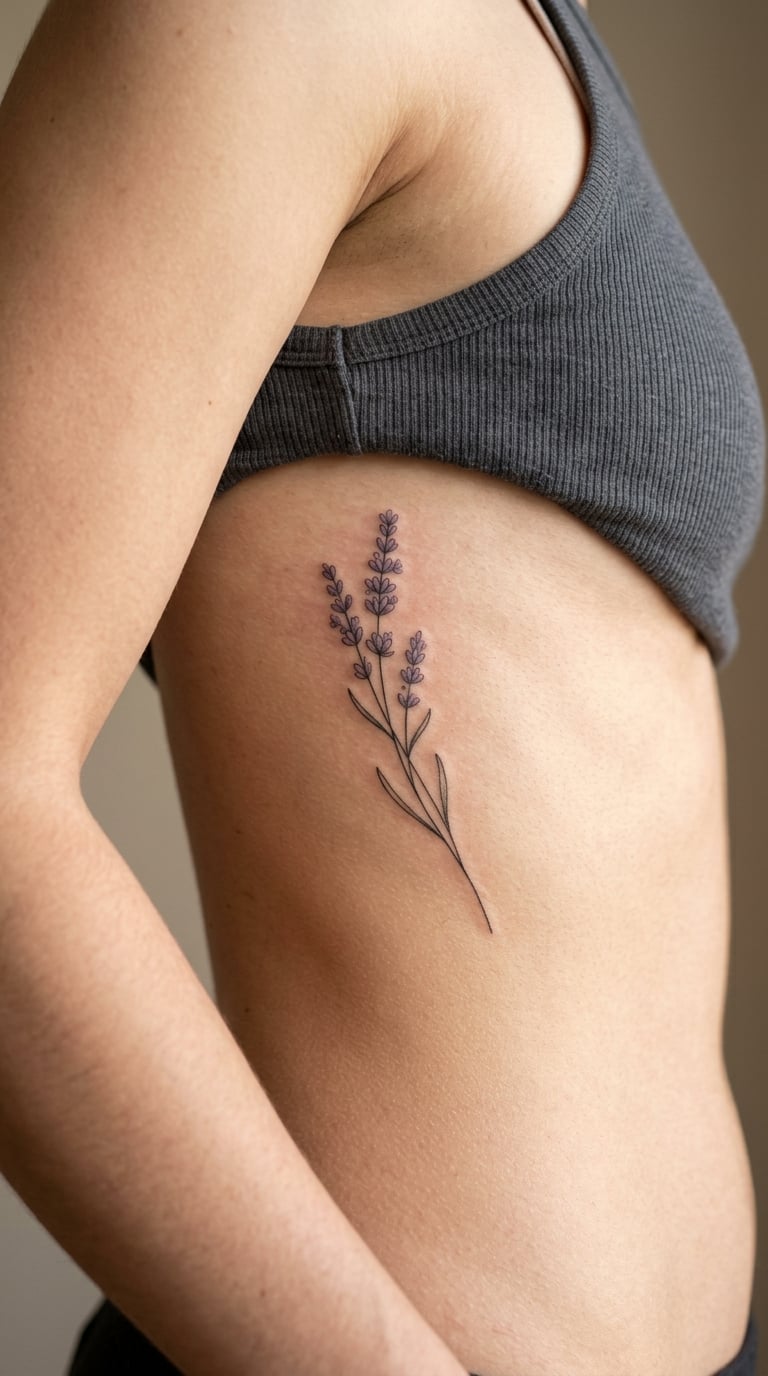
A single stem of lavender with a dozen small buds tapering toward the tip, done in fine black line with a soft violet wash on the flowers only. The buds are worked from the bottom up so they shrink naturally toward the top.
Lavender shows up constantly in quiet placements like this one. It reads as calm and steadiness, and it suits people who like a plant reference without a heavy symbolic weight.
Placement: lower rib, angled slightly so the stem points down toward the hip. Size: 2 to 3 inches (5 to 8 cm). Style: fine line with one colour. Pain: low to medium. Every tiny bud means another pass of the needle over the same curve, so ask for short breaks rather than pushing through in one go.
Make it yours: swap lavender for your own birth flower and keep the same tapered shape.
4. Watercolor Peony Climbing Toward the Underbust
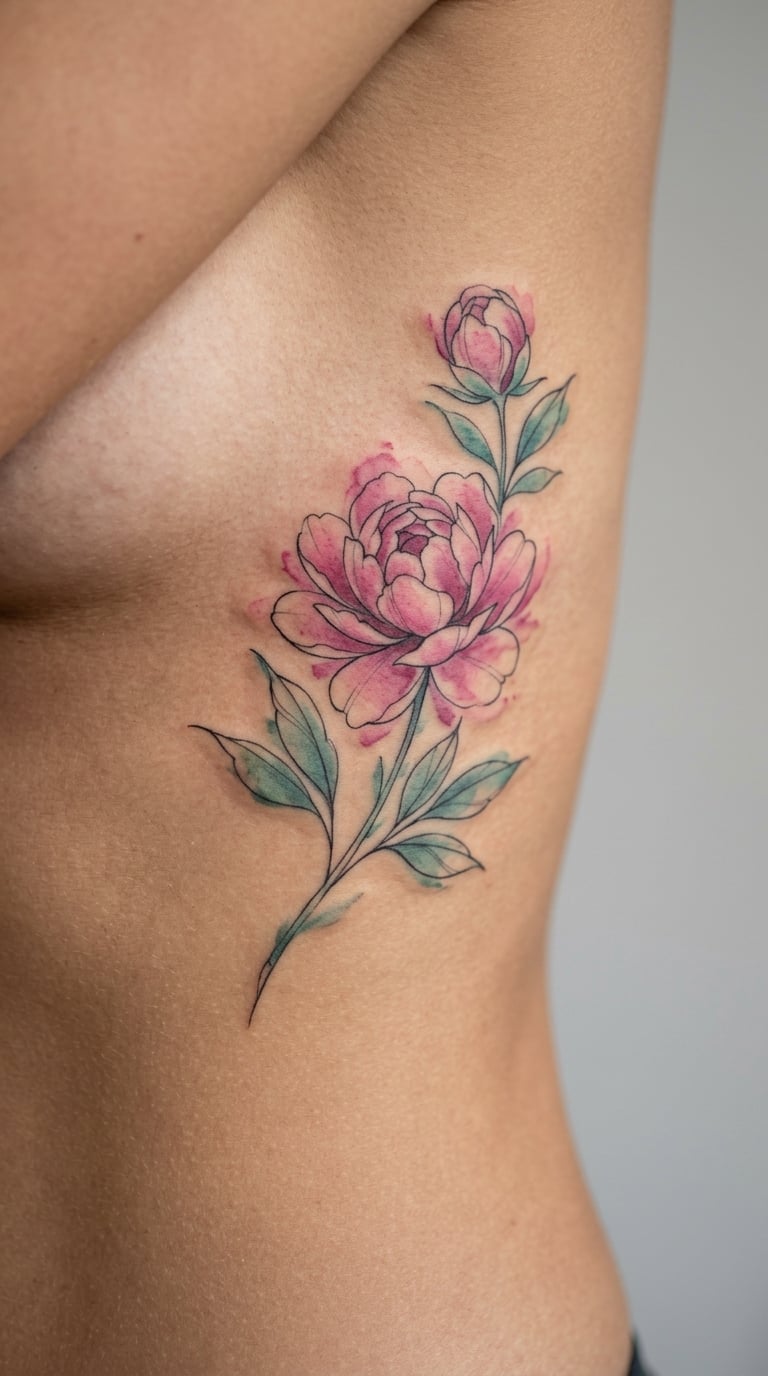
A large peony near the waist with leaves and stems trailing upward in loose washes of pink, sage and a little gold. The colour bleeds past the outlines on purpose, the way paint runs on wet paper.
Peonies in this style are picked for beauty rather than a fixed meaning, though most people attach a person or a season to them. This is the most forgiving design for someone who wants a big piece and does not want a full traditional black outline.
Placement: underbust up to the waist, following the rib arc. Size: 6 to 9 inches (15 to 23 cm). Style: watercolor realism. Pain: high. Large colour work means long needle time over a bone-heavy curve, and the washes need several passes. Plan a nap break halfway.
Make it yours: have the colour fade to nothing as it climbs, so the design dissolves into bare skin near the underbust.
5. Blackwork Snake Winding Up From the Underbust
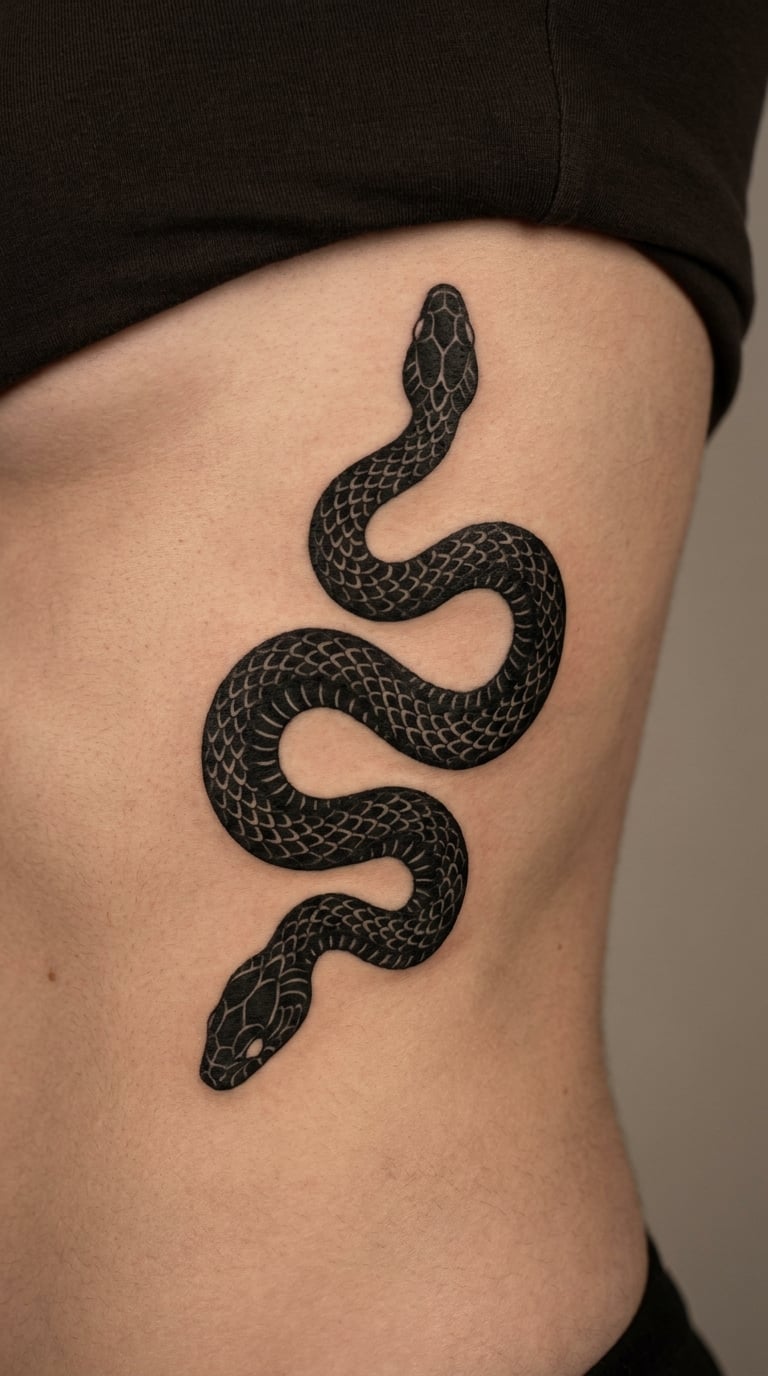
A snake rendered in solid black with scale texture left as negative space, its body looping twice before the head lifts near the armpit. No background, no shadow, just the shape of the animal and the line it follows.
Snakes read very differently depending on where you grew up. In much of Eastern art the snake is protective and tied to transformation; in Western tattoo tradition it carries danger and rebellion. Bring both readings to the consult and let the artist tell you how they see it.
Placement: underbust, travelling up toward the arm. Size: 7 to 10 inches (18 to 25 cm). Style: blackwork. Pain: high. Solid black fills are the hardest work on the ribs, since the needle has to lay down an even block across a curve that never sits flat. Breaks are not optional here.
Make it yours: have the tail end in a fine line and the head end in solid black, so the snake appears to emerge from nothing.
6. Colour Koi Fish Curving Over the Ribcage
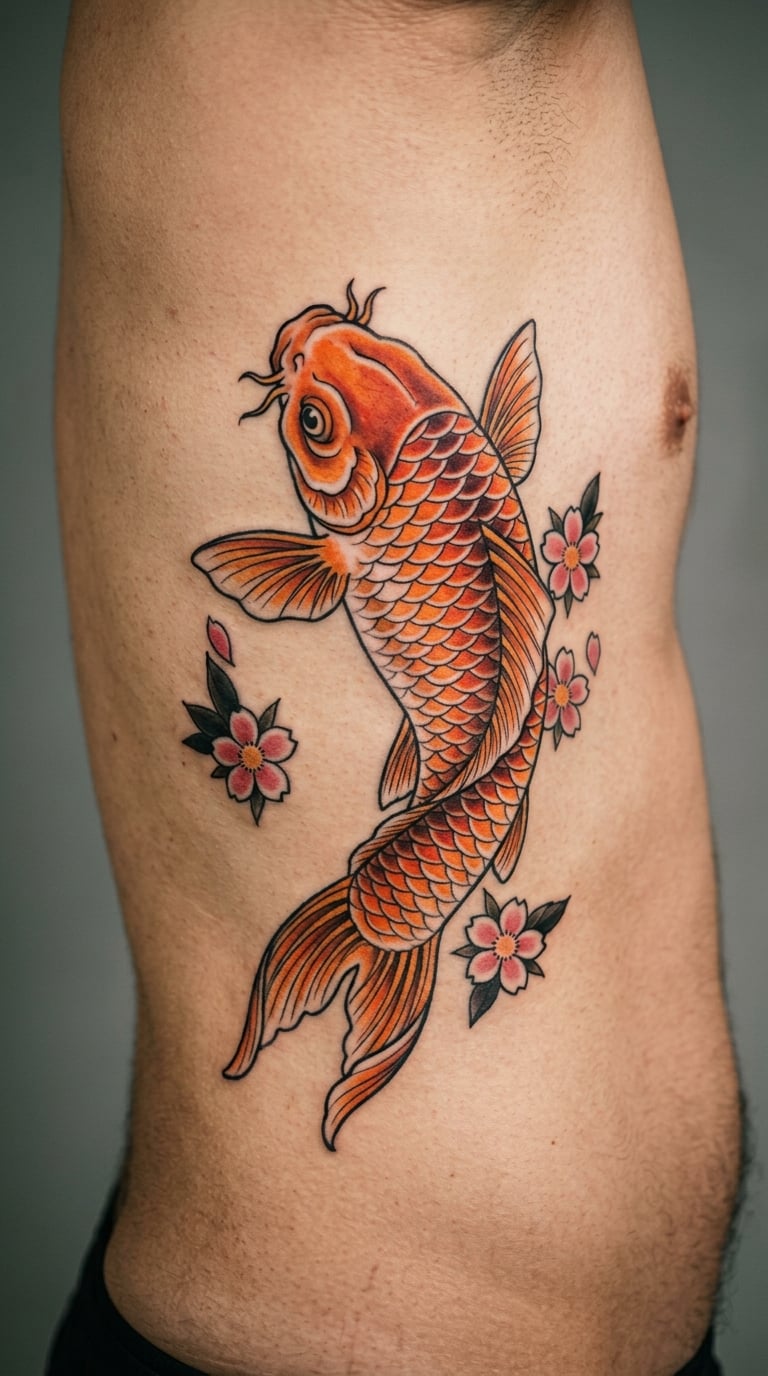
A single koi in orange, white and a little grey, scales individually shaded, body arched so it looks like it is swimming up the side of the body. A few ink dots trail behind it as bubbles.
Koi carry persistence, because of the upstream swim everyone recognises from Japanese prints. Plenty of people here use it for someone who fought through something difficult, which is a more personal reading than any dictionary gives.
Placement: mid-ribcage, where there is the most surface area to show the whole fish. Size: 6 to 8 inches (15 to 20 cm). Style: colour realism with soft shading. Pain: high. Scale work means hundreds of small hits in a small area, and your ribs move with every breath. A lying-down session helps more than people expect.
Make it yours: keep the water abstract rather than realistic, and add a date in the empty space where the bubbles trail off.
7. Hummingbird in Flight With a Blossom
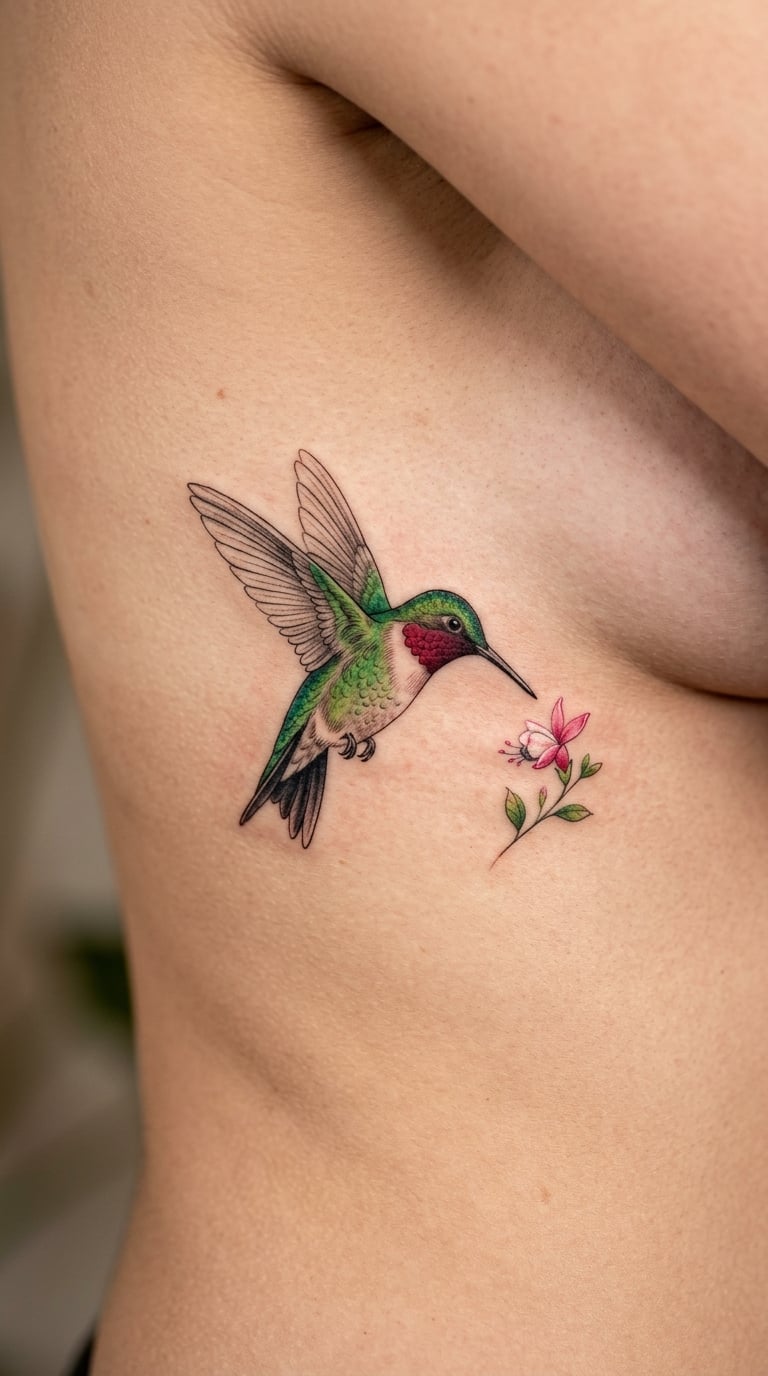
A hummingbird with wings caught mid-beat, drawn with fine feather strokes in green, ruby and a touch of black, hovering beside one small open flower.
Quick movement and endurance are the usual associations. It is a popular choice for a first piece that is not too small, because the subject fills a narrow space without needing a background.
Placement: underbust, tucked into the curve just beneath the bra line. Size: 3 to 4 inches (8 to 10 cm). Style: colour realism. Pain: medium to high. The wing feathers are fine repeated strokes over a stretch of rib, which is where sessions get uncomfortable. A pillow under your side helps you hold still.
Make it yours: match the flower to a birth bloom or a wedding bouquet flower so the piece carries a date you do not have to say out loud.
8. Fine-Line Butterfly With Open Wings
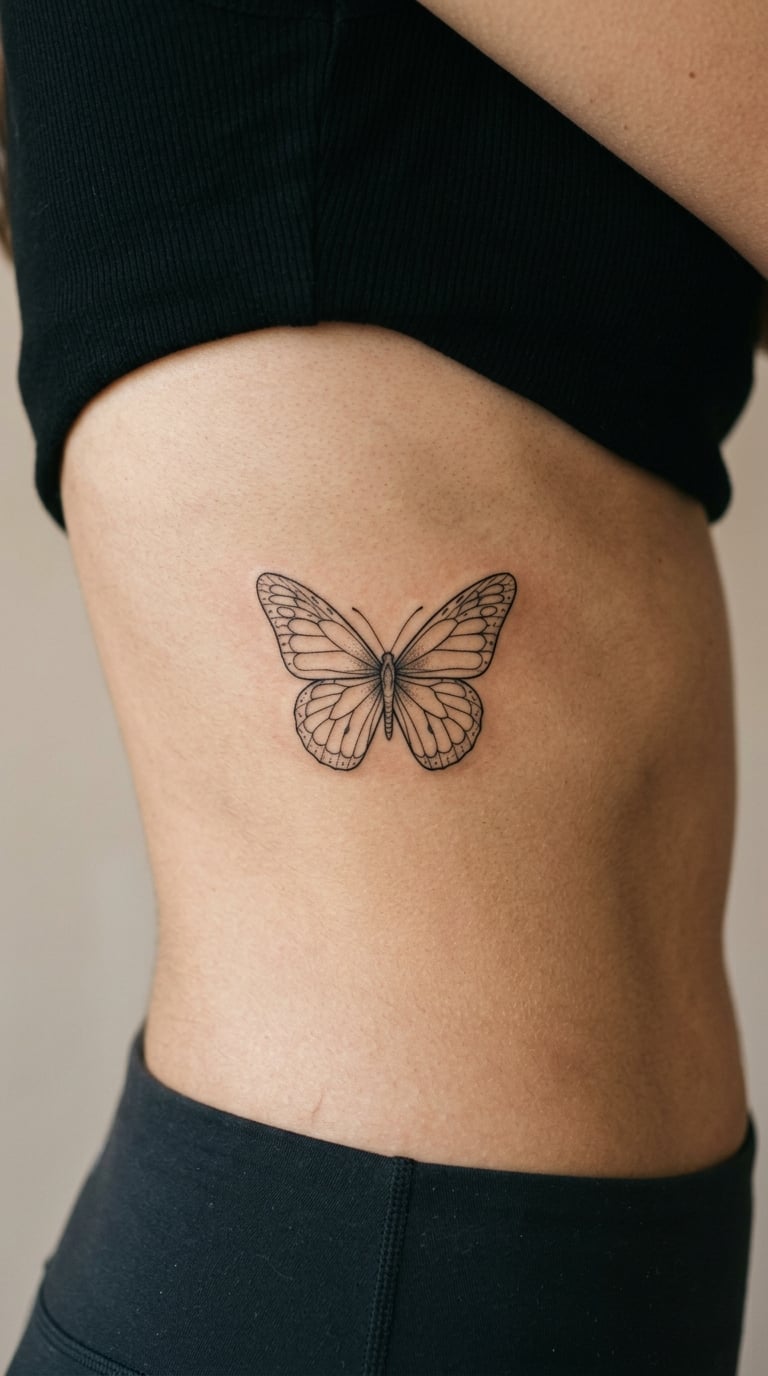
A butterfly in outline only, wings spread wide and held flat against the ribs, drawn in thin even line with the body as a single tapering stroke. Some artists add a dot at each wing tip.
Transformation is the reason most people pick it, and it pairs easily with a matching piece on a friend. It is also the design that ages best here, because there is very little shading to lose.
Placement: lower rib, centred between the waist and the floating ribs. Size: 2 to 3 inches (5 to 8 cm). Style: fine line. Pain: low to medium. Outline work is quick and the piece is small, so this is a good option if you are nervous about the ribs.
Make it yours: have the wing outline follow the angle of your rib cage rather than sit perpendicular to it, which makes a small design look deliberate.
9. Moon Phases in a Rising Arc
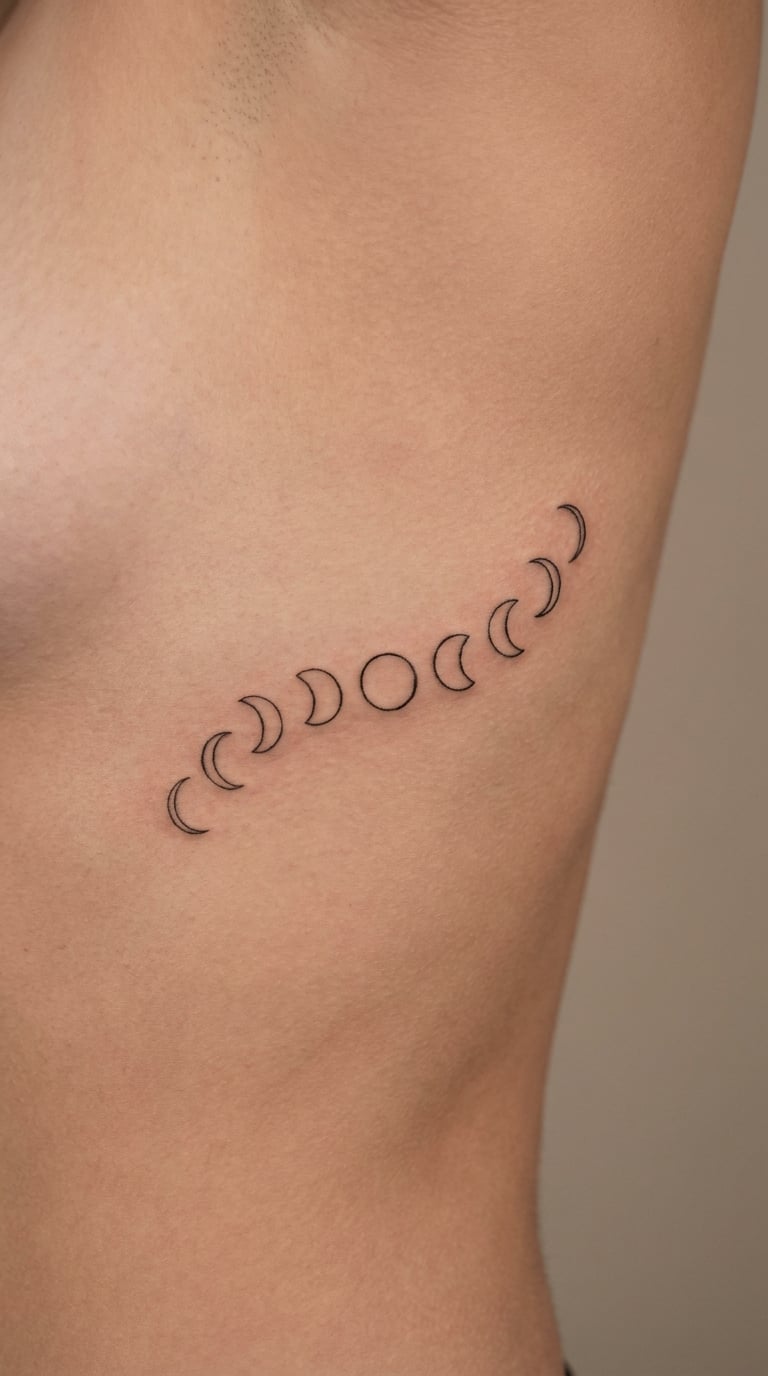
Eight small circles in a rising arc, each moon in a different phase, joined by a single hairline that curves with the rib. The full moon is the largest and sits highest.
Cycles and change come up constantly, and some people use it to mark a specific year. It works well on a curve because the arc does the decorating for you.
Placement: floating ribs, running diagonally. Size: 4 to 5 inches (10 to 13 cm). Style: minimalist line with grey shading. Pain: medium. Each shaded circle needs several greyscale passes, and shaded areas age faster than outlines on the ribcage. Plan on a refresh of the greys in a few years.
Make it yours: ink the phase that matches your birth month in a different shade than the rest.
10. Zodiac Constellation and Star Map
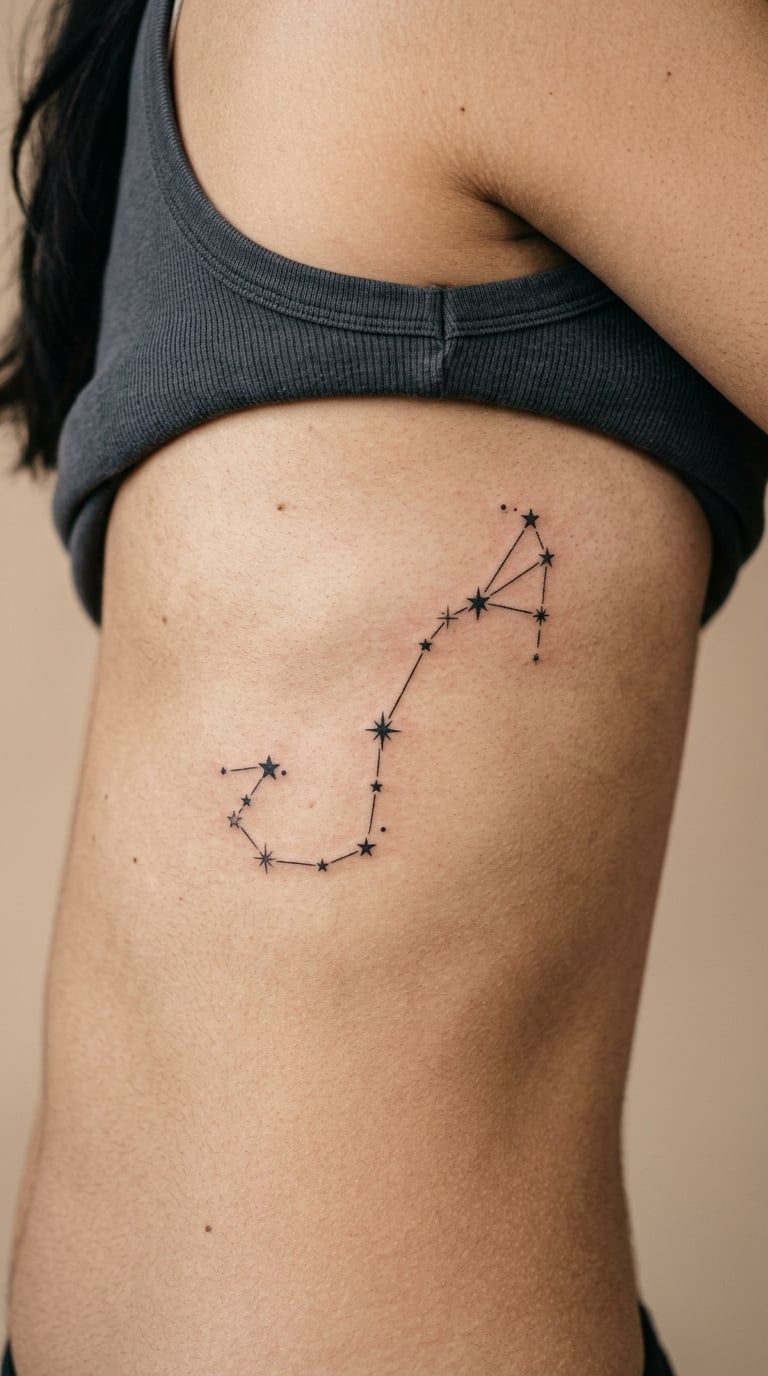
Your sign drawn as its real star pattern, dots joined by hairline segments, with a scatter of smaller stars filling the gaps. Some artists add the constellation’s ruling planet as a small outline nearby.
This is one of the most personal designs you can get, since the pattern belongs to a specific date rather than a general idea. It suits people who already know their sign and want something other than the usual symbol in a circle.
Placement: mid-ribcage, with room above and below the pattern. Size: 4 to 6 inches (10 to 15 cm). Style: dotwork and micro line. Pain: medium to high. Dot placement means the machine stops and starts constantly, and each stop is a chance for the skin to move under you. A lot of people do this one over two sessions.
Make it yours: use the exact star map for your birth moment if you have it, and add one extra star for someone you are thinking of.
11. One Line of Handwritten Script
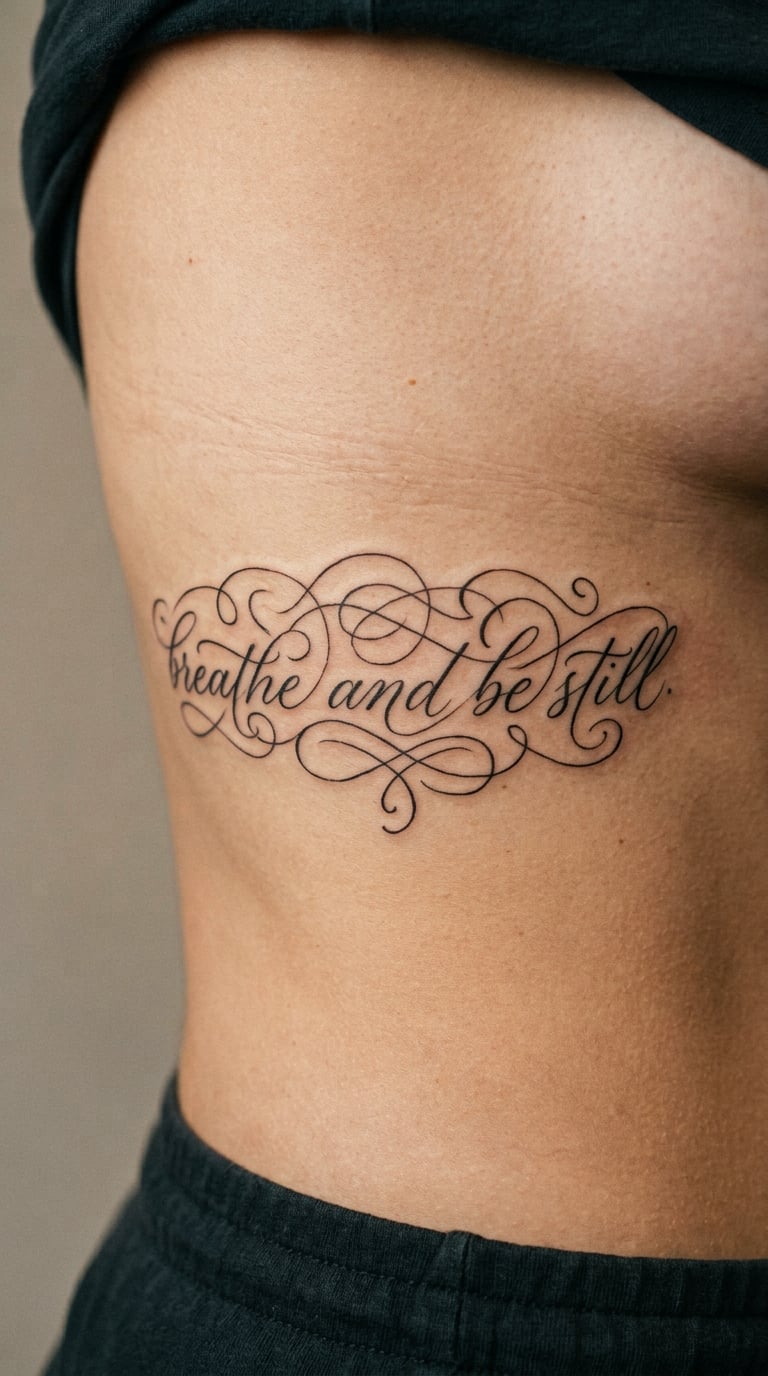
One line of cursive in a hand that resembles your own writing, set along the rib so the baseline tilts with the body. The letters are joined and slightly condensed so the phrase fits without crowding.
People use a lyric, a line from a letter, or something a grandparent used to say. The handwriting matters as much as the words, so bring a sample and let the artist copy the letterforms rather than using a stock font.
Placement: lower rib, angled about fifteen degrees off horizontal. Size: 3 to 5 inches (8 to 13 cm). Style: script. Pain: medium. Script looks thin but the needle has to work slowly, and letters break the work into many small stops. A short phrase tends to be far more tolerable than a large detailed piece on the same placement, mostly because the session is short.
Make it yours: have a real word from your own handwriting traced in, rather than a typed line, even if it is just your grandmother’s signature.
12. One-Word Script Like Divine or Enough
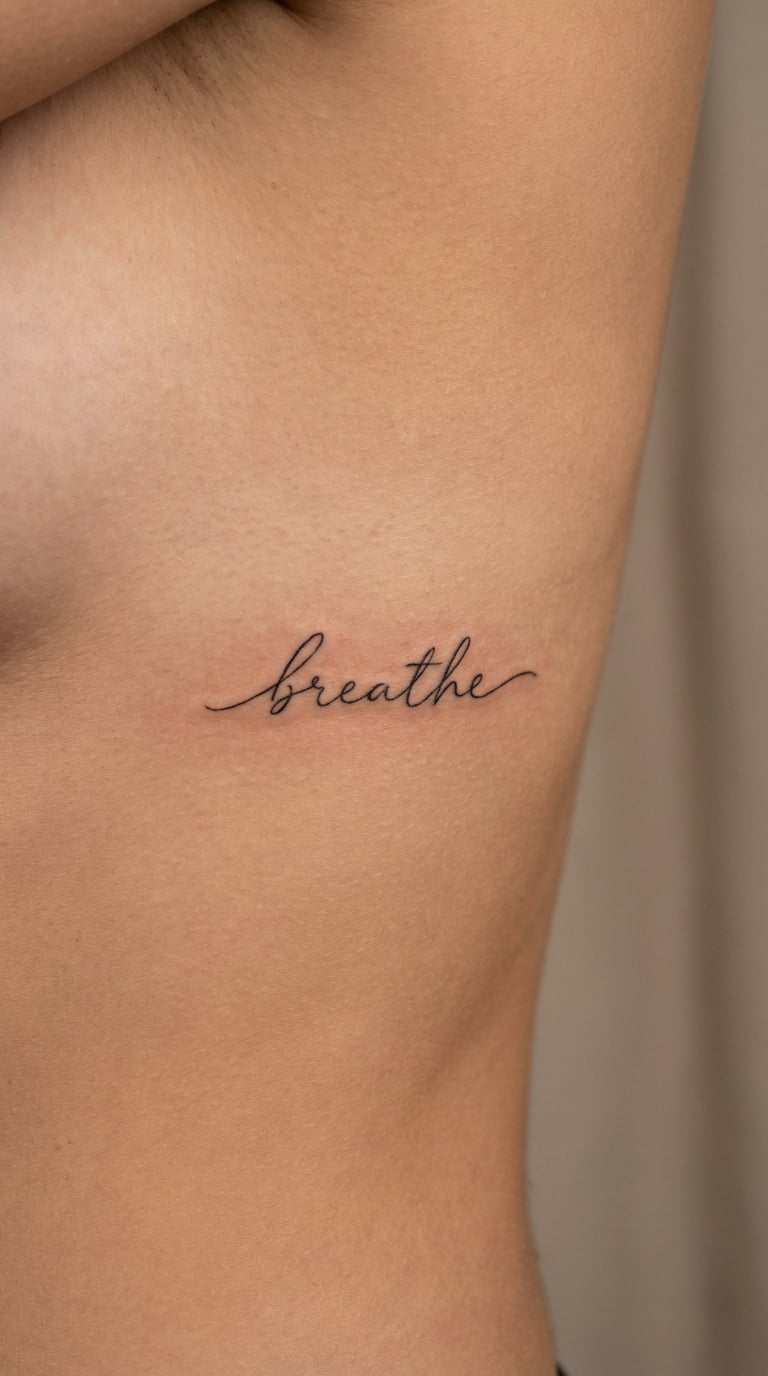
One word in the same loose cursive, sized to sit neatly in the dip above the waistband. Nothing around it, no underline, no frame.
Short words do a lot of work on their own, and this is the most discreet option on the list. It also wears well, because there is simply not much ink to blur.
Placement: lower rib, low enough that a crop top still shows it. Size: 1 to 2 inches (3 to 5 cm). Style: fine script. Pain: low to medium. A piece this size takes minutes, not hours, and a lot of people book it as a first rib tattoo.
Make it yours: use your own word rather than the usual favourites, and let the artist size it to the width of your rib dip.
13. Roman Numeral Anniversary Date
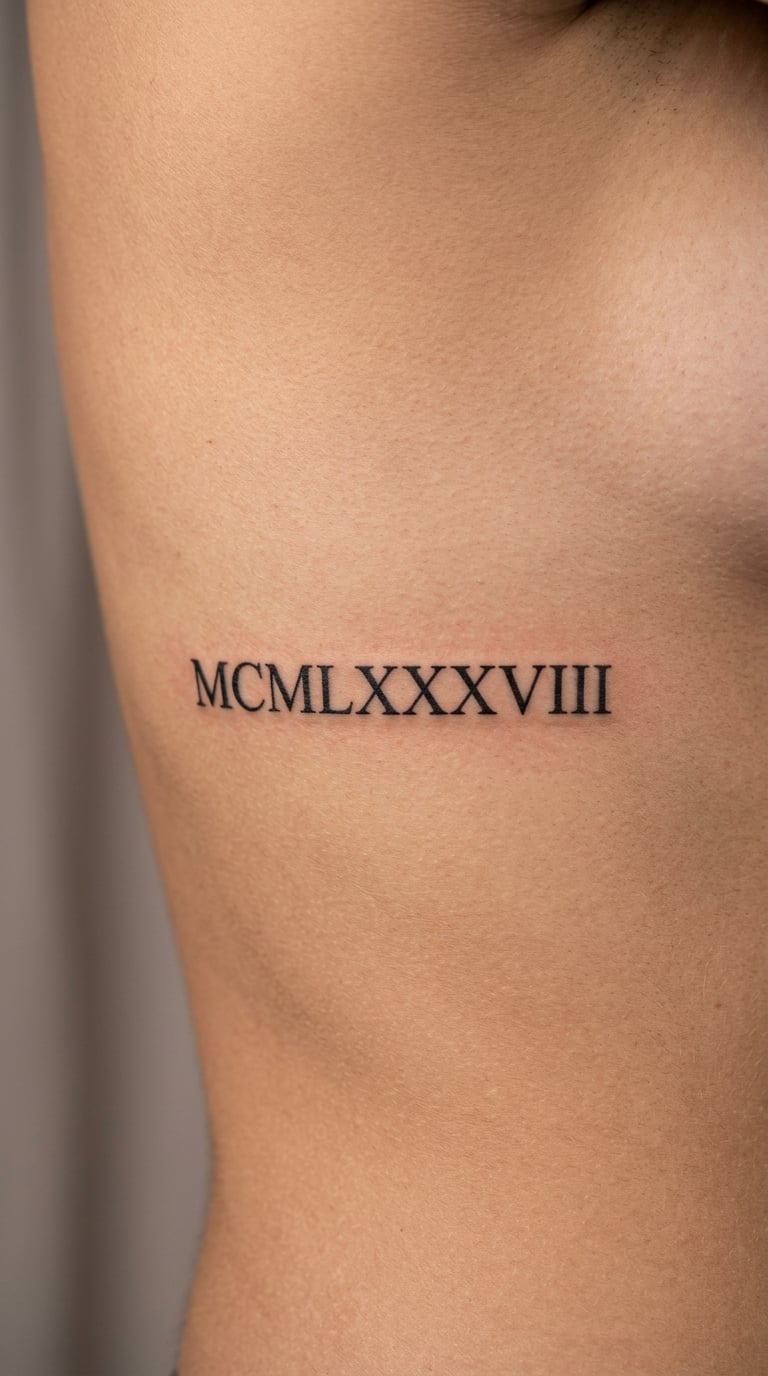
Roman numerals in a neat serif line, a date broken into three groups and centred between the ribs. The numerals are kept small and evenly spaced, the way a date is usually set in a book.
Dates are the most common reason people come to this placement with something specific in mind. Roman numerals stay legible in a way that fine-line script sometimes does not after a decade of sun.
Placement: lower rib, sitting between the waistline and the floating ribs. Size: 2 to 3 inches (5 to 8 cm). Style: minimal serif. Pain: low to medium. Straight strokes over a curve need careful hand placement, but the work is quick and light.
Make it yours: add the matching set on your other side, or put the date on the rib and the matching date on a wrist.
14. Half a Sacred Geometry Mandala
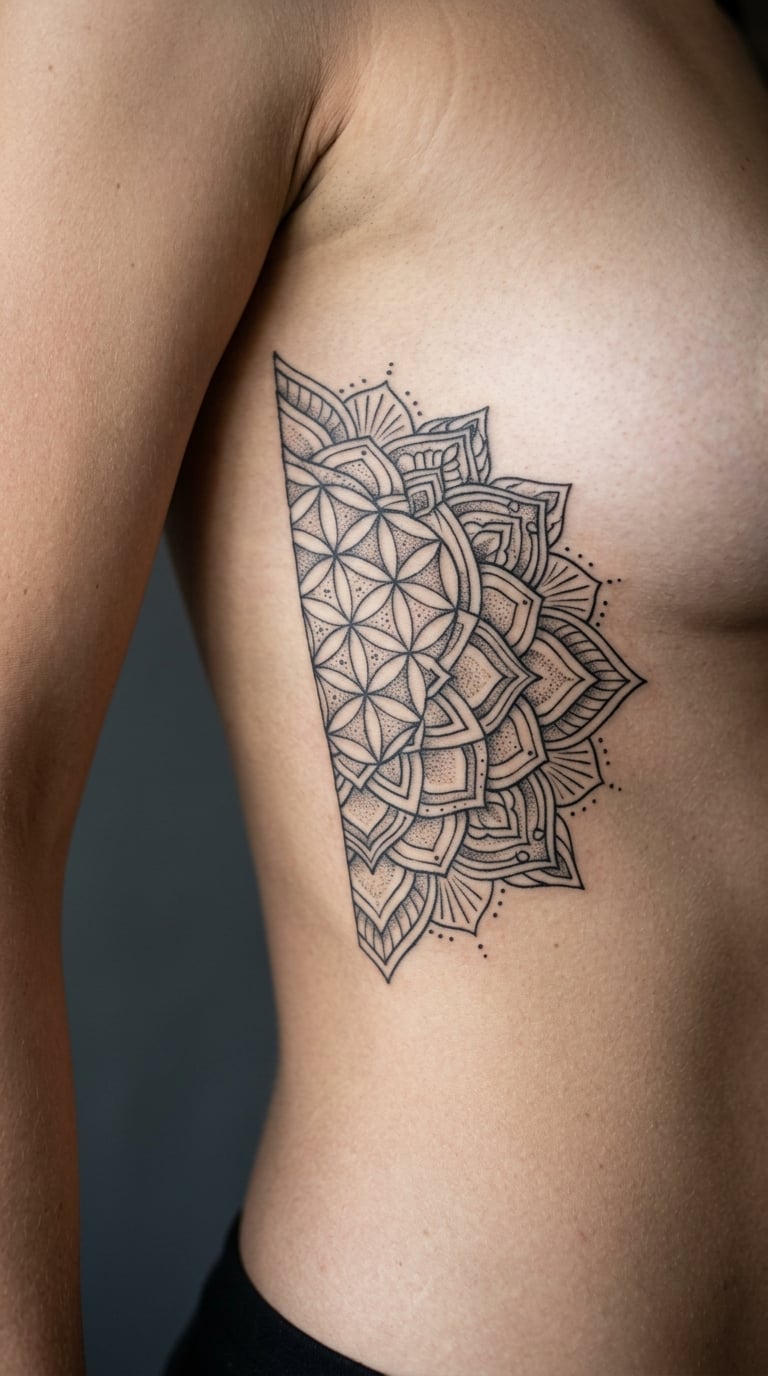
Half of a mandala, cut down the centre and radiating from the spine side toward the belly, drawn in fine black line with dots filling the negative space. The outer ring repeats an inner pattern.
Symmetry makes this work, and a half-mandala fits a body curve that a full circle never could. It reads as structure and balance, which is why it turns up for people marking a fresh start.
Placement: ribcage, radiating outward from the back. Size: 5 to 7 inches (13 to 18 cm). Style: geometric linework with dotwork. Pain: medium to high. Mirrored linework means the artist has to stop and reset constantly, and any wobble shows up twice. Ask for a stencil you can check before the outline starts.
Make it yours: have the ring count match something real, like the number of people in a matching set.
15. Ornamental Filigree Panel
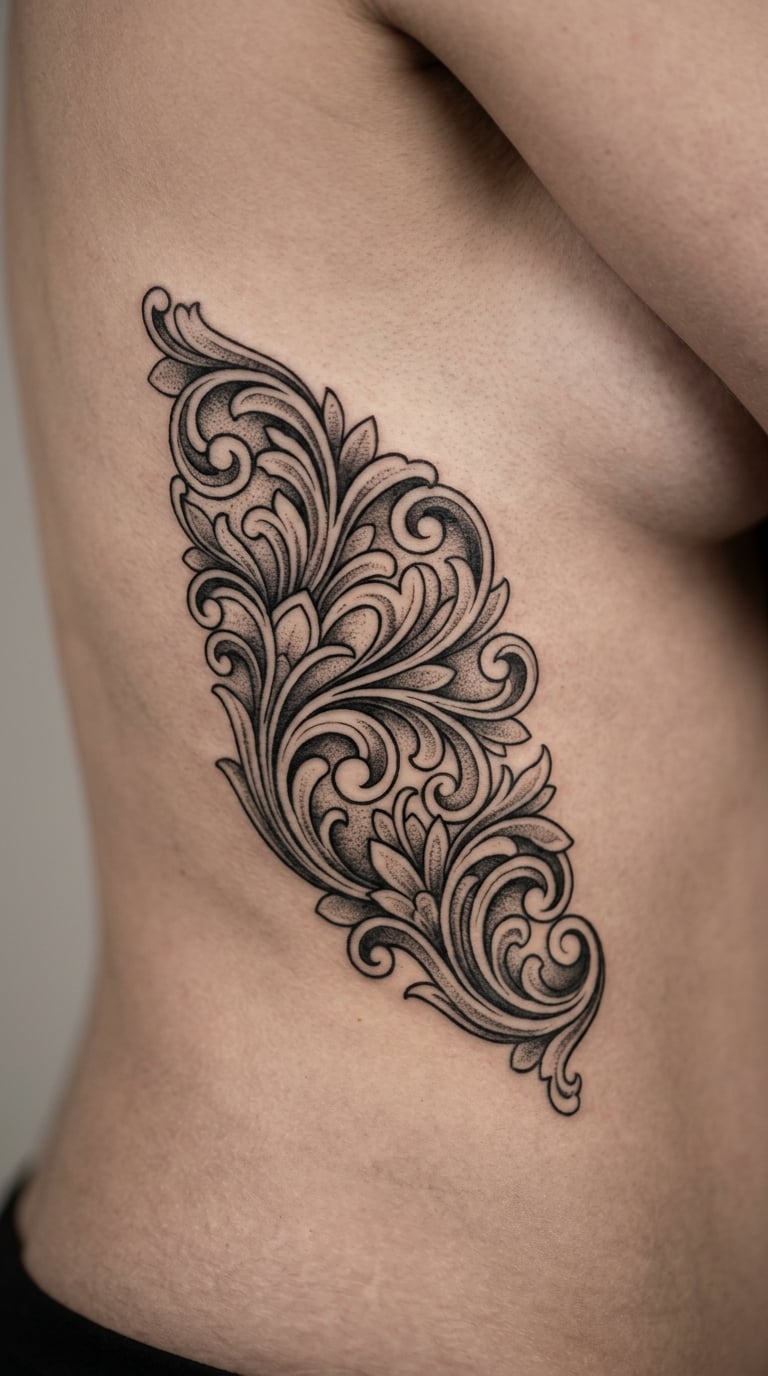
A vertical panel of scrollwork, teardrop shapes and small floral filigree, framed by a soft edge so it looks like a piece of lace set against the skin. Dot shading gives the light parts some depth.
Ornamental work borrows from decorative borders rather than from a single symbol, which makes it one of the few designs that can fill the whole ribcage without needing a subject. It suits people who think in texture rather than story.
Placement: floating ribs, running the length of the ribcage. Size: 6 to 8 inches (15 to 20 cm). Style: ornamental. Pain: high. This is long needle time and a lot of small turning inside a panel, so expect a three to four hour session or a split over two.
Make it yours: have the centre motif replaced with something small and personal, like a date or a monogram, so the pattern has a reason.
16. Red Spider Lily in Black and Grey
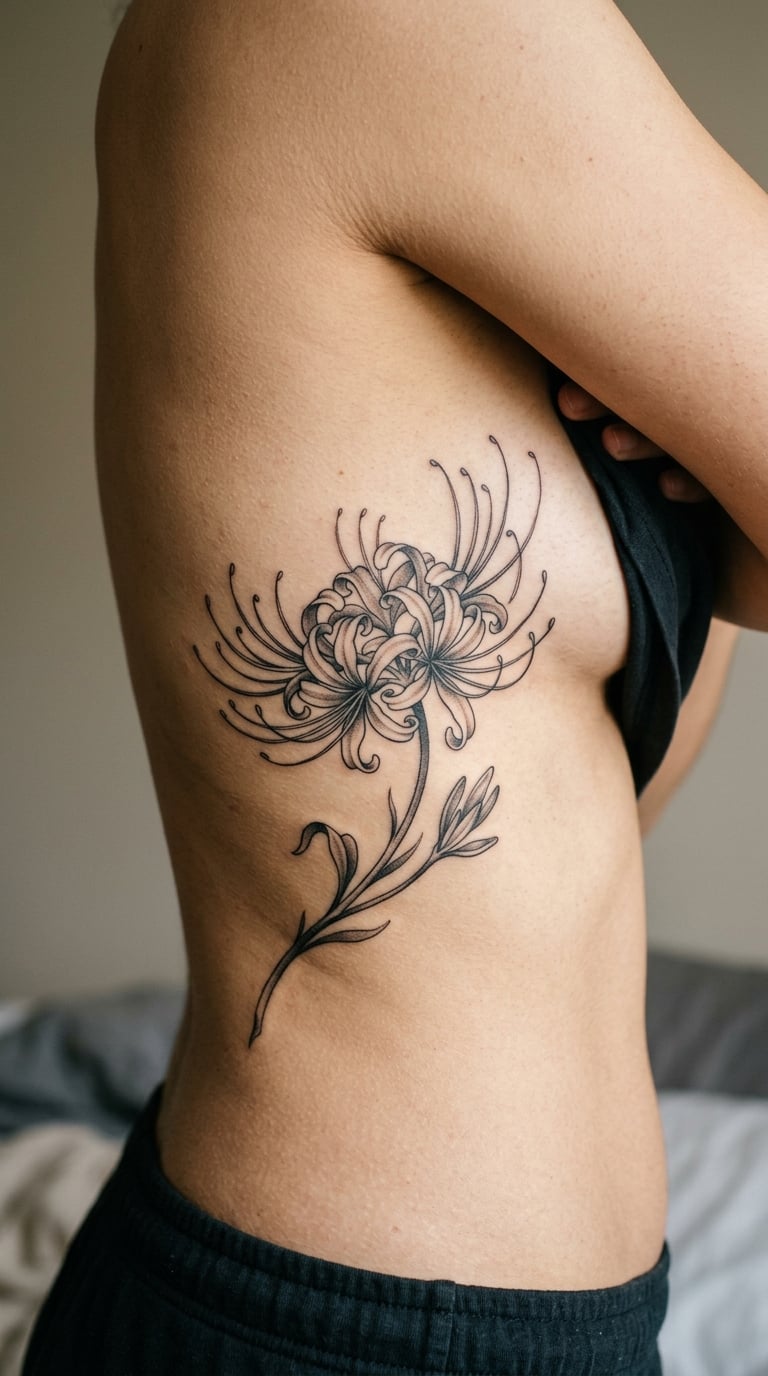
A spider lily drawn in black and grey with just the deepest centre of each bloom picked out in dark red, the long stamens curling outward in thin inked lines.
In the language of flowers this one stands for a transformation that came out of something hard, and in Japanese art it is the flower of the afterlife. People usually know exactly why they want it and rarely need it explained twice.
Placement: lower rib, tilted slightly. Size: 4 to 6 inches (10 to 15 cm). Style: black and grey realism with one red accent. Pain: medium to high. Six recurved petals in shaded grey mean repeated passes over the same tender curve. This is a two-visit design more often than not.
Make it yours: keep the red to a single line inside the bloom rather than filling it, and the colour will stay truer over the years.
17. Birth Flower Trio in Soft Colour
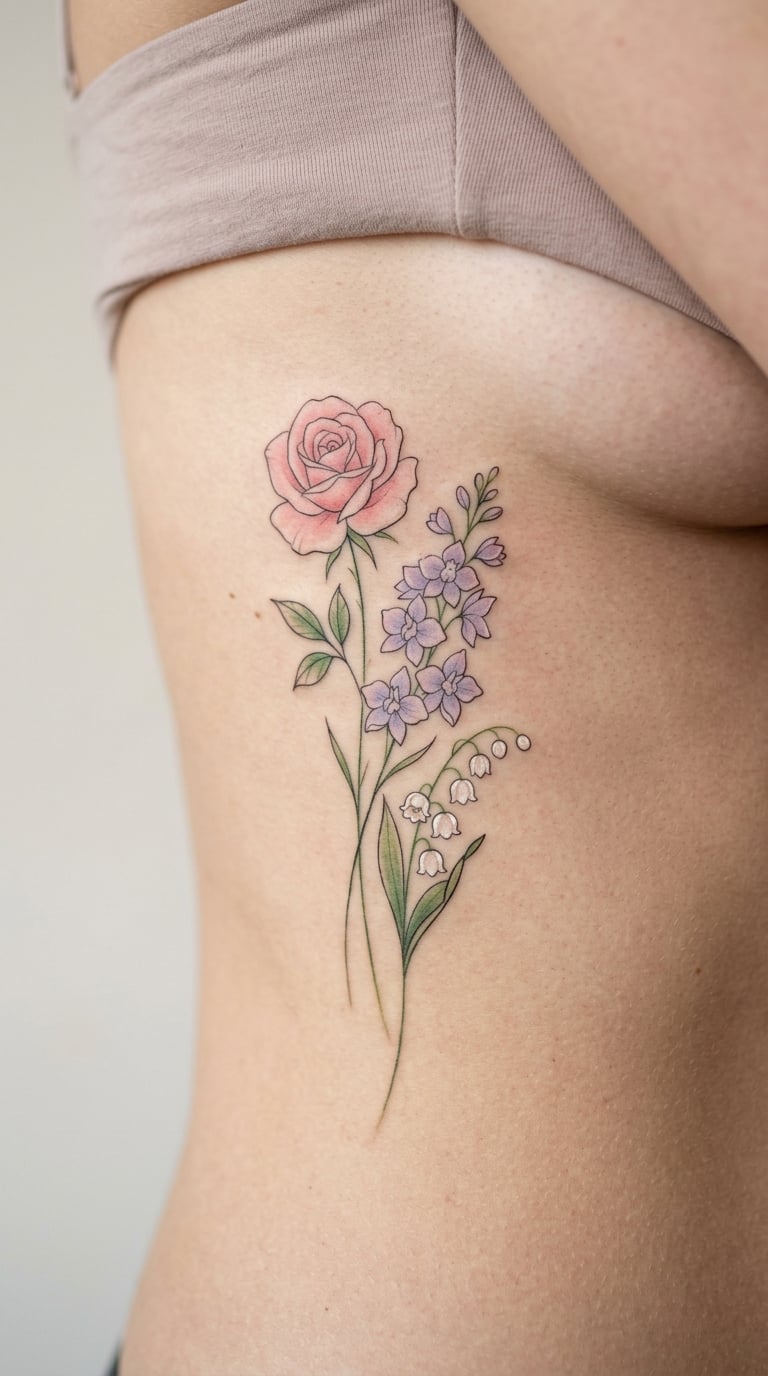
Three small blooms on thin stems, one for each person in the set, drawn in soft pink, lilac and white with light green leaves. The stems gather at the base and trail into a single line.
Birth flower tattoos usually come in matching sets, and three of them on one rib is the neat way to do it. They also handle body-shape differences well, because the trailing line can be shortened to fit.
Placement: underbust, angled up along the lower ribs. Size: 3 to 5 inches (8 to 13 cm). Style: soft colour fine line. Pain: medium. Three separate subjects mean three restart points, so ask the artist to outline all three first and colour them in the same pass.
Make it yours: match the friend on the same session, using the same height and direction so the two pieces photograph together well.
18. Dotwork Dragonfly
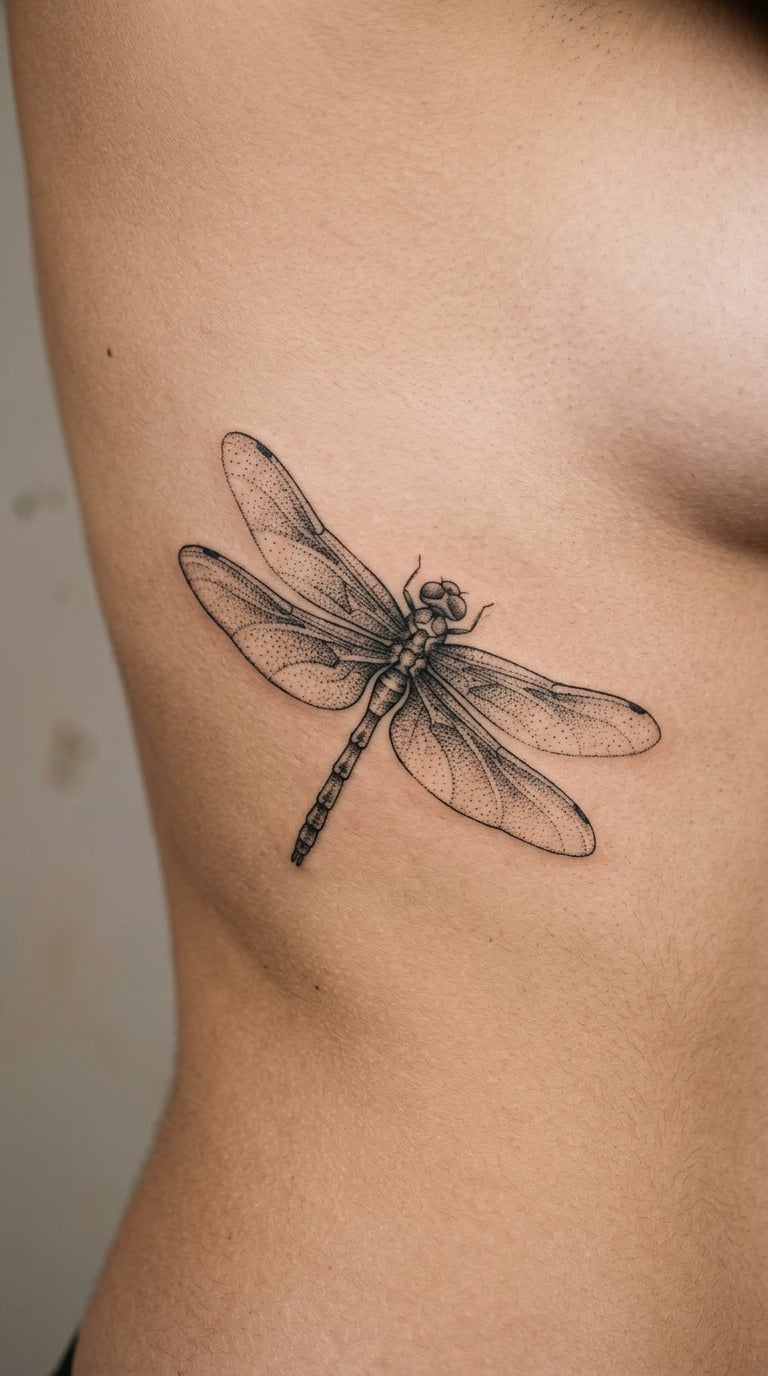
A dragonfly seen from above, four wings filled with graduated dot shading, the body a solid black stroke running down the centre. The dots grow smaller toward each wing tip.
Change and adaptability are the usual themes, and dragonflies are a common request for people who have just changed direction. Dotwork holds up better than shading here, which matters over the years.
Placement: lower rib, small and close to the waist. Size: 2 to 3 inches (5 to 8 cm). Style: dotwork. Pain: low to medium. Single needle hits are light individually, but the count is enormous. Expect the session to run longer than a shaded piece of the same size.
Make it yours: use the same dot density as a piece you already have, or ask the artist to keep the dots loose enough to read as texture from a metre away.
19. Crescent Moon and Star, Barely There
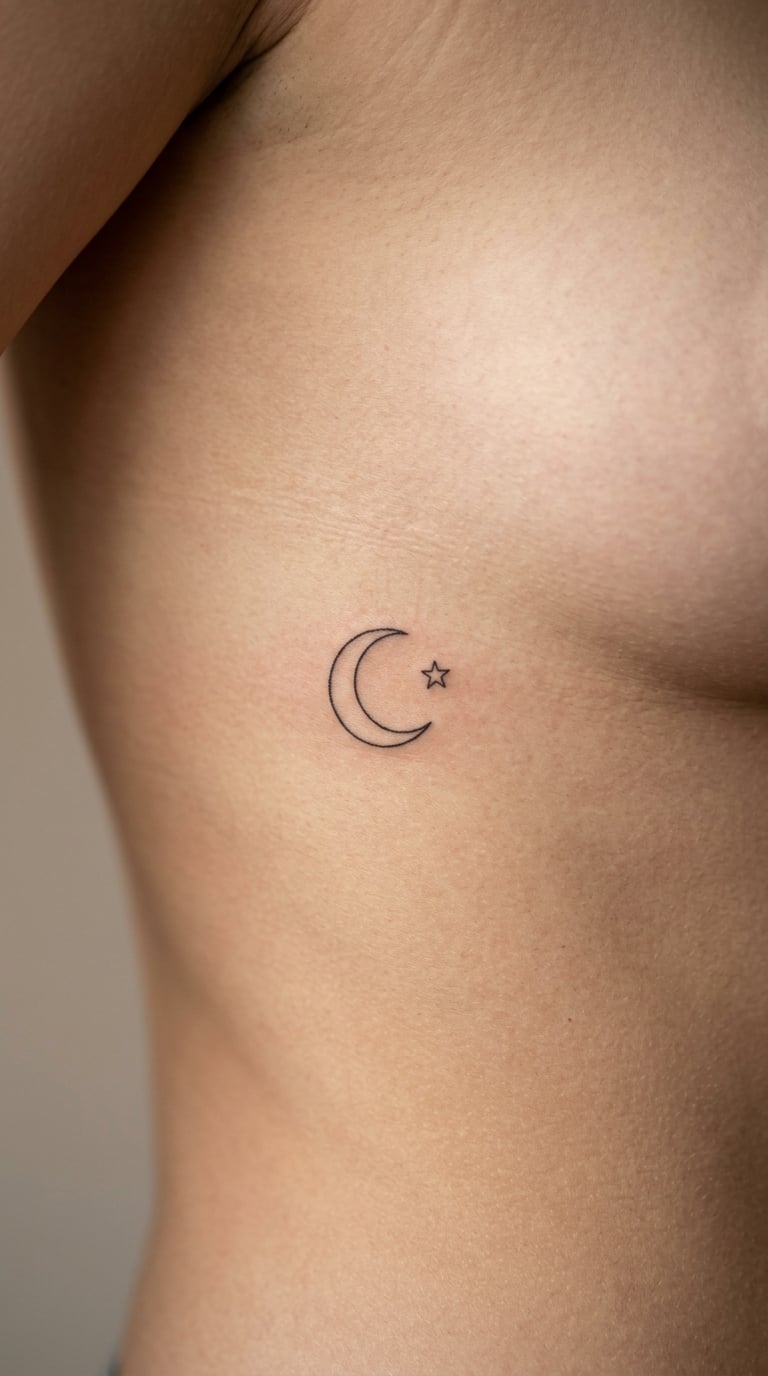
One crescent and one small five-point star, thin black line, sitting an inch apart in the shallow dip above the waistband. That is the entire design.
It is the least noticeable thing on this list, which is exactly the point for people who want a rib tattoo they control rather than announce. Small fine-line work on the ribs also needs the fewest corrections as it ages.
Placement: lower rib, low on the body. Size: 1 to 2 inches (3 to 5 cm). Style: minimalist line. Pain: low. Quick, light and shallow, and the artist can often do it in one short sitting.
Make it yours: have the star and moon tilted a few degrees off level so they follow the line of your rib rather than the horizon.
20. Abstract Watercolor Wrap From Back to Waist
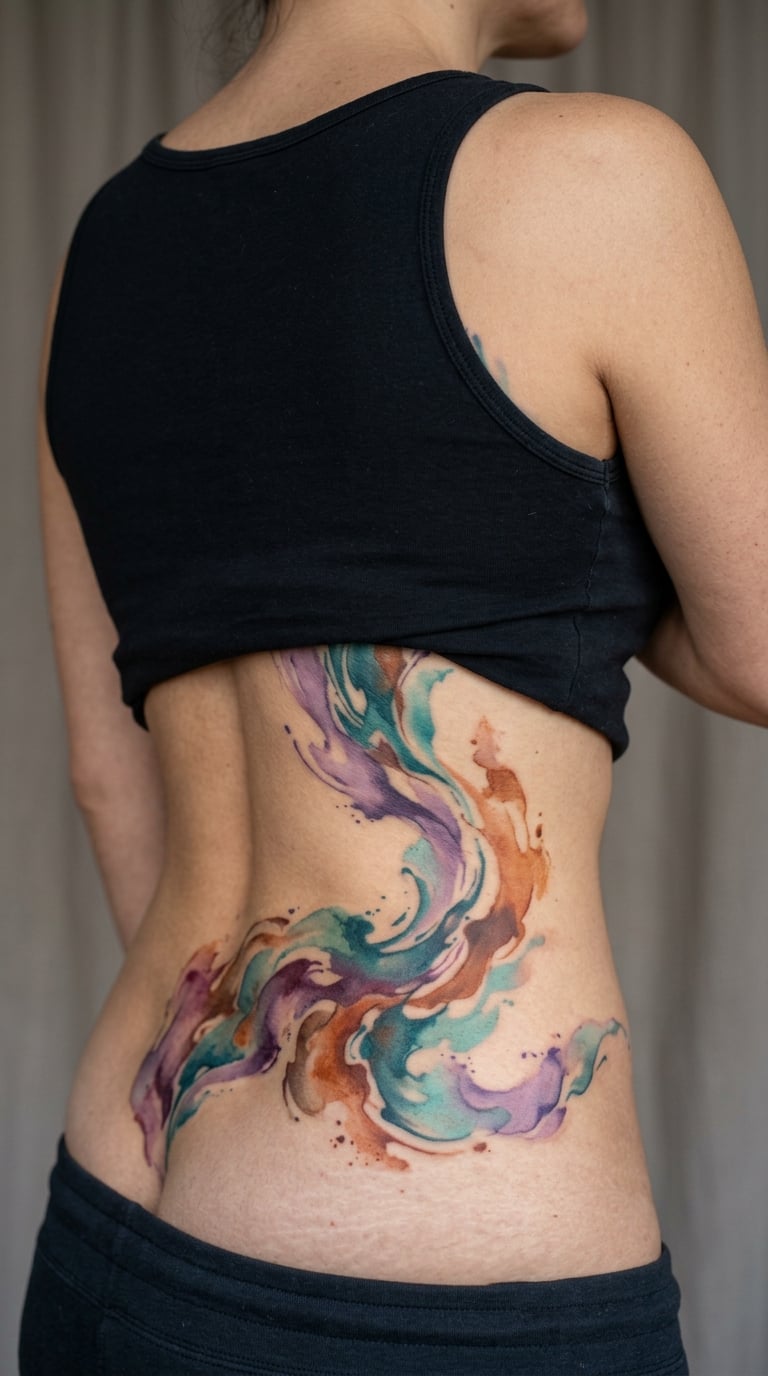
An abstract piece in teal, rust and plum that starts on the lower back, wraps around the side of the body and fades out at the waist. The edges are soft and there is no subject to recognise.
It reads as movement no matter which way the body turns, and it hides well from the front because the back half is out of sight. Abstract work ages gracefully for the same reason: there is no detail to fall apart.
Placement: lower back, around the side, ending at the waist. Size: 8 to 12 inches (20 to 30 cm) of body coverage. Style: watercolor abstraction. Pain: high. You will be repositioned repeatedly, and the back half means twisted posture for hours. Book a long sitting and plan on a second session.
Make it yours: pick three colours from something that matters to you, and let the artist blend them in the middle of the wrap rather than at the edges.
How to Choose the Right Side Rib Design
Match the design to the space, not the other way round. The ribcage is a curve, so a drawing made for flat paper has to be re-curved before it goes on, and a piece with a lot of straight internal lines will look bent once it follows the bone. These are the three things worth settling before you book.
How painful is a side rib tattoo?
More than most people expect, but people rate it all over the place. On a one to ten scale, rib work commonly lands between five and nine, and the spread has a reason: where there is a little more fat over the bone, the needle has something to travel through before it reaches periosteum.
| Placement | Typical rating | What to expect |
|---|---|---|
| Lower rib, near the waist | 4-6 out of 10 | More soft tissue here, the easiest part of the run |
| Mid-ribcage, forward | 6-8 out of 10 | Thin skin, movement with every breath |
| Floating ribs, upper edge | 7-9 out of 10 | Bone close under the skin, near the arm |
| Spine, for comparison | 6-9 out of 10 | Many people rank this higher than the ribs |
| Inner arm | 5-8 out of 10 | Thin and full of nerves |
| Thigh | 3-5 out of 10 | Deep tissue, easy sessions |
Tattoo forum threads are full of people pointing out that simple script on the ribs is nowhere near as bad as large blackwork, and that body composition changes the number more than pain tolerance does. If the ribs would be your first tattoo, the consensus is clear: start smaller, or pick a less painful spot and come back later.
Size, style and spacing for small side rib tattoo ideas for women
Under three inches, a rib tattoo reads as detail and needs very little adjustment. Past about eight inches, you are committing to a full side piece, and the artist will want to redraw everything around your actual rib arc. The middle range is where most people land, and it is the easiest to place.
On spacing, the one-third rule is worth knowing. It is a rough guideline that a design should occupy no more than about a third of the visible ribcage at once, with a clear stretch of skin between it and any existing work, so the two pieces read as separate rather than as one crowded block. It is not a law, and a good artist will argue with it, but it stops a second piece landing badly against the first.
What to avoid on the side rib
- Long straight lines running across the ribs, which bow visibly once the skin is under them
- Very small lettering on the upper floating ribs, where the movement and bone make thin lines blur fastest
- Heavy black fills, which need the most passes and the longest session in the least forgiving area
- Low-resolution reference art, since an artist cannot rebuild detail the source never held
- Copying a finished piece exactly, which tattooers in the community dislike as much as anyone
Cost and Session Time
Most studios price by the hour, and the ribcage commands top rates because sessions run long and artists lose time to repositioning. In the US you will commonly see between 150 and 400 dollars for a small to mid-size piece, 500 to 900 for a large wraparound design, and well into four figures at the top tier of blackwork studios. A single small script word is often the cheapest thing on the list.
Time follows size closely. A two inch design takes under an hour. A six inch floral or script piece runs two to three hours, and anything past eight inches usually gets split across two visits. Ask your artist for their hourly rate and a session estimate before you commit, then plan a nap, food and a good stretch break into your day.
Aftercare Basics
- Follow your artist’s aftercare instructions first, since they know exactly what they did to your skin
- Wash gently as directed with unscented soap and lukewarm water, then pat dry rather than rubbing
- Keep the fresh area away from tight bra bands and waistbands for the first week, since rubbing is what lifts linework here
- Wear a loose sports bra or a bralette while you sleep if the work sits under the band
- Keep it out of swimming pools, hot tubs and sunbeds while the skin is settling, and use sunscreen once healed
- Expect the raised lines to flatten over two to four weeks, with final settling closer to three months
For the first few days, the area can feel tight and bruised, especially where the design sits over a floating rib. That is normal and it passes. If redness, swelling or discharge is getting worse rather than better after a week, contact your artist rather than waiting it out.
Frequently Asked Questions
What is a side rib tattoo called?
A side rib tattoo is simply body art placed along the outer rib cage, usually between the bottom of the bust and the waistline. There is no separate name for it. Tattoers will call it a side tattoo, a rib tattoo or a rib cage piece depending on how far up the design runs and whether the work wraps toward the back.
Do tattoos on the side of your ribs hurt?
They do, more than most placements, because the skin over the ribs is thin and there is very little fat or muscle under it. Most people rate rib work between five and nine out of ten, and where the tissue is slightly thicker near the waist it feels noticeably easier. Taking short breaks and lying on your side both help more than people expect.
What are some good side rib tattoos for women?
The most chosen designs are fine-line florals such as cherry blossom, lavender and a single-line rose, script and dates, moon phases and zodiac patterns, and larger blackwork snakes or ornamental panels. Small minimalist pieces sit well on the lower rib, while wraparound colour work and ornamental filigree need the full curve of the ribcage to look right.
How long after a rib tattoo can I wear a bra?
Most artists suggest leaving the area free of tight bands for about a week, and for two weeks if the work sits directly under the bra line. Friction is the main reason fine line fades or lifts early. Wearing a loose bralette or sports bra instead keeps the garment off the fresh skin without leaving the area exposed.
What does a rib tattoo symbolize?
There is no fixed meaning, and most people attach their own reason to it. Commonly cited readings include strength and endurance, resilience after a hard period, femininity and protection, and a memorial to someone. The floating rib is also often read as a mark of survival or transition, which is why so many people book this placement after a significant change.
How can I make a rib tattoo less painful?
Eat a proper meal beforehand, stay hydrated, and tell your artist immediately if you need a stop rather than gritting through it. Lying on your side, taking short breathing breaks, and splitting a long design across two sessions all reduce the total time under the needle. Smaller, simpler fine-line work is also reported as far more tolerable than large blackwork.
Conclusion
If the ribs would be your first tattoo, start with the single-line rose, the one-word script or the crescent moon and star. All three are under three inches, finish in one short sitting, and give you a feel for the placement before you commit to something larger.
Once you have a piece there, the blackwork snake, the ornamental filigree panel and the abstract wrap are the ones that use the space properly. Bring reference images to a consultation, talk through the rib arc with the artist early, and take your time deciding. These side rib tattoo ideas for women age better than almost anything else you could pick, so there is no rush.