
24 Best Love Yourself Tattoo Ideas to Wear (October 2026)
Love yourself tattoo ideas fall into two camps: a short phrase in clean lettering, or a symbol that means something only you know. Both work, and both have real trade-offs. A phrase is readable to strangers and dated by a font; a symbol stays personal and takes an artist’s hand to get right. Most people searching this end up wanting the second kind and then wishing they’d started smaller.
A self-love tattoo is permanent body art carrying a note of self-acceptance, self-worth or personal growth. Unlike an affirmation you can skip, the ink shows up in the mirror, in the shower, in a photograph, so the message keeps returning without any effort from you. That is also why size, placement and legibility matter more here than with, say, a pet portrait, and why the designs below come with honest numbers. If you want a starting point for wording rather than imagery, our love heart tattoo designs gallery has plenty of shapes to work from.
Love Yourself Tattoo Ideas: Quick Guide
| Idea | Style | Best placement | Size | Pain |
|---|---|---|---|---|
| 1. Love Yourself script | Fine-line script | Behind the ear | 1.5 in (3.8 cm) | Low |
| 2. Affirmation heart | Fine line | Inner forearm | 2 in (5 cm) | Medium |
| 3. Sun and sea waves | Black and grey | Outer upper arm | 2.5 in (6.3 cm) | Medium |
| 4. Lotus with Choose Peace | Fine line | Inner forearm | 3 in (7.6 cm) | Medium |
| 5. Be Kind to Yourself | Handwritten script | Inner wrist | 2.25 in (5.7 cm) | Medium |
| 6. Self-portrait | Micro-realism | Upper inner arm | 2 in (5 cm) | Medium |
| 7. Open hands holding a heart | Fine line | Forearm | 2.5 in (6.3 cm) | Medium |
| 8. Wildflower bouquet | Watercolor | Outer upper arm | 3.5 in (8.9 cm) | Medium |
| 9. Infinity with coordinates | Minimal line | Inner forearm | 1.75 in (4.4 cm) | Medium |
| 10. Phoenix rising | Blackwork | Outer upper arm | 4 in (10 cm) | High |
| 11. Moon mirror | Fine line | Forearm | 2.75 in (7 cm) | Medium |
| 12. Red heart with one word | Colour line | Inner arm | 1.5 in (3.8 cm) | Medium |
| 13. Butterfly with balanced wings | Blackwork with accent | Shoulder blade | 3 in (7.6 cm) | Medium |
| 14. Heartbeat line | Fine line | Inner forearm | 2.25 in (5.7 cm) | Medium |
| 15. Mountain and sunrise | Fine line | Outer forearm | 3.5 in (8.9 cm) | Medium |
| 16. I Am Home script | Fine-line script | Collarbone | 2 in (5 cm) | Medium |
| 17. Yoga pose one-line | Continuous line | Inner upper arm | 2.5 in (6.3 cm) | Low |
| 18. Olive branch | Black and grey | Side forearm | 3 in (7.6 cm) | Medium |
| 19. Single rose wash | Fine line with colour | Wrist | 2.5 in (6.3 cm) | Medium |
| 20. Compass | Fine line | Inner forearm | 2 in (5 cm) | Medium |
| 21. Celestial figure | Dotwork | Outer upper arm | 3.25 in (8.3 cm) | High |
| 22. Two names in a heart | Fine line | Inner arm | 2 in (5 cm) | Medium |
| 23. Tree roots | Blackwork | Calf | 3 in (7.6 cm) | Medium |
| 24. Diamond contour with My Own | Fine-line ornamental | Upper arm | 2.75 in (7 cm) | Medium |
1. Fine-Line “Love Yourself” Behind the Ear
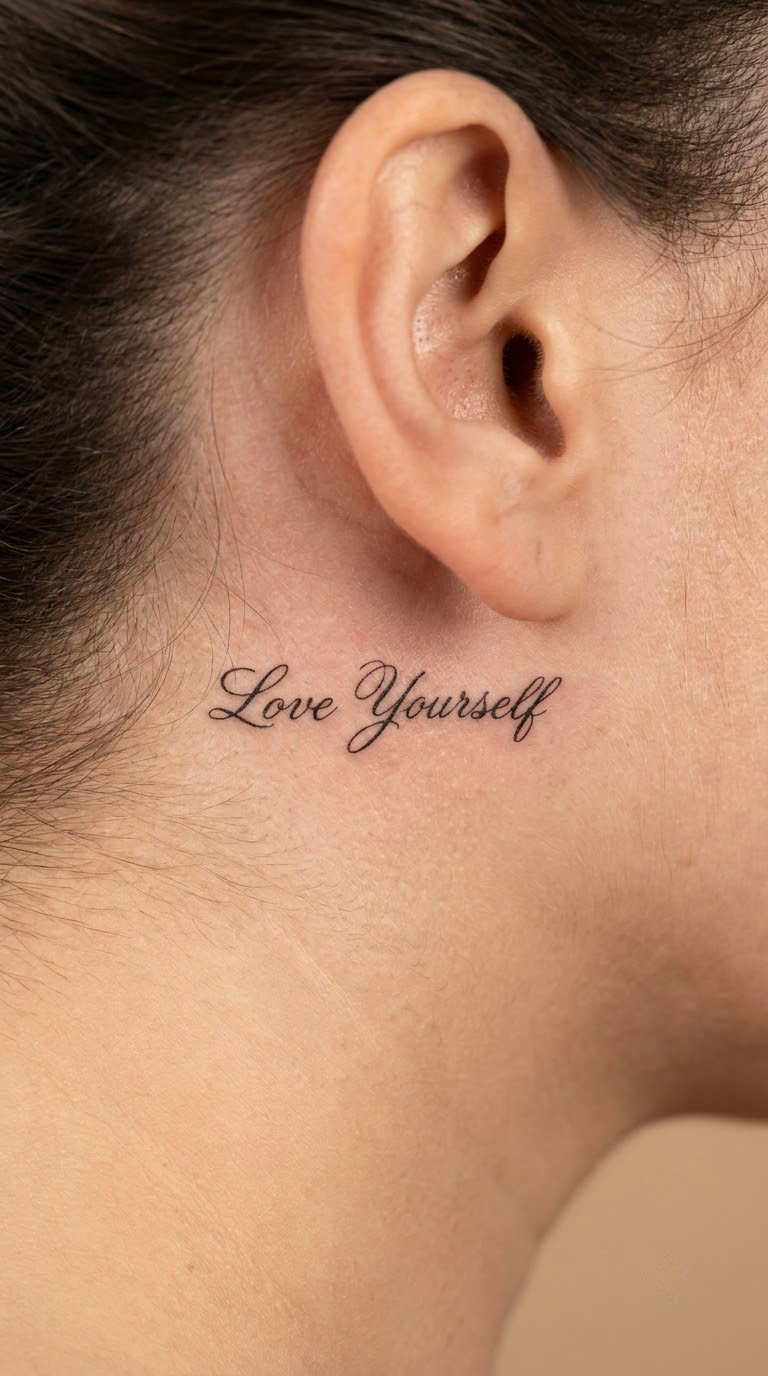
Two words in a light hand-lettered script, small enough to disappear under hair and big enough to read when your hair is tied back. Single-needle linework, no shading, nothing competing for attention. People choose it because the phrase is short enough that no one has to ask what it means, and the placement keeps the whole conversation between you and the mirror.
Placement: behind the ear, along the curve of the cartilage, or on the nape of the neck. Size: 1.5 in (3.8 cm) wide is the floor for legible script; 2 in is safer. Style: fine-line script. Pain: low, mostly a scratchy sting, because the skin there is thin. Sun exposure is low too, so it ages more gently than the same words on a wrist.
Make it yours: swap in one word that only makes sense to you, such as a nickname or the name of a person you are proud of.
Why This Love Yourself Tattoo Idea Works
Discreet placement and familiar words do the same job from two directions. The location keeps the piece private enough that it never becomes a statement, and the repeated phrase turns it into a small habit. People who get these tend to say the same thing afterwards: they catch it in a reflection more often than they expected, and the words land differently at month eight than they did on day one. It also survives a trend change, because nothing about the lettering dates as fast as a novelty font.
2. Affirmation Heart in Fine Line
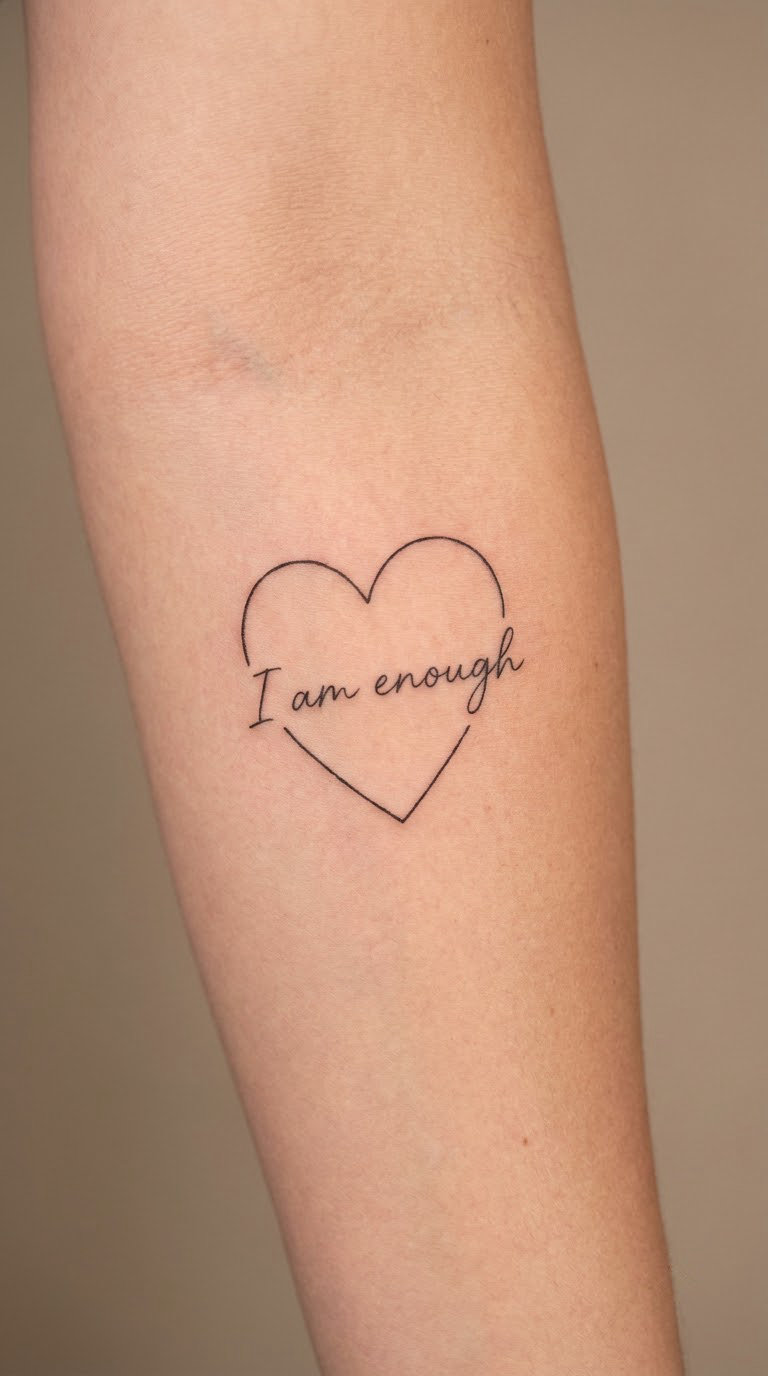
A simple outline heart with three or four short words set inside it in a neat upright hand. The shape does the emotional work, the words do the practical work. Keep the heart one continuous line and the lettering small; the moment the shading arrives, it stops looking calm.
Placement: inner forearm, inner bicep, or the back of the hand for a bolder read. Size: 2 in (5 cm) wide for the heart, which leaves roughly 1.2 cm of interior space for the line of text. Style: fine line. Pain: medium on the inner forearm, a constant scratch rather than sharp stings. Ageing is fair on the forearm, but the thin inner-edge letters are the first part to soften.
Make it yours: put the affirmation in your own handwriting rather than a printed typeface, so the letterforms match how you actually write.
3. Sun and Sea Waves Self-Care Motif
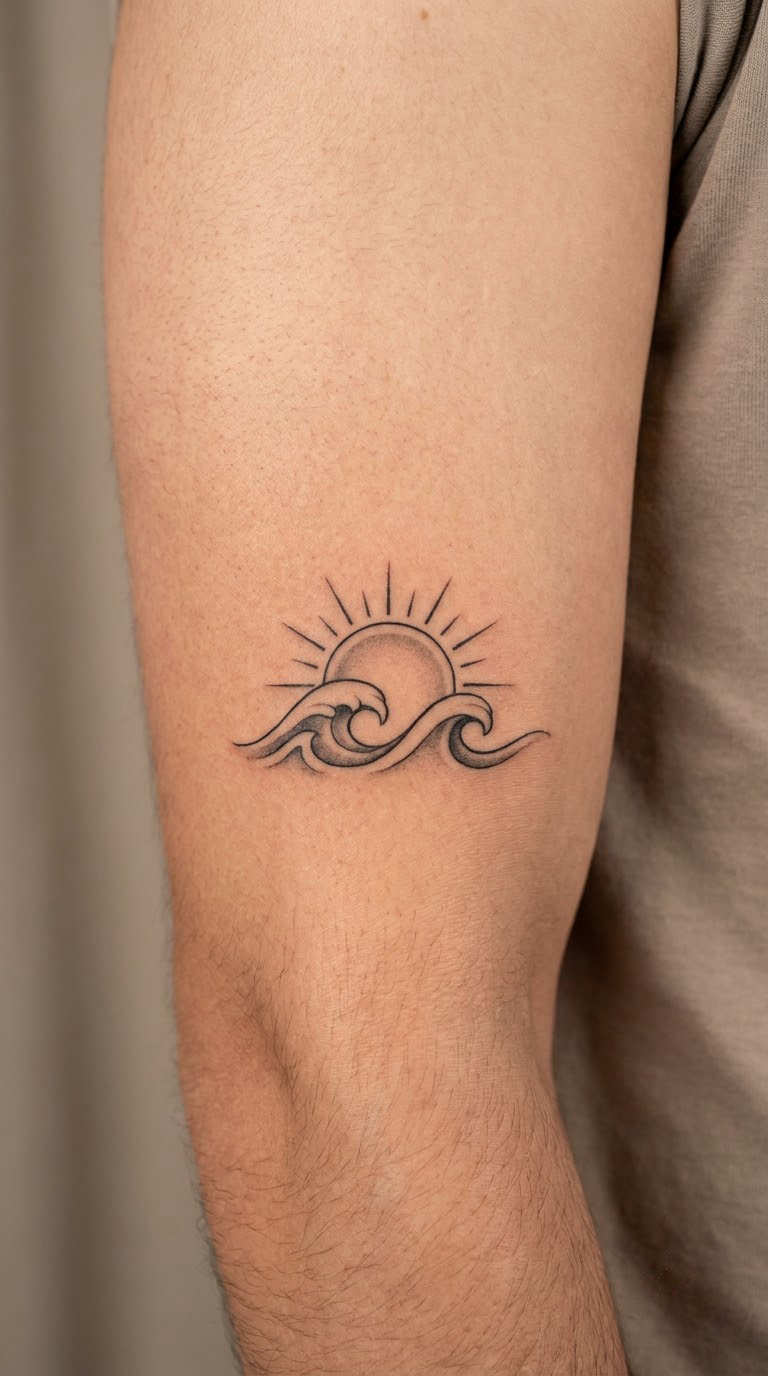
A rising sun with soft grey shading sitting above two or three flowing wave lines, no outline around the sun, no colour in the water. It reads as rest and balance without being a slogan, which makes it a good choice if you like the idea of self-love and dislike reading about it. Plenty of people get one after a demanding stretch and use it as a cue to actually take the evening off.
Placement: outer upper arm, outer forearm, or the side rib. Size: 2.5 in (6.3 cm) wide gives the sun room to breathe without turning it into a piece. Style: black and grey realism-lite. Pain: medium, and the upper arm is a spot people describe as oddly distracting rather than painful. Soft grey shading fades toward flat over the years, so ask for contrast rather than realism.
Make it yours: set the sun at a specific height on the horizon, matching a sunrise you actually watched.
4. Lotus with “Choose Peace”
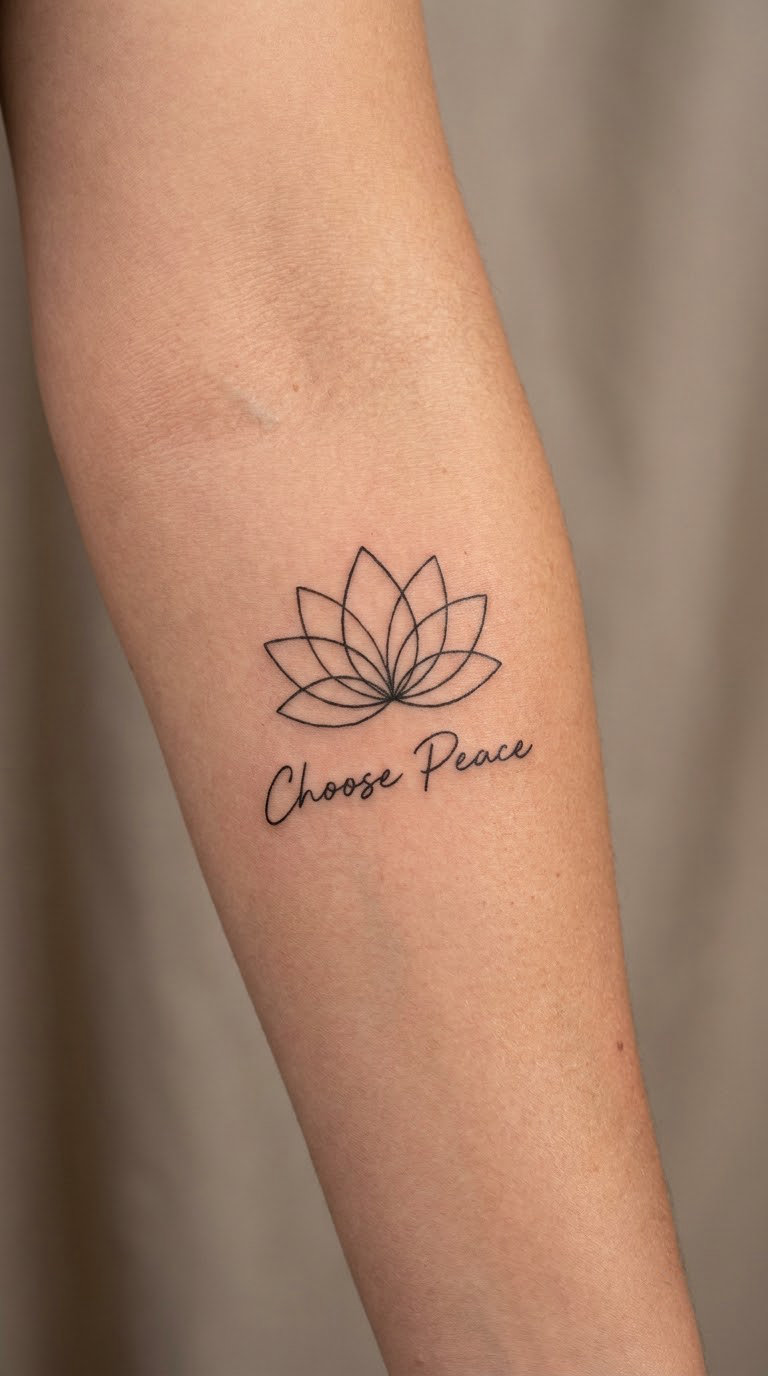
A lotus drawn in single-needle linework, petals fanning upward, with two short words set underneath in a plain upright hand. The flower carries a long history of standing for growth out of difficult ground; the phrase keeps the piece from being purely decorative and gives it a direction of travel. It works well stacked vertically along the forearm.
Placement: inner forearm in a vertical stack, outer calf, or across the back of the shoulder. Size: 3 in (7.6 cm) total height, with the flower taking two thirds and the text one third. Style: fine line. Pain: medium; the ribs hurt more, the upper arm less. Petal linework blurs a little over time if it is packed too tightly, so leave a small gap between each petal.
Make it yours: ask for the flower angled slightly off-centre rather than perfectly symmetrical, which reads more hand-drawn and more like you.
5. Handwritten “Be Kind to Yourself”
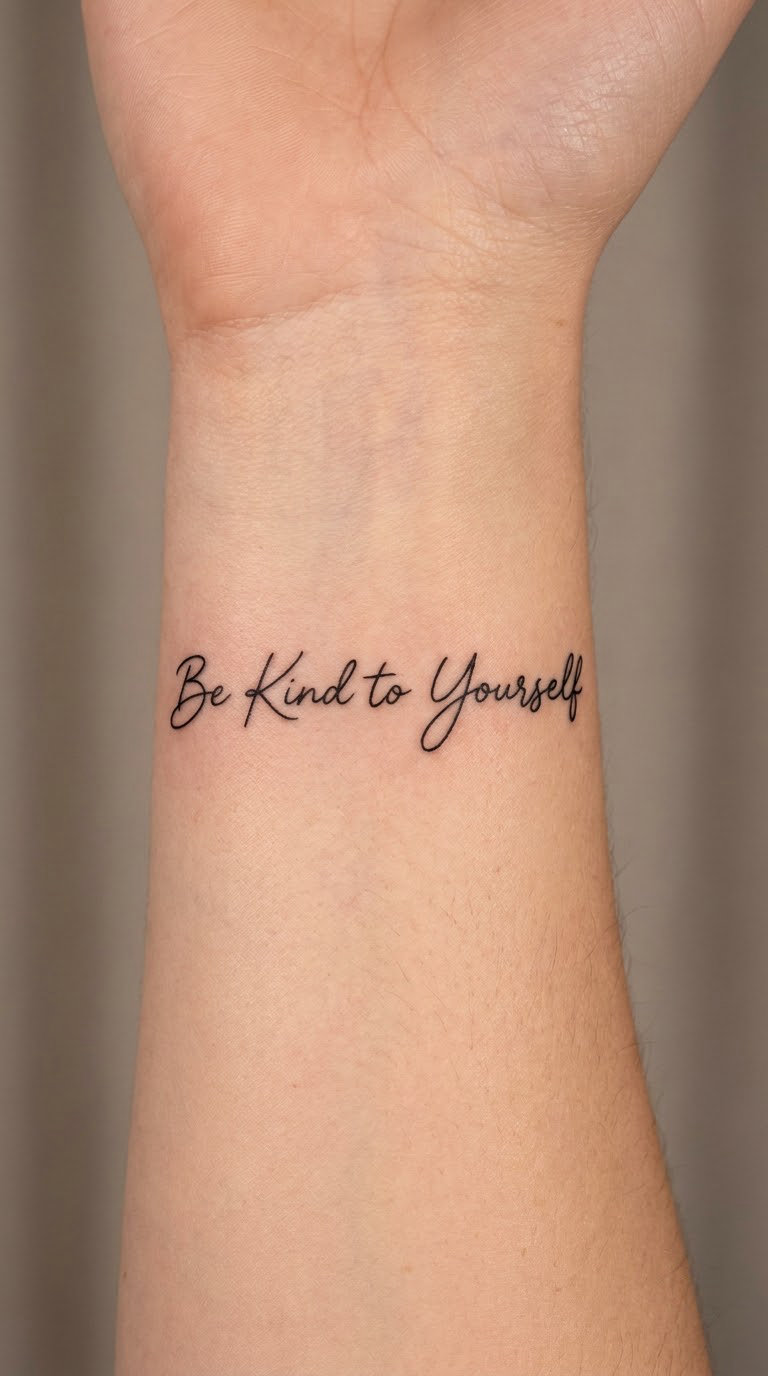
A single flowing line of hand lettering, one line of text rather than stacked words, with a little extra space between the two halves of the phrase so it breathes. Forum readers on r/tattoos and r/sticknpokes keep mentioning the same thing: the plain hand-lettered versions are the ones people still like years on, while the looping calligraphy versions are the ones they regret.
Placement: inner wrist, though the forearm suits it better if you want it to last. Size: 2.25 in (5.7 cm) wide; anything under 2 in and the four words merge. Style: micro script or hand lettering. Pain: medium to high on the inner wrist, which is bony and full of nerves. Wrist script also fades and blurs faster than forearm work, so expect a touch-up within a few years.
Make it yours: change the closing word to something less common, such as patient, or a word from your own language.
6. Self-Portrait in Micro-Realism
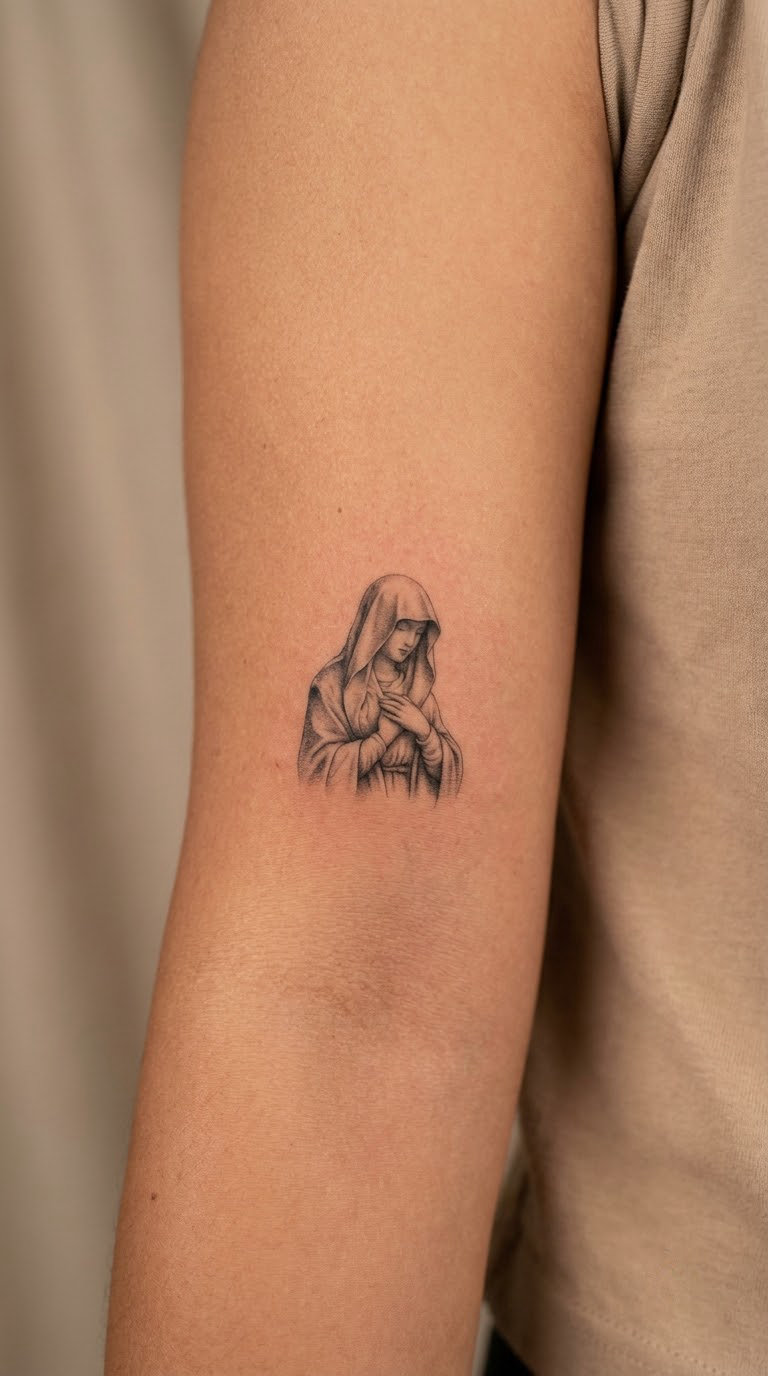
A tiny black-and-grey portrait of your own face, usually three-quarter angle or a cropped profile, with a few dots of shading in the hair and almost nothing elsewhere. It is the most personal design in this list because it cannot be handed to you by a reference image. Bring a clear, front-lit photo and expect the artist to redraw it rather than trace it.
Placement: upper inner arm, inner forearm, or behind the ear for a cropped profile. Size: 2 in (5 cm) tall is the realistic minimum; under 1.5 in the eyes turn to smudges. Style: micro-realism. Pain: medium, and long sessions on a small area get uncomfortable before they get painful. Fine facial detail softens noticeably after five or six years, so treat the first version as a starting point.
Make it yours: use a photo from a day you liked how you looked, not the one you keep comparing yourself to.
7. Open Hands Holding a Heart
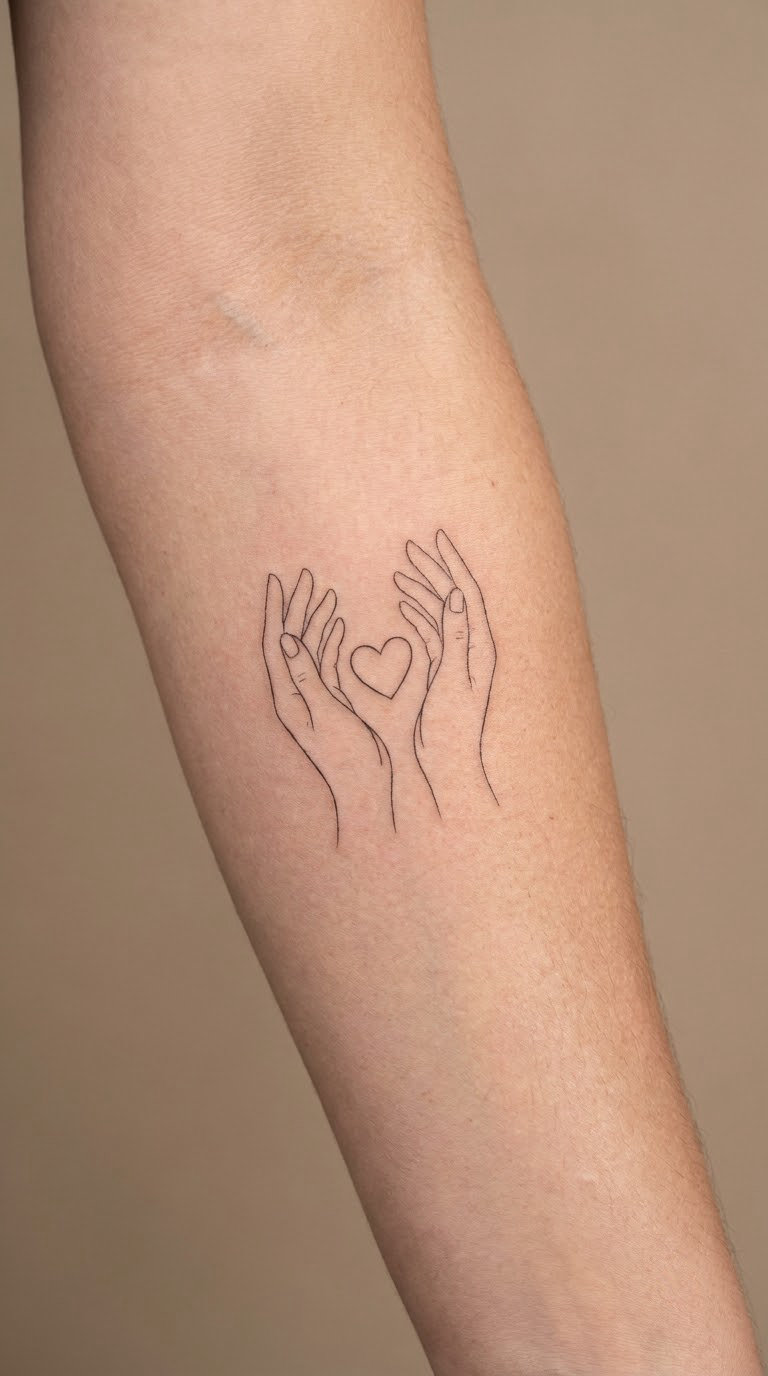
Two open palms cupped upward with a small heart resting between them, drawn in light outline with no shading. It is a caring gesture rendered literally, which is why it reads instantly without needing an explanation. Composition matters more here than detail: the hands should be slightly larger than the heart so the heart does not look like an afterthought.
Placement: forearm, inner arm above the elbow, or centred on the upper chest. Size: 2.5 in (6.3 cm) wide. Style: fine line. Pain: medium, and the forearm is one of the more forgiving spots for a first piece. Finger linework is the fragile part, so ask for slightly thicker lines there and expect a touch-up in year two or three.
Make it yours: have the artist copy the shape of your own hands from a photo, which turns a stock design into a likeness.
8. Wildflower Bouquet in Watercolor
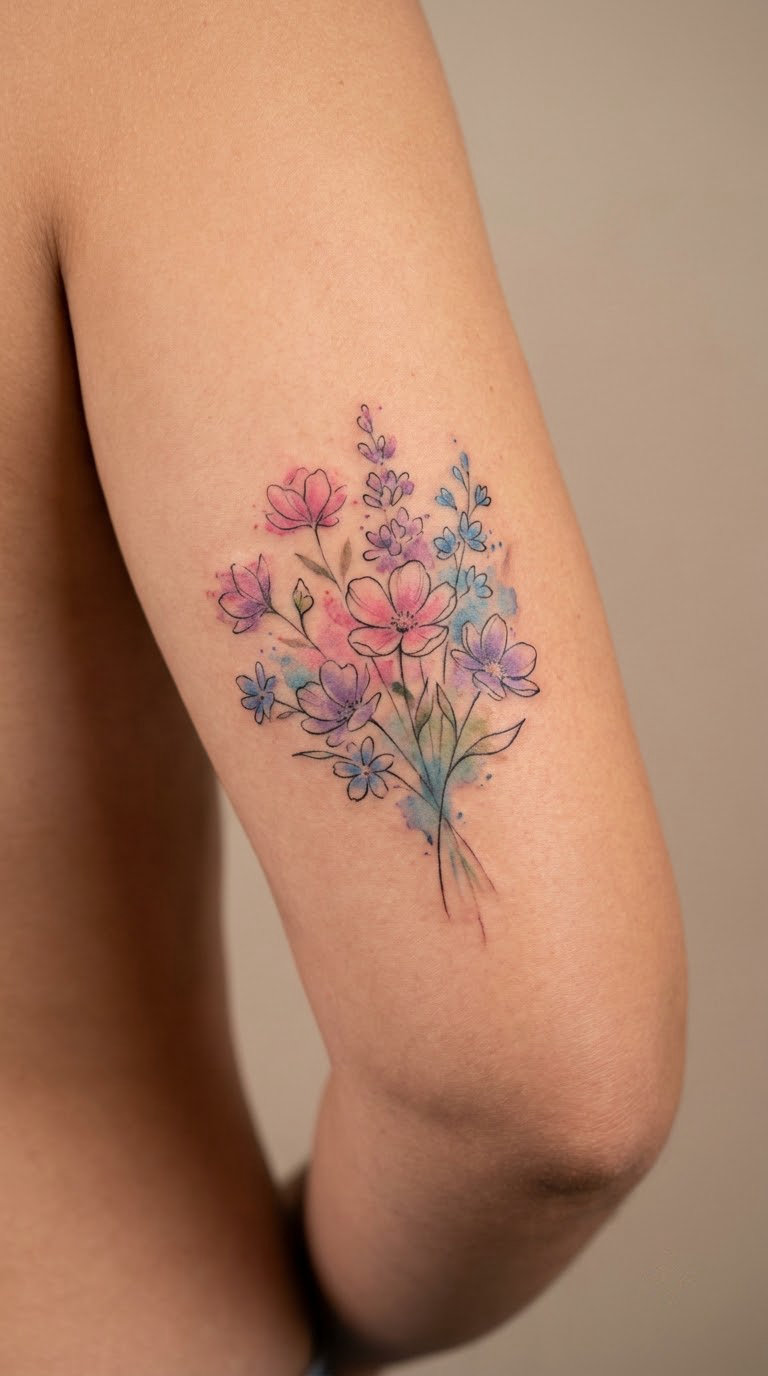
A loose handful of field-style flowers, not a neat arranged bouquet, with colour bleeding slightly past the line edges the way wet pigment does on paper. Three to five stems is plenty. Colour choice is the whole decision here: muted washes read as calm, saturated fills read as cheerful, and they age differently because the pale tones disappear first.
Placement: outer upper arm, back of the shoulder, or the side of the thigh. Size: 3.5 in (8.9 cm) wide. Style: watercolor. Pain: medium; colour packing takes longer, so budget a longer sitting. Watercolor lines blur with age, so the design should work even if every wash fades to a shadow and the ink outline holds.
Make it yours: name the species from a place that matters to you, and our leaf and botanical tattoo ideas gallery is a decent place to scout shapes.
9. Infinity with Personal Coordinates
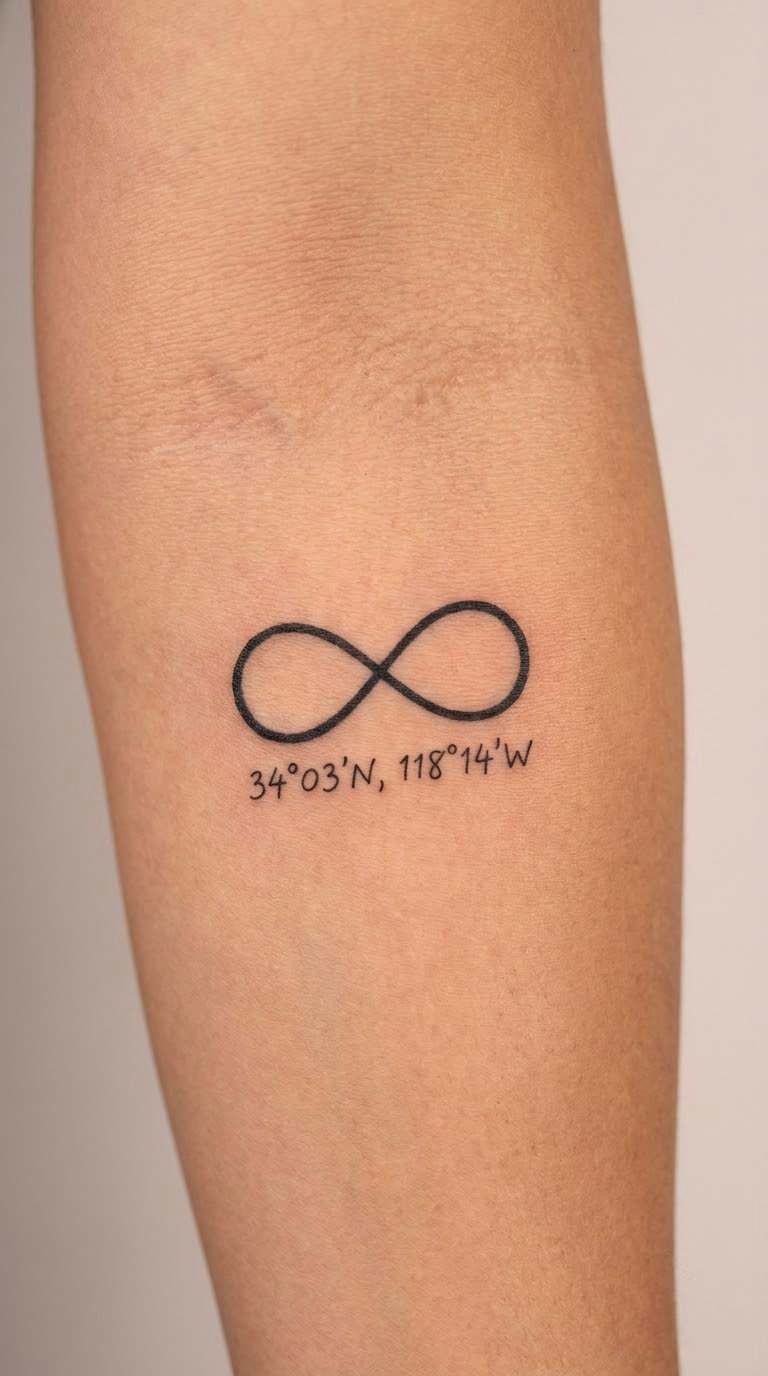
A clean infinity symbol with a line of small coordinates set underneath in a typewriter-style face. On its own, an infinity is one of the most overused tattoos going around, and most people can already read it. The coordinates are what make it yours: a home, a meeting place, or somewhere that shaped how you see yourself.
Placement: inner forearm just above the wrist, or the top of the foot. Size: 1.75 in (4.4 cm) wide for the symbol, with the numbers taking no more than a quarter of that. Style: minimal line. Pain: medium, mild on the forearm and sharper on the foot. Numeric linework fills in with age, so ask for the smallest legible size rather than the smallest possible size.
Make it yours: use a place that only you would recognise on a map, which also keeps the piece from being a caption.
10. Phoenix Rising in Blackwork
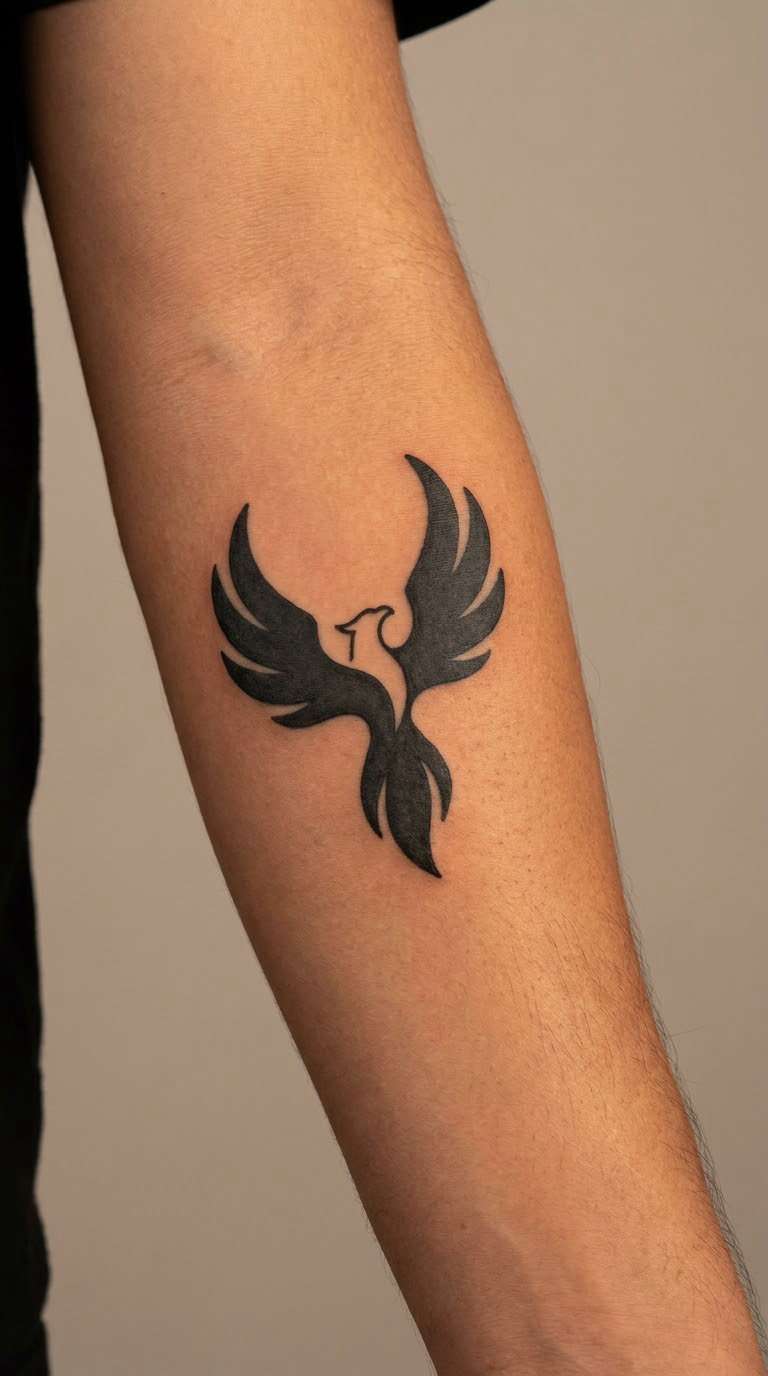
A bird mid-rise with wings up, filled with solid black and very little interior detail so the shape carries the design. Blackwork ages more predictably than shading because there is nothing soft to fade. It is the piece people choose after a genuinely rough period, and it says coming out of something rather than feeling good today, which is a different and often more honest kind of self-love.
Placement: outer upper arm, outer thigh, or across the shoulder blade for a wider wingspan. Size: 4 in (10 cm) tall. Style: blackwork. Pain: high, and solid black filling is a long session of sustained sensation. Black lines soften and thin with sun exposure, so this is not a design you want on a forearm in shorts all summer.
Make it yours: have the wings drawn at a specific spread, from a photo of a bird in flight rather than a stock silhouette.
11. Moon Mirror Self-Reflection Design
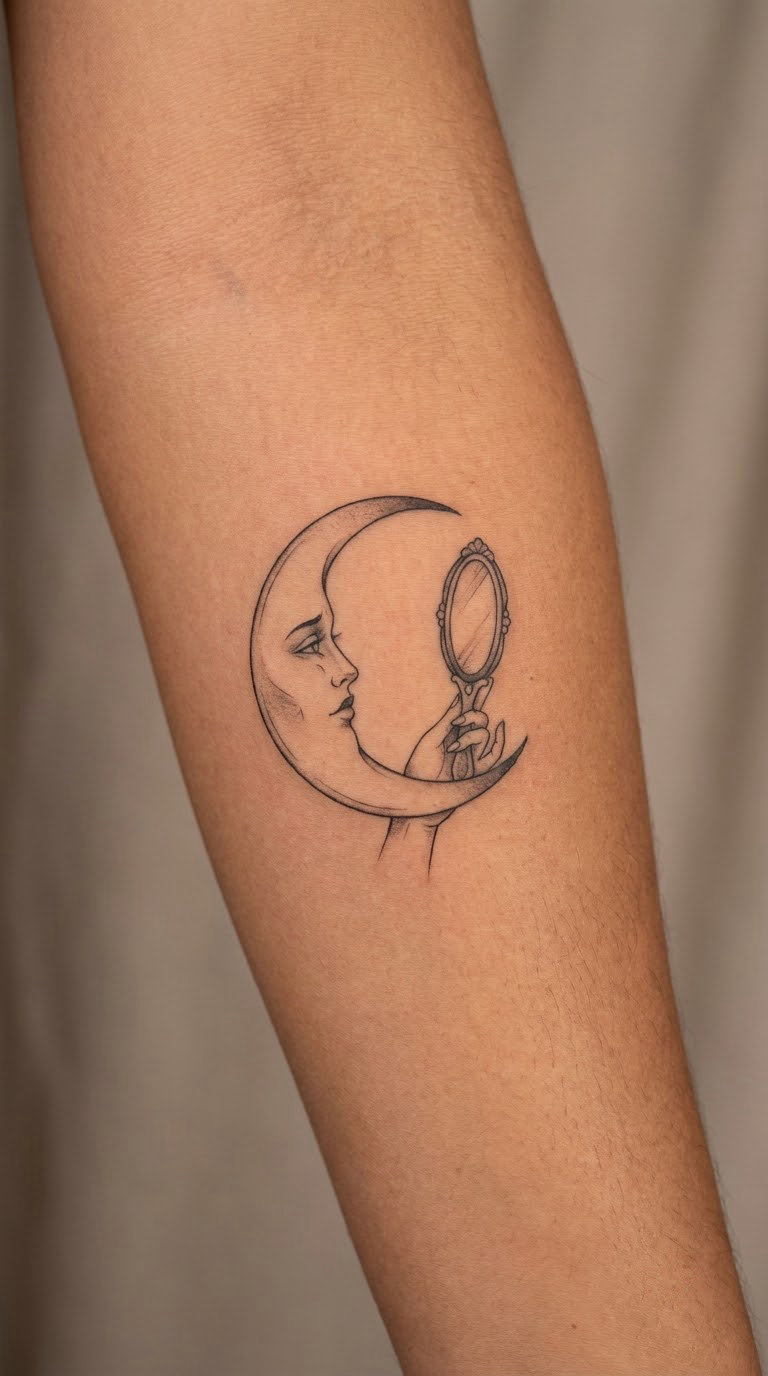
A crescent moon with a calm side profile, holding or facing a small oval hand mirror, drawn in fine line with a touch of grey in the mirror’s edge. The self-portrait version of the moon idea, and slightly more complex than a plain crescent. It reads as looking at yourself honestly rather than admiring yourself, which is the version of self-love most people are actually after.
Placement: forearm, inner arm, or the calf. Size: 2.75 in (7 cm) tall so the mirror has room to be a mirror and not a dot. Style: fine line with light grey. Pain: medium, steady and uneventful on the forearm. The facial profile is the part that softens first, so keep the features simple rather than detailed.
Make it yours: add a small date inside the mirror’s frame, the day you decided to take the piece seriously.
12. Red Heart with One Meaningful Word
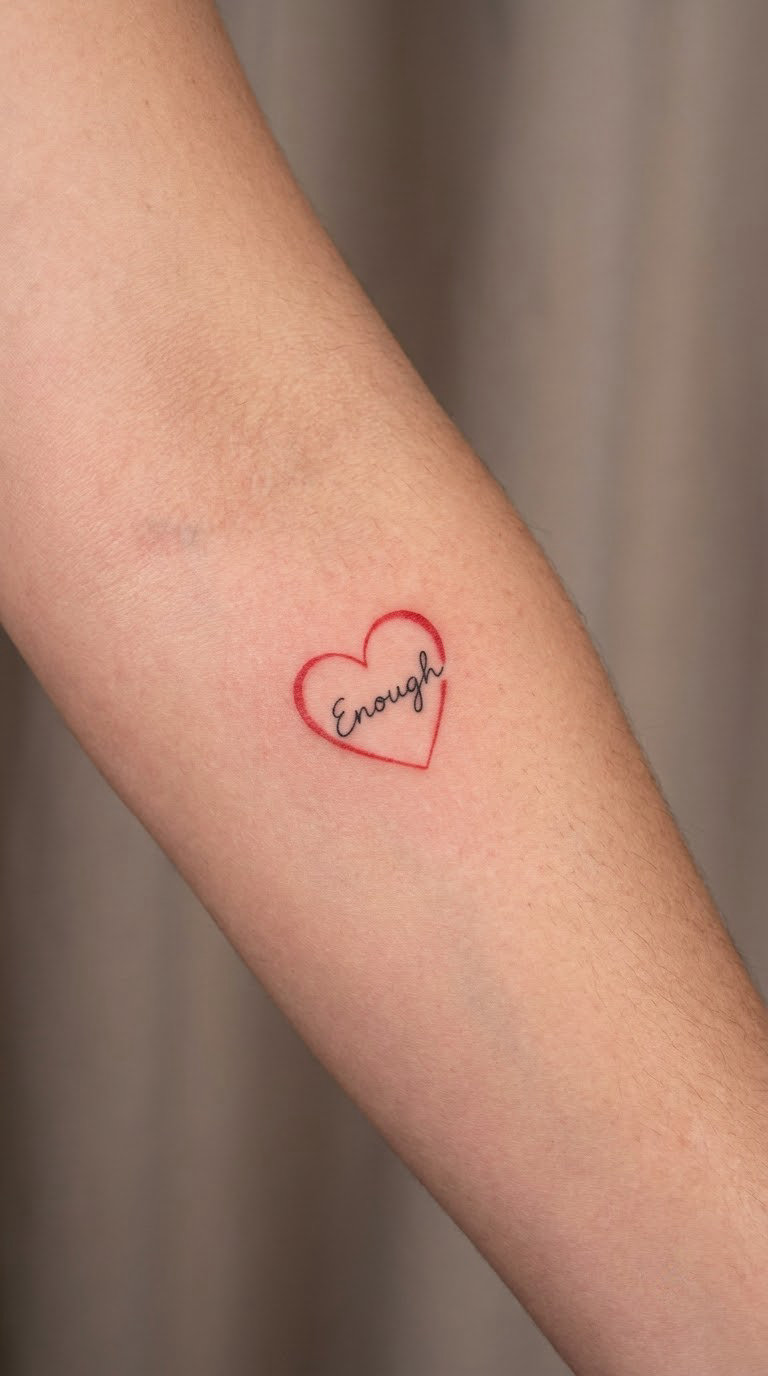
A single word in solid red, set inside a small filled heart or on its own. Red does the shouting so the design does not have to. Restraint is what makes it look good: one colour, one word, nothing else in the frame. Plenty of people pick a word they were told too many times as a child, which is exactly why it sticks.
Placement: inner arm, inner forearm, or the sternum. Size: 1.5 in (3.8 cm) wide for the heart, or 1.25 in for the word alone. Style: colour line or solid fill. Pain: medium, and solid red takes more passes than a thin line. Red is a pigment that holds well, though the crispness of an edge softens faster than black linework, so expect a touch-up if you want it sharp.
Make it yours: choose the word before you choose the style, then let the artist size the lettering to it.
13. Butterfly with Balanced Wings
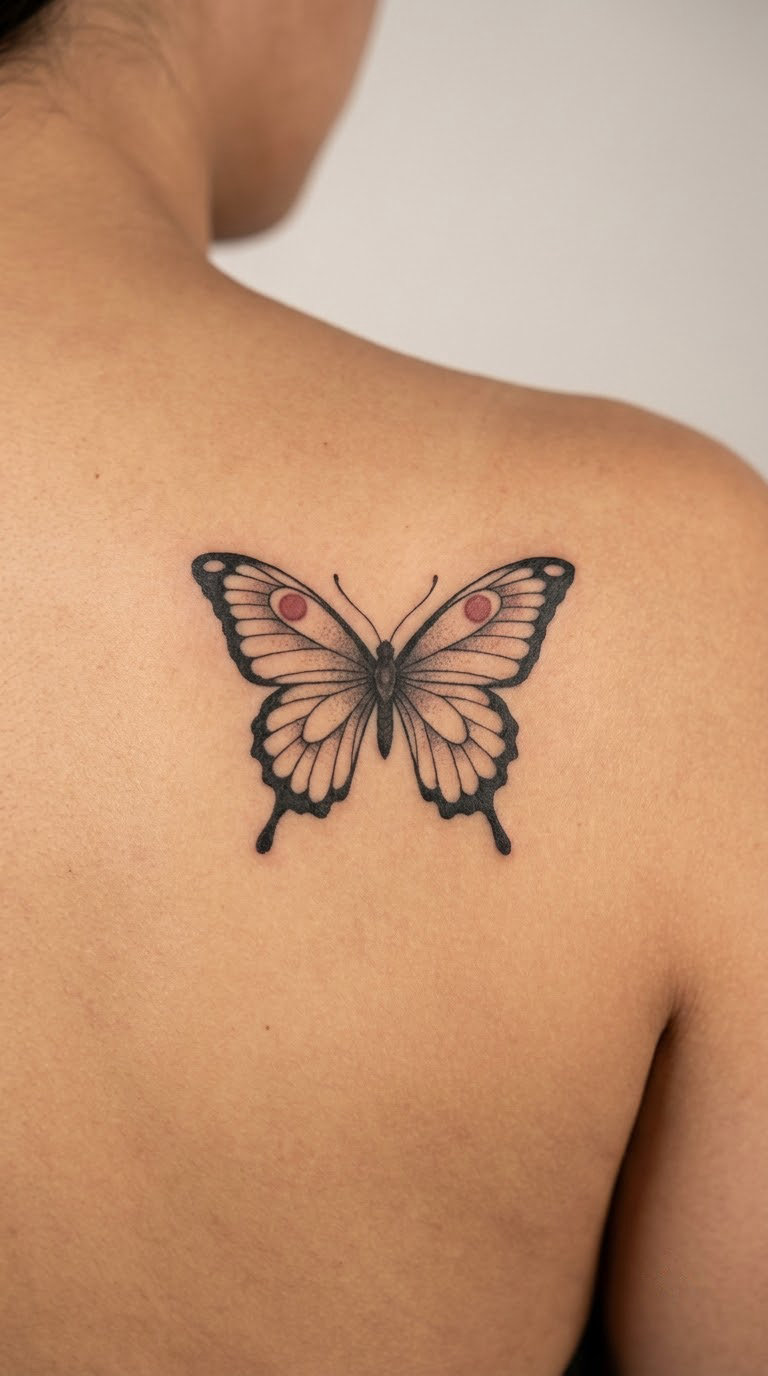
A symmetrical butterfly with clean wing shapes, drawn in black line or solid blackwork with one restrained colour accent, usually on the upper wings. It is a change-and-becoming design, and the symmetry does the heavy lifting: matched wings read as balance, which is a more useful version of the idea than transformation alone. Artists on r/tattoos note this is one of the few symbols people keep being drawn back to years later.
Placement: shoulder blade, upper back, outer upper arm, or the ankle. Size: 3 in (7.6 cm) wide. Style: blackwork with a single colour accent. Pain: medium, and the shoulder blade sits on bone, so it is more of a constant ache than a series of stings. Wing detail blurs over time, so a bolder outline survives better than a heavily patterned interior.
Make it yours: keep the two wings identical but change one element, such as a missing vein in one wing, so it is not a stamped design.
14. Minimal Heartbeat Line
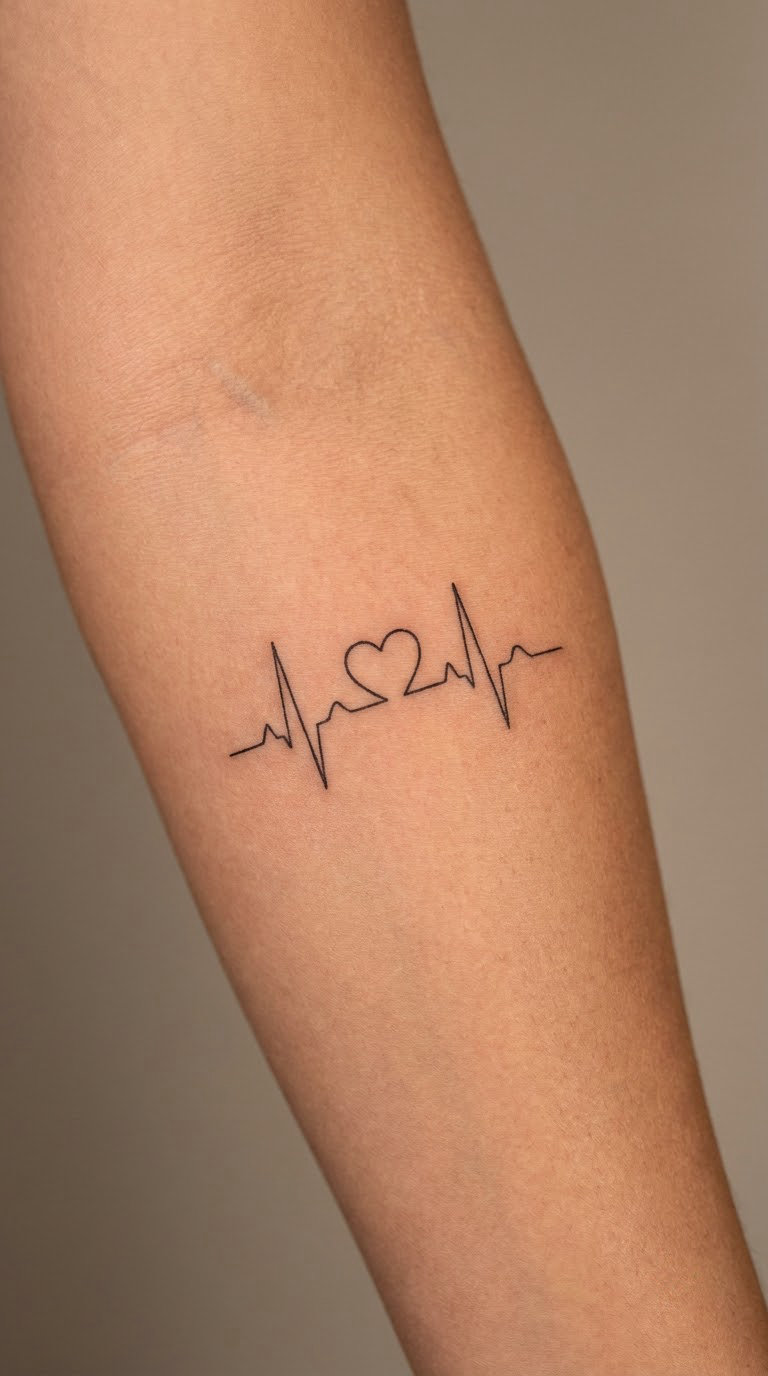
A single heartbeat trace running across the forearm, usually with one small heart placed at the centre of the line. A plain trace is a common motif and on its own means very little, so the version worth having carries a hidden element: a birth date written in the spacing, a name spelled out in the peaks, or a word only you can read from one angle.
Placement: inner forearm, outer forearm along the radius, or the rib. Size: 2.25 in (5.7 cm) wide. Style: fine line. Pain: medium, and ribs are noticeably worse, so keep it away from bone if this is your first piece. The thin trace is the first thing to grey out, particularly if it sits in a spot that sees regular sun.
Make it yours: plot an actual rhythm from a monitor or a recording of your own heartbeat and have the artist follow it.
15. Mountain and Sunrise Linework
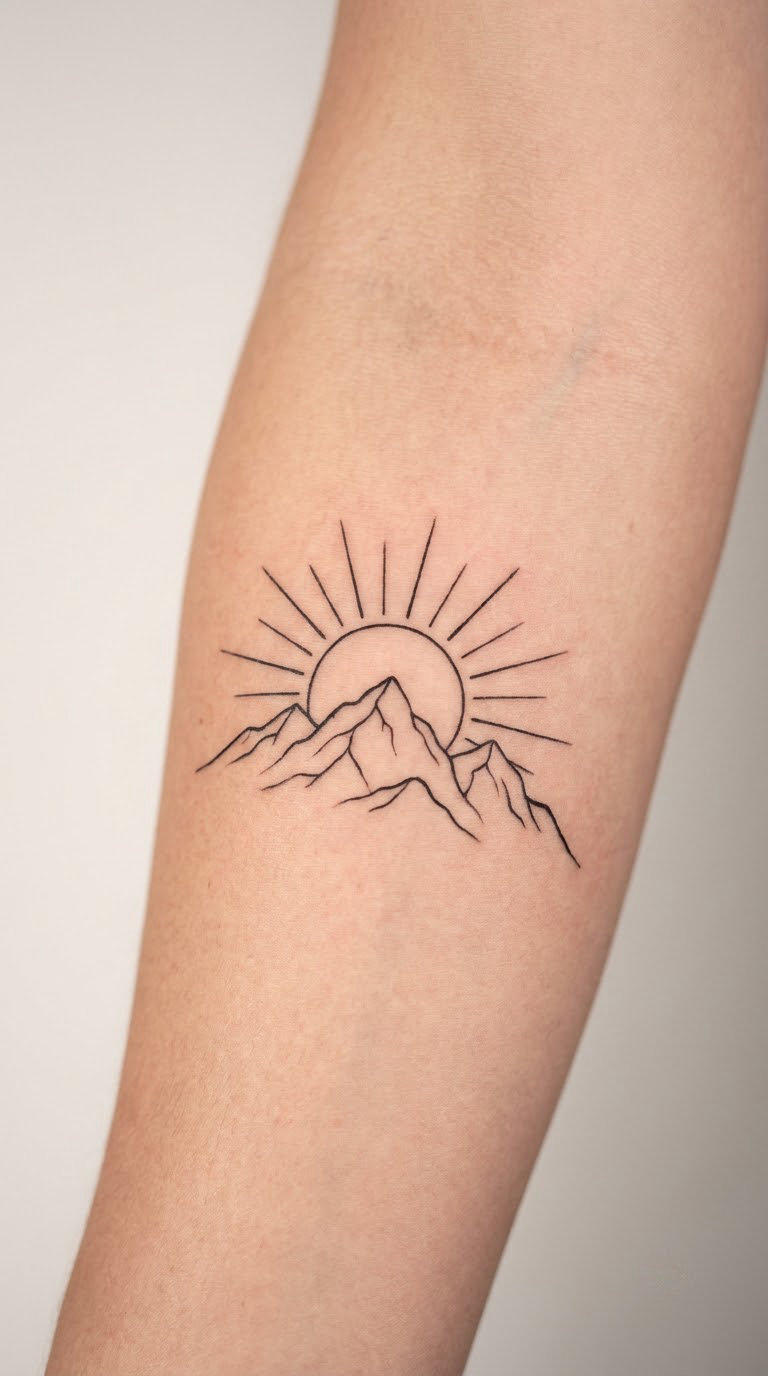
A row of simple triangular peaks with a half-risen sun behind them, done as clean single-needle linework with no gradients. It is the slowest metaphor in self-love tattoos: progress that does not announce itself, and the patience to keep going. It suits people who find affirmations embarrassing, and it works as a companion piece to a smaller word tattoo without competing with it.
Placement: outer forearm, upper arm, or the calf. Size: 3.5 in (8.9 cm) wide. Style: fine line. Pain: medium, easier than ribs or the spine. Straight lines are kinder to ageing than curves, so this design holds its shape longer than most at the same size, though the sun’s inner lines will soften.
Make it yours: send a photograph of a range you have actually stood in and ask for that skyline, not a generic peak.
16. “I Am Home” in Elegant Script
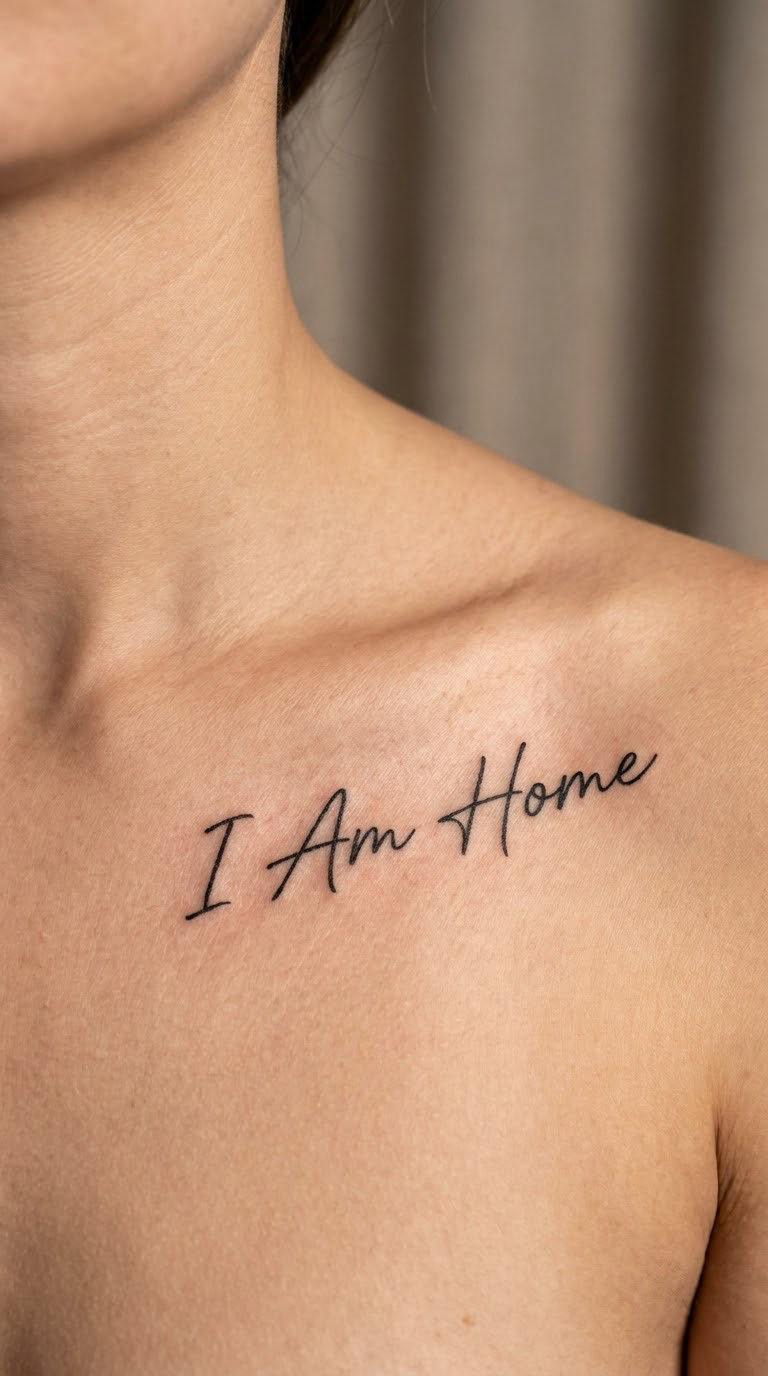
Three words in a slanted script, either free-floating on the collarbone or arched above it. It is one of the quieter affirmation pieces on this list because the words are about safety rather than achievement, which is why it appeals to people who dislike the word enough. Script is the risky part, so ask to see the artist’s hand-lettered portfolio rather than a healed photo of something else entirely.
Placement: collarbone, inner wrist, or the underside of the breastbone. Size: 2 in (5 cm) wide. Style: fine-line script. Pain: medium, and the collarbone is a bone, so expect a sharper, briefer sting than the wrist. Slanted script blurs more than upright lettering, so upright or a plain roman face is the durable choice if you want it readable in a decade.
Make it yours: add a small house outline or a doorway at the end of the line, a quiet second layer rather than an explanation.
17. Yoga Pose in One-Line Style
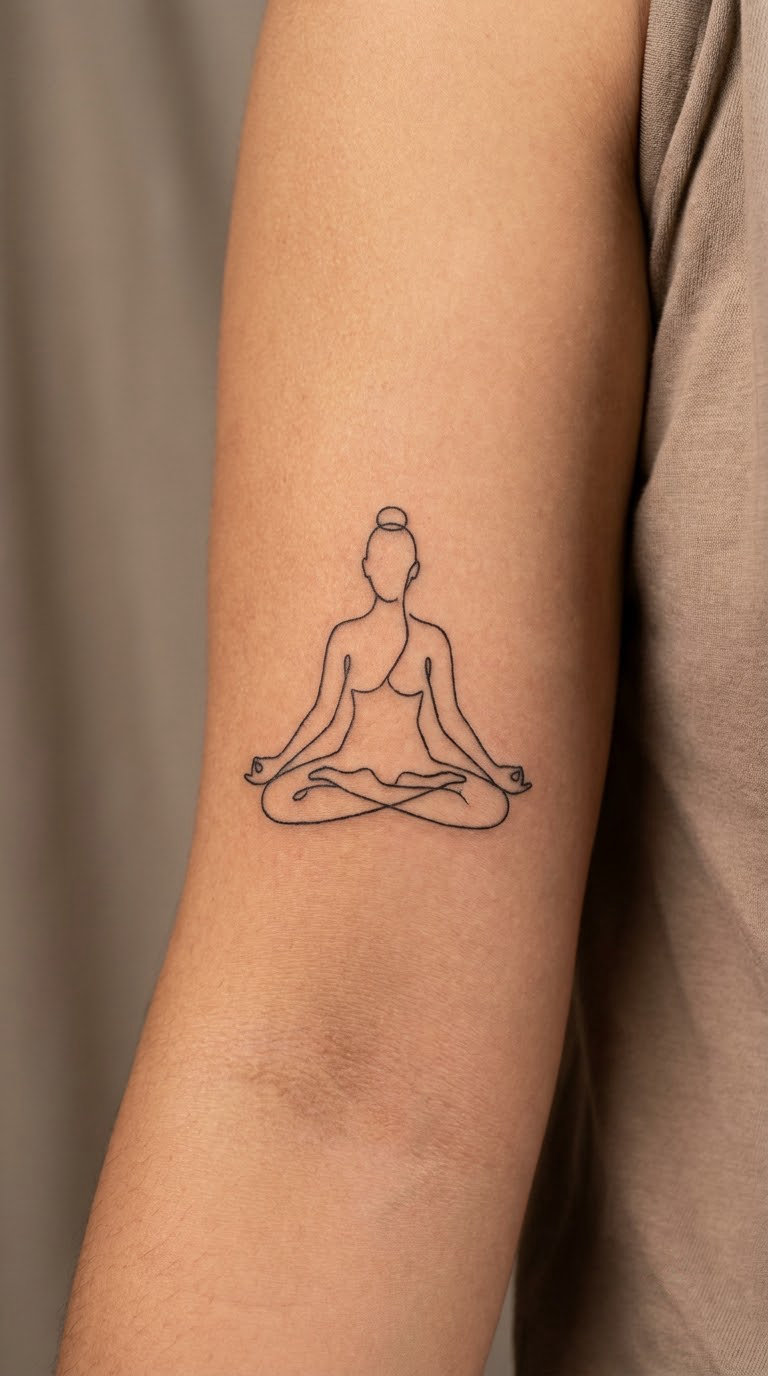
A figure in a seated meditation pose drawn in a single continuous line that starts at one hand and ends somewhere unexpected, often at the top of the head. The continuous-line format is what makes it small and clean: no shading, no outline weight changes, one stroke of movement. It is a practice tattoo rather than a message tattoo.
Placement: inner upper arm, back of the hand, or the ankle. Size: 2.5 in (6.3 cm) tall. Style: continuous line. Pain: low, since it is a single pass with no shading. A one-line piece can look unfinished if the line weight varies, so this suits inner arm skin where the needle has an easy run.
Make it yours: describe the exact pose you practise, down to hand position, since seated poses vary more than people expect.
18. Olive Branch with Resilience Note
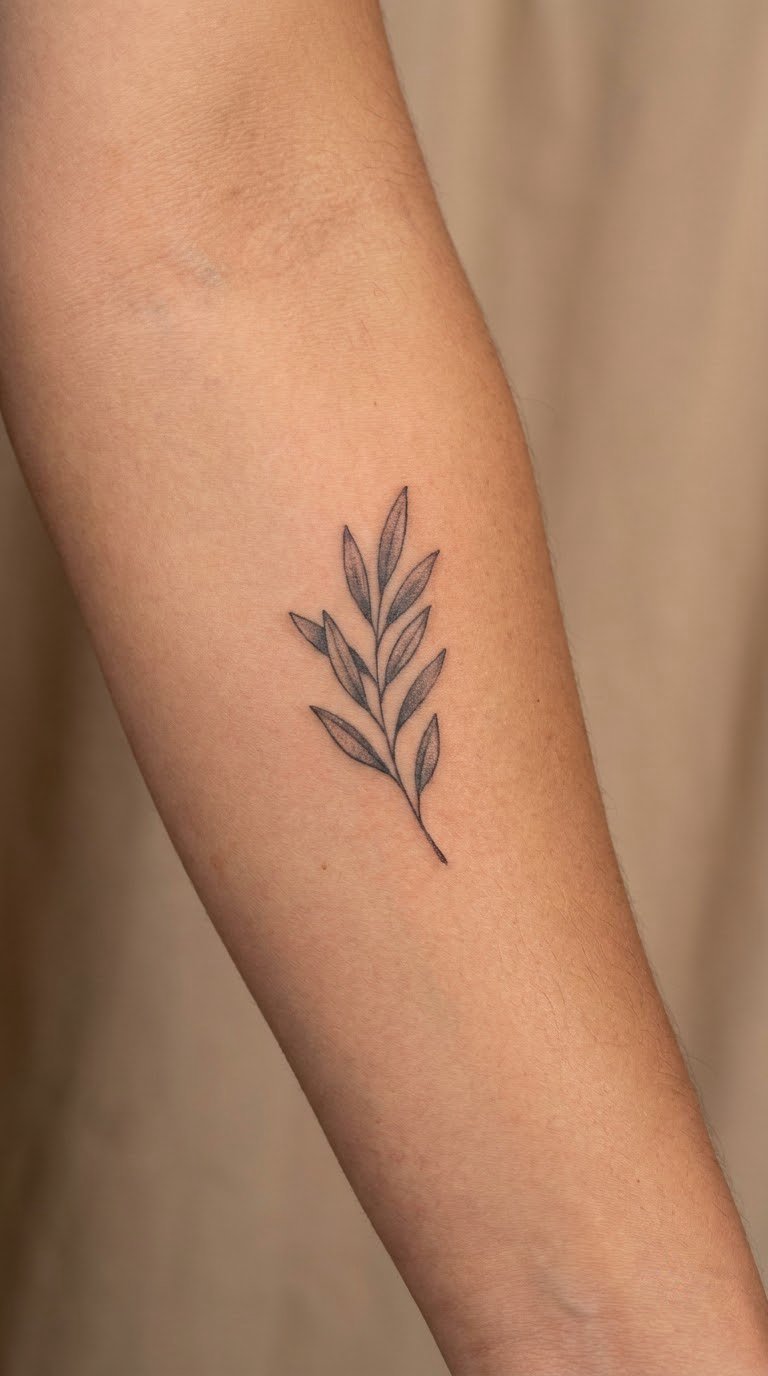
A slender branch with narrow leaves at alternating angles, black line with a little grey in the shadow side. Olive branches have carried peace and reconciliation associations for a long time, mostly through Greek and Roman tradition, so the symbol is older and more layered than most people assume. Wear it as a small piece of that, or fold your own meaning into it.
Placement: side of the forearm, inner arm, or the rib. Size: 3 in (7.6 cm) long. Style: black and grey fine line. Pain: medium, and the rib hurts more per square inch than anywhere else on this list. Leaf outlines are hairlines and will soften, so a slightly heavier line helps it survive contact with sleeve shirts and sun.
Make it yours: set the leaf count to something specific, such as a year or a family number, and keep it between the branches.
19. Single Rose with Watercolor Wash
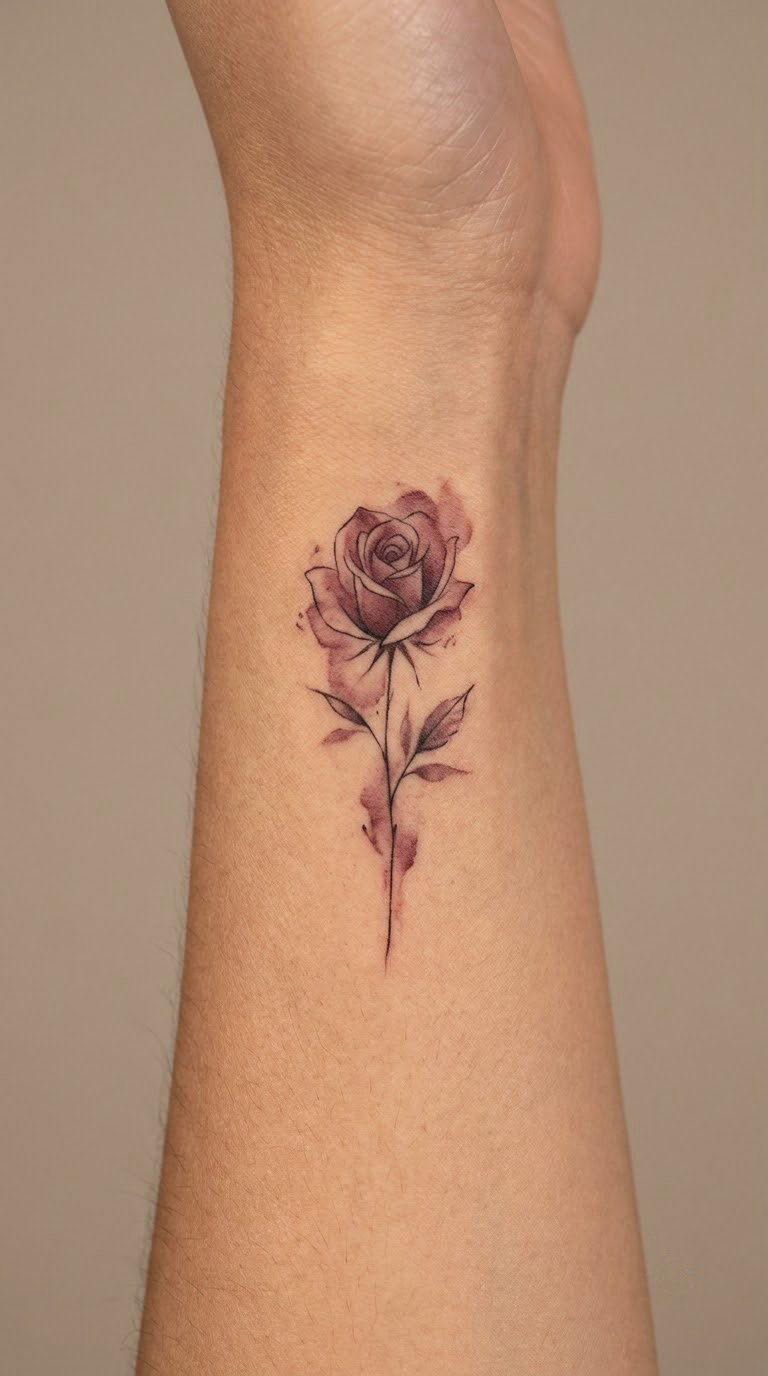
One rose drawn in outline with the petals mostly left open, and a controlled wash of burgundy or blush behind it. Negative space is the whole trick: a rose filled edge to edge at wrist size turns into a blob within a few years, while an outlined one still reads as a rose when the colour has gone. Our heart and floral design gallery has similar sparse-flower references worth showing an artist.
Placement: wrist, inner forearm, or behind the ear. Size: 2.5 in (6.3 cm) tall. Style: fine line with a colour wash. Pain: medium, sharp on the wrist because the bone is close to the surface. Wrist tattoos fade faster than forearm tattoos, so plan on a touch-up and think twice before putting a small wash there.
Make it yours: pick the wash colour from something you own rather than a trend, since the colour is the part that changes first.
20. Compass with Home Direction
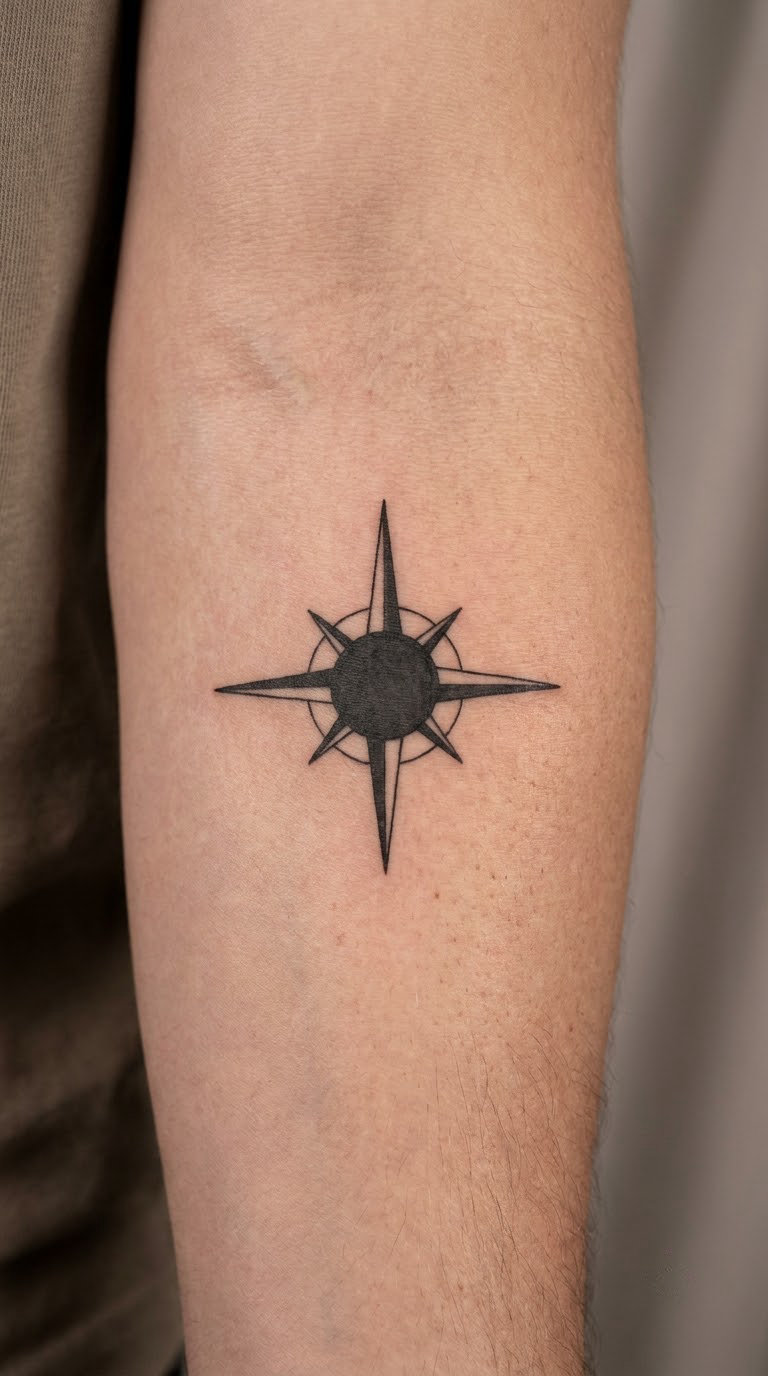
A compass rose reduced to a filled centre point, four clear points and one longer north needle, drawn in fine line with no decorative flourish. It works as a metaphor for trusting your own direction rather than following someone else’s, which is a quieter form of self-love than the word-based designs. Keeping the interior empty is what stops it looking like a souvenir.
Placement: inner forearm, the back of the shoulder, or the ankle. Size: 2 in (5 cm) wide. Style: fine line. Pain: medium, and the ankle is sharper than the forearm. The small interior marks fade first, so ask the artist to make the four points slightly heavier than the decorative hatching around them.
Make it yours: have the needle point away from a place rather than toward one, which changes the reading of the whole symbol.
21. Celestial Figure in Dotwork
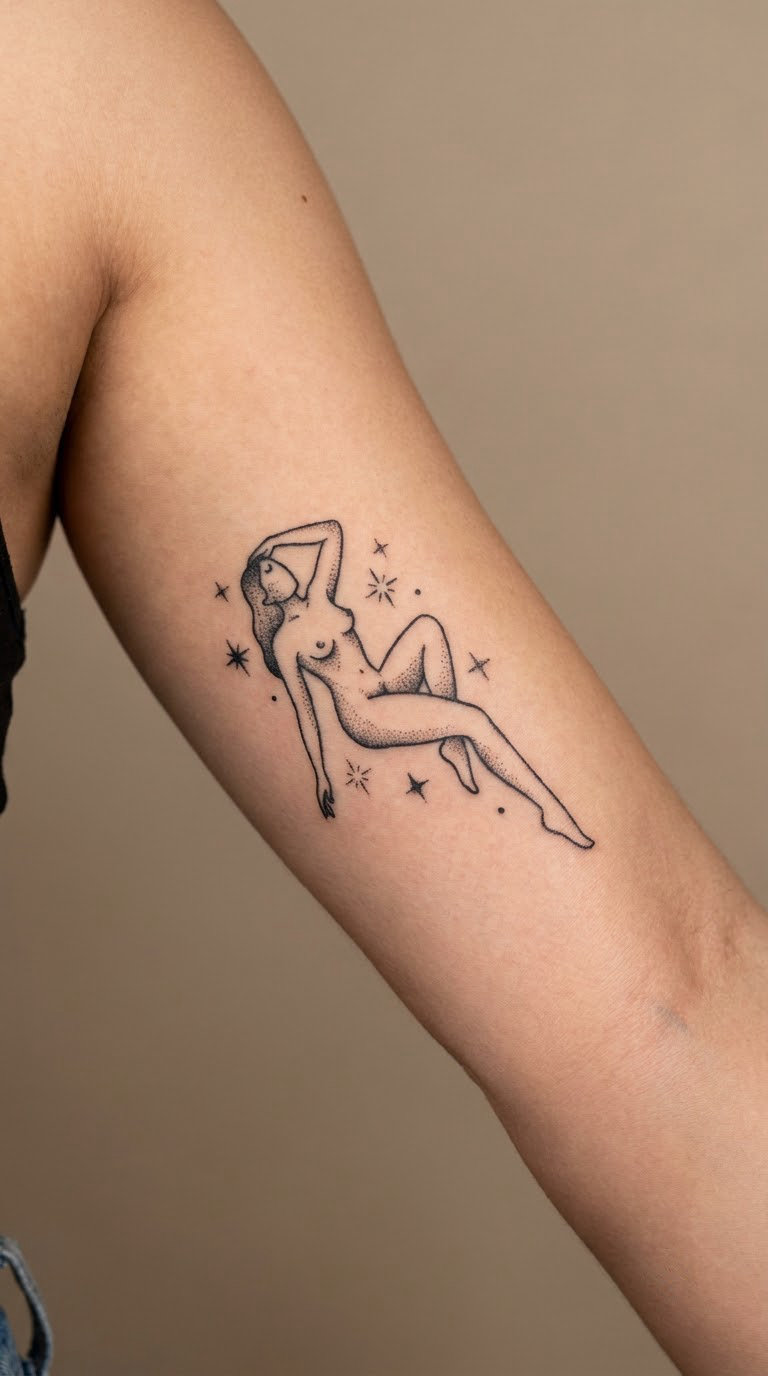
A reclining figure with a crescent headdress, built out of stippling rather than outline, with small stars scattered around the negative space. The dotted approach is calm and quiet once healed, which is unusual for something this detailed. It is also the highest-maintenance idea on the list, and worth doing with an artist who works in dotwork daily rather than occasionally.
Placement: outer upper arm, outer thigh, or the back of the shoulder. Size: 3.25 in (8.3 cm) tall. Style: dotwork. Pain: high, both because the sitting is long and because the needle is working over the same area repeatedly. Individual dots stay distinct for several years, but stippled shading spreads slightly with age and sun exposure, so the figure will soften into a grey cloud unless it is kept covered.
Make it yours: ask for the figure’s pose to match a drawing you make rather than a reference the studio already owns.
22. Two Names in a Matching Heart
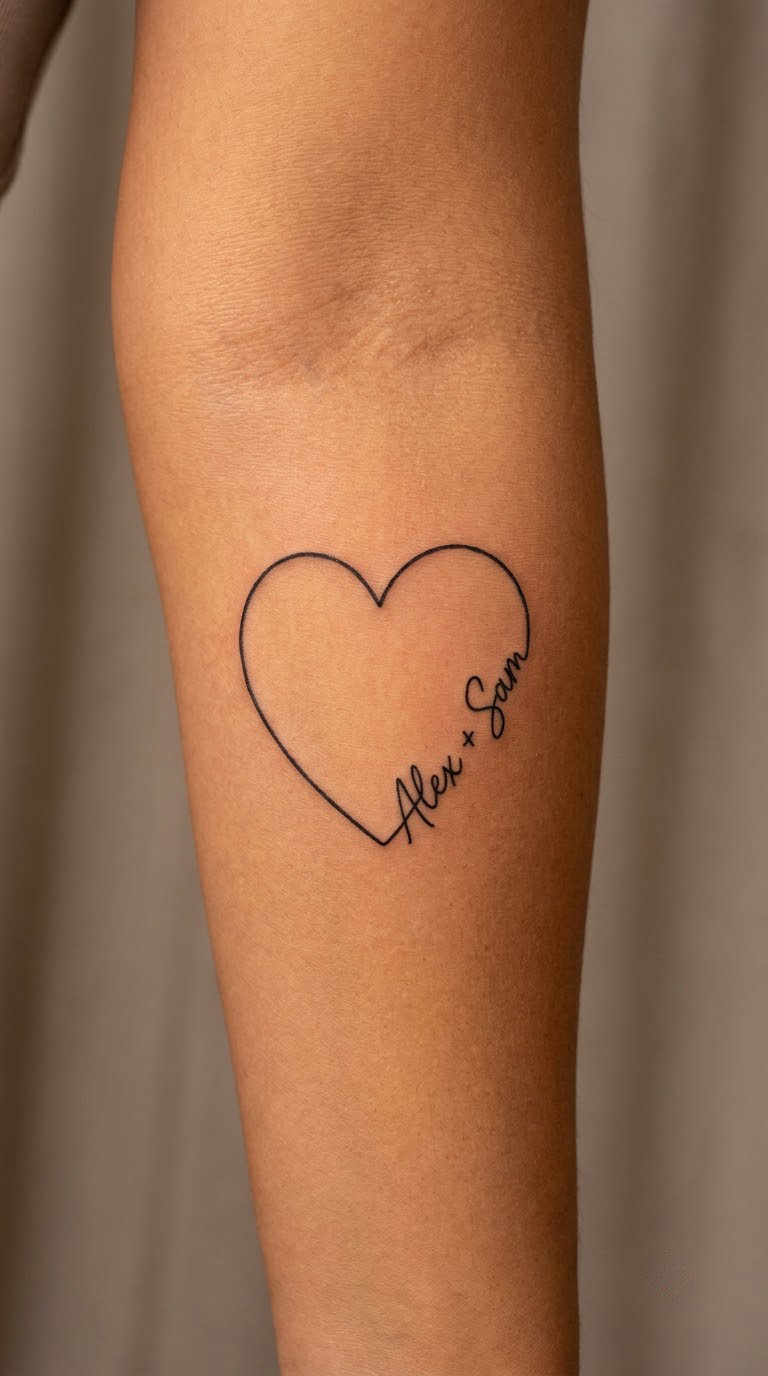
A plain outlined heart with two names set inside it in a small hand, spaced so they do not touch. On its own it looks like a couple’s tattoo, and for chosen family, a close friend, or a person you feel responsible for, that is exactly the point. Self-parenting reads through the same shape: the people who showed up for you, whoever they were.
Placement: inner arm, inner forearm, or the back of the hand. Size: 2 in (5 cm) wide, with the names taking up no more than half the interior. Style: fine line. Pain: medium on the arm, high on the hand because the knuckles have little padding. Two names inside a small heart is a lot of lettering for the space, so agree the size before the stencil, not after.
Make it yours: put the people in a deliberate order, or match a second heart on someone else so the pair is a set rather than a copy.
23. Tree Roots in Minimal Blackwork
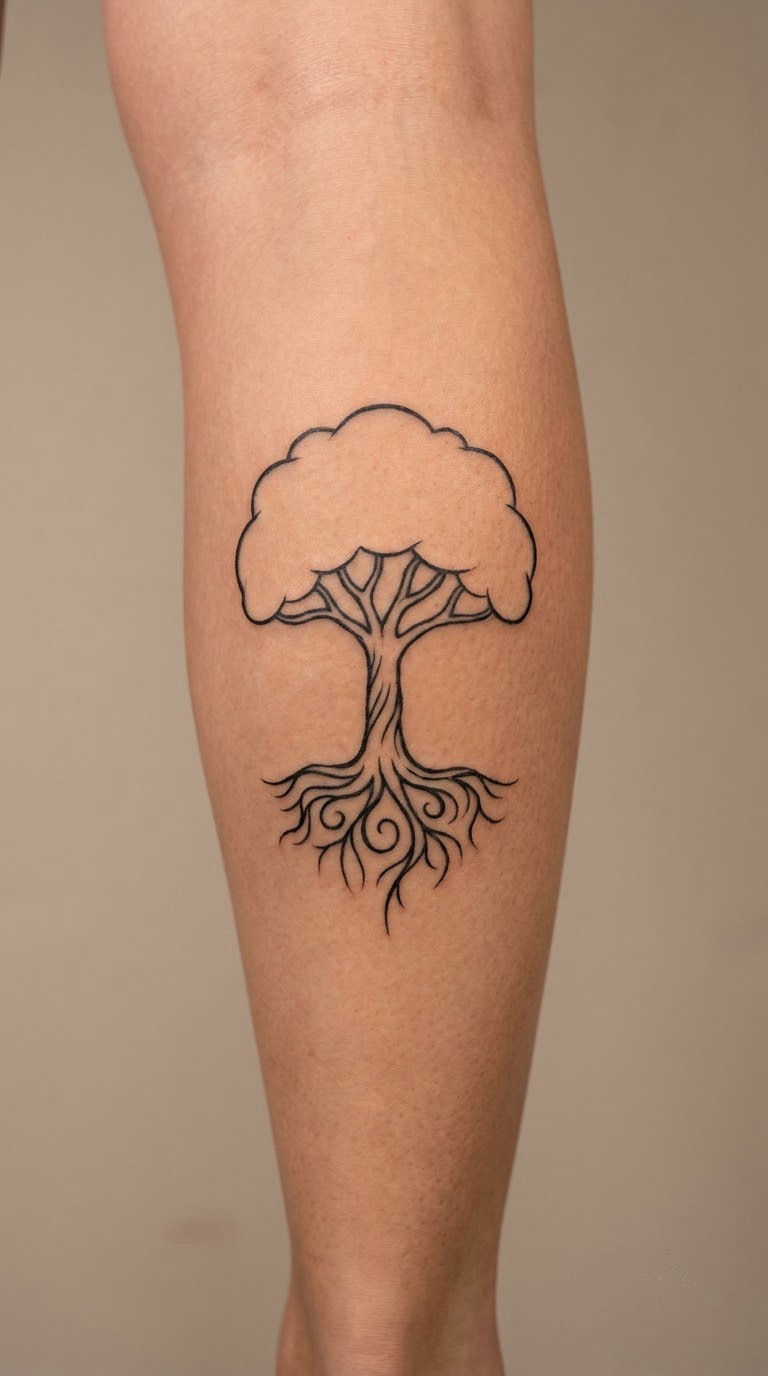
A tree with a rounded, open crown and roots that spread and cross beneath the trunk, drawn in solid or heavy black line with plenty of white space inside the canopy. The emphasis on roots rather than branches is the point: stability, being grounded, having something underneath you hold. It reads well in black because the mass of the roots does the work that shading would do elsewhere.
Placement: calf, outer thigh, forearm, or the back of the shoulder. Size: 3 in (7.6 cm) tall. Style: minimal blackwork. Pain: medium, and the calf is one of the easier places to sit through. Solid black thins with age, so ask for a touch of extra weight in the roots where skin is looser and lines tend to spread.
Make it yours: have the root pattern follow a real root system from a photograph of a tree you know, which is more interesting than symmetry.
24. Blank Diamond Contour with “My Own”
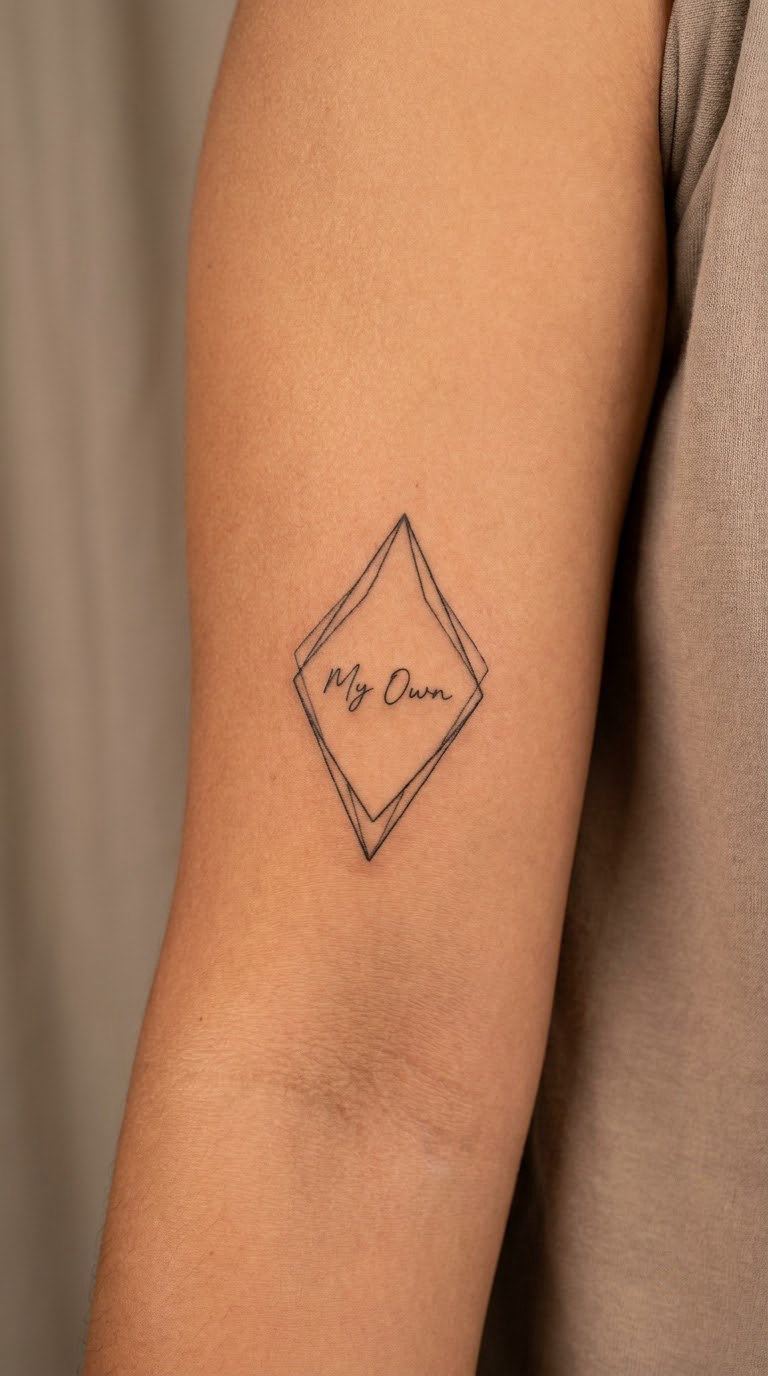
An abstract figure drawn as a simple continuous contour, more shape than detail, with two words set inside the outline. It is the newest design in this list and the most awkward for an artist to explain out loud, so pictures do the work here. The appeal is independence stated without a slogan: your body, your rules, on your own skin.
Placement: outer upper arm, hip, or the outer thigh. Size: 2.75 in (7 cm) tall. Style: fine-line ornamental. Pain: medium, and the hip is more sensitive than the upper arm. Interior lettering inside a contour needs space, so agree the word placement before the stencil or the artist will have to squeeze it in.
Make it yours: ask the artist to draw the contour from a photo of your own shoulder or hip so the outline is genuinely yours.
How to Choose the Right Design
- Decide how much you care about the wording. If a phrase on your arm in eight years would make you wince, do not get a phrase. Plenty of people in the r/selflove and r/MadeMeSmile threads say symbols with layered meaning stick better than slogans, because nobody else can reduce them to a caption.
- Pick the line weight before the size. Single-needle fine line is elegant and fades fastest; a heavier line or a solid fill holds its shape. Choosing your size after the line weight is a conversation your artist can have with you in person.
- Match the design to the flat area. Wrists, ankles, collarbones and finger sides are narrow and curved. A 2 in (5 cm) horizontal design has to fight the shape of the wrist; the same design on an upper arm just sits there.
- Check it at arm’s length, not in a mirror. Squint at a photo of the placement from two metres back. If you cannot tell what it is, either the size is too small or the line weight is too thin for the distance you will be seen at.
- Test the design against a trend, not against time. Wording goes out of fashion, fonts age badly, and micro script blurs. Ask whether the idea would still read as meaningful if the lettering were never legible again. If the answer is yes, the design can survive its own execution.
One honest note. A tattoo is a reminder, not treatment. It can hold a sentence you want to keep seeing, and for some people that is a real support, but it is not a substitute for talking to someone qualified, and it does not fix anything on its own.
Cost and Session Time
Most studios charge by the hour, and almost all of them set a minimum. For a small piece in the United States, expect roughly 80 to 200 dollars for a tiny single-word or single-symbol tattoo, 150 to 350 dollars for a small composition with a few elements, and 250 to 600 dollars for a medium design that needs real detail such as a bouquet, a portrait or a blackwork fill. Larger custom work runs well past that.
Size matters less than people expect, because the shop minimum is the floor. A one-word script and a three-word script often cost exactly the same, because both are a short sitting on a slow-moving area. Hourly rates across the US commonly run from about 80 to 250 dollars, with higher rates in cities with strong convention scenes and lower ones in smaller towns.
Budget two to three hours for a medium piece, and expect some designs to need a second session. A portrait at two inches, a bouquet in colour, or a blackwork fill is rarely a one-sitting job. Ask whether the quote covers a touch-up, and when your artist wants you to come back, since most will look at the healed result around six months in.
Regional variation is real, and so is the difference between an artist who does this style every week and one who does it occasionally. If a quote is far below everyone else’s, the question to ask is not about money. It is about how much of this exact style is in their portfolio.
Aftercare Basics
- Follow your artist’s aftercare instructions. They know what they did and how long it will take to settle, so their advice outranks anything general, including this list.
- Wash gently. Clean water and a mild unscented soap, patted rather than scrubbed, then let it air dry. Loose clothing over the area for the first few days helps with rubbing.
- Skip the lotions. Heavy creams, oils and butters block healing and can trap moisture in fresh ink. If the skin gets tight, ask your artist before you reach for a product.
- Protect it from sun and water. Fresh tattoos should stay out of swimming pools, hot tubs, and long showers, and sun exposure is the biggest reason fine line fades early. Once healed, sunscreen on exposed placements still matters.
- Know when to call someone. Contact your artist if the ink looks patchy or was wiped away, and speak to a healthcare professional if you develop spreading redness, swelling, heat, pus or a fever. Do not treat a tattoo yourself.
Frequently Asked Questions
What does a love yourself tattoo really mean?
It is a permanent reminder of self-acceptance, self-worth or personal growth, worn somewhere on your own body. Most people choose it at a transition point: after a breakup, during recovery, or when spoken affirmations stopped working. The meaning is personal, and there is no fixed dictionary entry. What matters is that the design still means something to you once the novelty has worn off.
What is the best small self-love tattoo for a first tattoo?
A short phrase in a plain hand or a single small symbol on the inner forearm is the safest first choice, because the forearm is flat, forgiving and easy to hide. Keep the lettering under 2 in (5 cm) across. Skip the ribs, the spine and the inner wrist for a first sitting, since bone and nerve density make all three a harder introduction.
Do self-love quote tattoos fade quickly?
They fade faster than most people expect, and the cause is usually placement rather than style. Wrist, hand, foot and any area that sees regular sun will soften first, and single-needle script blurs before it lightens. A forearm piece in a heavier line or a solid fill holds noticeably better. Plan on a touch-up, and expect to need it around the two to four year mark.
Where should I place a self-love tattoo?
The inner forearm and upper arm are the most forgiving spots, with flat skin and moderate pain. The inner wrist and collarbone are more exposed to wear and sun but read well in photos. Ribs, the spine and the hip hurt more, so save them for a design you are confident about. If privacy matters, the inner arm, the thigh and the back of the shoulder all hide under everyday clothes.
Should I choose a quote or a symbolic self-love design?
Choose a quote if you want the message readable to other people and are comfortable owning those exact words for decades. Choose a symbol if the meaning is private, if you dislike how affirmation phrases can age, or if a font feels like a trend you will outgrow. Plenty of people compromise: one small word on the inside of the arm, one symbol on the outside of the upper arm.
Which Self-Love Tattoo Is Right for You?
For a first small tattoo, go with a fine-line affirmation on the inner forearm. Small, legible, hideable, and the sitting is short. It is the easiest of these 24 love yourself tattoo ideas to get right the first time and the least costly to change your mind about later.
For someone already collecting ink and wanting more visual weight, the micro-realism self-portrait or the blackwork phoenix is the more satisfying choice. Both reward an artist’s hand, both take a longer sitting, and both age more predictably than script. Just budget accordingly.
Either way, the practical first step is the same. Collect two or three references, including a healed photo in the placement you are considering, then book a consultation and ask the artist what size the design can actually hold. If you want more shapes to look through, our small wrist tattoo ideas gallery is a good place to see how the same words behave on different wrists.