
15 Family Tattoo Ideas for Moms With Meaning (September 2026)
Family tattoo ideas for moms usually come down to one thing: making a relationship visible. A tree, a set of matching branches, a line of names in your own handwriting, or one small flower for every child you have carried.
For a mom, the best family tattoo is rarely the flashiest one. It is the design that still makes sense when the kids are grown, the one that sits somewhere she can see it, and the one that does not need explaining. Here are fifteen that hold up, with what each one means, where it works, and how it ages.
1. Fine-Line Family Tree on the Inner Forearm
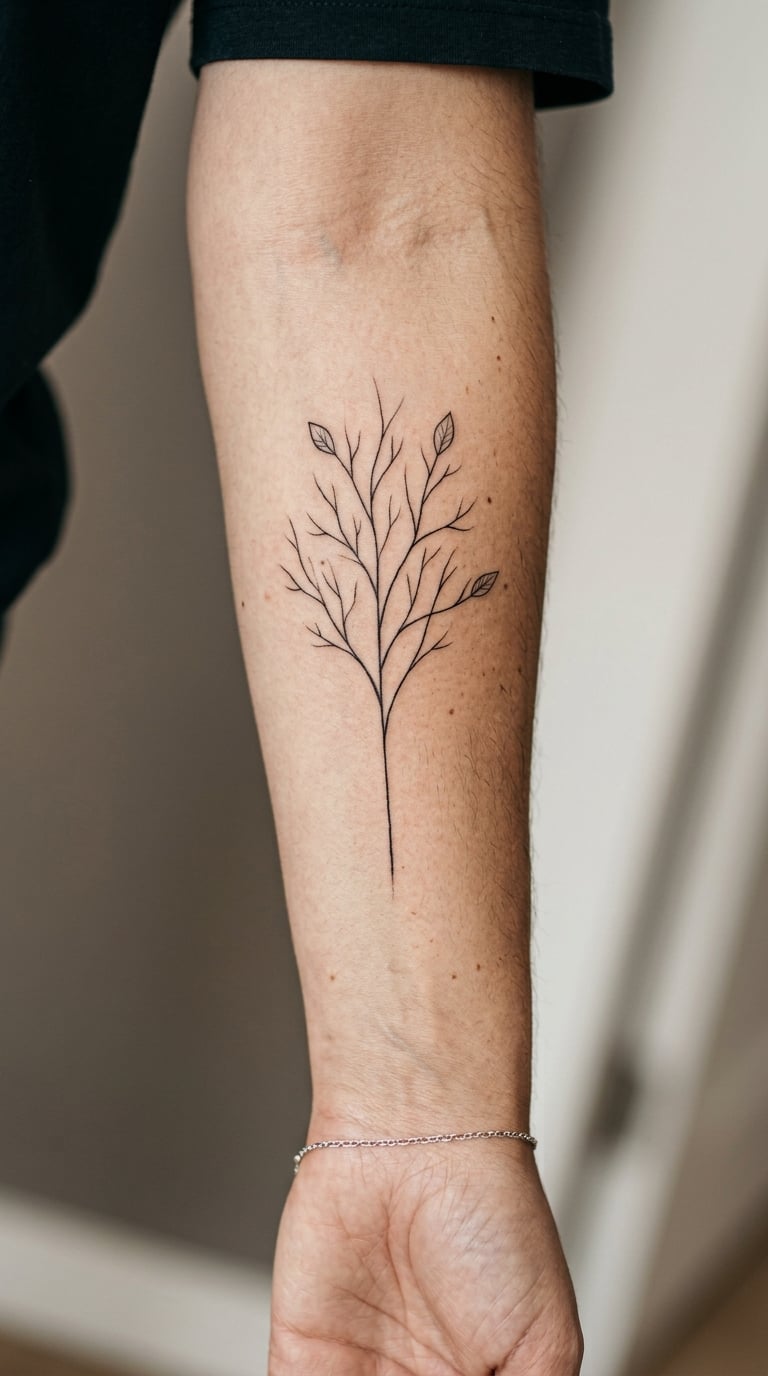
A fine-line family tree says roots, growth and the people who came before you, all in one thin black shape. It scales to almost any family size, which is why it keeps working whether you have one child or five.
Placed on the inner forearm, the trunk runs along the wrist and the branches fan up toward the elbow, so a viewer reads it without asking. Keep the line weight consistent and leave the names out, or the piece turns to grey in a decade. Fine line ages better on the upper forearm than on the wrist or ankle, where sun and movement wear it down faster.
Pain and time: the inner forearm sits near two bony areas, so expect a sharp pinch at the wrist end. Two hours for a piece this size, and most of that is linework.
2. Realistic Mother and Child Portrait on the Upper Arm
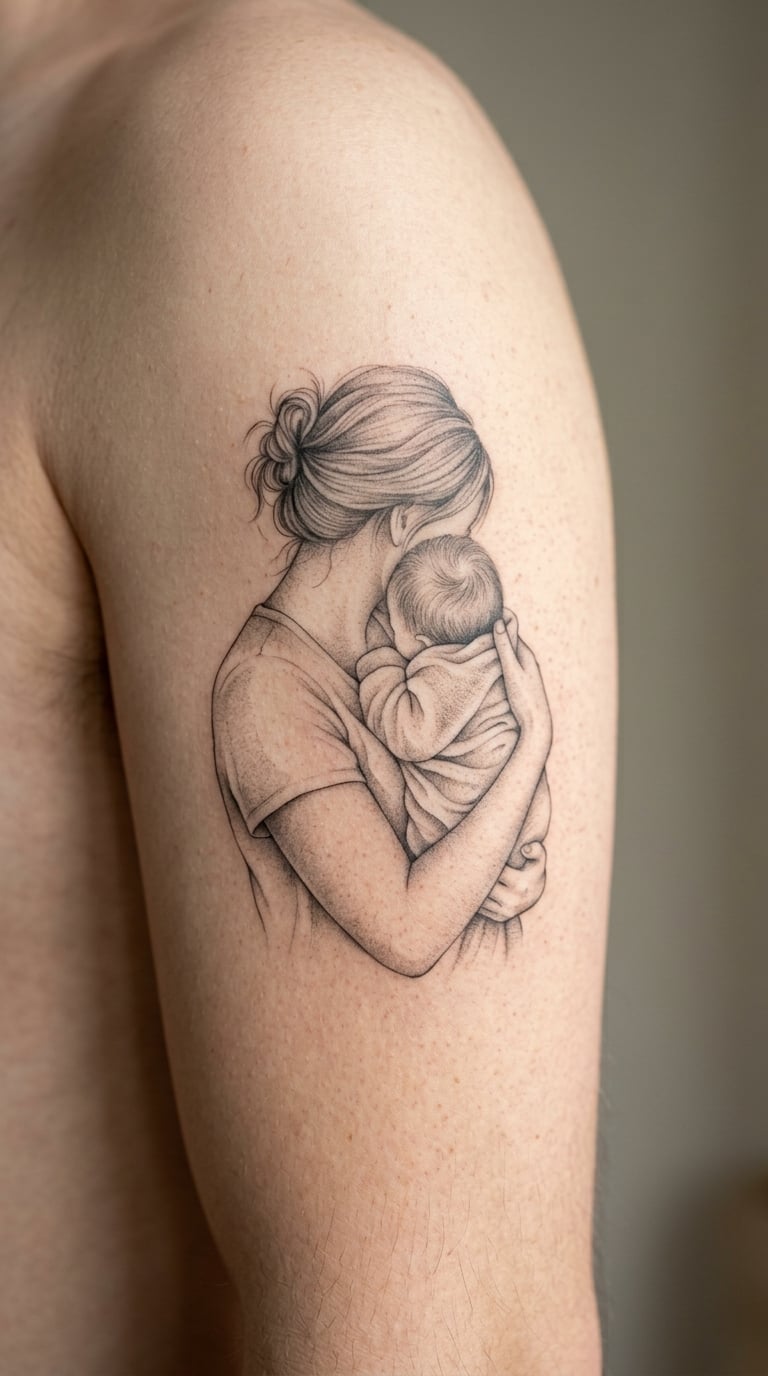
A realistic portrait of a mother holding her child is the most direct version of the theme. It shows the actual posture rather than a symbol for it, which is why it carries more weight than a tree does.
Greyscale shading on the outer upper arm gives the artist a large flat-ish surface to work with, and that area stretches less than skin over a joint. Portrait work is unforgiving, so bring two or three clear reference photos rather than a screenshot you found, and check healed examples in the artist’s portfolio, not just the fresh-ink posts.
Pain and time: the upper arm is one of the more comfortable spots for a long session. Expect three to four hours, most of it spent on the face and the hands.
3. Birth Flower Cluster, One Flower per Child
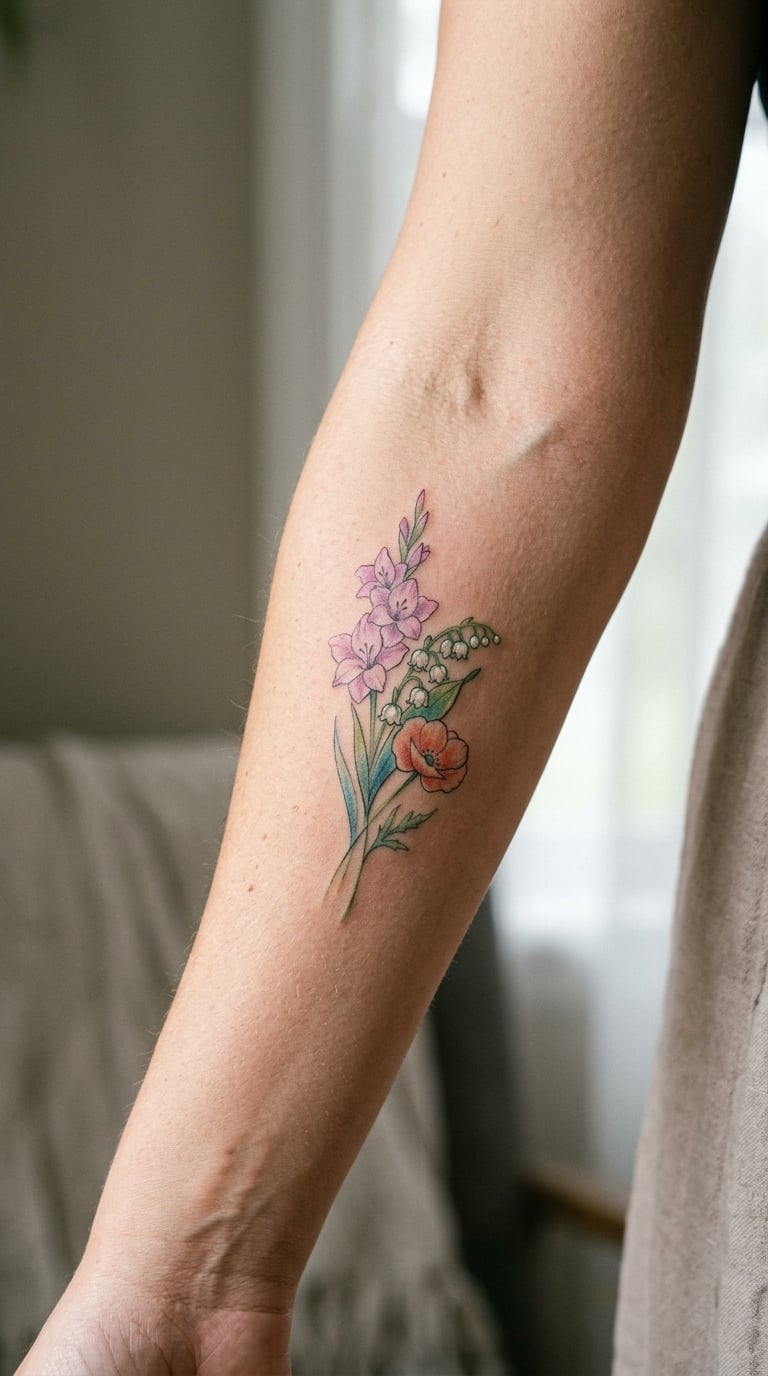
A birth flower cluster gives each child a marker without putting a name on your body. One flower for each birth month, arranged in birth order, so the design itself is a record of who came first.
Watercolour ink suits this because the colours stay soft and read as one piece rather than a sticker sheet. Decide the size before you start: a cluster of four small flowers needs roughly palm-width, and anything tighter turns into a smudge within a few years. The forearm and the shoulder blade take colour best and hide a piece that needs to be reworked later.
Pain and time: depends entirely on where you put it. On the outer upper arm, two hours of fairly mild discomfort. A cluster done as micro work takes longer for less signal.
4. Matching Mother and Daughter Fine-Line Branch
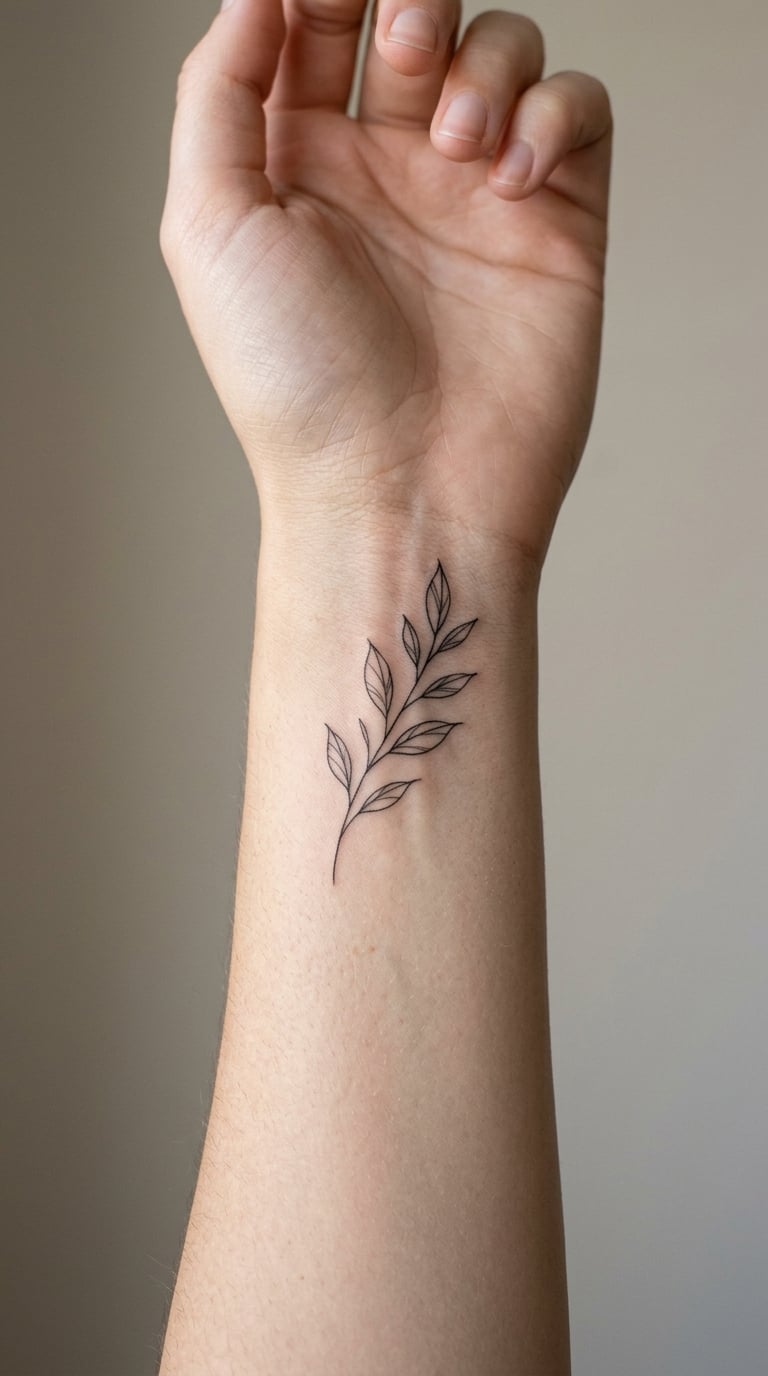
A matching branch design gives you and your daughter the same motif in the same style without anyone having to explain it. Two leaves from the same stem, or the same twig with a different number of buds, reads as connection at a glance.
Matching works best when the style is identical and the size is not, so each of you can place it where it suits your body. If your daughter is under about sixteen, most studios will not tattoo her, and some will not tattoo a design that copies an adult’s without a conversation first. Decide the placement on each of your own bodies rather than copying her, and check the stencil is mirrored correctly before anything starts.
Pain and time: the inner wrist is bony and the nerves sit close to the surface, so most people rate it higher on the pain scale than they expect. A small branch is one to one and a half hours.
5. Tree of Life With Names Hidden in the Branches
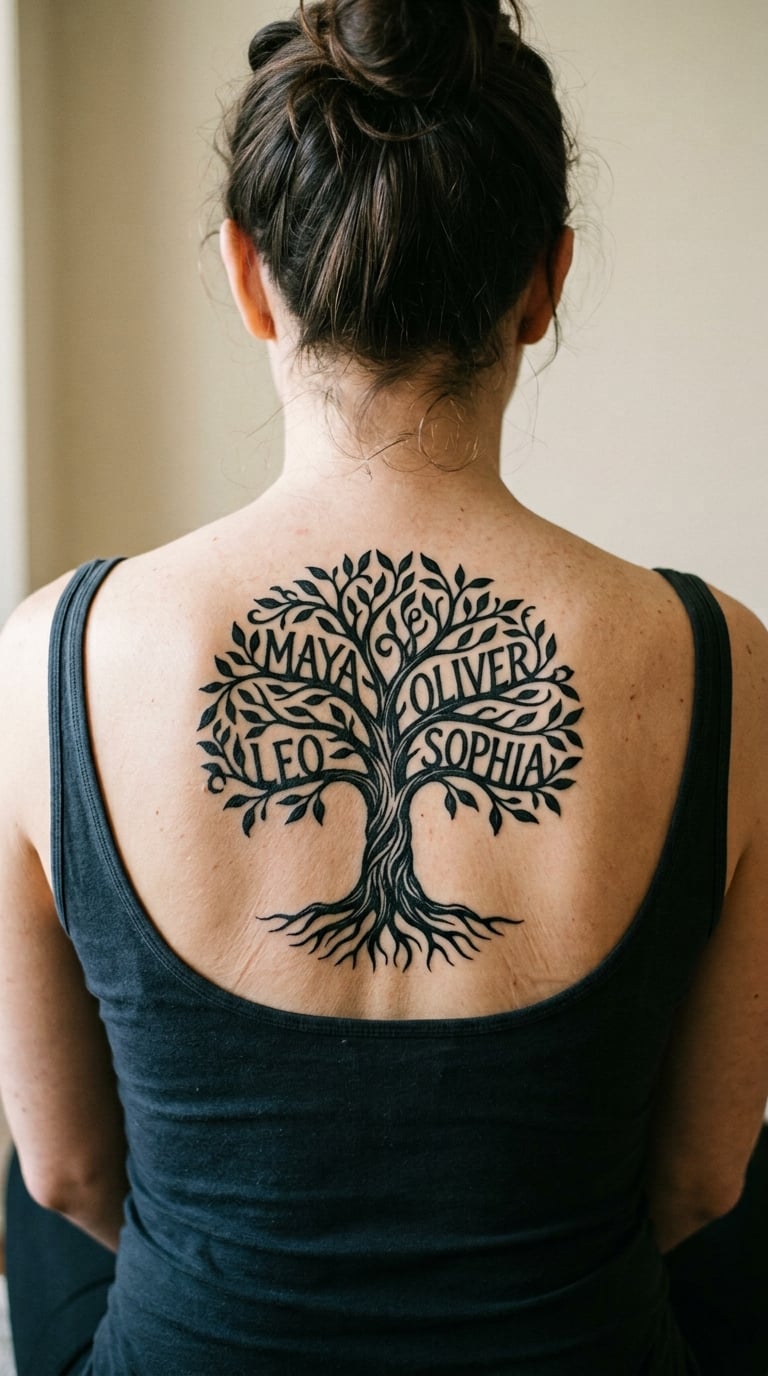
Tree of life designs with names built out of the branch shapes give you the sentiment of a name tattoo with none of the visible text. It suits moms who want something that reads as a family piece in twenty years but stays decorative to a stranger.
Ask for the names in a script the artist has drawn before. Hand-lettered names hidden in a tree need more skill than the reference photo suggests, and a font dropped over finished linework is the version that looks off. This one wants a mid-back or upper-back canvas, where there is room for the trunk to breathe and the shoulder blade does not crease the design daily.
Pain and time: upper back is low on the pain scale, though you cannot watch it. Three to four hours for a piece with real lettering in it.
6. Handwritten Kids’ Names Along the Collarbone
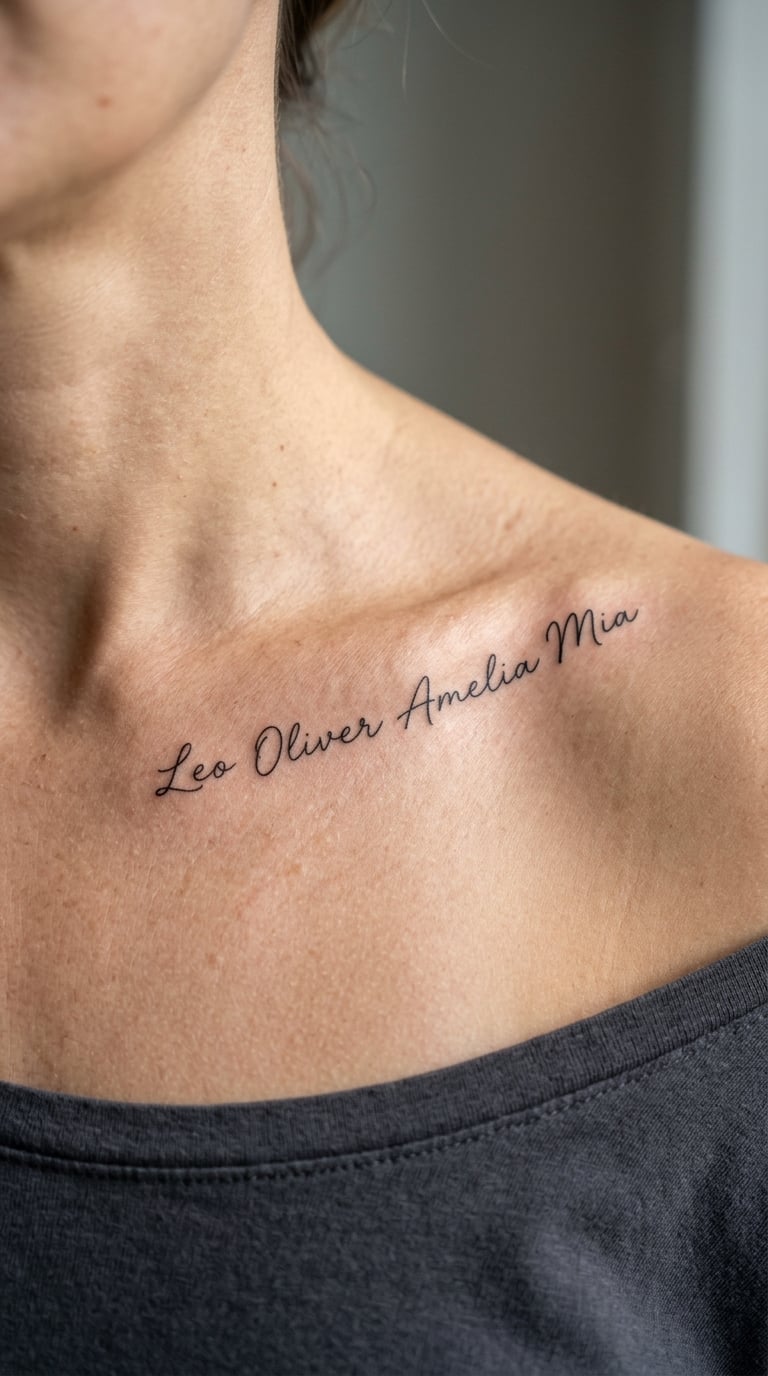
Handscript names along the collarbone is the most personal of the family tattoo ideas for moms because the letterforms are yours. Trace your actual signature, including the way you cross a t or drop a y, and it stops being a name and becomes a piece of handwriting.
Placed on the collarbone, the words sit where necklines frame them. This is also one of the placements that shifts as the body changes, and skin here stretches with weight and pregnancy, so most artists set the text above the bone rather than across it. Ask to see the exact lettering traced onto transfer paper first, and count the characters against the space available, because two long names will not fit where four short ones will.
Pain and time: the collarbone is a bone to skin area, so it stings. Around 90 minutes to two hours depending on how many names you are fitting.
7. Roman Numeral Birth Dates in a Vertical Line
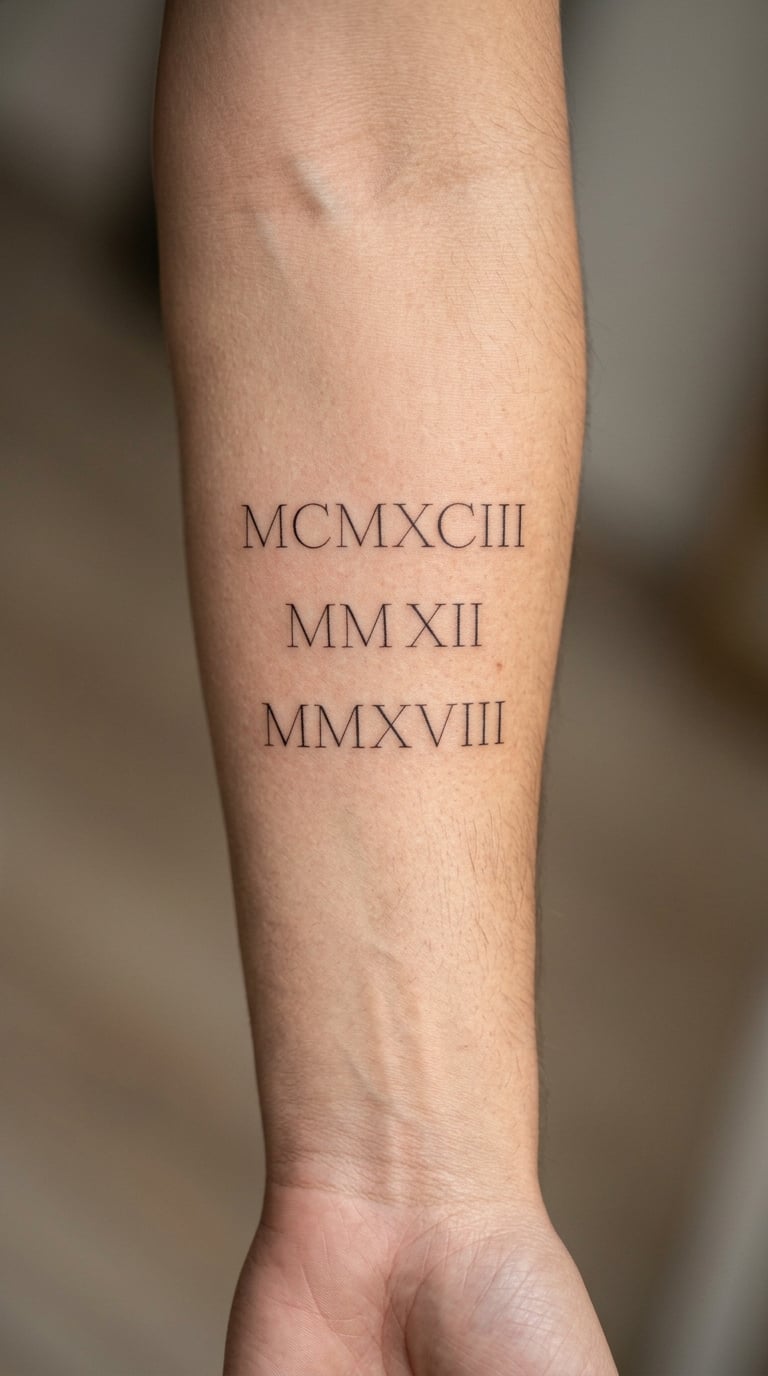
Roman numerals are the quieter alternative to a birth date written the normal way, and they stack neatly without looking crowded. A vertical column of three or four dates gives each child equal weight, top to bottom in birth order.
Numerals give you a legibility advantage over small lettering because every character is a set angle rather than a curve, and they hold their edges in fine line work for longer. The ribs or the inner arm both work; the ribs carry more space and hide the piece, the inner arm shows it. Convert your dates properly before the session, since a mistyped numeral is awkward to correct once the skin is done.
Pain and time: the ribs are the sensitive spot to plan around, and any placement over bone will feel sharper. Ninety minutes for a clean column of four.
8. Moon Phases for Each Child’s Birth Time
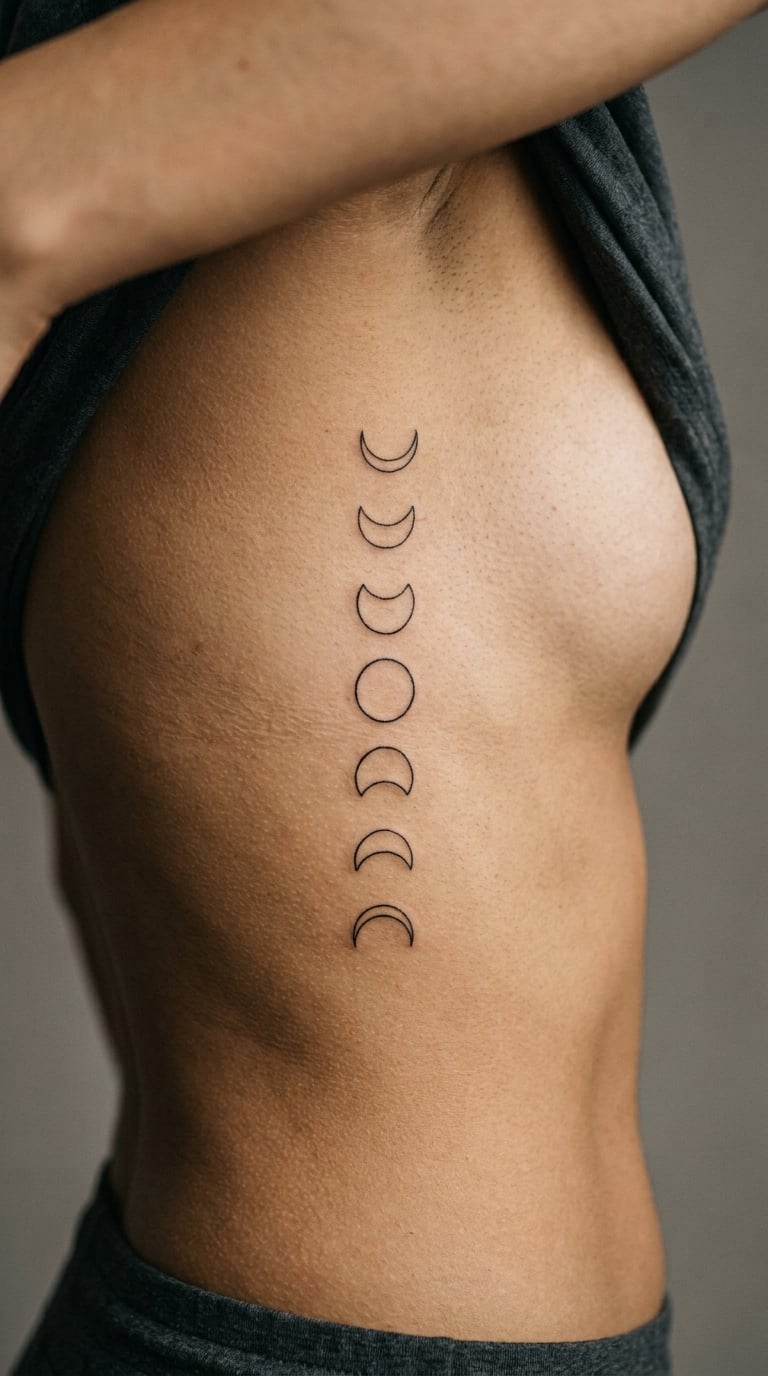
Moon phases map to birth times, so this one holds a fact most family tattoos leave out. A row of phases along the ribs, each one marking where the moon sat when a child arrived, gives you a quiet, non-literal record.
Fine line is the right call here because phase shading is delicate and fills tend to spread. Keep the moons the same size, because uneven circles read as a mistake rather than a style. The side of the ribcage and the inner arm are both common, and the ribcage version is the one that looks best once it has healed and softened.
Pain and time: ribs hurt, and you will feel each breath. Two to three hours for a run of phases with no lettering.
9. Memorial Portrait With Dates for a Mother Lost
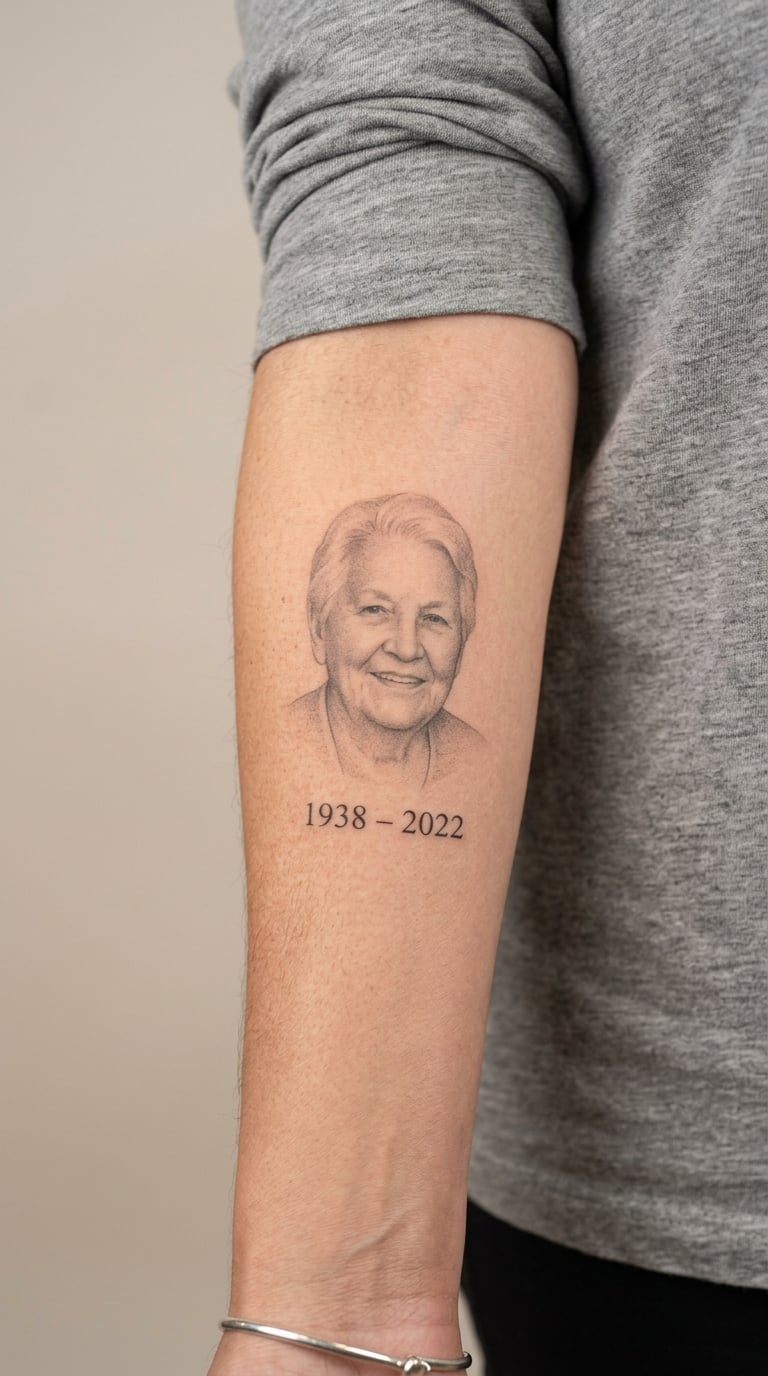
A memorial portrait for a mom you have lost is a different job from a living-honour piece. The weight sits in the face, and the dates and words are secondary, so the design should leave room for the portrait to be the part people notice first.
Bring a photograph that shows the face clearly, not one taken at a distance or in profile shade. If your mom is living and you are marking her while she is here, that is a different choice, and plenty of people do both later. Ask your artist how they handle a face at a specific age, and check healed work, because portrait shading loses contrast as it settles in.
Pain and time: the forearm is an easy placement, but grief sessions run long and slow by choice. Three to four hours, with breaks.
10. DNA Strand Winding Into Tree Roots
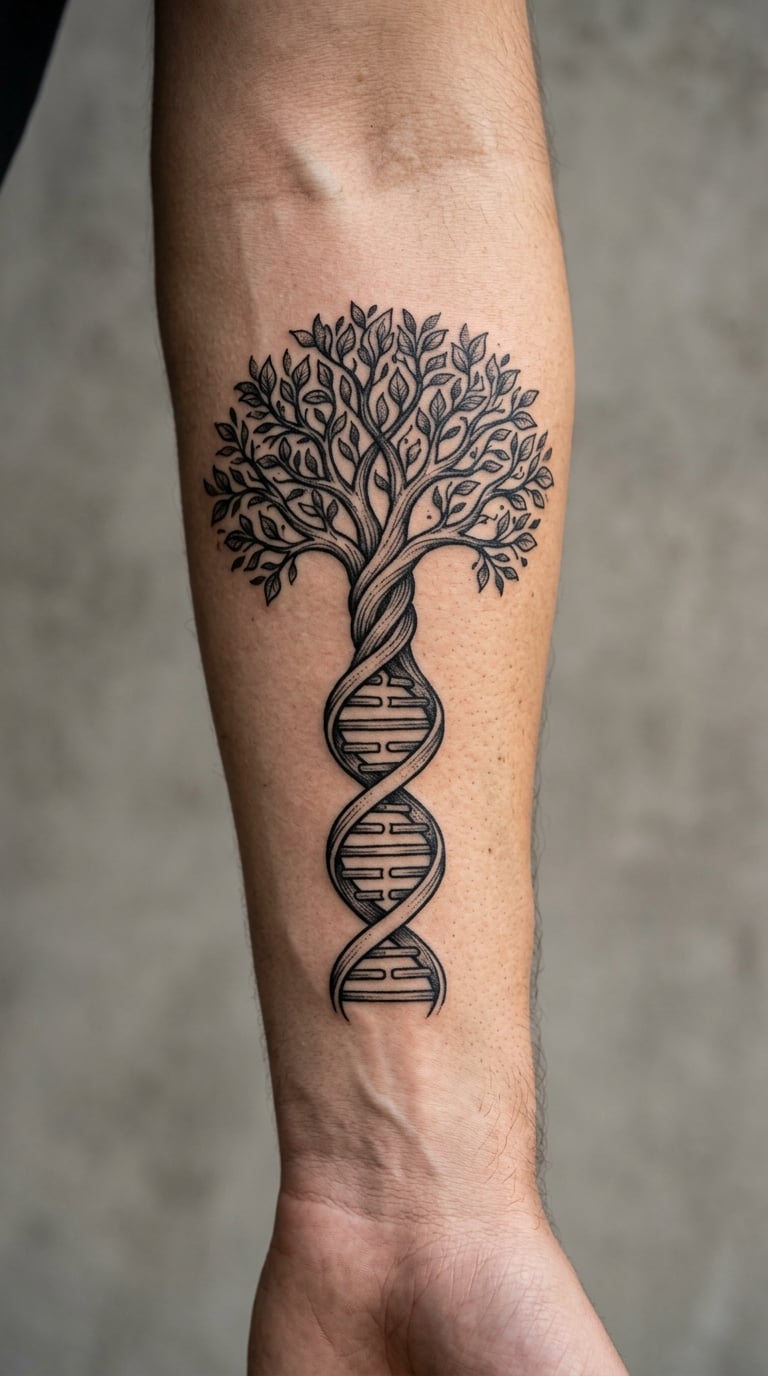
A tree whose trunk twists into a DNA strand joins two ideas in one line: ancestry and inheritance. It is a favourite for moms because it is graphic rather than sentimental, and it never reads as a name-heavy design.
It wants a long clean surface, so the inner forearm from wrist to elbow or the outer arm is the usual choice. The helix must be drawn accurately, and an artist who has done plenty of them will show you healed examples, because a sloppy double helix is obvious from across the room. One or two small leaves on the crown stop the tree from looking like a diagram.
Pain and time: long, narrow pieces take more time than wide ones. Two to three hours, with the wrist end being the uncomfortable part.
11. Heart Outline With a Child’s Fingerprint Inside
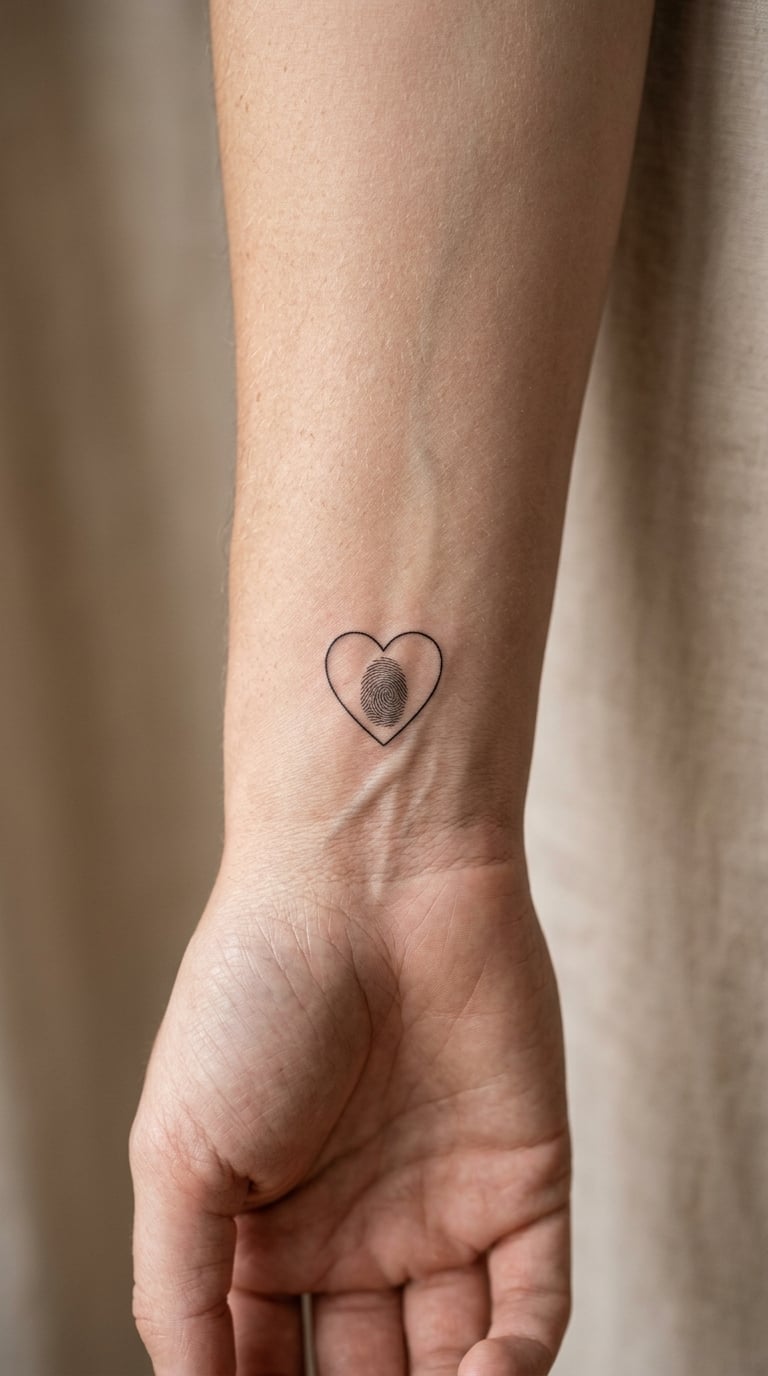
A fingerprint inside a heart outline is small, specific and hard to copy. It is one of the best choices in this list of family tattoo ideas for moms when you want sentiment that stays legible at two centimetres across.
Hand a clear photo of the print, not the inked-on-paper version where every ridge is flattened by the paper. The artist will trace and enlarge it, and a faithful version at two centimetres is enough detail; below that it turns to mud. The wrist, the back of the hand and the inside of the forearm all suit it, and the hand is the option most likely to need touching up within a few years.
Pain and time: wrists and hands are bony and sensitive. One to one and a half hours, and it feels longer than it is.
12. Constellation of the Night a Child Was Born
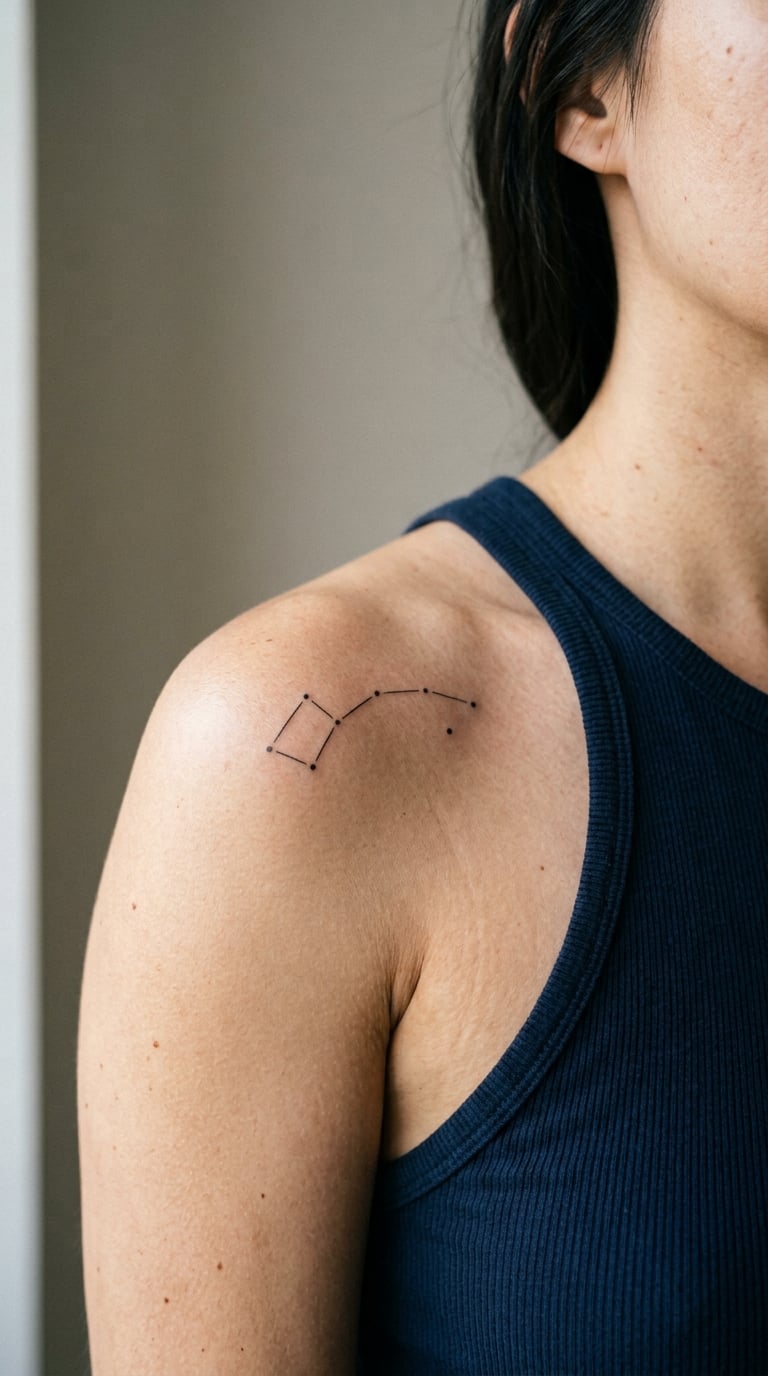
A constellation built from the sky on the night your child was born is a personal design with no names in it. Find the chart for the date, pick the few stars that matter to you, and connect only those.
This is a stick-and-poke friendly design, which is why so many of them show up as small forearm pieces. Decide how many stars before the session, because a full constellation turned into a scribble is a common disappointment. Dots stay crisp better than connecting lines on thin skin, so an artist may suggest dots and a light line with more space between them.
Pain and time: the shoulder and upper back are comfortable, the forearm is moderate. About an hour and a half for a small grouping.
13. Watercolour Line of Two Held Hands
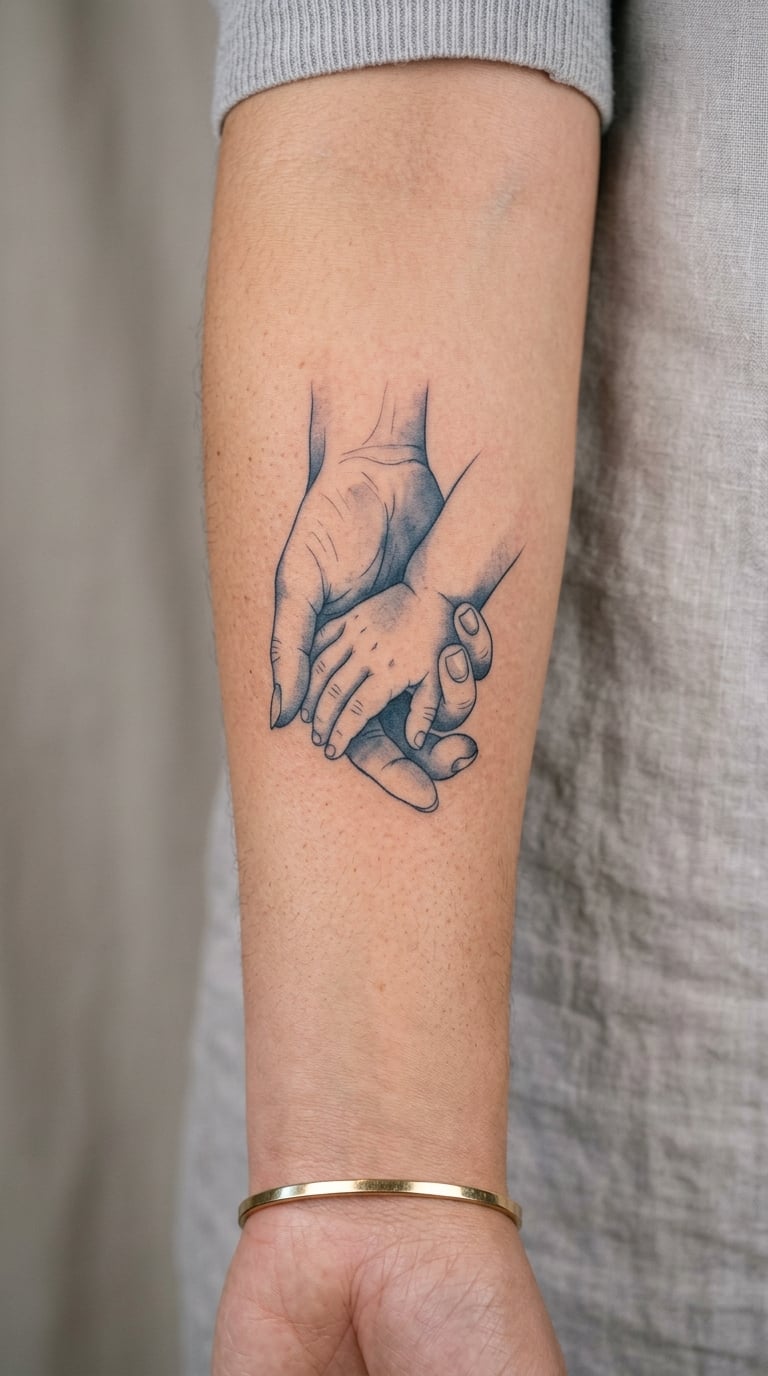
Two held hands is the image most people picture when they think about a mother’s tattoo, and watercolour suits it because softness suits the subject. One muted colour, usually grey or a faded red, keeps it from competing with the linework of a sleeve.
The challenge is that hands are difficult, and a hand rendered too small loses its structure. Aim for a piece large enough that the fingers read individually, which on the inner arm means most of its length. Bring a photo of the real hands if you want the proportions honest, and be aware that watercolour needs a touch-up sooner than solid black does, especially on the inner arm.
Pain and time: two to three hours. The inner arm is not a quick place to sit, so plan breaks and a meal before you go.
14. Blackwork Family Profile Silhouette
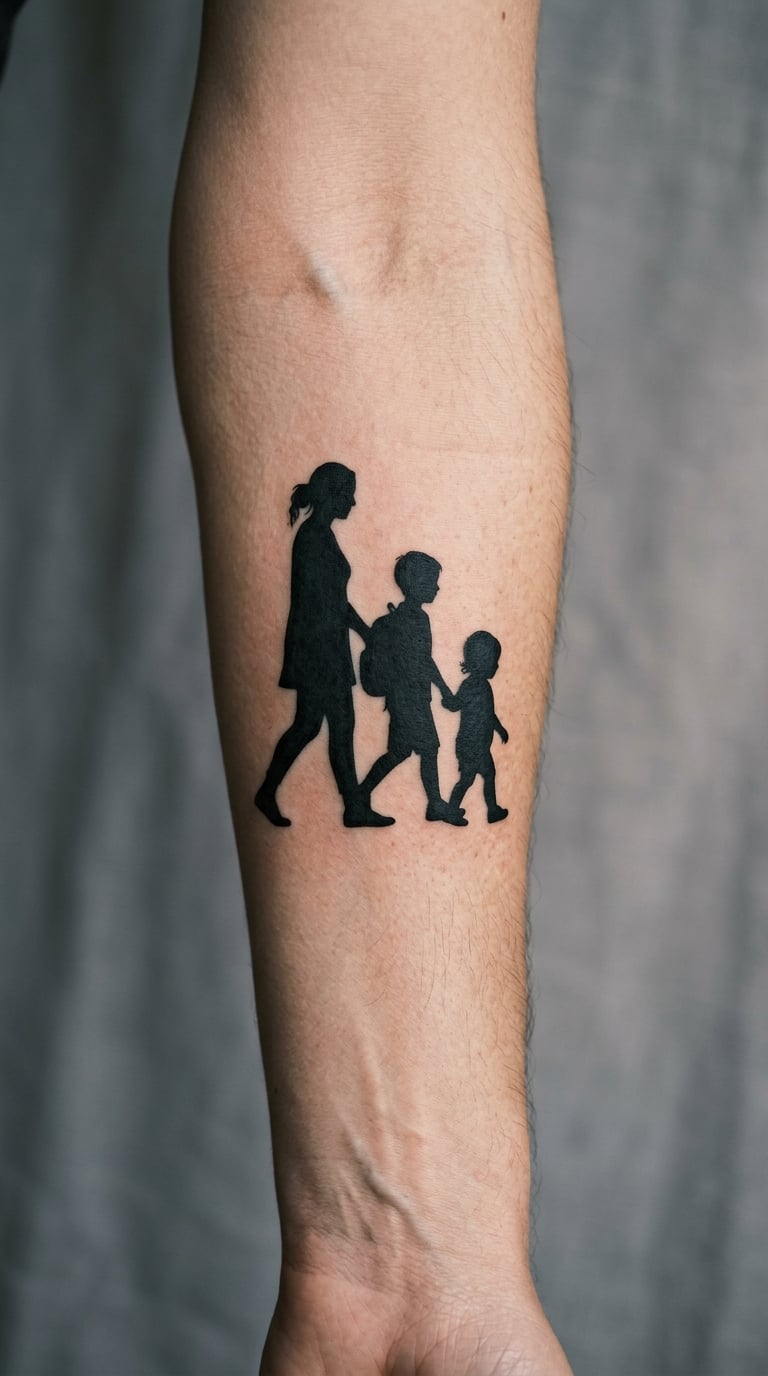
A blackwork profile silhouette reduces a family to outline: faces turned towards each other, no detail, no names. It is bold, graphic and it holds its shape for decades, which makes it a good answer for anyone who wants family ink that will not blur.
Silhouettes need real accuracy or they look like generic clip art, so look for healed blackwork in the artist’s portfolio rather than linework samples. The forearm, the calf and the outer arm take a solid block of black well and can hold a group of three or four figures. Ask where the solid areas will sit, because a large unbroken black patch on the inner arm will soften and grey faster than the same ink on the outer arm.
Pain and time: forearm or calf, moderate discomfort, around two to three hours for three figures.
15. One Tiny Motif Each for Mom and Every Kid
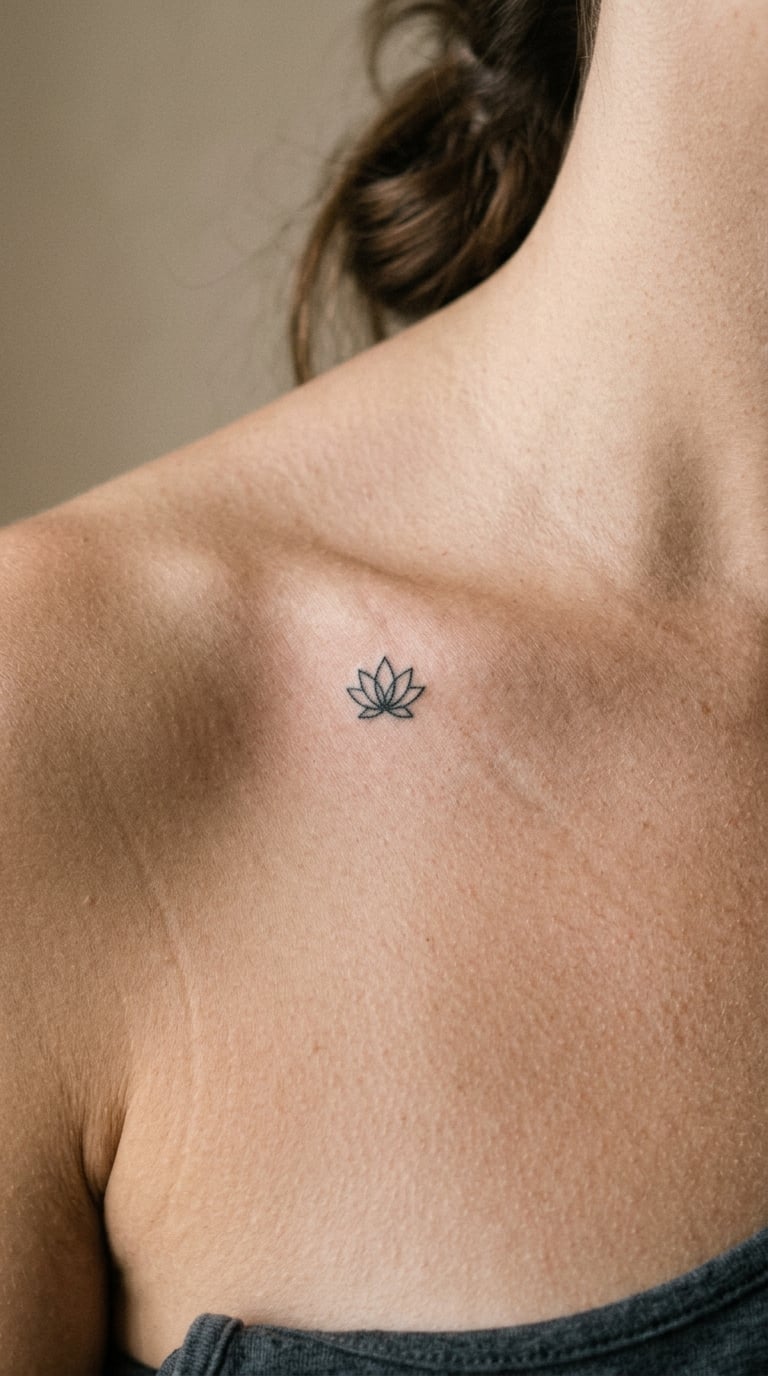
One tiny motif each is the family tattoo ideas for moms approach that works when the kids are small and the family is still changing. Mom takes one small symbol, each child takes one, and nobody is tied to a name or a face that may look different in ten years.
It is also the version that survives the question every parent asks, which is whether to wait until the kids are older. You can add a motif later rather than reworking a large piece, and a small mark on the collarbone or the wrist holds its shape with almost no maintenance. Pick motifs that are plain enough to redraw at a smaller size, and keep the style identical across everyone so the set still looks like a set.
Pain and time: a single small motif is 45 minutes to an hour on a collarbone or wrist. Book short appointments, not a marathon.
Things to Know Before You Book Your Family Tattoo
- Choose the artist for the style, not the picture. Look for healed work in the style you want, at a size close to yours, and ask to see it in person during the consult.
- Names are the most-regretted element. If the kids are young or the family is blended or adoptive, consider birth flowers, moon phases or motifs that hold up as relationships change. A generic tree with a heart reads wider than a tree with four fixed names.
- Check legibility at the real size. Fine line on the wrist and ankle fades and blurs sooner than the same line on the upper arm or calf. Ask your artist to place your design at actual scale on transfer paper before you commit.
- Know where it hurts. The inner wrist, collarbone and ribs are bone to skin and sting. The outer arm, upper back, calf and thigh are comparatively mild. If pain frightens you, start on the outer arm.
- Give it time to heal. Small fine-line pieces settle in two to three weeks and keep softening for months. Fresh photos flatter linework, so judge your artist on healed work only.
- Protect it from the sun for good, not just the first summer. A faded tattoo is a tattoo that needs rework years later, and the wrist and ankle are the first to go.
- Ask what the piece really costs before you commit. Quotes for a large or multi-element design change as the reference count rises, so agree the final composition and the quote in writing at the booking stage.
- Bring a real brief to the consult. Three or four references, a note of the size you want, and the words you want in the piece, if any. Approve the stencil on your skin before the first line, and ask the artist to adjust the placement then rather than after.
- Ask about aftercare before the session, not after. Your artist will want you to know how to clean and protect the fresh tattoo, how long to leave the covering on, and what signs mean you should call them. Read the aftercare sheet before you leave the chair.
- Decide about the kids early. Many parents wait so a child can choose their own motif later, rather than committing a young child’s face or name to skin that has to last decades.
Frequently Asked Questions
What tattoo symbolizes a mother?
The motifs that symbolize a mother most often are trees, held hands, a child handprint or fingerprint, and portraits of a mother with her child. A tree stands for the roots and growth she provided, hands and prints stand for the physical care, and a portrait stands for the relationship itself. Which one you pick usually depends on whether you want a symbol or a likeness.
What is a tattoo that symbolizes family?
A family tree is the most universal family symbol because it scales to any size, from two people to a large blended family. Other common choices are matching designs, birth flowers, moon phases for birth times, a DNA strand, and names in handwriting. A tree usually works best for a large piece, while flowers, phases and small motifs suit compact placements.
What does a family tree tattoo symbolize?
A family tree tattoo symbolizes roots, connection and growth across generations. The trunk stands for the trunk of the family, the branches for the children and descendants, and the roots for ancestors and where the family came from. On a mom, it usually reads as the family she built and holds, which is why names, dates and leaves are the details most often added.
What are the birth flowers for each month for tattoo ideas?
The common birth flower list is: January carnation or snowdrop, February violet or iris, March daffodil, April daisy or sweet pea, May lily of the valley, June rose or honeysuckle, July larkspur or water lily, August poppy or gladiolus, September aster or morning glory, October marigold or cosmos, November chrysanthemum, December narcissus or poinsettia. One flower per child, in birth order, is the most common layout.
What flower symbolizes family in a tattoo?
Flowers commonly used for family tattoos are the rose for love, the lotus for mother and child, the cherry blossom for the transience of life, and the sunflower for a mother’s warmth and constancy. Birth flowers work too, because each one ties to a specific person rather than to a general idea. Ask your artist to draw the stem structure so the flowers read as one growing plant, not separate stickers.
What tattoo ideas are suitable for a new mom?
Small, low-commitment designs suit a new mom best: a single fine-line branch, a birth flower for the newest child, a moon phase, or a set of tiny motifs one per person. Large name-heavy designs are better saved until the family is settled, since sleep, money and free time are all scarce in the first year. Placement on the outer arm or the calf also makes it easier to cover during a rough stretch.
Conclusion
If you are starting from scratch, pick the idea that tells the truth about your family right now, then choose the placement that suits how much you want to explain it. A fine-line forearm tree, a birth flower per child, or one small motif each will all still make sense in twenty years, and none of them commits you to a name or a face you might regret.
Bring your references, ask to see healed work, and agree the final composition before the first line goes in. That conversation is what separates a design you like in a photo from one you still recognise at fifty.