
Why Does My Tattoo Itch? Healing Stages, October 2026
Why does my tattoo itch? The short answer: itchiness is a normal part of how a tattoo heals. As the needle-damaged outer skin sheds and new cells push up to replace it, regenerating nerve fibers fire itch signals, and the skin’s natural histamine response adds to the sensation. Most of the time that itch is healthy and temporary. This guide walks you through the normal healing stages, the most common reasons a tattoo itches, the safe ways to calm the itch down, and the warning signs that mean it’s time to call a professional.
If you’ve just sat through the chair, or you’re three days in and the itch is driving you up the wall, the next sections will help you place your own experience on a real healing timeline. You’ll learn when to leave a tattoo alone, when to moisturize, and when to pick up the phone.
Why Does My Tattoo Itch? The Short Answer
A healing tattoo itches because your skin is repairing itself on two levels. On the surface, dead and damaged cells are flaking away while a fresh layer of epidermis forms underneath. Underneath that, tiny nerve endings cut during tattooing are regrowing and firing as they reconnect. Add in the natural histamine release that comes with any skin injury, and the itch response is strong but expected.
Normal healing itch is mild to moderate, comes and goes, and pairs with flaking or peeling around days 3 to 14. It is not the same as the spreading redness, hot skin, or pus of an infection, or the raised red bumps of an ink allergy. The rest of this guide shows you how to tell those apart, and how to get through the worst of the itch without scratching.
How Tattoo Healing Works
A tattoo needle pushes ink down through the epidermis (the top layer) and into the dermis (the deeper layer where the ink settles permanently). That second layer is what your body has to repair, and the work happens in four overlapping stages over roughly six weeks.
Days 1 to 3: Oozing and inflammation. Plasma, ink, and a small amount of blood seep from the open skin. The area looks red, feels warm, and may swell slightly. Your immune system is clearing debris and starting to repair.
Days 3 to 7: Itching and flaking begin. The surface starts to dry and tighten. Light flaking shows up around day 4 or 5. The itch usually starts here and gets stronger as the days go on.
Days 7 to 14: Peeling and dryness peak. Larger flakes come off, looking a bit like a sunburn peel. The itch is at its worst in this window. The tattoo may look cloudy or dull for a few days; that is normal and temporary.
Weeks 2 to 6: Deep healing finishes. The surface looks healed by week 3 or 4, but the deeper dermis is still knitting itself back together. Occasional light itching can come and go. Full deep healing takes three to four months.
Placing your own tattoo on this timeline is the easiest way to know whether the itch you’re feeling is normal. Day 4 itching is different from day 40 itching, and the cause is usually different too.
Normal vs. Abnormal Itching: How to Tell the Difference
The fastest way to calm a worried mind is to compare what you see and feel against what’s actually expected. Normal healing has its own pattern. Infections and ink allergies have very different ones, and once you’ve seen them side by side, they rarely look alike.
Here’s how the three compare at a glance.
| What you notice | Normal healing | Possible infection | Allergic reaction to ink |
|---|---|---|---|
| Itch level | Mild to moderate, comes and goes | Often painful more than itchy | Intense, persistent itch in colored areas |
| Redness | Fades steadily after day 3 | Spreading, getting worse after day 4 | Red, raised bumps inside colored areas |
| Warmth | Mild warmth for first 2 days | Hot to touch, increasing | Usually not warm |
| Discharge | Clear plasma in first 48 hours | Yellow, green, or thick cloudy fluid | None, or clear if scratched open |
| Skin texture | Light flakes, tight feel | Swollen, tender, possible red streaks | Raised bumps, hives, or scaly patches |
| When it shows up | Days 3 to 14 | Often days 4 to 10, getting worse | Days 1 to 30, or even years later in old tattoos |
| Other symptoms | None | Fever, chills, fatigue | Rash spreading beyond the tattoo |
If what you see matches the middle or right column, contact your artist for a healing question, or see a doctor for any signs of infection or a strong allergic reaction. This article is general information, not medical advice.
Common Reasons a Tattoo Itches
Most tattoo itch has a clear cause. Some are part of normal healing, some are avoidable mistakes, and a few are signs that something needs attention. Here are the seven reasons that come up again and again.
1. Natural healing. New skin cells push up to replace the damaged ones, and regrowing nerve fibers send itch signals. This is the most common reason and is the main driver of weeks 1 and 2.
2. Dry, dehydrated skin. Tattooed skin loses moisture fast as the top layer heals. Dry skin itches more than hydrated skin, so a tattoo that’s been left alone too long without a light moisturizer will often itch harder.
3. Histamine release. Any skin injury triggers histamine, the same chemical involved in allergies and bug bites. Histamine dilates blood vessels and fires the itch nerves. It is normal, but it does make the sensation stronger.
4. Allergic reaction to pigment. Red, yellow, and some green pigments are the most common triggers. The American Academy of Dermatology notes that red ink is the most likely to cause an allergic contact dermatitis reaction, sometimes even years after the tattoo was done.
5. Sun exposure on a healing tattoo. UV light can inflame a fresh tattoo and trigger a photosensitivity reaction. Even on healed tattoos, sunburn through the ink can make the area flare up and itch for days.
6. Harsh or scented products. Fragranced soaps, alcohol-heavy lotions, and certain essential oils can sting a healing tattoo and slow the barrier repair, both of which make the itch worse.
7. Sweat and heat. Working out, hot showers, saunas, and even summer humidity can make a healing tattoo itch more, because sweat irritates open skin and heat dilates the blood vessels in the area.
Safe Ways to Stop the Itch
You can’t make the itch stop, but you can make it manageable. The goal is to calm the skin without damaging the tattoo or slowing the heal.
Do:
- Pat or tap the tattoo with a clean palm instead of scratching. The pressure interrupts the itch signal for a few seconds without tearing the skin.
- Apply a thin layer of fragrance-free moisturizer or aftercare balm two to three times a day once the initial oozing has stopped.
- Use a cool (not cold) compress over a clean paper towel for five to ten minutes when the itch spikes.
- Wash the tattoo once or twice a day with mild, unscented soap and lukewarm water, then pat dry.
- Wear loose, breathable clothing over the tattoo while it heals.
- Keep the tattoo out of direct sun for the first month, and use sunscreen on it after that.
Don’t:
- Don’t scratch. Even a light scratch can pull flakes off early, pull ink out with them, and leave a small scar.
- Don’t pick at peeling skin. Let flakes come off on their own.
- Don’t slather on thick ointment. Heavy layers clog the skin and trap moisture, which can lead to breakouts and slow healing.
- Don’t apply hydrocortisone, anti-itch creams, or Benadryl cream to a healing tattoo unless your doctor specifically says to. They can thin the skin and blur the ink.
- Don’t soak the tattoo. No baths, pools, hot tubs, or swimming in open water for at least two to three weeks.
If the itch is so strong that you can’t sleep or function, that is a real signal to check in with your artist or a doctor, not a sign to scratch harder.
Tattoo Itch Timeline by Week
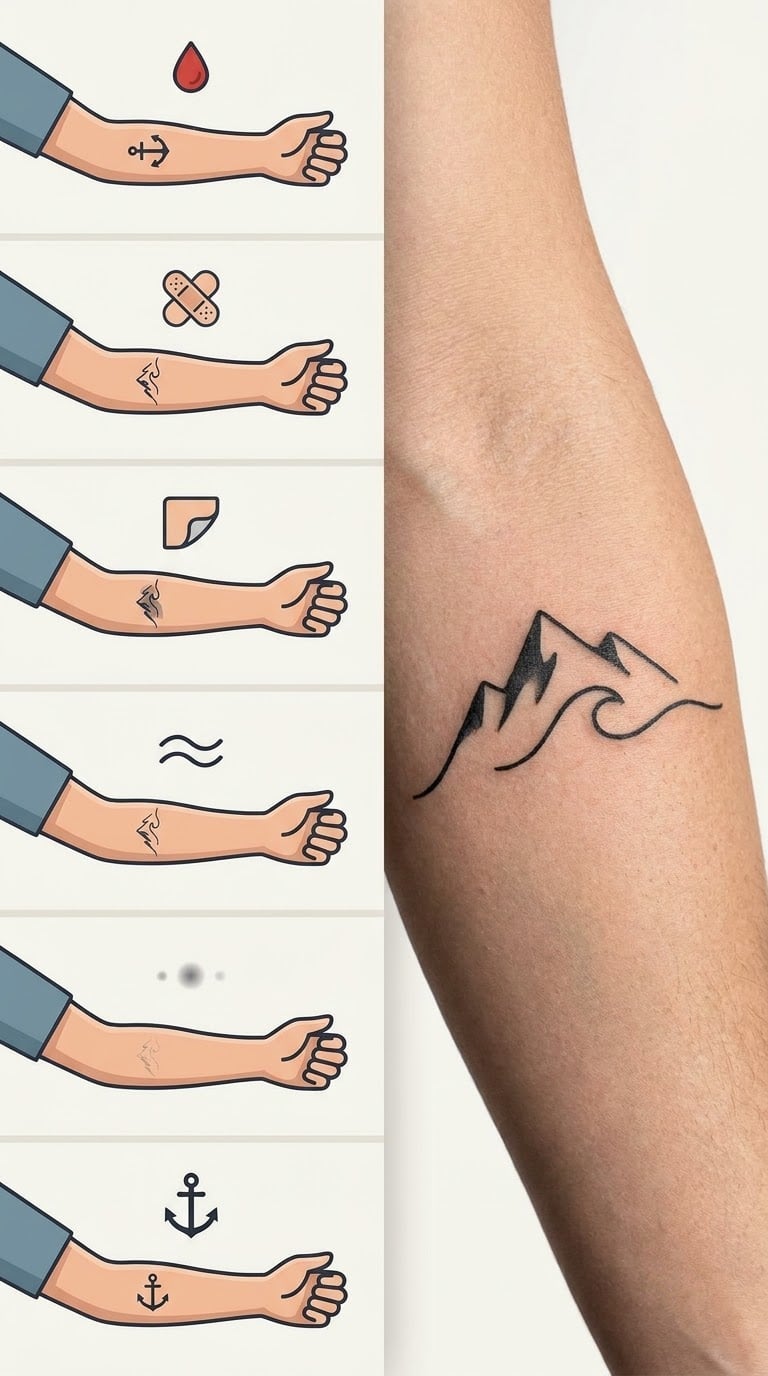
Healing follows a fairly predictable path. Matching your own experience to the right week makes it much easier to know whether the itch you’re feeling is normal for that stage or something to watch.
| Week | What the skin looks like | Itch level | What to do |
|---|---|---|---|
| Week 1 | Red, slightly swollen, light plasma | Mild, ramps up around day 4 to 5 | Clean gently, light moisturizer, no scratching |
| Week 2 | Peeling and flaking, looks dull or cloudy | Peak itch, often intense | Pat, cool compress, keep moisturized, no picking |
| Week 3 | Surface mostly smooth, may still look slightly cloudy | Most of the itch fades | Continue light moisturizer, avoid sun |
| Week 4 | Looks healed on the surface | Occasional light itch, some dryness | Begin sunscreen on the tattoo when exposed |
| Weeks 5 to 6 | Color settling, skin looking normal | Itch should be gone | Continue sun protection, normal skin care |
Deep healing in the dermis keeps going for another two to three months. The tattoo may look fully healed on the surface long before it actually is.
What to Do If the Itch Gets Worse
Sometimes the itch crosses the line from normal healing to a real warning sign. The checklist below covers the symptoms that should make you stop and reach out to a professional.
- Redness that is spreading instead of fading after day 3 or 4
- Skin that feels hot to the touch, not just mildly warm
- Swelling that gets worse after the first 48 hours
- Pain that is increasing, not slowly easing
- Yellow, green, or thick cloudy discharge, or any foul smell
- Fever, chills, or feeling generally unwell
- Raised red bumps, hives, or a rash that is only inside the colored parts of the tattoo
- Itching that stays intense past the six-week mark
Your first call should usually be your tattoo artist. They see healing tattoos every day and can tell over a photo whether what you’re describing looks normal or not. If there are signs of infection, fever, or a strong allergic reaction, see a doctor or visit an urgent care clinic. For ink allergies that won’t settle, a dermatologist can run patch testing to identify which pigment is the problem.
This is general information based on what dermatology sources and tattoo artists commonly describe. It is not a substitute for personal medical advice.
Mistakes to Avoid When Your Tattoo Itches
Most tattoo damage during healing comes from a handful of repeat mistakes. Knowing them upfront makes it much easier to avoid them when the itch is at its worst.
Scratching, even lightly. A single scratch can pull a flake off before the new skin underneath is ready, taking ink with it and leaving a small lighter spot that may need a touch-up later.
Peeling flakes off early. Flakes are there to protect the new skin while it finishes forming. Pulling them off exposes tender skin and almost always lightens the color in that area.
Over-applying ointment. More is not better. A heavy layer of ointment seals in moisture, traps bacteria, and can cause small white bumps called milia or full breakouts around the tattoo.
Using scented lotion. Fragrance is one of the most common irritants in skin care. On a healing tattoo it can sting, trigger contact dermatitis, and prolong the itch.
Going back to the gym or the pool too soon. Sweat irritates open skin, and chlorinated or bacteria-rich water can cause real infections. Give it at least two to three weeks before submerging the tattoo.
Skipping aftercare once the surface looks healed. The deep dermis is still repairing for months. Going back to harsh soaps, sun exposure, or tight clothing on a tattoo that’s only surface-healed can keep the itch going far longer than it should.
How to Prevent Itching Before It Starts
The best time to control the itch is before it spikes. A few small habits in the first two weeks make a noticeable difference.
- Drink enough water. Hydrated skin heals faster and itches less than dry skin.
- Apply a thin layer of fragrance-free moisturizer two to three times a day once the initial oozing stops.
- Wear clean, loose, breathable clothing over the tattoo for the first two weeks.
- Avoid direct sun on the healing tattoo, and don’t use tanning beds.
- Skip saunas, hot tubs, and swimming pools until the surface is fully closed.
- Sleep on clean sheets, and avoid letting pets or dirty surfaces touch the tattoo.
- Follow your artist’s full aftercare plan for the entire healing window, not just the first few days.
If your artist gave you a written aftercare sheet, follow it. Most of the worst cases of “I scratched it and now it looks different” come from straying from the aftercare plan halfway through.
When to See a Doctor or Tattoo Artist
Your tattoo artist is your first call for almost everything that happens during the first month. They have seen hundreds of healing tattoos and can usually tell you from a clear photo whether what you’re seeing is normal.
See a doctor or dermatologist for:
- Any sign of infection (spreading redness, hot skin, pus, fever)
- A strong allergic reaction to pigment, especially red, yellow, or colored areas
- An itch that won’t go away past six weeks, or that keeps coming back in the same spot
- Old tattoo itching paired with new lumps, persistent rash, or other skin changes
- Any reaction that shows up during pregnancy, illness, or a new medication
Artists and doctors handle different parts of the healing process. Artists handle healing stages, aftercare products, and touch-up timing. Doctors handle infections, allergies, and any underlying skin condition that may be making the itch worse.
For more on how a healing tattoo should look day to day, see our guide on what tattoo ink looks like when healing. If you’re planning a delicate piece and worried about how it will hold up, our fine line tattoo guide walks through the trade-offs. And if the tattoo you’re dealing with is on your wrist, our wrist tattoo pain guide explains why hands and wrists tend to itch a little more than other spots.
Frequently Asked Questions
Is it normal for a new tattoo to itch a lot?
Yes, strong itching is one of the most common parts of new-tattoo healing. It usually starts around day 3 to 5, peaks during the peeling phase between days 7 and 14, and fades by week 3 or 4. The itch is driven by skin cell turnover and regrowing nerve fibers, not by anything going wrong.
How long does the itching stage of a tattoo last?
For most people the worst of the itch lasts seven to fourteen days. Light, occasional itching can come and go for another few weeks as the deeper dermis finishes healing. By week 6 the surface is usually fully settled, and a fully healed tattoo should not itch at all unless something specific triggers it.
Can I put hydrocortisone or anti-itch cream on my tattoo?
It is best to avoid hydrocortisone, Benadryl cream, and other anti-itch creams on a healing tattoo unless a doctor specifically tells you to use them. These products can thin healing skin, blur the ink, and slow the repair process. A light, fragrance-free moisturizer and cool compress are safer first options.
Why does my old tattoo itch years later?
Healed tattoos can suddenly itch for several reasons. Weather changes, stress, and illness can cause temporary ‘hotspots’ where a small area of the tattoo swells and itches for a few hours. Sun exposure can inflame the ink. In rarer cases, an old ink allergy, sarcoidosis, or another skin condition can show up years after the tattoo was done. If the itching is frequent, painful, or paired with new lumps or a rash that will not go away, see a dermatologist.
What does an infected tattoo look like compared to a healing one?
A healing tattoo has redness that fades after a few days, mild warmth, and light flaking. An infected tattoo usually has redness that spreads or gets worse after day 4, skin that feels hot, swelling that increases instead of decreases, yellow or green discharge, and sometimes a fever. Pain that is getting worse rather than better is also a strong warning sign. If any of these show up, contact a doctor quickly.
Does color tattoo ink cause more itching than black ink?
Colored inks, especially red, yellow, and some greens, are more likely to cause an allergic contact dermatitis reaction than black ink. The reaction can show up during healing or even years later in the colored areas only. Black ink is generally the least reactive. If a specific color in your tattoo itches intensely while the rest of the piece feels fine, that is a clue to ask a dermatologist about a possible pigment allergy.
The Bottom Line
Tattoo itching is almost always a normal part of healing, not a sign that something is wrong. The worst of it usually passes within two to three weeks. The single most important rule is to resist scratching, because a scratch can pull flakes off early and take ink with them.
Keep the tattoo clean, lightly moisturized, out of the sun, and covered with loose clothing. Match what you’re feeling to the healing timeline, and watch for the warning signs listed above. When in doubt, your artist is the best first call. If the symptoms point to infection or a strong allergic reaction, see a doctor. The itch is temporary. The tattoo, if you look after it now, is not.