
22 Pearl Tattoo Ideas: Best Timeless Designs (October 2026)
A pearl tattoo is any design built around a pearl motif: one pearl, a pearl sitting inside an open oyster shell, a strand of pearls, or a pearl paired with another symbol. Pearls are the birthstone of everyone born in June, and the motif has carried meanings like purity, hidden beauty, resilience and self-worth for centuries. That is the short answer. The rest is deciding which version of the motif actually suits your skin, your spot and your nerve.
These 22 pearl tattoo ideas run from a single shaded dot behind the ear to a baroque pearl portrait on the upper arm, so there is something here whether this is your first tattoo or the fifth piece in a collection. What makes a pearl design work on skin is contrast. A pearl has no colour of its own, so the artist builds it out of grey wash, a dark outer line and a patch of untouched skin left as the highlight. Get that wrong and the pearl turns into a plain white dot, which is the thing most people are trying to avoid.
One honest note before you pick: white and pale grey ink are the first colours to fade. That is not a reason to skip the design, but it is a reason to ask your artist how they plan to keep the outline strong enough for the highlight to still read years from now. If you like ocean-adjacent, coastal designs, our starfish tattoo ideas guide pairs well with several of the entries here.
22 Pearl Tattoo Ideas: Quick Guide
| Idea | Style | Best placement | Size | Pain |
|---|---|---|---|---|
| 1. Single pearl with fine-line stem | Fine line | Inner forearm | 2-3 in | Low to medium |
| 2. Classic pearl strand | Realistic | Collarbone | 3-5 in | Medium |
| 3. Pearl drop on the wrist | Minimalist | Inner wrist | 1-2 in | Medium |
| 4. Iridescent pearl colour splash | Watercolour | Shoulder | 2-3 in | Low to medium |
| 5. Pearl in a crescent moon | Fine line | Behind the ear | 1.5-2.5 in | Low |
| 6. Pearl inside a shell | Fine line, black and grey | Ankle | 2-3 in | Medium |
| 7. Blackwork pearl with dotwork halo | Blackwork | Upper back | 2-4 in | Medium |
| 8. Pearl necklace | Fine line | Chest, collarbone | 3-4 in | Medium |
| 9. Pearl and rose | Botanical | Forearm | 3-5 in | Medium |
| 10. Baroque pearl portrait | Micro-realism | Upper arm | 2-3 in | Medium |
| 11. Pearl with butterfly wings | Symmetrical fine line | Upper back | 3-4 in | Medium to high |
| 12. Pearl in an eye | Fine line realism | Forearm | 2-3 in | Medium |
| 13. Three pearls in linework | Minimalist | Inner arm | 1.5-2 in | Low |
| 14. Pearl with watercolour splash | Watercolour | Thigh | 2-3 in | Low to medium |
| 15. Pearl and serpent | Fine line | Forearm | 3-4 in | Medium |
| 16. Pearl stud-style micro tattoo | Micro minimalism | Behind the ear | Under 0.5 in | Low |
| 17. Pearl with geometric frame | Blackwork and line | Shoulder | 2-3 in | Medium |
| 18. Pearl and vine | Botanical fine line | Forearm | 4-6 in | Medium |
| 19. Pearl with constellation accent | Fine line | Shoulder | 2-3 in | Low to medium |
| 20. Pearl and moth | Illustrative | Upper back | 3-5 in | Medium to high |
| 21. Pearl cluster on the hand | Micro-realism | Back of the hand | 1-1.5 in | High |
| 22. Broken pearl with seam | Fine-line realism | Ribcage | 1.5-2.5 in | High |
1. Single Pearl with Fine-Line Stem
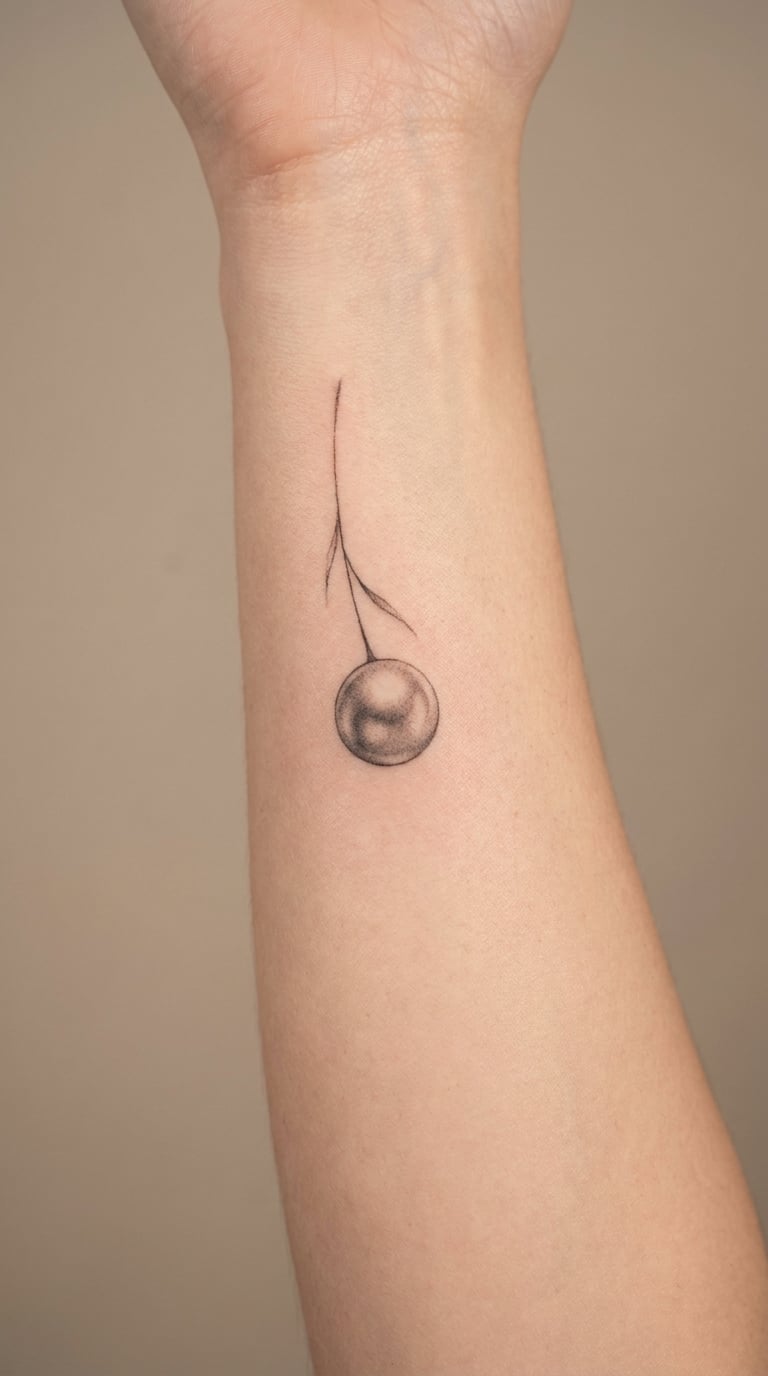
A single pearl with a fine-line stem is the quietest design in this list and the one most first-timers actually book. The artist draws a thin stem with a few small leaves, then hangs one round pearl from the tip, shaded with a light grey gradient and a bright crescent of untouched skin on the upper left to fake the shine.
People choose it because a pearl growing on a stem reads as something that earned its beauty rather than was given it. It carries the same purity and quiet resilience meaning as the bare pearl, with an added hint of growth.
Placement: inner forearm just above the wrist, or the outer bicep. Size: 2 to 3 inch (5 to 7.5 cm) including the stem. Style: fine line with soft grey wash. Pain: low to medium on the inner forearm, though the wrist crease stings more than the arm above it. Fine line on the inside of the arm softens noticeably within a few years. Make it yours: put a real date along the stem in tiny numerals, or swap the leaves for a sprig of a plant that means something to you.
2. Classic Pearl Strand
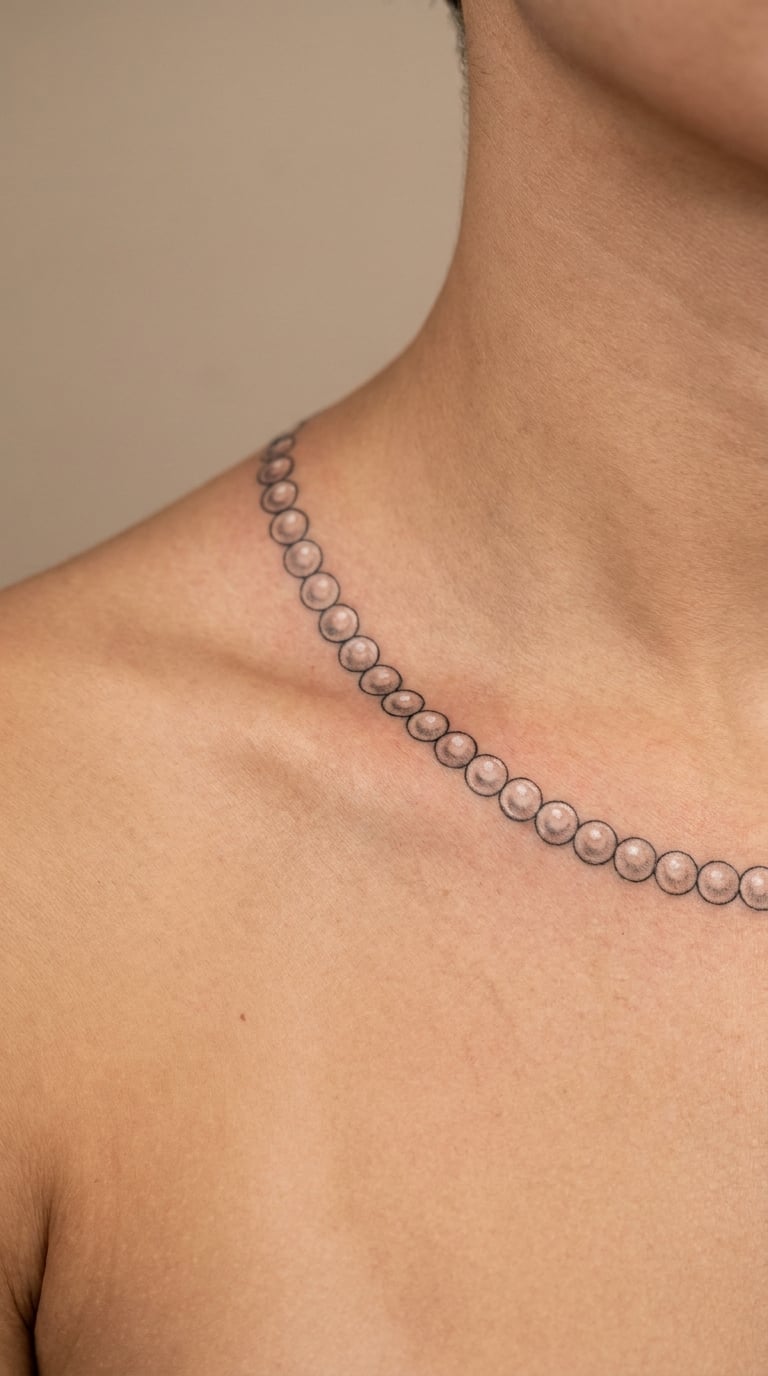
The classic pearl strand is a row of round pearls, usually eight to fourteen of them, each shaded slightly differently so they catch light in sequence. Realistic versions put a small dark reflection under every pearl and a bright highlight on the top curve, which is what makes the row read as round rather than as a line of circles.
A strand is the jewellery version of the motif, so it leans into tradition, inheritance and elegance. It is also the version people pick as a birthday gift to themselves.
Placement: along the collarbone, across the chest, or wrapped twice around the upper arm. Size: 3 to 5 inch (7.5 to 12.5 cm) across. Style: realistic or traditional, black and grey. Pain: medium. Collarbone and chest skin is thin and the bone underneath makes every pass noticeable. Pearl edges soften with sun exposure over the years, so a darker outline pays off here. Make it yours: add a tiny clasp detail at one end, or make the pearls slightly graduated so it reads as a real piece rather than a repeat pattern.
3. Pearl Drop on the Wrist
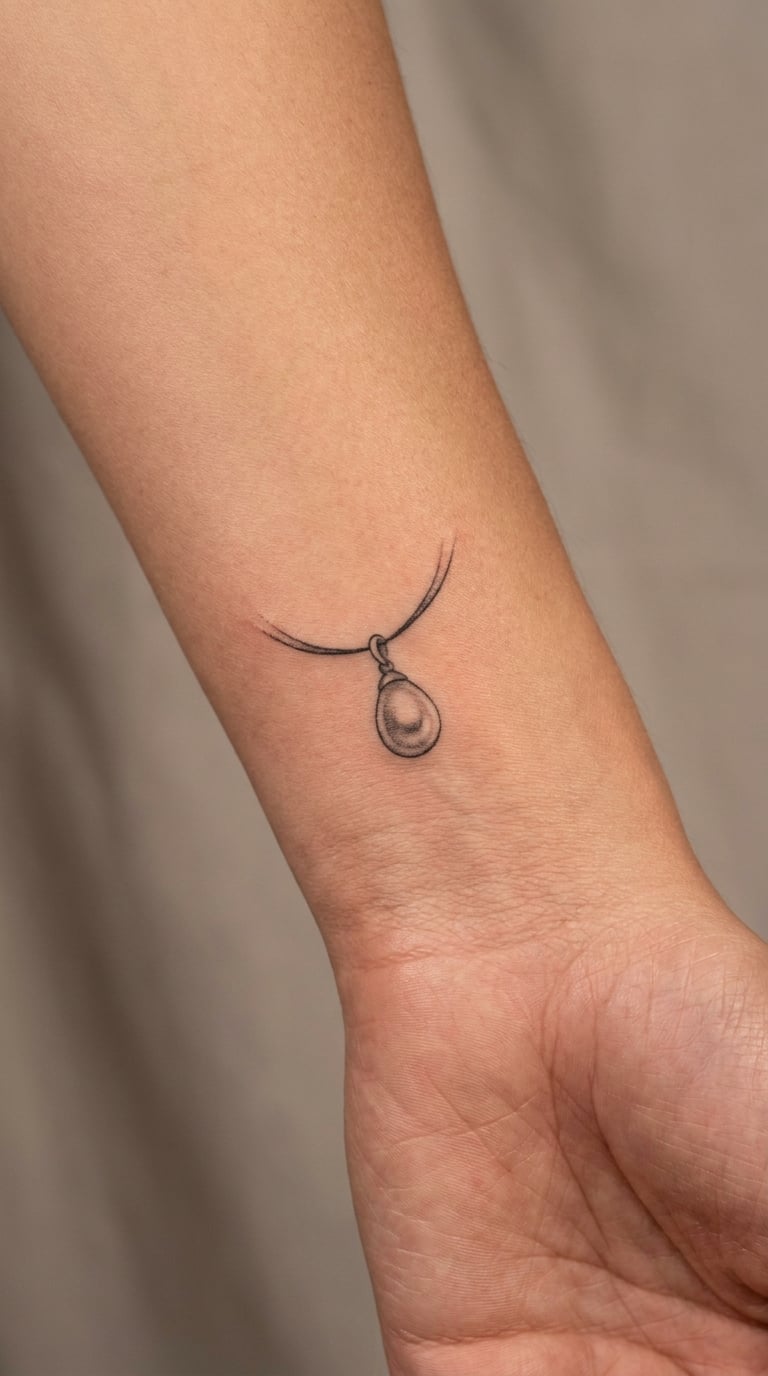
The pearl drop is a single pearl hanging from one short curved line, like a charm on a chain. It is the smallest design here that still clearly reads as a pearl, because the drop shape gives the shading a direction to travel in instead of leaving a flat dot.
People tend to pick this one for a single small thing: a first tattoo, a quiet marker for something private, or a design that sits under a watch band without fighting it. The meaning is usually personal rather than fixed, which is what makes it a good first piece.
Placement: inner wrist, or the wrist bone on the thumb side. Size: 1 to 2 inch (2.5 to 5 cm). Style: minimalist fine line. Pain: medium. The inner wrist is one of the more sensitive spots on the body and the bone is right under the skin. Wrist fine line fades faster than almost anywhere else, so expect to need a touch-up. Make it yours: add a second, smaller drop beside it, or curve the line into a subtle hook rather than a straight stem.
4. Iridescent Pearl with Colour Splash
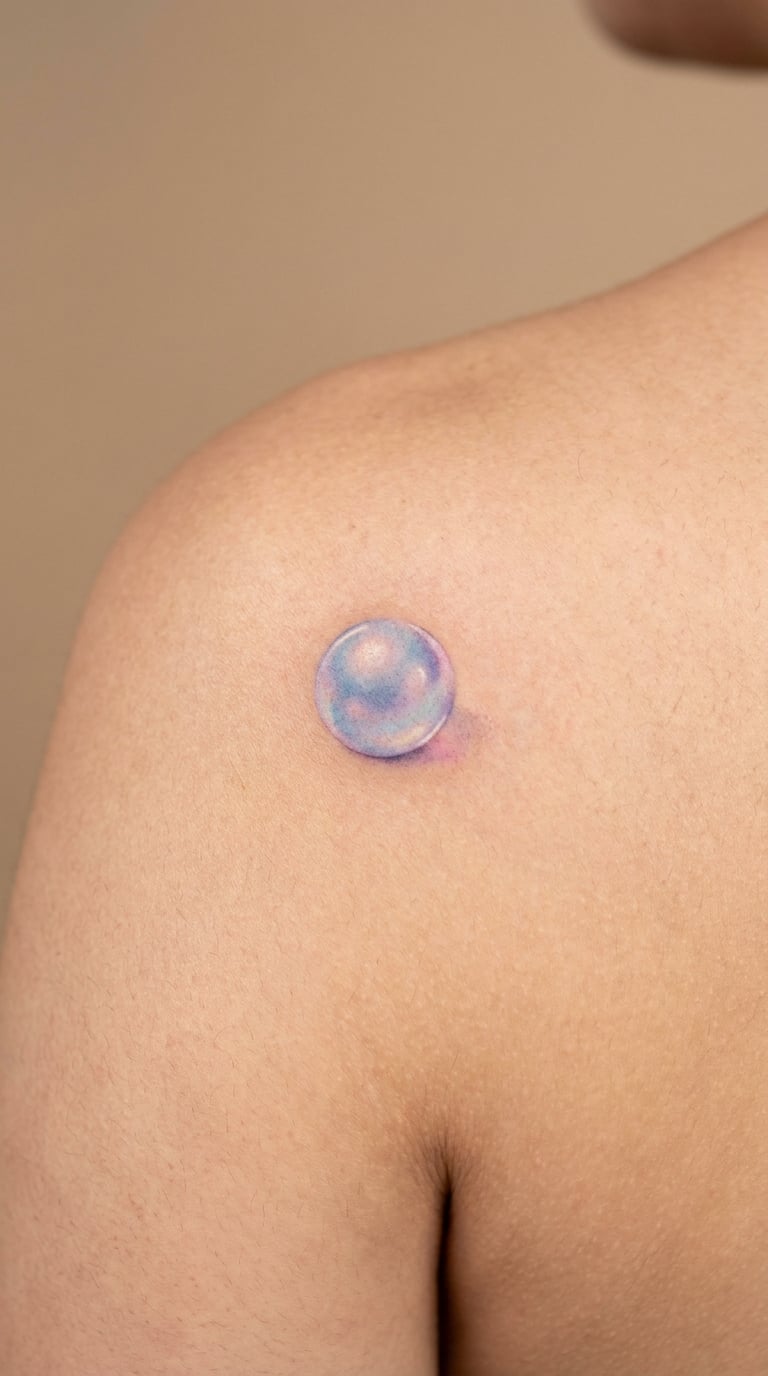
The iridescent pearl is painted rather than outlined. The artist lays in loose watercolour blooms of pale blue, lavender and pink around and partly across a white pearl, letting the colours bleed past the edge so the whole thing looks like light refracting rather than a shape with a border.
Iridescence is the pearl at its most jewel-like, so this version usually gets picked for colour symbolism: blue for calm, lavender for intuition, pink for tenderness. The colour choice is doing the meaning work, not the pearl itself.
Placement: shoulder, upper back, or the flat of the upper arm where there is room to let the colour spread. Size: 2 to 3 inch (5 to 7.5 cm) for the pearl, with colour bleeding a little beyond it. Style: watercolour. Pain: low to medium, and the shoulder is an easy spot to sit still for. Watercolour is hard to cover up later, so plan placement before the first line goes in. Make it yours: restrict the palette to two colours, or pick the hues from something you own rather than from a mood board.
5. Pearl in a Crescent Moon
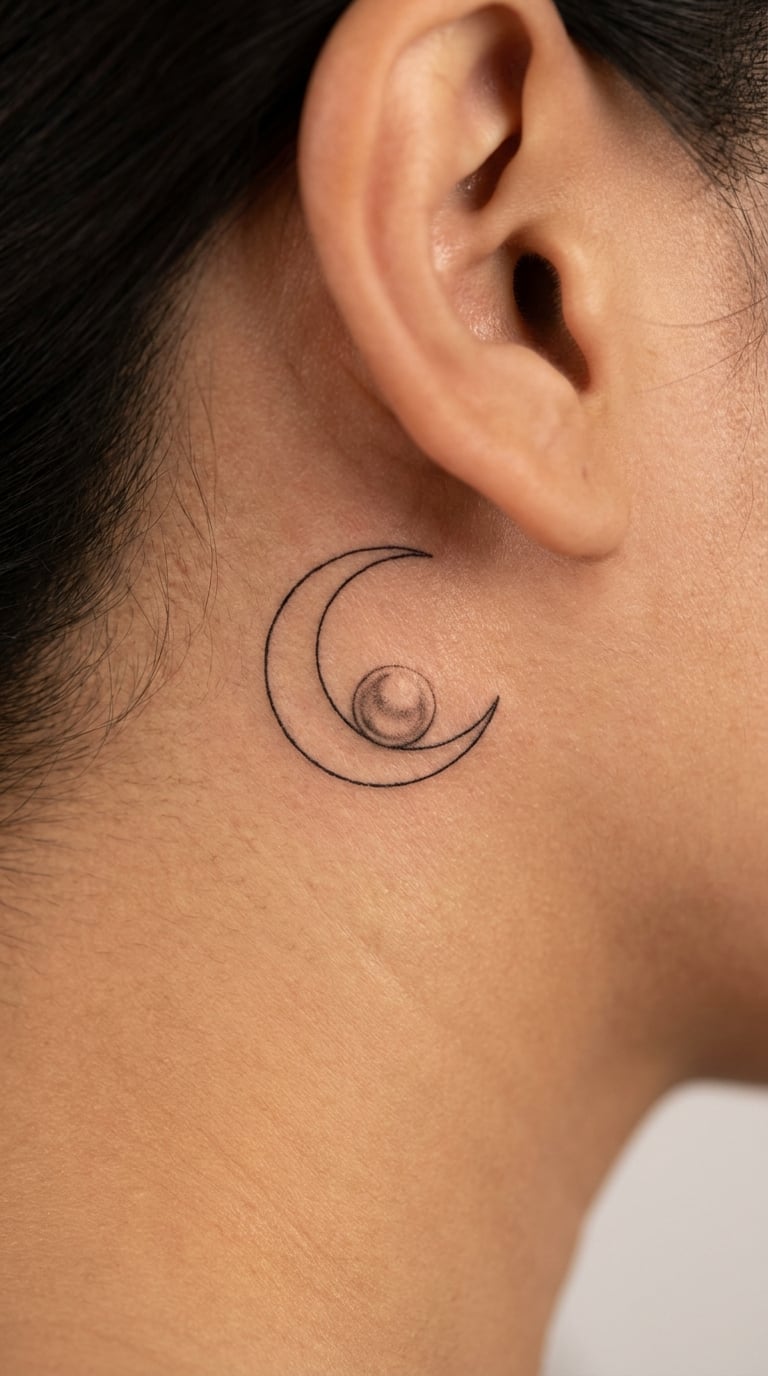
A pearl resting in the bowl of a crescent moon is one of the oldest pairings in the motif, and it still holds up. The moon is drawn as a thin crescent with a clean inner curve, and the pearl sits in the open side, shaded lightly so it stays the brightest thing in the design.
The combination reads as cycles, timing and being new to yourself. It suits people who pick their tattoos around lunar dates or a period of change they want marked.
Placement: behind the ear, on the inner forearm, or high on the calf. Size: 1.5 to 2.5 inch (4 to 6 cm). Style: fine line. Pain: low behind the ear because the area is small, though the cartilage edge is tender. Hair regrowth will blur the top edge after a couple of years, which is the honest trade for the placement. Make it yours: add a single star at the crescent’s tip, or use a real lunar phase instead of a full crescent.
6. Pearl Inside a Shell
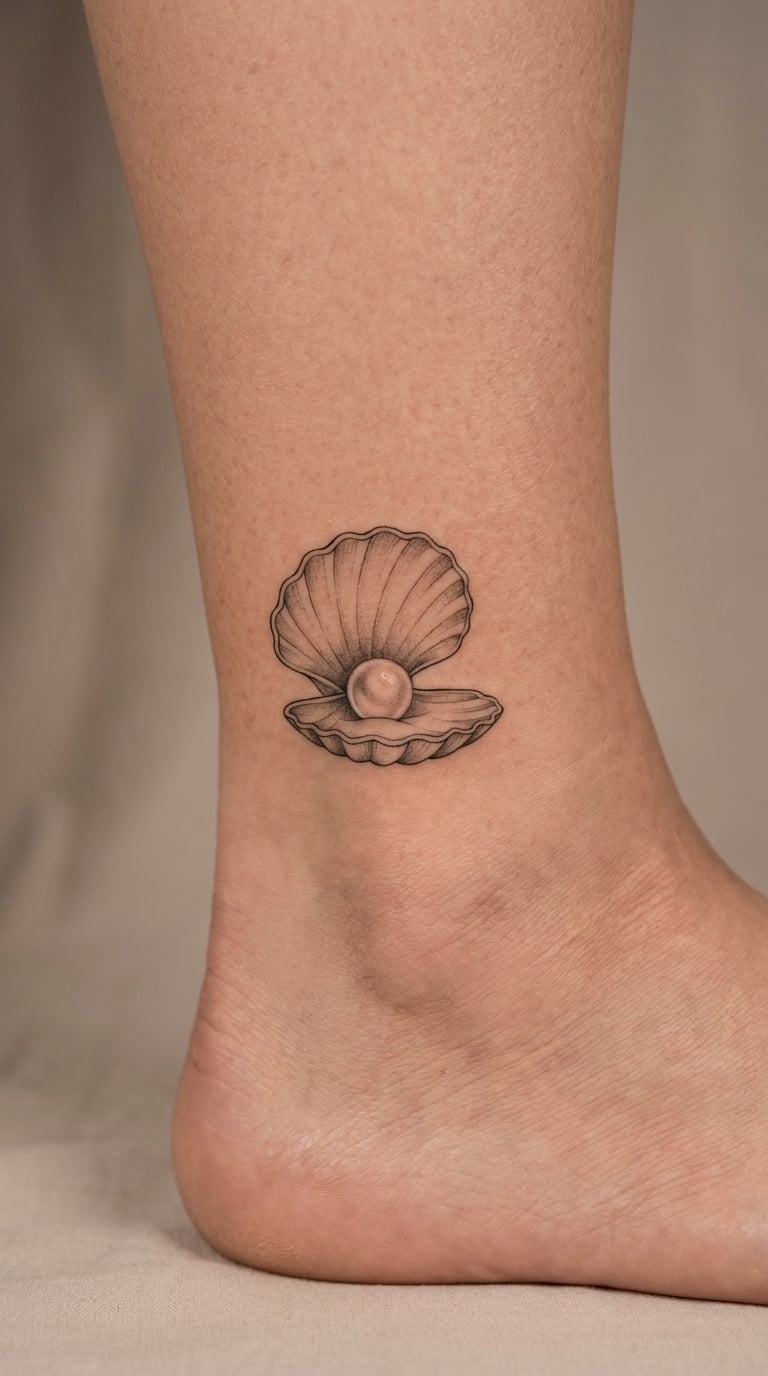
The shell-and-pearl design is the oyster: two shell halves, the lower one cupped, holding one pearl in the middle. Good versions get the shell edges with a few hatch lines rather than heavy outlines, so the pearl sits inside the composition and does not get lost among linework.
This is the version tied most directly to the birthstone, and it carries the transformation angle hardest. Something rough and ordinary on the outside, something rare forming quietly inside it. Community discussions on pearl tattoos come back to this design more than any other.
Placement: ankle, inner forearm, or the ribcage. Size: 2 to 3 inch (5 to 7.5 cm). Style: fine line with black and grey shading. Pain: medium on the forearm, higher on the ankle or ribs because those spots are bony. Ribs and ankles are also the placements that change shape visibly with weight or movement, so the design will stretch. Make it yours: leave the shell slightly open with a clear gap, so it reads as still opening rather than already done.
7. Blackwork Pearl with Dotwork Halo
This version flips the usual approach. Instead of a pale pearl made with light ink, the artist fills the pearl solid black, leaves a thin crescent of skin for the highlight, and rings it with a halo of fine dots. The contrast is what carries it, and it holds up at a distance in a way the pale versions do not.
A black pearl is less about purity and more about rarity and self-possession. It is a common choice for people who want the symbolism without the softness, and it is the entry that ages best of anything on this list.
Placement: upper back, upper arm, or the back of the calf. Size: 2 to 4 inch (5 to 10 cm). Style: blackwork with dotwork. Pain: medium. The upper back itches badly once the session passes an hour, which is worth knowing before you start. Dotwork stays crisp for years because there is no pale pigment involved. Make it yours: let the dot halo double as a ring of coordinates, or thicken the dots as they move away from the pearl so the falloff looks deliberate.
8. Pearl Necklace Tattoo
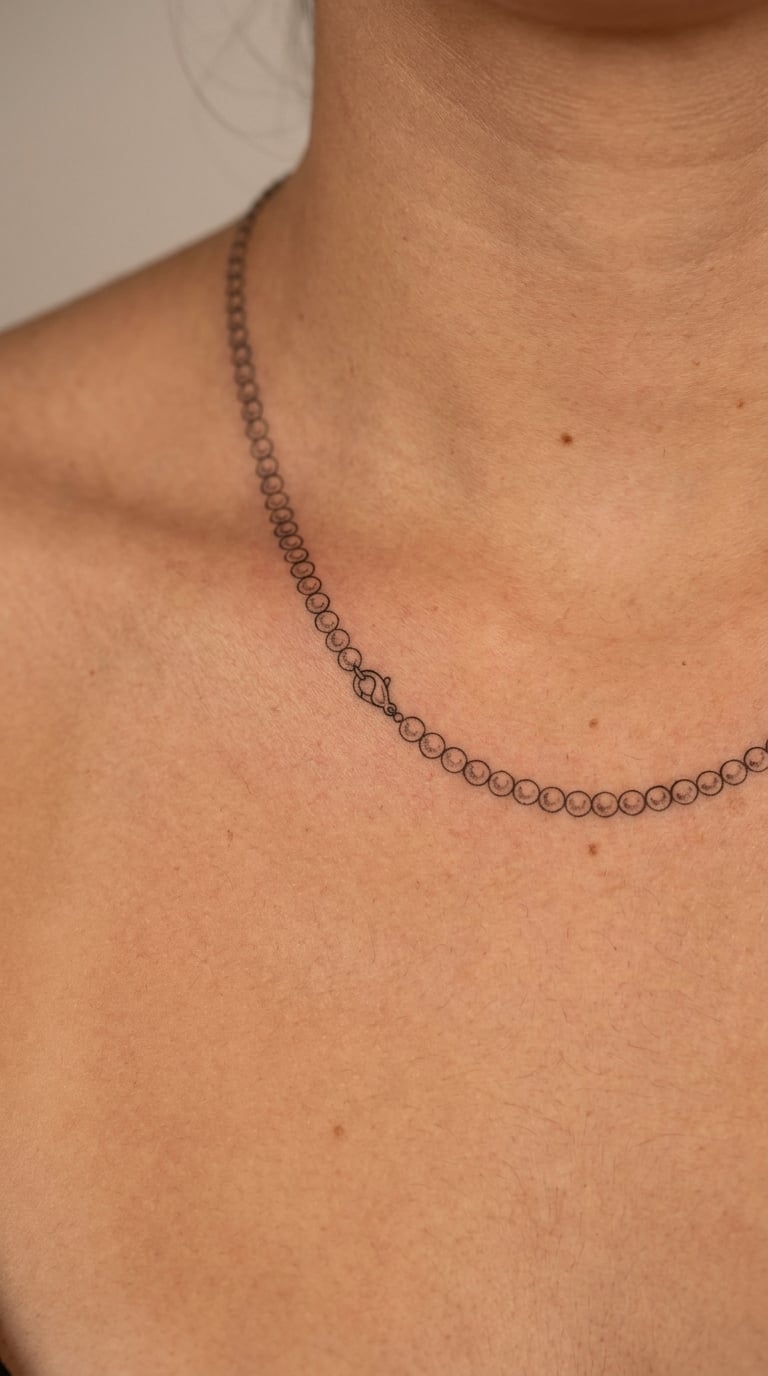
The pearl necklace is drawn as jewellery rather than as a symbol: a curved chain of small beads that meet at a centre pearl, with a clasp or a small pendant at the back. Done well, it is completely wearable-looking, which is the appeal for anyone who wants a tattoo that reads as an accessory.
It leans on inheritance and being given something worth passing on, so it often marks a mother, a grandmother or a family line. It is one of the few pearl designs people plan around a specific person rather than a feeling.
Placement: across the collarbone, or centred on the upper chest. Size: 3 to 4 inch (7.5 to 10 cm) across. Style: fine line. Pain: medium, and the collarbone is the part most people flinch at. Basking in sun will fade the small bead detail fastest of anything in this list, so think about sleeve coverage. Make it yours: put a real clasp mechanism from an heirloom into the design, or engrave a date inside the curve rather than on the pearl itself.
9. Pearl and Rose Botanical Design
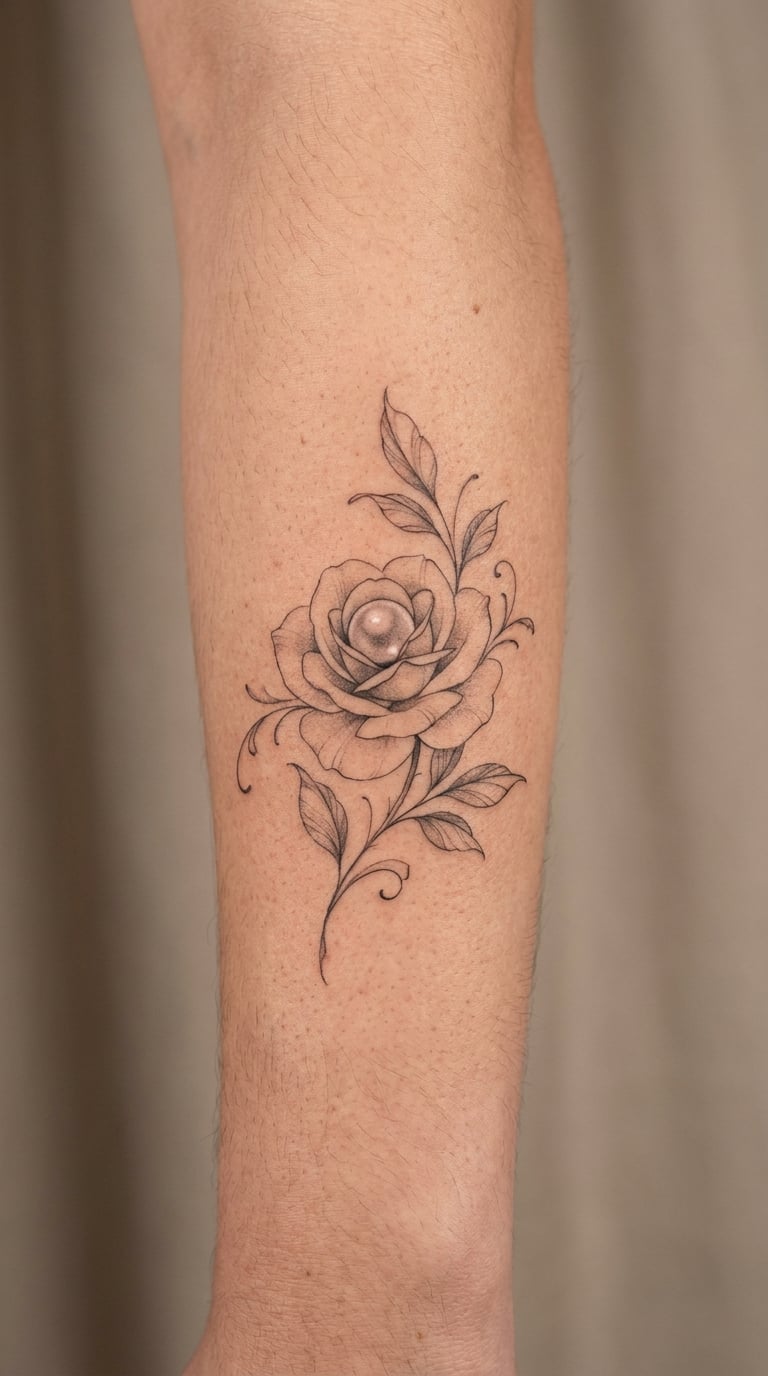
Pearl and rose is the most requested pairing in pearl tattoo searches, and the reason it works is contrast: a hard, round, reflective shape sitting against something soft and organic. The rose is usually drawn in fine-line botanical style, with the pearl tucked into the centre of the bloom or resting on the stem below it.
Roses carry love and balance the pearl’s purity, so this pairing reads as affection with self-regard rather than romance on its own. Plenty of people get it after ending a relationship, which gives it a different weight for them.
Placement: inner forearm, upper arm, or the back of the shoulder. Size: 3 to 5 inch (7.5 to 12.5 cm) for the whole spray. Style: fine-line botanical. Pain: medium, and it is a longer sitting because of the petal detail. The forearm curves, so a spray that looks even on paper wraps slightly around the arm. Make it yours: add a second bud on a lower stem, or pick the rose colour to match a birth flower rather than going straight to red.
10. Baroque Pearl Portrait
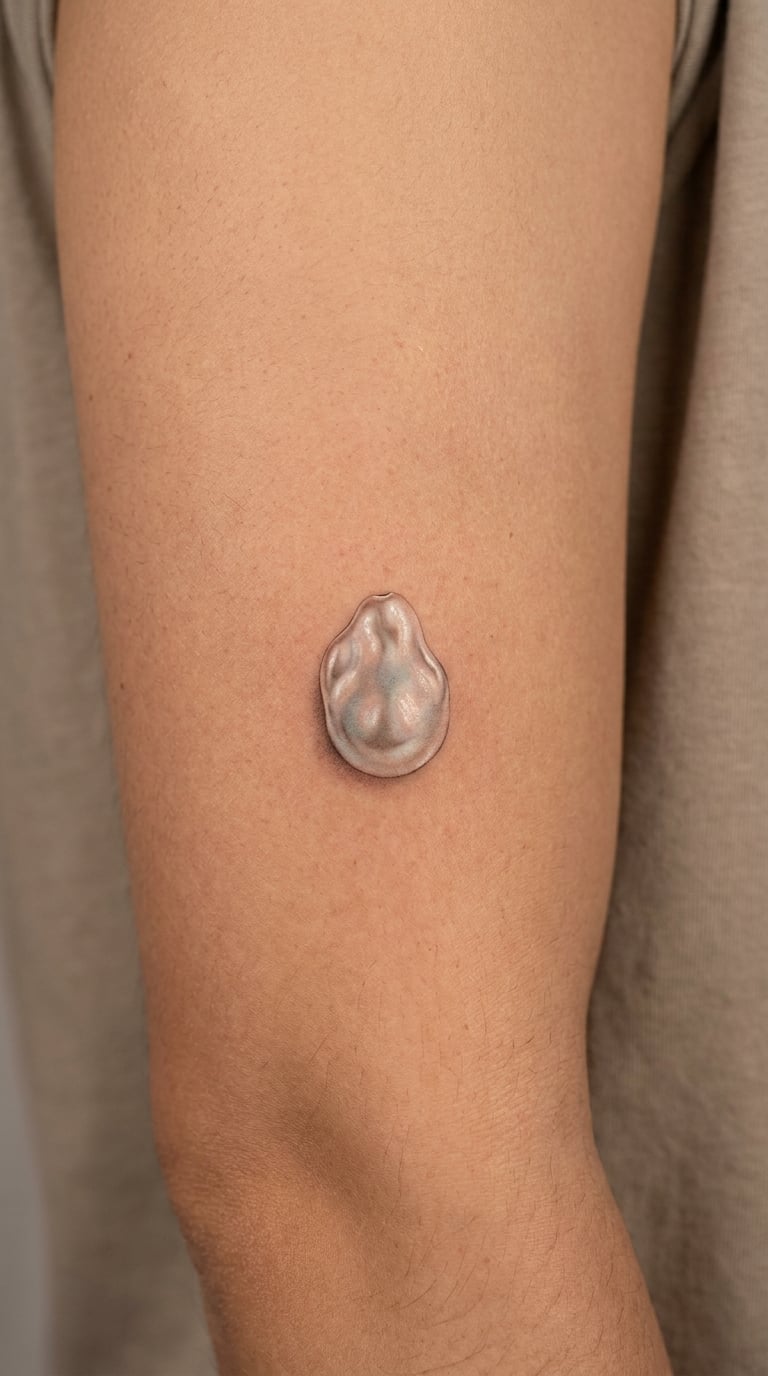
The baroque pearl is not round. It has an irregular, lumpy shape, and the artist uses that as the whole point: an uneven surface catches light in several places at once, so the piece gets two or three separate highlights instead of one.
Baroque pearls are traditionally the rare, naturally formed ones, so this design reads as uncommon and unpolished in a good way. It suits people who have never wanted anything symmetrical, and it ages far better than a perfect circle because the shape is doing the work.
Placement: outer upper arm, or the shoulder where there is a flat plane for the shape. Size: 2 to 3 inch (5 to 7.5 cm). Style: micro-realism. Pain: medium, and this is a technical piece that often takes two sessions because the shading is layered. The first session is where the dull round shape becomes a pearl, so expect to see a grey circle afterwards and trust the second sitting. Make it yours: base the irregular outline on a real shell you have kept, or put the pearl in a plain ring with no added motif at all.
11. Pearl with Butterfly Wings
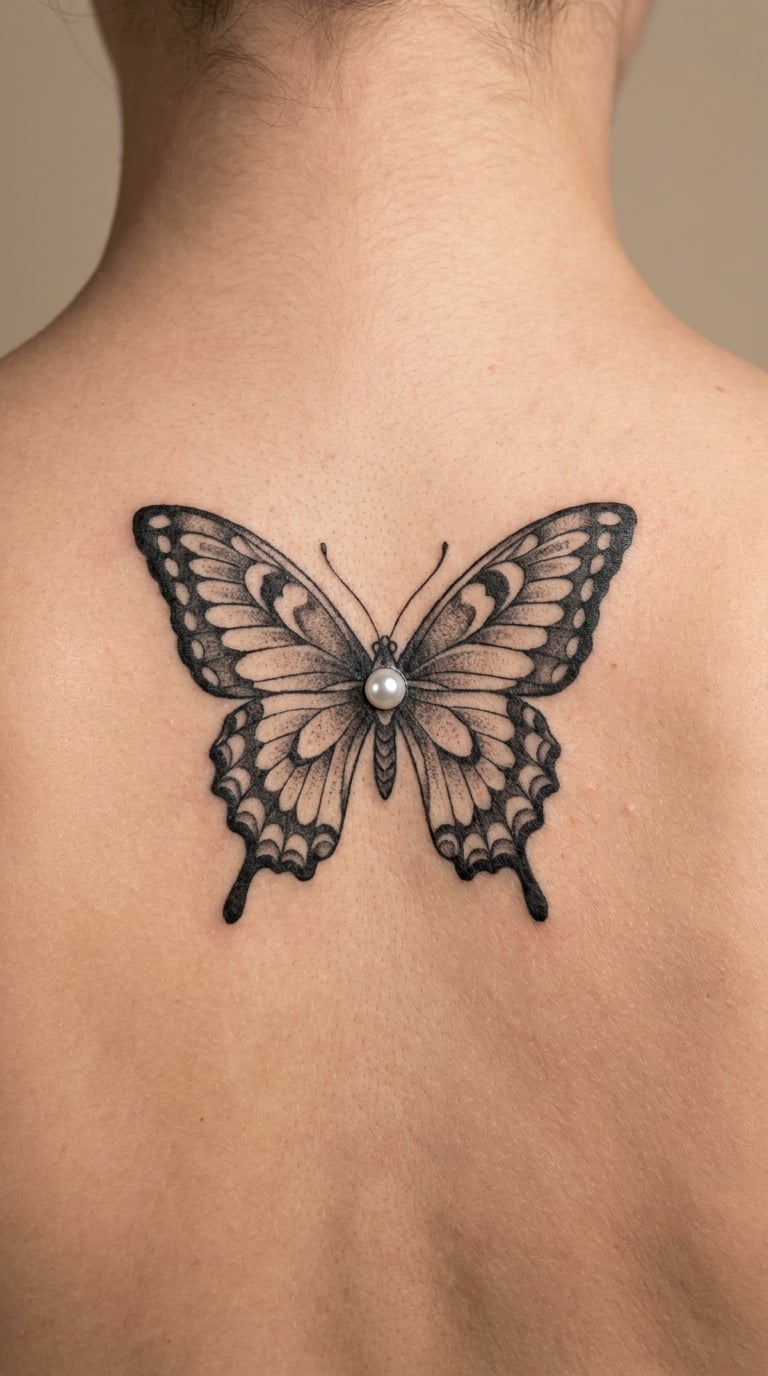
A butterfly built around a central pearl uses the insect’s body as the pearl itself, with the wings spreading out in matched pairs on either side. Symmetry is the hard part: the artist mirrors the wing pattern, then keeps the pearl exactly on the vertical centre line so the whole thing reads as balanced rather than lopsided.
Butterfly symbolism is transformation and change, so the pearl adds rarity and self-worth to that. It is a busy design in the best sense, and it works well as a back piece if you let the wings grow to around 4 inches.
Placement: upper back between the shoulder blades, or the calf. Size: 3 to 4 inch (7.5 to 10 cm) wing tip to wing tip. Style: symmetrical fine line with soft shading. Pain: medium to high. The upper back is bony and you will be tapping or fidgeting for the first hour or so. Wings drawn too small turn into a smudge within a few years, so size matters more here than anywhere else. Make it yours: use the pattern on one real butterfly species rather than a generic shape, or fade the wing tips out so it looks like the pearl is emerging.
12. Pearl in an Eye Design
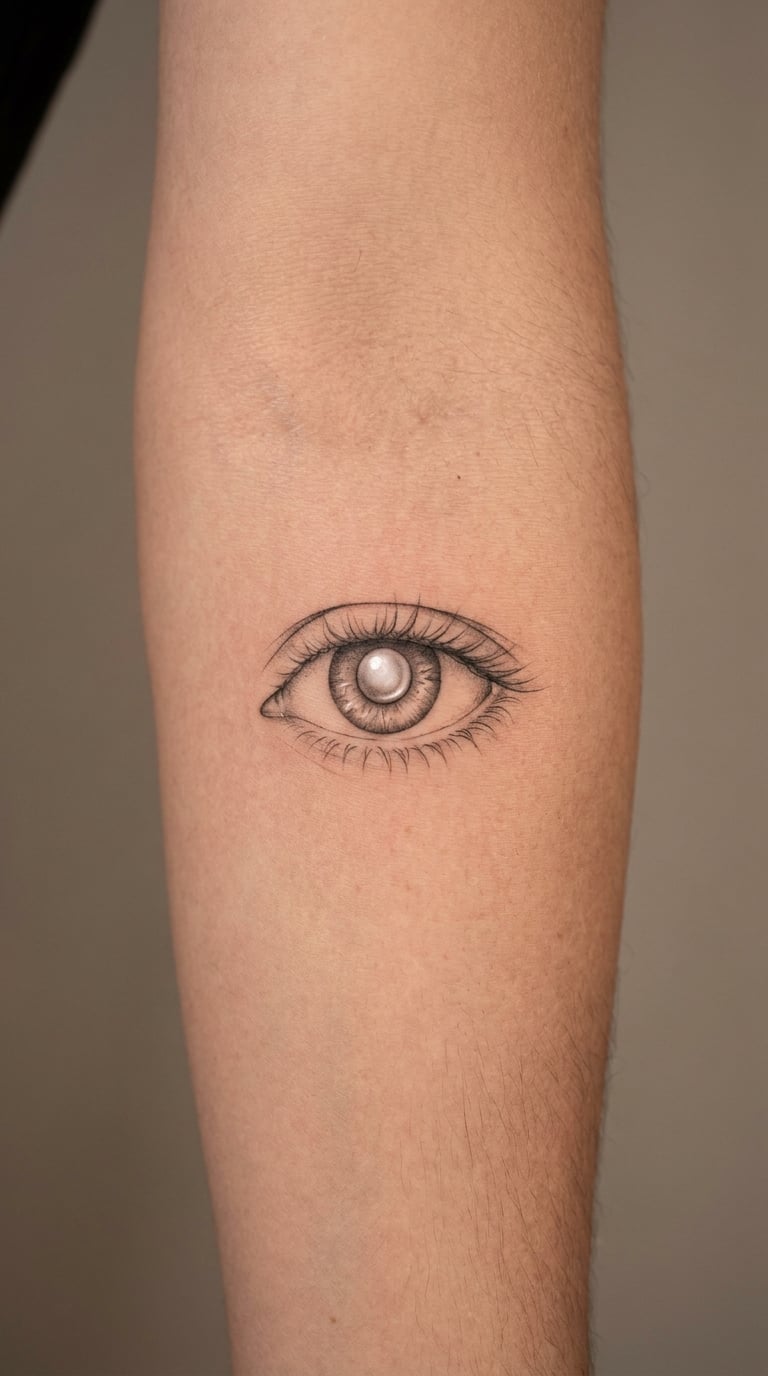
The eye here is drawn in fine-line realism: an almond shape, a lash line with a few individual lashes, an iris, and a pearl or pearl-like highlight at the centre. Because the pearl is small and bright, the eye reads as watching you, which is where most of the interest in this design comes from.
There is no fixed meaning here and I would be making it up if I gave you one. People tend to choose it for protection, for a reminder to pay attention, or because they like a design that looks straight back.
Placement: inner forearm, or the back of the hand. Size: 2 to 3 inch (5 to 7.5 cm) wide for the whole eye. Style: fine-line realism. Pain: medium. The eye is the piece people regret most when they size it too small, because the lashes are what give the design its character and they blur first. Make it yours: keep the lashes minimal and let the pearl carry the detail, or add a single teardrop line below the outer corner.
13. Three Pearls in Minimalist Linework
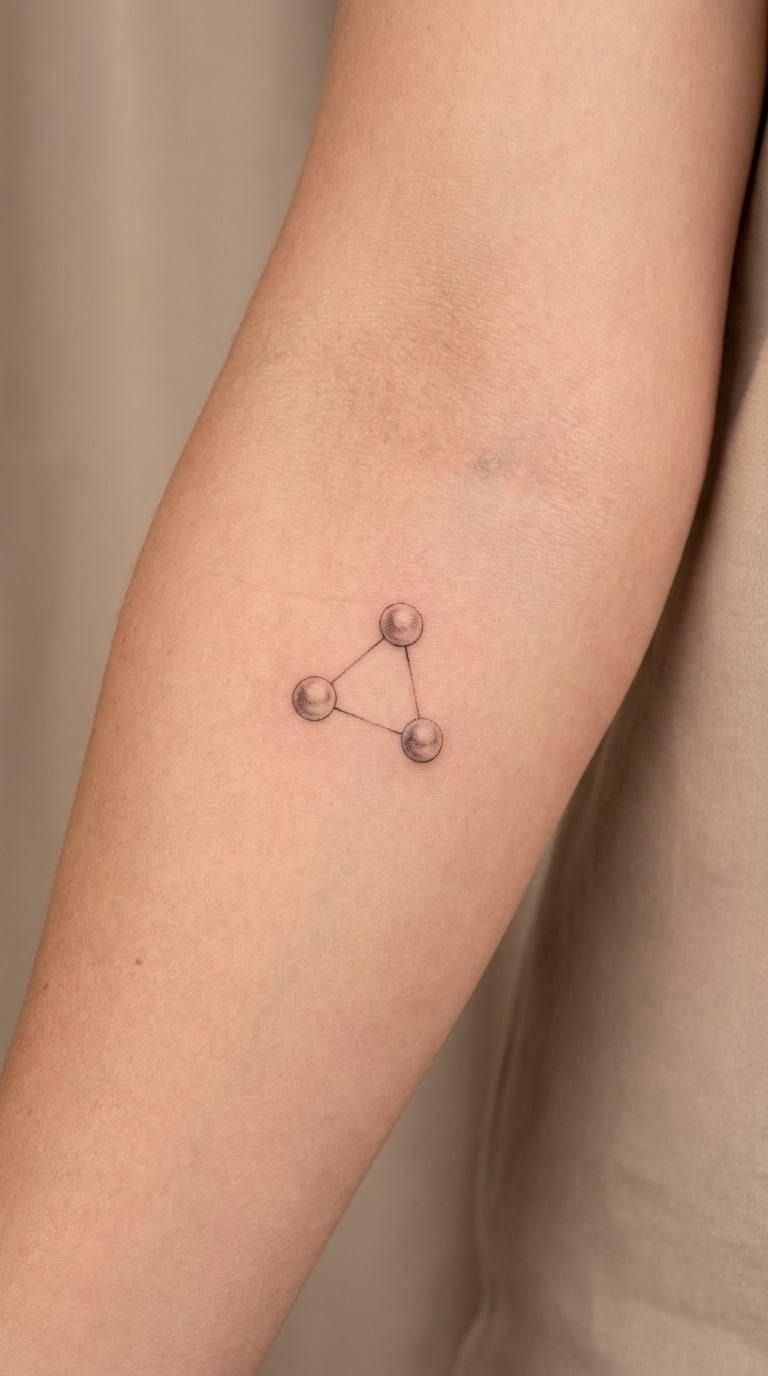
Three pearls in a line, or set as a small triangle, is the most minimal design that still has a composition. Each pearl gets a light grey gradient and one highlight, and the spacing is what carries the elegance. Even gaps matter more than perfect shading here.
Three is often read as the people or chapters that matter most, whether that is a family of three or three years of something. It is a small, quiet, low-commitment design that suits a first tattoo better than almost anything else here.
Placement: inner arm, the space between thumb and index finger, or the ankle. Size: 1.5 to 2 inch (4 to 5 cm) across the group. Style: minimalist fine line. Pain: low, and the space between the thumb and index finger is quick. Hand and wrist placements lose definition fastest, so this one will want a refresh. Make it yours: vary the sizes slightly so the trio looks naturally graded, or run a fine line under them to turn the group into a bracelet.
14. Pearl with Watercolour Splash
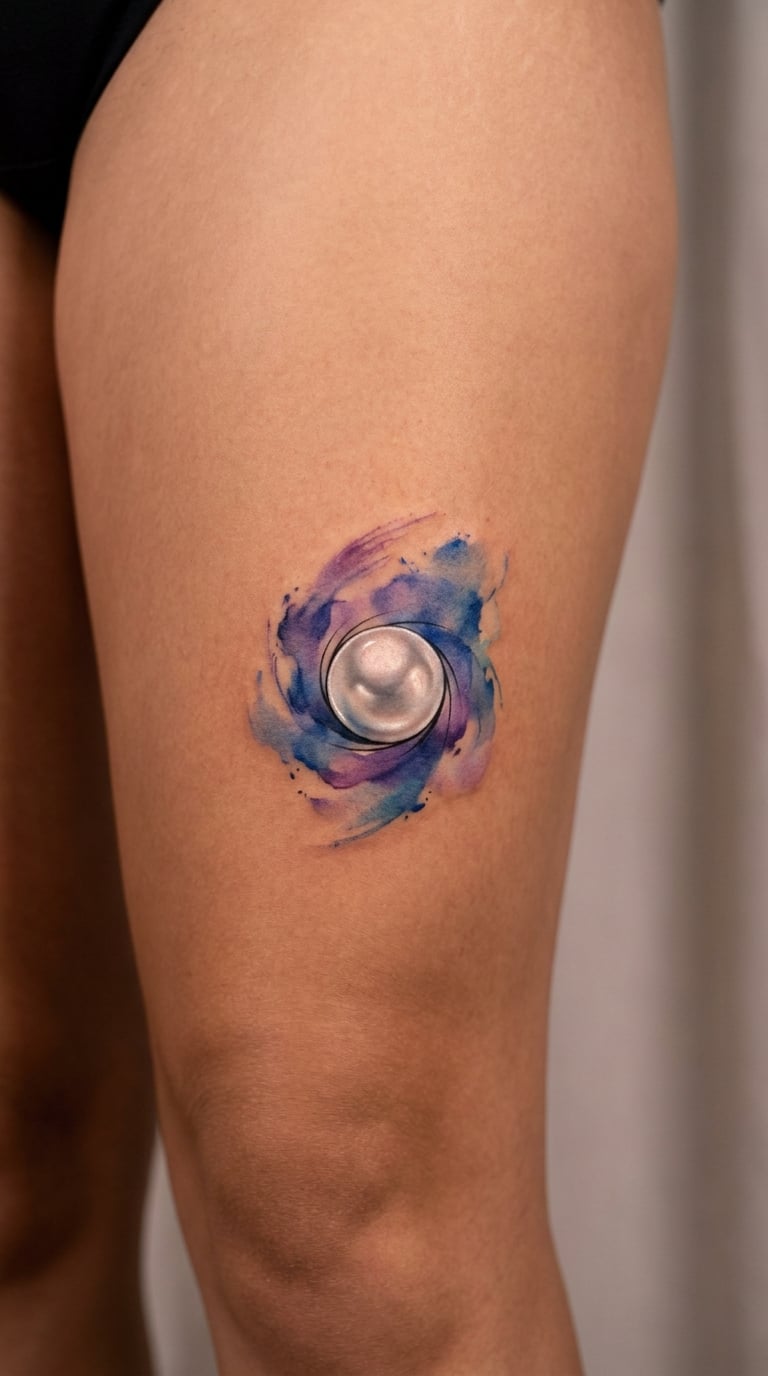
This design puts a fully shaded pearl in the middle of an uncontrolled burst of colour. The pearl itself is done realistically, with proper grey modelling, and then watercolour bleeds outward from it in whatever direction the artist finds natural. The tension between the precise centre and the loose edges is the whole point.
Watercolour is a good middle ground for people who want a bold piece but not a solid black one. The colour often reflects something emotional about the wearer, a period they came through, and it is very hard to hide or cover later.
Placement: thigh, upper arm, or the shoulder. Size: 2 to 3 inch (5 to 7.5 cm) for the pearl, with colour spreading to 4 or 5 inches. Style: realistic pearl inside watercolour. Pain: low to medium, and the thigh is an easy place to sit. Bleeding colour into skin that has already healed tends to stay truer than colour worked into fresh skin, so budget for a second session. Make it yours: choose the palette from a place rather than a feeling, then keep every colour in it to two hues so it stays intentional.
15. Pearl and Serpent Design
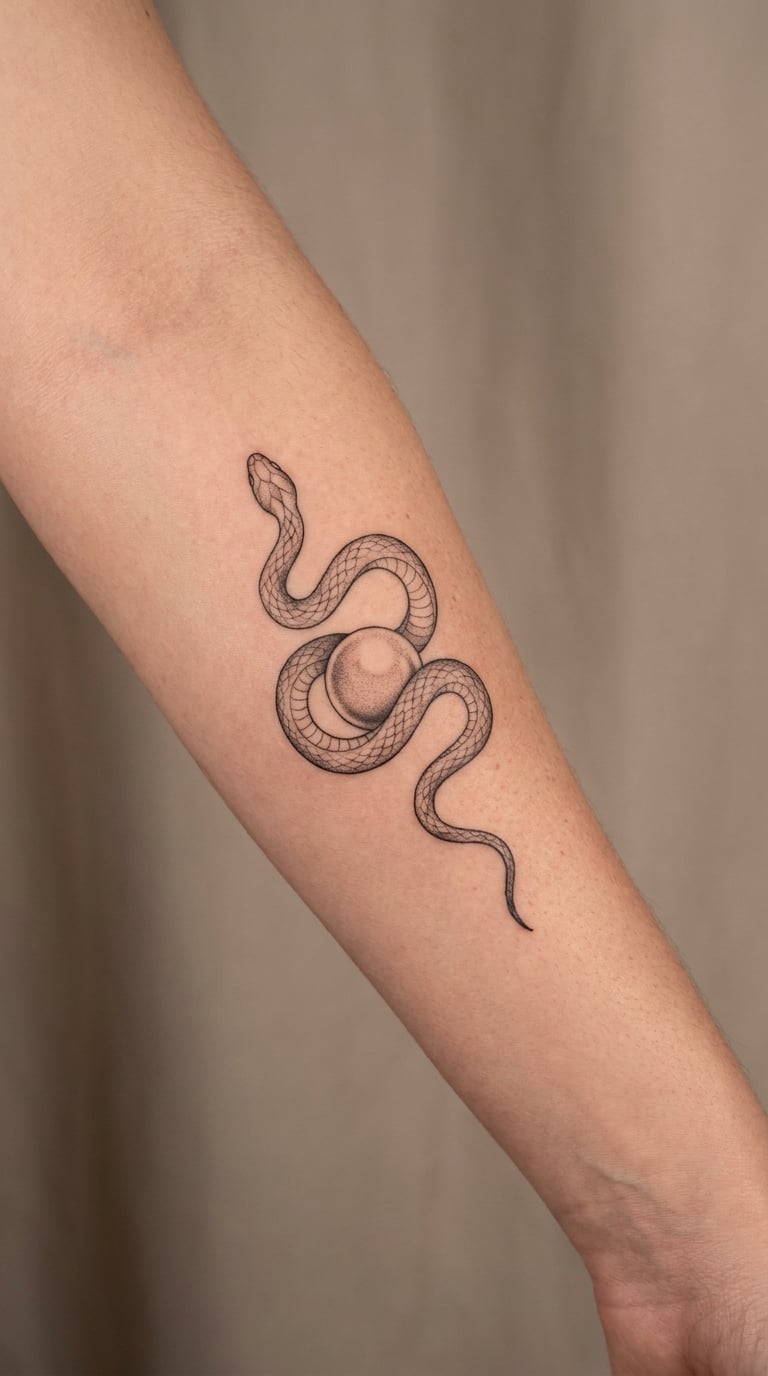
A serpent curling once around a pearl gives you one continuous line of scales and a focal pearl in the middle, which is a good structure for a long thin space. The artist keeps the serpent’s body a constant line weight so the eye goes to the pearl rather than the snake.
Serpents carry transformation, protection and rebirth, so a pearl inside one reads as guarding something valuable. The pairing is popular with people marking a major change, and it has an edge that the floral and shell designs do not.
Placement: forearm, upper arm, or the calf. Size: 3 to 4 inch (7.5 to 10 cm) long. Style: fine line. Pain: medium on the forearm, higher on the calf. The linework is dense, so this takes longer than its size suggests. Make it yours: add a split tongue curling away from the pearl, or have the tail end in a small leaf so the composition closes instead of stopping.
16. Pearl Stud-Style Micro Tattoo
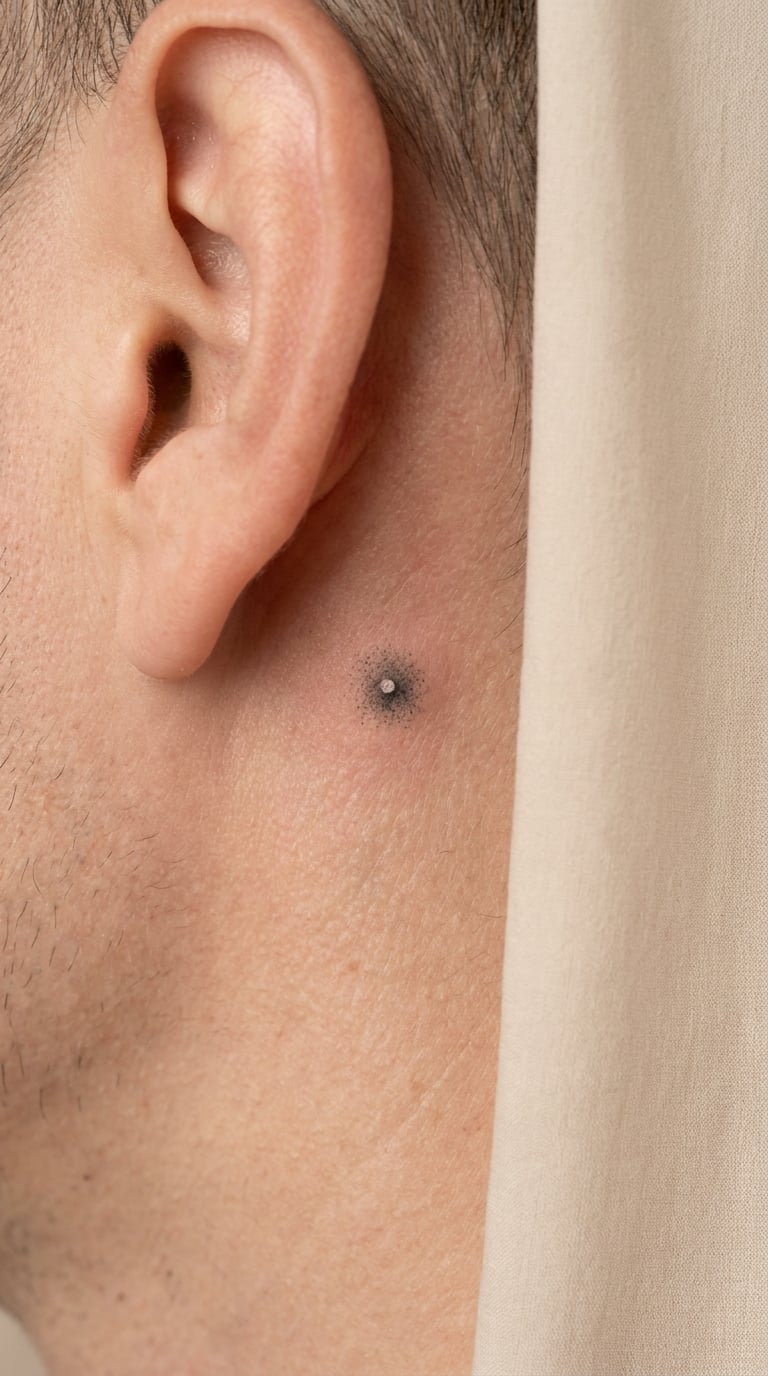
This is the smallest option: a single shaded dot with one small highlight left as skin, roughly the size of a pencil eraser. The trick is that the highlight has to be there, otherwise it is just a spot and reads as a mole rather than a pearl.
Small and quiet is the reason people book it. It works as a first tattoo, as a matching piece, or as the marker for a private fact that does not need explaining to anyone else.
Placement: behind the ear, on the wrist, or the inner ankle. Size: under half an inch (under 1.2 cm). Style: micro minimalism. Pain: low, and it is over in a few minutes. Below about 3 mm the artist will tell you a highlight is not renderable, and they are right. Make it yours: place it in line with an existing small tattoo so it reads as a stop on a route, or mirror it on the other side for something nearly invisible to other people.
17. Pearl with Geometric Frame
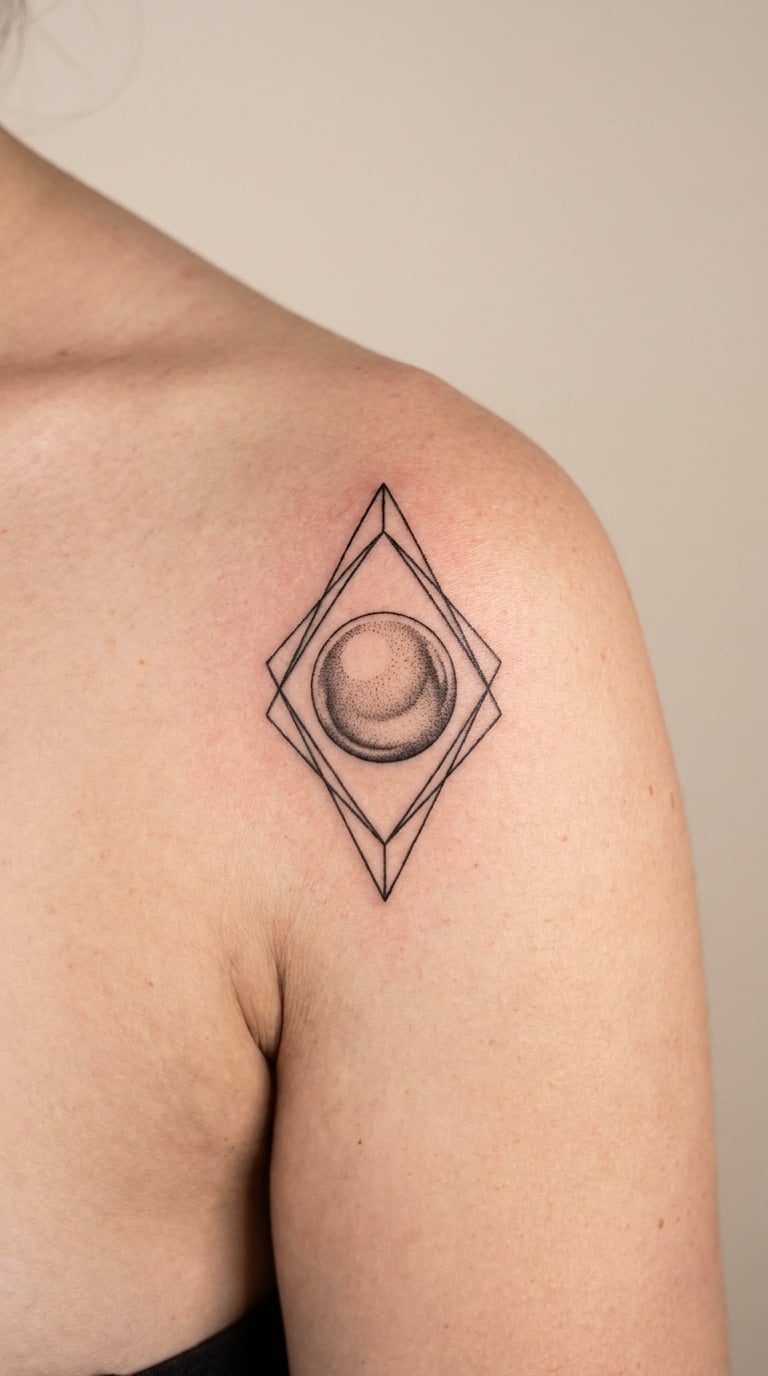
The geometric frame puts a realistically shaded pearl inside a hard-edged shape: a diamond, a hexagon, a circle, or a set of straight lines. The contrast between soft modelling and a perfect outline is what makes it look intentional rather than like two separate tattoos stacked on top of each other.
Frames read as structure, protection and holding something in place, which pairs naturally with the rarity of the pearl itself. It is the design to pick if you like geometry but want one soft note inside it.
Placement: shoulder, upper arm, or the back of the hand. Size: 2 to 3 inch (5 to 7.5 cm) for the framed shape. Style: blackwork and fine line. Pain: medium. Geometric linework over a curve like the shoulder will show slight waviness for the first weeks, then settle. Make it yours: use a shape connected to something real, like the outline of a window you grew up in, or set the frame in gold ink rather than black.
18. Pearl and Vine Forearm Design
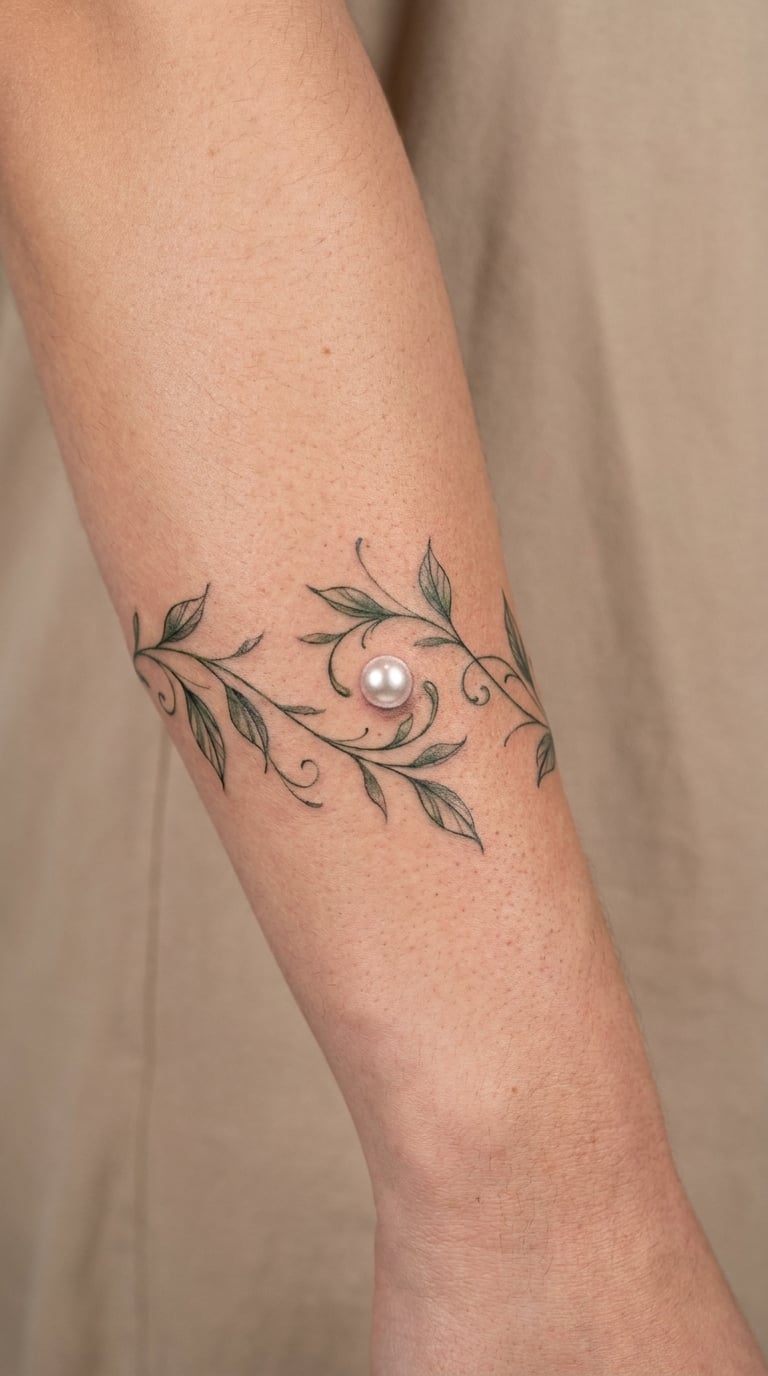
This is a botanical piece with the pearl as its anchor: a vine runs the length of the forearm, leaves sit along it, and the pearl rests in a curve of the stem where the vine loops. Shading on the leaves gives depth while the pearl stays the brightest element.
Growth and continuity are the meanings that come up most, usually for a specific season of life rather than a person. It also grows well, which makes it a good match for someone who plans to add to it later.
Placement: along the forearm, or wrapping the upper arm. Size: 4 to 6 inch (10 to 15 cm) for the run of vine. Style: fine-line botanical, some green work optional. Pain: medium, and it is a long piece that can be split over two sittings without losing anything. The forearm dips inward between the wrist and elbow, so a long vine reads as following the arm rather than sitting flat on it. Make it yours: design the leaf count to match something meaningful, or add a second small pearl at the far end so the piece has a start and a finish.
19. Pearl with Constellation Accent
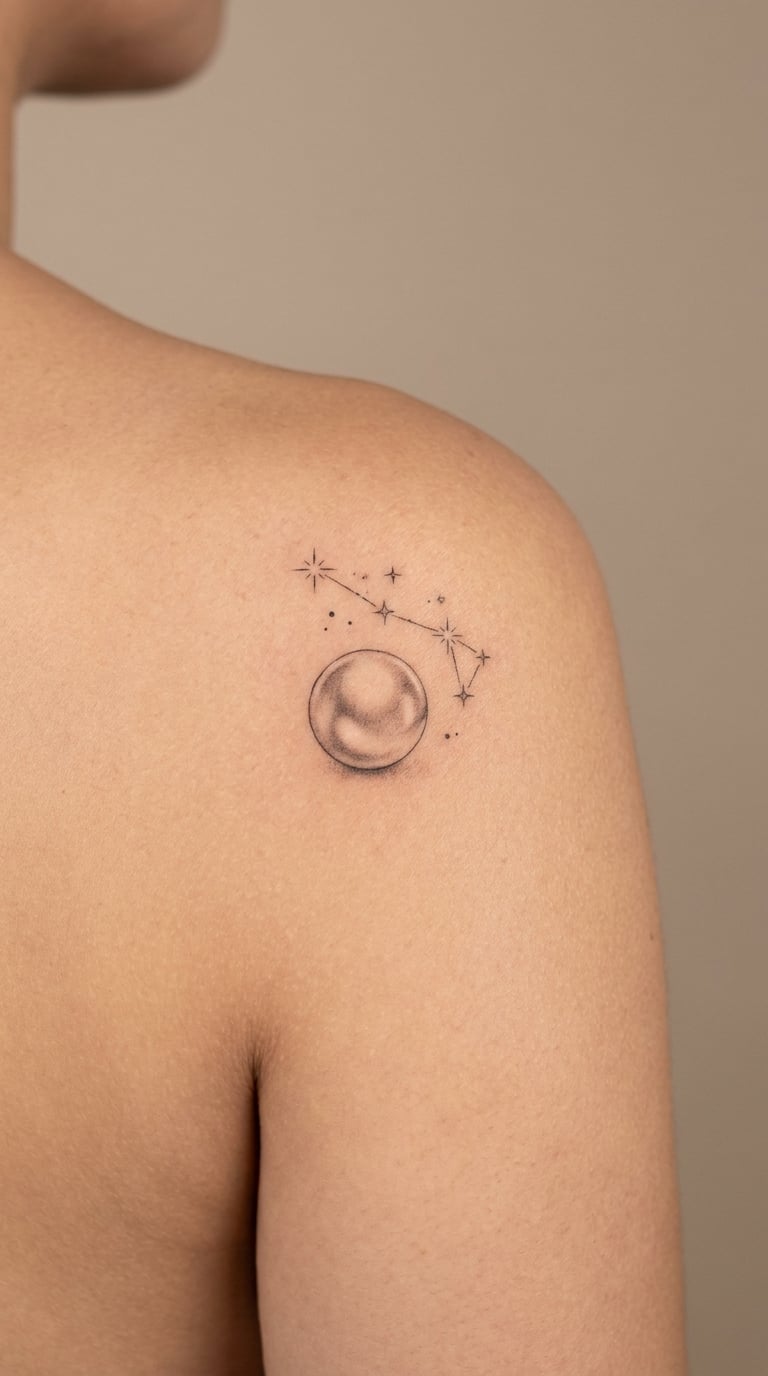
A pearl with a constellation is one large shaded pearl with a scatter of small stars and thin connecting lines above or around it. The lines need to be hairlines, and they need to be placed loosely, because a tight star map looks like a diagram rather than a sky.
Stars and pearls together read as guidance and luck without being loud about it. This is the design people ask for when the pearl stands for someone who was their reference point, and the constellation is the path that person pointed out.
Placement: shoulder, upper back, or the calf. Size: 2 to 3 inch (5 to 7.5 cm) with the stars spread to 4 inches. Style: fine line. Pain: low to medium. Very fine star lines break down fastest in the set, so accept that a few dots will soften and can be refreshed. Make it yours: use the sky from the night of a real event, plotted properly, or keep three stars only so the pearl stays the subject.
20. Pearl and Moth Design
The moth is illustrated in full: feathered antennae, patterned wings, and a body shaped like a pearl rather than a fuzzy insect body. The wing pattern is the detail work here, usually fine lines and stippling across both wings in matched halves.
Moths mean transformation, drawn to light and never to flame, which many people find a more accurate version of personal change than a butterfly. Putting a pearl in the body adds rarity to that reading.
Placement: upper back, upper arm, or the back of the calf. Size: 3 to 5 inch (7.5 to 12.5 cm) wing tip to wing tip. Style: illustrative fine line. Pain: medium to high, and the wing detailing makes it a long sitting. Wingspan symmetry is easier to achieve on a flat surface like the upper back than on a round upper arm. Make it yours: draw a real species from your region so the pattern is yours and not a generic moth, or shrink it to 3 inches and add it to an existing insect piece.
21. Pearl Cluster on the Hand
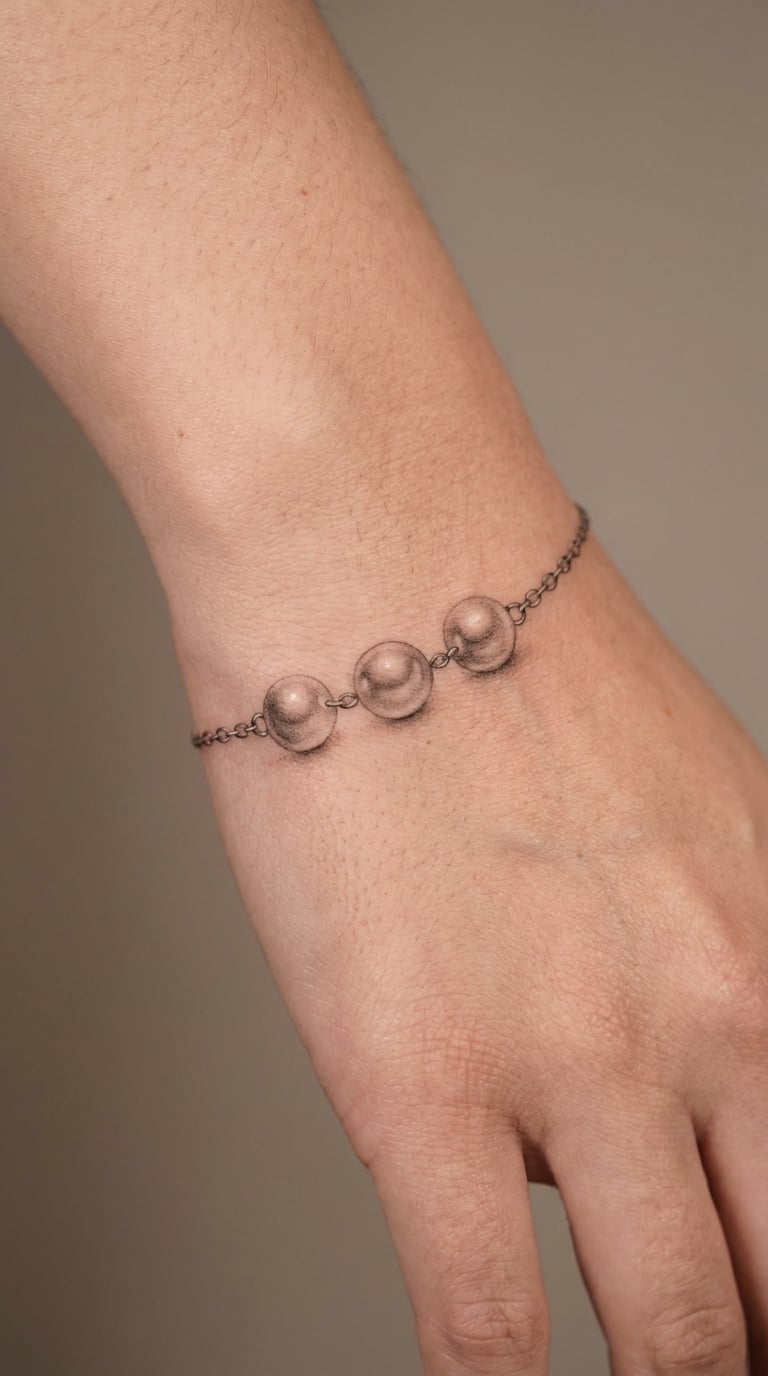
A small cluster of three or four pearls grouped on the back of the hand, arranged with slightly different spacing so it looks like a piece of jewellery resting there rather than a row. Each pearl is fully shaded, and the gap between them is what makes the grouping look deliberate.
It reads as abundance and worth in a very small package, and it is one of the few designs that looks good without a sleeve. The hand is a bad long-term home for fine detail, so this one is about choosing a size that will still read in five years.
Placement: back of the hand, or the wrist just below it. Size: 1 to 1.5 inch (2.5 to 4 cm) across. Style: micro-realism. Pain: high. The knuckles and the back of the hand are bony, and you will feel every line. Hand tattoos fade and soften faster than anywhere else, so keep the pearl shading simple and the outline dark. Make it yours: set three pearls in a triangle rather than a line, or make the middle one larger so the cluster has a centre.
22. Broken Pearl with Fine-Line Seam
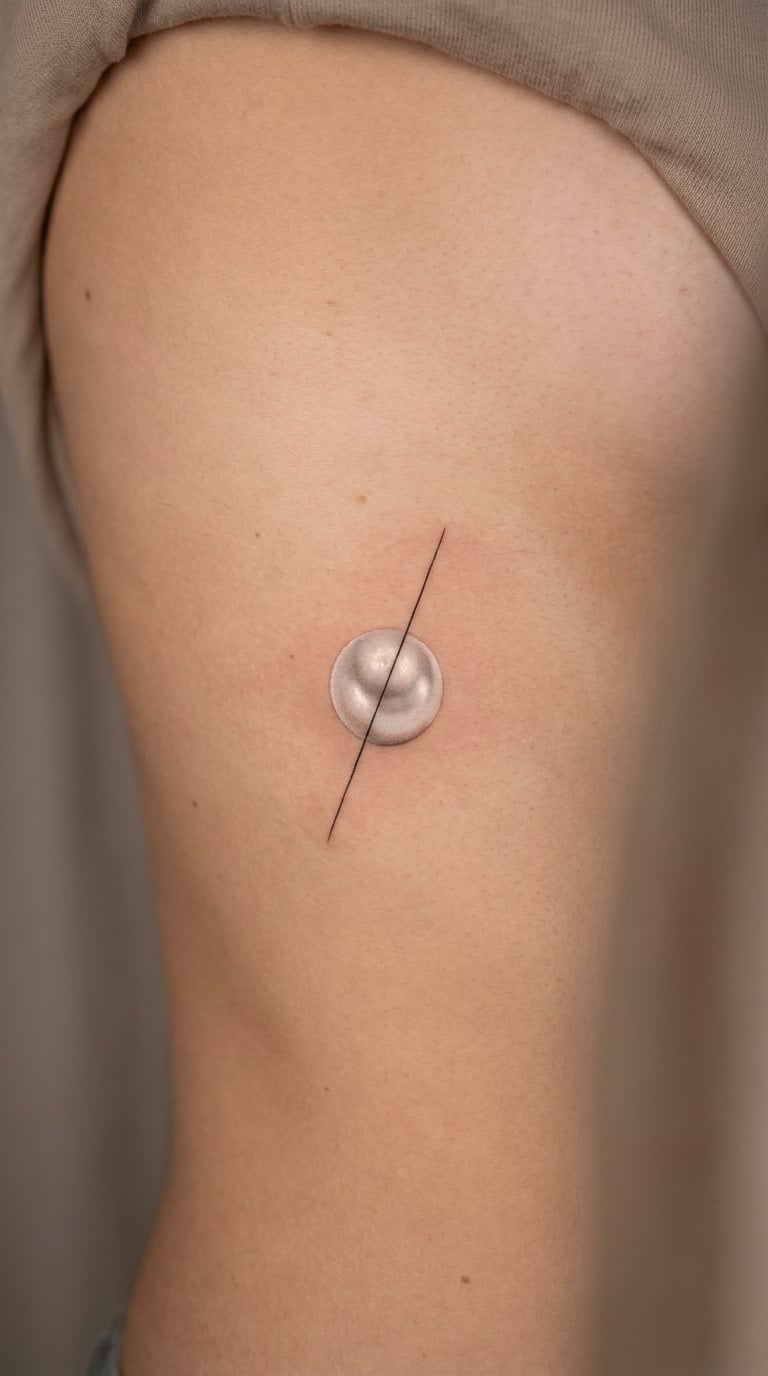
The broken pearl is a full shaded pearl split by one clean line running across the middle, with the two halves pulled very slightly apart. Done well the seam is a single confident stroke, and the gap is what turns a pretty pearl into a design with an opinion.
It means a break that changed something, usually a hard reset rather than a loss. That reading is common enough that most people choosing it already know it, which is why it makes a strong gift too.
Placement: ribcage, sternum, or the inner arm. Size: 1.5 to 2.5 inch (4 to 6 cm). Style: fine-line realism. Pain: high. The ribs are the most consistently painful placement in this list and breathing makes it hard to stay still. Ribcage skin also stretches, so the two halves can drift apart over the years. Make it yours: run the seam slightly off-centre so it never looks like a symmetrical design, or set a hairline crack at a slight angle like a real fracture.
How to Choose the Right Design
Start with the size, because it decides almost everything else. A single shaded pearl needs about half an inch to render properly, and anything with a shell, a rose or a wing around it needs at least 2 inches or the detail turns to mush. If you want the smallest possible piece, ideas 3, 13 and 16 are built for it. If you have a flat area to work with, ideas 11 and 20 will hold a much bigger design without complaint.
Then match the style to the placement. Fine line suits the inner arm, the wrist and the collarbone, where skin is smooth and forgiving. Blackwork and geometric frames look best on the shoulder, the upper arm and the calf, where there is a plane to read the shape against. Watercolour needs the most room, and a pale grey pearl needs a dark outline or it will disappear into your skin in a few years.
That outline is the single most useful thing to raise at a consultation. White and pale grey ink are the first colours to fade, and the reason a shaded pearl still looks like a pearl in five years is the dark line around it, not the highlight inside it. Ask your artist how they plan to build that edge before you commit to a realistic version.
| Design type | Best placement | Visible or hidden | Typical size |
|---|---|---|---|
| Micro stud or dot | Behind the ear, inner ankle | Hidden unless you show it | Under 0.5 in |
| Single pearl, drop, trio | Inner wrist, inner arm, hand | Visible, easy to cover | 0.5-2 in |
| Shell, moon, necklace | Forearm, collarbone, ankle | Visible | 1.5-5 in |
| Floral and vine | Forearm, upper arm, ribcage | Visible, grows over time | 3-6 in |
| Realistic and baroque | Upper arm, shoulder, thigh | Visible | 2-3 in |
| Blackwork and geometric | Shoulder, upper back, calf | Visible, ages best | 2-4 in |
| Watercolour | Shoulder, thigh, upper back | Visible, hard to cover later | 2-5 in |
If you are still torn, bring two references rather than one, and tell the artist which element of each you actually want. A consultation where you bring a folder of twenty images tends to produce a weaker design than one where you bring two and explain why. Coastline and sea-life motifs pair well with the pearl theme if you want more of it; our simple coastal starfish designs are a good example of the scale that works with a pearl beside it.
Cost and Session Time
There is no fixed price for a pearl tattoo because the variable is detail, not motif. A micro stud is often priced at a shop’s minimum and finished in minutes, and every session is really the setup time for the smallest pieces. A realistic baroque pearl, a butterfly or a moth needs layered grey shading, so it usually runs longer and often takes a second sitting. A forearm vine is a longer piece again, and shops commonly split those across two appointments so the artist is not rushing the linework.
Hourly rates and shop minimums vary a lot by city and by artist, and the gap between a walk-in shop and a specialist is wide. Ask for the total before you start, ask whether a second session is included, and treat any artist who quotes a flat number for a realistic pearl without seeing your skin as worth walking away from.
One more practical thing: pale designs need a conservative plan for aftercare touch-ups, and a good artist will say so upfront rather than treating that as an extra you should have thought of. Ask directly what their policy is on refining a light grey pearl after it heals, because that is a normal part of this design and not a flaw.
Aftercare Basics
Follow your artist’s aftercare instructions first, since they know exactly how deep your particular pearl shading went. Everything below is general guidance that fits almost every pearl tattoo, and any specific advice they give you takes priority over it.
- Keep the area clean and follow the washing and moisturising routine your artist writes down for you.
- Do not soak the new tattoo, and keep pools, baths and long showers off it for the first couple of weeks.
- Let any scabbing run its course and do not pick it off. Scabs on a pale pearl design are where the highlight gets damaged first.
- Wear loose clothing over the area for the healing period, since a tight waistband or a collar rubbing a fresh collarbone pearl is a real problem.
- Once fully healed, use sunscreen on exposed placements like the forearm and the ribcage, because sun is the fastest way to grey down a white pearl.
- Photograph the healed result at three weeks and again around two months, so you have a fair record if a touch-up is worth discussing.
Frequently Asked Questions
What does a pearl tattoo usually mean?
A pearl tattoo usually stands for purity, hidden beauty, resilience and self-worth. The oyster-and-pearl version leans hardest into transformation, since the rough shell hides something rare forming inside it. Pearls are also the birthstone for anyone born in June, so the motif is often chosen as a birthday piece. The meaning is loose enough that most wearers attach their own story to it rather than following a fixed dictionary.
Are pearl tattoos suitable for a first tattoo?
They are one of the better first-tattoo motifs, mainly because the design can be as small as you want. A micro stud behind the ear or a single drop on the wrist finishes quickly and commits very little. The one thing worth weighing up is placement: the inner wrist and the ribcage hurt more than most people expect, so a collarbone or forearm placement is an easier first session.
How small can a pearl tattoo be?
A single shaded pearl needs roughly half an inch (1.2 cm) across before the highlight is renderable. Below that, an artist cannot leave a clean crescent of untouched skin, and the result reads as a plain dot rather than a pearl. A cluster can go smaller per pearl as long as the whole group is large enough to keep the shading visible. Ask your artist to draw it at final size before you commit.
Do pearl tattoos fade quickly?
Pale ones do more than dark ones. White and light grey ink are the first colours to soften, and a pearl that has faded into a flat white blob loses the shading that makes it read as a pearl at all. That is why a strong dark outline matters more than the highlight. Blackwork versions of the motif, like the haloed black pearl, age the best of anything in this list.
Can a pearl tattoo be done in colour?
Yes, and colour is where the motif gets a lot more interesting. Pale blue, lavender and pink washes give you an iridescent pearl, black pearl tattoos with a coloured glow behind them are a real favourite, and a realistic white pearl inside a watercolour bloom keeps the pearl itself accurate. Just remember that every colour you add is another thing that can fade, so the palette works hardest when it stays small.
Which placement is best for a pearl tattoo?
It depends on the design size more than the body part. Small and minimal pieces work best on the inner wrist, behind the ear or the inner ankle, where there is smooth skin and little movement. Larger compositions want a flat area, so the upper back, shoulder, thigh or forearm. Collarbone pearls are the most popular choice, and the bone underneath makes the session more uncomfortable than most people expect.
Where to Start With a Pearl Tattoo
If this is your first tattoo, start at number 3 or 16. A pearl drop on the inner wrist or a micro stud behind the ear is small, quick and reads clearly, which means you find out how you handle the needle without committing to something you will be looking at for thirty years.
Adding to an existing collection, the baroque pearl portrait or the constellation version is the stronger pick. Both scale up well, both hold their detail as the piece grows, and both have a little more going on visually than a minimal design. Whichever one you choose, bring two references, ask how the artist plans to keep the pearl outlined, and take the healed result in three weeks as the real verdict rather than the one you see on day one.