
How Long Do Watercolor Tattoos Last? Longevity Guide 2026
How long do watercolor tattoos last? Most well-executed pieces hold their look for 5 to 15 years, with the color washing softer over time rather than disappearing. The biggest accelerators are ultraviolet light and a high-friction placement, and the biggest reason results vary is how much pigment the artist packed in.
That range is wide on purpose. A soft wash that fades into a ghost and a saturated piece that still reads clearly at a decade are both watercolor, and they get there for different reasons. This guide breaks down what actually decides the outcome, so you can tell whether the design you want can survive the spot you want it on.
If you are still deciding on a look, start with 72 beautiful watercolor tattoos worth saving first, then come back here once you have a shortlist. Season matters more than most people expect: if you are planning a piece, give yourself a 30 to 45 day healing window before the ink is fully settled.
How Long Do Watercolor Tattoos Last on Average?
Five to 15 years is the honest range for a well-executed watercolor tattoo that has healed cleanly and been looked after. Most people land somewhere in the middle, around the 7 to 10 year mark, where the piece still reads clearly but the edges have softened and the palest washes have thinned.
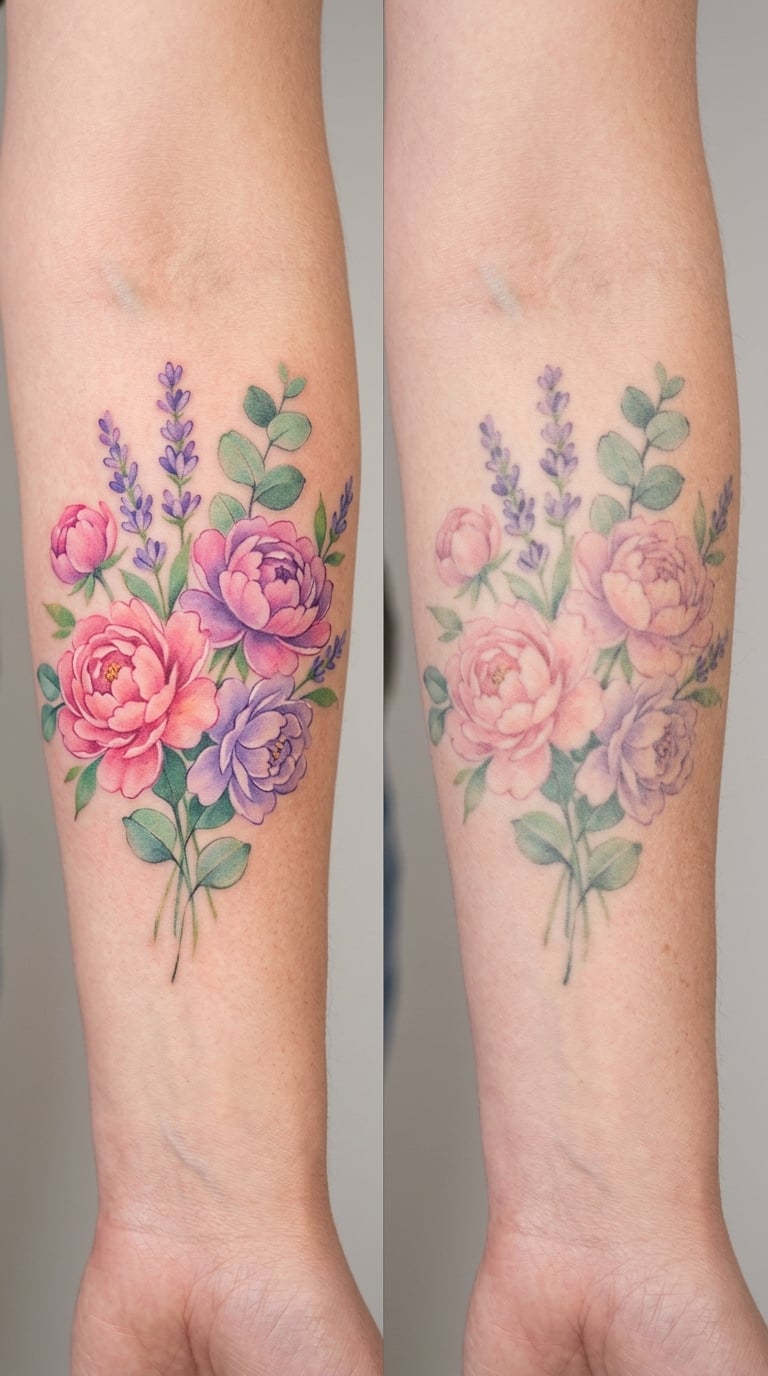
Owners posting time-lapse comparisons on r/agedtattoos tend to report exactly that: a watercolor shown fresh and again after 5 years, with the owner saying they were “super pleased with the way it has held up.” Another, posted at 14 years, describes a piece that “aged soft and pastel, kept its shape and color balance.”
The same thread set carries the unhappy reports too. One watercolor aged 7.5 years was described by its owner as a “bad combination for the longevity of color tattoos,” and an experienced commenter in an r/Seattle thread recommended against the standard style outright because it does not hold up well. The variable is rarely luck. It is pigment, placement, and sun.
What changed in the past decade of search results is that nobody agreed on a number. The pages ranking for this query gave a 5 to 10 year line with nothing behind it. Knowing the range matters less than knowing which lever moves it, which is why the rest of this guide is organised around factors you can actually control.
Why Watercolor Tattoos Fade at Different Rates
A watercolor tattoo is built from thin, translucent washes of ink placed closer to the surface of the skin, with little or no black outline holding the shape. That is the whole style, and it is also the durability problem. Solid black line work fades slower because it is packed with dense pigment; a wash has less pigment by design, so it has less to lose.
Seven factors decide how long yours lasts:
- Ink saturation. Heavily layered pigment holds color far longer than a single light pass. This is the biggest difference between a piece that ages well and one that turns to mush.
- Ink depth. Colour placed deeper in the dermis survives longer than colour sitting near the surface. A skilled watercolor tattooer controls this deliberately.
- Outlines and structure. A lineless design has nothing holding the edges, so soft edges blur toward each other as the years pass. Fine line work ages the same way, which is covered in our guide to why fine line tattoos fade faster.
- Sun exposure. Ultraviolet light breaks down pigment in tattoo ink. Sleeves and lower legs that see the sun daily will fade years faster than a covered piece.
- Placement and friction. Rubbing from clothing, shaving, swimming gear, and hand use wears at the surface faster than protected skin does.
- Skin type and skin care. Skin that regenerates quickly, and skin that gets regular exfoliation, tends to push pigment out faster over time.
- Aftercare. Sunscreen, a fragrance-free moisturiser, and following the artist’s own aftercare instructions add up over a decade of sun exposure.
One technique worth asking about is a subtle dark base layer beneath the colour. It is not visible as black, but it keeps the shape readable as the washes thin, so the design still reads as a shape instead of a smudge.
Watercolor Tattoo Longevity by Color and Style
Not all watercolors age the same way. Style matters as much as colour: a piece with fine structural line work will keep a recognisable shape long after its palest wash has gone.
| Style or element | Typical longevity | What happens as it ages |
|---|---|---|
| Black-and-grey watercolor | 10 to 20+ years | Deep greys hold longest; the softest wash at the edge goes first |
| Deep saturated colour, layered | 10 to 15 years | Shifts warm over time but keeps its balance |
| Mid-tone botanical pieces | 7 to 12 years | Petals soften, centres and stems stay legible |
| Abstract colour washes | 5 to 10 years | Large soft fields thin evenly; edges blur first |
| Fine-line watercolour details | 3 to 7 years | Hairline detail fills in, especially on hands and fingers |
| Pale pastels, pinks and yellows | 3 to 7 years | Least stable pigments; often the first colour to go |
On red specifically, expect a shift rather than a fade. Bright reds often warm toward orange or brick over a decade, so an artist who mixes in a little warmth from the start tends to land closer to where you pictured it.
Yellow and pink are the honest weak points. If a design lives or dies on them, ask your artist to build the shape in a darker tone underneath rather than letting the pale colour carry the whole motif.
Does Placement Change How Long a Watercolor Tattoo Lasts?
Yes, and often more than people expect. Two things wear at a tattoo: ultraviolet light and friction. Placement decides how much of each you get.
| Placement | Durability | Why |
|---|---|---|
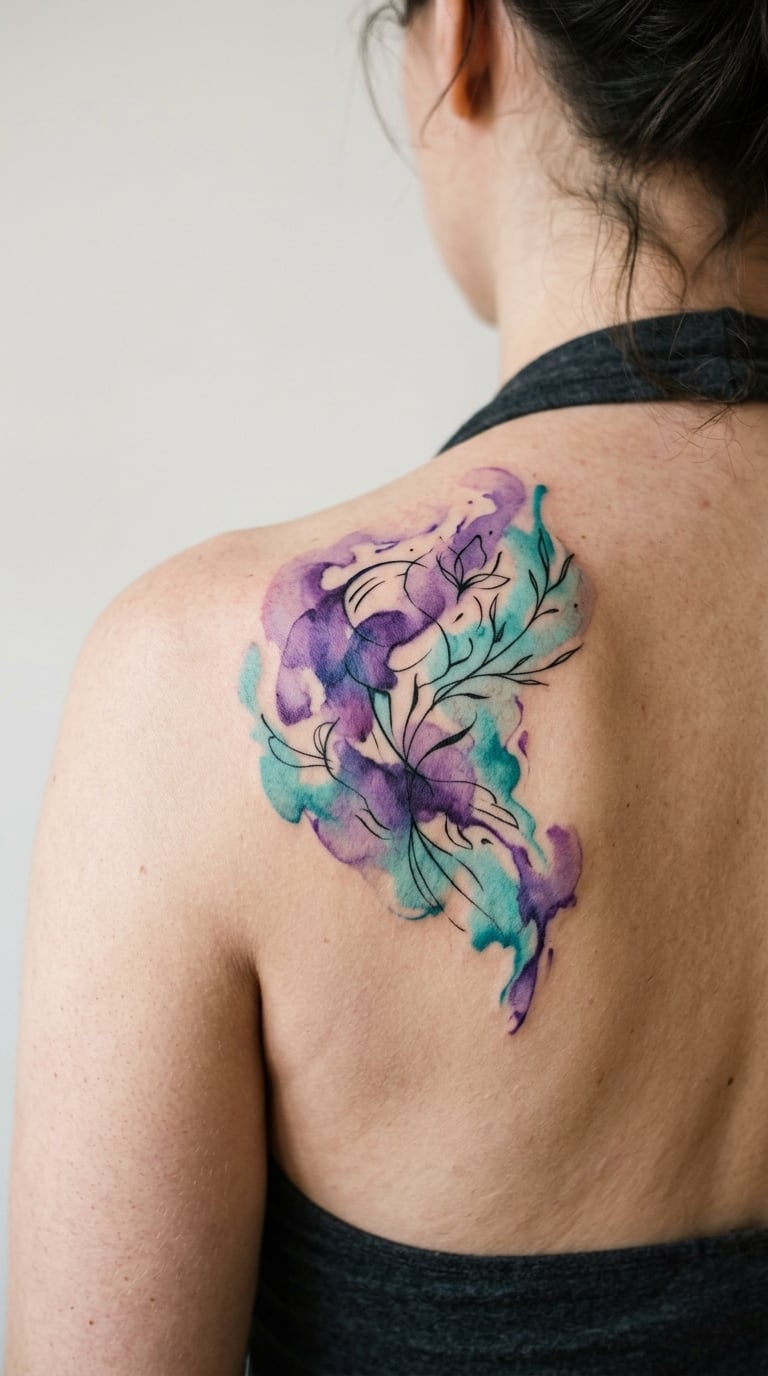
| Upper back, shoulders | Best | Covered by clothing, rarely rubbed |
| Inner upper arm, inner thigh | Very good | Sheltered skin, little sun or friction |
| Upper chest, ribs | Good | Often covered, but movement and sun add wear |
| Forearm, calf, lower leg | Fair | Frequent sun exposure, sleeves and shorts |
| Wrist, ankle | Fair to poor | Constant contact with shoes, watches, cuffs |
| Fingers and hands | Poorest | Constant use, washing, shaving, and heavy sun |
| Elbow and knee creases | Poorest | Skin folds and rubs on itself |
Worst of all are the finger and hand placements, where fine watercolour line work has the least room to survive. If that is where you want it, expect to refresh it, and keep the design small and simple.
How to Keep a Watercolor Tattoo Looking Sharp
Start with what your artist tells you during aftercare, because their instructions come from watching how your skin actually healed. Beyond that, the work is mostly habit.
Daily: put broad-spectrum sunscreen on exposed tattoos, reapply through the day, and keep a fragrance-free moisturiser in the shower. Skip scented lotions and anything with heavy oils.
Weekly: rinse gently in the shower instead of scrubbing, and avoid the tattoo while it soaks in a bath, a pool, or a hot tub. If you shave near the design, use a fresh blade and go with the grain.
Monthly and yearly: compare the piece against a fresh photo every year or two. Small changes are hard to notice in a mirror and obvious in a side-by-side. Bring that photo to your touch-up appointment.
Long term: consider long sleeves for the forearm and leg, and never skip sunscreen on a piece you want to keep. Friction from a watch band, bra strap, or waistband is easier to change than sun exposure.
What Does a Watercolor Tattoo Touch-Up Involve?
A touch-up is a second session where the artist rebuilds what softened, rather than redrawing the piece. For a watercolor that means re-laying the washed colour and cleaning up the edges that have blurred together.
It is worth doing when the design no longer reads clearly, when a dominant colour has thinned enough to shift the balance, or when the edges have merged so the motif has lost its shape. Waiting many extra years usually means more work, not less.
A partial refresh of one faded element can be a short visit. A full colour pass across a large piece is a longer session, often split across two appointments, because soft colour needs careful layering rather than one heavy pass. Your original artist knows how the washes were built; a different watercolor tattooer can work, but expect a conversation about the approach first.
How Much Does a Watercolor Tattoo Cost?
Watercolor pricing follows the same logic as any tattoo: size, detail, placement, and hours on the skin. A small single motif is usually one short session, while a large custom piece is billed by the hour across several sessions.
| Piece size | Typical US range | What it usually covers |
|---|---|---|
| Single motif, roughly 1 to 2 inches | $120 to $350 | One short session, simple wash |
| Medium piece, roughly 3 to 6 inches | $350 to $1,100 | Two to four hours of layered colour |
| Large custom piece, half sleeve or thigh panel | $1,200 to $4,000+ | Billed by the hour, usually split across sessions |
| Artist hourly rate | $80 to $250 | Higher in major cities and for artists who specialise in watercolour |
The detail level matters more than the area. Washes look fast but layering translucent colour takes repeated passes, and a piece with fifty blended gradients takes far longer than a solid black shape of the same size.
Artisan rates and shop minimums vary widely by city and by the artist’s training, and watercolor is a specialism, so you are usually paying for skill rather than just a design. When you book, ask what the session cost covers and what a revision would add, then budget for a refresh within about ten years.
Watercolor Tattoo Healing Timeline by Week
Almost every new tattoo looks too bright in the first week, and almost every one lightens a lot before it settles. That early settle-down is normal, not a fade.
| Time | What you are seeing |
|---|---|
| Days 1 to 3 | Redness, swelling, warm to the touch, ink sitting on the surface |
| Days 4 to 7 | Itching, flaking, a matte look, colour dropping noticeably |
| Weeks 2 to 3 | Flaking finishes, skin smooths, colour looks lighter and softer than day one |
| Weeks 4 to 6 | True settled stage begins; this is the colour you will live with |
| Months 2 to 6 | Small refinements as pigment shifts and the skin normalises |
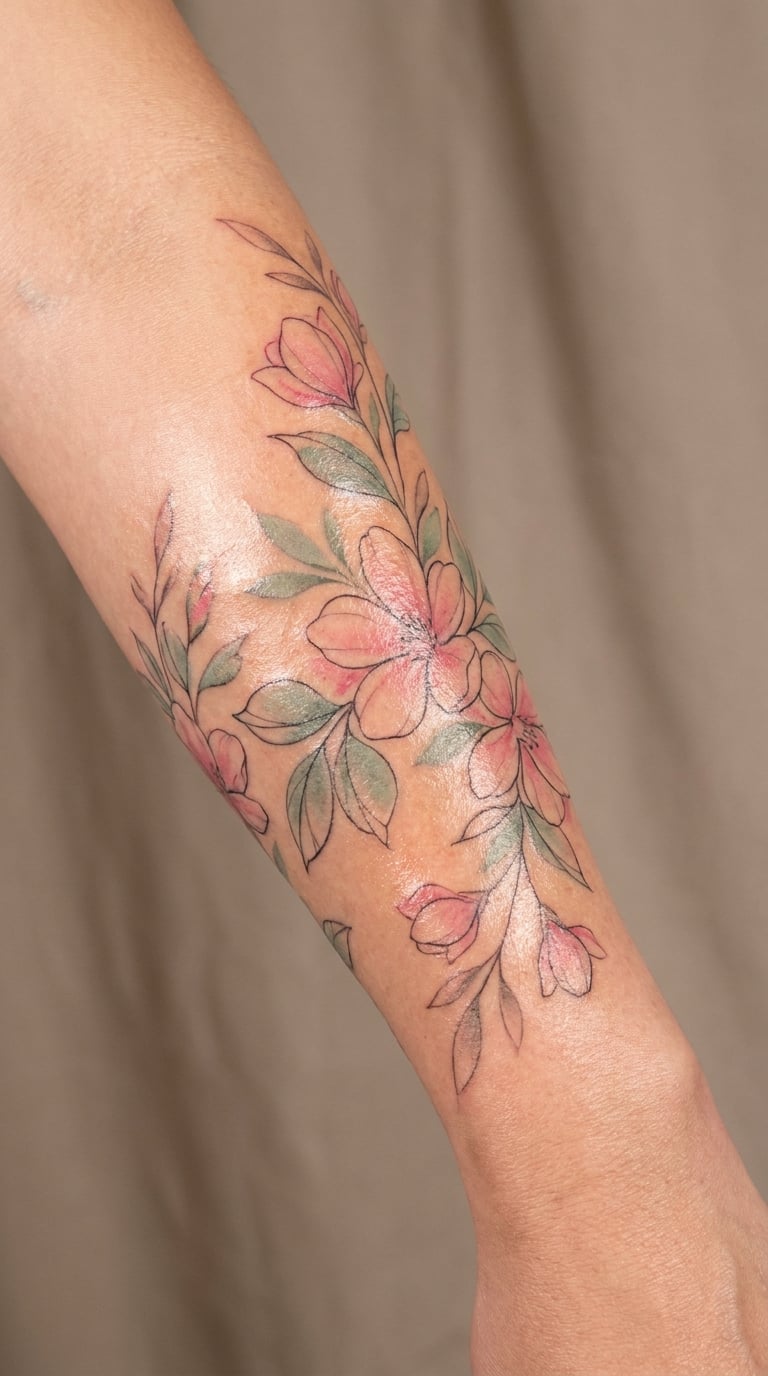
The point most people get wrong: the dramatic lightening in weeks one and two is the ink you never saw properly, not the ink you lost. Judge the piece at three months, not three weeks. If something still looks wrong at that point, contact your artist rather than guessing.
Pain Levels by Watercolor Tattoo Placement
Watercolor is often described as more uncomfortable than other styles for a structural reason. Thin washes mean repeated passes over the same skin, and the shallower the pass, the more it stings.
| Placement | Typical level | Notes |
|---|---|---|
| Inner upper arm, thigh | Low | Thicker skin, easy sessions |
| Upper back, shoulder | Low to moderate | Large muscle, easy to sit still for |
| Calf, forearm | Moderate | Bone and tendon make it stingier |
| Ribs, sternum, side | Moderate to high | Bony and uncomfortable while breathing |
| Wrist, ankle, collarbone | High | Thin skin over hard structure |
| Elbow, knee, fingers | Highest | Creases, knuckle bone, very little padding |
Your tolerance, the hours on the skin, and the artist’s hand all matter more than the placement list. Watercolor also tends to mean a longer session, so a low-pain spot on the ribs is often worse overall than an easy forearm.
How to Tell If a Watercolor Tattoo Needs Attention
Healing fade and true fade get confused constantly, so separate them clearly. The healing phase runs the first four to six weeks: the design goes matte, sheds flakes, and loses roughly a third of its apparent brightness before it settles.
True fade is different. It shows up slowly, over years, and it changes the piece rather than just the finish. Watch for colour that has lost its balance, edges that have merged into a soft blur, and detail work that has filled in and no longer reads.
Signs worth booking an appointment for: patchiness that was not there before, a motif you cannot identify from across the room, an outline that has broken up, or a colour that has shifted so much the piece no longer feels like yours. Take dated photos so the change is documented.
Some softening is normal and many owners come to like it. A faded no-black piece is also easier to live with than a tired black one, which is something tattooers in r/tattoos point out as a genuine upside.
Mistakes to Avoid
- Judging an artist by fresh photos. Look at healed work on skin with similar tone and sun exposure, ideally pieces several years old.
- Choosing a high-friction spot for delicate work. Fingers, elbow creases, and ankles are the worst possible homes for fine watercolour detail.
- Skipping sunscreen once it heals. Most fade in the first decade comes from ultraviolet light, not from the tattoo itself.
- Overworking the skin. Repeated layers, scrubbing, and itch-picking during healing all set you back.
- Assuming it will never fade. Expecting a wash to stay exactly as vivid as day one is how people end up disappointed.
- Waiting a decade to ask about a touch-up. A partial refresh is far easier than rebuilding a fully softened piece.
- Reading horror stories as the average. The strongest complaints come from pieces on hands, in heavy sun, or with almost no base pigment.
Frequently Asked Questions
Do watercolor tattoos fade easily?
They fade faster than solid black or traditional line work, mostly because the style uses thin translucent washes rather than dense packed pigment. Expect the palest areas and the softest edges to go first, while darker layered sections and any structural blackwork hold far longer. Placement and sun exposure decide how quickly that happens.
Is it normal for my tattoo to start fading after a year?
Some change after a year is normal, and softening is part of how a watercolor settles. A piece that looks vivid on day one should still be visible in its final form by about three months. Real problems look different: patchiness, merged edges, a design that has lost its shape, or colour that has shifted enough to change the balance.
Which tattoo colors last the longest?
Black and deep grey hold the best, followed by strongly saturated shades that were layered in. Pinks, yellows, and light pastels are the least stable and usually fade first. Reds tend not to fade away but warm toward orange or brick, so an artist who mixes warmth in early tends to hit the intended tone and hold it longer.
Do watercolor tattoos hurt more than other styles?
Often yes, and the reason is technique rather than placement. Watercolor means thin, shallow, repeated passes over the same area instead of one solid packing pass, and shallow passes sting more. Long sessions on bony areas like the ribs or collarbone can be the toughest, so a fleshy spot on the upper arm is easier overall.
Can a faded watercolor tattoo be fixed?
Usually, yes. A touch-up rebuilds the softened colour and reopens the blurred edges without redrawing the whole design, and a partial refresh of one faded element can be a short visit. A large piece that has lost its shape may need more hours or a redesign, so bring a fresh photo and a dated old one to the consultation.
What to Do First
Find a watercolor artist whose healed work matches the placement you want, and ask them how they plan for fading before you commit. If you take one thing from this guide, let it be that: an artist who layers pigment and builds shape underneath will get you a decade, and one who does not will not, regardless of how good the portfolio photo looks.
So, how long do watercolor tattoos last? Five to 15 years, with the shortest lives on sun-exposed, high-friction skin and the longest on protected placements with saturated colour. Then follow the aftercare your artist gives you, and photograph the piece once a year so you catch softening while a touch-up is still a small job.