22 Abstract Tattoo Ideas (2026): Simple, Striking Designs to Try
Vini
September 30, 2026
Table Of Contents
These 22 abstract tattoo ideas work because they show feeling instead of describing a thing. An abstract tattoo is body art built from lines, shapes, colour and movement, composed free-form so it never settles into a subject anyone can name. It is the one style that belongs entirely to the person wearing it.
Most people who land here want a tattoo that says something without spelling it out, and that is exactly what abstract work is good at. What makes one succeed on skin is contrast, a clear focal point and a line weight the artist is confident holding for years, not the cleverness of the original concept. Bring references of the mood you like, then let the composition get built around your placement.
22 Abstract Tattoo Ideas: Quick Guide
Idea
Style
Best placement
Size
Pain
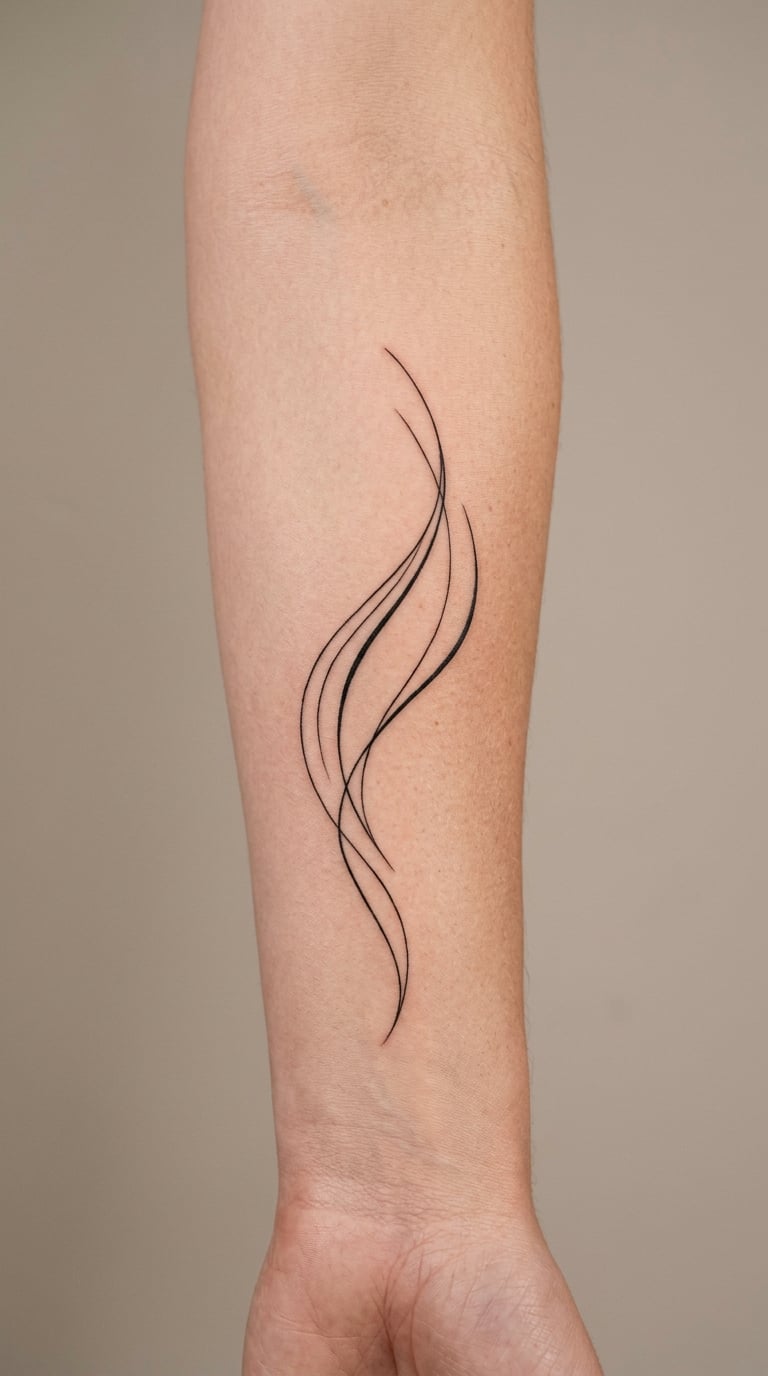
1. Flowing abstract lines
Fine line, gestural
Inner forearm
3-5 in (8-13 cm)
Low
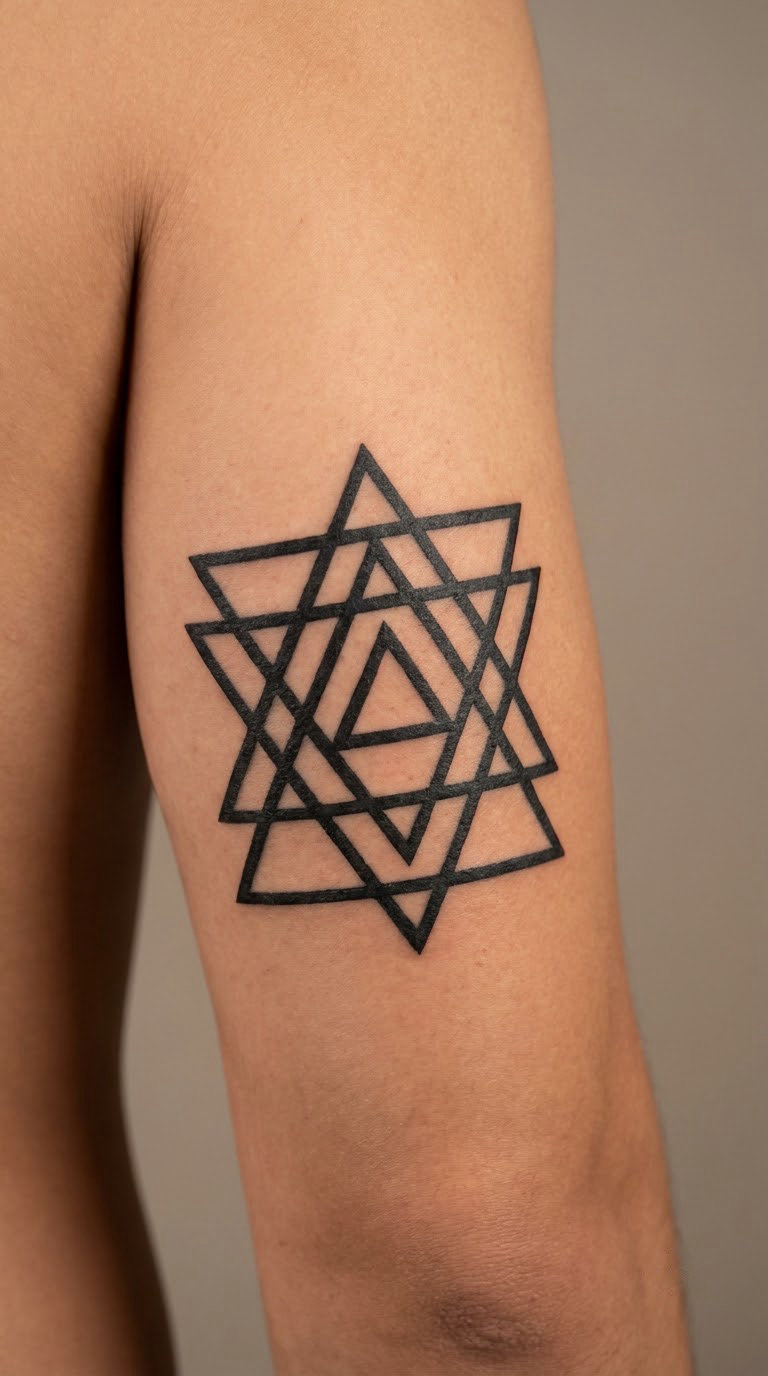
2. Geometric abstract triangles
Geometric abstraction
Outer upper arm
3-4 in (8-10 cm)
Medium
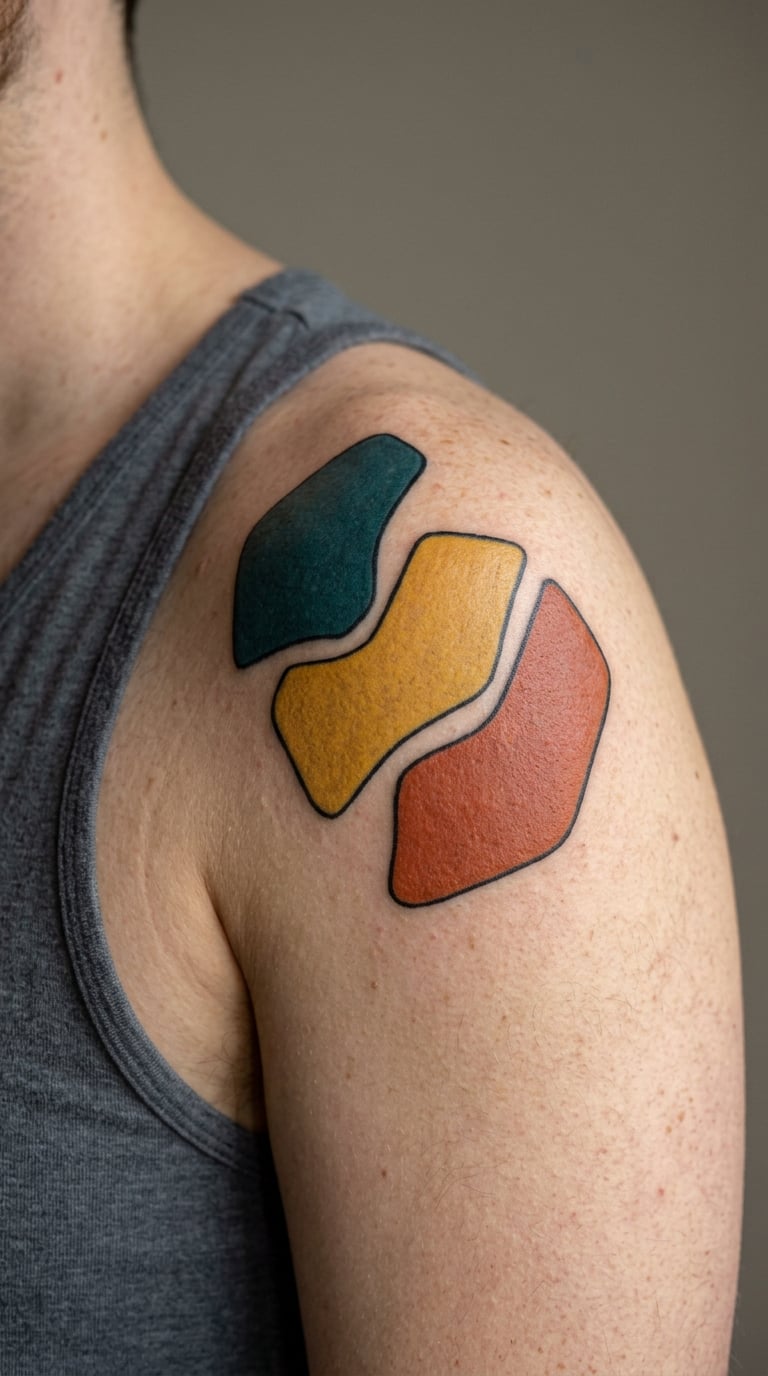
3. Abstract color blocks
Color field, illustrative
Upper shoulder
4-6 in (10-15 cm)
Medium
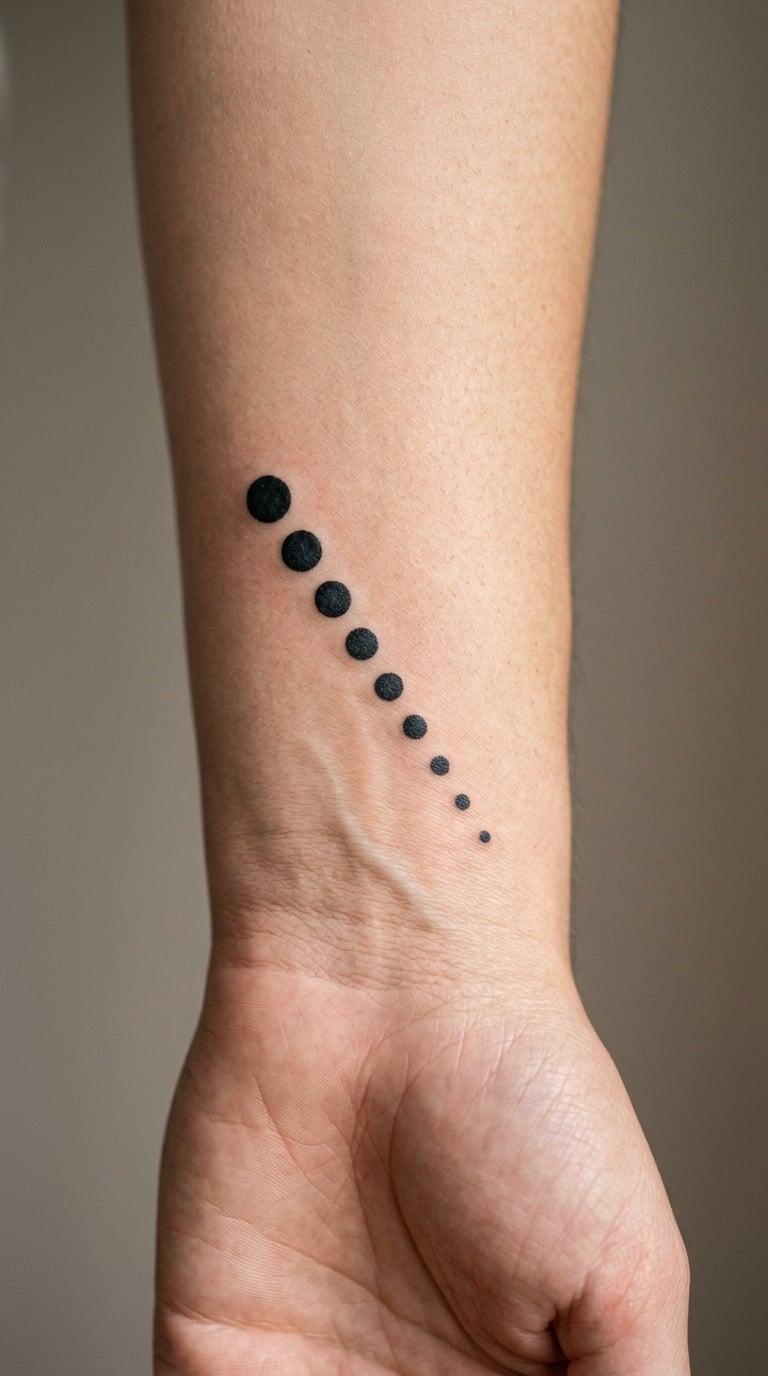
4. Minimalist abstract dots
Minimalist, dotwork
Inner wrist
1-2 in (3-5 cm)
Medium
5. Abstract ink wash
Black and grey wash
Forearm
4-6 in (10-15 cm)
Medium
6. Interlocking abstract shapes
Blackwork abstraction
Upper arm
5-7 in (13-18 cm)
High
7. Abstract ribbon curve
Fine line and solid black
Side of forearm
3-5 in (8-13 cm)
Low
8. Distorted grid
Fine line, geometric
Side of torso
5-7 in (13-18 cm)
High
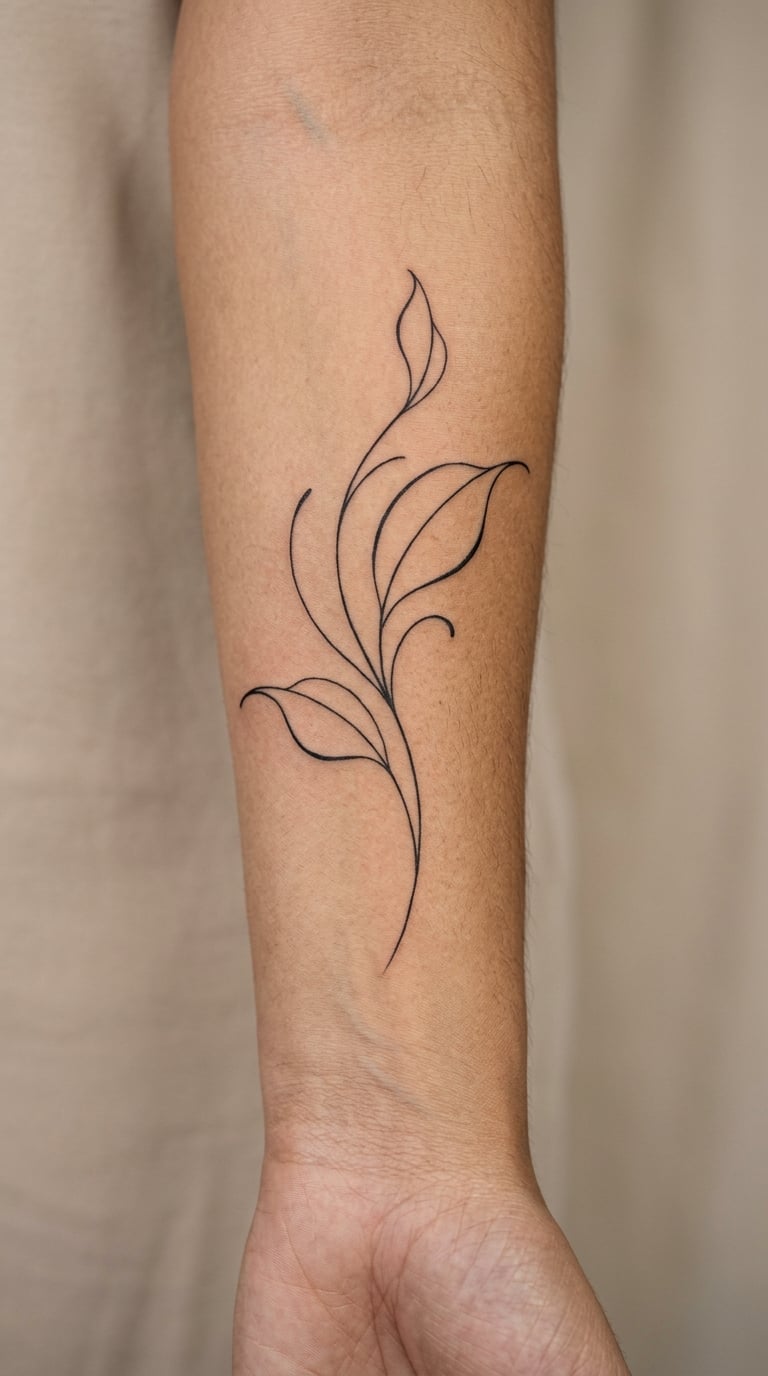
9. Abstract botanical forms
Fine line botanical
Inner forearm
3-4 in (8-10 cm)
Low
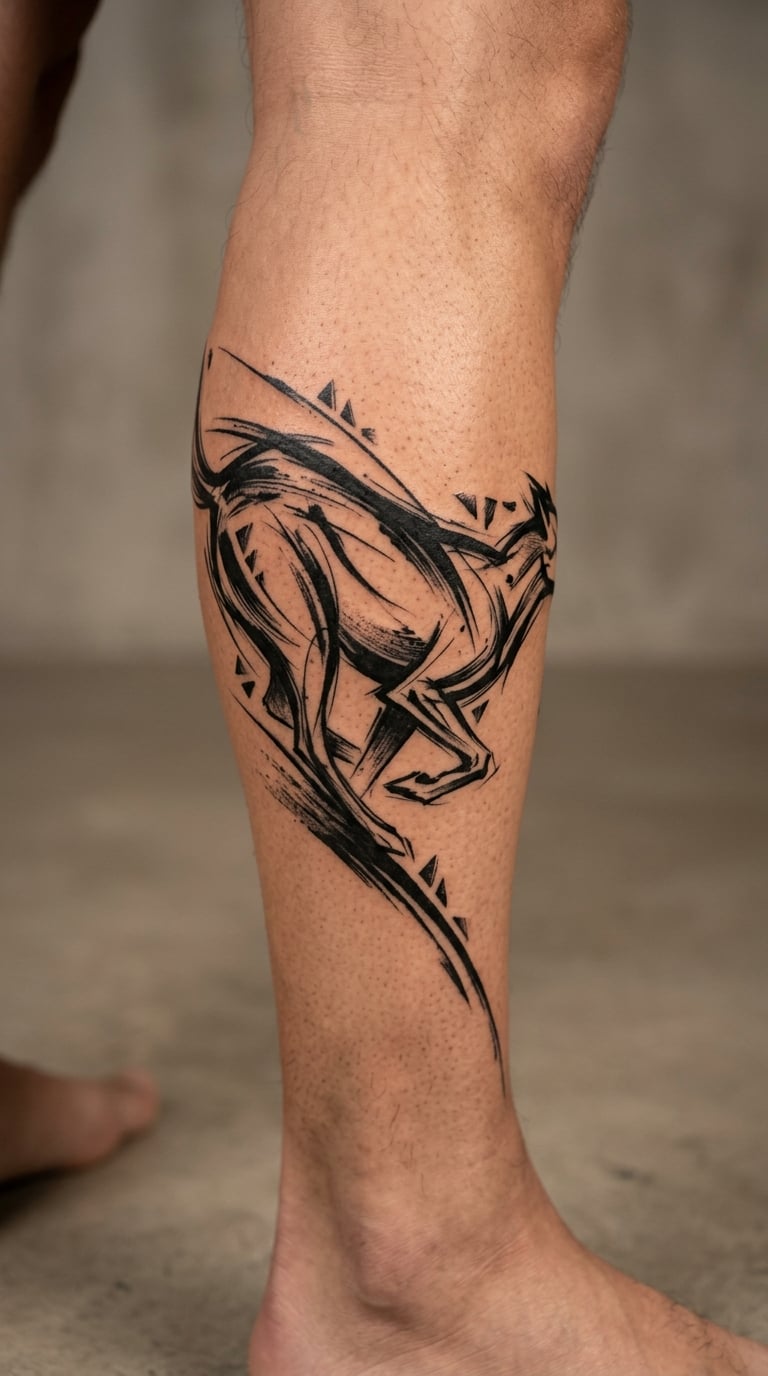
10. Abstract animal motion
Gestural brushwork
Calf
4-6 in (10-15 cm)
Medium
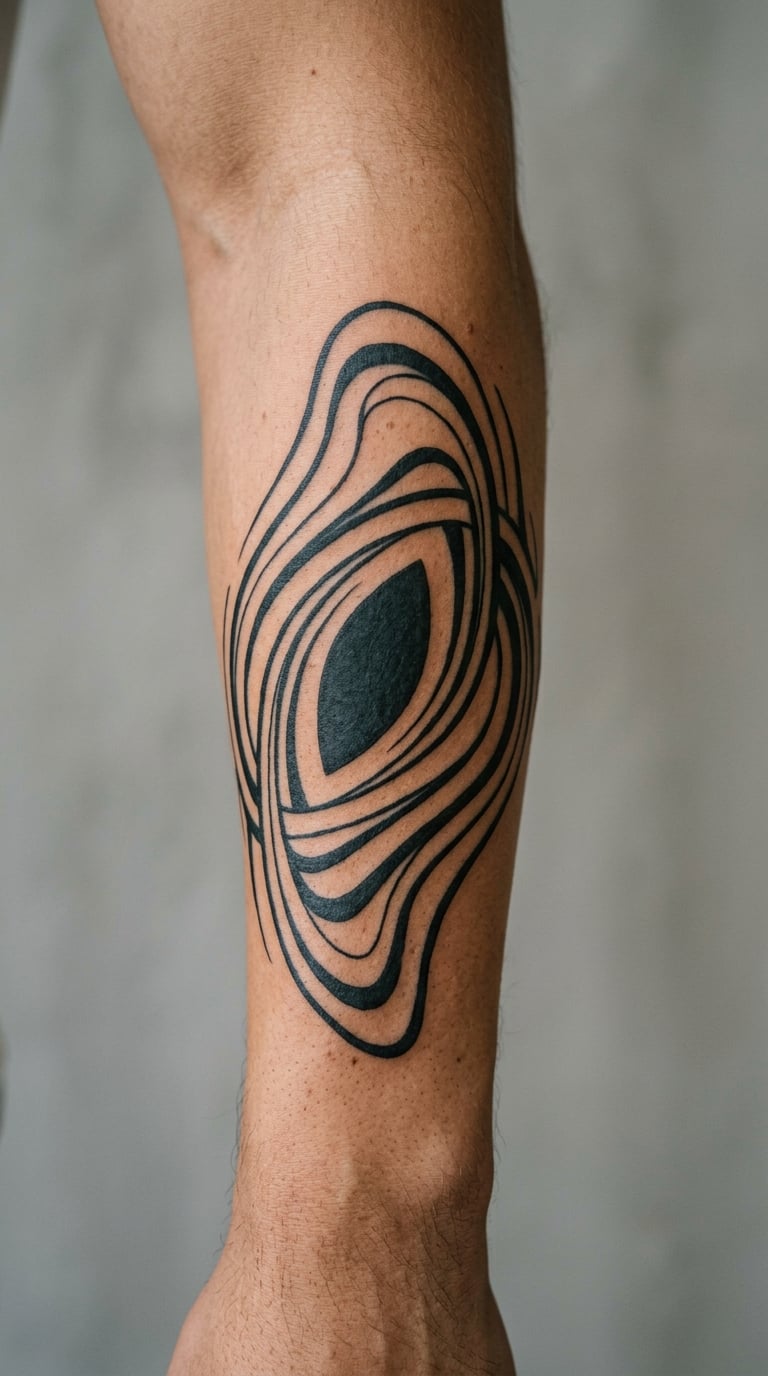
11. Abstract eye-like forms
Bold line, symbolic
Forearm
3-4 in (8-10 cm)
Medium
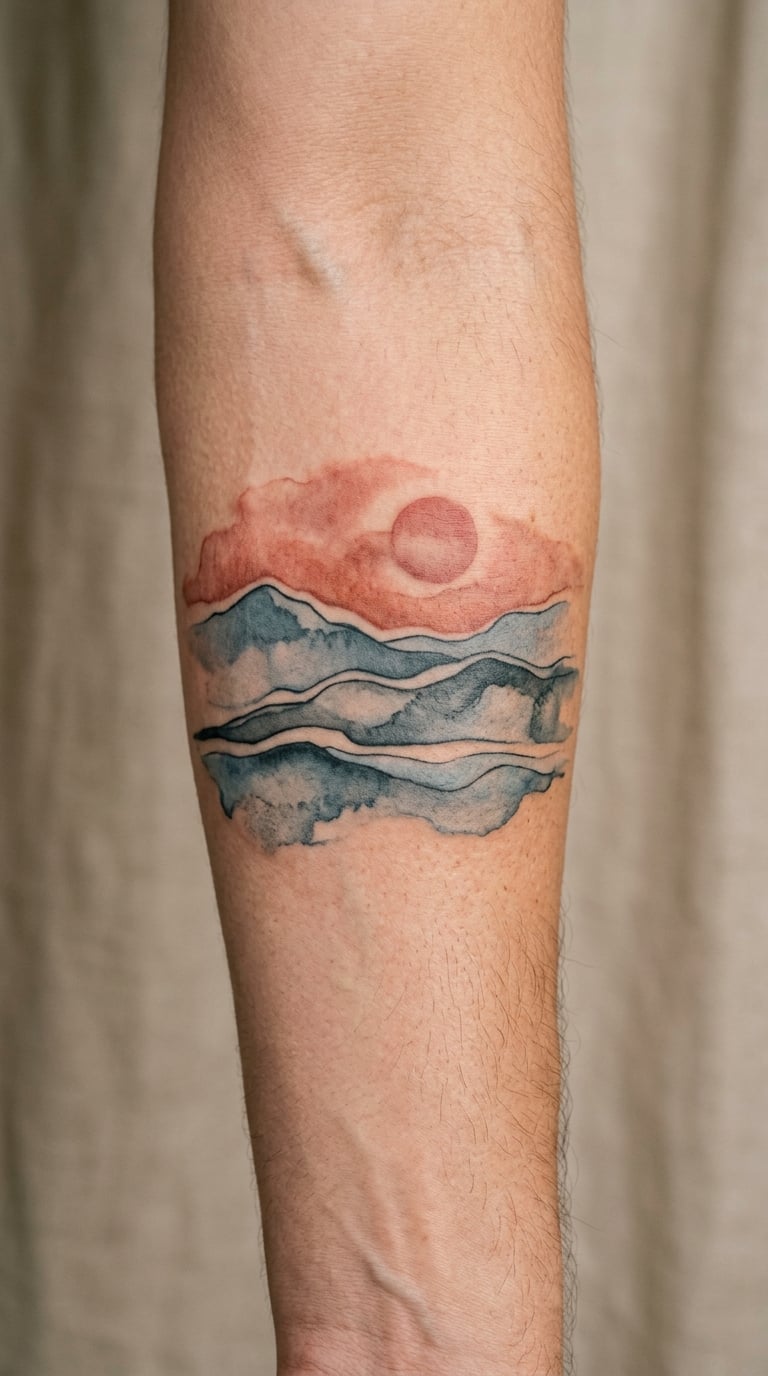
12. Abstract horizon bands
Watercolor, illustrative
Forearm
4-5 in (10-13 cm)
Low
13. Abstract blackwork block
Blackwork
Upper arm
2-3 in (5-8 cm)
High
14. Abstract dotwork field
Dotwork, shading by density
Forearm
5-8 in (13-20 cm)
High
15. Abstract linear portrait fragment
Fine line, minimal
Side of forearm
2-3 in (5-8 cm)
Low
16. Abstract orbit pattern
Clean line, geometric
Upper arm
2-3 in (5-8 cm)
Medium
17. Abstract fracture lines
Fine line, angular
Forearm
2-4 in (5-10 cm)
Medium
18. Abstract soft geometry
Muted line and grey
Inner arm
2-4 in (5-10 cm)
Low
19. Abstract drip and pool
Black and grey wash
Forearm
3-5 in (8-13 cm)
Medium
20. Abstract folded planes
Blackwork, illustrative
Upper arm
4-6 in (10-15 cm)
High
21. Abstract wave rhythm
Minimalist fine line
Forearm
4-6 in (10-15 cm)
Low
22. Abstract freeform sculpture
Freeform abstraction
Upper arm
6-10 in (15-25 cm)
High
1. Flowing Abstract Lines
Three single-needle curves that rise, dip and cross once, with plenty of skin showing between them. Nothing is shaded and nothing is filled, so the design reads as motion rather than an object.
People pick this because it looks considered from across a room but rewards a close look. It is the safest of the 22 abstract tattoo ideas for someone who wants their first piece to be quiet rather than loud.
Placement: Inner forearm, from wrist crease to mid-forearm, or along the inner bicep. Size: 3-5 in (8-13 cm) long. Style: Fine line, gestural mark-making. Pain: Low on the inner arm, though the wrist crease and inner elbow sting more than the middle. Fine hairlines on the wrist and hands soften noticeably within a few years, so ask for a slightly heavier line weight. Make it yours: Set the curves to the length of a stretch of your own handwriting.
2. Geometric Abstract Triangles
Overlapping triangles built from straight ruled lines, with a few edges deliberately left open so the shape never quite closes. The gaps are the point; a complete set of closed triangles just looks like a diagram.
This direction suits people who like order and repetition but find strict geometry cold. Breaking the grid every few lines gives the same visual discipline with a bit of air in it.
Placement: Outer upper arm, shoulder blade or the flat of the calf. Size: 3-4 in (8-10 cm) across. Style: Geometric abstraction. Pain: Medium, worse over the outer arm near the shoulder. Hairline triangles will blur and merge with each other over time, so keep each shape at least a few millimetres wide. Make it yours: Add one triangle filled solid black while the rest stay open, and let that one mark hold the whole piece together.
3. Abstract Color Blocks
Three or four flat, uneven-edged blocks of muted colour, each outlined with a thin black line, sitting side by side without touching. The gaps between them do as much work as the colour does.
Colour changes what abstract work feels like. Black ink reads as serious and graphic, while blocks of teal, rust or mustard read as human and worn rather than formal, so pick the palette by mood, not by trend.
Placement: Upper shoulder, upper arm or across the chest. Size: 4-6 in (10-15 cm) wide. Style: Color field with illustrative outlining. Pain: Medium; large colour fills take longer and get more uncomfortable than line work. Muted tones hold better than pale pastels, and sunlight will warm any rust or mustard shade over time. Make it yours: Use two colours pulled from a place that matters to you, and keep the rest of the palette quiet.
4. Minimalist Abstract Dots
A handful of dots, maybe seven to twelve, stepped in size from small to large and set on a diagonal. Spacing is planned so the eye travels along the row instead of seeing a random scatter.
This is the most discreet of the 22 ideas and the easiest to hide at work. It also gives an artist a very small canvas, which usually means a short sitting and less chance of a detail going wrong.
Placement: Inner wrist, behind the ear, collarbone or along a finger. Size: 1-2 in (3-5 cm). Style: Minimalist dotwork. Pain: Medium; wrist and finger dots are quick but the skin there is thin and reactive, and fingers swell for a day or two. Dots on the hand and wrist are the first thing to fade on a hand, so plan on a touch-up after a few years. Make it yours: Let the dot sizes follow the count of people or years that matter, then add the smallest dot as a date in numbers rather than a name.
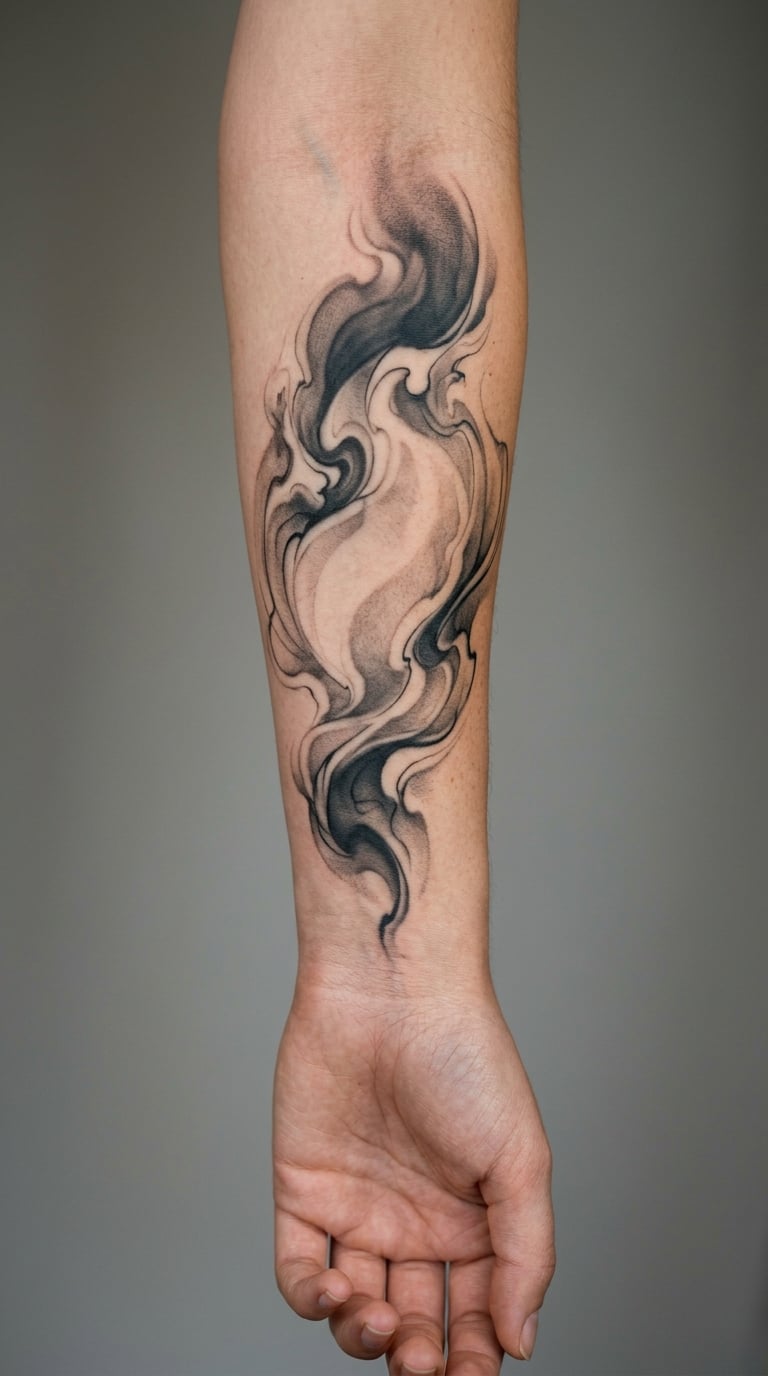
5. Abstract Ink Wash
Diluted black ink laid down in soft grey clouds, with a pale open area near the centre so the skin itself becomes the light source. There is no edge to trace and no subject to identify, only density.
People choose this when they want a tattoo that looks like a painting rather than a drawing. It suits scars and sun-damaged skin better than most styles, because the gradient has no hard boundary to sit badly against.
Placement: Forearm, upper arm or the back of the calf, where there is room for the wash to spread. Size: 4-6 in (10-15 cm). Style: Black and grey wash, soft shading. Pain: Medium and slow; layering grey means repeated passes over the same skin, which tests patience more than pain. Light greys in sun-exposed areas fade first, so the pale centre will be the part that changes most. Make it yours: Have the composition built around a real texture you like, such as a photograph of weathered wood or crumpled paper, and keep the reference hidden from anyone who sees the tattoo.
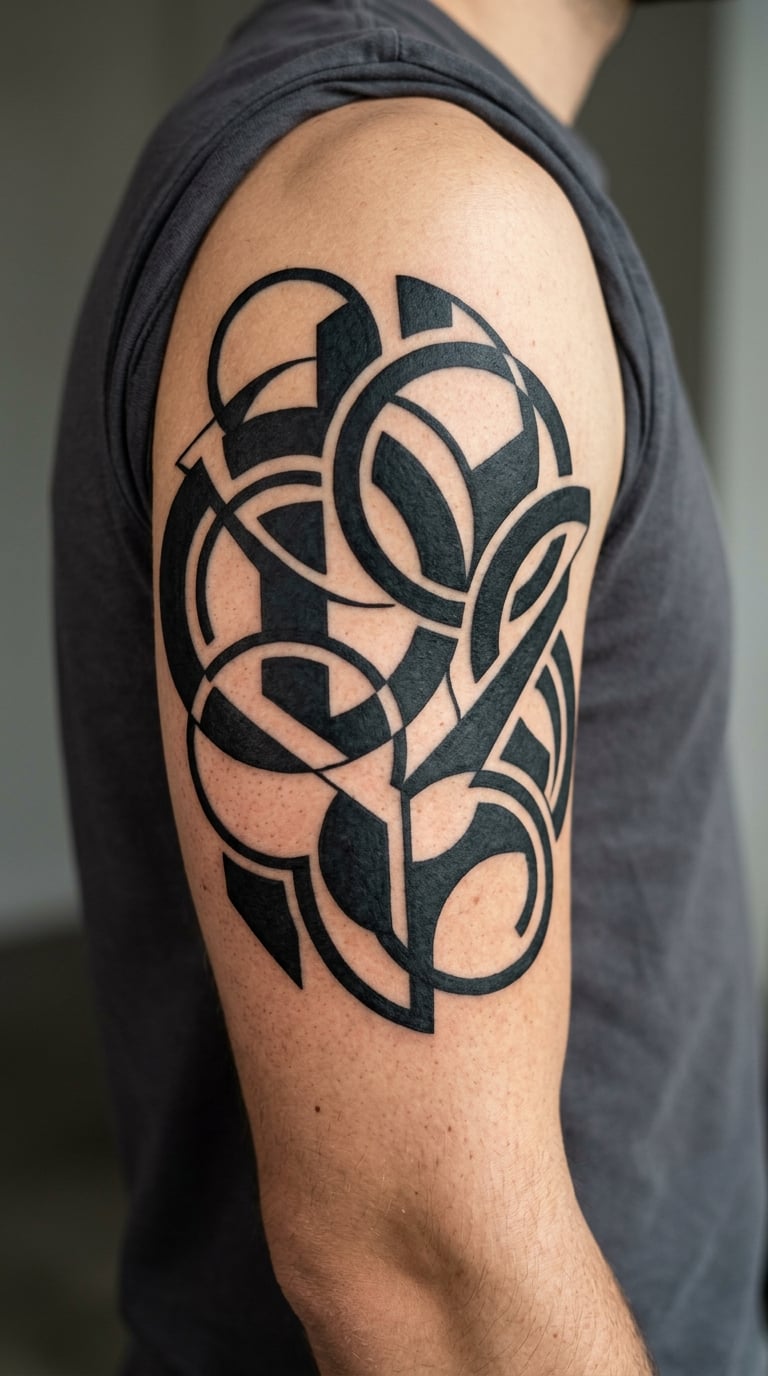
6. Interlocking Abstract Shapes
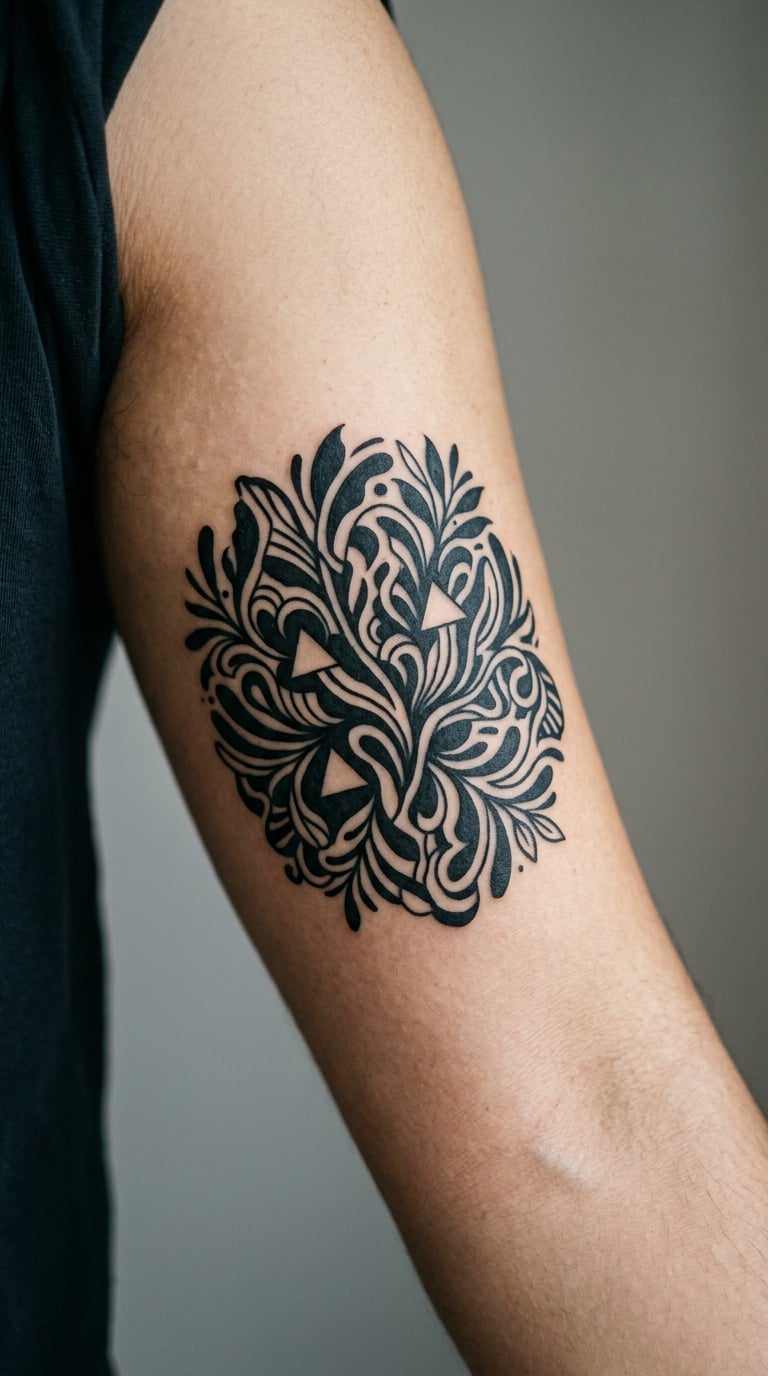
Circles, arcs and hard angular blocks woven through each other so that one shape appears to pass over another. Some sections are filled solid, which is what keeps the piece from turning to mush over time.
This is the statement option in the list. It reads clearly at a distance, sits well under a sleeve, and gives an artist plenty to work with if you want the design to grow into a larger piece.
Placement: Upper arm, thigh or across the shoulder blade. Size: 5-7 in (13-18 cm). Style: Blackwork abstraction. Pain: High, and the session is long. Heavy black fills need several passes, and dense areas often feel more uncomfortable than thin ones. Solid blocks hold their edges far longer than line-only pieces, so this is the design to choose if longevity matters most to you. Make it yours: Decide the one shape you want to repeat most, then have every other form orbit that shape rather than sitting beside it.
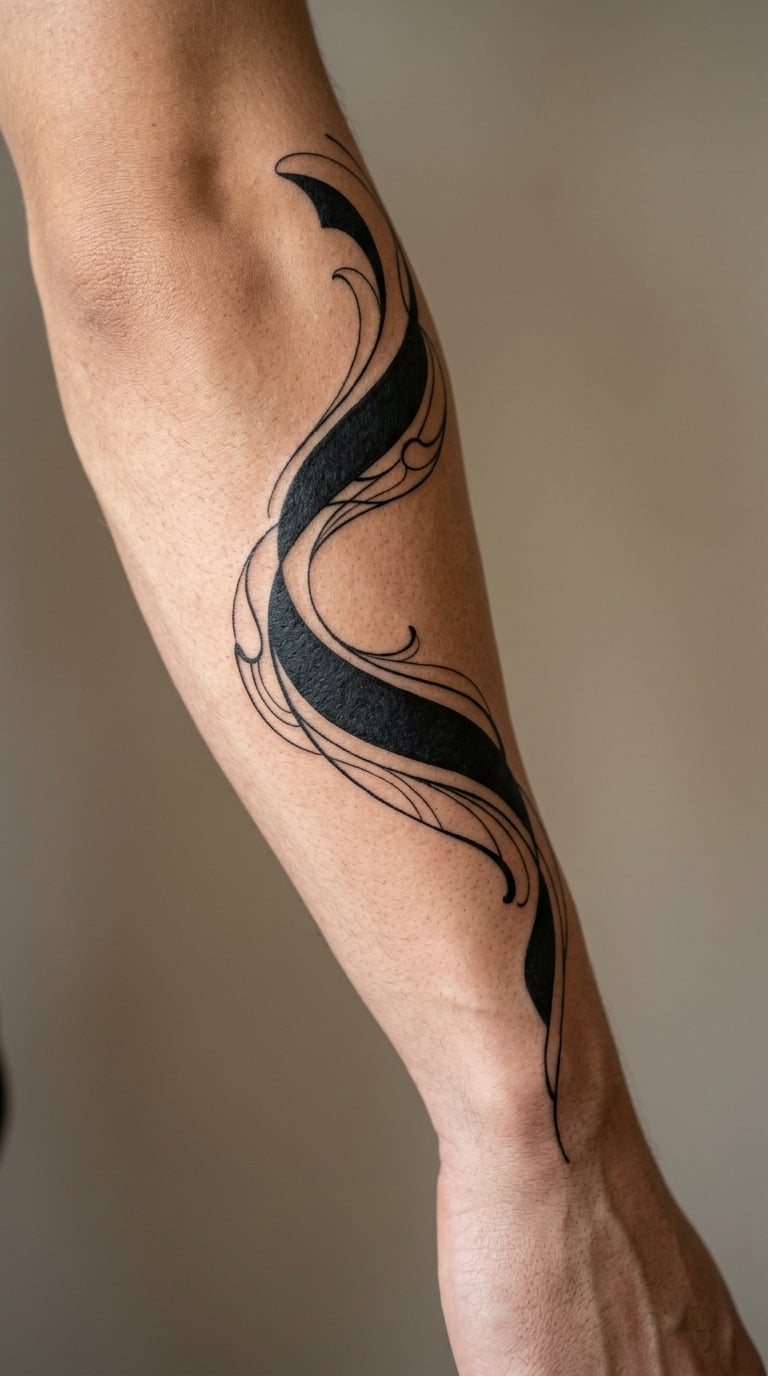
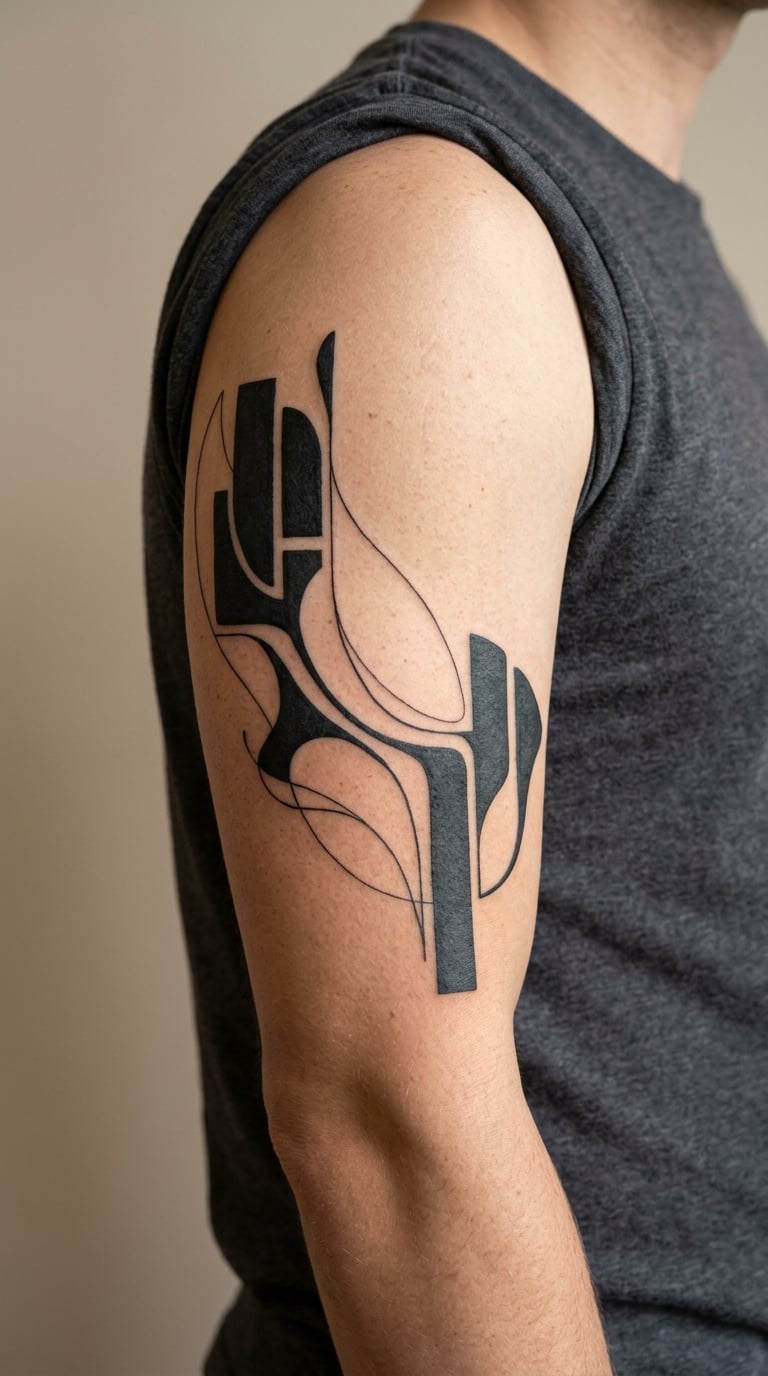
7. Abstract Ribbon Curve
A single band that appears to twist as it travels, built from alternating solid black stretches and open line edges. Where the band turns, the two edges cross so the shape reads as folding over itself.
It looks like one object without ever being one, which is the appeal for anyone who likes logic and a bit of a trick. The design also follows the body’s curve well, so it sits flatter than a block-based piece.
Placement: Side of the forearm, wrapping toward the wrist, or across the collarbone. Size: 3-5 in (8-13 cm) long. Style: Fine line with solid black accents. Pain: Low, though solid sections bring it up a little past a line-only piece. The fine edges are the vulnerable part and will soften first, so ask for them at a consistent weight rather than hairlines. Make it yours: Have the ribbon start solid at one end and fade to pure line by the other, which quietly tracks a transition in your life.
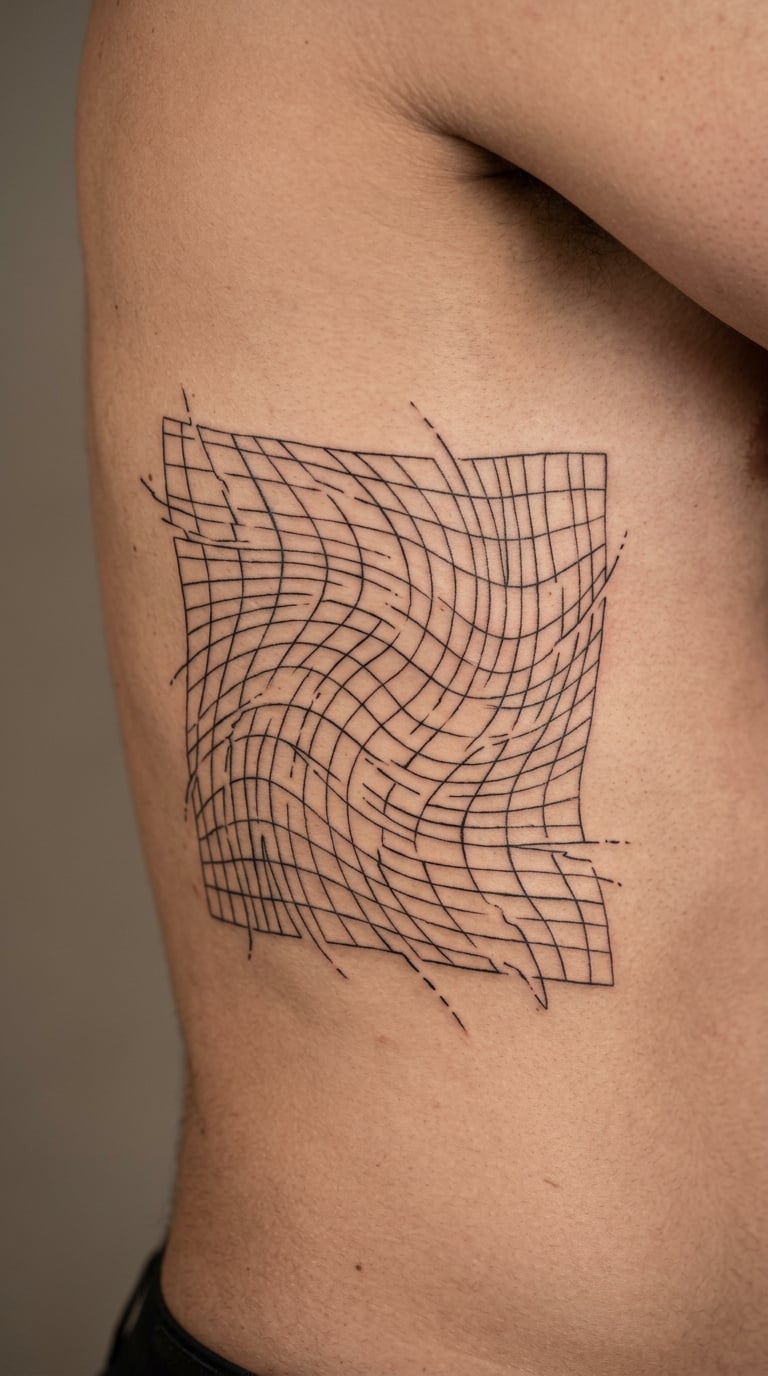
8. Distorted Grid
A rectangular grid that warps as it travels, with lines sliding out of parallel and a handful of segments simply left unfinished. The eye keeps checking the alignment, which is where the visual tension comes from.
This one suits people who like the discipline of a grid and enjoy watching it come apart. It is one of the more ambitious pieces here, so it is worth booking an artist who does freehand composition regularly.
Placement: Side of the torso, ribs or lower back. Size: 5-7 in (13-18 cm). Style: Fine line geometric abstraction, freehand. Pain: High, especially over the ribs. Many fine parallel lines need more passes and more time than the simplicity of the design suggests, and the broken sections are finished by hand rather than ruled. Make it yours: Break the grid in a pattern that means something, such as one missing column for each year, and no one else will read it the same way.
9. Abstract Botanical Forms
Leaves and stems reduced to their curves, drawn as single lines with no veins or texture. The shapes are recognisably plant-like but arranged so they never resolve into a flower arrangement.
It is a quiet way to carry something outdoors with you without the piece reading as a conventional floral tattoo. Those lines suit people who want nature on skin but not the finished look of a botanical illustration.
Placement: Inner forearm, the ribcage, or behind the ear. Size: 3-4 in (8-10 cm). Style: Fine line botanical abstraction. Pain: Low, and short. Single-needle stems on the inner arm are among the most comfortable spots on the body. Make it yours: Sketch the leaf shape from a plant that grows near where you grew up, and let the stems lean the way that plant actually grows rather than straight up.
10. Abstract Animal Motion
Sweeping brush lines and a scatter of fragmented triangular marks that suggest something running, turning or mid-leap, without drawing the animal at all. Direction is everything here; get the movement right and the subject is obvious to the person wearing it.
Collectors who are tired of literal wildlife designs tend to land here. It gives you the energy of an animal piece with none of the portraiture to maintain.
Placement: Calf, outer thigh or the ribs along the body line. Size: 4-6 in (10-15 cm). Style: Gestural brushwork with geometric fragments. Pain: Medium; calf work is uncomfortable near the shin but the muscle above it is manageable. Small triangular fragments blur together within a few years, so a good artist will space them wider than a reference image suggests. Make it yours: Give the composition a direction, forward or backward along the limb, and make the marks tighter on the trailing side for a sense of speed.
11. Abstract Eye-Like Forms
A central almond shape ringed by uneven concentric curves, with short radiating marks outside them. Without an iris or lashes it stays abstract, but almost everyone reads it as an eye first.
That ambiguity is the reason people choose it. Some wear it for watchfulness or attention, others purely because it is a strong shape, and both reasons hold up.
Placement: Forearm, upper back or the back of the hand. Size: 3-4 in (8-10 cm). Style: Bold line abstraction with light shading. Pain: Medium, and the inner forearm version is more sensitive than the outer. Concentric line rings are the first element to close up on each other as the skin ages, so a wider gap between each curve pays off over time. Make it yours: Add a third and fourth ring that break away from the circle, so the design opens outward rather than closing in on itself.
12. Abstract Horizon Bands
Horizontal bands stacked like layers of distance, with a small muted red circle for a sun or moon and soft contour washes between the bands. It reads as scenery until someone asks you where it is, and then the answer is a place you chose.
It is a good compromise for people who want a colourful tattoo without a full sleeve of colour. The washes soften as they age, so plan the composition so it still works when the colour is quieter.
Placement: Forearm, calf or across the back of the shoulder. Size: 4-5 in (10-13 cm) tall. Style: Watercolor with illustrative bands. Pain: Low to medium; shading in layers takes time but the sensation stays mild. Watercolor sits close to the surface, so this is the style that shows sun damage soonest, and pale contour lines will be the first to disappear. Make it yours: Use the horizon layout of a real view you have stood in, and put the red circle exactly where the sun actually sat that day.
13. Abstract Blackwork Block
A compact patch of dense black organic shapes with three small cutouts of bare skin punched through it. The white spaces are what stop the block from reading as a solid blob.
This is the smallest design in the list that still has real visual weight, which makes it a good first piece for anyone who finds minimal line tattoos too faint. It holds its shape better than almost anything else here.
Placement: Upper arm, outer thigh, or a flat area of the back. Size: 2-3 in (5-8 cm). Style: Blackwork, solid fill. Pain: High for its size, because solid black means repeated passes over the same patch. Placement near the elbow or knee hurts noticeably more than the same design on the outer arm. Solid fill is the most durable option in this whole list; only the thin cutout edges soften with time. Make it yours: Shape the three cutouts as initials or as the outline of something only you would recognise at that size.
14. Abstract Dotwork Field
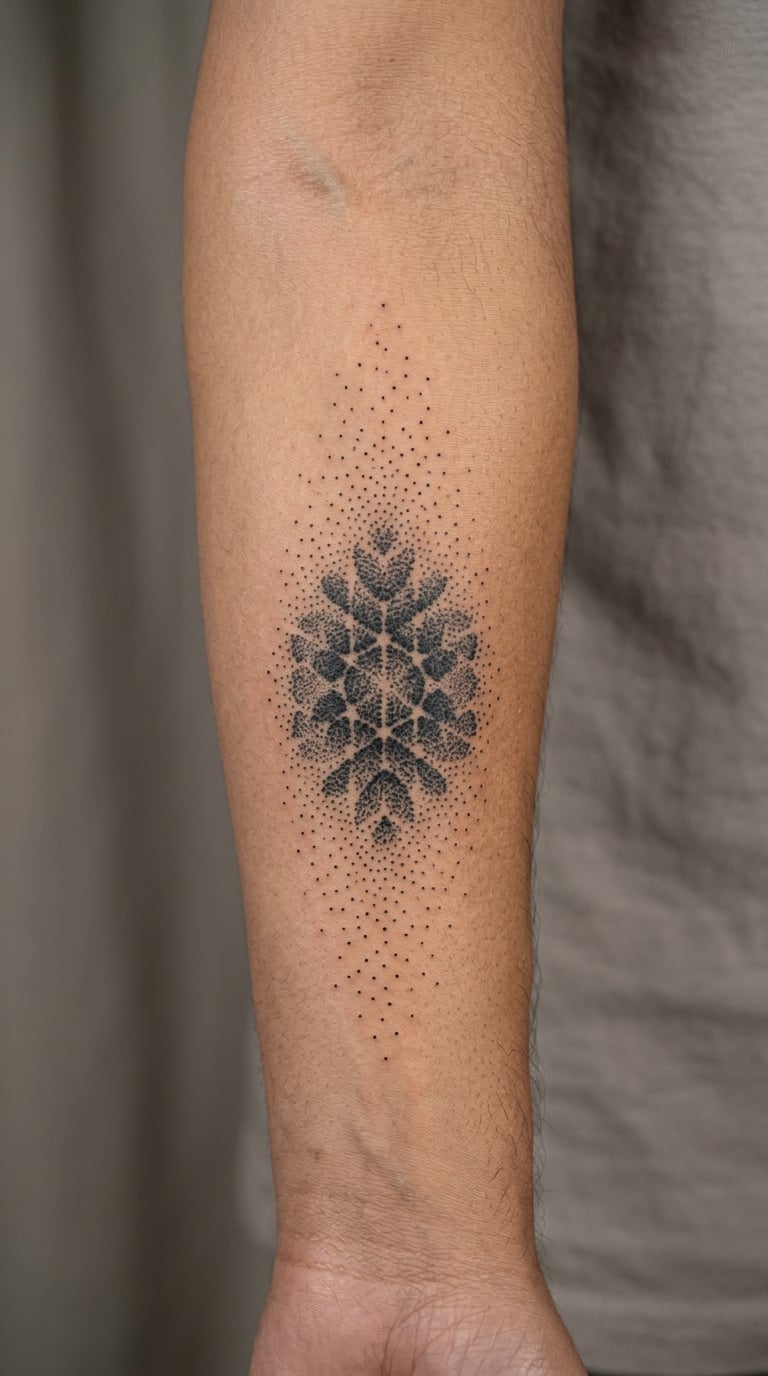
A field of dots that packs tight in the centre and thins toward the edges, so the density itself creates the light and shadow. There is no subject; the gradient is the whole design.
It suits people who want an abstract tattoo with real tonal depth but no colour. It is also the biggest time commitment on this list, so it is usually a second or third piece rather than a starting point.
Placement: Forearm, upper arm or vertically along the calf. Size: 5-8 in (13-20 cm). Style: Dotwork shading, fine detail. Pain: High and slow, often a full sitting or more. Dots in the sparse outer areas blur first, so the gradient slowly flattens even though the dense centre stays crisp. Make it yours: Have the density peak fall over a spot on your body that carries weight for you, and keep the thinnest dots away from fingers and joints, where the skin rubs and wears.
15. Abstract Linear Portrait Fragment
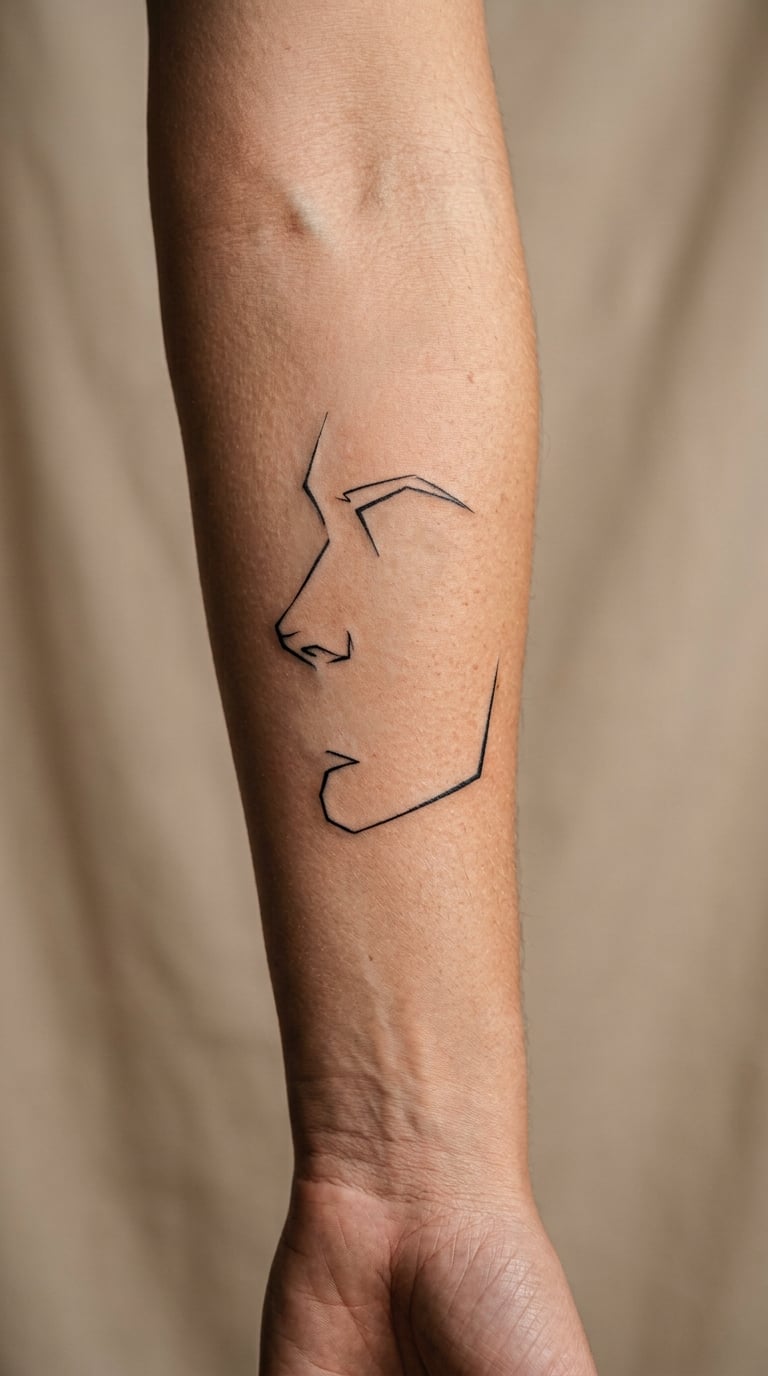
A handful of angular marks that imply the profile of a face, with the outline suggested by a few broken lines and open space doing the rest. There is no eye, no mouth and no hair, so the piece stays on the edge of recognition.
It gives you the intimacy of a portrait without anyone being able to identify the person in it. That ambiguity is usually the reason this design gets chosen.
Placement: Side of the forearm, ribs or the back of the shoulder. Size: 2-3 in (5-8 cm). Style: Fine line minimalism. Pain: Low and brief, since the design holds very little ink. Fine line work blurs fastest of anything in abstract tattooing, particularly on ribs and forearms that see regular sun, so this is a piece to protect or plan on refreshing. Make it yours: Add a date in matching line weight underneath, small enough that it reads as a caption rather than a second design.
16. Abstract Orbit Pattern
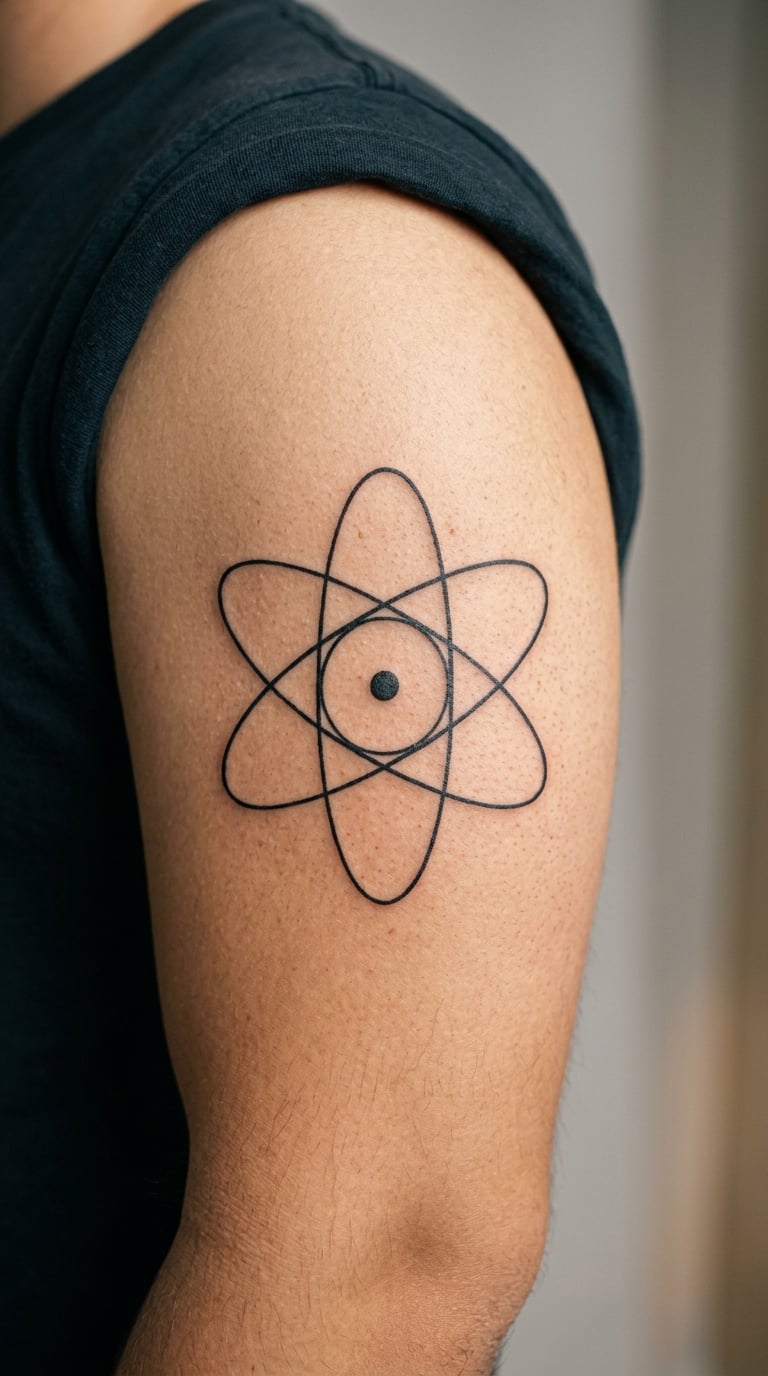
Three or four overlapping ellipses around a small solid centre point, each ellipse tilted differently so the whole thing reads as one body in motion. Nothing else is added, and that restraint is what makes it work.
Collectors who like mathematics and design use this one to quietly mark a date, a distance or a number of years. It also fits naturally beside other work because it needs very little space.
Placement: Upper arm, shoulder, or the outer thigh. Size: 2-3 in (5-8 cm). Style: Clean line geometric abstraction. Pain: Medium, mostly from the awkward angle of the upper arm rather than the skin itself. Fine elliptical lines lose their crispness with sun exposure, so keep the centre dot solid and let it hold the composition if the rings soften. Make it yours: Match the number of orbits to something you are counting, then vary each ellipse by a small amount so the design looks alive rather than mechanical.
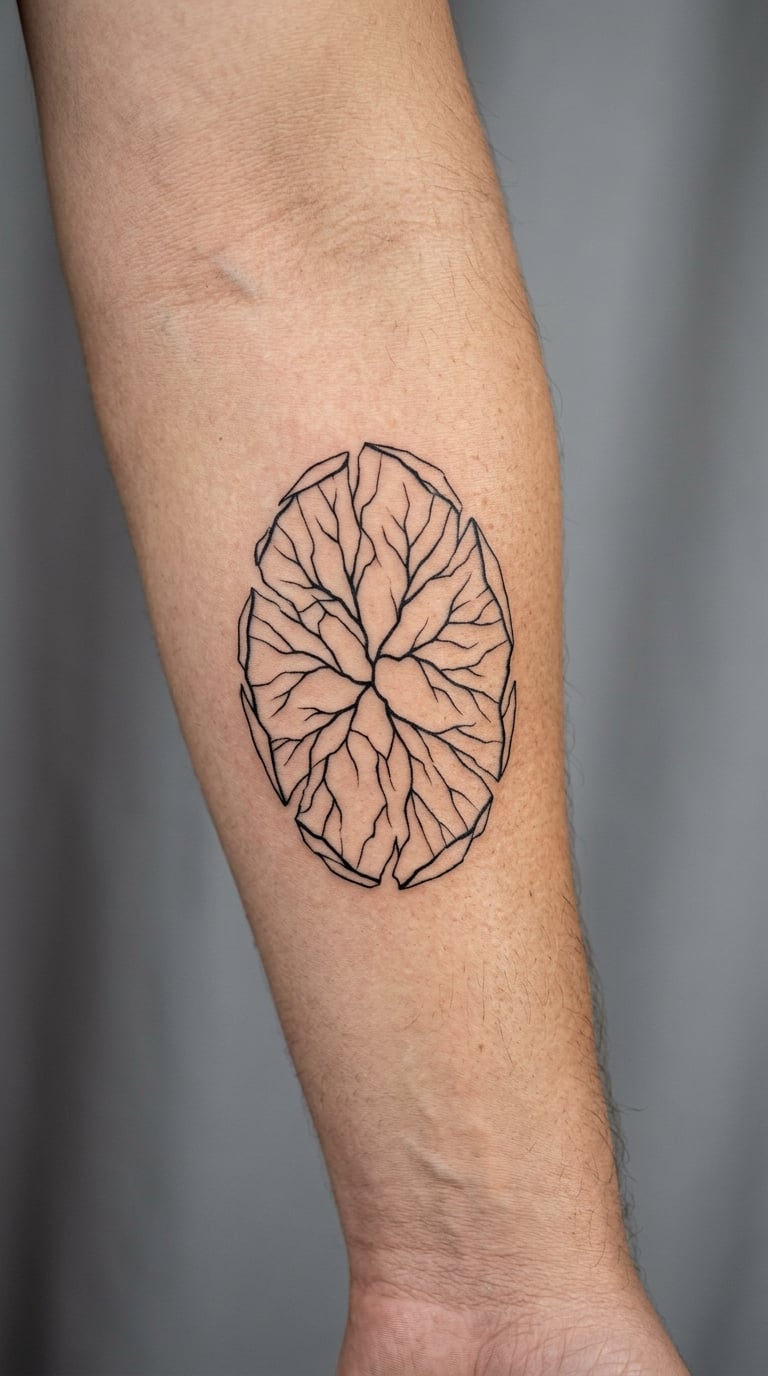
17. Abstract Fracture Lines
A simple oval broken apart by sharp branching lines that divide the interior into irregular sections. Some cracks stop halfway, which keeps the shape from looking shattered or violent.
It is a small design with a serious feel, and it works well on people who want something graphic that still leaves a lot of skin untouched. The branching lines are what carry it, not the oval.
Placement: Forearm, thigh or the upper chest. Size: 2-4 in (5-10 cm). Style: Fine line angular abstraction. Pain: Medium, less than most designs this size since the ink coverage stays low. Thin branches merge into a single thick line as they age, so ask the artist to stop each branch a little earlier than a reference image shows. Make it yours: Tint the cracks with one colour rather than leaving them black, which keeps the fracture visible once the line weight softens.
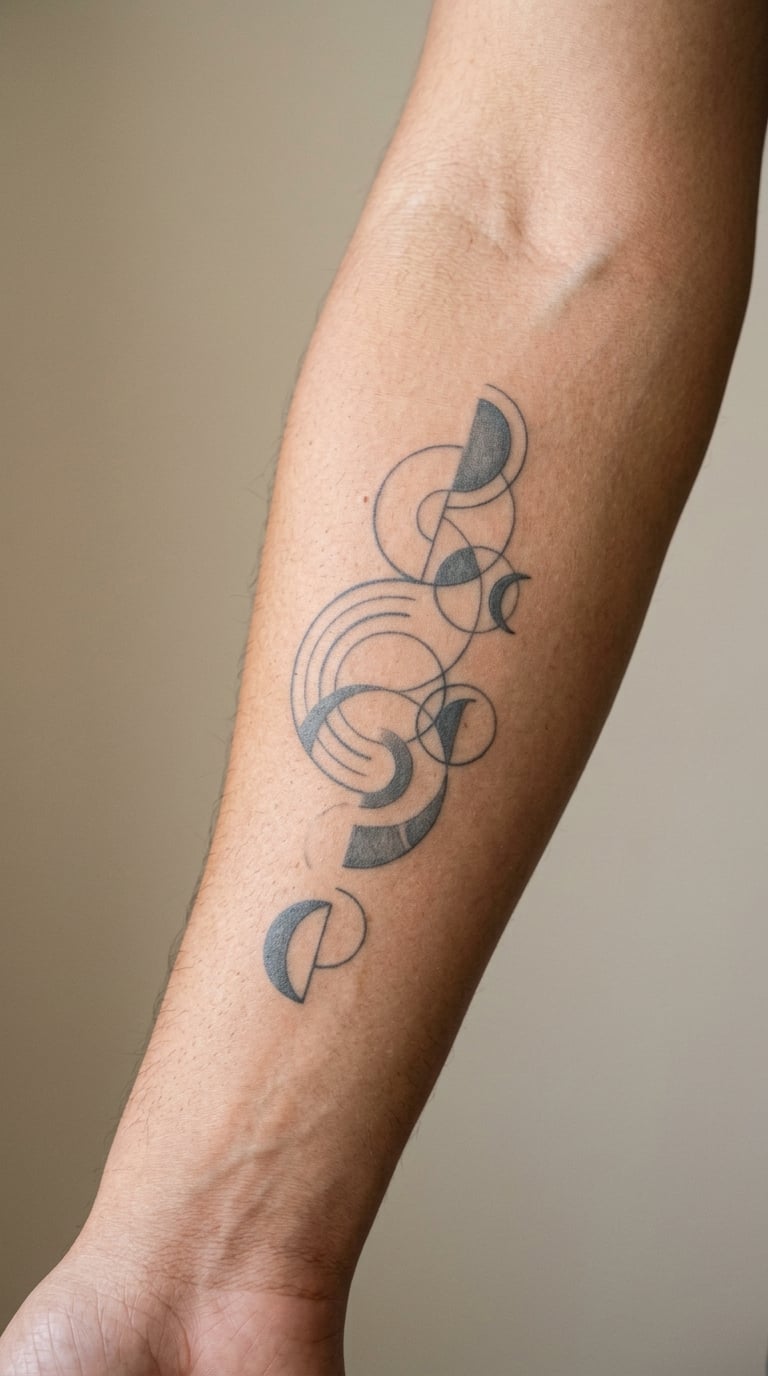
18. Abstract Soft Geometry
Circles, quarter-moons and arcs arranged in a restrained, evenly spaced composition, drawn in grey rather than black. The geometry is regular but the tones are soft, so the piece feels calm rather than technical.
This is the answer for someone who likes the order of geometric work but not its hardness. The grey also makes it read as quiet from across a room, which suits smaller placements.
Placement: Inner arm, inner thigh, or along the collarbone. Size: 2-4 in (5-10 cm). Style: Muted line and grey geometric abstraction. Pain: Low, and the session is usually short. Grey wash fades to a lighter tone first of all, so plan for the piece looking a few shades softer after a few summers than it did on day one. Make it yours: Set the shapes at intervals that mirror something you repeat in your week, then leave one position deliberately empty in the middle of the sequence.
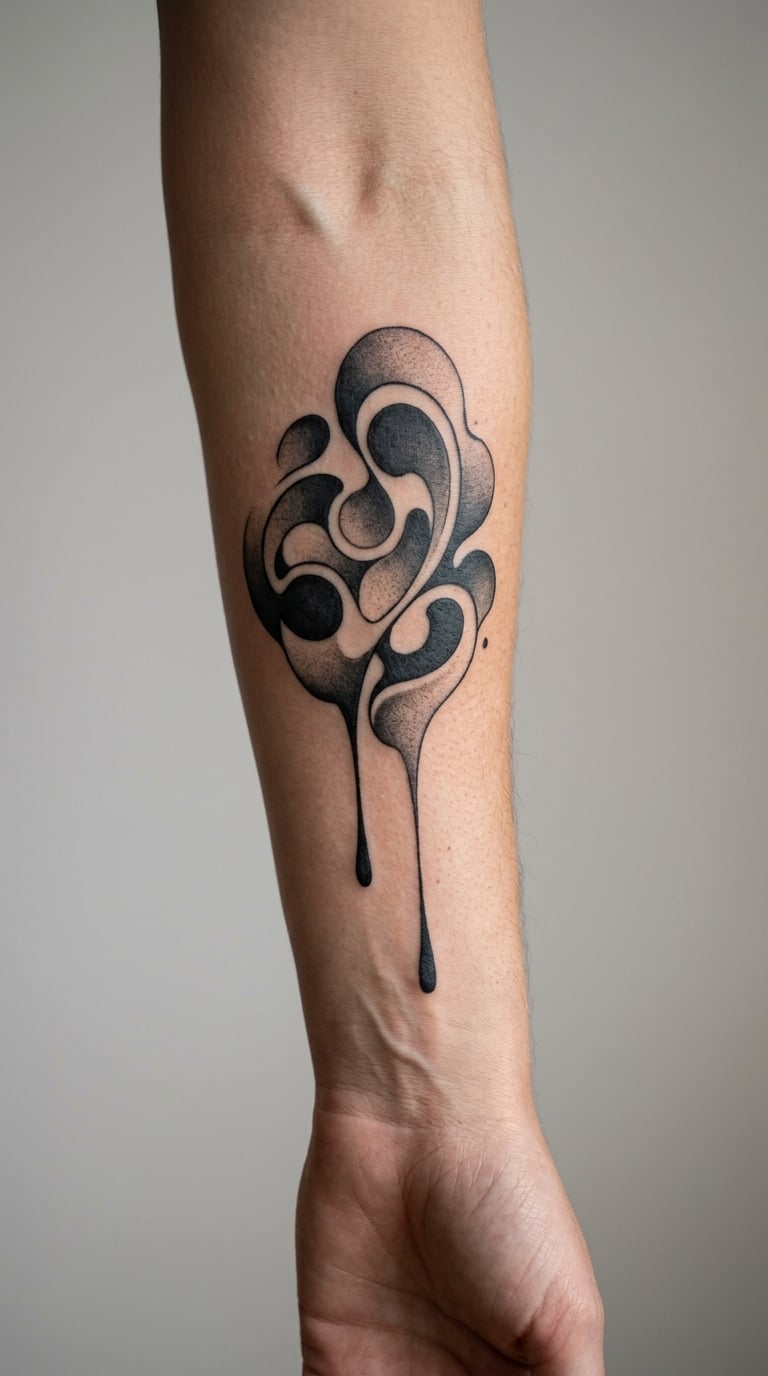
19. Abstract Drip and Pool
Rounded pools of grey and black with a couple of thin, deliberate drips running downward from them. Spontaneous-looking, but every drip is placed by hand, which is the detail most people never notice.
It is one of the more conversational designs here. People who see it tend to ask about it, and the answer is usually more considered than they expect.
Placement: Forearm or the back of the calf, where the downward direction matches the body’s line. Size: 3-5 in (8-13 cm). Style: Black and grey wash with fine drips. Pain: Medium; the drips take a steady hand and a slow needle, which stretches the sitting. Fine drip ends soften faster than the pools, so a good artist thickens them slightly at the start. Make it yours: Keep the palette to two tones and let one small pool break the pattern, sitting apart from the others on purpose.
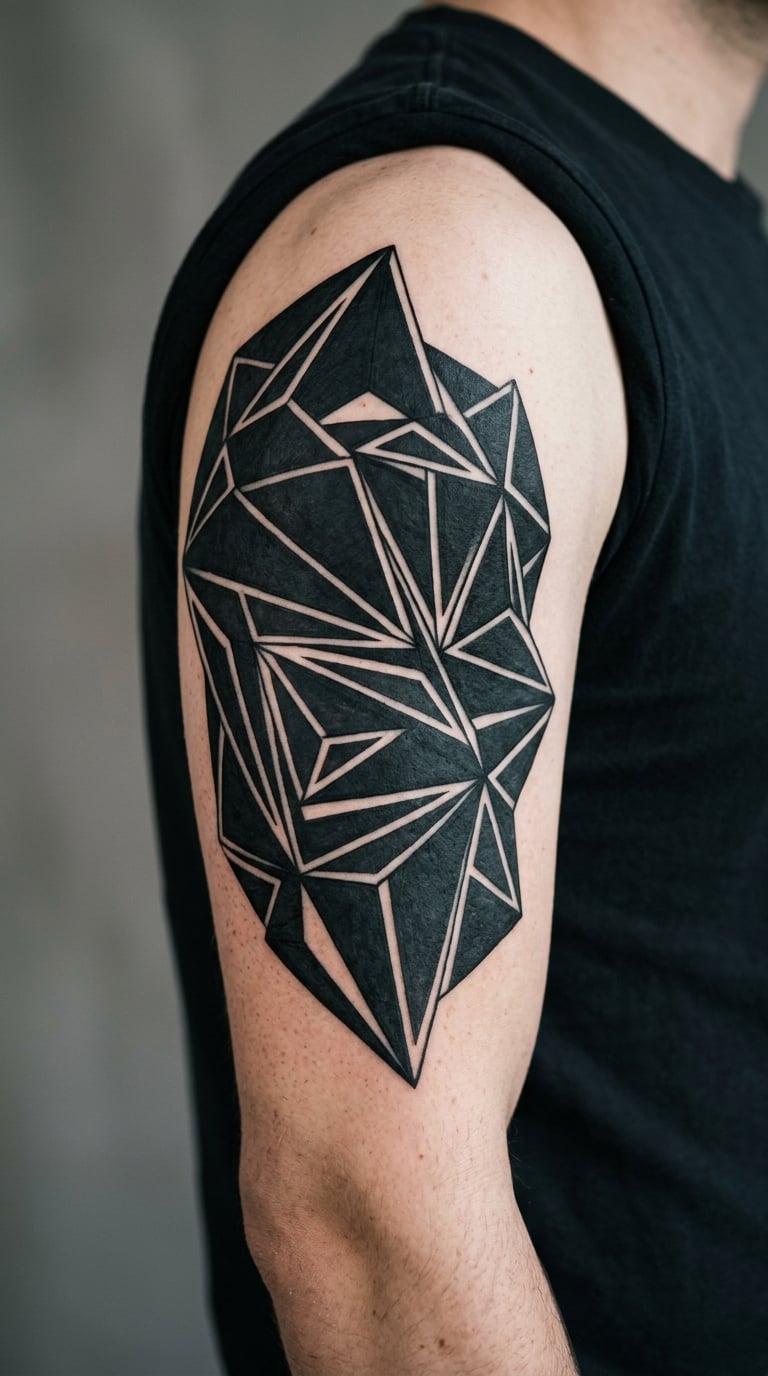
20. Abstract Folded Planes
Flat planes folded at sharp angles, with narrow white highlights cut out of the dark blocks to suggest a hard surface catching light. The piece needs real contrast to read as three-dimensional at all.
This one is closer to illustration than the rest, but it still has no subject. It suits people who like drawing and shading and want that skill visible in a tattoo.
Placement: Upper arm, thigh or across the shoulder blade. Size: 4-6 in (10-15 cm). Style: Blackwork with illustrative highlighting. Pain: High, and long. Filling the dark planes takes many passes, and the white highlights depend on the fill being placed precisely around them. The narrow highlight slivers close up over time as black softens and spreads a fraction, so keep them a little wider than the drawing suggests. Make it yours: Have the fold pattern follow the direction your arm or leg already moves, so the shadows in the design match the real ones.
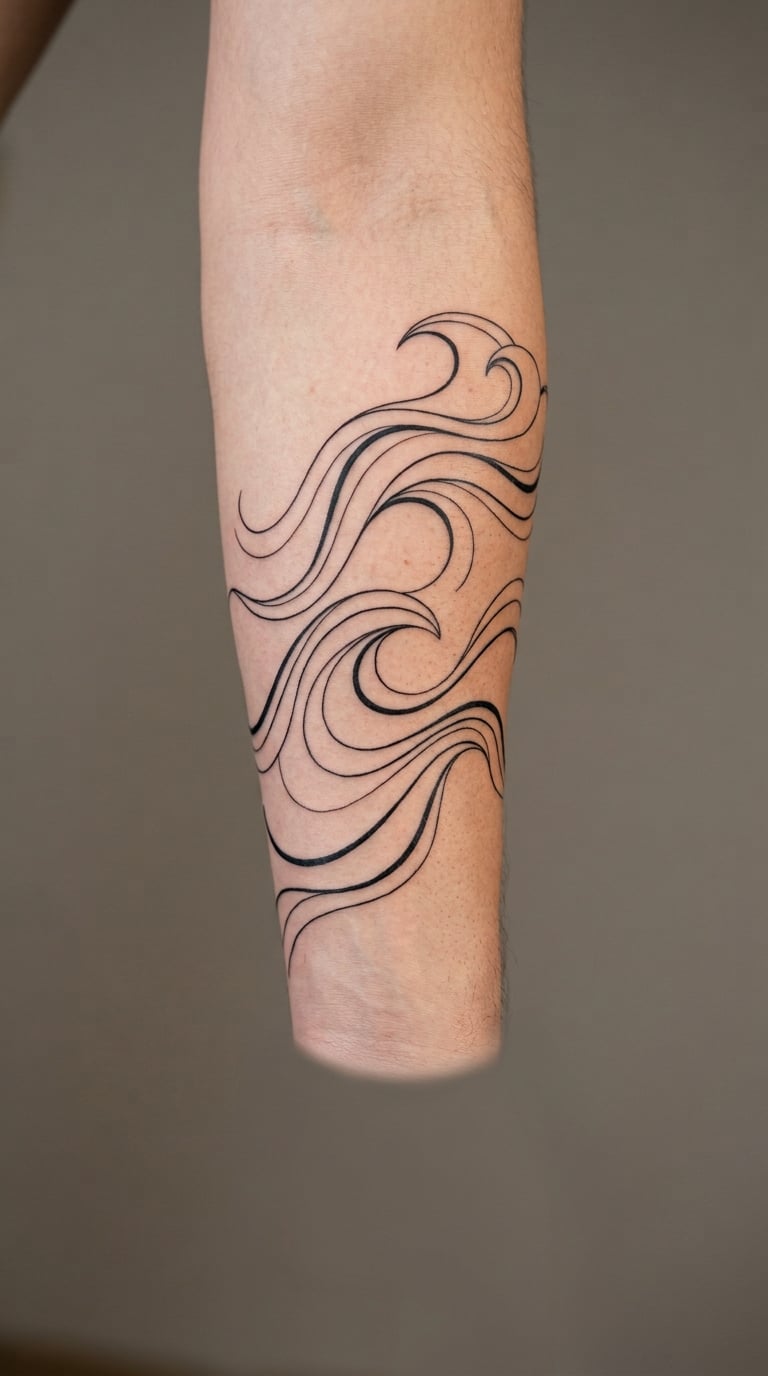
21. Abstract Wave Rhythm
Repeated curved lines stacked along the limb, with the weight of each line shifting so some read as near-solid and others as open space. Repetition gives it rhythm, and the varied weight stops it looking like a ruler pattern.
It is the idea I would point a nervous first-timer toward. Nothing in the design needs to be explained, and there is no detail that can go noticeably wrong.
Placement: Forearm, ribcage or around the calf. Size: 4-6 in (10-15 cm) long. Style: Minimalist fine line. Pain: Low; inner forearm line work is one of the more tolerable spots on the body. Waves of uniform hairline weight will flatten into each other over a decade, so the shift in line weight across the piece is what keeps it readable later on. Make it yours: Vary the spacing so the waves tighten in one section and open out in another, tracing a rhythm from somewhere real in your week.
22. Abstract Freeform Sculpture
A larger composition that mixes solid blocks, fine curves and open skin, balanced so no single element dominates and none of the pieces feel attached to a subject. It is the most experimental of the 22 and the hardest to brief, because there is no reference to point at.
This is the one to choose if you already know what you want the tattoo to feel like and not what it should look like. Bring a handful of references for the mood, the artist’s portfolio does the rest.
Placement: Upper arm, back piece or across the chest, anywhere with enough flat surface to read as one composition. Size: 6-10 in (15-25 cm). Style: Freeform abstraction, custom composition. Pain: High, and this is usually a multi-session piece rather than a single sitting. Mixed line weights and fills in one design age at different rates, with blocks outlasting fine curves, so ask the artist to build the composition so it still balances when the detail softens. Make it yours: Give the artist three words instead of a picture, agree on where the visual weight sits, and treat that point as the fixed part of the design while the rest gets built around it.
How to Choose the Right Design
Start with the feeling, then work backwards to the placement. A design that looks right on a screen rarely survives the shape of a forearm, and the placement should drive the composition rather than follow it.
Line weight and longevity. If you want the piece to look sharp in ten years, favour solid black fills over hairlines. Edge-less abstract line work softens noticeably faster, and anything on the hand, wrist or ribs fades soonest.
Size versus detail. A design holds roughly a fixed amount of detail at a given size. Packing the elements of idea 14 into a two-inch space produces a grey smudge, so give a dense design room or simplify it.
Placement and the body’s movement. Curved surfaces like the forearm and calf suit flowing work, while flatter areas such as the outer thigh and shoulder take grid and block compositions better. Ask to see the design sketched on your body, not on paper.
Colour or black only. Black-only pieces are cheaper per inch, age more predictably and sit more easily beside existing work. Colour adds personality and shows sun damage earlier.
Abstract versus geometric. Geometric work follows mathematical rules, symmetry and measurable proportions. Abstract work puts feeling and visual effect first, and it will happily break the rules. If you want your design to still read as a considered system in twenty years, choose geometric; if you want it to feel like your handwriting, choose abstract.
Reference gathering. Save five to ten images of the mood you want, not one perfect design. Artists book a consultation knowing whether your references point to a coherent direction, and a folder beats a single screenshot. Collect them somewhere easy to browse, such as alongside our 22 comet tattoo ideas for small, bold designs when you are working out what scales well small.
One last honest point before you book. Freehand abstract work means the composition gets developed on your skin, so the finished tattoo will resemble your reference rather than match it. Tell the artist clearly what you cannot compromise on, such as placement or overall size, and accept the rest as a collaboration.
Cost and Session Time
Abstract tattoos are priced by time, so cost tracks the canvas and the number of sittings rather than any one style. A tiny abstract piece, roughly one to two inches, is often priced at a shop’s minimum charge and takes half an hour to an hour. A small piece around three to four inches commonly takes one to two hours.
Medium work, five to six inches with a mix of line and fill, usually runs three to five hours and may need a second sitting. Large freehand compositions at six to ten inches, and full abstract sleeves, are measured in multiple sessions of several hours each, and the full piece can easily run into a dozen hours of chair time overall.
Shop minimums, artist hourly rates, city and the amount of freehand work in the design all shift those ranges, so treat them as a sense of scale rather than a quote. Ask at the consultation for an estimate by the hour plus an estimate of how many sessions it needs, and check the deposit and touch-up policy before you commit.
Aftercare Basics
Follow your artist’s aftercare instructions first. They will have told you exactly what they used and what they expect, and that guidance outranks anything general you read online.
Keep the area clean with a mild unscented soap and lukewarm water, then pat it dry rather than rubbing it.
Wash it in the shower as normal, and keep it out of direct sun while it heals. Loose clothing over the new tattoo helps stop fabric sticking to it.
Do not soak it, swim, or steam it until the surface has healed and any scabbing has settled.
Moisturise thinly with whatever your artist recommends, and change the dressing if they told you to, but stop if the skin starts reacting.
Once healed, sun protection is what determines how the piece looks years later, especially for line work and any colour.
Frequently Asked Questions
What does an abstract tattoo represent?
An abstract tattoo carries meaning through visual character rather than fixed symbolism. The movement of the line, the balance of empty space and the weight of the black say something about how the wearer sees their own energy, restraint or change. Most people choose it because nobody else can read it the same way.
Are abstract tattoos a good choice for a first tattoo?
They can be, if you pick a simple composition and a placement with a flat surface. Ideas like flowing lines, wave rhythm or minimalist dots are forgiving, quick to tattoo and hard to get wrong. A dense dotwork field or a large freeform piece is a much bigger ask for a first sitting, because there is no outline to hide behind if a detail disappoints.
Do abstract tattoos fade over time?
They do, and it depends almost entirely on how much solid ink is in the design. Black fills and bold blocks hold their edges for years, while hairline work and open compositions soften first, especially on sun-exposed skin like forearms and ribs. Dots blur and merge. Regular sun protection after healing does more for longevity than anything applied during the session.
Is an abstract tattoo the same as a geometric tattoo?
Not quite. Geometric work follows mathematical rules with symmetry, measurable angles and repeating patterns. Abstract work puts visual effect and feeling first and will break those rules when breaking them looks better. Geometric tattoos stay more predictable over decades, abstract tattoos feel more personal and more like the artist’s hand.
How do I ask for an abstract tattoo at a shop?
Bring a folder of five to ten references that share a mood, and tell the artist which parts you like about each one. Say the style name if you know it, such as gestural mark-making, color field or blackwork abstraction. Explain what you cannot compromise on, usually placement and size, and accept that freehand work will resemble your references rather than match them exactly.
How small can an abstract tattoo be?
A single mark or a row of dots works well under one inch, though detail below a few millimetres tends to blur quickly even on parts of the body that do not get much sun. If you want fine line work, the inner forearm, collarbone and the area behind the ear hold detail far longer than fingers, knuckles or the ribs.
Conclusion
If this is your first tattoo, start with flowing abstract lines or minimalist abstract dots. Both are quick, forgiving and easy to place, and neither leaves you with detail you will worry about in ten years.
Adding to an existing collection, the abstract freeform sculpture gives you the most room to build, and the interlocking shapes piece holds its edge better than anything else on the list. Whichever direction you pick from these 22 abstract tattoo ideas, let the placement and the line weight decide the size, not the other way round.