
20 Thumb Tattoo Ideas: Small Designs That Last (October 2026)
These 20 thumb tattoo ideas are all sized and placed for a real thumb rather than a flat reference sheet. A thumb is the smallest canvas on the hand and the most visible one, so a design has to read in about two inches of curved skin sitting over bone.
Most of the ideas below work as a first piece because they are simple shapes with a clean outline. They also suit someone adding to an existing hand set, since a single small motif fills the gap between bigger pieces without crowding them. Take a look, then read the sizing notes before you fall in love with a design that needs a wider surface than you have.
Updated for October 2026.
20 Thumb Tattoo Ideas: Quick Guide
| Idea | Style | Best placement | Size | Pain |
|---|---|---|---|---|
| Fine-line floral sprig | Fine line | Outer side, index-side edge | 1–2.5 in | Medium |
| Snake wrapping the thumb | Blackwork / fine line | Side and lower thumb | 2–3 in | Medium-high |
| Vintage key with a bow | Traditional / illustrative | Back of thumb | 1.5–2.5 in | Low-medium |
| Single rose | Black-and-grey realism | Back or outer side | 1.5–2.75 in | Medium |
| Tiny butterfly | Blackwork | Upper side, near the hand | 1.5–2.5 in | Medium |
| Ocean wave | Blackwork / minimalist | Side, diagonal | 1.5–2.5 in | Low-medium |
| Dotwork sun | Dotwork / minimal blackwork | Back of thumb | 1–2 in | Low-medium |
| Crescent moon with stars | Fine line celestial | Inner side or back | 1.25–2.25 in | Low-medium |
| North star | Minimal blackwork | Back of thumb | 1.25–2.25 in | Low-medium |
| Heart with a pulse line | Minimal fine line | Outer side, lower thumb | 1.5–2.5 in | Medium |
| Mountain range | Fine line geometric | Side, horizontal | 1.75–3 in | Low-medium |
| Two cherries | Micro-realism / colour | Side or back | 1.25–2.25 in | Medium |
| Minimal bee | Illustrative / fine line | Back or upper side | 1.25–2.25 in | Medium |
| Dragonfly with washes | Watercolour / fine line | Side, diagonal | 1.75–3 in | Low-medium |
| Traditional arrow | Traditional / neo-traditional | Back, lengthwise | 2–3.25 in | Low-medium |
| Infinity symbol | Minimal blackwork | Side or thumb base | 1.25–2.25 in | Low-medium |
| Fingerprint with an initial | Micro-realism / geometric | Side or thumb base | 1.5–2.5 in | Medium |
| Tiny cat portrait | Micro-realism / illustrative | Outer side or back | 1.25–2.25 in | Medium |
| Miniature compass | Traditional / fine line | Back of thumb | 1.5–2.5 in | Low-medium |
| Script initial | Calligraphy / fine line | Outer side, vertical | 1.25–2.5 in | Low-medium |
1. Fine-Line Floral Sprig on the Side of the Thumb
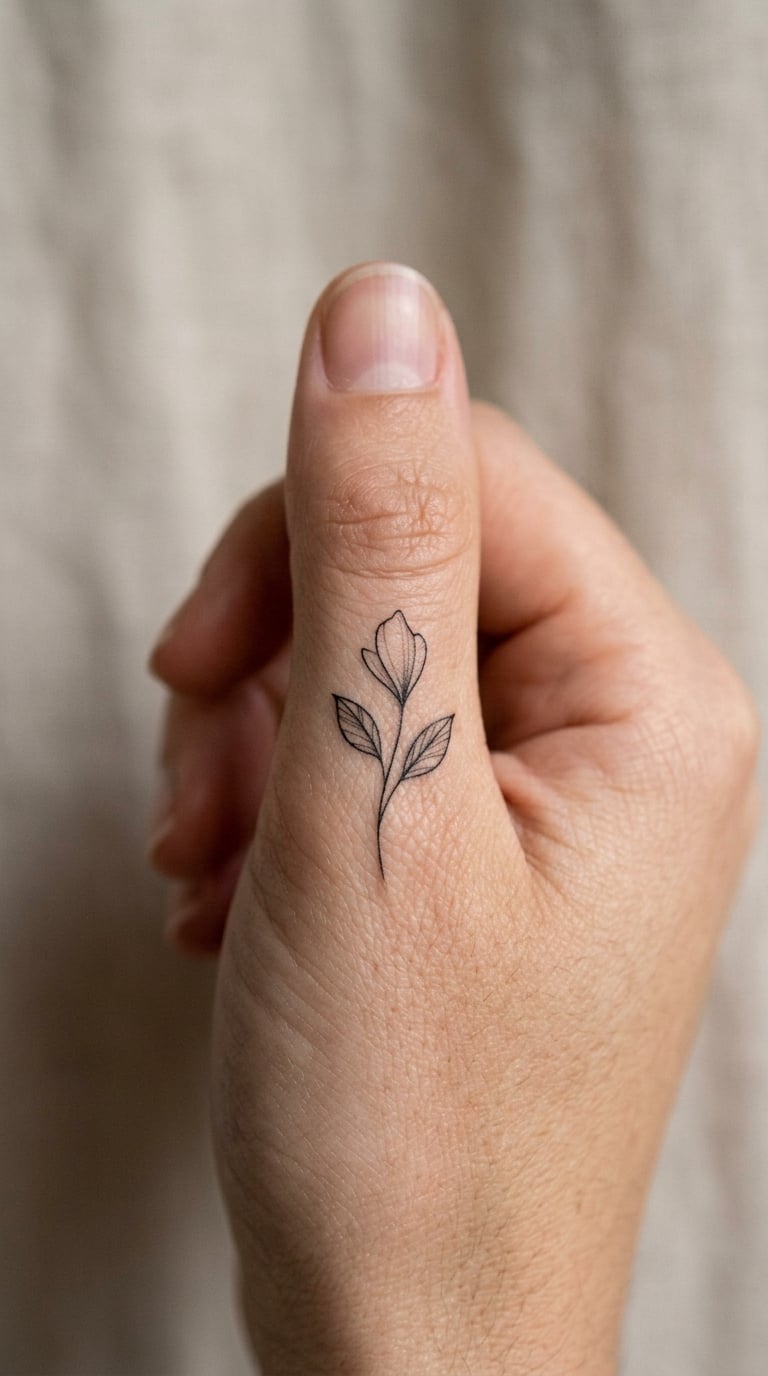
The sprig is a thin stem running along the thumb with two or three small leaves and a single lightly shaded bloom at the top. The stem is one continuous line, the leaves are simple almond shapes, and the petals get soft grey shading rather than solid black.
People tend to pick it because it looks light on the hand, and often because the flower is a birth flower or tied to a garden they grew up around. There is no fixed reading to it.
Placement: outer side of the thumb, index-side edge, or inner side. Size: 1–2.5 in (2.5–6.4 cm). Style: fine line.
Pain: medium. Fine lines on the hand soften and blur faster than bold shapes, because the skin is thin and every handshake rubs it.
Make it yours: add one colour to a single petal, or tuck a tiny companion element beside the stem.
2. Minimal Snake Wrapping Around the Thumb
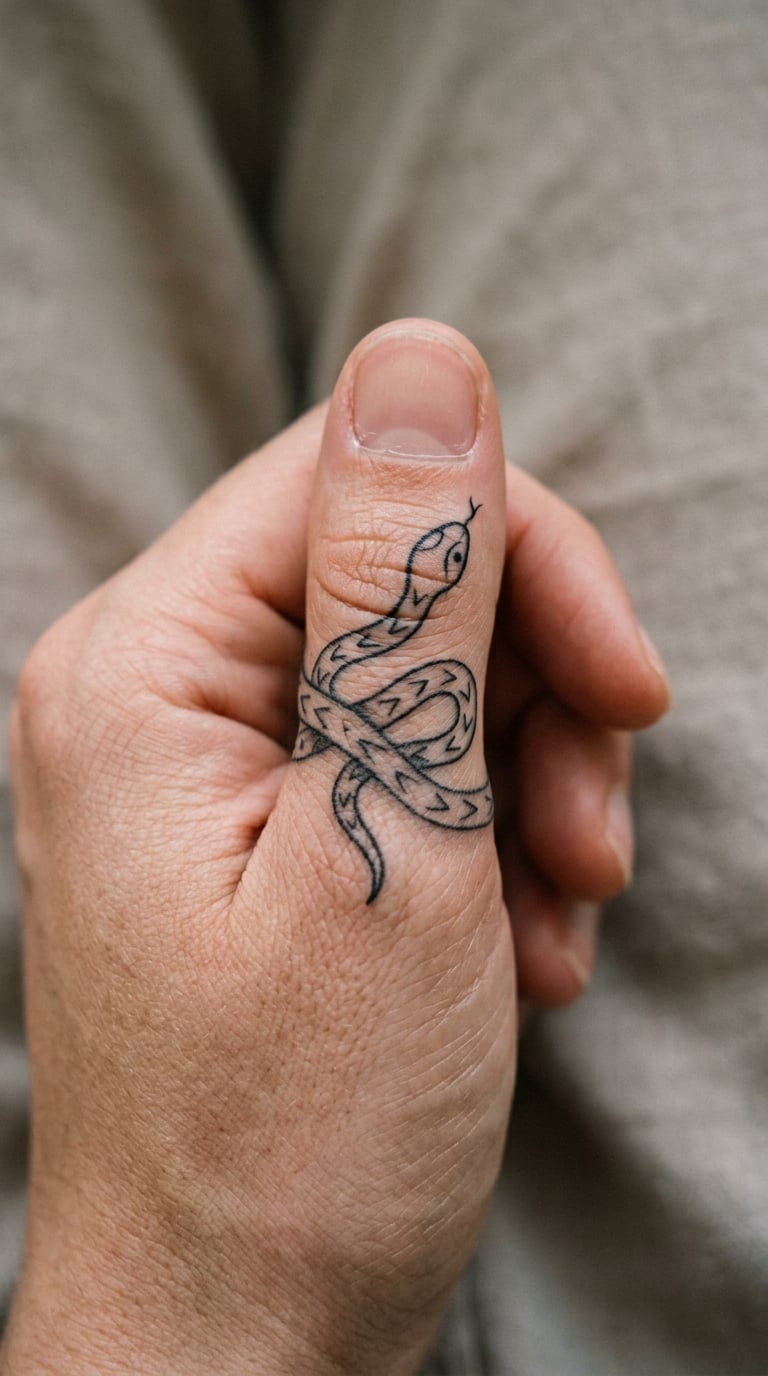
One snake, curled once, with a curved body, clean scale marks and a small forked tongue. Kept minimal, the body is a bold outline with a few scale details inside rather than full shading.
Snakes get chosen for transformation and change, or simply because the shape wraps a thumb so neatly. Meaning shifts from person to person, so decide yours before the stencil goes on.
Placement: side of the thumb, wrapping toward the back, or low on the thumb. Size: 2–3 in (5–7.6 cm). Style: blackwork or fine line.
Pain: medium-high, more on the inner edge where the skin is tight. Raised outlines and fine scale details tend to age less sharply than the body line.
Make it yours: a birthstone for the eye, an initial hidden in the coil, or one restrained red accent on the tongue.
3. Vintage Key With a Tiny Bow Detail
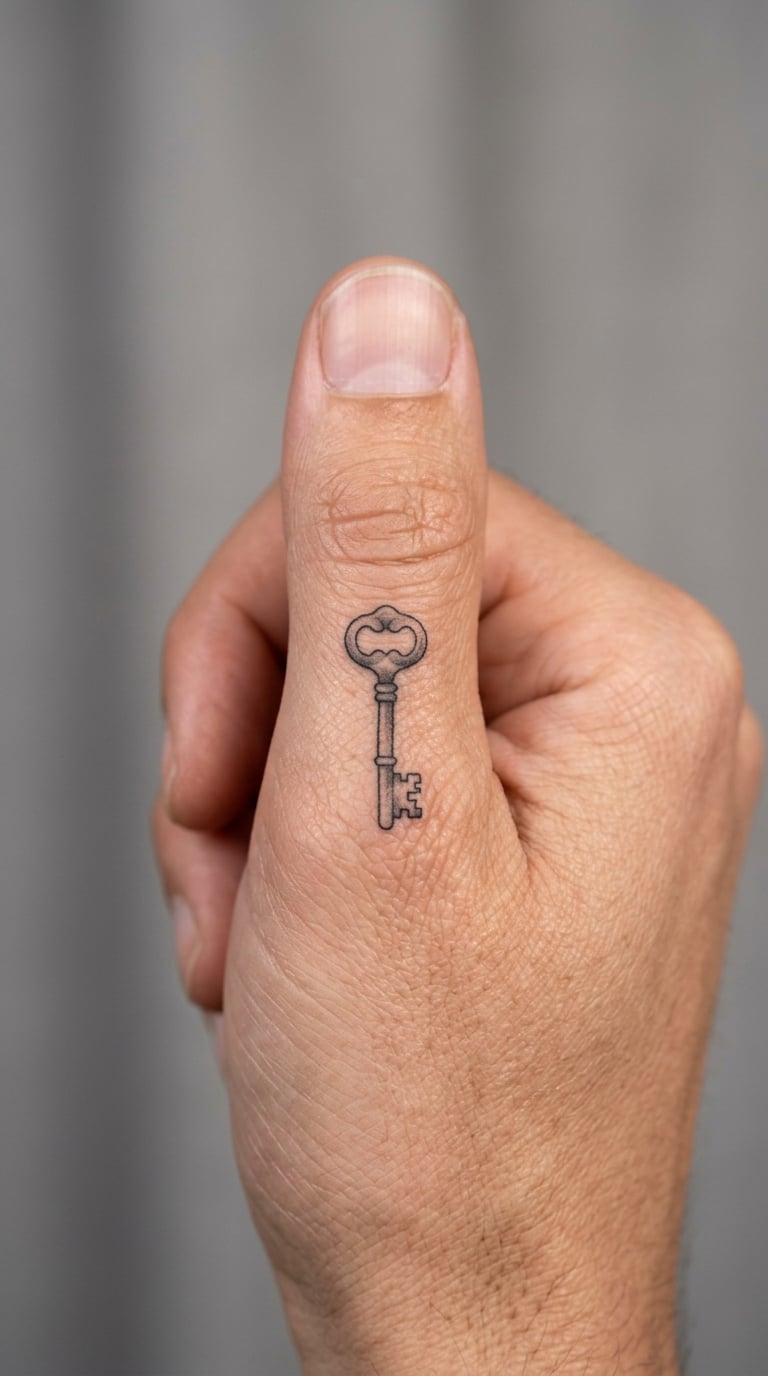
A compact key drawn with an ornamental bow, a straight shank and four short teeth. Soft grey shading inside the bow and a few worn line marks give it an aged look without crowding the shape.
It is often picked as a visual token of access, a keepsake, or a small piece of someone’s story, like a key from a house that mattered.
Placement: back of the thumb, outer side, or near the base. Size: 1.5–2.5 in (3.8–6.4 cm). Style: illustrative or traditional.
Pain: low to medium. The back of the thumb is meatier than the side, and a simple outline with light shading settles cleanly.
Make it yours: put a meaningful year or an initial inside the bow, or fill it with one enamel-like colour.
4. Single Rose in Black-and-Grey Realism
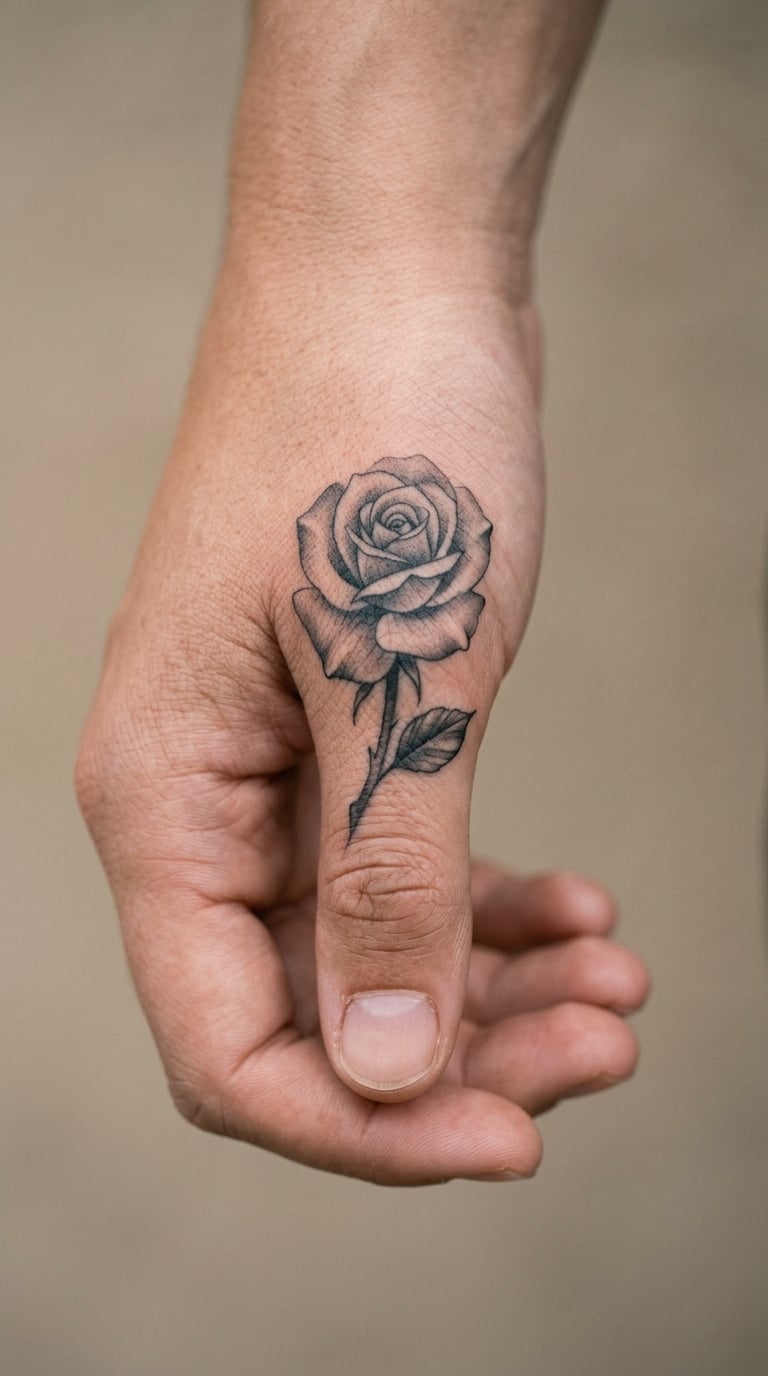
One tightly framed rose with shaded petals, darker edges where the petals overlap, and minimal leaves. The shading is smooth rather than stippled, which is what makes a small rose look expensive instead of muddy.
Roses usually get chosen for love, beauty, or a specific person or memory. That association is common, not a guarantee of what it means to the person wearing it.
Placement: side of the thumb, back, or outer edge. Size: 1.5–2.75 in (3.8–7 cm). Style: micro-realism or black-and-grey realism.
Pain: medium. Soft shading needs an artist who works at micro scale, and the ink can look dull for a few days while it settles.
Make it yours: add a date in tiny type under the bloom, one coloured petal, or a matching small stem on the other hand.
5. Tiny Butterfly With Open Blackwork Wings
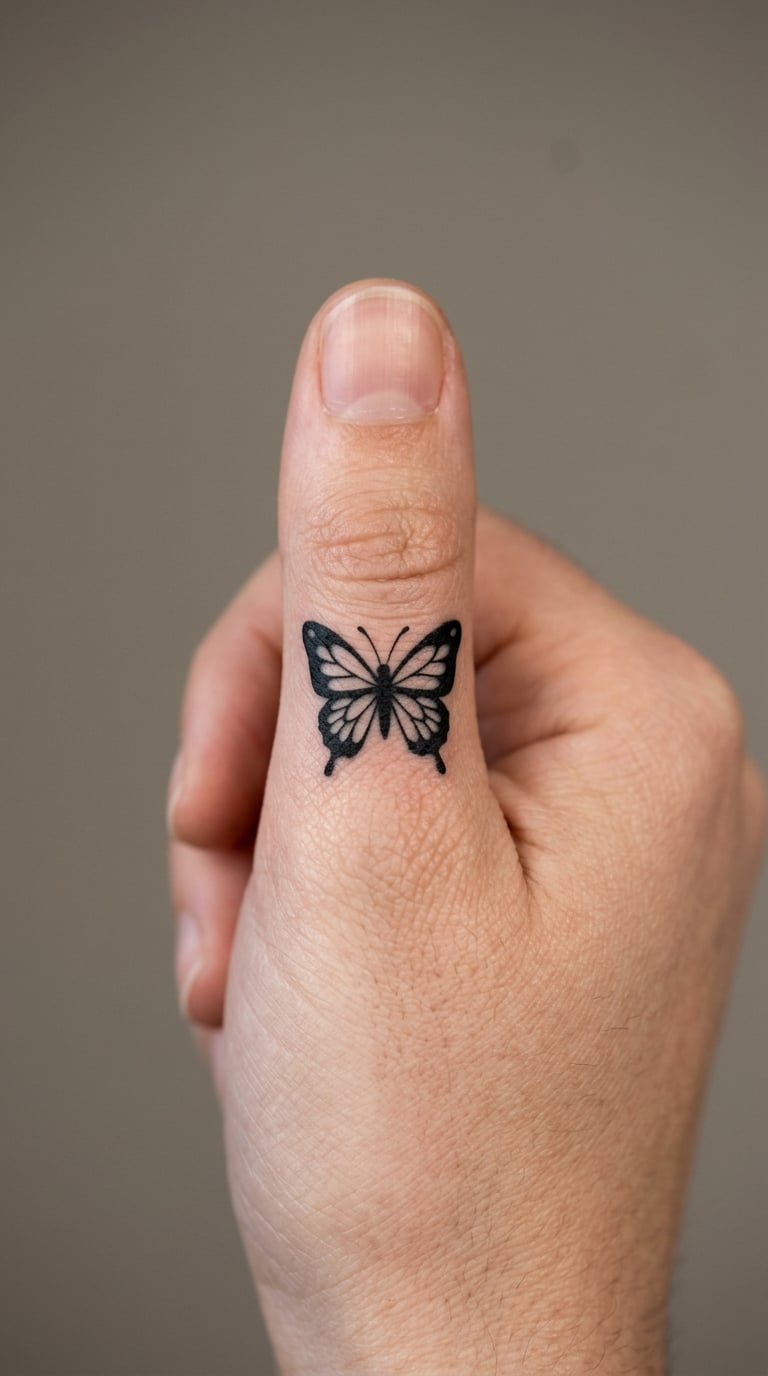
A symmetrical butterfly built from two bold wing shapes, a short body and a couple of negative-space spots inside the wings. The contrast between solid black and open skin is what keeps it readable at thumb scale.
Some people choose it for change or freedom, others because the shape is cheerful and takes up very little room.
Placement: upper side of the thumb, along the side, or on the skin behind the thumb near the hand. Size: 1.5–2.5 in (3.8–6.4 cm). Style: blackwork or graphic fine line.
Pain: medium. Very small wing markings can blur over the years, so keep the detail count low on purpose.
Make it yours: a colour gradient across the wings, your birth month colour, or a matching butterfly on your partner’s thumb.
6. Single Ocean Wave in Blackwork
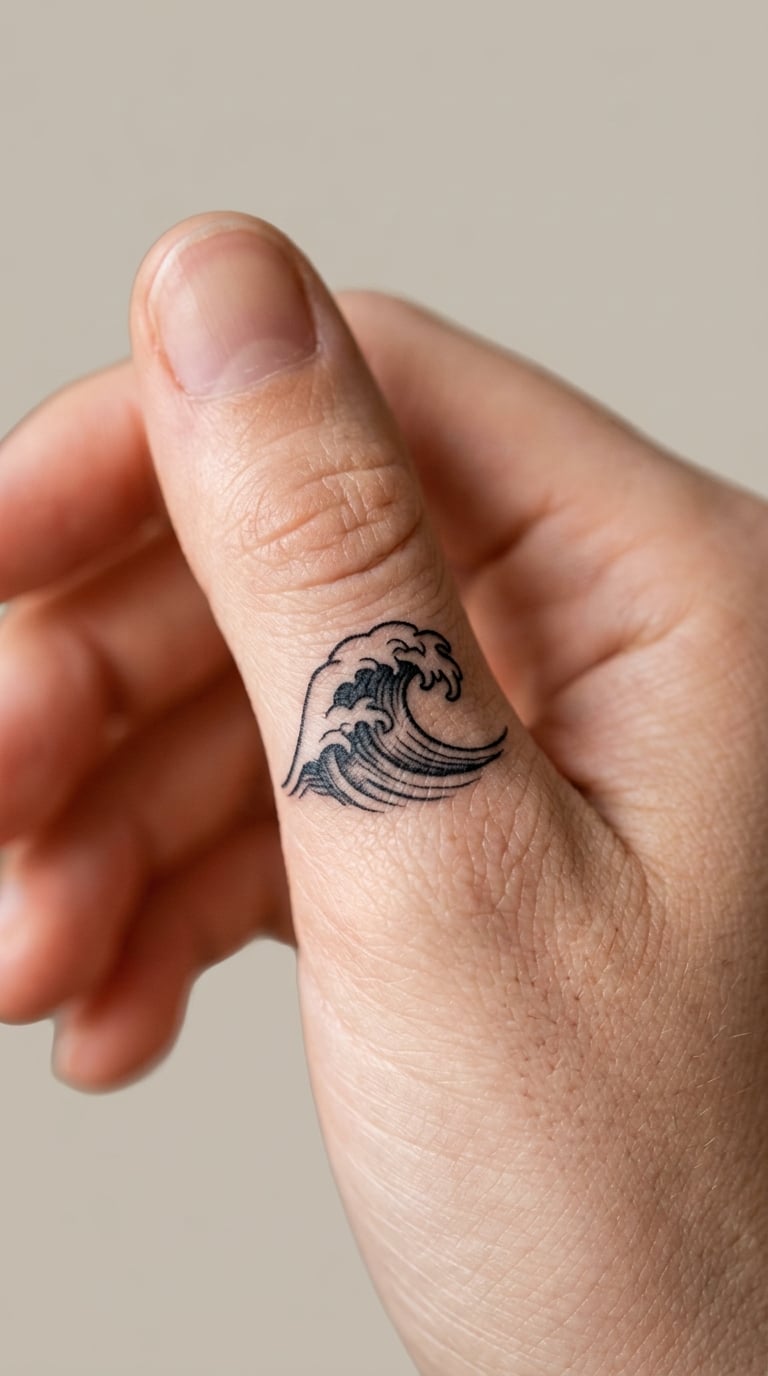
One curling wave with a heavy contour line, a single curled crest and clean negative space where the foam would sit. Bold outline, minimal interior, no fine spray dots.
People select waves for the sea, for calm, for travel, or for a beach that holds a memory. It reads as water even at a very small size, which is rare.
Placement: side of the thumb on a diagonal, the back, or near the thumb base. Size: 1.5–2.5 in (3.8–6.4 cm). Style: blackwork or minimalist.
Pain: low to medium. Thick forms age better than tiny foam marks, so resist the urge to add spray detail.
Make it yours: add a coordinate or a date under the crest, or a single muted blue shade inside the curl.
7. Dotwork Sun With a Simple Ray Pattern
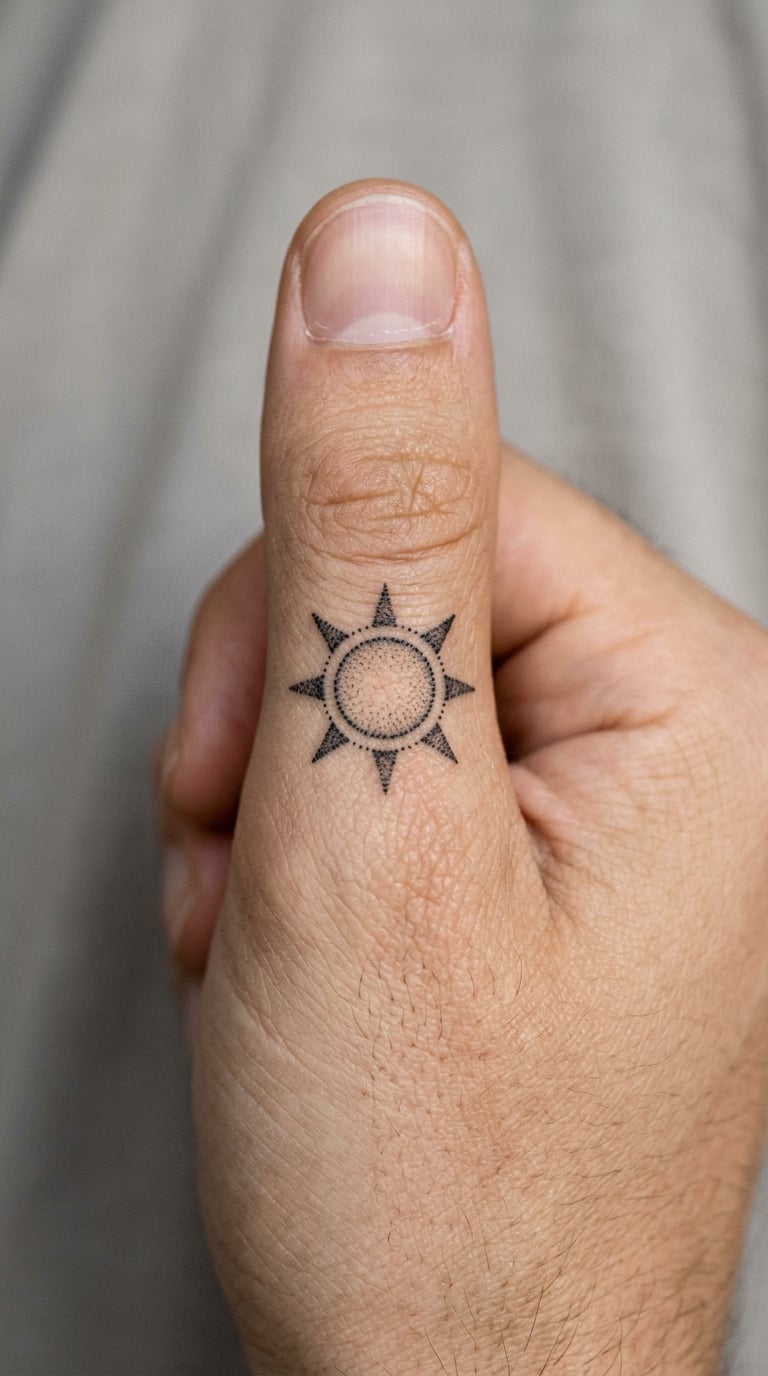
A small circular sun with evenly spaced triangular rays around the edge and a lightly stippled centre. The rays do the recognition work, so the dot shading inside can stay very simple.
Optimism and warmth come up often, along with the plain appeal of a cheerful shape you can read from across a table.
Placement: back of the thumb, side, or upper thumb. Size: 1–2 in (2.5–5 cm). Style: dotwork or minimal blackwork.
Pain: low to medium. Tiny dot gradients can lose definition as the thumb flexes and the skin stretches, so ask for bolder dots rather than a gradient.
Make it yours: work a birth date into the ray spacing, hide initials between the rays, or colour one ray.
8. Crescent Moon With Fine Star Detail
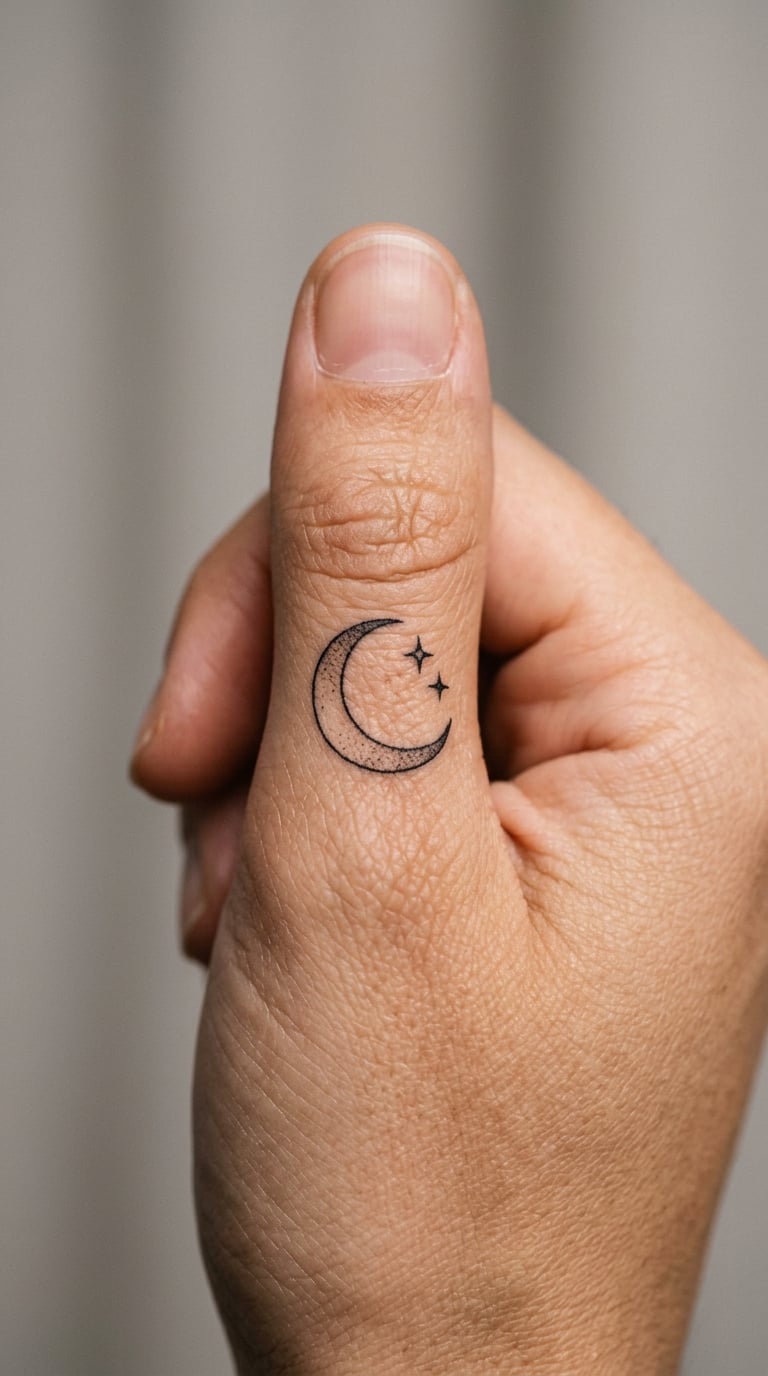
A narrow crescent with two small five-point stars and a light scatter of dots in the empty half of the crescent. The curve does most of the work, with restrained detail.
Moon designs are often selected for night, cycles, intuition, or a personal spiritual practice. Those readings are personal, not fixed.
Placement: inner side of the thumb, the back, or the upper thumb. Size: 1.25–2.25 in (3.2–5.7 cm). Style: fine line or celestial linework.
Pain: low to medium. Hairline stars on fingers fade fastest of any element in this list, so a slightly heavier star is the safer version.
Make it yours: add a date under the crescent, or mirror the moon on the other thumb with a different phase.
9. North Star With Clean Compass Rays
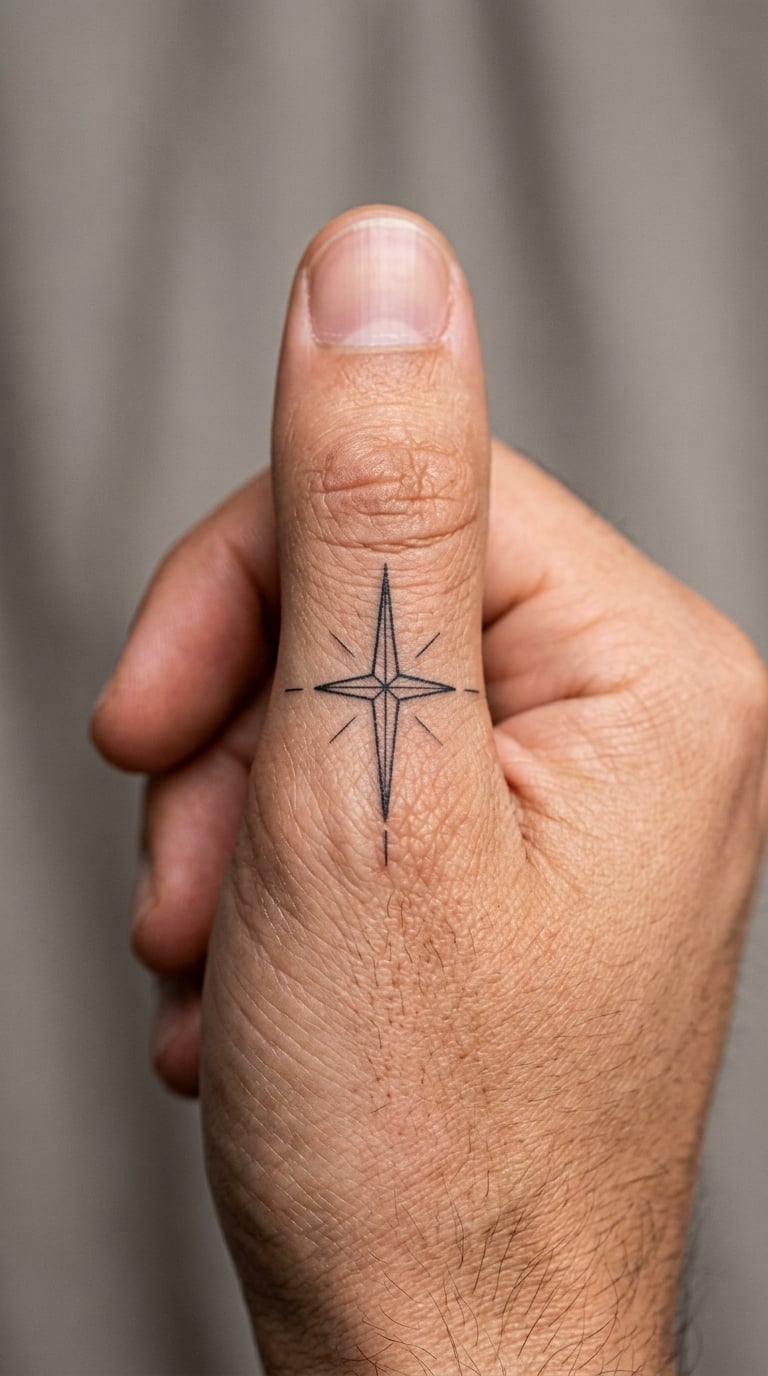
A four-point star with one longer upper point, four short directional rays and one small accent at the centre. Straight geometry, balanced gaps, no shading.
Guidance, direction, travel and personal goals are the usual reasons people give it, and it works as a first piece because the shape is unambiguous.
Placement: back of the thumb, side, or thumb base. Size: 1.25–2.25 in (3.2–5.7 cm). Style: minimal blackwork or geometric linework.
Pain: low to medium. Very fine rays soften, so keep the short rays a touch thicker than the long point.
Make it yours: engrave real coordinates inside the star, name a destination on the underside, or fill the centre with a single colour.
10. Simple Heart With a Fine-Line Pulse
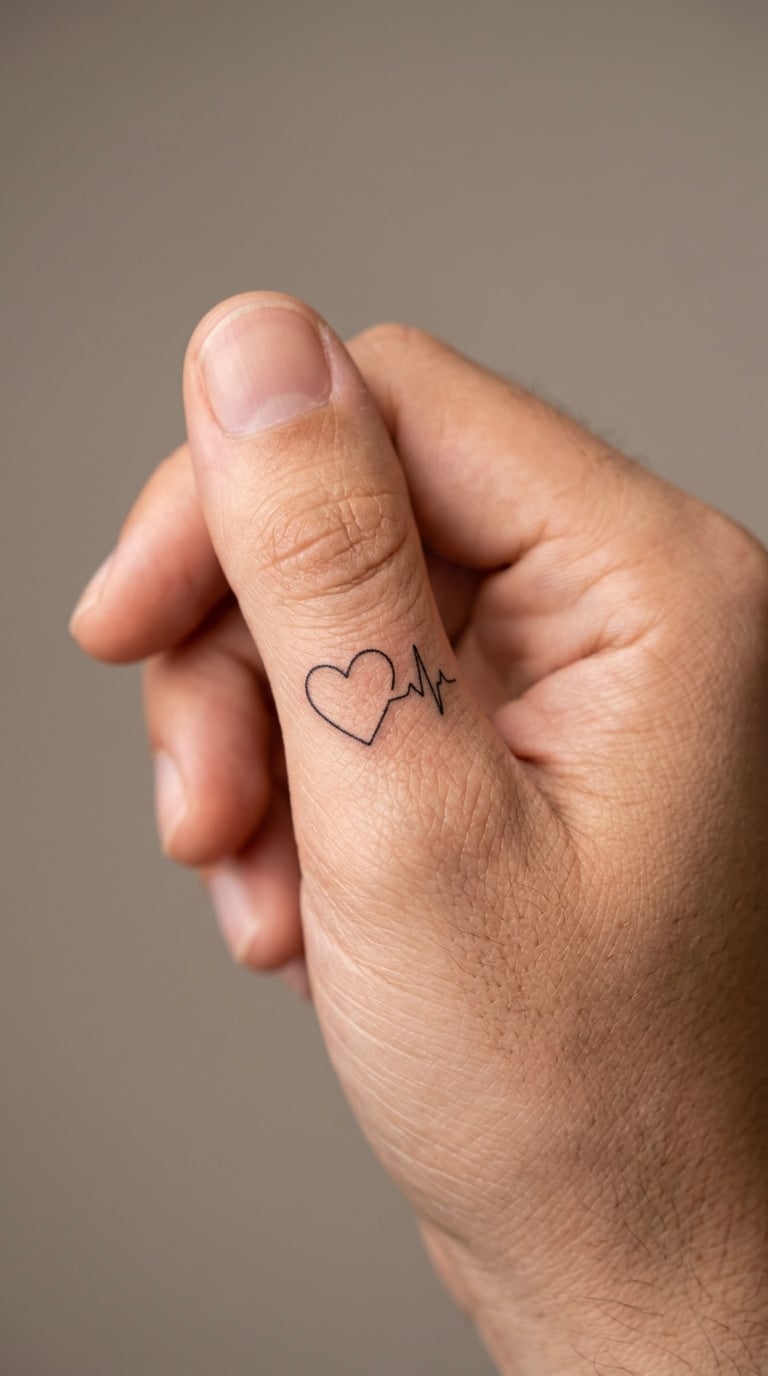
One heart outline with a short pulse-like line leaving its side and trailing a few small beats. Nothing inside the heart, which keeps the negative space open.
It gets chosen for affection, family, or a health milestone in someone’s life. It is a symbol of something that mattered, not a medical statement.
Placement: outer side of the thumb, the back, or low on the thumb. Size: 1.5–2.5 in (3.8–6.4 cm). Style: minimal fine line.
Pain: medium. The trailing line needs steady spacing, and spacing is the first thing to break when the piece is rushed.
Make it yours: add the date the line stands for, a name initial inside the heart, or a soft red fill in the outline.
Scanning lists of 20 thumb tattoo ideas, the heart is the one that gets requested most and personalised least, so put something in it that only you would recognise.
11. Minimal Mountain Range With One Summit
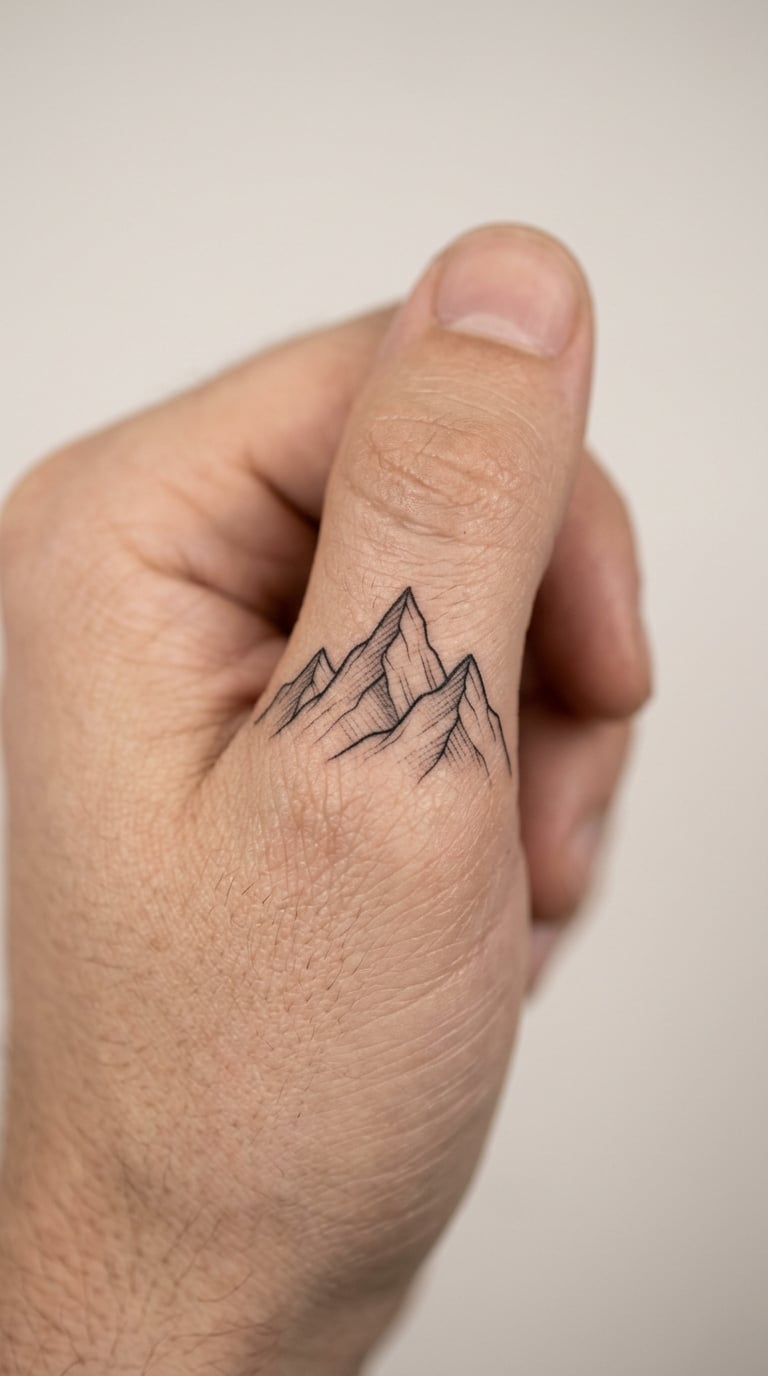
Two or three overlapping peaks with one dominant summit, a single fine ridge line and light hatch shading in the lower valleys. The peaks are simple triangles, not a rendered scene.
Achievement, travel, home, or a specific outdoor place come up a lot. Ask your artist to match the profile to somewhere that matters to you.
Placement: side of the thumb running horizontally, the back, or the thumb base. Size: 1.75–3 in (4.4–7.6 cm). Style: fine line or minimalist geometric.
Pain: low to medium. Tiny hatch lines can blur together, so fewer lines with more space between them hold up better.
Make it yours: name the summit’s date in tiny type, or add one muted green or blue sky line above the peaks.
12. Two-Cherry Micro-Realism Design
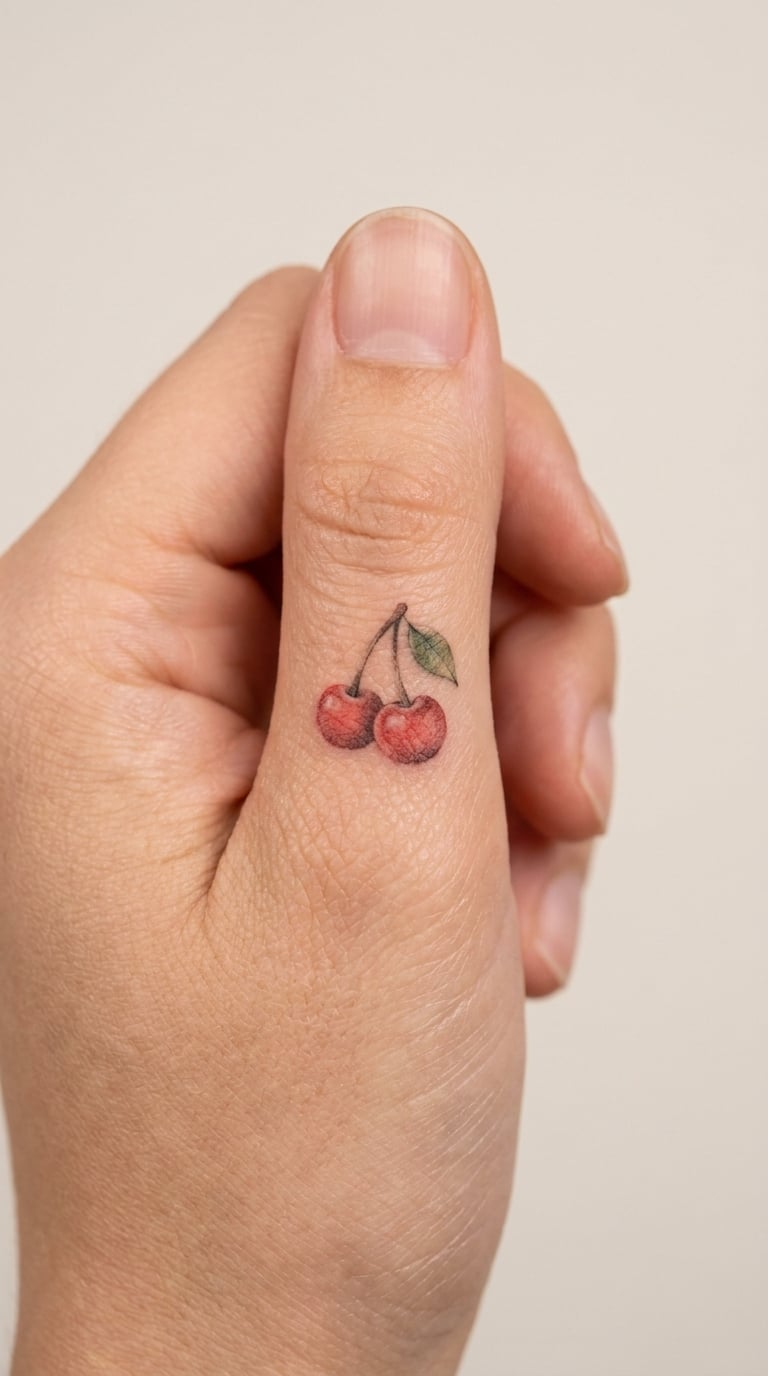
Two small cherries on curved stems with a single leaf, soft highlights on the fruit, and either restrained colour or black-and-grey shading with just the smallest colour accent.
Cherries tend to be chosen for a playful look, a nickname, or a pop of colour on a hand that is otherwise black ink.
Placement: side or back of the thumb. Size: 1.25–2.25 in (3.2–5.7 cm). Style: micro-realism or colour realism.
Pain: medium. Tiny highlights need careful healing and a steady hand, and colour on the thumb softens faster than black line.
Make it yours: choose a red shade that matches something you own, swap in your birth month fruit, or mirror one cherry on the other thumb.
13. Minimal Bee With Transparent Wings
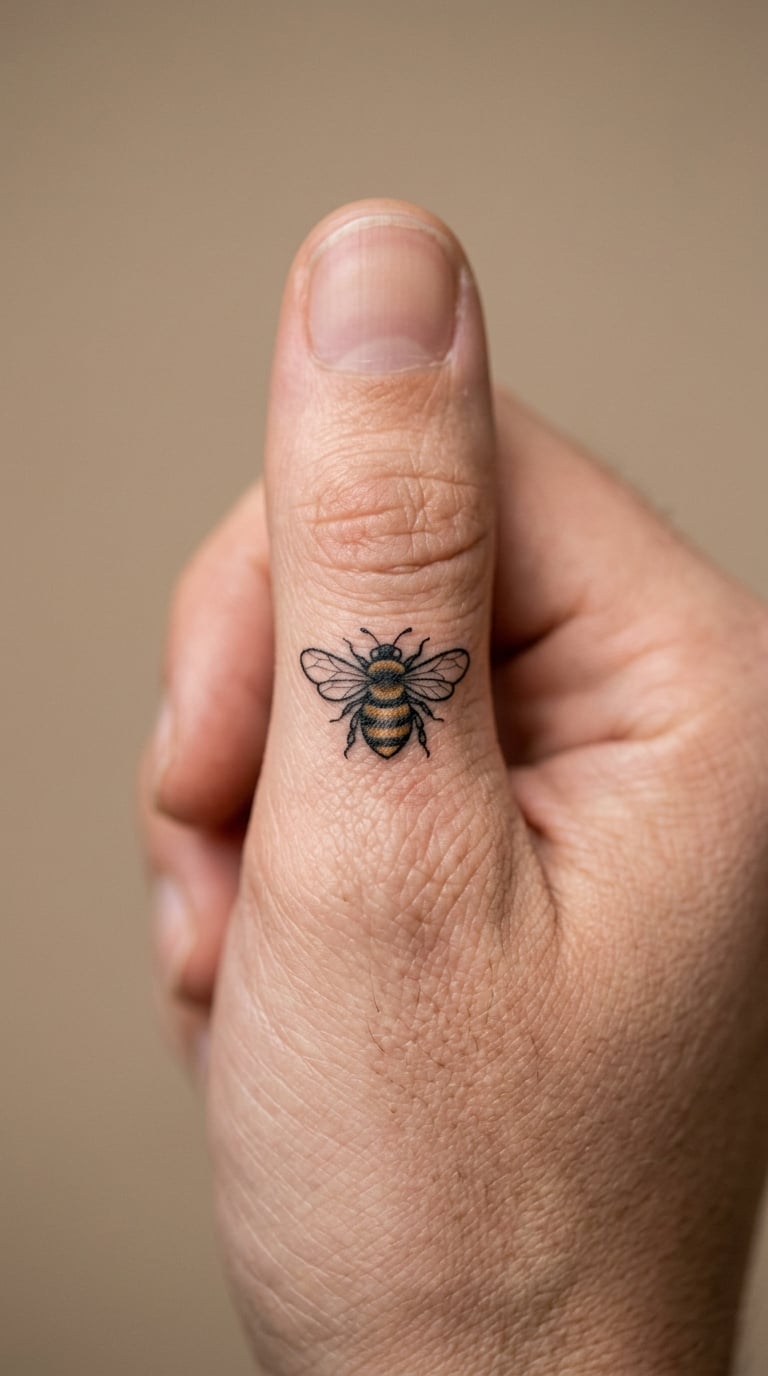
A compact bee with two clean outlined wings left transparent, a striped abdomen and short antennae. One or two filled bands carry the black, the rest stays open.
Industry, nature, community and plain boldness all come up as reasons. It is one of the few tiny motifs that still reads as a shape rather than a smudge.
Placement: back of the thumb, side, or upper thumb. Size: 1.25–2.25 in (3.2–5.7 cm). Style: fine line, illustrative, or micro-realism.
Pain: medium. Narrow stripes lose clarity, so three bands hold up better than five.
Make it yours: use a meaningful yellow, add a small flower the bee is heading toward, or ink the body in a birthstone colour.
14. Dragonfly With Watercolour Wings
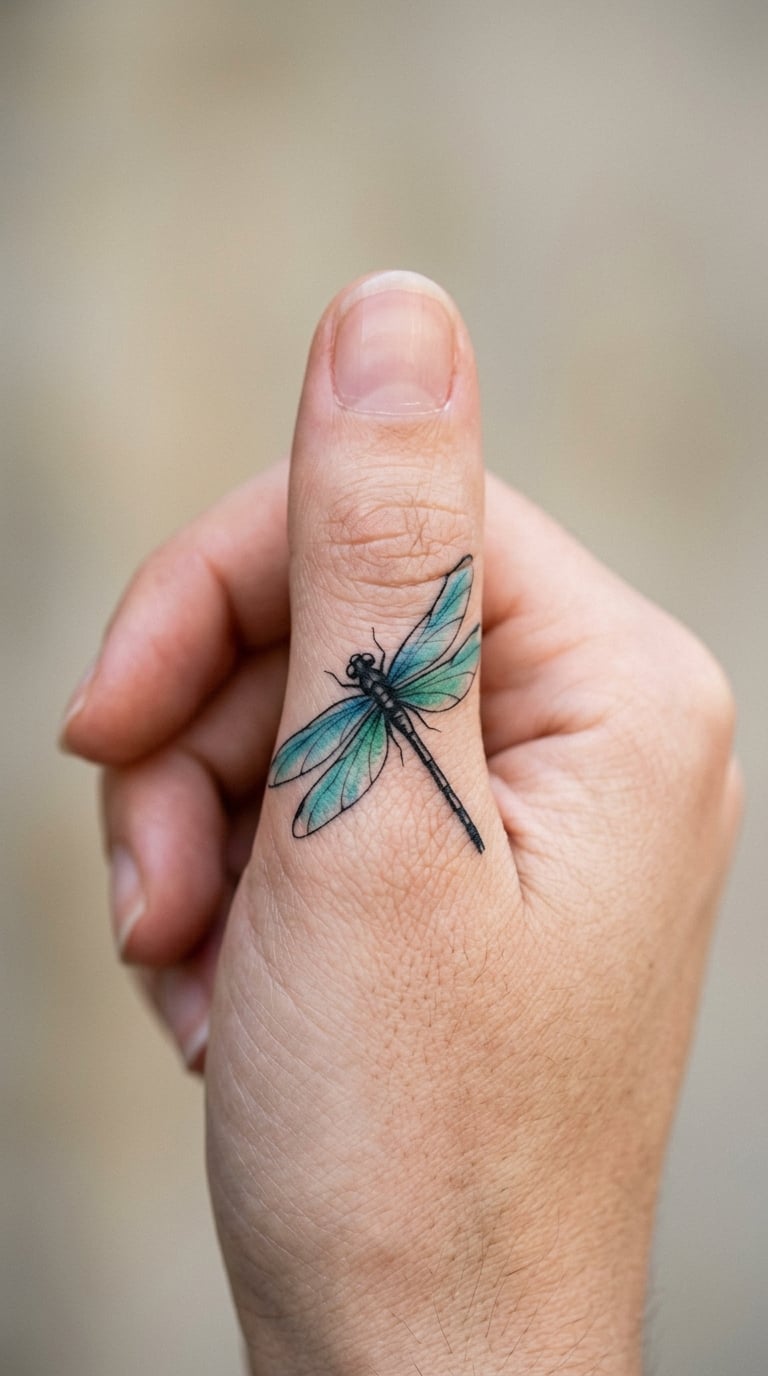
An elongated body in fine black line with four translucent wash wings that fade at the edges. The wash sits behind the line work, so the drawing still reads if the colour fades first.
Change, adaptability, movement and time passing are common reasons people give for dragonflies. None of them are fixed.
Placement: back of the thumb, the side on a diagonal, or the thumb base. Size: 1.75–3 in (4.4–7.6 cm). Style: watercolour or fine-line realism.
Pain: low to medium. Pale washes can lighten noticeably as they heal, so plan for the black line to carry the design.
Make it yours: pick wing colours tied to a place or a person, add a birthstone accent on the body, or get a second dragonfly facing the other way.
15. Traditional Arrow With Clean Feathers
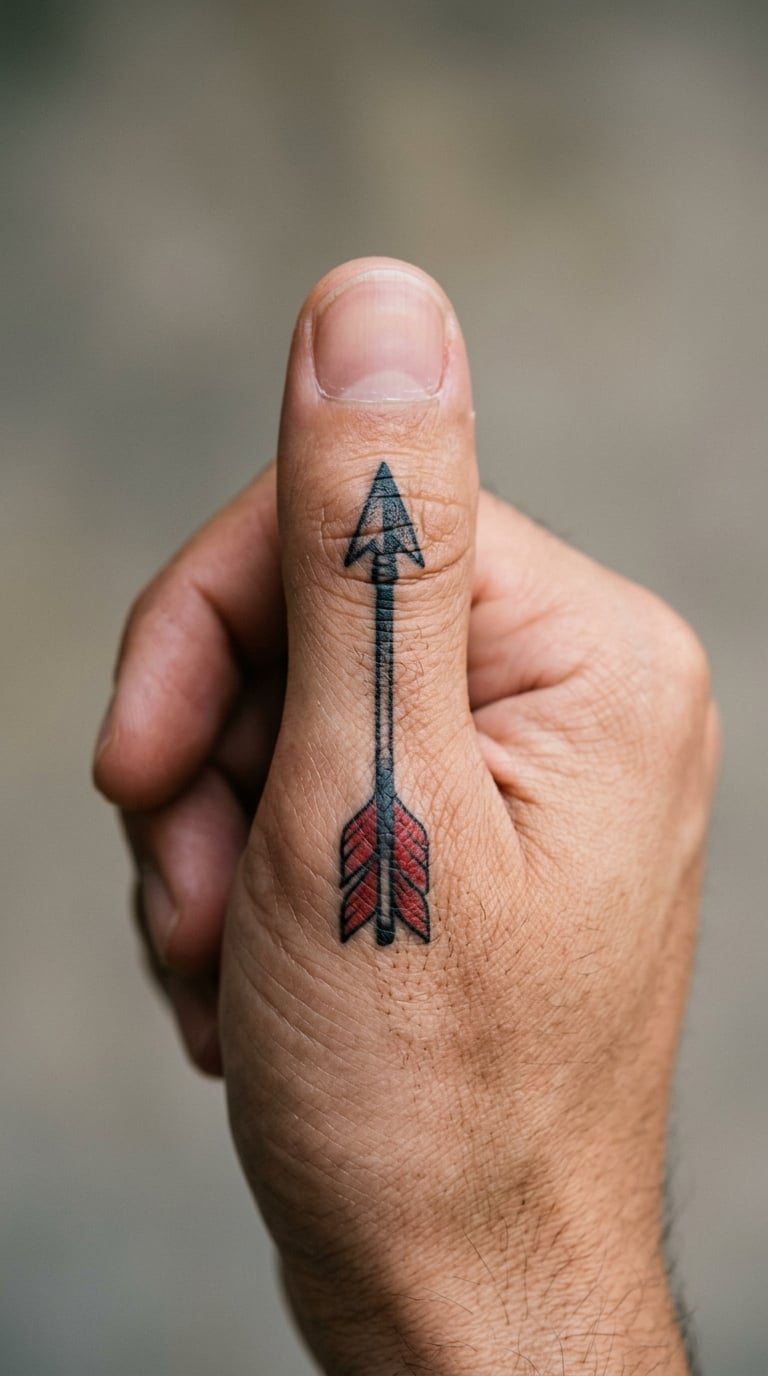
A compact arrow with a solid pointed head, a straight shaft, and three clearly readable feathers. Bold outlines throughout, flat colour inside, no shading.
Direction, momentum, a meaningful journey and protective symbolism are the usual reasons. It is the most traditional option here and suits someone who wants their first piece to feel like a classic.
Placement: back of the thumb lengthwise, the side, or across the thumb. Size: 2–3.25 in (5.1–8.3 cm). Style: traditional or neo-traditional.
Pain: low to medium. Broad outlines age more reliably than tiny interior lines, and the shaft running lengthwise avoids the knuckle crease.
Make it yours: add a date along the shaft, a small compass point at the tail, or a limited red and green fill.
16. Infinity Symbol With Shared Dot Detail
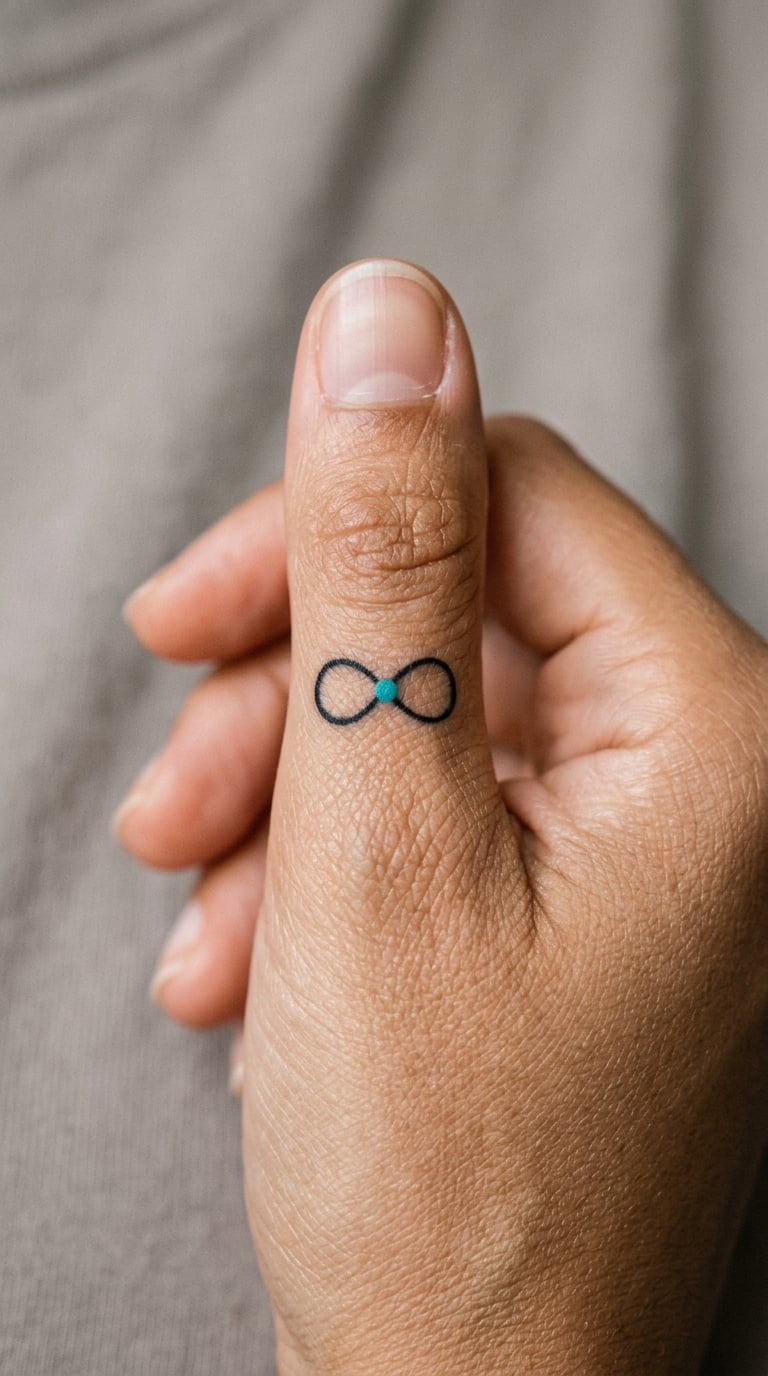
A continuous infinity loop with even line weight on both sides and one or two small accent dots in the centre. Simple geometry, nothing else competing for attention.
Lasting love, family, balance, or a promise to yourself are the reasons that come up most.
Placement: side of the thumb, the back, or the thumb base. Size: 1.25–2.25 in (3.2–5.7 cm). Style: minimal blackwork or fine line.
Pain: low to medium. Narrow loops and small inner dots can blur, so keep the centre dots a little larger than feels necessary.
Make it yours: add a date inside one loop, use a birthstone colour for the centre dot, or get a matching infinity on your partner’s thumb.
17. Geometric Fingerprint With a Hidden Initial
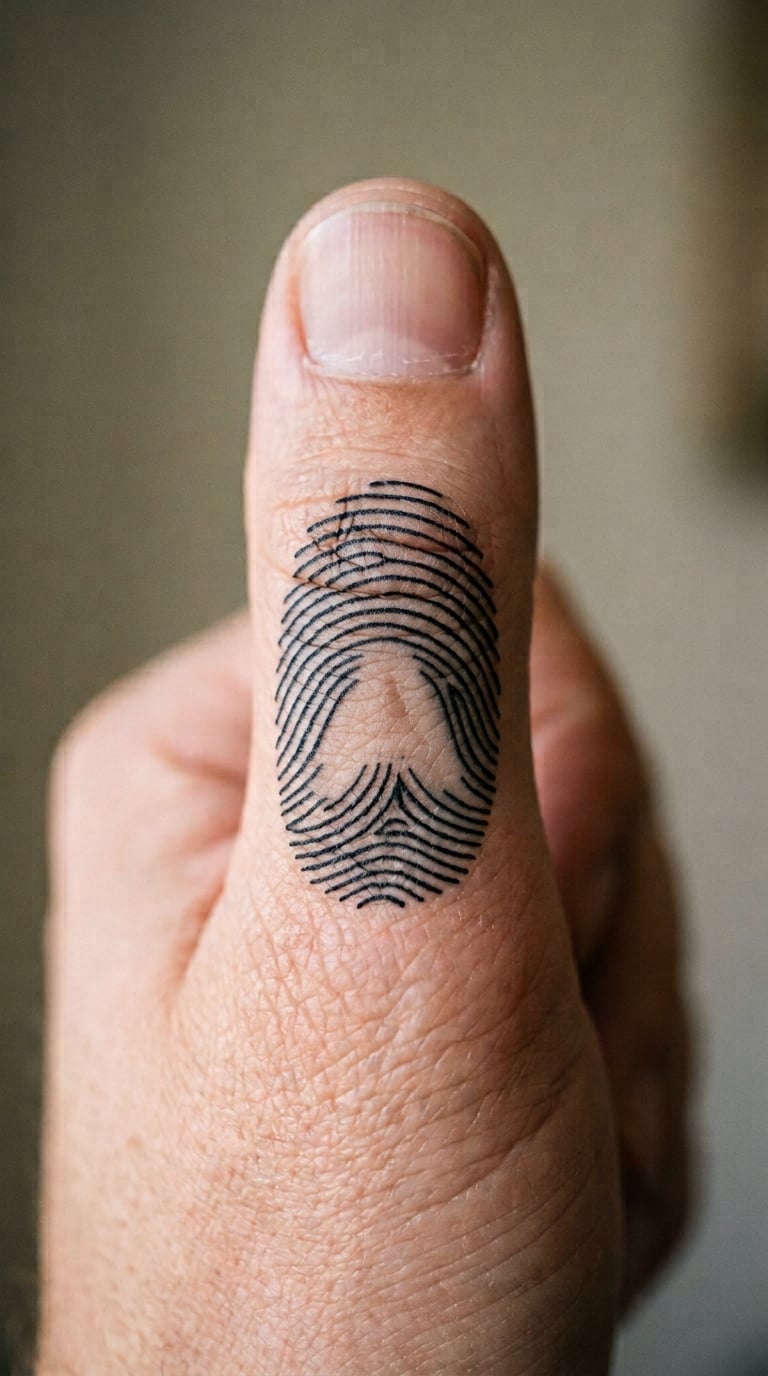
A simplified fingerprint made of short curved ridges with deliberate spacing, not hyper-detail, and one initial tucked into the negative space. The spacing is what makes it read as a print rather than a smudge.
Fingerprints are often chosen as personal or intimate artwork, and as a memorial piece using a loved one’s actual print.
Placement: side of the thumb, the lower thumb, or the thumb base. Size: 1.5–2.5 in (3.8–6.4 cm). Style: micro-realism or geometric linework.
Pain: medium. Thin ridge lines soften with age, which is partly why artists widen the spacing on thumbs rather than copying a print exactly.
Make it yours: bring a clear photo of a real print, add a birth colour to the hidden initial, or keep the initial readable only to you.
18. Tiny Cat Portrait With Focused Eyes
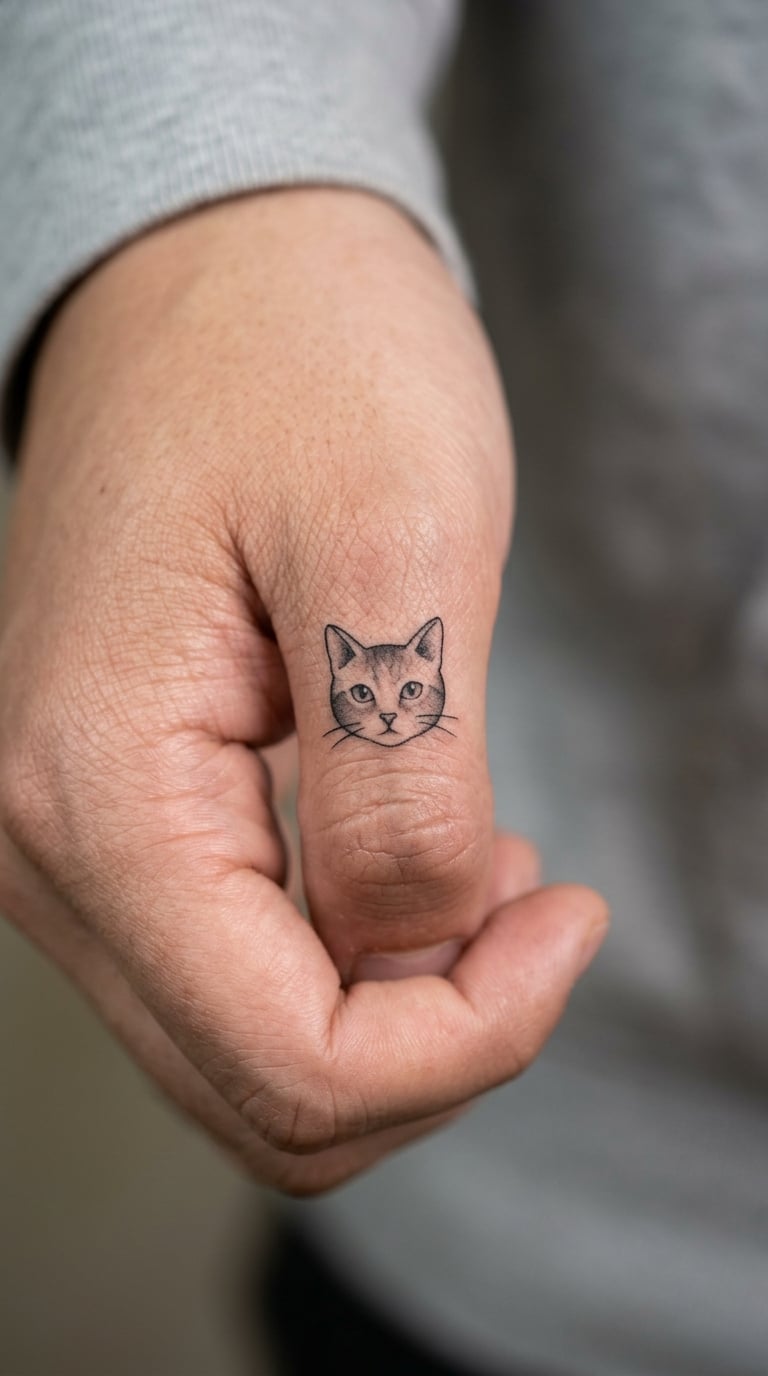
A small cat face with two clear eyes, minimal ears, a few cheek lines and no background. The eyes carry the whole design, so they get the most contrast.
Companionship, personality, a specific pet, or simply the appeal of the design are the usual reasons. It is a good match for someone adding a playful piece to an existing hand set.
Placement: side of the thumb, the back, or the outer edge. Size: 1.25–2.25 in (3.2–5.7 cm). Style: micro-realism or illustrative linework.
Pain: medium. Eyes are unforgiving if undersized, and going under about 1.25 in is where they stop reading.
Make it yours: add whisker dots, tint the eyes with your pet’s real eye colour, or add a small matching paw on the other hand.
19. Miniature Compass With an Arrow North
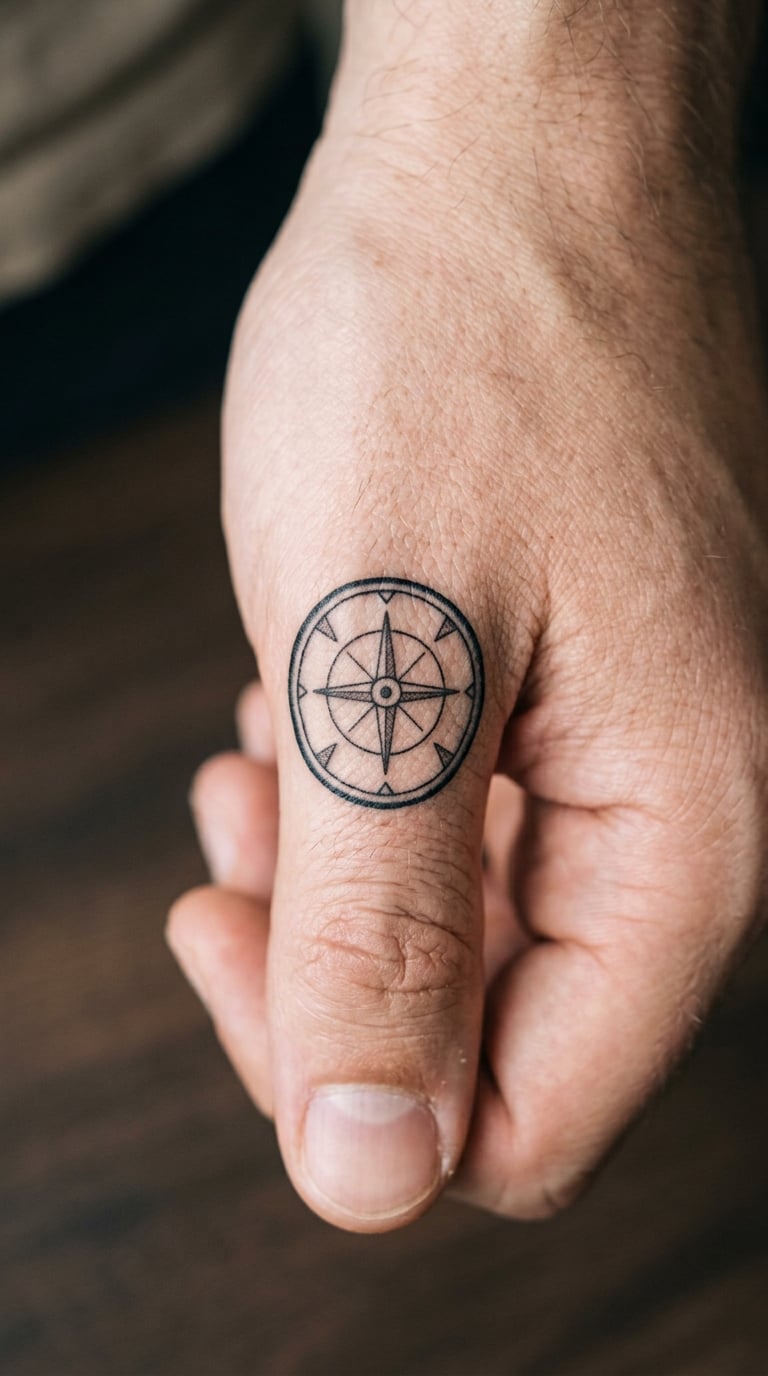
A circular compass with a dark border, four simple cardinal marks, a fine arrow pointing north, and either minimal lettering or none at all. The circle gives it structure on a curved surface.
Travel, guidance, heritage, or a direction someone values all show up as reasons. It pairs well with the mountain range or the arrow if you are building a small set.
Placement: back of the thumb, the side, or the thumb base. Size: 1.5–2.5 in (3.8–6.4 cm). Style: traditional, navigational, or fine line.
Pain: low to medium. Tiny cardinal letters blur fastest, so marks instead of letters are the safer call.
Make it yours: engrave real coordinates inside the ring, name a destination on the underside, or colour the north point.
20. Script Initial With a Clean Underline
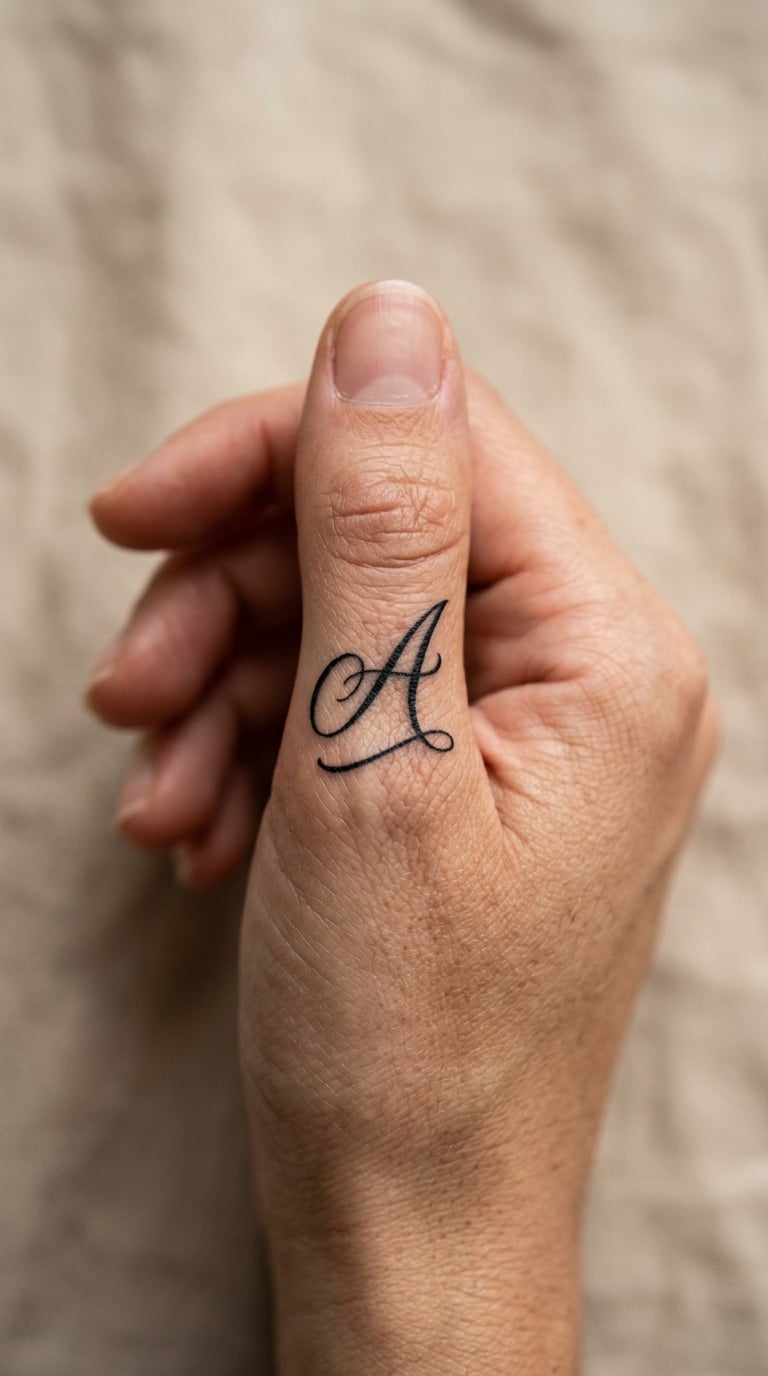
A single initial in compact script or modern calligraphy with one modest underline flourish, set vertically so the letter runs along the thumb rather than across it.
Letters are often chosen for personal identity, a relationship, a surname, or a minimalist look that adds ink without adding noise.
Placement: side of the thumb, the back, or the outer edge. Size: 1.25–2.5 in (3.2–6.4 cm). Style: calligraphy, fine line, or minimalist.
Pain: low to medium. Thin script on the hand fades and spreads as the skin changes, so a slightly heavier letterform ages better than a hairline one.
Make it yours: have the artist draw the exact letterform you want rather than a generic capital, or finish it with a single birthstone dot.
How to Choose the Right Design
Start from the canvas, not the drawing. A thumb gives you roughly one to three inches of usable surface that curves sharply and sits over bone, and the design has to survive both. Reference art rarely survives a scale check, which is where a lot of disappointing thumbs come from.
- Pick the line weight first. Bold blackwork holds its shape on a thumb better than single-needle fine line. If you want fine line, choose a simpler design with fewer interior marks.
- Match the design to the placement. Side placements suit vertical shapes like sprigs and arrows. The back of the thumb takes round or square motifs such as a sun or a compass. The skin behind the thumb is flatter and good for small landscape work.
- Check your existing collection. If you already have finger ink, match line weight and finish rather than mixing a single-needle piece with heavy blackwork in the same hand.
- Think about ten years, not ten days. Anything with interior detail, hairline stars, tiny text or a colour gradient will need a touch-up. A touch-up is normal on hands, not a sign the artist did badly.
- Use a realistic size. Below about 1 inch most designs turn to mush. If your idea cannot be enlarged to 1.25 in or more, simplify it before you book.
20 Thumb Tattoo Ideas by Size and Style
Micro options, roughly 1 to 1.5 in, work best for a single letter, one cherry, a small sun, or a cat face. They are quick and they read as a detail rather than a statement, and they are the easiest place to over-detail.
Small designs, around 1.5 to 2.5 in, cover most of this list: the rose, the butterfly, the wave, the key, the mountain range. This is the range where fine line still holds up if the design is simple, and where bold blackwork is comfortable.
Medium work, 2.5 to 3.25 in, is for wrapping pieces like the snake or a lengthwise arrow. Colour and watercolour sit in the middle too, where there is enough surface for a wash but not so much that fading ruins the design.
Blackwork ages most reliably, colour fastest fades, and micro-realism lives in between when the artist keeps shading sparse. Whatever you pick, ask to see healed examples of that exact style on fingers before you commit.
Cost and Session Time
Small does not mean inexpensive. Artists charge by the hour and by the difficulty of the work, not by how much skin it covers, so a thumb piece is priced like a small piece of session time plus a shop minimum.
- Micro designs such as a letter, a small sun or a bee usually run around USD 80 to 200.
- Small standalone designs such as a rose, a butterfly, a key or a wave usually run around USD 150 to 350.
- Larger or more detailed work on the same thumb can cost more, especially micro-realism with soft shading, watercolour, or a design that wraps the full width of the thumb.
- Session length usually falls between 30 and 120 minutes. Anything past two hours on a thumb is worth questioning, because the skin gets hard to work and the result suffers.
Rates vary by city, by artist, and by shop minimum, and a studio’s minimum may cover a small tattoo at no extra charge. Ask what the minimum is before you send reference images, so nobody is surprised at the counter.
Aftercare Basics
Your artist’s aftercare instructions come first, and they will adjust them for the placement and the style. Use these as the general shape of hand and thumb aftercare.
- Wash it gently. Clean with lukewarm water and a mild unscented soap, then pat dry with a clean towel or paper. No scrubbing, no loofah, no soaking.
- Protect the area from friction. Skip rings on that hand while it heals, and be careful with gloves, steering wheels, phone grips and handwashing for the first couple of weeks.
- Keep sunscreen off it. Hands get sun exposure all day without anyone noticing. Once healed, daily sunscreen on the back of the hand does more for your tattoo than anything else.
- Do not cover it for long. A wrap held on for hours traps moisture and can irritate the skin. If your artist gave you a specific covering window, follow that instead.
- Moisturise thinly. A light layer of a plain healing ointment or unscented lotion a few times a day keeps the skin from drying out and cracking as it peels.
- Know when to call someone. Spreading redness, swelling, warmth, pus, a fever, or a red streak running away from the design are signs to contact your artist and a qualified medical professional.
Hand ink heals with visible scabbing and peeling, and the tight feeling many people get on day three or four is normal rather than a problem. If it hurts more as it heals rather than less, message your artist.
Frequently Asked Questions
Are thumb tattoos a good choice for a first tattoo?
Often yes, if you choose a simple shape. A thumb is a small canvas, so a sun, a single letter, a tiny bee or a simple leaf is a realistic first piece, and the session is usually short. The tradeoff is visibility: it is the hardest hand placement to hide, and some artists prefer clients with healed tattoos before they take on finger work. Pick a bold, uncomplicated design and ask your artist directly whether they would tattoo a thumb as a first piece.
Will a small thumb tattoo blur or fade over time?
Some fading is normal on the hand, yes. Hands get sun, friction and constant movement, so a thumb tattoo fades faster than ink on an arm or ribs. Fine line, hairline stars, tiny text and colour gradients lose definition first, while bold blackwork holds up best. Many people book a touch-up once the skin has fully settled, usually after a few months, and that is routine on fingers rather than a mistake.
How much should I leave room around a thumb tattoo?
Aim for roughly a quarter inch of clear skin on each side, and more at the base near the hand. A design that runs edge to edge across the thumb distorts as you flex it. Leave the knuckle crease and the fold beside the thumb free, because ink placed there will stretch and blur. If your design needs more room than that, it belongs on the back of the hand or the forearm instead.
Can a thumb tattoo be made colourful without losing its delicate look?
It can, but only with restraint. One or two colours, used as flat fills inside a black outline, keep a design readable at small scale. Full colour realism on a thumb loses contrast as it heals, and pale watercolour can fade to almost nothing. Ask for a design that works in plain black first, then decide whether the colour is an accent or the main event. That way the piece still reads if the colour changes over the years.
What should I ask to see before booking a thumb tattoo?
Ask to see healed photographs of the same style on fingers or thumbs, not just fresh work. Hand tattoos are a specialism, and a portfolio full of forearm pieces does not tell you much. Also ask what happens if a line falls out during healing, whether the artist offers a touch-up, and how long the design needs to be at that size before it is tattooed. If they decline the placement outright, that is usually a good sign.
Conclusion: Find Your Ideal Small Design
If this is your first tattoo, the bold rose or the snake wrapping the thumb is the strongest starting point. Both have enough weight to stay readable as they age, and both suit a short first session.
If you already have hand ink, a fine-line sprig, a script initial, or the tiny cat portrait adds interest without fighting what is there. Keep the line weight consistent with your existing pieces.
Whichever way you go, check the sizing notes on these 20 thumb tattoo ideas against the actual space on your thumb, and choose your artist on the final design, the placement, and healed examples of the same work on fingers.