
20 Chain Tattoo Ideas for Women to Try (October 2026)
If you are searching for 20 chain tattoo ideas for women, the useful thing is not another wall of inspiration photos. It is knowing how each design behaves once it is on skin: how small the links can be before they turn to mush, which placements fade first, and what a chain looks like in five years rather than on day one.
These 20 designs run from a fine-line paperclip chain you could mistake for a bracelet to a heavy blackwork cable chain that reads like armour. Every entry covers what the piece looks like, why people choose it, where it sits best, a realistic size, the pain to expect, and one way to make it personal. The roundup is written for 2026, and sizes are in inches with centimetres in brackets, the way most artists quote them.
One thing worth knowing before you scroll: a chain is one of the few motifs that looks like nothing if it is drawn badly. Links need to alternate over and under, stay evenly sized, and taper slightly at the ends. Ask any artist for a healed example of a chain they have done five years ago, not a fresh one.
20 Chain Tattoo Ideas for Women: Quick Guide
All twenty designs in order, with the practical details side by side. Pain is described for the placement listed, on a low to high scale.
| Idea | Style | Best placement | Size | Pain |
|---|---|---|---|---|
| 1. Paperclip chain | Fine line | Inner wrist | 2 to 2.5 in (5 to 6 cm) | Low to medium |
| 2. Interlocking hearts chain | Fine line, light outline | Collarbone | 3 in (7.5 cm) | Medium |
| 3. Lobster-clasp chain | Fine line, grey shading | Behind the ear | 1.5 in (4 cm) | Low to medium |
| 4. Bead chain wrap | Micro fine line | Ring finger | 1 in (2.5 cm) | Medium |
| 5. Cable chain | Blackwork | Inner forearm | 4 in (10 cm) | Medium |
| 6. Infinity-link chain | Fine line with grey | Shoulder | 2.5 in (6 cm) | Medium |
| 7. Flower chain | Watercolour | Upper back | 4 in (10 cm) | Medium |
| 8. Butterfly chain | Fine line | Upper spine | 3.5 in (9 cm) | Medium to high |
| 9. Snake-scale chain | Blackwork | Rib area | 3 in (7.5 cm) | High |
| 10. Birthstone bead chain | Micro colour | Finger | 1 in (2.5 cm) | Medium |
| 11. Bicycle-chain link | Micro-realism, black and grey | Outer calf | 2.5 in (6 cm) | Medium |
| 12. Thorned vine chain | Fine line, optional muted green | Ankle | 3 in (7.5 cm) | Medium to high |
| 13. Rose chain | Traditional | Outer upper arm | 3 in (7.5 cm) | Medium |
| 14. Rosary chain | Dotwork | Inner forearm | 2.5 in (6 cm) | Medium |
| 15. Star chain | Fine line | Side of neck | 2 in (5 cm) | Medium to high |
| 16. Two lions with a chain | Blackwork, stippled | Outer thigh | 4 in (10 cm) | Medium |
| 17. Broken and reconnected chain | Fine line with colour accent | Wrist | 2.5 in (6 cm) | Low to medium |
| 18. Key-and-lock chain | Black and grey linework | Inner upper arm | 3 in (7.5 cm) | Medium |
| 19. Pearl and gold-link chain | Soft realism, two inks | Upper chest, near collarbone | 2.5 in (6 cm) | Medium |
| 20. Open cuff chain | Blackwork | Upper arm | 3 in tall (7.5 cm) | Medium |
1. Fine-Line Paperclip Chain at the Wrist
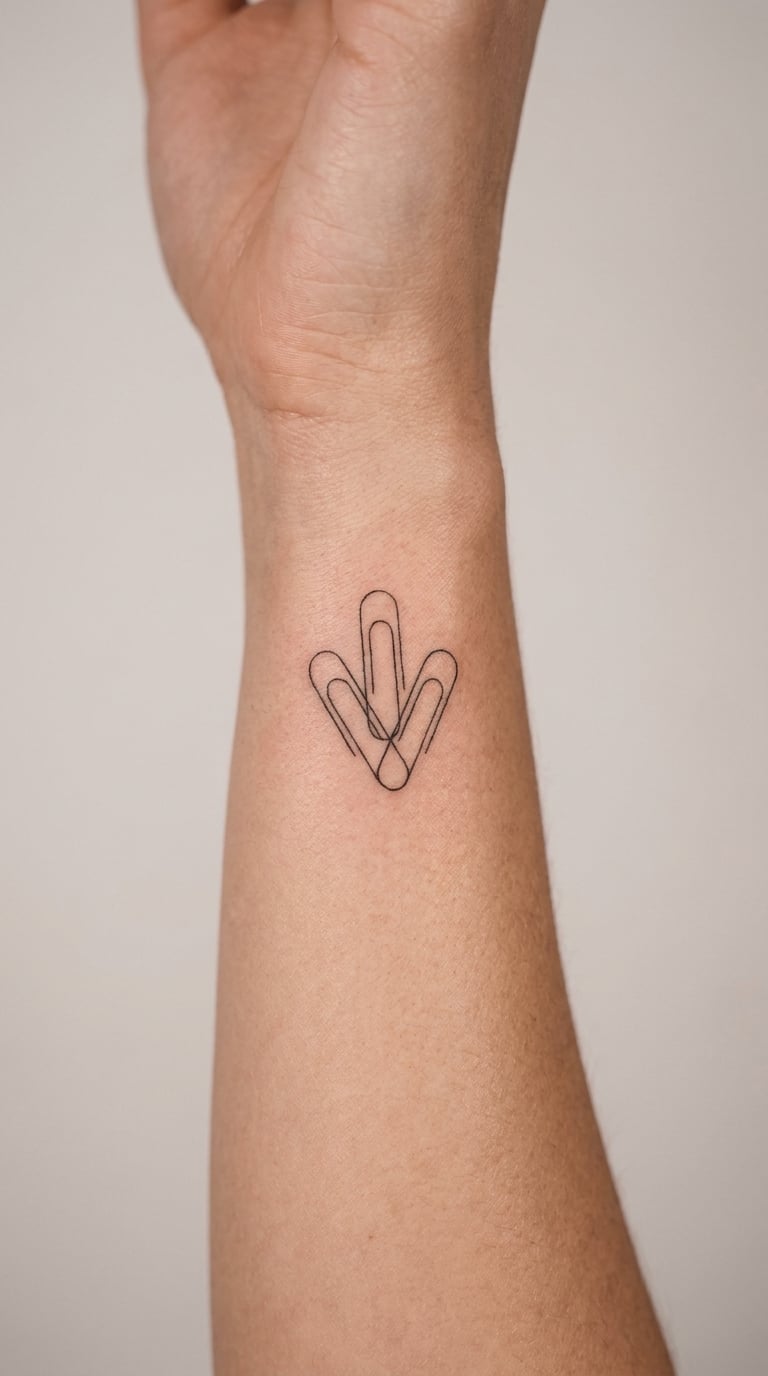
Three linked paperclips drawn in a single-weight black line, each loop unbroken and evenly spaced so the shapes read as objects rather than scribbles. Some artists add a soft silver-grey wash inside one loop to suggest metal catching light. Keep the whole thing restrained: the appeal is in the quiet geometry.
Most people pick it for how it looks rather than what it says, which is fine. The interlocking shape quietly suggests closeness, but nobody will read a meaning into it for you.
Placement: inner wrist, just above the bone. Size: 2 to 2.5 inches (5 to 6 cm) across. Style: fine line, single-needle black. Pain: low to medium; the inner wrist is thin-skinned but bony, and a slow session is easier than a fast one.
Fine wrist lines soften noticeably over the years, so ask for a slightly heavier line than feels comfortable while you are watching. If you want more restrained linework to sit beside it, our 20 line art tattoo ideas for women roundup goes deeper on the same aesthetic.
Make it yours: have the year you started something you are proud of tucked inside the middle paperclip.
2. Interlocking Hearts Chain on the Collarbone
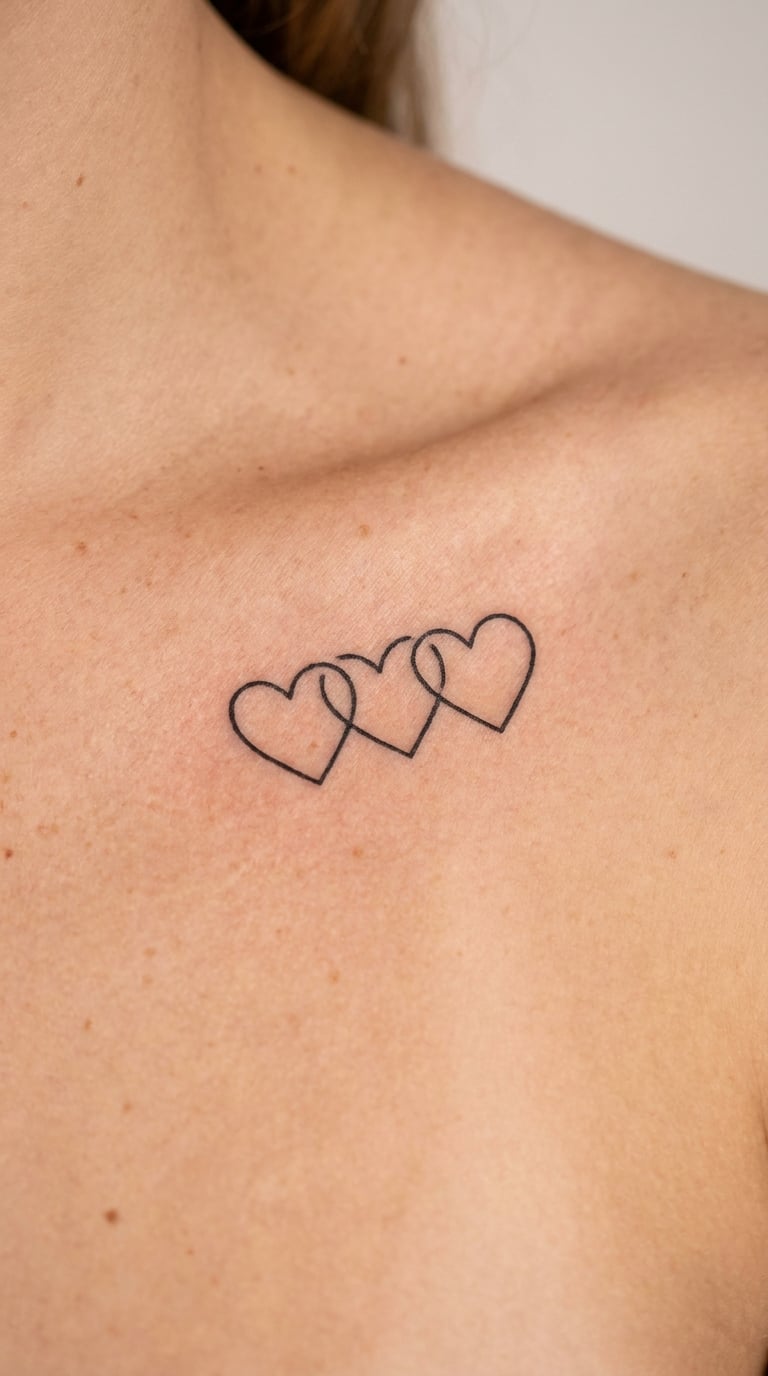
Three outlined hearts joined like links, drawn with clean contours and only enough shadow to suggest one heart sitting in front of the next. Kept flat rather than shaded heavily, it looks like jewellery in a line drawing.
This one is commonly chosen for relationships, family or a specific personal story. What it actually means stays between you and whoever asks.
Placement: along the collarbone, following the bone line. Size: about 3 inches (7.5 cm) wide. Style: fine line with light outline shadow. Pain: medium. The collarbone is a bony, sensitive strip and collarbone work is often more uncomfortable than people expect.
Healed examples matter more here than anywhere else on this list, because outlines soften into a blur if they were placed too thin.
Make it yours: use the birth months of the people the hearts stand for, one heart each.
3. Lobster-Clasp Chain Behind the Ear
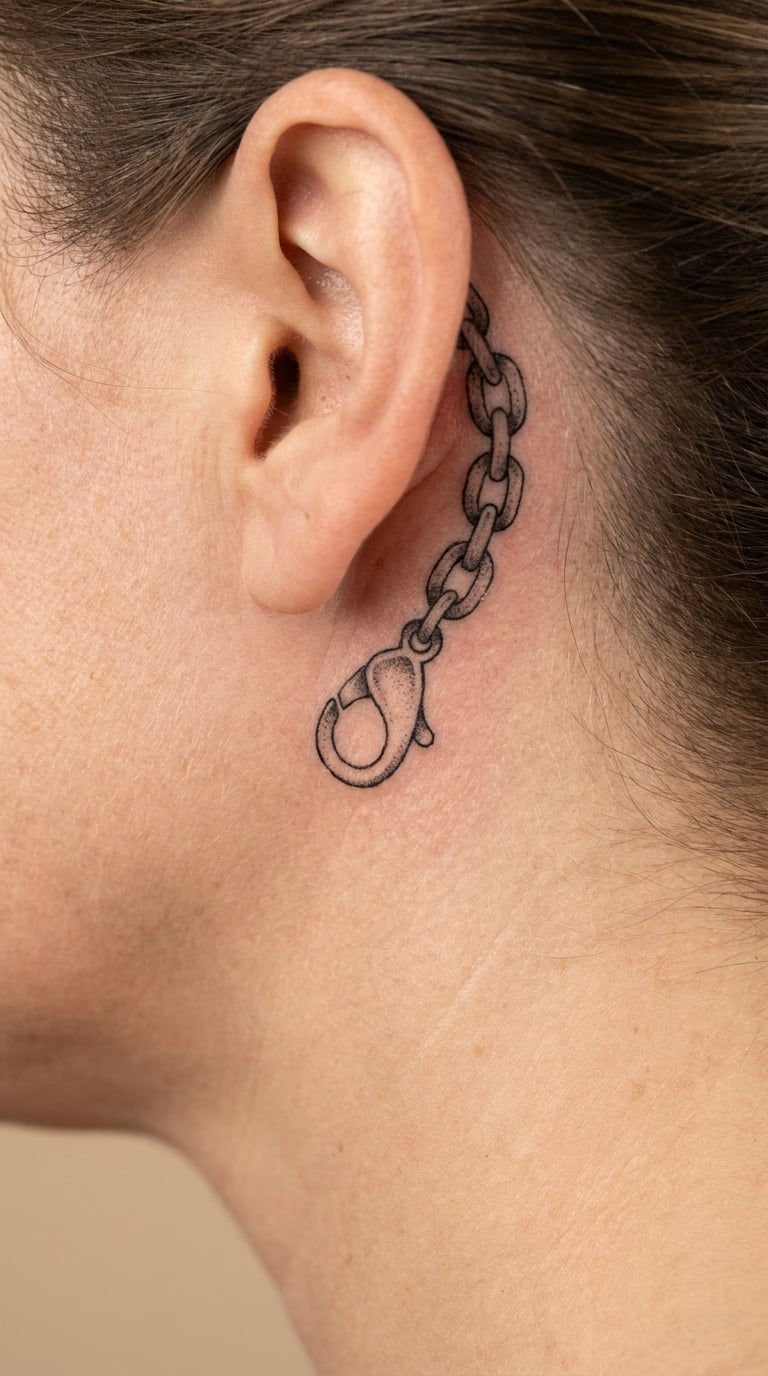
A single lobster clasp with a few short links trailing from it, drawn in crisp black line with grey shading in the hinge and pin. The industrial detail is what makes it interesting: it is jewellery hardware, drawn honestly.
It suits someone who wants a small, understated emblem of strength or of holding things together. There is no single agreed reading, so decide for yourself.
Placement: behind the ear, or just below the lobe. Size: 1.5 inches (4 cm) wide. Style: fine line with soft grey shading. Pain: low to medium. Skin here is thin and the nerve endings are close to the surface, so the sensation is sharp rather than deep.
Fine detail near the ear is one of the first things to fade, particularly the pin and hinge lines.
Make it yours: have a single initial cut into the body of the clasp at the same line weight as the outline.
4. Delicate Bead Chain on the Finger
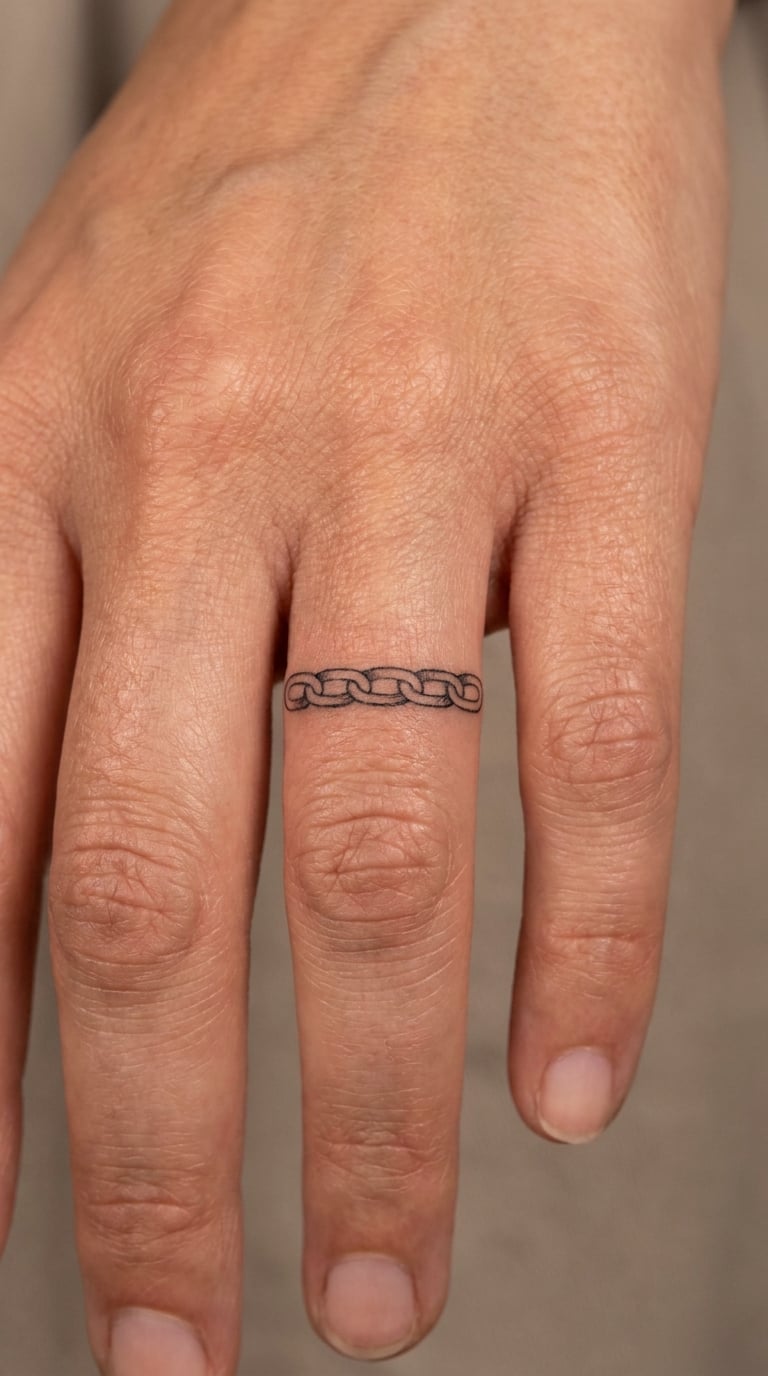
Alternating small circles and oval links that sit side by side like a fine beaded chain, drawn in minimal black line with even spacing. Tiny highlight dots inside alternating links add a hint of shine without adding weight to the piece.
It reads as understated body jewellery, or it joins a set of coordinated hand tattoos. Either way, the appeal is the effect rather than a meaning.
Placement: wrapping the ring or index finger. Size: around 1 inch (2.5 cm) of circumference shown as five links. Style: micro fine line. Pain: medium. Fingers are bony and the skin is thin, so the sensation is sharp and the session is short.
This is the riskiest entry for blur. Micro finger lines and small details soften faster than anything else in the roundup, and knuckle wear accelerates it. Our notes on small hand tattoo ideas for women that age well explain why some placements hold and others do not.
Make it yours: have five links, one for each birth month you care about, with the month in question left as an empty circle.
5. Blackwork Cable Chain on the Forearm
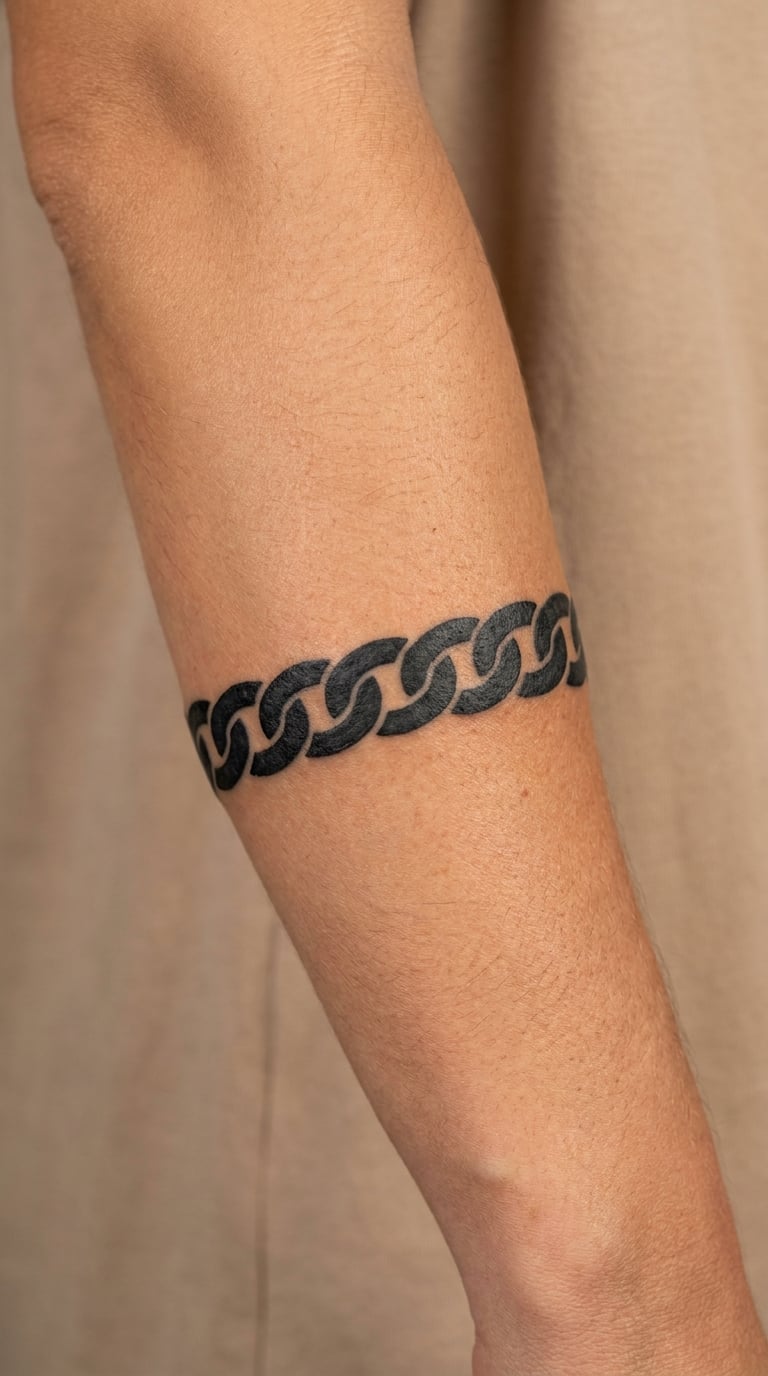
A heavy cable chain built from alternating oval links filled with dense black ink, with only narrow gaps of skin left between them. Solid coverage is what gives it visual weight, and a fully blacked-out link at one end stops the pattern from looking unfinished.
The construction reads as strength and resilience, and people choose it when they want a piece that announces itself quietly. The symbolism is a reading, not a rule. If symbolism is the reason rather than the look, our list of tattoo ideas that represent strength for women is worth a read alongside it.
Placement: lengthwise on the inner forearm, or around the upper arm. Size: 4 inches (10 cm) long, or larger if you want a full wrap. Style: blackwork. Pain: medium. Large solid areas take longer, and a four-inch patch of black is a solid two-hour commitment for most people.
Blackwork holds its shape better than fine line, which is one of the better long-term bets in this theme.
Make it yours: break the pattern once with a small filled shape, such as a lightning bolt, a flower or a solid date.
6. Infinity-Link Chain on the Shoulder
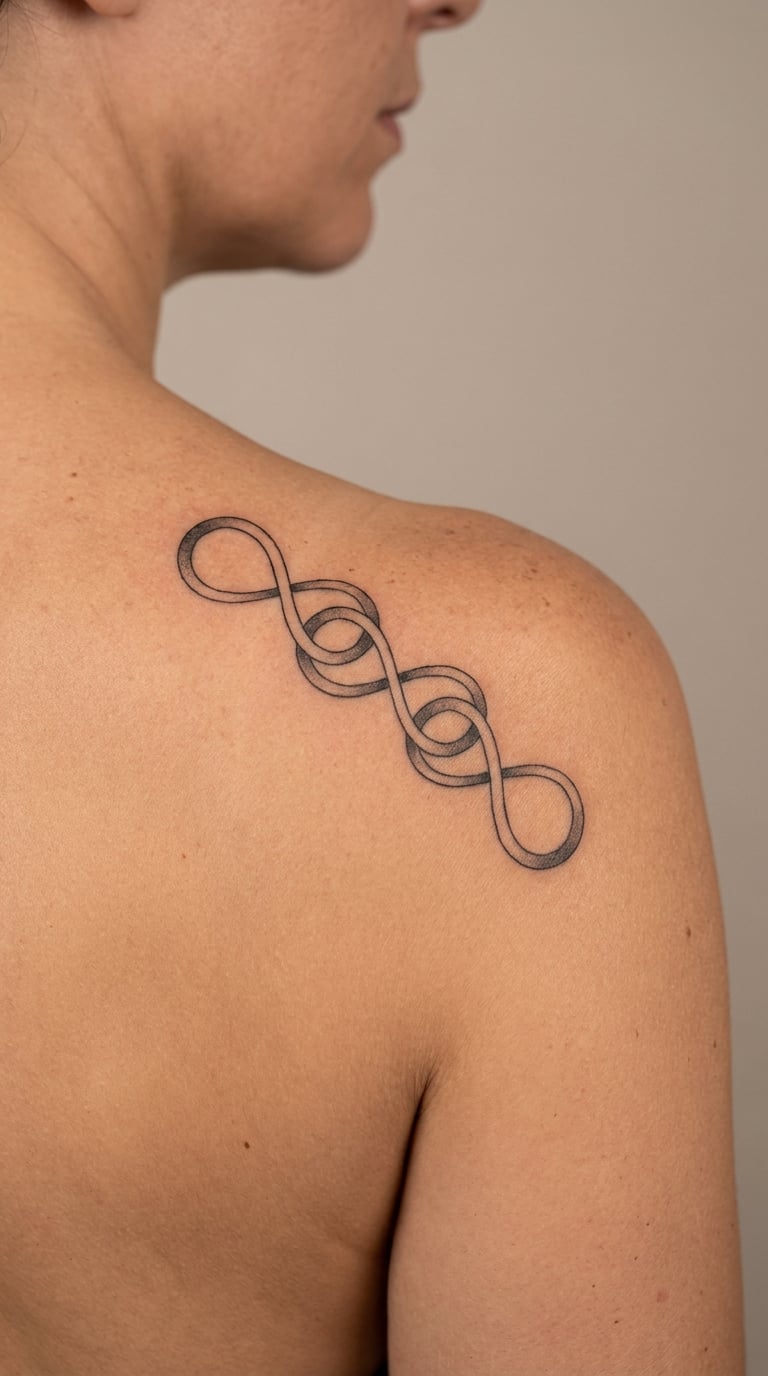
Three infinity-shaped links connected into a loose chain, drawn with consistent medium-weight line and a soft grey wash inside each curve. Leaving open space around the links keeps it wearable rather than visually heavy, which matters on a shoulder that curves.
The infinity form is often chosen to reflect continuity, affection or a chapter that is still going. Plenty of people simply like the shape.
Placement: curving over the shoulder toward the collarbone, or on the upper back just below the neck. Size: 2.5 inches (6 cm) wide. Style: fine line with grey shading. Pain: medium. Shoulders have thin skin over the top and are rarely still, so a longer session is normal.
Designs that follow the shoulder curve will shift a little as the body changes; an artist can stretch the stencil slightly to account for that.
Make it yours: set the links over a coordinate or a date that means something to you.
7. Watercolour Flower Chain Across the Back
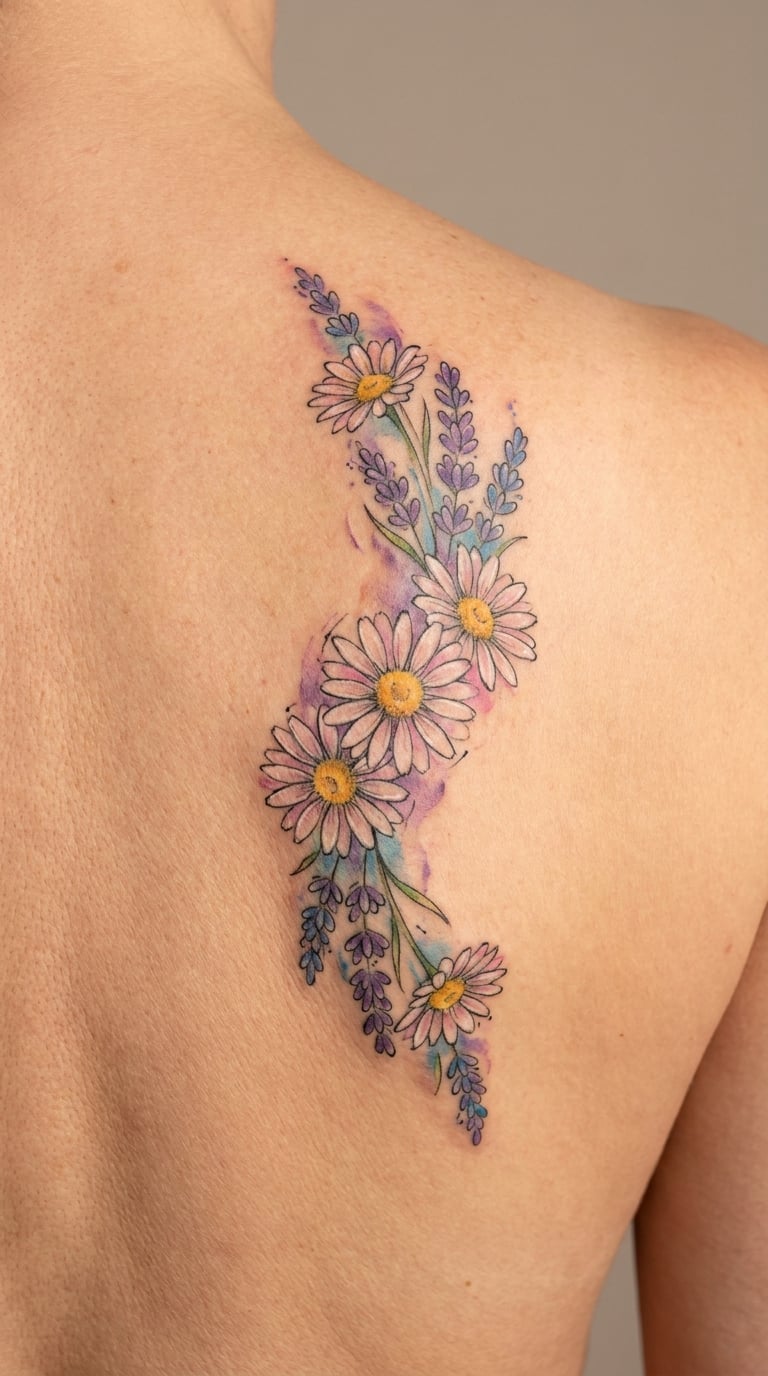
A loose chain of small daisies, lavender sprigs and poppies rendered in translucent pink, blue, yellow and green washes, with the links suggested by thin stems rather than drawn. Colour bleeding slightly past the outlines is part of the effect.
This is often chosen to soften a mechanical motif, or to mark growth, nature or a renewal. The reasoning stays personal.
Placement: across the upper back, or along the shoulder blade. Size: 4 inches (10 cm) or longer. Style: watercolour. Pain: medium, and colour work takes more passes, so plan on a longer sitting.
Watercolour sits lighter in the skin than blackwork and fades toward a wash rather than a hard edge. Sun exposure speeds that up noticeably.
Make it yours: use flowers from a real garden your family kept, or from a wedding or a place that mattered.
8. Fine-Line Butterfly Chain on the Spine
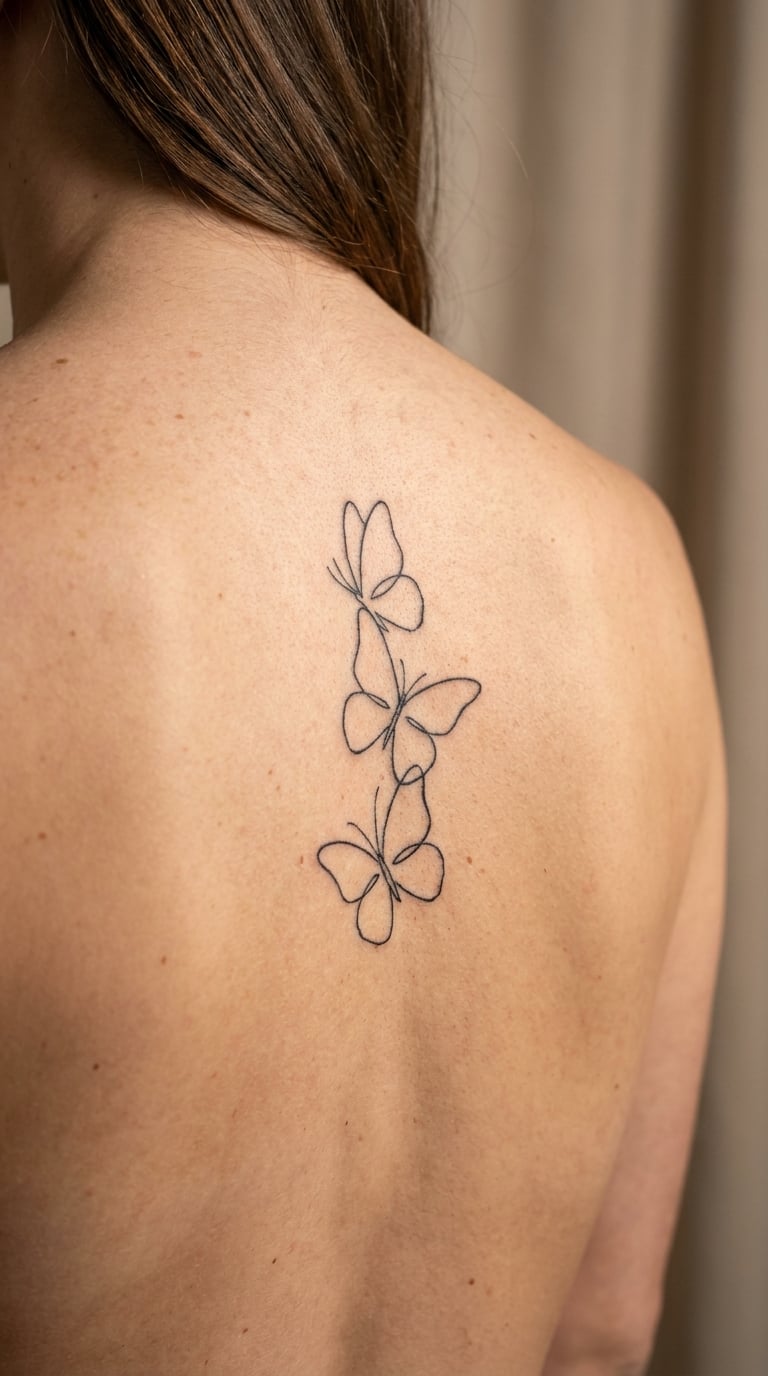
Three butterflies connected by thread-like chain links, alternating between symmetrical and angled wings in fine black line. The connecting segments are deliberately thin so the eye moves along the piece rather than stopping at each butterfly.
Butterflies are often chosen for change or personal growth. Equally, plenty of people just like how they look, and both reasons are fine.
Placement: centred down the upper or mid spine, following the dip between the shoulder blades. Size: 3.5 inches (9 cm) long. Style: fine line; ask about any dotwork or wash only if the artist expects it to hold at that size. Pain: medium to high. The spine is sensitive and the area often tightens involuntarily, which is uncomfortable rather than sharp.
Fine wing lines on the back fade more slowly than lines on the hands, but the tiny interior wing lines are the first to go.
Make it yours: choose butterfly species from a place you have been, or from a garden you grew up near.
9. Snake-Scale Chain on the Rib
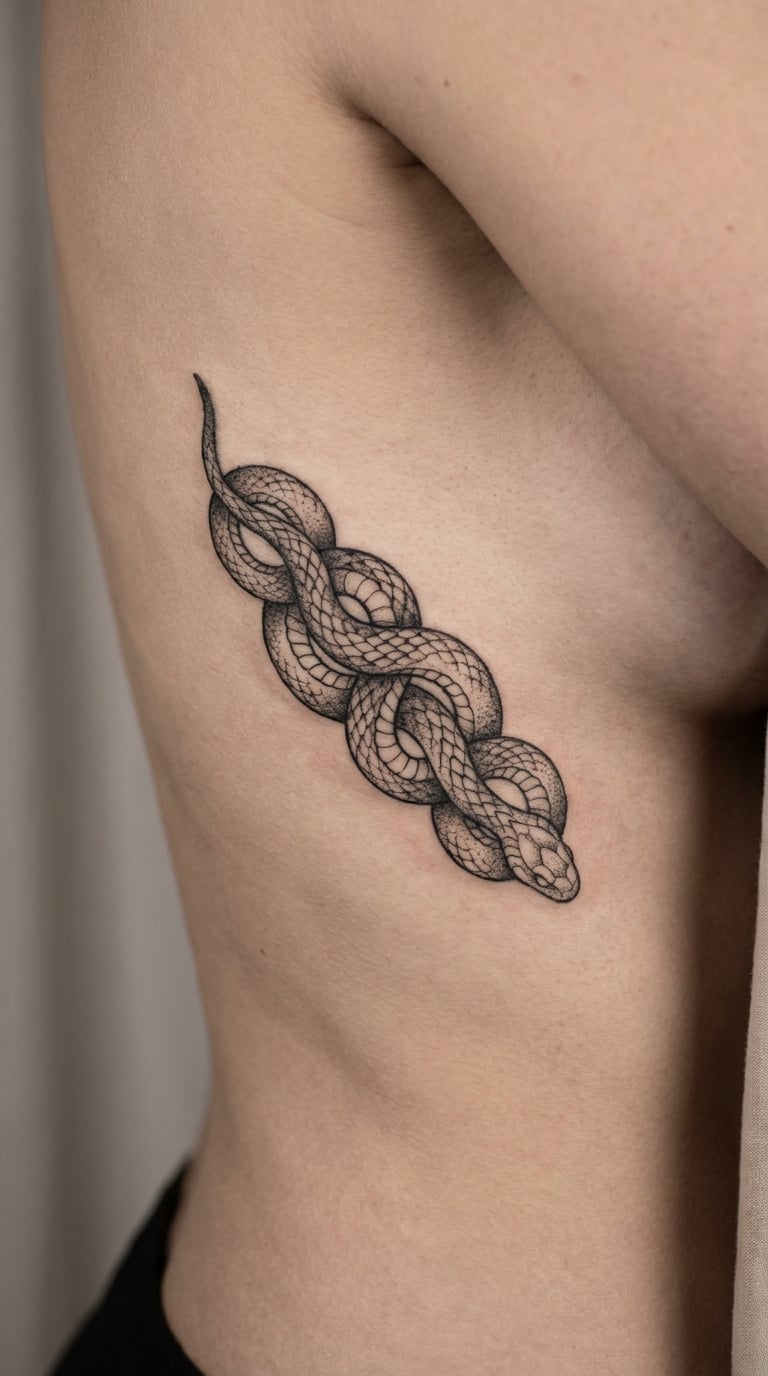
A narrow band built from repeating interlocking oval links, each filled with an alternating black scale texture that follows the curve of the link. The scale pattern is what turns a plain chain into something with a surface, and it works best in solid black.
The snake element draws on ideas of transformation and protection, and the result appeals to people who want a bold, tactile pattern rather than a delicate one.
Placement: along the side of the ribs, following the rib line. Size: 3 inches (7.5 cm) long. Style: blackwork. Pain: high. Ribs are the most commonly reported painful placement in chain tattoo discussions, and the skin there is thin and mobile.
Rib work stretches and relaxes with breathing and movement, so a solid black scale texture that is too tight will slowly distort over the years.
Make it yours: leave one link in outline while the rest are solid black, so the break reads as deliberate.
10. Birthstone Bead Chain on the Finger
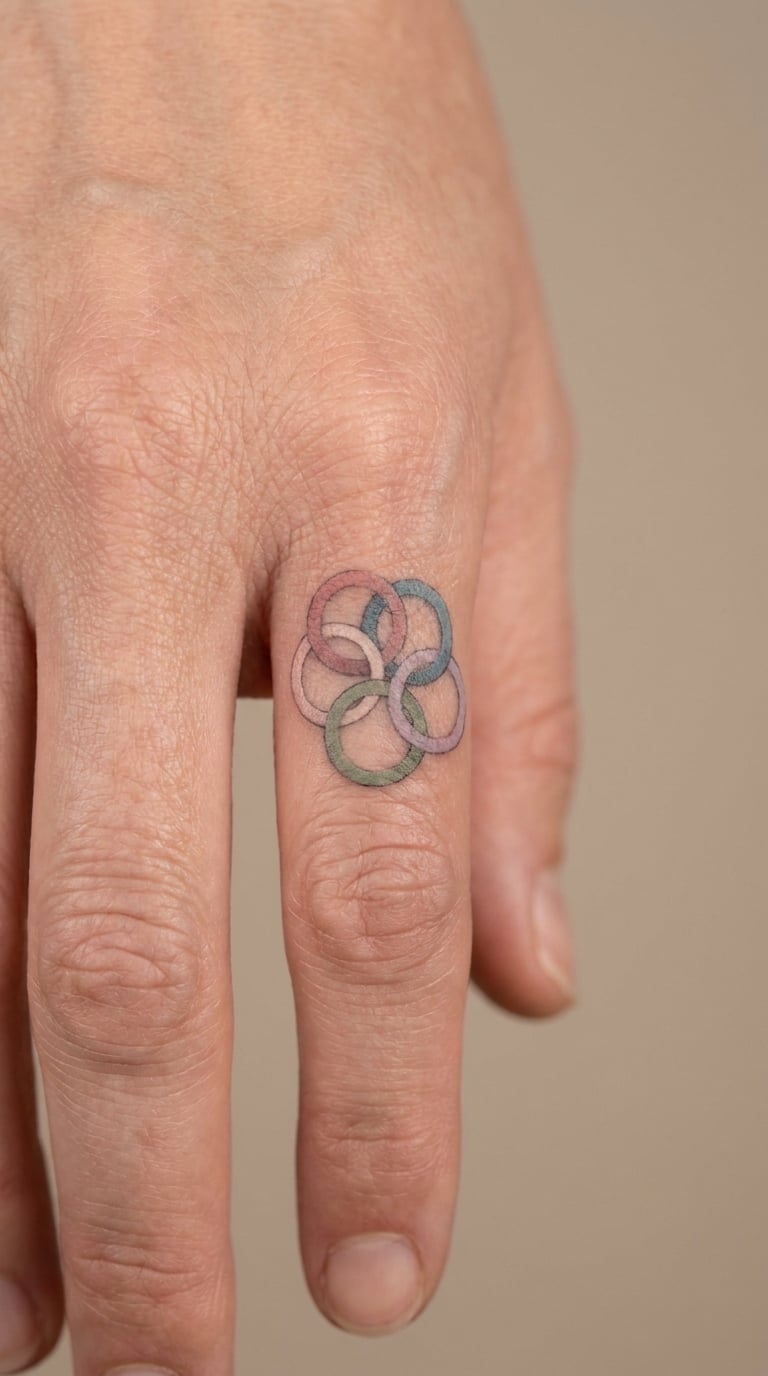
A fine chain of small circular links filled with restrained birthstone colours rather than rendered as realistic stones. Compact colour dots or a translucent wash inside each link keep the piece decorative instead of jewel-like, which is usually what works at this size.
The colours can stand for birth months, family members or a sequence that means something to you. Nothing about it has a fixed meaning to anyone else.
Placement: a finger, or the inner wrist as a slightly larger alternative. Size: 1 inch (2.5 cm) wide. Style: micro colour with fine line. Pain: medium, with a short session.
Tiny colour and line detail softens fastest on the hands, and pale washes can look tired after a few summers.
Make it yours: work out your birthstone colour list first and hand the artist the order you want, left to right.
11. Bicycle-Chain Link on the Calf
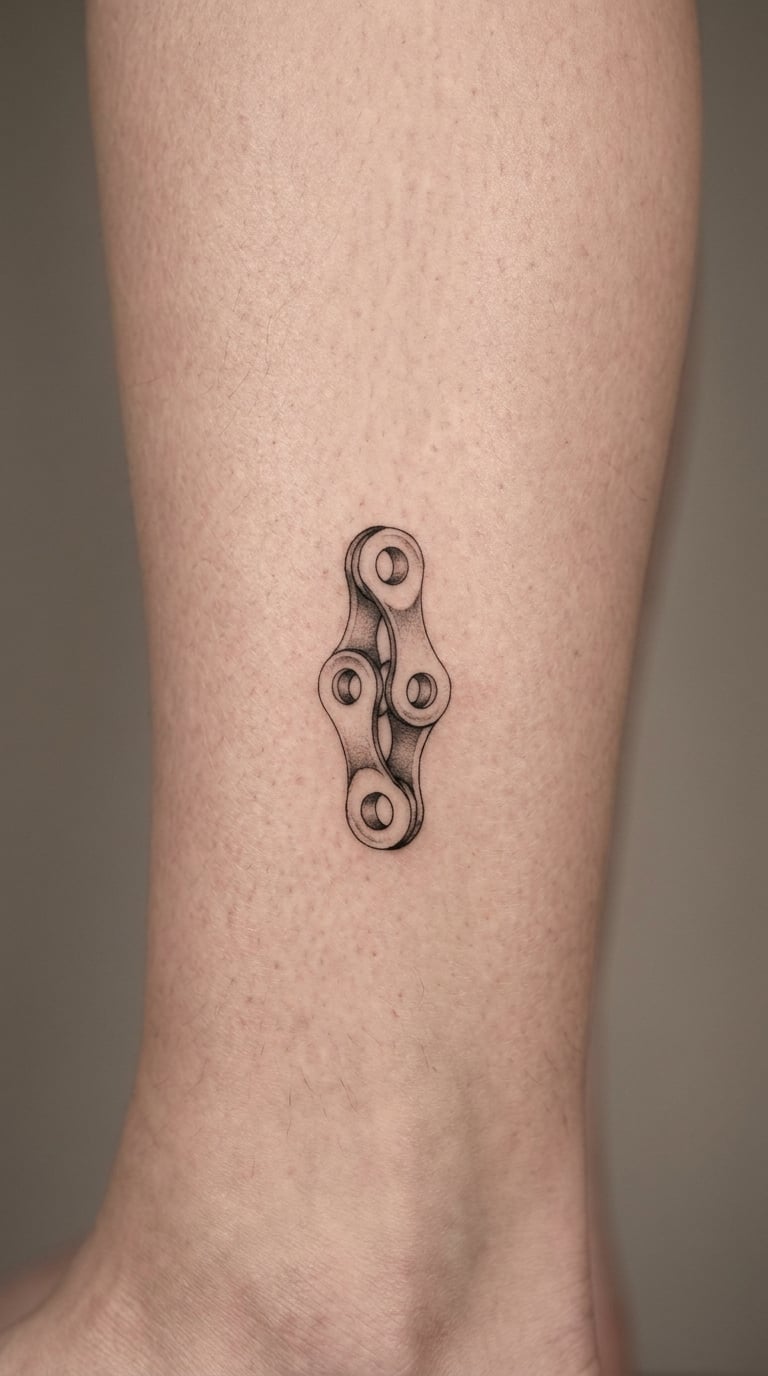
A single oversized bicycle-chain link formed from two rounded rectangular plates and four circular rivets, rendered in black-and-grey realism with the metal turning gradually from light to shadow around the curve.
Cyclists and active people often choose it as a reference to riding, endurance or steady progress. It rarely reads as anything broader than that to a passer-by.
Placement: outer calf, or the lower back of the arm for a smaller version. Size: 2.5 inches (6 cm) tall. Style: micro-realism in black and grey. Pain: medium. The outer calf is fleshy and takes ink well, though muscle movement makes the session harder to hold still in.
Grey realism softens with age, so expect the shading to mellow while the outlines stay crisp.
Make it yours: have a race number, a cycling date or a route name cut into one of the plates in a smaller line weight.
12. Thorned Vine Chain on the Ankle
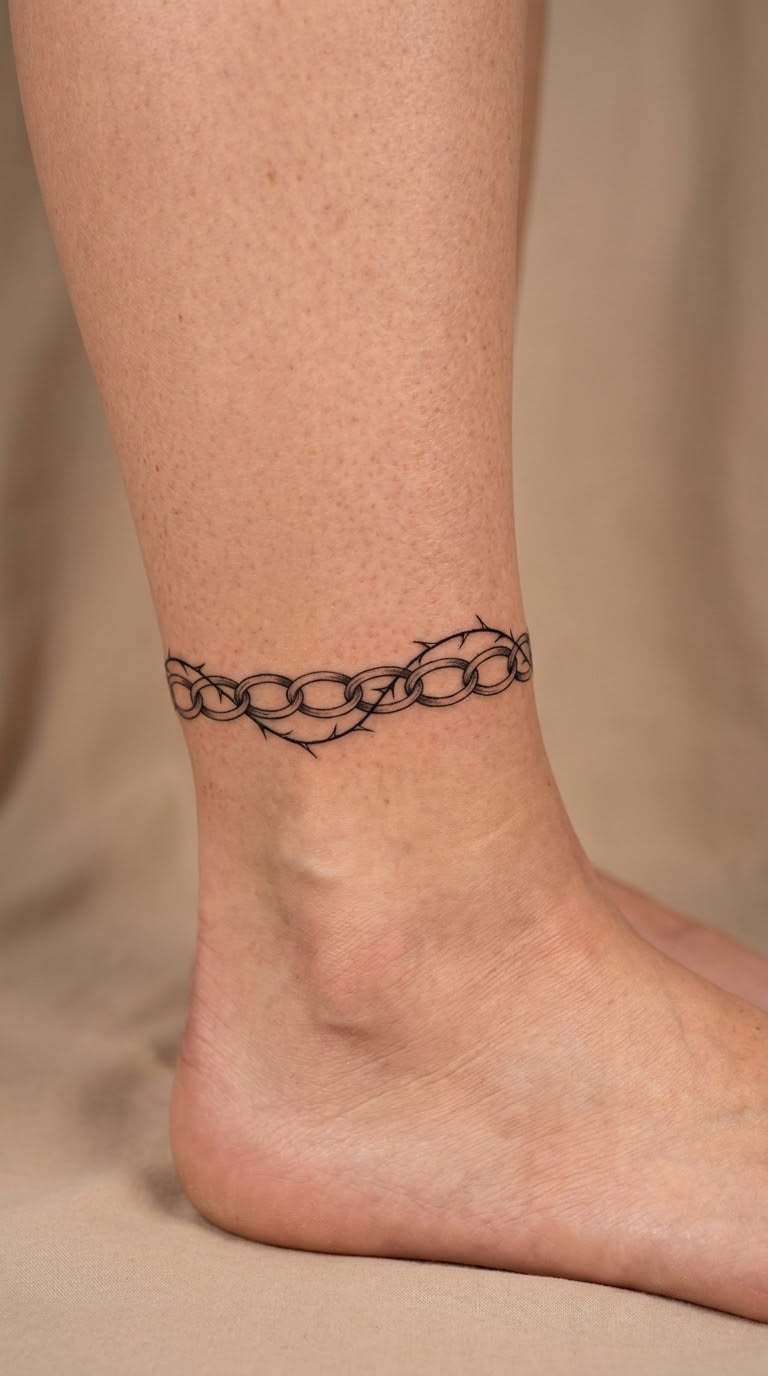
A chain of oval black links winding through a sparse thorned vine with a few small leaves, drawn in fine contour lines with selective dotwork and optionally muted green leaves. Sparse is the key word: too many leaves at this size and the pattern turns to noise.
People often choose the contrast between soft plant forms and hard metal shapes, or mark a period of personal growth. The final meaning is yours to set.
Placement: above the ankle bone, wrapping slightly around the leg. Size: 3 inches (7.5 cm) long. Style: fine line with dotwork accents. Pain: medium to high. Ankles are bony and the nerve endings are close to the surface.
Ankle and foot tattoos see a lot of footwear friction, and heel wear can blur a fine line faster than age does.
Make it yours: use a vine from a plant that meant something to you, and let the number of leaves be the number that matters.
13. Traditional Rose Chain on the Arm
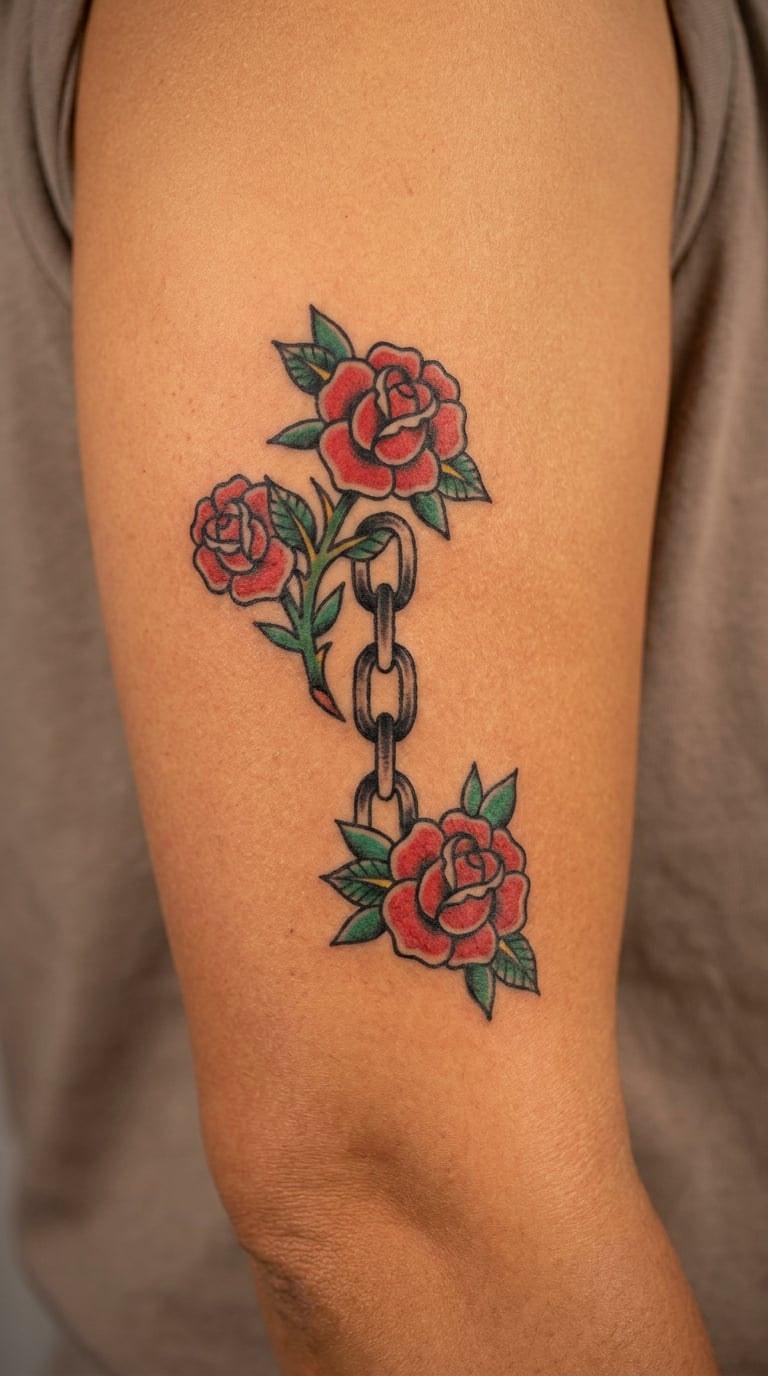
Three roses in red with heavy black outlines, green leaves and restrained yellow highlights, connected by short black chain links. The traditional style is forgiving: the bold outline carries the shape for decades, so the roses stay legible when the softer shading fades.
The chain structure can suggest support or continuity, and the roses add love, beauty or remembrance. No one interpretation is mandatory.
Placement: outer upper arm, where there is flat skin to work with. Size: 3 inches (7.5 cm) long, easily scaled up. Style: traditional. Pain: medium. Colour work over three roses means more passes and a longer sitting than a black-only piece.
Traditional colour holds up well, and a touch-up of the reds every five or six years is common and unremarkable.
Make it yours: use birth flowers, or match one of the three roses to an existing floral tattoo so the chain connects two pieces.
14. Dotwork Rosary Chain on the Forearm
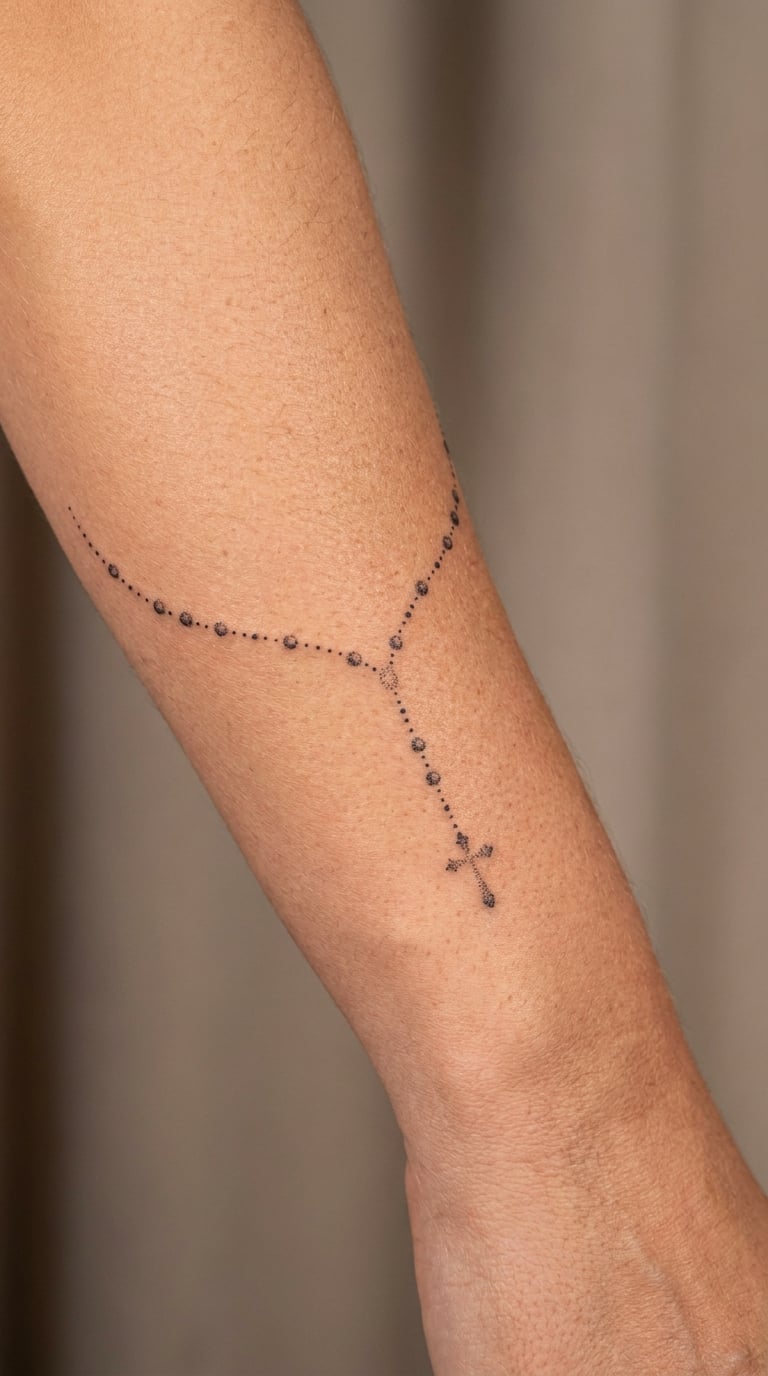
A simplified rosary-inspired chain made of small circular links and beads in black dotwork, with the beads slightly denser than the connecting links. If this one is for you, choose an artist who works in religious subjects regularly and confirm the form and placement with them before the stencil goes on.
Faith, prayer, family and remembrance are the reasons people usually give, and they are personal rather than a rule the design imposes.
Placement: inner forearm, lengthwise. Size: 2.5 inches (6 cm) long. Style: dotwork. Pain: medium, and dotwork takes a long time because every dot is placed individually.
Minuscule dot detail is the first thing scar tissue softens. Ask your artist how they will keep the beads distinct as it heals.
Make it yours: have the beads count match something that matters, such as the number of years or the number of people.
15. Stars Connected by a Fine Chain on the Neck
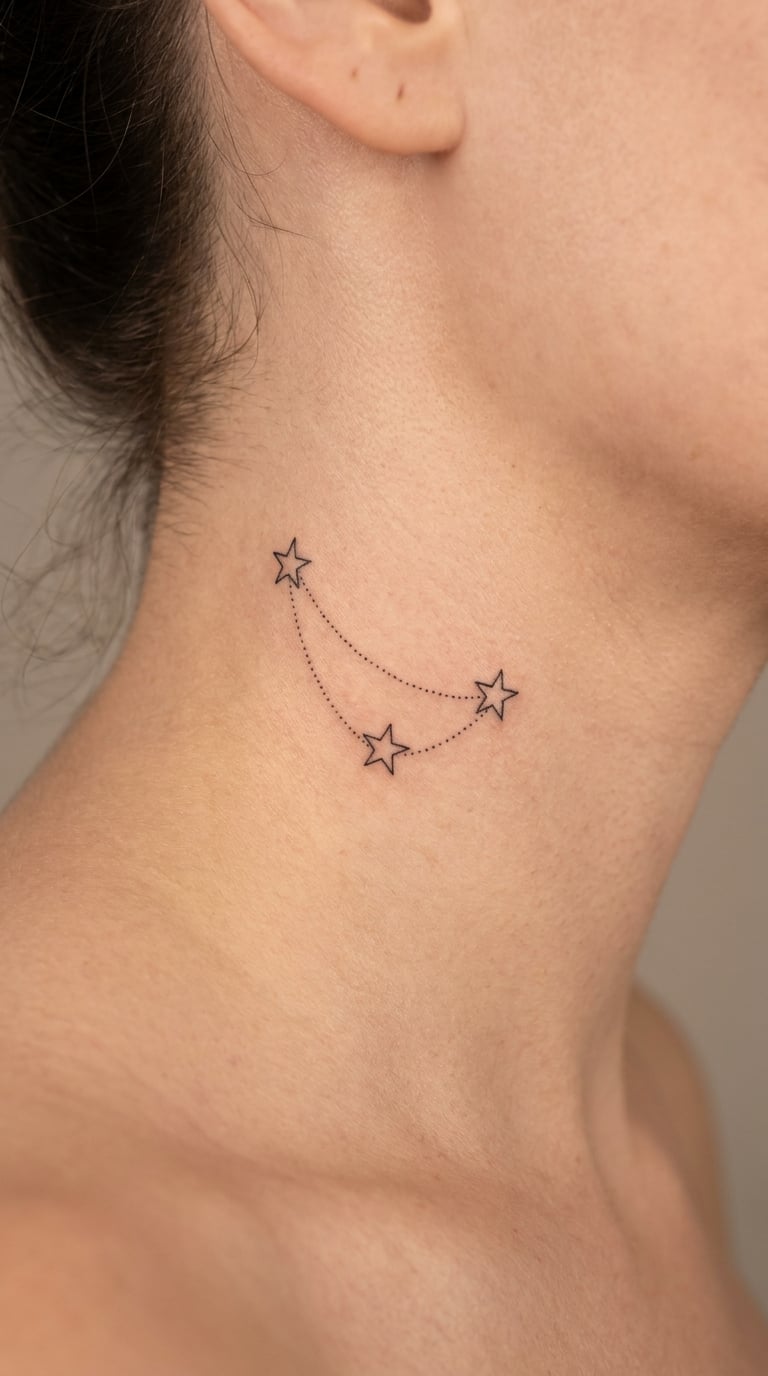
Three small four-point or five-point stars linked by hairline black segments, spaced evenly along a gently curving line that follows the neck. A five-point star reads softer; a four-point star with longer points reads sharper and a little more graphic.
Stars get chosen for guidance, aspiration, a particular night sky or simple decorative balance. Any of those is a good reason.
Placement: side of the neck, below the ear or along the trapezius. Size: 2 inches (5 cm) wide. Style: fine line. Pain: medium to high. The neck is thin-skinned and close to the surface, and many people find it the most noticeable spot on the body.
Neck lines change with sun exposure and ageing, so plan on a thicker line than you think you need and use sunscreen on the area daily.
Make it yours: set the three stars at the coordinates of a place that changed your life.
16. Two Lions Holding a Chain on the Thigh
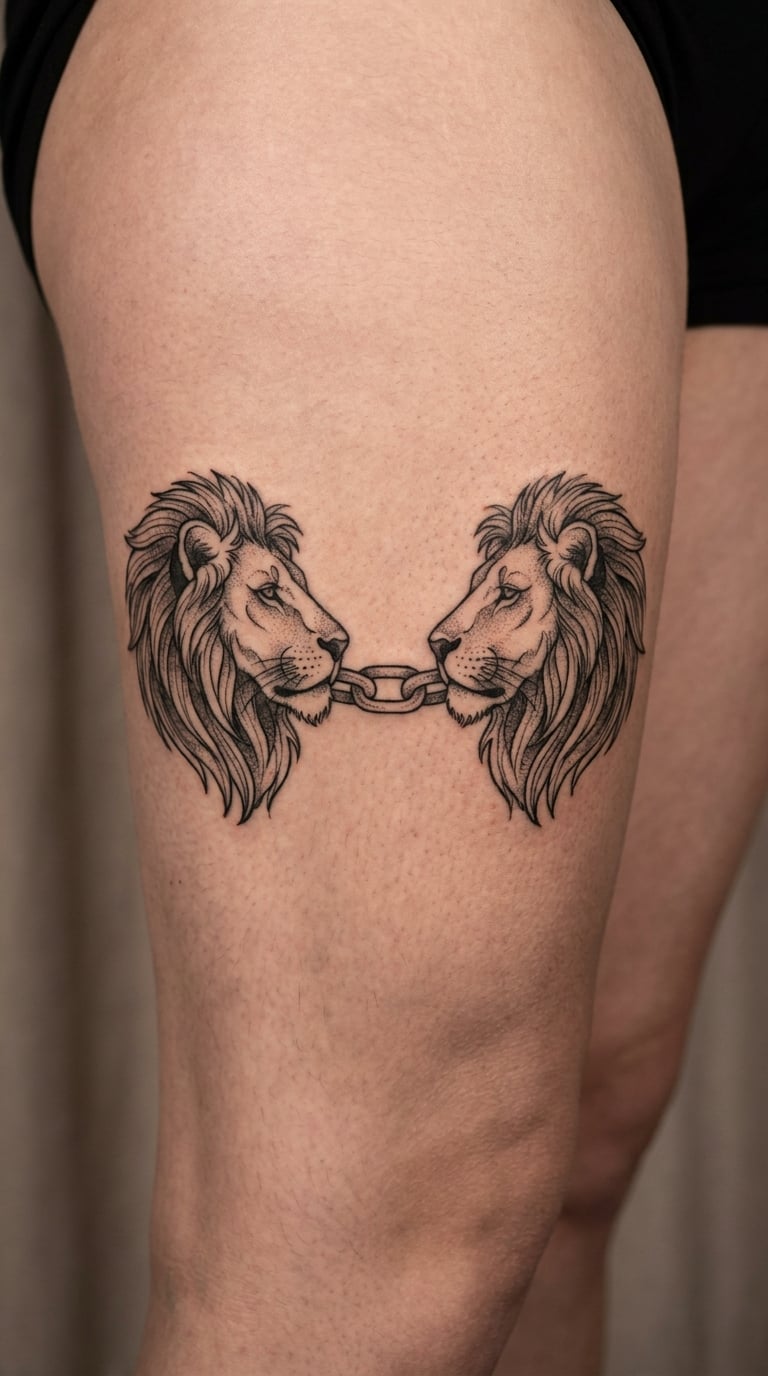
Two small symmetrical lion heads facing inward, each holding a single chain link between them, drawn in bold blackwork with restrained stippling for the mane texture. Symmetry is what makes the composition sit properly, so the two sides need to be matched rather than mirrored by eye.
Paired lions can stand for protection, partnership or strength, and in this arrangement the chain between them adds a sense of something being held or kept together. You define the rest.
Placement: outer thigh, where the design has room to be symmetrical. Size: 4 inches (10 cm) wide. Style: blackwork with stippling. Pain: medium, though the thigh is a large area and a full four inches of detail runs long.
Thighs change shape over the years, and fine stipple on a changing surface is the first detail to soften.
Make it yours: add a small birth flower near one lion, or mirror the lion on the opposite thigh later.
17. Broken and Reconnected Chain on the Wrist
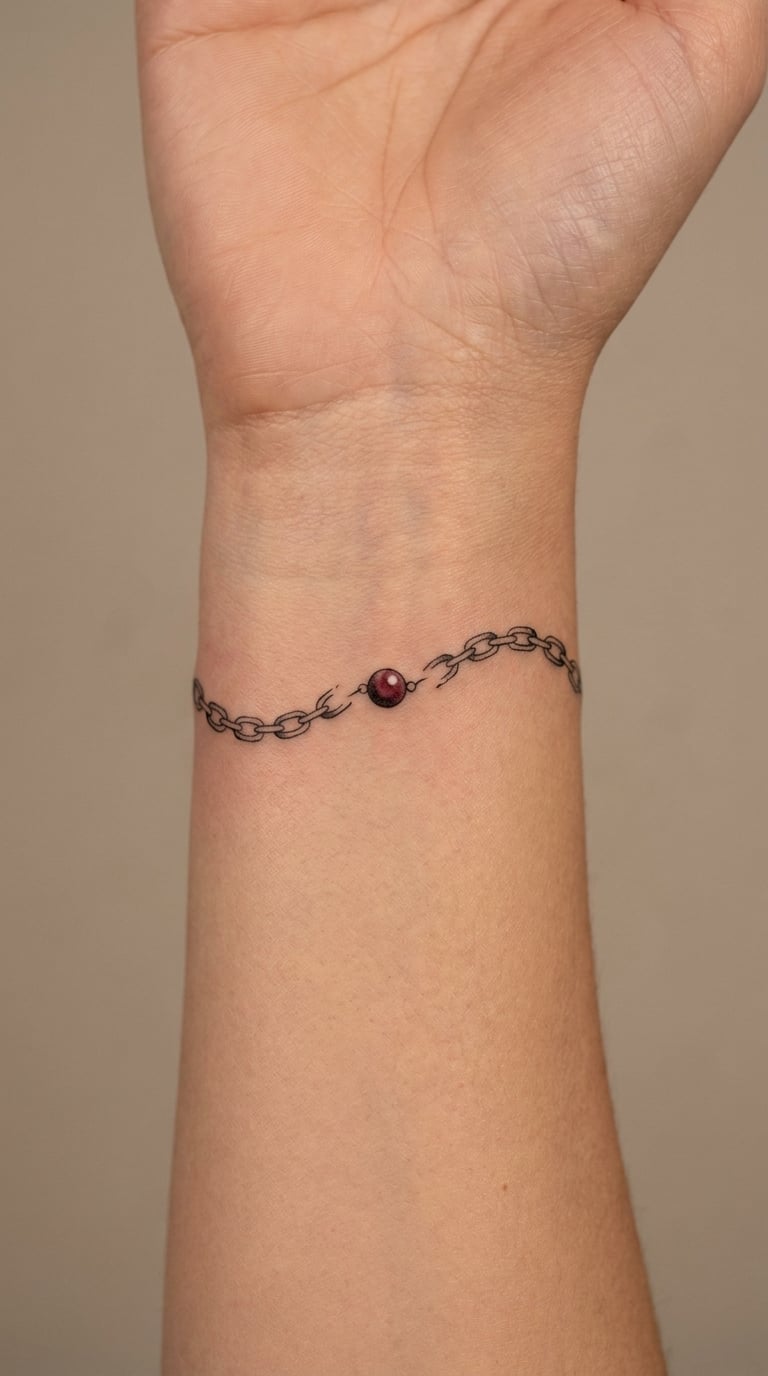
A symmetrical black-line chain that separates at the centre and reconnects through one offset link or a single small coloured bead. Balanced ends, clean single-weight outlines and deliberate negative space at the break are what make it read as intentional rather than unfinished.
This composition is often chosen after a difficult transition, a period of change or a relationship that was reconnected rather than lost. There is no standard meaning others will assume.
Placement: wrist, either side. Size: 2.5 inches (6 cm) wide. Style: fine line with one colour accent. Pain: low to medium.
Small colour accents on a wrist fade noticeably faster than the black line around them, so pick a colour you would be happy to see soften.
Make it yours: have the date of the change engraved on the underside of the wrist where only you will see it.
18. Key-and-Lock Chain on the Inner Arm
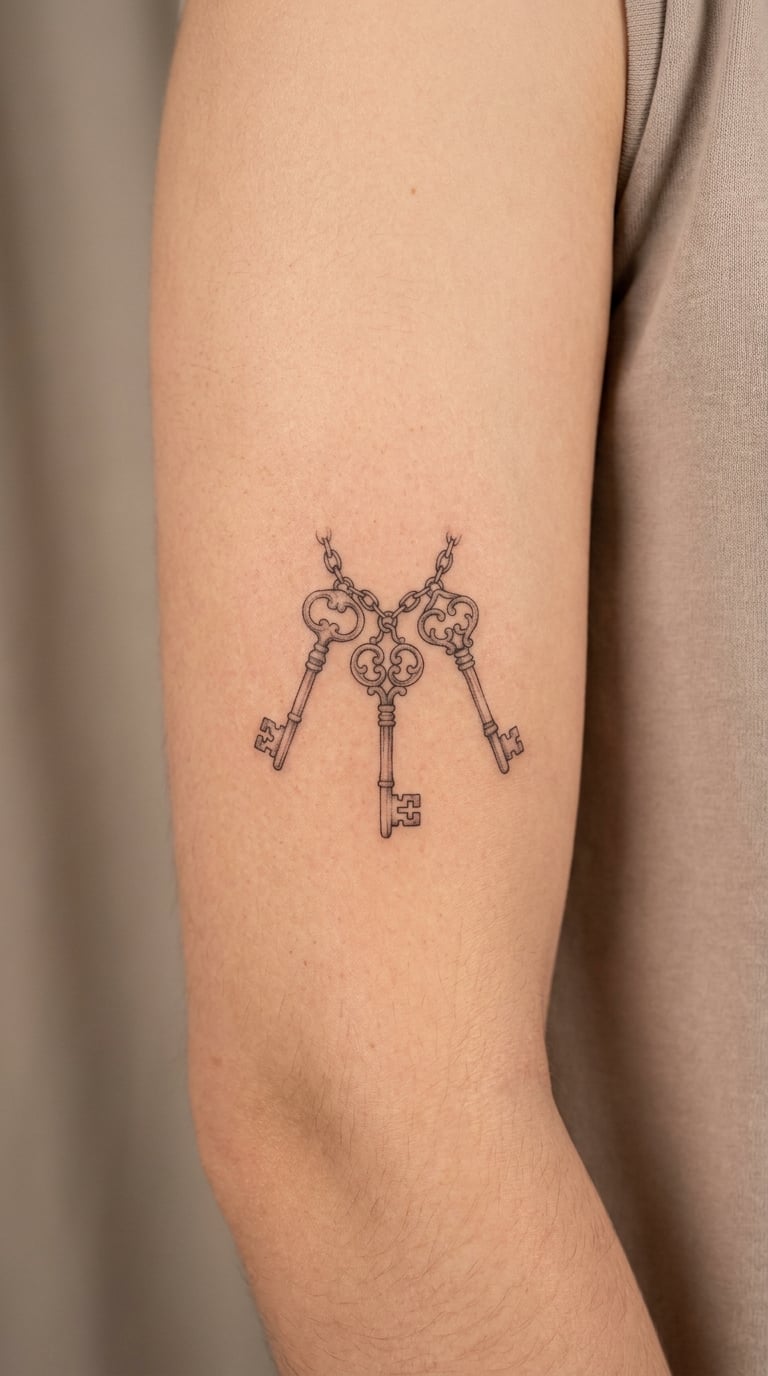
A vertical series of small antique-style keys connected by oval chain links, drawn in black-and-grey linework with the keys turned at slight angles so the column feels alive rather than stacked. Keys are usually drawn old-fashioned, with a rounded bow and a short toothed shaft.
The motif gets chosen for access, independence, a relationship or a personal story about unlocking something. The interpretation stays open.
Placement: inner upper arm, running lengthwise. Size: 3 inches (7.5 cm) long. Style: black and grey linework. Pain: medium, with a flat area to work on.
Key teeth are tiny and will blur into a notched line if they are drawn too small. This is a good one to scale up rather than down.
Make it yours: have a meaningful initial on one key bow, or a date cut into another.
19. Pearl and Gold-Link Chain on the Chest
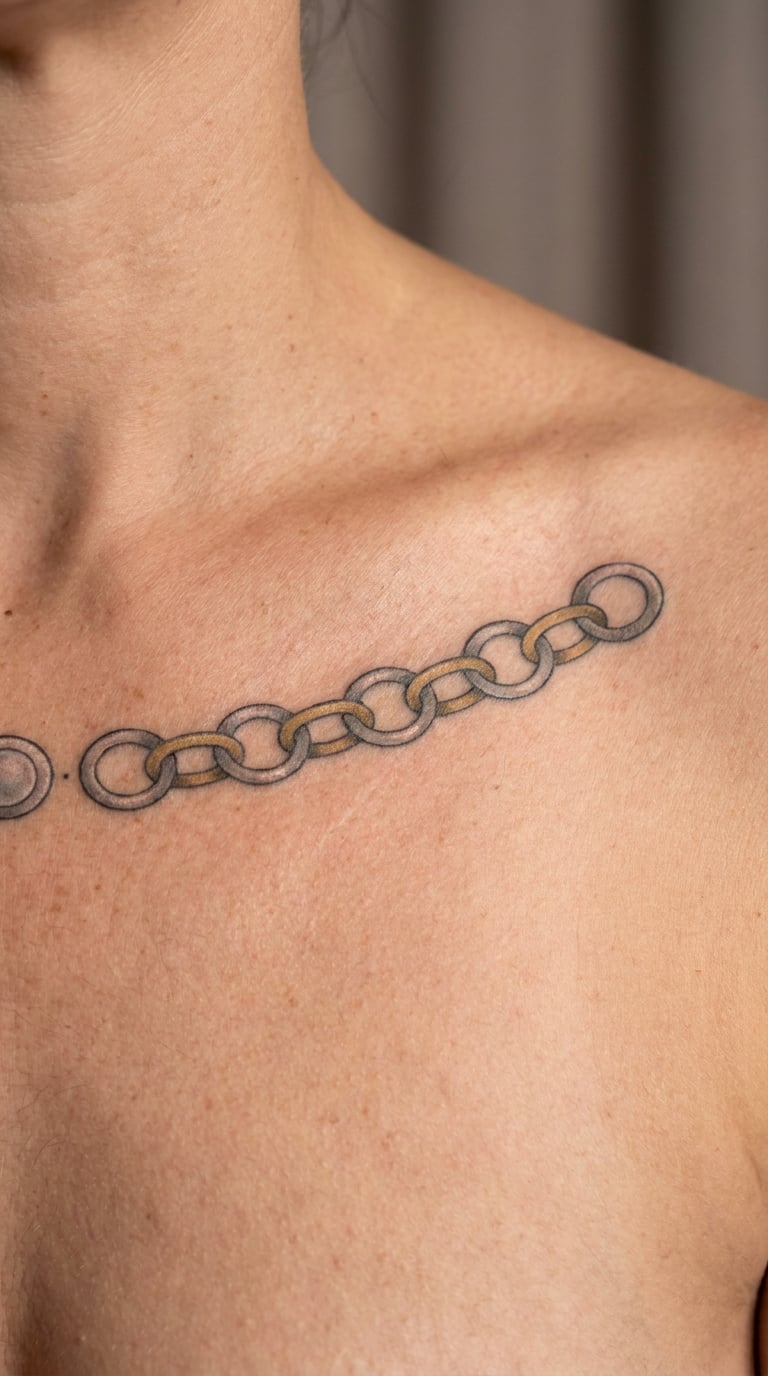
A graceful chain of alternating shaded pearl circles and warm gold-ink links, using soft contrast and restrained realism rather than photorealism. A highlight left as bare skin inside each pearl does more work than any amount of grey shading.
Some people choose it for the look of wearable jewellery made permanent, or for a colour balance that feels classically feminine. No motif is required to look feminine, and none of these ideas need one.
Placement: near the collarbone or between the collarbones. Size: 2.5 inches (6 cm) wide. Style: soft realism in black, grey and a gold ink. Pain: medium. The sternum and collarbone area is sensitive, and skin here stretches with movement.
Gold inks and pale greys both fade, and a two-tone piece needs a touch-up sooner than a solid black one.
Make it yours: use the birthstone colours of people you are close to instead of the default pearl and gold pairing.
20. Minimal Blackwork Cuff Chain on the Upper Arm
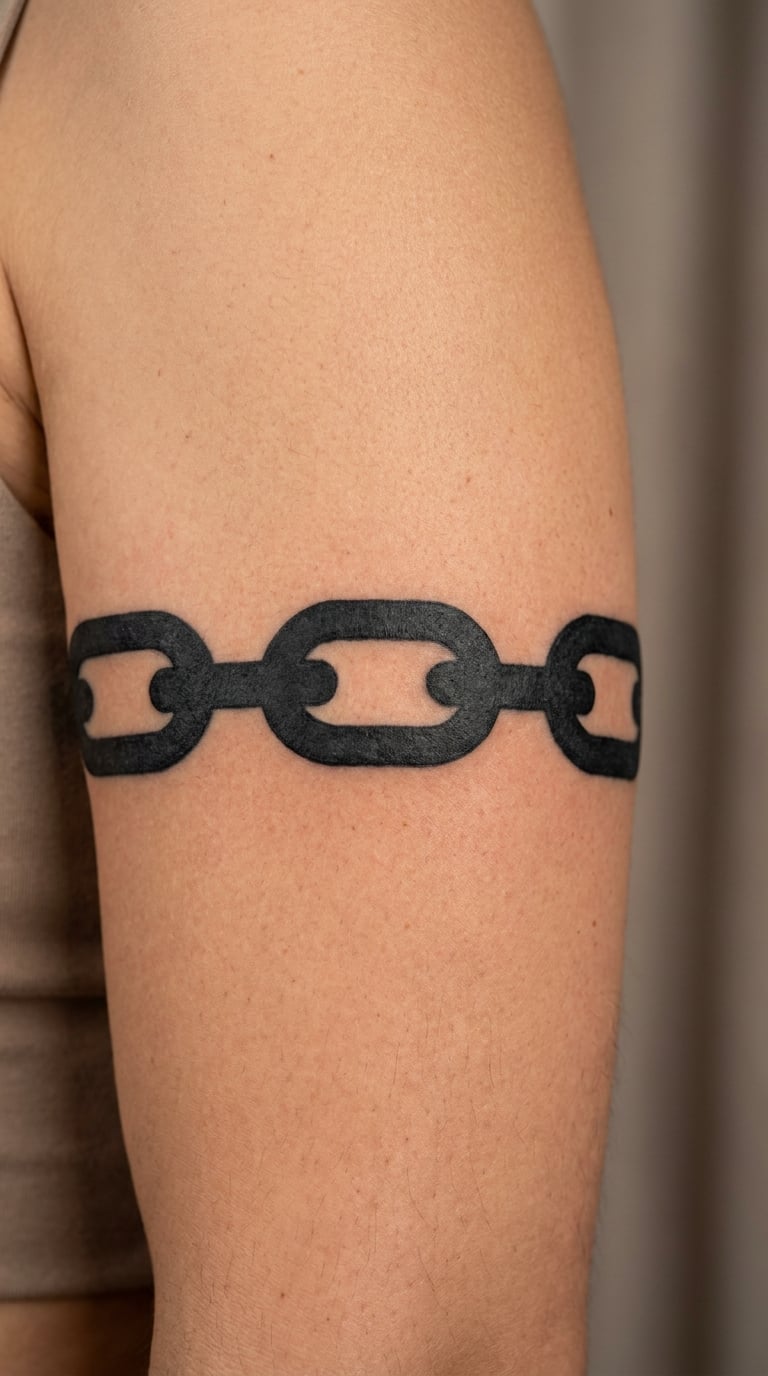
An incomplete oval band of bold black links, drawn so it looks like a chain cuff wrapped around the upper arm without closing at the front. The gap is the design: the two ends should end cleanly, not trail off.
The open composition can read as continuity, restraint or a modern accessory, depending on the person wearing it. It is also the easiest of the bold designs to add to later, since a full sleeve can close the gap years from now.
Placement: upper arm, wrapping around the biceps. Size: 3 inches tall (7.5 cm) for the visible portion. Style: blackwork. Pain: medium, and the wrap means the artist works around the arm rather than across it.
Wrapping designs distort as the arm changes size, so ask your artist how they plan to handle the stretch of the stencil around the bicep.
Make it yours: place initials at the two open ends, or leave one link as a single coloured accent.
How to Choose the Right Design
Start from the reason behind the chain, then let placement do the deciding. A design that means something usually lives where you can see it; a purely decorative one works anywhere flat skin is available.
- Decide the style first. Fine line reads delicate and disappears on busy skin, blackwork holds shape for decades, traditional survives sun and colour does what it does best. If you are undecided, look at healed work in each style rather than fresh examples.
- Pick a size the body area can carry. A design copied from a small phone photo is almost always the wrong scale for the spot. Measure the area against your own body before you commit to a size.
- Match line weight to placement. Hands, fingers, ankles and necks fade and blur faster than the torso or upper arm. Hairline work on those areas needs a heavier line than feels right in the chair.
- Watch the joints. Wraps around the elbow and designs that cross the wrist crease will move, stretch and fade at the fold faster than flat areas.
- Bring a healed portfolio. Ask to see a chain the artist has done years ago, and ask what they would change about it. A tattooer who has no healed geometric work to show is telling you something useful.
- Choose a scale, not a mood board. Decide how many links you actually want and at what size, and write it down. Artists need a link count and a physical measurement, not an adjective.
20 Chain Tattoo Ideas for Women: How to Narrow the Shortlist
When you are working through 20 chain tattoo ideas for women, the fastest route is to filter in three passes. First, the reason: something personal, something decorative, or a matching piece with someone else. Second, the placement you are actually willing to show in August. Third, the amount of ink you want, from a single hairline loop to solid blackwork.
After those three filters most readers are left with two or three options. Take those to a consultation, describe them in plain language, and let the artist tell you which one will still look like a chain in ten years. That is usually the piece worth booking.
Cost and Session Time
Chain tattoo prices move with size, style and the artist you book, so treat the ranges below as a sense of scale rather than a quote. Most studios charge either by the hour or a flat rate per piece, and many have a minimum for any small tattoo.
- Micro tattoos under 1 inch: the shortest sessions, often 10 to 20 minutes, and the lowest end of most studios’ small-piece range.
- Small designs, 1 to 2 inches: roughly 20 to 45 minutes, enough for a few links with clean detail.
- Medium designs, 2 to 4 inches: around 45 minutes to 1.5 hours, which covers most of the entries in this roundup.
- Larger or detailed pieces above 4 inches: 2 to 4 hours, sometimes split across two sessions. Blackwork and watercolour sit at the longer end because they need more passes.
Artist rates, hourly charges, location, complexity, colour, custom work and shop minimums can all change the final figure, so the only reliable number comes from the studio itself.
Aftercare Basics
- Follow your artist’s aftercare instructions first. Everything below is general, and their advice beats a generic list every time.
- Wash the area gently with clean lukewarm water and unscented soap, then pat it dry with something soft rather than rubbing it.
- Avoid swimming, soaking and heavy friction for as long as your artist specifies, and keep lotions and perfumes off the fresh tattoo.
- Wear loose clothing over the area, especially on a chain wrap, because friction on scabbed skin is the fastest route to a patchy result.
- Do not pick scabs. If a scab lifts on its own, let it fall and keep following your artist’s guidance on covering and moisturising.
- Once healed, use sunscreen on exposed chain tattoos. Black holds up far better than fine line or grey work, and UV is what dulls the rest.
Frequently Asked Questions
What is the best size for a small chain tattoo?
Most small chain tattoos land between 1 and 2.5 inches, which is enough for four to eight legible links. Below about three quarters of an inch the links start filling in with scar tissue during healing and can read as a dark smudge. If you want a chain smaller than that, ask your artist to draw fewer, simpler links rather than a crowded row.
Do chain tattoos have a specific meaning?
No single meaning is attached to a chain. Unbroken links are often read as bonds, loyalty and connection, while a broken or separated chain is more often read as freedom or escape. Plenty of people choose a chain purely for how it looks. The interpretation belongs to the person wearing it, and most strangers will not read anything into it at all.
Are chain tattoos painful on the wrist or ribs?
Wrist work is usually low to medium because the skin is thin and bony rather than muscular, though the sensation is sharp. Ribs are consistently reported as the more painful placement, since the skin there is thin and the area tightens with breathing. Ankle, elbow and spine work sit in between. A first timer would usually find the collarbone or upper arm easier going.
Which chain tattoo style ages the best?
Solid blackwork chains hold their shape best over time, because the black stays legible even as the edges soften. Traditional colour work is a close second and is easy to refresh. Fine line chains on the hands, fingers, neck and ankle fade and blur fastest, as does grey realism. Whichever style you choose, these 20 chain tattoo ideas for women are safest on the forearm, upper arm or thigh.
Can a chain tattoo be made smaller without losing its links?
Yes, by reducing the number of links rather than the size of each one. A 2 inch chain drawn with four clear links stays readable, while a 2 inch chain drawn with twelve turns to a dark line within a year or two. Ask your artist what the smallest legible link is at your intended size, and let them simplify the design if the link count will not fit.
Conclusion
For a first tattoo, the fine-line paperclip chain is the practical pick: small, low on the pain scale, and it does not ask you to commit to a forearm. If you are already building a collection or want something that carries weight, the blackwork cable chain is the stronger option, and it will still read as a chain in fifteen years.
Pick a style, pick a placement, and pick an artist whose healed geometric work you actually like. Bring the link count and the measurement to the consultation, and let them simplify it if the size will not carry the detail.