
Does a Sternum Tattoo Hurt? Pain Levels, Healing & Costs (2026)
Short answer: yes, a sternum tattoo hurts more than most placements. Most people put it somewhere between 6 and 9 out of 10, and the reason is simple. The skin over your breastbone is thin, has almost no fat or muscle beneath it, and the machine’s vibration travels straight into the bone. What alarms people most is not only the sharpness but a humming, bouncing sensation they describe as tattooing against bone. Your tolerance, the design and how long the chair time runs all change the number, so treat every rating, including this one, as a starting point rather than a promise.
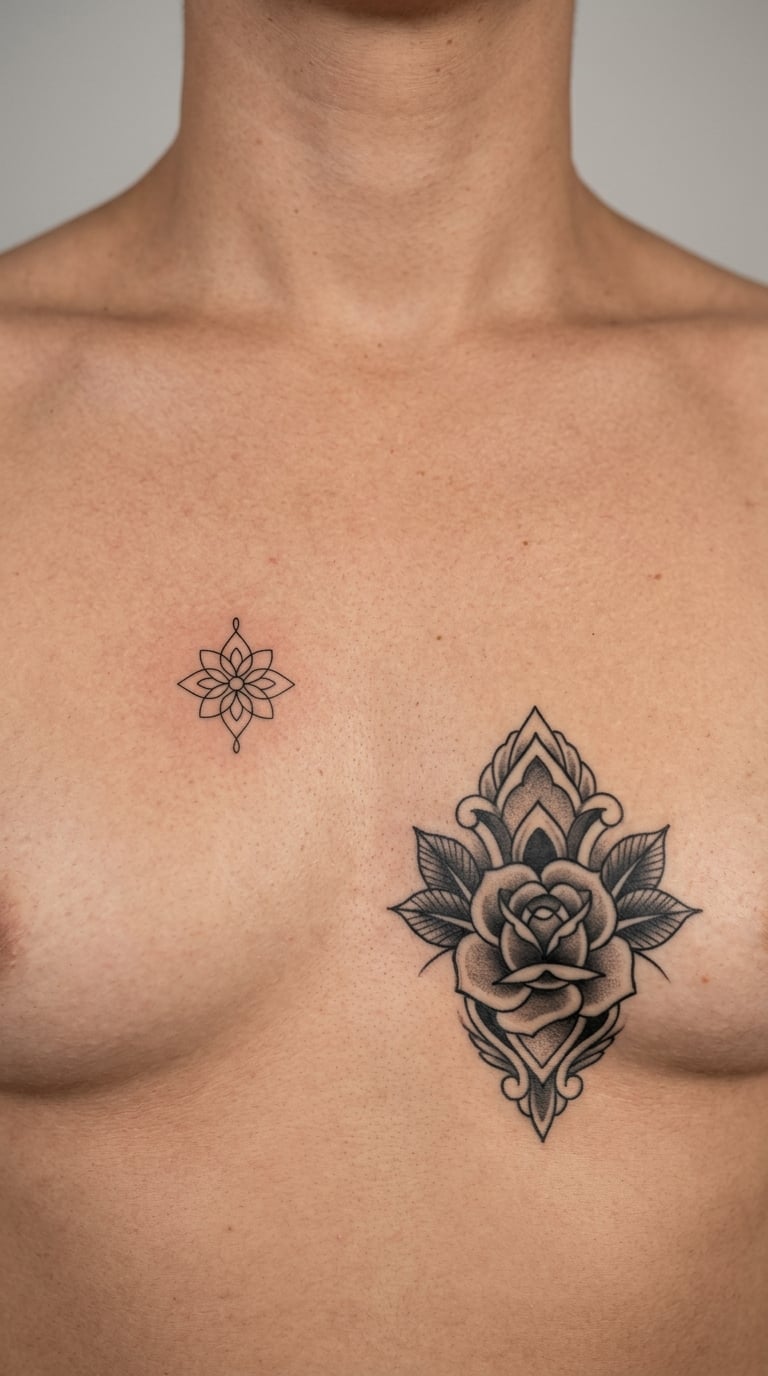
Does a Sternum Tattoo Hurt? What to Expect
The sensation people describe most often is a hot, dragging scratch with a vibration running under it. One r/tattooadvice poster titled a thread “11/10 sternum pain?” and the reply summed it up better than most guides manage: “Yup. It hurts. The vibrating on the bone is annoying.” The annoyance and the pain are two different things. The sting fades in and out as the needle works, while the bone resonance stays the whole time and gets old before the sharpness does.
Three physical things stack up here. Skin on the sternum is thinner than skin on an arm, so the same needle depth feels closer to the surface. There is almost no subcutaneous fat in the centre of the chest to absorb the machine’s bounce. And the bone itself sits right underneath, which is why the sensation registers as vibration and pressure rather than a dull ache.
Not everyone lands in the same place. Another client with forearm and shoulder tattoos called the sternum and stomach the worst areas by a wide margin, yet a poster elsewhere rated bone work a 3 out of 10 and said it was “not bad at all.” Both accounts are honest. That spread is why experienced artists ask about your previous tattoos instead of quoting you a number. If the design is still open, browsing 70+ beautiful sternum tattoo designs is a decent way to see which scale actually reads well from a normal distance.
Pain by Placement: Upper, Center and Lower Sternum
Even within the sternum the sensation changes as you move down the bone, mostly because of breathing depth, chest shape and how clothing sits.
| Placement | Typical discomfort | What you may notice | Clothing and movement |
|---|---|---|---|
| Upper sternum, the hollow between the collarbones | Medium to high | A sharp scratch with strong vibration, often the most exposed point of the bone | Deep breaths move this spot more than any other; shirt collars and necklace chains rub across it |
| Centre sternum, level with the sternal notch dip | High | Steady burning that builds and crests in waves rather than staying constant | Sitting upright makes each breath obvious; reclining slightly reduces it for some people |
| Lower sternum, toward the stomach | Medium to high | Similar vibration, often with more soft tissue as you approach the upper stomach | Bra bands and waistlines sit near here, so healing friction is common |
Chest shape changes this too. A deep or concave centre of the chest can give the artist less flat surface to work with, and people with a more pronounced chest curve describe the session as more distracting rather than more painful. Breast tissue near the lower sternum adds movement in some positions. If either applies to you, mention it in the consultation so the artist can plan the stencil and your posture.
How Does a Sternum Tattoo Hurt Compared With Other Areas?
How does a sternum tattoo hurt compared with other areas?
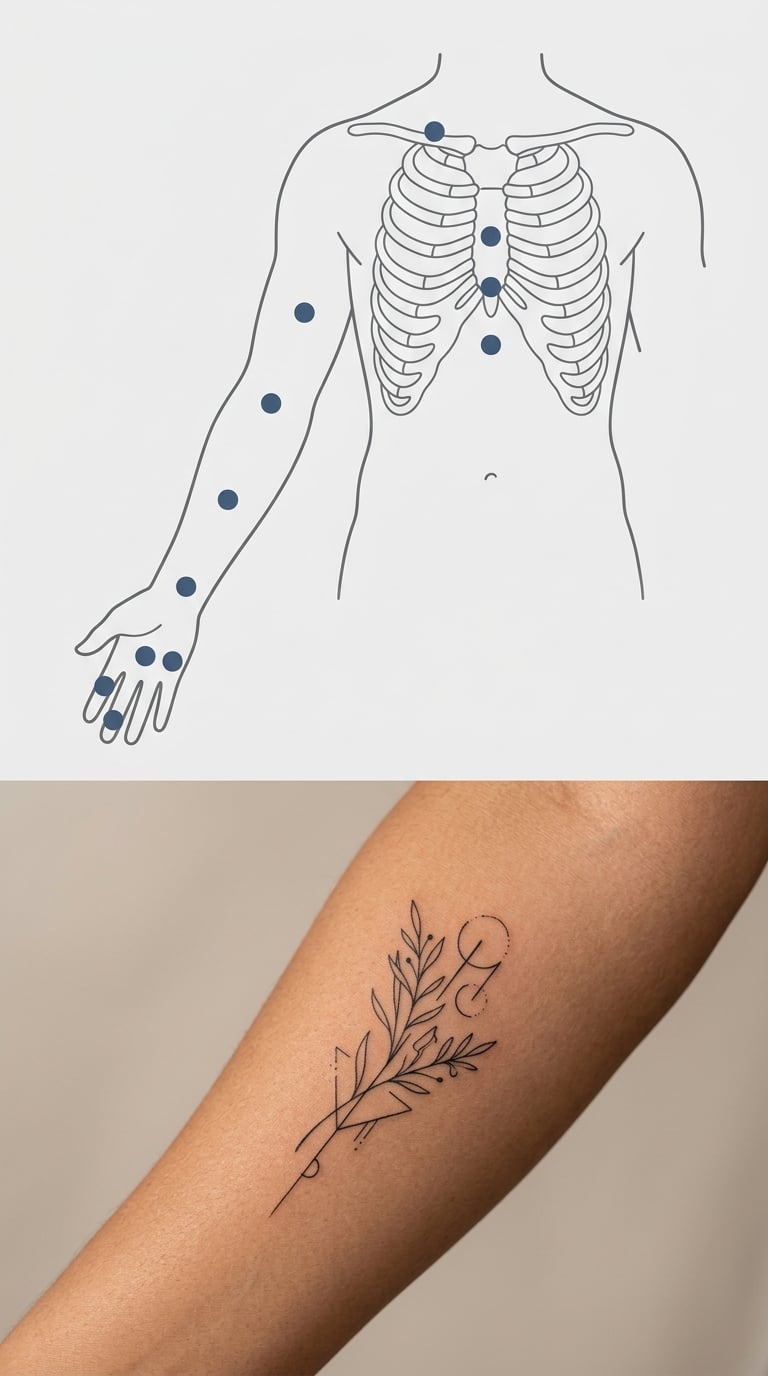
Comparing a sternum tattoo to an arm tattoo is the question almost every first-timer asks, and the answer is usually that the sternum is harder. One person put it as ten times worse than the inside of their bicep. Another, describing the breastbone, called it “incredibly slicey.” Set the sternum against the rest of the body and it sits in a tough group rather than at the very top of it.
| Placement | Typical rating out of 10 | Why | Good to know |
|---|---|---|---|
| Outer forearm | 3 to 4 | Thick skin and a decent layer of muscle beneath | The common baseline most people compare everything else to |
| Outer upper arm | 3 to 5 | Meaty area with plenty of cushioning | Many clients rate this as their least painful placement |
| Collarbone | 5 to 7 | Bone close to the surface with thin covering | Close cousins to the sternum in terms of sensation |
| Fingers and hands | 5 to 7 | Little muscle, lots of nerve density in small areas | Short sessions but very visible and quick to fade in fine detail |
| Ribs | 7 to 9 | Thin skin stretched over curved bone | Breathing makes staying still harder here than on the sternum |
| Sternum | 6 to 9 | Thin skin, no fat padding, direct bone contact | Psychologically intense as well: the artist works above your face |
Ribs and sternum are often grouped together because both are thin skin sitting on bone, which is exactly why people ask which hurts more. In practice the difference is small and personal. Ribs usually win on movement, because a deep breath shifts the whole surface. The sternum wins on the vibration, because the bone face is flat and broad rather than curved.
Longer sessions change the picture regardless of location. Clients with four to six hour appointments report more shaking, nausea and general overwhelm by the end, even when the first hour started at a moderate level. Time is often a bigger factor than the placement itself.
Why Some Sternum Tattoos Feel More Painful
- Thin skin. The needle is working through fewer layers before it reaches the dermis, so the sensation stays sharp rather than dulling.
- Little cushioning. There is minimal fat and muscle between skin and bone across the centre of the chest.
- Chest movement. Every breath expands the ribcage, so the surface is never completely still, even for someone deliberately holding their breath.
- Clothing nearby. Fabric resting against the area while it is fresh adds a constant background irritation that gets worse as the piece heals.
- Design load. Bold outlines and shading mean repeated passes over the same skin, which adds up more than a single line does.
- Session length. A four-hour appointment feels very different from a ninety-minute one, no matter where the work sits.
- Skin condition on the day. Sunburned, irritated or freshly shaved skin changes how the session feels and how it heals.
- Position and posture. Lying back with the chest lifted slightly gives many clients a more manageable session than sitting fully upright.
- Individual tolerance. Past tattoos on your own body are the best reference you have. People who breeze through ribs sometimes find the sternum harder and the reverse is also true.
No single factor decides it. A small fine-line piece in the upper hollow can feel easier than a bold shaded design placed lower, and one person’s easy placement is another person’s worst hour.
Design Size, Style and Session Length
The scale of the design changes the session more than the placement does, and the session is where most of the difficulty comes from. Clients who enjoyed their sternum piece usually describe short, well-planned appointments rather than endurance tests.
| Design type | Approximate size | Likely sessions | Visual complexity | Expected discomfort |
|---|---|---|---|---|
| Small fine line, single motif or symbol | Under 2 inches (5 cm) | One, often 1 to 2 hours | Low, minimal shading | Medium, with a sharp edge and strong bone vibration |
| Medium illustrative or ornamental piece | 2 to 4 inches (5 to 10 cm) | One, 2 to 3 hours | Moderate, some detail work | Medium to high, with fatigue building toward the end |
| Large chest design spanning the sternum | 4 to 8 inches (10 to 20 cm) | One long sitting or two | High, multiple elements to balance | High, and the main reason clients report shaking late in the session |
| Heavily shaded or blackwork piece | 3 inches (8 cm) and up | Two, sometimes more | Very high, repeated passes over the same area | High to very high, the most common cause of a session that gets too long |
A break does not stop everything. Even with the machine switched off, a sternum client often feels the area as sore and drumming for a while afterwards, and some of that sensation stays through a ten-minute pause. Worth knowing before you agree to a schedule that assumes fast recovery between segments.
Artists often split a larger sternum design across two appointments. It gives the skin a clean window to settle, keeps each session shorter, and lets the client come back rested instead of trying to push through a fourth hour. If nobody suggests it, ask whether it is a sensible option for your design. The same arithmetic shows up at a larger scale if you are collecting pieces: how long a sleeve tattoo takes breaks down the timing for a whole-arm project.
How to Prepare for a Painful Tattoo Session
Preparation does more for comfort here than almost anything you can do in the chair. A sternum session is a long, oddly physical appointment, and how you set it up matters.
Before the appointment
- Look at the portfolio, not the front page. Ask how often the artist works on the sternum specifically. Chest and rib work is a different set of challenges from a flash-heavy shop, and experienced artists say so themselves.
- Eat a normal meal. An empty stomach and low blood sugar make nausea far more likely in a long session over bone. Drink water through the morning.
- Skip alcohol the night before and that morning. It thins your tolerance, thins your blood, and makes the morning after harder.
- Wear a top you can pull down or off easily. A zip or button front beats a pull-over, because you will not be wrestling fabric over a fresh sternum piece.
- Bring something to drink and a small snack. Breaks are normal. Ask the artist to call them before you have to ask twice.
- Tell them about your previous tattoos. A one hour forearm outline and a five hour back piece mean very different things for planning.
In the chair
Say something out loud if it hurts more than you can manage. A good artist would far rather stop for sixty seconds than push a client to the point of panic, and most of them have seen every reaction in the book.
Breathe out slowly and long rather than holding your breath. Holding makes the chest rigid, the surface tense, and the next breath bigger when you finally release. A steady exhale through the mouth during the hardest passes is the technique most veterans recommend.
Settle into a position that lets you recline slightly. Sitting fully upright exaggerates every expansion of the ribcage, which some clients find makes the whole thing more intense.
If you are considering numbing products or any medication, talk to the artist first and, where appropriate, to a qualified clinician. Products sold for tattoo numbing vary enormously in strength, and some people find that a partially numbed area gets worked harder because the artist cannot read your reaction. Your artist will tell you what they are comfortable with before the session starts.
You are allowed to end a session. It is unfinished, not ruined, and most artists would rather reschedule than have someone sick in the chair.
Sternum Tattoo Healing Timeline by Week
Healing on the sternum is normal, and the slow part is not the ink. The surface settles down within a couple of weeks. The full settle, where the lines look like the reference photo rather than a fresh tattoo, takes considerably longer.
| Stage | What it looks like | What it feels like | What to do |
|---|---|---|---|
| During the session | Red and raised, ink sitting on the surface | Burning, then a dull throb, with bone vibration during the work | Follow your artist’s instructions on dressing it when you leave |
| First 24 hours | Reddened, mildly swollen, warm | Tender to the touch and to fabric | Rest, wear loose clothing, change any covering your artist recommends |
| Days 2 to 7 | Flaking or peeling begins, like dry skin | Itchy, tight, occasionally bruised around the ribs | Wash gently, pat dry, do not pick or scratch, avoid rubbing |
| Weeks 2 to 4 | Surface healed, skin still slightly dull or cloudy | Mostly comfortable, occasional tenderness in the centre | Continue aftercare, keep the area out of prolonged direct sun |
| Months 2 to 3 | Lines settling, any redness fading | Normal skin, no sensation | Normal activity, no special care needed once the artist clears you |
| Long term | Final settled appearance | No sensation | Ongoing sun protection helps fine lines and lighter work last longer |
The part that catches people out is not the healing itself but the friction. Every bra strap, neckline and seatbelt crosses the sternum. Clients who did not plan for that often describe the first two weeks as more irritating than the tattooing was.
This timeline is general and is not medical advice. If anything looks wrong to you or does not match what your artist told you to expect, contact the studio or a qualified clinician rather than searching for an answer online.
Sternum Tattoo Cost and Session Time
What a sternum tattoo costs depends far more on the artist and the design than on the placement. Studios charge hourly, by the piece or a set shop minimum, and the same design can vary widely between two cities and two artists in one city.
| Design scale | Typical session count | Time per session | What moves the final figure |
|---|---|---|---|
| Tiny single symbol or fine-line detail | One | 1 to 2 hours | Artist minimum, travel, whether you already have a relationship with the studio |
| Small ornamental or illustrative design | One | 2 to 3 hours | Detail count, stencil placement time, shading vs line work |
| Medium chest design | One or two | 3 to 4 hours | Complexity, whether colour or blackwork, artist experience with chest work |
| Large or heavily shaded piece | Two or more | 3 to 5 hours per visit | Total ink coverage, number of sessions, custom design fees |
Custom design work is often billed separately from the session, and a consultation fee may be credited toward the final appointment. A shop minimum means a tiny design still costs the same as the shortest block they sell, so the simplest way to control the figure is to keep the piece small.
Book the consultation before you commit to a size. Talking through a design with the artist who will execute it is usually free or cheap, and it is where you find out whether your idea fits on the chest comfortably in one sitting. If the motif carries a meaning you want to get right, what a sunflower tattoo means is a good example of how much clients care about that part before the drawing starts.
Sternum Tattoo Aftercare Basics
Follow your artist’s aftercare instructions first, and let them override anything general you have read elsewhere. After that, the basics are short.
- Follow your artist’s aftercare instructions before anything else, including how long any film or dressing stays on.
- Wash the area gently as directed, with clean hands, and pat dry rather than rubbing with a towel.
- Keep it protected from friction and scraping, and choose loose clothing that crosses the chest.
- Limit direct sun on the area, especially while the skin is peeling and again once the piece is settled.
- Do not pick, scratch or peel the flaking skin, even when it looks ready to come off.
- Skip swimming, saunas and hot tubs until your artist says the skin is closed.
Mistakes to Avoid
Picking a design because it looks good on someone else with a different chest shape. Placement is fixed by anatomy. A stencil that looks balanced on a flat chest can sit awkwardly on a curved or concave one, and no amount of good drawing fixes that.
Underestimating how long a big piece takes. The assumption that a large chest design fits in one short appointment is the single most common reason a sternum session runs long. Ask about splitting it before the day, not during.
Wearing a bra or tight top across the fresh tattoo. Nothing about the tattooing is more painful than the two weeks of fabric rubbing over a healing sternum. Plan the wardrobe first.
Going quiet when it gets bad. Clients who say nothing for an hour usually have a worse experience than the ones who ask for a break. One minute of discomfort is easy to plan around. Twenty minutes of it with no warning is not.
Comparing your number to somebody else’s. Ratings in the same thread run from 3 out of 10 to 11. Yours will be its own number, and the only honest comparison is against the tattoos you already have.
Treating your breathing as an inconvenience to apologise for. The chest expands and contracts as part of how the body works. A good artist is not waiting for you to become rigid, and asking you to hold a flat chest for an hour is a sign you picked the wrong studio for the job.
One more worth naming: making it your first tattoo without a reason. Plenty of veterans recommend building tolerance somewhere softer first. Nothing is wrong with a sternum as a first piece, but going in without a reference point means you will not know what your own face looks like at hour two.
Frequently Asked Questions
Is a sternum tattoo more painful than an arm tattoo?
Almost always, yes. The skin over the breastbone is thinner, has almost no fat or muscle beneath it, and sits directly on bone, so the machine’s vibration carries further. Most people rate the sternum around 6 to 9 out of 10 and an outer forearm around 3 to 4. Personal tolerance varies, and some clients with several arm tattoos find the sternum far harder than expected.
What size sternum tattoo is best for a first tattoo?
A small fine-line symbol under about 2 inches, kept to a single short session, is the easiest starting point. You get the placement finished in one or two hours instead of testing your tolerance across a long afternoon. Ask the artist to place it in the upper hollow between the collarbones if you want movement to be as small as possible.
Does a sternum tattoo hurt more when it is large or shaded?
The placement is the same, but a large or heavily shaded piece means many more passes over the same skin and a much longer appointment. That is usually what makes it hard, not the area itself. If the design is ambitious, ask your artist about splitting it across two sessions so each one stays short and the skin gets a clean window to settle.
Why does the sternum feel sensitive while getting tattooed?
Three things combine. The skin is thin, there is very little soft tissue between skin and bone, and the bone itself is right there carrying the machine’s vibration. The result is a sharp, burning scratch with a humming or drumming quality underneath it. Breathing also moves the surface constantly, so the sensation never settles into a single steady rhythm.
What should I do if a sternum tattoo feels too painful?
Say so straight away, before you try to push through it. A short break, a longer break or a rescheduled finish are all normal options, and most artists would rather stop than have you push through to the point of nausea or panic. A break dulls the sharpness but not always the bone vibration, so expect some residual sensation even with the machine switched off.
Conclusion
A sternum tattoo is genuinely uncomfortable, usually more than an arm, but it is not out of reach. What decides whether it goes well is scale and length, not bravery. A small fine-line piece finished in one short appointment is a very different afternoon from a large shaded chest design, and most people who enjoyed theirs picked the first option.
Talk it through with the artist before booking, ask how often they work on the sternum, plan what you will wear while it heals, and agree how breaks work. Then choose the design size you would be comfortable sitting through rather than the one you feel pressured into.