
24 Single Line Tattoo Ideas: Minimalist Picks October 2026
Single line tattoo ideas come down to one thing: the whole design is drawn with a single unbroken stroke of ink, so the artist never lifts the needle. If you want ink that reads as calm, small and deliberate rather than loud, this is the style to browse. Updated for October 2026, the list below covers shapes an artist can actually execute at a realistic size.
Each entry gives you a description, a placement, a size in inches, a style label, an honest pain note and one way to personalise it. Bring a few favourites to your consultation and ask the artist to size them for the spot you have in mind. If you like drawn-out botanical work, our fine line tattoo ideas for women guide sits well next to this one.
Single Line Tattoo Ideas: Quick Guide
A good one-line design stays readable after it heals, which means fewer elements, a steady line weight and enough space between parts. Proportion matters more than detail here: a design that looks clever at two inches on paper can turn to mush at half that size on skin.
Skin tone and placement shape the result too. Darker skin needs slightly heavier line weight to show up, and curved or bony areas distort a straight drawing in ways flat paper never shows you. Line consistency across the whole stroke is the single biggest tell of a good artist, and it is also the thing that decides how the piece looks after five years.
| Idea | Style | Best placement | Size | Pain |
|---|---|---|---|---|
| 1. Fine-Line Botanical Sprig | Fine line | Inner forearm | 2-3 inches | Medium |
| 2. Minimalist Sleeping Cat Outline | Fine line | Outer wrist | 2 inches | Medium |
| 3. One-Wave Ocean Line | Continuous line | Inner bicep | 2-4 inches | Low to medium |
| 4. Crescent Moon With One Star | Fine line | Outer upper arm | 1.5-2 inches | Low |
| 5. Paper Plane in Flight | Minimal line | Below collarbone | 1.5-2.5 inches | Medium |
| 6. Single Line Butterfly | Fine line | Wrist | 2-3 inches | Medium |
| 7. Mountain Peak With Rising Sun | Minimal line | Forearm | 2-3 inches | Medium |
| 8. Open-Hand Eye Contour | Single needle | Outer forearm | 2 inches | Medium to high |
| 9. Single Willow Branch | Fine line | Along forearm | 3-4 inches | Medium |
| 10. Lightning Bolt Scribble | Loose one line | Calf | 1.5-2 inches | Medium |
| 11. Tiny Flying Bird | Micro fine line | Rib area | 1-1.5 inches | High |
| 12. Espresso Cup Outline | Minimal line | Inner wrist | 1.5-2 inches | Medium |
| 13. Bird Sitting on a Branch | Continuous line | Outer arm | 2-3 inches | Medium |
| 14. Simple House Outline | Minimal line | Upper arm | 2 inches | Medium |
| 15. One-Petal Flower | Fine line | Ankle | 1.5-2.5 inches | Medium |
| 16. Infinity Loop | Single needle | Side of wrist | 1.5-2 inches | Medium |
| 17. Initial With a Tapered Exit | Fine line script | Forearm | 1-1.5 inches | Medium |
| 18. Birth Coordinates With One Rule | Minimal line | Inner arm | 1.5-2 inches | Medium |
| 19. Goldfish in One Curve | Fine line | Calf | 2-2.5 inches | Medium |
| 20. Four-Point Spark | Micro fine line | Behind ear | 0.5-0.75 inch | Low |
| 21. Crossed Shoelace Knot | Loose one line | Side of forearm | 1.5-2 inches | Medium |
| 22. Mountain and Reflection | Minimal line | Shin | 2-3 inches | Medium |
| 23. Single Line Sun | Fine line | Upper arm | 1.5-2 inches | Low |
| 24. Continuous-Script First Name | Fine line script | Inner forearm | 2-3 inches | Medium |
1. Fine-Line Botanical Sprig
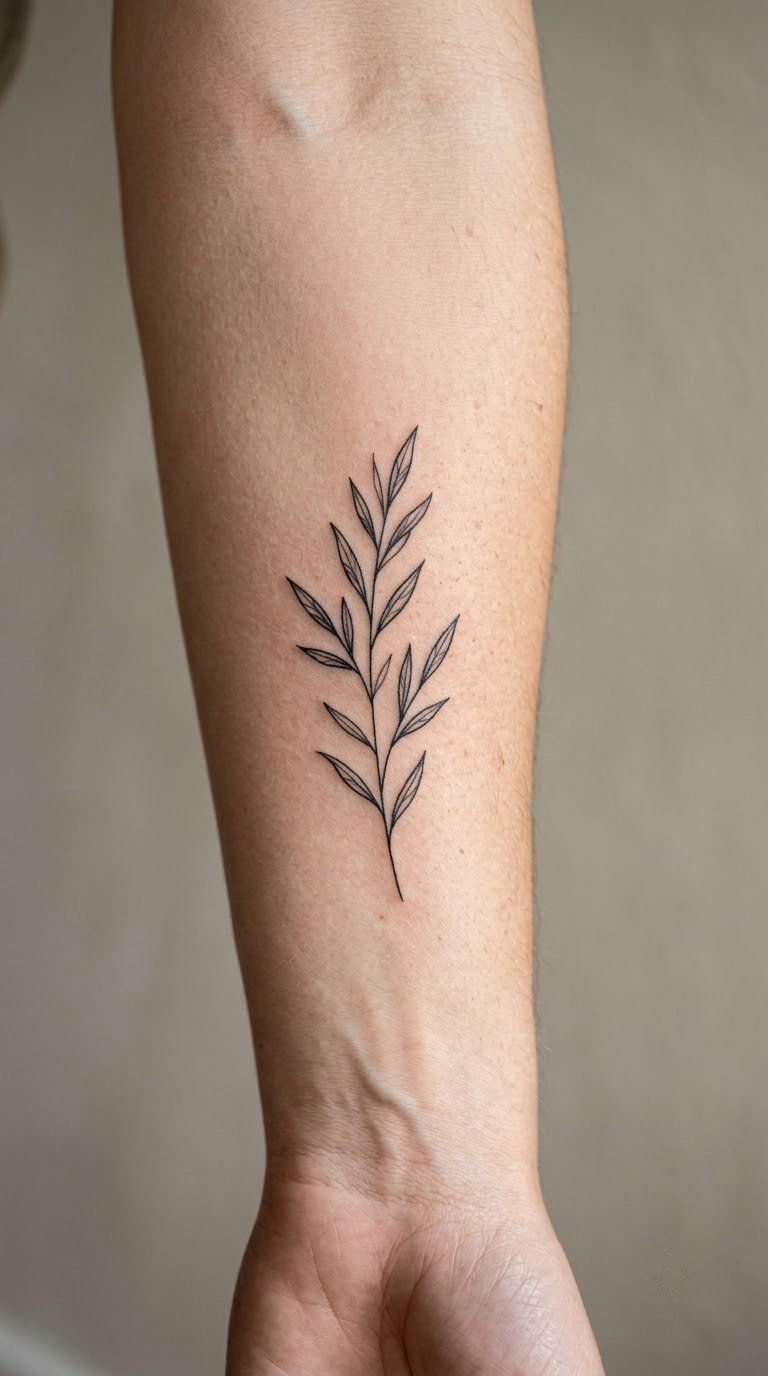
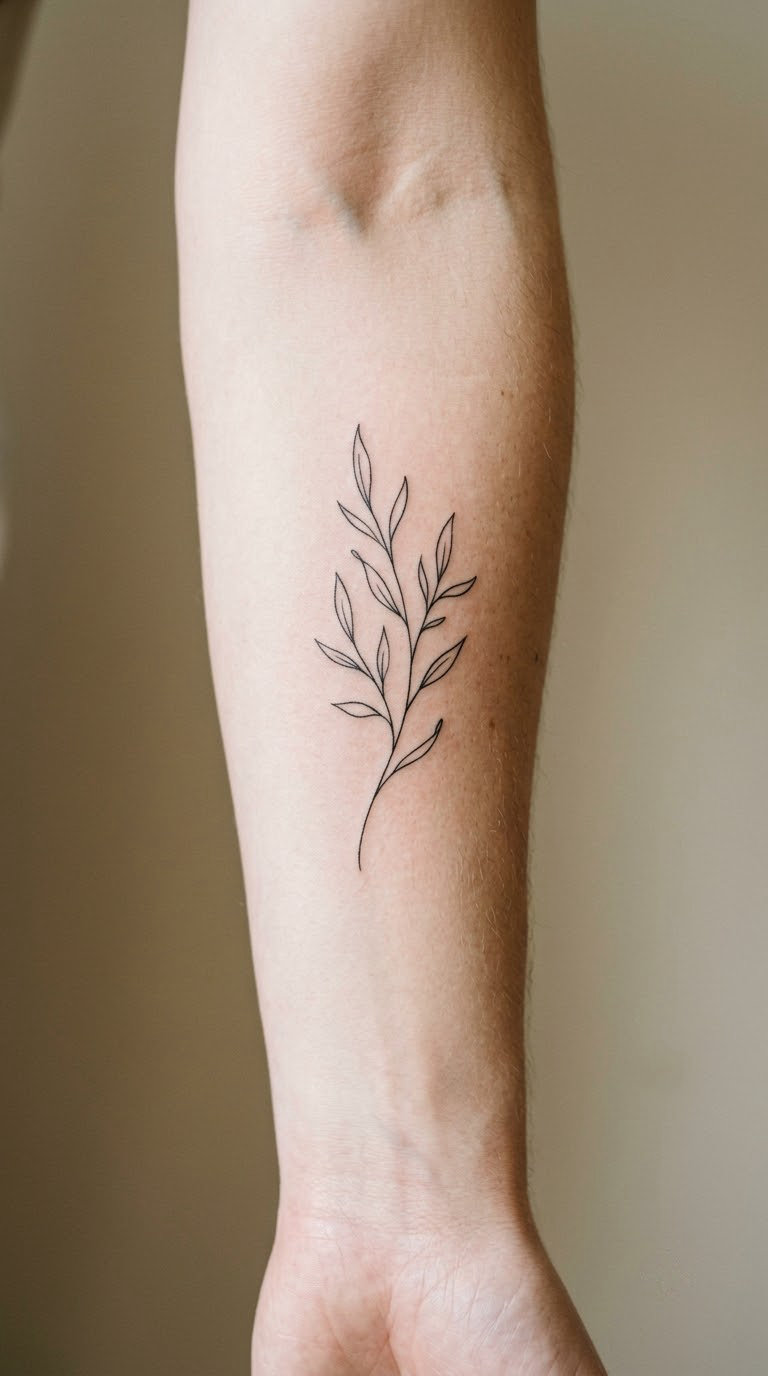
One curved stem, three or four leaves and a tapered tip. The artist draws it in a single pass so the stem has to be planned before the needle starts, which is why the curve either looks effortless or looks like it was done in two goes and covered up.
People pick botanical sprigs because they like plant shapes, not because the design carries a fixed meaning. That makes it an easy one to personalise.
Placement: Inner forearm or outer upper arm · Size: 2-3 inches long · Style: Fine line with a single-needle outline · Pain: Medium on the forearm, more of a constant scratchy sting than a sharp one. Lines this light lose saturation in sun and fading is faster on inner arms, so plan for a touch-up in a few years.
Make it yours: Choose a plant that means something specific to you rather than a generic leaf, and the same drawing carries a whole different weight.
2. Minimalist Sleeping Cat Outline
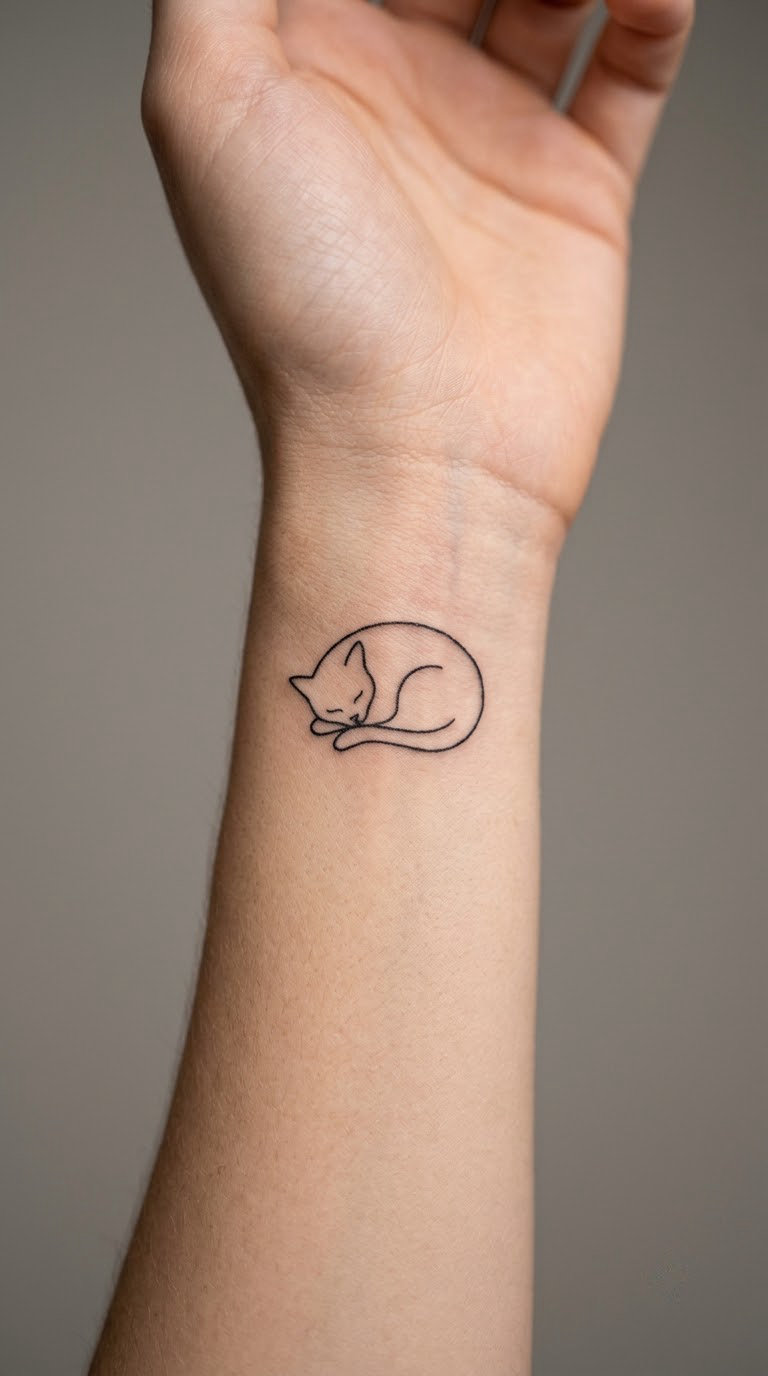
A curled cat in one contour: back curve, tucked head, a single ear notch and a tail that doubles back under the body. Interior detail stays out, which is what keeps a recognisable animal inside two inches.
It reads as affection for an animal without turning into a portrait, so it suits people who want their pet represented but not their pet’s exact face.
Placement: Outer wrist, ankle or behind the ear · Size: About 2 inches wide · Style: Fine line, single-needle contour · Pain: Medium. The ear notch is the fiddly part, and tiny inner details are the first thing to blur, so ask for a slightly heavier line on it.
Make it yours: Have the tail curl toward the wrist bone so the design sits into your body’s shape instead of floating on top of it.
3. One-Wave Ocean Line
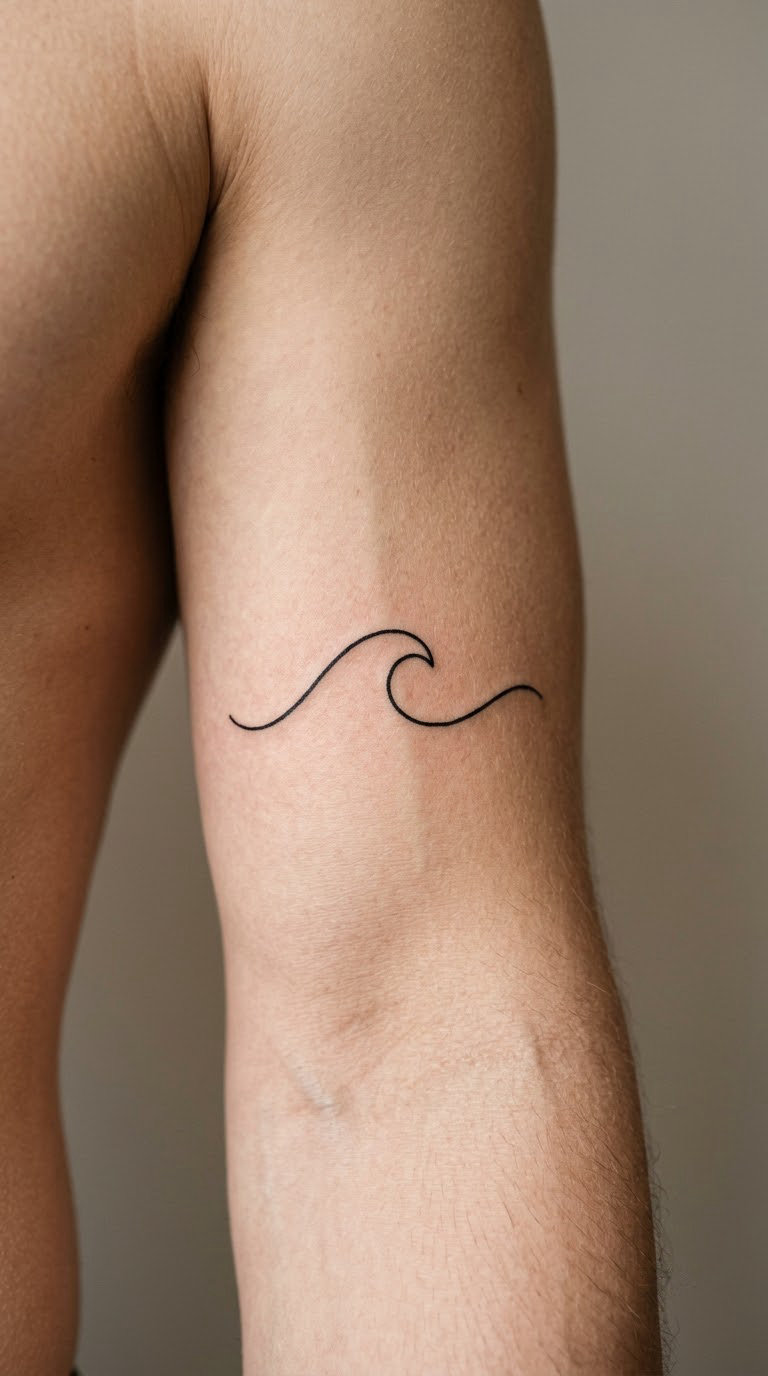
One confident curve with a gentle crest and a long trailing exit. No foam bubbles, no shading, no second wave. The restraint is the whole point, and it is also what keeps the shape legible at small scale.
It works as a quiet reference to somewhere you would rather be, or to a stretch of water that matters to you. The reference is personal, not universal.
Placement: Inner bicep, forearm or rib area · Size: 2-4 inches wide · Style: Continuous line, no shading · Pain: Low to medium on the bicep, higher near the ribs. A long horizontal line across the bicep will look slightly uneven as the arm moves, so let the artist place it along your natural resting line.
Make it yours: Angle the wave to follow a specific shoreline you know well, which is subtle enough that nobody else will read it but you will.
4. Crescent Moon With One Star
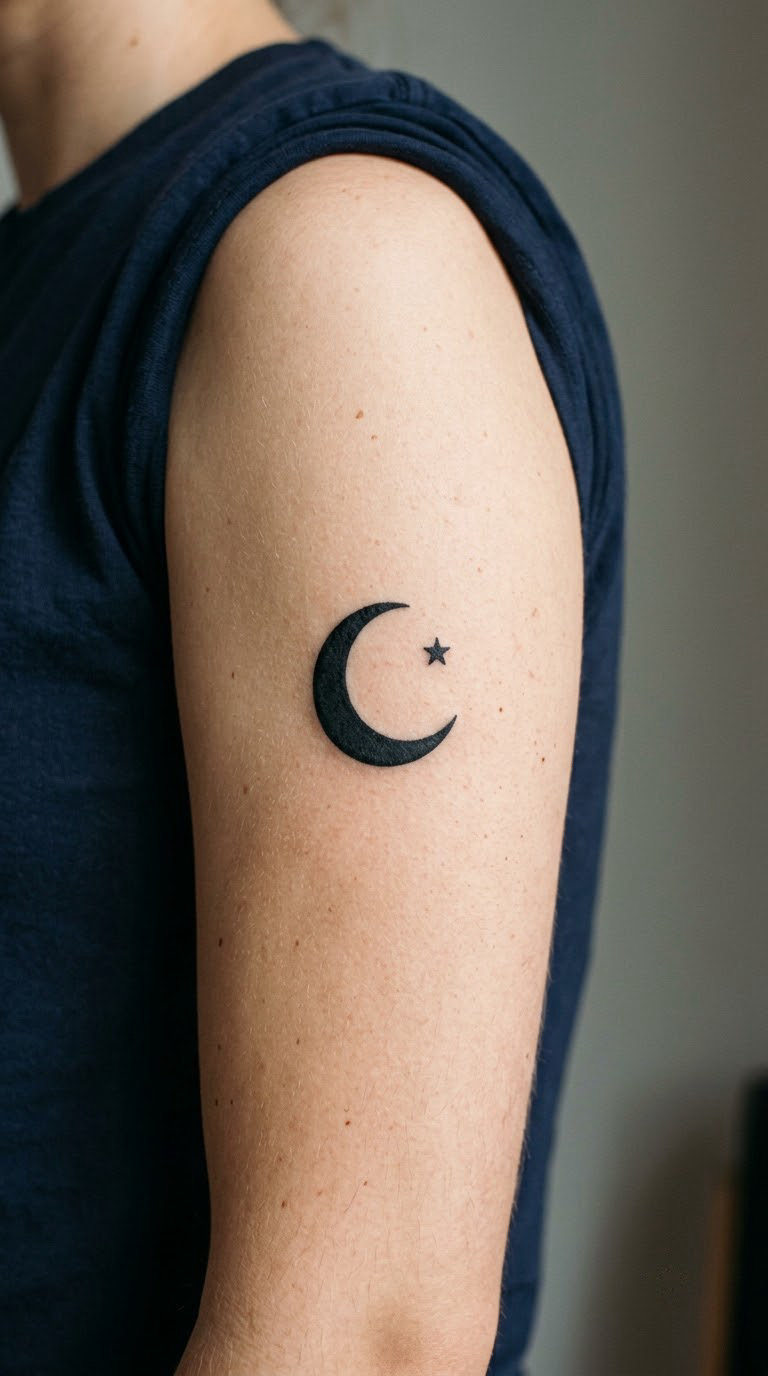
An open crescent drawn in one stroke, plus one four-point star set slightly away from it. Spacing does the work here: push the star far enough out and the pair becomes a composition rather than a sticker of two icons stuck together.
Night-sky motifs are a common choice, and this version stays quiet enough to wear to work without announcing itself.
Placement: Outer upper arm, shoulder or behind the ear · Size: 1.5-2 inches tall · Style: Fine line celestial · Pain: Low on the upper arm, and the arm is an easy place to sleep through. The star point is small, so heavier line weight keeps it from disappearing in a year.
Make it yours: Add a second star months later at a smaller size, using the same line weight, so the piece grows with you.
5. Paper Plane in Flight
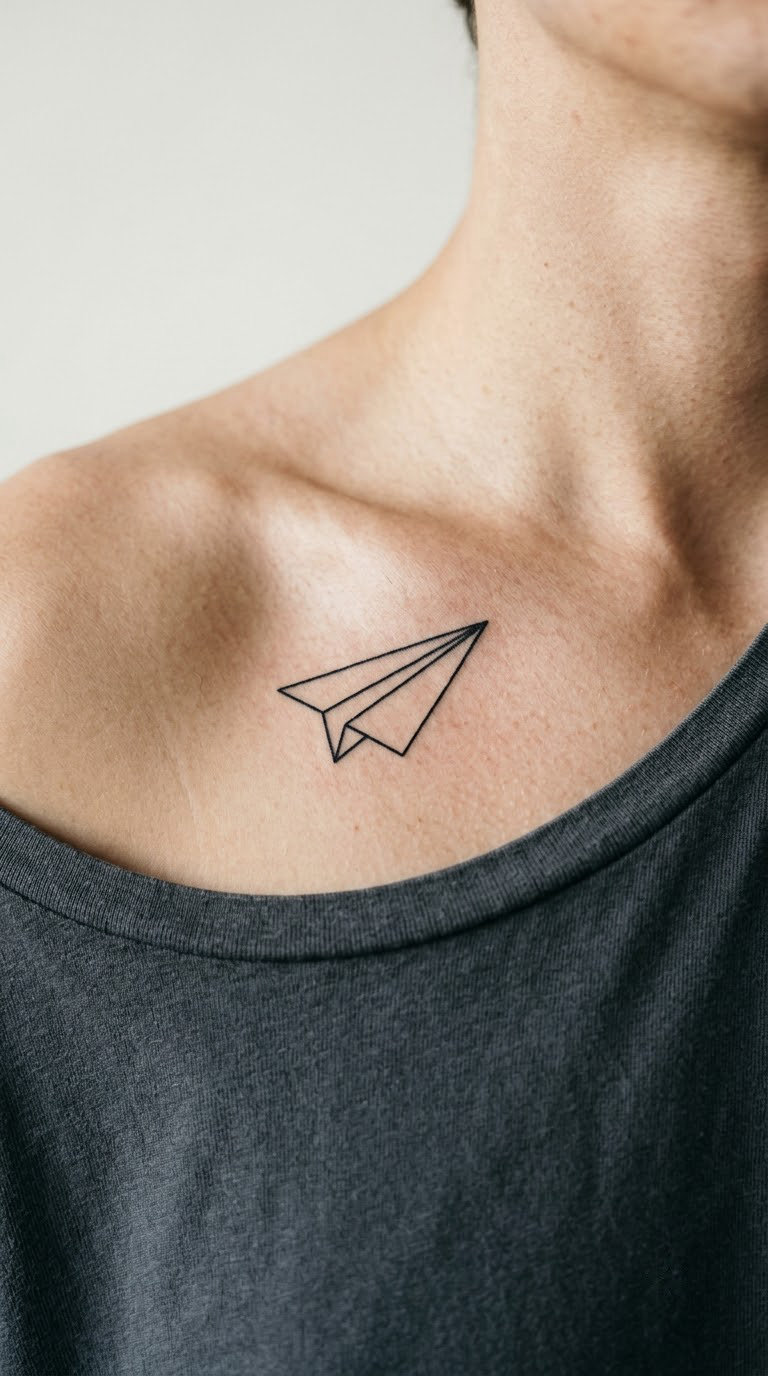
Two or three angular folds and a single trailing line for direction. One continuous stroke makes it a folded shape rather than an illustration, and a slightly tilted version looks more in motion than a straight side view.
It gets chosen for movement, travel, or the idea of getting somewhere you have not been yet.
Placement: Below the collarbone, inner forearm or upper arm · Size: 1.5-2.5 inches wide · Style: Minimal one line · Pain: Medium. Collarbone skin is thin and the bone is right underneath, so expect more sensitivity there than on the upper arm.
Make it yours: Have the trailing line taper off into a small dot or a few tiny dots, like a dotted flight path.
6. Single Line Butterfly
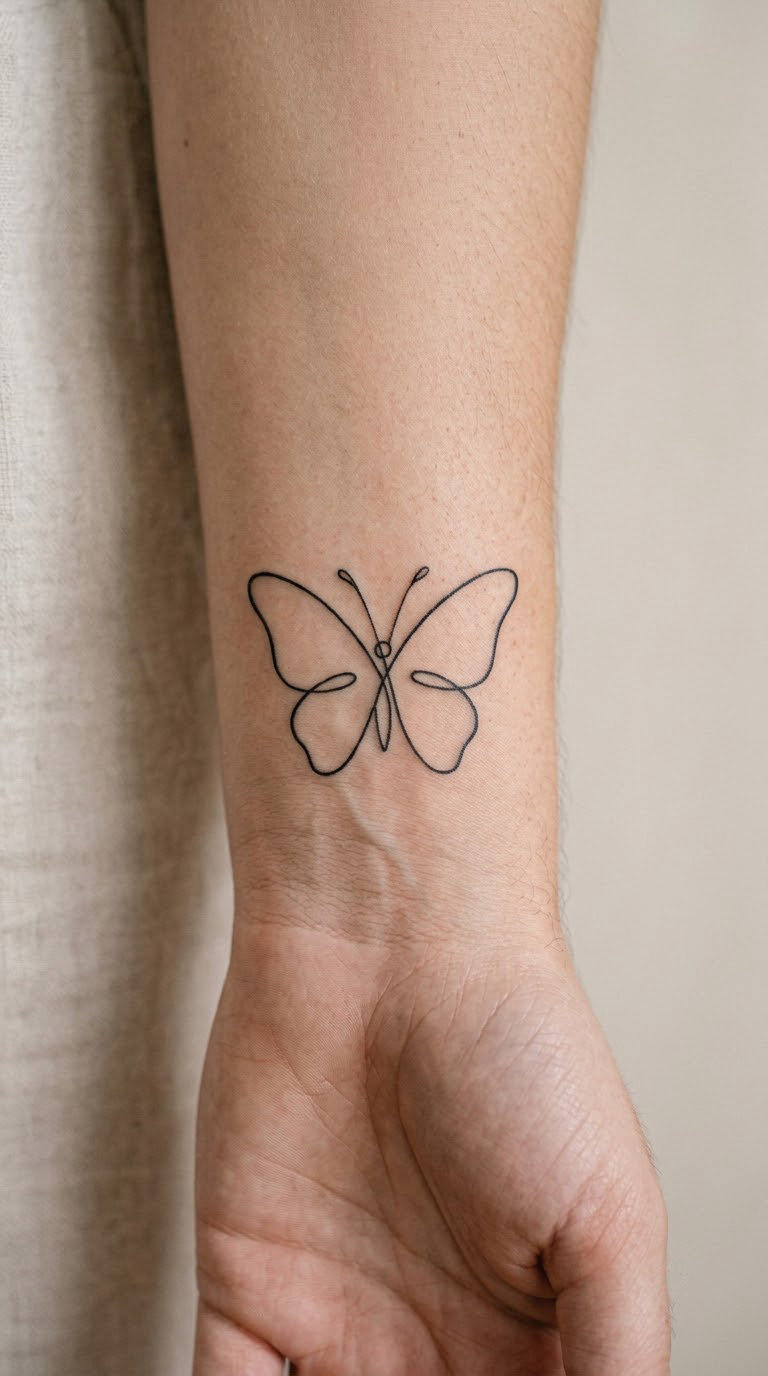
Two flowing upper wing contours and restrained lower curves, with no filled body. The gap in the middle does the work, so a butterfly can read clearly without a single drop of solid black.
Butterflies turn up for people marking a change or a transition, though plenty of people just like the shape.
Placement: Wrist, shoulder blade or ankle · Size: 2-3 inches across · Style: Fine line, open form · Pain: Medium on the wrist, lighter on the shoulder blade. Wrists bend and stretch constantly, so a design that sits in the crease will blur faster than one set above it.
Make it yours: Give the upper wings a slightly different curve from the lower ones and the symmetry stops looking stamped.
7. Mountain Peak With Rising Sun
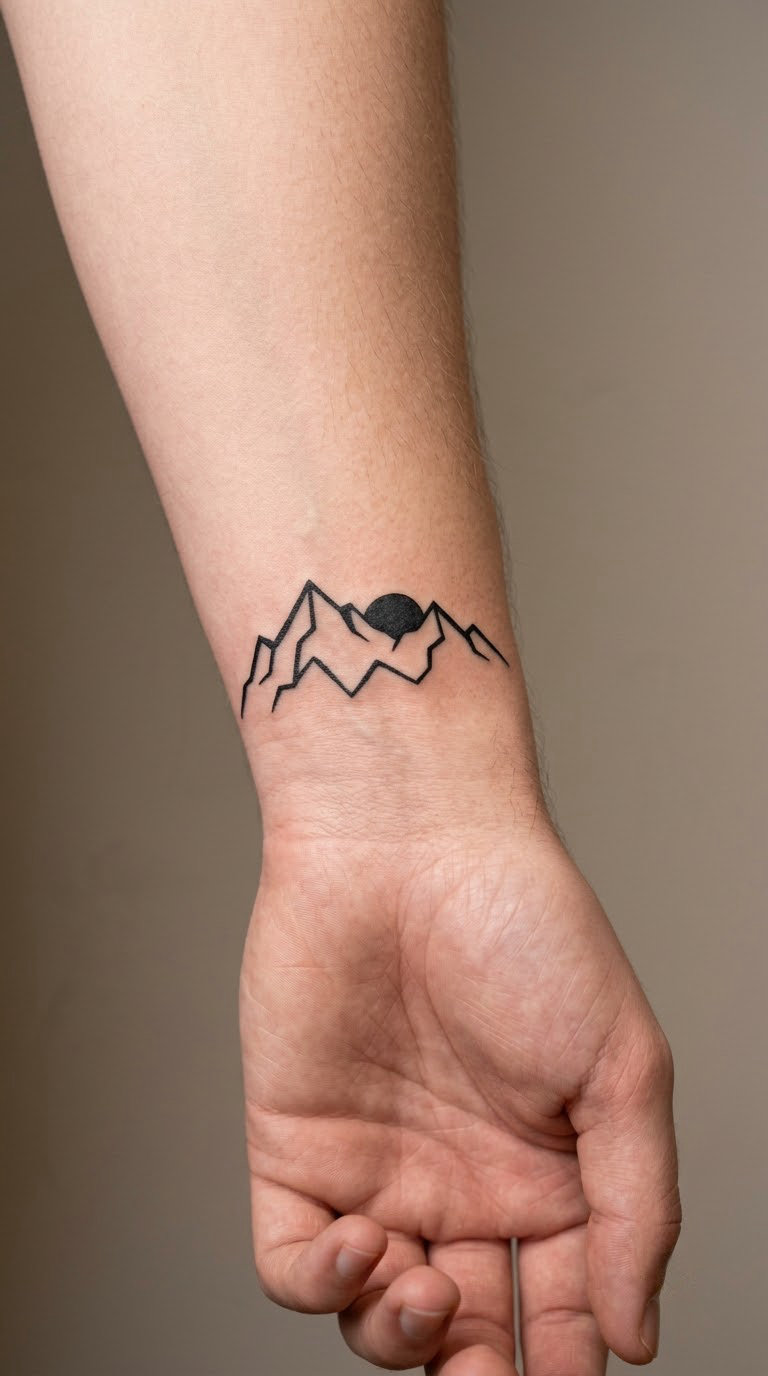
One angular ridge line that breaks at a gap, then a small semicircle tucked under the break. The interruption is deliberate: without it the sun merges into the mountain and the shape turns to mud.
It usually stands for a specific place, a hike, or a place you want to be. Ask the artist to copy the actual ridge from a photo if that is the reason.
Placement: Forearm, calf or upper arm · Size: 2-3 inches wide · Style: Minimal one line · Pain: Medium. Sharp angles need slower passes, and slower passes mean more time sitting still rather than more pain.
Make it yours: Bring two or three reference photos of the same ridge from different angles so the artist can reduce it to one readable line.
8. Open-Hand Eye Contour
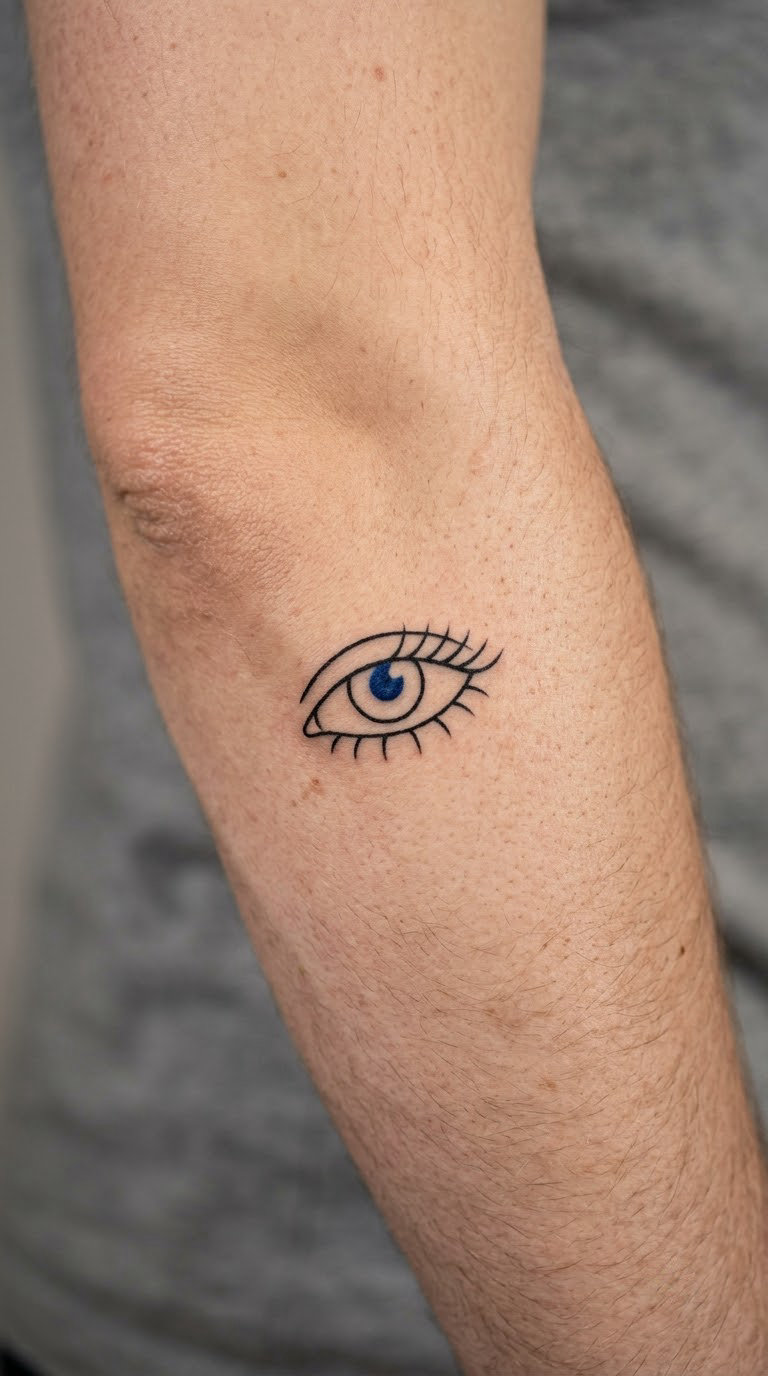
One unbroken almond shape with a short iris stroke inside it, or nothing inside at all. The almond is the design; everything else is a choice about how much interior detail survives healing.
Eyes are one of those symbols people describe as protective, watchful or simply striking, though you will find a different reason from everyone who has one.
Placement: Outer forearm, upper arm or hand · Size: About 2 inches wide · Style: Single needle · Pain: Medium to high, and higher if you place it on the hand. Hands and fingers get more movement, more washing and more sun than almost anywhere else, so fine work there fades faster and blurs sooner.
Make it yours: Skip the iris entirely and let the outline carry it, which is the version that holds its shape longest.
9. Single Willow Branch
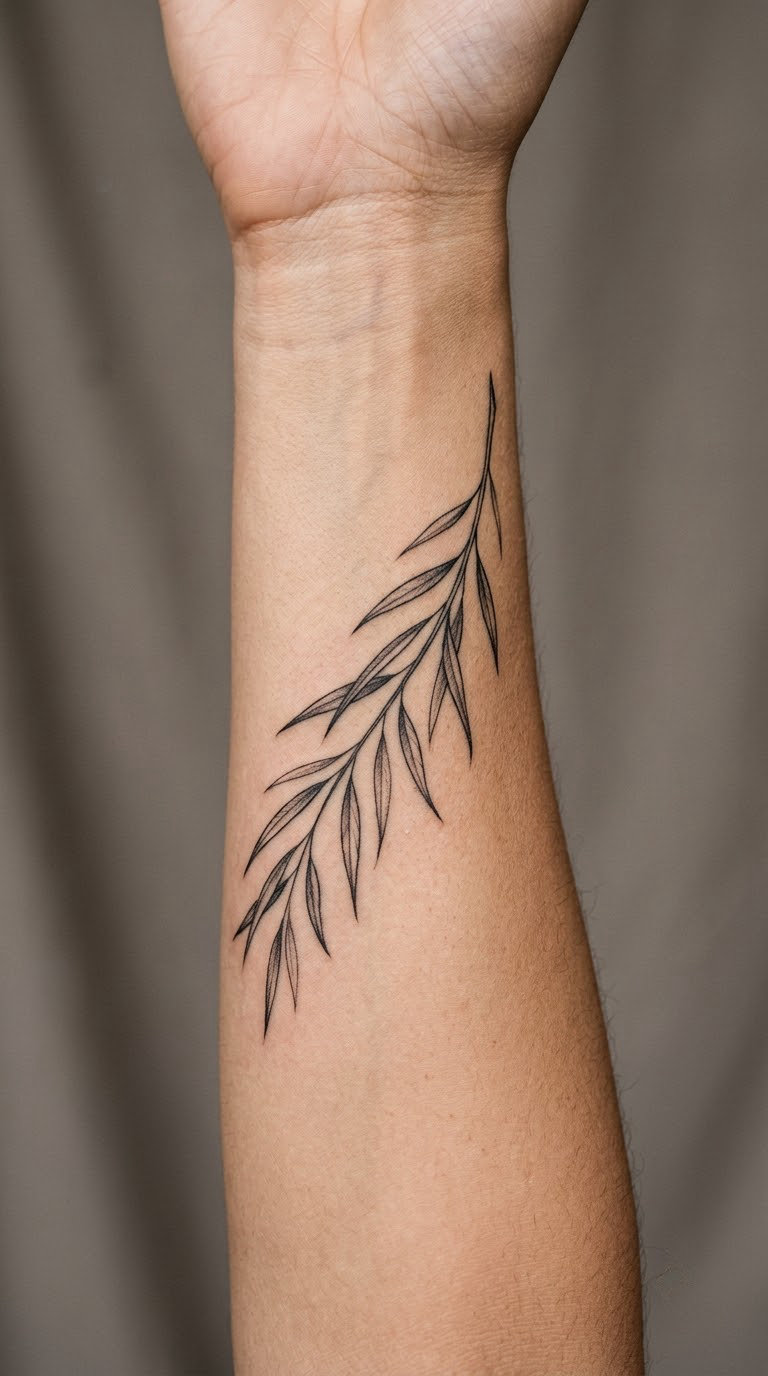
A slender arching branch that trails off the end of the line with a few narrow leaves dropping downward. The trailing end is what separates a willow from a generic twig, so ask the artist to let the line fall away gradually rather than stopping it.
It suits people who like organic linework that reads as quiet, with a hint of movement built into the shape.
Placement: Along the forearm, calf or behind the ear · Size: 3-4 inches long · Style: Fine line · Pain: Medium, rising where the line crosses a joint. Long thin lines are easier for an artist to keep steady than many short ones, so a single branch is often calmer work than a dense cluster.
Make it yours: Add three or four drops of colour later in a second session, which suits a willow more than most motifs because the leaves are already separated.
10. Lightning Bolt Scribble
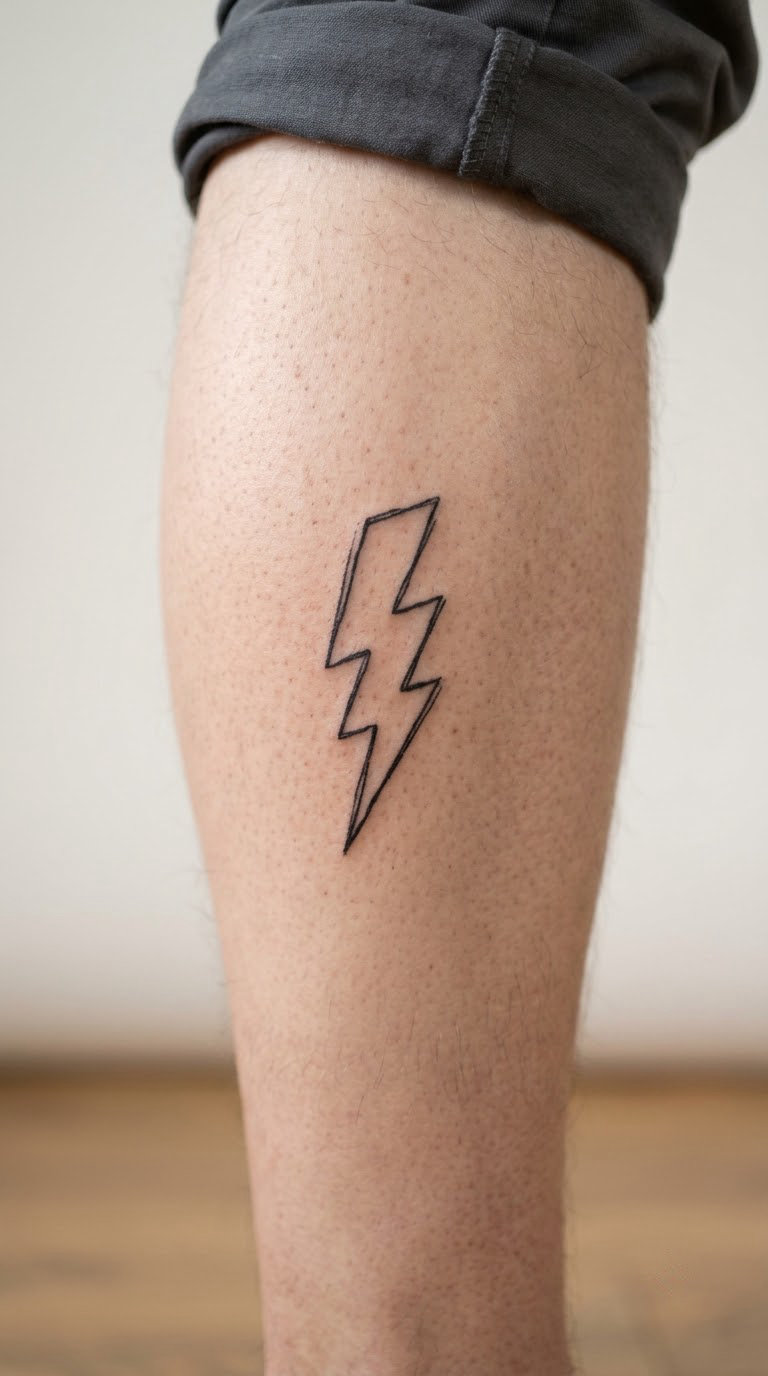
A zigzagging line drawn in one go with the hand moving faster than with a compass and ruler. Most versions lean deliberately uneven, and a perfectly straight bolt looks like a clip-art icon next to everything else in this list.
It reads as energy or a bit of rebellion, and the loose version softens that into something playful.
Placement: Calf, forearm or upper arm · Size: 1.5-2 inches tall · Style: Loose one line · Pain: Medium. Calves are muscular and the needle has to travel through more movement than the forearm does, so the line will wobble slightly if you cannot stay relaxed.
Make it yours: Give the bolt three points instead of the usual two so it has a rhythm you recognise and nobody else does.
11. Tiny Flying Bird
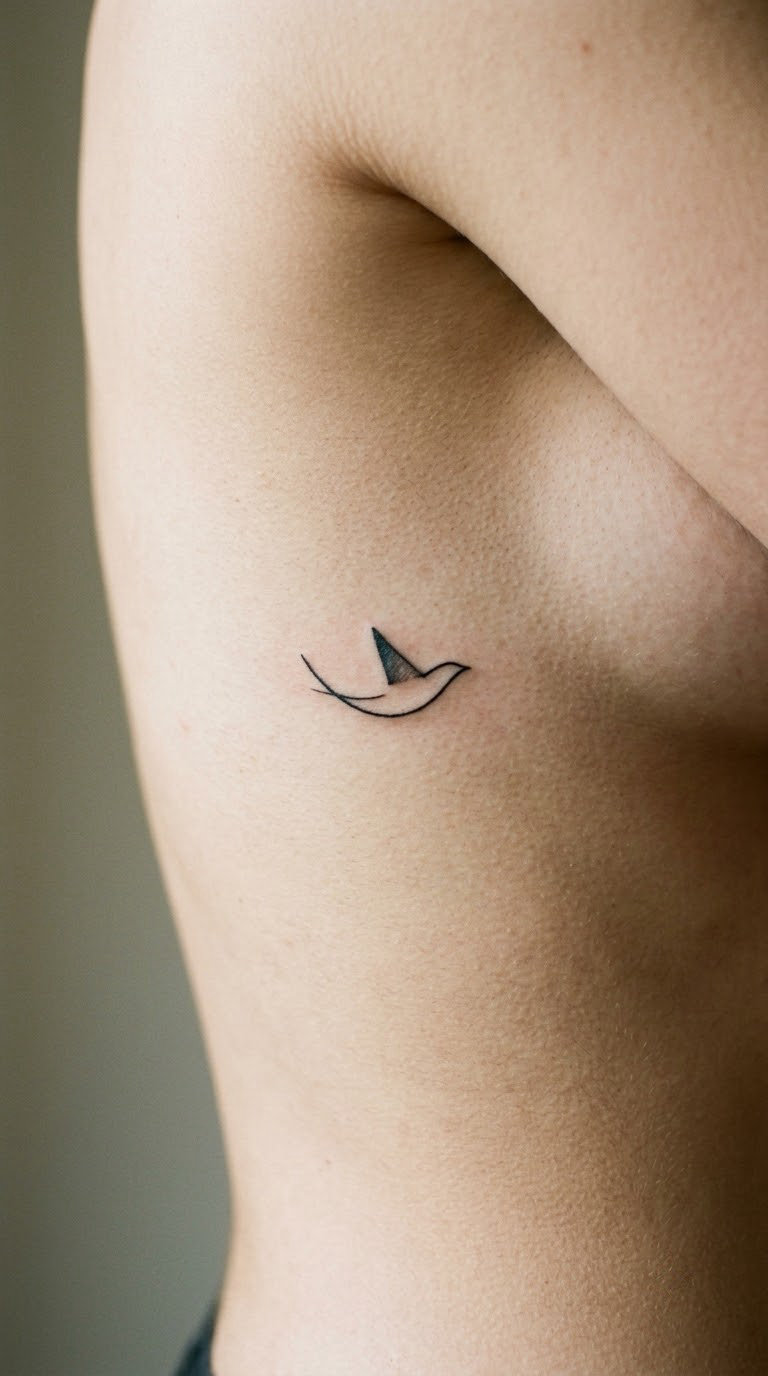
One shallow curved line for the body and a small triangle for the wing. There is no head, beak or tail, and the shape still reads as a bird because of the position of the wing relative to the curve.
It stands in for freedom, travel, or a person who is gone, depending on who you ask.
Placement: Rib area, collarbone or behind the ear · Size: 1-1.5 inches wide · Style: Micro fine line · Pain: High on the ribs, which is the least forgiving spot on the list. This is also the piece most likely to soften over time, so a touch-up within two years is normal rather than a mistake.
Make it yours: Turn the design into a set of three birds in a loose V, spaced evenly, which holds together better than one tiny mark.
12. Espresso Cup Outline
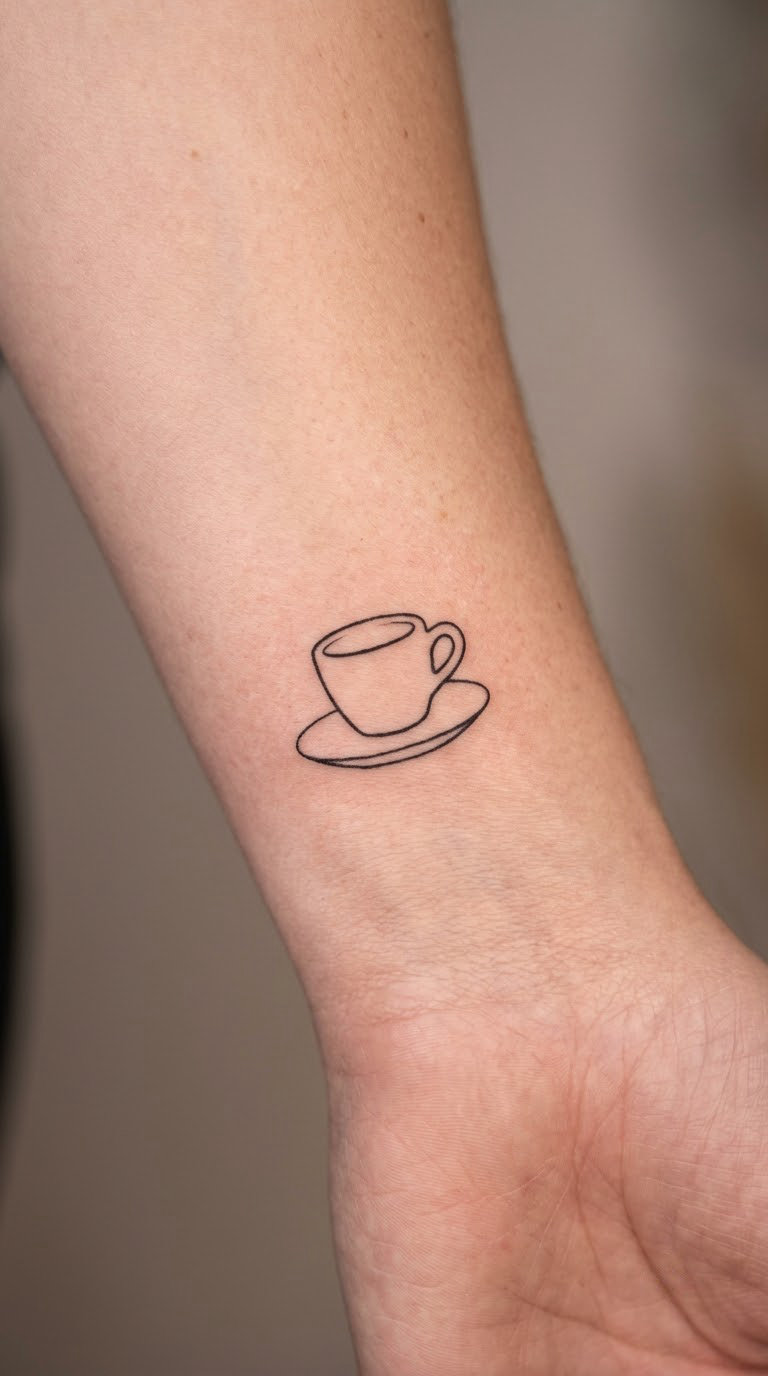
A small cup body, one handle loop and a saucer that is suggested by a short line underneath rather than drawn as a full oval. That one omission keeps the design in a single economical contour.
It is a daily-ritual tattoo. People usually choose it because coffee, or tea, or one particular cafe is genuinely part of how their day works.
Placement: Inner wrist, forearm or rib area · Size: 1.5-2 inches wide · Style: Minimal one line · Pain: Medium on the inner wrist, where veins and tendons sit close to the surface. The handle loop is small, so keep the line weight up there or it will fill in as it heals.
Make it yours: Include a single wisp of steam as the line’s exit, which reads as a coffee cup instantly.
13. Bird Sitting on a Branch
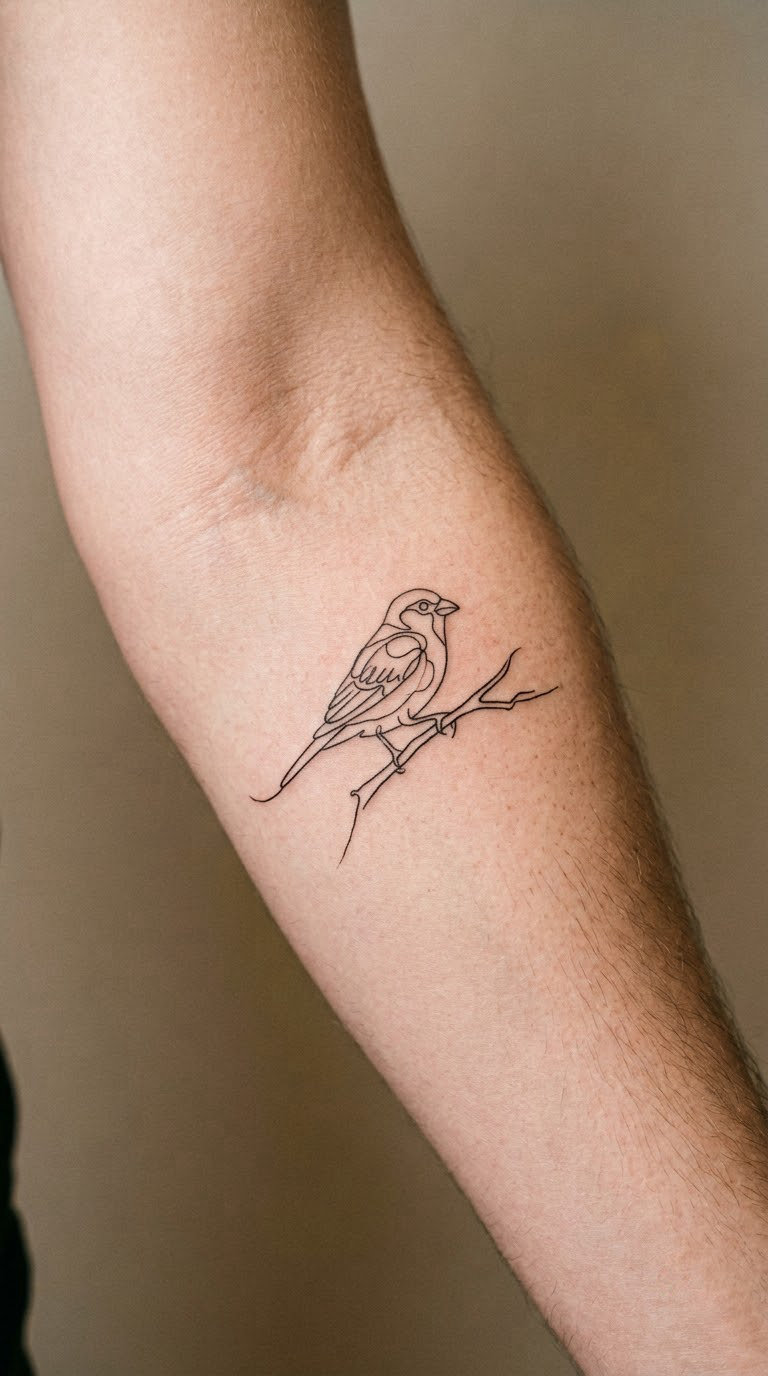
The line enters as a simple branch, breaks for enough space that the two shapes separate, then finishes as a perched bird with a rounded body and a short beak. That break is the whole trick, and it is where most attempts at this design go wrong.
It is a calm nature piece rather than an action shot, and the stillness is the reason people pick it over a bird in flight.
Placement: Outer arm, calf or along the rib area · Size: 2-3 inches long · Style: Continuous line with one intentional gap · Pain: Medium. Artists describe this kind of piece as line conservation: rather than running the whole thing in one unbroken pass, they break the design into partial segments so each part stays steady.
Make it yours: Angle the branch along a bone or a tendon line so the design follows your movement instead of fighting it.
14. Simple House Outline
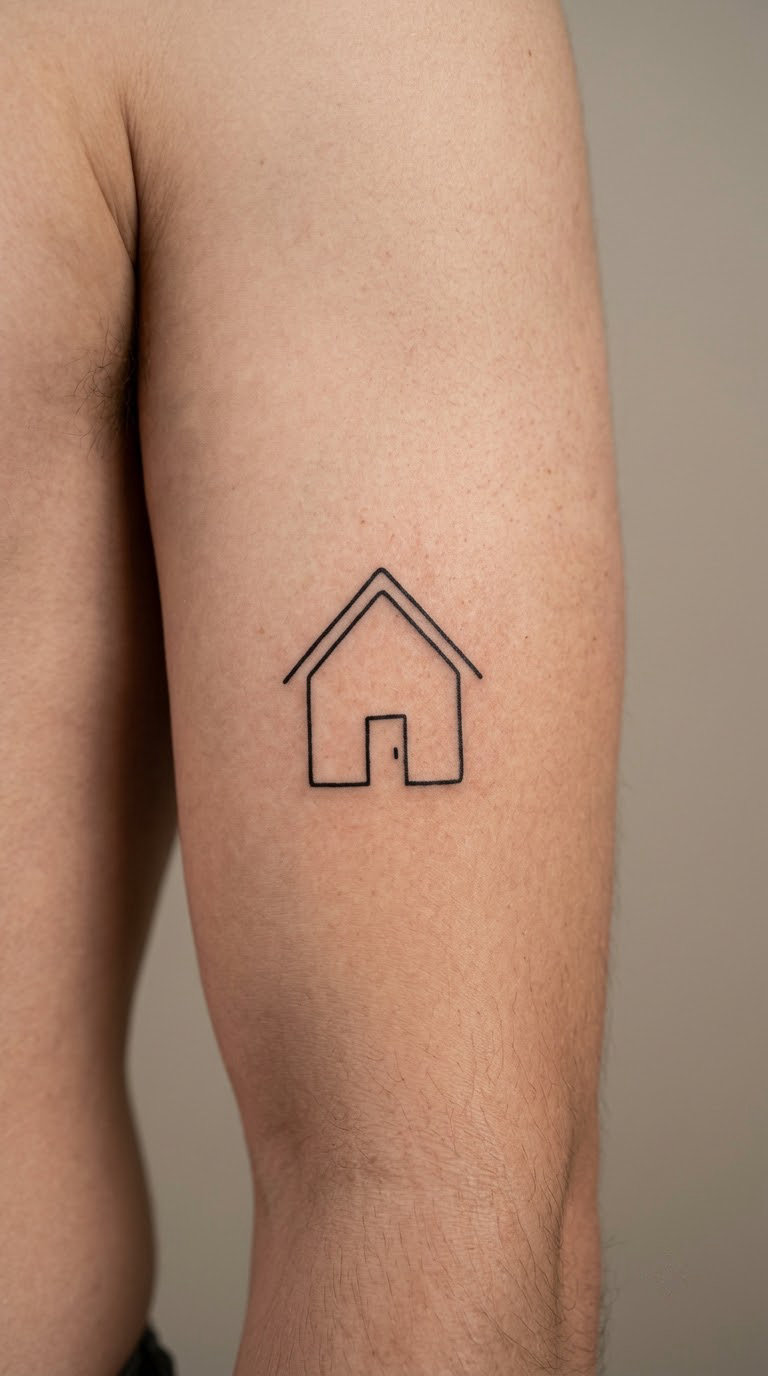
One roofline that flows straight into two wall lines, a small door rectangle and nothing else. No windows, no bricks, no garden. The plain version is what makes it read as a home rather than a building.
It usually marks belonging, a family home, or a place that mattered more than anywhere else.
Placement: Upper arm, forearm or calf · Size: About 2 inches tall · Style: Minimal one line · Pain: Medium. The two roof angles are the sharpest direction changes in the drawing, so the artist will slow down there and the sting builds a little.
Make it yours: Make the roofline asymmetric so it matches the actual building rather than a generic cottage.
15. One-Petal Flower
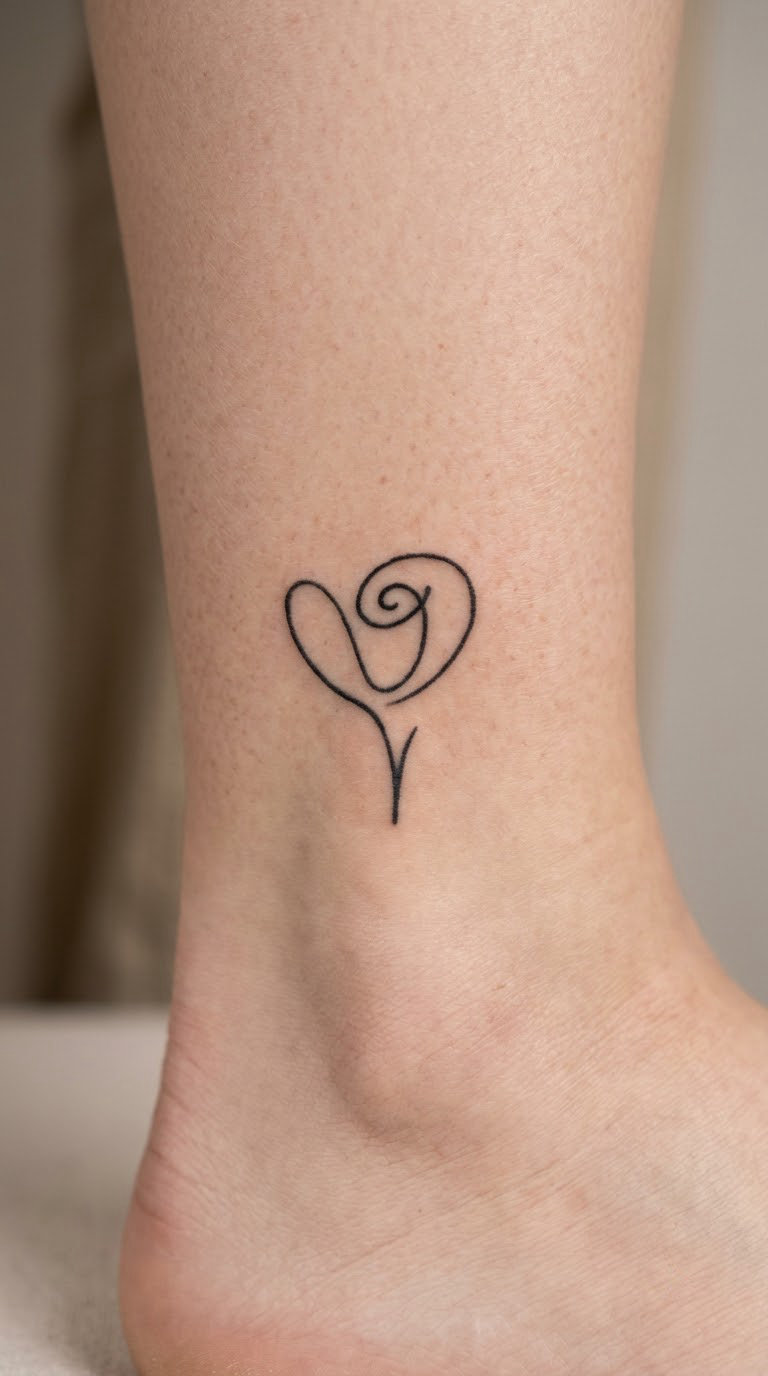
A single looping line that suggests one petal, curls back on itself for the centre, then runs into a short stem. Half the drawing is negative space, which is why it can be this small and still read as a flower.
It is abstract botanical work, chosen for the feel of a bloom rather than for accuracy about which species it is.
Placement: Ankle, wrist or shoulder · Size: 1.5-2.5 inches tall · Style: Fine line · Pain: Medium, and ankles swell through the day, so the skin there stretches a little. Fine line work loses definition in that movement over the years, particularly on the outer ankle bone.
Make it yours: Turn the loop into a half-circle and add two small leaves, which keeps the one-line idea while giving it a stem worth looking at.
16. Infinity Loop
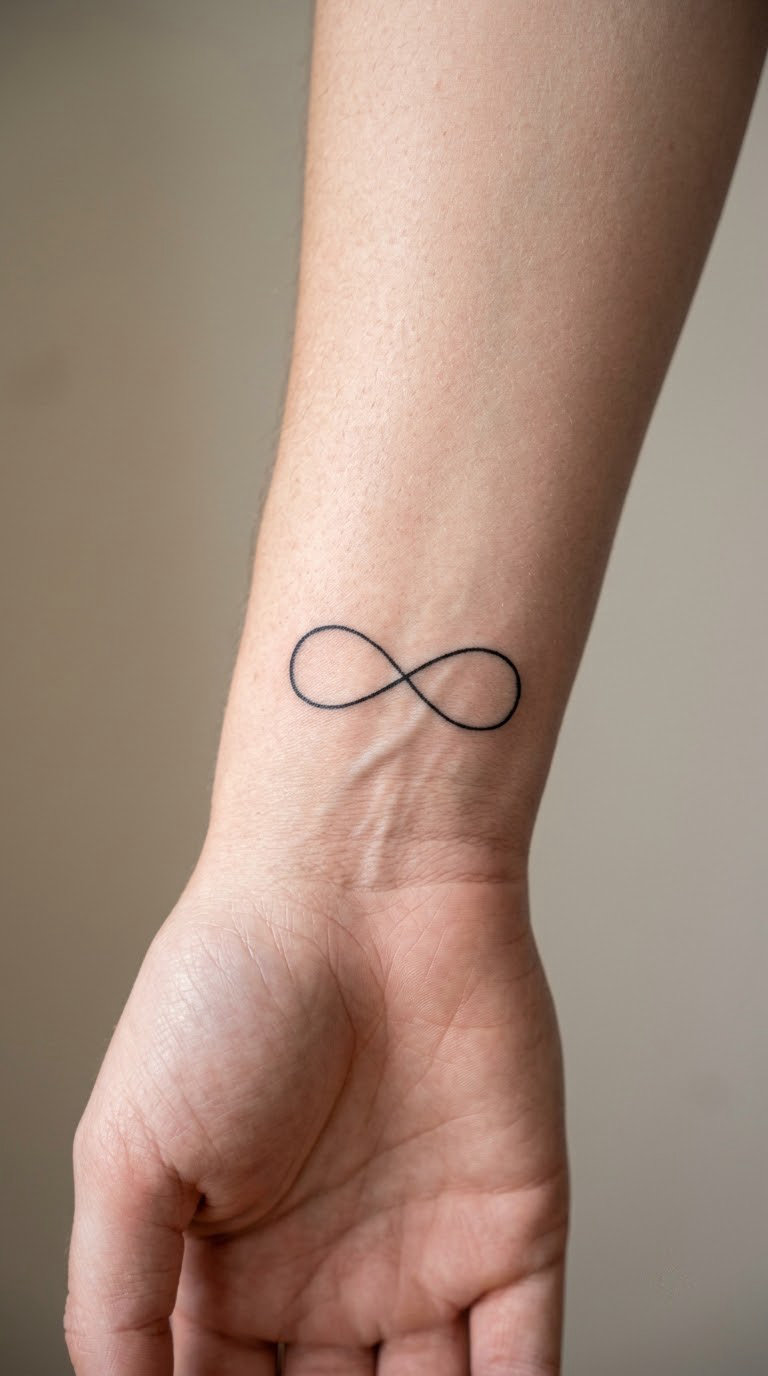
A clean figure-eight with no added symbols, dots or arrows on either side. The crossing point is the only technically interesting moment, since that is where the needle changes direction without stopping.
The motif is associated broadly with continuity, connection or something that runs on, and most wearers have a specific version of that in mind.
Placement: Side of the wrist, forearm or behind the ear · Size: 1.5-2 inches wide · Style: Single needle · Pain: Medium. The crossing point needs a tiny pause in the stroke, so the artist will build up a dot of ink there. That dot is where the design usually softens first.
Make it yours: Vary the loop size so one side is larger than the other, which makes it less symmetrical and more personal.
17. Initial With a Tapered Exit
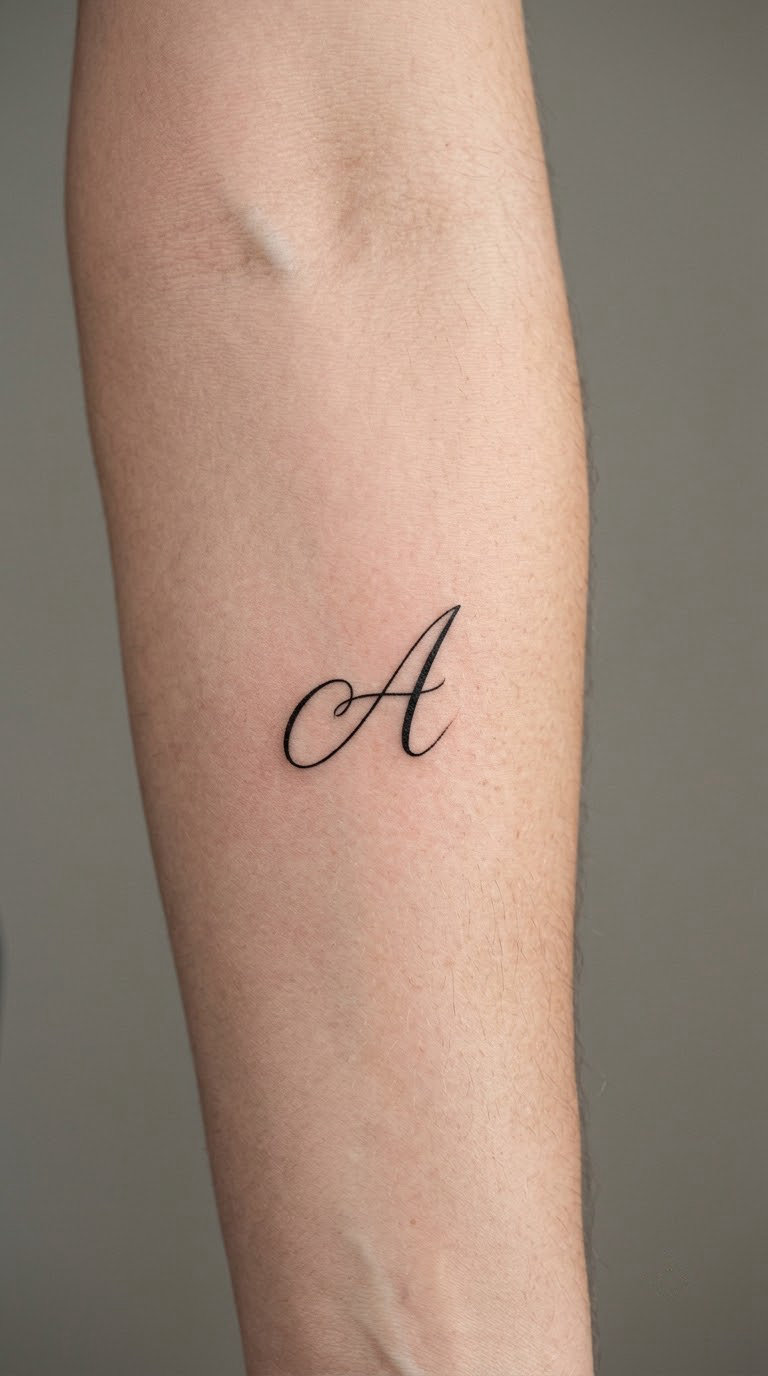
One letter built from a single flowing script stroke, finishing in a tapered exit line that thins as it runs out. The taper is the part that takes real technique, since the line has to fade without breaking up.
It is the discreet version of a name or a family connection, and it suits people who want the meaning without the explanation. Our guide to small single letter tattoo ideas covers more variations of the same idea.
Placement: Forearm, wrist, behind the ear or ankle · Size: 1-1.5 inches tall · Style: Fine line script · Pain: Medium, and light on the ankle. Script needs slower, steadier passes than a shape, so the same small design can take twice as long as a solid outline.
Make it yours: Add a matching initial on a second person at a slightly different size so the two read as related rather than copied.
18. Birth Coordinates With One Rule
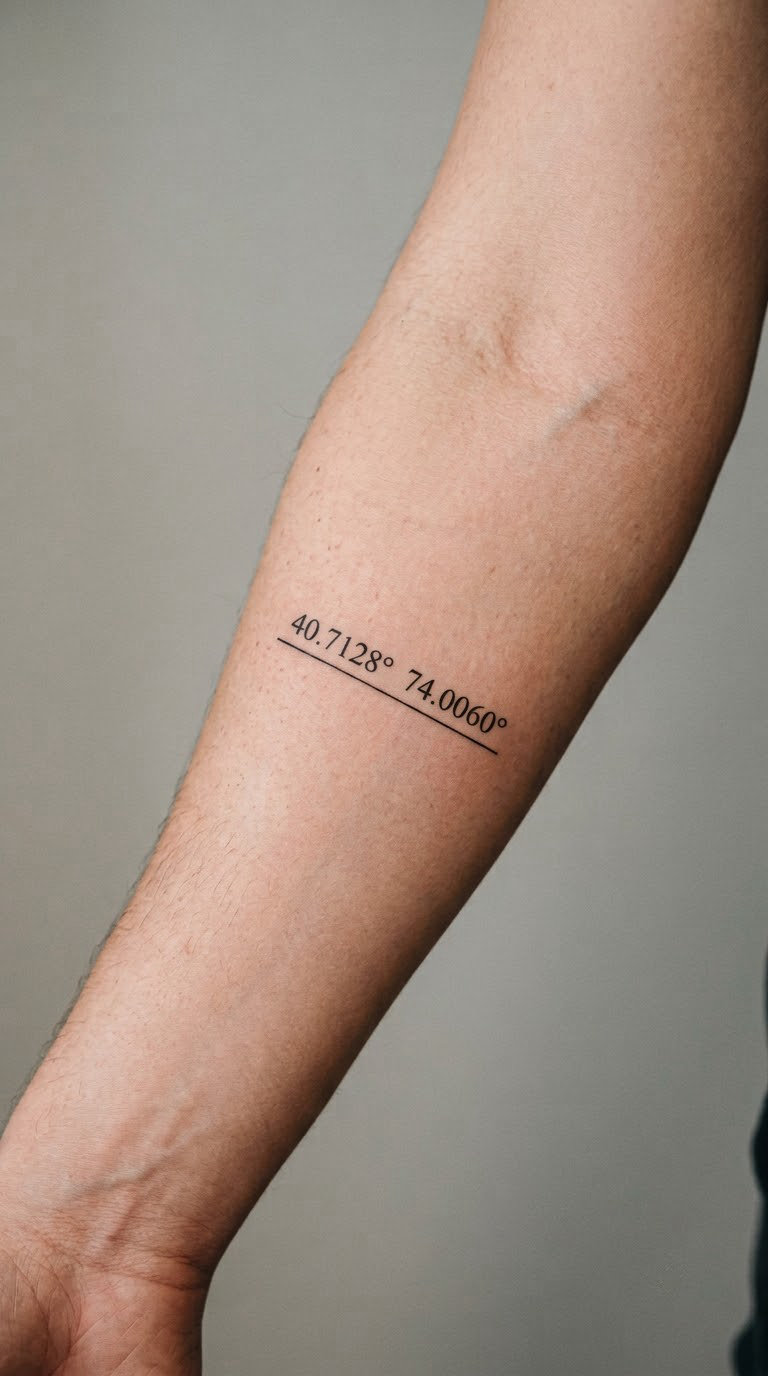
A latitude and longitude written as a compact numeral run, with one continuous line drawn underneath as a base instead of a box. Stripping the box away is what keeps the piece minimal and stops it looking like a form.
The reason is nearly always a specific person, and a birthplace usually means the person was born near a place you care about.
Placement: Inner arm, ankle or rib area · Size: 1.5-2 inches wide · Style: Minimal line, small numerals · Pain: Medium. Numerals are the least forgiving element in this whole list: if the figures go below about a quarter inch tall, they merge together as they heal. Ask the artist to simplify the number of digits rather than shrinking them.
Make it yours: Drop the trailing zeroes, or split the coordinate across two lines with one stroke joining them.
19. Goldfish in One Curve
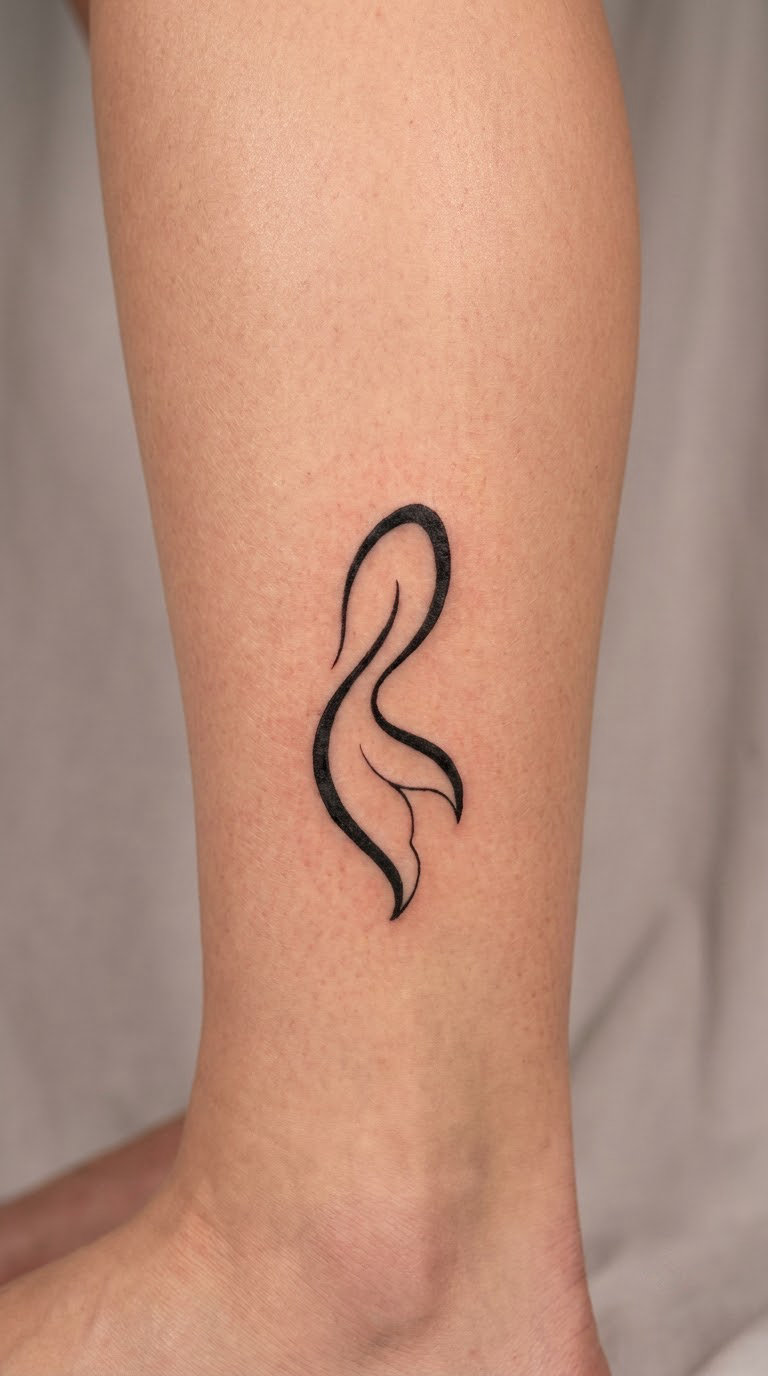
One economical curve forms the body, and the tail is made by where the line exits and stops rather than by a drawn shape. Negative space doing the work is what keeps this at a genuinely small size.
It is an illustrative motif more than a symbolic one, which makes it a relaxed choice for a first small piece.
Placement: Calf, forearm or upper arm · Size: 2-2.5 inches long · Style: Fine line, no shading · Pain: Medium. The fin and tail edges are thin by design, so ask for slightly more line weight there than feels necessary in the drawing.
Make it yours: Add three small bubble circles in a rising line above the fish, using the same weight throughout.
20. Four-Point Spark
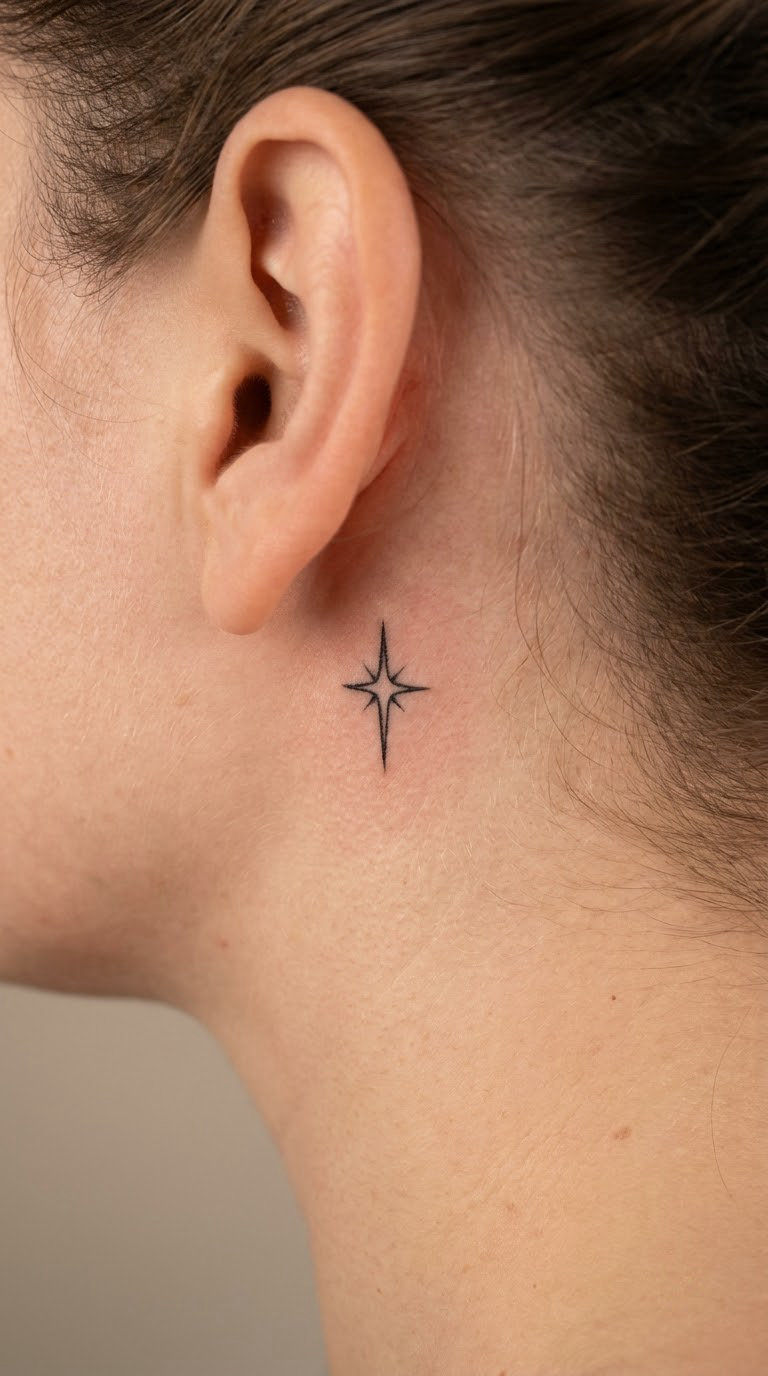
Four tapered points radiating from a centre, with the line weight doing the shaping rather than any solid black fill. It is the smallest idea on this list and probably the quickest to heal.
It works as an accent, the kind of mark that sits next to a collection rather than starting one, and it reads well on its own too.
Placement: Behind the ear, wrist, knuckle or ankle · Size: 0.5-0.75 inch tall · Style: Micro fine line · Pain: Low, and brief. Behind the ear is a tender spot and the skin moves a lot, so this one is more uncomfortable than painful.
Make it yours: Cluster three sparks of different sizes along one line, which holds together longer than a single mark that can fade out of notice.
21. Crossed Shoelace Knot
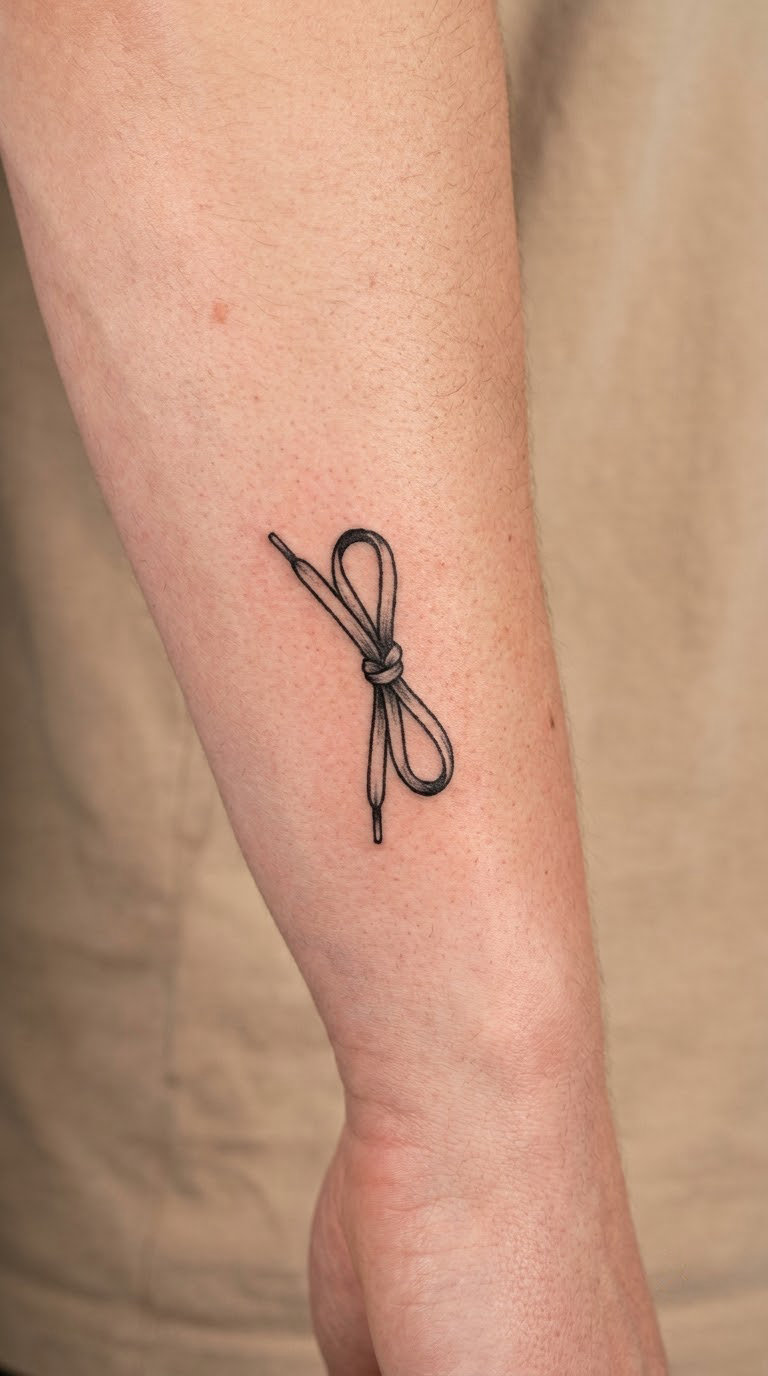
One uninterrupted line that makes two crossings, pulls into a simple knot and trails off. No shoe, no sock, no foot. Suggesting the object rather than drawing it is what keeps it readable and small.
It turns up around a sport, a habit, or a relationship, and it is popular with people who want a joke that only makes sense to them.
Placement: Side of the forearm, calf or upper arm · Size: 1.5-2 inches long · Style: Loose one line · Pain: Medium. Crossings need the needle to double back over itself, and your artist will be candid about whether that will be one line or two, because a true overlap means a brief break.
Make it yours: Use the colour of a team or a club as a single accent on one of the two lace ends.
22. Mountain and Reflection
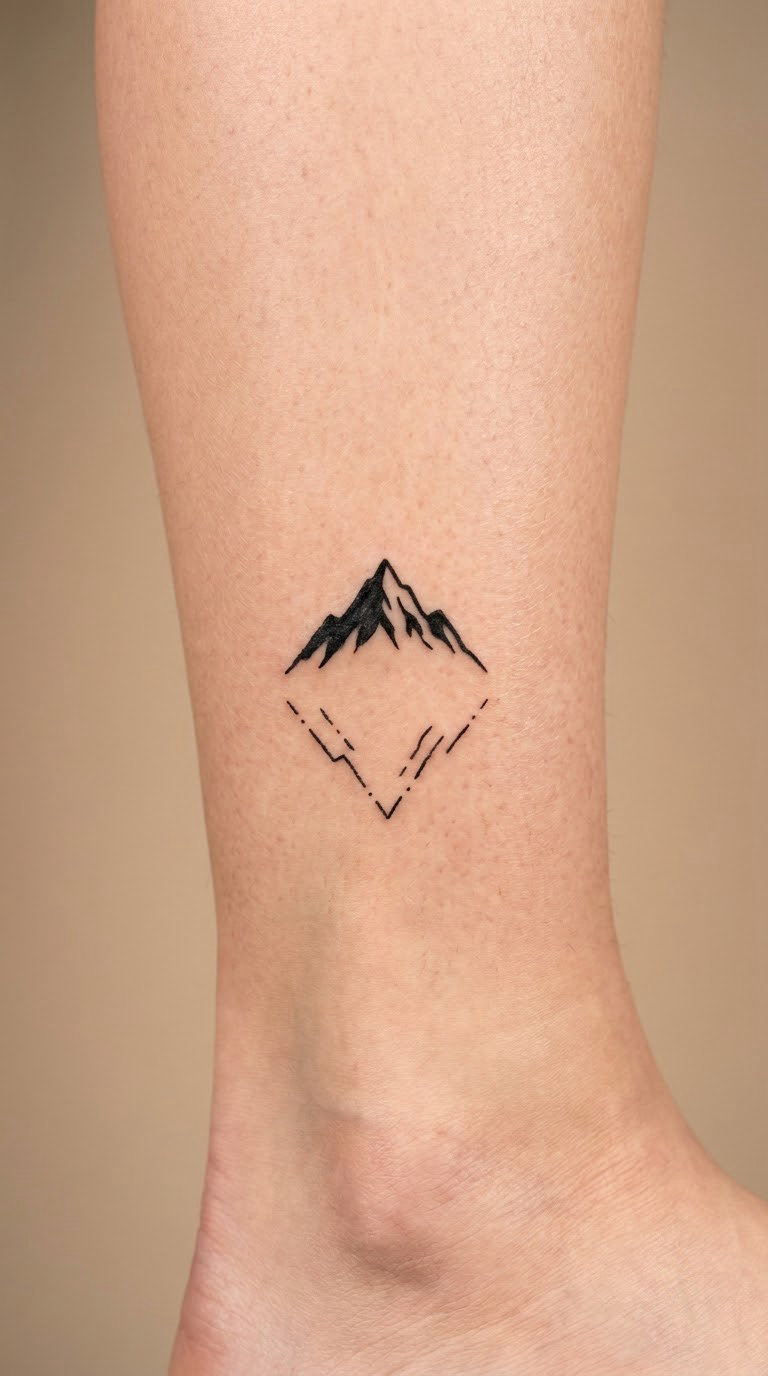
One peak at the top, a sparse inverted echo below it, and a small break between the two. It is not a scenery drawing, just a paired shape with quiet space in the middle.
The paired motif usually stands for a place you have been or a memory, and the water version gives it a calm, still quality that a lone peak does not.
Placement: Shin, calf, forearm or rib area · Size: 2-3 inches tall · Style: Minimal line, two elements · Pain: Medium. Shins and calves take work well, but the reflection is the half that will change most, since skin movement there is greater than most people expect.
Make it yours: Make the reflection shorter and sparser than the peak, which is what happens in real water anyway and keeps it from looking like a copy.
23. Single Line Sun
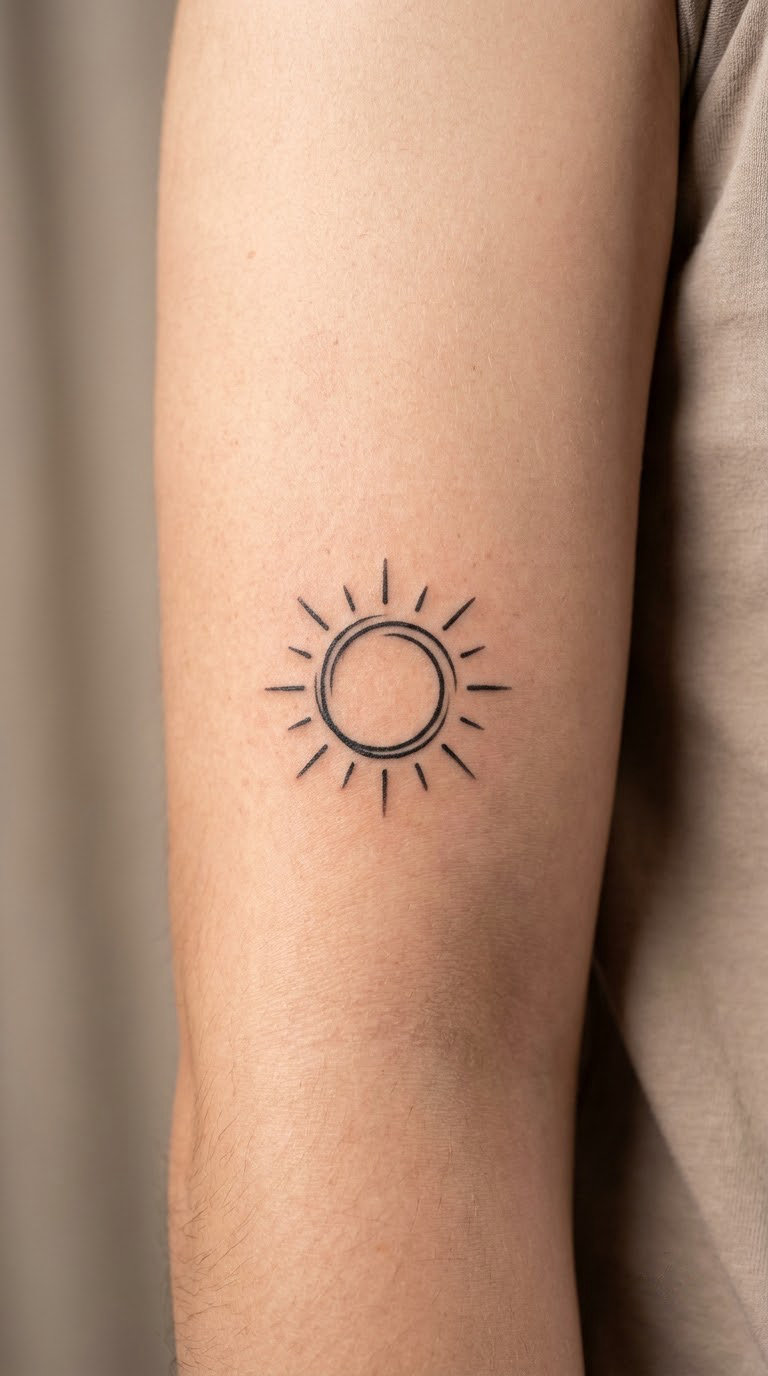
One circular stroke with a handful of short rays integrated into the same line, kept light rather than graphic. The rays come out of the circle and go back in, so there are no loose ends anywhere in the drawing.
It gets chosen for warmth, optimism, or simply because it is a shape that looks good in a round format on a curving part of the body.
Placement: Upper arm, forearm or calf · Size: 1.5-2 inches wide · Style: Fine line · Pain: Low, and one of the calmer options on the list. Circular line work fades more evenly than straight runs because the ink is spread around the curve, though the thin ray tips are the first to soften.
Make it yours: Extend two rays into longer lines that trail off the design, which turns a small circle into something directional.
24. Continuous-Script First Name
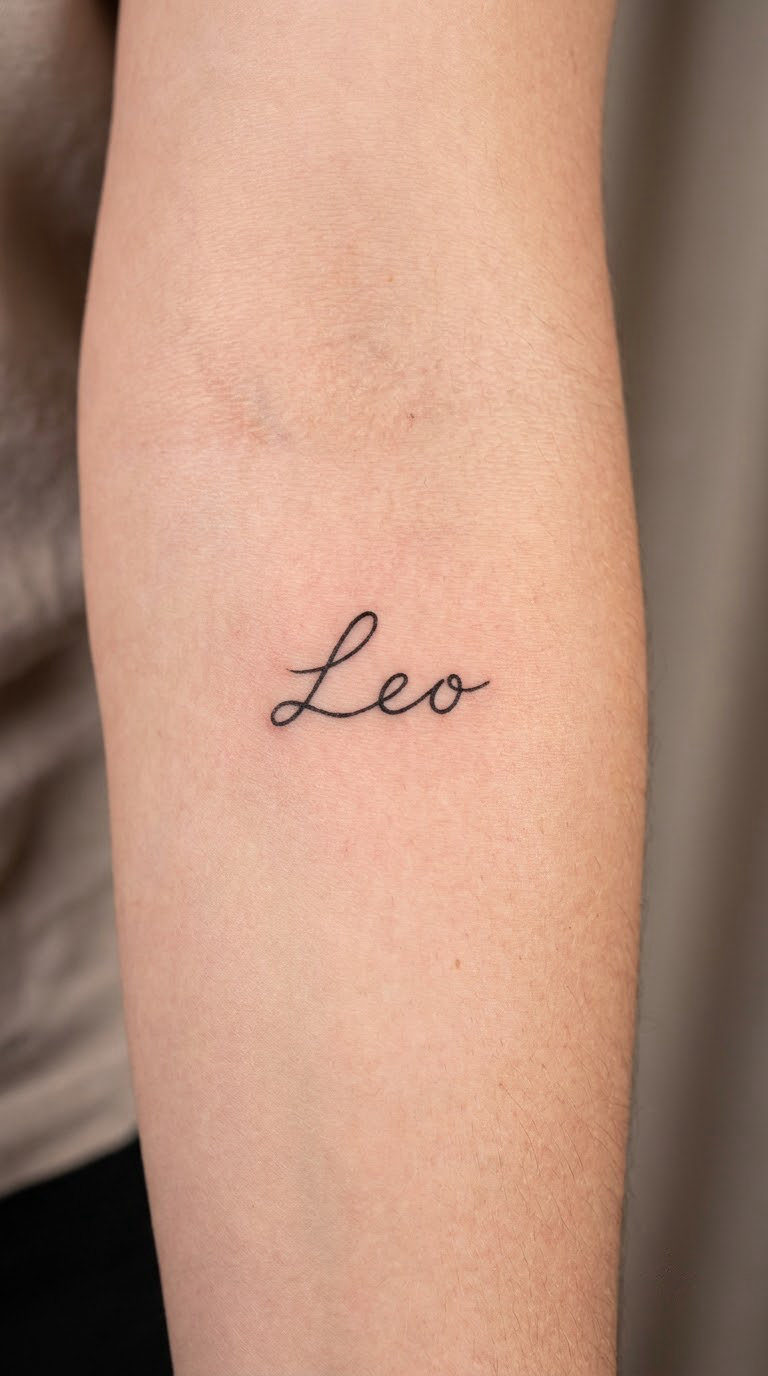
A handwritten name done with rhythm, spacing and line variation instead of ornamental flourishes. The letters vary in weight, the connections between them stay even, and nothing is added to make it look fancier.
This one is personal in a straightforward way, and it is the most common way people mark a name that matters to them without going large.
Placement: Inner forearm, wrist or along the ribs · Size: 2-3 inches long · Style: Fine line script · Pain: Medium. Longer names need more session time than the size suggests, because each letter is its own slow pass. Fine line script in one place fades unevenly, with the thin connectors going first and the downstrokes holding on longest.
Make it yours: Have the artist write it the way you actually sign things, including the loop on your final letter, rather than correcting it into neat handwriting.
How to Choose the Right Design
Ask an artist to size a single line design for the exact spot you have in mind before you commit to it. A drawing that works on a flat sheet often has to be redrawn smaller once it meets a curved or bony area, and the artist is the one who will tell you that honestly.
- Line style: One continuous stroke is a harder technical ask than several short lines. If your design has a lot of separate parts, ask whether splitting it into two or three lines would suit the shape better.
- Scale first: Decide the size before the detail. Anything with an element under about a quarter inch will blur as it heals, and the fix is a simpler design, not a smaller one.
- Placement: Inner forearms, upper arms and outer bicep take fine line work well. Ribs, collarbones, hands and fingers are harder and fade faster, so save your sharpest detail for the forgiving spots.
- Body lines: Have the design follow a bone, a tendon or the natural curve of the area rather than sitting at a random angle to it.
- Skin tone: Ask the artist to adjust line weight for your skin. Fine black lines need a touch more weight to read on deeper skin tones, and the artist should be the one setting that number.
- Healed work: Before you book, look at healed photographs that are at least two years old rather than fresh posts. Posts on r/agedtattoos are the most useful reference people find, because they show what the lines actually did over time.
One more practical note from tattoo apprentices: a very long single run is where designs go wrong. Artists often break a design into partial segments rather than tattooing a whole flower or object in one unbroken line, and that is a good sign, not a shortcut.
To see how one-line work sits beside a fuller approach, our guide to two-line tattoo ideas shows the same restraint applied to two strokes instead of one.
Cost and Session Time
Single line tattoos are priced by the artist, the size and how much custom drawing is involved, so a clean number is hard to give. Most shops set a minimum that covers a very small piece, and you will hit that floor on anything under roughly one inch.
- Micro designs (under 1 inch): Often the fastest session of all, sometimes 10 to 20 minutes, but you will still pay the shop minimum, which is why a tiny piece is rarely a cheap one.
- Small designs (1-3 inches): Commonly 20 to 45 minutes for a simple shape. Add time for a stencil, placement changes and a short break every 20 to 30 minutes.
- Medium designs (3-6 inches): Usually one sitting of an hour or two. A design running along the forearm or ribs may need a second appointment if the artist works in shorter blocks.
- Larger work (over 6 inches): Multiple sessions, and sometimes days. Fine line in particular cannot be rushed, because a hand that gets tired produces exactly the uneven line this style depends on.
Two things move the number more than size does: whether the artist draws it freehand for you, and how far you travel. Custom drawing and custom layout are usually quoted before the session starts, and rates differ a lot between cities. Ask for the total in writing, including the deposit and the cancellation window, before you arrive.
Aftercare Basics
Whatever the design, follow your artist’s aftercare instructions first. They know which needle, ink and skin they used that day, and their guidance beats anything general you read online.
- Follow your artist’s aftercare instructions, including how long they want the area covered and when to remove the covering.
- Wash the area gently with clean water and unscented soap as instructed, then pat it dry with something soft rather than rubbing it.
- Keep the new tattoo protected from direct sun, and avoid soaking, swimming or saunas until your artist says it is healed.
- Choose loose clothing over the area for the first days, since tight fabric rubs against fresh line work.
- Skip anything unverified. Balms, creams and oils that are not part of your artist’s plan can irritate fine line work, and there is no product that stops a fine line from fading.
- Expect visible redness, swelling and a light itch while it settles. Anything that spreads, stays hot or feels painful days later is a reason to contact the studio or a doctor, not a reason to wait.
Frequently Asked Questions
Do single line tattoos blur as they heal?
Some softening in the first couple of weeks is normal, since the skin swells and then settles. What matters is the outcome at around four to six weeks. If a connector between two shapes has already filled in while the skin is still pink, the design was probably too small for that spot. Ask your artist to check it during the touch-up window.
How much does a single line tattoo usually cost?
It depends more on the artist and the shop minimum than on the design. Micro pieces under an inch still attract the minimum charge, and a custom drawing usually costs more than picking from flash. Rates differ widely by city, and a long fine line design can take longer to execute than a filled shape of the same size. Get the full figure in writing before the session.
Are single line tattoos suitable for fingers and hands?
They can be done there, but they are the hardest place to keep crisp. Hands wash more often, move constantly and take more sun than most areas, so fine lines fade and blur faster. If you want a small piece on a hand or finger, ask for heavier line weight than you would elsewhere and accept that touch-ups are likely. A slightly bolder design usually outlives a delicate one in that spot.
Can one-line tattoos be added to an existing collection?
Yes, and they mix well with almost anything, which is why they are popular later on. Ask the artist to match the line weight of your existing pieces rather than choosing a thinner line that looks delicate in the drawing. Photographs of your healed work are the most useful thing to bring, since fresh and healed line weight rarely look identical. Matching an artist to an existing piece matters here.
Should I bring a finished tattoo design or reference images?
Bring reference images and let the artist draw the final version. A finished drawing borrowed from elsewhere is often impossible to convert to one continuous line, because most artwork was not built that way. Point out which parts of the reference you actually like, and the artist can translate those into a path a single stroke can follow. Two or three references of the same subject work better than one.
How long should a small single line tattoo take to heal?
Expect two to three weeks of surface healing, where the skin feels dry or flaky, and around two months before the ink has fully settled into the dermis. Fine line work can look slightly lighter for several weeks, so judge the result later than you want to. Keep it out of strong sun and out of tight clothing while it settles, and follow whatever your artist asks for at the follow-up appointment.
Conclusion
If this is your first tattoo, the fine-line botanical sprig is the one I would pick. It scales down without falling apart, it hides a slightly shaky line better than a geometric shape, and it is easy to size for a forearm. If you already have pieces and want to add to a collection, the continuous-script first name gives you a reason to come back, because the script can match the line weight of what you have.
Whichever of these 24 you land on, use a licensed artist, ask for the design to be sized for the exact spot you have picked, and bring references rather than pressure. Nobody at a good studio will mind being asked to adjust a drawing before it goes on your skin.