
20 Best Cover Up Tattoo Ideas for a Name (October 2026)
If a name is sitting on your skin and you no longer want to read it every time you shower, you have good options. These cover up tattoo ideas for a name lean on dense, dark or organic designs that swallow the old lettering instead of fighting it, and every entry below comes with a realistic size, a placement that actually fits, and one way to make it personal.
Most people who land here are not starting from scratch. They already have ink, usually script or thin black lettering done fifteen years ago, and they want something they would have picked on purpose today. That changes everything about the design brief, because the old linework never fully disappears. It softens, greys out and eventually peeks through unless the new piece is heavy enough to hold it. Browse the 50 sweet boyfriend name tattoo ideas that show your love too if you are the opposite problem and still deciding whether to keep the name.
Cover Up Tattoo Ideas for a Name: Quick Guide
All twenty designs below are ranked by how reliably they absorb lettering, not by how pretty they are on paper. Read the table first, then jump to the entries that fit your placement and the density of your old ink.
| Idea | Style | Best placement | Size | Pain |
|---|---|---|---|---|
| Blackwork floral | Blackwork | Inner forearm | 4 by 3 inches | Medium |
| Negative-space eagle | Geometric blackwork | Outer upper arm | 5 by 3 inches | High |
| Lace mandala | Ornamental / fine line | Upper back | 5 by 5 inches | High |
| Watercolour cascade | Watercolour | Outer forearm | 4 by 5 inches | Low |
| Rose and banner | Traditional | Upper arm | 4 by 4 inches | Medium |
| Koi and waves | Japanese-style | Calf | 6 by 3 inches | High |
| Portrait blackout | Black and grey realism | Upper arm | 4 by 4 inches | High |
| Crescent and stars | Celestial black and grey | Shoulder | 3 by 4 inches | Medium |
| Cat silhouette | Blackwork plus colour | Outer forearm | 3 by 3 inches | Low |
| Mountain range | Illustrative black and grey | Forearm | 6 by 3 inches | Medium |
| Wave and sun | Illustrative colour | Calf | 5 by 3 inches | Medium |
| Micro dragonfly | Micro-realism | Inner forearm | 2.5 by 1.5 inches | Low |
| Geometric owl | Black and grey illustrative | Upper back | 4 by 5 inches | Medium |
| Snake in foliage | Blackwork | Outer thigh | 5 by 3 inches | Medium |
| Antique key and bouquet | Fine line and blackwork | Forearm | 4 by 5 inches | Medium |
| Hourglass and roses | Blackwork | Inner upper arm | 3 by 5 inches | Medium |
| Map and compass rose | Fine line with solid fills | Forearm | 5 by 4 inches | Medium |
| Black feather | Blackwork with colour tips | Outer upper arm | 4 by 1.5 inches | Medium |
| Constellation | Fine line with grey wash | Shoulder blade | 5 by 3 inches | Low |
| Hidden animal blackout | Blackout / negative space | Outer arm | 4 by 5 inches | High |
1. Blackwork Floral Cover-Up Over a Name
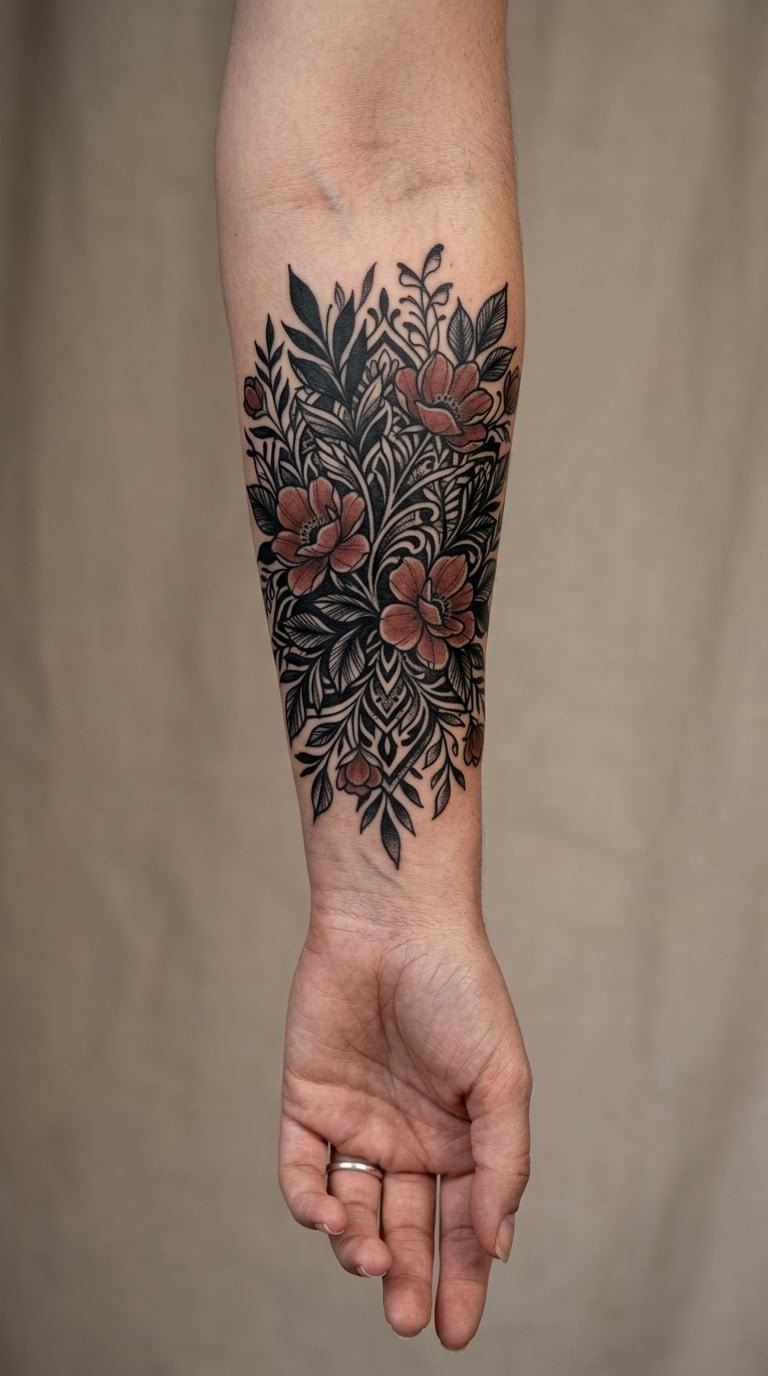
A solid black botanical piece is the workhorse of this whole list, and it earns the top spot for a reason. Layered leaves, dark petals and filled-in stems create irregular edges that interrupt the straight strokes of a name, so the eye reads foliage rather than letters.
People usually pick it because the flowers carry their own meaning: roses for something lost, peonies for a fresh start, cherry blossom for endings. The dark underlayer sits over the name and the lighter flowers sit on top of that layer, which is exactly where the coverage work happens.
Placement: inner forearm, upper arm, outer thigh. Size: 3 to 5 inches across. Style: blackwork with optional colour accents. Pain: medium on the forearm; expect real discomfort on the rib area. Leaves filled solid black fade flatter over time, which helps hide a name rather than hurting it.
Make it yours: name the flower after a person, a garden or a date rather than picking by price of petals.
How to personalise a cover up tattoo idea for a name
Start with the flower that means something specific, then add one private detail. A birth date tucked into the stems, initials hidden in the leaf veins, or a single colour reserved for one person gives the design a reason to exist beyond coverage. If you are working with a cover up tattoo idea for a name and the old ink is pale, keep the black base layer solid and put all the colour in the outer petals so nothing thin crosses the name.
Some artists add a faint shadow pass over the entire piece six months later, once the first tattoo settles, which knocks down any lightening. Ask about that second visit during the consult.
2. Geometric Blackwork Blocks and Negative-Space Eagle
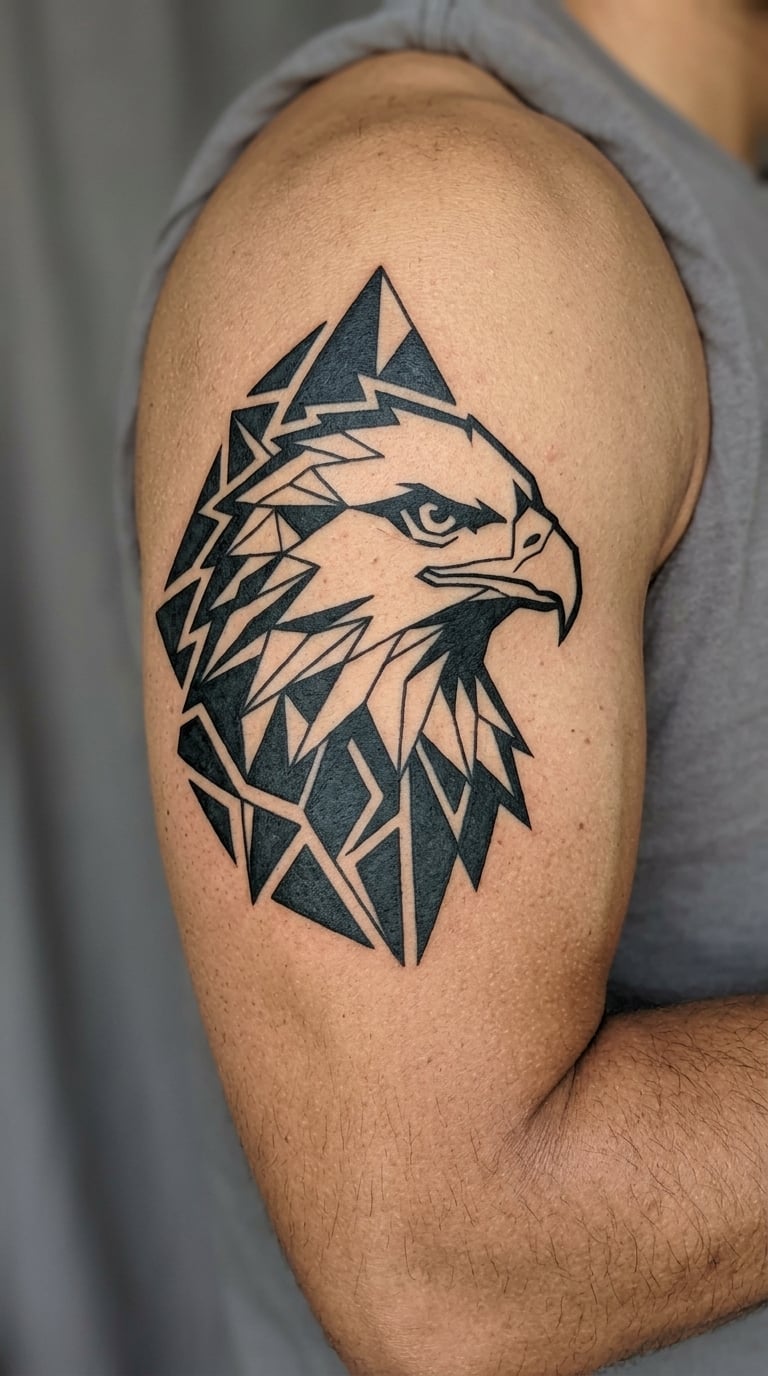
This design is built from hard black geometric blocks with an eagle head left white inside the dark mass. The white shape is the trick: the eye goes straight to the empty area, and the name underneath becomes background texture rather than a readable line.
Freedoms, protection and a sharp eye are the usual reasons people land on eagle designs, and plenty of clients tell the artist it was the geometric frame that convinced them, not the bird.
Placement: outer upper arm, thigh, calf. Size: 4 to 6 inches. Style: geometric blackwork with negative space. Pain: high, because large solid fills mean longer passes over the same skin. The filled blocks are stable, but the white interior is unforgiving if the old name runs through it, so the artist will usually shift the whole composition until the letters sit inside the black.
Make it yours: swap the eagle for a different head shape that carries your own meaning, keeping the negative-space logic intact.
3. Ornamental Lace and Mandala Cover-Up
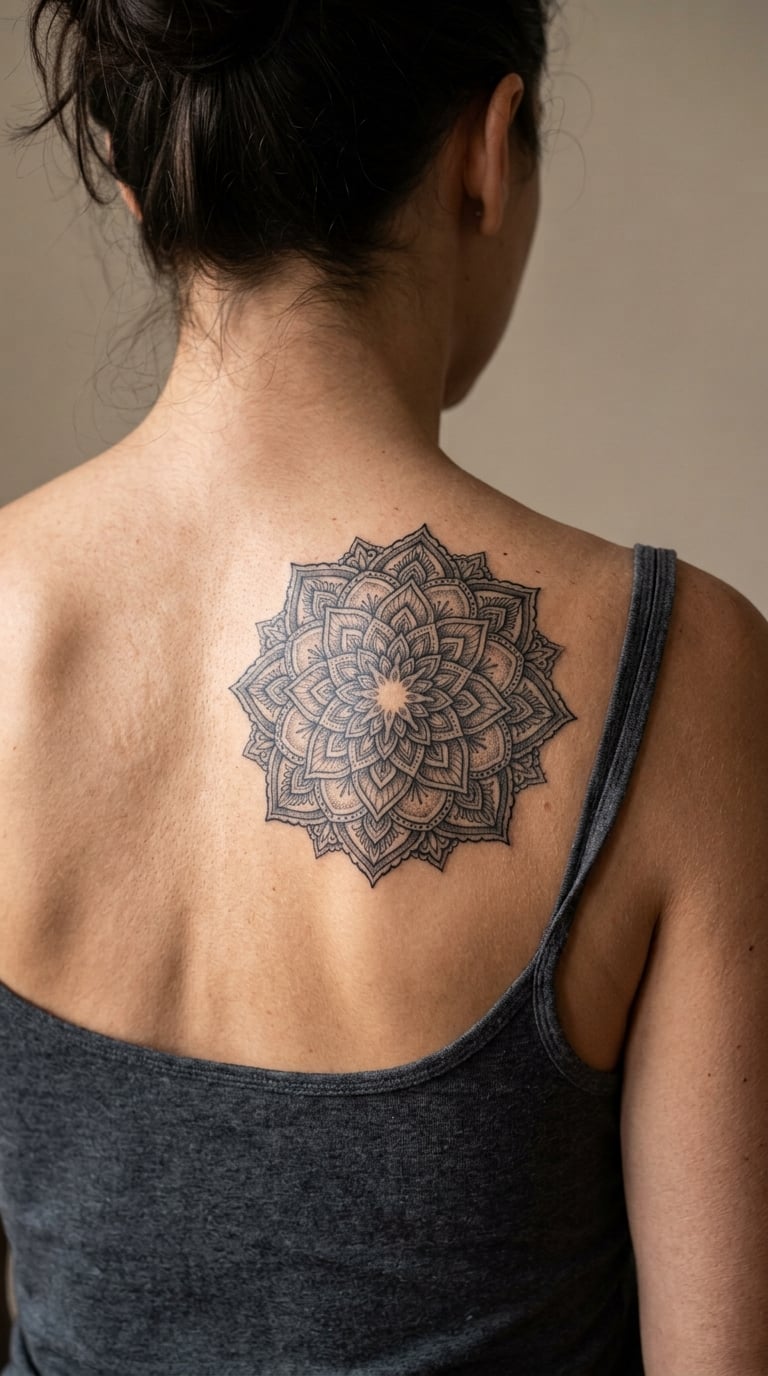
A mandala framed by ornamental lace is the detail-heavy option, and it is the one to pick when the name is long enough to fill a wide space. Concentric petal geometry gives the artist plenty of texture to work with, and the lace border gives the eye somewhere to rest.
Balance, the passage of time and the idea of a whole self contained in one shape come through in this kind of work. It suits people who already collect detailed pieces and want something to look at up close.
Placement: upper back, chest, thigh, shoulder blade. Size: 4 to 6 inches, and bigger if the name is wide. Style: ornamental and fine line with grey wash. Pain: high, and the session will run long. Honest note: fine line lace on the ribs or inner arm softens noticeably within a few years, so a large mandala in a low-traffic spot ages better than a small one over a bony area.
Make it yours: set the mandala centre on a date or coordinate, then let the lace pattern follow the original name’s shape.
4. Watercolour Flower Cascade Over Script
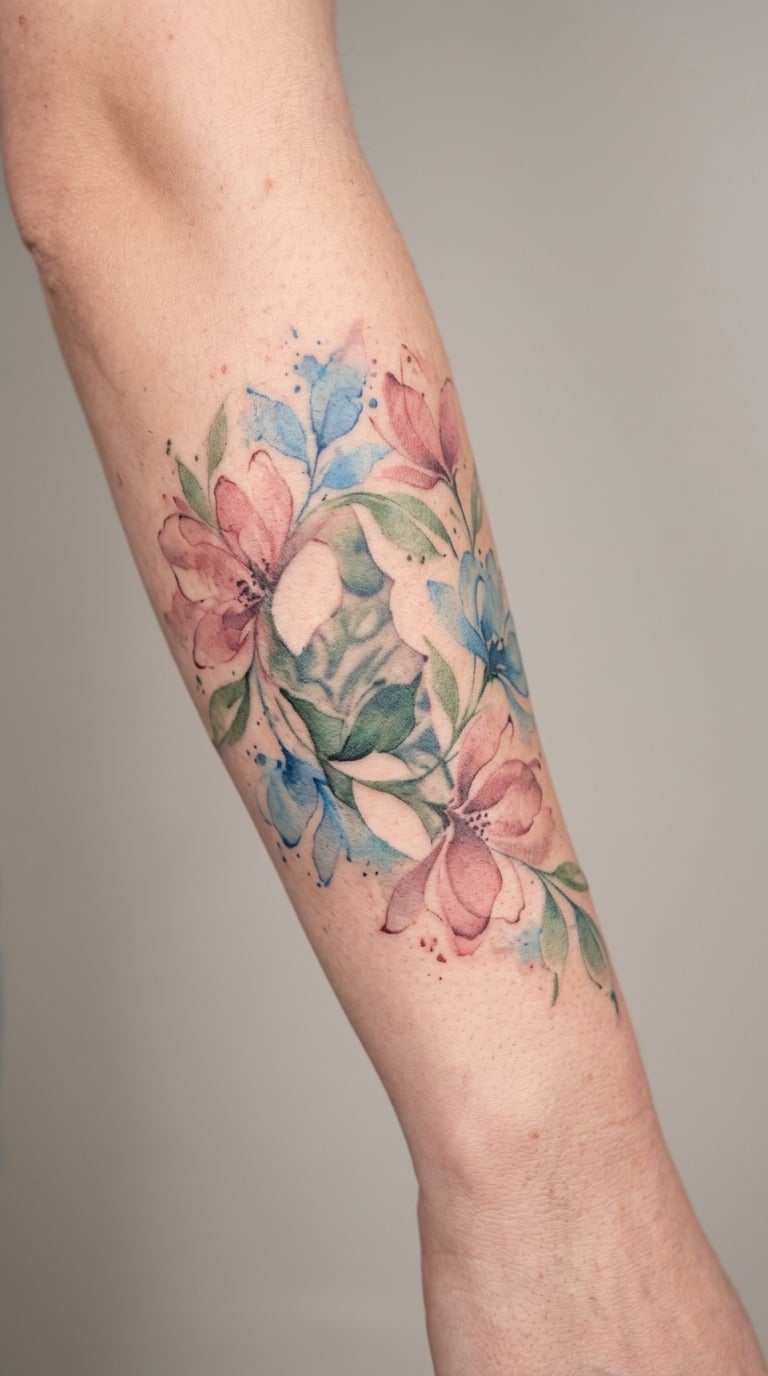
Watercolour is the softest route here, and it is a good match for fine cursive that never held much pigment. Loose washes with darker flower centres break the flow of a script line, and the transparent edges of the colour make the piece look like a painting rather than a cover job.
It tends to get chosen for movement and softness, sometimes to match a set of colour tattoos that already exist on the same arm.
Placement: outer forearm, shoulder, calf. Size: 4 to 6 inches. Style: watercolour with a light black line. Pain: low to medium, which makes it a good pick if the old name is uncomfortable to sit through again. Be realistic about coverage though. Pale washes on pale skin do not hide much, so a small amount of deeper pigment usually goes down first, then the colour on top.
Make it yours: use the birth flowers of someone you are keeping the design for, in a colour palette pulled from an existing tattoo.
5. Traditional Rose With Black Banner
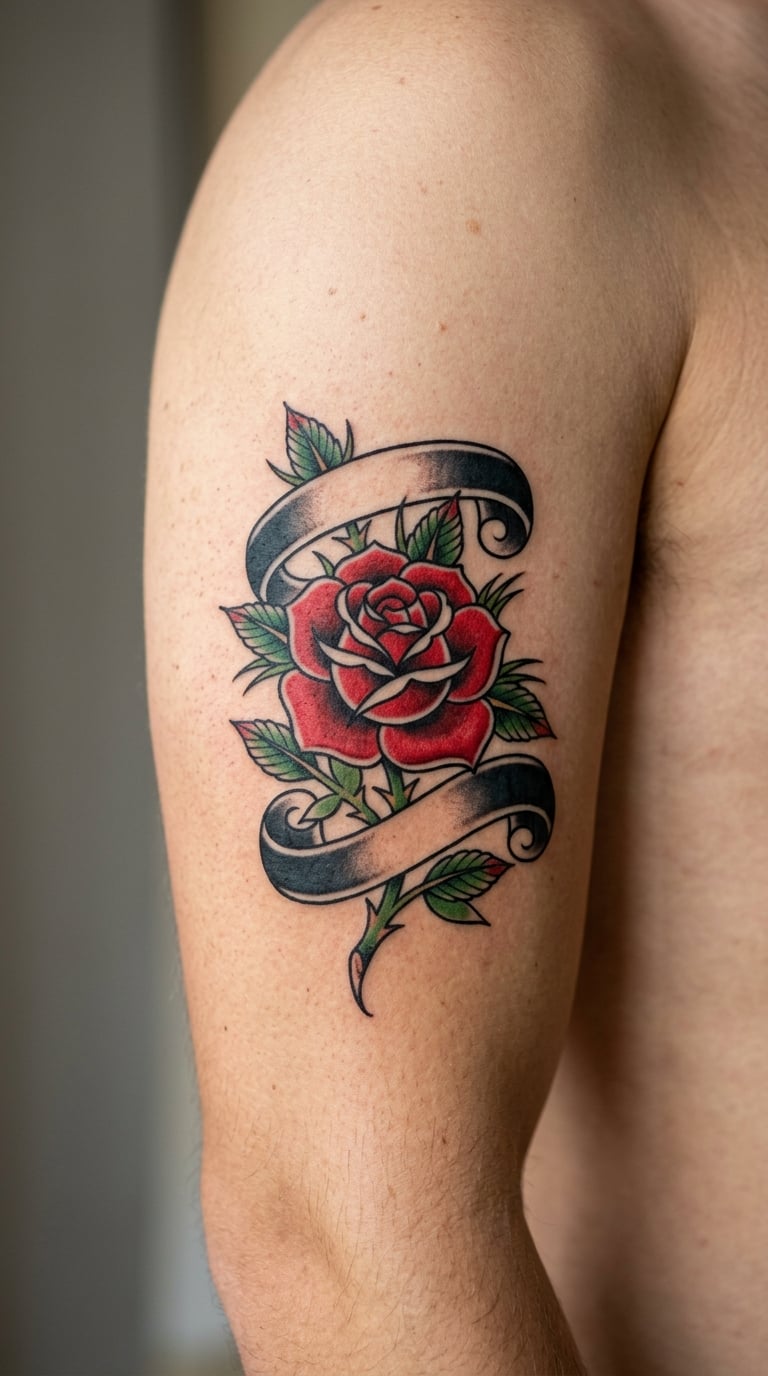
A bold red rose with a black banner that curves across it is a classic that keeps working because the banner is pure, flat black. That banner does the hiding, and the rose gives you something worth looking at. Two traditional roses flanking the banner make it denser still.
Love, grief and balance all read in the rose-and-banner combination, which is why it keeps turning up in requests for covering up an ex’s name.
Placement: upper arm, forearm, calf, back of the shoulder. Size: 3.5 to 5 inches. Style: American traditional with bold outlines and flat colour. Pain: medium. Bold outline work holds its weight for decades and the flat banner colour barely changes, so this ages well; the lighter red petals do fade toward orange over time, which is a detail you can live with.
Make it yours: have the banner carry a short word or date in the same lettering style as the name it is replacing.
6. Japanese-Style Koi and Wave Cover-Up
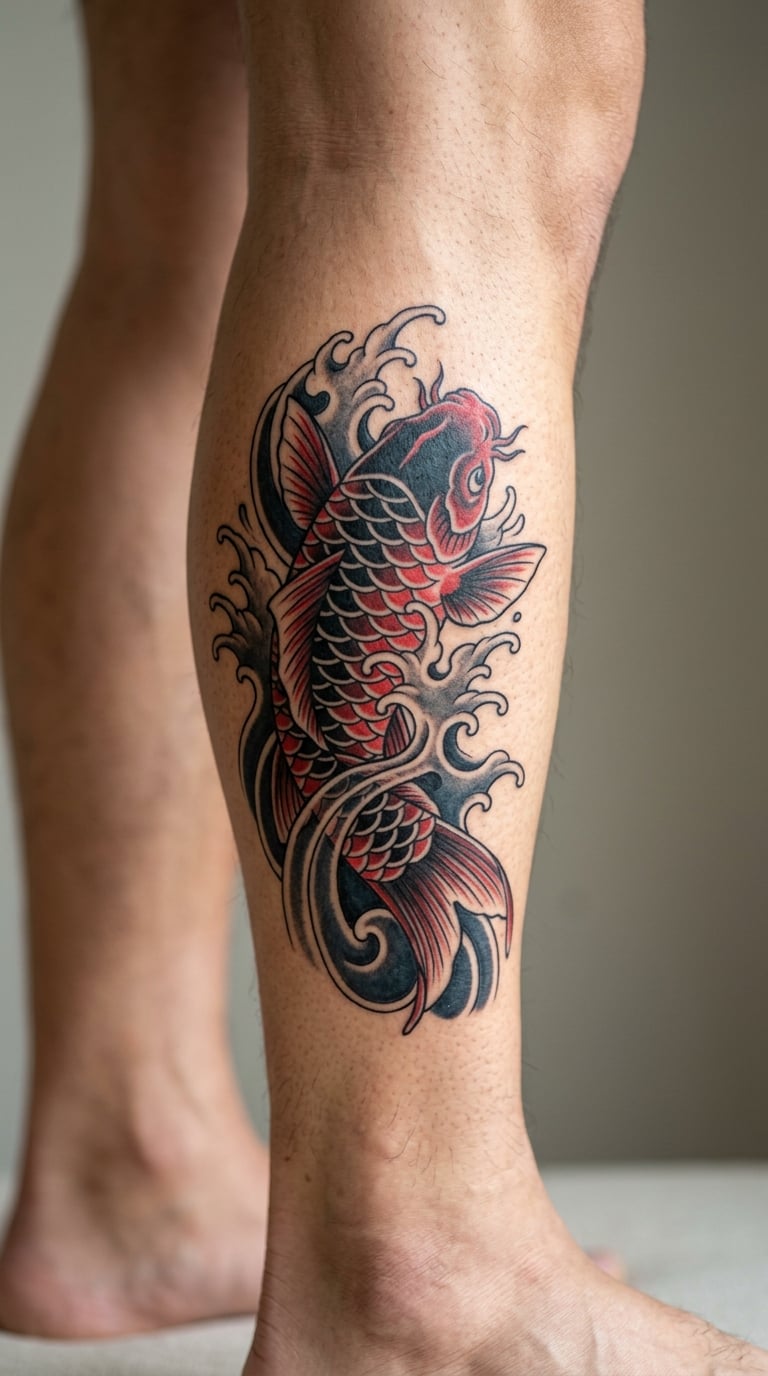
Koi-and-wave compositions give you strong black outlines, patterned scale fills and plenty of curving movement, so the design has three different kinds of texture to bury a name under. The scale work is especially effective because it never repeats cleanly enough for an old line to hide inside it.
Perseverance, transformation and moving with the current are the meanings people attach, and the transformation reading fits a cover-up unusually well.
Placement: calf, forearm, thigh, shoulder. Size: 5 to 7 inches. Style: Japanese-style with black line and red accents. Pain: high, and expect a long sitting. Ask the artist how much Japanese-style work they have done before you book, since this is a specific traditional style rather than a general blackwork approach, and hold off if they dismiss the research as optional.
Make it yours: add a small wave crest or a single blossom held in the koi’s mouth as a reference to something real.
7. Blackout Portrait in Soft Shading
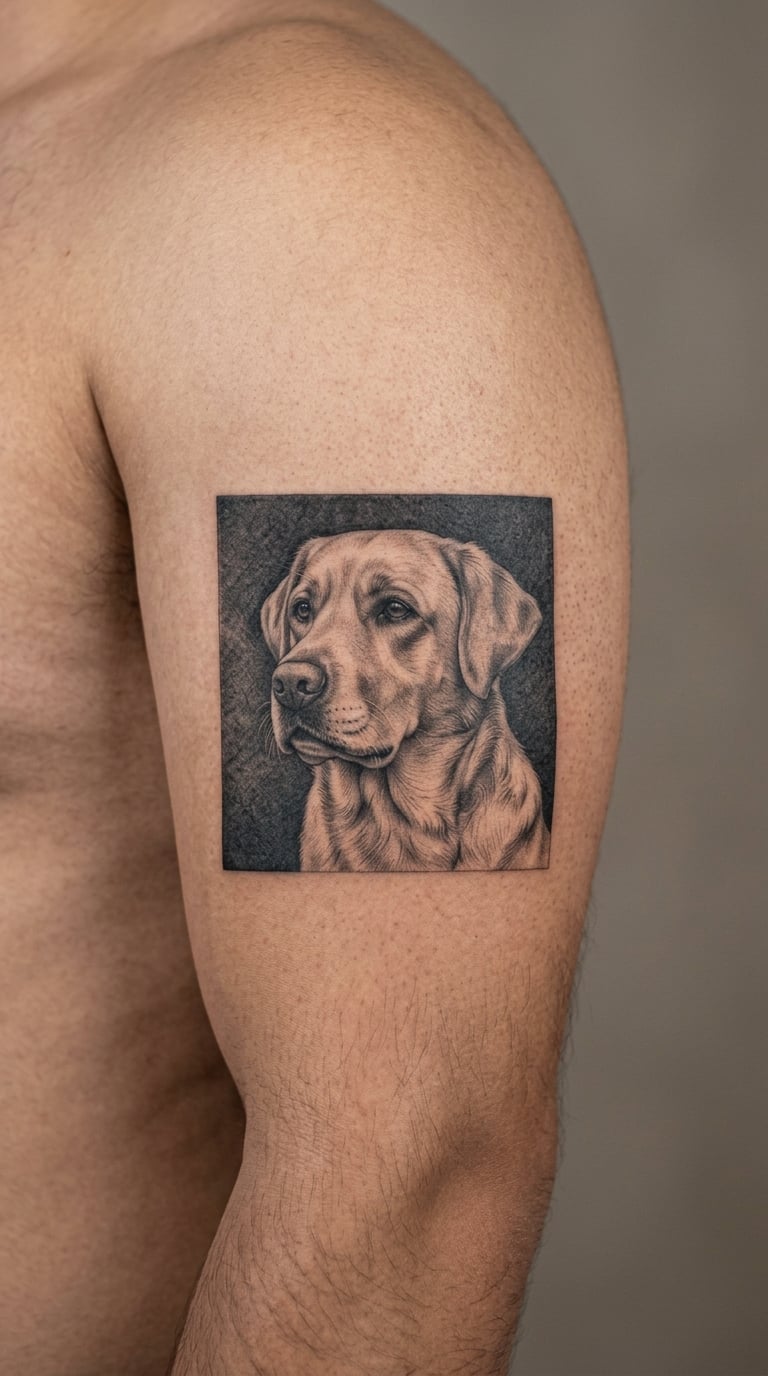
A portrait works when the background behind the face is intentionally opaque. The face keeps a full tonal range so eyes, nose and fur read clearly, while everything around it is packed dark enough to swallow script underneath. This is a realistic option for lighter lettering rather than a heavy black one.
Pet portraits are the most common request here, and a lot of clients say the finished piece marks a new chapter rather than hiding something dark.
Placement: upper arm, calf, thigh, back of the shoulder. Size: 4 to 6 inches. Style: black and grey realism. Pain: high, because portrait work is slow and the shading passes are long. Watch the sun angle when you approve the drawing, since soft grey backgrounds look flat under direct light and textured under angled light.
Make it yours: name the animal after a real one, and have the artist include a collar tag with a date that matters to you.
8. Moon-and-Star Celestial Cover-Up
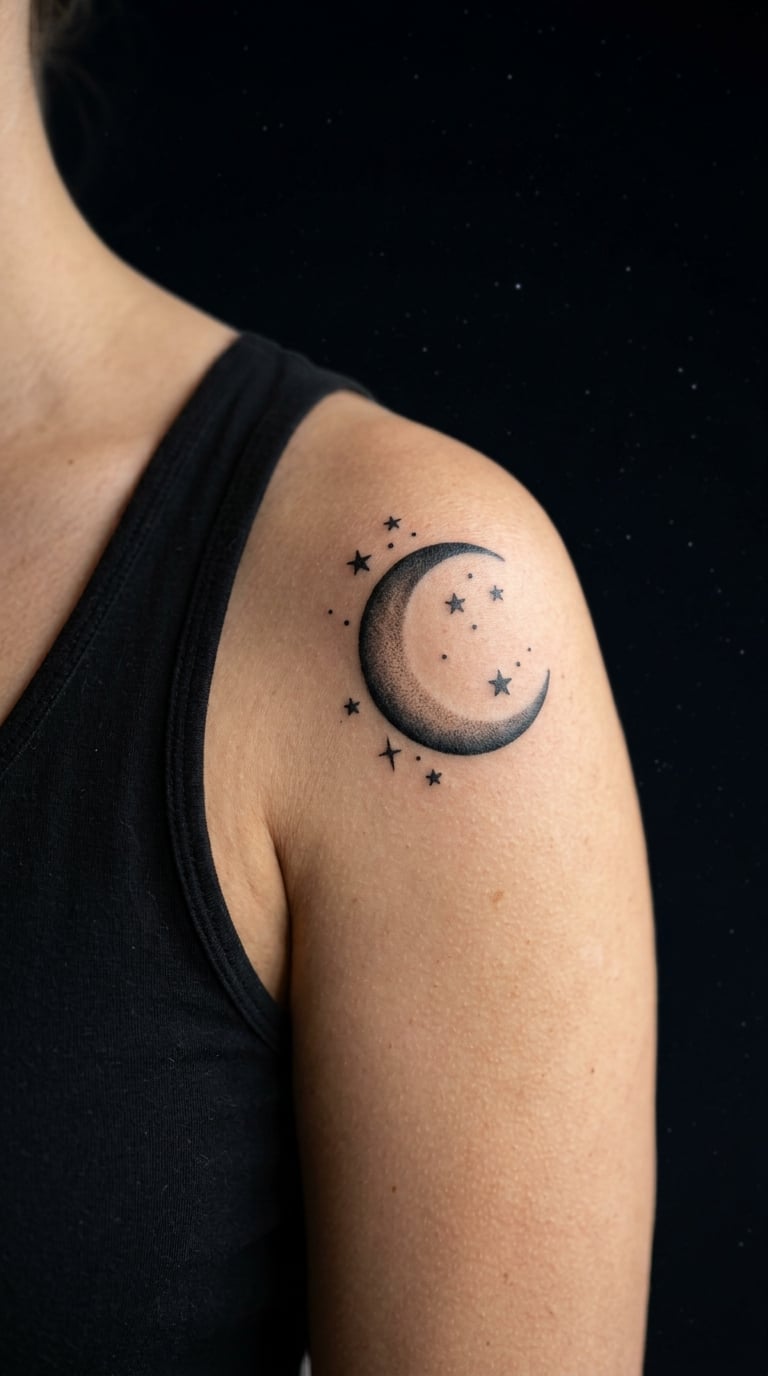
A shaded crescent with a scatter of stars and a soft dark sky gives a name somewhere to sit inside a broad tonal area. The moon itself is a solid shape and the sky is open shading, so the design has one heavy passage and one light one, which keeps it from looking like a block.
Cycles, change and the idea of timing come through in most moon pieces, and it is a comfortable choice for someone who wants a cover-up that still feels gentle.
Placement: shoulder, upper back, ankle, inner forearm. Size: 3 to 4.5 inches. Style: black and grey celestial. Pain: medium, with the lower back and ankle ticking up. The very fine star lines blur together over about a decade, so ask for slightly heavier dots if the name sits under them.
Make it yours: place the star pattern for a real sky on a real date, and add a small planet or eclipse to make the composition yours.
9. Bold Cat Silhouette With Colour Halo
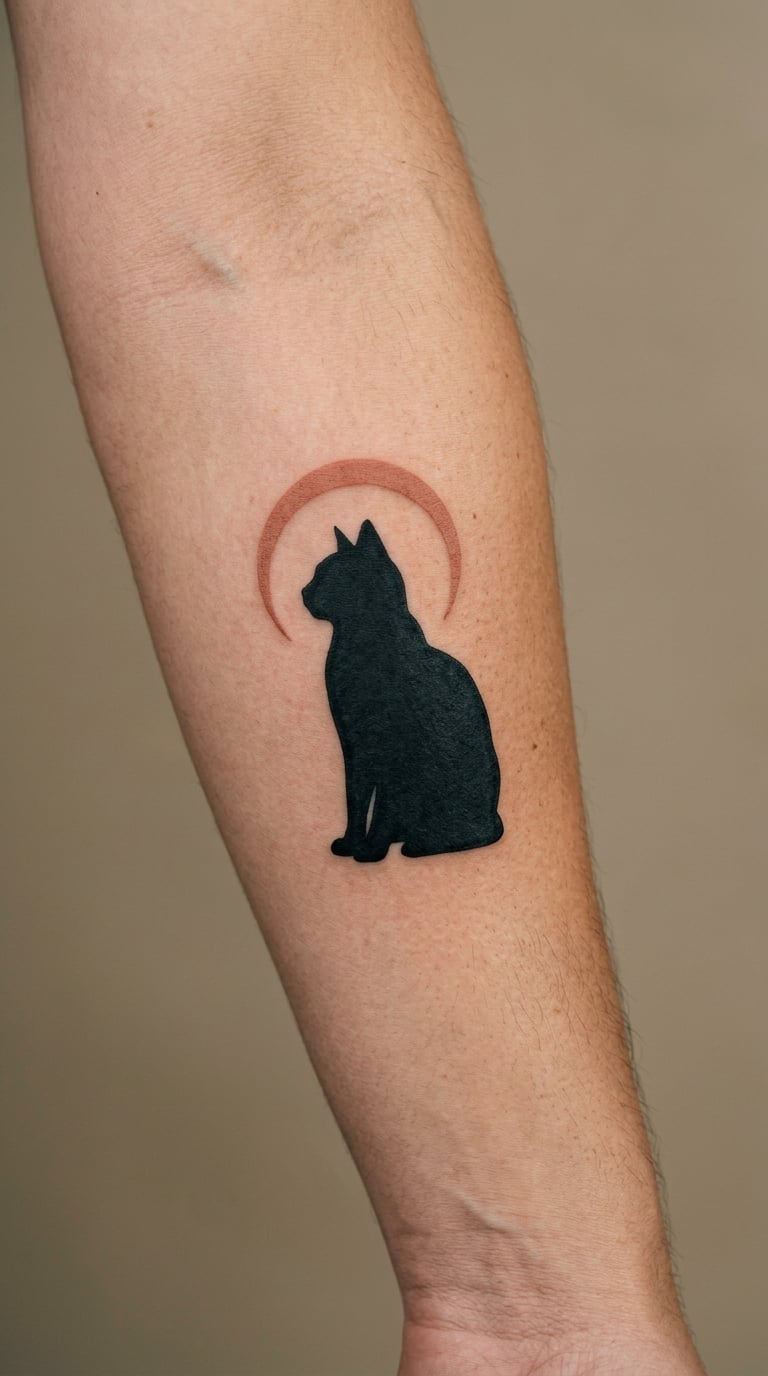
A solid silhouette needs almost no internal detail, which is exactly why it covers well. The cat’s body, tail and ears form a large uninterrupted black shape, and a simple halo or sun disc above it adds a colour accent without weakening the dark mass underneath.
Cats get chosen for independence, protection and a bit of quiet mischief, and the silhouette style feels more graphic than illustrative, so it sits well in a modern collection.
Placement: outer forearm, calf, back of the upper arm. Size: 3 to 4 inches. Style: blackwork silhouette with one colour accent. Pain: low to medium. Solid black spreads as it heals, which works in your favour here, but any grey halo that crosses the name should be deepened at the follow-up visit.
Make it yours: shape the halo to match a real sunset colour, or add a small paw print trail leading into the tail.
10. Mountain Range With Engraved-Sky Shading
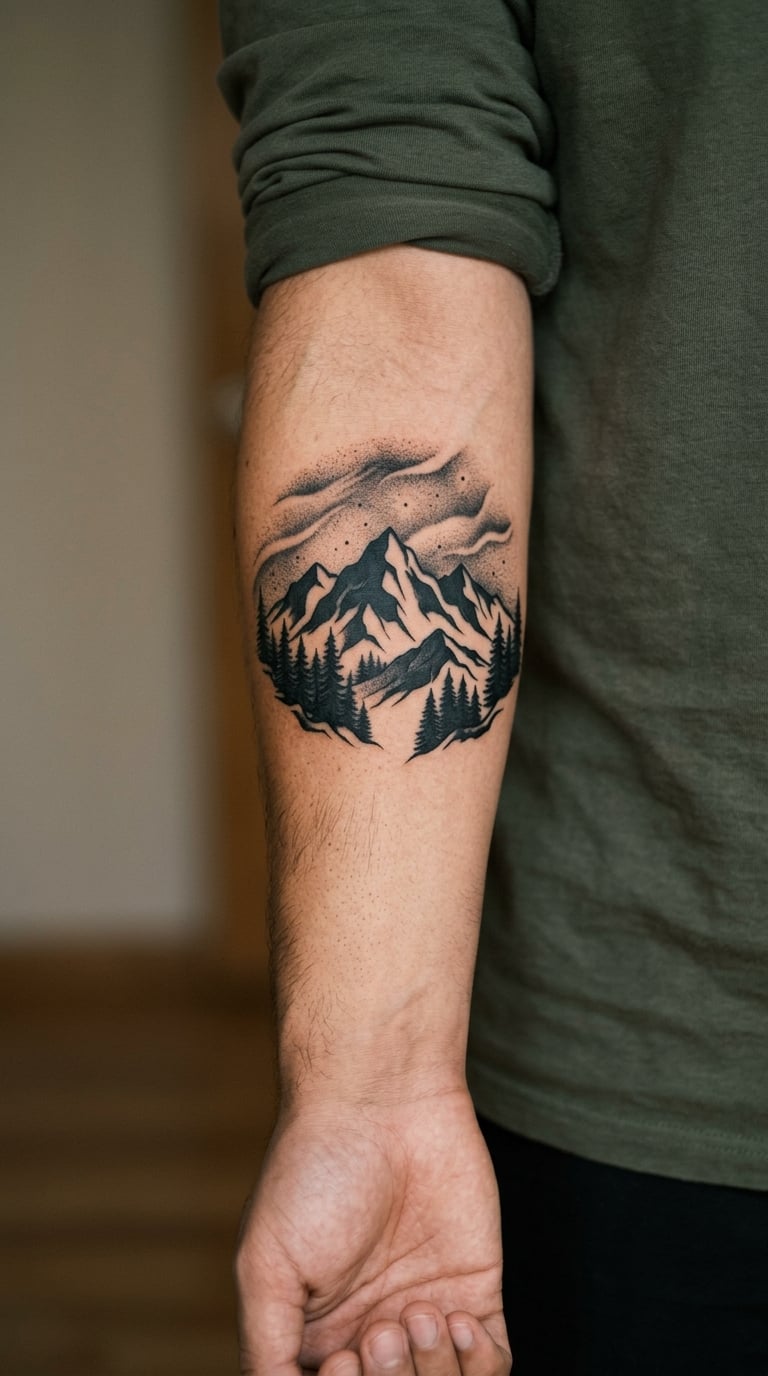
A landscape works as a cover-up because the darkest passages are the peaks and pine trees, and those can be positioned exactly where the name sits. Above them, the sky is engraved shading, which fills the rest of the space without needing to be solid.
Almost everyone commissioning a range has a mountain that matters to them, which makes the piece easy to talk about with an artist and hard to feel generic.
Placement: forearm, calf, ribs, upper back. Size: 5 to 7 inches. Style: illustrative black and grey with line shading. Pain: medium, rising on the ribs and spine. Engraved sky lines on the inner forearm soften fastest since that skin flexes and gets washed all day, so ask for a slightly bolder line weight there.
Make it yours: use the silhouette of a range you have actually stood on, with the treeline marking a latitude or elevation.
11. Ocean Wave and Setting Sun Cover-Up
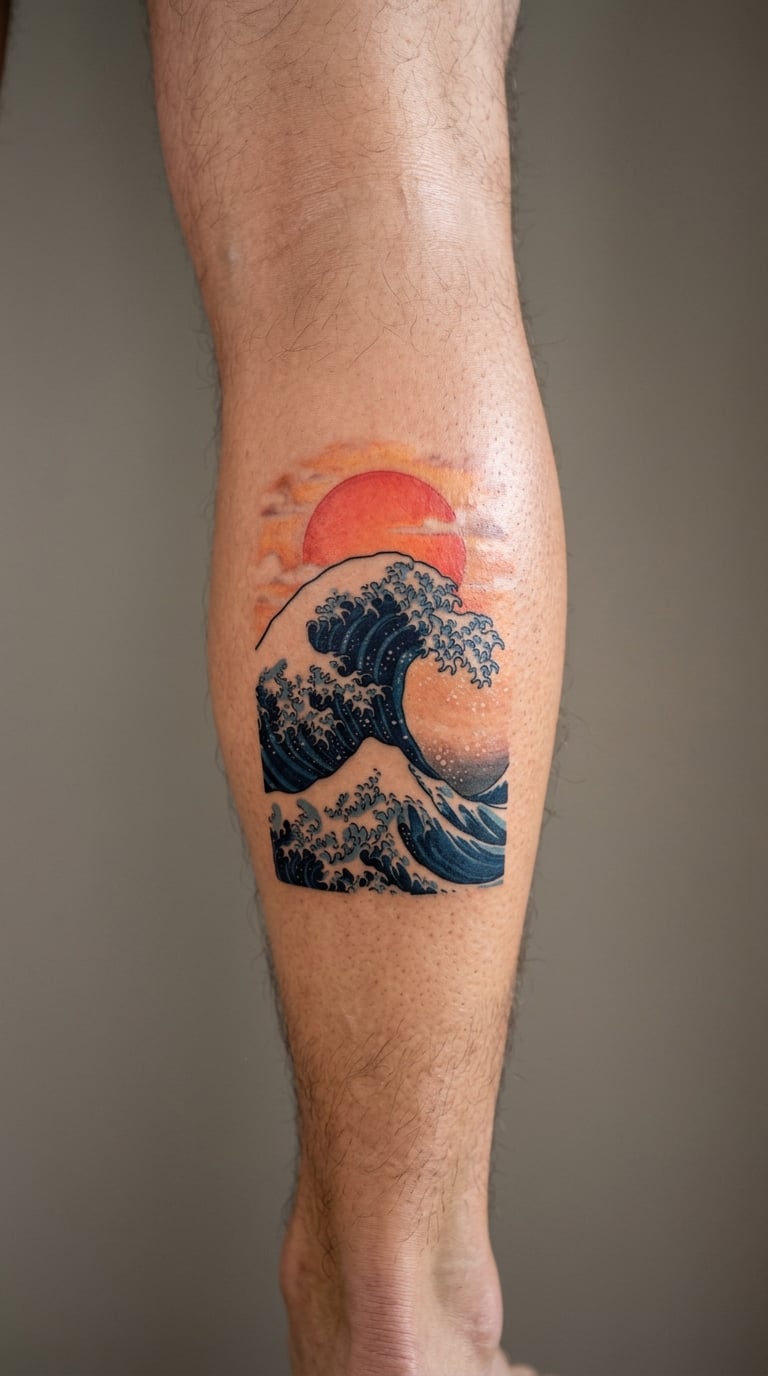
A wave and sun design gives you one large solid shape at the bottom, the curling water mass, and a clean circular form above it. Those two big shapes are wide enough to sit over a name without the design needing internal detail everywhere.
Depth, change and a closing chapter are the usual readings, and the sun-over-water composition gives most clients a reason to choose it beyond coverage.
Placement: calf, forearm, back of the upper arm, chest. Size: 4.5 to 6 inches. Style: illustrative colour with black line. Pain: medium. Bright red and yellow are the hardest colours to bury under anything, so a red sun usually goes over a name only when the name beneath it is faded script rather than dense black lettering.
Make it yours: set the wave to a real ocean where you surf, swim or first saw the sun, and add the date along the crest line.
12. Realistic Dragonfly Over Delicate Lettering
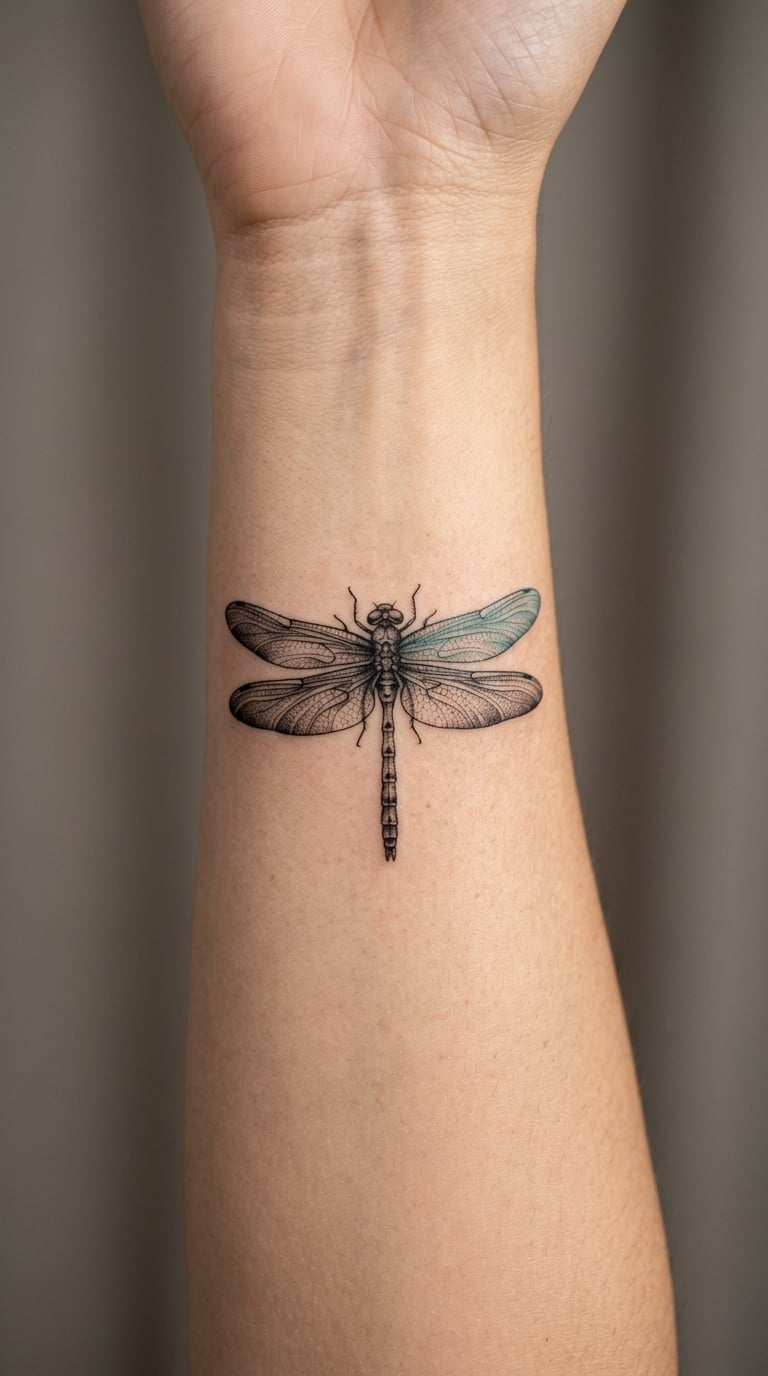
When the name is small and thin, a micro dragonfly can be scaled to match it rather than swallowing it. Dark wing veins and a solid body give a dense centre, and one restrained colour accent on a single wing keeps it from looking flat.
Dragonflies get chosen for change and for the idea of moving through a difficult stretch, which is a common reason for wanting a name gone in the first place.
Placement: inner forearm, wrist, ankle, behind the ear. Size: 2 to 3 inches. Style: micro-realism. Pain: low, one of the gentler options here. Be honest about the limits at this size: a small piece cannot hide a large or dark name, and micro detail on the inner arm or fingers will soften noticeably within five to eight years.
Make it yours: pick the accent colour from a birth flower or a child’s initials, and keep it to one wing so the rest stays neutral.
13. Owl With Geometric Eyes and Branch
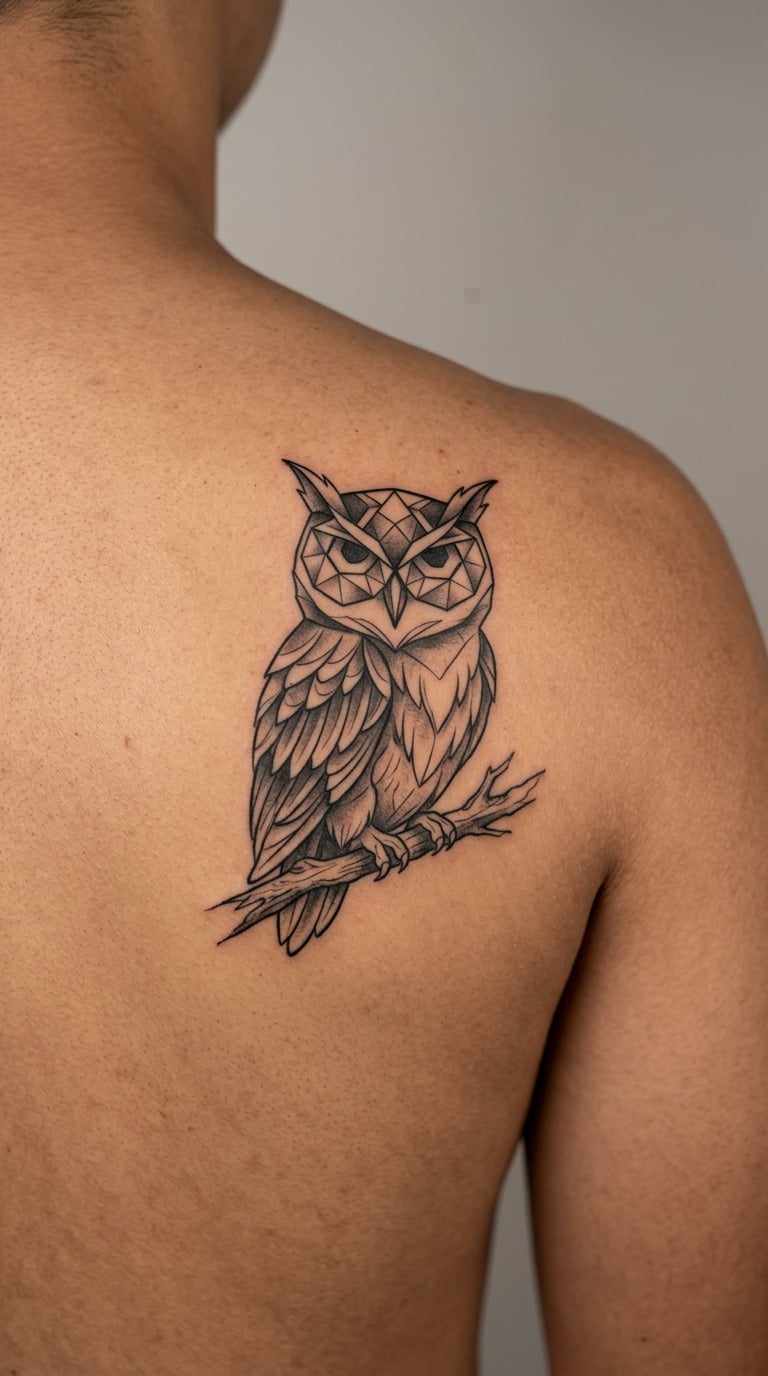
An owl gives you a symmetrical body with a dark chest, two large circular eyes and a strong outline, and the geometric frames around the eyes fill the outer corners with flat black. Tucked over a name, it becomes a shape the eye reads instantly.
Wisdom, night watch and being guided through something unclear are the meanings people attach, and owls come up constantly in ex-name cover-up requests.
Placement: upper back, upper arm, shoulder, thigh. Size: 4 to 5.5 inches. Style: illustrative black and grey with geometric accents. Pain: medium, and the upper back is a hard spot to sit still for. Fine feather detail on the wing softens first, so keep the geometric blocks rather than the feathers where the old name sits.
Make it yours: have the eye shapes mirror a family birth chart, or add a small crescent moon behind the head.
14. Snake Woven Through Botanical Foliage
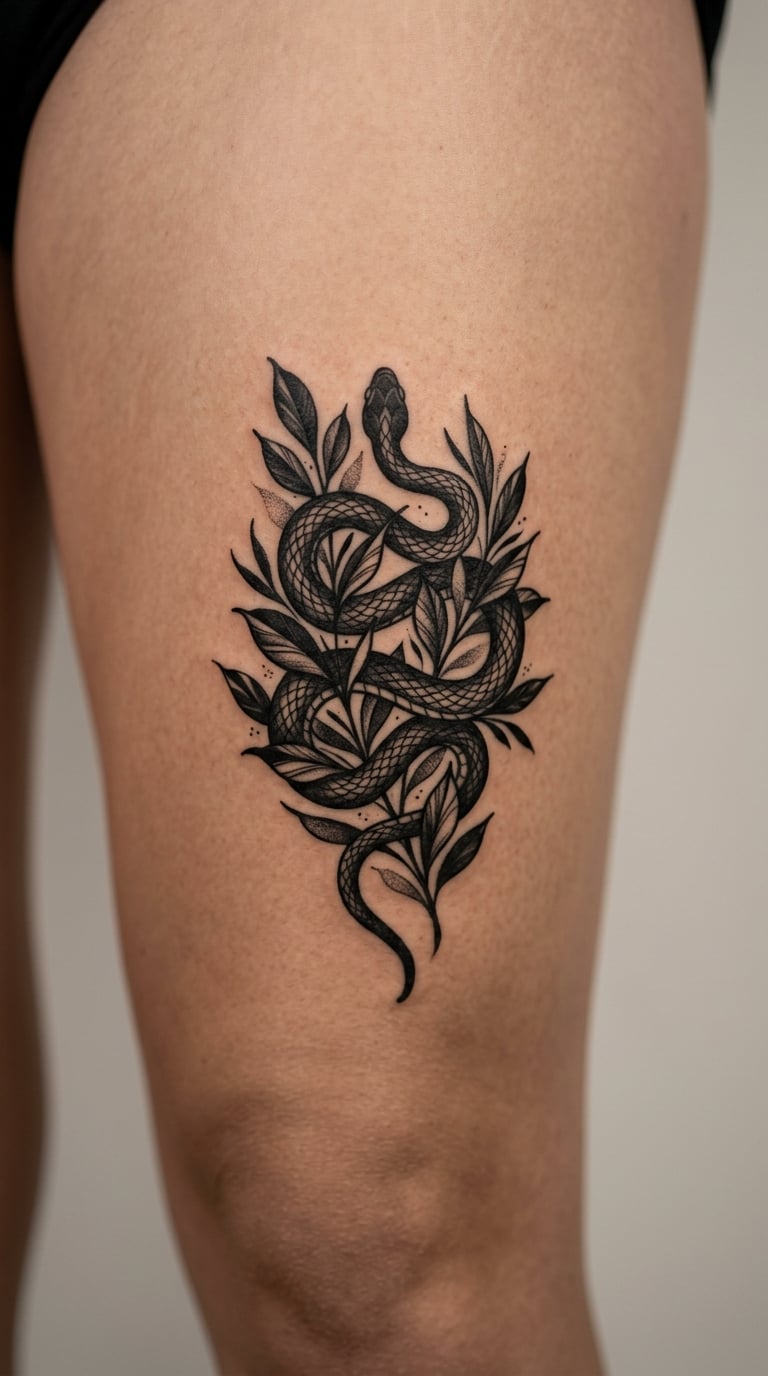
A snake gives a long S-shaped body that passes over a name in several places, and the dark leaves around it fill the gaps between the curves. Between the two, there is very little empty skin left for an old letter to hide in.
Rebirth, protection and shedding an old skin are the readings people give it, and clients regularly say the snake feels like the right metaphor for the situation they are covering.
Placement: outer thigh, forearm, calf, ribs. Size: 4.5 to 6 inches. Style: blackwork with scale texture. Pain: medium, climbing on the ribs. Ask for scale detail at a workable size; tiny scales turn to grey smudge within a few years, and a bolder outline keeps the whole shape readable as the piece ages.
Make it yours: work in a plant that only grows where you grew up, or repeat a scale pattern from an existing tattoo.
15. Antique Key and Wildflower Bouquet
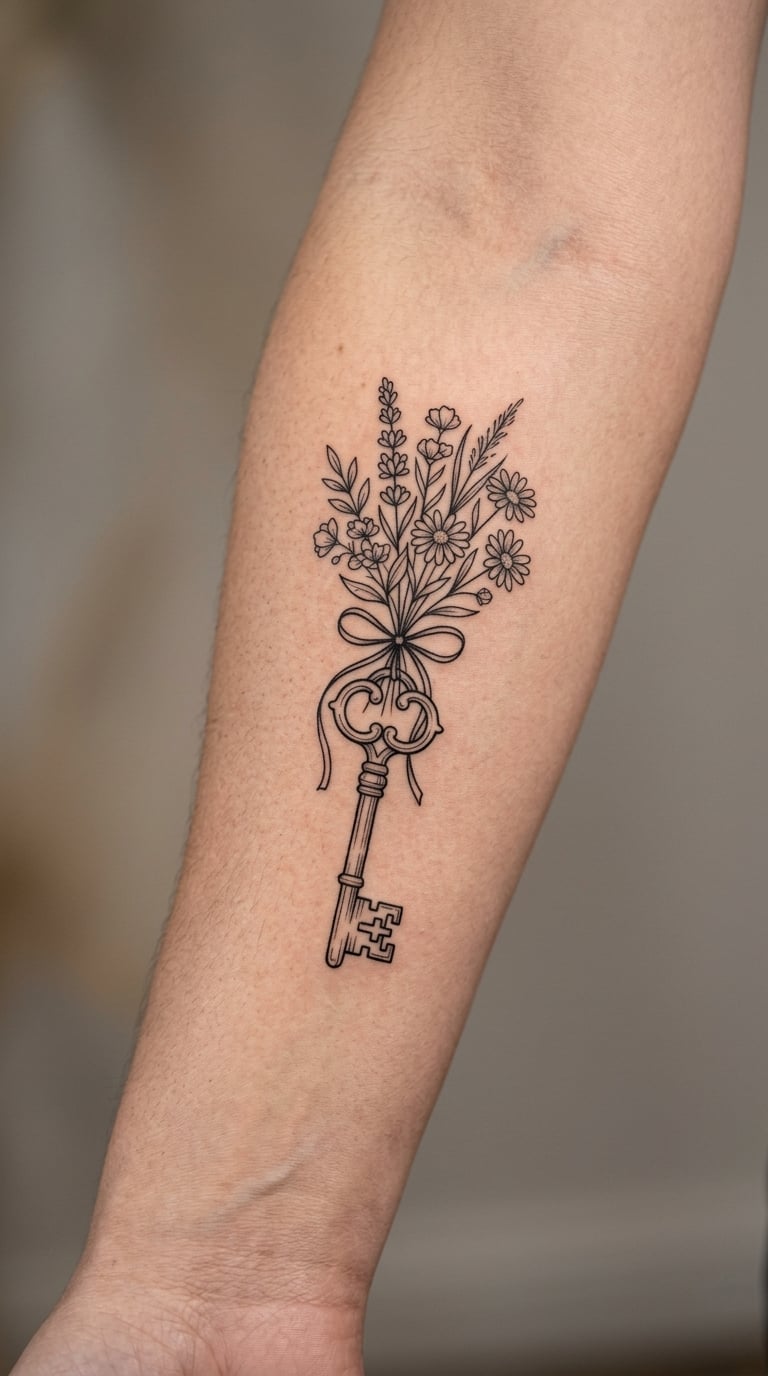
An antique key has a solid shaft, a filled bow and a chunky bit, so it supplies real ink mass without being a black rectangle. Tied to a small bouquet, the flowers add soft texture where the key is rigid, and the two together cover a name in a way that looks deliberate.
Keys usually mean access, a home, a person who once opened a door for you, which makes this an easy design to give a personal reason.
Placement: forearm, inner upper arm, back of the calf. Size: 4 to 5.5 inches. Style: fine line with blackwork. Pain: medium. The key body can be drawn heavier than the flowers, so ask the artist to keep the bow and bit solid even if the bouquet is delicate, and expect the small stems to soften on the inner arm.
Make it yours: have the bow of the key cut with a date, or match the bouquet to a specific hedgerow from where you grew up.
16. Hourglass With Black Sand and Floral Frame
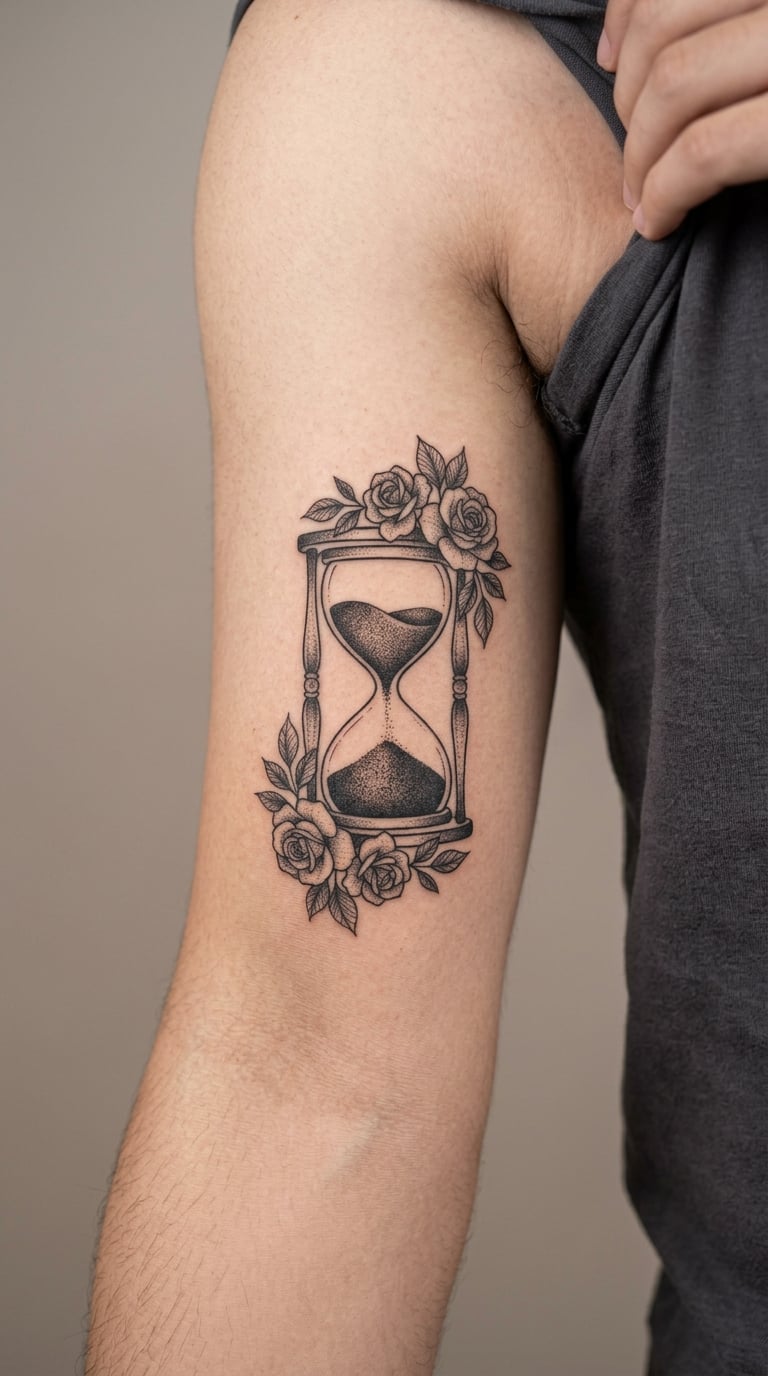
The hourglass is one of the most efficient shapes available for a cover-up because it is essentially two solid triangles meeting at a point. Fill the sand chambers with dense black and the name has nowhere visible to sit, then soften the outer frame with small roses.
Time, mortality and the pressure of a deadline are the usual readings, and plenty of clients pick it as a way of keeping the meaning rather than erasing the story.
Placement: inner upper arm, forearm, calf, back of the shoulder. Size: 3 to 5 inches tall. Style: blackwork with small colour florals. Pain: medium. The symmetry is what sells the coverage, so keep both sand chambers equally dark, and remember that the narrow waist of the hourglass leaves a small uncovered area right at the centre that the artist will route the flowers through.
Make it yours: make the falling sand form a shape you recognise only at close range, like a small leaf or a letter from someone else’s name.
17. Coordinate Map With Compass Rose
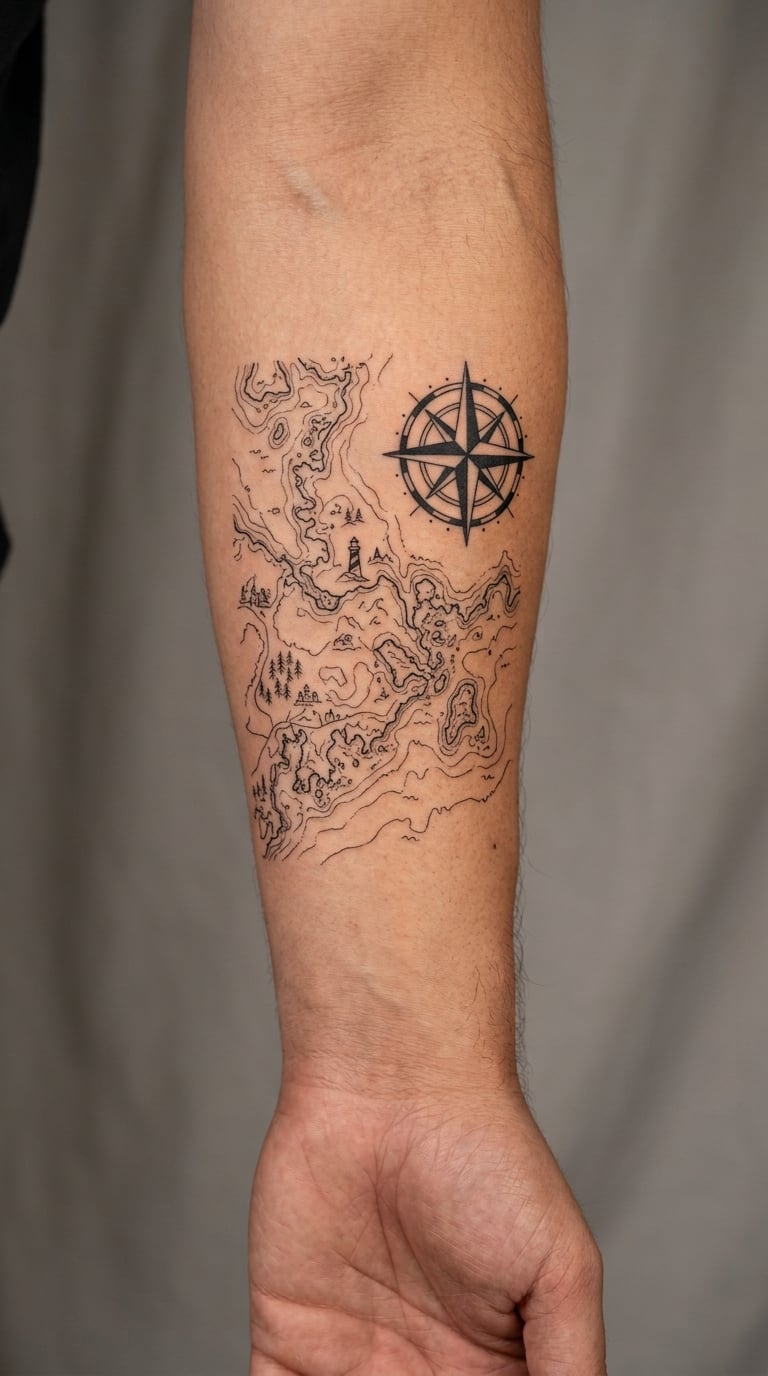
A map is a cover-up that feels like a keepsake rather than a cover job. The bold compass rose gives you a solid black centre, and place names, contour lines and coastlines fill the rest of the frame with the kind of visual noise that breaks up an old line.
People commission maps for the place they grew up, the place they met someone or the place they plan to end up, so there is always a real story attached.
Placement: forearm, calf, upper arm, back of the shoulder. Size: 4.5 to 6 inches. Style: fine line with solid black fills. Pain: medium. This style only works at a decent size, so if your name is small you may need to scale the map up more than feels natural, and hand and foot skin will not hold a map’s fine detail for long.
Make it yours: mark your hometown on the map with a small solid dot, or place the compass rose so its needle points at a real bearing.
If you are starting a family piece later and want the map to sit alongside something, these 34 sweet kid name tattoo ideas every mom will love are worth a look, and the 24 kids initials tattoo ideas work well as small additions to a map.
18. Black Feather with Muted Colour Tips
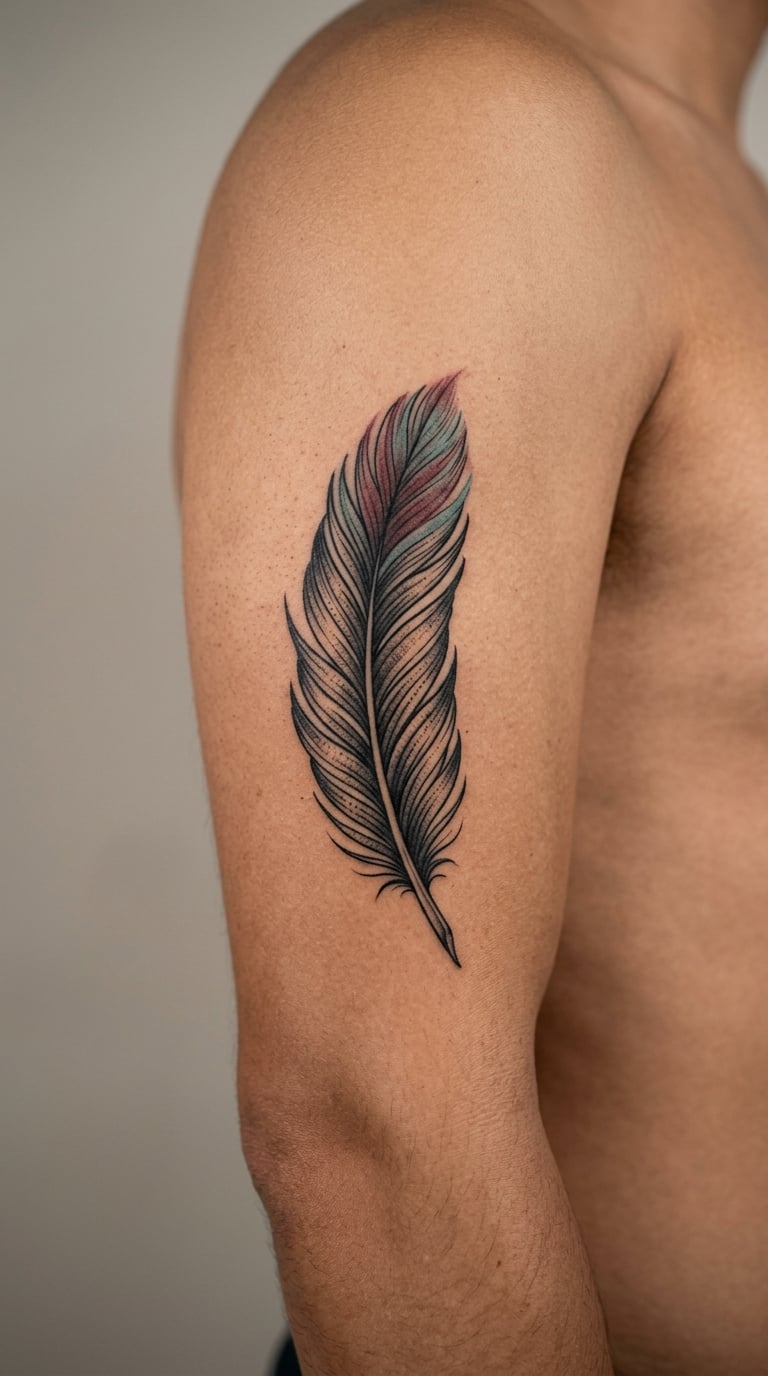
A single long feather is narrow, which makes it a good fit for a name that was set in a straight line rather than a wide block of script. The shaft and the overlapping barbs give it a dense core, and the barbs break into fine points that eat the edges of lettering.
Freedom, weightlessness and letting something go are the reasons people choose feathers, and the vertical shape suits arms better than most other single-motif designs.
Placement: outer upper arm, calf, thigh, along the spine. Size: 3.5 to 4.5 inches long. Style: blackwork with muted colour tips. Pain: medium. The fine barb lines on the outer arm hold better than the same detail on the inner arm, and colour applied only at the tips stays out of the coverage zone entirely, which keeps the name safely under black.
Make it yours: use two colours that mean something to you in the tips, or etch a small date along the shaft in lettering the size of the name it covers.
19. Full Constellation with Milky-Way Wash
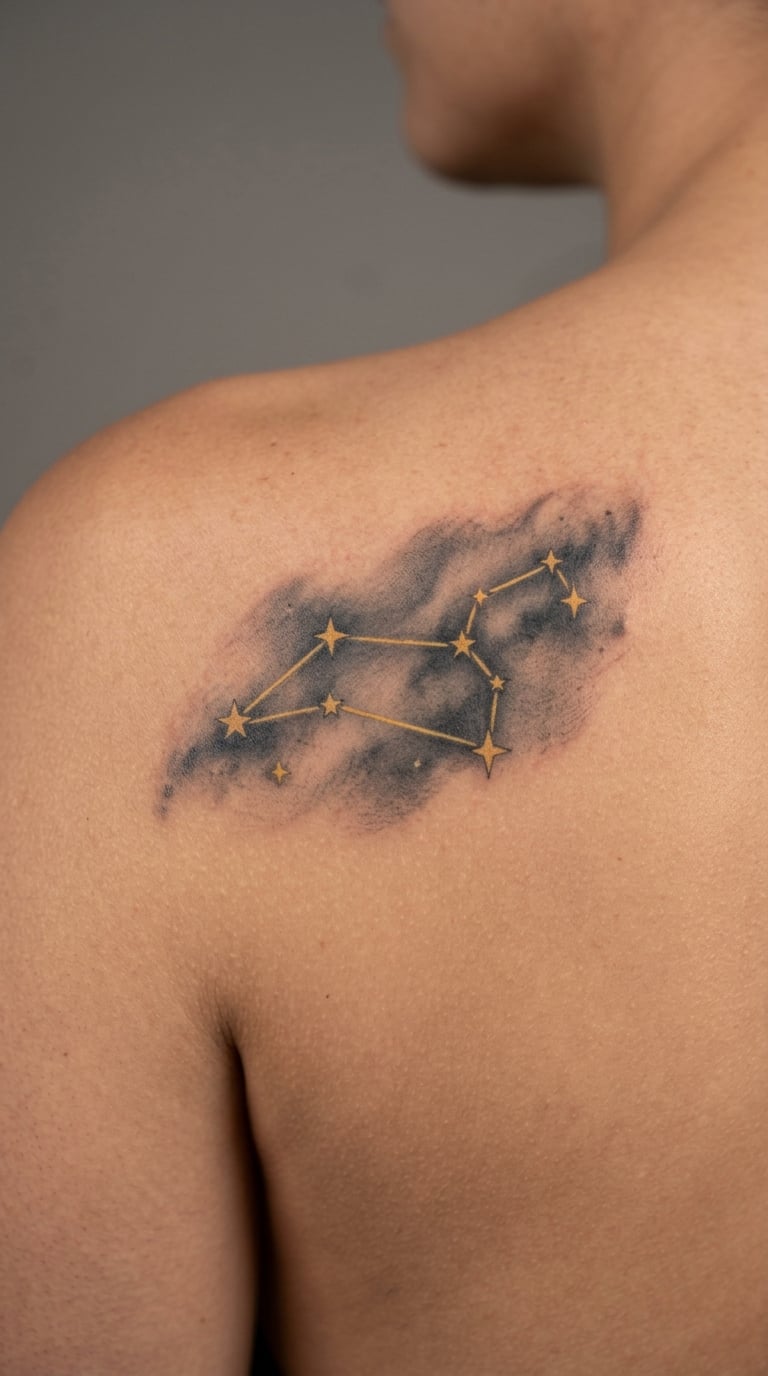
A constellation needs a dark field to sit in, and the Milky Way wash supplies it as a broad grey-black band rather than a hard blackout. Connected star lines on top of that band create a structure the eye follows, so the composition holds together even when the wash softens over time.
Guidance, timing and the idea of a bigger picture are the meanings people read into it, and it suits anyone who wants a cover-up that looks deliberate in low light.
Placement: shoulder blade, upper back, hip, chest. Size: 4.5 to 6 inches. Style: fine line stars with grey wash. Pain: low, since there is little solid black to fill. Very fine star lines placed on skin that gets washed often or flexes constantly will fade faster than anything else on this list, so place the smallest stars on the back rather than the wrist or fingers.
Make it yours: use the sky above your hometown on a specific date, with one brighter star marking a person.
20. Abstract Black Shape With a Hidden Animal
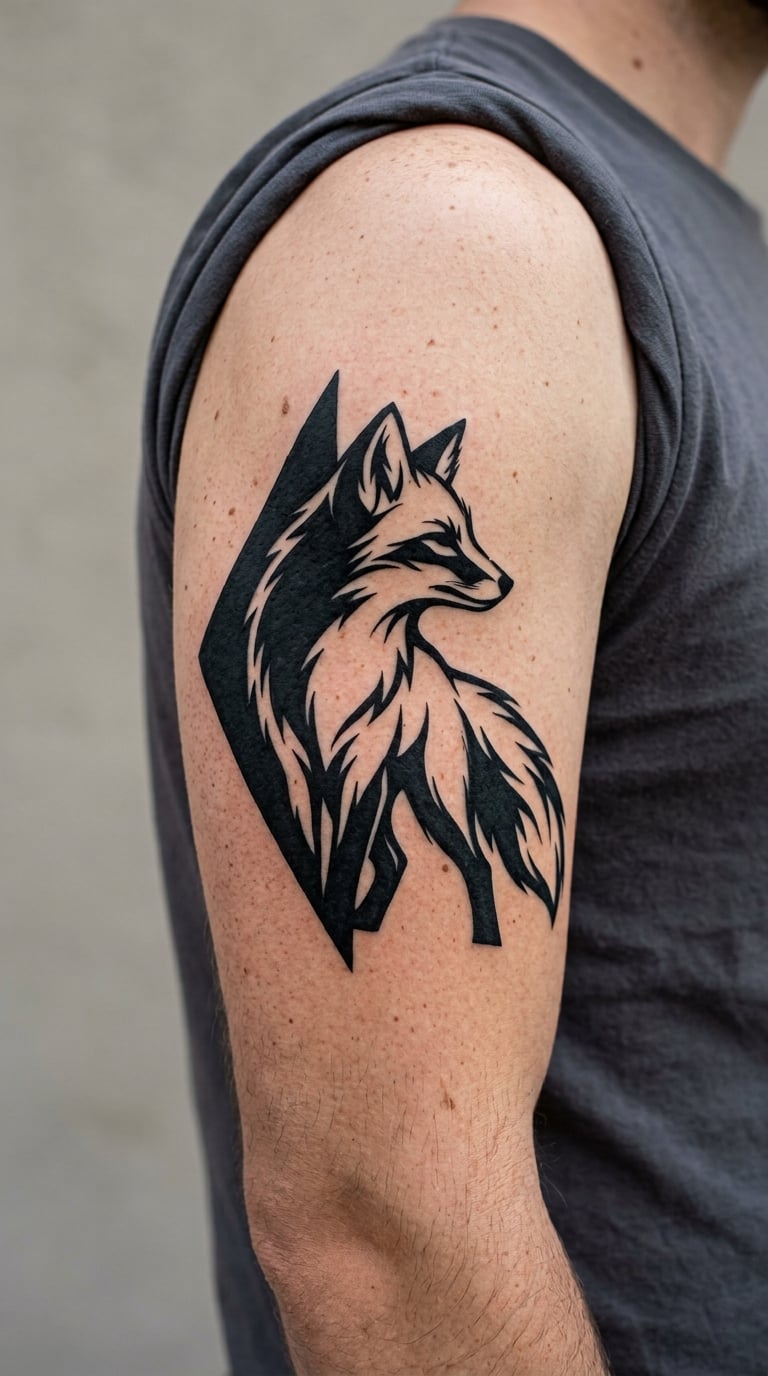
This is the boldest option here. An irregular organic black mass covers the name completely, and an animal head, bird or wolf appears inside it as untouched skin, so the shape is the coverage and the negative space is the artwork. It suits someone who wants the old tattoo gone without a new piece that competes for attention.
Most clients describe the meaning as privacy rather than symbolism, which is a perfectly good reason to get a tattoo and often the honest one.
Placement: outer arm, thigh, calf, chest. Size: 4 to 6 inches. Style: blackout with negative space. Pain: high, since filling a large solid area takes a long sitting and the skin stays hot through it. A dense blackout spreads slightly as it heals, which usually helps coverage, but it can also make the negative-space animal smaller than the original drawing, so check the shape at the follow-up appointment.
Make it yours: use the outline of an animal connected to where you grew up, or hide a letter inside the shape that nobody else will spot.
How to Choose the Right Design
Most cover-ups fail on density, not on taste. Work through these five points before you fall in love with a reference photo.
- Match density to your old ink. Dense black block lettering needs a blackout, a mandala or dense blackwork. Faded script can often be handled with colour, a landscape or a line design. If you are not sure how dark your name actually is, take a photo in daylight and look at it honestly before booking.
- Size up honestly. The new piece usually needs to be about a third larger in each dimension than the tattoo it is covering, so the eye reads only the new work. Anything the same size as the name will look like a patch.
- Pick the placement with the room you have. A long script name on the forearm gives you a wide horizontal canvas, while a short name on the wrist gives you almost none. Ask to see the design drawn on your skin at the actual size before you approve it.
- Choose organic over geometric where you can. Petals, leaves, fur and scales have irregular edges. Letters are made of straight strokes and curves, and a design made of the same shapes can accidentally line up with the old lines underneath.
- Think about the next twenty years. Fine detail on hands, fingers and inner arms fades first, and colour shifts. If the name is in a high-wear spot, bias toward bolder line work and solid black rather than delicate detail.
- Book an in-person consult. A cover-up depends on what the old ink actually looks like under the skin, and that cannot be judged from a screen. Artists who specialise in cover-ups will want to see it, and the consult is where you find out whether your idea is realistic.
Cost and Session Time
Cost varies widely because the work varies widely, and it is mostly a question of size, how much of the new piece is solid black, how long your artist has been doing this specific style, and where you are based. A small cover-up on a forearm with a mixed colour design is usually a shorter, simpler appointment, while a large blackwork composition on the upper back or calf is a long sitting and often a second one.
Two things catch people out. The first is the shop minimum, which many studios set for any appointment and which can apply even to a small piece. The second is the follow-up: most cover-ups need a touch-up session about four to eight weeks after the first, and some artists include that in the original quote and some quote it separately. Ask for the total in writing, including the touch-up, before you start.
Ask your artist directly whether your particular name would be better served by fading it first with laser treatment. Lightening old ink makes a cover-up far easier, and for bright red or yellow names it is often the only way to get a clean result. That is a conversation to have at the consult, not something to decide alone.
Aftercare Basics
- Follow your artist’s aftercare instructions first. They know exactly what they did in your session, and their advice comes before anything generic you can read online.
- Keep the area clean and wash it as directed, then pat it dry rather than rubbing it with a towel.
- Do not soak the new tattoo in swimming pools, hot tubs or long showers while the skin is still settling.
- Leave the ink alone. Picking flakes or scabs is the most common cause of patchy healing, and patchy healing is the enemy of even coverage.
- Keep it out of direct sun while it heals, and once it is healed, protect it with sunscreen so the black stays black.
- Book the touch-up. Old ink coming through as the new piece settles is normal, and a short free or low-cost session fixes it far better than living with a patchy result.
Frequently Asked Questions
Can every name tattoo be completely covered?
Most can, though not always in one pass. A name that was done in dense black block letters, or in bright red or yellow ink, is the hardest case because the old pigment is so dark or so saturated that it shows through a thinner design. Fading the old ink with laser treatment first makes those cases far easier. A cover-up specialist will tell you honestly at the consult whether you are looking at a straightforward job or a multi-session project.
How much darker should a cover-up design be than the name?
A useful rule of thumb is that the new design should be roughly one third larger in each dimension than the tattoo it covers, so the eye reads only the new piece and never finds the old outline. The darkest passages of the new design go over the darkest parts of the old ink, and colour is added on top of that dark layer rather than underneath it. This is why blackout and blackwork designs hide script more reliably than any coloured piece.
Do tattoo artists need to see the old name before suggesting a cover-up?
Yes, and any artist worth booking will ask to see it in person. How dark the old ink really is, how it has faded, whether there is scar tissue and how much clean skin sits around it all change what is possible, and none of that comes through in a photograph. Artists who specialise in cover-ups will want to see the tattoo, check the skin and draw the new design at actual size on you before you commit to anything.
Can a small name tattoo be covered without making the new design too large?
Sometimes, but size is the constraint people underestimate. A cover up tattoo idea for a name only works if the new piece is big enough to hide the old one, and a three-letter name on a wrist leaves very little canvas, so the design often has to grow. Where space is genuinely tight, fading the old name with laser treatment first can shrink the new design considerably, which is why short names are usually the best candidates for fading rather than brute-force coverage.
How long should I wait before getting a name tattoo covered up?
If the name is still fresh, wait until it is fully healed, which usually means a few months rather than weeks, and be aware that fresh ink can change colour as it settles. If the tattoo is ten years old, there is no reason to wait beyond healing. What matters more is timing than age: the moment you are ready to commit to a design, book the consult, because the planning is the part that decides whether the result looks good.
Conclusion: Start With Coverage, Then Choose Meaning
If you want the most reliable visual result, start with a dense black design: the blackwork floral, the blackout with a hidden animal or the mandala. Those are the three that swallow a name rather than negotiate with it, and they are the safest first move if your old ink is dark or blocky.
If you are adding to an existing collection and care more about the finished image than raw coverage, go for a portrait, a landscape or a constellation. They take more planning and more patience, and they end up being a piece you would have chosen anyway.
Either way, book a consult with a cover-up specialist, bring a photo of the name in daylight, and ask what they would do if fading it first. That one question usually tells you more than any gallery of ideas can.