
18 Tiny Heart Tattoo Ideas That Stay Crisp (September 2026)
Tiny heart tattoo ideas are the most-booked small design going around, and the reason is simple enough: a heart is the one symbol that says love without asking anyone to read anything. Most people who choose one want it discreet, small enough to slip under a shirt cuff at work but meaningful enough to keep for life, and cheap to regret if it goes sideways. This guide walks through eighteen of them, with honest notes on size, placement, pain, and how each one holds up after a few years.
One thing worth sorting early is timing. Book four to six weeks ahead of whatever the heart is for, whether that is a wedding, a birthday, or a weekend away with friends. Tiny linework takes longer to settle than people expect, and a healed heart looks nothing like day three. The gallery comes first, then the practical part that never makes it onto a flash photo.
1. Fine-Line Outline Heart on the Inner Wrist
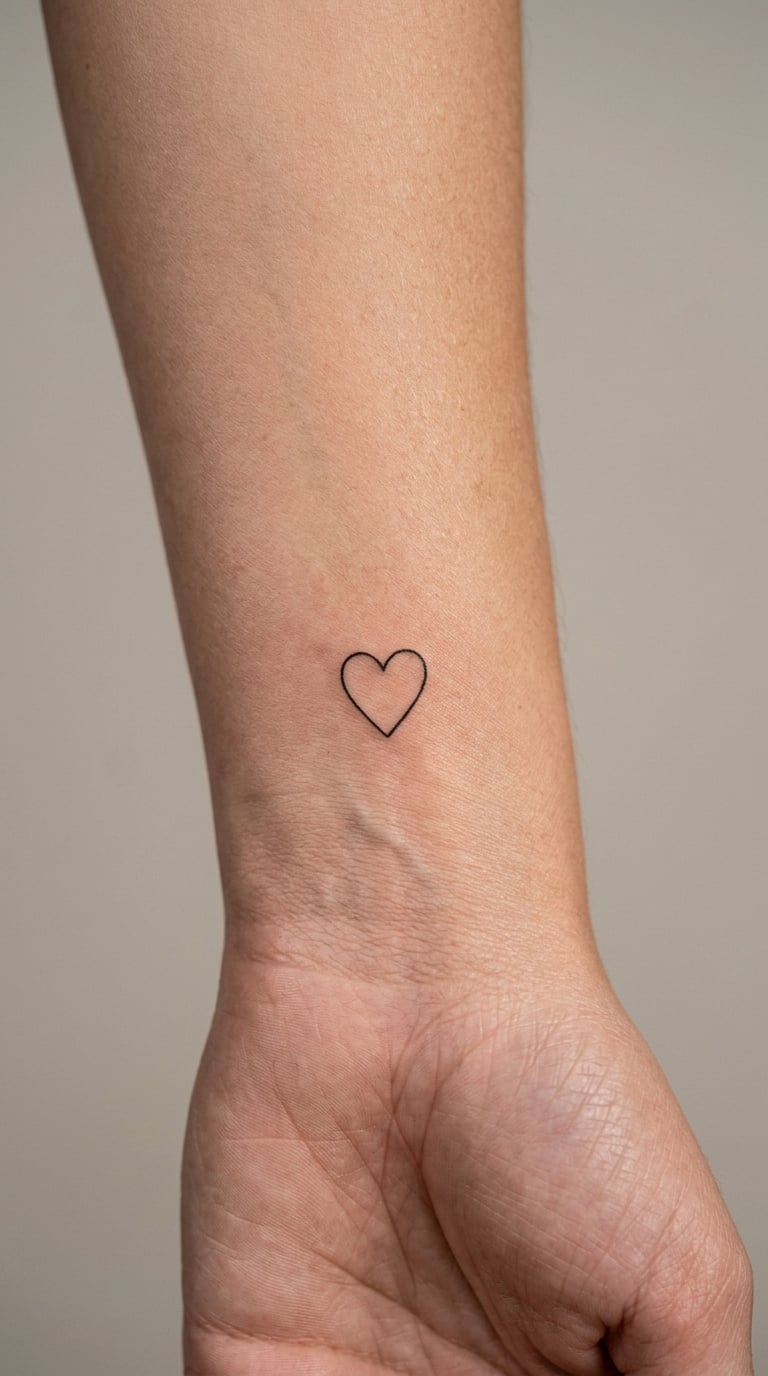
This is the version most people actually mean when they type tiny heart tattoo ideas into a search: one unbroken black line, no fill, no shading, usually six to eight millimetres tall. It reads as love, or self-love, or just a shape they liked. The thinness is what makes it look expensive rather than homemade.
Six to eight millimetres on the inner wrist is the sweet spot. Below five millimetres the line has nowhere to live, so bring a reference and ask the artist to draw slightly larger than the photo. Line weight matters more than size here. A single-needle line fades gracefully, while a two-needle line looks tired by year three.
Pain & time: the inner wrist sits around a 5 out of 10, and the whole thing takes five to ten minutes.
2. Freckle Heart on the Collarbone
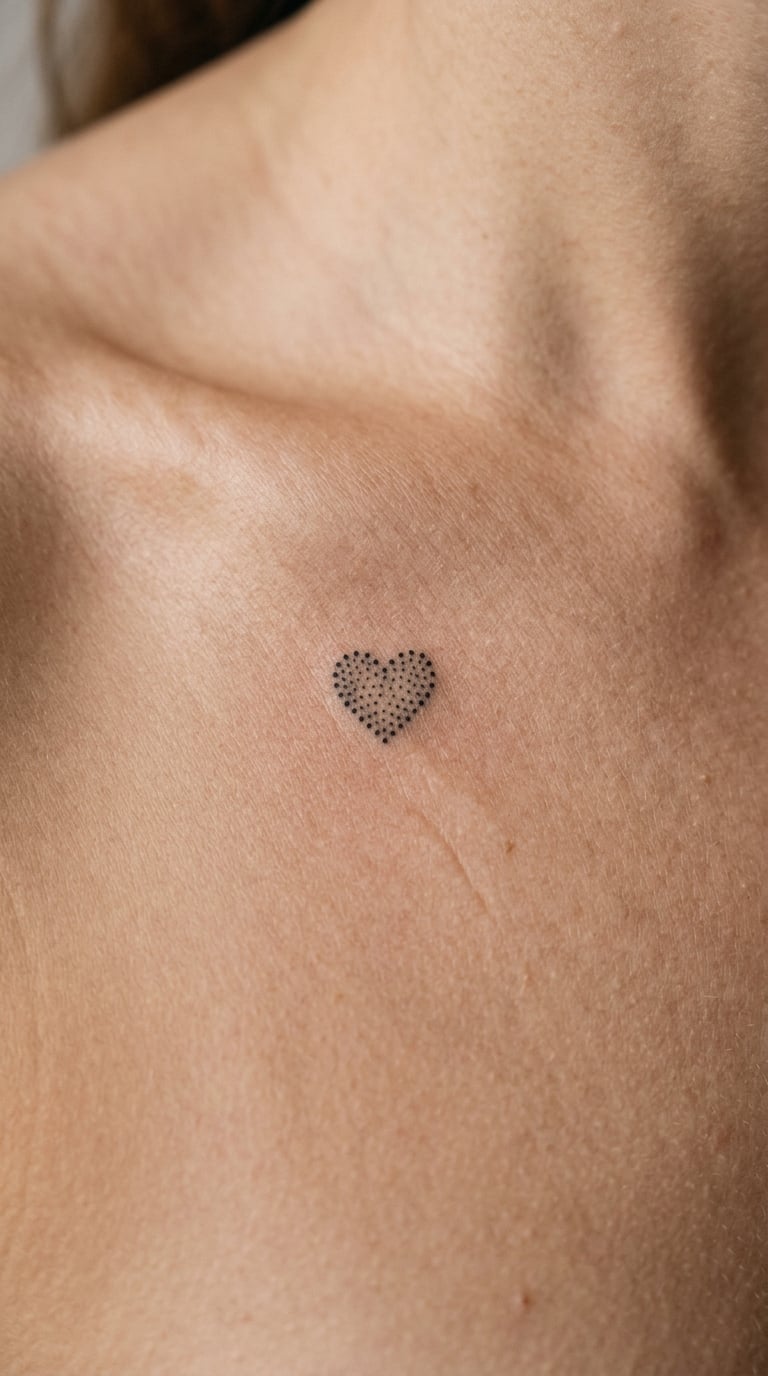
Instead of drawing the heart, the artist dots it. Three or four tiny black dots, placed close enough to read as a heart from a step back and dissolve into a speckle up close. It is the least obvious way to wear a heart, and it disappears completely under a t-shirt.
Collarbone placement suits it because the dots are too small to catch on fabric. The skin over bone is thinner and a little more sensitive than the inner arm, and the shape will soften slightly as the collarbone moves, so a slightly higher placement holds its shape longer. Most people ask for 3 to 4 mm per dot.
Pain & time: a 6 out of 10 because the bone is close under the skin, and it is a ten-minute job.
3. Red Fine-Line Heart on the Ankle Bone
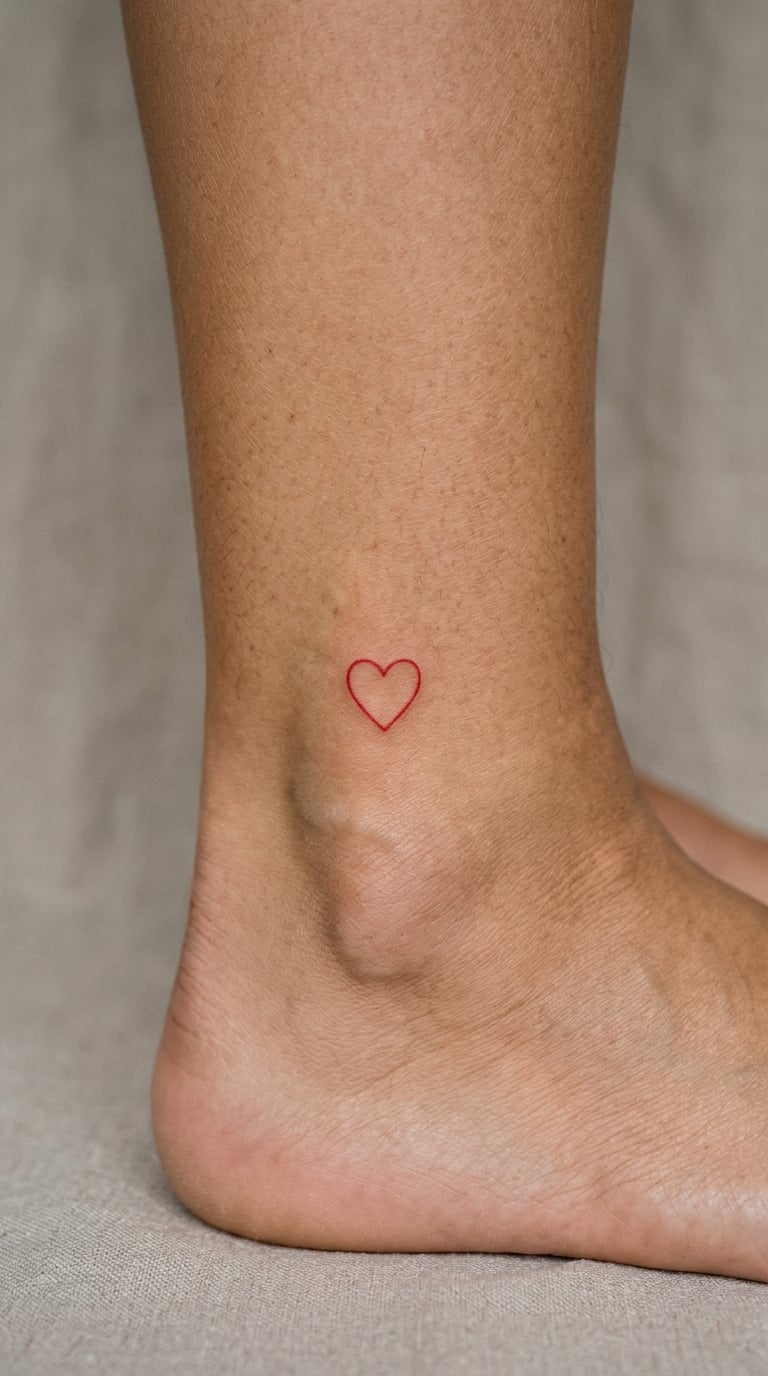
A red heart reads warmer and softer than black, and on the ankle it looks like an accident in the best way, the kind of thing people notice ten minutes after meeting you. Fine red line is worth asking for specifically, because a thick red line turns muddy within a couple of summers.
The ankle bone is a good home for it in winter and a difficult one in summer, since colour fades fastest in sun and sand. Keep it covered when you are at the beach and it will hold its colour far longer. Five millimetres is about right; red needs slightly more line than black to stay visible.
Pain & time: around a 5 out of 10, and five minutes on the chair.
4. Solid Black Heart Behind the Ear
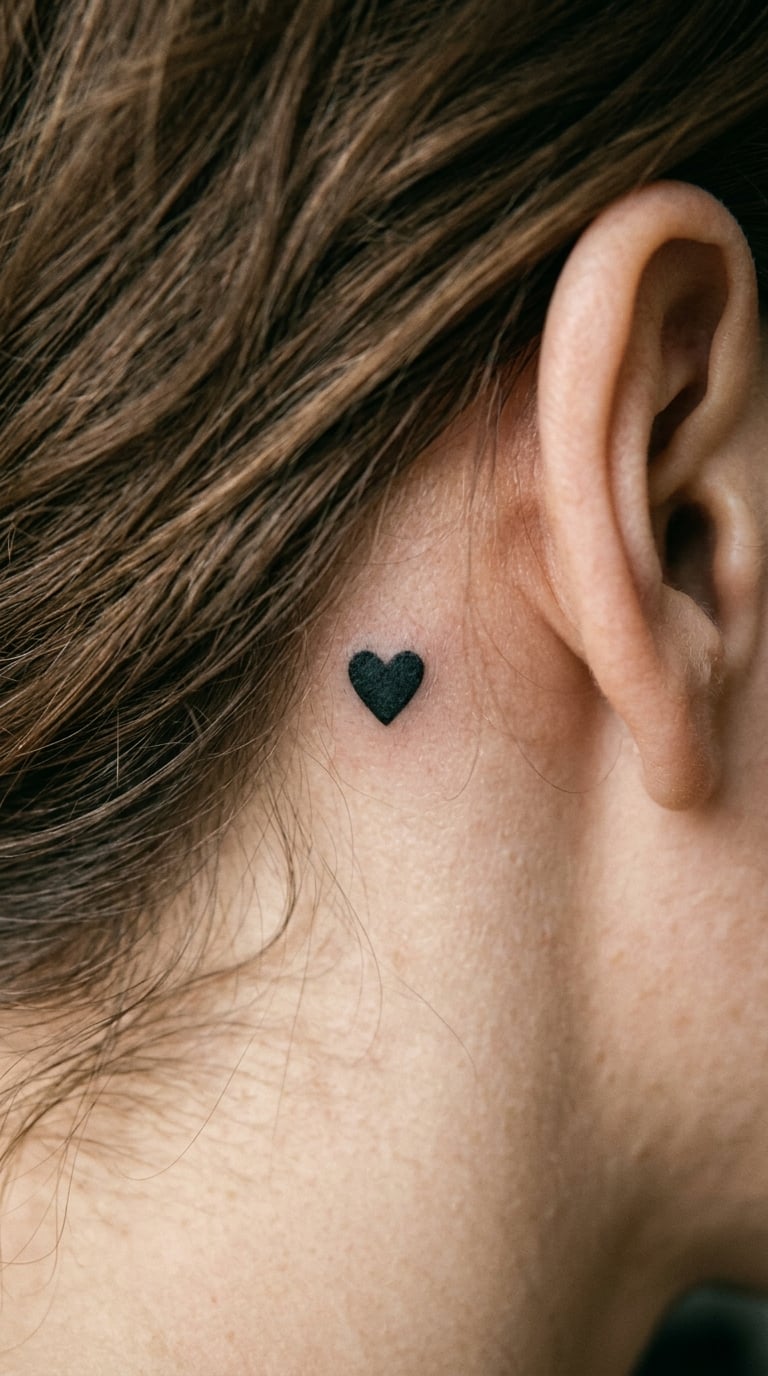
Not a line but a block. A small solid heart behind the ear is the most durable tiny heart there is, because there is no inner detail to blur. Black fills hold their edges for years in a way no outline can match, and the spot is private unless you push your hair back.
Ask for it slightly larger than the reference if it is going anywhere near the hairline, since hair regrowth and skin movement there are both slower to settle. It fades evenly rather than breaking up, which means a touch-up is usually simple. Five to six millimetres of solid black is the sweet spot for a first attempt.
Pain & time: the ear area is a 5 out of 10, and five to ten minutes including the set-up.
5. Scribble Heart on the Index Knuckle
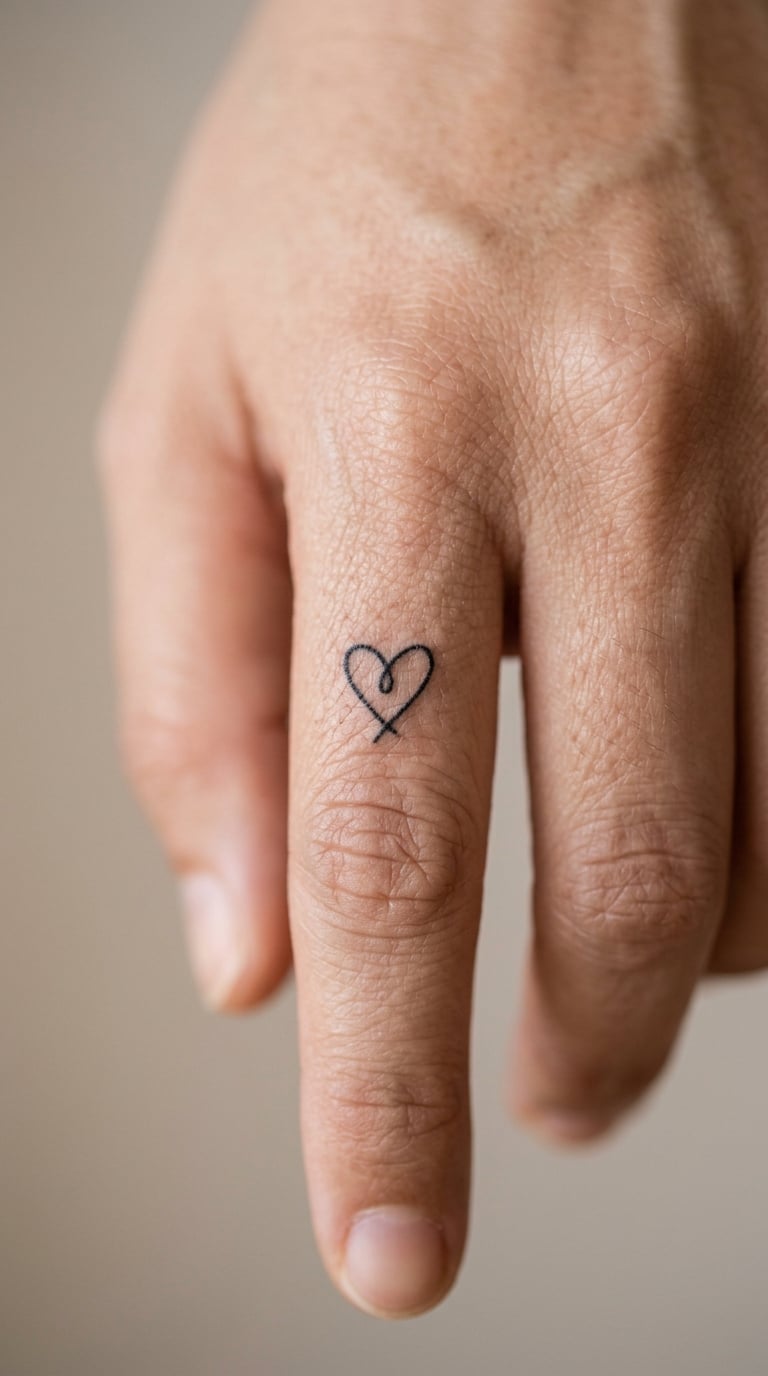
One continuous pen-like squiggle that reads as a heart only if you already know what you are looking at. It has real charm and it is the design most likely to disappoint, because knuckle skin is thick, bony, and in constant motion.
Knuckle tattoos distort. The hand bends, stretches, and rubs against pockets, and a six-millimetre line on a knuckle can look like a smudged blob within months. If you want one anyway, go bigger than feels ridiculous, around ten millimetres, and expect to need a touch-up. On r/tattooadvice, people with small finger hearts ask repeatedly why the shape has already changed weeks later, and the answer is almost always knuckle movement.
Pain & time: knuckles are a 7 out of 10, and it is a quick five-minute session.
6. Sacred Heart on the Upper Arm
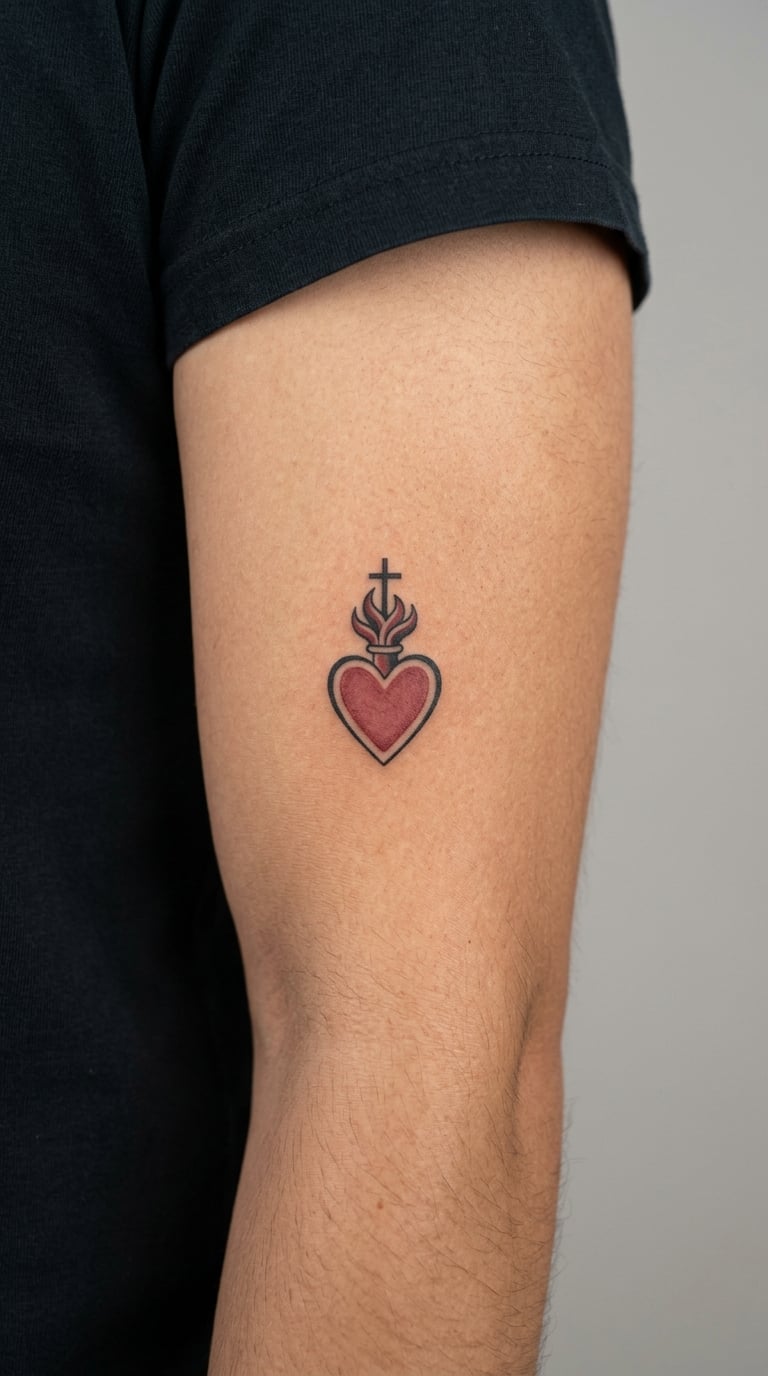
The sacred heart is the traditional religious version: a heart wrapped in flames, topped with a cross, sometimes pierced by a sword or thorns. It is the one heart design with a fixed meaning, devotion rather than romance, and it comes from Catholic devotional imagery rather than tattoo flash.
Because it carries detail, it needs room, so this is the largest design in the gallery at three centimetres or more. Traditional red and black work, and the style holds up at that size far better than fine line would. Somewhere on the upper arm or the outer forearm keeps the symmetry readable.
Pain & time: upper arm is a 4 out of 10, but expect an hour or more of work.
7. Fine-Line Anatomical Heart on the Inner Forearm
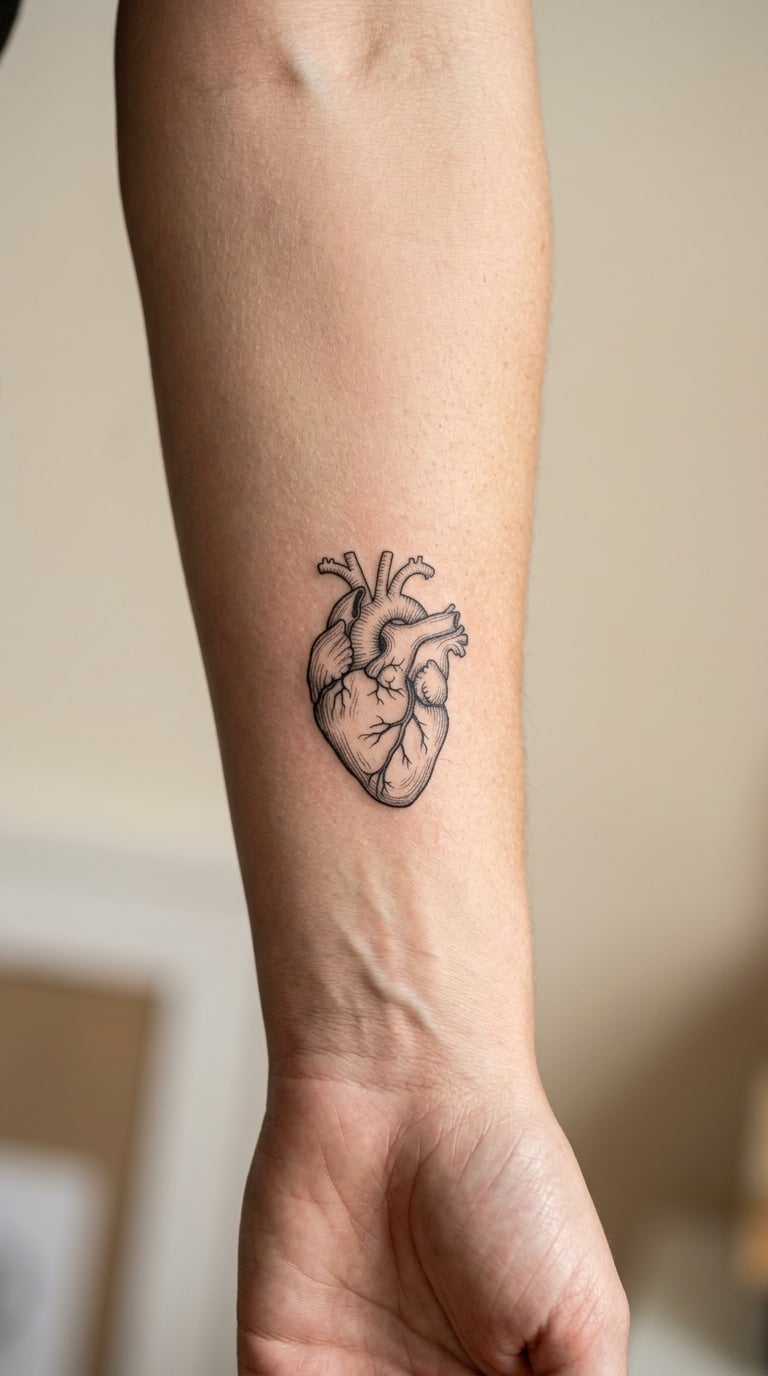
The opposite of minimal: a real heart, drawn as anatomy rather than symbol, with the aorta and veins traced in a single fine line. It usually means something lived rather than something felt, and it is the most striking design in this whole list.
Two centimetres is close to the minimum that keeps the vessels readable. Below that the arteries merge into a blot, so if your reference is small, ask the artist to add the detail rather than shrink it. The inner forearm is flat, relatively low-pain, and gives an artist a good surface for long unbroken lines.
Pain & time: inner forearm is a 4 out of 10, and forty-five minutes to an hour.
8. Broken Heart Split Across the Wrist
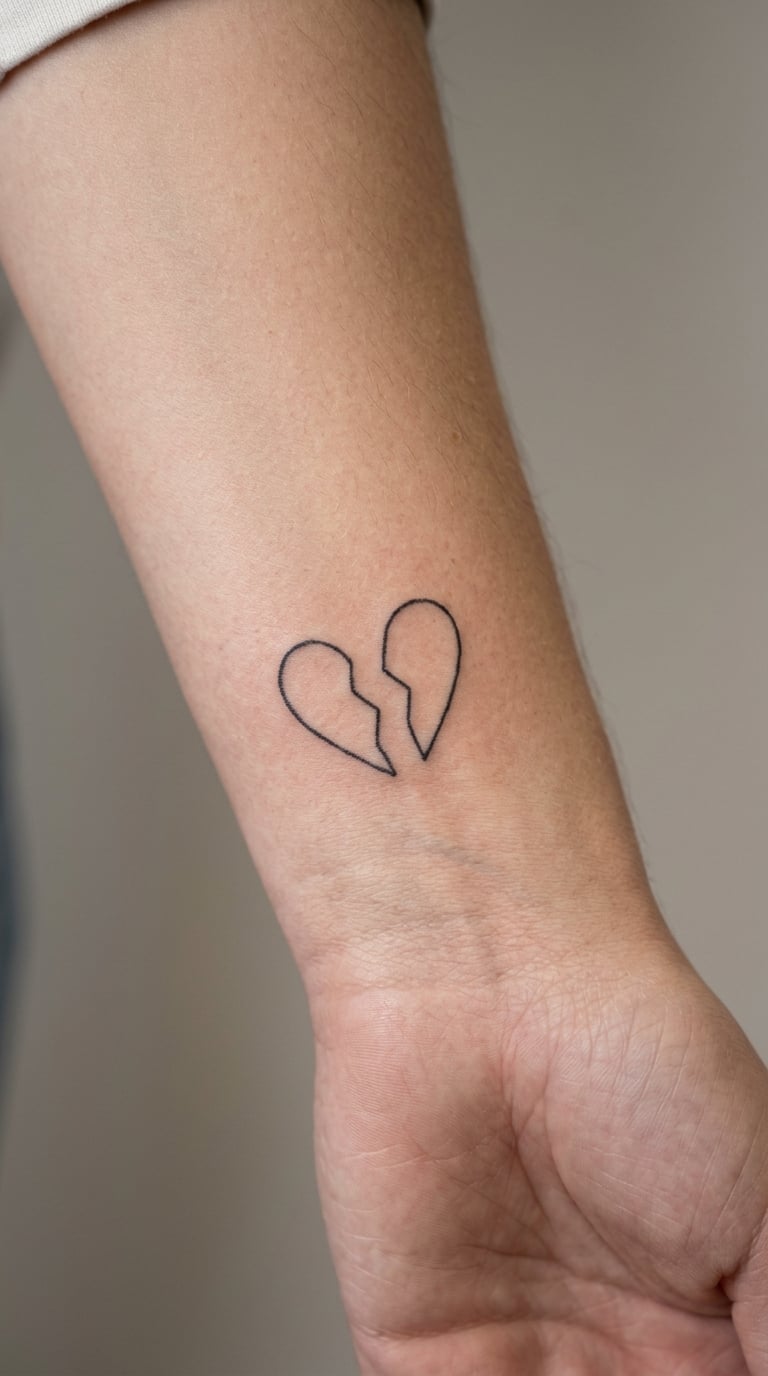
One heart drawn in two halves with a jagged gap down the middle, meaning a relationship that ended, a family that split, or a version of yourself that did not last. It is the most emotionally loaded design here, and people usually know exactly which version they want it to be.
Both halves need to land in the same spot when you move your arm, so the artist marks them with a template first. Five millimetres per half is small; six is more forgiving. Inner wrist skin is soft and forgiving of a little imprecision, which makes it a better home for a broken heart than a finger or a knuckle.
Pain & time: a 5 out of 10, and about ten minutes for both halves.
9. Two of Hearts Playing Card on the Outer Wrist
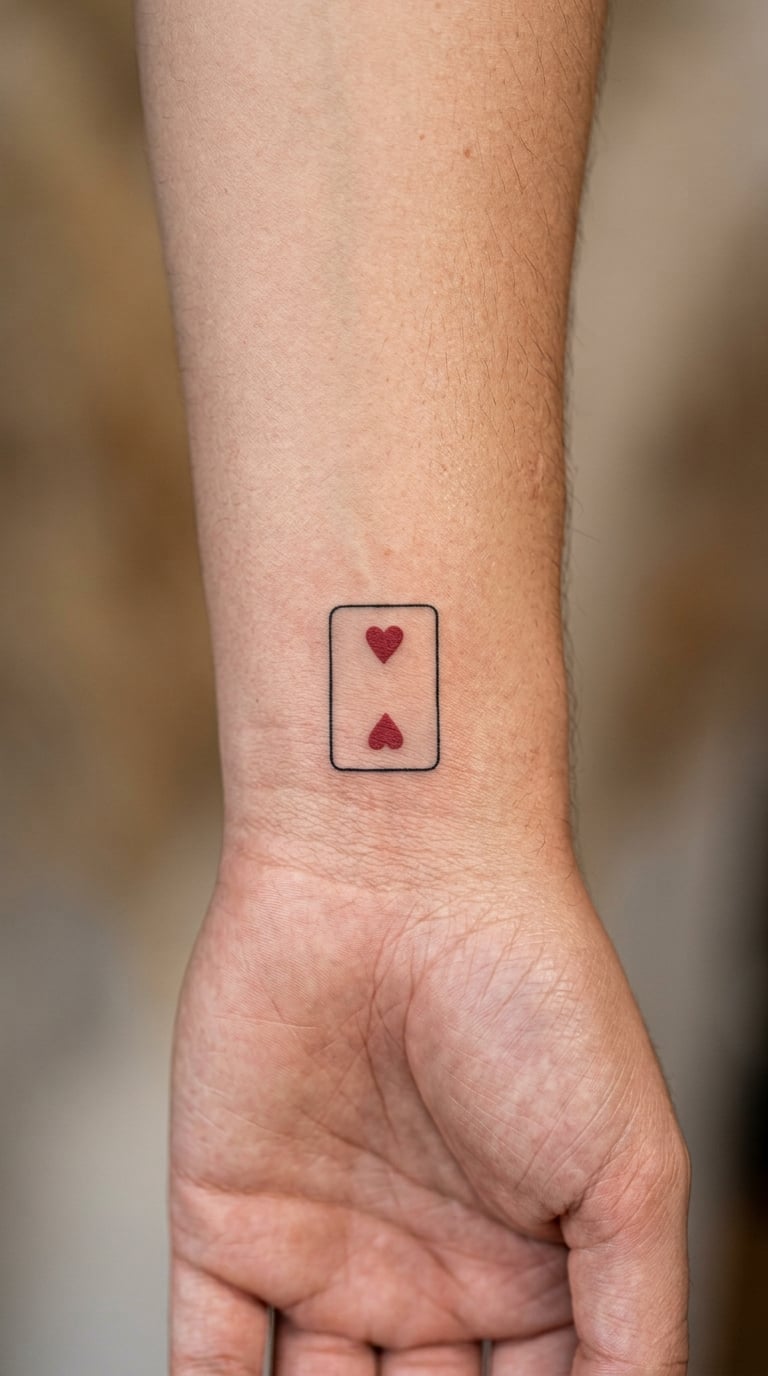
The two of hearts from a deck of cards, red pip and all. It reads as luck, a favourite card, a gambling joke, or just a heart that happens to come with a number attached. It is one of the few tiny heart designs that carries a built-in meaning without anyone having to explain it.
Seven millimetres gives the corner index and the red pip enough room to stay legible. The red is a lighter shade than the black, so the piece already needs a touch-up plan. The outer wrist suits it better than the inner because the number sits flat there instead of wrapping around a tendon.
Pain & time: outer wrist is a 5 out of 10, and ten to fifteen minutes.
10. Heart with a Wildflower Stem on the Ankle
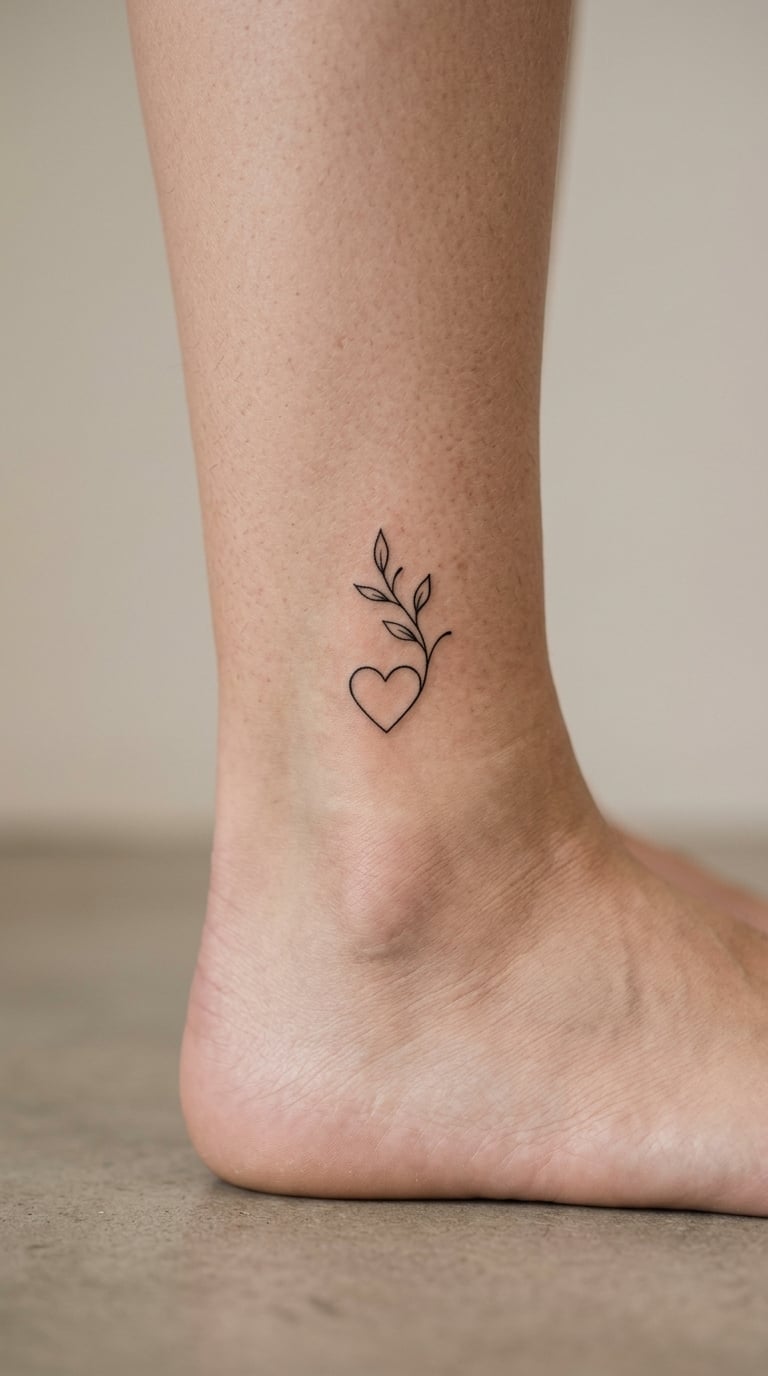
A heart as the bloom at the top of a stem with two or three small leaves, drawn in fine line. It softens the symbol and reads more botanical than romantic, and it works well when you want a heart that looks like it belongs in a field rather than on a body.
The stem is what makes this one age well, because a long line can lose a little definition without the design falling apart. One and a half centimetres is about the minimum, and the stem should be the same weight as the heart outline. On the ankle it will move a little with the joint, so keep it above the bone rather than across it.
Pain & time: ankle is a 5 out of 10, and twenty minutes.
11. Geometric Low-Poly Heart on the Shoulder
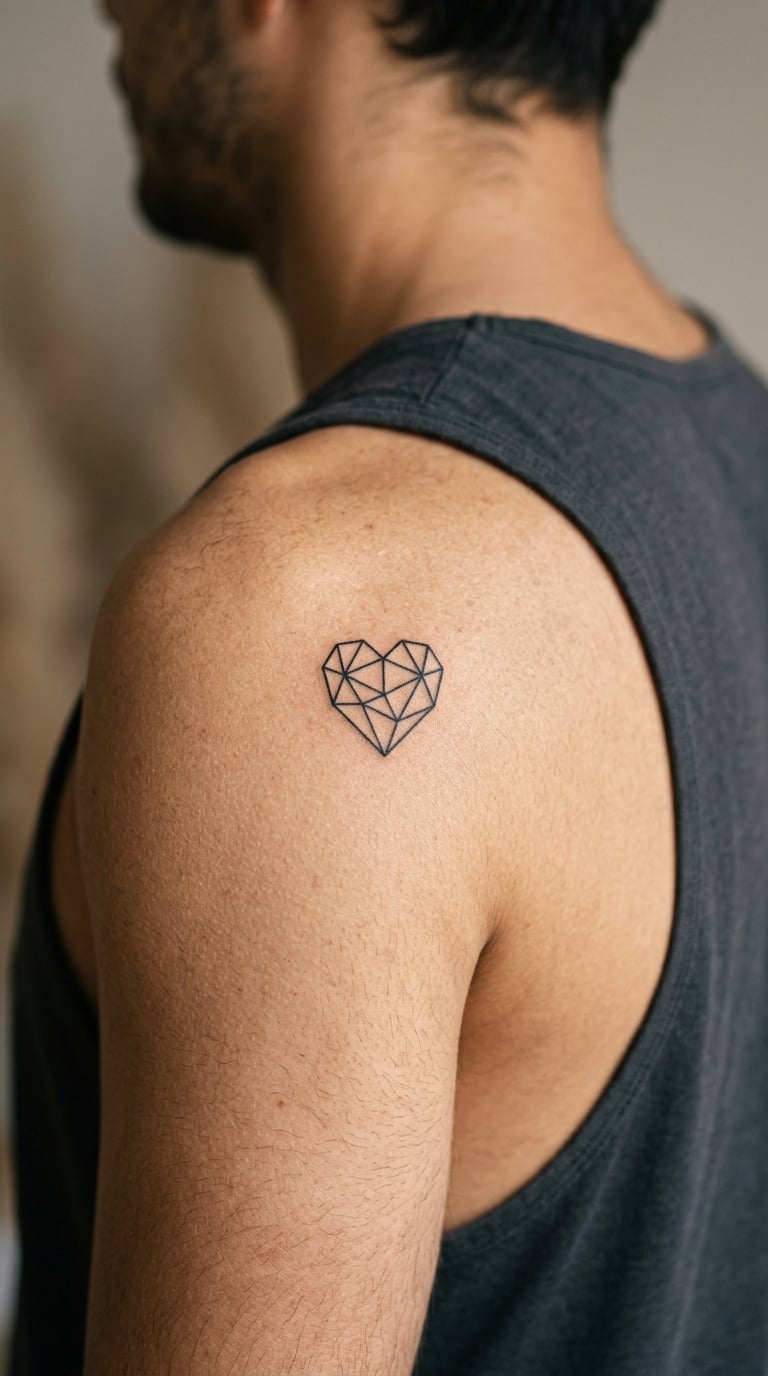
A heart broken into flat angular facets, the way a crystal or a mountain looks from a distance. Black and graphic, a bit harder than the rest of this list, and the version people pick when a plain outline feels too soft.
Solid black fills give it more staying power than an outline would, and the facets hide small imperfections well. One centimetre is the floor, because anything smaller turns the facets into a smudge. The shoulder is a decent canvas for a shape like this, and it is usually only visible when you are in a sleeveless top.
Pain & time: shoulder is a 5 out of 10, and twenty-five minutes.
12. Watercolour Blush Heart on the Inner Arm
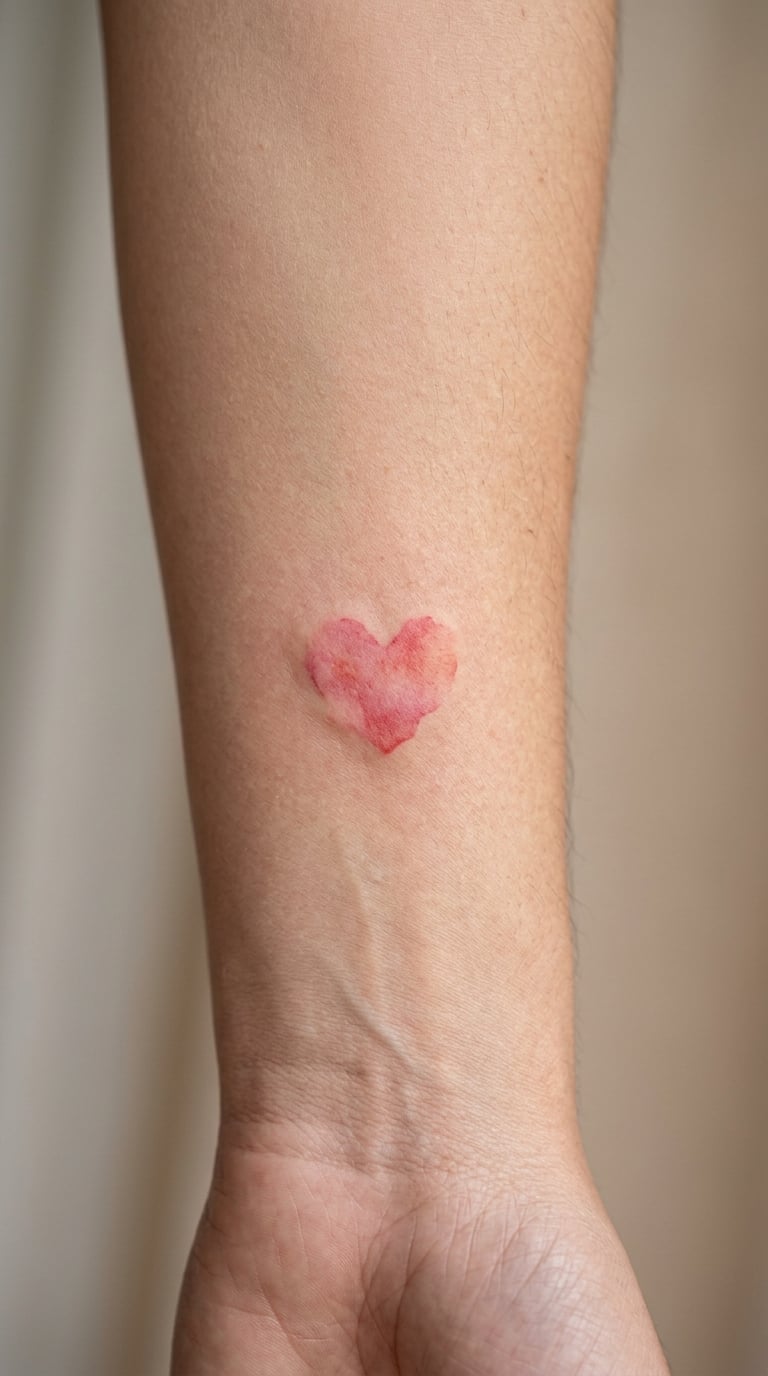
A soft pink and red wash bleeding slightly past the edge of the heart shape, more like a brush stroke than a tattoo. It is the least permanent design here and the prettiest in a photograph, and it needs the most patience from the person wearing it.
Colour is the first thing to go. Expect a noticeable softening in a year or two and a flat patch by year four, particularly if the arm sees sun. One centimetre is the smallest size that still holds a gradient, and any smaller and there is no room for the wash to read as anything but a smudge.
Pain & time: inner arm is a 4 out of 10, and fifteen minutes.
13. Heart with a Fingerprint Inside on the Wrist
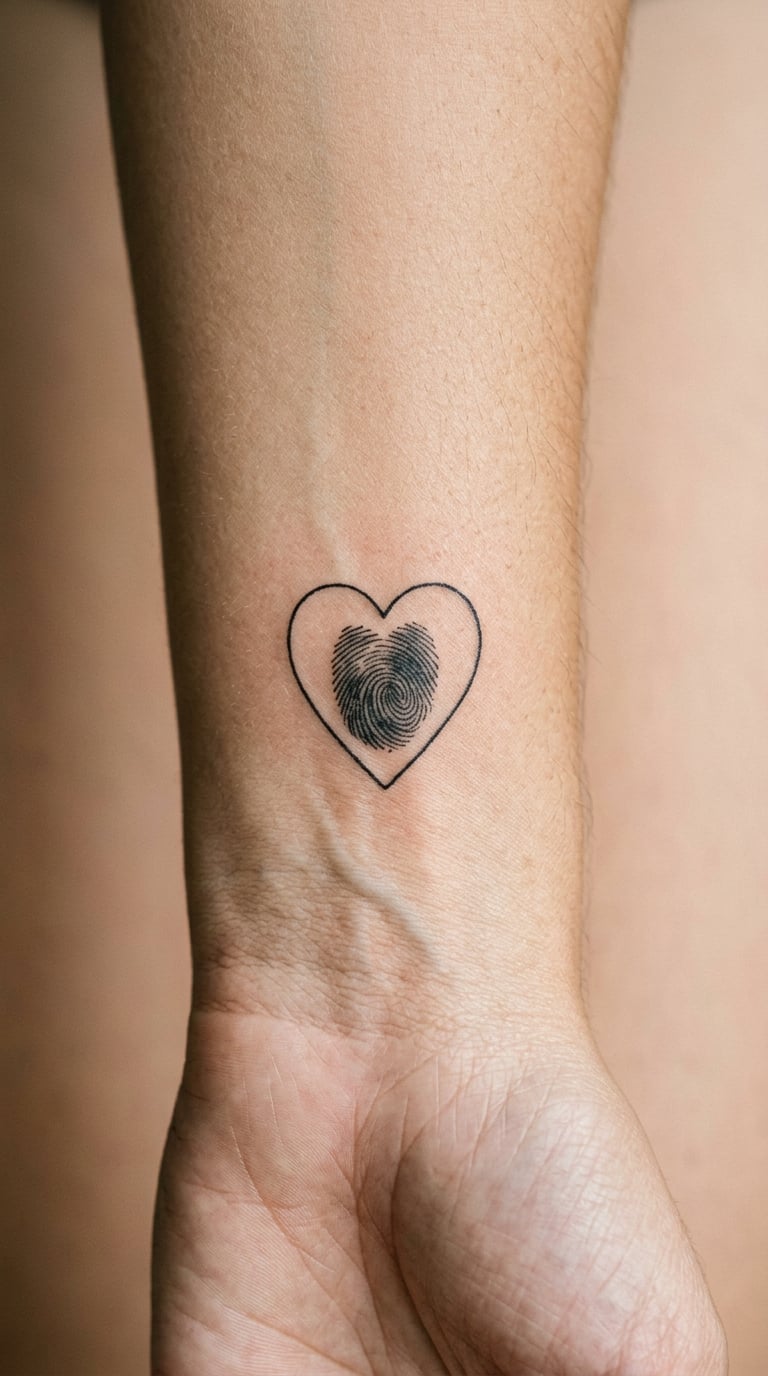
A small fingerprint set inside a heart outline, usually a partner’s or a child’s. It is one of the more personal tiny heart ideas and one of the harder to age, because a fingerprint is all fine parallel lines and fine parallel lines blur first.
One and a half centimetres is the realistic minimum, and even then you should expect a touch-up every year or two. The lines are usually done with a single needle at a lighter pressure, which is what keeps them readable, but it is a compromise between detail and longevity. The inner wrist is one of the better spots because it is flat and does not flex.
Pain & time: a 5 out of 10, and forty-five minutes for the detail work.
14. Overlapping Double Heart on the Hip
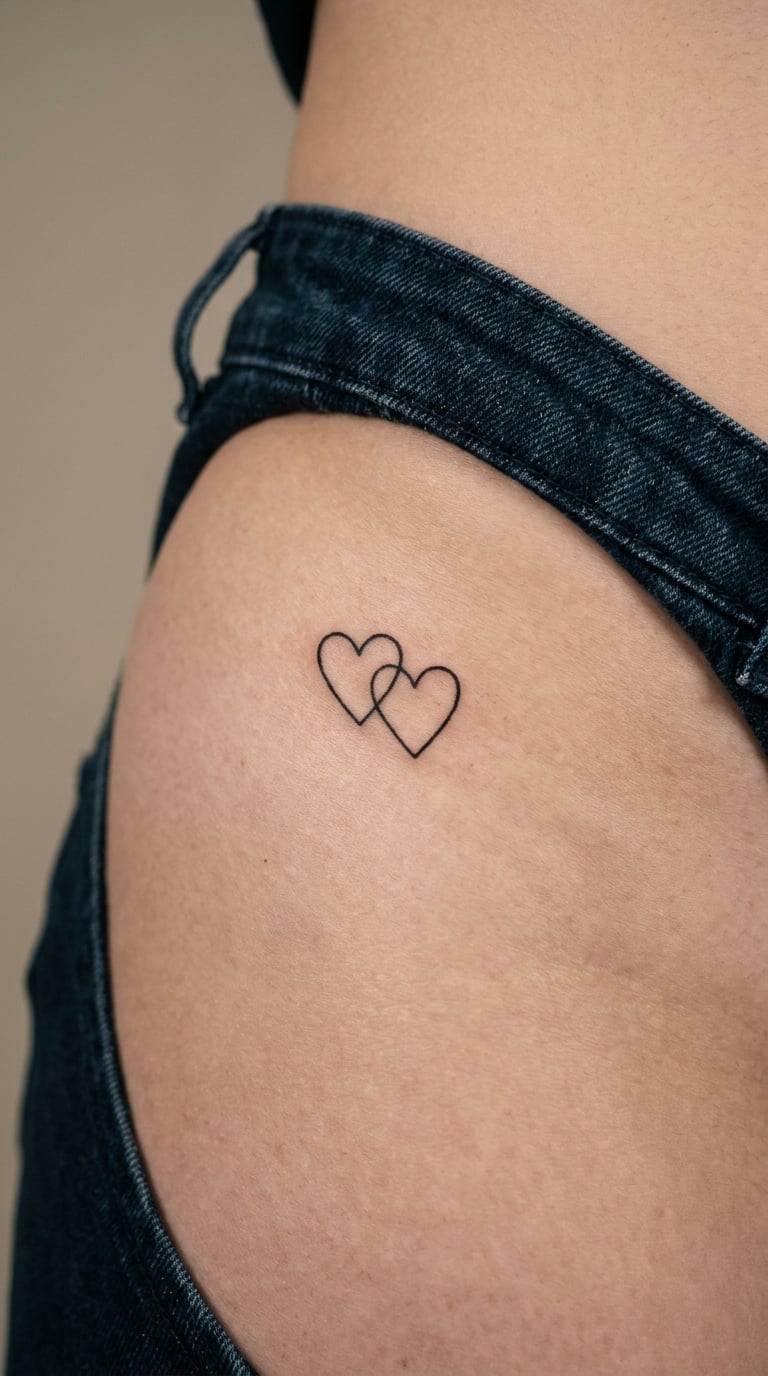
Two outline hearts, offset so they overlap and share a line in the middle. It reads as two people, two dates, or a relationship that never quite sat in a neat category, and the overlap is what makes it more interesting than two separate hearts.
Two hearts at five millimetres each is a lot of line for the size, so expect the artist to run them slightly larger, around six, and to be patient. The hip near the crease is a soft, forgiving area, which is helpful. The one thing to watch is that sitting and sleeping on that spot wears the line down faster than most placements.
Pain & time: hip is a 4 out of 10, and twenty minutes.
15. Two Hearts on a Fine Line Along the Rib
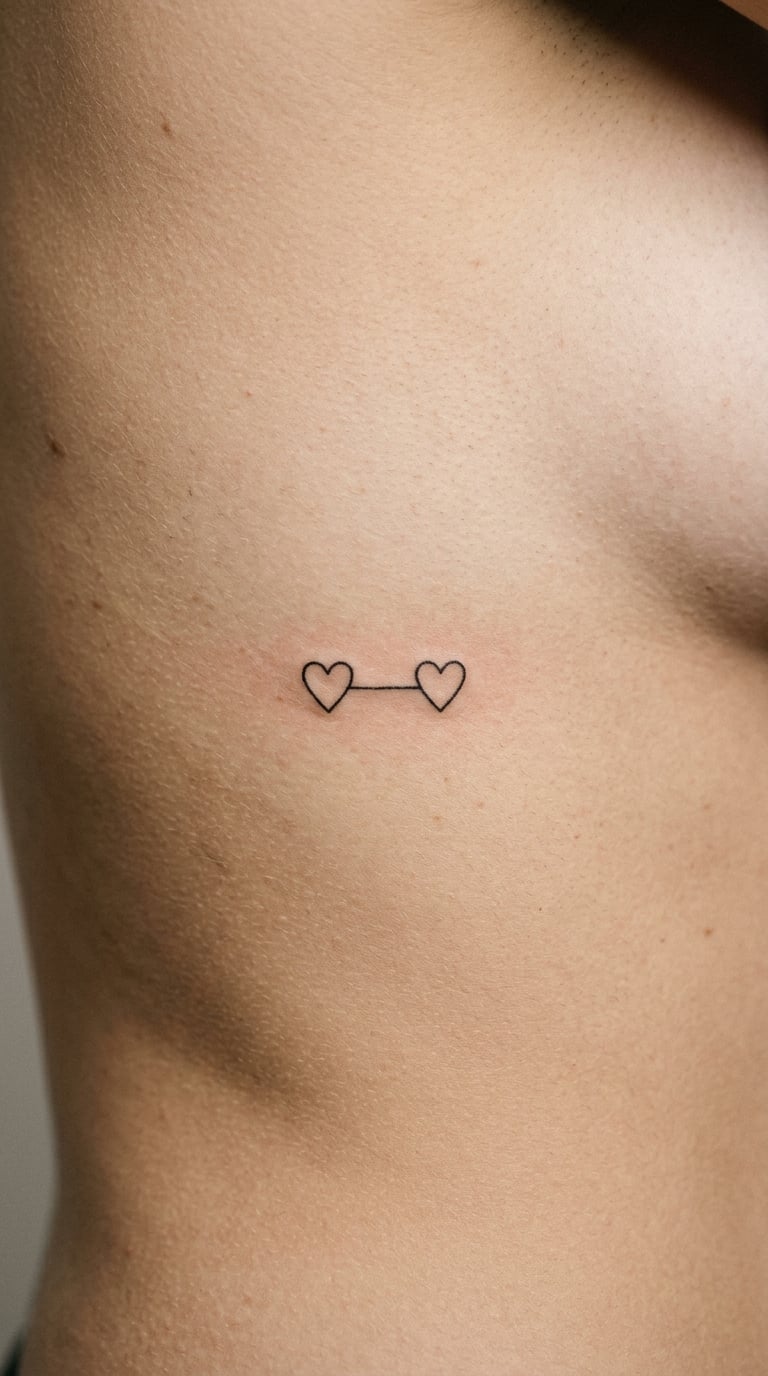
Two hearts joined by a thin line running through the middle, sometimes with a date in tiny numbers underneath. The horizontal format makes it feel like a small piece of writing rather than a symbol, and it stacks neatly with other small rib tattoos later.
Rib skin is flat and unforgiving, which is either the reason to go there or the reason not to. Breathing and twisting will stretch the line, so keep it to a single consistent weight and avoid a heartbeat or waveform, which is where fine ribs start to wobble. The side of the rib also has less subcutaneous fat than most people expect.
Pain & time: ribs are a 7 out of 10, and twenty-five minutes.
16. Matching Hearts, One on Each Wrist
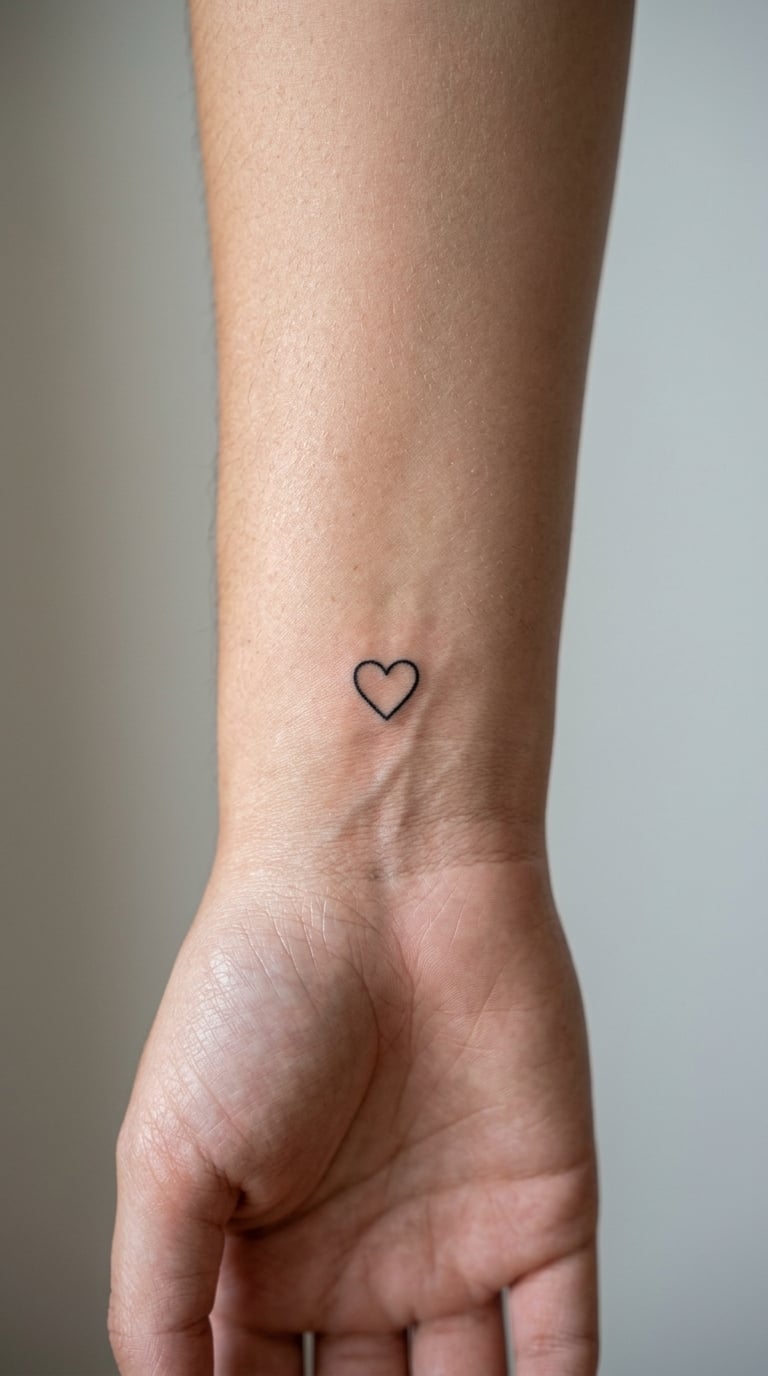
The same small heart on both wrists, done at the same time by the same artist so the weight matches. This is the couple version, and it works equally well for friends, siblings, and parents with a kid who wanted one too.
Symmetry is the whole job here. Get both templates marked before either one is started, and ask the artist to keep them the same size to the millimetre, because matching is judged on exactly that. Somewhere between four and five millimetres keeps the pair looking deliberate rather than accidental.
Pain & time: each wrist is a 5 out of 10, and about fifteen minutes for the pair.
17. Outline Heart on the Back of the Hand
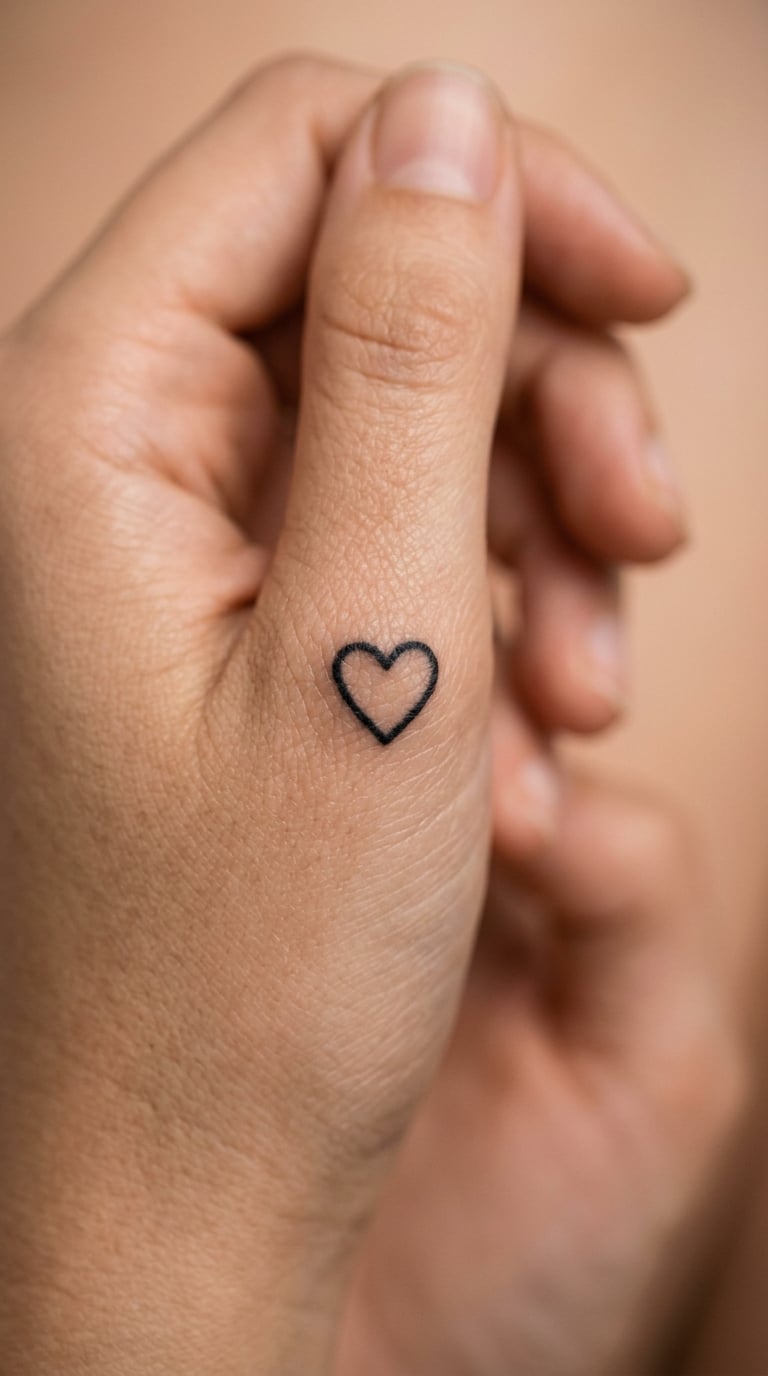
A simple black outline heart on the back of the hand, sized at eight millimetres or slightly more so it reads from across a room. It is the least dainty option here and the most visible, and it suits people who want a heart they do not have to hunt for in a mirror.
Hands wash, scrub, and take knocks, so this placement ages faster than a wrist or a forearm. Keep it out of the dishwater habit and away from the gym bag floor if you can. Ask for a slightly heavier line than you would elsewhere, since a thin outline on hand skin loses definition in a year or so.
Pain & time: back of the hand is a 5 out of 10, and ten minutes.
18. Heartbeat Line Heart on the Side of the Rib
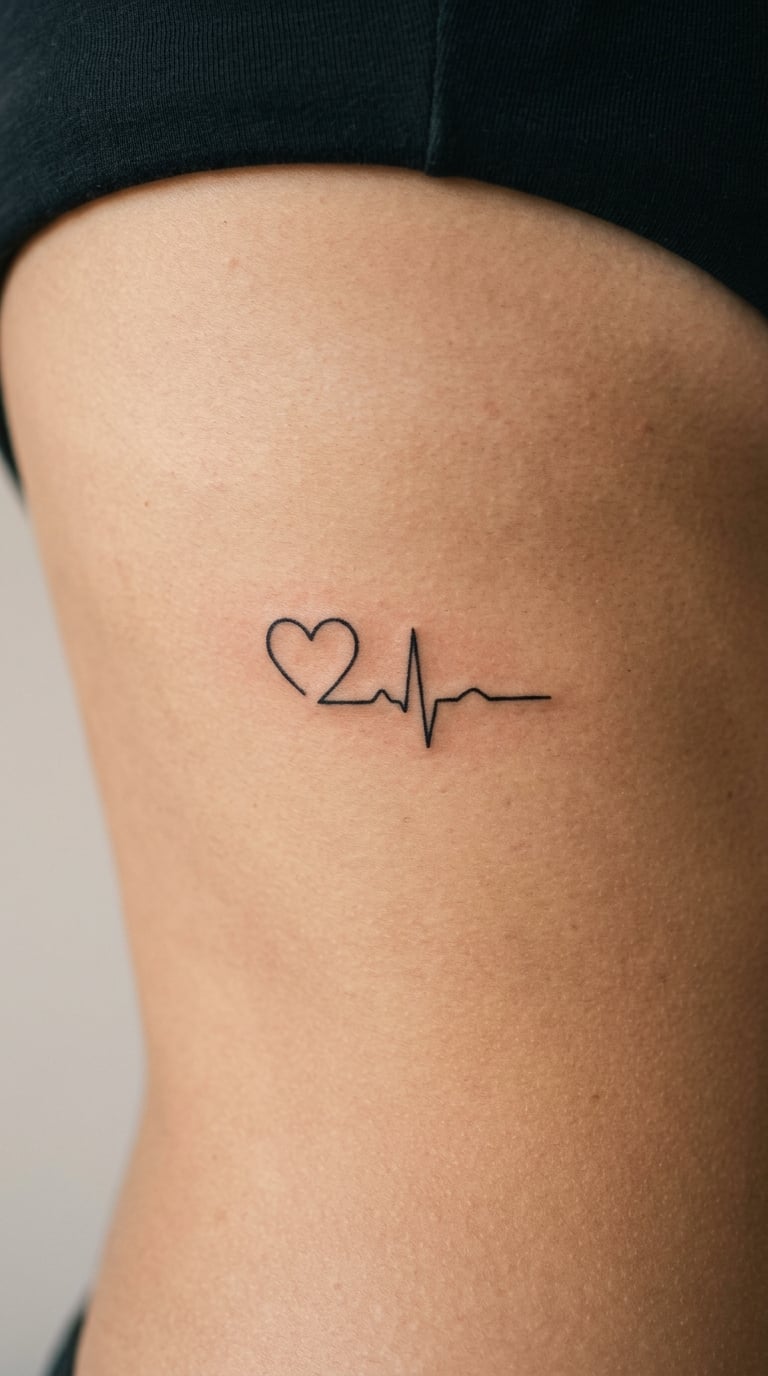
A heart at one end of a flat heartbeat trace, the reading from a monitor tracing on a screen. It usually marks a person, a birth, or a moment somebody is still alive and thinking about, and it is the design with the most emotional weight in this list.
The line has to be one consistent weight or the flat parts disappear and you are left with a squiggle. Two centimetres total keeps the rhythm readable, and anything longer on the same rib starts to compete with future space. Ask the artist to draw the trace from a real strip rather than from memory, because invented heartbeats look wrong to anyone who has seen a monitor.
Pain & time: ribs are a 7 out of 10, and thirty minutes.
Things to Know Before You Book a Tiny Heart Tattoo
Most of the disappointment in this category happens before the needle, not after it. The heart is simple enough that people book it on impulse, and the impulse is usually right. A few decisions beforehand are what separate the tattoos that still look good in ten years from the ones that need fixing at eighteen months.
- Pick the artist, not the flash. Fine line is a specialty with actual technique behind it, and plenty of solid black and traditional work does not translate down to five millimetres. Ask to see healed work at that size, not just fresh line.
- Treat size as a decision, not a default. The smallest a heart can stay crisp is roughly five millimetres. Under that, the line thickens or closes up as it heals, whatever the reference photo shows.
- Let placement decide the design, not the other way round. The inner forearm and upper wrist hold fine detail best. Fingers, knuckles, ankles, and ribs move constantly and will blur a small outline.
- Black holds, colour leaves. A solid black heart outlasts a red one, and both outlast a watercolour wash. If you are choosing colour, plan for a touch-up inside two years.
- A finger heart is a commitment to that exact shape. Knuckle skin thickens and shifts, so the outline you approve today may not be the outline there in a year. Size up or move it.
- Ask what the shop minimum is. Studios price by the hour with a floor, and a five-minute heart still has to meet that floor. The cost of a tiny heart is often the cost of the minimum, not the cost of the work, and shops vary widely.
How to Choose the Size of Your Tiny Heart Tattoo
Size is the decision that decides the design. Working down the ladder: a 2 to 3 mm freckle heart is a dot cluster, nothing more, and anything drawn with detail at that size will not survive healing. A 3 to 5 mm heart supports a clean outline with one needle. A 5 to 10 mm heart leaves room for a second line, a fill, or a small addition like a stem or a pip. At 1 cm and above you can add leaves, dates, or a heartbeat line without the design turning to mush.
One practical note: bring a printed reference at the size you want, not just a phone screenshot. Scale on a screen means nothing, and a five millimetre heart in a photo is usually closer to a two centimetre one in real life.
How to Brief an Artist on a Small Design
Send the references a few weeks ahead, not the morning of. Tell the artist the exact size, the exact placement, and whether you want it black, red, or a wash. Ask what needle they would use for a line that size, and listen to the answer. If they suggest a slightly heavier line or a slightly larger drawing than the photo, that is usually the artist telling you they have seen this design blur before.
Ask what their touch-up policy is while you are still talking. Studios differ a lot here, and it is easier to know before you sit down than after the ink is in.
Looking After a Fresh Tiny Heart
The first forty-eight hours matter more than anything you do afterwards. Wash it with clean water and unscented soap, pat it dry, and leave the rest alone. No soaking, no swimming, no covering it under a tight sleeve. Keep it out of direct sun for several weeks, and expect a small tattoo to peel and flake more visibly than a large one, which is normal and not a sign it is going wrong.
A thin layer of plain moisturiser a couple of times a day helps with the itch that comes in week two. If the redness spreads well past the design, or the skin stays hot and weeping rather than flaking dry, get it looked at rather than guessing.
Do Tiny Heart Tattoos Fade?
Yes, faster than people expect. Tiny linework sits in the upper layers of skin with very little pigment to hold on to, so the outline softens before a larger design would even need thinking about. Solid black hearts fade evenly and hold their shape far better, and anything in colour goes first.
On r/tattooadvice, the recurring small-heart complaints are consistent: someone got a small heart on their finger and watched it change within weeks, and a pair who both got mini heart freckles watched one of them fade noticeably earlier. The same advice threads warn against designs that cannot stay crisp at 5 mm or under, and the common thread in all of it is fingers and knuckles.
What people call a blowout, where the lines spread into each other, usually happens in week two or three while the skin is still healing, and it is a sizing problem more than anything else. Touch-ups on tiny pieces are frustrating because there is very little original line left to work with. The practical answer is to go slightly larger and slightly bolder than the reference photo the first time, and to ask for a free touch-up window at the booking.
Frequently Asked Questions
What does a small heart tattoo symbolize?
Usually love, but the reading is personal. People choose a small heart for a partner, a child, a parent, a pet, or sometimes for themselves. A black heart often reads as grief or a boundary, a red heart as warmth and romance, and an anatomical heart as something lived rather than something felt. A broken heart reads as an ending, and several hearts read as family or a group.
Where to put a tiny heart tattoo?
The inner forearm and upper wrist hold fine detail best and are easy to hide under a sleeve. The collarbone, behind the ear, hip, and upper arm are all comfortable and low visibility. Fingers, knuckles, ankles, and ribs move constantly and blur small linework, so a heart placed there needs to be larger and bolder to stay readable for more than a year.
How much does a tiny heart tattoo cost?
Tattoo studios usually charge hourly with a minimum, and a five-minute heart still has to meet that minimum, so a tiny heart often costs the same as a much bigger first piece. Price varies a lot between a walk-in shop and a private fine line artist. What moves the number is the artist, the placement, and whether you need a touch-up, not the size of the design itself.
Do tiny heart tattoos fade?
Yes, and quicker than most people expect, because fine micro linework has very little pigment to hold. Solid black hearts fade evenly and last far longer, red goes first, and watercolour washes soften within a couple of years. Going slightly larger and slightly bolder than the reference photo, plus asking for a free touch-up window, is the best protection at booking.
How long does a tiny heart tattoo take to heal?
A micro heart usually looks healed in two to three weeks and settles fully over six to eight weeks, which is why a touch-up should wait until around six weeks. Small tattoos can flake and scab more visibly than large ones because there is so little ink. Keep it out of direct sun, avoid swimming for a couple of weeks, and moisturise thinly to handle the itch around week two.
What are the trendiest small tattoos right now?
Fine line single-needle work, plain outline hearts, and geometric or low-poly black shapes are the ones showing up most in small-tattoo galleries. Botanical details like a heart growing from a leafy stem are also popular because the longer line ages better. Matching micro hearts and wrist pieces remain steady rather than trendy, and watercolour hearts are the most requested and the fastest to fade.
Conclusion
If you are still choosing, start with the fine-line outline heart on the inner wrist. It is the least fussy design in this guide, the easiest to keep crisp, and the one that ages most gracefully if your taste changes in a few years. Save the reference, pick a size rather than copying a screenshot, and send it to the artist properly in advance.
These tiny heart tattoo ideas all share one rule: the smaller and thinner it is, the more the placement does the work. Choose a spot that does not flex, ask for a touch-up window, and the heart you book will still look like the one you drew.