
14 Small Rose Tattoo Ideas for Women, Best Picks (September 2026)
Small rose tattoo ideas for women sit in a sweet spot: readable enough to mean something, small enough to live under a sleeve on a Tuesday. A single stem, a bud the size of a thumbnail, a few black petals on the inner wrist. Most people who land on this page are planning a first tattoo, or their third, and they want something that will not look dated in ten years.
There is a practical side to the timing too. If you are booked between October and January the new tattoo spends its flakiest weeks under a jumper instead of in the sun, and you skip the swimming season entirely. Here are fourteen ideas worth saving, plus the honest notes on placement, pain and how fine line ink actually settles.
1. Fine-Line Rosebud Tucked Behind the Ear
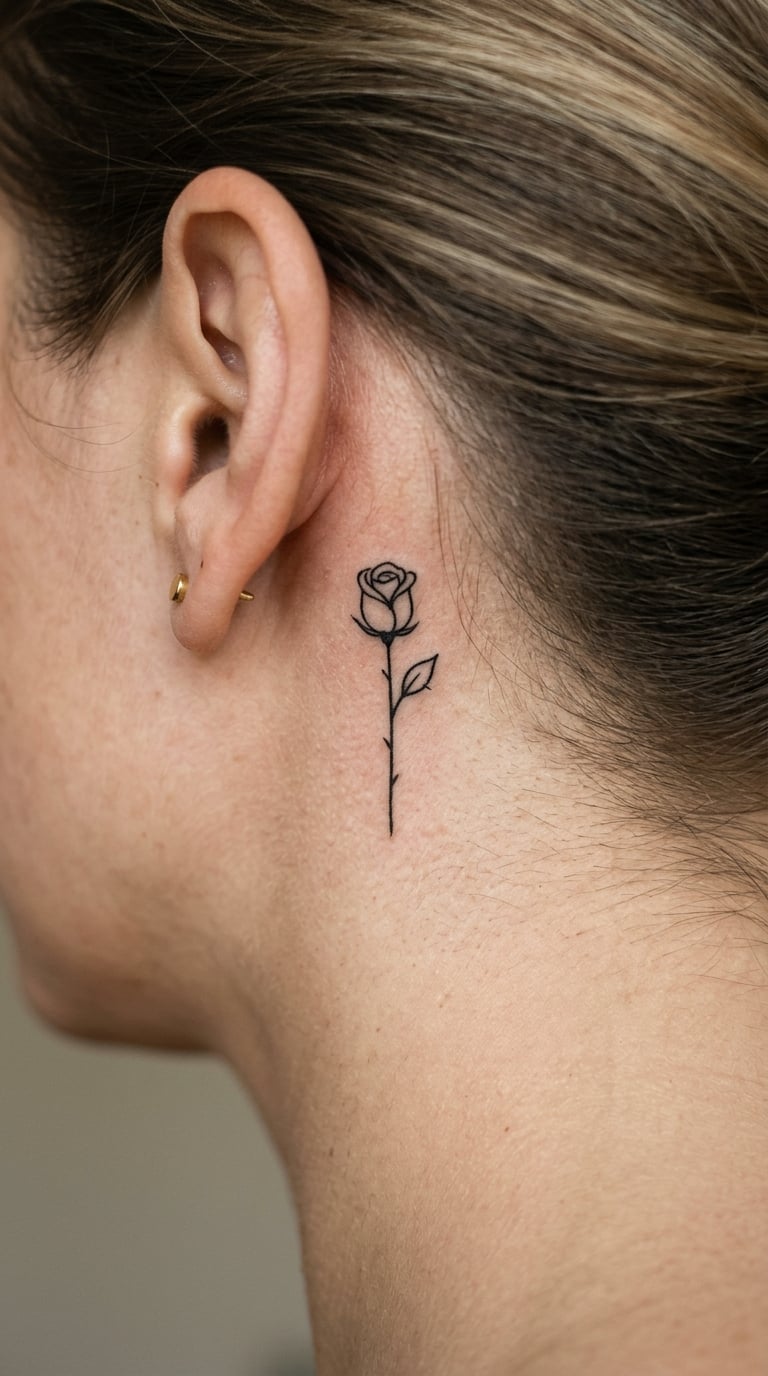
A fine line rosebud behind the ear reads as a secret rather than a statement. The bud is closed, a few millimetres across, with two or three thin strokes for the petals and a stem trailing down toward the jaw.
Artists work this placement in single-needle linework, usually 5 to 15 mm tall, and it disappears completely under long hair or a beanie. Skin behind the ear thins and stretches with every movement, so expect a soft blur on the outer edge over the first few years. Keep it to one bud, not a spray of three.
Pain and time: the cartilage area is genuinely uncomfortable, more a constant scratchy sting than sharp pain, and this size takes 20 to 40 minutes.
2. Single-Stem Rose on the Inner Wrist
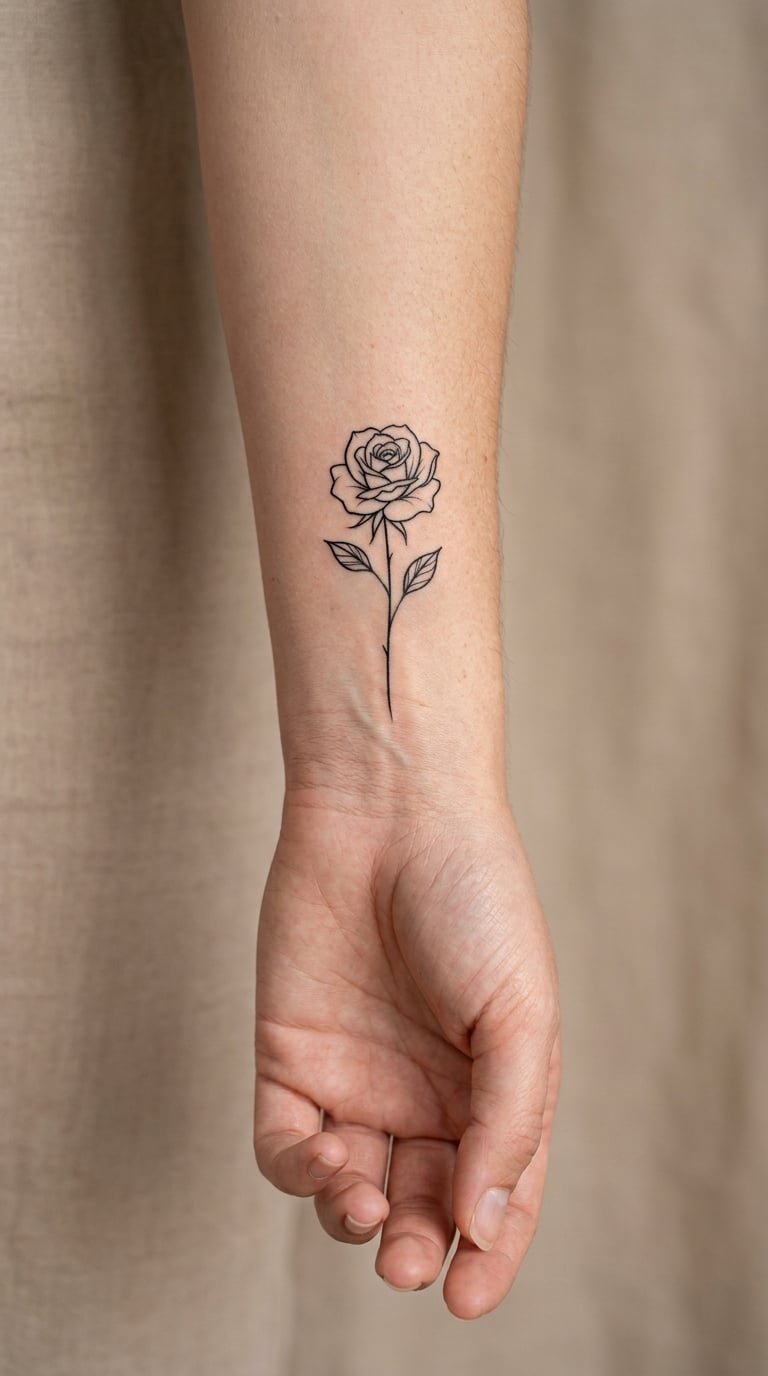
A single-stem rose on the inner wrist is the most requested small rose tattoo idea for women I know of, mostly because the wrist reads clearly and shows when you want it to. One bloom, a curved stem, two small leaves, nothing else.
Fine line suits the scale, but ask your artist to leave a little breathing room between lines. Tight linework on the wrist has almost no flat surface to sit on, and a crowded design ages into a smudge. Most people here get 3 to 5 cm of stem work, which holds its shape far better than a full forearm piece.
Pain and time: the inner wrist is sensitive because the veins sit close to the surface, roughly a 5 out of 10, and expect 30 to 50 minutes.
3. Blackwork Rose on the Inner Forearm
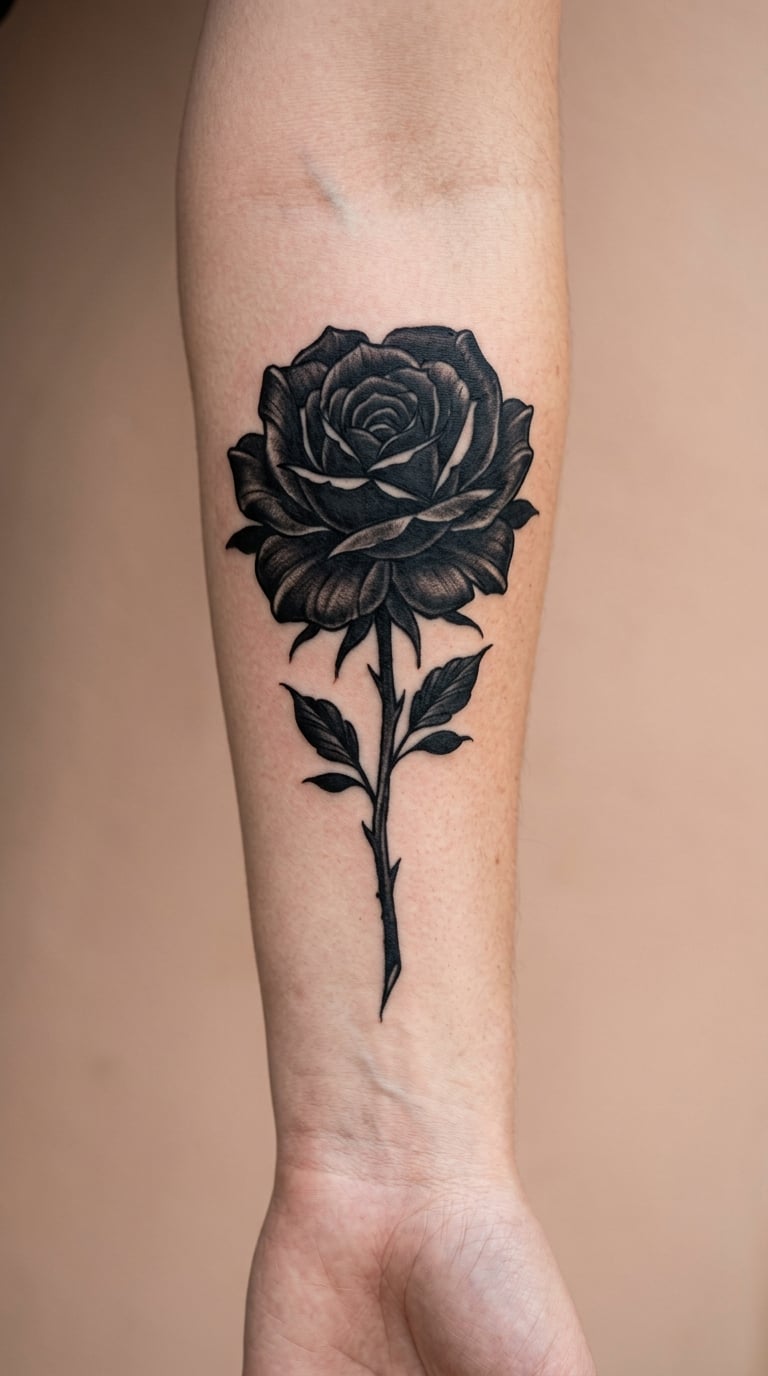
Blackwork is the one style that fights ageing on purpose. Instead of thin outlines you get solid black fill inside the petals, so the flower keeps its weight even when the fine edges soften.
This suits people who want their rose to be readable from across a room. Ask for a 5 to 8 cm bloom on the inner forearm, where there is smooth flat skin to work with. Solid black does spread a fraction as it heals, so a slightly smaller, tighter design than the drawing looks will land well.
Pain and time: the inner forearm is one of the easier spots, around a 4 out of 10, and 45 to 75 minutes for a single shaded rose.
4. Micro-Realism Rose on the Collarbone
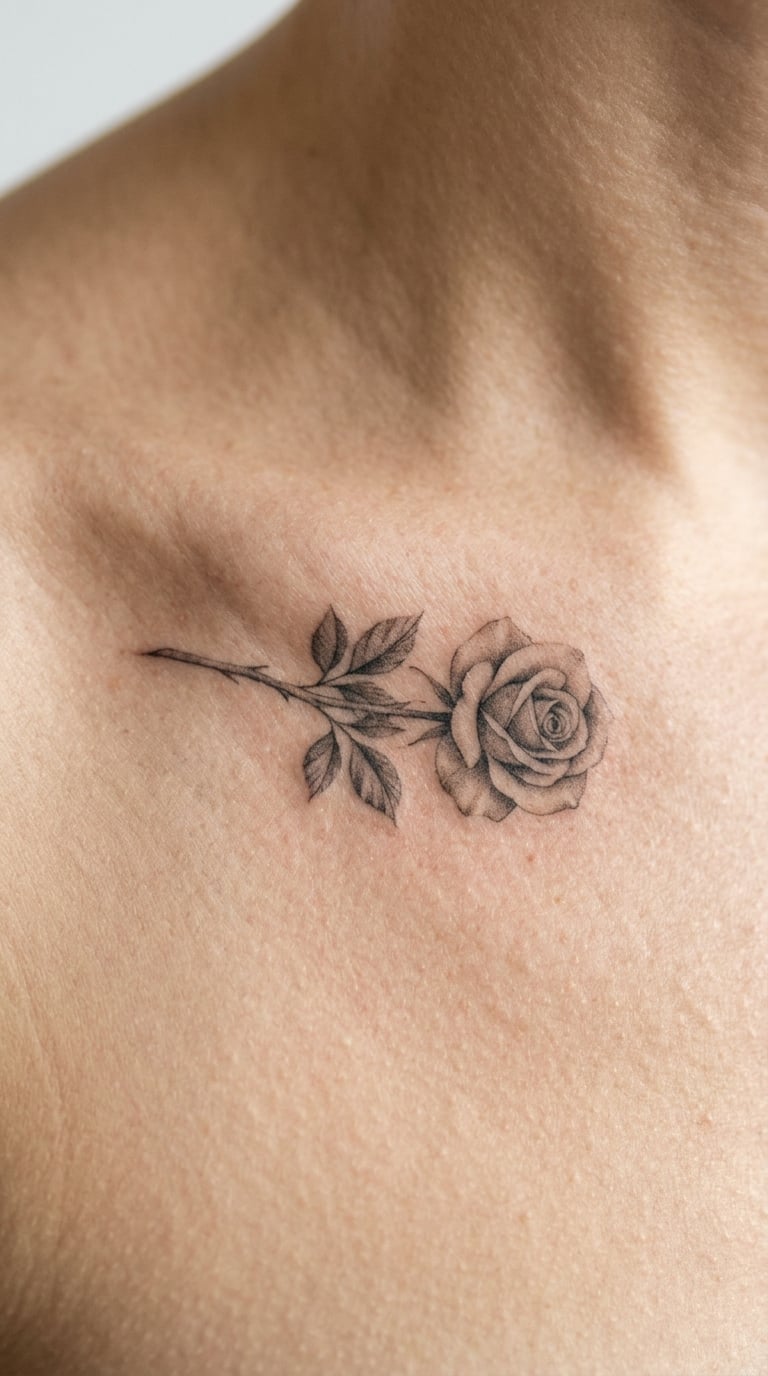
Micro-realism is the opposite end of the scale from a line drawing. You get a rose with grey shading, a suggestion of depth, maybe 4 to 6 cm across, drawn so it looks painted onto the skin rather than printed on it.
It needs an artist who does this specific work, and you will see the difference in a healed portfolio rather than a fresh one. Placement on or just below the collarbone gives the drawing an angle to sit in, and shading ages far more gracefully here than on the ribs. Hold off if you are under 18 or plan a summer with no shirt in it.
Pain and time: bone is right under the collarbone, closer to a 6 out of 10, and shading detail runs 60 to 90 minutes.
5. Dotwork Rose Climbing the Ankle
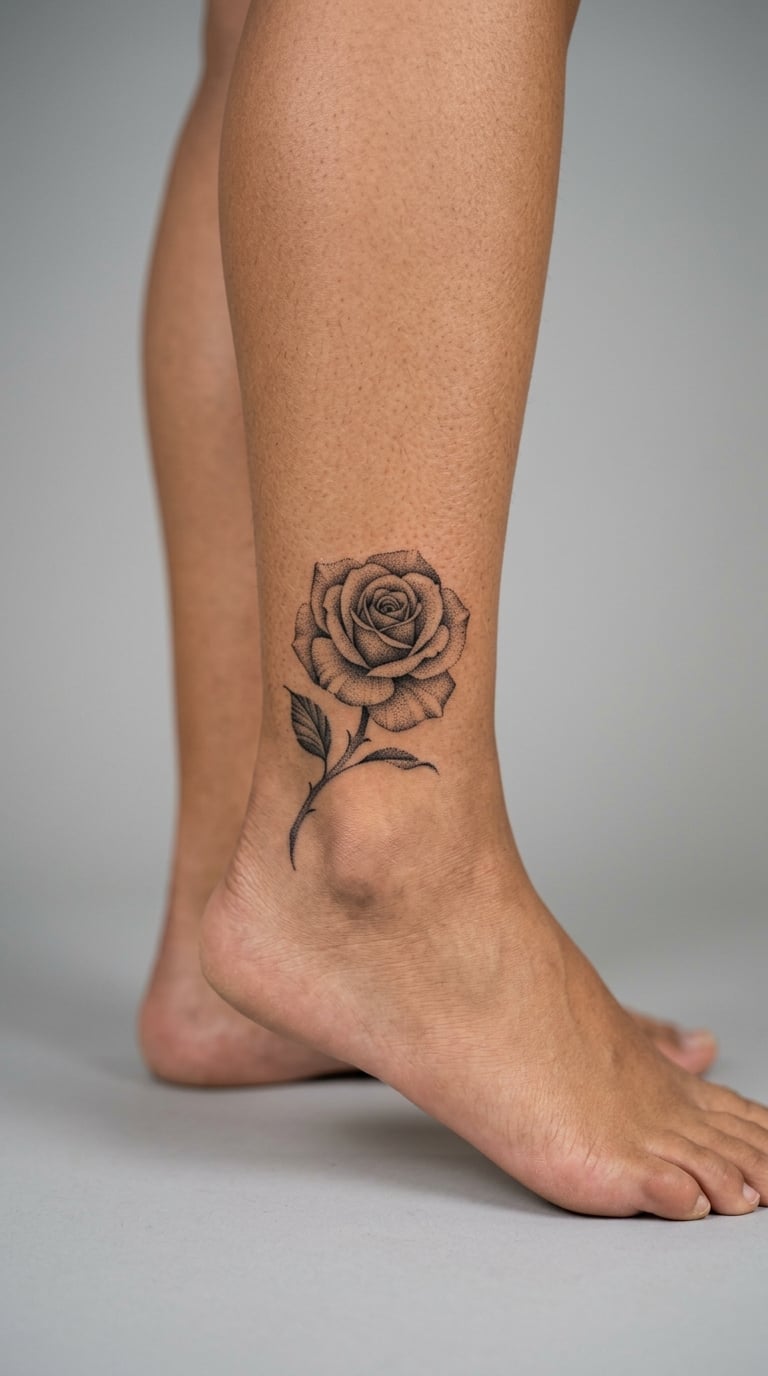
Dotwork turns a rose into a gradient. No outlines at all, just graduated dots from dense to sparse forming petals and a stem, and it has a softness that reads well on an ankle bone.
Size matters here more than anywhere else. Below 4 cm the dots merge and the rose turns into a smudged oval, so most artists start at 5 cm and work up the calf if you want more. Because there is no solid ink, dotwork is also the easiest style to fade gracefully. Ask the artist to work on a stable part of the ankle, not right over the joint.
Pain and time: ankle bones make this one of the more painful small spots, closer to a 7 out of 10, and 40 to 60 minutes.
6. Minimal Rose Outline on a Finger Knuckle
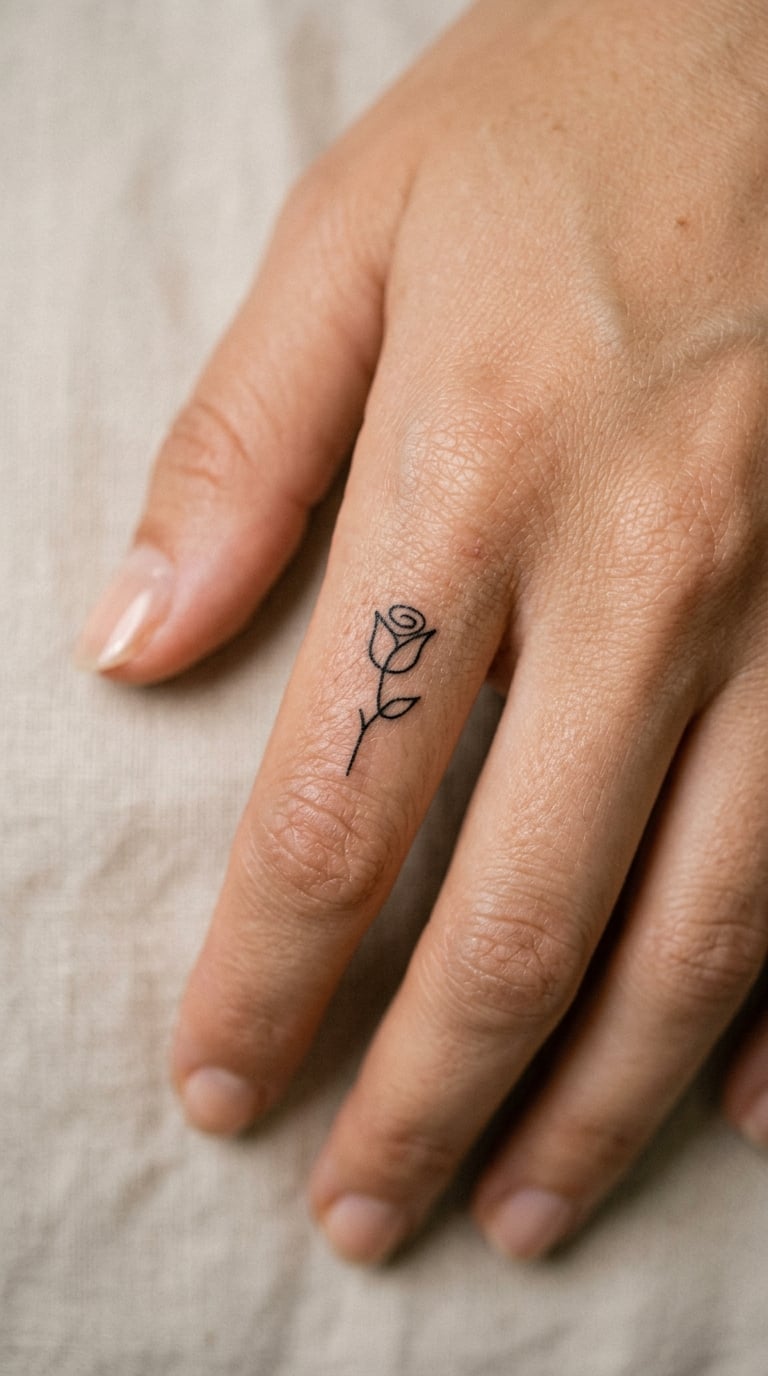
A rose outline the size of a small coin on the knuckle is pure detail, maybe 12 mm across, and it looks like a piece of jewellery when it is right. The trick is restraint: outline only, no stem, no leaves, no shading.
This is also the placement most artists will talk you out of, and they are right to. Knuckle skin flexes constantly, hands get washed a dozen times a day, and single-needle line work there can soften to a pale ghost within a couple of years. If you want it anyway, agree the touch-up plan before you start and pick an artist with healed knuckle work in their portfolio.
Pain and time: knuckles are bony and sting sharply in short bursts, around an 8 out of 10, and 20 to 30 minutes.
7. Watercolour Rose Blush on the Ribcage
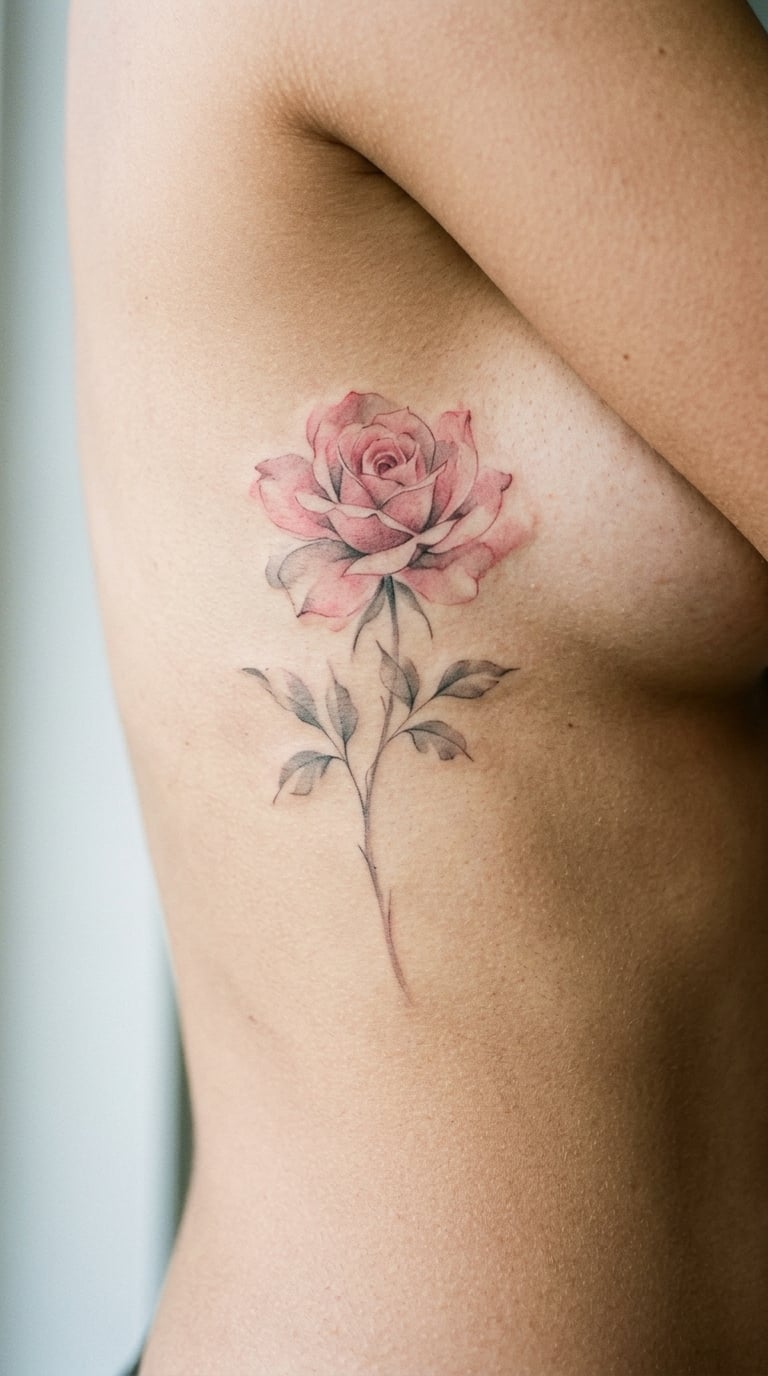
Watercolour roses look like someone brushed pigment across the skin. The edges of the bloom are loose, colours run into each other, and no two are ever quite the same. It reads as art rather than as a logo.
Ribcage placement gives a long flat stretch to work with, and side ribs suit this style better than the front ones. Expect colour to be the weak point. Bright reds and pinks on skin that sometimes reacts to pigment are the ones most likely to need a touch-up, so bring photos of healed colour work to the consultation and ask what the artist has used on skin like yours.
Pain and time: ribs are the classic ouch, about an 8 out of 10, and 60 to 90 minutes with colour changes.
8. Geometric Rose on the Shoulder Blade
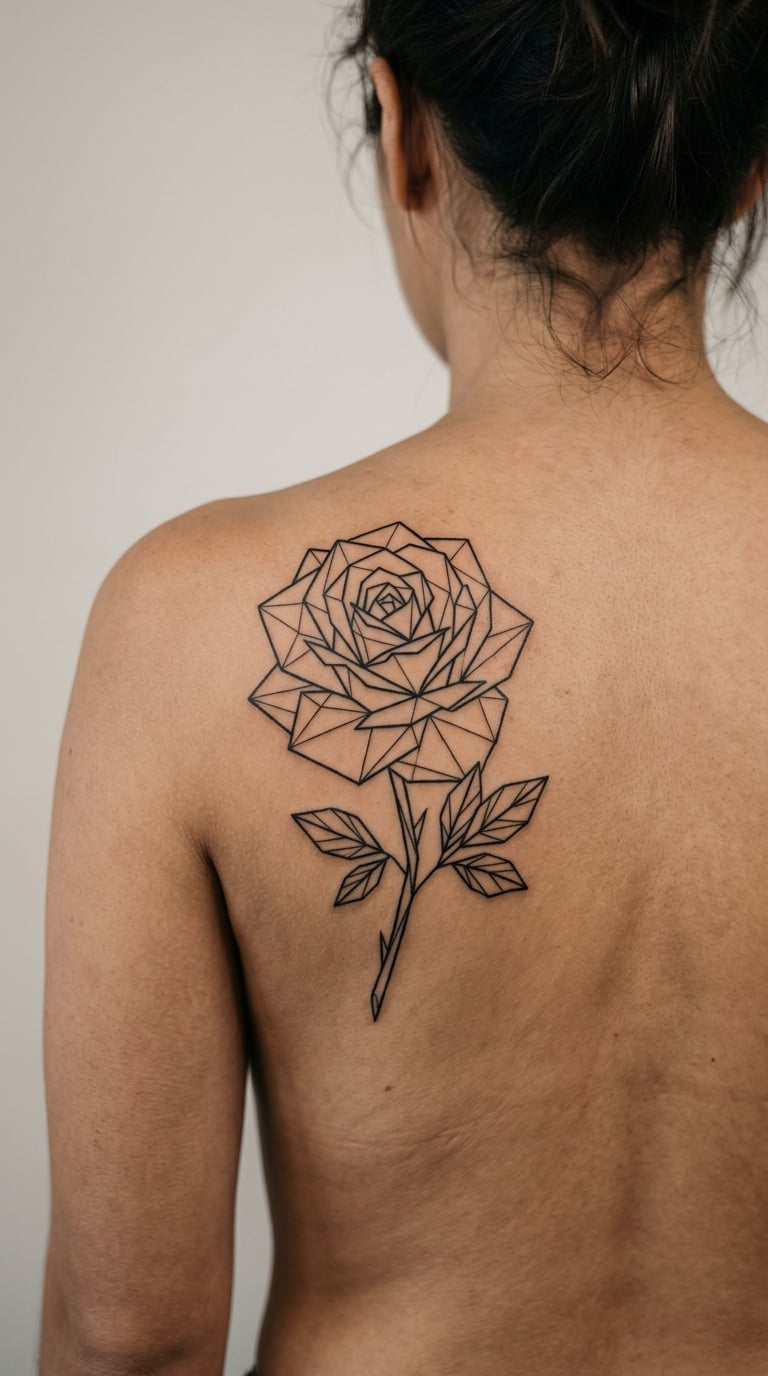
Geometric work takes the rose apart and rebuilds it from straight lines. Triangles and arcs form the petals, so the flower still reads clearly while looking engineered. It suits people who like maths more than softness.
Back placements heal well because you can mostly leave them alone, and the shoulder blade is a generous flat area for a 6 to 9 cm design. The trade-off is visibility. This one is for summers, low-cut tops and gym sessions, not for conservative workplaces. Geometric line work needs consistent weight, so choose an artist whose healed photos show even spacing rather than just a slick fresh photo.
Pain and time: shoulder blades are low on the pain scale, about a 3 out of 10, and 60 to 90 minutes.
9. Three Small Rosebuds Along the Side of One Finger
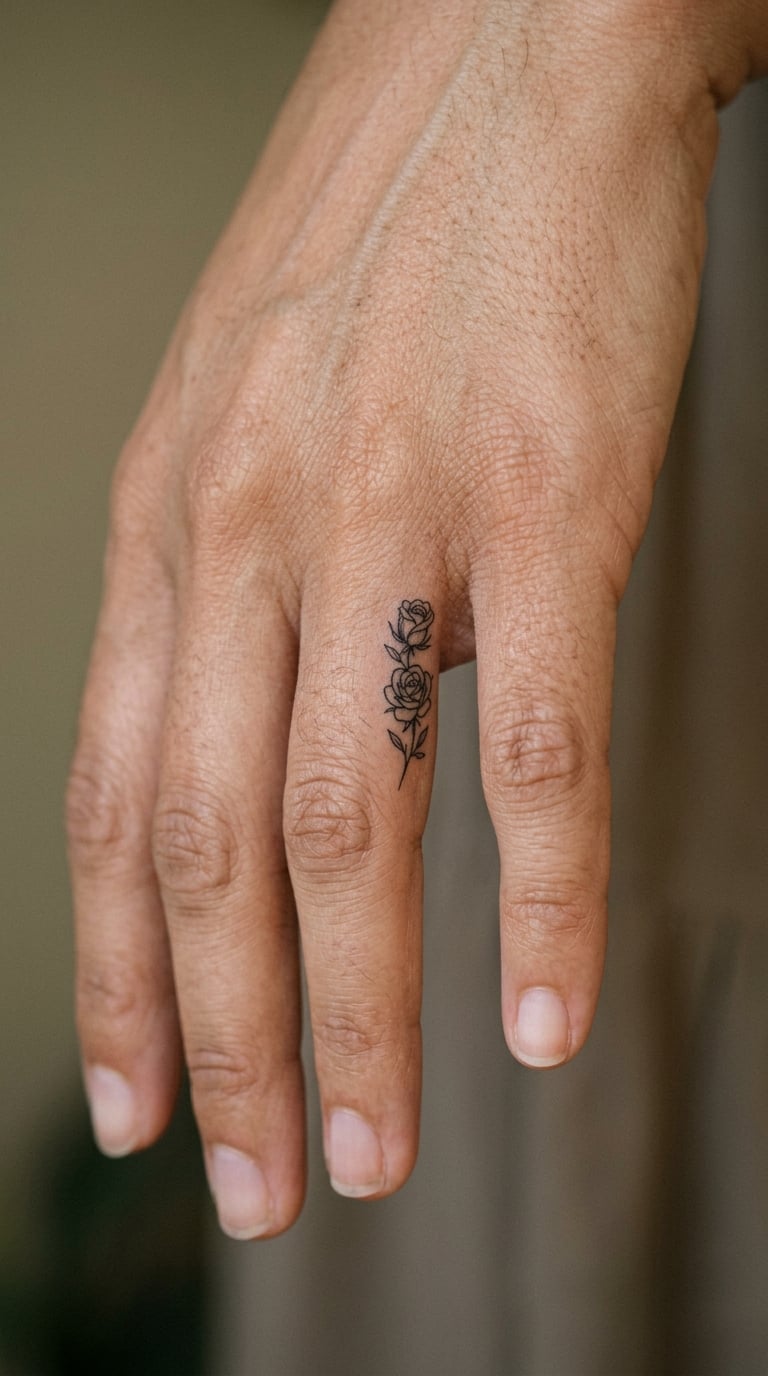
Three rosebuds running down the side of a finger is a quiet alternative to a knuckle rose. Same symbolism, a little more ink to work with, and the buds can step down in size so they follow the finger rather than fighting it.
Most people get each bud around 8 mm, spaced 1 to 2 cm apart along the side of the ring or middle finger. Fingers do fade, everyone in the industry will tell you so, so treat this as something you keep refreshing rather than something you own forever. A touch-up in black line work is quick and usually a small session.
Pain and time: the sides of fingers hurt more than the top, about a 6 out of 10, and 30 to 45 minutes for all three.
10. Continuous Line Rose on the Hip
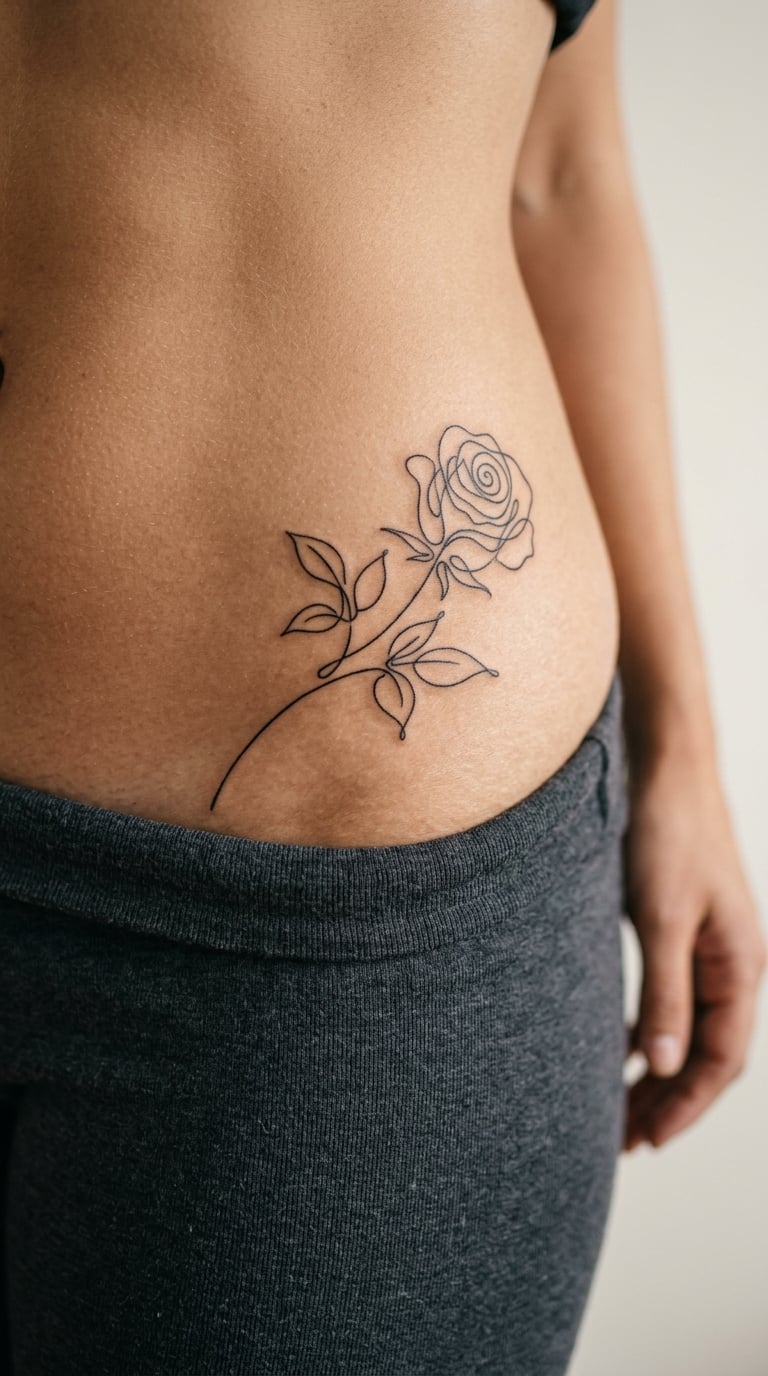
Continuous line work never lifts the needle, so the whole rose is drawn in one unbroken stroke. It is a lovely constraint: the design has to work as a single movement, which forces a loose, sketch-like elegance.
Placed on the upper hip near the waistband it reads as a private mark, and the skin there is smooth and forgiving, which is good news for thin lines. It does shift with sitting, so ask for a size of 7 to 10 cm rather than something small, since anything under 4 cm loses the gesture. Continuous lines also show a shaky hand more than filled shapes do, and most artists practise the path on paper first.
Pain and time: hips vary a lot by body shape, roughly 5 to 7 out of 10, and 40 to 60 minutes.
11. Small Bloom on the Sternum
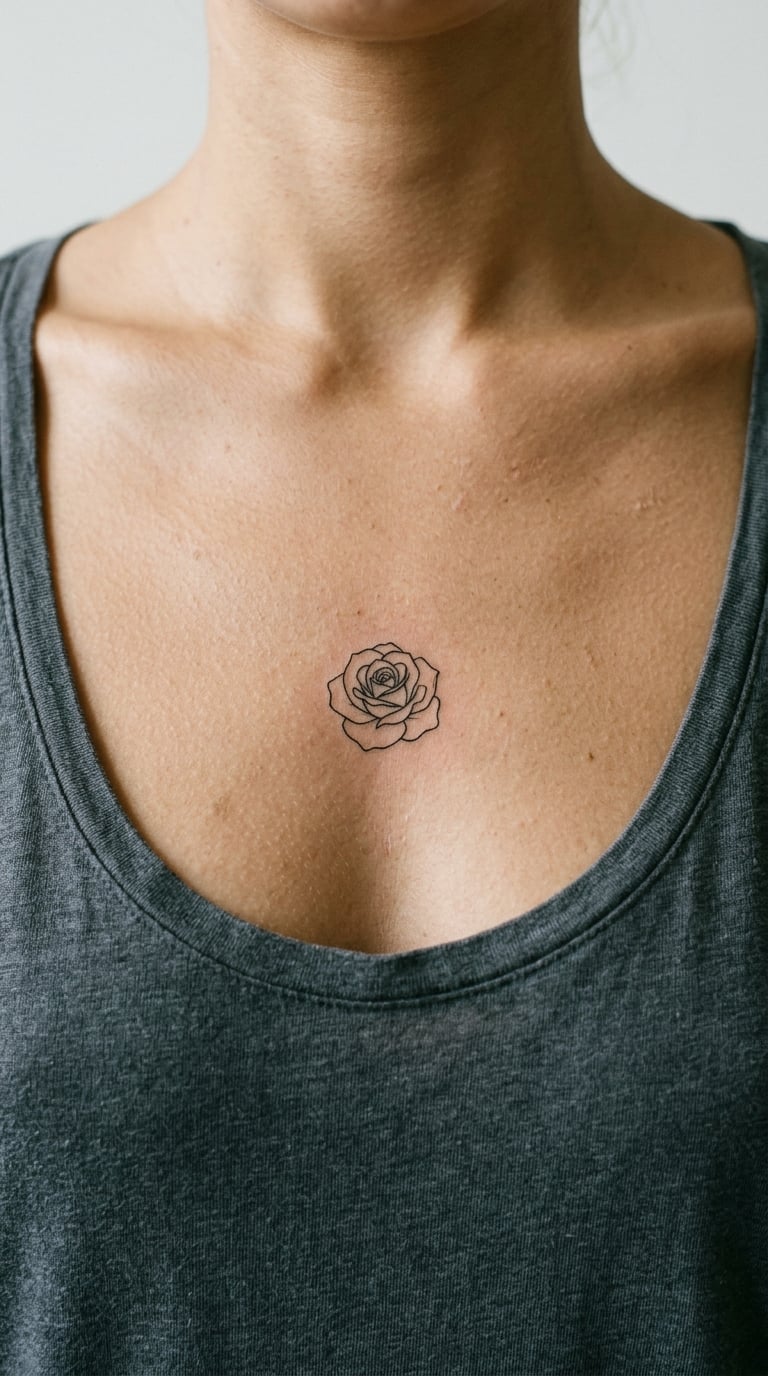
A lone rose bloom with no stem, placed between the collarbones, is the most elegant option in this list. Because the sternum dips slightly, a small drawing there catches shadow and looks deeper than it is.
Keep the bloom under 4 cm so the centre line of the chest stays clean. Some people pair it with a single initial beneath, but two small pieces on the sternum start to compete and both look weaker. Like the ribcage, this is a placement where shallow line work can smear as the skin stretches, so a slightly bolder outline works better here than a single-needle whisper.
Pain and time: sternum skin is thin over bone, about a 7 out of 10, and 25 to 40 minutes.
12. Rose With Falling Petals on the Back of the Hand
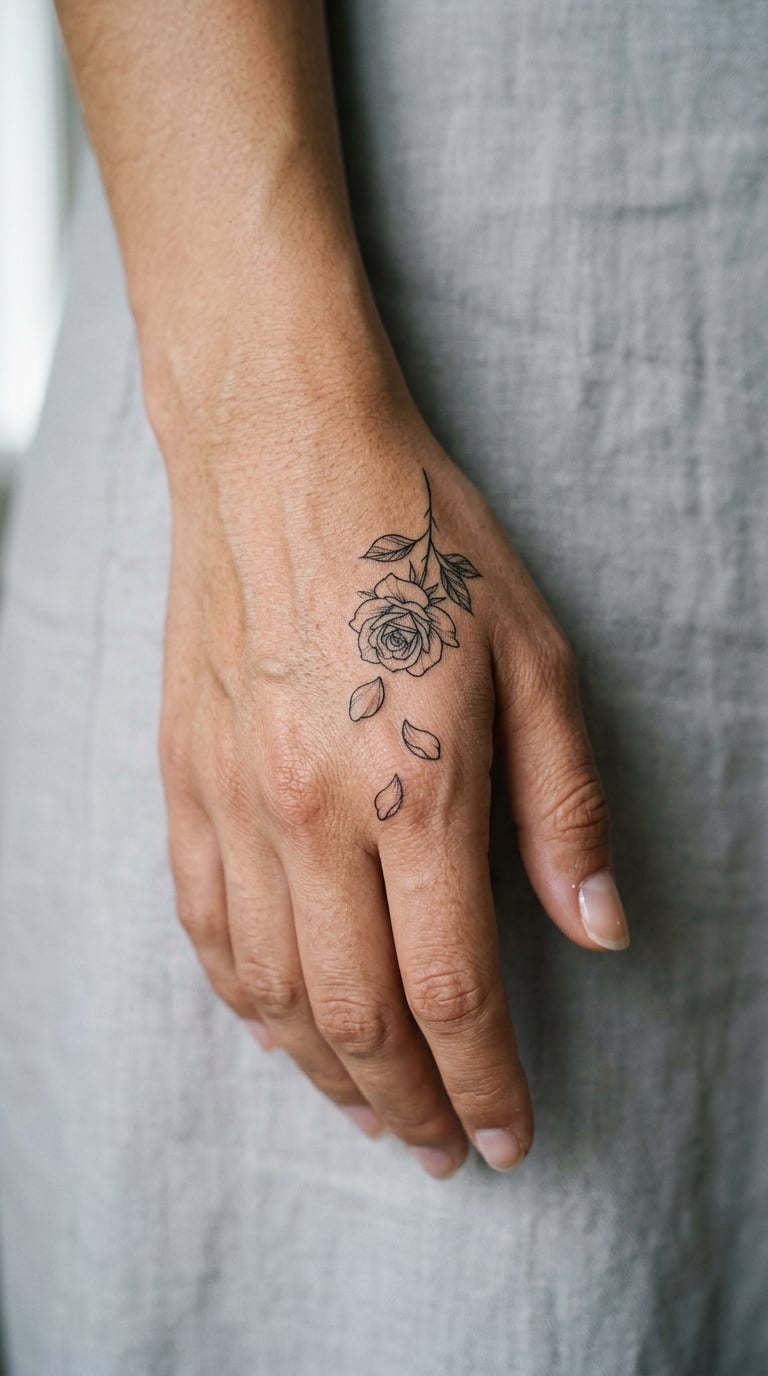
One rose, then three or four loose petals drifting down across the hand. The rose itself is small, maybe 3 cm, and the petals do the visual work, trailing toward the wrist or off toward the thumb.
Back-of-hand line work is very visible, so the artist needs clean consistent weight, and a healed portfolio matters more here than anywhere else. It also shows every scratch and every fading mark, which honestly suits some people and annoys others. A practical note: this placement is hard to keep out of sight, so think about your job and your winter before you commit.
Pain and time: the back of the hand is bony but not especially tender, around a 5 out of 10, and 45 to 60 minutes.
13. Layered Peony-Style Rose on the Outer Thigh
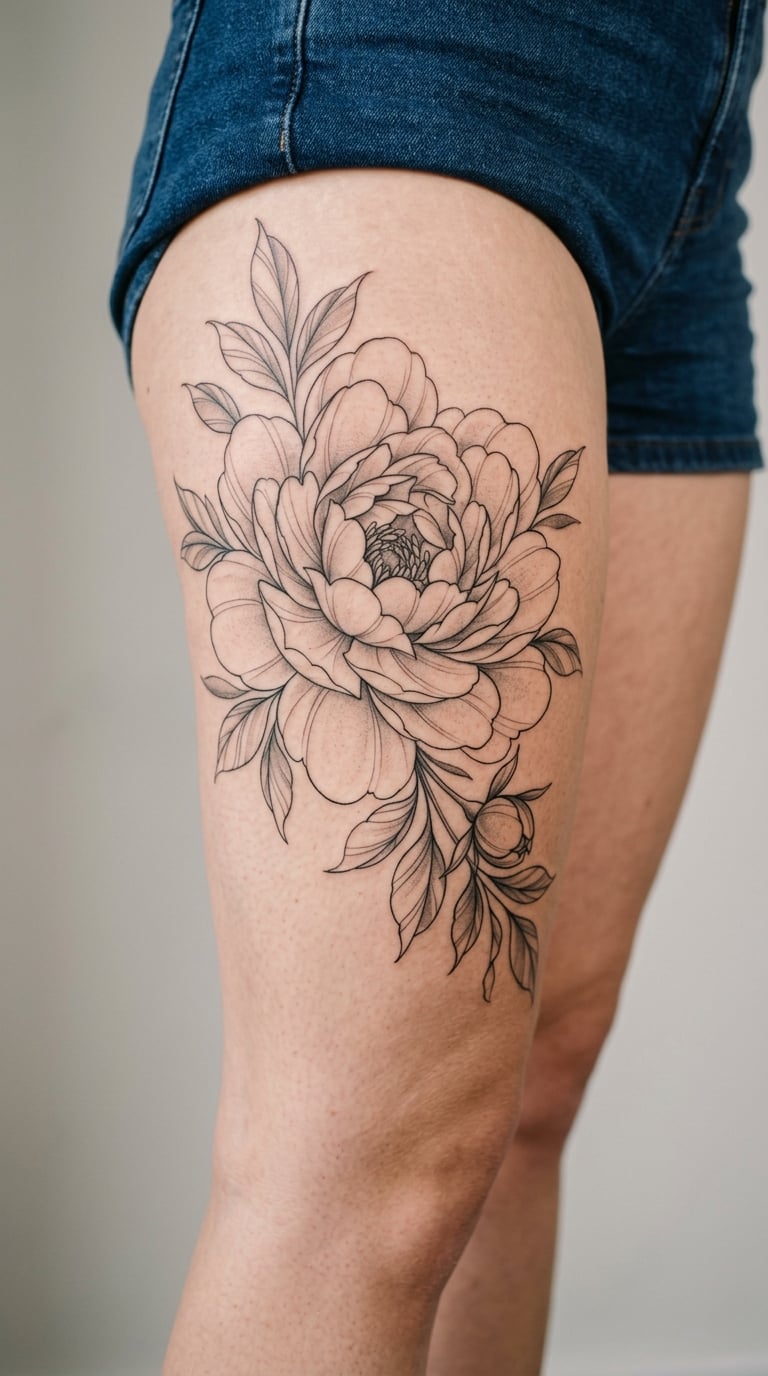
If you want one rose tattoo that reads as a proper piece of body art, go bigger and go peony-shaped. A full layered bloom on the outer thigh, 10 to 15 cm across, has the density to look considered from a distance and detailed enough up close.
Thighs heal well and stay out of the sun if you wear long trousers, and there is room for a stem if you want one. The catch is time: a bloom this size is a two-to-three hour sitting, so book it as a full session and take a break midway. Layered petals in fine line need a steady pace, and rushing is what makes them muddy.
Pain and time: outer thigh sits around a 4 out of 10, and expect 2 to 3 hours.
14. Thorned Rose Running Up the Inner Arm
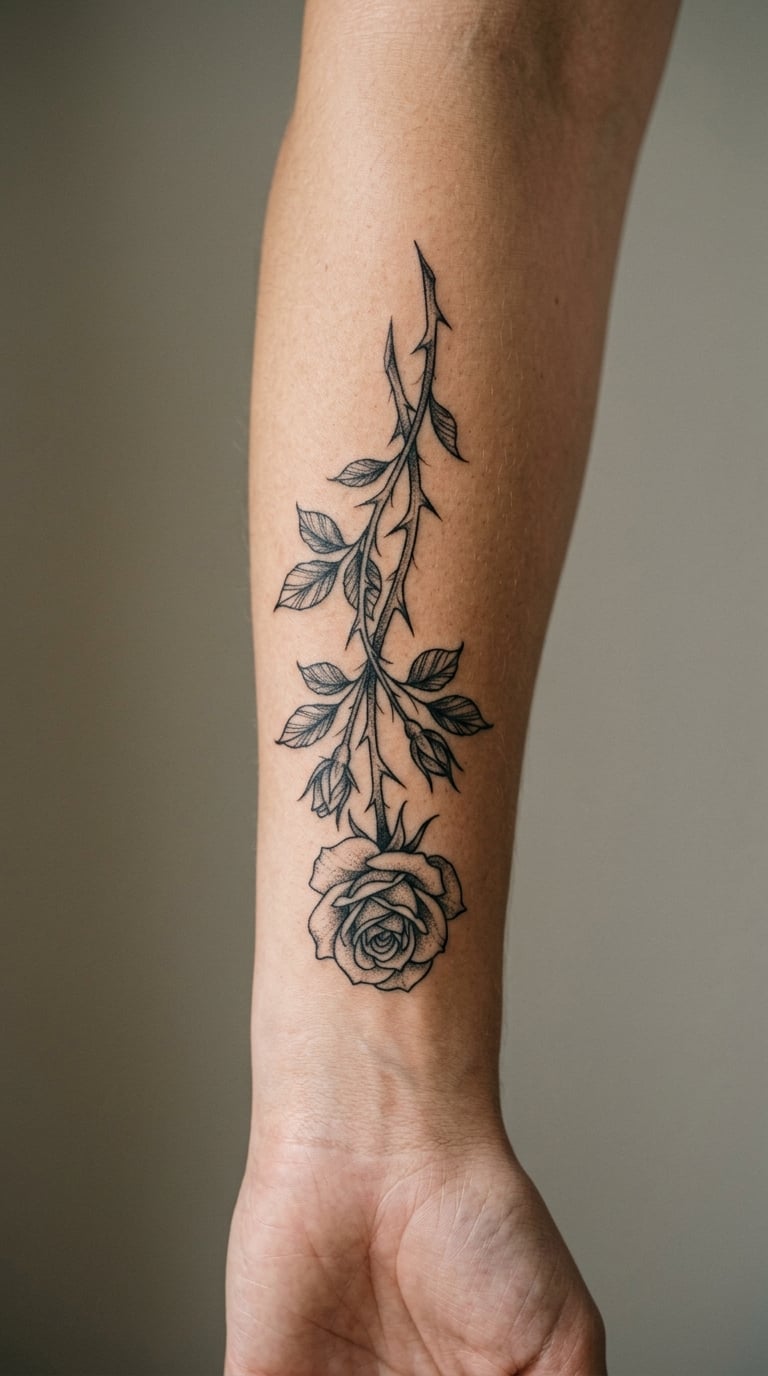
A rose with thorns is the other half of the flower and worth taking seriously. The stem climbs from the wrist or inner elbow, thorns drawn sharp and slightly exaggerated, and the bloom sits at the top. The meaning is the obvious one and it is not a corny one: beauty that has a defence.
Placed on the inner arm it uses the length of the forearm, so even a small version travels 10 to 15 cm. Thorns need slightly thicker lines than petals, so this is not a fine line design, which actually helps, because line weight is what survives the longest on a moving arm. Tell the artist early that the thorns are the point, and they will draw them with more bite than a soft botanical version.
Pain and time: inner forearm is mild, about 4 out of 10, and 60 to 90 minutes for stem plus bloom.
Where Small Rose Tattoos Look Best on Women
Most of the answer comes down to flat skin, low sun exposure and whether you mind being seen wearing it. The forearm, upper arm, hip and shoulder blade give an artist the easiest surface and hold ink best. The wrist, collarbone, sternum, ribs, fingers and ankle are beautiful but each one has a specific cost.
Placements that heal best
The forearm, upper arm, thigh, hip and shoulder blade are the safest ground for a first small rose. These areas are usually covered by clothing, rarely get hit with sun, and the skin does not flex as you talk or move your hands. If you want a rose that still looks like a rose in fifteen years, start here.
Placements that stay discreet
Behind the ear, the inner upper arm, the back of the heel of the foot and a small rose on the hip are the ones you can hide completely. They are also the ones that barely see sun, so ink holds its own. The tradeoff is that you will forget you have it, which some people love and others find strange.
Placements that are more fragile
Fingers, ankles and the sternum are the three areas where people most often need a touch-up. Every knuckle flexes, every ankle twists, and the chest stretches with breathing. None of them are bad choices. They just need a plan and an artist who is honest with you about it.
What Rose Colours Mean and How They Age
Colour carries as much meaning as shape, and it decides how much maintenance your tattoo needs. Black and grey hold their own for decades. Anything with a bright pigment in it usually asks for a refresh every few years, especially on exposed skin.
Black and grey
Black is the classic choice: bold, clean, and the only ink that reliably looks the same in fifteen years. Grey shading adds depth and softens with age, but it fades gradually rather than suddenly, so a micro-realism rose in grey will look a little hazier by year eight and still read as a rose.
Red and pink
A red rose reads as passion and romance, and it is the one colour most tattooed people need to top up. Bright red pigment tends to fade toward orange and it is also the pigment more people have a mild sensitivity to, which can show up as itching and raised lines during healing. If redness runs in your family or you react to new skincare, mention it at the consultation. Many artists will use a deeper, less bright red that holds better anyway.
White ink
White highlights are popular in watercolour roses and are the least reliable ink you can ask for. Most of it disappears within a few years, and the patchy remnants can look like scarring. Ask for white highlights as a small finishing detail rather than a main feature of the design.
Pink, yellow and purple
Soft pinks read as tenderness and are a favourite for watercolour and petal-dropping designs. Yellow is a nice choice for a young or opening bud, though pale yellows fade quickly. Purple reads as dignity or remembrance and holds better than pink because it sits closer to black in the spectrum.
Things to Know Before You Book a Small Rose Tattoo
- Look at healed work, not fresh work. Every artist photographs a new tattoo beautifully. The only useful portfolio photo is one taken six months to a year later, because that is the version you will own.
- Ask what happens after six months. Most good fine line artists will agree a free or cheap touch-up window in writing before the session starts. If they will not discuss it, walk away.
- Decide on flat rate or hourly before you sit down. A small rose priced hourly can run long fast. A flat rate per piece keeps it simple, and shops that quote both are usually happy to explain the difference.
- Test the placement first. Temporary stickers and semi-permanent transfer stencils cost very little and save a lot of second-guessing. People who use one report far fewer placement regrets.
- Book outside peak sun season if you can. Healing in late autumn and winter avoids both sunburn on a new tattoo and swimming pools. Late summer and early autumn are the hardest months to get right.
- Come with a reference, not a finished idea. Two or three photos of styles you like tell an artist far more than a description. Let them redraw it in their hand rather than tracing a stolen design.
How a Fine Line Rose Heals in the First Month
Fine line tattoos look alarming in week one and settle down fast. Here is roughly how the first month goes, so you do not panic at day four and blame the artist.
Days 1 to 3: the angry stage
Red, raised, warm and tender. It looks far worse than it feels. Wash it once or twice a day with unscented soap, pat it dry, and keep the moisturiser thin. This is when people most often itch, and scratching pulls ink out, so go short nails and a cold compress.
Days 4 to 14: the peel
Thin skin flakes off in little pieces, exactly like a sunburn. The line work looks pale and patchy here, often much fainter than it will ever be. Let the flakes come off on their own. Picking them is the single most common reason fine line tattoos end up blurry forever.
Days 15 to 30: the settle
The tattoo flattens out, stops feeling raised, and the ink depth shows for the first time. Most people wait about six weeks before booking a touch-up, not six weeks after the session. Baths, swimming and heavy sun are still worth avoiding through this stage, and fragrance-free moisturiser beats anything heavily scented.
Frequently Asked Questions
What are the most popular small rose tattoo ideas for women?
The most requested small rose tattoo ideas for women right now are the single-stem rose on the inner wrist, the fine line rosebud behind the ear, and the minimal bloom on the sternum. All three stay under 5 cm, suit a first tattoo, and can be hidden under long sleeves. The single-stem wrist rose is the easiest to explain to an artist, the behind-ear bud is the most discreet, and the sternum bloom catches light beautifully. Whatever you pick, ask to see healed photos of the same style before you book.
What does a small rose tattoo symbolize for a woman?
A rose generally stands for love, but a small one carries more nuance. A bud is new love or something still growing, a full bloom is a love that has matured, and falling petals point to change or a beauty that does not last. A thorned stem adds self-protection, and a rose with no thorns is usually gentler, about someone you love.
Where do rose tattoos look best on a woman?
Rose tattoos look best where the skin is flat and mostly covered: the inner forearm, upper arm, hip, thigh and shoulder blade are the strongest long-term placements. The wrist, collarbone and behind the ear look best in the moment but take more care. Fingers, ankles and the sternum are the most beautiful and the most fragile, so plan on a touch-up. If you work somewhere conservative, start with the forearm, the upper arm or the hip.
How long does a fine line rose tattoo take to heal, and does it need a touch-up?
A small fine line rose is technically healed in two to three weeks, but the ink keeps settling for around six weeks, so wait before booking a touch-up. After that, most fine line work needs a refresh somewhere between six and twelve months, especially on fingers, ankles, the sternum and anywhere in direct sun. Black line work holds up best. Ask the artist to put their touch-up policy in writing before the session, not after you are disappointed.
What does a rose tattoo on the wrist or finger mean?
A rose on the wrist is about visibility and personal character, so it usually says something you want to show rather than hide. A rose on a finger is quieter and more personal, and people who choose it often describe it as a quiet reminder to themselves. On the knuckle it can read as a permanent ring, worn instead of jewellery. Finger tattoos fade faster than almost anywhere else, so agree the touch-up plan before the session starts.
Should I test a rose placement with a temporary tattoo first?
Yes, it is a cheap way to avoid a long-term regret. Stick a temporary rose or a semi-permanent transfer stencil on the spot, wear it for a week or two, and watch how it looks with your sleeve, your job and your posture. People who test first report far fewer placement regrets, and a lot of them end up moving the design a few centimetres. It also tells your artist exactly how small you are happy with.
Conclusion
Pick the placement first and let the design follow. A rose that sits well on your forearm in autumn will still be there in ten years, and one squeezed onto a knuckle because you liked a photo may not be. Decide flat rate, agree a touch-up plan, and ask for healed work in the exact style you want.
Take two or three of these small rose tattoo ideas for women to a consultation, keep the reference photos on your phone, and let the artist tell you which one their hand does best. That last part surprises people, and it is usually the difference between a tattoo you love and one you tolerate.