
16 Tattoo Ideas That Represent Strength for Women (September 2026)
A tattoo that represents strength for women is body art built around symbols of resilience, rebirth, self-reliance and quiet power: a phoenix rising from ashes, a lotus growing out of mud, a lioness walking without looking back, a semicolon, a cactus that bloomed anyway. The symbol carries the meaning, so nobody has to ask you about it.
Most women I talk to about this want one thing: a design that tells their specific story, not a generic lion. The trouble is most strength tattoo galleries skip the two details that actually decide it, which are placement and size. Get those right and the meaning lands. Get them wrong and a good design turns into something you hide under a sleeve forever.
Below are sixteen ideas I keep coming back to, each with what the symbol means, where it works best, how large to go and what it feels like. September is a good month to book, since a piece placed now is fully healed well before next summer.
Quick Picks: Tattoo Ideas That Represent Strength for Women
- Phoenix – ending and starting again; the oldest shorthand for a life you rebuilt. Forearm, 4 to 6 inches, fine line.
- Lotus – growing in muddy water and still opening; inner upper arm, 3 to 4 inches, fine line or blackwork.
- Semicolon – the story is not over yet; wrist, 1 to 2 inches, small and scriptable.
- Lioness – protective, patient, no mane required; ribs, 5 inches, blackwork.
- Cactus with a bloom – survives a bad season and still flowers; outer arm, 2 to 3 inches.
- Medusa – the power to turn a gaze away; sternum, 4 to 5 inches, blackwork.
- Moth and moon phases – drawn to the dark and still able to find light; spine, 8 to 10 inches.
- Vertical script – a line you read to yourself; inner forearm, 3 to 5 inches tall, script.
- Dandelion – holds together, then lets go on purpose; ankle or behind the ear, 1 to 1.5 inches.
- Knotwork – no loose ends, and community holding the line; wrist or back of the hand, 2 to 3 inches.
1. Fine-Line Phoenix Rising on the Forearm
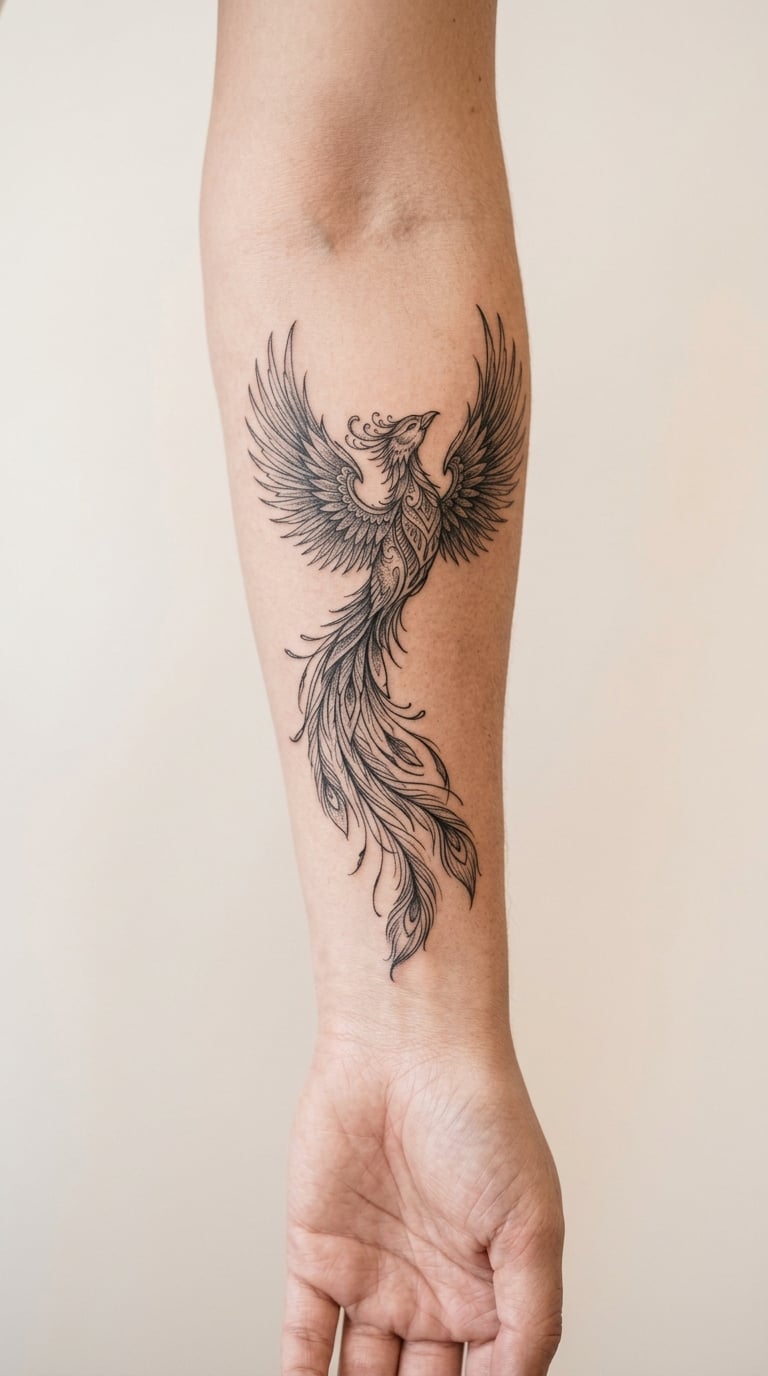
The phoenix is the most requested strength symbol I get asked about, because it is honest about what strength costs. You do not become a phoenix by avoiding the fire; you burn, and then you come back with something new. For a lot of women that reads as recovery, as leaving a bad marriage, as finishing treatment and starting a different life.
Keep it single-needle and skip the flame-heavy traditional versions, which are everywhere and hard to age. Four to six inches on the outer forearm reads clearly at a normal viewing distance, and the long line of the bird suits the shape of the arm. Fine line fades faster than blackwork, so expect the tail feathers to soften within a few years while the body of the bird stays readable.
Pain & time: outer forearm is a moderate burn, mostly a constant scratch that turns into a deep ache. Budget around two to three hours and two weeks of healing with the area kept out of the sun.
2. Lotus Blooming From Mud on the Inner Upper Arm
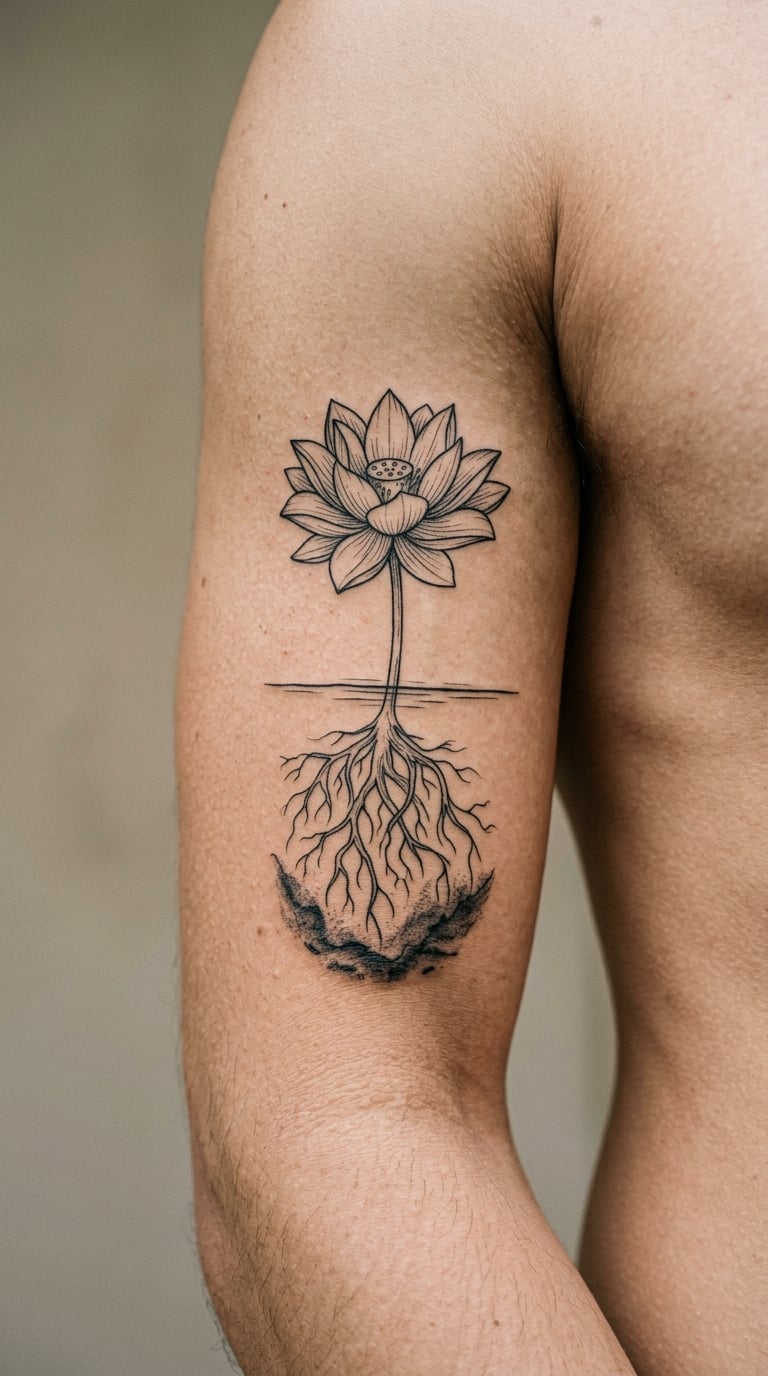
The lotus is the quietest strength symbol on this list, and the one people stop me to ask about. Its whole story is contrast: it grows in water everyone else calls unsuitable, and it opens anyway. That is the part I like. It does not claim strength is painless, it just claims the flower still shows up.
The inner upper arm is the placement to choose if you need this covered at work. A r/TattooDesigns poster who left a nearly ten-year relationship chose exactly that spot so the tattoo could disappear under a cardigan during face-to-face work, and noted being petite with limited canvas space. Three to four inches works there, and blackwork holds the mud line better than a pale grey wash that fades to nothing.
Pain & time: the inner upper arm is one of the more sensitive spots on the body and the skin is soft, so expect a sharper sting. Allow about ninety minutes to two hours and treat it like a long slow scratch rather than a hard pain.
3. Semicolon Over a Stem on the Wrist
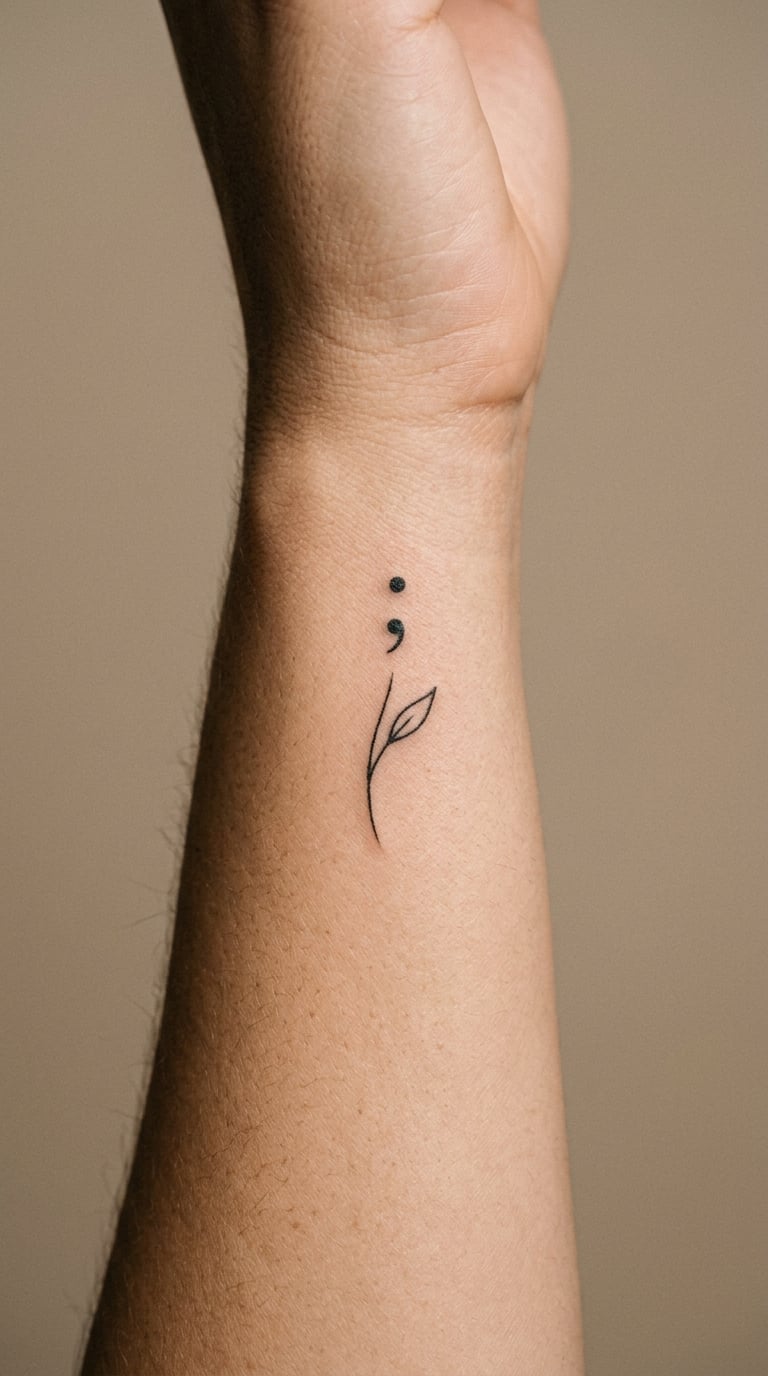
A semicolon means the sentence, the song or the life story was not finished, which is why it turned into a symbol for mental health recovery and for survival. It is small, it needs no explanation from strangers, and you read it every time you check the time.
On its own a semicolon can look bare, so most people pair it with something growing. A stem, a small bloom or a few line-drawn leaves turns a punctuation mark into a plant. One to two inches on the inner wrist reads well, and this is the easiest design here to scale down if you are petite, which also makes it the safest first tattoo.
Pain & time: wrists are bony and the nerve runs close to the surface, so the pain comes in sharp waves rather than a steady line. One to one and a half hours, and two weeks before the skin stops flaking.
4. Dandelion Seed Head on the Ankle or Behind the Ear
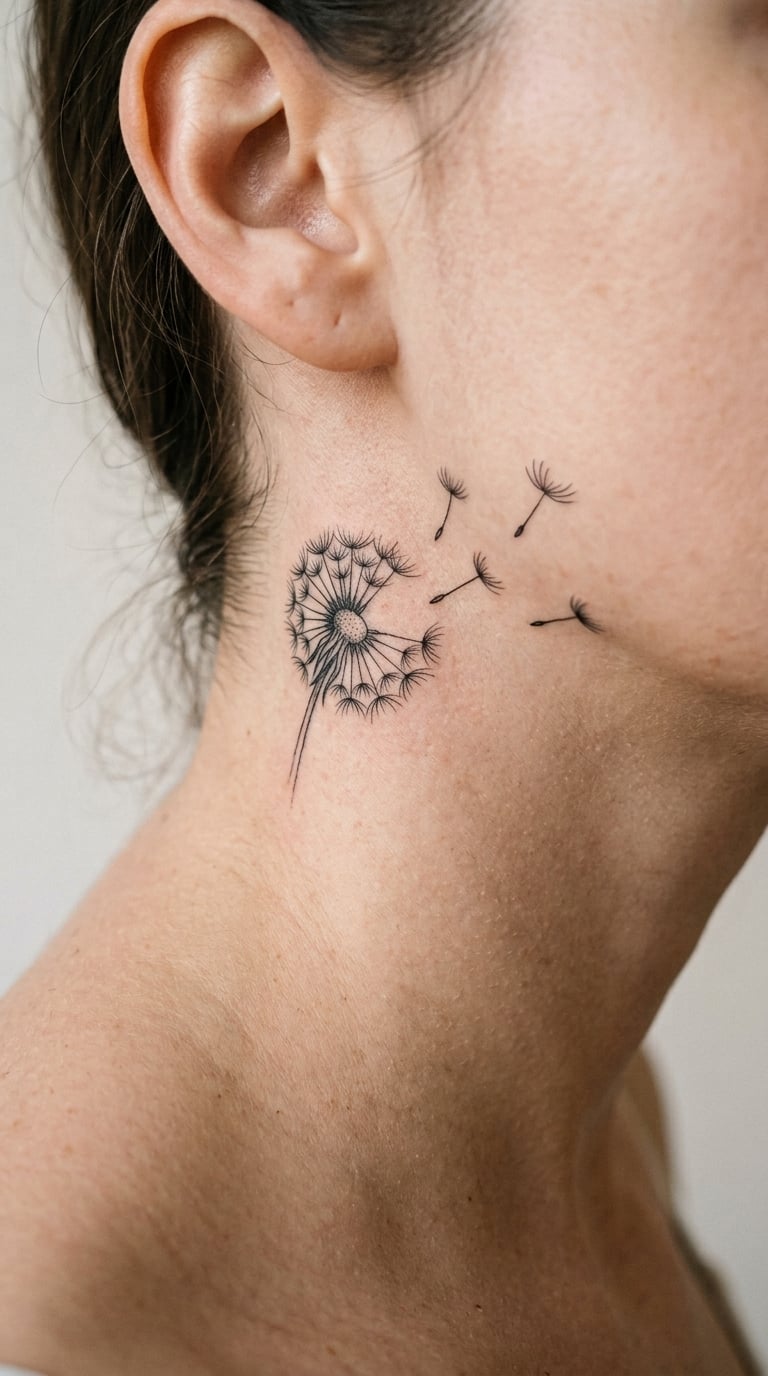
A dandelion holds together perfectly until you blow on it, and then it gives its seeds away on purpose. That is the meaning worth sitting with: holding on is not the only strength, and sometimes letting go is the stronger move. It works well for someone who has just left, changed jobs, or closed a chapter they were tired of carrying.
Keep it small, one to one and a half inches. The ankle works if you want it visible in summer, and behind the ear is the one people get twice, because it reads almost like a stray hair and grows back after a touch-up. Very fine details drift off the skin first, so ask for three or four seeds rather than twelve.
Pain & time: the ankle bone is the sore part and the behind-ear spot is tender, but both are quick. Forty-five minutes to an hour, and the ankle will itch hard around day four.
5. Moth and Moon Phases Down the Spine
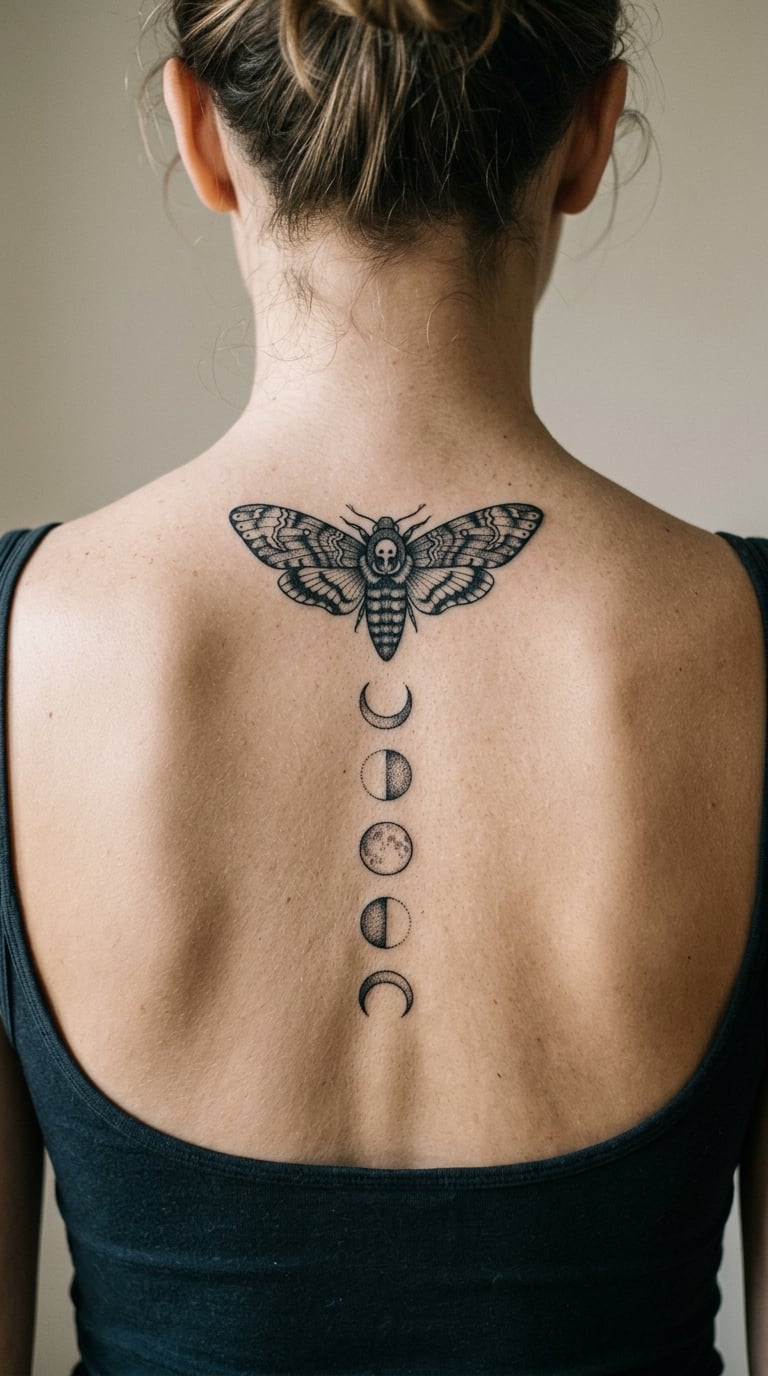
The moth is less popular than the butterfly and truer to what survival actually looks like. Butterflies get described as transformation, but moths are the ones that keep flying toward whatever light is left. Paired with a row of moon phases underneath, the whole piece reads as: dark stretch, dark stretch, and then something changes.
This is the biggest design on the list, eight to ten inches running down the spine from between the shoulder blades to the mid back, which is where the shape wants to sit. A spine piece is a real commitment, so go in knowing it takes the better part of a day and that you will need someone with you afterwards if you are getting it done far from home.
Pain & time: the spine is the most painful placement here. Bone and vertebrae are close to the surface, expect to need breaks, and plan an afternoon with nothing booked afterwards.
6. Lioness Walking, Not Looking Back, on the Ribs
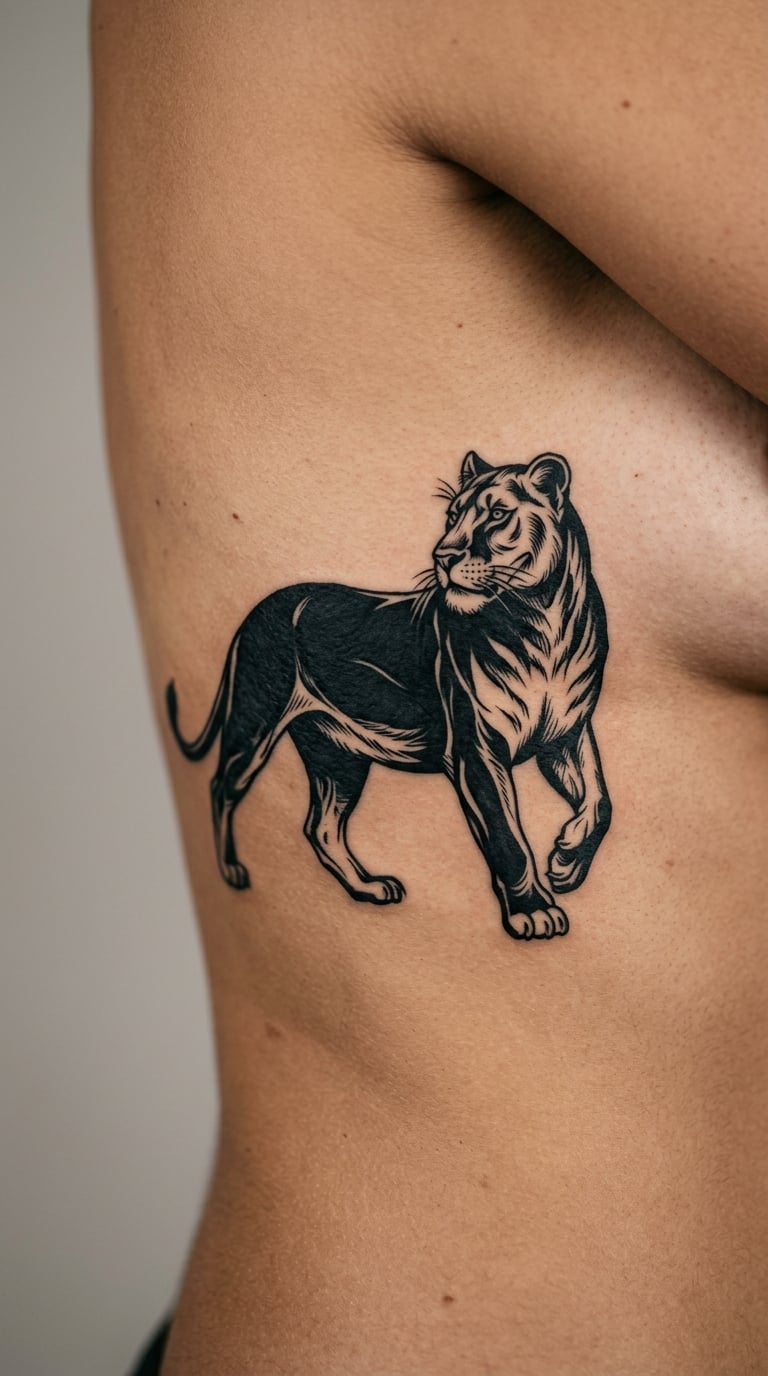
Most lion tattoos are a head with a mane, and that reads as male power by default. A lioness, in profile, walking forward with her head turned away from the viewer, is a different animal entirely. She is protective without posturing, and there is no mane to compete with. This is the piece I recommend when someone wants fierce and not decorative.
Ribs are where a big cat belongs, and five inches across the side keeps it proportional to the body rather than crowded. Blackwork without shading blocks ages better than grey wash, which goes patchy on rib skin in a couple of years. If you need it covered for a formal event, this placement works with a fitted blazer.
Pain & time: ribs are the second worst on the list after the spine, with the skin thin and the breathing making it impossible to relax. Two to three hours, and expect the first night to be a bad sleep.
7. Cactus With a Single Bloom on the Outer Arm
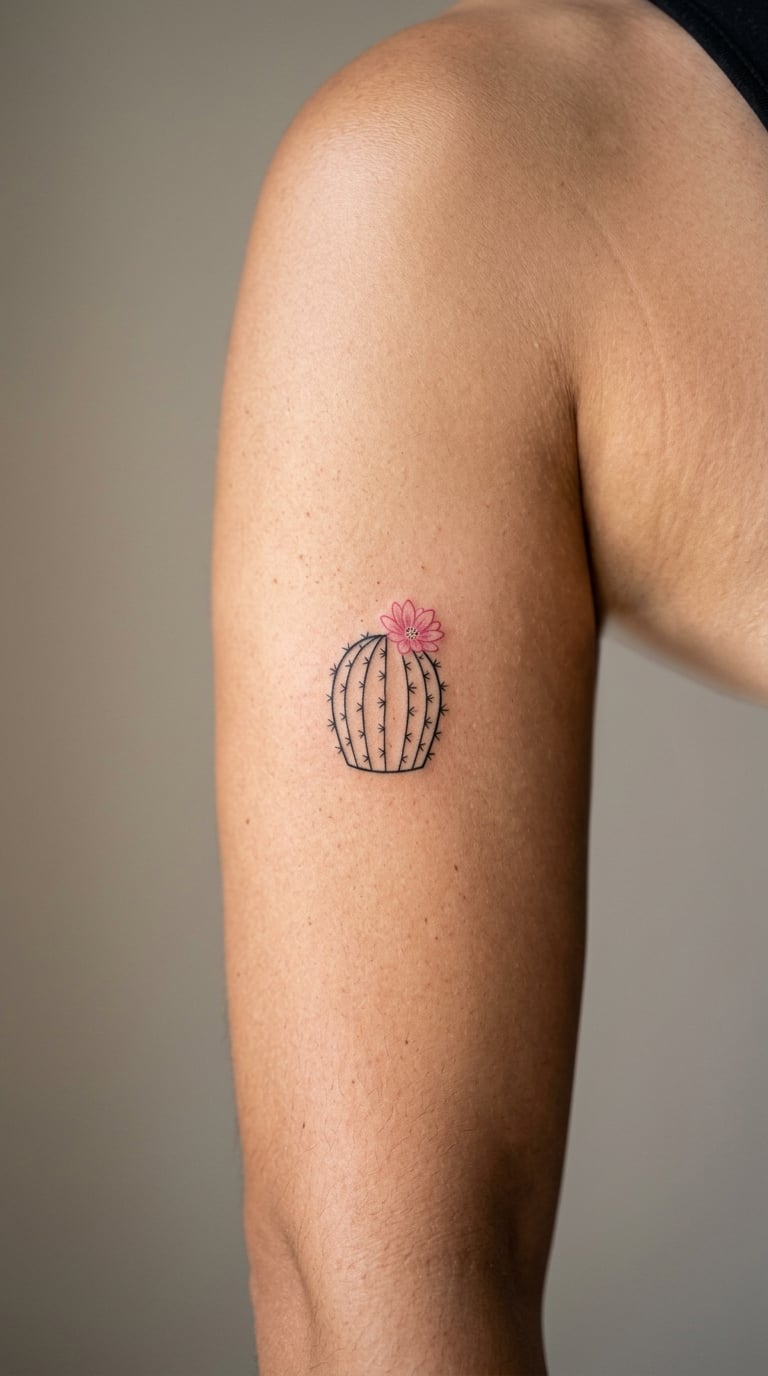
The cactus is the most literal endurance symbol there is. It stores water for months in ground that gives nothing back, and it is still sitting there looking unbothered. The flower on top is the part that matters. Endurance without an outcome is just survival, and a bloom says you did more than last.
Two to three inches on the outer upper arm or the outer forearm is the right scale, and it works in a bold outline that stays legible when everything else around it turns grey. If you want colour, one spot of pink on a single flower is enough. Ribs on the cactus give it texture without needing grey shading that will eventually blur.
Pain & time: the outer arm is one of the easier placements, more of a sustained scratch than a deep ache. An hour to an hour and a half, and a fairly painless two-week heal as long as you keep it out of the sun.
8. Mountain Range in Line Art on the Forearm
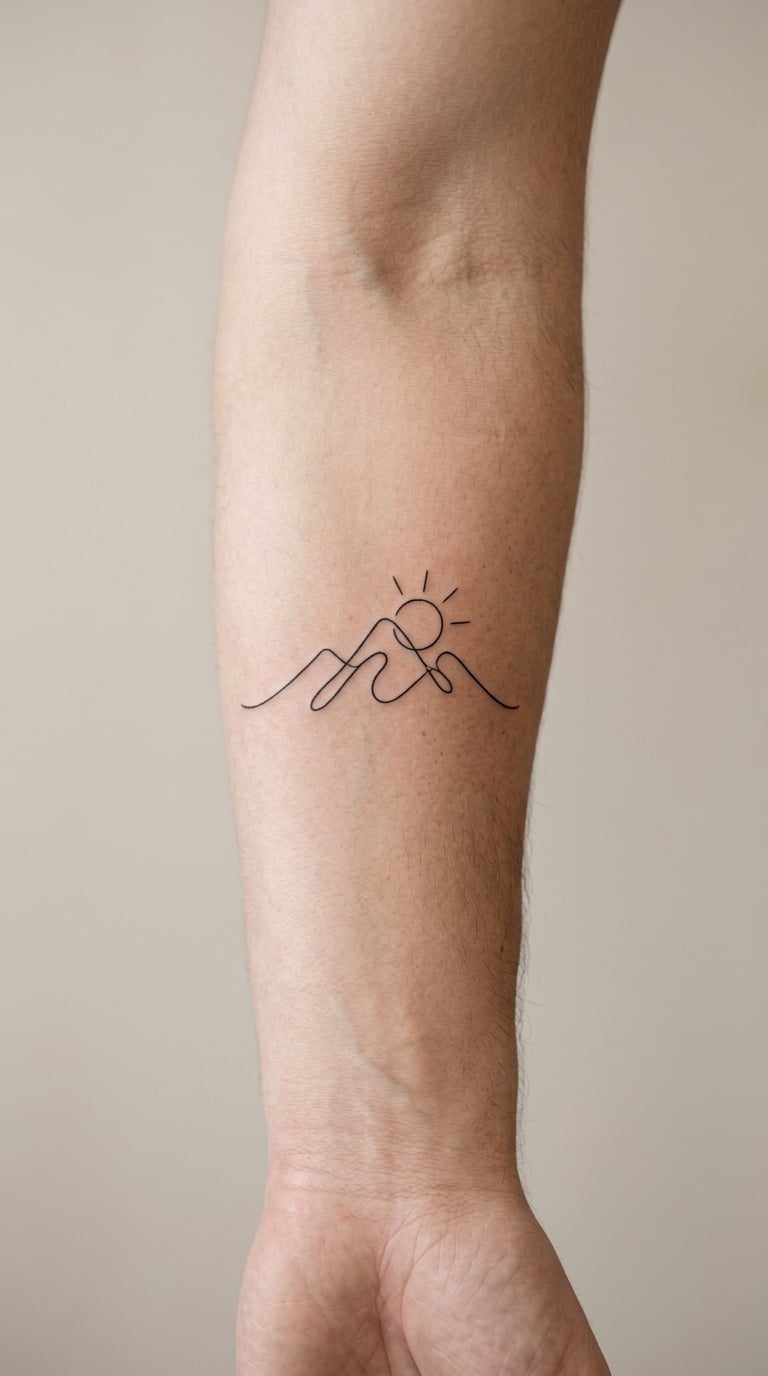
Mountains are the metaphor that does not try too hard. You do not conquer a mountain once, you keep going back to it, and eventually you are just someone who handles altitude. For a career milestone, a long qualification, or a first year in a job that was supposed to be impossible, it says the work is the point.
Line art is the most forgiving style for a small canvas, and this is the design I point petite wearers to. Three or four peaks across the forearm, no shading, no name text, nothing that needs a steady hand on a tight curve. The sun or moon gives the piece a focal point, and one thin line of horizon underneath keeps it from drifting apart.
Pain & time: outer forearm again, moderate and steady, about an hour and a half. Single-needle line work heals flatter than you expect but fades faster, so plan a touch-up in year three or four if you want it crisp.
9. Hamsa Hand on the Collarbone
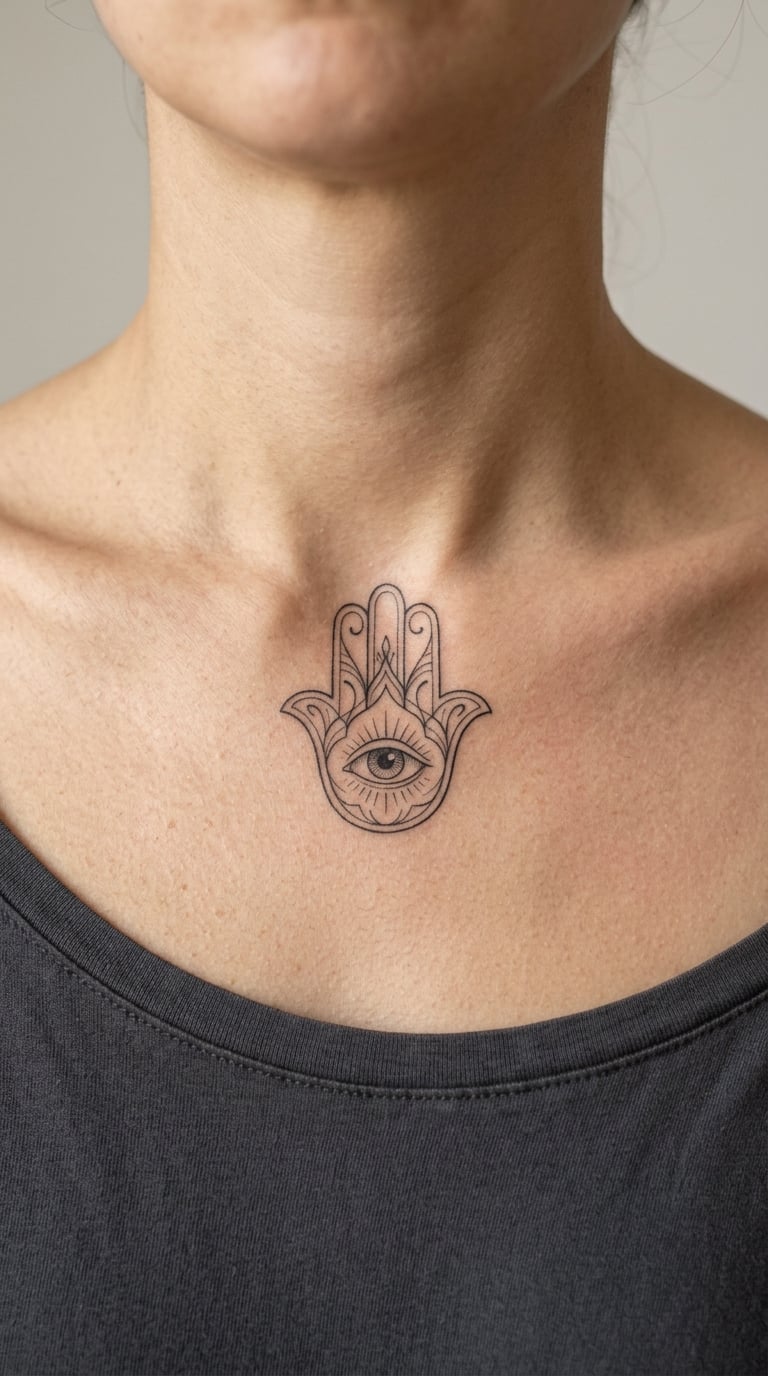
The hamsa is an open hand used as a protective amulet across Middle Eastern and North African traditions, and it is a good fit for someone who thinks of strength as guardianship rather than force. It is also a symbol many people get without knowing where it comes from, which is worth sorting out before the day of the appointment.
Placed centered on the collarbone, two to three inches, the hand sits right where a neckline opens, which makes it one of the few small designs that reads clearly in a photograph. A simple outline with one detail inside the palm is enough at that size. If the symbol comes from a tradition you do not share, ask yourself honestly whether the meaning is protective to you or decorative, and pick a different idea if it is only decorative.
Pain & time: collarbone is fiddly and awkward to lie flat for, more uncomfortable than painful. About an hour to an hour and a half, and a two-week heal with a fabric shirt if you work in an office, since the collarbone rubs.
10. Vertical Script Still I Rise on the Inner Forearm
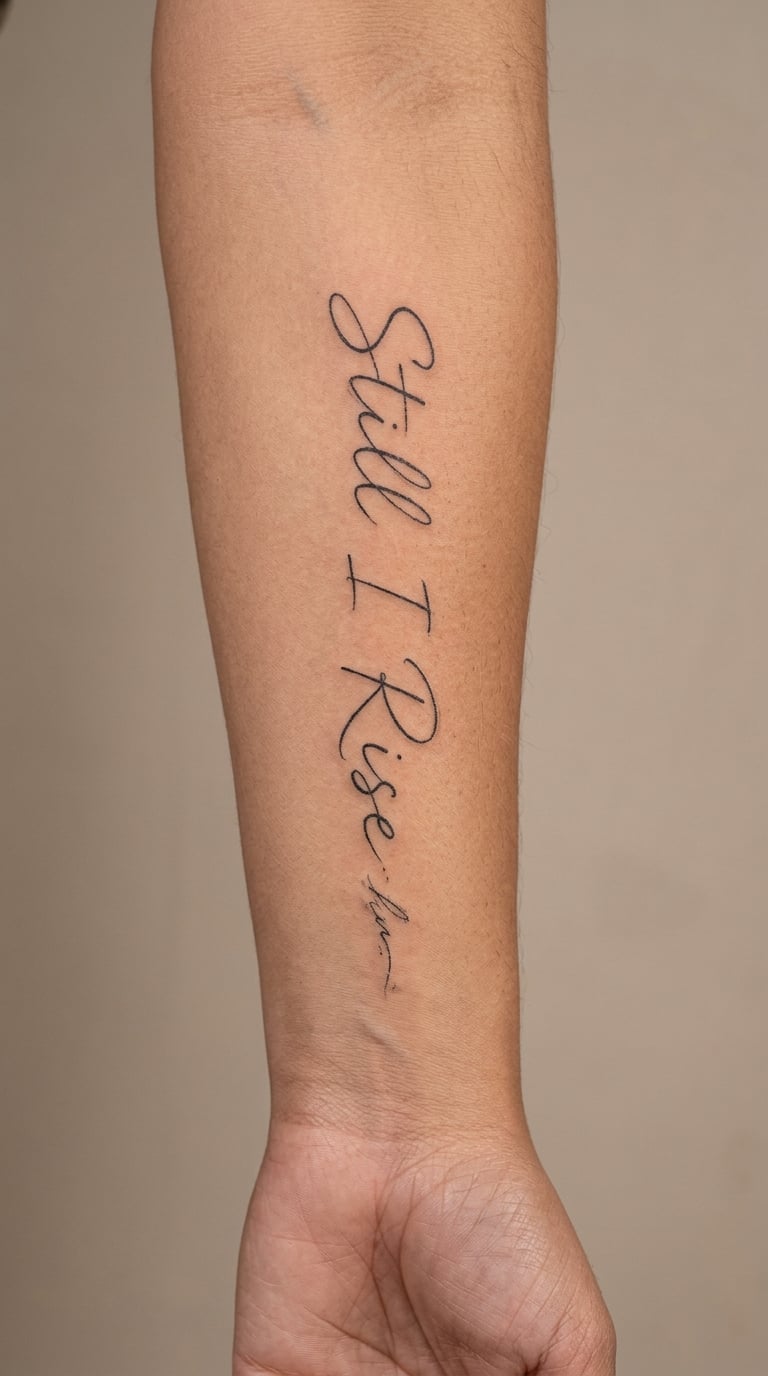
Still I Rise is the line everybody knows and plenty of women have earned, which is exactly why it is on this list. It works because it is a statement to yourself rather than a slogan aimed at other people. You read it every time you roll your sleeve, and the people who cannot read it do not need to.
Inner forearm, three to five inches tall, with the words running along the arm rather than across it, so they read when your arm is down. The honest warning is that script is the fastest-fading style there is. Thin hairlines soften first and grey second, so heavier lettering holds a decade much better than a delicate hand. My pick for a first attempt is two short words rather than the full quote.
Pain & time: inner forearm is a moderate, quite tolerable spot, ninety minutes. The healing is the thing to watch, because fresh script looks swollen and uneven for a week and then settles into itself.
11. The Strength Tarot Card on the Inner Arm
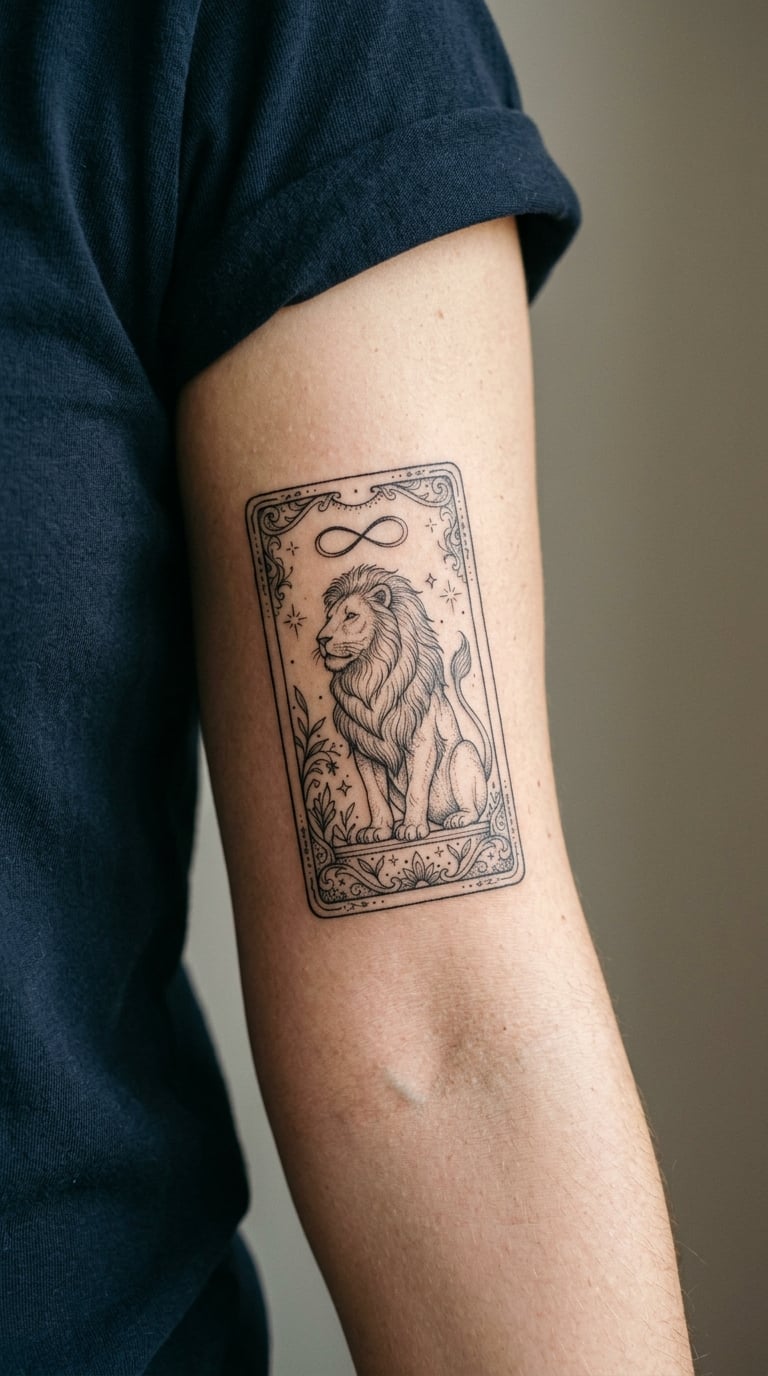
Strength in the tarot deck is card Eight, and it is the most misread symbol in tattoo galleries. The card shows a lion being handled gently, plus the infinity sign, which is why it gets called soft strength. The meaning is patience and steady nerve rather than force, and it is the piece I suggest to people who find traditional power imagery a bit much.
Inner upper arm, three to four inches tall, with a simple card border so the design still reads as a card at a distance. It covers well for work, and it is one of the few tattoos where the meaning grows rather than fades, because the card needs a story behind it. Draw the lion in outline only. Shading inside a small card turns to mud in about five years.
Pain & time: inner upper arm again, soft skin and a real ache, around ninety minutes. Steady two-week heal, and the fine border lines are the parts most likely to need a redraw.
12. Celtic Knotwork on the Wrist or Back of the Hand
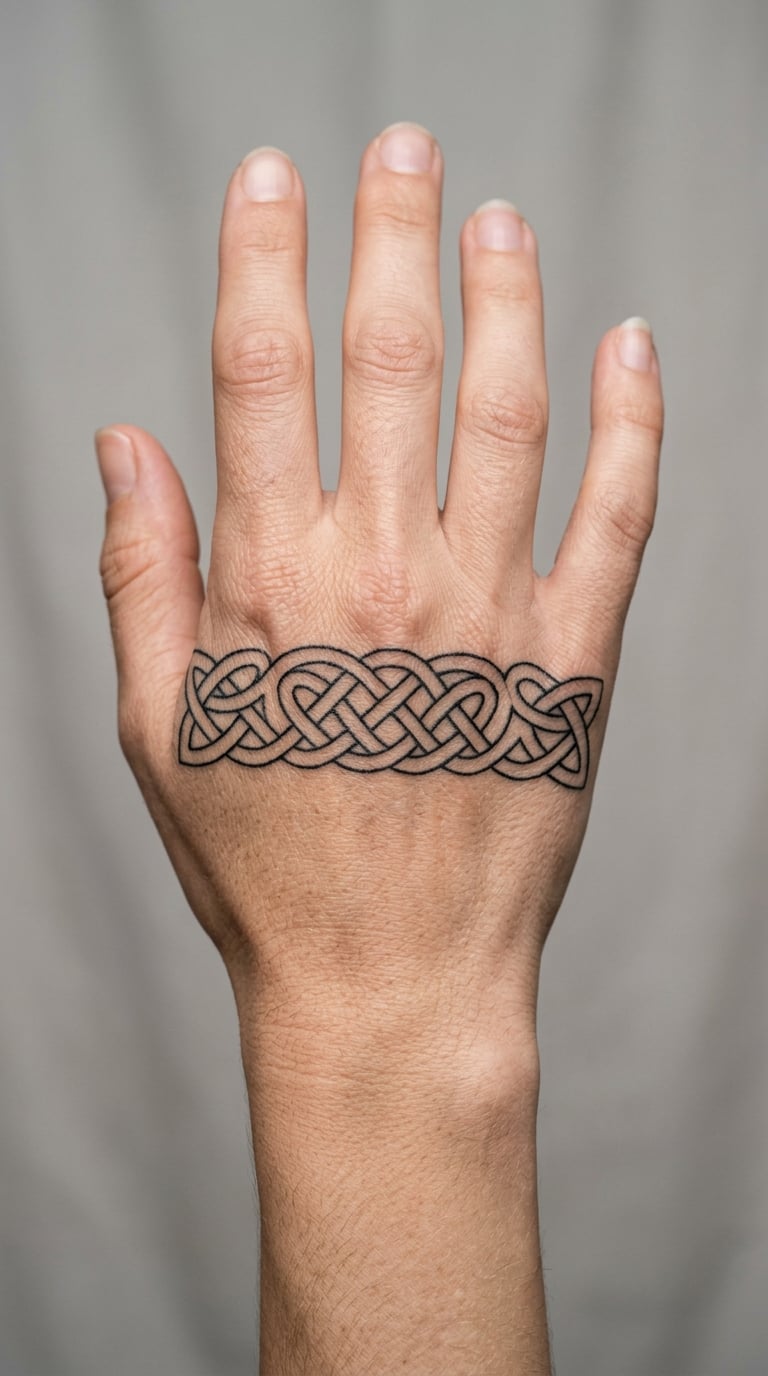
Knotwork is a good pick when strength means continuity rather than a single dramatic moment. The line enters and never quite ends, and unlike a knot in a rope, nothing is loose. I also like it for a different reason: it reads as collective strength, the idea that other people hold part of the line with you.
A band two to three inches across the wrist works, and the back of the hand suits anyone who wants it visible and small. Petites do well here because the pattern scales down without losing its meaning, unlike a detailed bird. Keep the interlace even, since one tight crossing turns the whole band into a grey smudge on the back of a hand that stretches with every knuckle.
Pain & time: the back of the hand is thin and the wrist has veins nearby, so expect a sharp intermittent sting. An hour to an hour and a half, with a slow fade along the wrist crease that needs a free touch-up.
13. Medusa in Blackwork on the Sternum
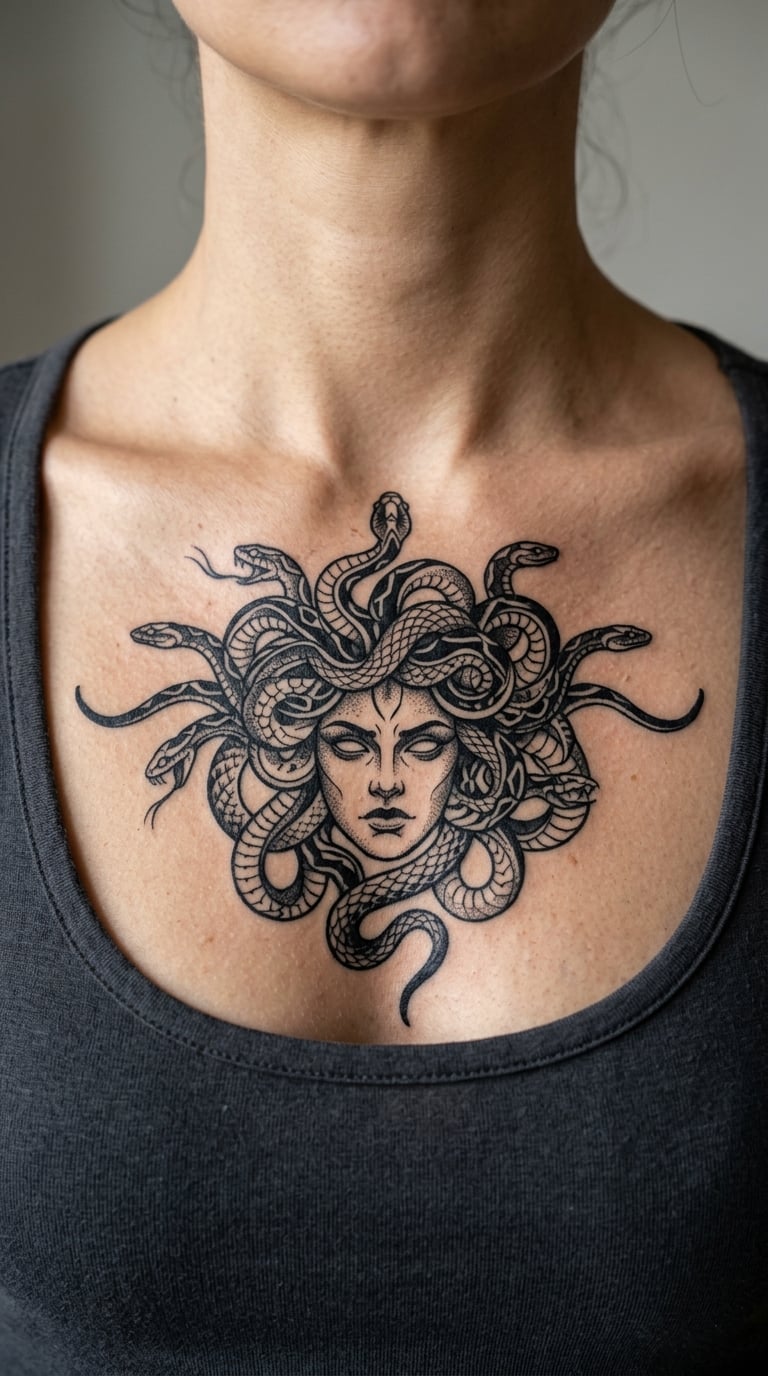
Medusa is the one on this list that people explain in one breath, and the reason is simple: in the myth she does not need to be beautiful, she is dangerous as she is. Anyone who has been stared at, judged or told to soften down gets that one immediately. It is also, from what I hear, the most requested feminist strength symbol in years.
Sternum, four to five inches, is where the head belongs and where a pair of snakes can fall symmetrically to either side. Blackwork with solid black snakes keeps the edges sharp, and a white or red background patch behind the face stops the hairline snakes from disappearing into shadowed skin. If the sternum feels too exposed, the upper chest a few centimetres higher works and hides under a higher neckline.
Pain & time: the sternum hurts disproportionately, mostly on the bony top of the chest. Allow three hours for a piece this size and a full week of not wearing anything that rubs there.
14. Triquetra or Triple Goddess on the Ankle or Hip
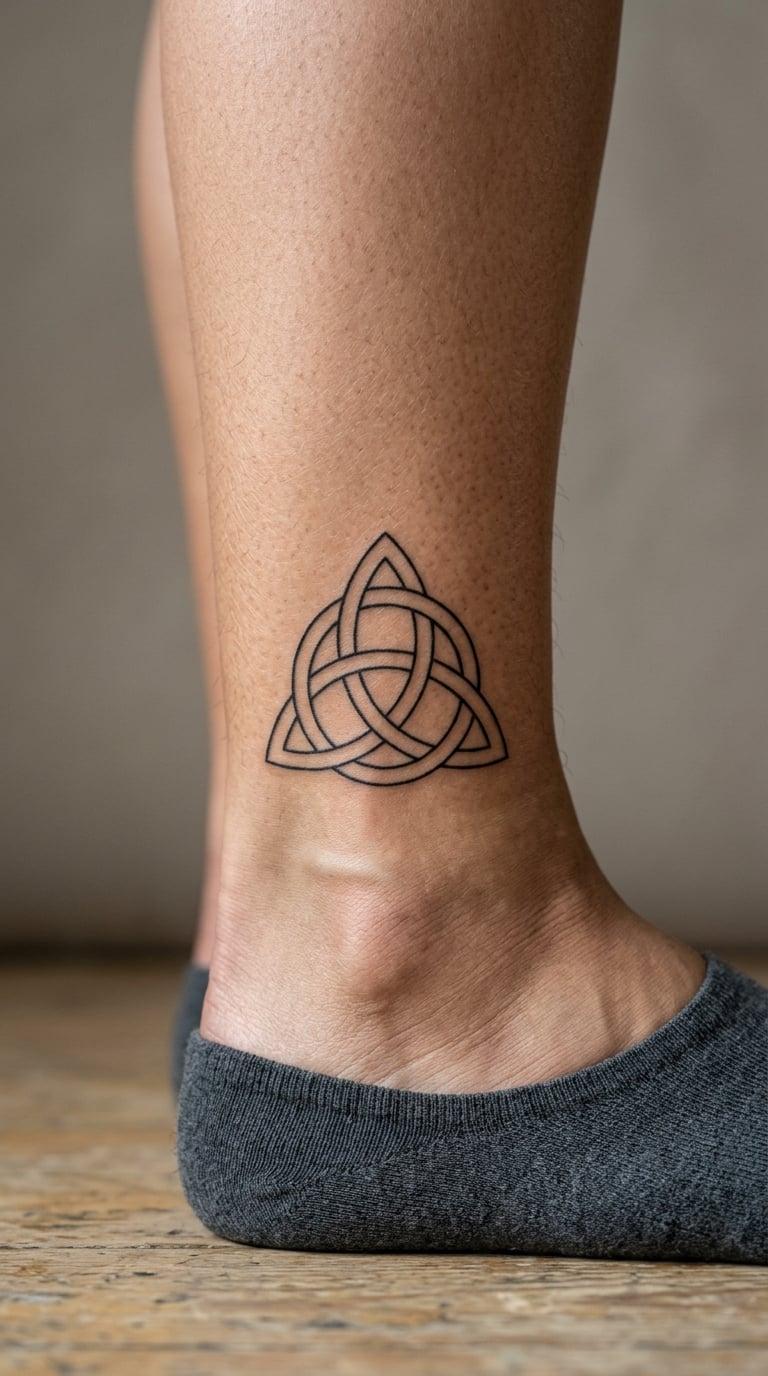
The triquetra is an interlaced three-point knot used in Celtic and Norse-inspired art, and in pagan readings the triple it represents is maiden, mother and crone, or a set of three stages rather than three people. It suits a woman marking something that moved through all three: leaving, becoming, and then holding a different kind of calm.
Ankle or hip, two to three inches, and fine line is the right call because the shape is made of crossing lines and it survives small. This is also the symbol I would pick for someone heading into a trade or a traditionally male workplace. A r/WitchesVsPatriarchy poster working through a mechanical apprenticeship for a job where she was the only woman was planning something in exactly this vein, and was specifically avoiding imagery that says man.
Pain & time: the ankle is bony and the hip is sensitive, so expect more sting than ache. About an hour, and the ankle will fade fastest if you do not cover it in sandals.
15. A Small Bird in a Big Wind on the Inner Arm
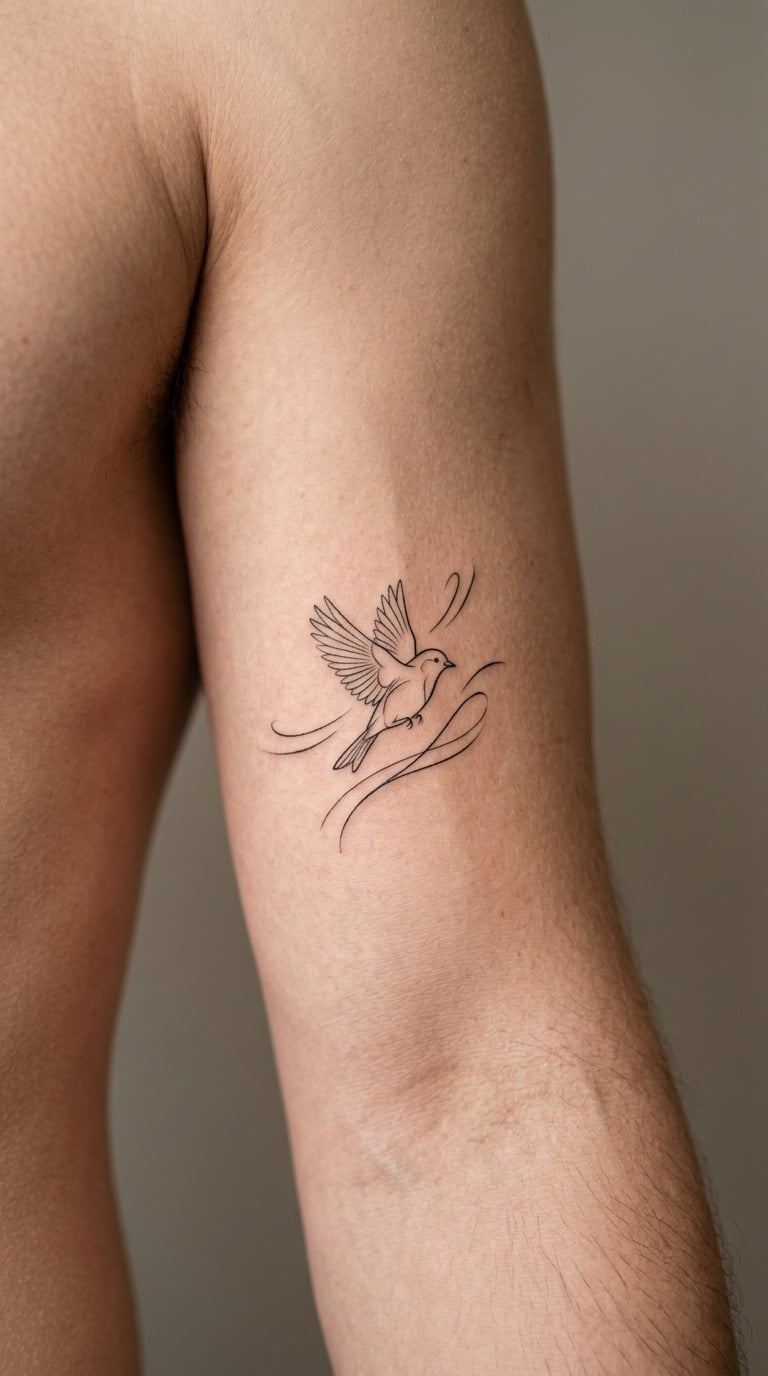
There is a line of poetry doing the work here, hope is a thing with feathers, and the design is a small bird against two or three long curves of wind. Nothing about it shouts. That is the point, and it is why this is the one I suggest to people who want a strength tattoo that nobody can read as a slogan.
Inner upper arm, two to three inches, and the wind lines can run long in one direction so the design reads as motion even at postage-stamp size. It is the strongest pick here for someone who describes themselves as quiet rather than fierce, and it is the easiest of the sixteen to keep, because nothing about it dates. Give the artist the line of poetry, not a screenshot of a design you found, and let them draw the curves.
Pain & time: inner upper arm, moderate, about an hour. The small scale means it finishes fast, and the delicate wind lines are the part that will need redrawing sooner than the bird.
16. Single-Line Portrait of a Woman in Profile on the Forearm
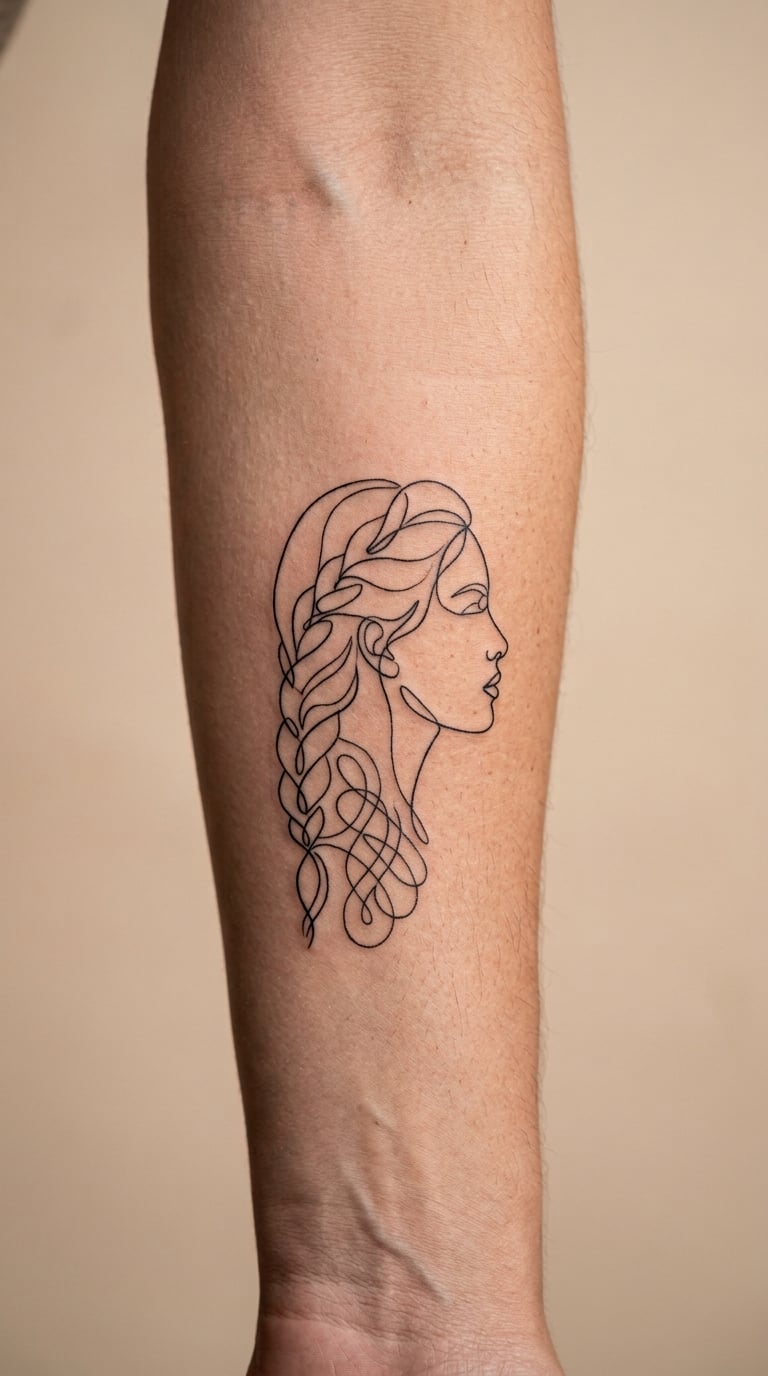
A one-line portrait has no symbol to decode, which makes it the least obvious and most personal option here. People usually get one with a face that matters to them, or their own, and it carries the whole story without anyone else needing to know. It reads as quiet confidence rather than stated strength, and it looks like you rather than like a poster.
Inner forearm, two to three inches, with the profile running along the arm so you can read it by turning your wrist. Continuous line work is harder to tattoo than it looks and the line has to be one unbroken path, so pick an artist who does this regularly and expect to sit longer than the size suggests. A braid or a loose line at the back of the neck is what makes a simple profile look considered.
Pain & time: moderate on the inner forearm but the fiddliness makes it tiring, around two hours. A face in one line is unforgiving, so a slow session with breaks gives a much better result than rushing it.
Things to Know Before You Book a Strength Tattoo
- Pick the artist for the style, not the drawing. Find someone whose portfolio is mostly the style you want. A great illustrator working in traditional American flash is not the same as a great fine-line or blackwork artist, and the reference photos you bring will not fix that.
- Decide soft strength or fierce strength first. Soft strength is quiet, patient and inward: the tarot card, the bird in the wind, the mountain. Fierce strength is defensive and visible: Medusa, the lioness, the phoenix. Trying to get both in one small design usually gets you neither.
- Get a quote for the whole piece, not the hourly rate. Prices depend on size, detail and where you are, so ask what your exact design costs finished, and what a touch-up in three years would cost.
- Healing is two weeks of care, then months of settling. Fresh line work looks raised and slightly thicker than it will ever look again, and fine line fades first. If the meaning has to last decades, choose heavier line weight from the start.
- Sun is the real enemy of a symbolic piece. Tanned or burned skin alters ink colour permanently, which is how a warm black script turns grey. Cover new work for weeks, then use sunscreen on it for the rest of your life.
- Symbols from other cultures need context. The hamsa, the Uruz rune and the Chinese character for strength all carry meanings you can only borrow honestly. Ask what it means before you decide it means something to you.
How to brief an artist on a symbol that has no stock image
Bring a written brief, not a folder of screenshots. Two or three lines: the meaning in your words, where you want it, how big, which direction it should face, and one reference for the line quality you like. Artists work this way constantly, and a clear paragraph gets you a better drawing than twenty saved images pointing in four directions.
Say what you do not want too. A lot of people come in with something lovely and only mention at the sketch stage that they cannot stand flames, or gradient shading, or a particular colour. Earlier is much better, and it costs you nothing to say.
How to keep strength tattoo ideas from looking overused
The word people use most is tacky, and it usually means generic, not bad. A lion head, a tribal armband, a swallow and a barbed wire heart are all good tattoos that say nothing about you, and everyone in the waiting room can name them. The fix is specificity: a design that could only be yours, whether that is a year, a bird, a habit, or a hand drawn slightly wrong on purpose.
Style does most of the work here too. If a symbol is overused, it is usually overused in one style. An irezumi phoenix and a single-needle phoenix look like two different pieces of art and carry different energy, so picking the less common style solves a lot of the problem before you change the motif.
Placements that hide under work clothes, and how they feel
For most professional settings the useful placements are the inner upper arm, the ribs under a jacket, the inner forearm with a long sleeve, the lower back and the thigh. My advice for anyone whose work is out front, teaching, social work or the shop floor: book a consultation wearing the clothes you actually work in, so you and the artist can both see the coverage honestly.
Visibility is not the only factor, though. The spine, the ribs and the sternum hurt far more than an arm, and pain changes the memory of the piece. If you are picking a hidden spot purely for work reasons, take the placement that reads best to you rather than the one with the easiest session.
Healing, fading and what still means something in ten years
Almost every tattoo fades, and the fade is slower than most people fear. What changes is legibility: fine line thins, grey washes go patchy, and a small script can be unreadable at arm’s length within a few years. Blackwork with solid black and no shading holds shape the longest, and bold outline traditional work holds colour the longest.
What fades is the drawing, not the meaning, and the two are not connected. If the piece marks a year you got through, it still means that in a decade when the line is fainter. A touch-up every few years on the parts that have softened is a normal part of owning an old tattoo, not a failure.
Frequently Asked Questions
What tattoo symbolizes a strong woman?
The symbols women choose most are a phoenix rising from ashes for rebuilding, a lotus blooming from muddy water for quiet resilience, a lioness for protective strength, Medusa for turning a hostile gaze away, a cactus that bloomed anyway, and the semicolon for survival. Choose the one that matches your actual story rather than the most photographed.
What tattoo symbolizes strength in general?
Strength symbolism tends to fall into three groups. Rebirth symbols like the phoenix, butterfly and lotus describe transformation and starting again. Endurance symbols like the mountain, oak tree, knot and wave describe lasting power. Quiet strength symbols like the semicolon, single-line portrait and Strength tarot card describe patience, recovery and staying steady.
What are the top 10 meaningful tattoos for women?
The ten most requested: phoenix, lotus, semicolon, lioness, cactus with a bloom, Medusa, moth with moon phases, vertical script, dandelion seed head and Celtic knotwork. Between them they cover the meanings women ask for most, which are recovery after a hard year, leaving a relationship, quiet confidence, and marking a survivor moment without spelling the story out loud.
What tattoo symbol represents overcoming struggles?
A phoenix, a lotus, a butterfly and a snake shedding its skin all describe surviving and coming out the other side. The semicolon does the same thing in one character, and the moth works better than people expect because it keeps flying toward the light rather than emerging from a chrysalis. Script phrases like Still I Rise and You Can do the same job in words.
What is a 333 tattoo on a woman?
In numerology readings, repeated numbers are treated as messages carrying a meaning, and 333 is usually read as protection, growth and support through change, which is why it turns up after a difficult stretch. Some also connect it to the repeated sequence appearing in daily life. Readings vary between practitioners, so ask yours directly rather than relying on a summary.
Why do girls get 444 tattooed on them?
Four is associated with stability and wholeness, so 444 is commonly read as being held together, protected and supported, or as a marker of recovery. Others wear it for a specific date or event in their life. Like any numerology symbol, the meaning belongs to the person wearing it, and a tattoo artist will draw the numbers without attaching a reading of their own.
Conclusion
If you are starting from scratch, take these tattoo ideas that represent strength for women and cut it down to three: one that means something you lived through, one placement you can live with, and one style you actually want on your skin forever. Then book a consultation and bring a written brief rather than a folder of screenshots.
The design will fade either way. The story is the part that stays, so pick the one you would still want to explain in ten years.