
24 Gardening Tattoo Ideas (October 2026) With Placements
A gardening tattoo is any piece built from plants, crops, herbs or the tools you use in the garden: a fine-line rosemary branch, a carrot in bold blackwork, a trowel across the back of the hand. These 24 gardening tattoo ideas cover all of it, from a two-leaf sprout to a full forearm sleeve, with real sizes, placements and pain notes for each.
Most people who get one are not trying to decorate an arm. They are marking a hobby, a garden, a houseplant they nearly killed and rescued, or a person who taught them to grow things. What makes a garden design work on skin is simple: the plant has to be recognisable at the size you choose, and the stems need somewhere to go.
If you are also weighing first-timer pieces, our guide to tattoo ideas that symbolize growth covers the meaning side. For woodland work instead of kitchen-garden work, the pine forest forearm tattoos round it out.
24 Gardening Tattoo Ideas: Quick Guide
| Idea | Style | Best placement | Size | Pain |
|---|---|---|---|---|
| 1. Rosemary sprig | Fine line, black and grey | Inner forearm | 2.5-3.5 in | Low to medium |
| 2. Tomato vine wrap | Watercolour | Outer forearm | 6-9 in | Medium |
| 3. Seedling in a pot | Micro-realism | Outer wrist | 1.5-2.5 in | Medium |
| 4. Watering can and sprout | Traditional | Outer forearm or calf | 4-6 in | Medium to high |
| 5. Carrot with leafy tops | Blackwork with muted colour | Outer forearm | 3.5-5 in | Medium |
| 6. Sprout between fingers | Minimalist line | Back of the hand | Under 1 in | High |
| 7. Sunflower behind the ear | Fine line, black and grey | Neck, behind the ear | 1.5-2.5 in | Medium |
| 8. Herb bundle | Botanical illustration | Forearm or calf | 4-6 in | Medium |
| 9. Dotwork garden path | Dotwork | Calf or thigh | 4-6 in | Medium |
| 10. Pea pod on the collarbone | Micro-realism | Collarbone | 2-3 in | Medium |
| 11. Strawberry patch | Neo-traditional | Shoulder or thigh | 4-7 in | Medium to high |
| 12. Trellis vine climb | Fine line | Inner forearm | 3.5-5 in | Medium |
| 13. Gloves and trowel | Blackwork | Forearm or upper arm | 4-6 in | Medium |
| 14. Lavender stalks | Watercolour | Outer arm or thigh | 3-4 in | Medium |
| 15. Monstera leaf | Minimalist line art | Outer thigh or forearm | 4-6 in | Medium |
| 16. Bee on a blossoming branch | Micro-realism | Inner forearm or upper arm | 2-3 in | Medium |
| 17. Sunflower half sleeve | Botanical realism | Upper arm or shoulder | Half sleeve | High |
| 18. Succulent cluster | Black and grey realism | Outer elbow or ankle | 3-4 in | Medium to high |
| 19. Cherry blossom branch | Blackwork | Shoulder, back or forearm | 4-7 in | Medium |
| 20. Carrot and trowel sleeve | Illustrative colour | Forearm to elbow | Full forearm | High |
| 21. Trowel on the hand | Blackwork | Back of the hand | 2-3 in | High |
| 22. Mushroom garden | Muted realism | Calf or forearm | 3-4 in | Medium |
| 23. Herb stripper and sprigs | Clean illustration | Forearm | 3.5-5 in | Medium |
| 24. Birth flower bouquet | Watercolour | Forearm, calf, thigh or back | 5-8 in | Medium |
1. Fine-Line Rosemary Sprig on the Forearm
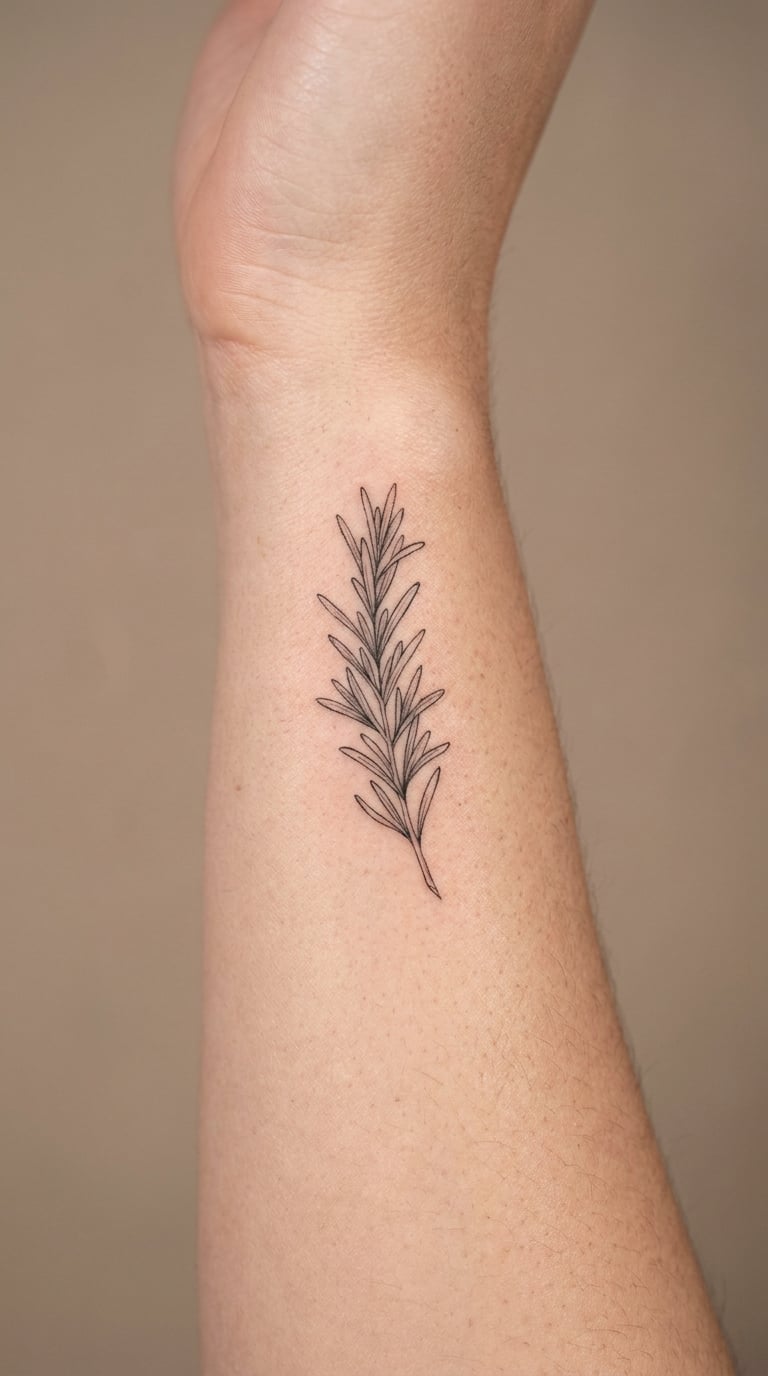
A rosemary sprig drawn in one-needle black work, with narrow needle-like leaves stepping off a slightly curved stem and no shading at all. The restraint is the whole point: rosemary is a plant people recognise from silhouette alone, which is why it survives being drawn small.
Gardeners pick it because it is the herb they actually reach for, not the prettiest one on a flash sheet. It often turns up alongside a kitchen or herb-sleeve plan.
Placement: inner or outer forearm, wrist to elbow. Size: 2.5 to 3.5 inches (6 to 9 cm). Style: fine line, single-needle black and grey. Pain: low to medium on the inner arm; fine lines on the inner forearm fade fastest because that skin sees sun and movement all day.
Make it yours: swap in the herb you actually cook with most, or add the postcode or plot number of the garden it came from along the stem.
2. Watercolour Tomato Vine Wrapping an Arm
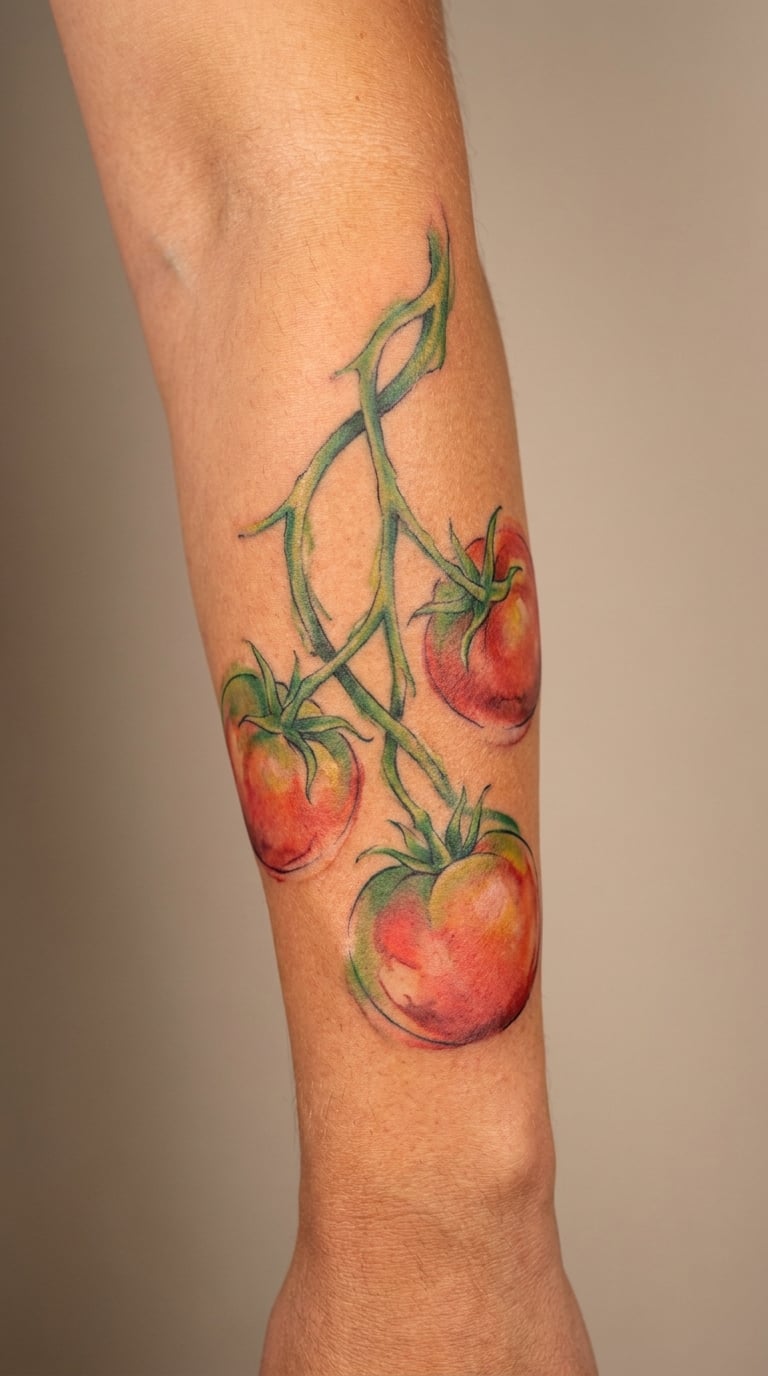
A winding tomato plant in watercolour: soft green leaves, a looping stem that follows the arm, and a few ripe red fruit left as the boldest marks on the piece. Colour bleeds slightly beyond the linework so it reads like wet pigment rather than a stencil.
It is the vegetable-garden showpiece, and it suits people who recognise themselves by what they grow and cook rather than by flowers.
Placement: outer forearm, wrapping toward the elbow. Size: 6 to 9 inches (15 to 23 cm) for the stem run. Style: watercolour with soft shading. Pain: medium; expect a long session at that size, and expect the reds to soften first over the years.
Make it yours: ask for the exact colour of an heirloom variety you grow, or set a small date at the base of the lowest leaf.
3. Micro-Realism Seedling in a Tiny Pot
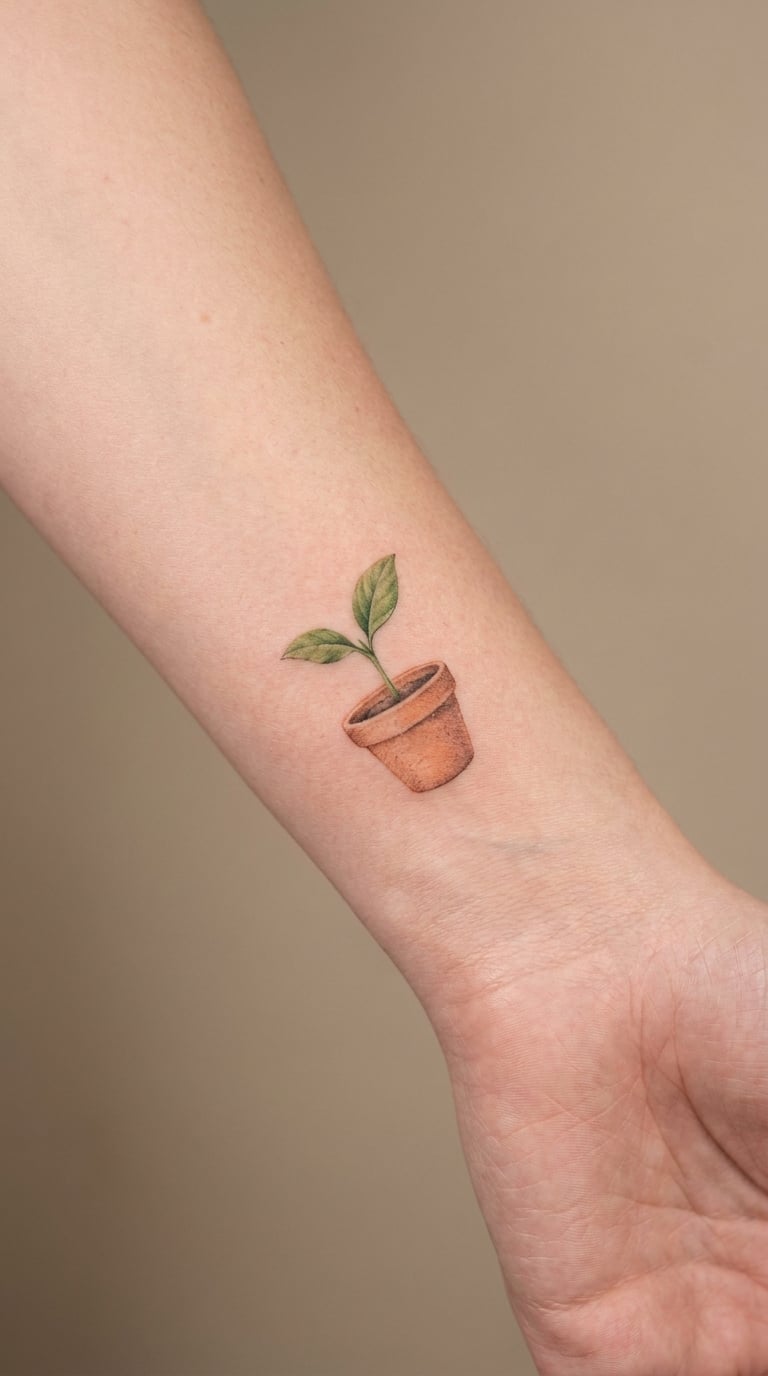
A two-leaf seedling rising from a small pot, with the soil suggested by a few grey-brown stipple marks rather than a filled shape. Black and grey shading on the leaves, one muted green if you want it.
It reads as care and attention rather than abundance, which is why it works so well as a first piece or as a quiet one on a wrist you look at daily.
Placement: outer wrist, ankle, or the inside of an upper arm. Size: 1.5 to 2.5 inches (4 to 6 cm). Style: micro-realism. Pain: medium on the wrist; the smallest interior details tend to blur as the piece ages, so keep the pot simple.
Make it yours: bring a photo of the exact plant you grew from seed and ask the artist to match the leaf count and shape.
4. Traditional Watering Can and Sprout
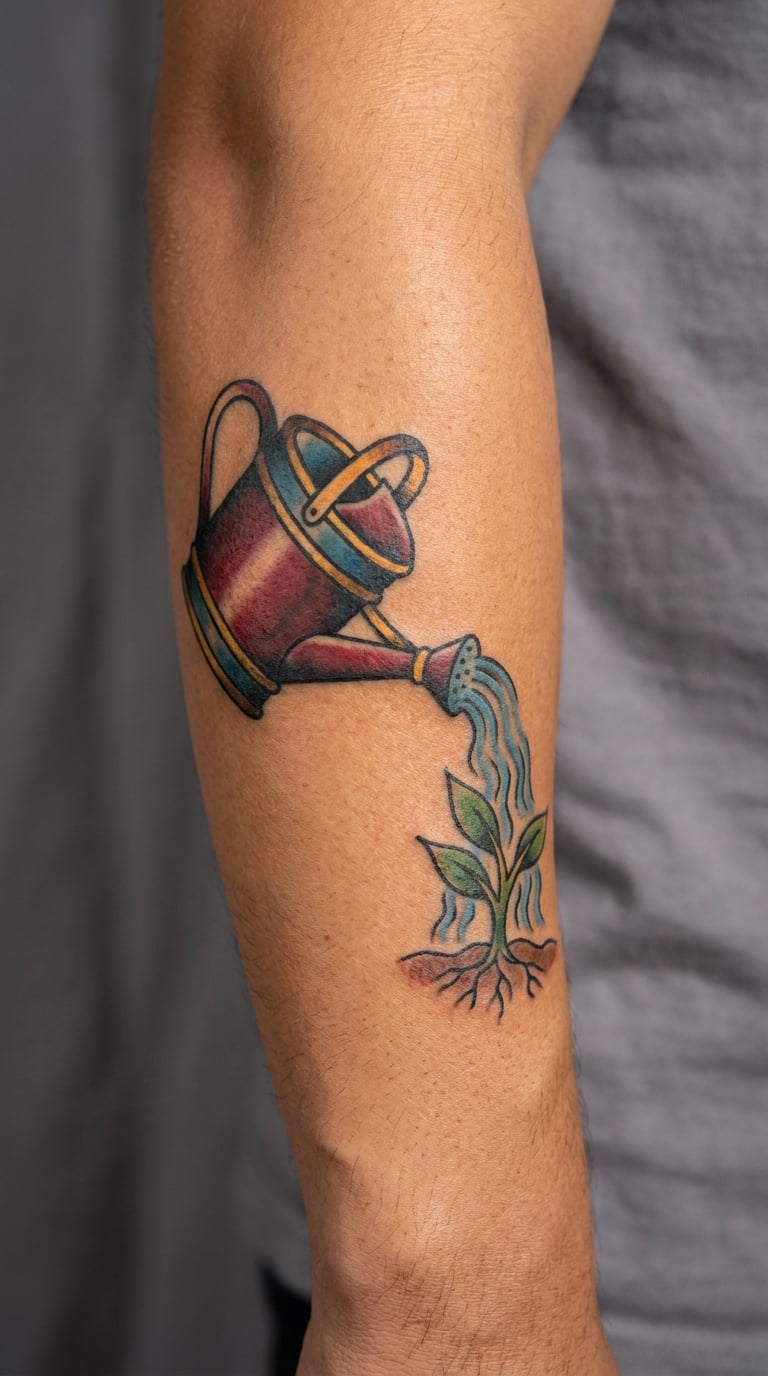
A classic traditional watering can tilted over a two-leaf sprout, with heavy black outlines, a spotted rose pouring water and solid green leaves. Bold shapes age far better than the fine botanical work that usually follows the same theme.
It says the wearer’s job, which is a different thing from saying they like flowers. Old tattooers often described it as a working-man’s garden piece.
Placement: outer forearm, calf or upper arm. Size: 4 to 6 inches (10 to 15 cm). Style: traditional, black and grey with muted colour. Pain: medium to high, mostly on the forearm near the elbow; bold line work holds its shape with far fewer touch-ups than thin detail.
Make it yours: add the maker’s stamp on the can, or match it to a second piece showing a pair of secateurs.
5. Blackwork Carrot with Leafy Tops
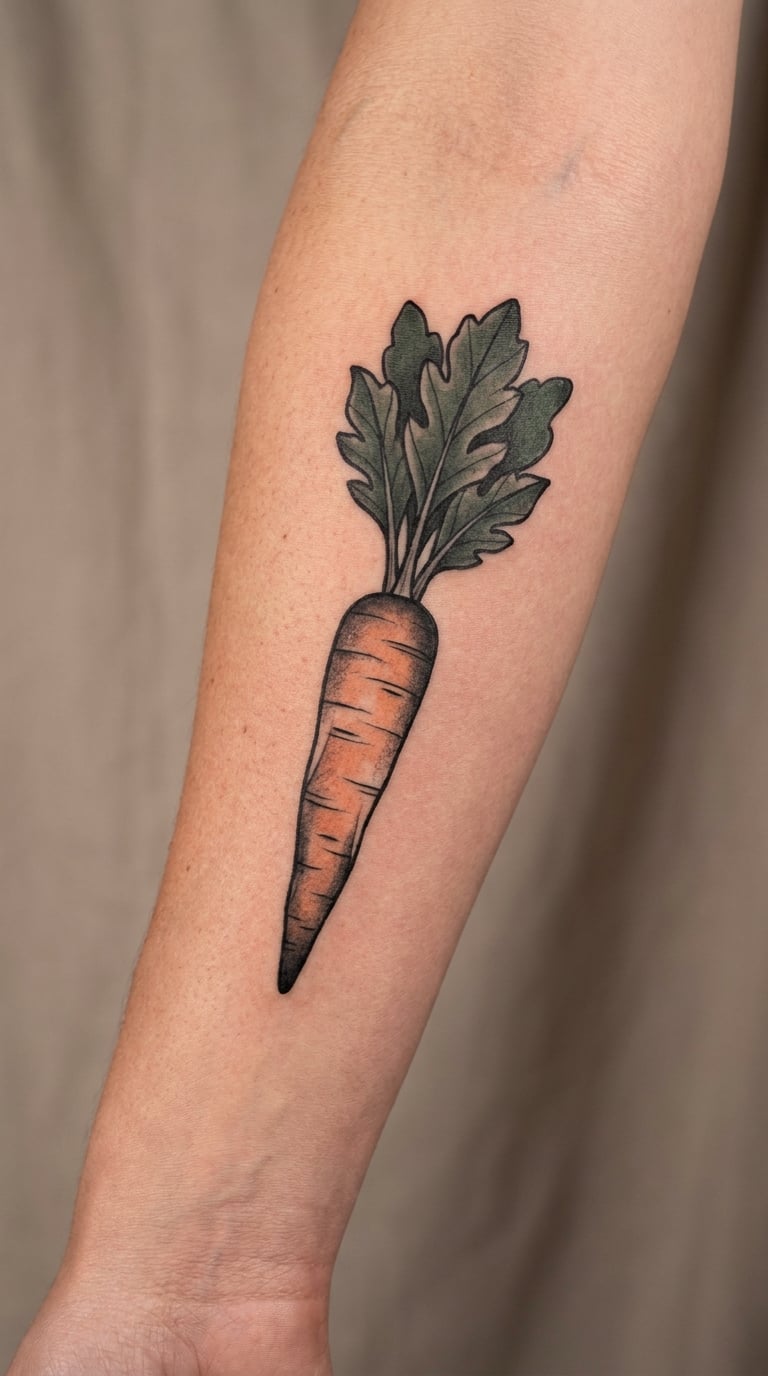
A single carrot in heavy blackwork shading with cross-hatched texture on the root, topped with broad green leaves in muted olive. The silhouette is a clean vegetable shape that stays readable at almost any size.
Vegetable tattoos sit closer to kitchen and allotment identity than to garden decoration, and wearers tend to describe this one as plain rather than pretty.
Placement: outer forearm, calf, or the fleshy part of the upper arm. Size: 3.5 to 5 inches (9 to 13 cm). Style: blackwork with one muted colour. Pain: medium. The orange is the part that fades first, so plan for a touch-up every few years rather than being disappointed by it.
Make it yours: have your initials worked into the leafy tops, or add a second root vegetable below it later to start a veg set.
6. Minimalist Sprout Between Two Fingers
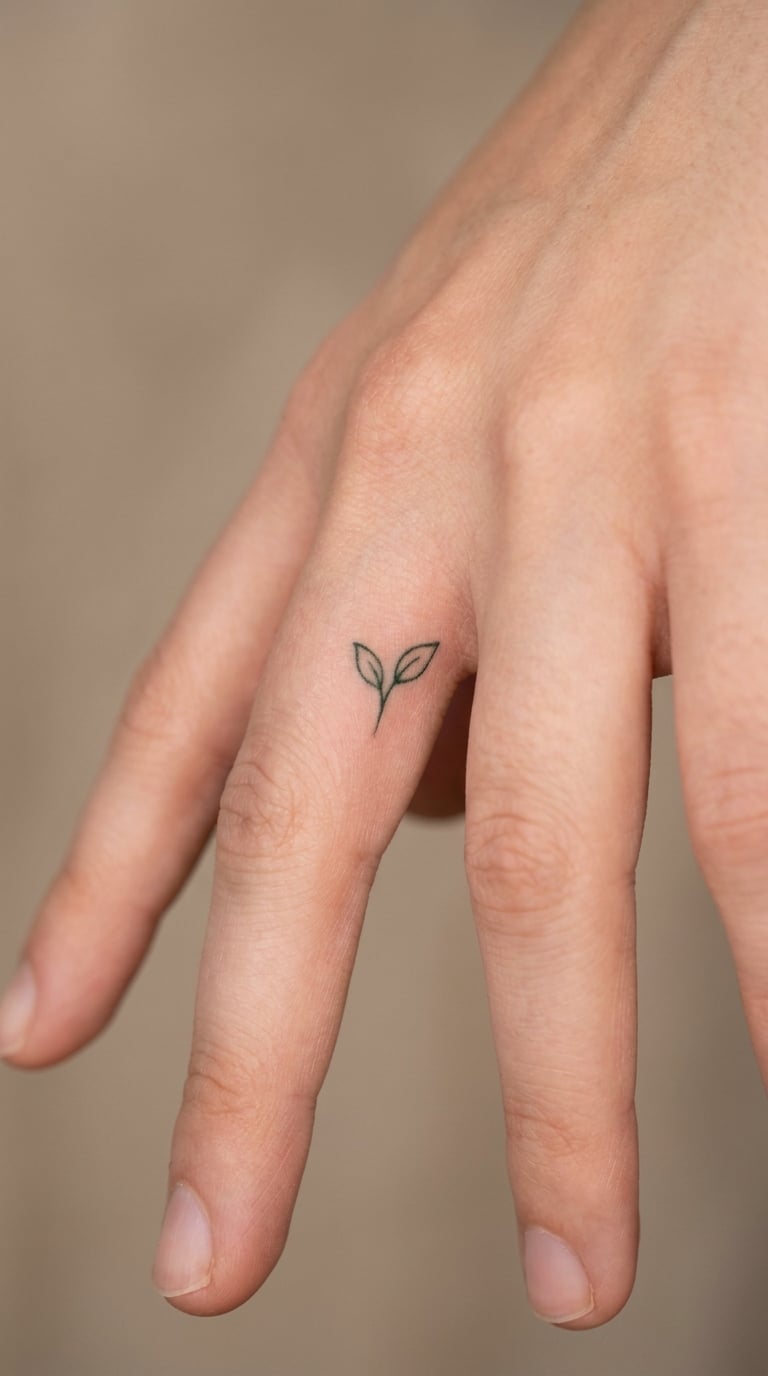
Two small leaves on a hairline stem, placed so the stem appears to rise in the gap between two fingers. Everything else is left as skin. Nothing about it carries a fixed meaning; it reads as growth because a sprout looks like a sprout.
It is a first-timer’s favourite, and a good one to pair with a small wrist piece later.
Placement: back of the hand, between fingers. Size: under 1 inch (2 cm). Style: minimalist line. Pain: high. Hands are bony, the nerve endings sit close to the surface, and the skin there creases and flexes constantly.
Make it yours: use the leaf shape of a plant you own, or add green ink only where the leaves sit so the stem stays a whisper.
7. Sunflower Behind the Ear
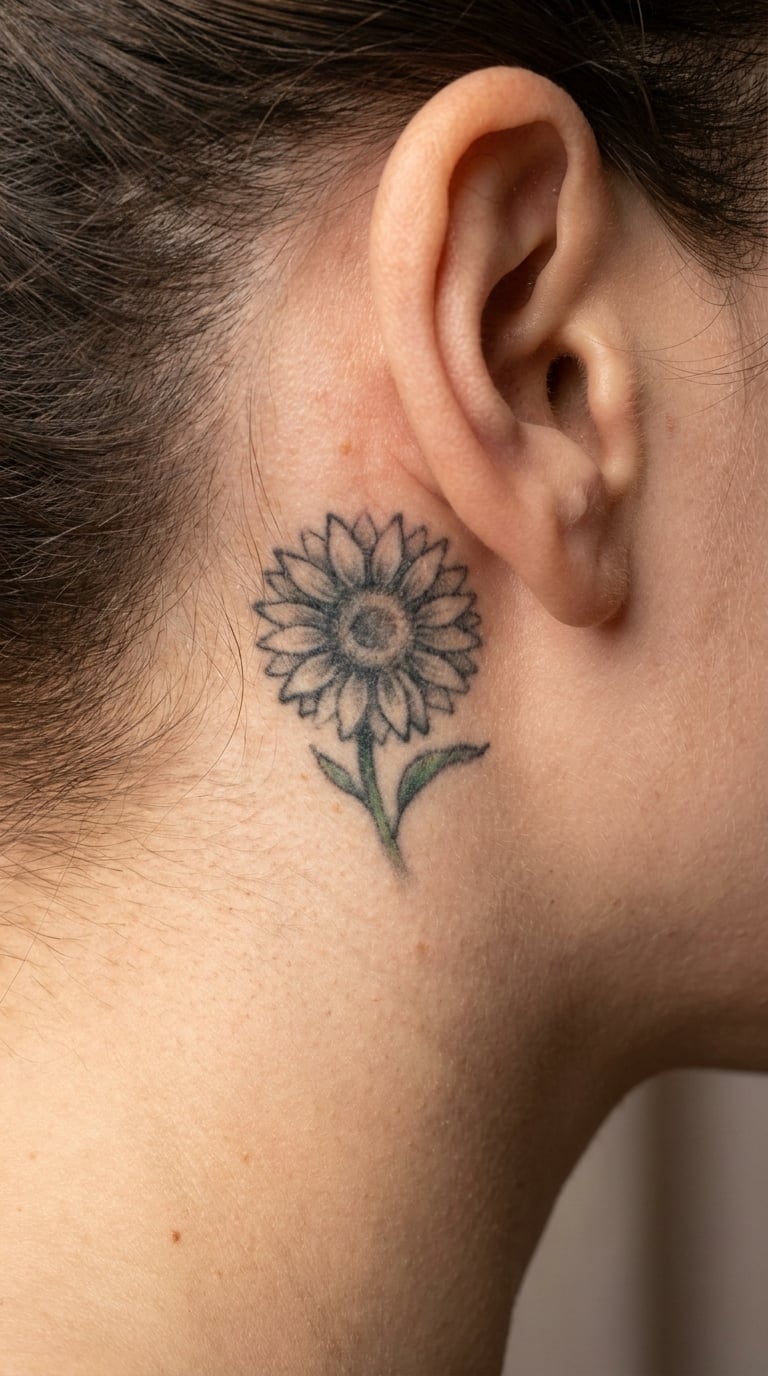
A compact sunflower with a dark stippled centre and loosely drawn petals, an optional thin green stem dropping toward the neck. Petals stay open and unlined so the piece keeps a soft edge even as it ages.
Sunflower growers and allotment holders ask for it constantly, and it sits neatly inside a hairline or just below the ear where it stays private.
Placement: neck behind the ear, or just under the earlobe. Size: 1.5 to 2.5 inches (4 to 6 cm) across. Style: fine line and black and grey with a colour accent. Pain: medium; the neck feels scratchy rather than painful, though the skin is thin.
Make it yours: give the artist a photo of the variety you grow so the petal count and centre size match, or add a second smaller bloom behind it.
8. Herb Garden Bundle in Botanical Style
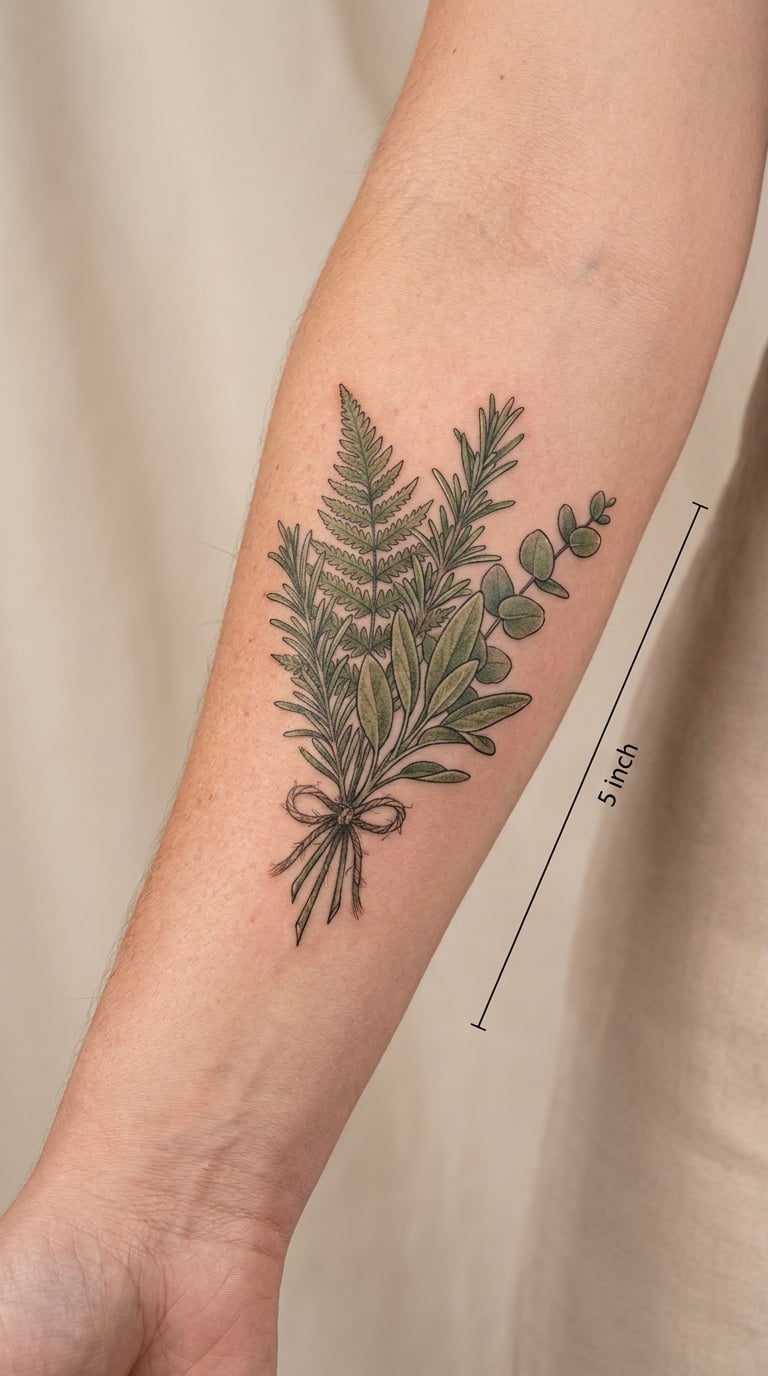
Four herbs tied at the stems with twine, each leaf distinguishable: rosemary, thyme, basil and mint, drawn in the flat lighting of a botanical plate. Small handwritten-style labels are optional.
This one belongs to cooks who grow for the kitchen rather than for the view, and it makes a strong gift for someone whose garden is a herb bed.
Placement: outer forearm, calf or the inner upper arm. Size: 4 to 6 inches (10 to 15 cm). Style: botanical illustration. Pain: medium. Dense leaf interiors are the part that softens first, so the artist should keep the shading open rather than packed.
Make it yours: list your exact blend, four herbs at a time, and swap one out when a plant comes out of season.
9. Dotwork Garden Path Leading to a Flower
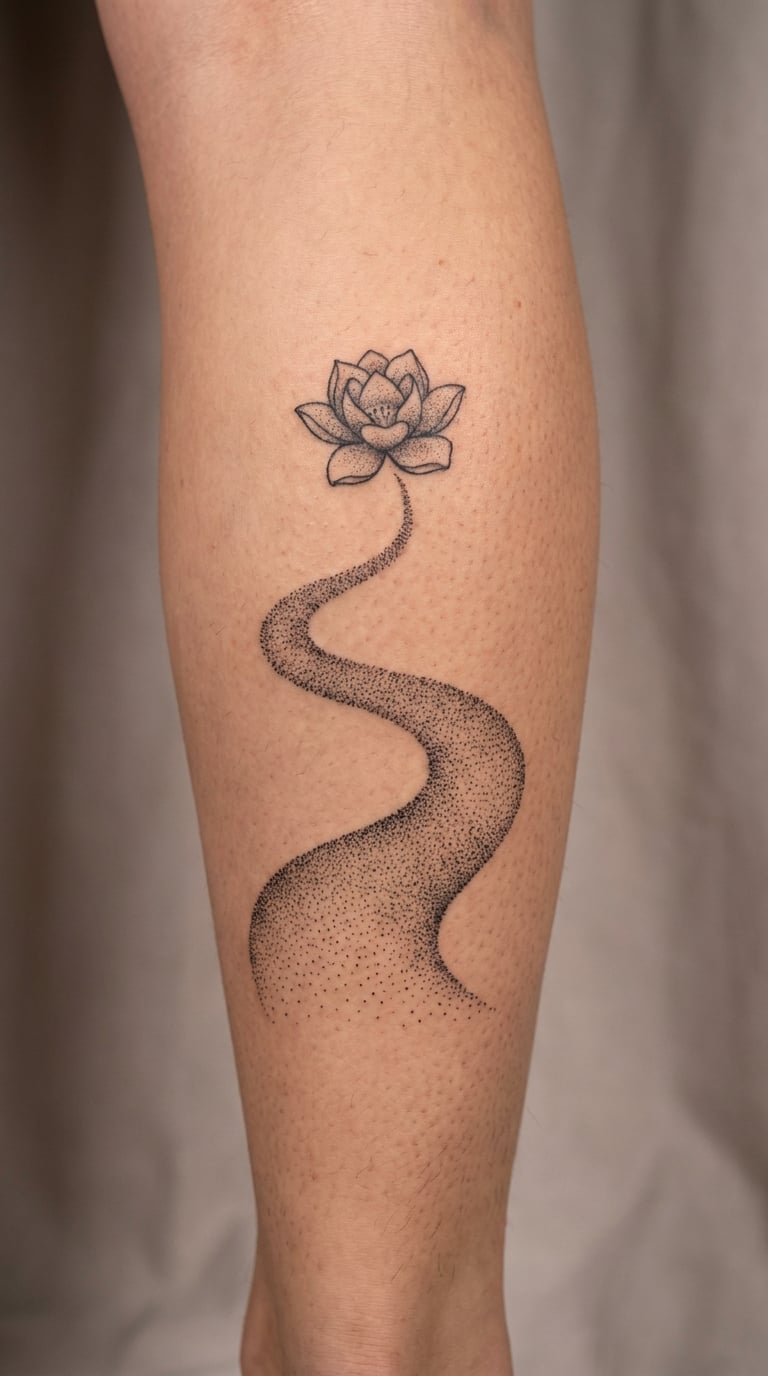
A curving path built from stippling, widening as it comes down the leg, with dots forming soil texture and low planting on both sides, ending in a single bloom at the top. Density does the work instead of outline.
It is the most personal of the lot because the path is usually a real one: a garden, a walk, a place someone used to go.
Placement: calf, outer forearm or thigh. Size: 4 to 6 inches (10 to 15 cm). Style: dotwork. Pain: medium; dot work takes time, and the calf tickles more than it hurts. Expect the light dots to fade toward mid-grey over a decade.
Make it yours: name the place the path leads to and ask for one specific flower at the end rather than a generic bloom.
10. Micro-Realism Pea Pod on the Collarbone
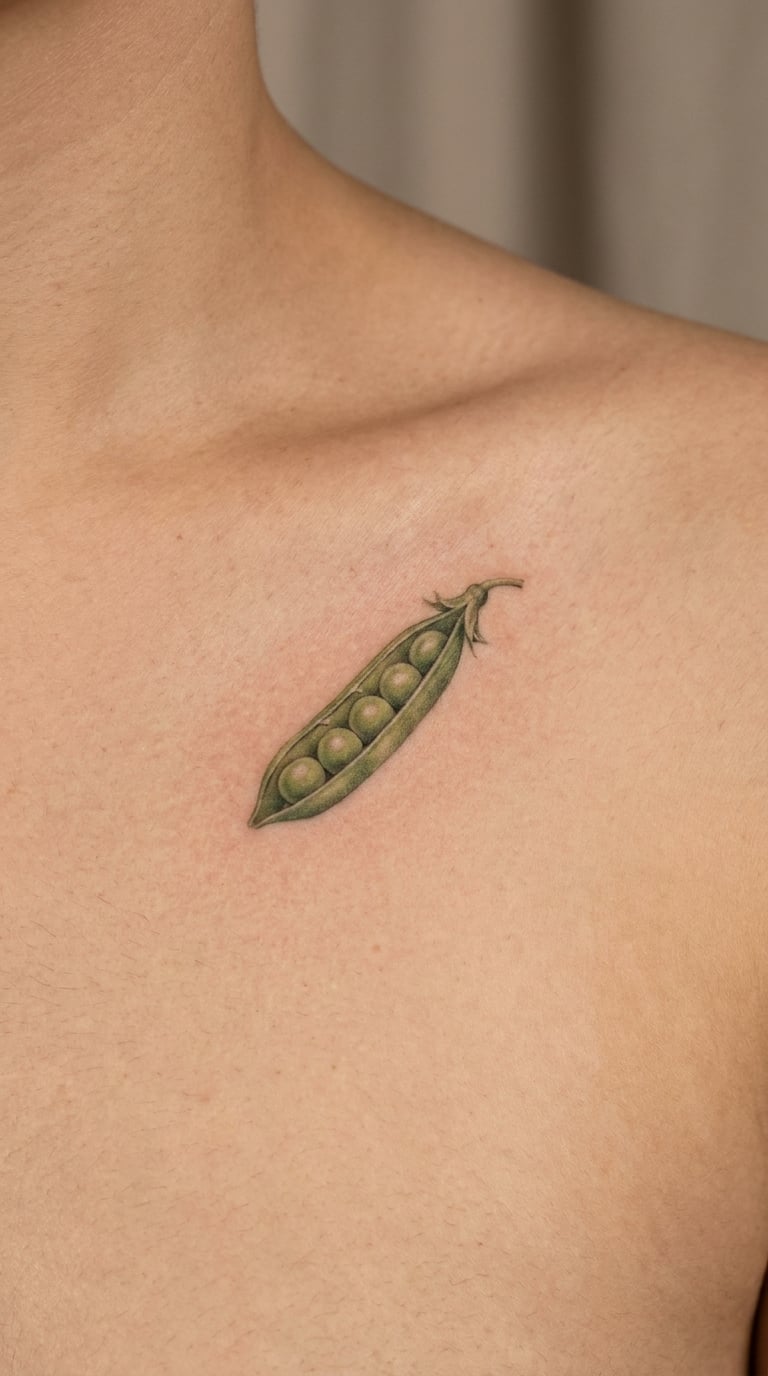
A pea pod in green with three to five round peas modelled in soft black and grey shading, stem curling slightly. Small, seasonal and unmistakably a kitchen garden rather than a flower field.
Peas are a short, satisfying season, so wearers often pair them with a date or with a first-harvest sibling piece.
Placement: above the collarbone, along it, or on the bicep. Size: 2 to 3 inches (5 to 8 cm). Style: micro-realism. Pain: medium; the collarbone is a bony area and the skin moves with the shoulder.
Make it yours: ask for a specific variety with visible pods, or have one pea slightly opened to show the shoot inside.
11. Neo-Traditional Strawberry Patch
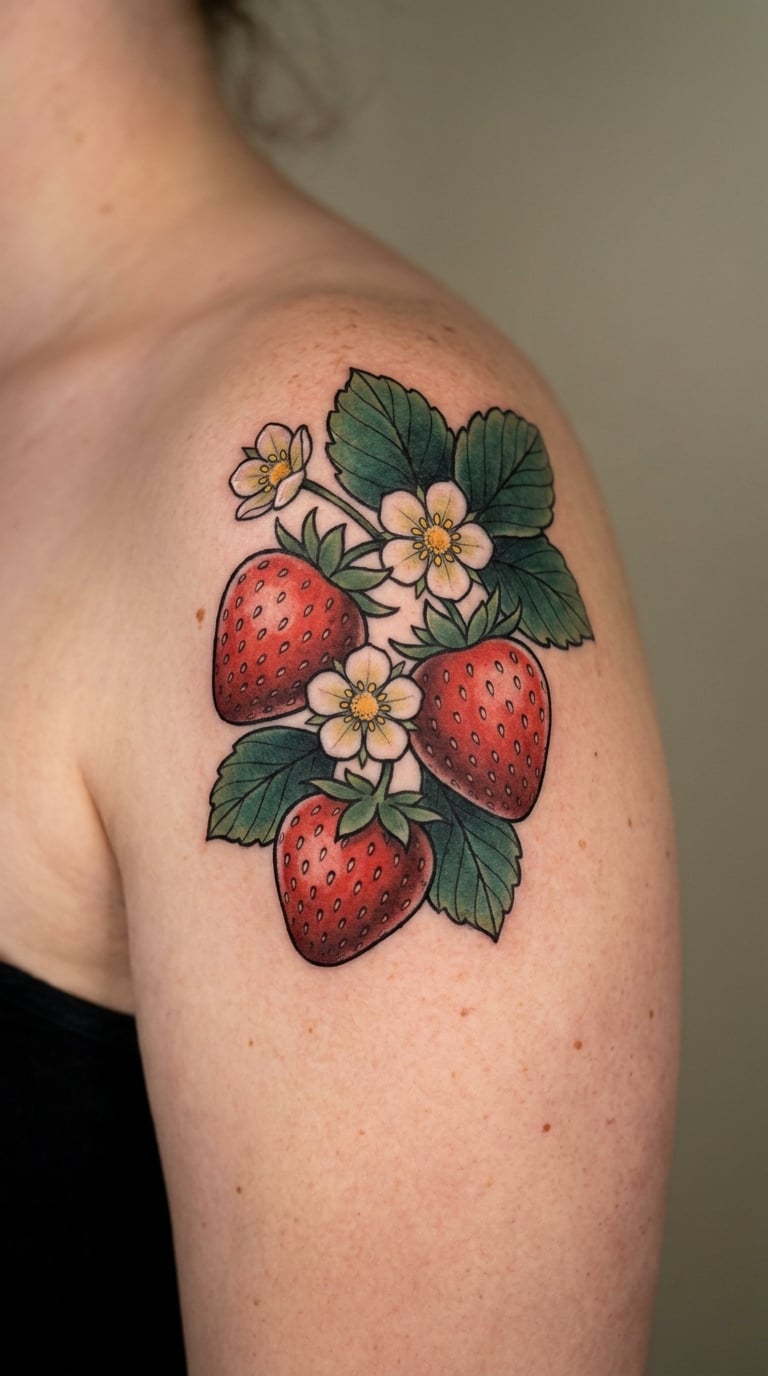
Three strawberries in bold outline with saturated red shading, white blossoms, seed detailing and heavy green leaves, arranged as a patch rather than a single fruit. Neo-traditional line work gives it weight without going cartoonish.
It reads as cheerful, domestic and slightly nostalgic, and it is one of the few garden motifs that suits a shoulder as well as a leg.
Placement: shoulder, thigh, calf or across the back of the upper arm. Size: 4 to 7 inches (10 to 18 cm). Style: neo-traditional. Pain: medium to high; the shoulder cap and outer thigh are the two spots wearers rate worst in this theme.
Make it yours: draw from your own allotment’s variety, or add the number of plants you grow as a seed count hidden in the leaves.
12. Fine-Line Trellis Vine Climbing the Forearm
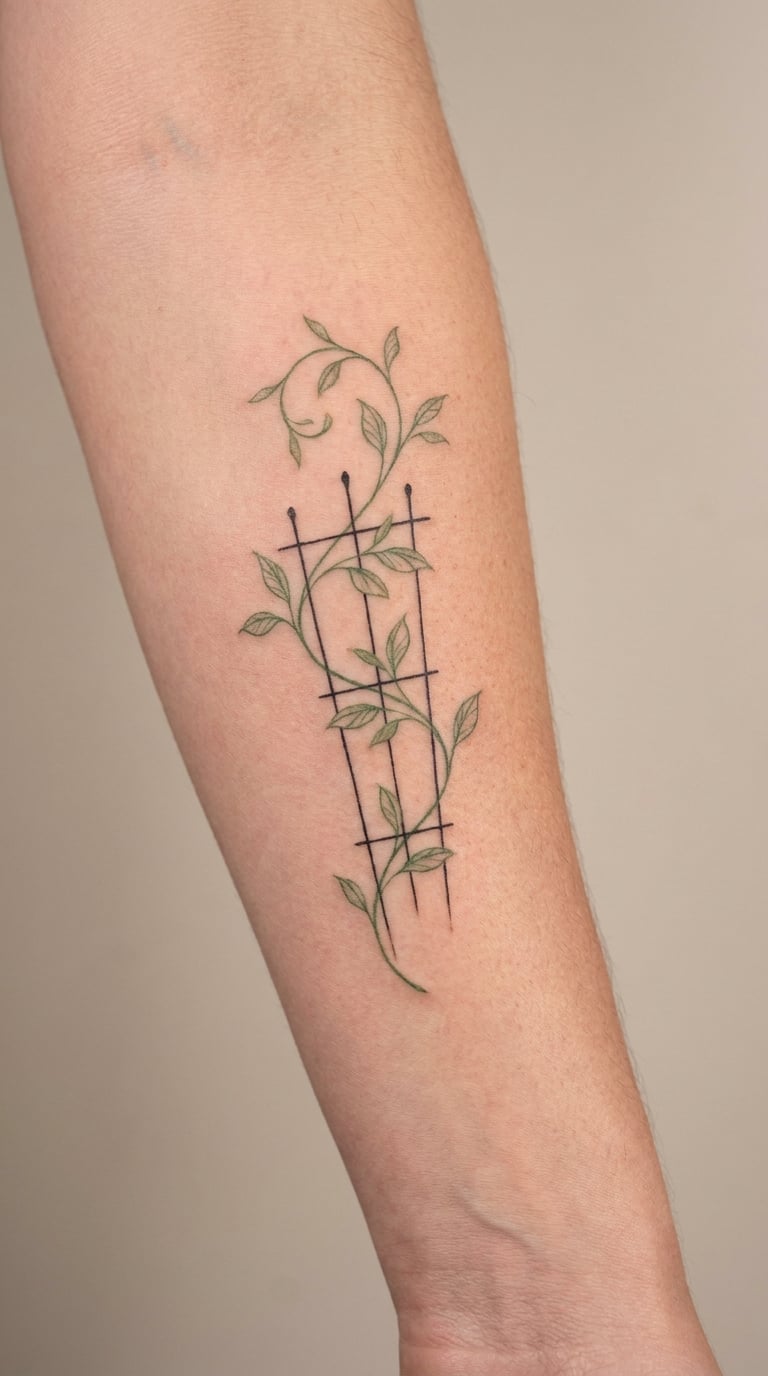
A slender climbing vine drawn in fine line, wrapping a narrow wooden or metal trellis with a few open negative spaces between leaves. The structure gives the piece something to sit against so it does not float.
It suits climbers, greenhouse growers and anyone whose plants need a support, and it previews a full forearm piece without committing to one.
Placement: inner forearm, running lengthwise. Size: 3.5 to 5 inches (9 to 13 cm). Style: fine line with a green accent. Pain: medium. The thin lines on an inner forearm soften within five years or so, so keep the trellis a heavier weight than the vine.
Make it yours: bring a picture of the actual climber and match the leaf spacing, or name the variety in small script along the base.
13. Gardening Gloves and Trowel in Blackwork
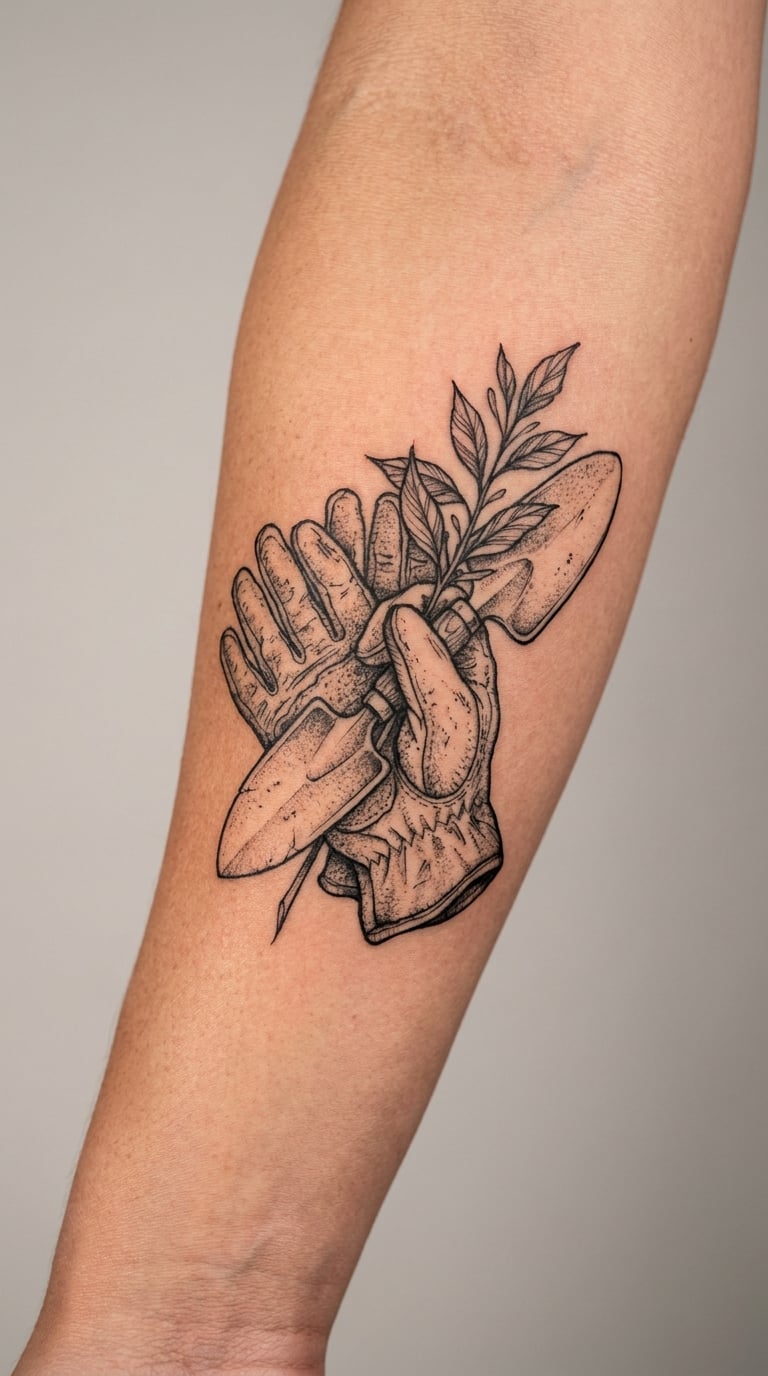
A pair of worn leather gloves, one holding a narrow trowel with a small sprig tucked beside it, drawn in strong blackwork outlines with stippled texture for the leather grain. Almost no colour needed.
Tools are the part of gardening nobody else tattoos, which is exactly why it gets compliments from people who are not interested in flowers at all.
Placement: outer forearm, upper arm or calf. Size: 4 to 6 inches (10 to 15 cm). Style: blackwork. Pain: medium on the arm, more on the inner bicep and rib area. Heavy black holds its line for decades with light upkeep.
Make it yours: have your initials monogrammed on the glove cuff, or model the trowel on the one you actually own.
14. Lavender Stalks in Muted Watercolour
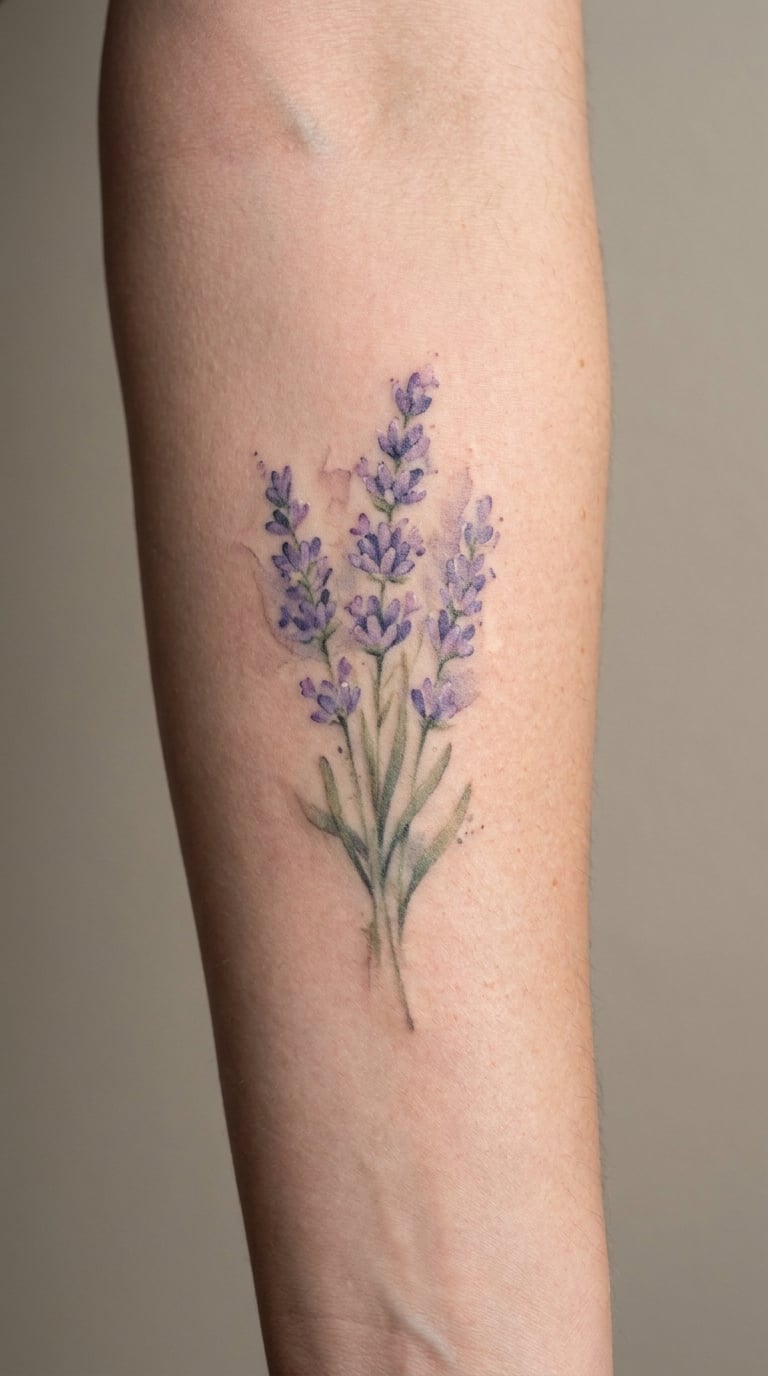
Loose purple spikes on thin grey-green stems, painted in a wash that thins at the tips so the colour looks like it lifted off the skin. Faded violet rather than a solid purple block.
It is the most asked-about herb for a reason: growers who dry their own lavender tend to want it, and the muted palette suits skin that cannot carry strong colour without looking heavy.
Placement: outer arm, thigh or calf. Size: 3 to 4 inches (8 to 10 cm). Style: watercolour. Pain: medium. Pale washes are the first thing to fade, so plan on a colour refresh every few years if you want it to stay as light as day one.
Make it yours: reference a specific field or your own garden row, and ask the artist to match the stem count to one plant you cut.
15. Monstera Leaf in Minimalist Line Art
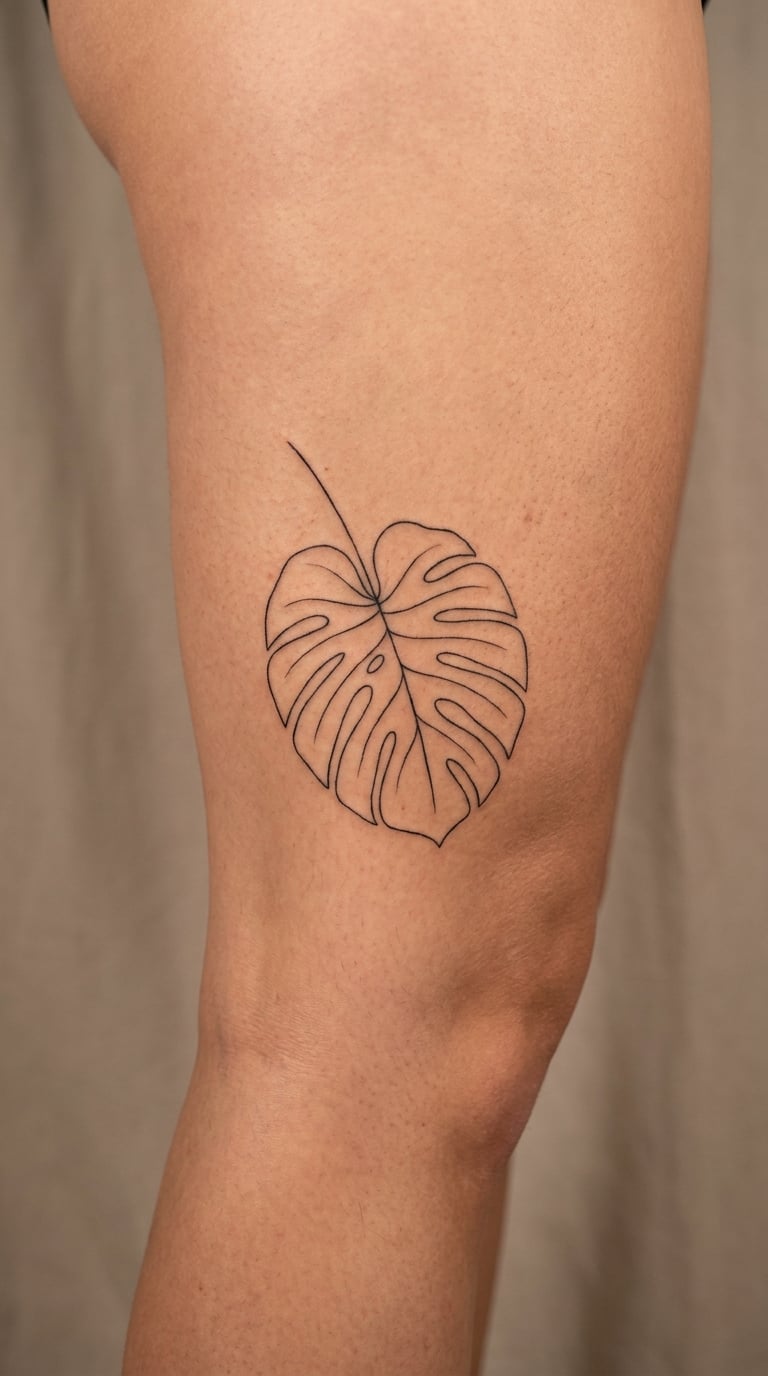
One monstera leaf defined by a clean outer contour and a handful of fenestrations, with the interior left almost entirely empty. Line weight does the modelling, so it stays graphic rather than illustrative.
Houseplant growers gravitate here because the shape is instantly identifiable, and a single large leaf is easier to place than a full plant composition.
Placement: outer thigh, forearm or the back of the calf. Size: 4 to 6 inches (10 to 15 cm) long. Style: minimalist line art. Pain: medium; the thigh is one of the more forgiving spots for a piece this size.
Make it yours: photograph your own plant at the same angle you want the tattoo and hand it over, so the cuts in the leaf are yours rather than a stock drawing.
16. Micro-Realism Bee on a Blossoming Branch
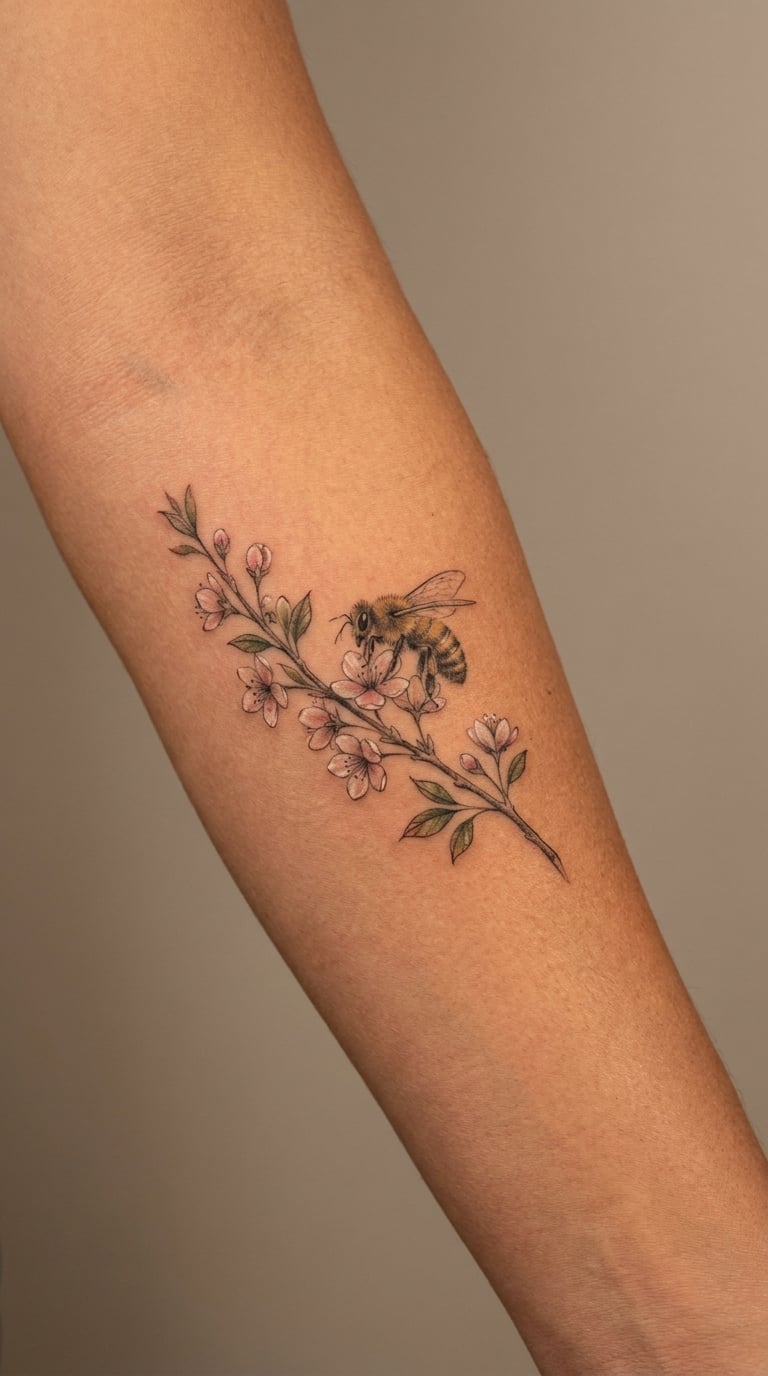
A bee resting on a small blossoming fruit branch, with realistic anatomy, faint wing translucency and restrained black and grey shading. The branch curves so the bee sits at the visual centre.
It speaks to keeping a garden alive for other things rather than to any single promise, and it works as a quiet companion to a plant piece elsewhere.
Placement: inner forearm, upper arm or near a collarbone. Size: 2 to 3 inches (5 to 8 cm). Style: micro-realism. Pain: medium. Wing detail is the first thing to blur, so keep the wings simple rather than veined.
Make it yours: use a native species that actually visits your garden, named by its common name, so the piece is locally accurate.
17. Sunflower and Seed-Pod Half Sleeve
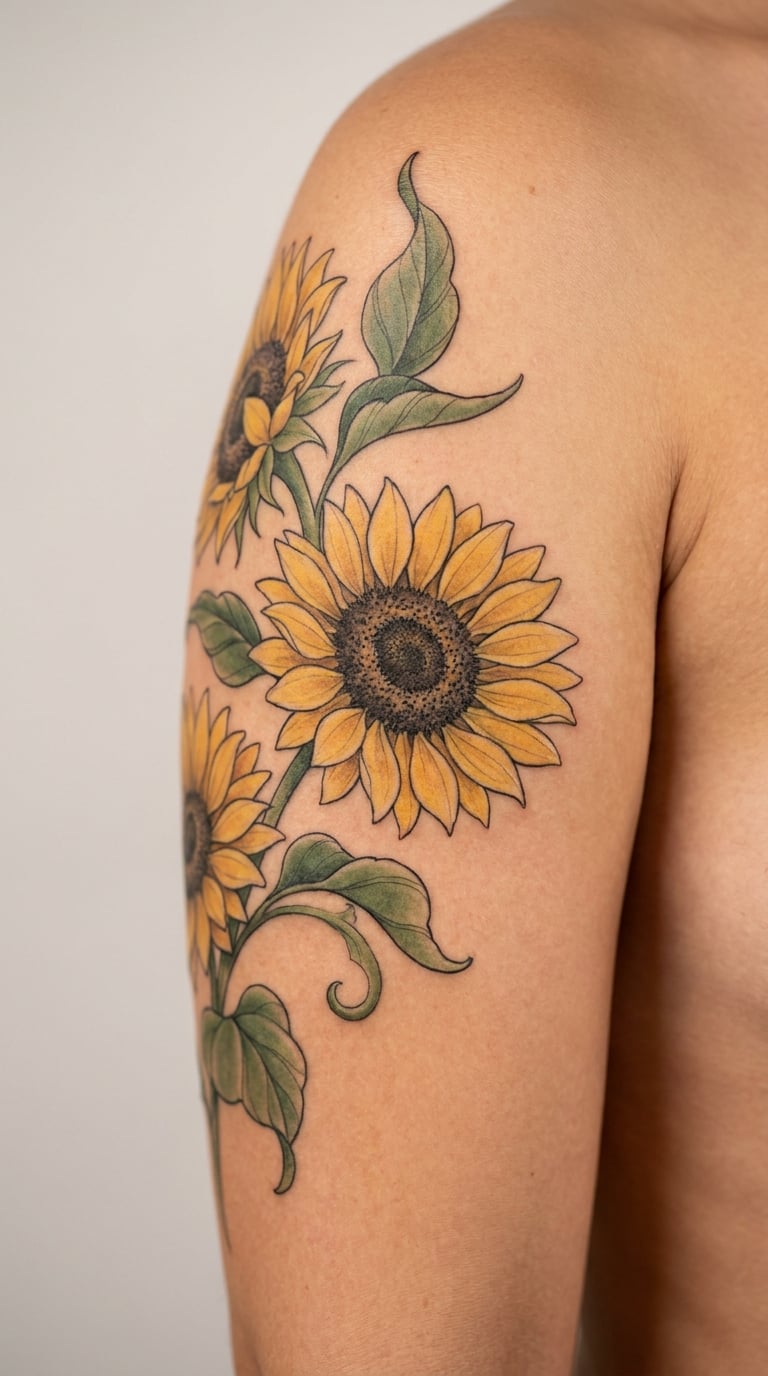
A flowing composition that moves through the stages: open yellow blooms at the top, heavy dark seed heads in the middle, and curling green leaves carrying the eye down to the elbow. Traditional motifs handled with botanical shading.
Showing the whole life cycle rather than a single flower is what separates this from a sticker of a sunflower, and it gives later sessions an obvious place to go.
Placement: upper arm to elbow, or shoulder to mid-bicep. Size: half-sleeve, roughly 8 to 12 inches (20 to 30 cm). Style: botanical realism. Pain: high, and it is a multi-session piece. The inner arm and elbow crease take the worst of it.
Make it yours: fix your palette at the consultation, since adding new sunflowers later in a different yellow is the mistake that shows.
18. Succulent Cluster Growing from an Elbow
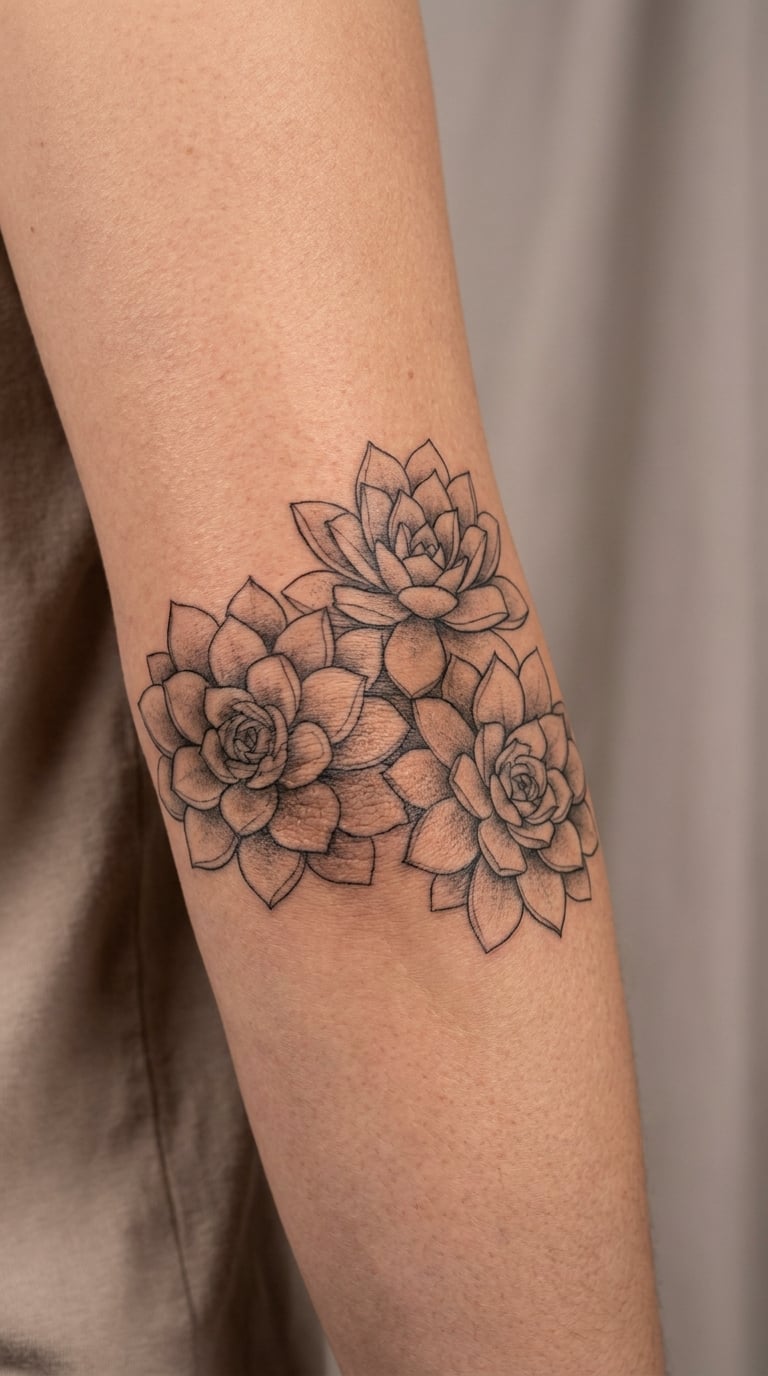
Three rosettes of different sizes, leaves built from clean geometric planes with black and grey shading in the crevices, arranged so the cluster follows the curve of the elbow. One plant opens toward the forearm and one toward the upper arm.
It suits people who like plants but forget to water, and the rosette shapes hold a bold edge better than most thin leaf forms.
Placement: outer elbow, outer arm or ankle. Size: 3 to 4 inches (8 to 10 cm) across. Style: black and grey realism. Pain: medium to high; the elbow and inner arm are sensitive, and the ankle bones make skin work slower.
Make it yours: name the three plants on your windowsill, or copy the rosette shapes from a photo of each one.
19. Cherry Blossom Branch in Blackwork
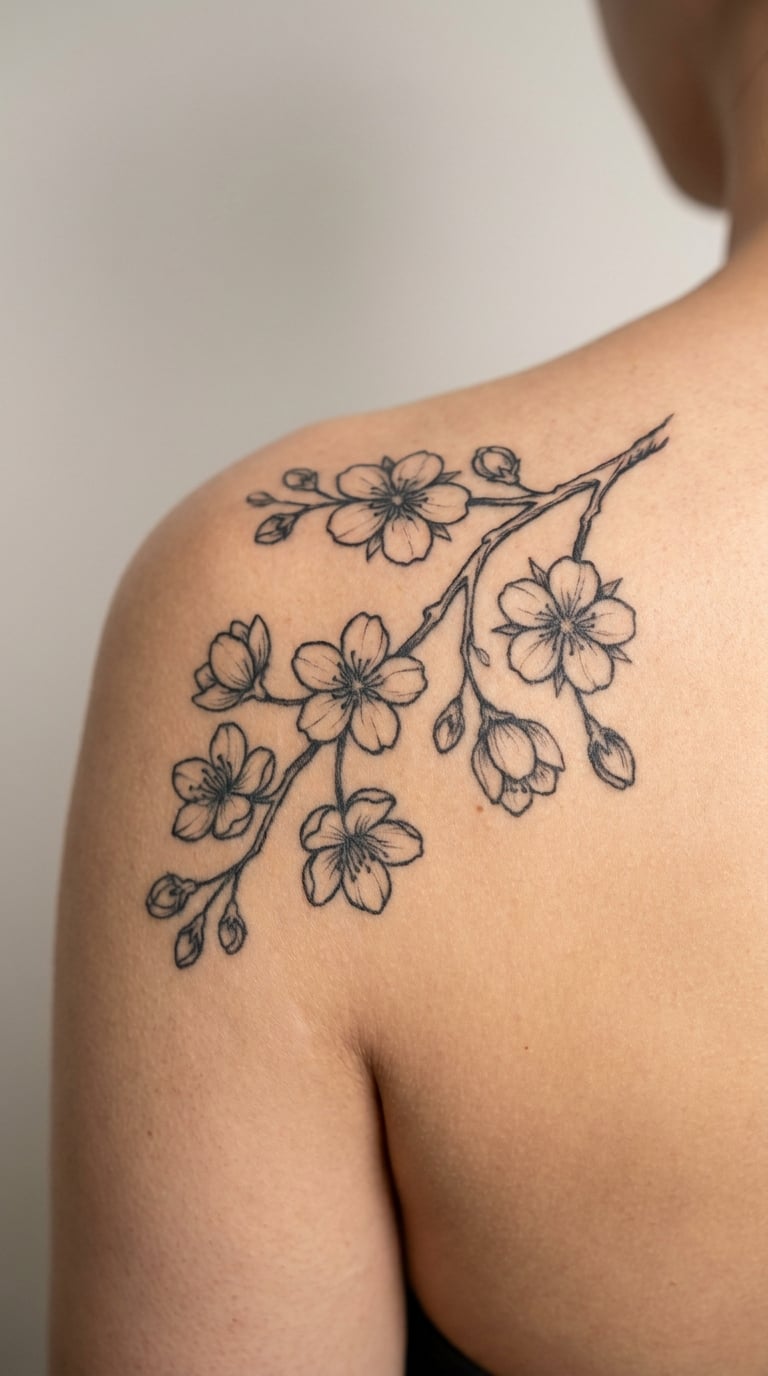
A sweeping branch built from dark tapered lines, opening into five-petal flowers with plenty of bare skin between them. Limited petal detail and no colour, so the composition stays graphic and the negative space does the shaping.
It is the piece people mark a season, a year or a place with, and it works as the anchor of a spring-themed sleeve.
Placement: shoulder, upper back or forearm. Size: 4 to 7 inches (10 to 18 cm) across. Style: blackwork line work. Pain: medium; the shoulder blade and outer shoulder are fine, the spine and lower back are not.
Make it yours: choose the angle the branch runs before you book, because a branch that fights the shoulder’s curve is the piece people regret.
20. Carrot, Trowel, and Seedling Sleeve
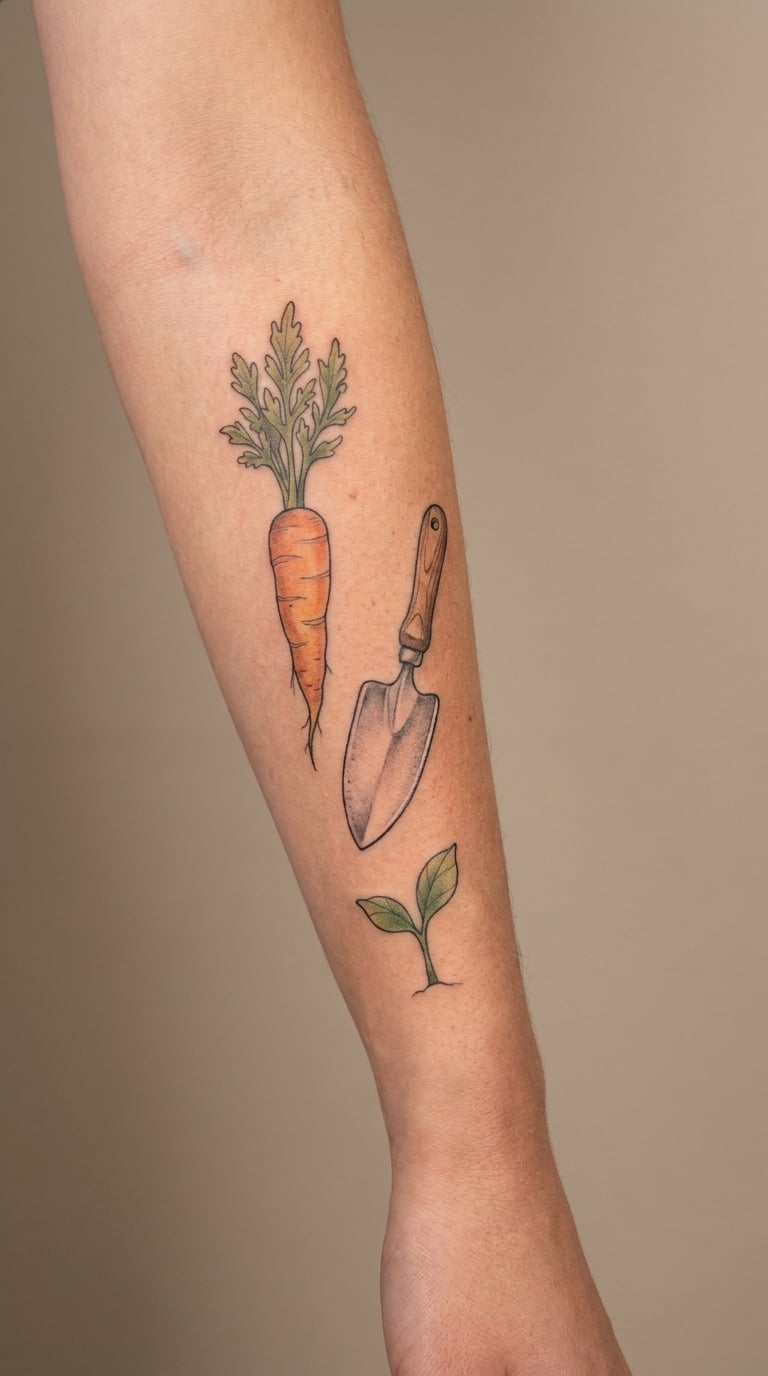
A full forearm composition: one large carrot angled along the bone, a working trowel crossing behind it, and a seedling pushing up through negative space so the arm does not read as a solid block of imagery.
It is for vegetable growers who already have a tattoo or two, and the gaps are deliberately left so the sleeve can grow one element per season.
Placement: wrist to elbow on one arm. Size: full forearm, 10 to 14 inches (25 to 35 cm). Style: illustrative colour with bold outlines. Pain: high, split across two or three sessions. The wrist and inner elbow set the pace.
Make it yours: leave one section intentionally unfinished and add a crop from each growing season, which is how most people actually build this.
21. Botanical Trowel on the Hand
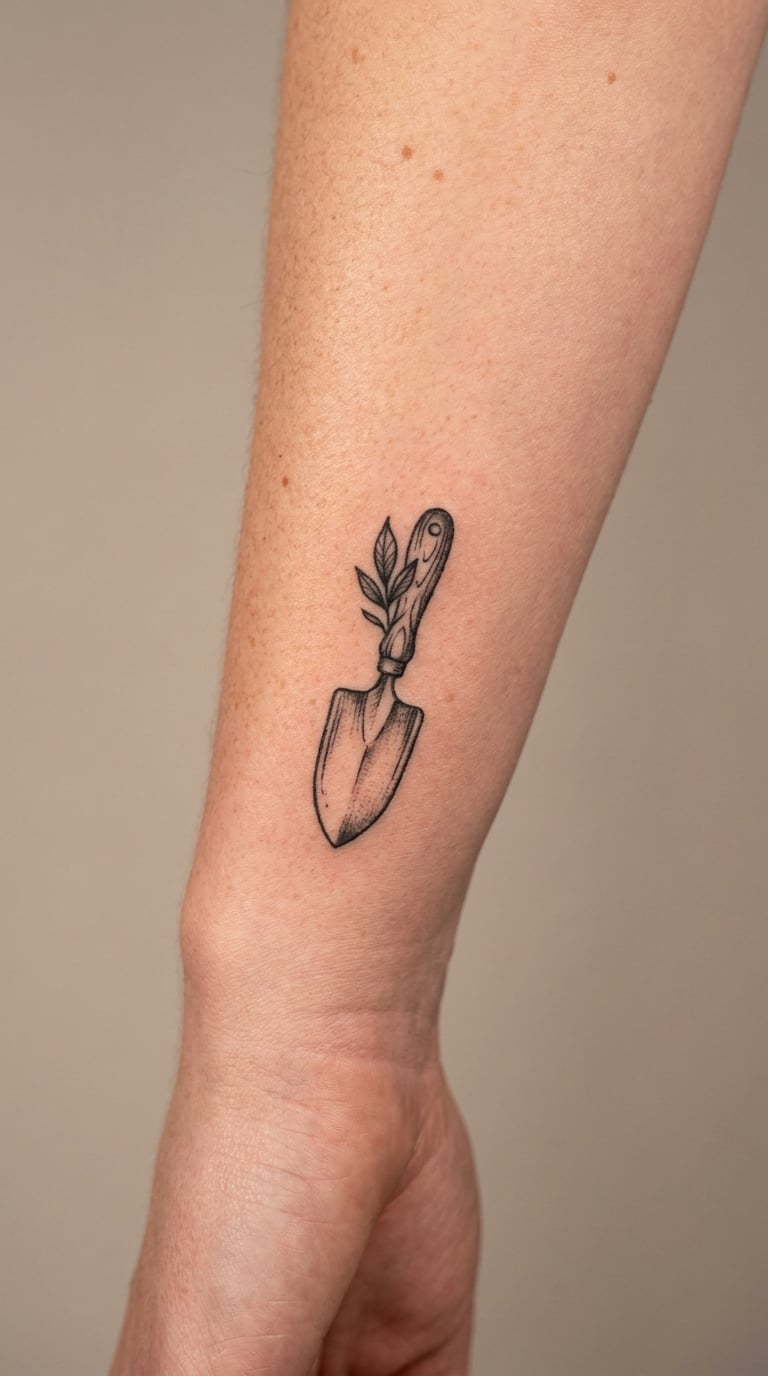
A small garden trowel angled across the back of the hand in crisp blackwork, with a single leaf worked into the handle and a short line of stippled soil below the blade. A whole garden scene will not hold at this size, so the tool does the work alone.
It is direct and readable in a way a crowded hand piece never is, and it makes an obvious companion to a matching one on the other hand.
Placement: back of the hand, aligned along the knuckles. Size: 2 to 3 inches (5 to 8 cm). Style: blackwork. Pain: high; hands are sensitive, slow to heal and constantly in motion. Hand work also fades noticeably faster than anywhere else.
Make it yours: have the maker’s stamp on the blade put in tiny, or swap the leaf for the shape of a plant from your own garden.
22. Mushroom Garden in Muted Realism
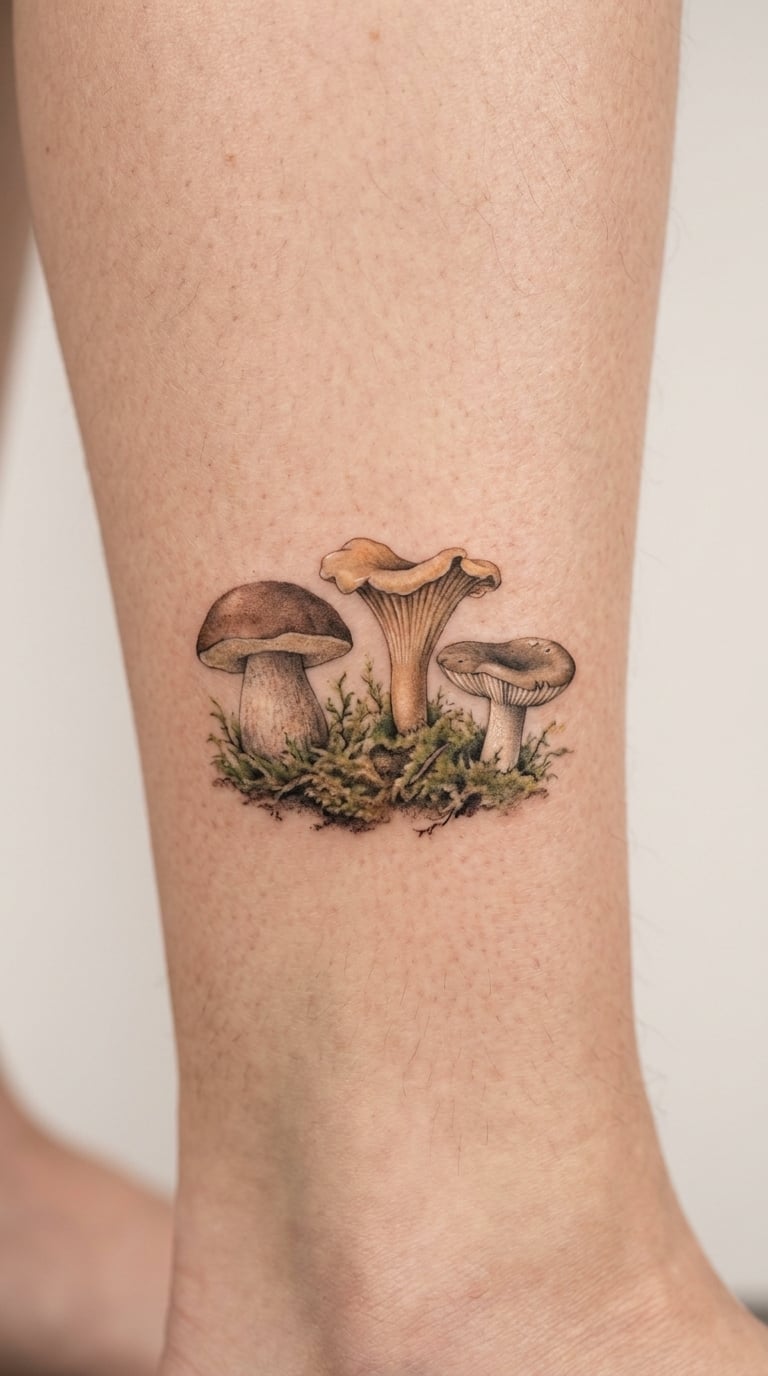
Three mushrooms of different heights growing from a low mound of moss, caps softly shaded in earth tones, gills suggested with a few fine lines and no hard outline. The whole cluster stays quiet rather than illustrative.
It suits shade gardens, woodland walks and anyone who spends more time in the understory than on the vegetable patch.
Placement: calf, forearm or thigh. Size: 3 to 4 inches (8 to 10 cm). Style: muted realism. Pain: medium. Gill lines and moss texture are the details that fade first, so keep the caps simple.
Make it yours: use species you can actually find near your home, identified from a photo with a field guide, so the piece is a record of a place.
23. Herb-Cutting Kitchen Utensil Design
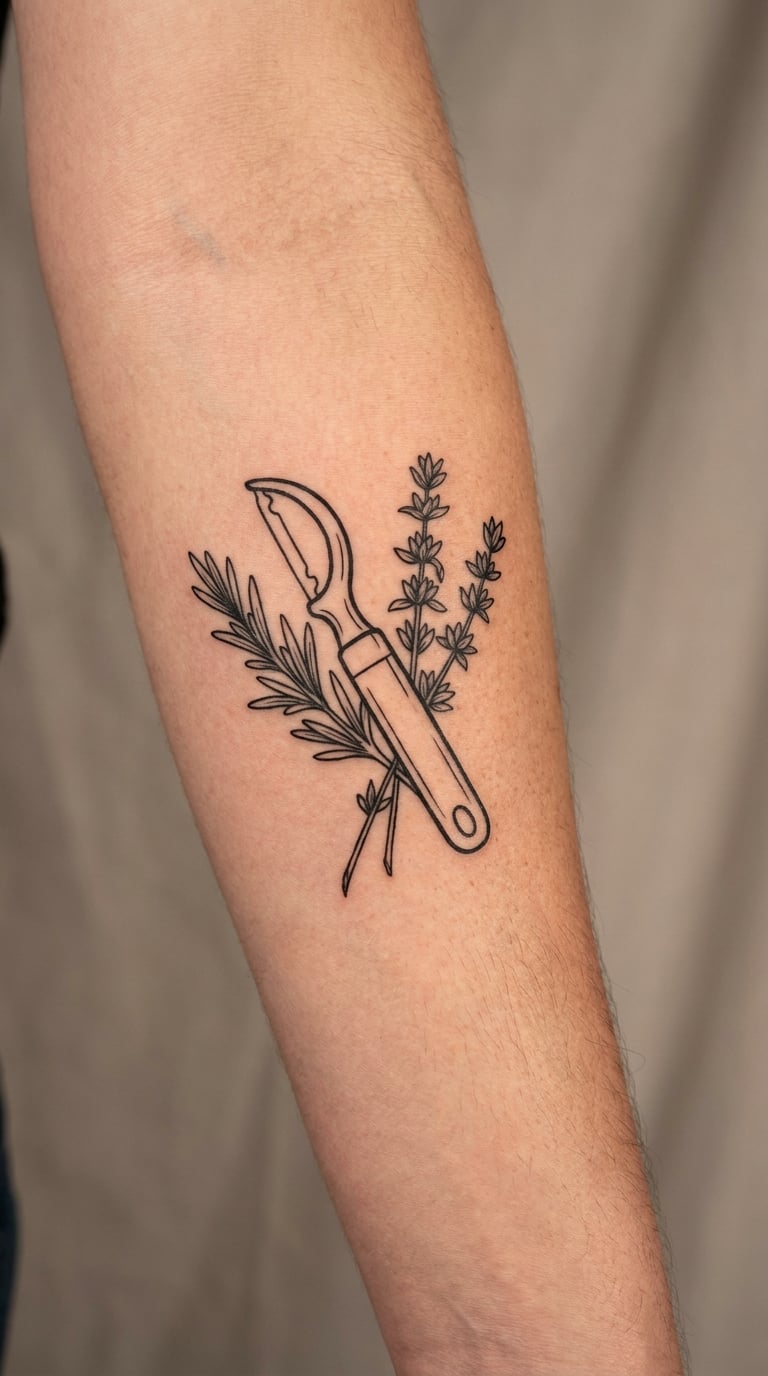
A small kitchen herb stripper crossed with a rosemary sprig and a short thyme stem, drawn in a clean illustrative style with confident outlines and almost no shading. It is the clearest statement of the gardening-to-kitchen link.
People who cook from their own beds ask for this because the object is genuinely theirs, not a stand-in for a garden.
Placement: outer or inner forearm, running lengthwise. Size: 3.5 to 5 inches (9 to 13 cm). Style: clean illustrative line work. Pain: medium. Simplified lines hold far better than detailed foliage, which matters if you plan to keep this for years.
Make it yours: add the ingredient you cook most, or a small date tied to the first harvest you ever brought in.
24. Birth Flower Bouquet in Watercolour
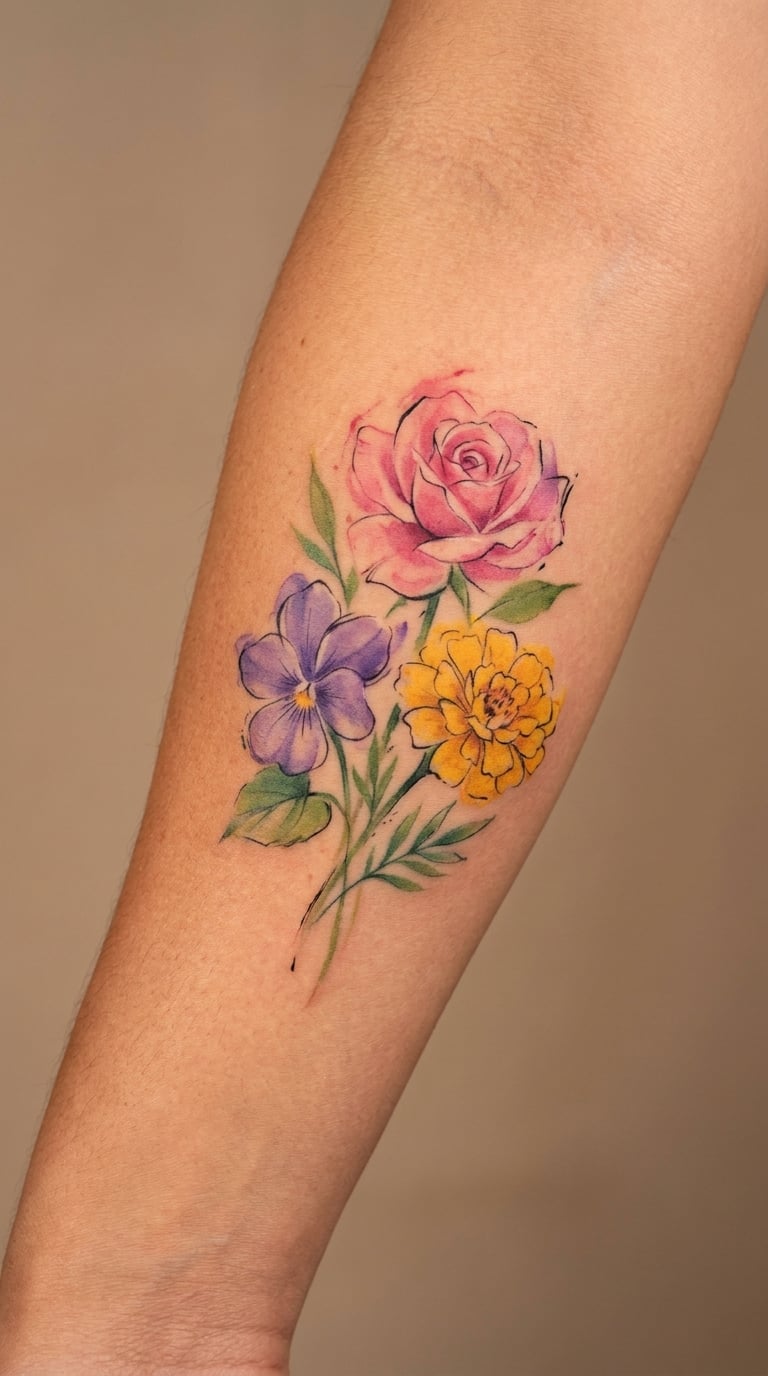
Three blooms gathered loosely, each one drawn recognisably as its own species, with leaves and edges that dissolve into watercolour rather than stopping at a hard outline. Specific plants instead of a generic bouquet.
It carries more weight than a stock floral piece because the species are named, and it works as a gift as often as a self-chosen tattoo.
Placement: outer forearm, calf, thigh or across the back. Size: 5 to 8 inches (13 to 20 cm). Style: watercolour. Pain: medium at that size, and the session will run long because of the colour work.
Make it yours: bring a list of the birth flowers that matter, with their real colours, rather than asking for whatever looks nice on a screen.
How to Choose the Right Design
Check the line weight against the size first
A single-needle line that looks delicate at six inches turns into a grey smudge at two. Ask your artist what line weight they would use for the size you actually want, not the size in the photo you saved.
Decide colour or black and grey before the drawing is finished
Colour gives you recognisable fruit and blooms; black and grey survives sun and years better. Pale watercolour is the compromise most people regret fastest, because it fades toward grey rather than fading away.
Let the body contour decide the composition
Stems should run along the direction the limb moves, and a piece that has nowhere to grow will feel boxed in later. A forearm piece laid along the bone can extend; one placed across it usually cannot.
Look for direction, not just a single plant
Vines, trellises and paths give a later session somewhere to go. A single isolated carrot is a fine first piece and a poor starting point for a sleeve.
Ask what the artist drops first
Every artist has a detail they consider optional, and knowing which one it is before you agree matters more than most people expect. Berries, fine leaf interiors and gill lines are the usual casualties.
Bring real reference, not saved flash
Photos of your own plant, taken in flat daylight from two angles, land far better than screenshots. Wearers repeatedly report that the piece only feels personal when the plant in it is actually the plant they grow.
Cost and Session Time
US pricing comes down to shop minimums, hourly artist rates, location and how much detail a design carries, so two gardeners with the same idea can pay very different amounts. Most shops set a minimum that covers a very small piece, and a fair band for micro work such as a seedling pot or a bee on a branch is roughly $80 to $200 for one short session.
| Design size | Typical examples | US price range | Session time |
|---|---|---|---|
| Micro (under 2 in) | Sprout between fingers, sunflower behind the ear | $80 to $200 | 1 to 2 hours |
| Small (2 to 3 in) | Seedling pot, pea pod, trowel on the hand | $150 to $350 | 2 to 3 hours |
| Medium (3 to 5 in) | Rosemary sprig, herb bundle, trellis vine | $300 to $700 | 3 to 5 hours, often split in two |
| Large (6 to 8 in) | Tomato vine wrap, birth flower bouquet | $700 to $1,500 | Two or three sessions |
| Sleeve scale | Sunflower half sleeve, carrot and trowel forearm | $1,200 to $3,500 | 3 to 5 sessions over months |
Watercolour sits at the top of each band because every wash is built up and allowed to settle, while black and grey line work moves faster per inch until detail density climbs. Line-up, touch-up and any consultation are usually counted separately, and the free consultation is the moment to ask how the artist prices a piece of your size. If a quote feels unclear, ask what the shop minimum is and how the sessions are split before you commit.
Aftercare Basics
- Follow your artist’s aftercare instructions first. They know exactly what they did, and generic advice can contradict their method.
- Wash gently. Clean with lukewarm water and a mild unscented soap, then pat dry with something clean rather than rubbing.
- Keep it covered and dry. Loose, dark clothing over a fresh piece protects it while it settles. Avoid soaking until the skin has fully healed.
- Skip the sun. A tattoo exposed to strong sun while healing, and afterwards, will lose colour noticeably faster. Sleeves on bare arms fade faster than pieces under sleeves.
- Do not pick or scratch. Flaking skin comes off on its own; pulling it is the fastest route to patchy pigment.
- Contact the artist or a qualified clinician if something unexpected happens. Persistent redness, swelling beyond the normal healing window, heat spreading from the area, or discharge are reasons to get advice rather than to wait it out.
Frequently Asked Questions
What is the smallest size a gardening tattoo can realistically be?
Roughly half an inch for a single leaf or two-leaf sprout, and two to three inches for anything with a stem, a pot or a tool in it. Below that, fine leaf detail and stippling have nowhere to live and will blur together within a few years. If you want something small, choose a shape with a strong silhouette rather than a plant with lots of interior detail.
Which body placement is least painful for a gardening tattoo?
The outer thigh, upper arm and calf are the calmest spots for most people, largely because there is less bone directly under the skin. Inner forearm, wrist, elbow and the back of the hand are noticeably more sensitive, and neck placement feels scratchy rather than painful. Appetite, sleep and the spot you actually sat on all change the answer more than any chart will.
Do colourful gardening tattoos fade faster than blackwork designs?
Yes, generally. Black and heavy blackwork hold their line for decades, while reds, oranges, yellows and pale watercolour washes shift toward grey within a few years. Sun exposure speeds this up, which is why fruit and flower pieces on bare arms fade fastest. Plan a colour refresh every three to five years, or choose muted tones and a stronger outline up front.
Can a gardening tattoo fit into an existing sleeve?
Usually, and it is one of the better reasons to add to a piece rather than start again. The work is keeping the line weight and colour palette consistent with what is already there, which is why you want a healed photo of the existing tattoo at the consult. A small vine, a single herb sprig or a bee on a branch fills open skin without crowding it.
How can I personalize a botanical or vegetable tattoo?
Photograph your own plant in flat daylight from two angles and hand the photos over, so the leaf shape and spacing are genuinely yours. Naming a variety, a plot number, a growing date or a first harvest works too. These 24 gardening tattoo ideas are all customisable this way, and the result reads as personal rather than picked from a flash sheet.
A Short Wrap-Up
If this is your first tattoo, the seedling pot, the sunflower behind the ear and the rosemary sprig are the safest starts: small, readable and in areas that hurt least. They also leave you somewhere to go, which matters more than people expect at the booking stage.
If you already collect pieces, the tomato vine, the trellis climb and the sunflower half sleeve are the ones built to be added to. Bring a healed photo of what you already have and real photographs of the plants you actually grow, and the piece will sound like yours from the first sketch.