
How to Protect a New Tattoo from the Sun (October 2026)
A fresh tattoo is an open wound, and the fastest way to ruin it is sun. Learning how to protect a new tattoo from the sun in the first six weeks is the difference between bold color and a faded patch that needs a costly touch-up. The good news: you do not need expensive products or complicated routines, just the right cover-ups, the right sunscreen, and a little patience while the skin closes.
This guide walks through the week-by-week timeline, the cover-up options that actually work, the sunscreen rules most people mess up, and the placement-specific tips that match what real wearers deal with every day.
Why Sun Protection Matters for a New Tattoo
Sun exposure is the single biggest threat to a healing tattoo. UV rays penetrate the still-open top layer of skin and break down ink particles before they have fully settled into the dermis, the deeper layer where they need to live. The result is ink that fades faster, fine lines that blur, and patchy color that looks uneven for the life of the piece.
There is also a real risk of burning a fresh tattoo. A healing tattoo is essentially a controlled wound, and adding UV damage on top of it can cause blistering, hyperpigmentation (those stubborn dark spots), and longer healing times. Once you see a tan line form around a tattoo instead of through it, the color underneath has already shifted.
Long term, every unprotected summer takes a slice out of the ink. Reviewers and artists both report that tattoos on always-exposed skin (hands, forearms, shoulders, neck) fade faster than pieces kept covered for the first few months. The fix is not complicated; it just has to start on day one.
The Healing Timeline by Week
The table below shows roughly what the skin is doing and what is safe at each stage. Healing times vary a little by placement, size, and your own skin, but most tattoos follow this arc.
| Phase | Skin Status | Sun Exposure Guidance | What Is Safe |
|---|---|---|---|
| Days 1 to 3 | Open wound, possibly bandaged, redness and mild swelling | No direct sun at all on the tattoo | Medical-grade film (if your artist applied it), loose clothing, staying indoors |
| Week 1 to 2 | Surface closed, peeling, light scabbing, itch | No direct sun; cover the tattoo fully whenever outside | Loose long sleeves, UPF 50+ fabric, wide-brim hats for shoulder or back pieces |
| Week 3 to 4 | Outer layer healed, deeper layers still mending | Still no direct sun if you can avoid it; cover or use mineral SPF | Mineral sunscreen SPF 30+ if the tattoo is fully closed with no open spots, plus UPF clothing |
| Week 6 and beyond | Fully healed at the surface and below | Daily SPF is the new normal | Broad-spectrum mineral sunscreen SPF 30 to 50, reapply every two hours outdoors, UPF sleeves for long days |
If you only remember one line from this guide, make it this: cover the tattoo for the first three to four weeks, and put sunscreen on it every single day after that.
How to Cover a New Tattoo Outdoors
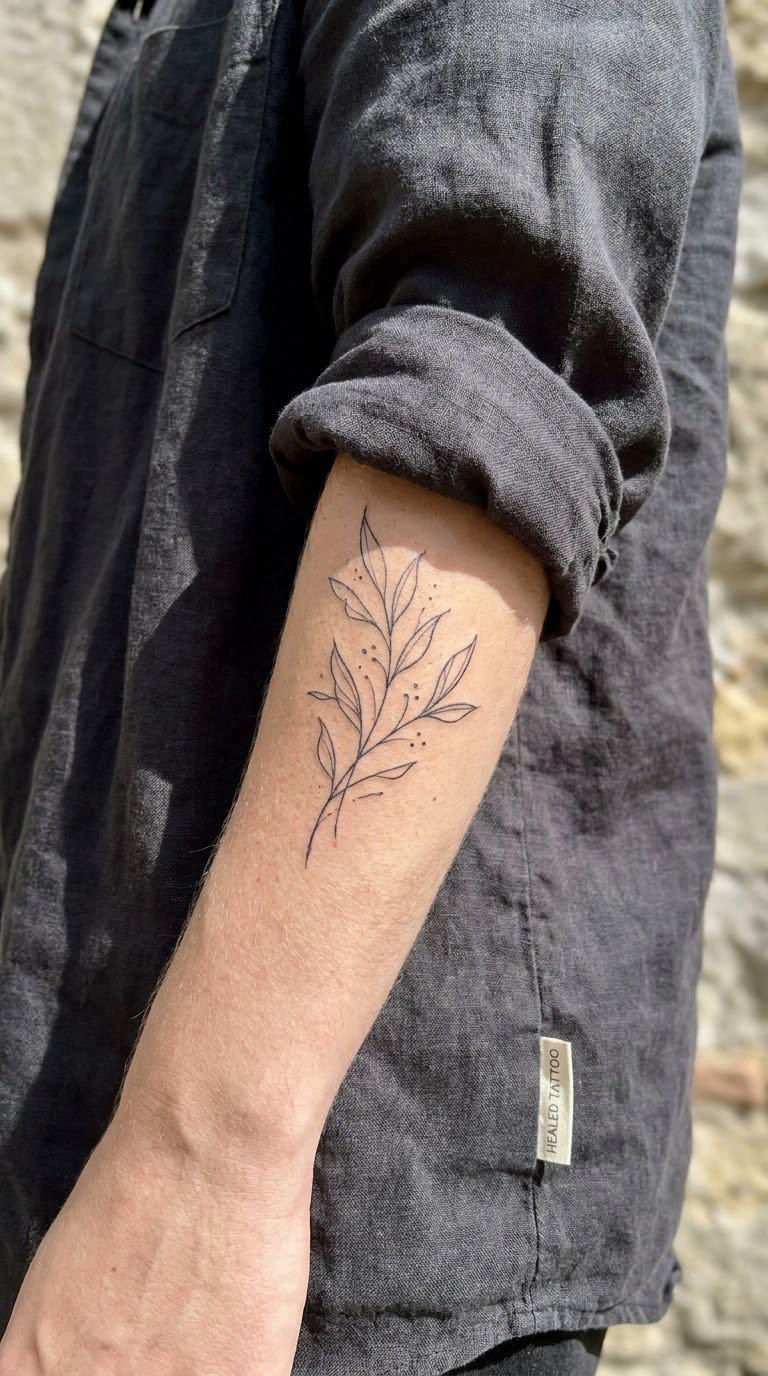
For the first three to six weeks, physical coverage is safer than any sunscreen. A loose, breathable layer blocks the UV without trapping sweat or sticking to the healing skin.
Loose cotton or linen works for most days. A dark linen overshirt, a soft long-sleeve tee, or a zip hoodie all keep UV off the tattoo without pressing on it. Avoid anything tight at the cuff; pressure on a healing tattoo can pull at scabs and slow things down.
UPF 50+ apparel is a smarter choice for long days outside. UPF, or Ultraviolet Protection Factor, measures how much UV the fabric blocks. A UPF 50+ shirt blocks about 98 percent of UV rays and stays effective all day, even when damp. Look for dedicated UPF sleeves if you have a forearm piece and you run, cycle, or work outside.
Medical-grade transparent film (brands like Tegaderm and Saniderm) is the gold standard for water days and sweaty workouts. The film is waterproof, breathable, and lets you shower or swim without soaking the tattoo. Apply it on freshly cleaned, dry skin and change it every 24 to 48 hours. Do not use regular plastic wrap or adhesive bandages; they trap moisture and can tear the scab when you peel them off.
Choosing the Right Sunscreen for a Tattoo
Once the tattoo is fully closed with no open spots, usually around week three or four, sunscreen becomes your everyday tool. The goal is broad-spectrum protection (meaning it blocks both UVA and UVB rays) with the gentlest formula possible.
Mineral sunscreen is usually the better pick for tattoos. Physical filters like zinc oxide and titanium dioxide sit on top of the skin and bounce UV away, instead of being absorbed and converted to heat. They start working the moment you apply them, they do not sting healing skin, and they tend to be fragrance-free.
Chemical sunscreens use filters like avobenzone and oxybenzone that absorb into the skin. They feel lighter under makeup and rub in clear, but some people find they irritate freshly healed tattoos, and a small percentage react to the active ingredients. If your tattoo is fully healed and your skin has tolerated them fine, chemical SPF is fine too.
SPF 30 to 50 is the right range for everyday tattoo care. Anything below SPF 30 lets too much UV through for high-exposure days. Anything above SPF 50 gives a small bump in protection at the cost of thicker formulas that are harder to reapply. Look for water resistance of 80 minutes if you sweat or swim, and a fragrance-free, non-comedogenic label if your skin is sensitive.
When Can You Put Sunscreen on a Fresh Tattoo?
Most artists say no sunscreen on a tattoo for the first two to three weeks. The skin needs to be fully closed with no scabs, no flaking, and no shiny new pink layer showing. Putting SPF on an open wound stings, can clog the pores, and traps ingredients against skin that is trying to breathe.
The test is simple. Look at the tattoo in good light. If the surface is matte and matches the surrounding skin, with no glossiness, no raised scabs, and no oozing, sunscreen is safe. When in doubt, wait one more week and call your artist.
For the first application, try a small patch on a hidden corner of the tattoo. Wait 24 hours. If there is no redness, itching, or rash, you are good to use it on the whole piece.
Sun Protection by Placement
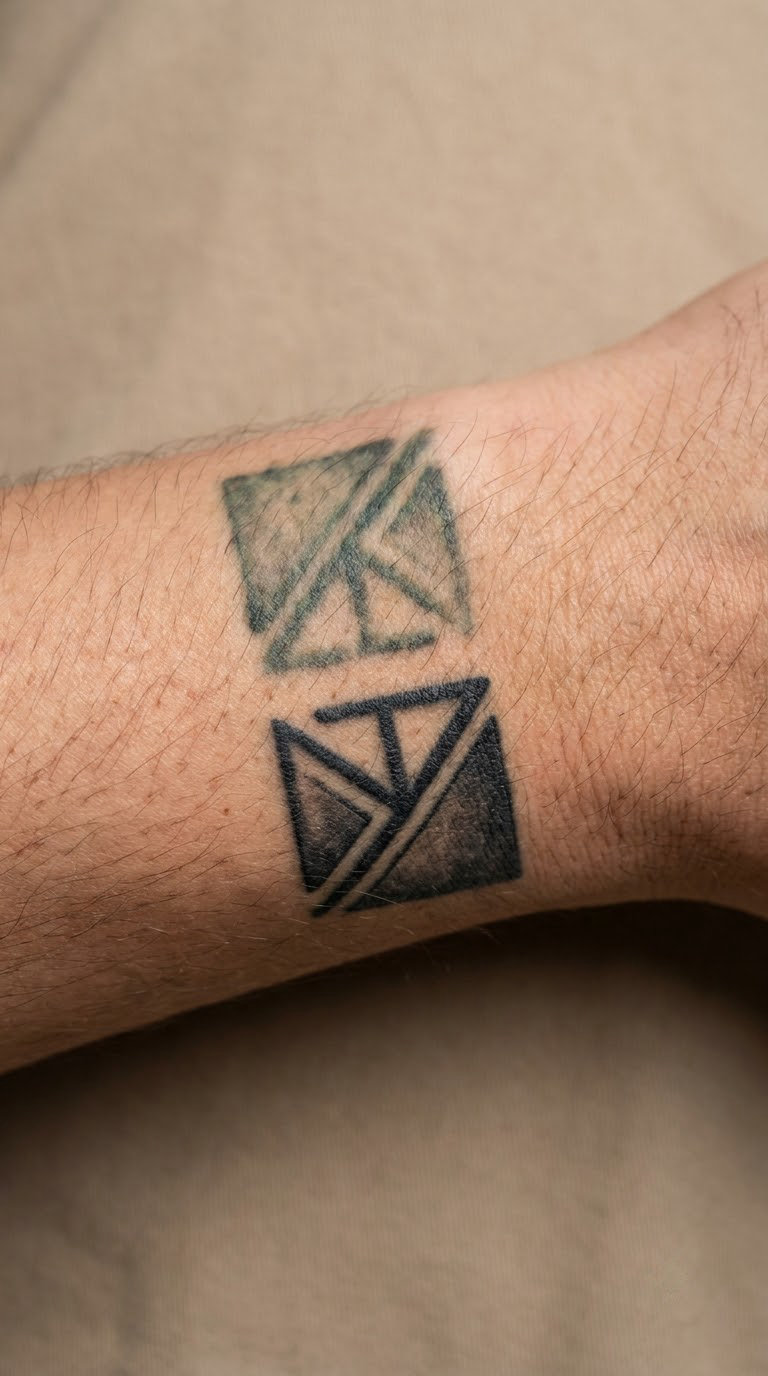
Where your tattoo sits changes how you need to protect it. Some placements see the sun every day, even in winter; others hide under clothes and almost never fade. The table below sorts the common spots into the two groups.
| Placement | Sun Exposure Level | What It Needs Long Term |
|---|---|---|
| Forearm | High, even in short sleeves year-round | Daily mineral SPF 30+ or UPF sleeves for outdoor work; a slim forearm design benefits from consistent coverage |
| Shoulder and upper back | High in summer tanks, swimsuits, and tanks | Mineral stick for easy reapplication; UPF swim shirts at the beach |
| Back of neck | Moderate to high, especially with short hair | Daily SPF on the nape, hat with a back flap for long days |
| Hand and finger | Very high; one of the fastest-fading placements | Frequent SPF, expect touch-ups every few years even with good care |
| Ankle | High in summer, low in boots season | Cover with socks outdoors in summer; mineral stick for sandal days |
| Rib, thigh, chest | Low to moderate; usually covered by clothing | SPF when sunbathing or at the beach; otherwise normal aftercare |
| Upper arm, calf | Moderate; depends on your wardrobe | SPF on days in short sleeves or shorts; UPF sleeves for runners and cyclists |
Long-Term Care to Keep Color Bold
Daily SPF is the single habit that decides how a tattoo looks in five years. The ink itself does not change, but the skin around and over it does, and UV is what speeds that up. A tattoo on a forearm that gets SPF every morning will look noticeably crisper than the same piece on a forearm that does not.
Reapply every two hours when you are outdoors, more often if you are swimming or sweating hard. Mineral sunscreen wears off faster than most people expect, and a one-and-done morning application will not carry you through a beach day. A mineral stick is the easiest reapply: no hands, no mess, fits in a pocket.
Avoid tanning beds completely. The concentrated UV in a tanning bed fades ink faster than natural sun does, and the heat can also irritate older tattoos. If you like the look of tanned skin, use a gradual self-tanner on the tattoo; modern formulas will not stain the ink once it is fully healed.
Color and black-and-grey tattoos age differently. Color pieces, especially yellows, pinks, and pastels, fade faster in the sun than black ink. Black-and-grey holds its contrast longer but still benefits from SPF. A quick rule: the lighter the color, the more SPF it wants.
Mistakes to Avoid
These are the slip-ups that send people back to the artist for a touch-up that good habits would have prevented.
- Skipping SPF indoors near windows. UVA passes through regular glass and fades ink slowly over years, so a windowsill office is not as safe as it looks.
- Using scented lotion on a healing tattoo. Fragrance and essential oils can sting, clog pores, and slow the close-up of the skin.
- Peeling or pulling at flaky skin. The flakes come off when they are ready; pulling them takes ink with them.
- Going to the beach in week one. Sand, salt water, and sun in the first seven days is a triple threat to a new piece.
- Using low SPF or skipping reapplication. SPF 15 once a day is not enough for a tattoo that sees the sun.
- Ignoring chlorine after healing. Pool water dries out the skin and makes color look dull faster; rinse well and moisturize after every swim.
Frequently Asked Questions
How long after a tattoo can you go in the sun?
Treat the first three to four weeks as a no-direct-sun window. After that, mineral sunscreen is fine as long as the skin is fully closed. Many artists recommend waiting a full six weeks for long beach days, and using UPF clothing on top of sunscreen for the first summer.
Can you put sunscreen on a new tattoo right away?
No. Wait until the tattoo is fully closed, usually around week two to three. Sunscreen on an open wound stings, can clog pores, and may slow healing. Use loose clothing, UPF apparel, or medical-grade film for the first few weeks instead.
What is the best sunscreen for a new tattoo?
A broad-spectrum mineral sunscreen with zinc oxide or titanium dioxide, SPF 30 to 50, fragrance-free and water resistant for 80 minutes. Mineral formulas sit on the skin instead of absorbing, which is gentler on freshly healed ink.
Does the sun really fade tattoos permanently?
Yes, sun exposure breaks down ink particles in the dermis over time, and the fading does not reverse. UV is the leading cause of color loss, line blur, and patchiness. Daily SPF is the only reliable way to slow the process for years.
Can a tattoo get sunburned while healing?
Yes, and it is one of the worst things that can happen. A healing tattoo is an open wound, and sunburn on top of it can cause blistering, infection, hyperpigmentation, and permanent ink loss. Keep the tattoo covered or out of direct sun for the first month.
Will my black and grey tattoo fade faster in the sun than color?
Color tattoos, especially yellows, pinks, and pastels, fade faster in the sun than black and grey. Black ink holds contrast the longest. That said, all tattoos benefit from daily SPF; black and grey will still soften and blur over years of unprotected UV.
Start with coverage for the first month, switch to daily mineral SPF once the skin is closed, and keep that SPF habit for the life of the tattoo. The piece you protect today is the one you will not need to pay to fix in 2026.