
20 One Piece Tattoo Ideas: Best Original Designs (October 2026)
These 20 One Piece tattoo ideas are built for fans who love the series and still want artwork an artist can draw from scratch. Nothing here copies a character, a flag or a screencap, so what you end up with is a piece of tattooing that carries the pirate-adventure feeling rather than a photocopy of a panel you liked.
Every design below comes with the same practical set: where it sits, how small it can honestly go, which style suits it, what it feels like to sit for, and one way to make it yours. If you already have ocean or nautical work, our 22 navy tattoo ideas for maritime designs is a good companion read before you book.
Updated for 2026. Prices, artists and styles change constantly, so treat every number here as a realistic range rather than a quote.
20 One Piece Tattoo Ideas: Quick Guide
Here is the whole list on one page, in the same order as the sections below. The pain column assumes the placement listed in the third column.
| Idea | Style | Best placement | Size | Pain |
|---|---|---|---|---|
| 1. Straw Hat Pirate Silhouette | Fine line blackwork | Outer forearm | 2-4 in (5-10 cm) | Low to medium |
| 2. Grand Line Map Fragment | Antique line work | Upper arm | 3-5 in (8-13 cm) | Medium |
| 3. Bounty Hunter Compass Rose | Blackwork with one accent | Inner forearm | 2-3 in (5-8 cm) | Medium |
| 4. Rubber-Adventure Energy | Watercolour | Calf | 3-4 in (8-10 cm) | Low |
| 5. Sea King Minimal Line Art | Minimal fine line | Behind the ear | 1.5-2.5 in (4-6 cm) | Medium |
| 6. Devil Fruit Botanical Sphere | Neo-traditional colour | Shoulder | 3-5 in (8-13 cm) | Medium |
| 7. Sunset Voyage Patch | Traditional with wash | Forearm | 3-4 in (8-10 cm) | Medium |
| 8. Marine Fortress Collar Design | Bold blackwork | Upper chest | 3-4 in (8-10 cm) | High |
| 9. Sniper Den Micro-Realism | Micro-realism | Inner forearm | 1.5-2 in (4-5 cm) | Medium |
| 10. Fish-Man Wave Crest | Illustrative colour | Calf | 3-5 in (8-13 cm) | Low |
| 11. Cloud-Ring Emblem | Grey fine line | Upper arm | 2-3 in (5-8 cm) | Medium |
| 12. Wano-Inspired Mask Fragment | Black ink with one red | Outer arm | 2.5-3.5 in (6-9 cm) | Medium |
| 13. Ancient Punk Gear | Neo-traditional | Upper arm | 3-4 in (8-10 cm) | Medium |
| 14. Jolly Roger-Inspired Anchor | Traditional | Forearm | 2.5-4 in (6-10 cm) | Medium |
| 15. Dressrosa Mask Garden | Colour floral realism | Thigh | 4-6 in (10-15 cm) | Medium |
| 16. Lantern Study | Soft blackwork | Inner upper arm | 2.5-4 in (6-10 cm) | Low |
| 17. Cosmic Brain Motif | Dotwork | Forearm | 2.5-3.5 in (6-9 cm) | Medium |
| 18. Viking Compass | Blackwork | Calf | 2.5-3.5 in (6-9 cm) | Low |
| 19. Compass Rose Sleeve Panel | Illustrative nautical | Upper arm | 6-9 in (15-23 cm) | Medium to high |
| 20. Permanent Record Journal Cover | Black-and-grey realism | Forearm | 2-3 in (5-8 cm) | Medium |
1. Original Straw Hat Pirate Silhouette
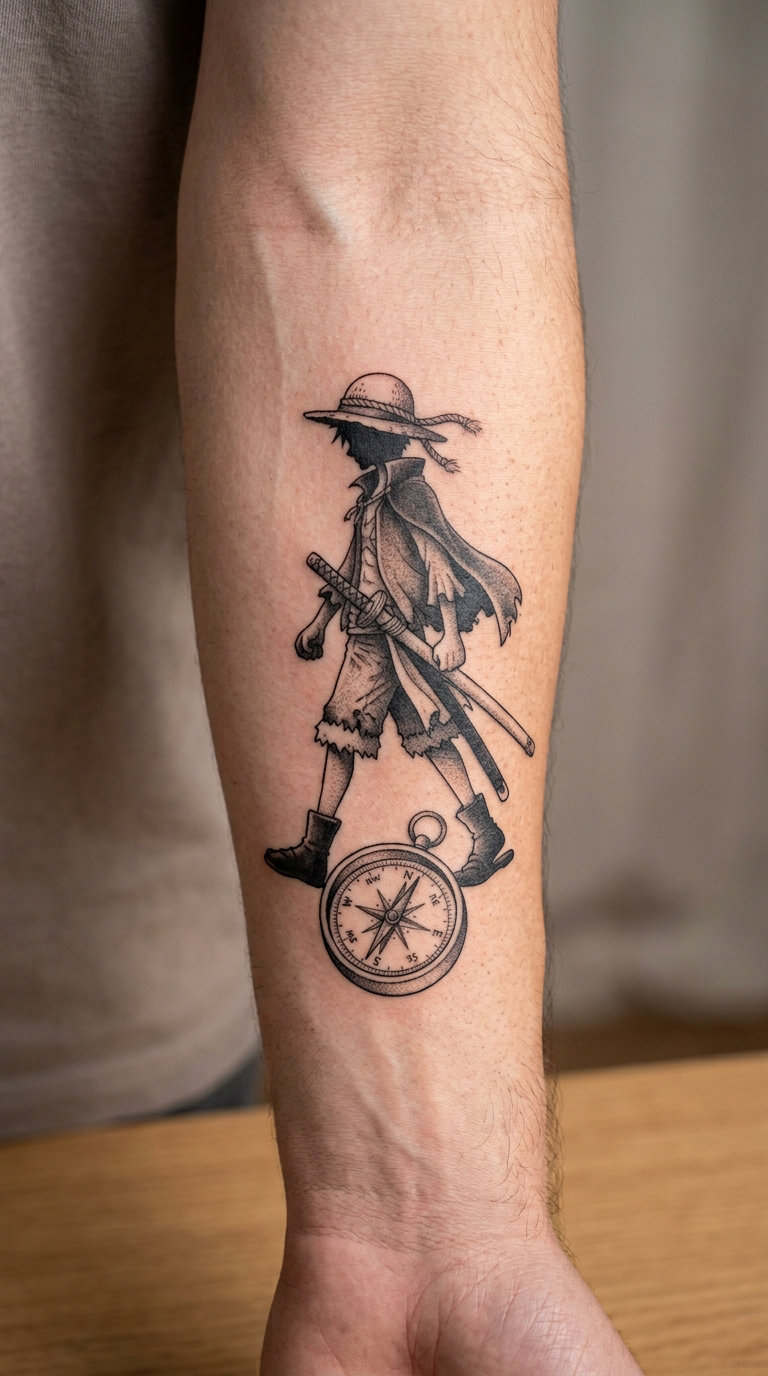
A full-body pirate drawn from scratch in a single weight of line, wide-brimmed hat tipped forward, coat hem caught by wind, boots mid-stride. No face detail, no emblem on the hat, just the shape doing the work. A hairline compass in the negative space under the figure gives the eye somewhere to land.
People pick this one for the idea of setting out rather than arriving, which is closer to what the series is actually about than any portrait would be. It reads as adventure to people who know the show and as a decent figure study to people who do not.
Placement: outer forearm, ribs or the inside of an upper arm. Size: 2-4 in (5-10 cm) tall. Style: fine line or single-weight blackwork.
Pain: low to medium, mostly the forearm’s soft inner edge. Fine line on hands and fingers fades fastest, so keep it off the fingers. Make it yours: have the artist etch your own heading coordinates into the compass needle rather than a date.
2. Grand Line Map Fragment
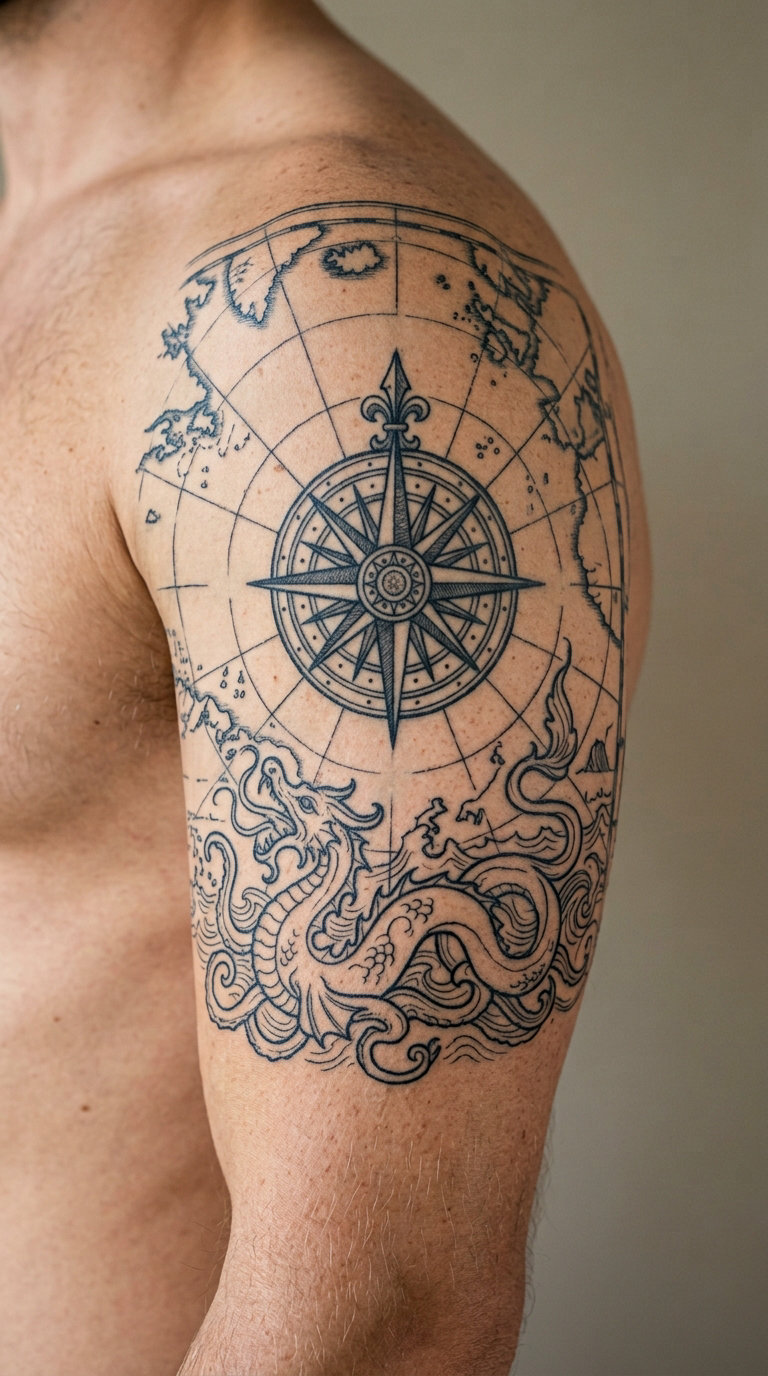
A torn sheet of aged paper in ink: hatched coastline, a dotted sailing route that runs off one edge, a compass rose in one corner, and a whale or squid outline swimming through the blank water. The route is deliberately unfinished, and a couple of the island names are left as blank space for handwriting.
The blank map is the point. An old chart with a route never arriving says more about a long fandom than a finished map would, and it gives you somewhere to add detail later.
Placement: upper arm or the flat of the chest. Size: 3-5 in (8-13 cm) across. Style: antique line work with light stippling.
Pain: medium. A lot of tiny coastline lines blur together as they heal, so thicker hatching beats hairline detail. Make it yours: bring a real coordinate from a trip that mattered and let the route end there.
3. Bounty Hunter Compass Rose
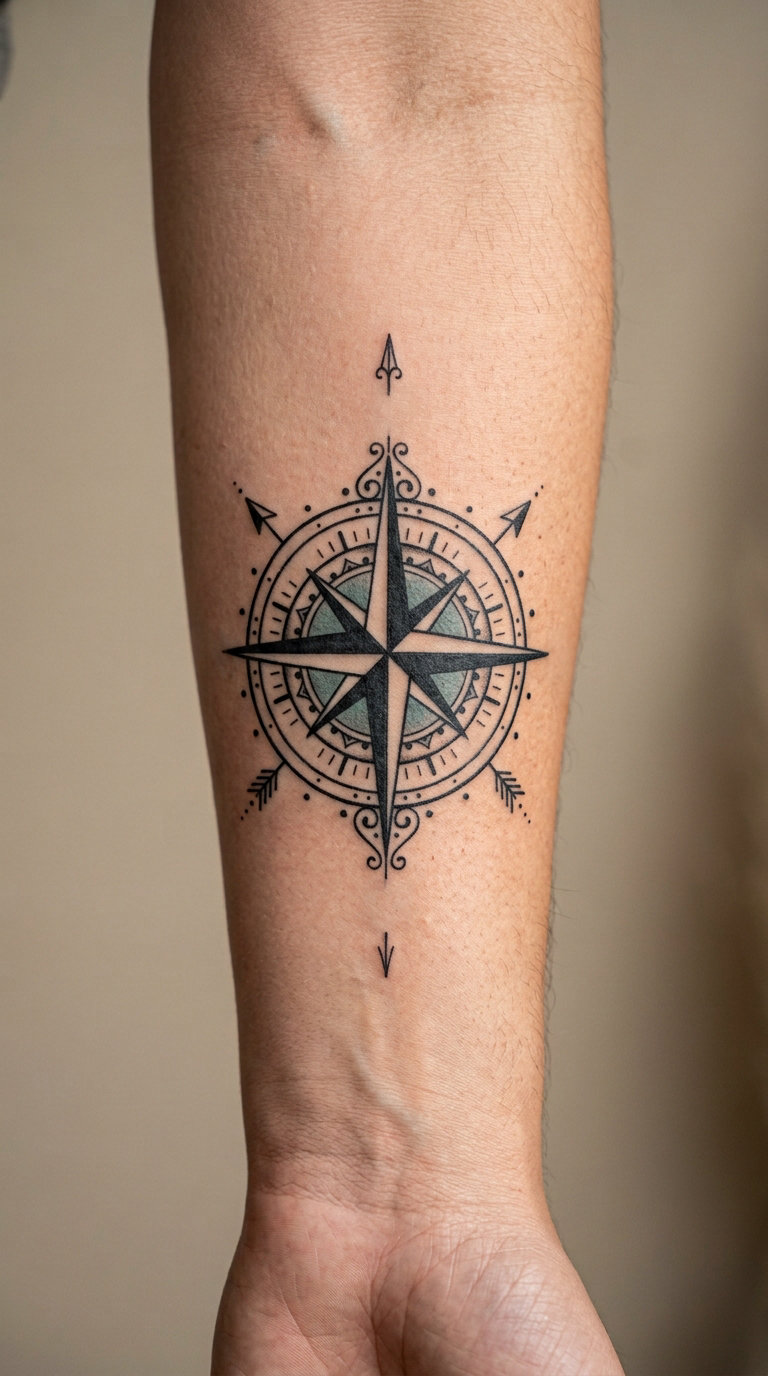
A classic compass rose with an oversized needle, cut on the diagonal so it feels like it is spinning, sitting over a faint square grid that suggests chart paper. One quadrant gets a single wash of muted blue-green, the rest stays black. A few short motion ticks around the outer ring keep it from looking like a logo.
It is the bounty-hunter version of the map, and the design suits people who like the idea of being competent and underpaid rather than the idea of being captain.
Placement: inner forearm or the front of the calf. Size: 2-3 in (5-8 cm) across. Style: blackwork with one accent colour.
Pain: medium, and the inner forearm bruises visibly for a couple of days. Make it yours: swap the grid for faint longitude lines that match a longitude you were born near.
4. Original Rubber-Adventure Energy
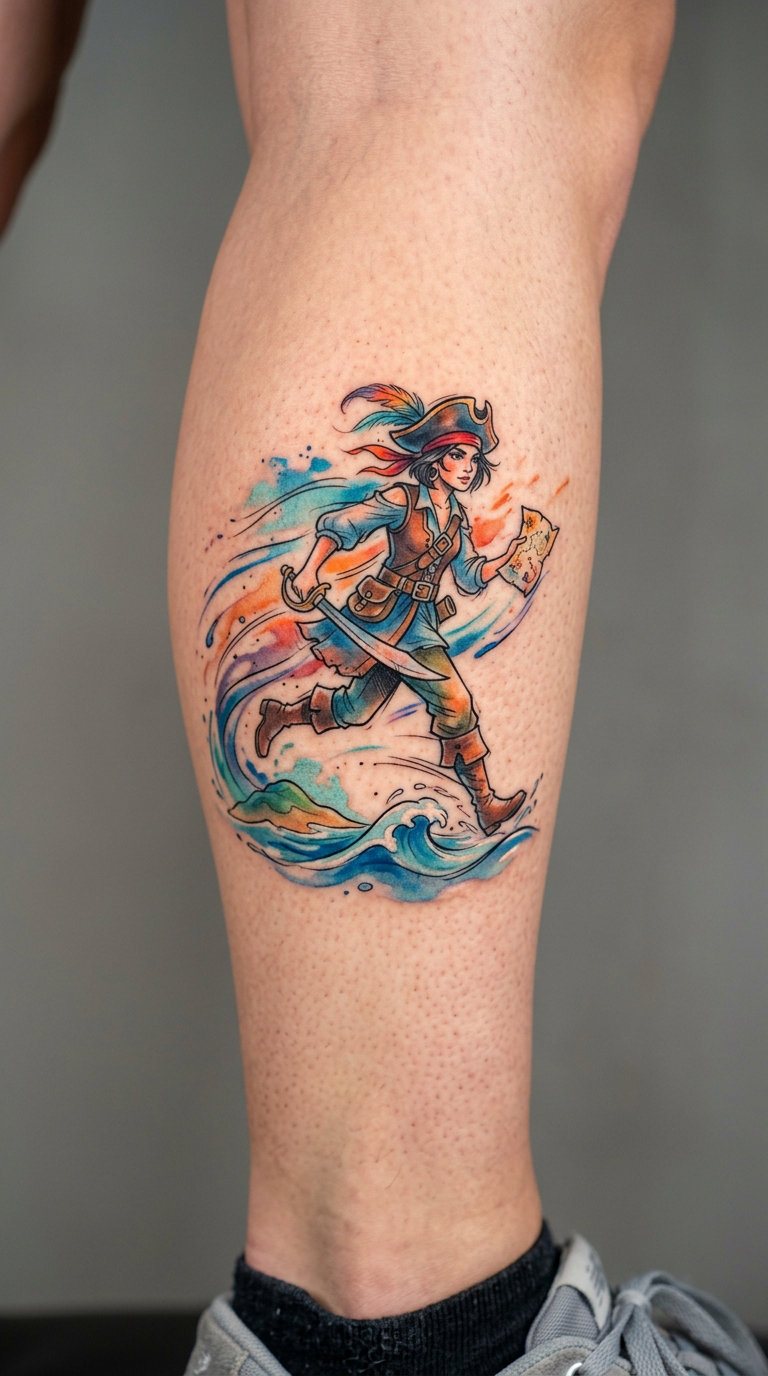
Loose watercolour with a hard black accent: a small grinning adventurer mid-leap, three ribbon-like motion lines sweeping past the body, and a scatter of colour that breaks the edges of the figure. Colour bleeds deliberately outside the lines, so the piece looks like it is still moving when the needle stops.
This is the playful version of the series, good for anyone who came to it as a kid and never stopped reading. It is a mood piece rather than a portrait, and the mood is joy.
Placement: calf, outer arm or the back of the shoulder. Size: 3-4 in (8-10 cm). Style: watercolour with one black outline pass.
Pain: low on the calf. Watercolour shading needs more sessions than the drawing suggests, often two or three. Make it yours: have the motion lines finished in a colour picked from your own wardrobe rather than a studio default.
5. Sea King Minimal Line Art
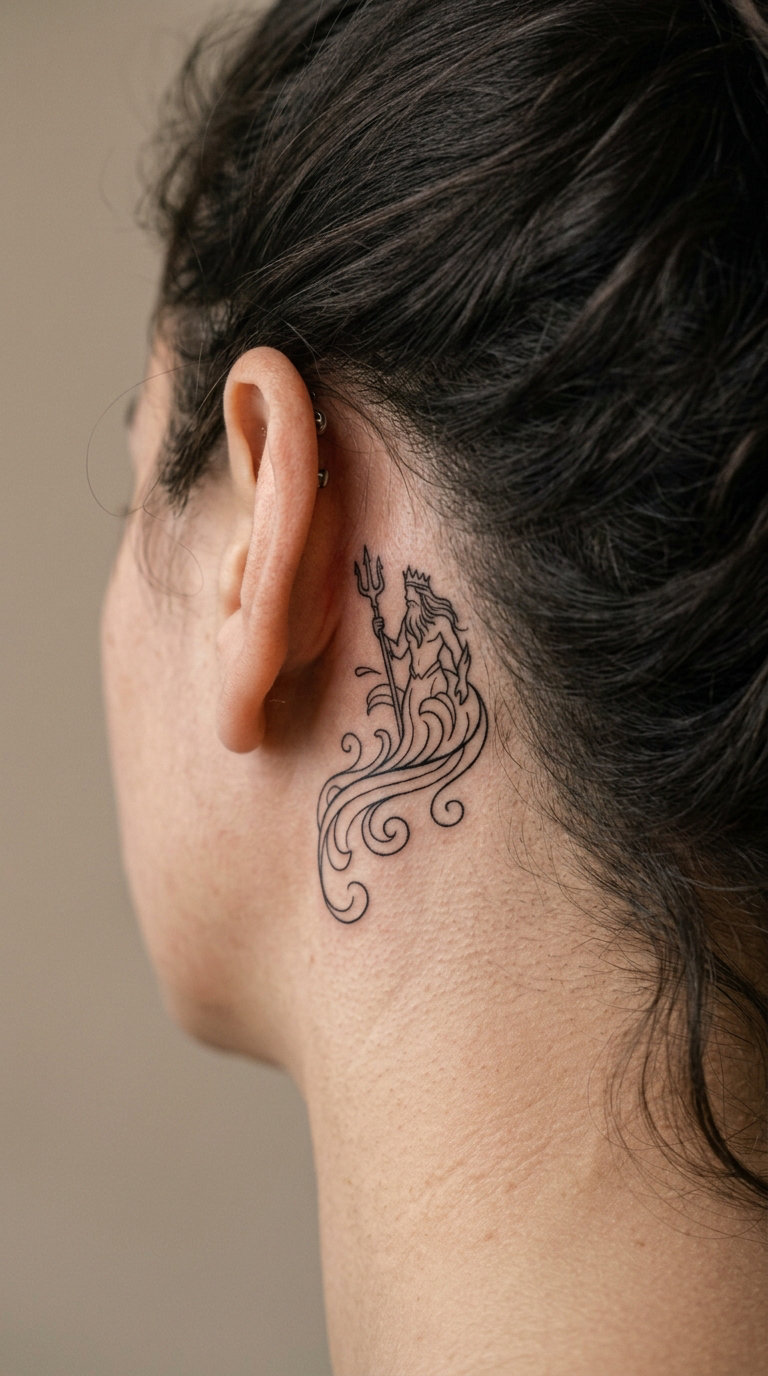
One unbroken contour line forming a stylised sea creature profile, with three short water lines beneath it and a lot of skin left alone. The artist thins the line as it curves so the head reads at a glance from across a room.
The sea in this series is the thing that has to be crossed, and this design keeps the threat and the beauty in the same shape. It is the least committed idea here, which is exactly why it works as a first tattoo.
Placement: behind the ear, inner arm or along a rib. Size: 1.5-2.5 in (4-6 cm). Style: minimal fine line.
Pain: medium. Behind the ear is tender and the skin moves when you talk. Fine line softens noticeably in five or six years, so expect a refresh. Make it yours: add one small wave curl at the tail end as a second appointment once the first heals.
6. Devil Fruit-Inspired Botanical Sphere
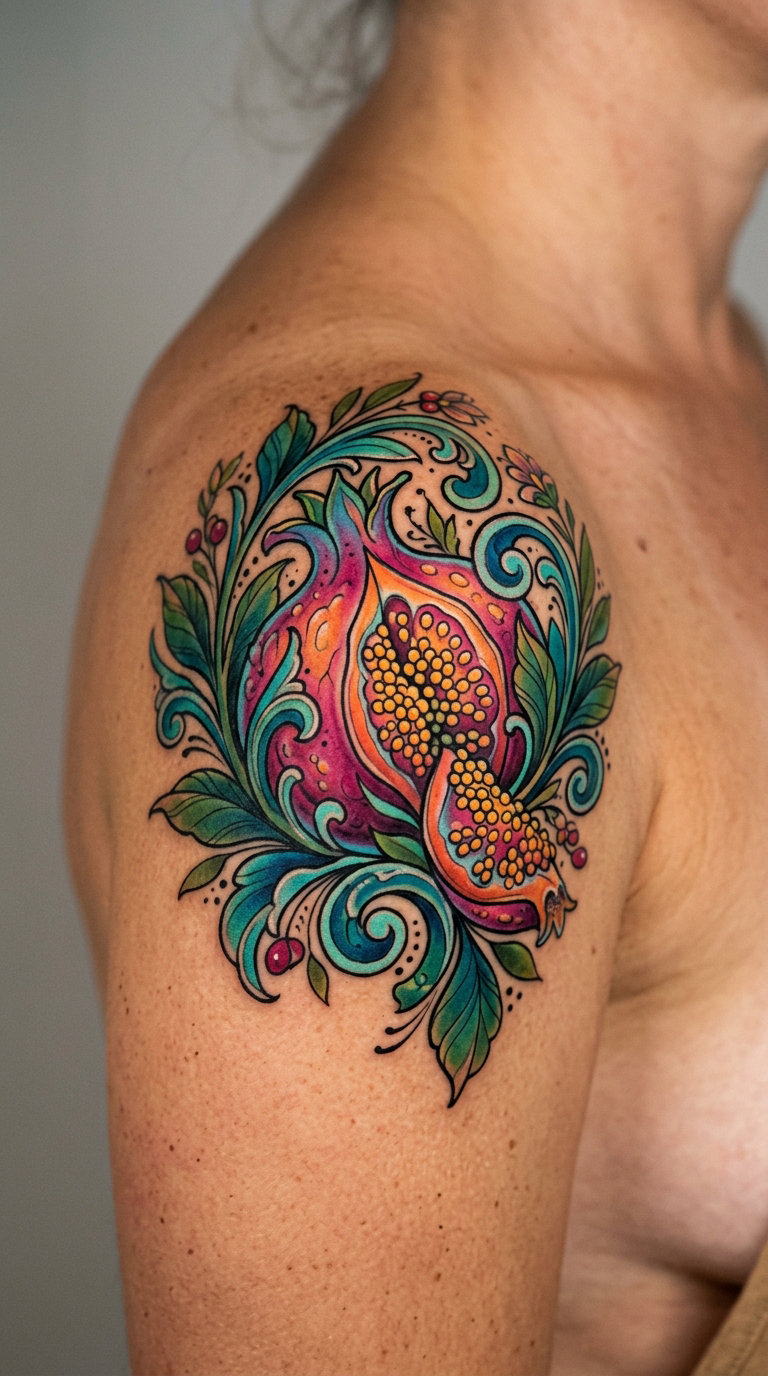
A botanical study of a fruit that does not exist: a round form built from overlapping petals and scale marks, curling leaves wrapping the stem, and scattered dots suggesting seeds in cross-section. Two colours plus a red accent, with the shading done in soft green rather than heavy black.
Everyone who has read past the first few volumes gets that fruit imagery is about wanting something you cannot have. The version most fans tattoo is the generic one, not a specific named fruit, and it holds up better at small sizes.
Placement: shoulder, outer thigh or the back of the calf. Size: 3-5 in (8-13 cm). Style: neo-traditional colour.
Pain: medium. Colour on a shoulder fades faster than blackwork, so plan for a colour boost in about five years. Make it yours: have the artist invent the fruit with you and record the name somewhere only you will see.
7. Sunset Voyage Patch
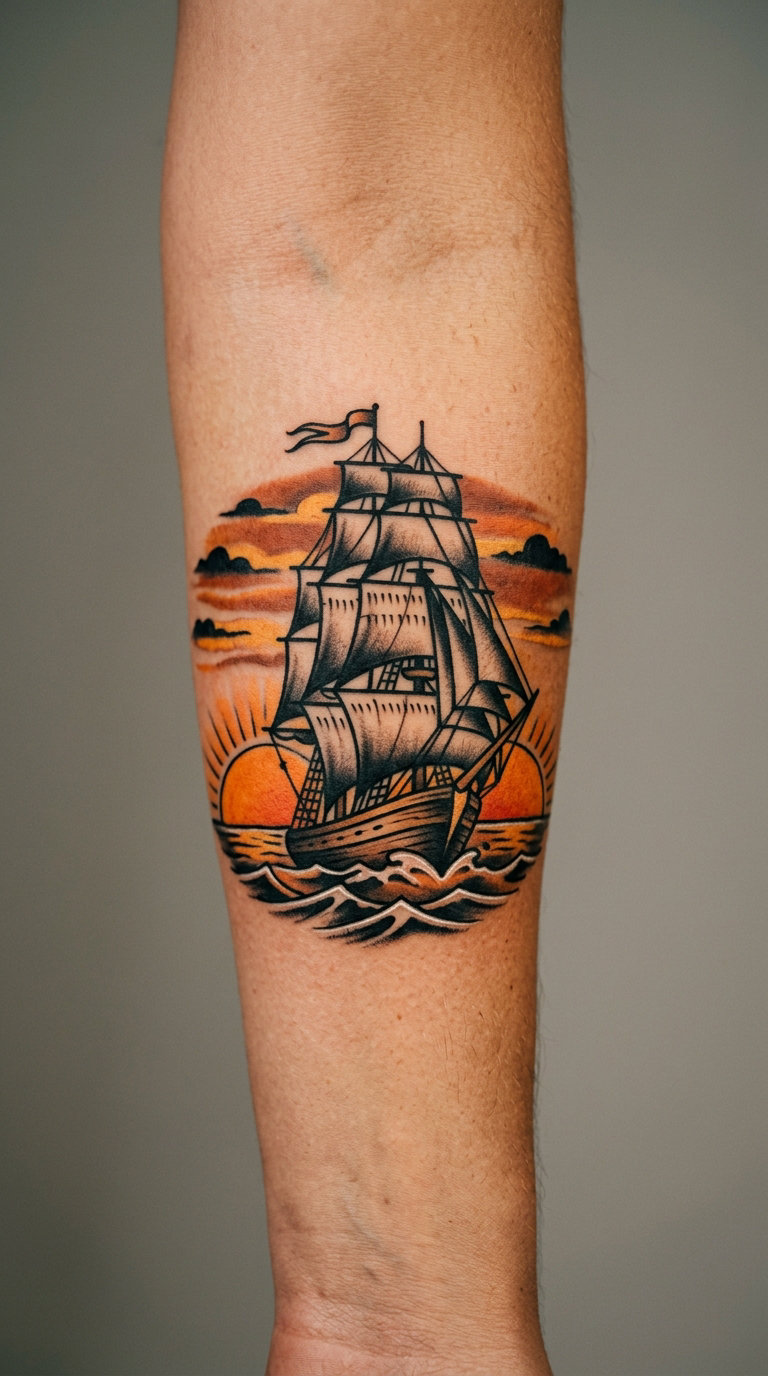
A square patch composition like an old work shirt: a single-masted ship in heavy black, a low sun in orange and yellow, four straight wave lines under the hull and a horizon rule straight across the middle. Bold outlines, flat fills, no gradients, nothing fussy.
Sunsets in this series usually mean arrival after something hard, so the design carries more warmth than the rest of the nautical options here. Patch framing also gives you a rectangle that later pieces can sit inside.
Placement: forearm, upper arm or the shoulder blade. Size: 3-4 in (8-10 cm) square. Style: traditional with light wash.
Pain: medium. Bordered patches on the forearm scar more than they feel, and the ink stays tender longer. Make it yours: give the artist one real horizon from a coastline you have actually stood on.
8. Marine Fortress Collar Design
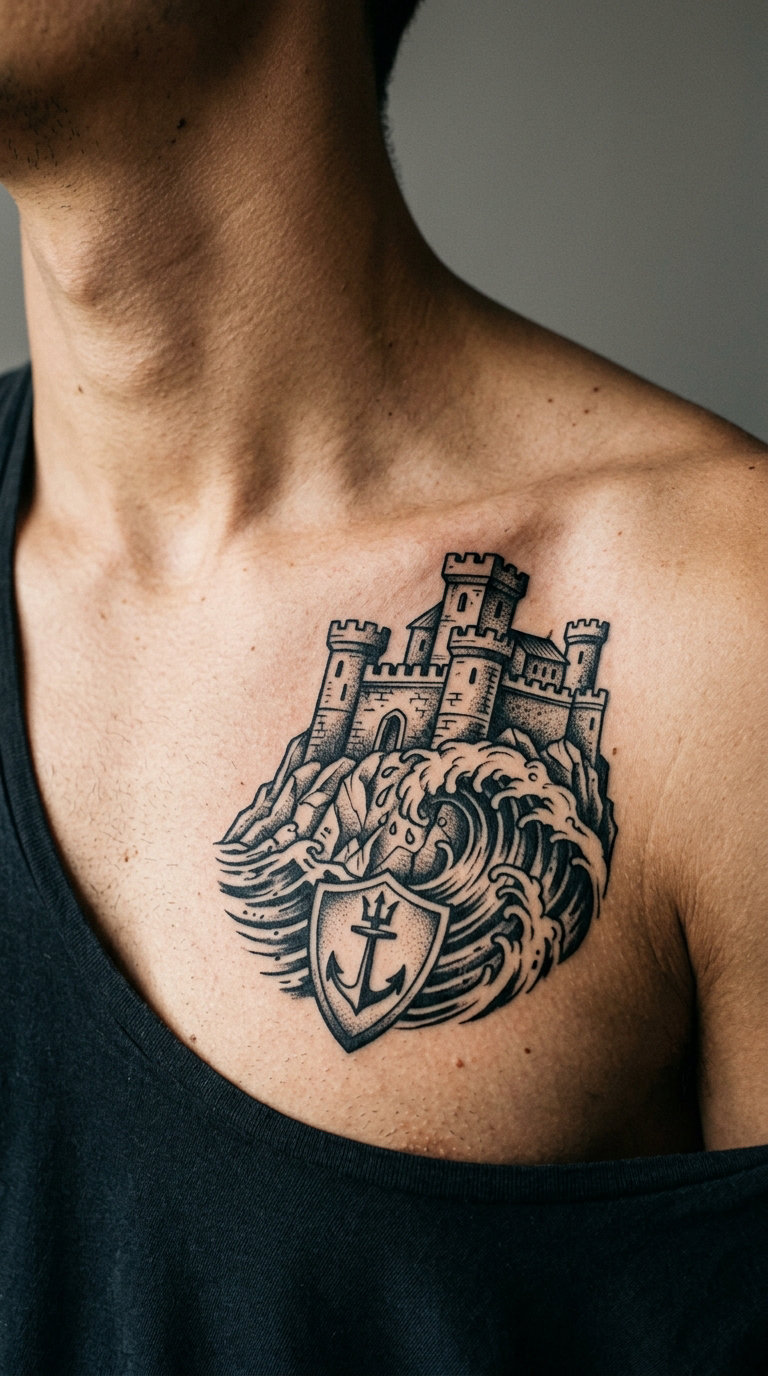
Stonework rendered in solid black, a blank shield at the centre with nothing on it, and a wave breaking over the base in sharp white gaps cut out of the black. A single hard line of surf runs under the whole thing. It should look like an institution without ever naming one.
This is the strongest statement piece on the list. It reads as authority and opposition rather than a fandom reference, which suits people who came for the conflict and stayed for the crew.
Placement: upper chest near the collarbone, or the outer shoulder. Size: 3-4 in (8-10 cm) across. Style: bold blackwork with negative space.
Pain: high. Collarbone and upper chest are close to bone and you will feel every pass there. Make it yours: leave the shield blank for two or three years, then add initials once the rest of your crew tattoos are done.
9. Original Sniper Den Micro-Realism
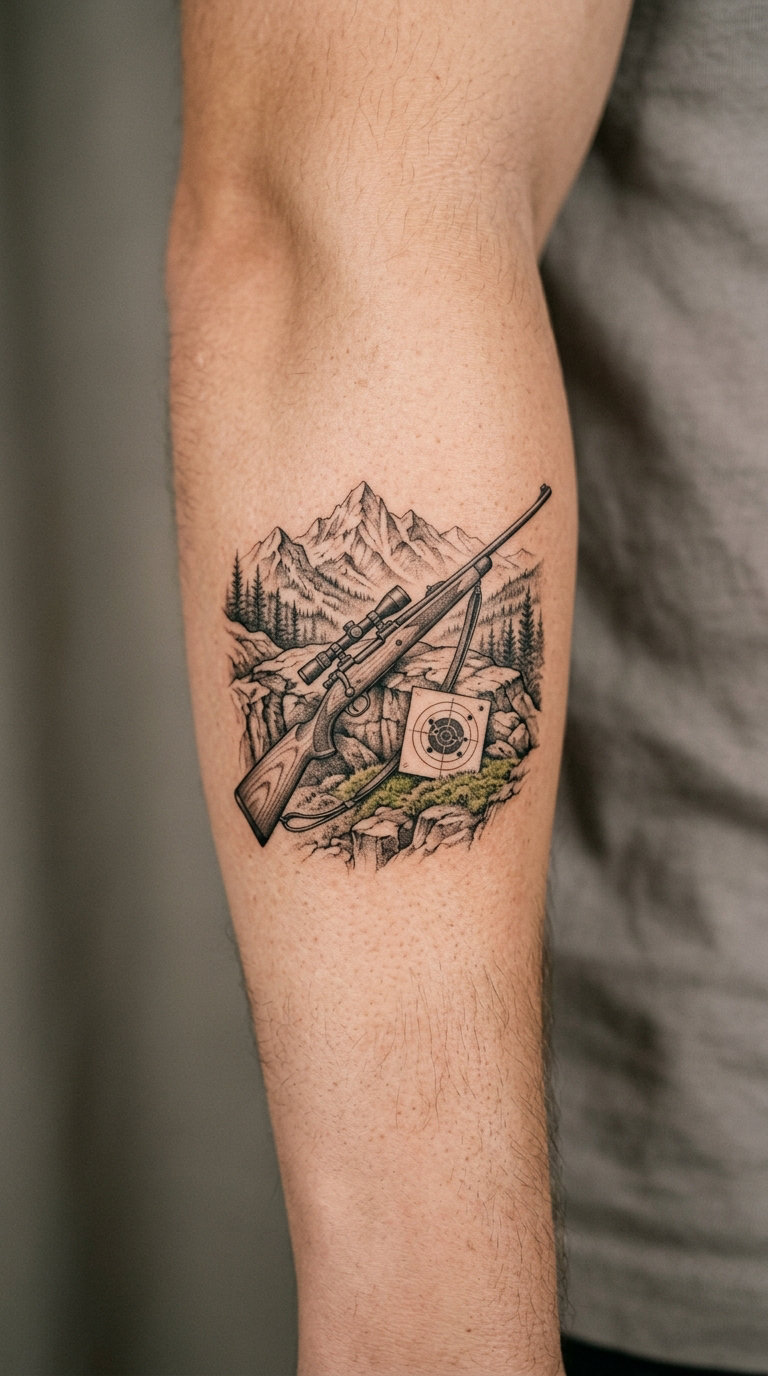
A tiny grey-wash scene at reading distance: a rifle laid across a flat rock, a circular target propped behind it, two ridges of mountains in the far distance and a single bird for scale. No people, no insignia, and the whole thing framed by a thin line.
Distance and patience are recurring ideas in the long chase the series is built on, and a quiet still life suits that better than an action pose would. It is also the only idea here where a small size is a feature, not a compromise.
Placement: inner forearm, the arch of the foot or behind the arm. Size: 1.5-2 in (4-5 cm). Style: micro-realism in grey wash.
Pain: medium. Below about 1.5 in the mountains turn into a smudge, so this is the floor size. Make it yours: use the ridge line of a hill you grew up near instead of generic peaks.
10. Fish-Man Wave Crest
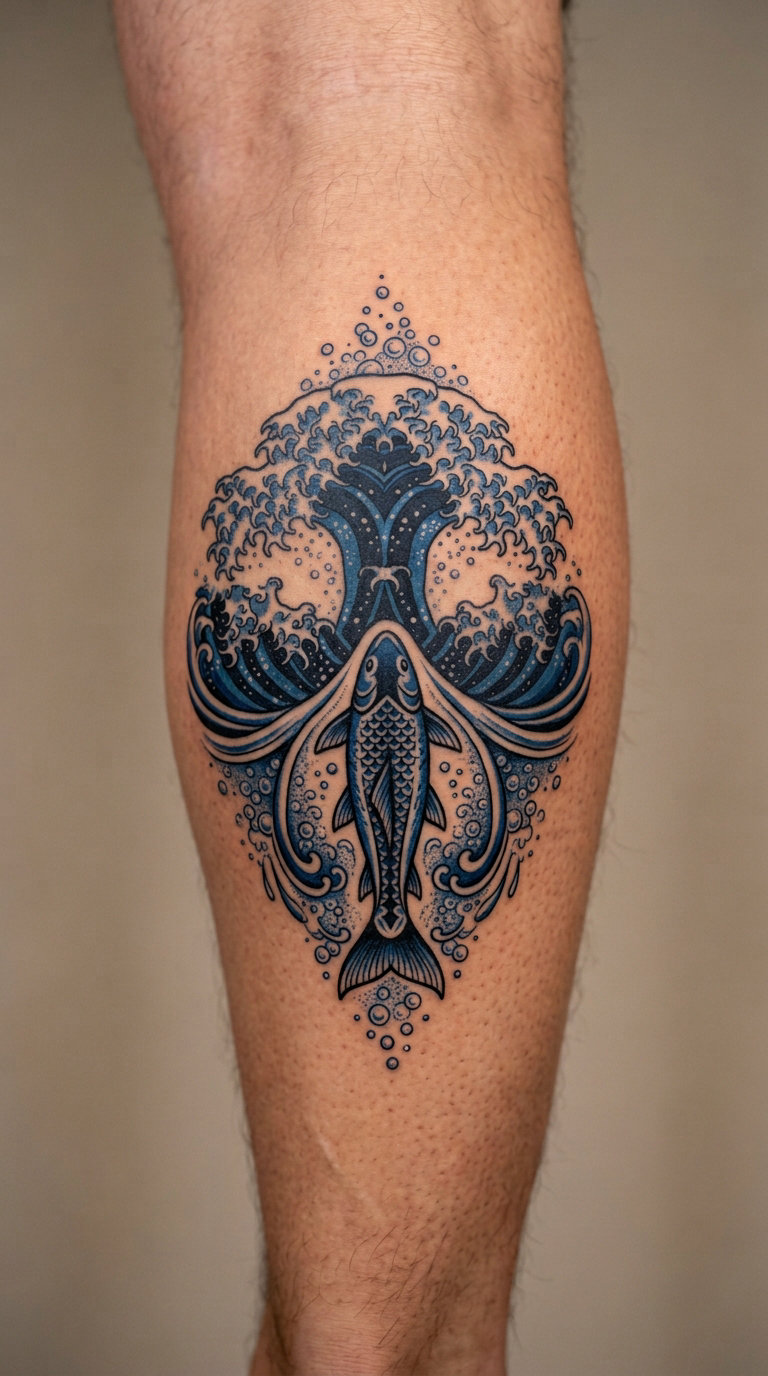
A symmetrical crest built from three tiers of curling water, a fish silhouette tucked into the hollow of the biggest curl, and a scatter of small bubbles rising through the white gaps. Blue and black only, with the bubbles left as bare skin so the water reads as moving.
Underwater kingdoms are the strangest part of the route for a lot of readers, and this design keeps that wonder without any of the heaviness of a face or a scene. Symmetry is what makes it sit well on a leg.
Placement: outer calf, shoulder blade or the back of the upper arm. Size: 3-5 in (8-13 cm) wide. Style: illustrative colour with black line.
Pain: low. Calves bruise for a while and a few people get a mild muscle cramp during long calf sessions. Make it yours: have the artist mirror your own astrological water sign into the curl shapes.
11. Skypiea Cloud-Ring Emblem
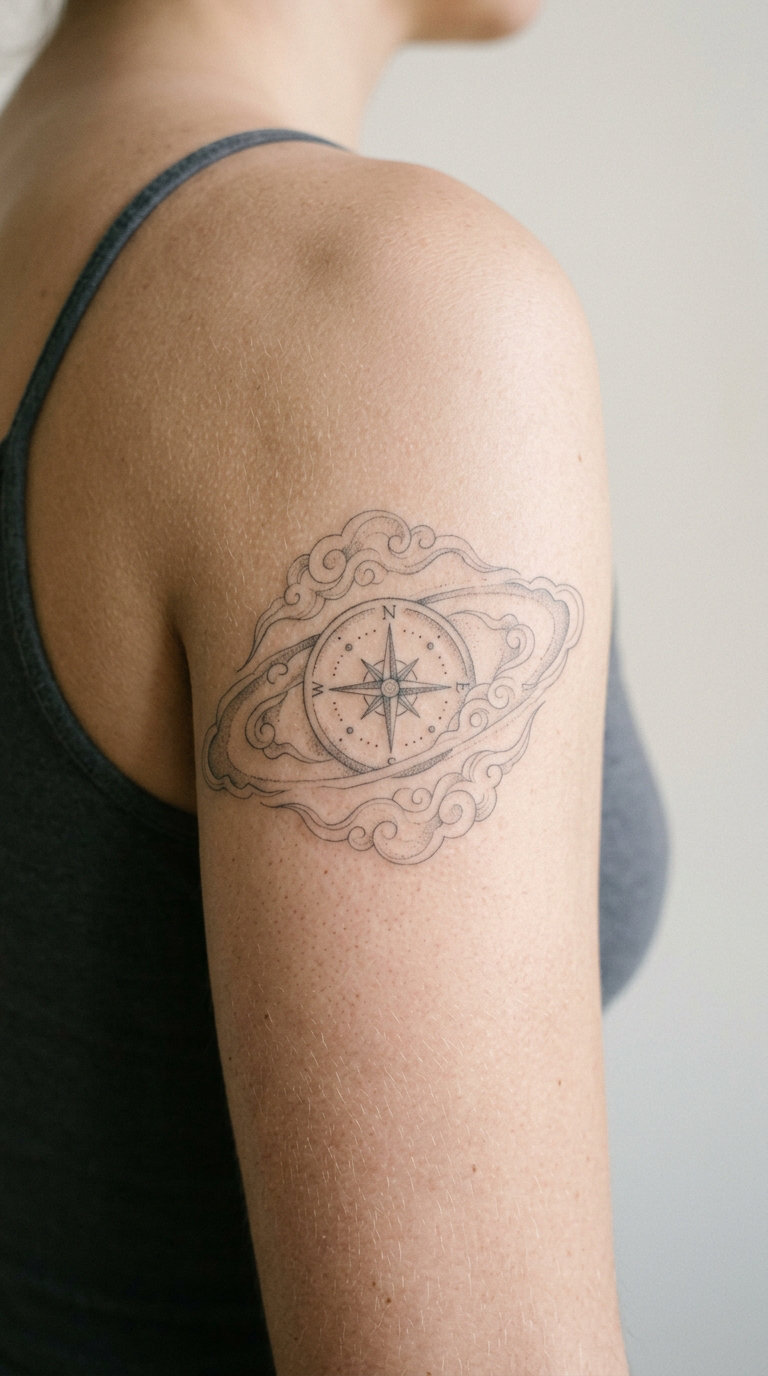
Three concentric cloud rings drawn in a single pale grey line, a small compass hanging in the centre, and a scatter of short hatching strokes that suggest height without shading anything in. The overall effect is airy and slightly ghostly, with generous empty space between elements.
Islands in the sky are about the moment a journey stops being ordinary. A light ring emblem is a discreet way to carry that, and it hides completely under a sleeve.
Placement: behind the upper arm, ribs, or the inside of a thigh. Size: 2-3 in (5-8 cm). Style: grey fine line.
Pain: medium. Very light grey inks can look patchy mid-heal and some artists ask you to come back for a second pass. Make it yours: match the grey to a pencil shade you already use, so you know exactly what healed ink looks like.
12. Wano-Inspired Mask Fragment
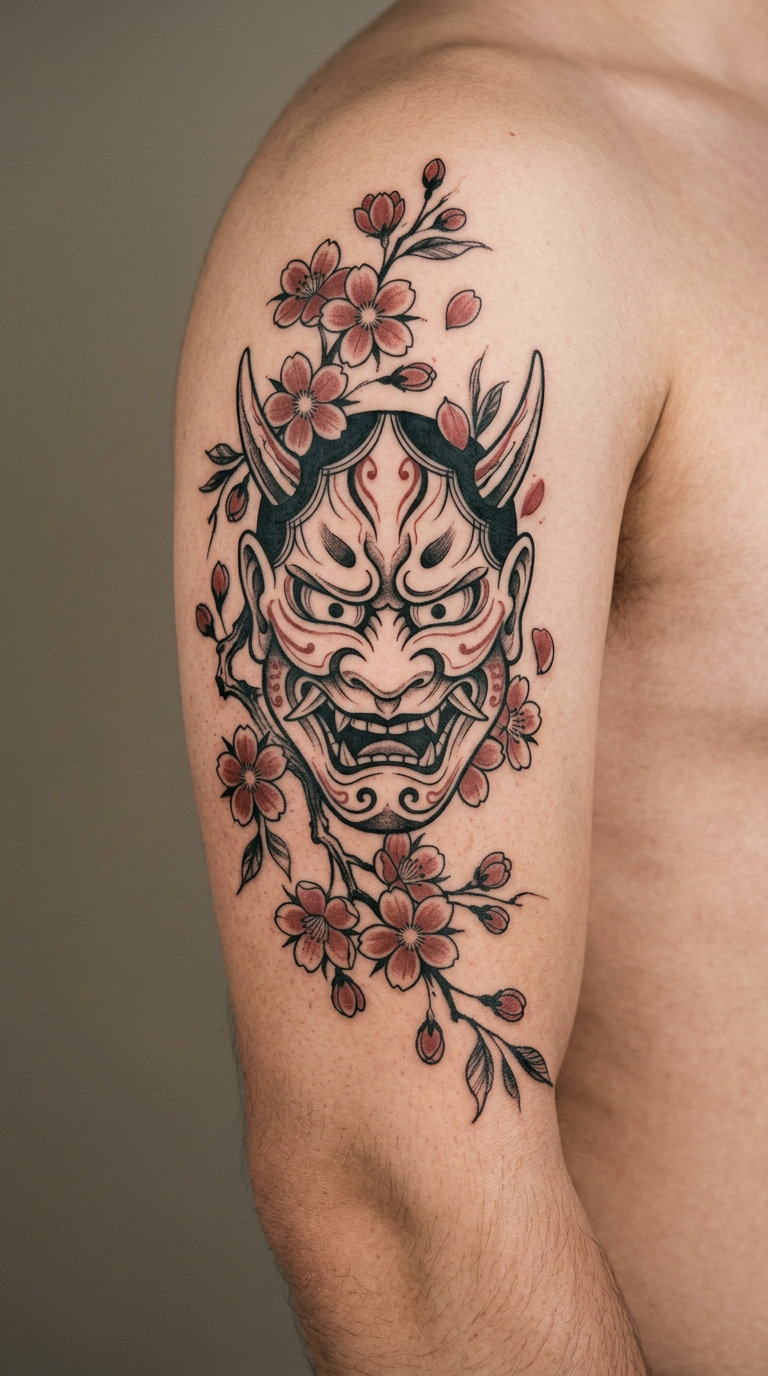
Half a theatrical mask, cut off down the middle, drawn in hard black ink with cracks left as white breaks. Behind it, a loose brush painting of blossom branches in muted red, the strokes thin at the tips. The contrast between the two finishes is the whole effect.
That arc of the story is about tradition meeting something reckless, and the split mask carries that tension without needing a scene. It also reads well on a limb where a full composition would wrap badly.
Placement: outer arm, calf or the side of the thigh. Size: 2.5-3.5 in (6-9 cm). Style: black ink with a single brushwork colour.
Pain: medium. The brushwork needs soft colour transitions, so plan on a longer sitting than the black areas suggest. Make it yours: have the crack pattern in the mask follow the scar you already have, if you want the two to talk to each other.
13. Ancient Punk Gear
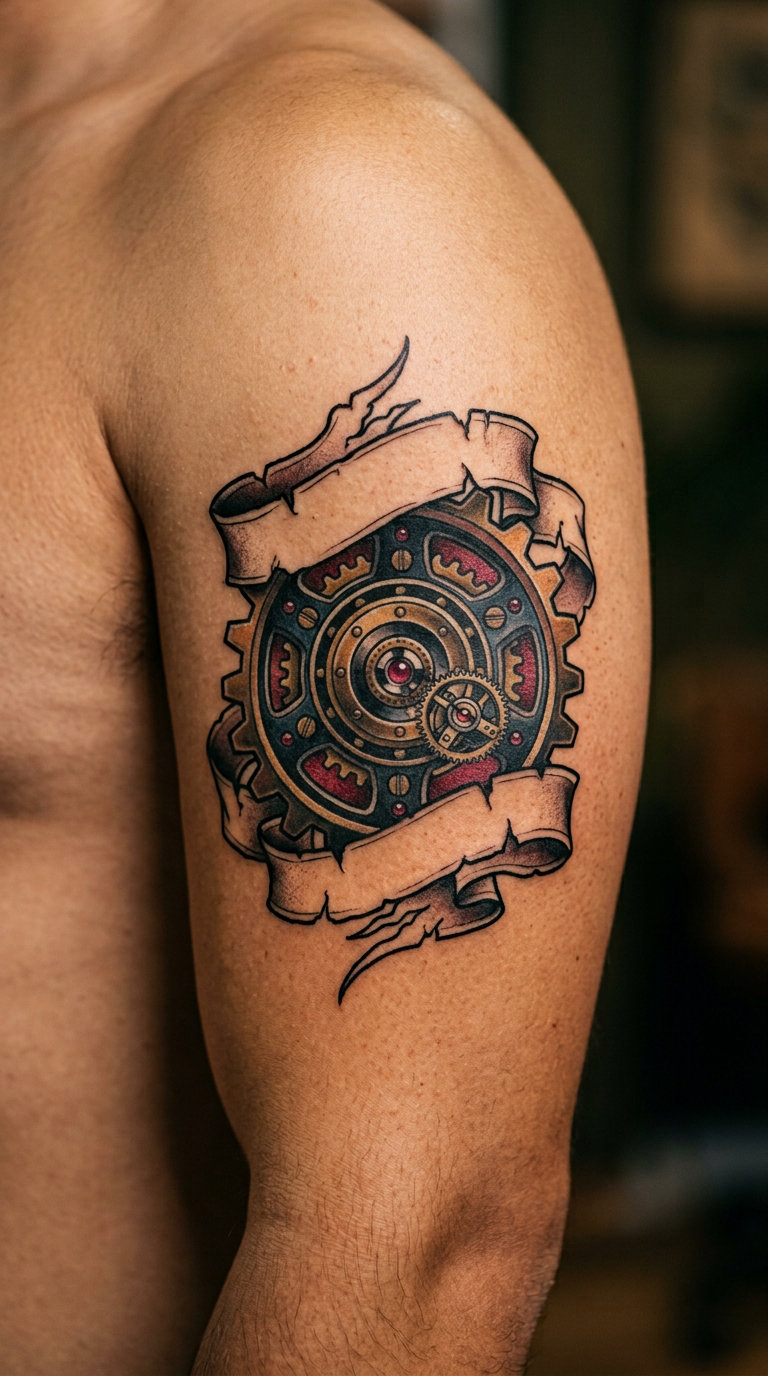
A chunky cog in flat black and silver, teeth filled solid, wrapped by a torn cloth banner that has no writing on it at all. Two spark marks and one rivet detail keep the shading tight. Heavy line weight, no greyscale gradients, and a design built to read from across a room.
The rebellious and revolutionary mood of that stretch of the story is the reason to get this one, and a gear is a good shape for an artist to show off in. Blank banner means no fiddly lettering to wait on.
Placement: outer upper arm, shoulder or the back of the forearm. Size: 3-4 in (8-10 cm). Style: neo-traditional.
Pain: medium. Bold outlines cover skin quickly, so the sitting is shorter than the design suggests. Make it yours: have a crew nickname worked into the torn banner in a lettering style you like, and check spelling before it goes on.
14. One Piece Jolly Roger-Inspired Anchor
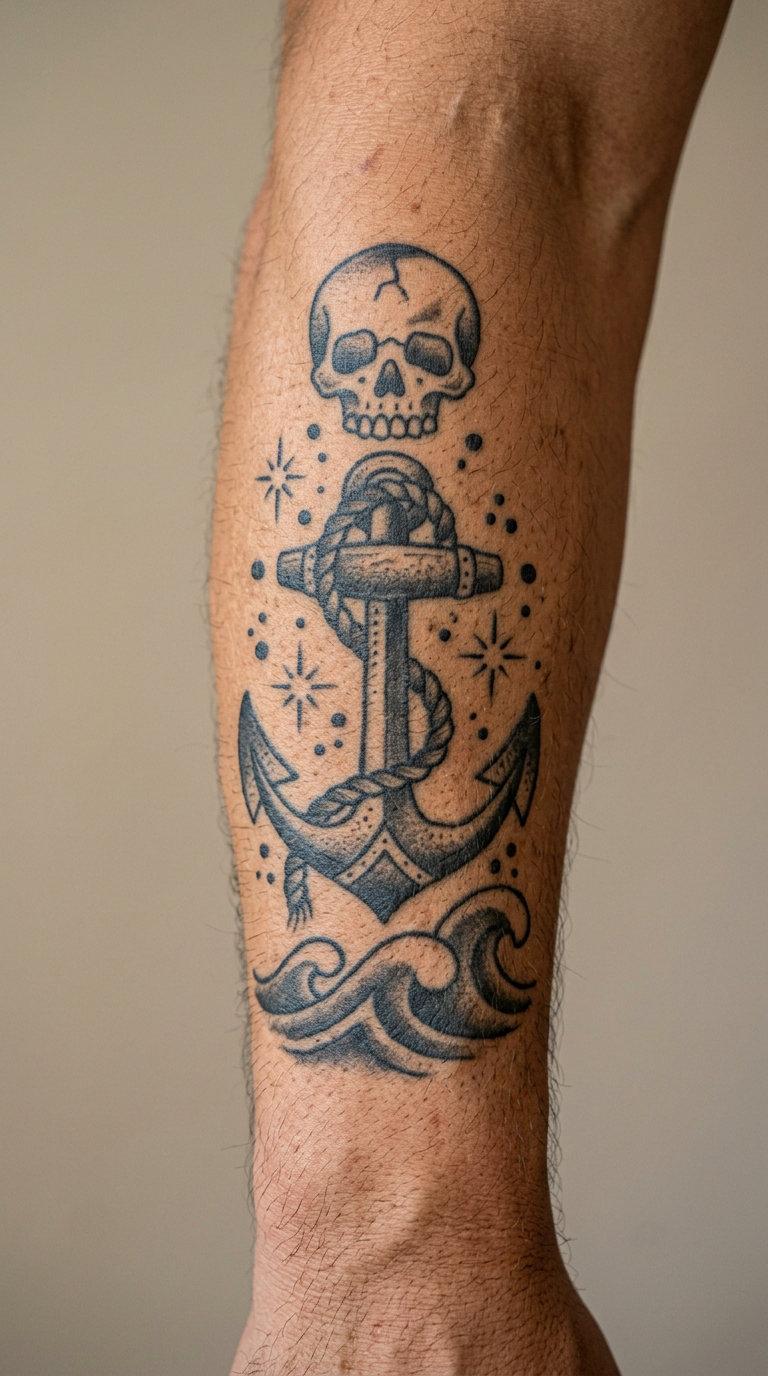
A traditional anchor with a rope looping through the ring, two wave lines under the flukes, and a small simplified skull-and-crossbones shape above it with a different jaw angle and no hat. The ink is deliberately weathered, with a little dry brush in the shading so it looks old rather than new.
Skull and crossed bones have been pirate shorthand for centuries, long before any manga. Treating it that way keeps the piece original and gives you a design that ages well instead of one that dates itself.
Placement: forearm, chest or over the shoulder blade. Size: 2.5-4 in (6-10 cm) tall. Style: traditional with dry-brush shading.
Pain: medium. Anchor curves force the artist to change needle angle a lot, which slows things down. Make it yours: add a longitude under the waves once you have been somewhere the crew never reached.
15. Dressrosa-Inspired Mask Garden
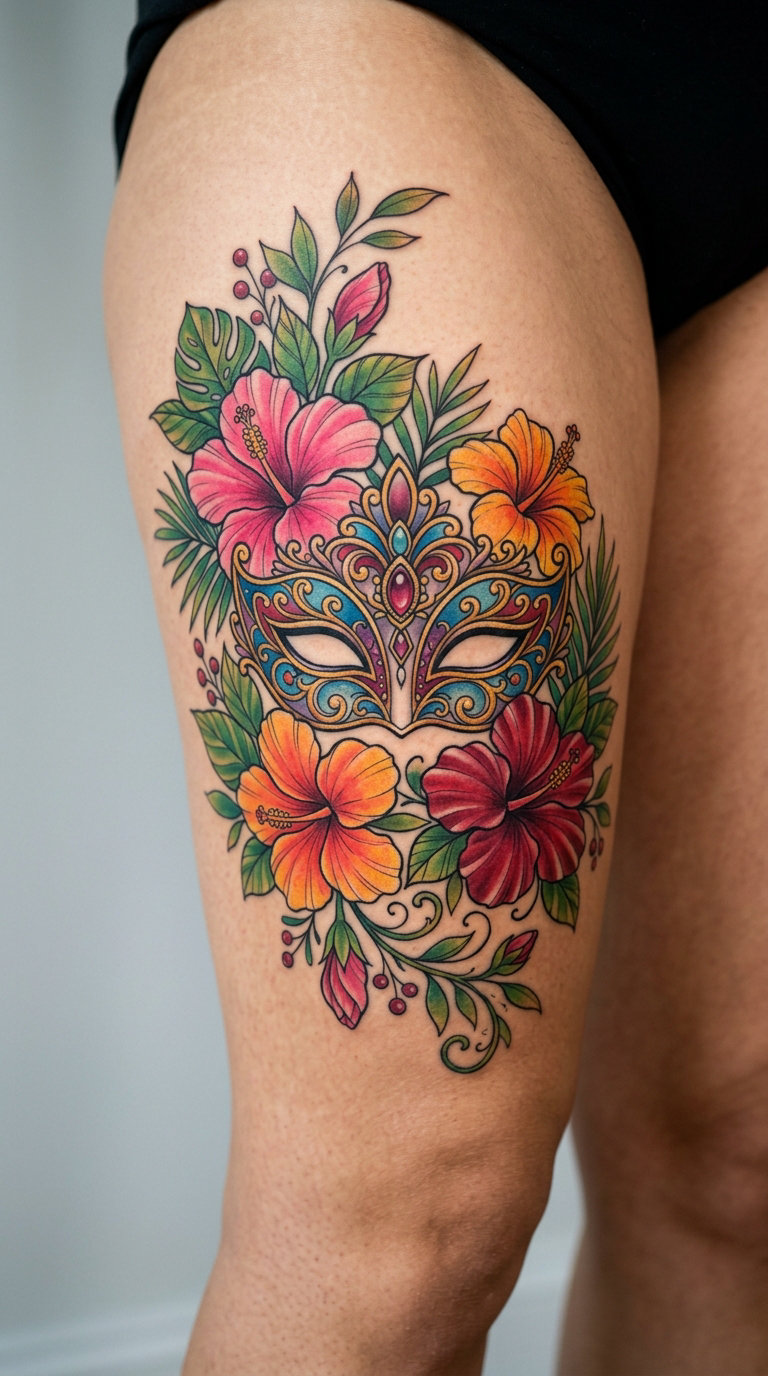
An elegant mask with a closed-eye expression, surrounded by hibiscus-like blooms, open buds and two long leaves that curve in to frame the face. Warm reds, deep greens and one gold accent on the mask edge. It is the most colour-hungry idea on this list.
That part of the story is all spectacle and masks over hidden faces, and a garden composition gives you the decoration without any of the plot. It is a design that rewards patience and a real thigh canvas.
Placement: outer thigh, hip or a wide back panel. Size: 4-6 in (10-15 cm) across. Style: colour floral realism.
Pain: medium, but expect a long sitting with breaks. Colour and fine petal edges in one piece usually means two sessions. Make it yours: use a flower native to where you grew up instead of hibiscus, and keep the mask expression neutral.
16. Totto Land Lantern Study
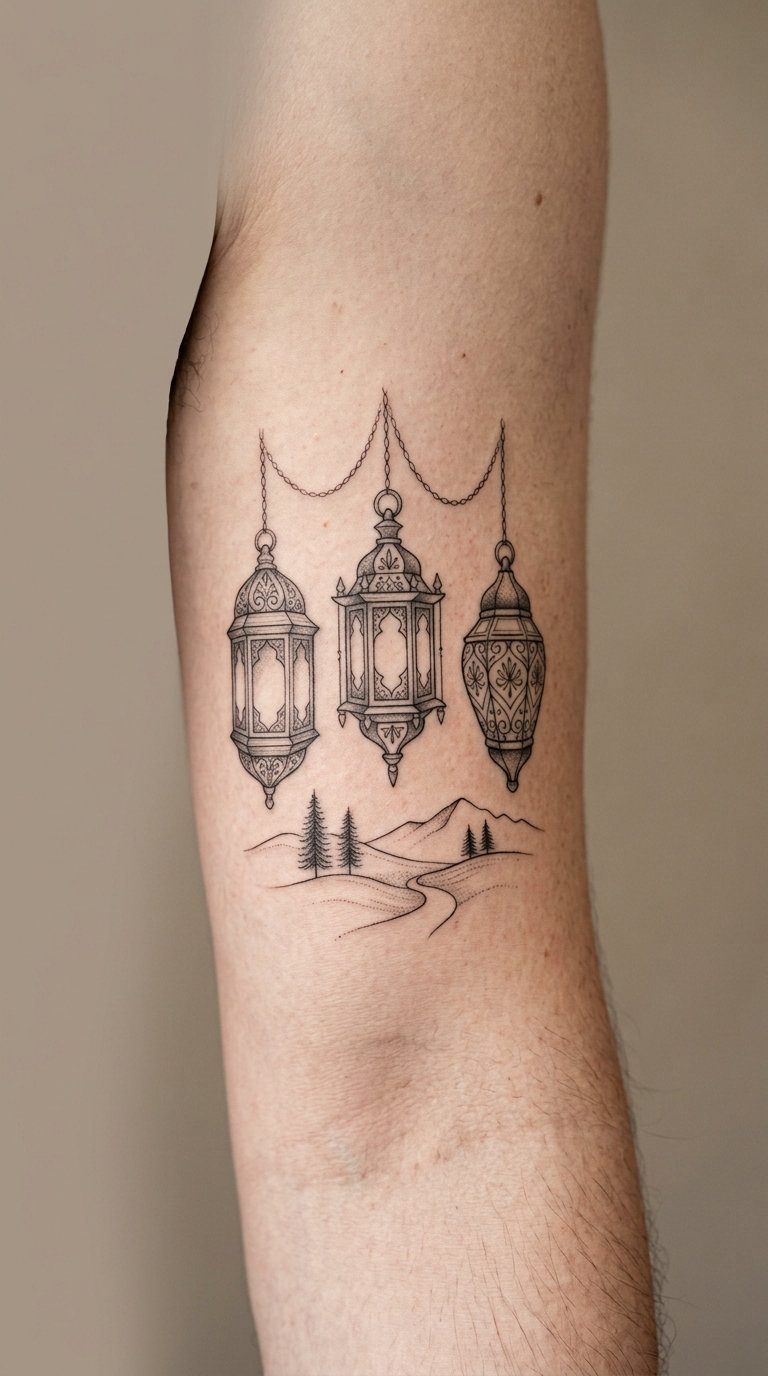
Three paper lanterns on short cords, drawn in soft grey with slightly heavier lines at the paper ribs, floating over a very quiet horizon line and two tiny hills. A handful of small marks suggest drifting smoke without being a solid shape.
It is the gentlest design here, which is why it works for people who like the rare quiet moments rather than the fights. The lantern shape also survives being tattooed small, which not every idea on this list can say.
Placement: inner upper arm, behind the arm or the back of the calf. Size: 2.5-4 in (6-10 cm) tall. Style: soft black-and-grey line.
Pain: low to medium. This is a low-detail design, so most people finish it in one sitting. Make it yours: have the smoke marks shaped like a short word only you will read.
17. Egghead-Style Cosmic Brain Motif
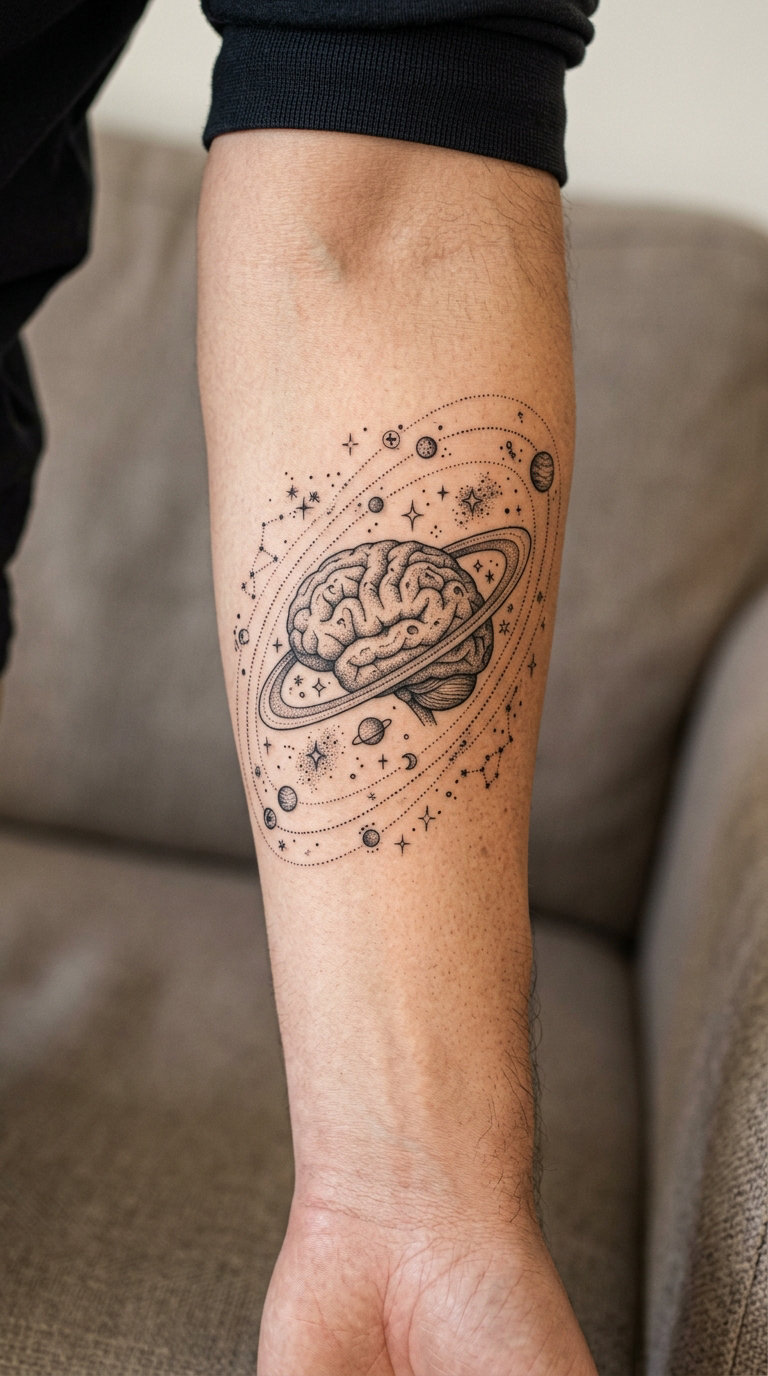
A planet whose continents are drawn as brain folds, built entirely from dots of graduated size, with two thin orbital paths looping past it and a scatter of stars in the empty space. The dotting gets denser underneath to fake a shadow and keep it from looking flat.
The newer ideas in the series mix wonder with a lot of theory, and a brain that is also a world captures that better than a portrait would. Dotwork also ages more gracefully than hairline shading, which matters if you plan to keep this a while.
Placement: forearm, upper arm or the shoulder blade. Size: 2.5-3.5 in (6-9 cm). Style: dotwork.
Pain: medium and slow. Dotwork covers a lot of skin at one pass, so expect the artist to take breaks. If star fields are your thing, our 20 north star tattoo ideas covers that style in more depth. Make it yours: have the orbit lines run through the exact number of moons you were born under, written as dots rather than numerals.
18. Elbaf-Style Viking Compass
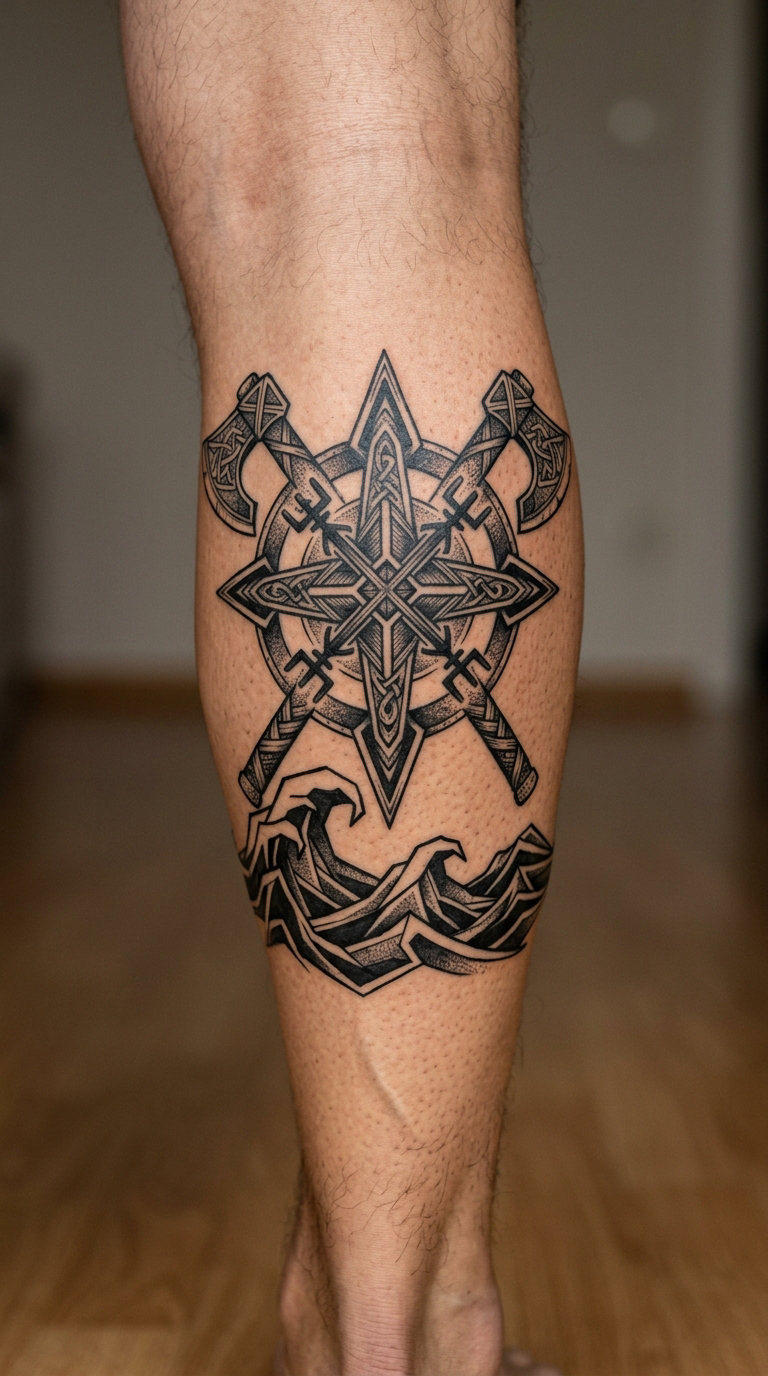
A ringed compass inside a broken circle, with two crossed axes behind it and angular wave lines underneath drawn as sharp chevrons rather than curls. Everything in solid black with thin white cuts, and deliberately no runes or letters anywhere in it.
Northern adventure is the last great stretch of the route, and a cold, spare design suits that mood better than anything ornate. Leaving out runes avoids the lettering problems that come with a lot of Norse work.
Placement: outer calf, outer arm or the shoulder. Size: 2.5-3.5 in (6-9 cm). Style: blackwork.
Pain: low. The calf is one of the easier places to sit for, though long sessions can cramp the muscle. Make it yours: have the broken circle left open, and close it at a later appointment to mark something you have finished.
19. Pirate Crew Compass Rose Sleeve Panel
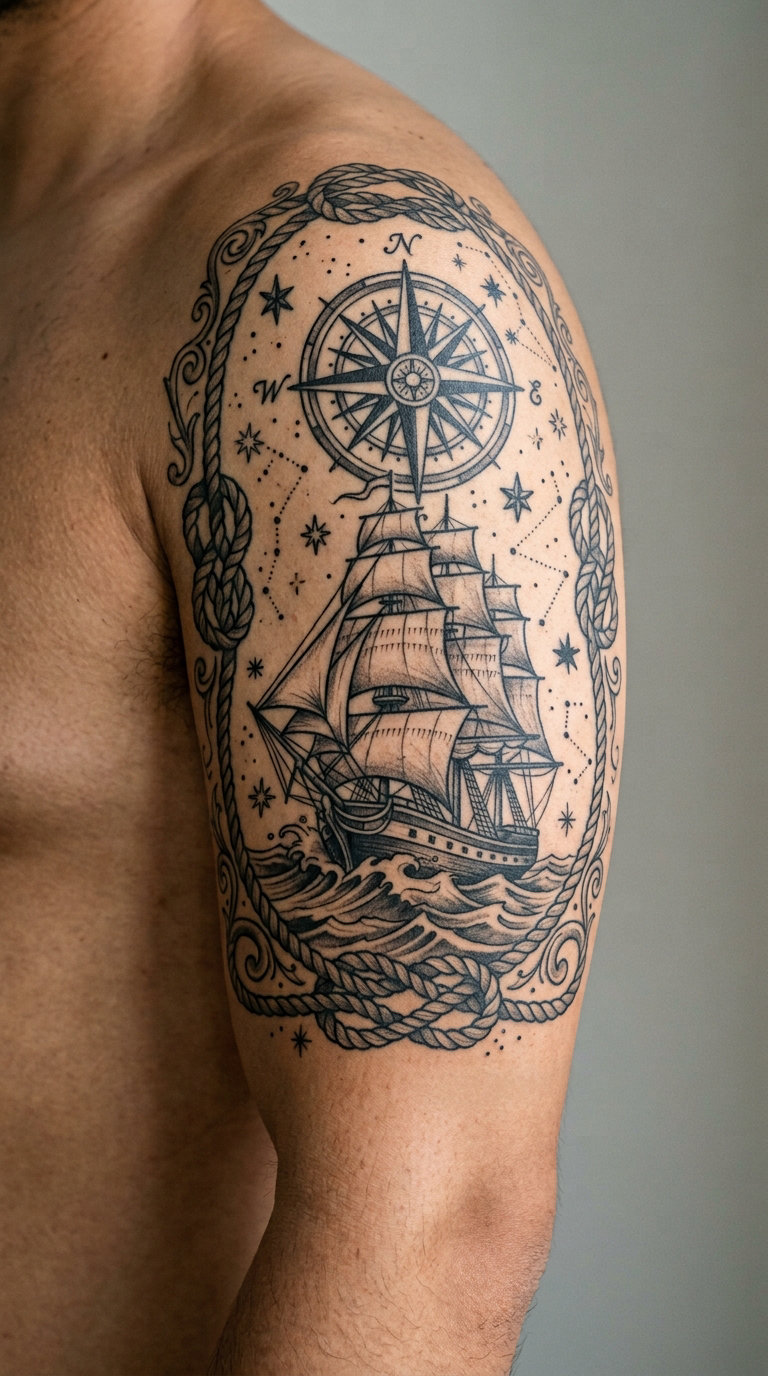
A wider scene: a small original sailing ship at the centre, a compass rose above it, rope coiling in from one corner, a scatter of stars and a low wave line closing the bottom edge. The ship is simple on purpose so it can hold up as the panel grows around it later.
This is the one to pick if you are already building a collection. Read 22 navy tattoo ideas for maritime designs first, because a nautical panel sits differently next to military or heraldic work than it does next to other ocean pieces.
Placement: outer upper arm as a standalone panel, or the first block of a sleeve. Size: 6-9 in (15-23 cm) across. Style: illustrative nautical with light colour.
Pain: medium to high, and mostly down to session length. Expect two or three sittings, and take a week or more between them. Make it yours: sketch the layout in pencil on a paper wrap first so the rope and stars do not fight the ship.
20. Permanent Record Journal Cover
A worn leather notebook cover in grey wash, closed, with a compass stamped small in the lower corner and two thin route lines running from it toward the spine. Stitching along the edge, a little wear at the corners, and no title text anywhere on the cover.
The habit of recording a journey is the quiet thread running through the whole story, and a blank journal says it without giving anything away. The leather shading holds up far better than fine detail would at this size.
Placement: forearm, outer arm or the back of the hand. Size: 2-3 in (5-8 cm) tall. Style: black-and-grey realism.
Pain: medium. Grey wash on the hand fades faster than anywhere else, so keep it off the fingers. Make it yours: leave the cover blank and have the artist add a real page number in a second sitting years later.
How to Choose the Right Design
Pick the design that survives your real life, not the most detailed one on the page. Five questions will narrow the list fast.
- How visible do you want it? Anything on the forearm, calf or upper chest reads from across a room. Behind the ear, inner arm and ribs stay hidden until you choose to show them.
- How much detail can you keep up? Ideas 4, 6, 15 and 19 are colour-hungry and need more sittings. Ideas 5, 11 and 17 are mostly line or dots and can be finished in one.
- How small is the smallest version that works? The map fragment, the mask garden and the sleeve panel all lose their detail under about 2 in (5 cm). The sea king line art and the micro-realism piece still read at 1.5 in (4 cm).
- What will it sit next to? Compare the design with what you already have. A fine line piece next to heavy blackwork looks lost unless the weights match.
- How much of the show should be readable? Compass, anchor and gear read as symbols. The crew of the series is not named in any of these designs, so only committed fans will decode them.
For more on that last point, our 24 constellation tattoo ideas for women covers a fandom-style design that stays quiet in a professional setting, which is the same problem most people are actually solving.
Bring two or three references to the consultation, not one. Ask the artist what they would change at your chosen size, and ask to see the drawing on paper at actual scale before anything is committed. If an artist is quiet about that, find a different one.
Cost and Session Time
Tattoo pricing in the US works on either an hourly rate or a flat price per piece, and a small design may cost more per inch than a large one because of the shop minimum. Most studios set a floor that covers the appointment whether your piece takes forty minutes or four hours, so ask for that number up front rather than assuming a small design is cheap.
As a rough guide, a fine line piece in the 1.5-2.5 in range often takes one sitting of an hour or two. Traditional and neo-traditional work at 3-4 in commonly needs two. The micro-realism and dotwork designs take longer than they look because every pass is small, and the full colour floral idea or the nautical panel is realistically a multi-session project.
Three things move the number more than size does. Custom artwork takes design time before the first needle touches skin, revisions and touch-ups are separate, and larger areas on the ribs, chest and back take longer to work for the same surface area than a forearm. Colour work also costs more in time than blackwork.
Pay the deposit the studio asks for and tip the artist at the end of the session, usually a percentage of what you paid them. Both are normal practice in most US shops and worth checking before you book.
Aftercare Basics
- Follow your artist’s aftercare instructions first. They know what they did, and their advice overrides anything general you have read.
- Wash gently. Lukewarm water, unscented soap, patted dry with a clean towel, and no scrubbing or picking at scabs.
- Keep it moisturised. A thin layer of a plain healing ointment or unscented lotion a few times a day, without soaking it.
- Protect it. Loose clothing over the area for the first few days, and nothing tight, sweaty or synthetic pressed against it.
- Keep it out of sun and water. No swimming, soaking, tanning or saunas while it is healing, and cover the spot with clothing for sun exposure afterwards.
- Know when to call the artist. Contact them if ink washes out heavily, colour looks patchy and spread, or you notice anything that is not healing the way they described.
Frequently Asked Questions
Can I get a One Piece tattoo without copying a character?
Yes, and that is what most artists prefer. A tattoo artist drawing an original silhouette, map fragment, compass or ship keeps the work legally and ethically clean, and the result usually looks better on skin than a traced screencap. Bring written descriptions of the mood you want rather than a fan art image, and expect the artist to redraw the concept in their own style.
What size should a One Piece-inspired tattoo be?
Size should follow detail, not the other way round. Symbolic designs like a compass, anchor or gear read cleanly at 2-3 in (5-8 cm). Anything with landscape, floral or ship detail needs 4 in (10 cm) or more. Going smaller than the design can support is the most common regret in fandom tattoos, because fine lines and pale colour blend together as the piece heals.
Where is the best placement for a detailed One Piece tattoo?
The outer forearm and the calf give a flat enough canvas for detailed work and stay readable in photos. The upper arm and shoulder take larger pieces well because there is no bone under the surface. Ribs, sternum, inner arm and behind the ear suit smaller designs only, and the chest is the most painful area to sit for across multiple sessions.
How much does a custom One Piece-inspired tattoo cost?
Cost depends on size, detail, colour and the artist you choose, and US studios quote either an hourly rate or a flat piece price with a shop minimum. Simple fine line work is at the low end, traditional and colour work sits in the middle, and large or multi-session pieces cost the most. Ask for the studio minimum and the number of sessions before you book anything.
Should I choose a colour or black-and-grey One Piece tattoo?
Black-and-grey holds shape longer and covers up more easily, which matters if you work somewhere that may not love a large sleeve. Colour feels closer to anime artwork but fades faster and needs a refresh every few years. Blackwork also lets an artist take more liberties with an original design, since the whole piece already depends on line work rather than specific hues.
How do I make a One Piece tattoo personal?
Give the artist a specific anchor to work from: a real coordinate, a coastline, a nickname, a date or a colour from your own life. Personal details survive changes in scale far better than fan references do, because they are unique to you. Ask to see the drawing on paper at actual size before the first session, and check any lettering or spelling twice.
Conclusion
Twenty designs, and they land in very different places. For a first tattoo, the sea king minimal line art and the bounty hunter compass rose are the safest starting points: both survive being small, both are quick sittings, and both hide easily under a sleeve at work.
If you are extending an existing ocean or pirate collection, the nautical compass rose panel is the one built to grow, and the sunset voyage patch drops neatly inside a bordered sleeve. Take two or three references to your consultation, ask what the artist would change at your chosen size, and go in knowing the real number of sessions before you sit down.