
24 Horse Tattoo Ideas for Men: Bold and Simple (October 2026)
A horse tattoo says forward motion. Men pick this animal because it carries toughness without aggression, which is why it sits so comfortably in a masculine gallery alongside wolves, lions and bears. Riders get it for obvious reasons, but plenty of men who have never sat in a saddle choose a running horse for what it looks like in silhouette.
These 24 horse tattoo ideas for men are sorted by how they actually sit on skin, not by popularity. Every design below has a real placement, a realistic size in inches, an honest pain note and a way to make it your own. Equine anatomy is unforgiving in a small design, so read the sizing notes before you fall in love with a thumbnail.
If you are planning a few months out, the strongest move is to decide placement first and let the art fit the body. Browse our small and bold horse tattoo ideas for horse lovers while you are still comparing options.
24 Horse Tattoo Ideas for Men: Quick Guide
| Idea | Style | Best placement | Size | Pain |
|---|---|---|---|---|
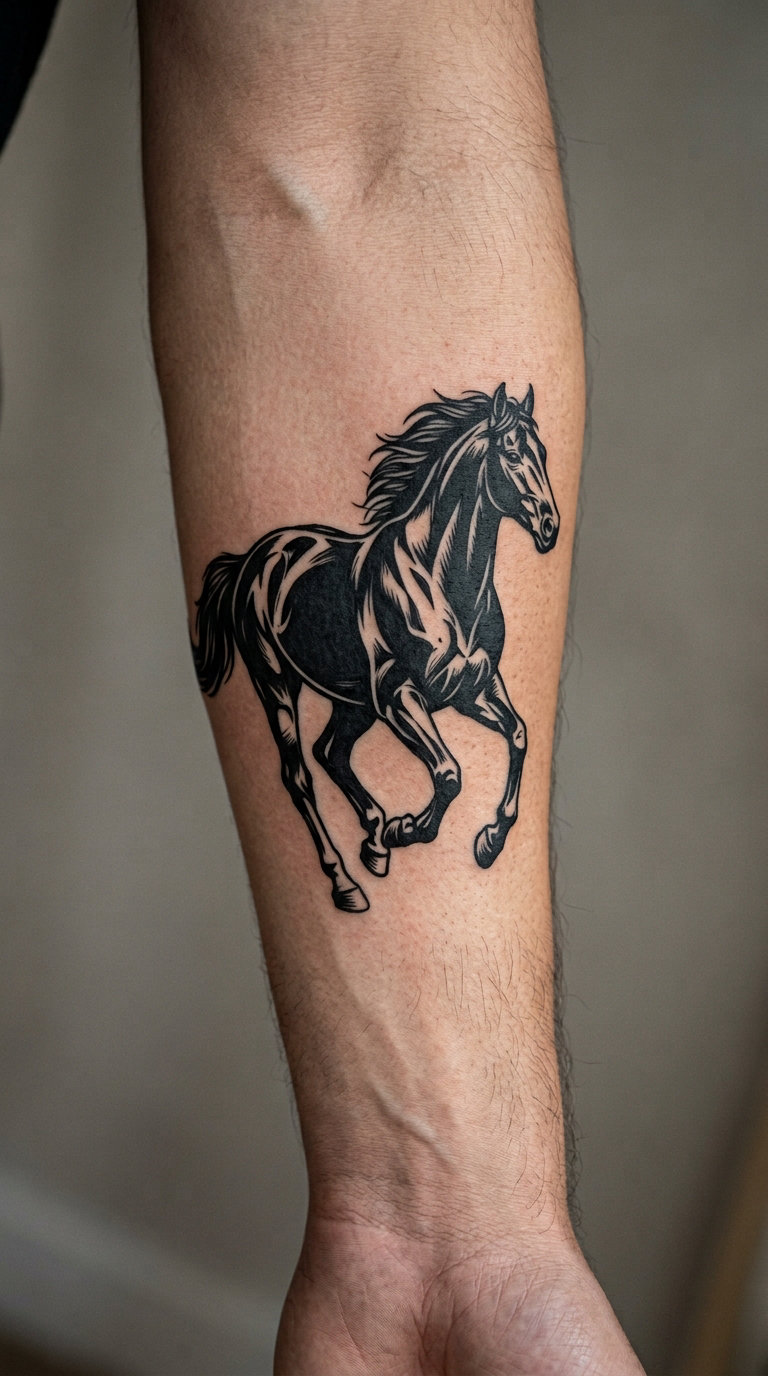
| Running Horse Blackwork | Blackwork | Outer forearm | 4 to 6 inch | Medium |
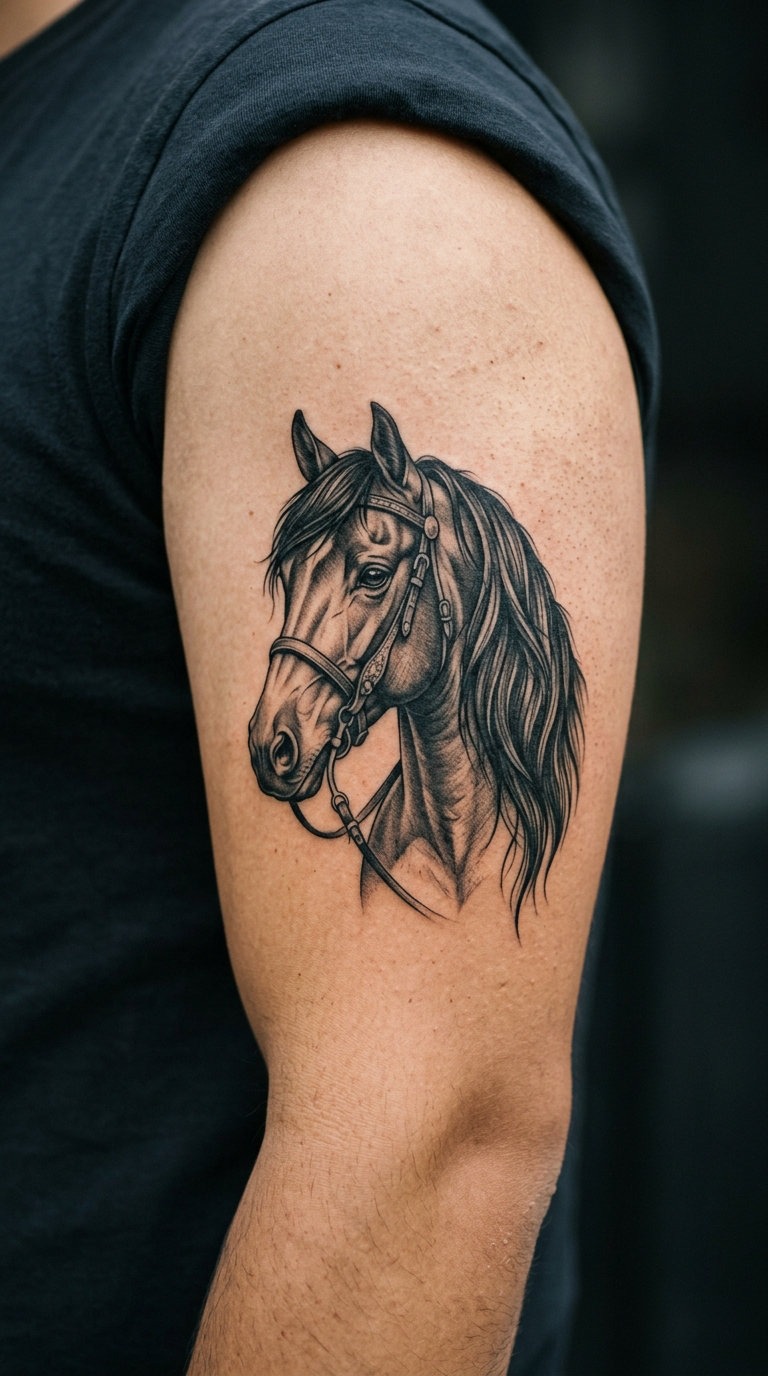
| Western Horse Portrait | Black and grey realism | Outer upper arm | 4 to 5 inch | Medium |
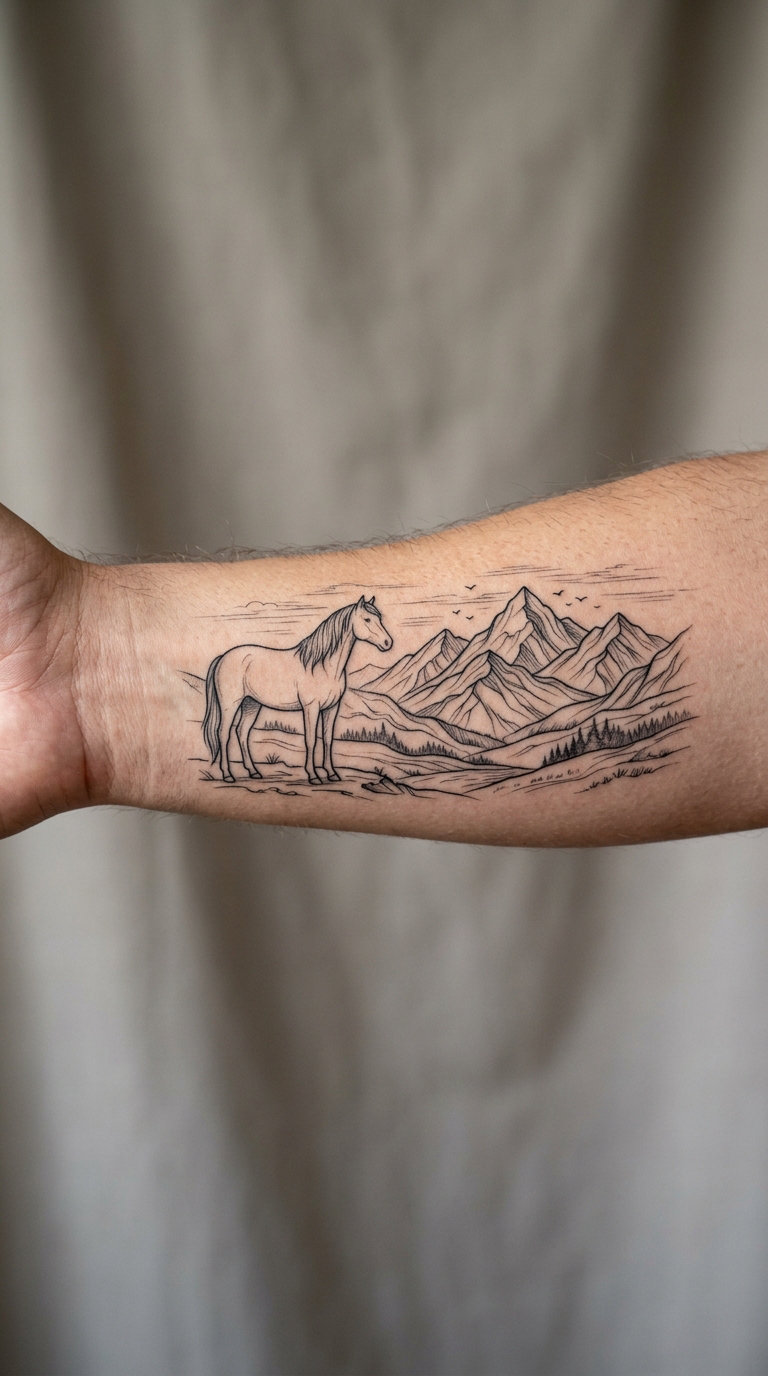
| Horse and Mountain Line Art | Fine line | Inner forearm | 6 to 8 inch wide | Low |
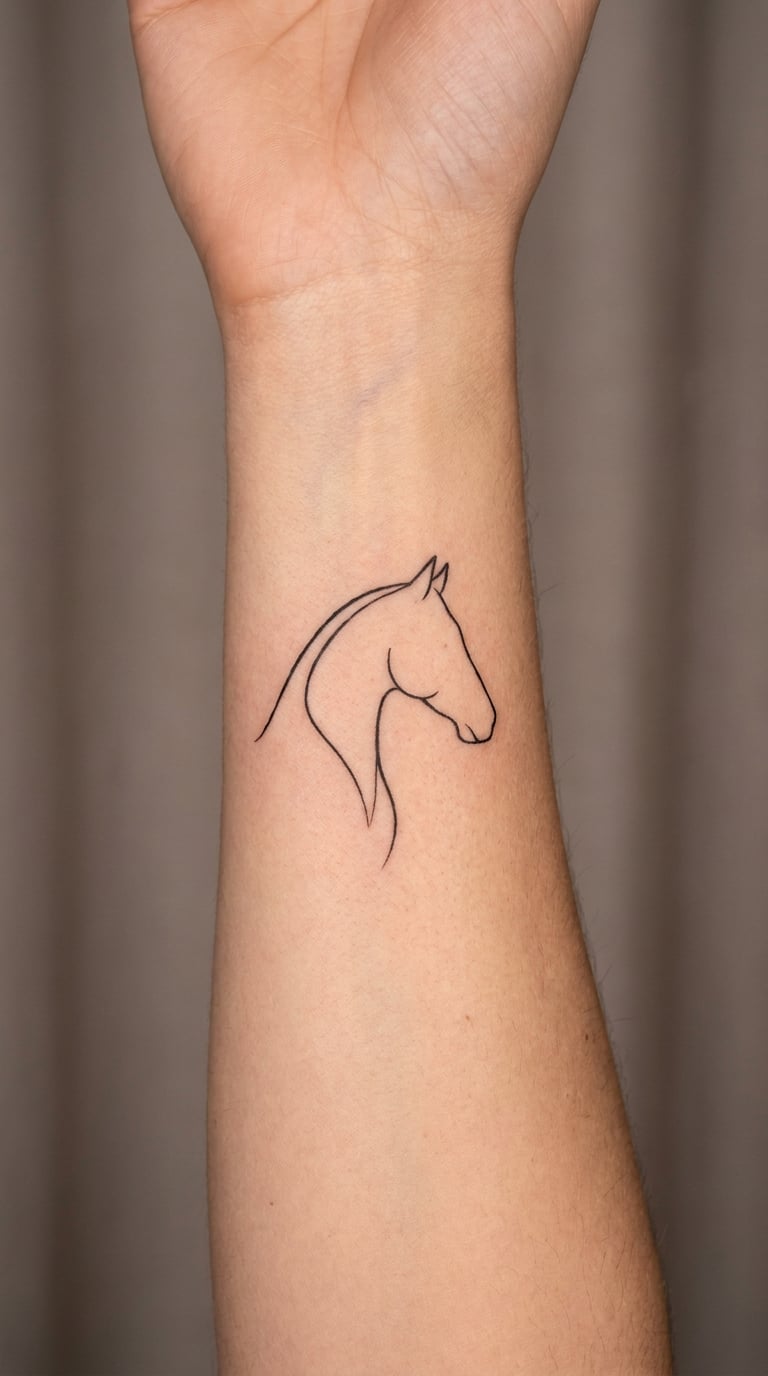
| Minimal Horse Head | Minimalist linework | Inner wrist | 1.5 to 2.5 inch | Medium |
| Galloping Horse Fine Line | Fine line | Outer forearm | 3 to 4 inch | Low |
| Realistic Standing Horse | Realism | Outer calf | 6 to 8 inch | Low |
| Horse with Flowing Mane | Illustrative realism | Calf | 4 to 6 inch | Low |
| Tribal-Style Horse | Tribal | Shoulder to upper arm | 6 to 8 inch | Medium |
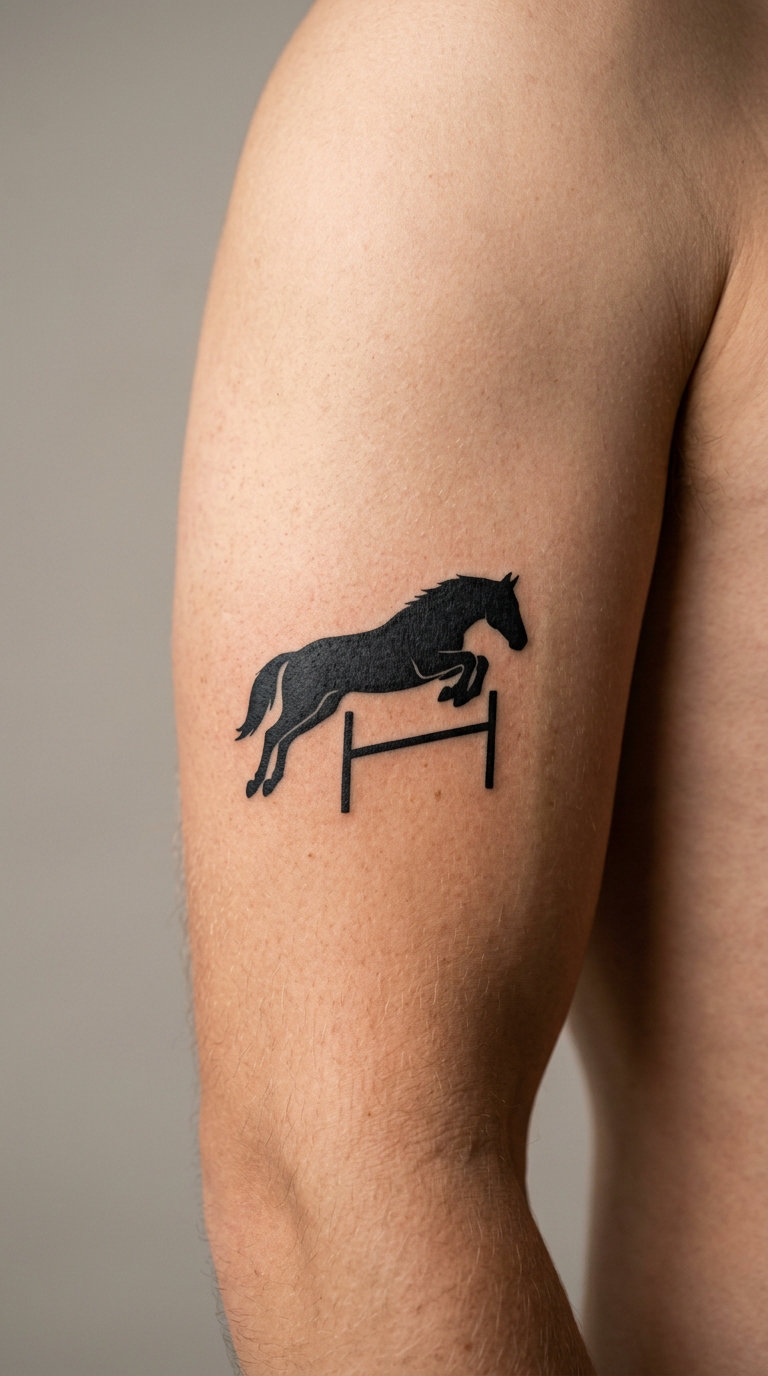
| Jumping Horse Silhouette | Solid silhouette | Outer upper arm | 3 to 4 inch | Low |
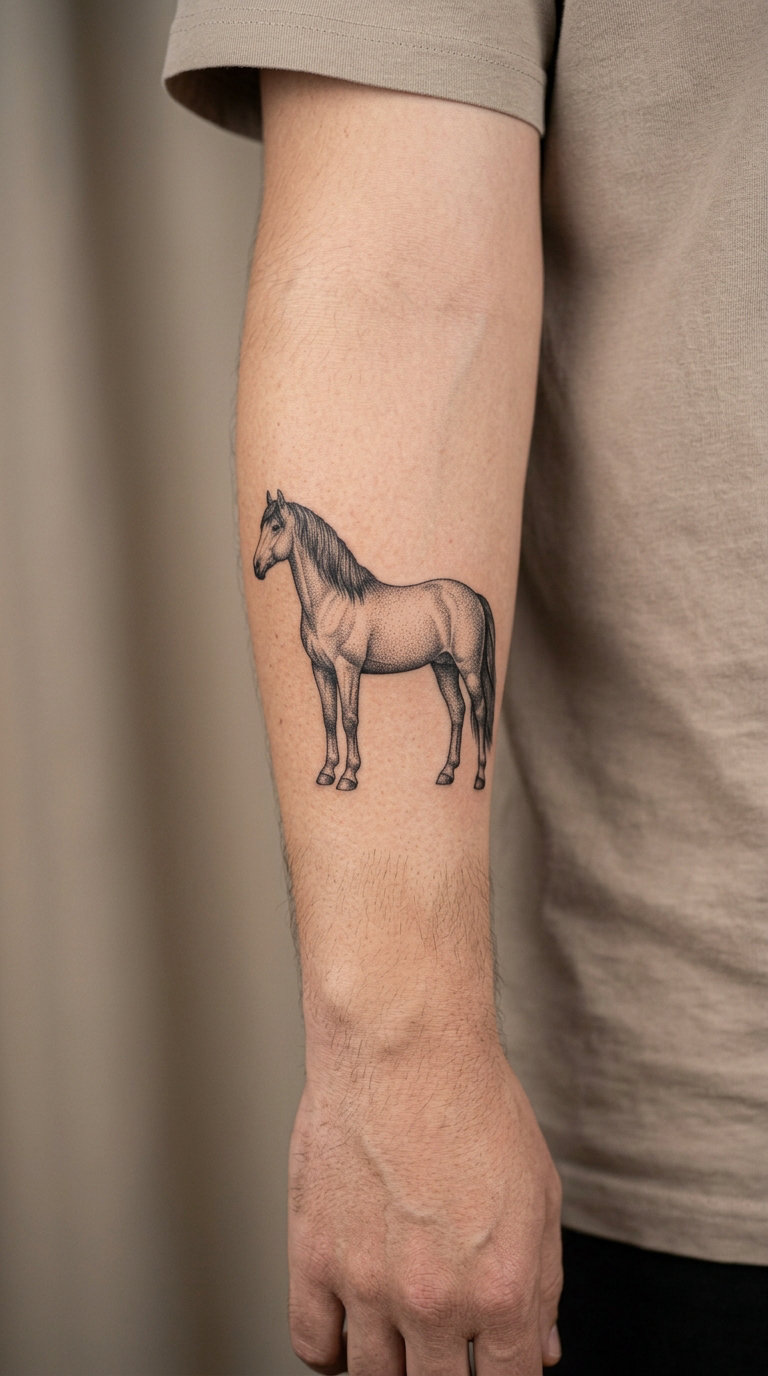
| Horse in Dotwork | Dotwork | Outer forearm | 4 to 5 inch | Medium |
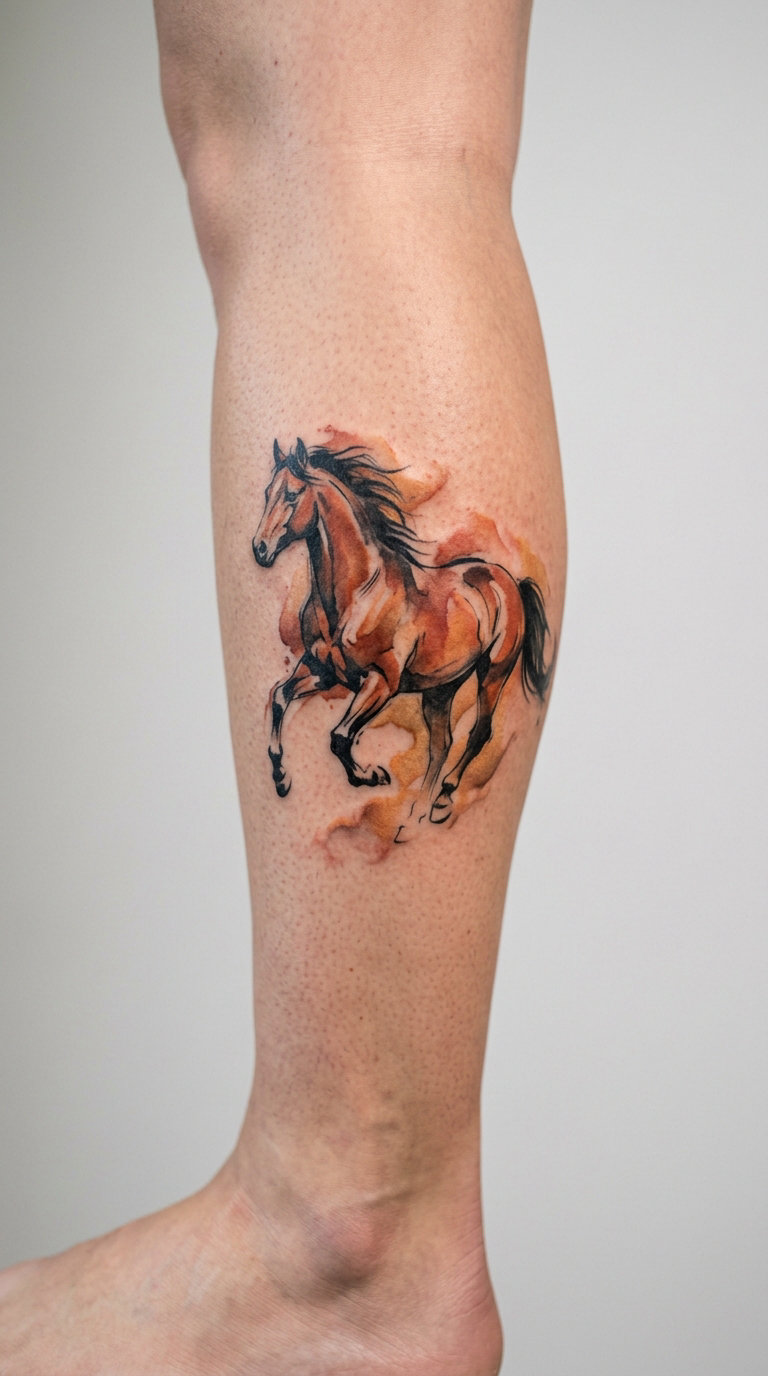
| Wild Stallion in Watercolor | Watercolour | Outer calf | 5 to 7 inch | Low |
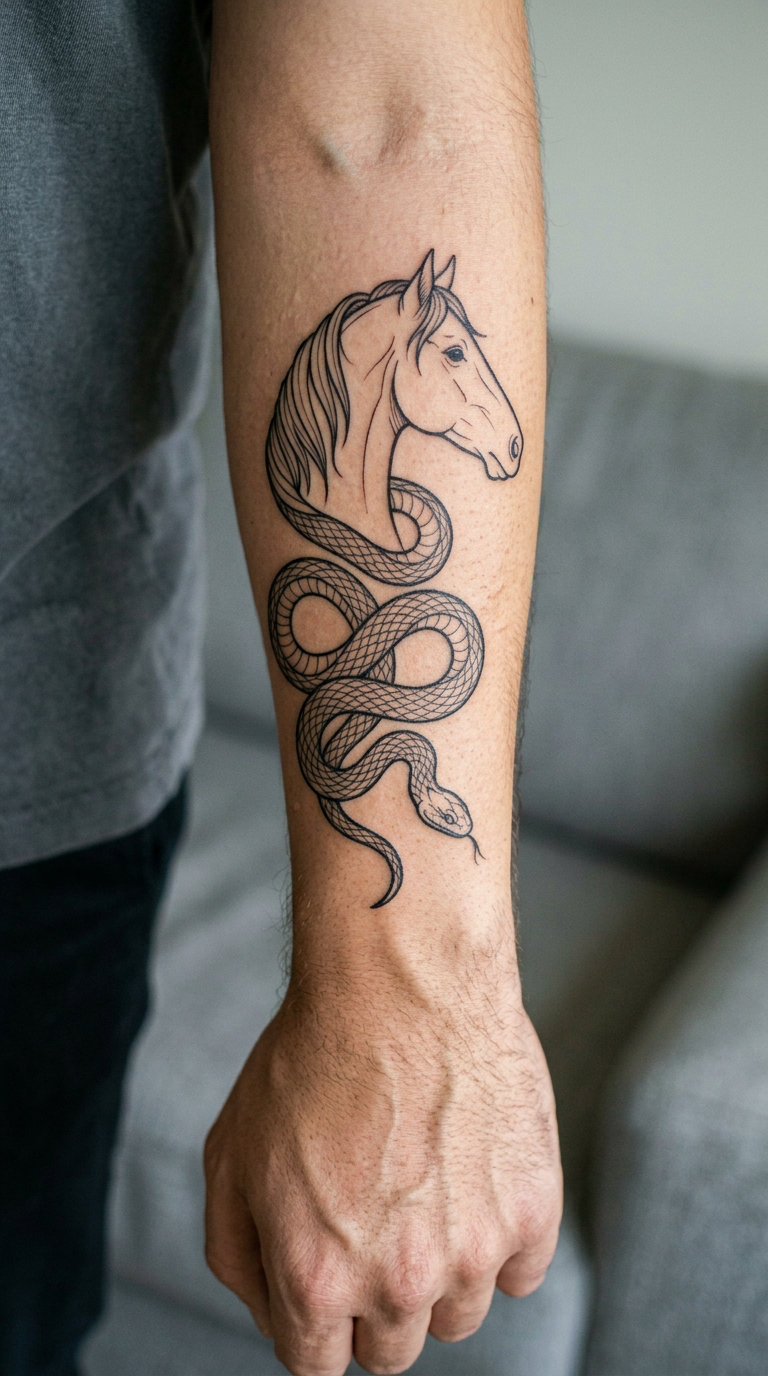
| Horse and Snake | Black linework | Outer forearm, vertical | 4 to 6 inch | Medium |
| Horse Skull | Realism | Outer forearm | 4 to 5 inch | Medium |
| Polo Pony | Fine line illustration | Calf | 4 inch | Low |
| Dressage Pair | Fine line | Inner forearm, horizontal | 7 inch wide | Low |
| Horse with Wheat | Blackwork with linework | Outer upper arm | 4 to 5 inch | Medium |
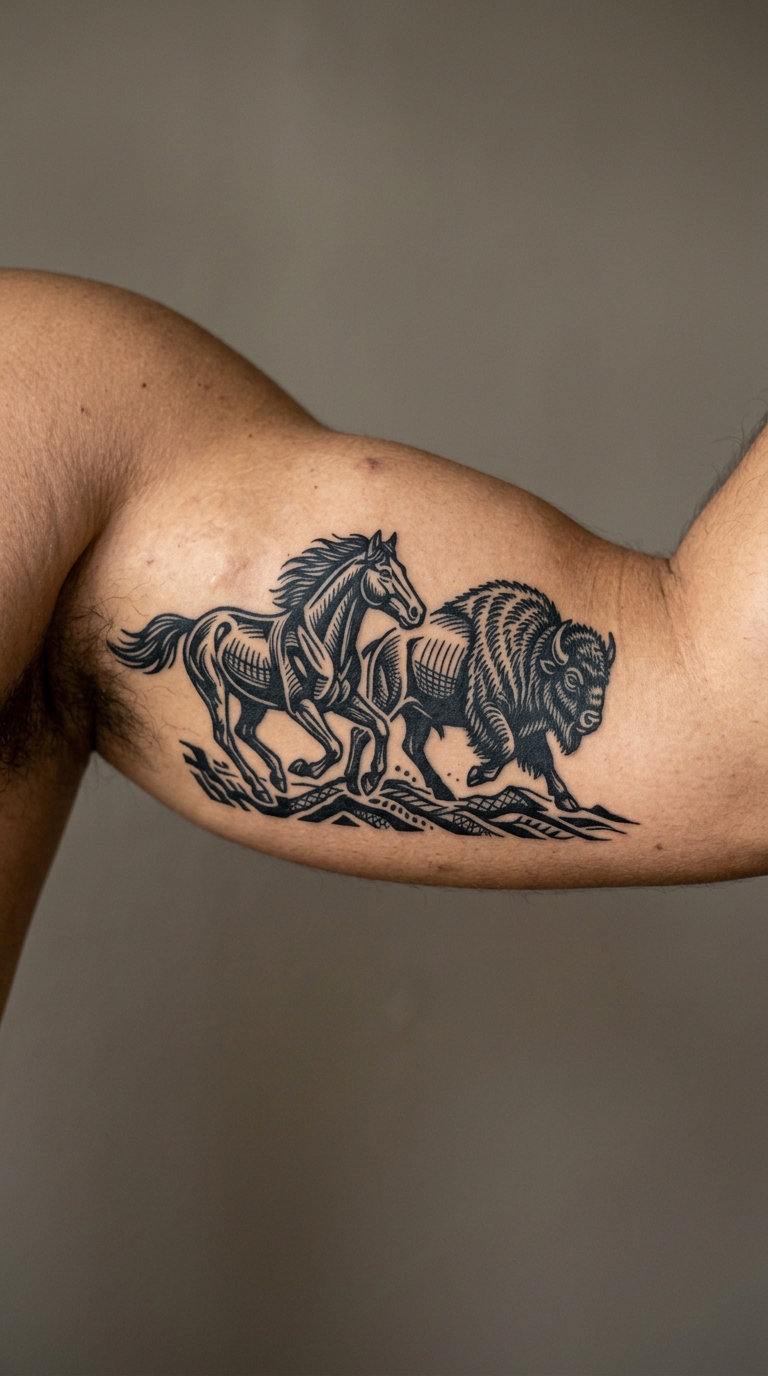
| Charging Bison and Horse | Blackwork | Upper arm, horizontal | 7 to 9 inch wide | Medium |
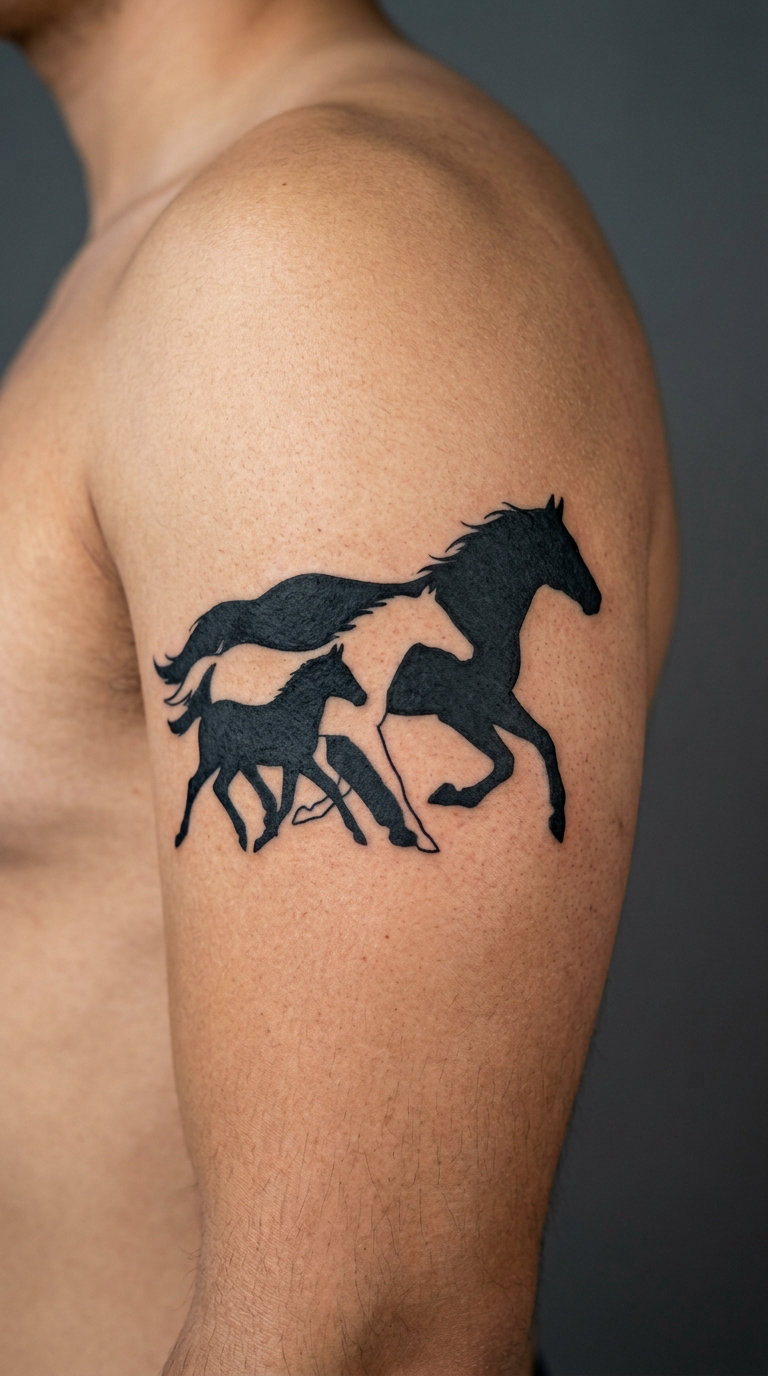
| Herd of Horses | Layered silhouette | Outer upper arm | 8 to 10 inch wide | Medium |
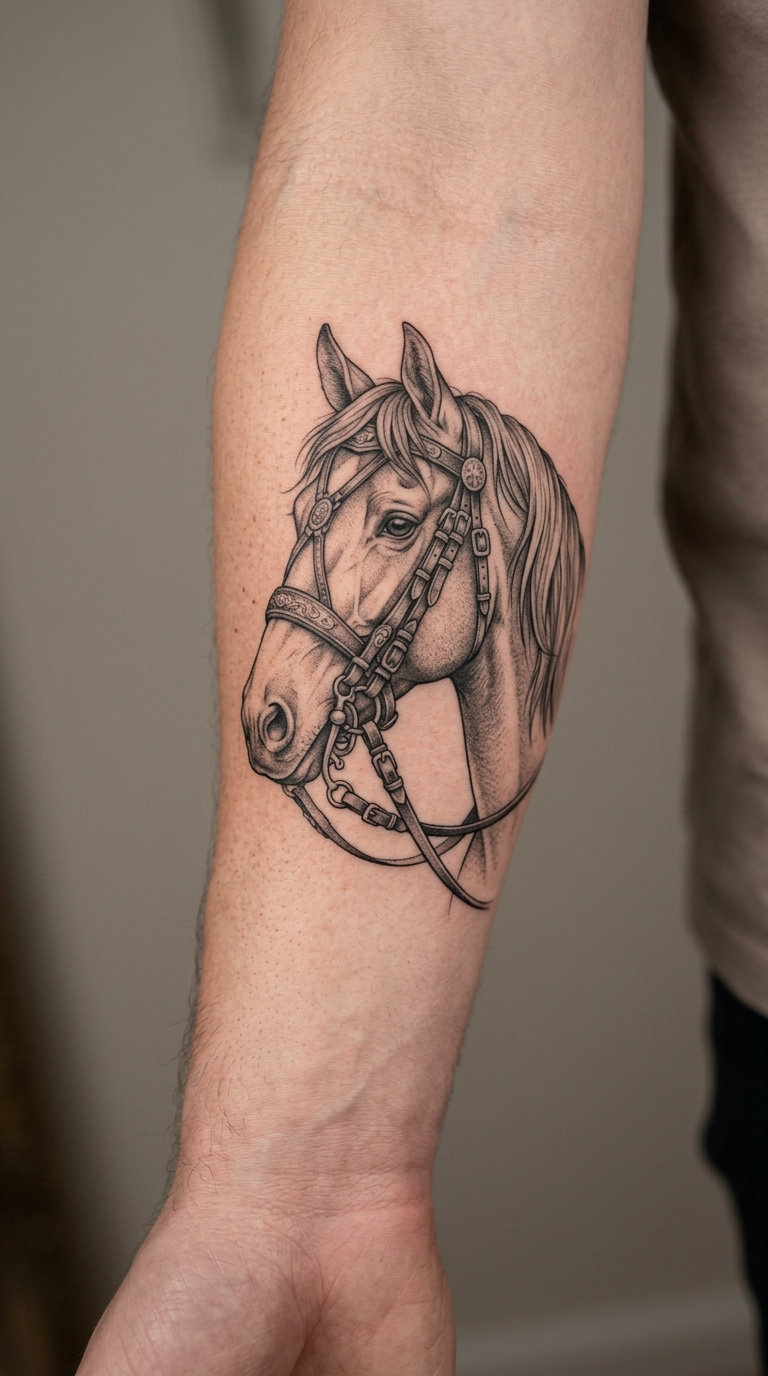
| Cavalry Horse | Black and grey realism | Outer forearm | 5 to 6 inch | Medium |
| Horse Hoof Print | Bold silhouette | Inner wrist or chest | 1.5 to 2 inch | Medium |
| Horse in a Sun | Fine line | Shoulder or upper arm | 3 inch | Low |
| Celtic Horse Knot | Knotwork | Inner forearm | 4 to 5 inch | Medium |
| Geometric Horse | Geometric | Outer calf | 4 to 5 inch | Low |
| Horse and Rose | Fine line with soft shading | Outer forearm, vertical | 4 to 6 inch | Medium |
1. Running Horse Blackwork
2. Western Horse Portrait
3. Horse and Mountain Line Art
4. Minimal Horse Head
5. Galloping Horse Fine Line
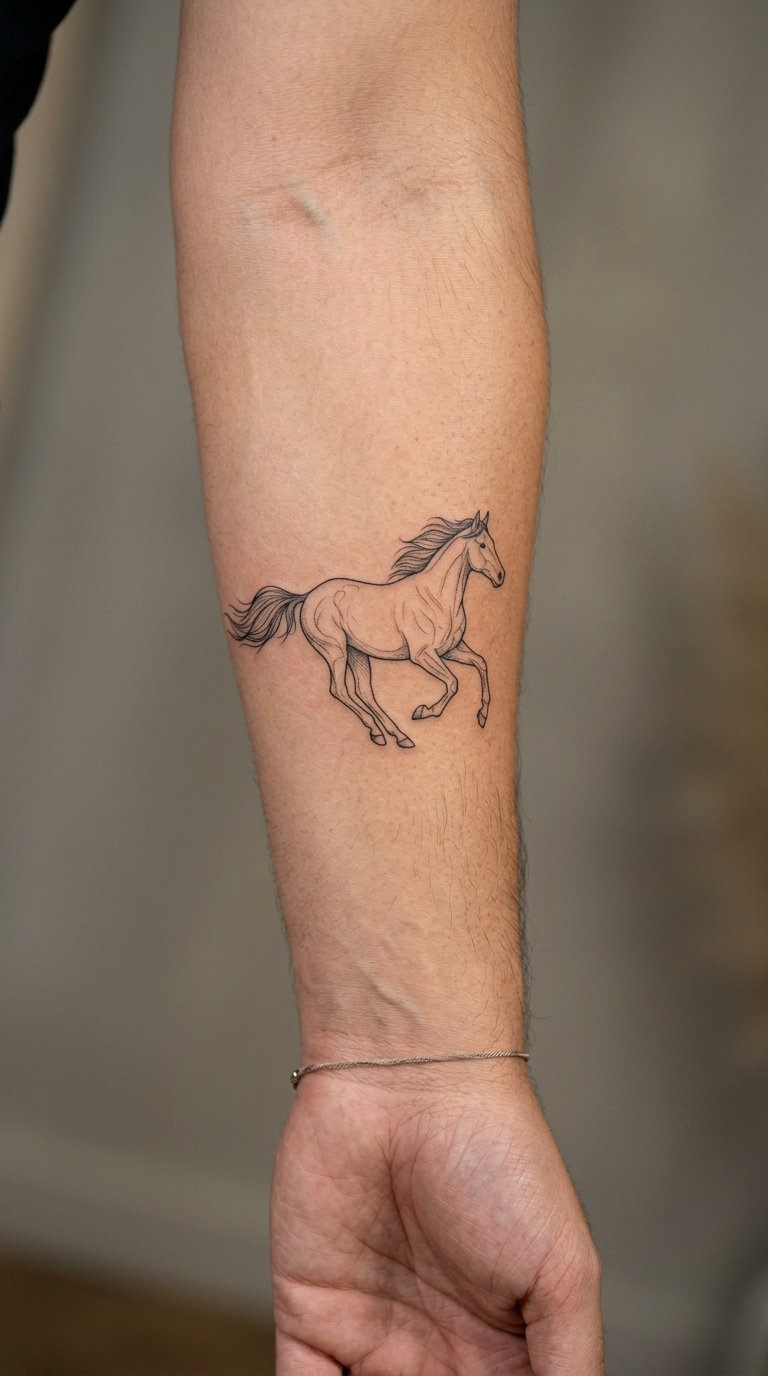
6. Realistic Standing Horse
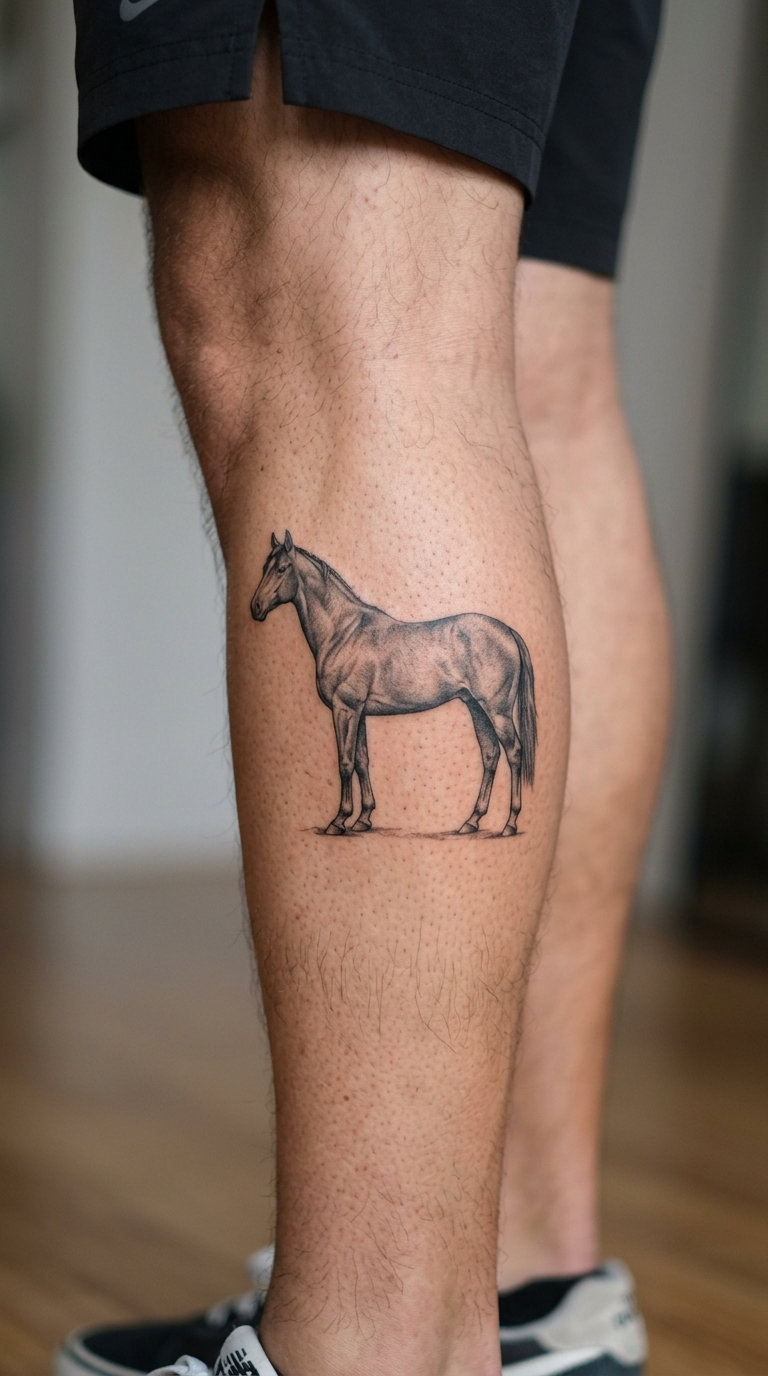
7. Horse with Flowing Mane
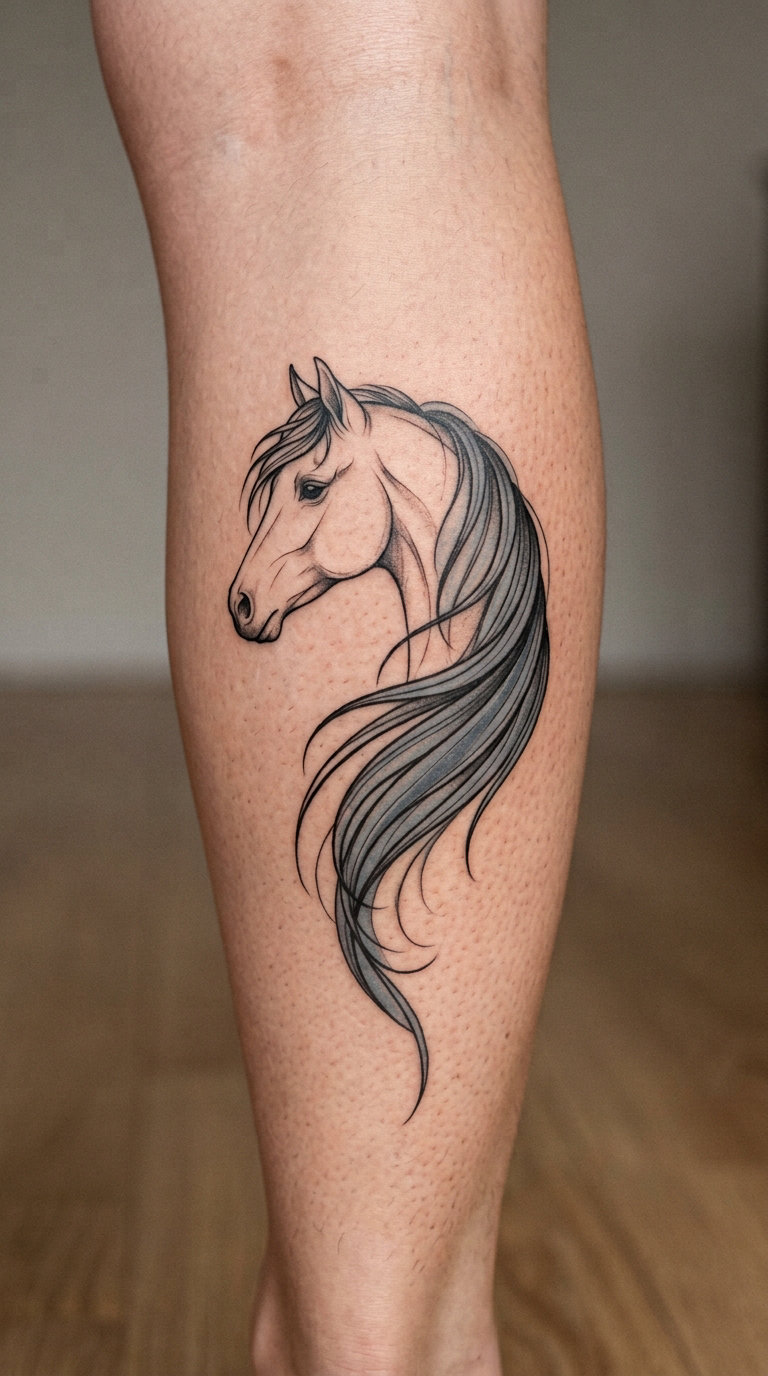
8. Tribal-Style Horse
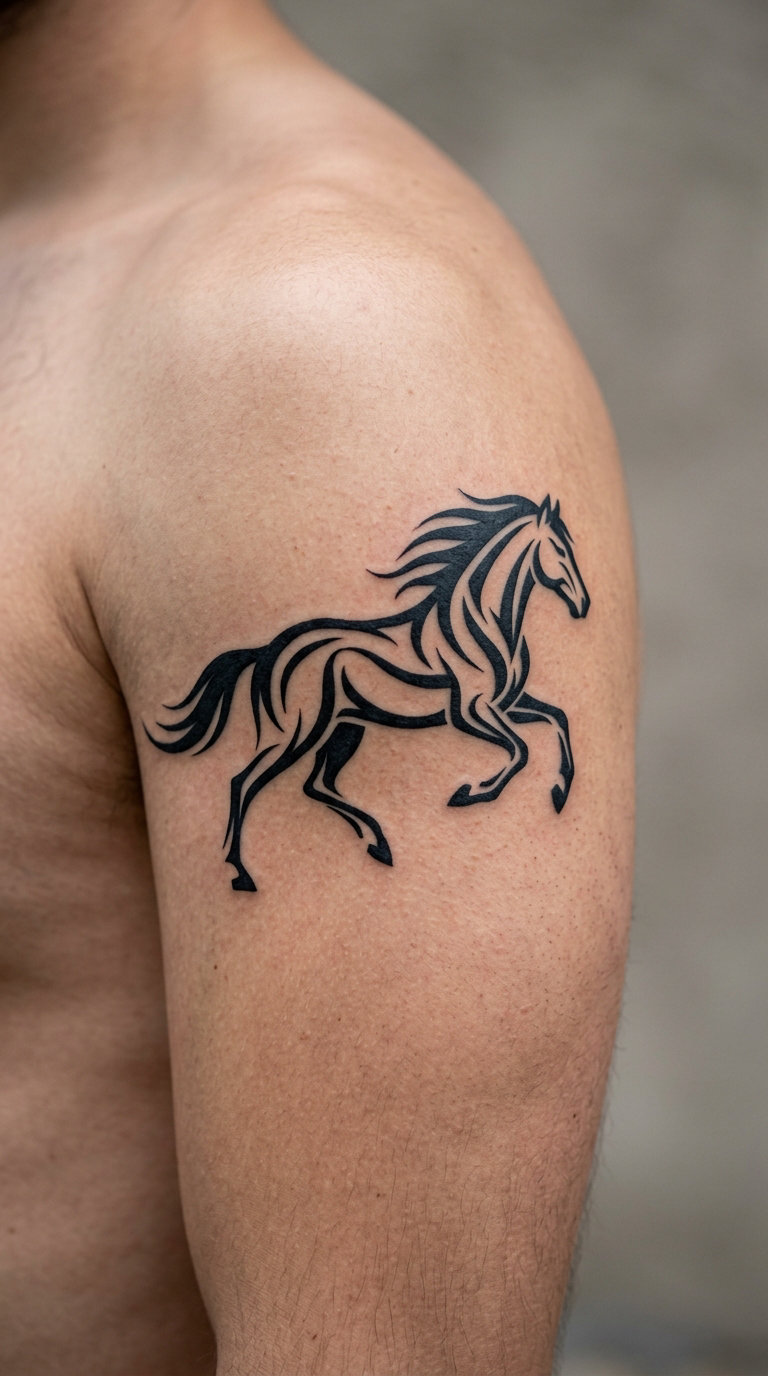
9. Jumping Horse Silhouette
10. Horse in Dotwork
11. Wild Stallion in Watercolor
12. Horse and Snake
13. Horse Skull
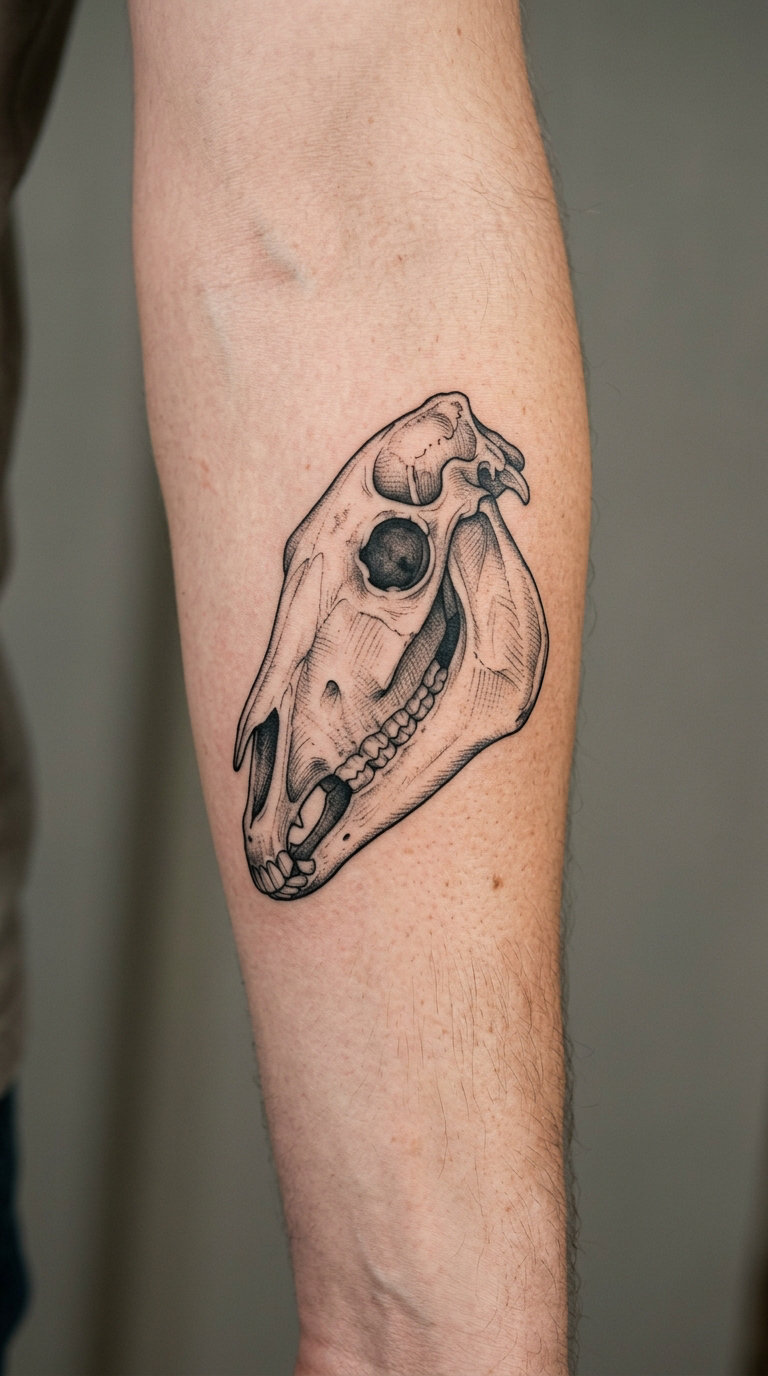
14. Polo Pony
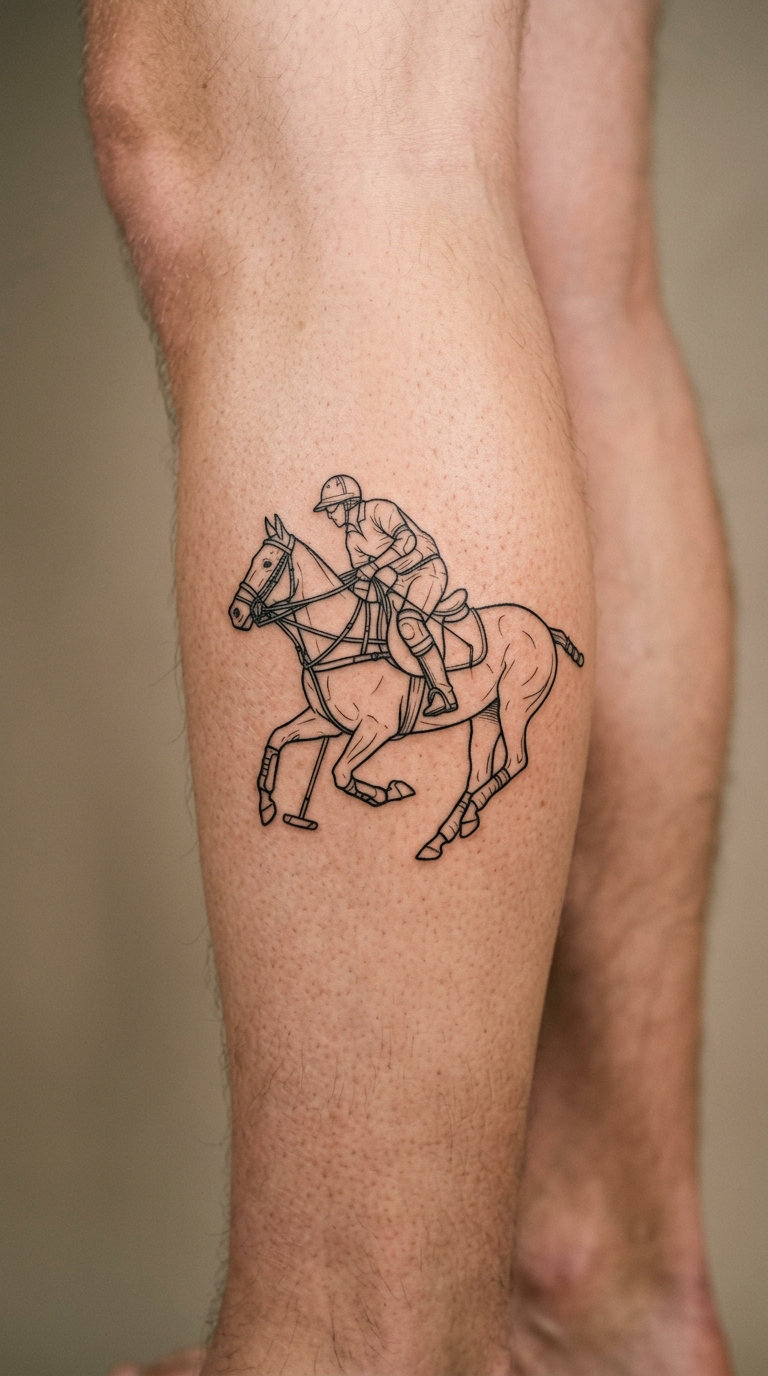
15. Dressage Pair
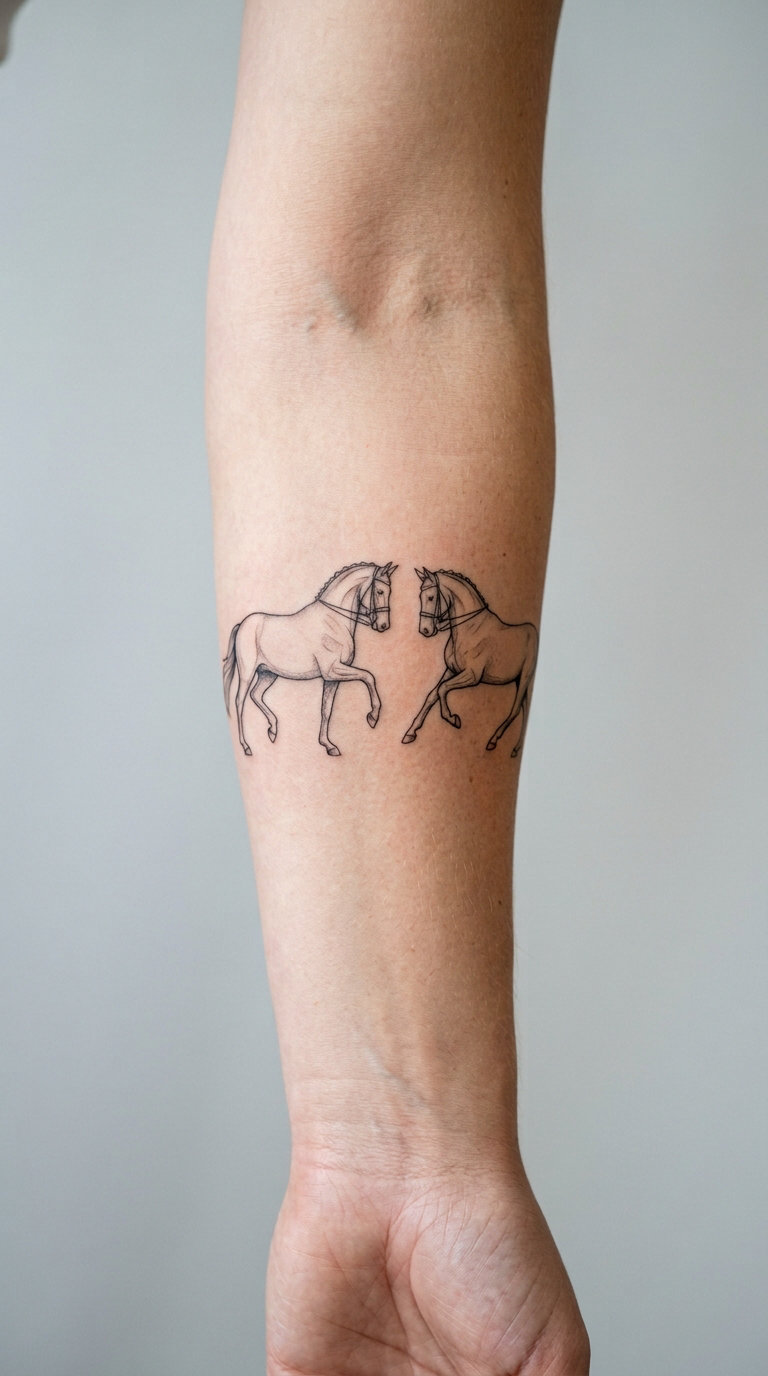
16. Horse with Wheat
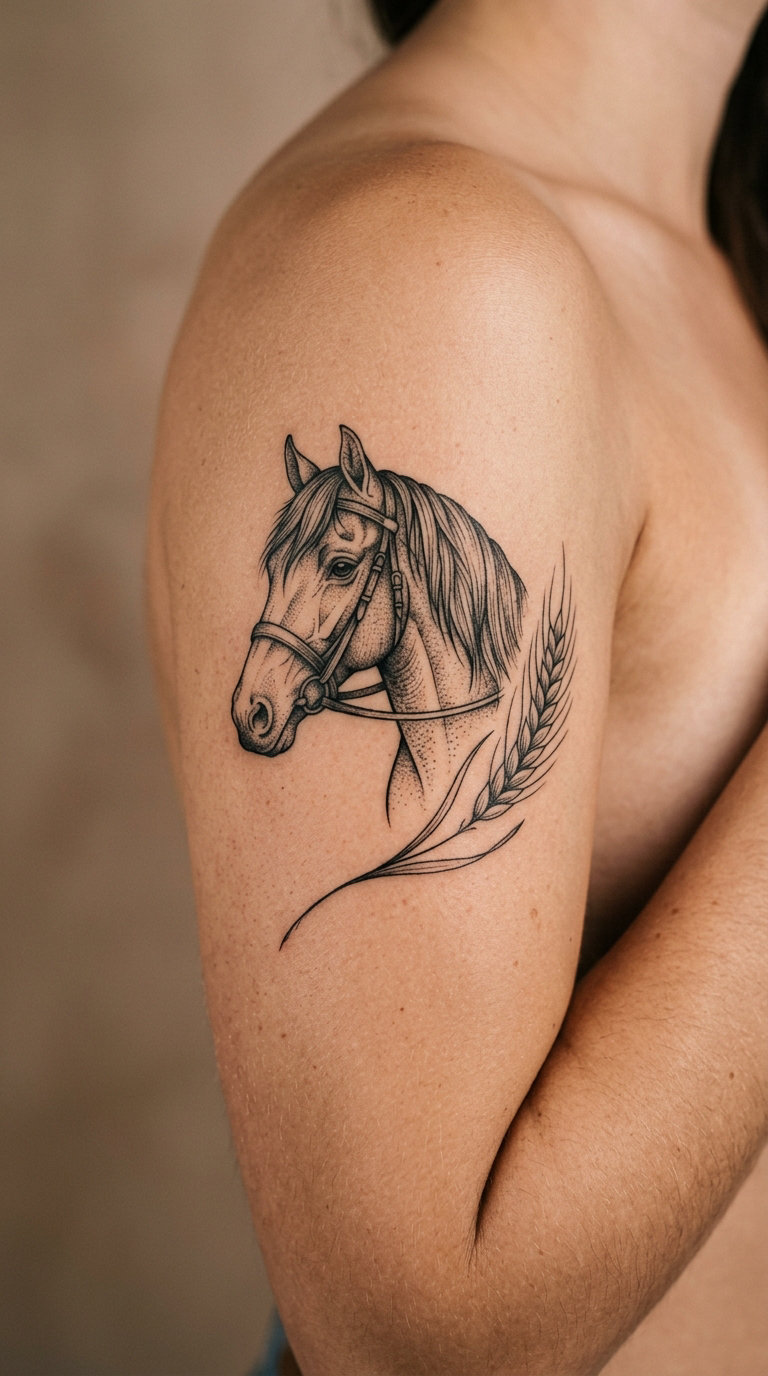
17. Charging Bison and Horse
18. Herd of Horses
19. Cavalry Horse
20. Horse Hoof Print
A hoof reduced to one bold black shape with a few clean cuts to suggest the frog and the wall. No horse, no name, nothing but the print. Trail riders and ranch hands get it because it is the most personal and least obvious horse mark there is. Placement: inner wrist, chest near the collarbone, or the top of the foot. Size: 1.5 to 2 inches (4 to 5 cm). Style: bold silhouette. Pain: medium on the wrist and chest, both of which are sensitive. Make it yours: use the trimmed shape of your own horse’s hoof, or run a trail of three prints up the inner arm.21. Horse in a Sun
A simplified standing horse centred in a circular sun, with the rays alternating between solid wedges and open lines so the circle does not become a heavy black disc. Warm, compact and outdoorsy without being sentimental. It works as a standalone piece or as a filler between bigger elements. Placement: shoulder, upper arm or the chest. Size: 3 to 4 inches (8 to 10 cm) across. Style: fine line. Pain: low on the shoulder and upper arm. Make it yours: add one small line of text under the circle, a place name or a year, and keep the lettering small enough that each letter holds its line weight.22. Celtic Horse Knot
The horse’s neck, mane and legs are built from interlacing black bands based on broad Celtic knot conventions, with enough open space left that the animal still reads instantly. It is graphic without being heavy. Many people reach for it because of the knotwork itself rather than any specific cultural claim. Placement: inner forearm, calf or the upper back. Size: 4 to 5 inches (10 to 13 cm) tall. Style: knotwork. Pain: medium. Interlacing lines mean the needle crosses the same area repeatedly. Make it yours: put a second knot in a different spot on the other arm, the way paired knotwork was traditionally balanced.23. Geometric Horse
A running horse broken into angular planes, straight contours and a restrained black, grey and white palette, with the anatomy still readable underneath. The planes follow the direction of the gallop instead of fighting it. If realism is not your interest, this is a modern graphic option with a lot of presence. Placement: outer calf, outer forearm or the shoulder. Size: 4 to 5 inches (10 to 13 cm) long. Style: geometric. Pain: low to medium. Flat grey fills are quicker than textured realism. Make it yours: keep the leg count correct and change the plane angles so the animal matches the direction of the limb.24. Horse and Rose
A controlled fine-line horse in profile with a single rose beside it, shaded softly in black and grey so it has weight against the flat line of the horse. One flower, not a wreath, keeps it from turning into a generic motif collage. It often comes from a relationship, a partnership or a balance the wearer wants to see. Placement: outer forearm, vertical, or the inner arm. Size: 4 to 6 inches (10 to 15 cm) tall. Style: fine line with soft shading. Pain: medium on the forearm. Make it yours: use the rose of a person who matters, and skip the standard bloom if it is not their flower.How to Choose the Right Design
Five checks will narrow twenty-four options down to one without any pressure to book anything.
- Match the style to what you already have. A fine-line horse next to a heavy traditional sleeve will look borrowed. Blackwork, fine line, realism and geometric work each carry a different weight, and yours should match the collection it is joining.
- Match detail to the space you actually have. Realistic work needs 5 inches or more. Below 3 inches, only silhouettes and minimal linework stay readable. Shrinking a detailed horse is the single most common regret riders describe.
- Pick placement for visibility and body shape. Riders consistently point to the calf as the sweet spot: large, flat, not bony, and usually hidden under jeans or breeches. The outer forearm reads well in short sleeves, and the upper back and chest handle the largest pieces.
- Confirm the anatomy before you commit. Check the leg count, the joint structure and the proportion of the body to the legs. Bad equine anatomy is the number one complaint on tattoo advice forums, and it is far cheaper to fix on paper.
- Ask the artist to adapt the design to how the body moves. A running horse that ignores the curve of the forearm will always look wrong, however good the drawing is.
How to compare 24 horse tattoo ideas for men
Work down the quick guide table and compare rows on scale, contrast, placement and pain rather than on how the thumbnail looks. Blackwork and silhouettes hide a small size; fine line and dotwork punish one. When two designs still tie, bring both to a consultation with a short list of reference images, and ask which one the artist can actually draw cleanly at the size you want.
Reference boards beat descriptions every time. Riders on equestrian forums say the same thing again and again: trying to explain a style in words fails, while five saved photos of the line weight you want does not.
Cost and Session Time
Artists quote by the hour, but these are the realistic US ranges by project type.
- A small, simple design such as a minimal head or a hoof print: roughly 150 to 300 dollars, usually one sitting.
- A medium fine-line or detailed piece: roughly 300 to 700 dollars, one or two sittings.
- Larger blackwork or realism work: roughly 700 to 1,500 dollars, often split across two or three sessions.
- Full colour, large-scale or multi-session projects: well above that, and best discussed as a plan rather than a price.
Hourly rates, geography, shop minimums, complexity and session limits cause huge variation. A shop minimum means the smallest design still costs a floor amount, and a large realistic piece is nearly always split so nobody has to sit through five hours of solid black.
Aftercare Basics
- Follow your artist’s aftercare instructions first, since they match the ink and the skin they just worked on.
- Keep the area clean and wash it gently with unscented soap as directed during healing.
- Avoid prolonged water exposure, swimming pools, hot tubs and saunas until the tattoo has closed over.
- Do not pick scabs or scratch. Loose skin flaking off is normal, and pulling it is how people scar their own tattoos.
- Protect new ink from unnecessary sun, especially colour pieces and anything on the forearm.
- Contact your artist or a qualified clinician if an unusual concern comes up during healing.
Frequently Asked Questions
What is the best small horse tattoo for a man?
A minimal horse head in single-contour linework, roughly 1.5 to 2.5 inches on the inner wrist, is the easiest small horse design to keep readable. A jumping horse silhouette works too, because a clear outline survives a small size better than any detailed portrait. Avoid fine detail below 2 inches; it blurs within a few years.
Are horse tattoos painful on the forearm, ribs, or fingers?
Forearm work sits in the middle: medium, mostly from the elbow crease and the wrist edge. Ribs are noticeably sharper, sometimes close to high, because the skin there is thin over bone. Fingers and the inner wrist hurt more than most people expect despite the tiny size. If you are nervous, start on the calf or upper arm.
What size should a detailed horse tattoo be?
A realistic or black and grey horse portrait needs at least 4 to 5 inches (10 to 13 cm) to hold its detail, and a full standing horse usually wants 6 inches or more. Fine line and dotwork need similar space because their lines and dots blur. Only minimal linework and solid silhouettes look clean under 3 inches.
Will fine-line horse tattoos fade quickly?
Fine line fades faster than blackwork because each line is thin and has less ink in the skin. Mane strands, contour lines and small details soften first, usually within several years, and a touch-up is often needed. Solid black fills and silhouettes hold their edge far better. Placement matters most: hands, fingers and inner wrists wear fastest.
Should I get a horse portrait or a silhouette?
Choose a portrait if you want a specific, recognisable horse or a lifelike likeness, and give it 4 inches or more of space. Choose a silhouette if you want a bold graphic mark, a smaller size, or a design that stays readable from a distance and ages well. Riders with a real, individual horse almost always want the portrait.
For a first horse tattoo, the minimal head or the jumping silhouette gives you the animal without committing to a large black shape you might not want forever. Adding to an existing collection, the running horse blackwork or the realistic standing horse is the stronger statement, and it is the one that rewards a bigger piece.
Whatever you choose, bring reference images, pick your placement around the shape of the design, and if you ride, book with someone who has put a horse on skin before. For other angles, our gallery of horse tattoo ideas for women covers the softer, smaller end of the same subject.