
20 Side Neck Tattoo Ideas for Women, Ranked (October 2026)
A side neck tattoo is a design placed on the lateral neck, running from just below the ear down toward the collarbone along the side of the neck. It is one of the most visible placements you can choose and one of the more sensitive, and it frames the face like nothing else does.
These twenty side neck tattoo ideas for women are ranked by how well each one holds up on neck skin, not by how pretty the reference photo looks. Neck skin moves constantly, sits close to bone, and takes more sun than almost anywhere else on the body.
Two things decide whether a piece works here: line weight and size. Anything in the 4-8 cm range with medium-weight lines ages cleanly. Hair length matters just as much, since long hair falls across the side neck and can hide a small piece on its own. Planning around a wedding or a new job? Leave four to six weeks of healing.
Side Neck Tattoo Ideas for Women: Quick Guide
| Idea | Style | Best placement | Size | Pain |
|---|---|---|---|---|
| 1. Fine-line botanical sprig | Fine line | Below the ear, behind the jaw | 4-6 cm | Medium |
| 2. Single-stem rose | Botanical realism | Mid-sternocleidomastoid | 5-7 cm | Medium |
| 3. Micro butterfly | Fine line | Lower neck, near collarbone | 3-4 cm | Medium |
| 4. Lily of the valley | Delicate floral | Behind the ear into the neck | 5-6 cm | Medium |
| 5. Eucalyptus branch | Botanical, muted green | Mid to lower side neck | 6-8 cm | Medium |
| 6. Moon phase arc | Fine line, single needle | Below the ear | 4-5 cm | Medium |
| 7. Vertical script word | Handwritten script | Along the neck muscle | 5-7 cm | High |
| 8. Roman numeral date | Classic serif | Low side neck, above the collar | 4-5 cm | Medium |
| 9. Sun and moon half | Line art with dotwork | Behind the ear to the jaw | 5-7 cm | Medium |
| 10. Swallow in flight | Traditional, two colours | Mid side neck, wings open | 6-8 cm | High |
| 11. Abstract single line | Minimal line art | Mid side neck | 5-7 cm | Medium |
| 12. Crescent moon | Minimal, solid black | Just below the ear | 3-4 cm | Medium |
| 13. Mountain peaks | Geometric, fine line | Lower side neck | 4-6 cm | Medium |
| 14. Dotwork constellation | Dotwork | Lower neck, above the collar | 5-7 cm | Medium |
| 15. Line-art face profile | Continuous single line | Behind the ear, facing out | 5-7 cm | Medium |
| 16. Dagger in blackwork | Blackwork, solid fill | Full side neck, vertical | 10-13 cm | High |
| 17. Blackwork swallow pair | Bold traditional, heavy line | Side neck into the shoulder | 10-12 cm | High |
| 18. Red ink rose | Colour, bold petal | Mid side neck | 6-9 cm | High |
| 19. Statement blackwork branch | Blackwork, heavy fill | Below the ear to the collar | 12-15 cm | High |
| 20. Ornamental filigree panel | Ornamental, dense line | Full side neck, vertical | 10-14 cm | High |
Side Neck, Nape, or Front of the Neck
Most people who want a neck piece start with the side neck and then second-guess it against the nape. They are not the same placement, and the differences are big enough to change the decision.
| Factor | Side neck | Nape | Front or throat |
|---|---|---|---|
| Visibility | Seen in profile and from the front | Hidden by almost any hairstyle | Visible in every setting |
| Concealment | A collar or longer hair covers a small piece | Hair covers it most days | Very difficult to hide |
| Pain | Medium to high, close to bone | Medium, softer area | High, nerve-dense |
| Sun exposure | Constant, fades fastest here | Mostly covered by hair | Constant |
| Suits a first tattoo | Only if the design is small | Yes, most artists suggest it first | Almost never |
| Extends easily | Into the shoulder or upper back | Into the spine or back | Rarely |
The nape is the forgiving option, and tattooists steer nervous first-timers toward it for that reason. The side neck buys something different: the design sits under the jaw in profile, close to the face, and reads as deliberate rather than hidden.
20 Side Neck Tattoo Ideas for Women
1. Fine-Line Botanical Sprig Below the Ear
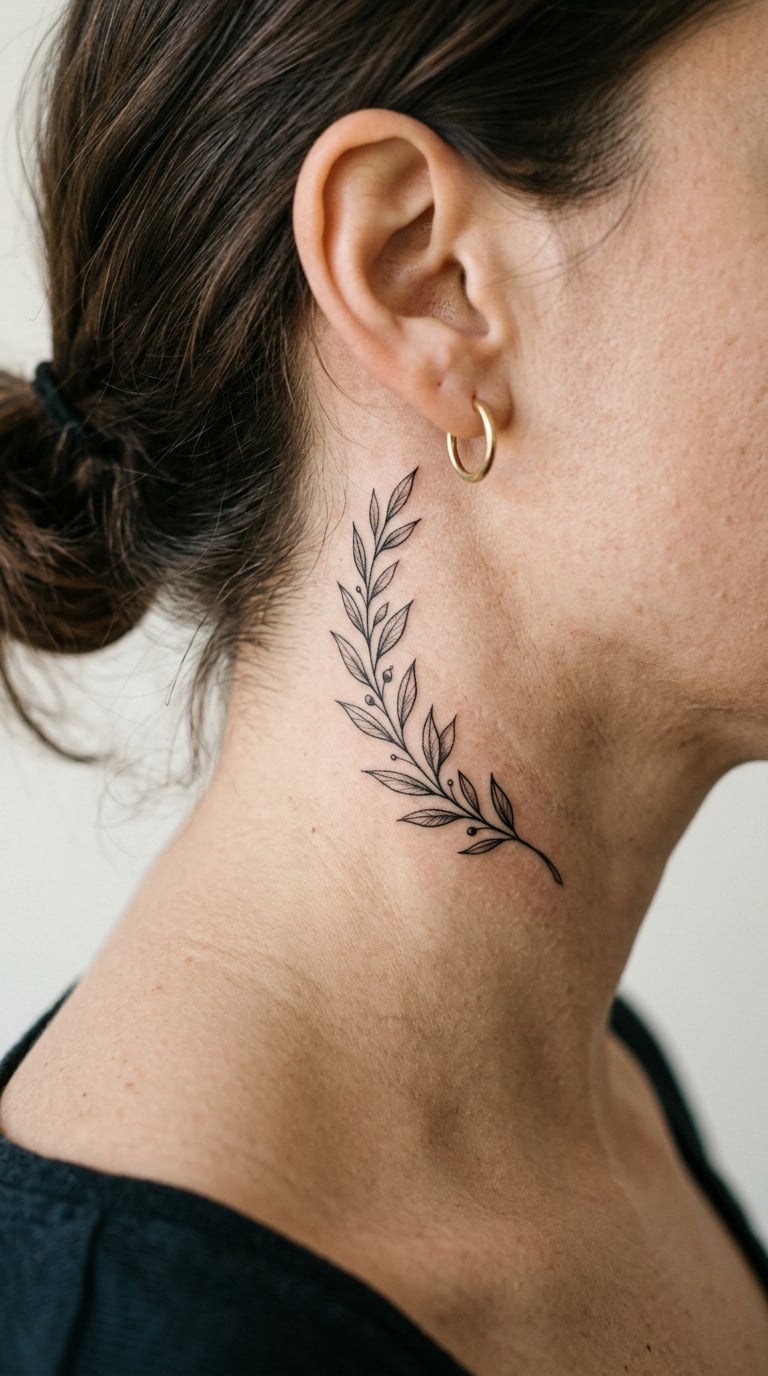
A single stem with small pointed leaves, drawn in one continuous line. The stem curves along the jaw and the leaves shrink toward the bottom, following the natural taper of the neck.
Laurel is the traditional read for growth and endurance, though the wearer usually supplies the real meaning. Eucalyptus and olive branches carry the same idea.
Placement: Below the ear, running forward toward the jaw angle. Size: 4-6 cm (1.5-2.5 inch). Style: Fine line, no shading.
Pain: Medium, and the first centimetre under the ear is the sharpest part. Fine lines blur faster here than anywhere else on the body, so expect a touch-up within three years.
Make it yours: Colour one leaf in your birthstone, or tuck a small date at the base of the stem.
2. Single-Stem Rose in Black and Grey
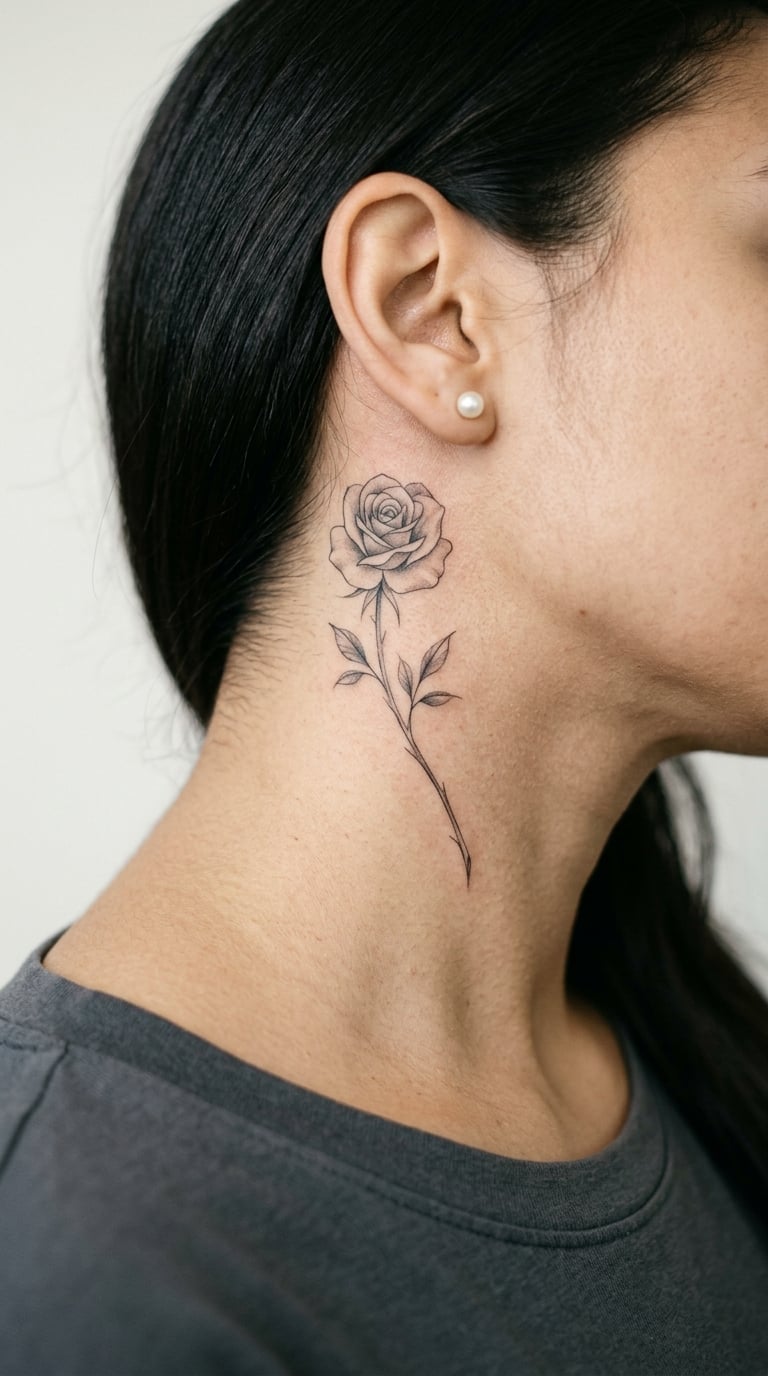
One bloom on a curved stem, built from five or six overlapping petals with grey wash shading between them, plus a few leaves and no background.
One of the most requested side neck tattoo ideas for women, and the reason is simple: a rose stays legible when line work softens because the silhouette does the work.
Placement: Mid-sternocleidomastoid, the fleshy band running from behind the ear to the collarbone. Size: 5-7 cm (2-3 inch). Style: Black and grey realism.
Pain: Medium to high where the stem crosses the neck muscle. Grey wash takes longer, so expect two sessions at this size.
Make it yours: Have the stem wrap slightly forward so it disappears under the jawline.
3. Micro Butterfly Near the Collarbone
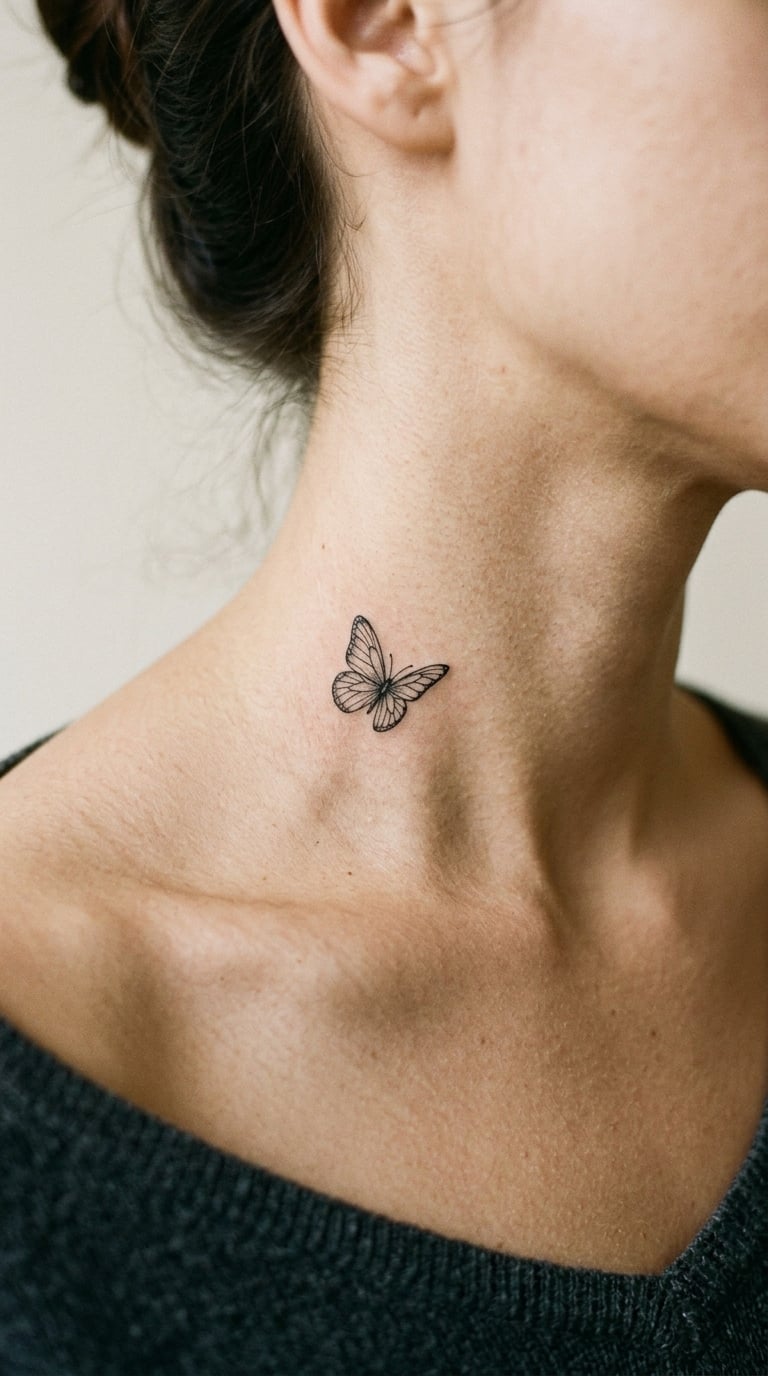
Two triangular wings joined by a slim body, with antennae no longer than a millimetre. One continuous outline, or two or three short internal lines suggesting wing veins.
Butterflies turn up constantly in first neck tattoos because the symbol is soft without being sentimental, and transformation is the reason people give.
Placement: Low side neck, just above the collarbone on the trapezius line. Size: 3-4 cm (1.25-1.5 inch). Style: Fine line, no colour.
Pain: Medium, and small designs hurt less because the session is short. At this size the line weight is the whole design, so agree the needle depth up front.
Make it yours: Angle the wings upward so the shape follows the slope of the shoulder.
4. Lily of the Valley Sprig
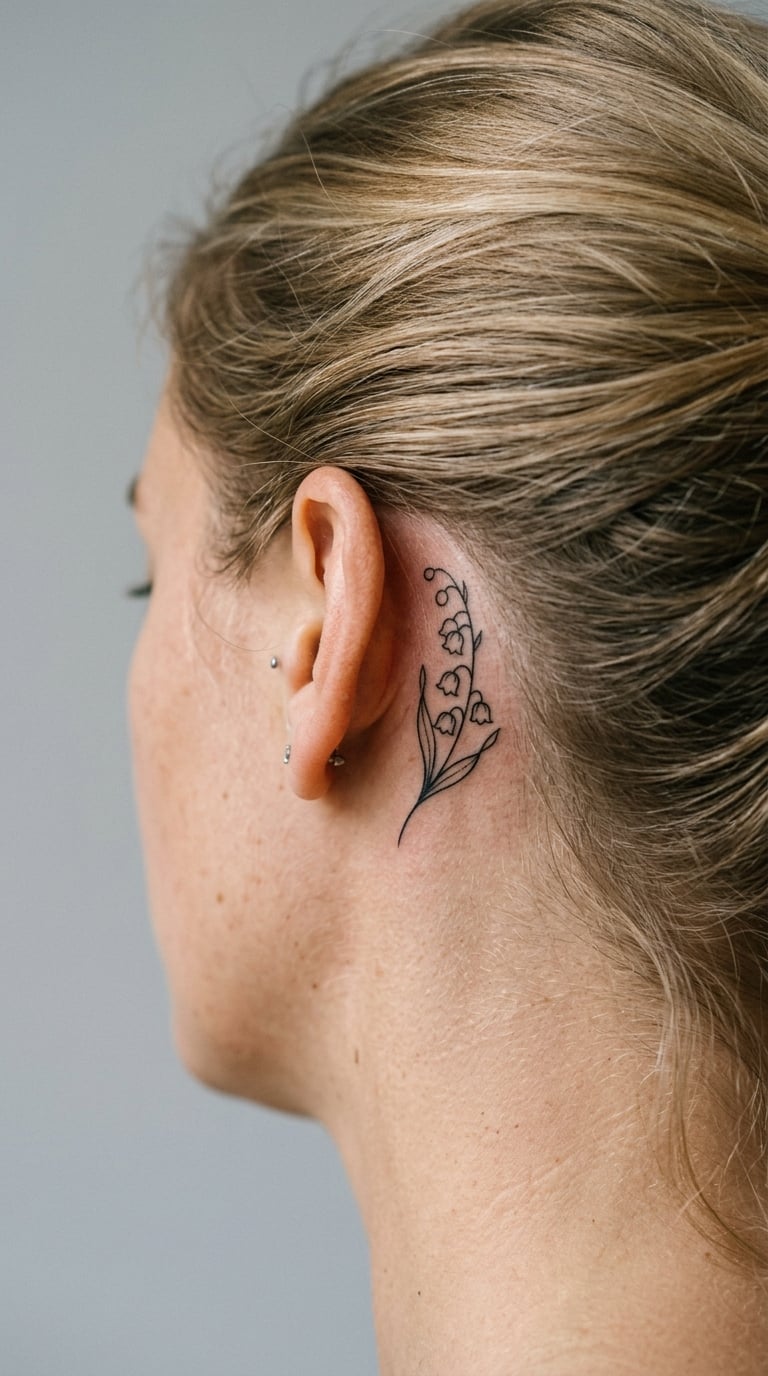
A thin arching stem with a row of tiny bell-shaped flowers hanging from it, each bell formed from two or three short curved strokes, with light grey in the bells.
This one gets picked for its scale rather than its meaning. Renewal and return are the usual associations, which makes it work as a memorial piece.
Placement: Behind the ear and slightly forward, where hair can half-hide it. Size: 5-6 cm (2-2.5 inch). Style: Delicate floral, fine line with light grey.
Pain: Medium. Behind the ear is close to the surface and to a dense bundle of nerves, so it feels sharp and fast rather than deep.
Make it yours: Pair it with a smaller sprig on the other side for a match that only shows when your hair moves.
5. Eucalyptus Branch in Muted Green
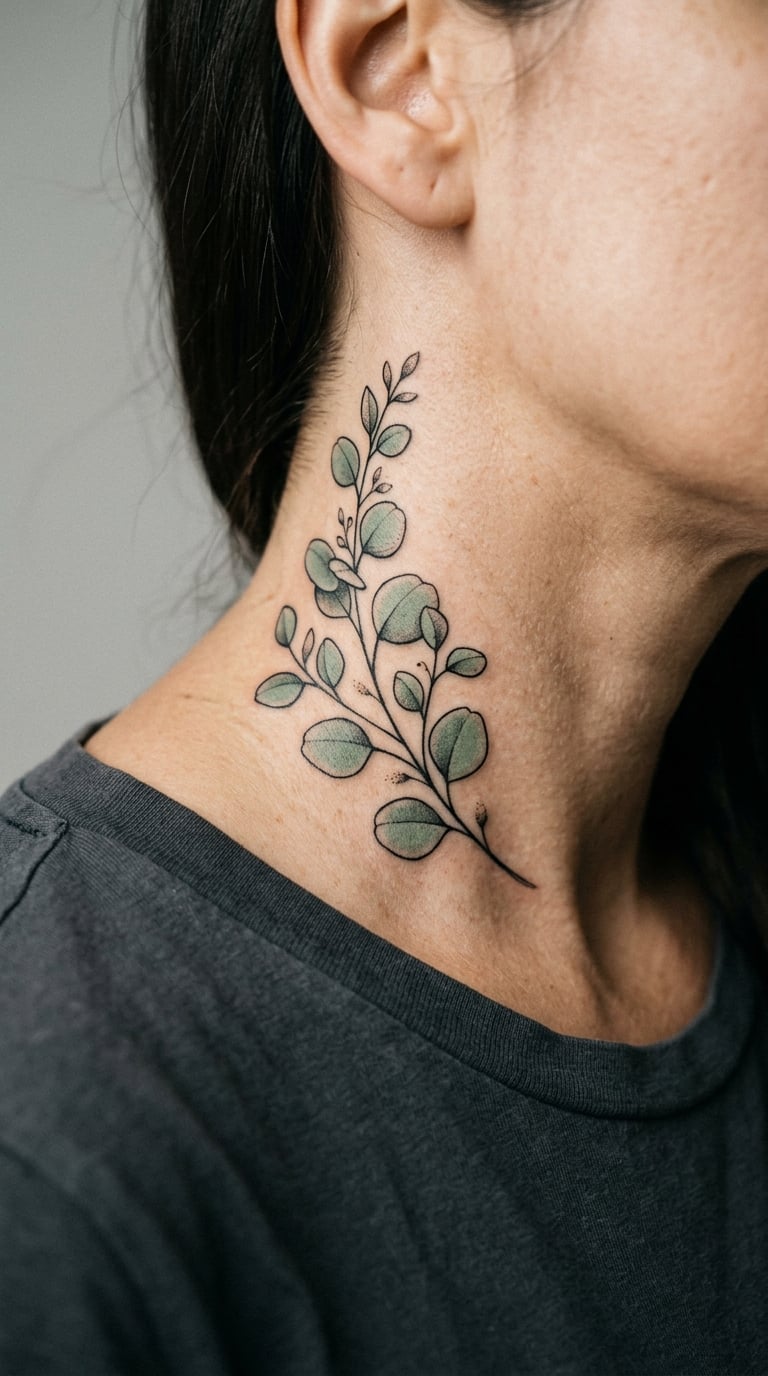
Round flat leaves alternating along a slender stem, each painted in desaturated sage green with a darker line down the centre.
Eucalyptus has become a default request for a feminine side neck piece, mostly for how it photographs. The round leaves also hold their shape better than petals, so a colour piece ages more gracefully here.
Placement: Mid to lower side neck, stem running downward. Size: 6-8 cm (2.5-3 inch). Style: Botanical realism, muted colour.
Pain: Medium, at the higher end for fine colour work. Every pass is another pass on the same skin, so it is a longer sitting than the line weight suggests.
Make it yours: Leave one leaf in full green among the muted ones as a small deliberate accent.
6. Fine-Line Moon Phase Arc
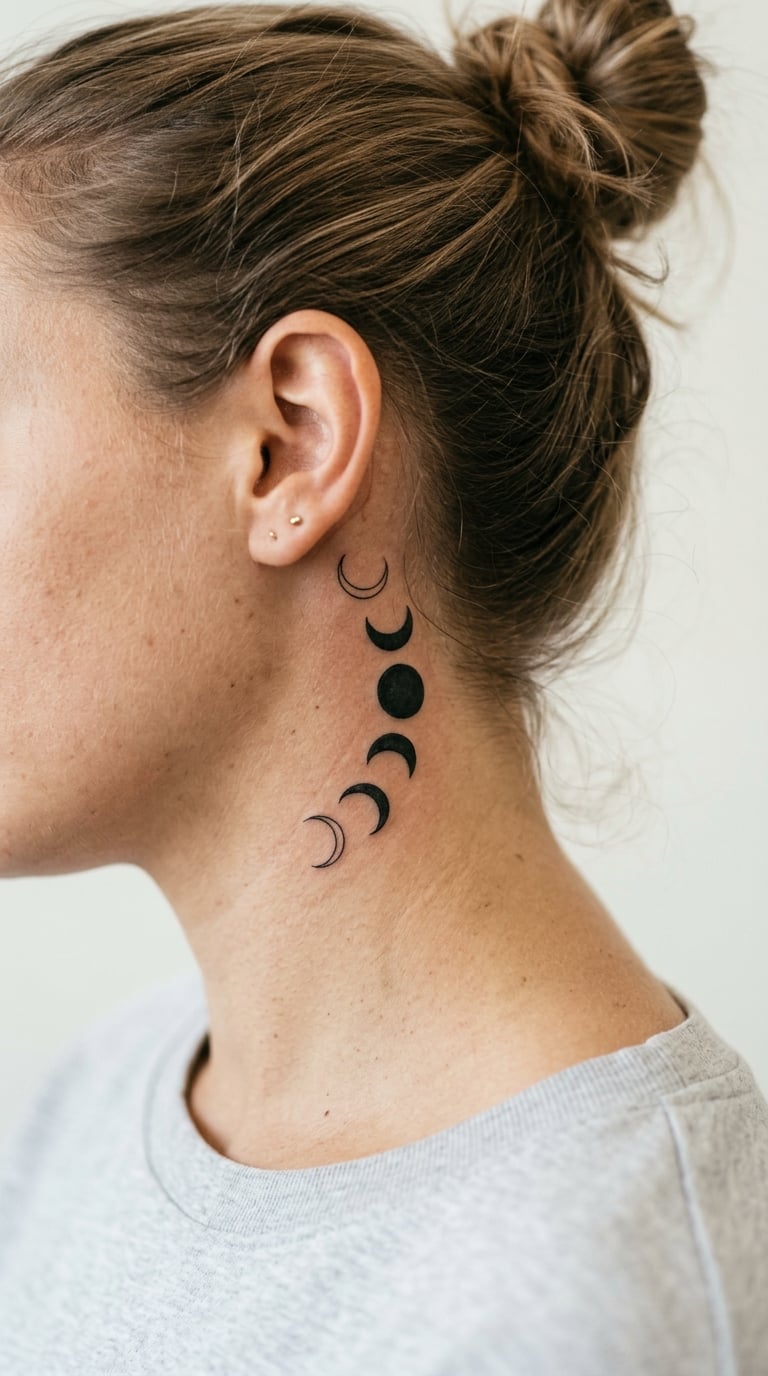
Five to seven circles in a gentle arc, each filled differently. New moon as an outline, the quarters as half-filled discs, full moon as a solid disc with a circle punched out for the shadow.
Moon phase work is about cycles rather than a single meaning, which is why so many people get one after a change in their life.
Placement: Below the ear, following the curve under the jaw. Size: 4-5 cm (1.5-2 inch). Style: Fine line, single needle.
Pain: Medium. Filled moons need more passes than the outline suggests, and single-needle circles this small are the most likely thing on your neck to soften with sun.
Make it yours: Make one moon in the arc solid and heavier than the rest to mark a date something started.
7. Vertical Script Word Along the Neck
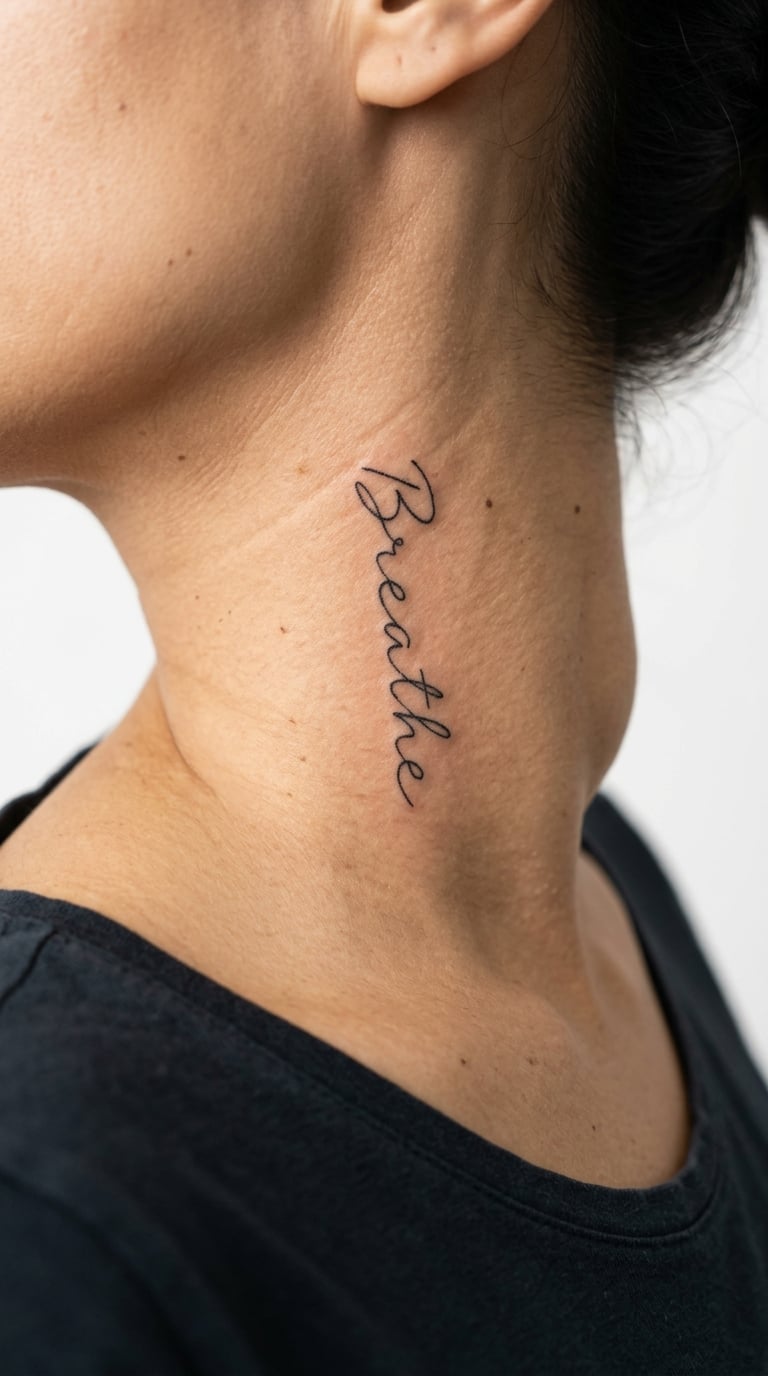
One word in handwritten script, rotated so it reads top to bottom, following the long line of the neck muscle. Open loops and hairline strokes are what make it feel light.
This is the most personal option on the list, and also the one tattooers will talk you out of first. People use a name, a promise, or a word that mattered during a hard year.
Placement: Running vertically along the sternocleidomastoid. Size: 5-7 cm (2-3 inch). Style: Fine-line script.
Pain: High. Thin lettering over a moving muscle is the worst combination here, and legibility drops noticeably within a few years.
Make it yours: Keep it to four letters or fewer and go heavier, in a gothic script rather than a hairline one, so it survives.
8. Roman Numeral Date in Small Serif Caps
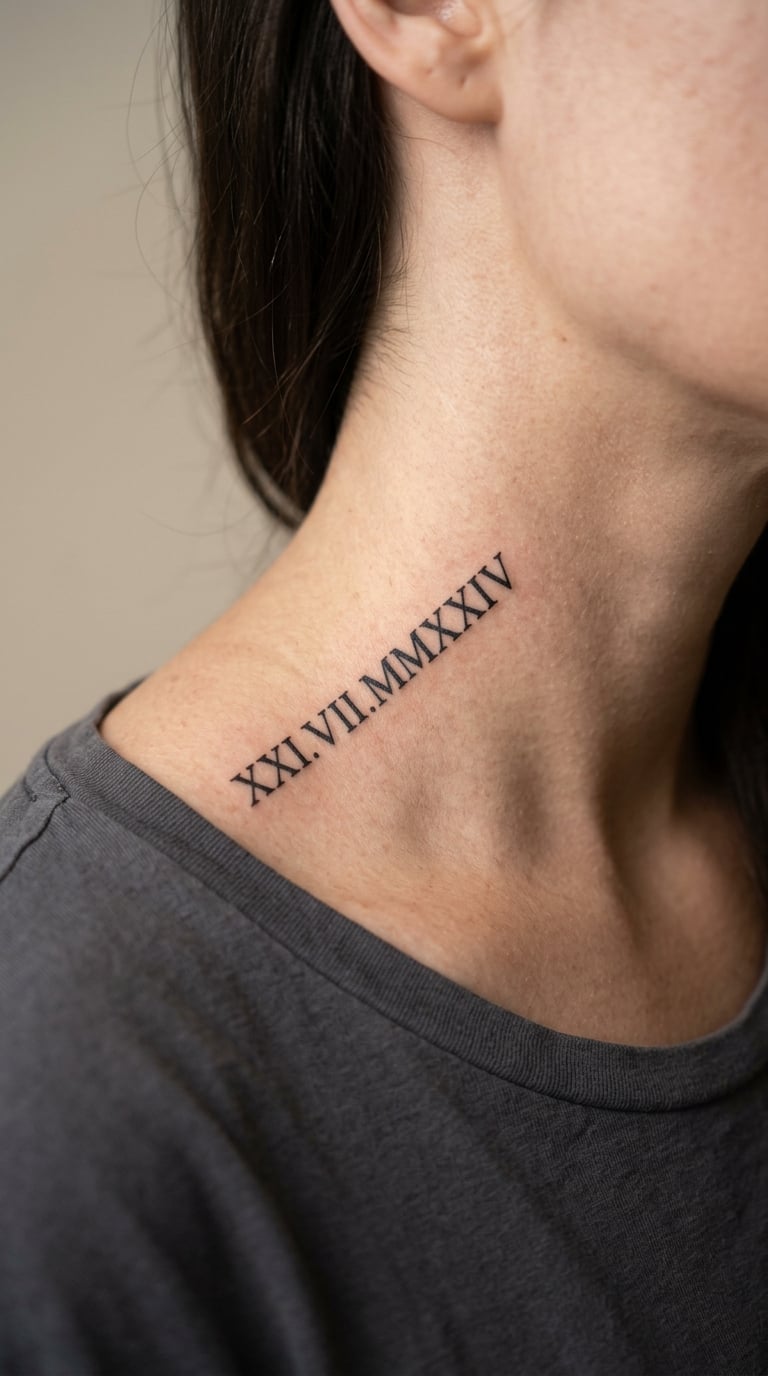
Roman numerals in a clean serif face on one line, with the letters tall enough to carry real weight. Small versions fail when the artist goes too thin.
Dates are usually a birth date, a wedding date, or the day something ended. The classic form is understated, which is what makes it work somewhere visible.
Placement: Low side neck, just above the collarbone where the skin is flatter. Size: 4-5 cm wide (1.5-2 inch). Style: Classic serif lettering.
Pain: Medium. Blocky letter shapes go down faster and hurt less than thin script, and this spot sits further from the jaw bone.
Make it yours: Add a single small mark after the numerals, a tiny diamond or leaf, and keep the numerals plain.
9. Half Sun, Half Moon with Dotwork
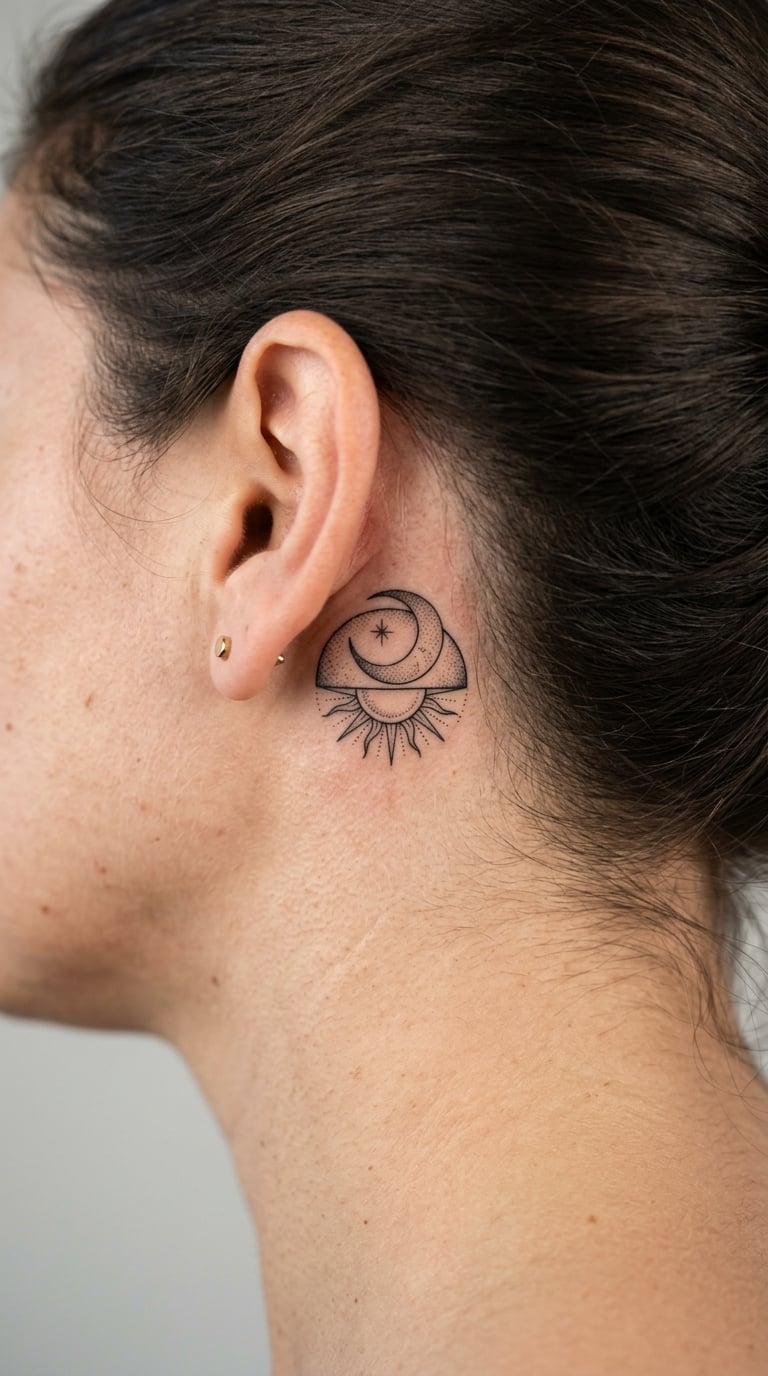
A circle divided down the middle, one half a crescent moon with a face suggested by a few short lines, the other half a sun with straight rays, and dotwork filling the empty quarter.
Sun and moon pieces are chosen for balance, usually by people who see themselves as one half of something. It also works well as a matching piece.
Placement: Behind the ear, at the top of the side neck. Size: 5-7 cm (2-3 inch). Style: Line art with dotwork shading.
Pain: Medium. Dots are tedious work, and the neck muscles twitch when they tire, so ask for a short break if you need one.
Make it yours: Colour only one half, a warm gold on the sun side, and leave the moon in black line.
10. Swallow in Flight
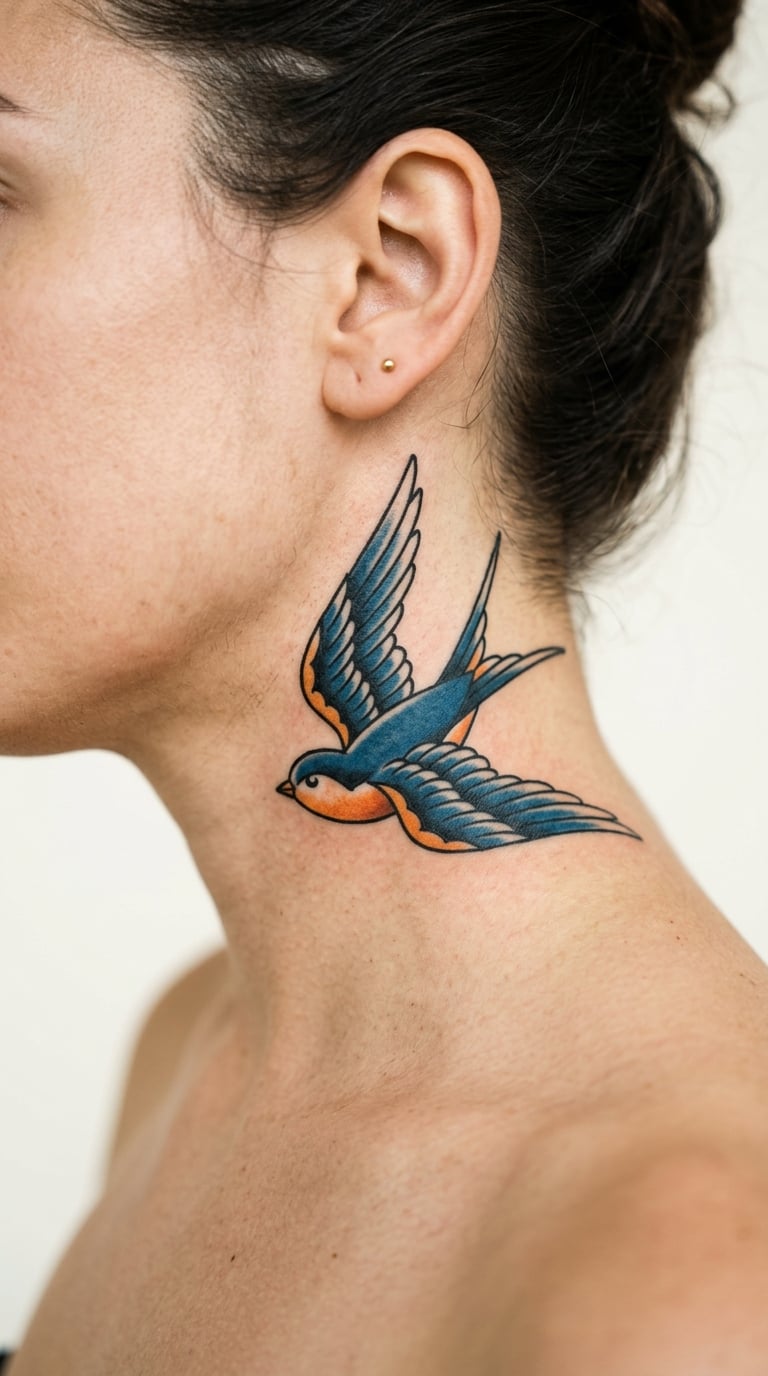
A traditional swallow angled slightly downward with both wings open, two colours, black line outlines and heavy black on the wing tips, which is what makes it read as traditional.
Swallows are old sailor tattoos that became a general symbol for safe return, or for getting through something. On a woman it often reads softer because of the shoulder it sits on.
Placement: Mid side neck, wings spread toward the shoulder. Size: 6-8 cm (2.5-3 inch). Style: Traditional, two colour, bold outline.
Pain: High. Solid colour means many more passes, and a bold outline over the neck muscle hurts more than fine line does.
Make it yours: Turn the bird so the wings follow the slope of the shoulder, and add a small branch beneath it.
11. Abstract Single Line Design
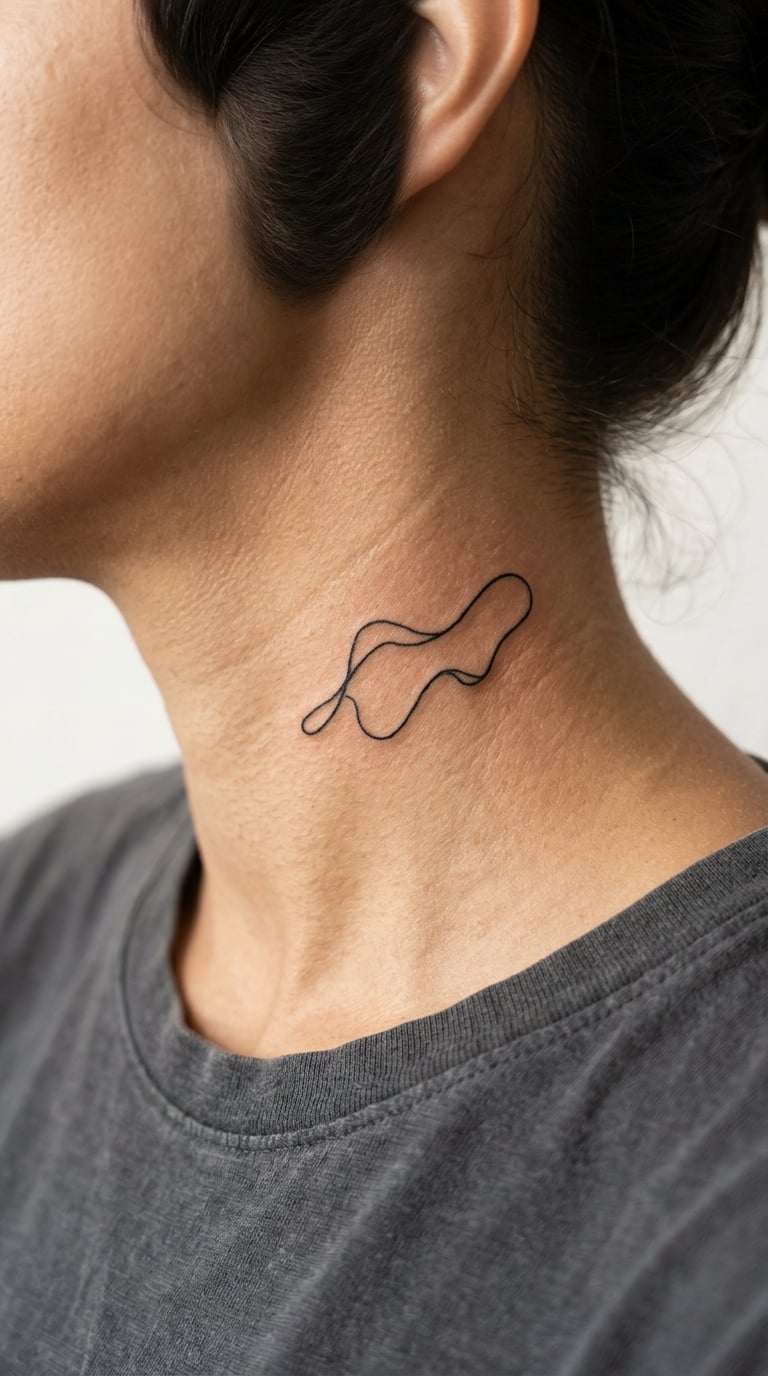
One unbroken line that loops, dips and crosses itself once or twice, forming a shape that reads as a wave or a face depending on the angle. No shading, no colour.
People who want something minimal but not a letter, a word or a flower end up here. It fills the long vertical space of the neck without fighting the jawline.
Placement: Mid side neck, centred along the muscle. Size: 5-7 cm (2-3 inch). Style: Minimal single-line art.
Pain: Medium. One pass per line keeps the session short, though the artist may trace part of it twice since the neck is a difficult surface to hold steady.
Make it yours: Sketch the line on paper first, then adjust the two or three spots that do not sit right on the neck’s curve.
12. Solid Black Crescent Moon
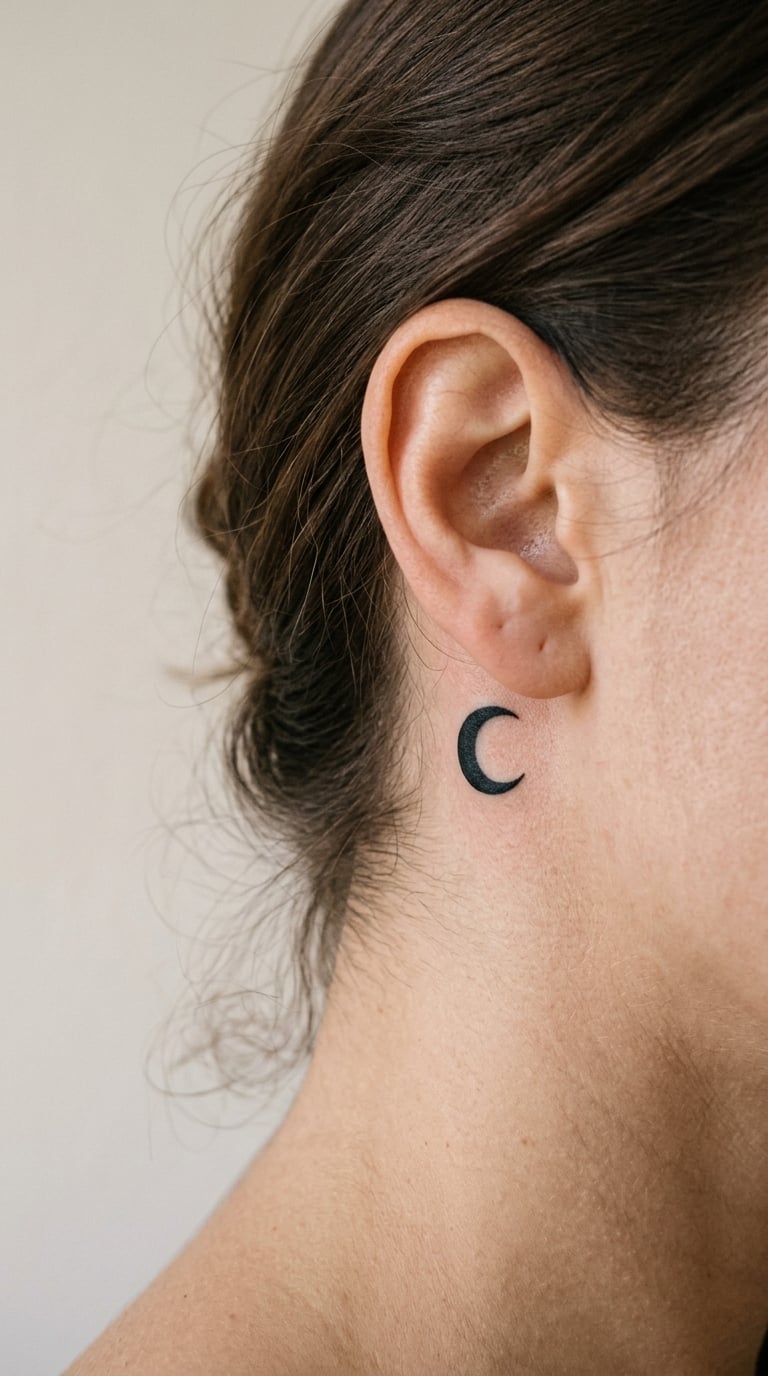
One solid black crescent. No outline, no shading, no stars, filled in a single pass of flat black. It is the smallest design here and asks the least of your skin.
A crescent is chosen for the moon association rather than any specific claim, and for the way a solid shape still reads from across a room.
Placement: Just below the ear, tucked behind the jaw angle where hair falls over it. Size: 3-4 cm (1.25-1.5 inch). Style: Minimal, solid black fill.
Pain: Medium. A saturated patch worked quickly stings more than it aches, and it is over in a short sitting.
Make it yours: Ask for the crescent to open towards the front of the neck so it faces where you are looking.
13. Fine-Line Mountain Peaks
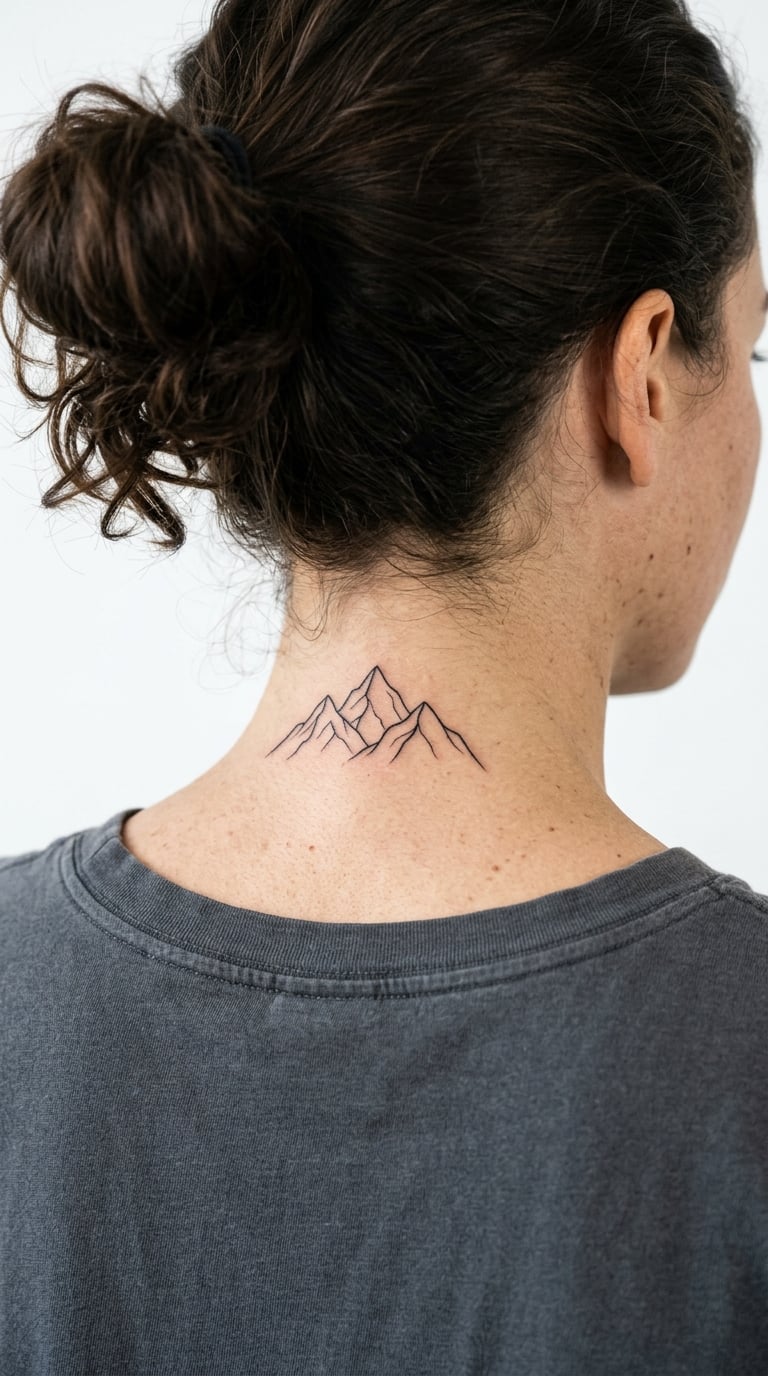
Two or three triangular peaks as clean single-weight lines, with a smaller ridge line inside the tallest one to suggest rock. Some versions add a low cloud line beneath.
Mountains are a travel or a homeplace tattoo, and a lot of people draw the ridgeline of somewhere they grew up, which makes the piece about that place rather than a generic symbol.
Placement: Lower side neck, above the collarbone. Size: 4-6 cm (1.5-2.5 inch). Style: Geometric, fine line.
Pain: Medium. Straight lines are quicker than curves, and this is one of the more forgiving spots on the neck.
Make it yours: Send the actual ridgeline from a photo of your favourite view and let the artist simplify it until it still reads at 4 cm.
14. Dotwork Constellation
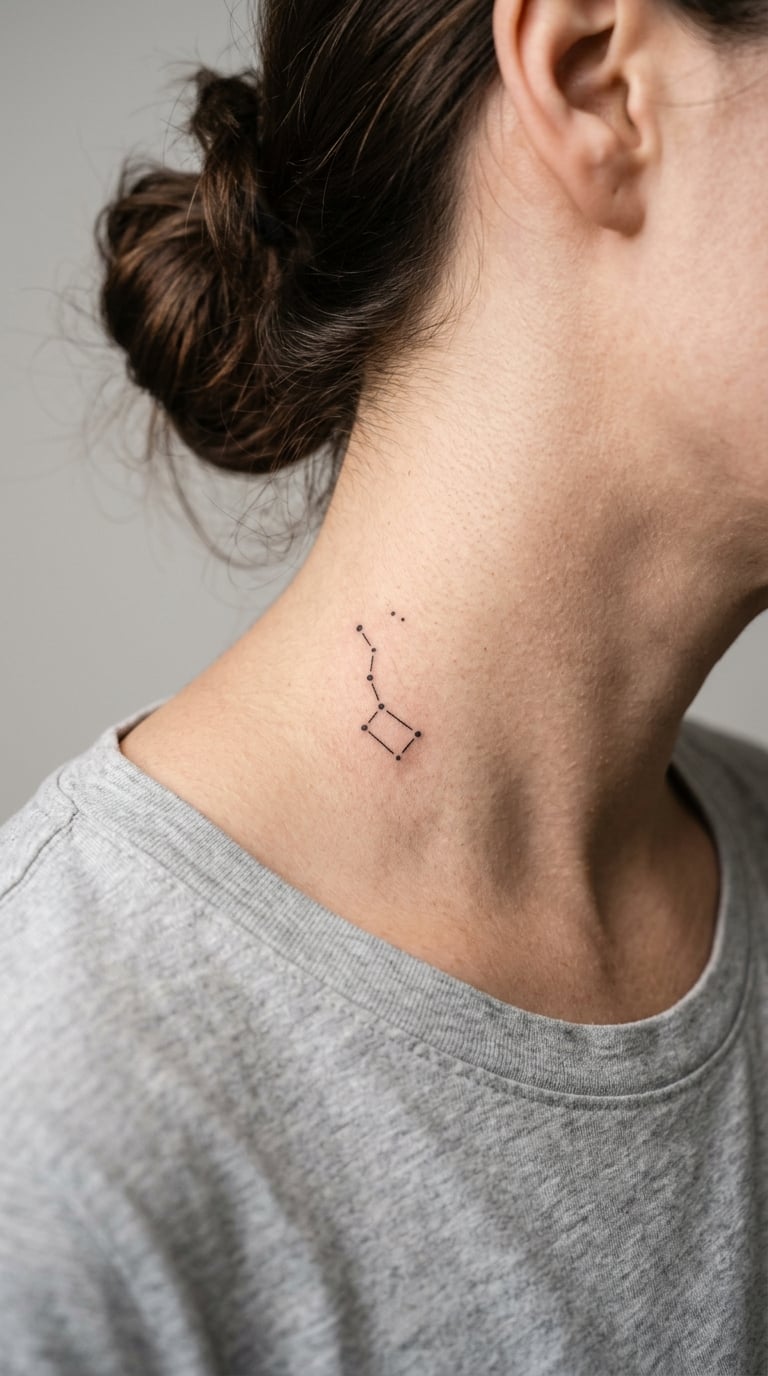
Small black dots of mixed size scattered across the area and joined by hairline segments, reading as a star map from a distance and as individual dots up close.
It is usually someone’s birth sign or a sky they saw once. The dots are forgiving too, since there are no critical single lines to lose.
Placement: Lower side neck near the collarbone, where the skin is flat and still. Size: 5-7 cm (2-3 inch). Style: Dotwork.
Pain: Medium. This is slow repetitive work, and the neck muscles twitch when they tire, which is worth mentioning to your artist beforehand.
Make it yours: Use your real birth chart rather than a generic pattern, and add one dot in a colour you would not normally wear.
15. Line-Art Face Profile
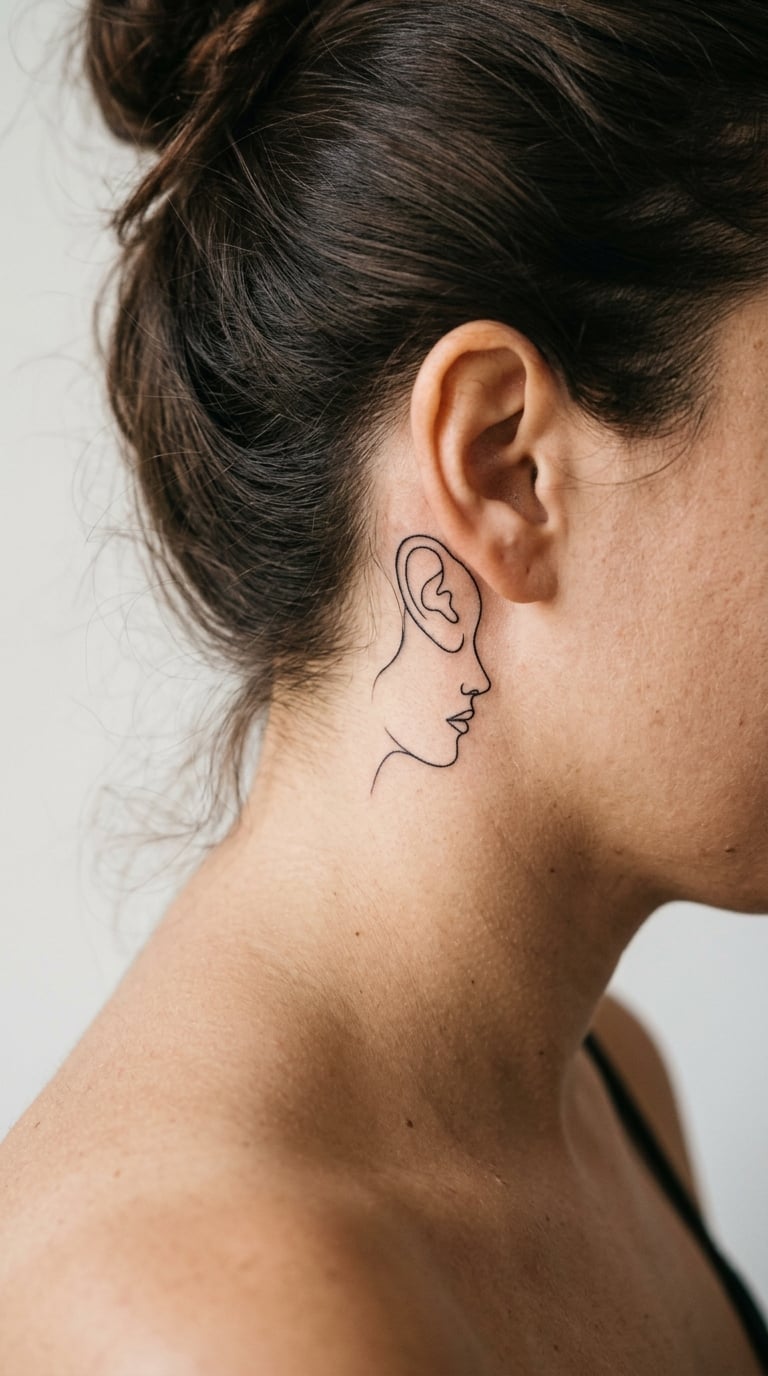
A face in profile drawn with one continuous line: forehead, nose, lips, chin, jaw, then straight back up. No eyes, no ear, no hair detail, just the outline and a short neck stroke.
It reads as beauty and self-possession, and some people get the profile of a relative. The subtlety is the appeal, since anyone who knows will see it and nobody else will.
Placement: Behind the ear, facing out so the nose and lips point away from the body. Size: 5-7 cm (2-3 inch). Style: Continuous single line.
Pain: Medium. The nose and lips need the steadiest hand, and the artist may stop and restart the line, which stings more than it hurts.
Make it yours: Have the artist work from a photograph of someone real rather than a drawing, then simplify the shape together.
16. Bold Blackwork Dagger
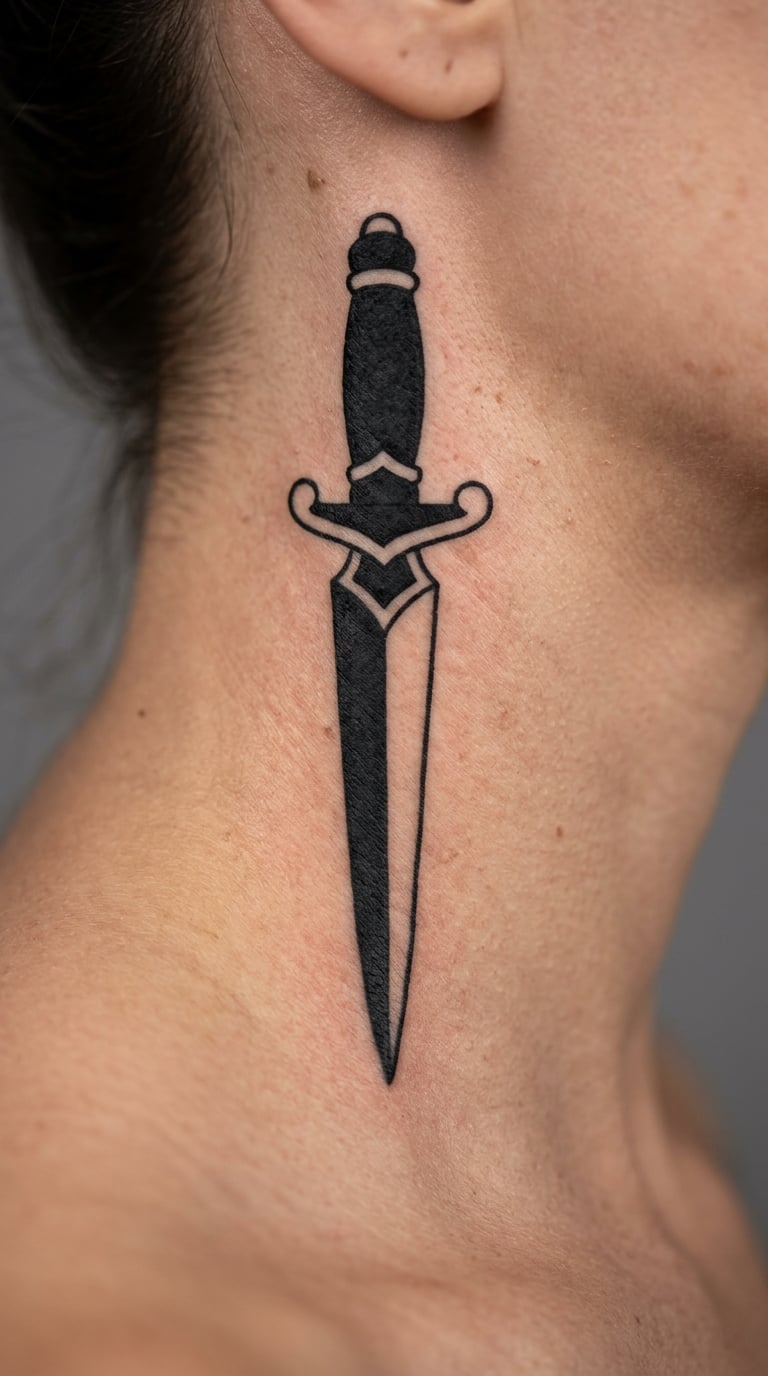
A dagger held upright, the blade running down toward the collarbone, handle filled in solid black and the blade shaded in heavy blackwork. No banner, no rope, no ornament.
Daggers read as protection, as something sharp to keep other people at a distance, and as defiance. That last meaning is the one most wearers on the side neck give it.
Placement: Full side neck, vertical, centred on the muscle. Size: 10-13 cm (4-5 inch). Style: Blackwork, heavy line and solid fill.
Pain: High, and this is a multi-session piece. Solid black across that much of the neck is one of the harder things to sit through, and skin stays red and tight for days.
Make it yours: Add a line of text in a heavier serif along the collar side, short enough to stay legible.
17. Pair of Blackwork Swallows
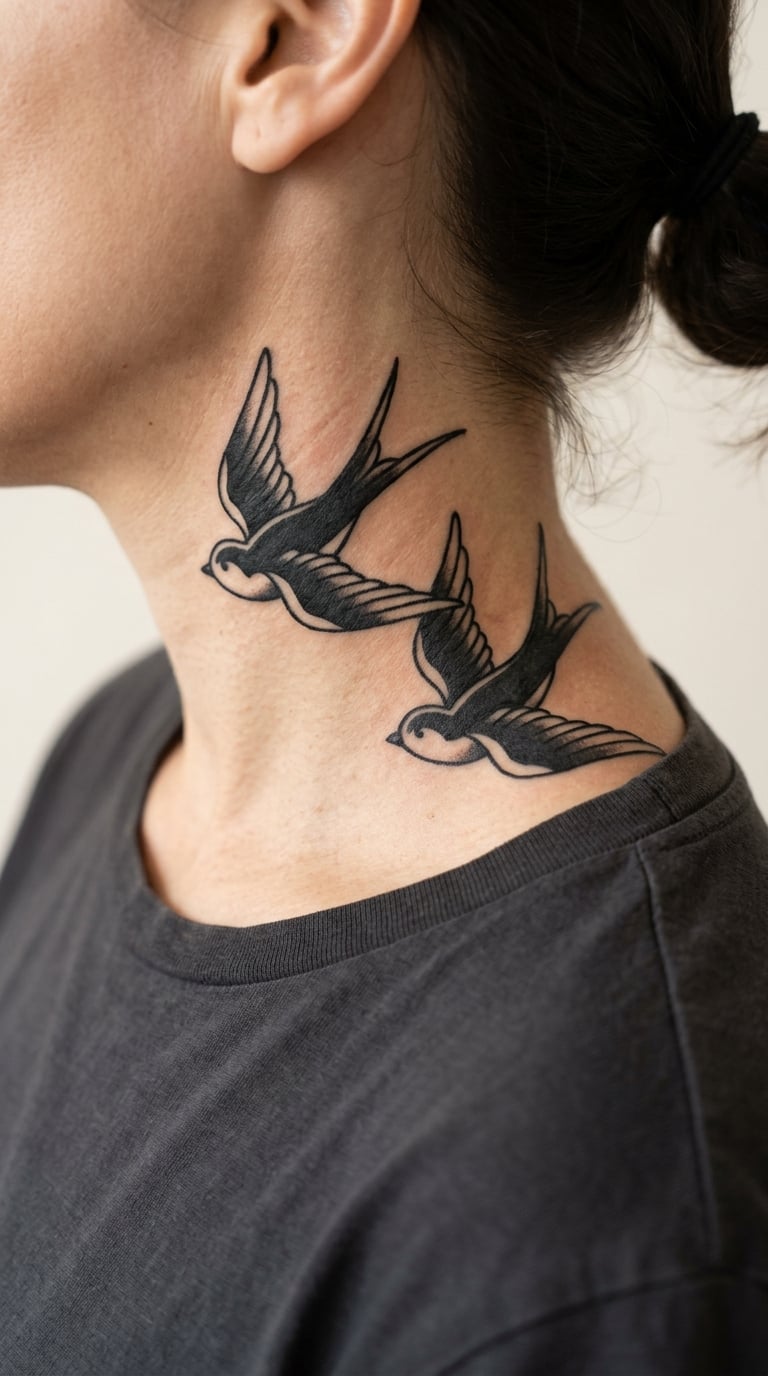
Two swallows, one above the other, in heavy black traditional style with solid bodies, thick wing shapes and the classic white eye dots. No colour.
Swallows in pairs are usually about a partner, a sibling, or years spent somewhere specific. The double reads as companionship without needing any text.
Placement: Side neck running down into the shoulder, the second bird lower than the first. Size: 10-12 cm (4-5 inch) for both. Style: Bold traditional, blackwork.
Pain: High. Heavy black on the neck, twice. Split this across two or three sessions and check the artist’s minimum time before booking.
Make it yours: Put one bird on each side of the neck at the same height, so they read as a matched pair from the front.
18. Red Ink Rose
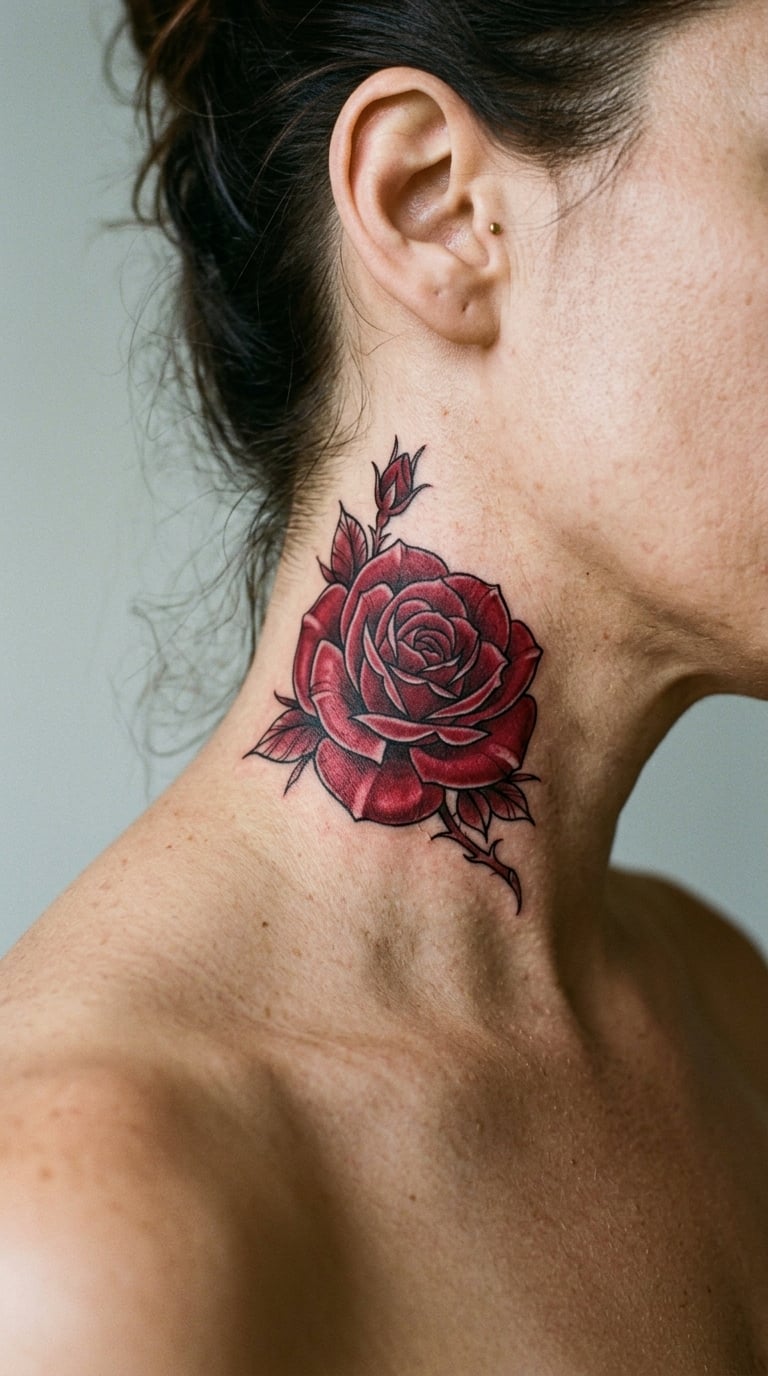
A rose with heavy black outlines filled in deep red, darker red shading in the centre of the bloom and lighter red on the outer petals, with no background.
The red rose is chosen for love, often for a specific person. It also gets commented on most, so it suits someone who wants the neck tattoo to be a conversation rather than a secret.
Placement: Mid side neck, bloom high and stem trailing down. Size: 6-9 cm (2.5-3.5 inch). Style: Colour realism, bold outline.
Pain: High. Colour means many passes over the same skin, and the neck turns red and sore fast during a colour session.
Make it yours: Keep the red deep rather than bright, and ask for black leaves instead of green, which ages far better on an exposed placement.
19. Statement Blackwork Branch with Leaves
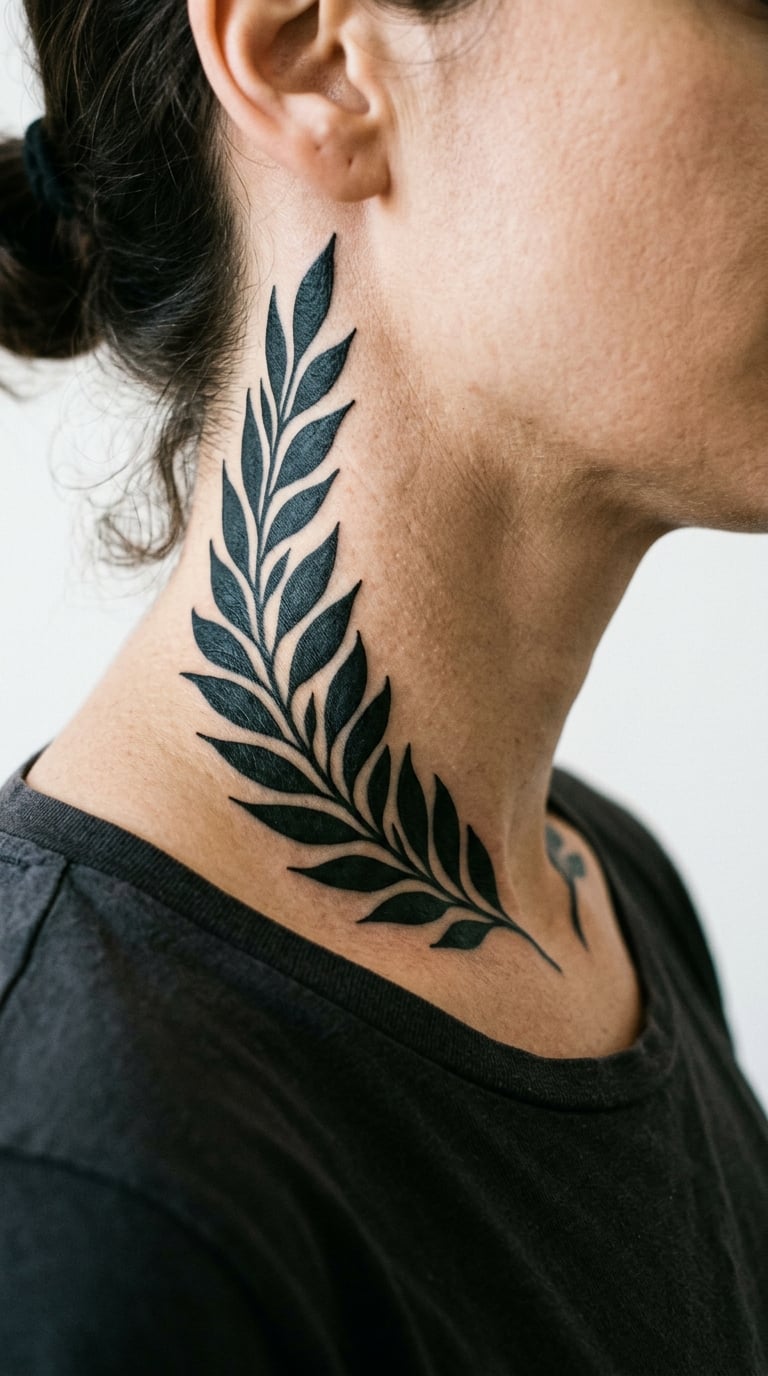
A single branch running the length of the neck with dense black leaves, the darkest parts solid and the negative space between them left empty, the leaves shrinking toward the collar.
Black botanical work reads as strength rather than softness, which is the version people pick when they want the neck to look deliberate. It also has the best fading record here because the ink is laid down heavily.
Placement: Below the ear down to the collarbone, following the whole side neck. Size: 12-15 cm (5-6 inch). Style: Blackwork, solid fill and heavy shade.
Pain: High, and split it across sessions. The neck cannot hold attention for long, and stopping while you still have hours of work left is the sensible call.
Make it yours: Ask for a second bare branch in fine line running parallel to the blackwork one, so the piece carries a bold and a delicate element.
20. Ornamental Filigree Panel
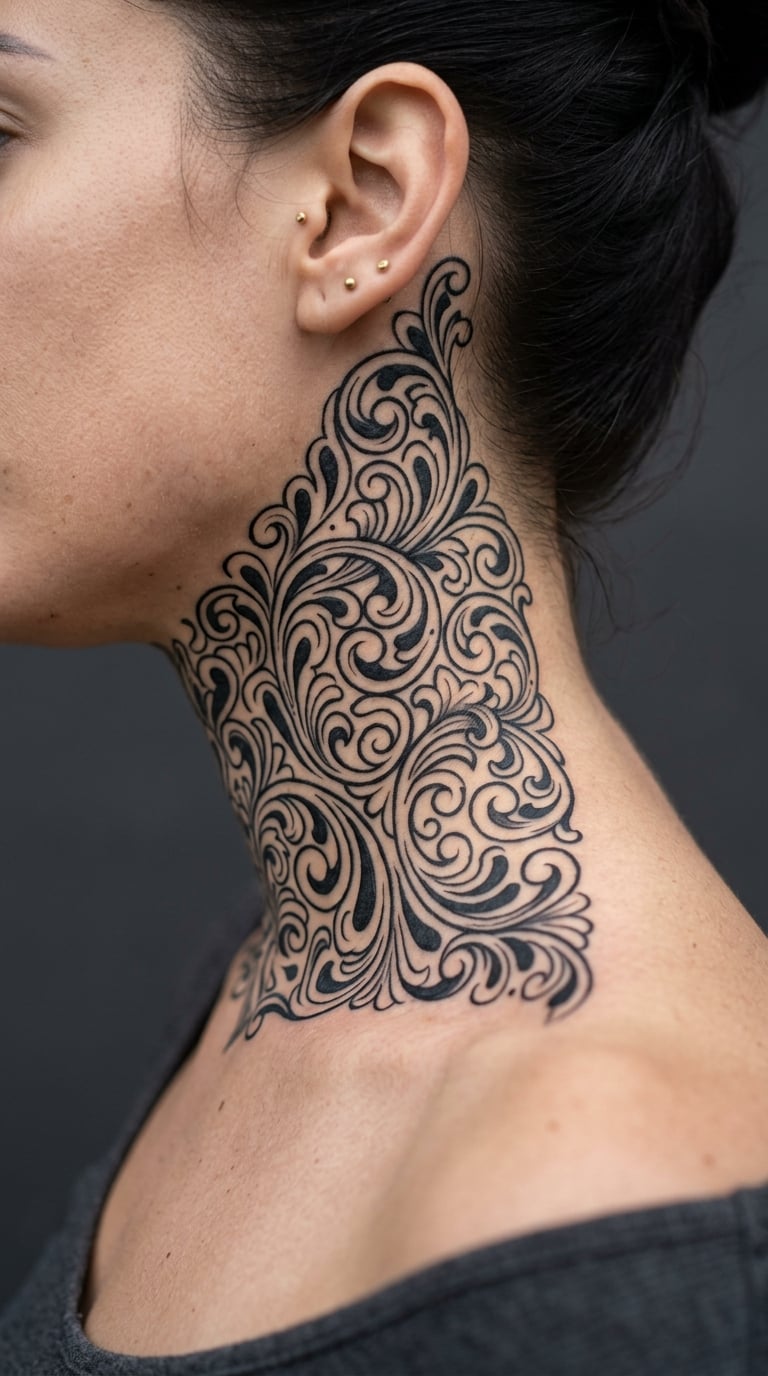
A vertical panel of dense scrollwork: teardrops, curved vines, small dots and mirrored curves filling a tall rectangle of skin. The most traditional design in this list.
Ornamental work is valued for the drawing rather than for one meaning. Wearers tend to describe it as armour, or as something older than themselves.
Placement: Full side neck, vertical from below the ear to the collarbone. Size: 10-14 cm (4-5.5 inch). Style: Ornamental, dense line and dot.
Pain: High. This is a long detailed session and the neck warms up and stiffens. Book it in pieces, and plan a touch-up, since this much fine detail on a moving surface rarely lands perfectly first time.
Make it yours: Bring a pattern you own, such as the border of a rug, and have the artist translate the motif rather than copy it.
How to Choose the Right Side Neck Tattoo
Pick the size before the design. Everything else follows from that, and choosing the art first is how people end up with something too detailed for the space it has to live in.
What size should a side neck tattoo be?
Small pieces run 1-3 cm, medium 4-8 cm, bold 10-15 cm. For a first side neck piece stay at the small or medium end. A 4-8 cm design gives an artist room to keep line weight, and it is the range that sits under a collar and behind hair.
How much line weight is enough?
Ask what the line weight will be at the smallest point of the design before the stencil goes on. Single-needle hairlines blur first on the neck, and the sun exposure here is constant. Medium-weight lines and solid black hold up for years, so if the design only works with hairlines, change the design.
Can you hide a side neck tattoo for work?
A design high on the neck, tucked behind the ear or the jaw, disappears under longer hair and most collars. Anything low on the side neck or large across the muscle is visible in almost any setting. A conservative workplace rules out the front of the neck and makes the side neck a real consideration rather than an afterthought.
What is the most feminine spot for a tattoo?
No side of the neck is feminine or masculine, but the profile changes how a design reads. A small piece on the soft line between jaw and ear looks delicate from the front, while a bold piece centred on the muscle reads as a statement. Most people who want something described as feminine here end up with fine line, a botanical subject, and a size under 6 cm.
How does hair length change the design?
Long hair falls across the side neck and can cover a small piece completely, which makes an under-3 cm design a poor choice if you wear your hair down. Shoulder-length hair and above leaves the neck clear, so a design stays visible without effort. Shorter hair exposes the whole area, which suits a design meant to be seen.
What should you ask at the consultation?
Ask about line weight, expected size, how many sessions it needs, and what happens if you have to stop early. Most importantly, ask to see the stencil while you are standing. Neck skin sits differently upright than when you are lying on the table, and a placement that looked right lying down can sit a centimetre too high once you stand up.
Cost and Session Time
US tattoo pricing is usually hourly with a shop minimum that covers the smallest piece, so a small side neck tattoo often costs the same as a slightly larger one. A 1-3 cm design sits well inside a single sitting.
Anything at 4-8 cm often runs one to two hours depending on how much shading and colour is involved. Bold pieces at 10-15 cm are almost always split, because artists will not usually work through a three-hour neck session and the skin stops cooperating well before a design that size is finished. Expect three or four sessions and a deposit on the first one.
Colour raises both the time and the total. If the budget is fixed, a blackwork or black-and-grey version of the same design usually costs less and holds its colour longer on a placement this exposed.
Aftercare Basics for a Side Neck Tattoo
Start with your artist’s aftercare instructions, since they know what they did and how much ink went in. Beyond that, the side neck has problems other placements do not have.
- Sleeping on the fresh side is the hard part. The pillow crease settles into the lines. Sleep on the other side or on your back for two weeks, and put a clean folded towel over the pillow if you cannot help turning onto it.
- Keep hair off it while it heals. Long hair sticking to a fresh tattoo is how people end up with a patch of missing ink. Wash and dry your hair fully and keep it clear of the area for the first week, especially overnight.
- Watch the collar seam. A shirt or jumper seam rubs exactly along a side neck design. Wear a wide or open neckline for two weeks and skip anything you know will sit on the work.
- Expect tender nodes under the jaw. Swollen, slightly sore lymph nodes under the jaw on the tattooed side are a normal part of neck aftercare. They settle as the piece does.
- Use sun protection from week one. The neck fades faster than almost anywhere else. Once healed, cover the area or use SPF 30 or higher, and expect fine work to need a touch-up sooner than it would elsewhere.
- Follow the timeline. Surface healing takes two to three weeks. It still looks raised at week four, settles by week six, and looks like itself somewhere between week eight and twelve.
Most people describe the first two weeks on the neck as more irritating than painful, with itch and tightness worse than the tattooing itself. Resisting the urge to scratch it is what keeps the ink in.
Frequently Asked Questions
Are tattoos on the side of the neck painful?
More than most other placements. The side neck sits over the sternocleidomastoid muscle and close to bone, and the area around the jaw and under the ear is dense with nerves. A small design sits around a 5 or 6 out of 10 for most people, and a bold one running the full neck can reach an 8.
How long does a side neck tattoo take to heal?
Two to three weeks for the surface to finish healing, which is when peeling and itching stop. The piece still looks slightly raised at week four, settles more by week six, and looks fully healed somewhere between week eight and twelve. Protect it from sun throughout, because fresh ink on an exposed placement fades fastest in the first weeks.
What should you not do after a neck tattoo?
Follow your artist’s aftercare first, then avoid four things. Do not sleep on the fresh side for about two weeks, because the pillow crease settles into the lines. Do not let long hair stick to it. Skip collars that rub the design. And do not sunbathe the area once healed, since the neck fades faster than any other placement.
Is a neck tattoo a red flag or unprofessional?
It is visible in a way most tattoos are not, so it reads as a deliberate choice rather than a hidden one. Whether that matters depends on your workplace. Conservative environments including many corporate roles, schools, legal work and some customer-facing industries treat visible neck tattoos as a dress code issue. A small design high on the neck sits much closer to the line of what most policies allow.
What size side neck tattoo is best for a first piece?
Stay between 1 cm and 8 cm, and aim for 4-8 cm if you want it to stay legible. Small pieces hurt less, heal faster and disappear under a collar. They also give your artist room for a line weight that still reads in five years, which hairline script and single-needle dotwork on the neck usually will not.
Should a side neck tattoo be your first tattoo?
Usually not, unless the design is small. Advice in tattoo communities leans toward starting on an arm, a forearm or the nape, because those placements hurt less, hide more easily and cover up more simply if you regret the design. If the neck is the placement you care about, put something small there first, let it heal, and decide afterwards.
Which Idea Fits You First
If this is your first neck piece, start with a fine-line botanical sprig, a micro butterfly low on the side neck, or the solid black crescent under the ear. All three sit under 6 cm, heal in a single sitting, hide under a collar, and use enough line weight to still read in a few years.
If you are adding to a collection and want the side neck to be the centrepiece, look at the blackwork branch or the pair of swallows. Bring a reference rather than a finished idea, agree the line weight before the stencil goes on, and check the placement while you are standing up.
Whichever you choose, book the consultation, ask the questions above, and let the skin decide the size.