
Can You Work Out After Getting a Tattoo? Timing (2026)
Yes, you can work out after getting a tattoo, but not straight away. Most artists and aftercare guides suggest waiting at least 48 hours before any exercise, and longer for heavy lifting, hot rooms or swimming. The real answer depends on where the tattoo sits, how long you were in the chair and how hard your session was.
So can you work out after getting a tattoo? Sometimes yes, sometimes not for weeks. A small outer arm piece barely moves when you lift. A fresh chest or rib tattoo flexes with almost everything you do. I have seen people push through week one and lose definition in their shading, and I have seen people take three weeks off and heal perfectly. Rest is always the safer default.
This guide covers the timing, the placements that cause the most trouble, what each stage of healing actually looks like, and how to keep training if a full break is not an option. If you have a specific design in mind, the 24 tattoo ideas that symbolise growth roundup is a good place to see how placement changes the finished look.
Can You Work Out After Getting a Tattoo? Safe Timing
Light movement can be reasonable for an uncomplicated tattoo once the first day or two have passed. The trap is treating 48 hours as a clearance slip. That number is a floor for gentle activity, not a green light to restart your usual programme.
Think about what your session would involve. Stretching, heat and sweat push blood flow into skin that is already inflamed. Friction from clothing, straps or equipment drags at a scab that is trying to stay put. A three-hour session on your lower back heals differently from a small piece on an ankle that took twenty minutes.
The main risks of training too early are worth naming plainly, because the reasoning is simple once you see it:
- Infection. A fresh tattoo is an open wound. Shared equipment, gym floors and communal showers put surfaces in contact with healing skin.
- Friction and stretching. Moving skin under fresh ink can pull colour out of the upper layers and soften edges while the design is still settling.
- Sweat and heat. Prolonged moisture against a healing tattoo encourages bacteria growth and softens scabs that should be drying naturally.
- Sun exposure. Healing skin is more sensitive, and any new tattoo fades faster with repeated sun on it.
Can You Work Out After Getting a Tattoo? What Changes by Stage
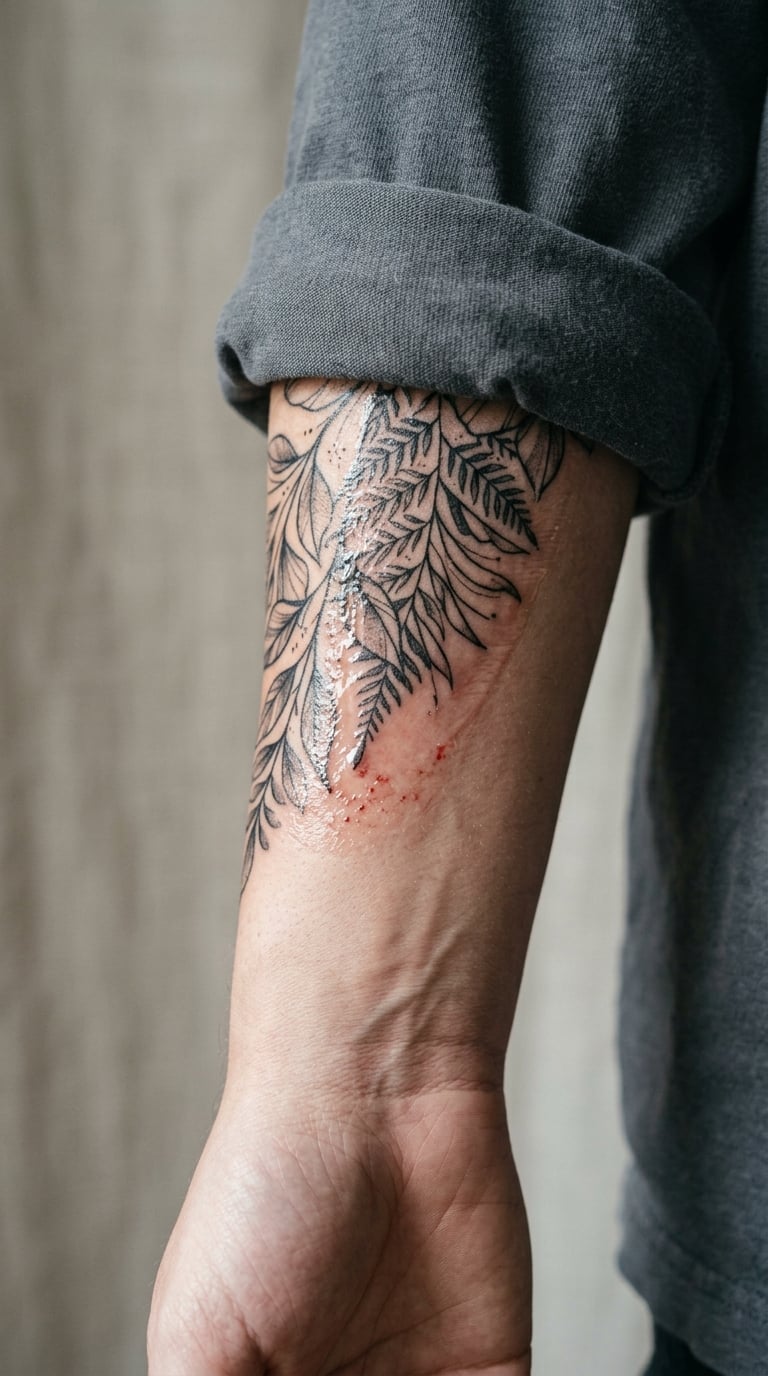
Day 0 to day 2. The skin is red, swollen and shiny, with plasma and excess ink sitting on top. Movement here tends to hurt and can disturb the healing. Rest, gentle walking around the house, light stretching somewhere far from the new ink.
Days 3 to 7. The scabbing phase. Many people find easy walking or cycling on a machine manageable, as long as the area is not rubbing. Skip anything that flexes the tattooed skin hard or heats the body up.
Weeks 2 to 3. The flaking phase, where the surface peels and the tattoo looks duller than it will later. Light lifting on unrelated muscle groups becomes reasonable for a lot of people. Loading the tattooed area is still usually too early if the flaking has not stopped.
Month 2 onwards. The surface usually looks settled and the deeper layers continue to repair for several months. Most normal training returns around here. Anyone whose tattoo still feels tight, sore or itchy at this stage should ask their artist rather than guess.
How Long Should You Wait to Exercise After a Tattoo?
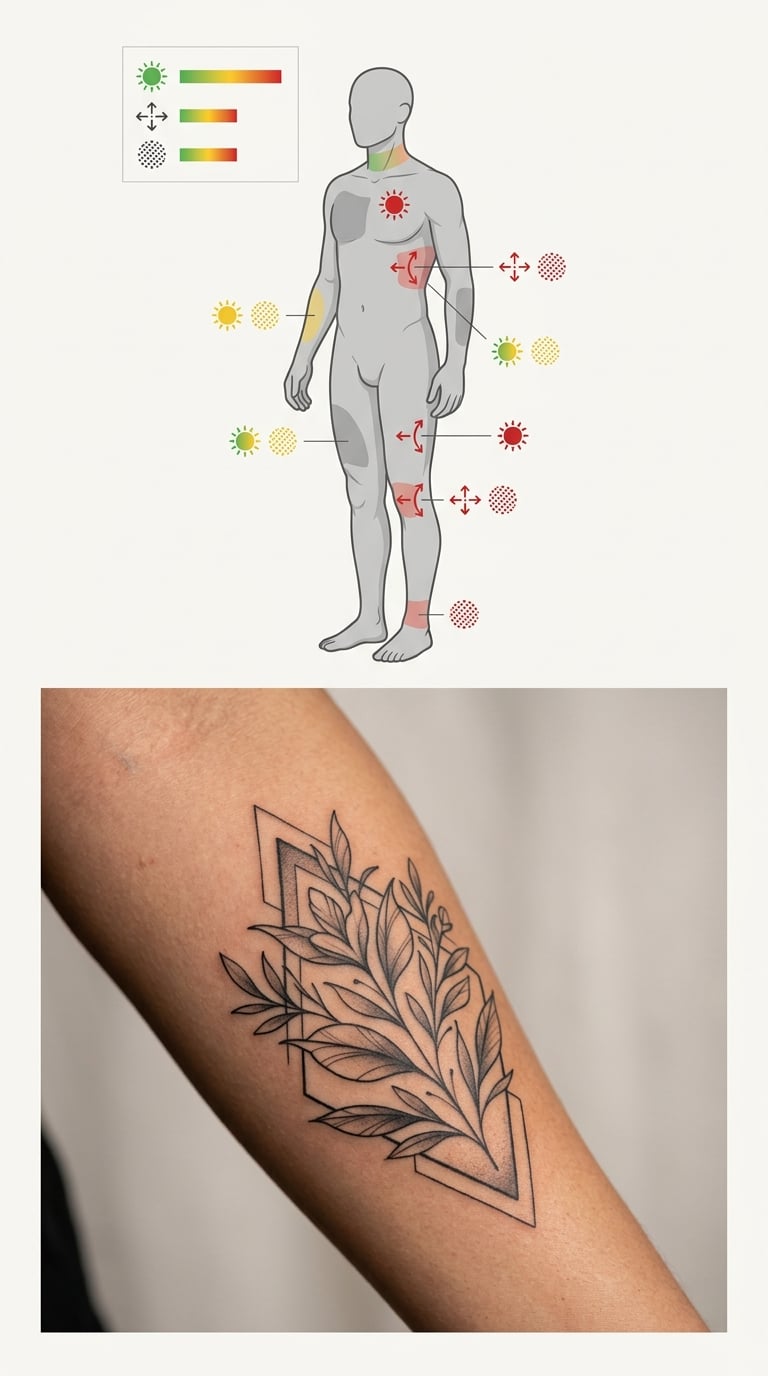
There is no universal waiting period, and anyone promising you one is guessing. What changes the timeline is the size of the piece, how deep the work went, where it sits, the movement of that area during exercise, sun exposure and how carefully you clean it.
A tiny surface-level design on a spot that does not move may feel unremarkable within a few days. A large, deeply shaded piece across a moving area is a different job for your skin, and most artists will ask for a longer break on those.
Three things are worth asking your artist on the day, before you leave the chair:
- How long did this session go, and how much trauma did the skin take?
- Which movements in my usual training touch this area directly?
- What did you want to see when I come back for the free check?
Record what they say. It settles the argument with a forum later, because most of the conflicting advice you will read online is generic rather than specific to your piece.
Exercise Timelines by Tattoo Placement
Placement is the single biggest factor people argue about. Many people find an outer arm piece barely limits training, while a chest, armpit or rib tattoo sits on skin that flexes with nearly every press. The table below is general guidance, not clearance for your individual piece.
| Placement | Typical first considerations | Exercise impact | Sensible modifications |
|---|---|---|---|
| Upper arm (outer) | Little movement over the design | Usually the least disruptive placement | Short sessions early on, avoid sleeves that cling |
| Upper arm (inner) and bicep | Flexes hard on curls and presses | Tight, sore skin during flexion | Skip direct loading early, avoid straps across the area |
| Forearm | Rubs against desk surfaces and straps | Pressure from bar contact and clothing | Pad or cover during bench work, roll sleeves up |
| Wrist | Constant contact with sleeves and bags | Friction all session | Wear loose or rolled cuffs, keep hands free of chafing |
| Hands and fingers | Gripping, towels, kettlebells | Frequent pressure and sweating | Reduce grip work, wash often |
| Chest and sternum | Moves with pressing, rowing and impact | Most common trouble spot for lifters | Avoid bench and overhead loading early, no contact drills |
| Ribs and side | Stretches and twists with every trunk movement | Stabbing pain when the side expands | Skip twisting and hanging leg raises until settled |
| Back | Sweats during most activity, hard to reach | Constant moisture, poor visibility for cleaning | Cooler workouts, have someone check the area |
| Abdomen and stomach | Stretches with core work | Planks and sit-ups pull at the skin | Hold off on stretching that folds the area |
| Hips and hipbone | Rubbing from belts, bags and wraps | Friction at the waistline | Wear the belt lower or higher, avoid rubbing |
| Thighs and quads | Largely still unless deep squats | Squeezing during leg work | Reduce depth early, skip direct pressure |
| Knees | Bends constantly, sits on gym floors | Creasing and floor contact | No kneeling work, clean the crease after training |
| Lower legs and calves | Swells after training | Sensation as the muscle pumps | Skip heavy calf work and impact for longer |
| Ankles | Rubs against shoes and socks | Constant light friction | Loose footwear, keep socks clean |
| Feet and toes | Sweats heavily inside shoes | Persistent moisture | Change socks, avoid pools and sandals early |
| Neck | Sweats, exposed to sun and clothing | Collar friction, direct sun | Loose collars, keep the area covered outdoors |
| Collarbones | Rubs under straps and necklines | Constant light abrasion | Adjust strap position, avoid bags on that side |
Placement also matters for how long the deeper repair takes. Pieces on constantly moving areas tend to stay tender longer than pieces that sit still, even when both are cared for identically.
Pain by Placement: What to Expect During Training
Session pain and training pain are different things. The needle causes the sharp pain most people remember from the chair. Training causes a duller complaint: throbbing, warmth, swelling and a tight feeling when the skin moves.
| Placement | Session pain, low to high | What training tends to feel like |
|---|---|---|
| Inner bicep and armpit edge | High | Throbbing that builds through a session |
| Ribs and side | High | Sharp pulling on expansion |
| Chest and sternum | Medium to high | Tightness under pressure |
| Neck and collarbone | Medium to high | Rubbing irritation |
| Back | Medium | Warmth and general tenderness |
| Forearm and outer arm | Medium | Mild tugging, often manageable |
| Thigh and calf | Medium to low | Deep aching as the muscle works |
| Hand, wrist and fingers | High on bone | Direct pain on contact |
| Outer upper arm | Low | Very little sensation |
Not everyone feels the same. Skin type, sleep, stress and how long you sat still all change the experience, so treat these as a rough map rather than a promise.
If the plan is a small, calm piece, the 20 minimalist tattoo ideas for anxiety and calm collection is worth a look, since fine line work on an outer arm is usually the easiest combination to train around.
How to Adjust Workouts While Your Tattoo Heals
If you cannot take a full break, adjust the session rather than abandoning it. These are the swaps that keep you training while giving the skin a fair chance.
- Swap heavy lifting for low-intensity walking. Walking keeps blood moving without flexing the tattooed area hard or dumping sweat over it.
- Shorten or split the session. Two 20-minute sessions with a clean in between beats one long one.
- Drop stretching over the new tattoo. Any movement that folds or pulls that skin is the thing to avoid.
- Skip hot yoga, sauna and steam rooms. Heat and persistent moisture are the two things a fresh tattoo does not need.
- Skip swimming and communal pools. Chlorinated or shared water over an open wound is a risk, not a recovery tool.
- Move outdoor sessions indoors or after dark. Healing skin is more sensitive to sun, and a new tattoo fades faster with repeated exposure.
- Wear loose clothing. Anything that grips the area and moves with you causes friction.
- Watch seat and strap pressure. A rowing seat, a belt or a bag strap pressing on the design is a problem worth rearranging.
- Stop if the appearance changes. If the area looks more washed out, blotchy or swollen than before the session, that is your cue to back off.
Before you train, wash the area, let it dry properly and follow whatever your artist told you about dressing it. After you train, wash with clean lukewarm water, pat dry, moisturise thinly with a fragrance-free product if you have been told to, and change any clothing that sat against the tattoo.
Wipe sweat rather than letting it sit, and do not touch the area with unwashed hands mid-session. On shared equipment, wipe down the parts you will contact before and after, and keep your own towel.
Healing Timeline: What Happens by Week?
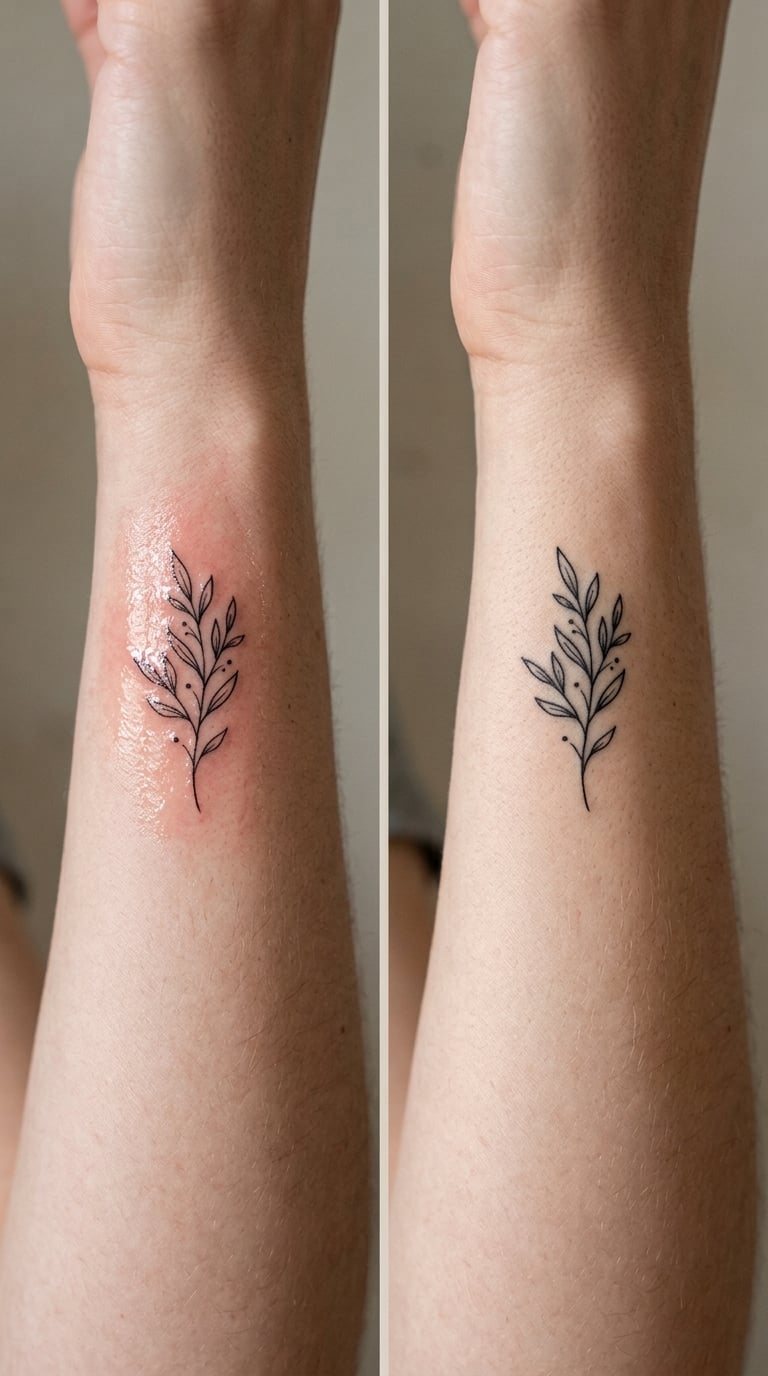
Healing runs in visible phases. Knowing which one you are in tells you far more than any fixed number of days.
| Stage | What you see | Training position |
|---|---|---|
| Weeks 0 to 2 | Redness, swelling, tenderness, plasma, then a flaky layer | Rest first, then very easy movement only |
| Weeks 3 to 4 | Flaking slows, the surface dulls, new skin forming underneath | Light training on areas away from the tattoo |
| Months 2 to 3 | Surface looks settled, colour reappears as the skin normalises | Gradual return to most normal training |
| Months 4 to 6 | Deep layers finish repairing, skin feels like skin again | No restrictions from the tattoo itself |
Small surface tattoos often move through this faster. Large pieces, deep shading and placements that move a lot tend to run longer, and sun exposure stretches the timeline out further.
These are normal signs of healing: redness that fades, mild swelling, flaking, itching and a design that looks duller than the day it was done.
These are not, and mean you should stop training and get professional advice: redness spreading beyond the tattoo, increasing rather than decreasing pain after several days, warmth with swelling, pus or a bad smell, a fever, or a tattoo that is still bright red and raised after two weeks. Nontuberculous mycobacterial infections can look like ordinary irritation early on and do not improve on their own.
One more question that comes up a lot: does building muscle ruin an old tattoo? Over months, significant muscle growth or weight change can stretch skin and distort a design, particularly on a bicep, forearm or chest. It happens gradually and it is not damage, but it is a good reason to plan large pieces around long-term body changes.
Tattoo Cost and Session Time: What Affects the Plan?
Session length matters more to your training plan than cost does. A long sitting means more trauma, more swelling and a longer return to normal, so knowing how long you will be in the chair changes how you plan the fortnight after.
| Size of work | Typical example | Session time | Relative cost tier |
|---|---|---|---|
| Small | A single symbol, a small line piece on an ankle or wrist | Under an hour | Entry tier, often at the shop minimum |
| Medium | A forearm band, a piece on the chest, a design on the calf | Two to four hours | Mid tier, priced by the hour |
| Large | A back piece, a half sleeve, a full thigh design | Four to eight hours, often split across two days | Higher tier, with a deposit for long sessions |
| Multi-session | A full sleeve or a large back and rib composition | Several appointments over months | Highest tier, priced per session |
Artists set their own rates, and shop minimums, travel costs, custom design work and touch-ups all change what you end up paying. Ask for the total in writing before you commit, and ask how the free check-up works.
For planning purposes, the useful figure is the chair time. If your session is going to run past four hours, plan your first two weeks as a soft training block rather than a normal one.
Mistakes to Avoid
- Rushing back to intense training. A short layoff costs less time than a tattoo that heals patchy.
- Training with a leaking or badly wrapped tattoo. If the dressing has soaked through, change it properly rather than training through it.
- Stretching skin over a new design. Pulling the area while it is scabbing is how edges get soft.
- Using shared equipment straight onto the area. Wipe benches and handles, and keep the tattoo away from communal contact.
- Sun, pool water and communal showers. These three cause most of the avoidable early problems.
- Picking at flaking skin. Let it come away on its own. Pulling it off takes colour with it.
- Following a generic online timeline instead of your artist’s instructions. Somebody else’s two-week rule was written for somebody else’s piece.
Frequently Asked Questions
Can I walk after getting a tattoo?
Walking is the gentlest option and usually the first movement most people manage. Short, easy walks that do not swing or stretch the tattooed area are generally fine within a day or two, depending on placement. Keep the area dry if your artist has dressed it, avoid carrying heavy bags over the spot, and stop if you notice increased swelling or a change in how the design looks.
Can I lift weights after getting a tattoo?
Lifting directly over a fresh tattoo is usually the thing worth waiting on, because flexing skin pulls at the design. A small piece on an outer arm tolerates light loading earlier than a shaded chest or rib tattoo. Many people find that low loads on unaffected muscle groups keep them sane while the tattoo settles. Follow your artist’s timeline and rebuild gradually rather than jumping back to your working weights.
When can I run or do cardio after a tattoo?
Running gets the blood moving without loading the tattoo, so it is often possible sooner than weight training, provided the design is not on an area that rubs. A leg, rib or lower back tattoo may still hurt with each stride. Start with a short easy distance, keep friction down, and skip hot, intense sessions until the flaking has stopped. Pools and open water come later than running.
Does sweating ruin a new tattoo?
Sweat on its own does not ruin a tattoo. The concern is moisture sitting against healing skin, combined with friction and heat, which softens scabs and encourages bacteria. Wipe sweat away during the session rather than letting it soak, wash the area with clean lukewarm water afterwards, pat dry and change wet clothing. A towel from your own bag beats using your hands or a shared one.
Can I swim after getting a tattoo?
Not straight away. Pool water, hot tubs and open water all expose healing skin to chemicals, bacteria and prolonged soaking, and swimming flexes the skin hard. Most people wait until the flaking has finished and the surface looks settled, which is usually in the third to fourth week, and check with the artist first. Covering a fresh tattoo with a bandage for water is not a reliable fix.
How do I know my tattoo is ready for normal exercise?
Ready usually means the flaking has stopped, the skin is no longer red or raised, the area is not tender when it moves, and the design has lost its dull surface look. That commonly lands between weeks two and four, and later for large pieces on frequently moving areas. If the skin still pulls, itches or looks irritated, it is not ready. When in doubt, book the free check-up your artist offers.
Bottom Line
Start with rest, follow the instructions your artist gives you on the day, and return to gentle movement only when the area is comfortable. Rebuild intensity gradually, and check with the artist or a qualified healthcare professional if healing looks uncertain or symptoms persist.