
20 Sketch Style Tattoo Ideas for Minimalists (October 2026)
These sketch style tattoo ideas are for anyone who wants a piece that looks drawn by hand rather than printed. Loose pencil-like lines, cross-hatching, visible construction strokes and a few deliberately unfinished edges are what separate this look from a clean blackwork outline or a polished fine line tattoo.
What makes the style work on skin is restraint. One clear subject, a handful of confident lines, black ink only, and enough open space that the drawing still reads from across a room. I like these designs because they look like a page from somebody’s notebook, and because they age into something softer instead of turning into a heavy black block. Most of the ideas below sit comfortably between 1.5 and 4 inches, which is the range where an artist can still control the line weight.
If you are booking now, allow 30 to 45 days of planning time. Bring a few references, a rough idea of placement, and a willingness to let the artist redraw the piece for your body’s shape rather than copying a drawing exactly.
Sketch Style Tattoo Ideas: Quick Guide
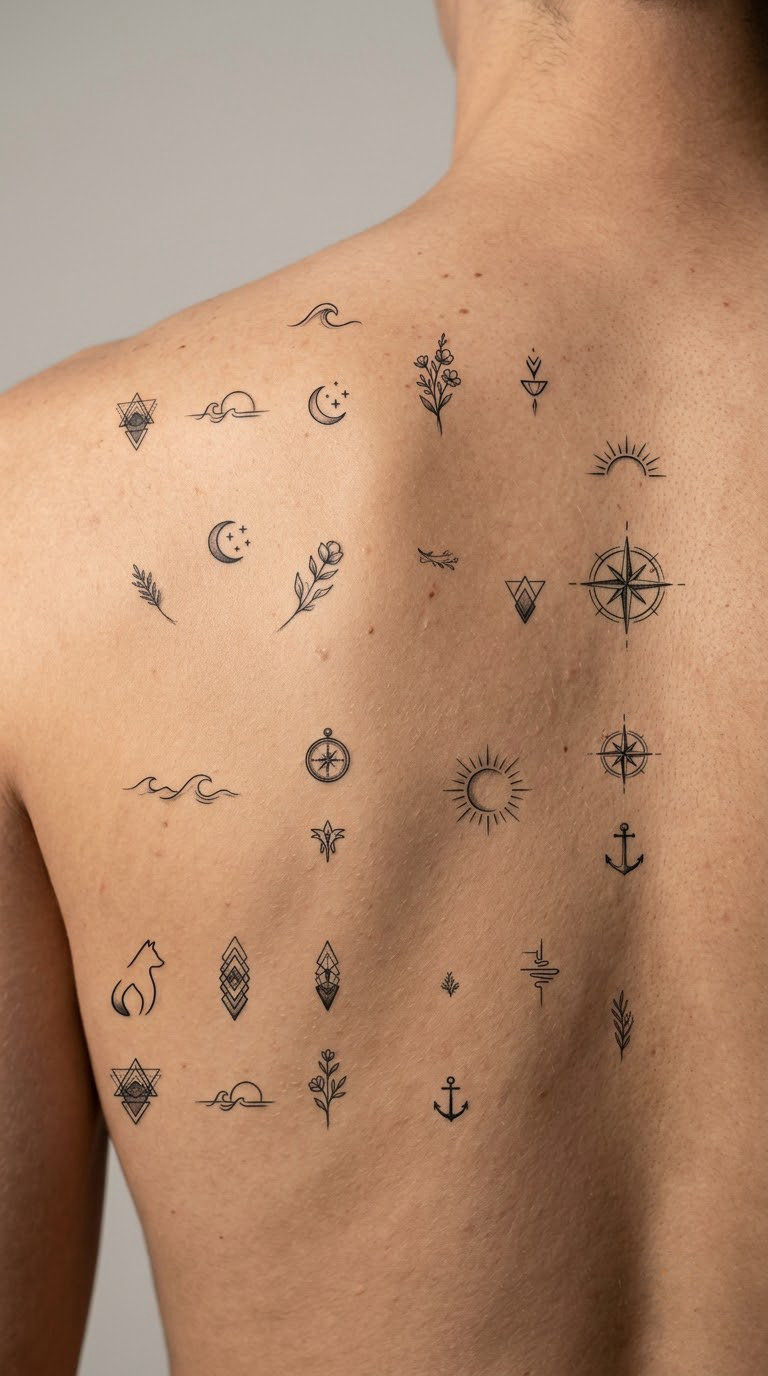
| Idea | Style | Best placement | Size | Pain |
|---|---|---|---|---|
| Fine-line mountain range | Fine line, pen and ink | Inner forearm | 3 to 4 in (7.5 to 10 cm) | Low to medium |
| Loose botanical leaf | Botanical line art | Outer forearm | 2 to 3 in (5 to 7.5 cm) | Low |
| Architectural staircase | Pencil architectural | Inner upper arm | 3 to 4 in (7.5 to 10 cm) | Medium |
| Mountain compass | Draftsmanship sketch | Outer forearm | 2.5 to 3.5 in (6 to 9 cm) | Medium |
| Minimal line art rose | Contour line art | Wrist | 1.5 to 2.5 in (4 to 6 cm) | Medium |
| City skyline | Urban sketch | Forearm | 4 to 6 in (10 to 15 cm) | Medium |
| Portrait silhouette | Pencil portrait | Inner arm | 2 to 3 in (5 to 7.5 cm) | Medium |
| Crescent moon and stars | Fine line celestial | Ankle | 2 to 3 in (5 to 7.5 cm) | Medium to high |
| Wave study | Cross-hatched study | Calf | 3 to 4 in (7.5 to 10 cm) | Medium |
| Butterfly outline | Open outline | Shoulder blade | 2.5 to 4 in (6 to 10 cm) | Low to medium |
| Sketched house | Minimal line drawing | Inner forearm | 2 to 3 in (5 to 7.5 cm) | Low |
| Paper plane | Geometric sketch | Behind the ear | 1.5 to 2 in (4 to 5 cm) | Medium to high |
| Botanical branch | Loose botanical | Forearm | 3.5 to 5 in (9 to 12.5 cm) | Low to medium |
| Bird in flight | Loose gestural | Upper arm | 2.5 to 3.5 in (6 to 9 cm) | Medium |
| Lighthouse sketch | Architectural minimal | Calf | 2.5 to 3.5 in (6 to 9 cm) | Medium |
| Bicycle | Economical line art | Forearm | 2.5 to 4 in (6 to 10 cm) | Medium |
| Abstract face | Contour abstraction | Upper arm | 3 to 4 in (7.5 to 10 cm) | Medium |
| Tree with roots | Fine line nature | Lower leg | 3.5 to 5 in (9 to 12.5 cm) | Medium |
| Floral bouquet | Loose floral line art | Inner upper arm | 2.5 to 4 in (6 to 10 cm) | Low to medium |
| Globe with orbit lines | Draftsmanship sketch | Back of calf | 3 to 4 in (7.5 to 10 cm) | Medium |
1. Fine-Line Sketch Mountain Range
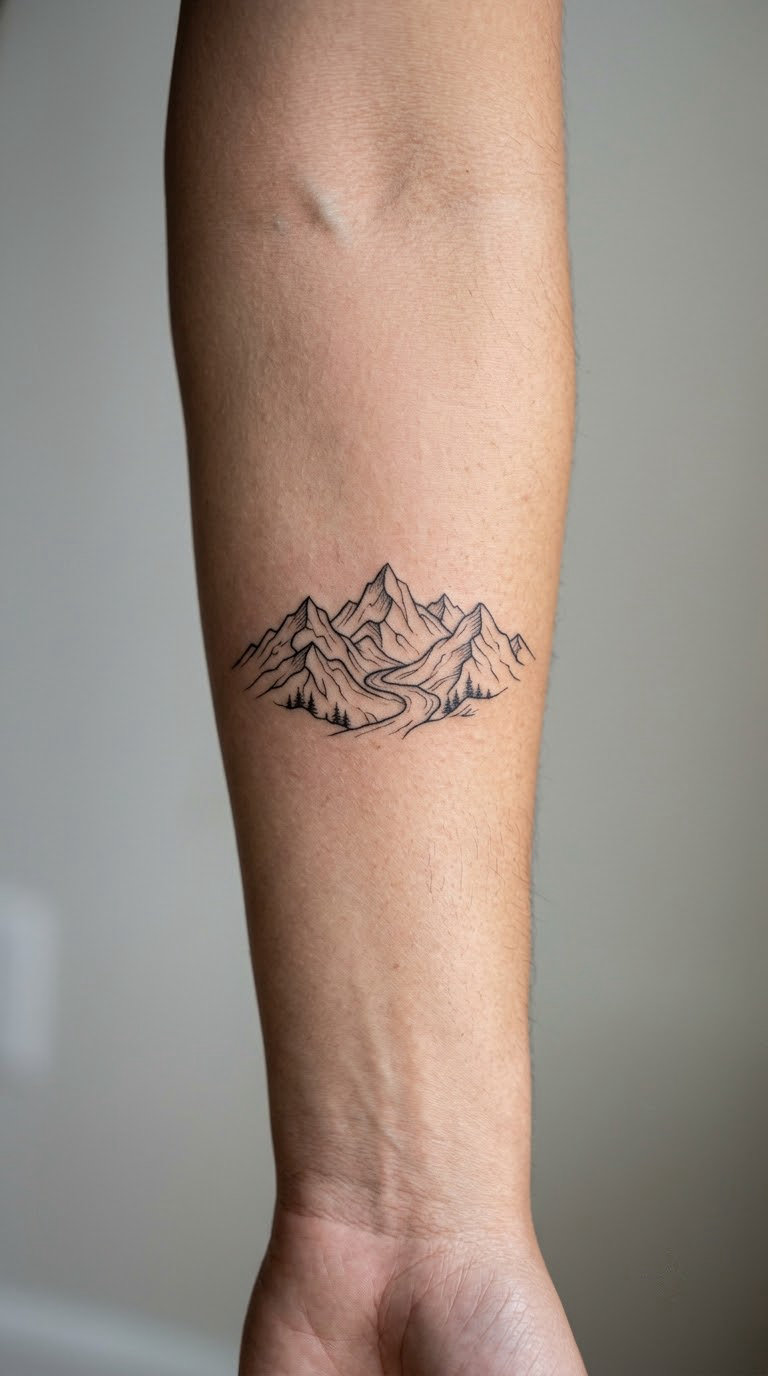
A mountain range drawn as a single confident horizon line, with a few lighter ridgelines behind it and no fill at all. Some artists leave the back peaks broken, as if the pencil lifted off the page. It is the calmest entry on this list and the easiest to place well.
People usually pick it because it points at somewhere real without having to name it.
Placement: Inner forearm, outer forearm, or the flat area above the ankle. Size: 3 to 4 inches (7.5 to 10 cm) wide. Style: Fine line with light hatching. Pain: Low to medium. Keep one ridge line slightly heavier than the rest, since the thinnest lines soften first. Make it yours: Name the range in the design or have the artist carve your own local ridgeline from a photograph.
2. Loose Botanical Leaf Sketch
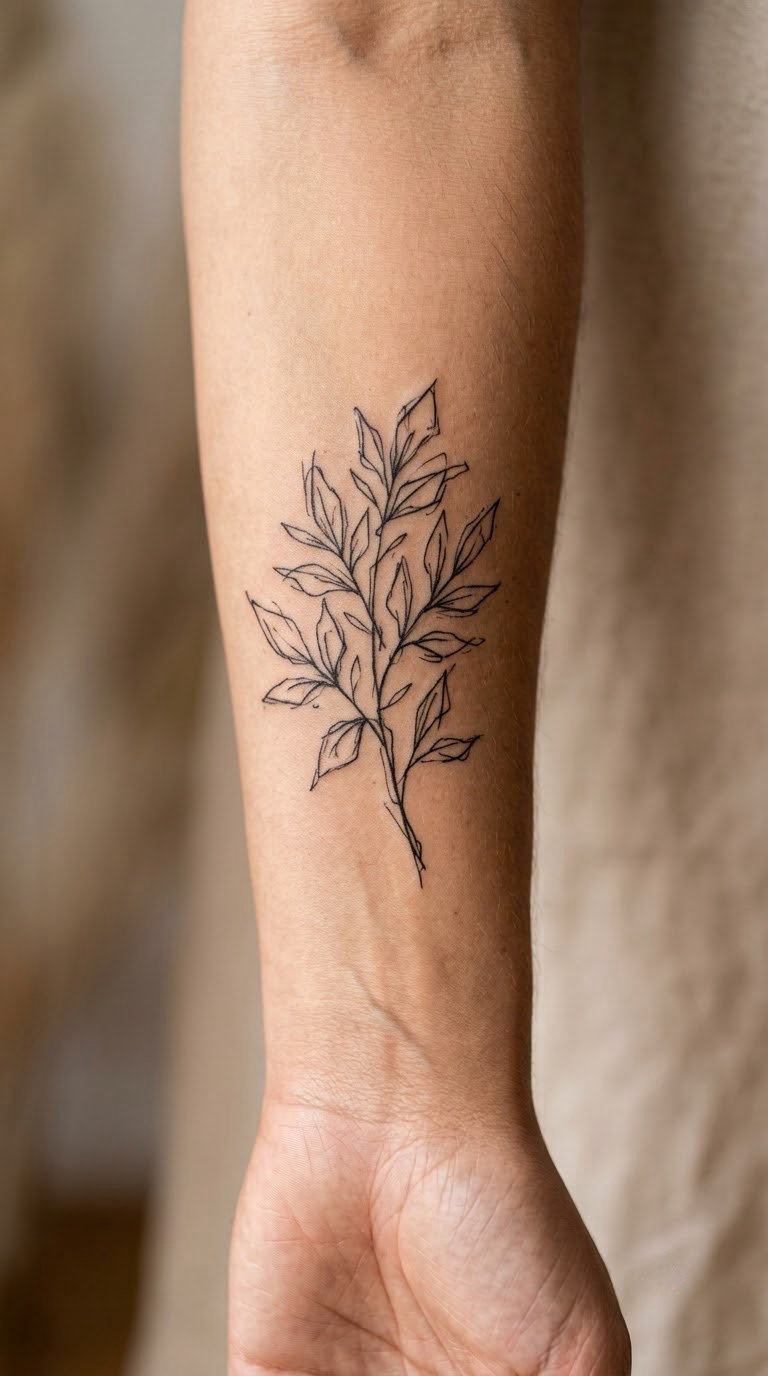
One leaf, drawn with contours that wobble slightly the way a pencil line does, plus a stem and two or three vein lines that stop before they reach the tip. No gradient shading, no outline doubling. The imperfection is the whole point.
It reads as quiet and a little unfinished, which some people like because it looks like the artist left a mark mid-thought.
Placement: Side of the forearm, wrist, or behind the ear. Size: 2 to 3 inches (5 to 7.5 cm). Style: Botanical line art. Pain: Low on the forearm, more noticeable over a wrist bone. Fine veins on the inner wrist blur noticeably within a few years, so keep the vein lines short. Make it yours: Use a leaf from a plant that grew somewhere you have actually been.
3. Architectural Staircase Sketch
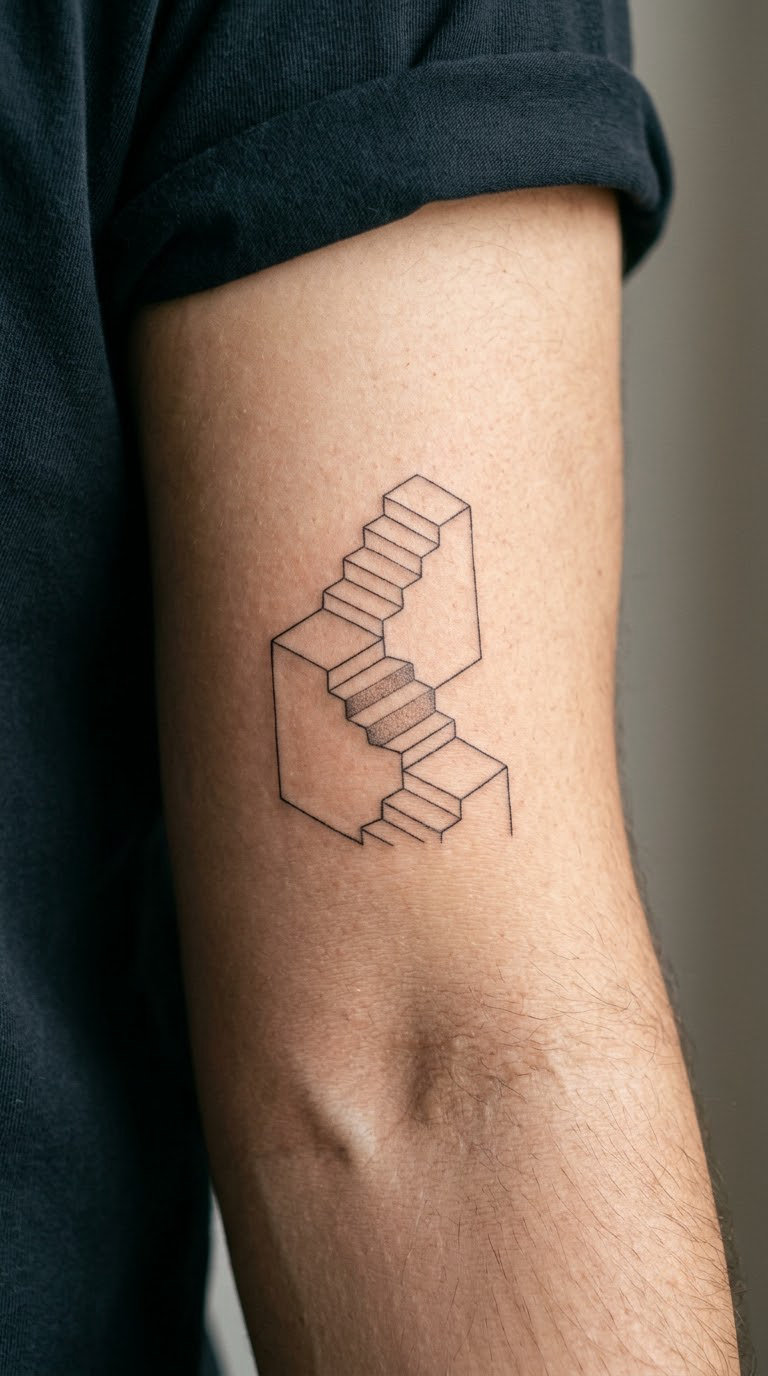
A run of stairs drawn in one-point perspective, with clean risers and a single hand-drawn wobble in the handrail. Leave one plane of the wall lightly hatched and the rest blank. The design works because the geometry gives it structure while the loose edges stop it reading as a technical diagram.
It is a common choice for people who like architecture and dislike ornament.
Placement: Inner upper arm, outer thigh, or the flat of the calf. Size: 3 to 4 inches (7.5 to 10 cm) tall. Style: Pencil architectural sketch. Pain: Medium. Stair edges run in long straight pulls, and those are slower and more uncomfortable than short curved lines. Make it yours: Send a photo of a staircase you used to walk every day and ask the artist to translate its proportions.
4. Sketch-Style Mountain Compass
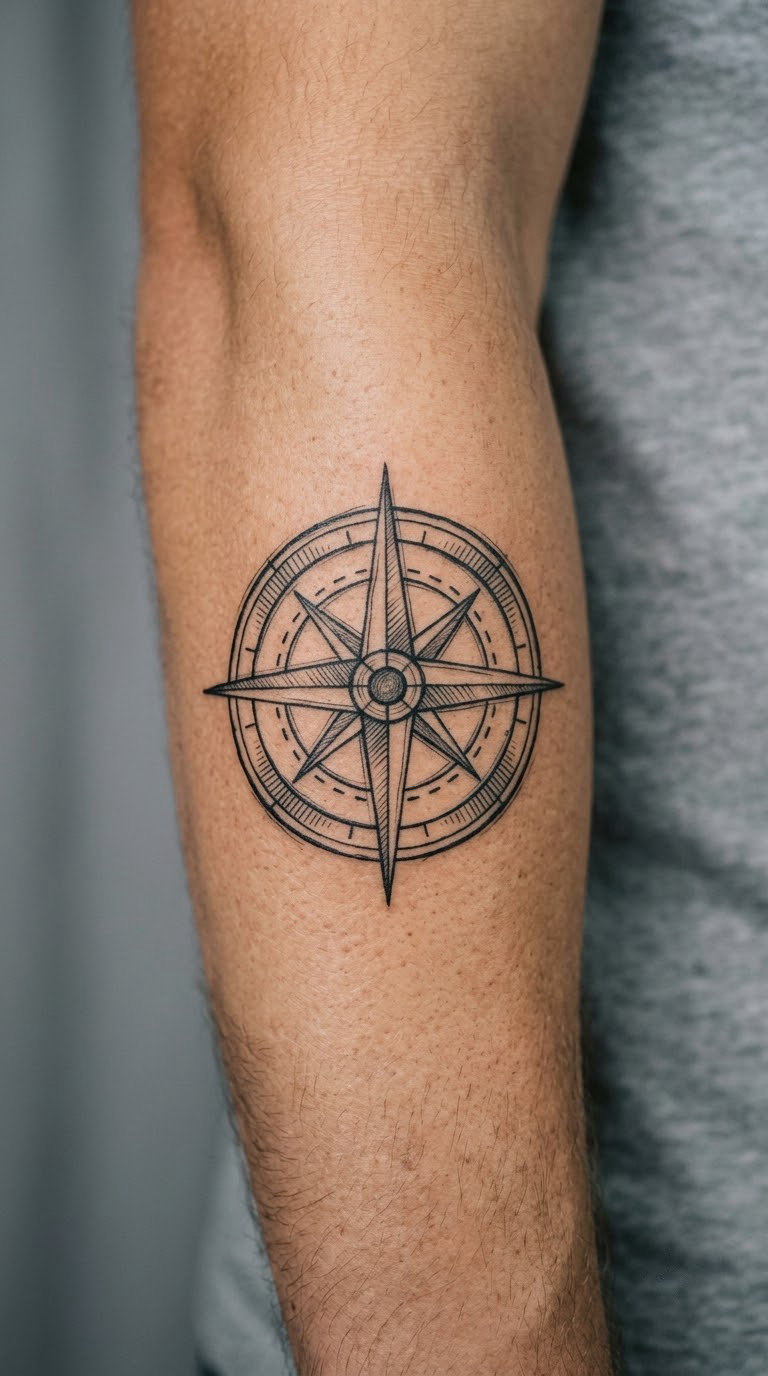
A compass rose where the eight points are drawn as separate pencil strokes, each one slightly different in length and pressure, with light hatch shading in two of the quadrants. The letters are optional and often left out.
Direction and navigation are the usual reasons people choose it, and it also does the job of a small filler piece.
Placement: Outer forearm, upper arm, or the back of the shoulder. Size: 2.5 to 3.5 inches (6 to 9 cm) across. Style: Draftsmanship sketch. Pain: Medium. The point tips are where the needle has to be precise, and that precision slows things down. Keep the point tips anchored with a slightly heavier line so the star stays readable as the fine hatching fades. Make it yours: Replace the four cardinal points with a different set of bearings you care about.
5. Minimal Line Art Rose
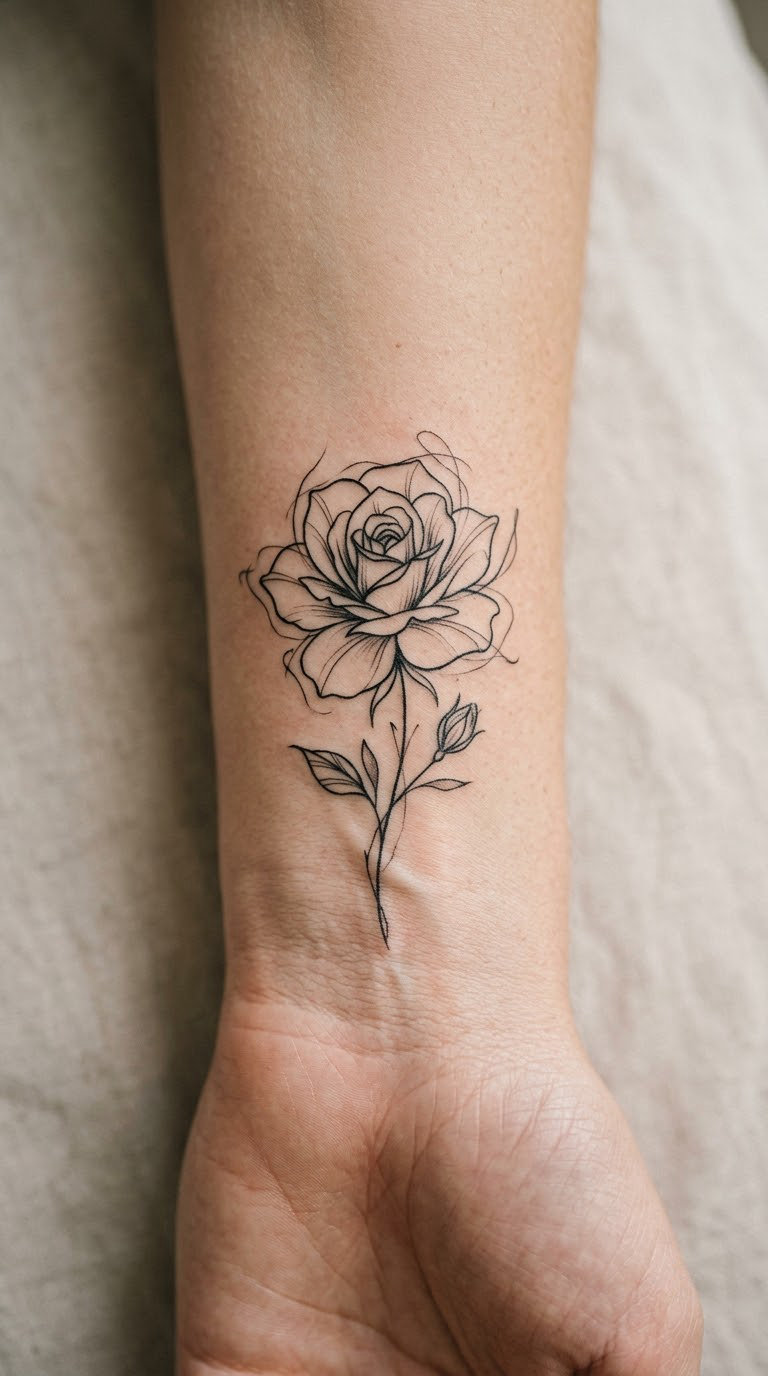
A rose built from expressive contour lines rather than smooth traditional shading. The petals stay open, a couple of lines run past the edge of the flower, and the stem carries a few short thorns. A good version looks confident rather than careless.
It is the least fussy floral in this set, and it is a solid pick if you already have one realistic tattoo and want something quieter beside it.
Placement: Wrist, inner forearm, or the back of the hand. Size: 1.5 to 2.5 inches (4 to 6 cm). Style: Contour line art. Pain: Medium on the forearm, more on the wrist. Hand and wrist line work fades faster than almost anywhere else because of sun, washing and daily wear, so plan on a touch-up every few years. Make it yours: Have the artist add two or three loose sketch lines that trail off the outer petal, so it looks like it was never finished.
6. Sketched City Skyline
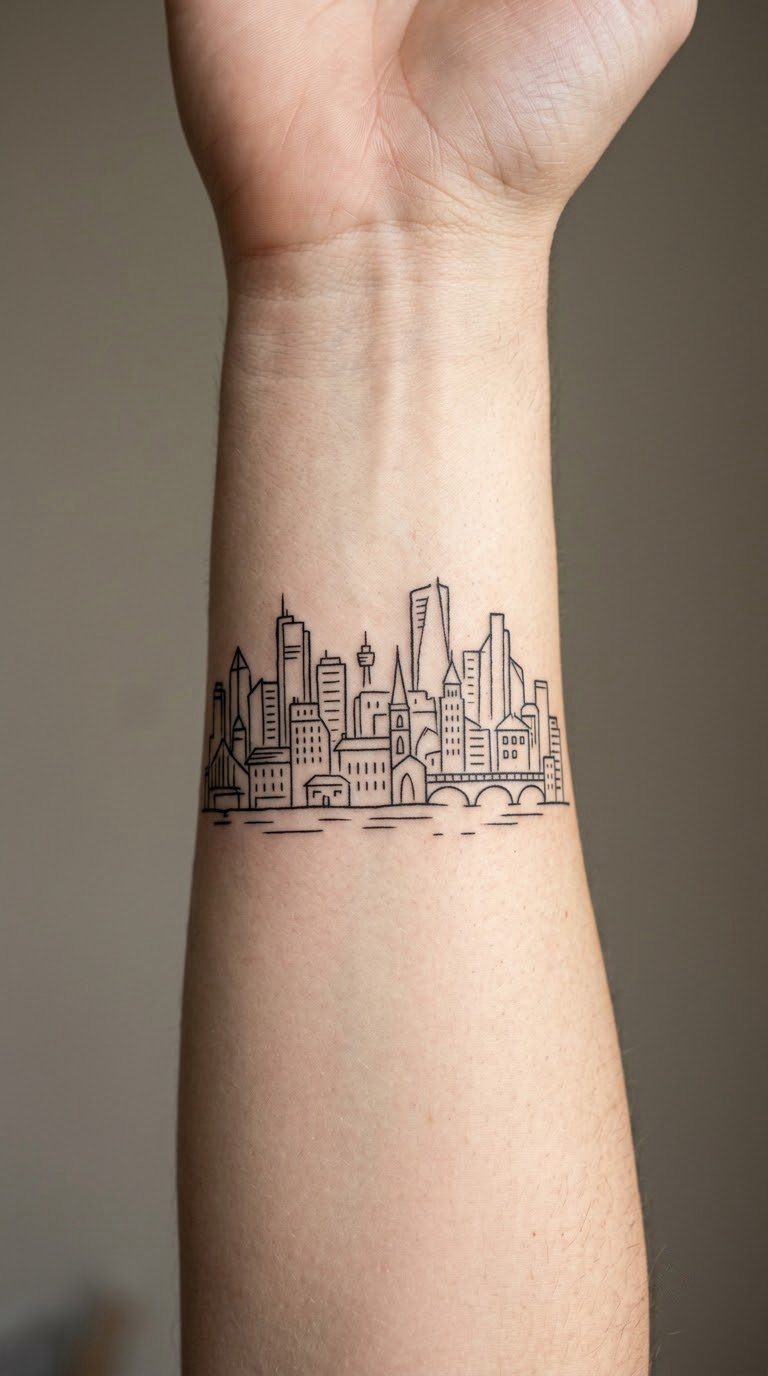
A row of buildings with uneven window grids, one or two antenna lines, and a horizon line that skips in places. The best versions simplify hard: you get the outline of a familiar place rather than every brick.
Most people are tattooing a city they lived in, and the drawing usually carries a lot of the memory for them.
Placement: Forearm, inner arm, or the upper back where there is room to widen it. Size: 4 to 6 inches (10 to 15 cm) wide. Style: Urban sketch, black ink. Pain: Medium. Window grids are repetitive, so this is often a longer session than its size suggests. Make it yours: Bring a photo of your skyline and mark which three buildings matter, so the artist spends the detail budget where you want it.
7. Pencil-Style Portrait Silhouette
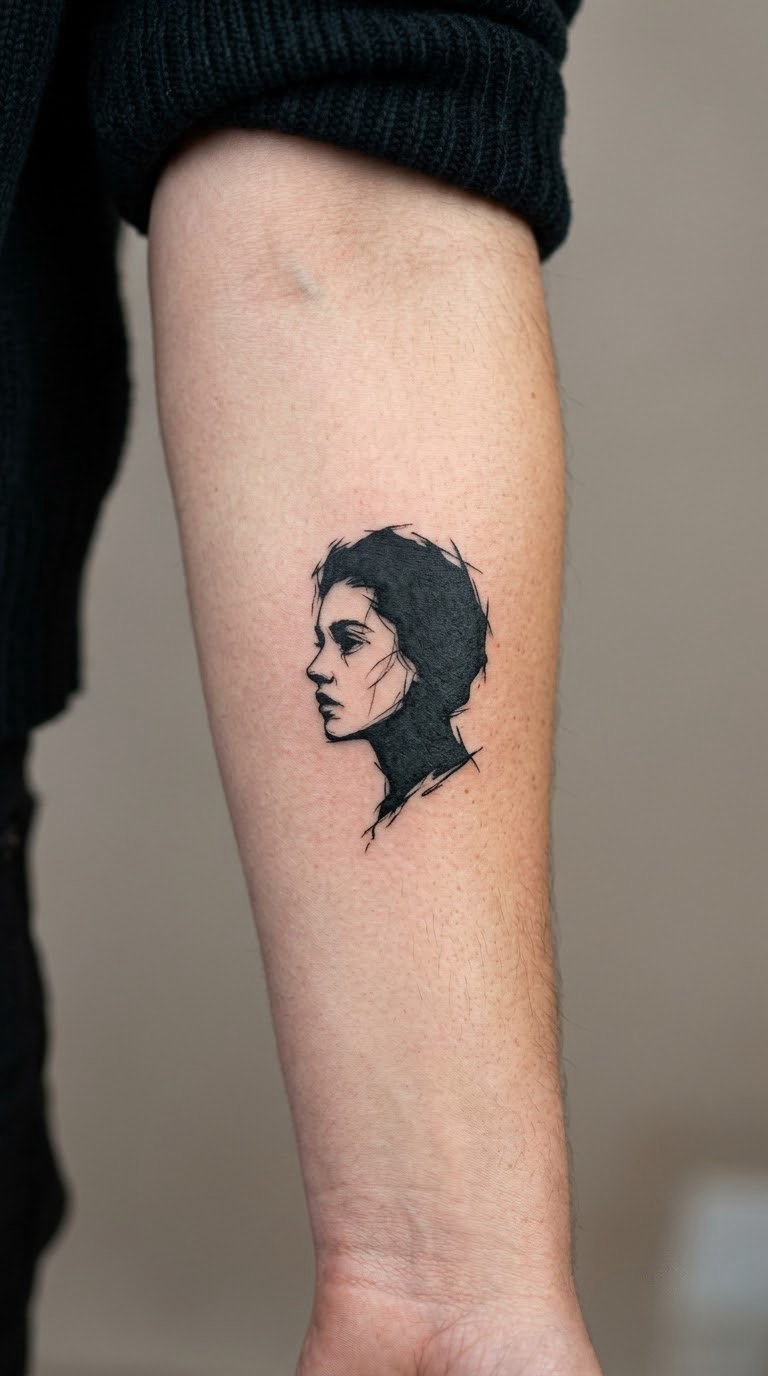
A head in three-quarter profile drawn with a handful of contour lines, one eye, a suggestion of a nose and jaw, and edges that stop before they close. It is closer to an unfinished study than a finished likeness, which is exactly what makes it a sketch piece.
People tend to choose this for a person rather than for a symbol, and say so little about it that the drawing does the talking.
Placement: Inner arm, forearm, or the upper arm. Size: 2 to 3 inches (5 to 7.5 cm) tall. Style: Pencil portrait, single needle. Pain: Medium. Facial detail is dense in a small area, so the session is fiddly. Make it yours: Have the artist leave the back of the head open, with only three or four lines suggesting hair.
8. Sketched Crescent Moon and Stars
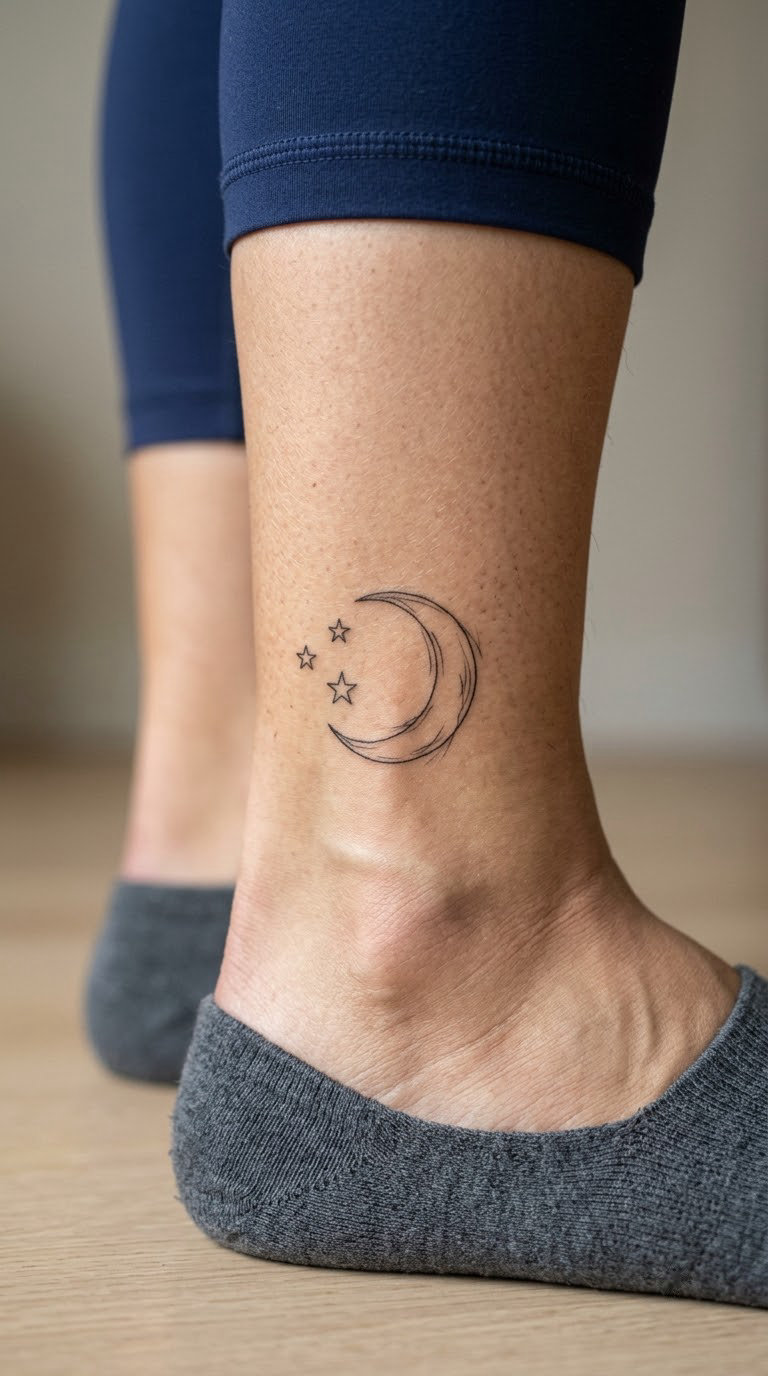
A crescent built from two arcs that do not quite meet, with three small four-point stars scattered around it at uneven distances. No outline ring, no gradient, nothing polished. The moon often looks as though it was drawn and then abandoned halfway, which is the appeal.
It is a night-sky design, and most wearers pick it for the look rather than a specific meaning.
Placement: Ankle, inner calf, or behind the shoulder. Size: 2 to 3 inches (5 to 7.5 cm). Style: Fine line celestial. Pain: Medium to high. Ankle bone and the bony inner calf are sensitive, and the fine star points need several passes. Make it yours: Add one small filled dot as a star and keep the rest open, which keeps the piece readable once the thin lines soften. Ageing note: Ankle and lower leg skin gets a lot of sun exposure, so cover it.
9. Hand-Drawn Wave Study
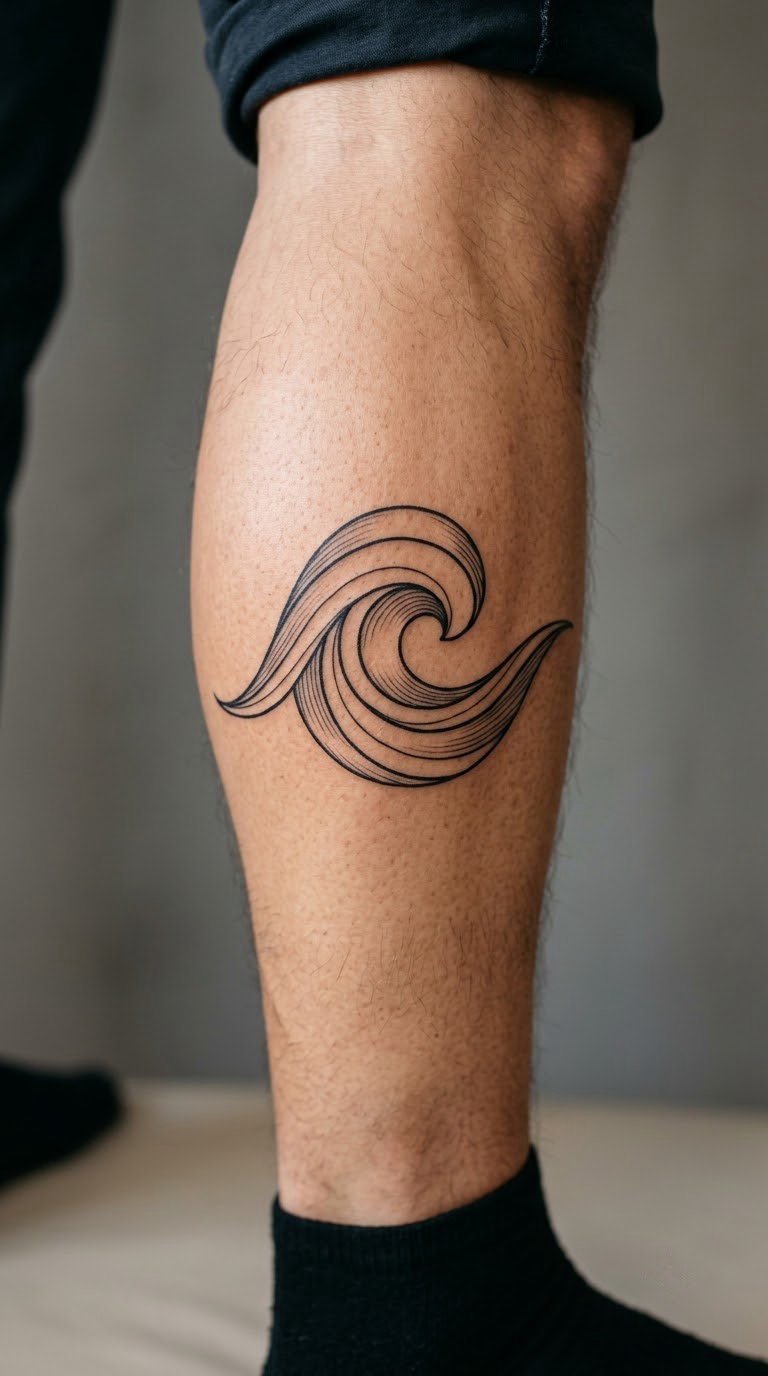
Three overlapping curves with light directional hatching tucked underneath, like a practice drawing of surf that never became a finished illustration. The hatching does most of the work, and it can be left patchy on purpose.
Ocean people choose it. So do a lot of people who just like the way a few lines can suggest movement.
Placement: Calf, forearm, or ribs. Size: 3 to 4 inches (7.5 to 10 cm) wide. Style: Cross-hatched study. Pain: Medium. Long smooth curves pull across the skin and are easier to sit through than short tight detail. Make it yours: Have the artist copy the swell from a photograph taken at a specific beach. Ageing note: Hatching is the first thing to fade, so ask the artist to anchor the wave crest with a heavier line.
10. Sketch-Style Butterfly Outline
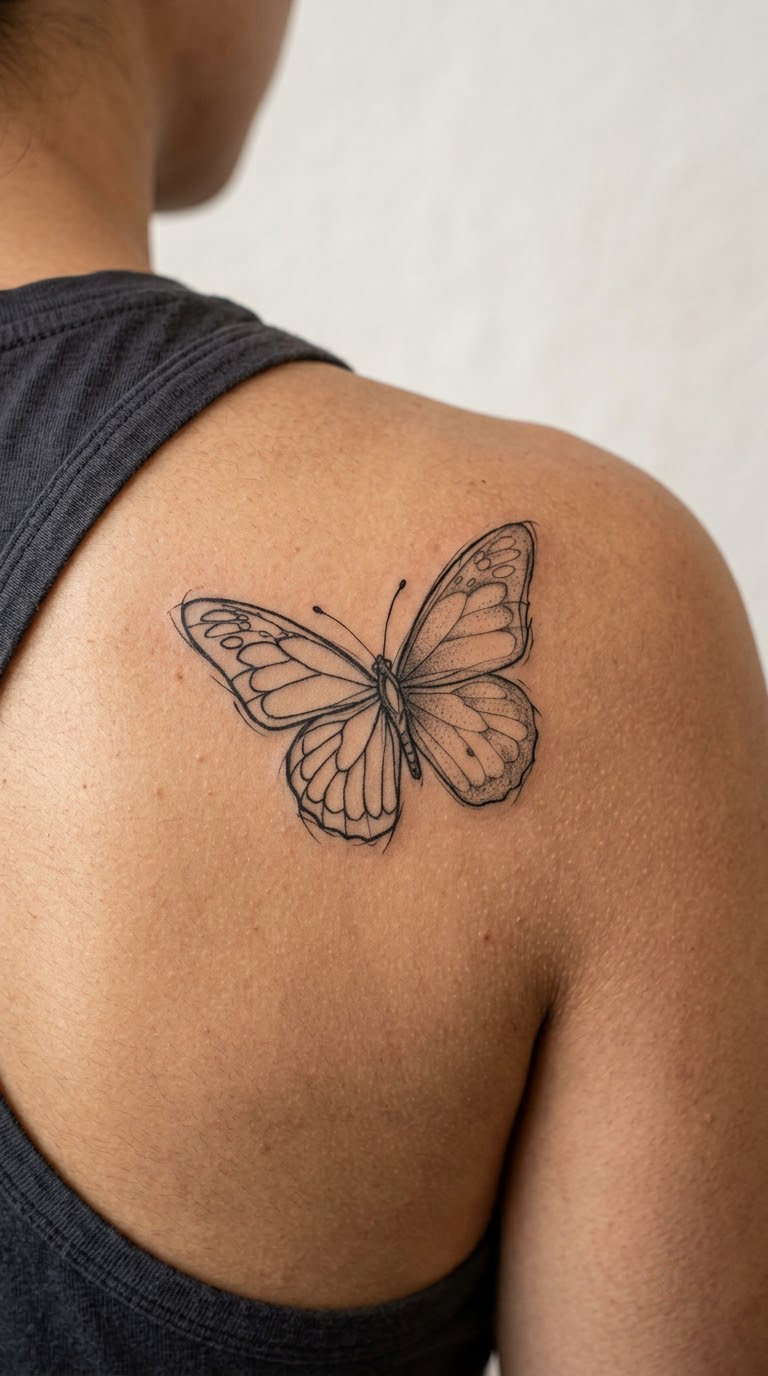
Open wing outlines with a slight asymmetry, one wing carrying a light hatch texture and the other left completely blank. No symmetry games, no ornamental patterning. The looseness is what separates this from a decorative butterfly.
It is a common first piece because it is small, flat and forgiving, and it fills an awkward gap well.
Placement: Shoulder blade, upper back, forearm, or the back of the ankle. Size: 2.5 to 4 inches (6 to 10 cm) wide. Style: Open outline with minimal shading. Pain: Low to medium, and the back is one of the more forgiving spots on the body. Make it yours: Draw the wing pattern from a real species you have seen rather than from a symmetrical clip-art shape, and let the two wings differ.
11. Minimal Sketched House
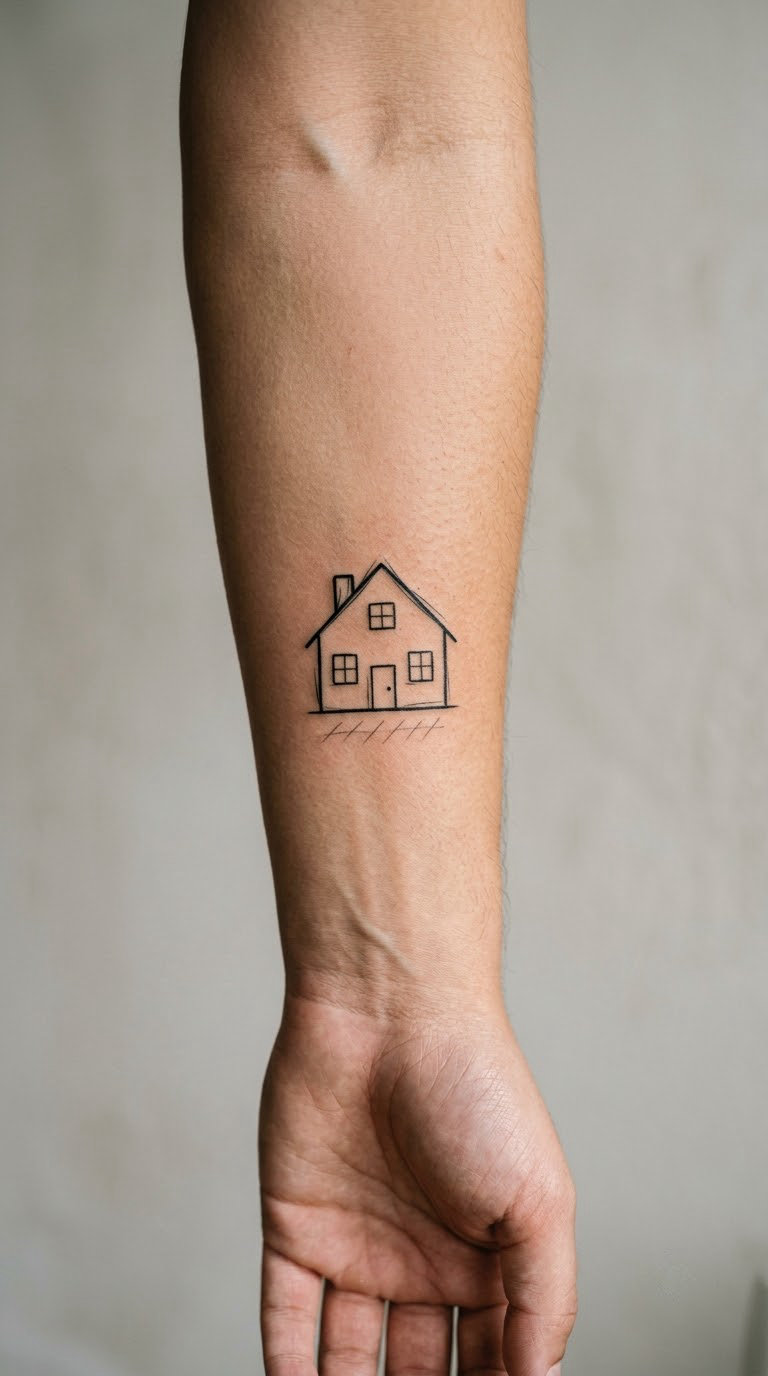
A front-facing house with a pitched roof, two square windows, a door line, and a handful of hatch marks underneath so it sits on something. The roofline is usually the loosest line in the drawing.
Most people are tattooing a specific building rather than the idea of a house, and they tend to be protective of the details that made it theirs.
Placement: Inner forearm, upper arm, or the back of the calf. Size: 2 to 3 inches (5 to 7.5 cm) wide. Style: Minimal line drawing. Pain: Low. Straight lines and short pulls make this a quick, easy sit. Make it yours: Add the number of steps, a chimney, or a fence in one or two extra strokes rather than more detail on the house itself.
12. Sketched Paper Plane
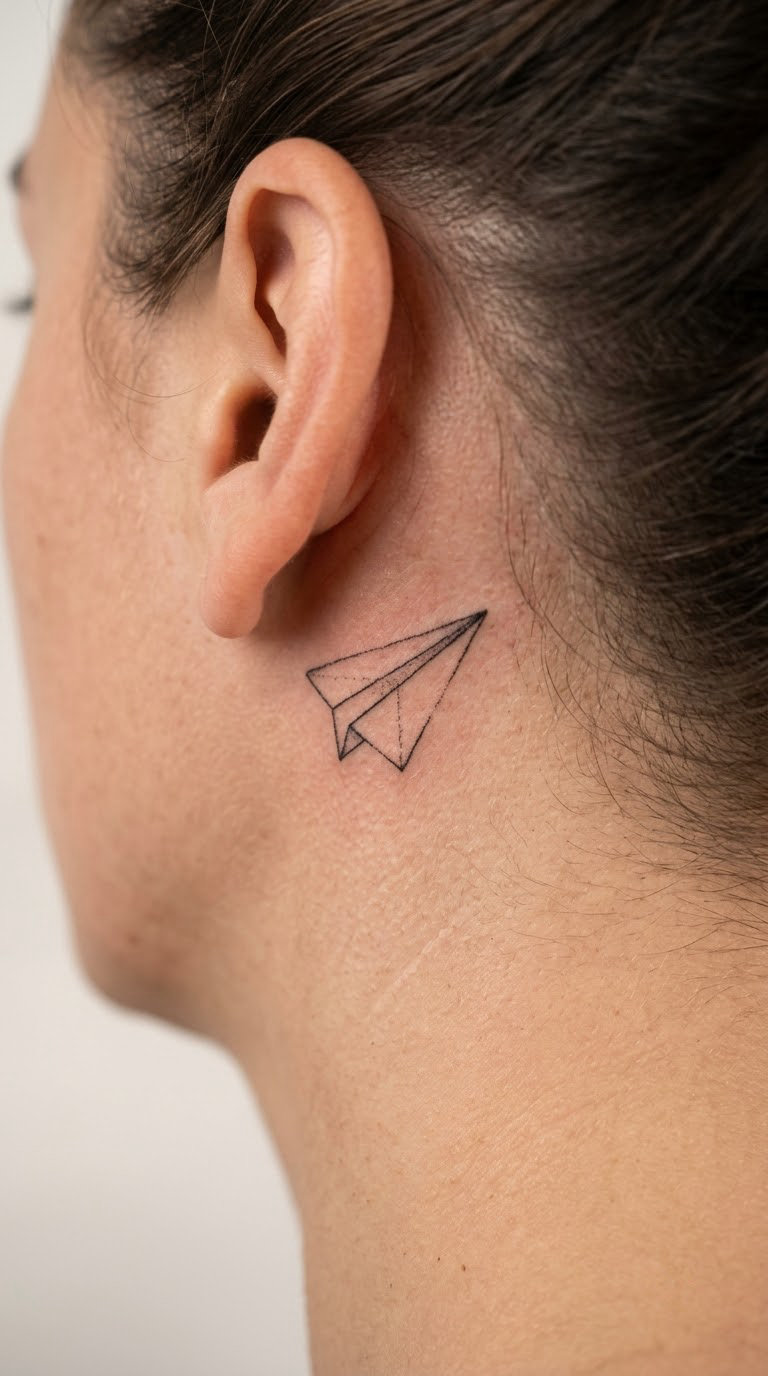
Two or three angular lines that resolve into a paper plane, with the trailing fold left slightly open so it reads as a study rather than a logo. At this scale the artist has almost no room to correct anything, which is part of why it looks good.
It is a small, travel-adjacent design, and a lot of people get it after a trip they still think about.
Placement: Behind the ear, the wrist, the inner arm, or the ankle. Size: 1.5 to 2 inches (4 to 5 cm). Style: Geometric sketch. Pain: Medium to high. Behind the ear is thin, bony and close to bone, and the nerve there makes even a tiny piece noticeable. Ask for a bigger version if you are nervous; the spot does not get much easier with size. Ageing note: At 1.5 inches the two long lines are all you have, so one of them should be heavier. Make it yours: Have the line trail off the tail rather than stopping cleanly, so it looks thrown rather than drawn.
13. Loose Botanical Branch
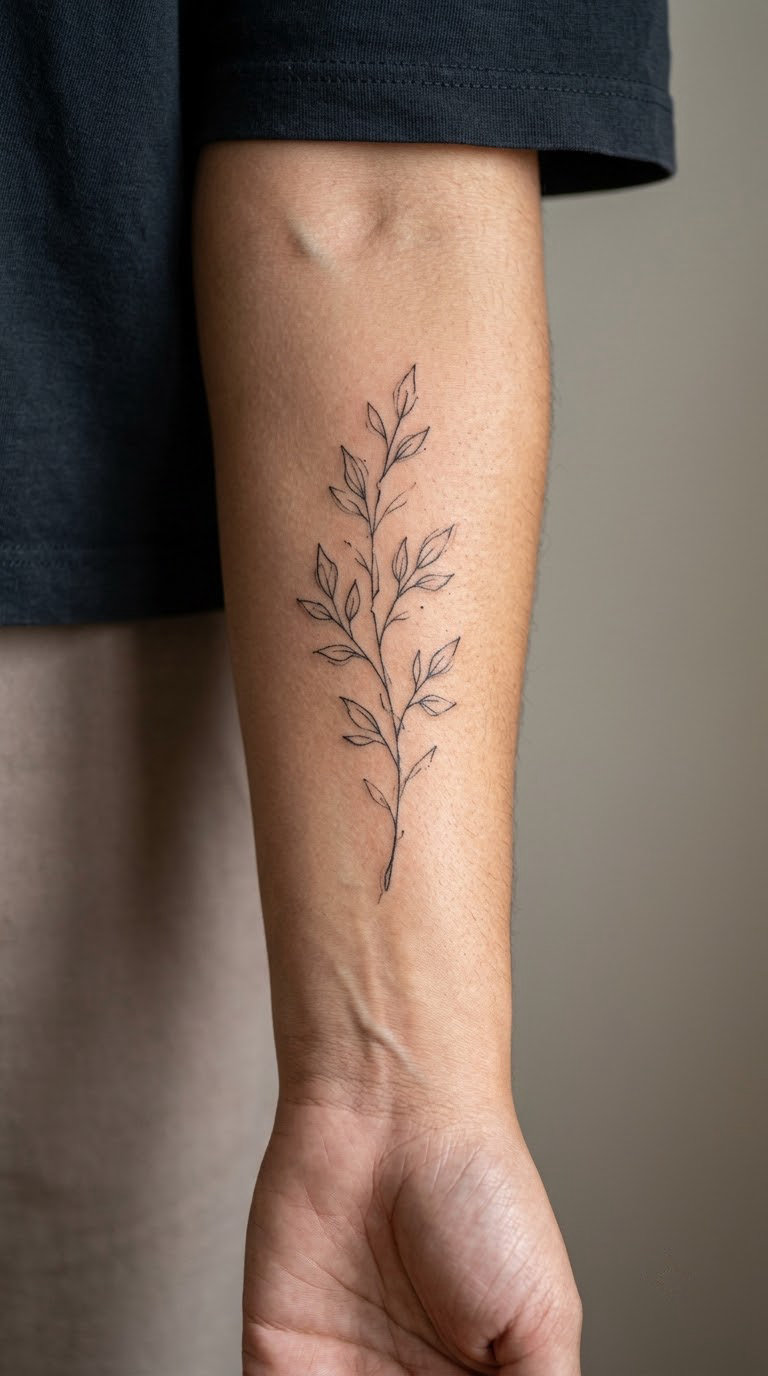
A vertical branch with sparse leaves placed at irregular intervals and a few visible construction lines where the artist mapped out the stem before inking. Some leaf outlines stop halfway. The result looks like a page of botanical study, which is exactly what it is.
Branch designs suit people who like plants but not dense foliage, and they take up space gracefully.
Placement: Forearm, calf, or along the outer arm. Size: 3.5 to 5 inches (9 to 12.5 cm) long. Style: Loose botanical sketch. Pain: Low to medium, with the forearm being about as easy as it gets. Make it yours: Ask the artist to leave the stem heavier and the leaves thin, so the drawing still holds together once the fine leaf lines soften. Ageing note: Small leaves at the tip of a branch blur first, so the design is worth checking yearly.
14. Sketched Bird in Flight
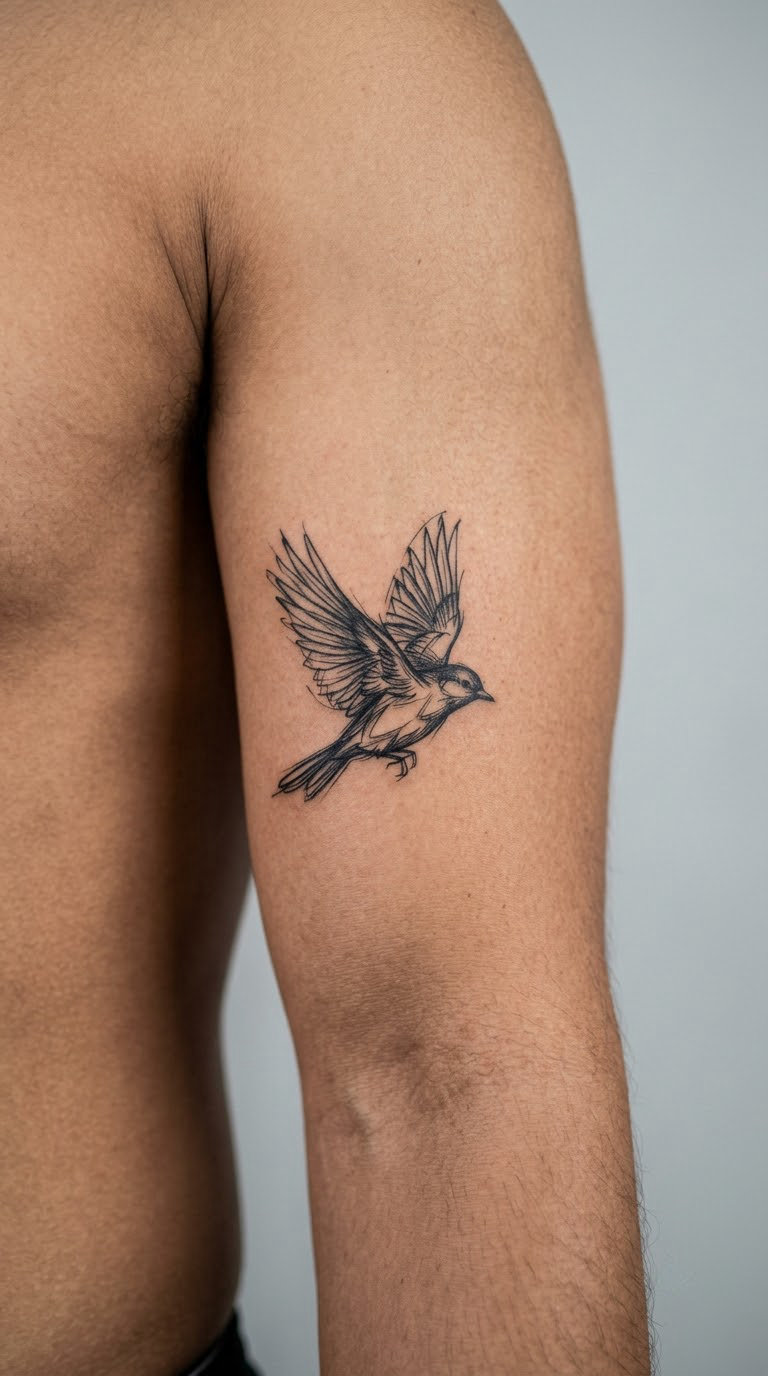
A bird with both wings extended, drawn with a handful of loose strokes per wing rather than a filled shape. The wingtips stop short, which gives the whole thing its sense of movement. A light contour under the body is usually enough.
People choose it for the sense of movement rather than for the species, and the open wing shape works at almost any size above 2 inches. If your taste runs to animal line work rather than landscapes, our 20 Best Cat Silhouette Tattoo Ideas for Minimalists (October 2026) covers the same loose-line approach with a different subject.
Placement: Upper arm, shoulder blade, forearm, or the ribs. Size: 2.5 to 3.5 inches (6 to 9 cm) wide. Style: Loose gestural sketch. Pain: Medium. The ribs and the inside of the upper arm are sensitive, and the arm is more forgiving. Make it yours: Have the artist draw the wing from a real reference of a bird in flight, so the feathers follow an actual shape instead of a guess.
15. Minimal Lighthouse Sketch
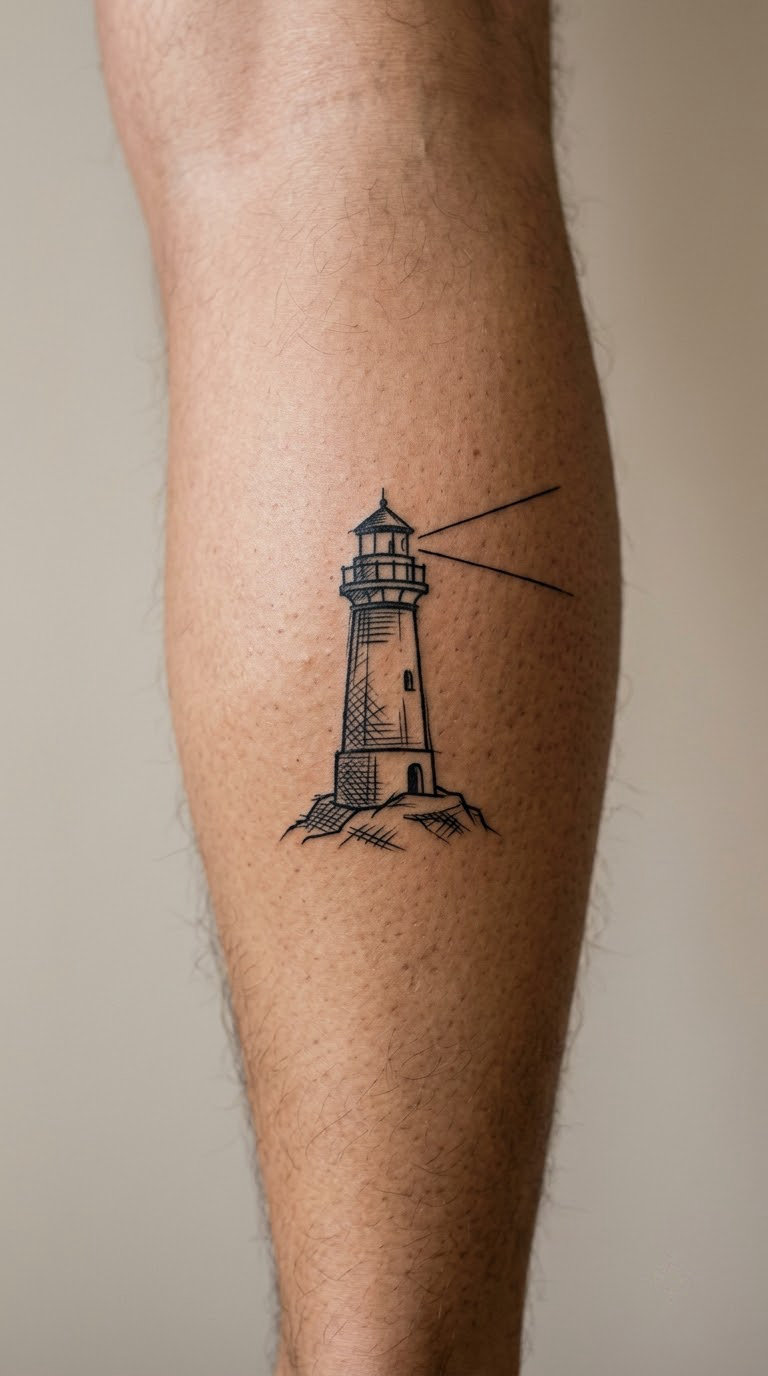
A narrow tower drawn in a few vertical strokes, a small lantern room at the top, two straight beam lines crossing outward, and sparse crosshatching at the base. The beams are usually the only geometric element in an otherwise loose drawing.
It is a coastal design, and the light motif is usually about guidance or a particular coastline rather than anything formal.
Placement: Calf, forearm, or the outer upper arm. Size: 2.5 to 3.5 inches (6 to 9 cm) tall. Style: Architectural minimal with hatching. Pain: Medium on the calf, low on the forearm. Make it yours: Ask for the beam lines to stop short and fade, so the light looks like it is leaving the frame instead of hitting something.
16. Sketched Bicycle
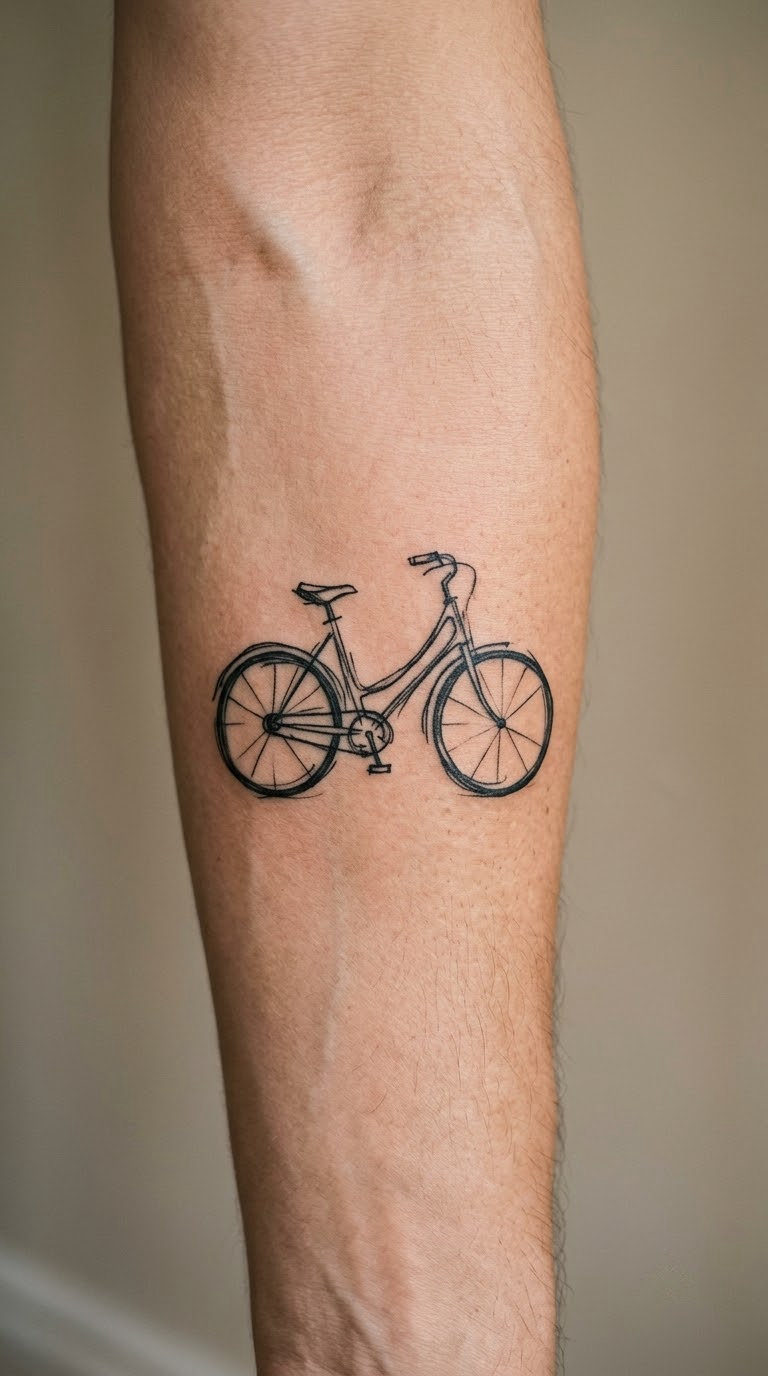
Two circles for the wheels, a frame made of six or seven straight lines, handlebars that are barely there, and one or two hatch strokes under the back wheel. Nothing is filled, so the drawing stays light even at a good size.
A lot of people get a bicycle tattoo tied to a period of their life, usually one they still ride.
Placement: Forearm, calf, or the side of the thigh. Size: 2.5 to 4 inches (6 to 10 cm) wide. Style: Economical line art. Pain: Medium. The wheels are long circular pulls, and wobble is more painful than straight work. Make it yours: Ask for your frame geometry rather than a generic bike, and let the artist keep the chain and pedals as two short marks.
17. Abstract Face in Contour Lines
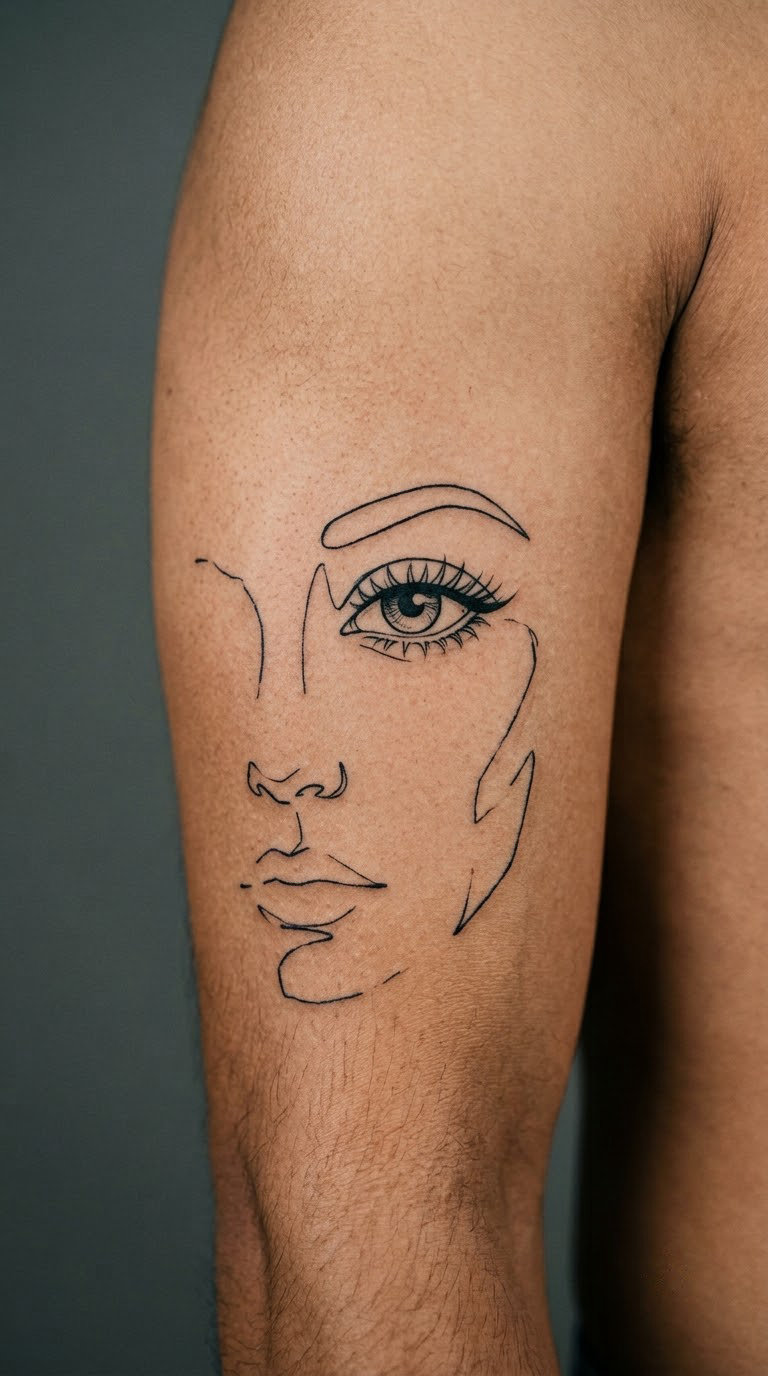
A face built from interrupted outlines: one eye line, the suggestion of a nose in two or three strokes, a jaw that never closes, and hair implied by a few lines that run off the edge. Nobody looks at it and identifies a person, which is the point for most people who choose it.
It works well as a companion piece, sitting quietly next to a more literal design.
Placement: Upper arm, thigh, or the side of the ribs. Size: 3 to 4 inches (7.5 to 10 cm) tall. Style: Contour abstraction, single needle. Pain: Medium. Ageing note: Because the design is mostly gaps, a little fading changes the balance rather than destroying the image, which is one reason this style ages well. Make it yours: Have the artist keep the two open gaps on the same side, so the face has a consistent direction.
18. Sketched Tree with Roots
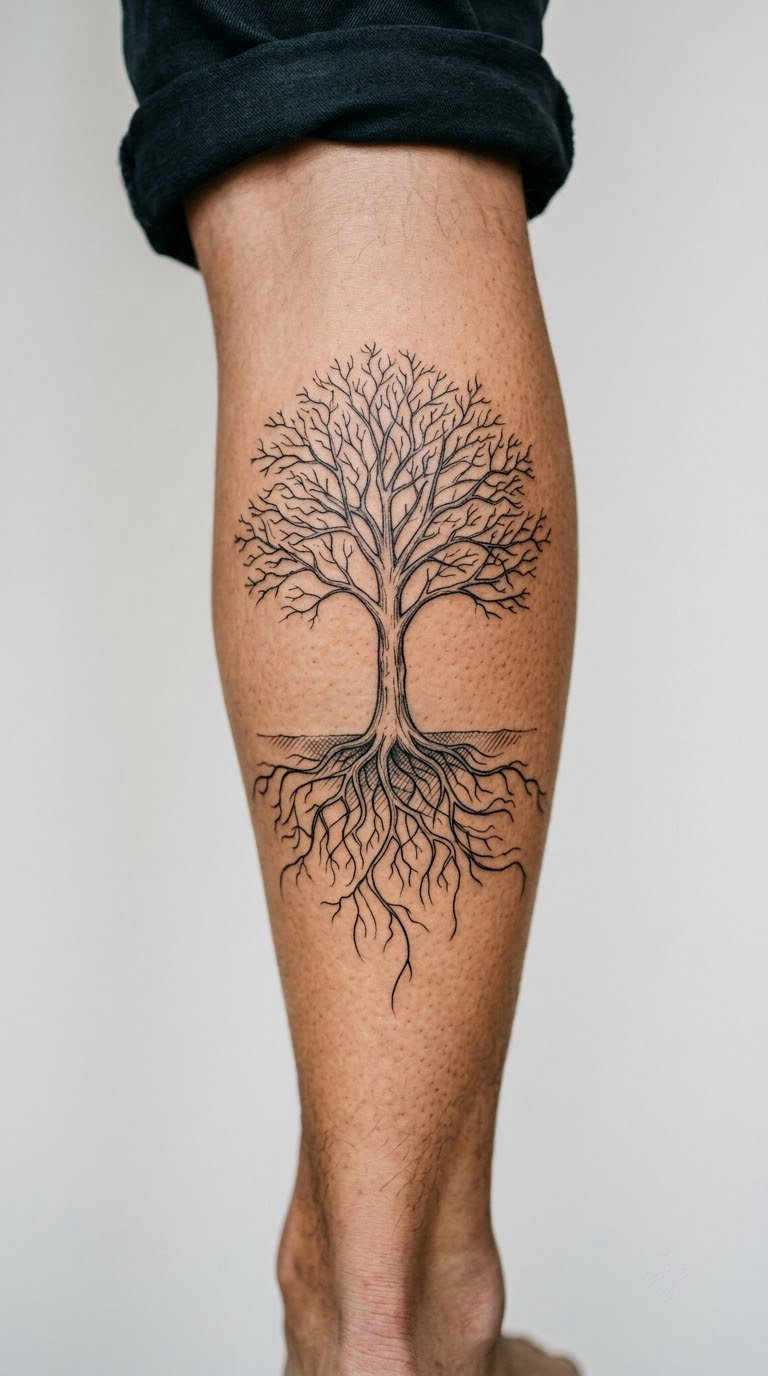
A tree with visible branch construction, a trunk drawn in two or three lines, and roots that spread below the ground line. A little hatching under the roots suggests soil without drawing it. The whole thing looks like a diagram an illustrator made and never finished.
Family trees, a specific tree from somewhere that matters, and a general idea of putting down roots all bring people to the same design.
Placement: Lower leg, calf, forearm, or the upper back. Size: 3.5 to 5 inches (9 to 12.5 cm) tall. Style: Fine line nature drawing. Pain: Medium. Fine branching lines mean more needle passes over a small area. Make it yours: Give the artist a photograph of the tree and ask them to use its actual branch pattern rather than a generic one. Ageing note: The smallest twigs disappear first, so keep them optional rather than central.
19. Loose Floral Bouquet
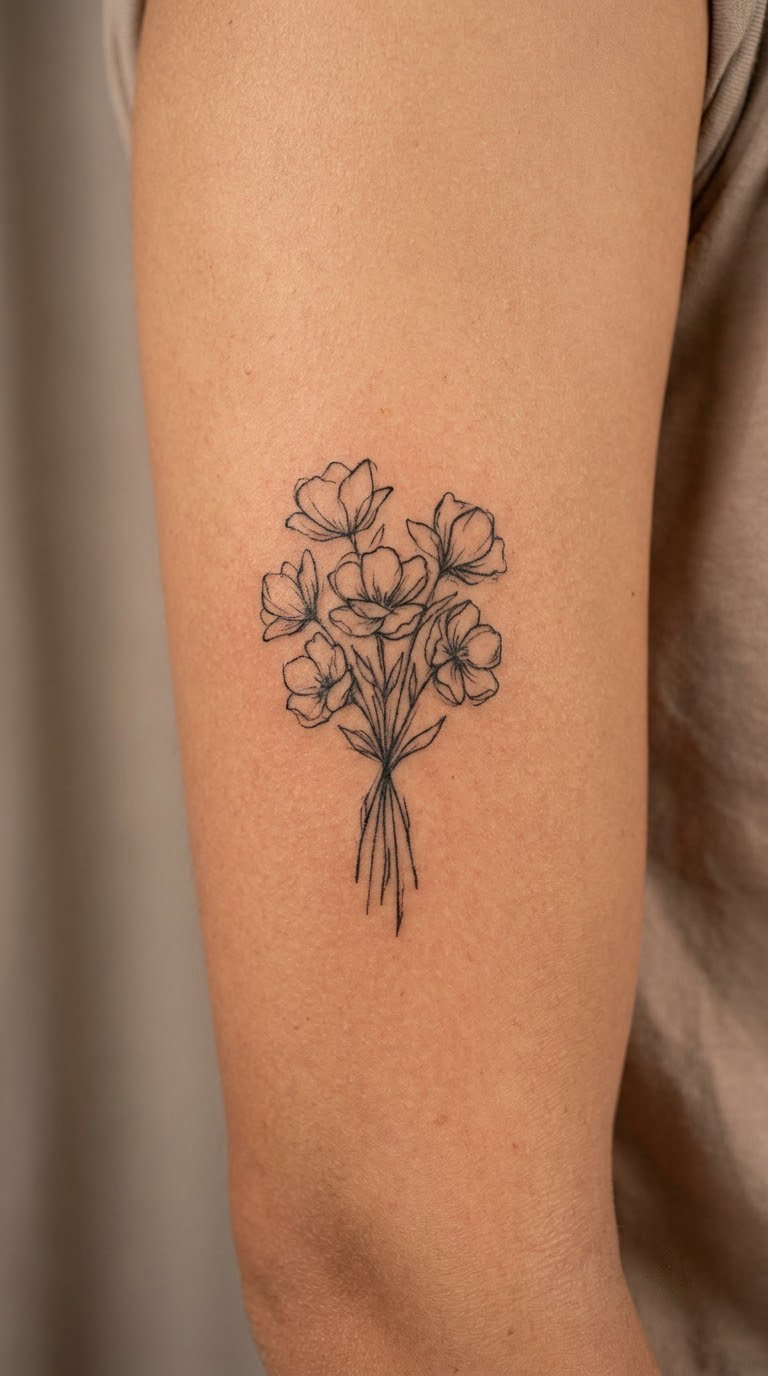
A handful of loosely drawn flowers tied at the stems, each petal outlined rather than shaded, with the stems left visible and a few leaves trailing off. The arrangement does not need to be symmetrical, and most good versions are not.
It suits people who like floral work but not the heavy black-and-grey rose look, and it reads clearly at a small scale. If the flowers are for someone you are celebrating rather than yourself, 20 Best Child Birth Flower Tattoo Ideas for Moms (October 2026) covers the same loose botanical approach with a much more specific brief.
Placement: Inner upper arm, forearm, or the back of the shoulder. Size: 2.5 to 4 inches (6 to 10 cm) long. Style: Loose floral line art. Pain: Low to medium. The inner upper arm is a good spot for a first sitting. Make it yours: Name three flowers that mean something to you and let the artist draw only those, rather than a mixed bouquet of everything.
20. Sketched Globe with Orbit Lines
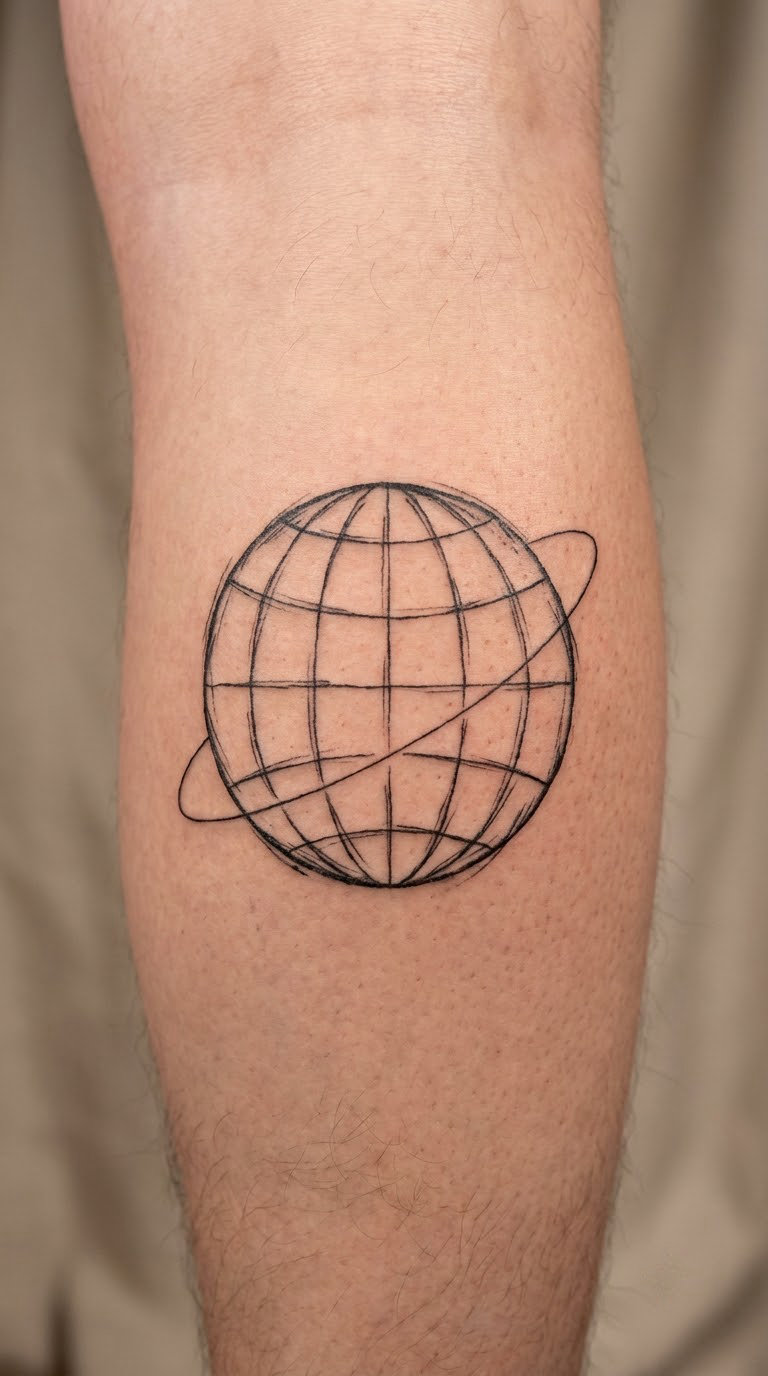
A circle with irregular latitude and longitude lines that do not meet perfectly, one thin orbit line sweeping around the outside, and a couple of continent outlines left incomplete. It reads as a working diagram rather than a finished illustration.
Travel, distance and where you come from are the usual reasons, and it is a good piece to add to a collection of small sketches.
Placement: Back of calf, forearm, or the upper back. Size: 3 to 4 inches (7.5 to 10 cm) across. Style: Draftsmanship sketch. Pain: Medium. The latitude lines are curved and repetitive, so the session takes longer than the size implies. Make it yours: Have the artist trace the outline of a place you have actually lived, with one orbit line standing in for the trip back.
How to Choose the Right Design
Pick the design that survives a small size. Draw it at the actual measurement on paper and squint at it from arm’s length. If the drawing collapses into a smudge, the line count is too high for the placement and the artist will have to simplify it or the lines will blur together within a few years.
- Line density: Thin lines are the first to soften. A design with a few heavy anchor lines ages better than one made entirely of hairlines.
- Size: Under 2 inches, keep it to one subject and a handful of lines. Above 4 inches, you have room for hatching and construction marks.
- Placement: Inner forearm, upper arm, upper back and calf give an artist the steadiest surface. Hands, fingers, feet and the inner wrist take the most daily wear and the most sun.
- Reference material: Bring your own drawing or photographs and let the artist redraw it for your body. Experienced tattooers work from a sketch constantly, and a traced copy is not what you want.
- Healed portfolio: Check that the work in the artist’s portfolio has healed, not just healed recently. Fresh tattoos photograph very differently from five-year-old ones.
One practical thing I tell everyone: if you dislike how the drawing looks on paper at the size you are considering, fix it before the appointment. Changing a design after the stencil is on the skin is far harder than changing it in a conversation.
Cost and Session Time
Sketch style pricing is driven mostly by size, detail and how long the artist is booked. Most US shops charge by the hour, and many set a minimum charge that a small design will simply meet, so the piece you quoted at 250 dollars in a high-cost city might be a flat minimum in a smaller market.
| Design size | Typical session | What drives the price |
|---|---|---|
| Up to 2 in (5 cm) | Under an hour | Shop minimum usually sets the floor |
| 3 to 4 in (7.5 to 10 cm) | 1.5 to 2.5 hours | Hatching and repeated detail such as windows or latitude lines |
| 5 in and above (12.5 cm+) | Split across two or more sessions | Total hours, plus the extra appointment |
Medium pieces in the 3 to 4 inch range, with cross-hatching or repeated detail, usually take the longest single sitting for their size. A simple outline design can often be finished in under an hour, while a heavily hatched piece may run well past that. Rates vary a lot by city, shop minimum and artist, so the fairest way to get a real number is to send your drawing, your placement and your measurements to a few artists and ask what they quote. Expect the quote to change if you move the placement, since a design that has to be redrawn to fit a different curve costs more to prepare.
Aftercare Basics
Start with your artist’s aftercare instructions, because they know exactly what they did in your session and how long your skin will take to settle.
- Follow your artist’s aftercare instructions first, above anything general you read online.
- Wash the area gently with lukewarm water and a fragrance-free cleanser, then pat it dry rather than rubbing it.
- Keep it clean and let it heal in open air where your artist recommends, and avoid soaking, swimming or covering it tightly.
- Do not pick, scratch or peel flaking skin. That is the most common route to a patchy result.
- Protect it from direct sun once it has healed, especially thin line work on the forearm, ankle and lower leg.
- Photograph the healed result at about six months. Fine sketch lines often need a touch-up, and catching that early is much easier than waiting three years.
Moisturiser should be light and only if your artist recommends it. Heavy ointment traps heat and swelling in the fresh skin, which is the opposite of what you want.
Frequently Asked Questions
Do sketch style tattoos fade faster than other styles?
Yes, thin sketch line work generally fades sooner than a bold traditional outline. Sun exposure speeds this up, and hands, fingers, feet and the inner wrist wear out faster than the upper arm or upper back. Ask your artist for one or two heavier anchor lines so the drawing stays readable after the hairlines soften, and plan a touch-up every few years on exposed areas.
What size works best for a small placement like the wrist?
One subject and about two inches is the safe target for a wrist. Above that, add detail and the lines will crowd each other and blur. Below it, a single strong line is often all that will read. Worn inside a watch band, a wrist sketch will fade noticeably faster than the same drawing on the upper arm.
How long does a small sketch tattoo take to finish?
A simple outline sketch in the one to two inch range often takes under an hour. A three to four inch piece with cross-hatching, a skyline or a globe can take a couple of hours because the detail is repetitive. Anything larger is usually booked across two sessions so the artist is not rushing the fine lines. Book a longer appointment than you think you need.
Can I bring my own pencil drawing to the appointment?
Yes, and it is welcome. Tattooers draw constantly, and most are glad to work from a sketch you made. The useful part is giving them room to redraw it for your placement rather than tracing it, since a traced copy is not your design any more. Tell the artist which elements matter most so the detail lands where you want it.
Which placements hurt least for a first sketch tattoo?
The inner forearm, the outer upper arm, the upper back and the calf are the easiest places to sit through. The ribs, the inside of the arm, the collarbone area and the ankle are noticeably more sensitive because of thin skin and proximity to bone. Behind the ear is small but intense, so a bigger design there is often easier to tolerate than a tiny one.
How do sketch style and doodle tattoos differ?
A sketch tattoo imitates a drawing in progress: light contour lines, visible construction marks, hatched shading and edges that stop on purpose. A doodle tattoo is usually smaller, funnier and more naive, often a single object drawn with thick, confident, childlike lines. Both stay monochrome, but doodle work is bolder and sketch work is finer.
Conclusion
If this is your first tattoo, the fine-line mountain range or the sketched house is the safest starting point. Both sit comfortably on the inner forearm, need one subject, and finish in a short sitting.
Someone with an existing collection has more room: the abstract face, the wave study and the sketched bicycle all reward an artist who is comfortable with hatching and construction lines, and they sit well next to earlier work. Choose a design you understand and can describe in a sentence, bring references rather than a finished answer, and book the consultation. The artist will redraw it for your body, and that redrawing is where the good sketch tattoos come from.