
How Long Should You Wait Between Tattoo Sessions (September 2026)
Most people wait about two weeks between sessions on the same area, but four to six weeks is the safer window for anything larger, darker or more detailed. Where the tattoo sits, how your skin behaves, and what your artist says on the day can stretch that further.
If you are trying to work out how long you should wait between tattoo sessions, planning the gap up front saves you from the two classic messes: booking a second session before the first one has settled, or losing a calendar slot and ending up with a piece split across six months. We have laid out the timing by tattoo type, body placement, healing week and cost, so you can plan a realistic calendar instead of guessing.
How Long to Wait Between Tattoo Sessions
Two weeks is the floor, not the target. A single-session piece done in one sitting needs no waiting at all before its follow-up check, while a sleeve, back piece or cover-up is usually built across several appointments spaced three to six weeks apart. Shorter gaps risk ink blowout and patchy saturation; much longer gaps make matching harder, because the freshly healed ink and the older settled ink no longer match exactly.
How long you should wait between tattoo sessions really comes down to one question: is the skin finished, or does it only look finished? Below is the short version by tattoo type.
| Tattoo type | Typical gap | What decides it |
|---|---|---|
| Small linework, single session | 10 to 14 days | Follow-up check and any free touch-up |
| Medium design, 4 to 8 inches | 2 to 3 weeks | Surface fully matte, no tenderness |
| Color packing or shading pass | 3 to 4 weeks | Artist wants settled pigment to read against |
| Full or half sleeve | 3 to 5 weeks | New section must not overlap a peeling area |
| Back piece or large leg piece | 4 to 6 weeks | Long sessions mean more recovery needed |
| Fine detail, portrait, blackwork shading | 4 to 6 weeks | Skin has to handle repeated needle work |
| Cover-up | 6 to 8 weeks or more | Old ink has to flatten and fade down first |
| Different body part, unrelated tattoo | A few days is usually fine | Avoid heavy sun, pool water while the first one heals |
These are planning ranges, not rules printed on a wall. Any artist who works on multi-session pieces will adjust them for your skin and their own schedule.
How Long to Wait Between Tattoo Sessions for Small Tattoos
Small work, meaning a single-session tattoo of a few inches, heals fastest. The surface usually closes and stops flaking within about two weeks, and that is the earliest a sensible follow-up or touch-up happens.
Here is the catch most people miss. The top layer of skin can look completely normal while the deeper repair is still going on. A tattoo can feel matte, smooth and unremarkable, and still be tender when you press firmly across it. When you are checking, look for no flaking, a matte rather than shiny surface, flat skin texture with no raised edges, no warmth, and no tenderness under firm pressure. If all of that is true, a small touch-up is usually fine.
For a design like a thin cat silhouette tattoo done in a single sitting, the follow-up is usually a quick look rather than a second session. The risk is low because very little skin was disturbed.
How Long to Wait Between Tattoo Sessions for Large or Detailed Work
Large and detailed tattoos need more, usually three to six weeks, and sometimes longer. A four-hour session damages more skin than a one-hour one, and a piece split into five appointments is a commitment measured in months rather than days.
The rule your artist will actually use is simple. Resume only when the previous area is no longer tender, irritated, raised or peeling. That usually means the flaking stage is completely over, not just mostly over. The silver or milky look some fresh tattoos take on when the new skin cells form over the ink can linger for weeks, and it is not a sign of damage, but it does mean the area is still actively remodelling.
Resume on a different section if you can. A tattoo like a forearm band tattoo for men built around the arm works well session by session because the artist can start a fresh panel and leave the last one alone while it settles.
How Long to Wait Between Tattoo Sessions for Color and Healed Areas
Color work asks for the longer end of the range, usually three to four weeks, because the artist needs the first layer to settle before judging saturation. Grey washes and skin tones that go in during a later session will be matched against whatever the previous session looks like on the day, not against the original drawing.
Cover-ups are the slowest. Old ink needs time to flatten and fade before it can be worked over, and most artists want at least six to eight weeks between passes, sometimes more. Rushing a cover-up is how you end up with a patchy middle section that does not match the new edges.
What Affects the Healing Time Between Appointments?
Two people get identical tattoos on the same spot and heal on different clocks. These are the variables that most often explain the difference.
- Placement. Areas that move constantly, get shaved or take sun take longer to settle.
- Size and session length. The longer you sat, the more tissue was disturbed, and the more recovery the area needs.
- Ink and saturation. Heavy black work and packed color cause more trauma than a fine single-needle line.
- Line weight. Fine line and detail work heals with less swelling but takes longer to settle visually.
- Skin type. Oilier skin on the chest, back and shoulders often produces more early shine and itching.
- Sun exposure. UV on fresh ink slows settling and fades a tattoo faster in the first weeks.
- Smoking and heavy drinking. Both slow the repair work your body does on the tattooed area.
- Aftercare. Gentle washing, a thin moisturising layer, loose clothing and no soaking make a measurable difference.
- General health and sleep. Skin repairs during sleep, and anything that keeps you from sleeping well shows up in the healing.
None of this is a medical matter to self-diagnose. The useful check is what you can see and feel at the site, and your artist’s own assessment when they lay a hand on it before starting.
Tattoo Session Timing by Body Placement
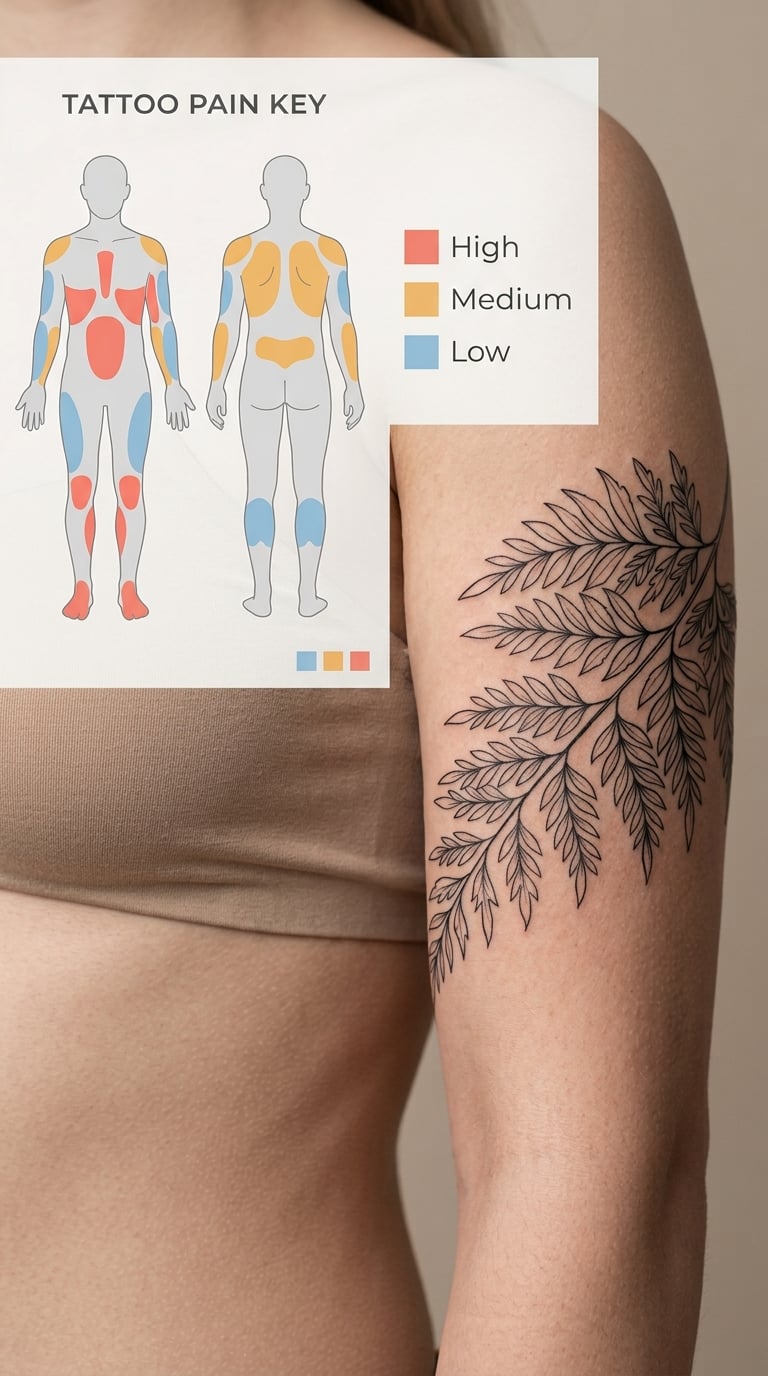
Where you are tattooed changes both how long you will be in the chair and how sore you are afterwards, and sore skin is a decent proxy for tissue damage. Budget more recovery after a high-pain placement even if the calendar says the same gap.
| Placement | Pain | Typical session | Planning note |
|---|---|---|---|
| Inner arm, wrist, forearm | Low to medium | 1 to 3 hours | Easy to cover up while it settles |
| Upper arm, shoulder, calf | Medium | 2 to 4 hours | Good for a first sleeve section |
| Outer thigh, back of shoulder | Medium | 2 to 4 hours | May stay sensitive longer |
| Chest, ribs, hip, spine | Medium to high | 3 to 5 hours | Bony and unforgiving, plan a longer break |
| Hand, fingers, feet | High | 1 to 2 hours | Constant movement, dries out fast, needs frequent breaks |
| Neck, throat, inner elbow, knee | High | 1 to 2 hours | Swelling shows quickly, longer recovery |
A four-hour rib piece and a four-hour thigh piece are not the same commitment. The rib session usually leaves you sore for days and sleeping badly, which is exactly the kind of recovery a three-to-five-week gap is built around.
Planning a Multi-Session Tattoo
Multi-session work goes wrong in the calendar, not in the chair. Here is how people keep it on track.
- Ask how many sessions it will take. A good artist gives you a realistic count, not a hopeful one.
- Understand the one-third rule. Many artists work about a third of a piece per session, so a full sleeve commonly takes three or four sittings rather than two.
- Book the next appointment before you leave. Artists fill calendars weeks out, and a gap that was meant to be four weeks easily becomes four months.
- Work around healing, not holidays. A wedding, a season, or surgery in the middle of a project is worth planning for, not working around.
- Send photos before the appointment. A well-lit photo with no filter tells your artist more than a description of how it feels.
- Let the artist make the final call. If they say the area is not ready, moving the date a week is cheaper than a second session on angry skin.
If you are travelling for a guest artist who is only in town a short while, say so at the booking stage. Some artists will handle a compressed schedule, others would rather wait than tattoo over skin that has not settled, and you would rather hear that now.
How Much Does Each Tattoo Session Cost?
US tattoo shops mostly bill by the hour, commonly 120 to 200 an hour, with experienced or guest artists and high-end studios running 250 to 400. Every shop also sets a minimum, usually 150 to 300, which is what covers a short appointment or a quick touch-up.
Typical totals by piece size:
- Small, single session: 200 to 600.
- Medium design, 4 to 8 inches: 400 to 1500, often across two sessions.
- Half sleeve: 1200 to 3000, usually three sessions.
- Full sleeve or back piece: 2500 to 6000 and up, commonly four to six sessions.
- Cover-up: Wide range, driven by how much old ink has to be covered and how many passes it takes.
Location moves the numbers more than size does. A shop in a high-rent city or a tourist area charges meaningfully more than the same work in a smaller town, and the hourly rate sets the total just as much as the design does. Most shops include one free touch-up within a set window, so ask when that window closes before you leave.
Tattoo Healing Timeline by Week
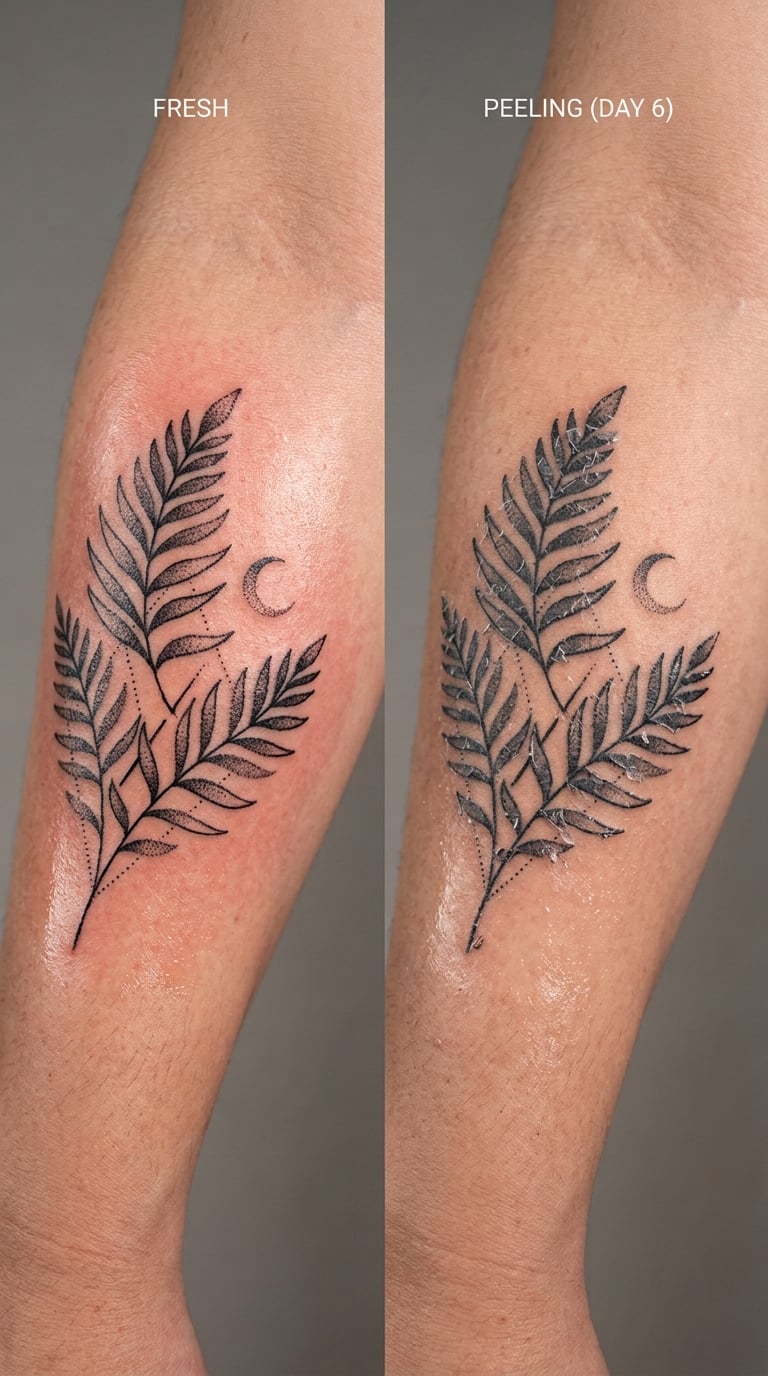
Visible healing and deeper recovery run on different clocks. This table separates them, because the surface looking normal is what fools people into booking early.
| Time | What you see | What is happening | Ready for next session? |
|---|---|---|---|
| Days 1 to 3 | Redness, swelling, warmth, ink on the surface | Inflammatory phase, the skin is closing | No |
| Days 4 to 10 | Flaking, peeling, scabbing, itching | Outer layer sheds as new skin pushes through | No |
| Week 2 | Peeling slows or stops, ink may look milky or silvery | Surface closes, pigment settles into the dermis | Sometimes, for small work |
| Weeks 3 to 4 | Skin looks normal, a faint tightness remains | Deeper repair and collagen rebuilding | Usually for medium work |
| Weeks 5 to 8 | Flat, matte, no tenderness | Remodelling finishes, colour stabilises | Yes, for most large and colour work |
| Months 2 to 6 | Slight fading as the top layer sheds | Skin fully renews at the surface | Final reassessment of the design |
Signs of healing that need attention, rather than patience, include spreading redness, increasing pain after the first few days, a hot-feeling area, yellow or green discharge, or a smell you would not describe as normal. Take those to your artist or a clinician rather than booking a session.
Mistakes to Avoid
- Booking the next session on a fixed date instead of a healed one. Calendar wins should never override the skin.
- Trusting the surface. A matte, unpeeled finish is not the same as a deep heal, and pressing firmly is the fastest honest test.
- Scratching or picking. That is how a tattoo gets patchy and how pigment leaves the skin early.
- Skipping aftercare. Washing, a thin layer of moisturiser and avoiding sun, pools and hot tubs are not optional extras.
- Changing the design at the appointment. A multi-session piece needs a stable reference, otherwise nothing matches later.
- Assuming every area heals the same. Hands, ribs and the neck all behave differently from the upper arm.
- Overbooking a compressed schedule. Two days in a row on the same area is a technique for irritation, not a shortcut.
Frequently Asked Questions
Can I get a second tattoo during the same session?
Yes, for small separate tattoos, if both the artist and your skin are up for it. Most artists will do a second small piece in the same sitting when the total time stays reasonable. Doing two larger pieces in one day is a different story, because the swelling, the fatigue and the total skin trauma stack up and the second one tends to hurt far more.
Does a tattoo need to be fully healed before the next session?
For small single-session tattoos, no. A touch-up around ten to fourteen days is normal. For continuing a multi-session piece, the previous area should be fully healed with no peeling, raised edges or tenderness, which usually means three to six weeks depending on size and colour. Your artist will look at the area and tell you directly.
Why does my tattoo still peel after two weeks?
Peeling usually runs from around day four to day fourteen, and a large or colour-packed piece can keep flaking a little longer than a small linework tattoo. If the peeling is still happening past that, the most common reasons are heavy aftercare cream, clothing rubbing the area, or the tattoo being larger than you expected. Your artist would rather hear about it than have you wait silently.
Can I tattoo a different spot on my body while this tattoo heals?
Usually yes, since a different body part does not interfere with the healing area. A few days is generally enough between them. The things worth avoiding while the first tattoo is fresh are heavy sun exposure, swimming, and getting the new work somewhere awkward to keep clean and uncovered. If both pieces are large, most artists would rather space them out.
Can I move or reschedule a tattoo session by a few days?
Ask early. Artists rarely mind a short shift, but they do mind short notice, and multi-session calendars fill up fast. Moving a session a few days later usually costs nothing, moving it earlier can put you back on skin that is not ready, and cancelling late may mean losing the slot entirely. If your piece spans several sittings, confirm each new date before you leave the shop.
Conclusion
Ask your artist to confirm readiness before you commit to a date. Two weeks is reasonable for small, simple work when they approve it, and four to six weeks or more is the norm for sleeves, colour, portraits and cover-ups. A healed canvas takes ink better, hurts less and keeps the design sharper, so the healed skin always wins over the rushed schedule. Book the next session on the way out, and you will never face this question twice.