
16 Minimalist Tattoo Ideas for Men With Meaning (September 2026)
Minimalist tattoo ideas for men are small, restrained designs built from clean lines, a single focal element and a lot of untouched skin. The look reads as deliberate rather than empty, and it sits quietly under a shirt cuff or a watch strap all week without announcing itself.
Most of the men I talk to about this style want one of three things: their first tattoo, a mark they can hide in a client-facing job, or a small piece now with room to add to it later. Plan roughly 30 to 45 days ahead, since studios book out and you want a consultation slot before the sitting, not the day of.
1. Fine-Line Mountain Range on the Inner Forearm
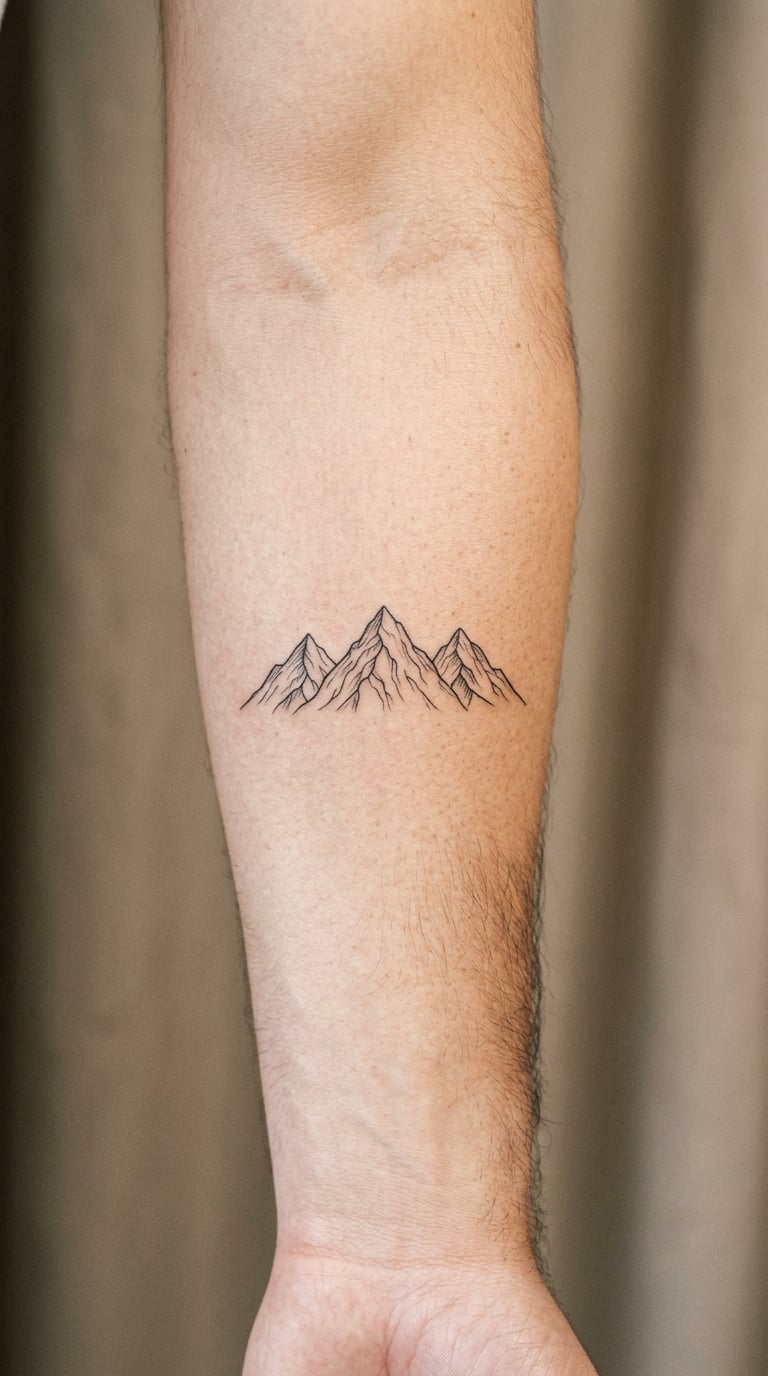
A range of two or three peaks drawn in one thin line, no shading, no sun behind it. The mountains usually stand for a place or a stretch of road that mattered, and the version that ages best is a plain outline with a single horizontal base line to hold it steady.
Keep it two to three inches wide on the inner forearm, running parallel to the wrist so it reads when your arm is down. Thin lines soften and blur first, so a slightly heavier line at this size is smarter than the hairline version. Plan on one sitting, an hour to an hour and a half.
Pain and time: Inner forearm skin is fleshy and sensitive, so expect a steady 4 or 5 out of 10 and a session of about an hour.
2. Single-Handed Compass Rose on the Outer Forearm
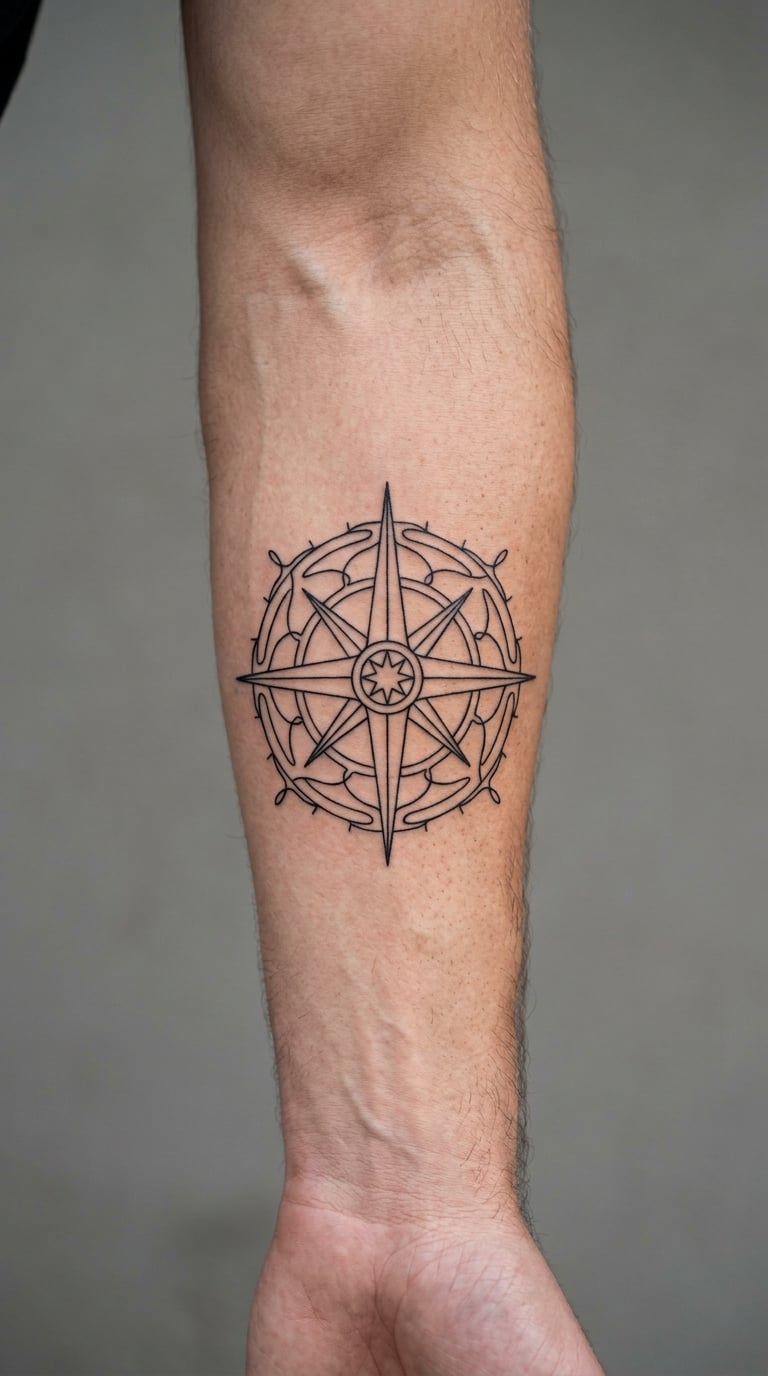
One unbroken stroke tracing a four-point star with a small circle at the middle. Drawn freehand in a single pass, it looks relaxed and human in a way a ruler-compass compass does not, and the meaning is usually direction or a person who pointed you the right way.
The outer forearm is the flattest, least awkward canvas on the body, which makes it the safest spot for a design that has to be perfect. Size it around two inches across. That is big enough for the single line to hold its shape through a decade of sun and shirtsleeve friction.
Pain and time: Around 3 out of 10 on the outer forearm, roughly 45 minutes to an hour in the chair.
3. One-Line Wave on the Inner Wrist
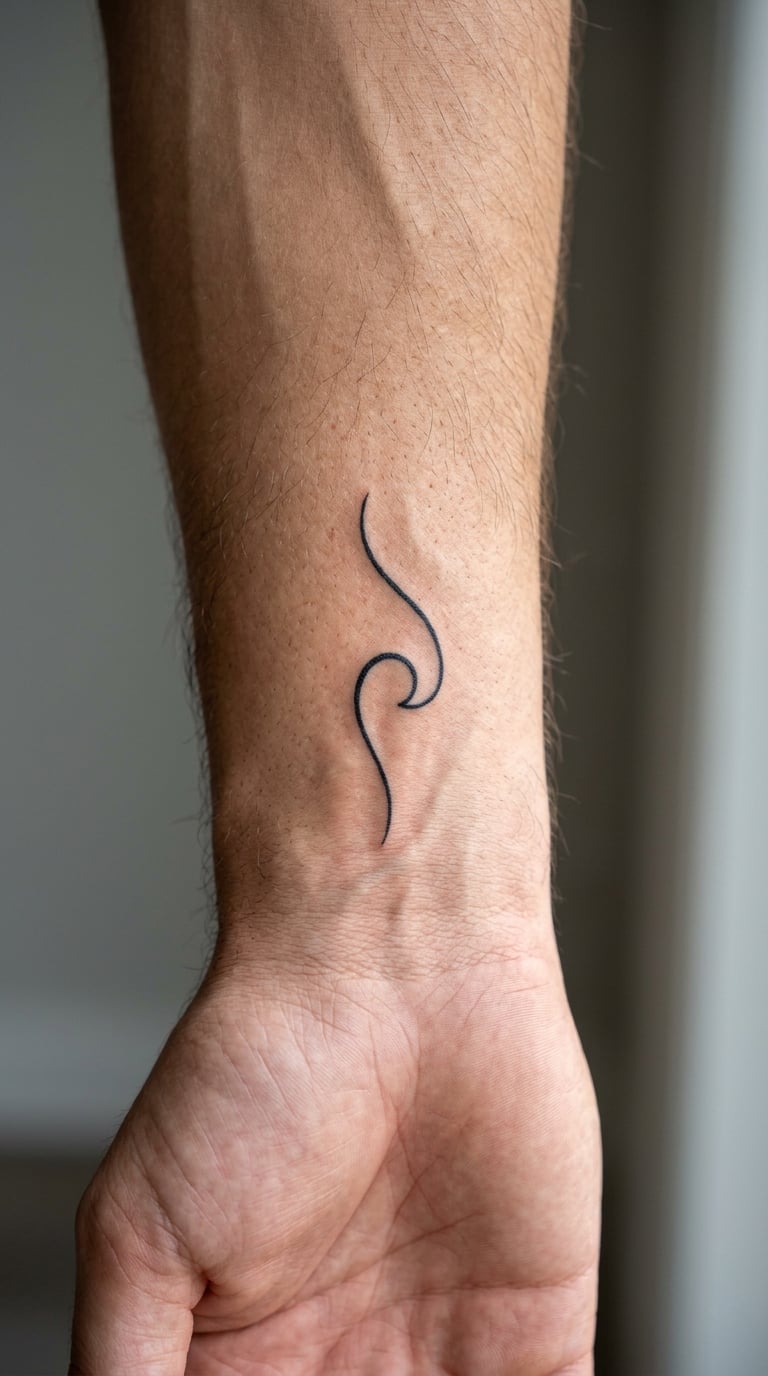
A single curling line, no crest, no foam, nothing under it. It is the most requested quiet mark I hear about, usually for someone who wanted a sleeve once and now wants the opposite.
Place it on the inside of the wrist between the tendon and the elbow crease, about two and a half inches long. That is the honest minimum for a line that still looks like a wave in ten years rather than a smudge. Anything under an inch reads as a scratch.
Pain and time: The inner wrist is thin skin over a pulse point, closer to 5 or 6 out of 10, and the session is short at 30 to 45 minutes.
4. Hand-Drawn Enso Circle on the Back of the Shoulder
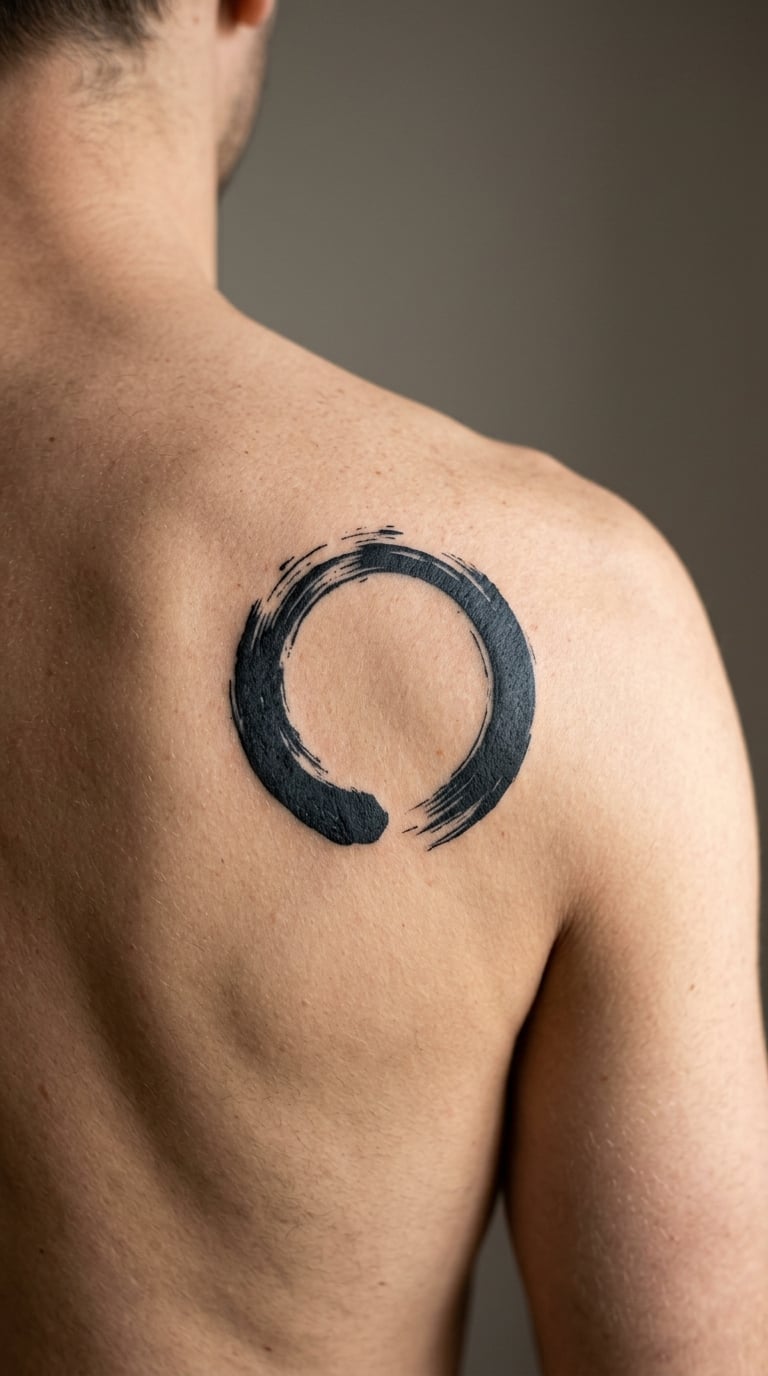
An open circle brushed once, with the two ends left unjoined, in the style of a Zen enso. The gap is the point: it reads as a whole that finished, not a shape a machine measured.
It wants the flat plane on the back of the shoulder rather than the curve of the deltoid, so ask your artist to map it around the shoulder blade area. Three to four inches across works, and solid black here is the most durable minimalist option you can pick because there is no fine line to lose.
Pain and time: The shoulder blade area sits around 5 out of 10, and a two-inch brush circle fills in about an hour.
5. Small Wolf Head on the Calf
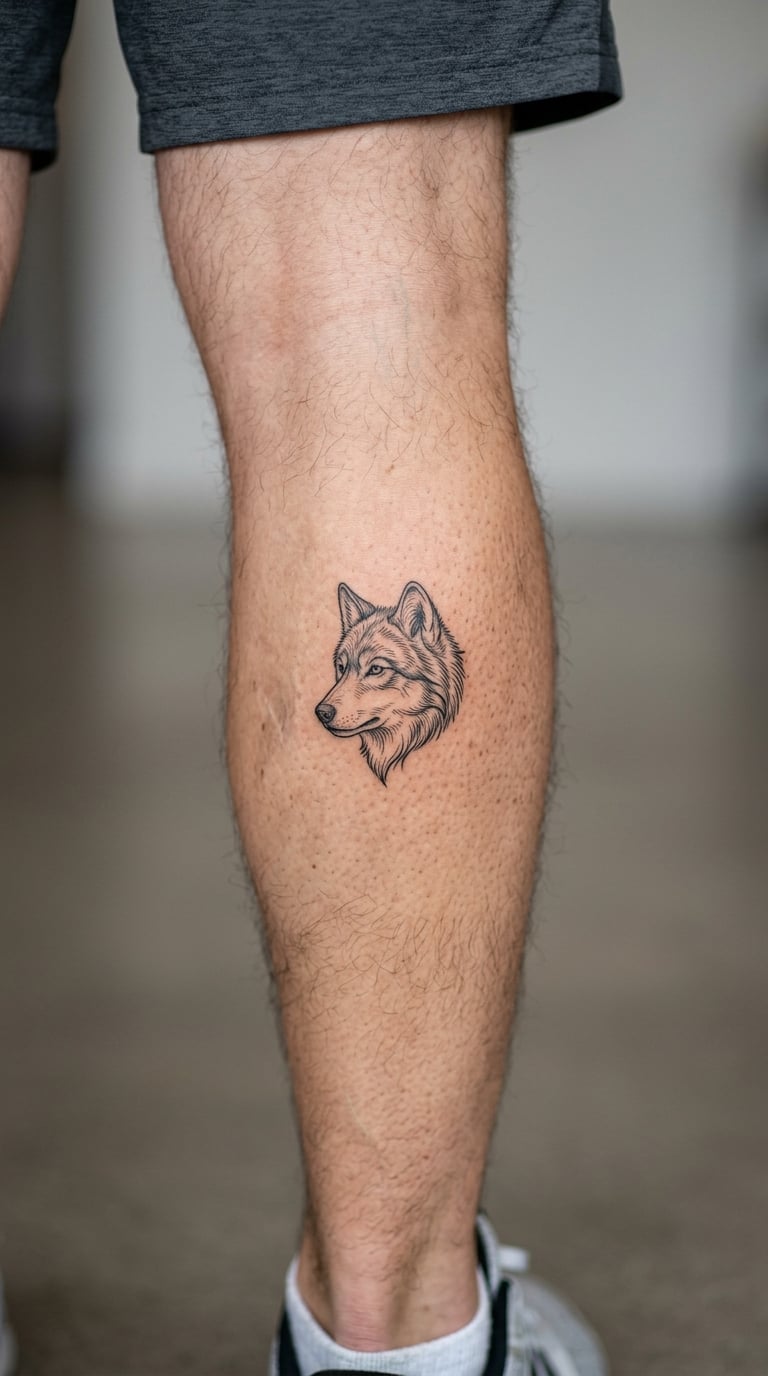
A front-facing wolf head built from six or seven straight strokes, ears up, no fur texture, no eye detail. Loyalty and self-reliance are the meanings people attach to it, and the simplified version carries that better than a realistic one at small scale.
Put it on the outer calf, roughly two inches tall, centred in the muscle below the knee. Legs take a beating from sun and gym stretching, so keep the shape simple and let the artist go slightly heavier than feels right. If you want it smaller than two inches, choose a different animal.
Pain and time: Calves sting more than most people expect, about 5 out of 10, and it takes about an hour.
6. Coordinates of a Hometown on the Side of the Ribs
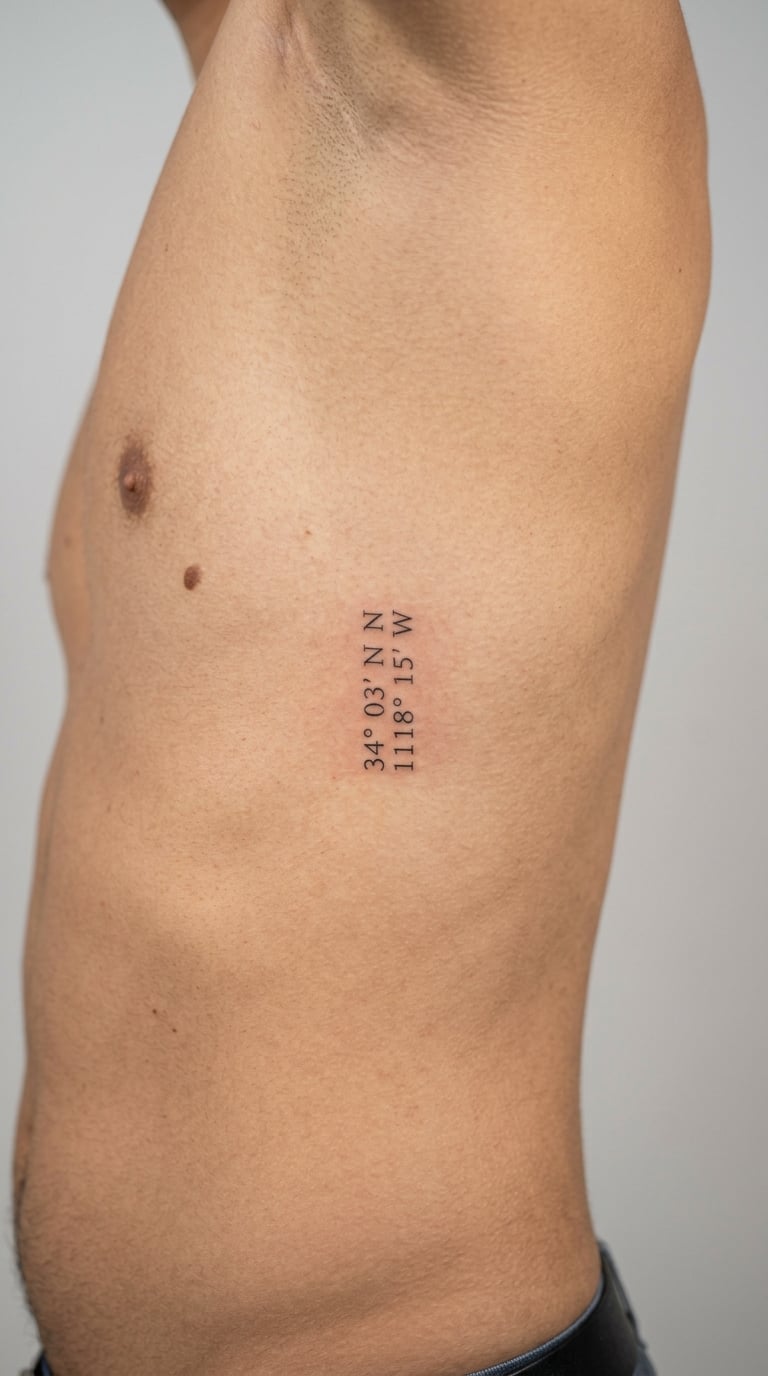
Two lines of numbers in a small clean sans serif, usually latitude on top and longitude below. The digits are the whole design, so the execution is typography rather than drawing, and thin, evenly spaced numerals are what make it look considered.
Go on the side of the ribs, following the curve, and ask for the numbers to run along the body rather than upright. That takes roughly two and a half inches. A tiny cross or dot under the longitude is a common addition and keeps it from looking like a serial number.
Pain and time: Ribs run 6 to 7 out of 10, the sorest spot in this list, and you will want breaks. Budget 45 to 60 minutes.
7. Roman Numeral Date on the Inner Bicep
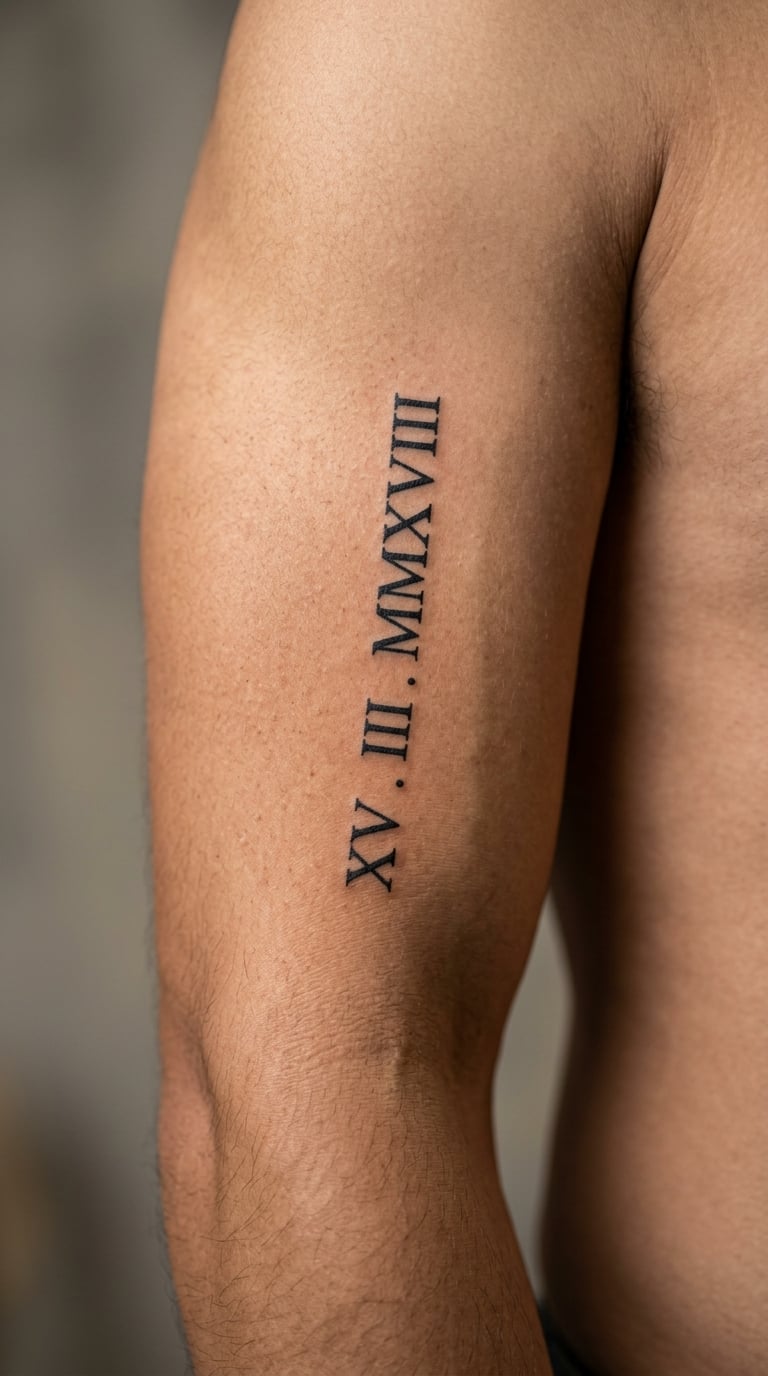
A date in Roman numerals, which quietly keeps it from being the first thing anyone reads across a room. The letters have more weight than digits, so it holds its shape better than Arabic numerals at the same size.
The inner bicep is a flat-ish plateau that barely creases when you flex, which is exactly what lettering needs. Keep the line to two inches or under and set it along the arm rather than around it. Ask for a serif face, since thin serifs on a script font disappear in about three summers.
Pain and time: Inner bicep sits around 4 out of 10 and takes 30 to 45 minutes.
8. Dotwork Crescent Moon Behind the Ear
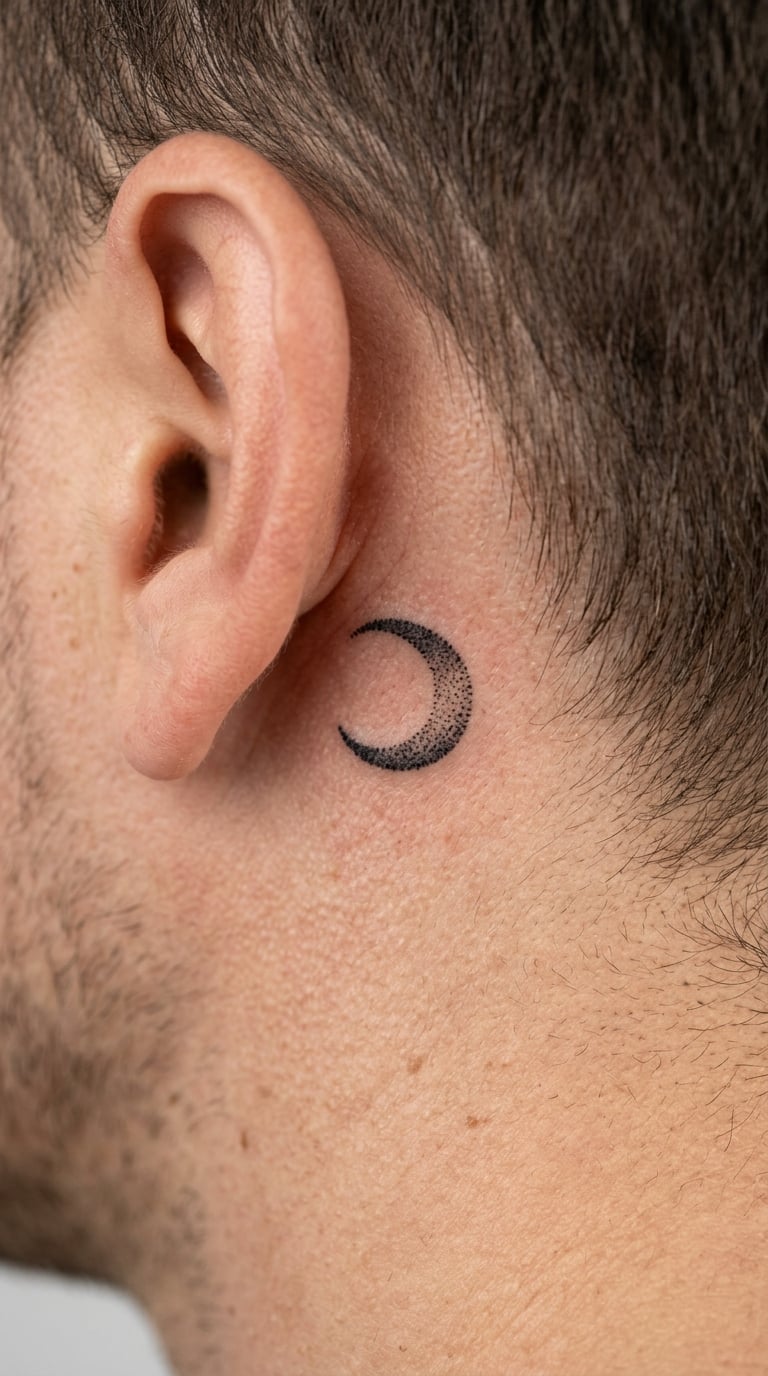
A crescent built from graded dots, small and dense at the curve, fading out toward the points. Dotwork is the answer to a design that would blur as a line, because the dots stay even as the moon shrinks.
Behind the ear needs very little real estate, half an inch to three quarters, and it is the placement people most often forget they have. Hair and shaving can crowd it, so pick a spot above the lobe rather than right on the crease. A moon on a shaved head reads even better if you ever go that way.
Pain and time: Behind the ear is thin and bony at about 6 out of 10, and 30 minutes is usually enough.
9. Solid Black Triangle on the Upper Chest
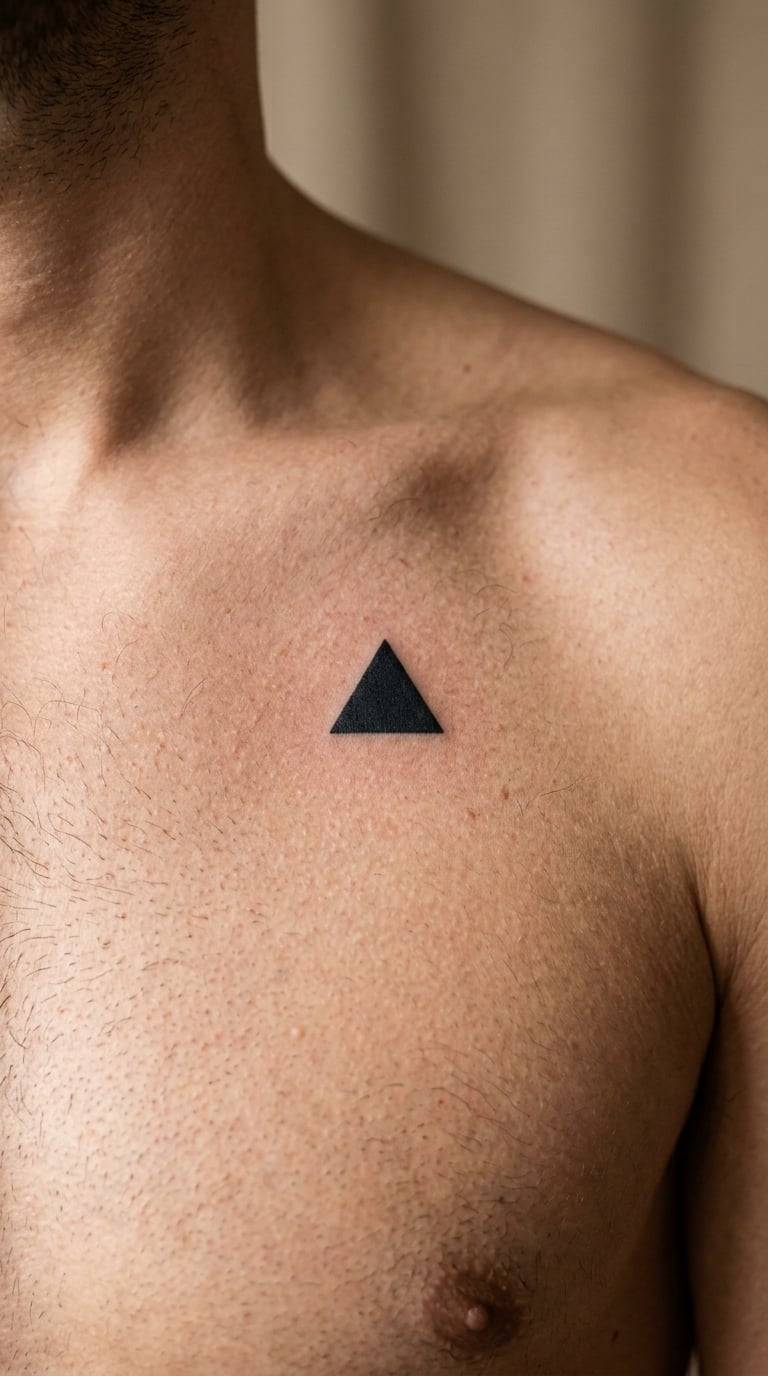
One filled black triangle, outline sharp, no inner detail, no shadow. Balance, direction, sometimes a Masonic reading, but the appeal is simpler than any of that: a shape that needs nothing added to it.
Place it high on the chest between the pecs or just off-centre above the sternum, about an inch and a half tall. Solid black is the best insurance against fading you can buy, and it shows up in a shirt with the top button open without announcing itself in a T-shirt.
Pain and time: The upper chest is 3 to 4 out of 10 and takes 30 minutes or less.
10. One-Word Fine-Line Script on the Outer Wrist
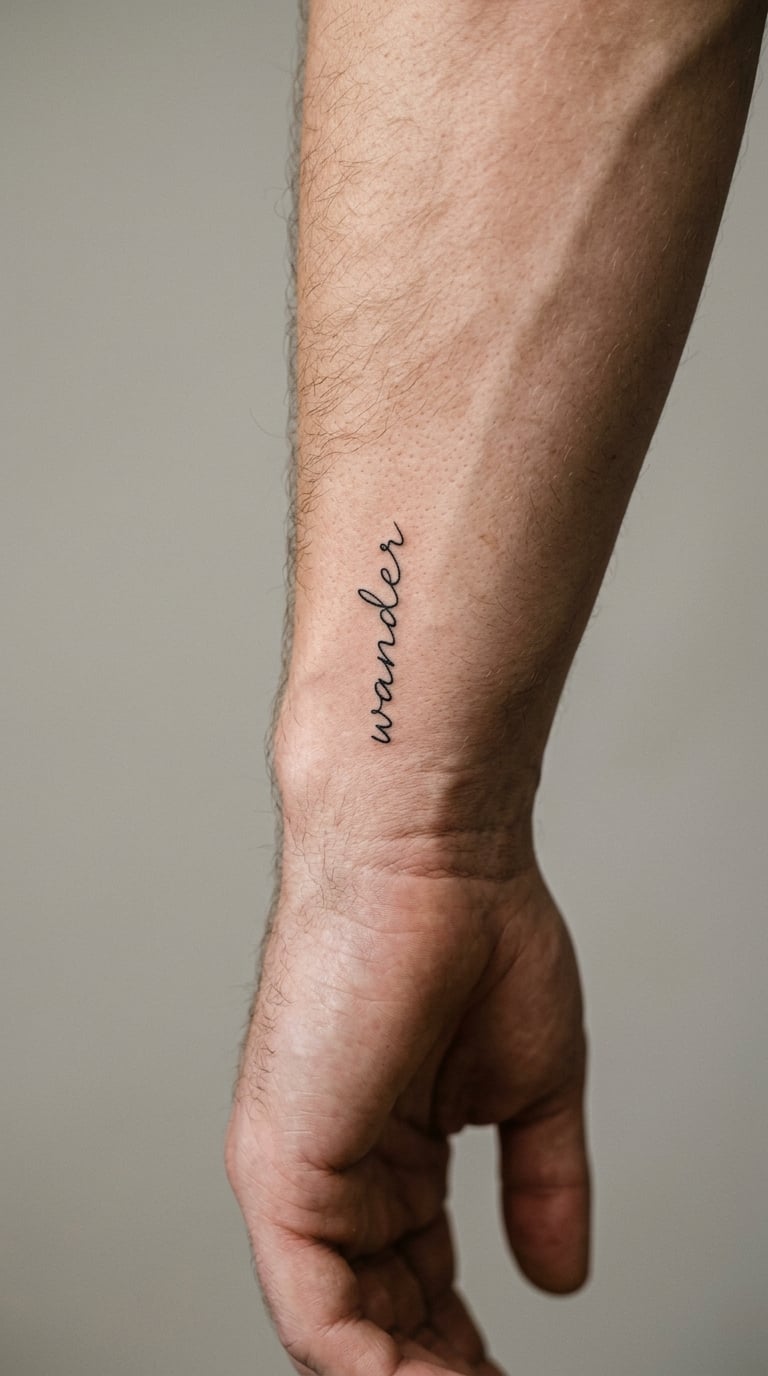
A single word in a light hand, sometimes with a small date tucked underneath. The word does the work, so pick something you would still be happy to read in twenty years rather than a phrase aimed at one particular decade.
The outer wrist is flat, well lit and easy to photograph, which makes it the most forgiving spot on the body for a first piece. Two inches is the floor, and your artist should be planning line thickness around the letter count, not copying a page of script. Ask to see a healed sample of their thinnest work before you commit.
Pain and time: About 3 out of 10 on the outer wrist, 30 to 45 minutes.
11. Coiled Snake Line Drawing on the Shin
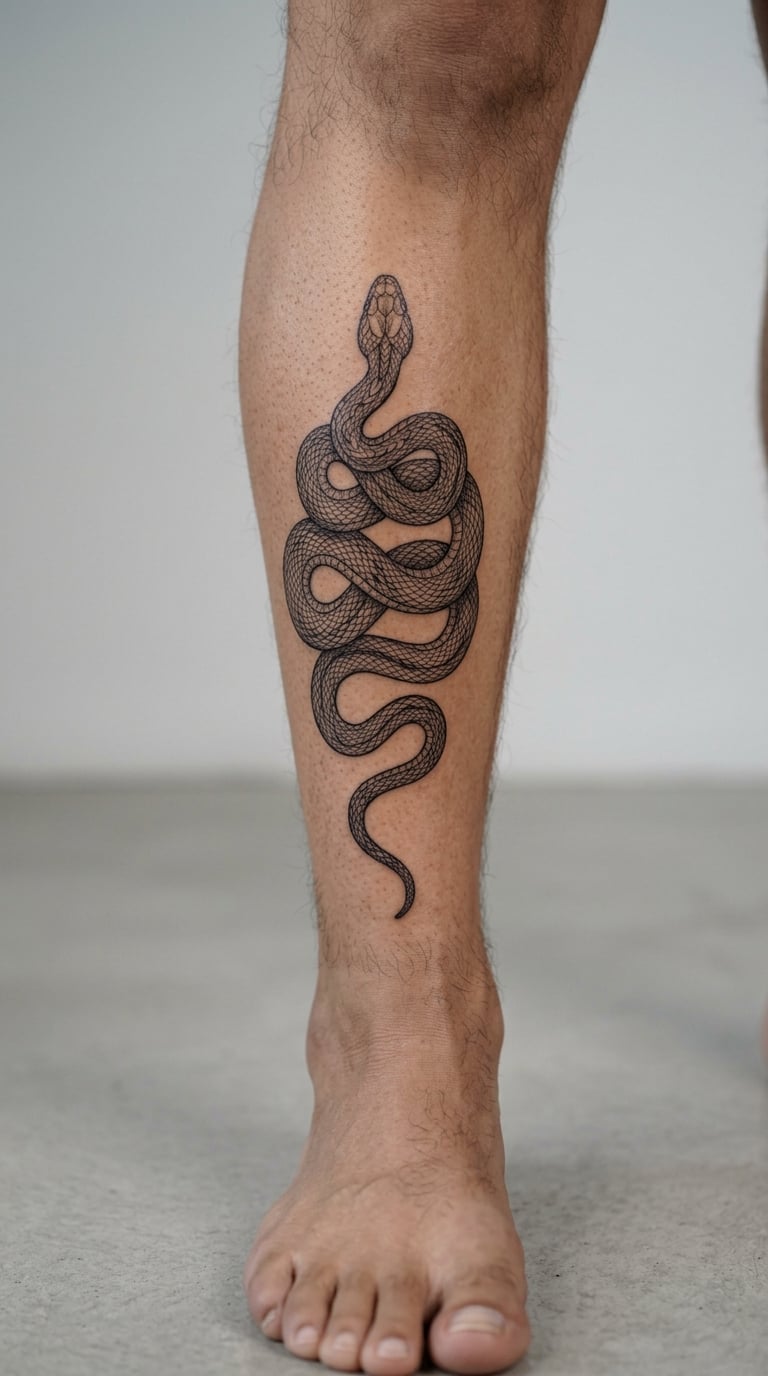
A snake drawn as one continuous outline, no scales, no pattern fills, sometimes wrapping once around itself. Renewal and staying calm under pressure are the readings that come up most, and the shape is quiet enough to wear for a lifetime.
The shin is a long flat panel, so a two-inch vertical coil fits without crowding. Whatever you do, keep the head simple. A detailed snake head at this size is where fine line work starts to look muddy within a year or two.
Pain and time: Shin work runs about 5 out of 10, and a small coil takes 45 to 60 minutes.
12. Negative-Space Stag on the Outer Thigh
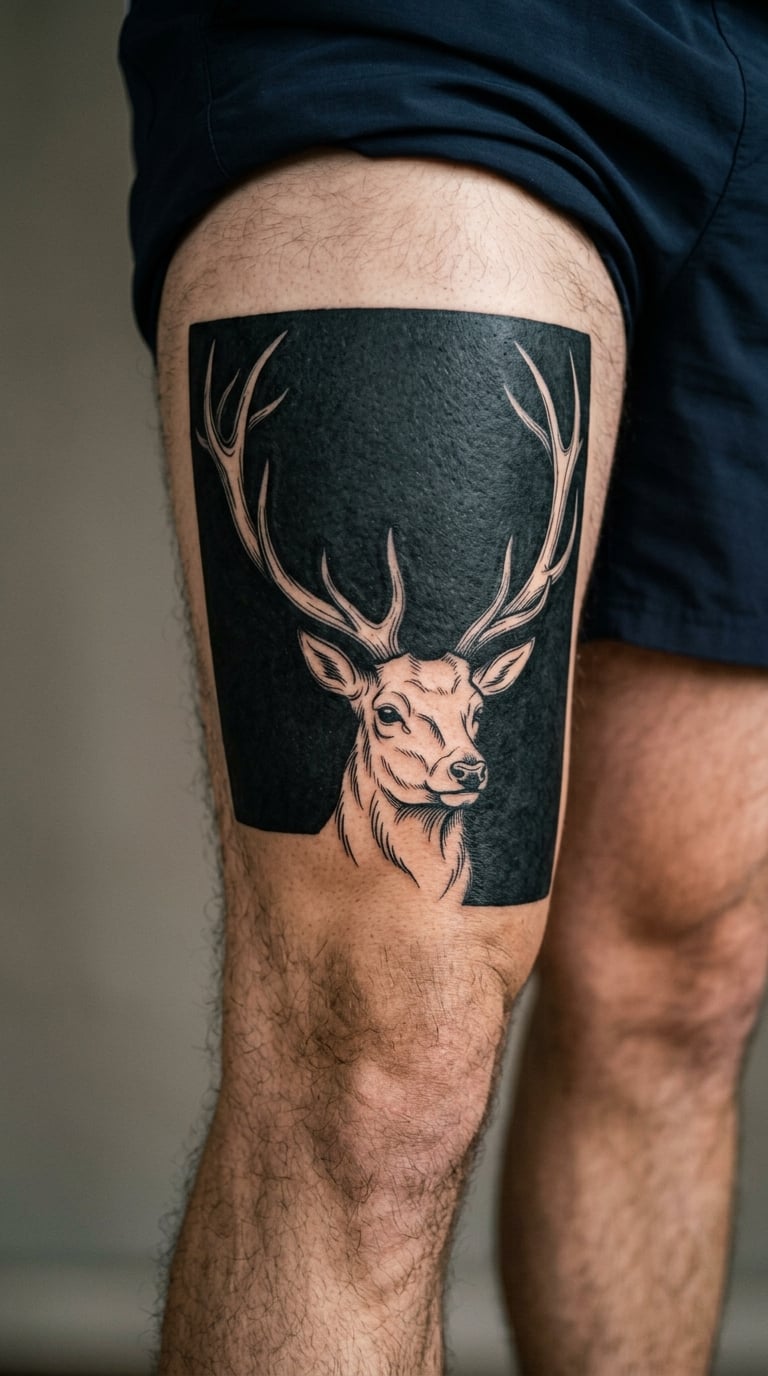
Antlers drawn as a few black strokes with the deer implied by the skin you left alone inside them. Negative space is the most fragile part of minimalism, because as lines soften and spread, the shape inside them has to keep its edges.
Keep it on the flat of the outer thigh at three inches or taller, and choose blackwork over grey wash. This is one design where under-inking fails fast: a stag that is too small or too light stops reading as an animal within a couple of years.
Pain and time: The thigh is one of the easier spots, around 3 out of 10, and takes about an hour.
13. Bird in Flight on the Tricep
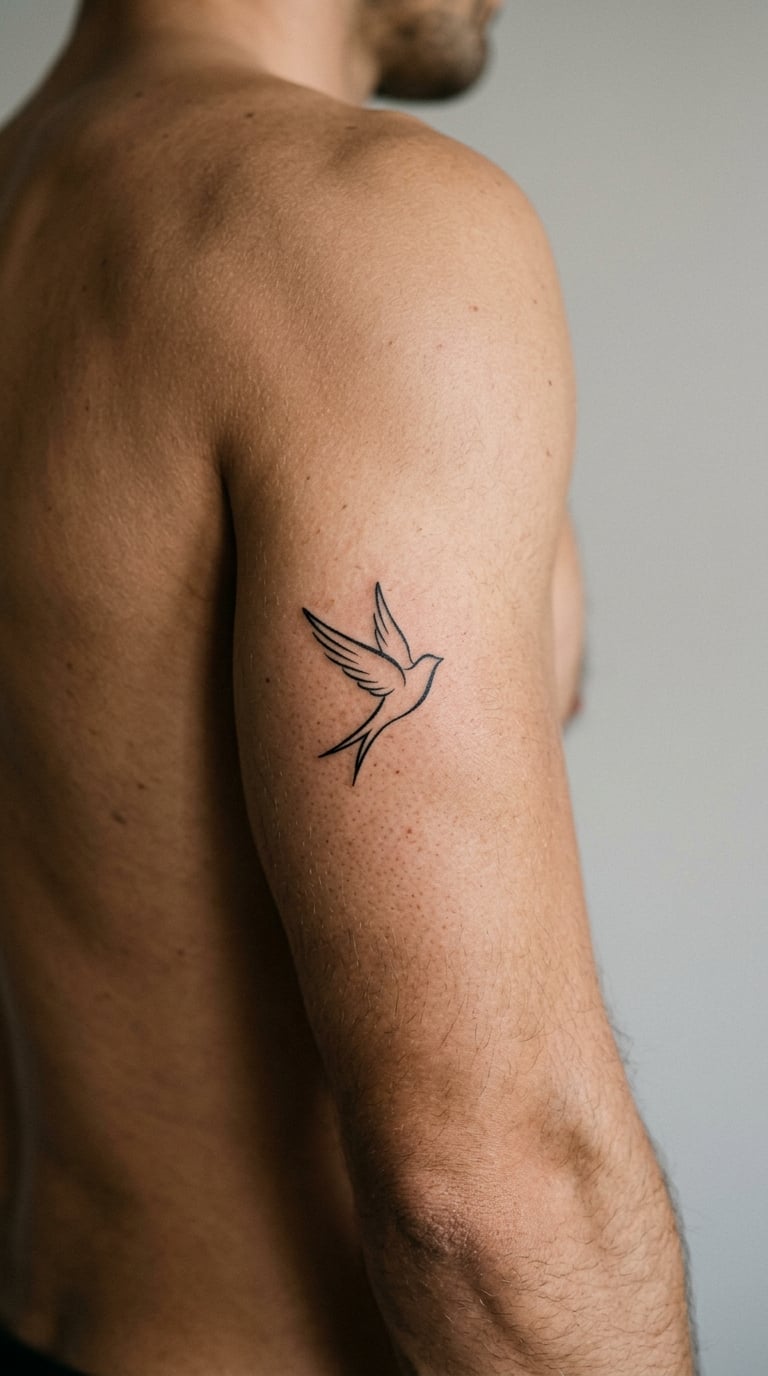
A bird mid-flight from the side, wings spread, three or four strokes, no feathers, no eye. The meaning is almost always freedom or leaving something behind, and the silhouette is readable at distances where detail would turn to mud.
Put it on the outer tricep with the wings running along the arm, about three inches across. Sideways orientation follows the muscle and barely changes shape when you flex, unlike a design running across the bicep. Solid wing lines wear better here than hairlines.
Pain and time: Outer tricep is about 4 out of 10 and takes 45 to 60 minutes.
14. Minimal Sunrise Over a Horizon Line on the Back of the Hand
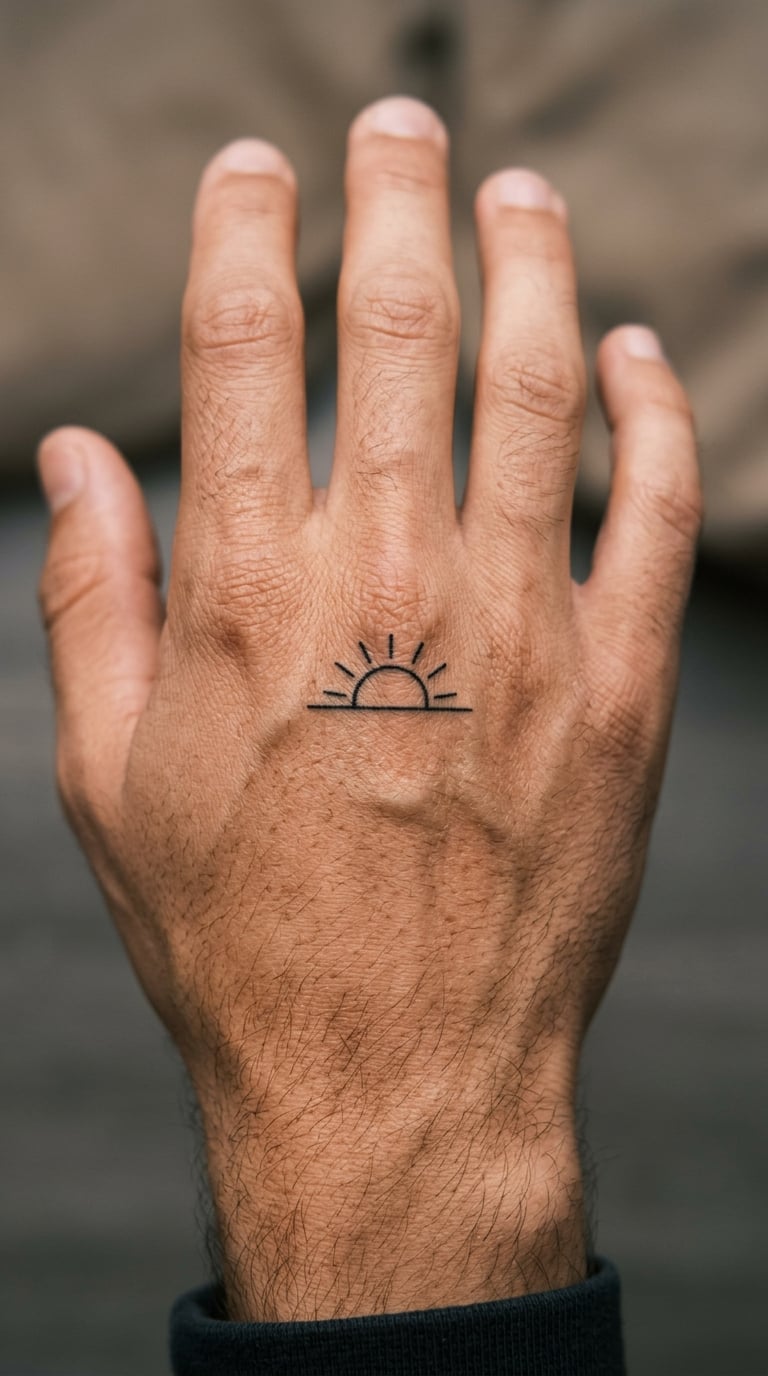
A half circle rising over a single straight line, no rays, no clouds, no colour. It is one of the oldest symbols in the list and still one of the most worn, usually for a new beginning or a difficult year that turned around.
Back of the hand is a popular choice and a poor one for fine line work, because that skin creases constantly and fades in direct sun. Size it two inches across, keep the horizon line solid, and if you are outdoors most of the week, put it somewhere else.
Pain and time: The back of the hand stings around 5 out of 10 and takes 30 to 45 minutes.
15. Fine-Line Hexagon Grid on the Forearm
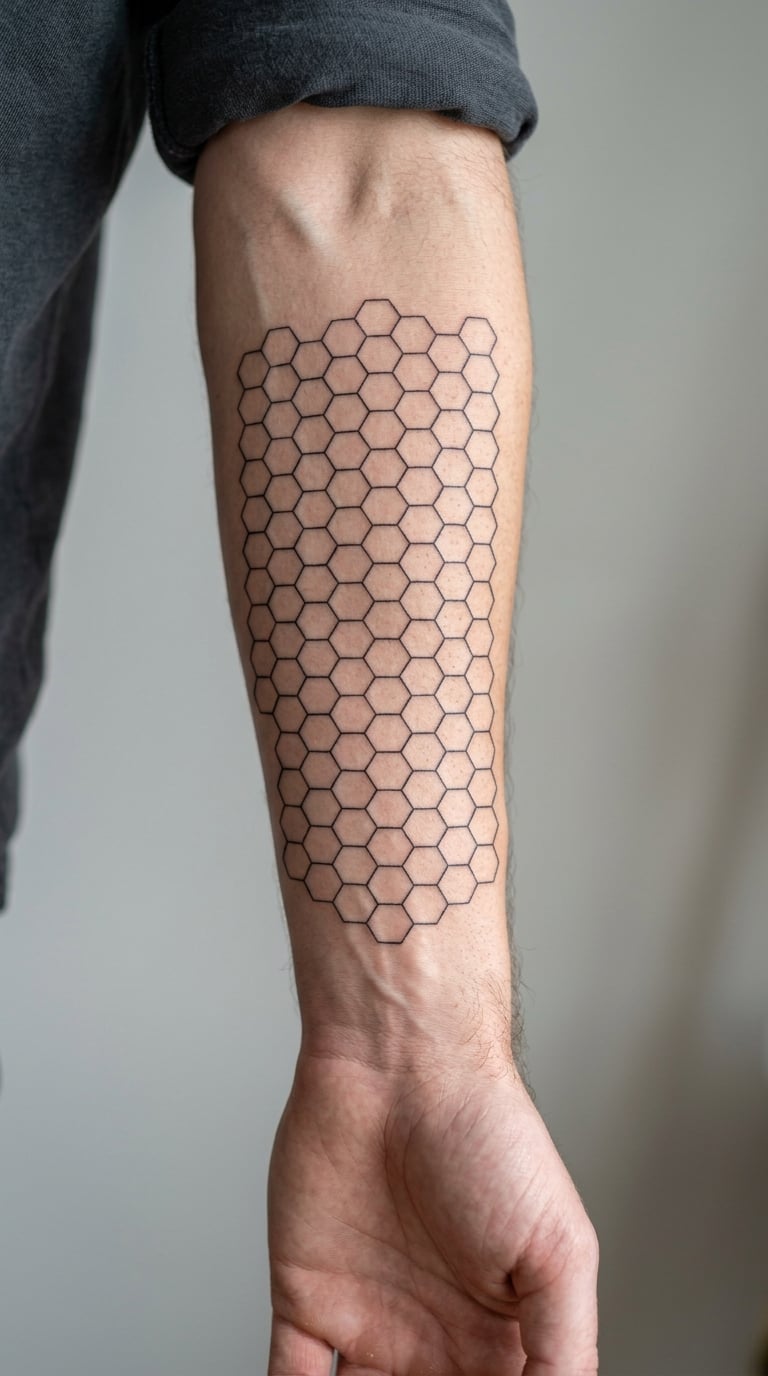
A row or a small field of hexagons, all the same line weight, with nothing inside them. Sacred geometry people read meaning into the form itself, but it works just as well as texture, which is why it pairs well with an otherwise plain arm.
Three hexagons side by side across the forearm is the size that holds up. Every line is the same thin weight here, so there is no natural place for the artist to make one heavier, and that means mistakes show. Ask for a healed piece in exactly this style before you book.
Pain and time: About 4 out of 10, and a small geometric field takes 45 to 75 minutes.
16. Small Single-Line Anchor on the Ankle Bone
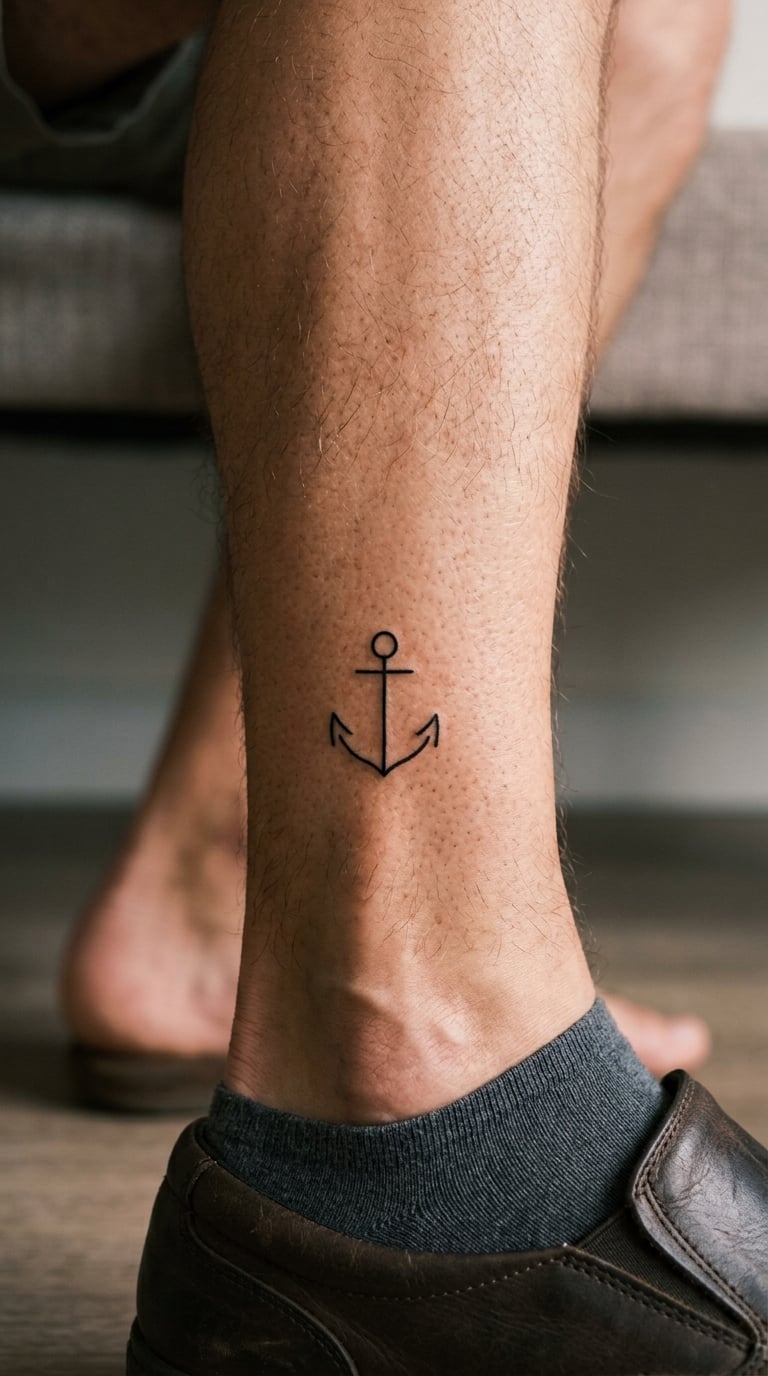
An anchor in one unbroken stroke, no rope, no banner, about an inch and a half tall. Stability, home, a person you anchor to, and the oldest design in this list after the cross.
The ankle bone is a flat spot with almost no competition for space, so a single-line anchor at one and a half inches reads clean at full size and still reads from across a room. Keep it above the bone rather than on it, and expect the line to need a touch-up sooner than you would like.
Pain and time: The ankle is bony at about 5 out of 10, and 30 minutes is enough.
Things to Know Before You Book a Minimalist Tattoo
- Pick by portfolio, not by Instagram grid. Ask to see healed work, six months to two years old, in the exact style you want. Fresh photos flatter everyone, and a portfolio of nothing but fresh black line work is telling you something.
- Find someone who specialises in fine line or geometric work. Plenty of good generalists cannot hold a consistent line weight. Travelling for the right hands is normal and often the difference between a design that ages and one that blurs.
- Agree a minimum size before you agree anything else. Most of these designs stop reading under about two inches. Bring a size in mind, and ask the artist to tell you honestly what their smallest legible piece is.
- Budget for the studio minimum, not the design. Studios charge a flat minimum regardless of how long a piece takes, so a three-line wave and a detailed forearm piece can land in the same bracket. Ask for the minimum when you call.
- Expect two to three weeks of surface healing. The skin looks dull and slightly raised for about a fortnight while the ink settles below the surface. That is normal and it is not the finished result.
- Plan for sun. Sun damage is the main reason thin lines fade and negative space disappears. Once healed, use sunscreen on exposed placements or accept that the piece will soften a little every summer.
Frequently Asked Questions
What are the best minimalist tattoo ideas for men?
The most reliable ones are a single line or a small solid shape placed somewhere flat, such as a mountain range on the inner forearm, a solid black triangle on the upper chest, or a one-line wave on the inner wrist. Those three read clearly at small sizes, need little detail to stay legible, and suit both a first tattoo and a low-visibility work life. Pick the one whose meaning you would still want in ten years.
Are minimalist tattoos a good first tattoo?
Most tattooers would say yes, mainly because small pieces heal quickly and are easy to cover while you are still undecided. The two cautions are pace and size. A rushed first sitting is how blown-out fine line happens, and a design under about two inches will never read properly. Book the consultation, wait for the healed examples, and let the artist set the size.
How small can a minimalist tattoo be and still read?
For line work, roughly two inches in the longest dimension is the honest floor. Solid black shapes and thick geometric forms can go smaller, closer to half an inch, because they have enough weight to survive softening. Anything detailed, such as a face, a snake head or a script line thinner than a pencil stroke, needs more room than people expect. Ask your artist what their smallest legible piece is before you commit.
What tattoo style is the most minimalistic?
Single line work is the most minimal, since the design is one continuous stroke with nothing added. Fine line is close behind, using thin controlled linework for more than one element without shading. Blackwork with solid fills and negative space designs sit at the durable end of the same spectrum, holding their shape longer because there is no hairline detail to lose.
What is the most attractive tattoo placement on a man?
The inner forearm, the outer wrist and the upper chest are the placements that read most often well, because the skin there is flat and the design is not distorted by movement. For subtle everyday wear, the inner wrist and upper chest sit better under a shirt cuff or an open collar. Placement matters as much as the design at this size, so check how the shape sits before you commit to a spot.
Which small tattoos fade fastest and what can I do about it?
Fingers, hands, the inside of the wrist and anything sitting over a bone fade first, because there is less fat under the skin and constant movement. Fine line and negative space work age worst for the same reason. Solid black fills on the upper arm, chest or shoulder hold up longest. Use sunscreen on exposed placements, avoid deliberate sunburn over fresh ink, and expect one free touch-up within the first year.
Where to Start With These Minimalist Tattoo Ideas for Men
Every design on this list works. The one that works for you is the one whose meaning still holds when the excitement fades, sitting on flat skin, at a size the artist confirms will read. Narrow it to two or three, and bring those to a consultation.
If you are starting from scratch, this list of minimalist tattoo ideas for men is easiest to walk in with three references and a placement in mind. Artists do their best work when you arrive having thought about it, not when you decide across the chair.