
16 Best Behind the Ear Tattoo Ideas for Women (September 2026)
Behind the ear tattoo ideas for women usually come down to one thing: the design has to follow the curve of the ear instead of fighting it. Behind the ear tattoo placement sits in a small hollow that curves with the jawline and neck, so the ink reads as subtle and elegant from a side profile and disappears completely when your hair is down. Most women choosing this spot want a piece that feels private, personal and small enough to live with forever.
Those same few centimetres of skin reward a narrow set of shapes. Four motif families cover almost everything people ask for:
- Botanical and floral — tiny rose buds, single stems, vines that trace the ear, lotus outlines, olive branches.
- Celestial — crescent moons, star clusters, a dotwork sunburst, a shooting star with a fine trail.
- Animals and insects — butterflies, dragonflies, hummingbirds, a minimal fox head, a single bee.
- Micro-script and numbers — cursive words, initials, angel numbers such as 444, coordinates, one date.
Sixteen of them sit below, each with the placement, size and style that suits it best. If you are planning a wedding this autumn, book early — tattoo appointments in the weeks before a big event are the busiest ones of the year.
1. Fine-Line Crescent Moon Nesting in the Ear Hollow
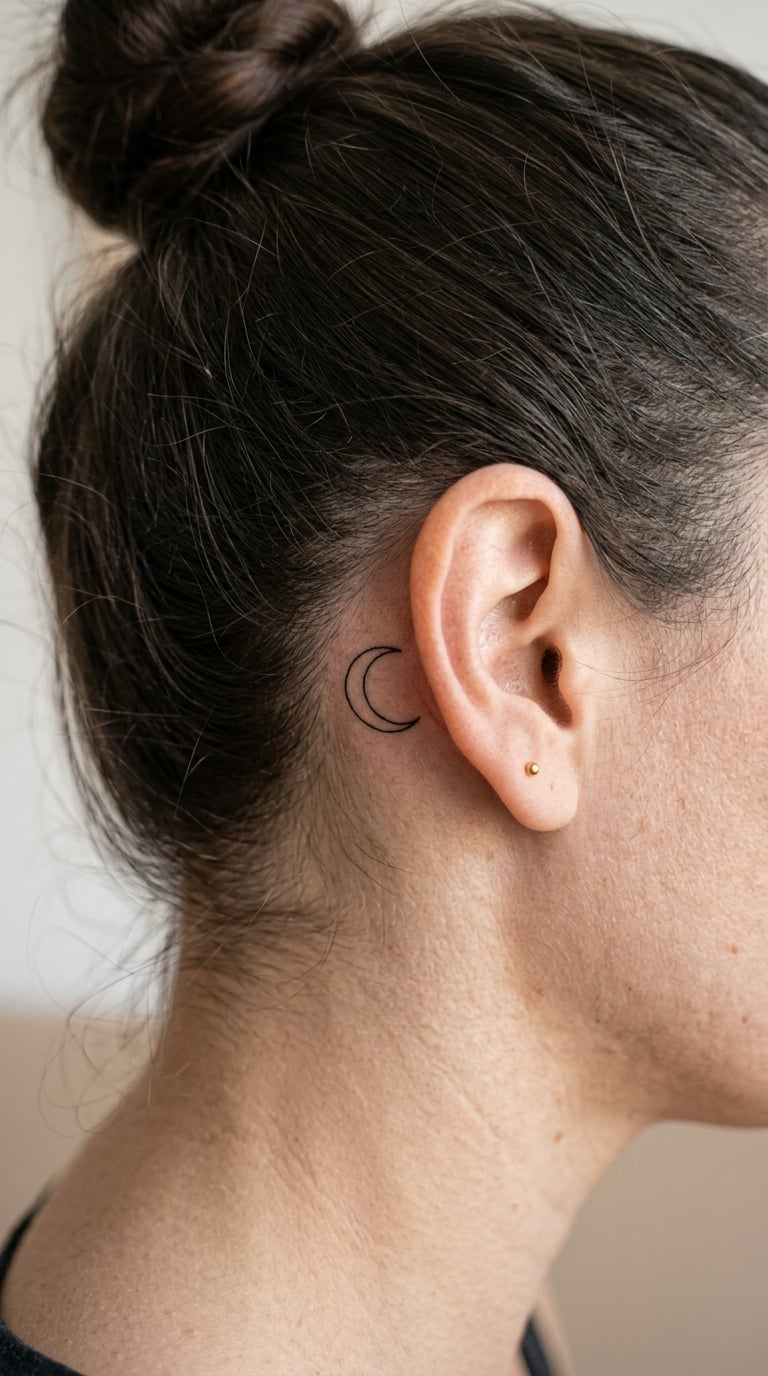
A crescent moon is the first idea most people picture for this spot, and it earns the reputation. Half of something, a cycle, a life you keep to yourself — the meaning does half the work for you.
Ask for a moon that sits in the hollow where the ear meets the skull, tilted so the opening faces your jaw, roughly one to one and a half inches tall. Fine line suits it, though one notch heavier than you would use on a forearm. The hollow collects less sun than an outer forearm, so a crescent holds detail better than most designs here.
Pain and time: Brief and sharp rather than deep, because the nerve density is low. Forty-five minutes to an hour covers a moon with a few stars.
2. Tiny Rose Bud on a Single Stem
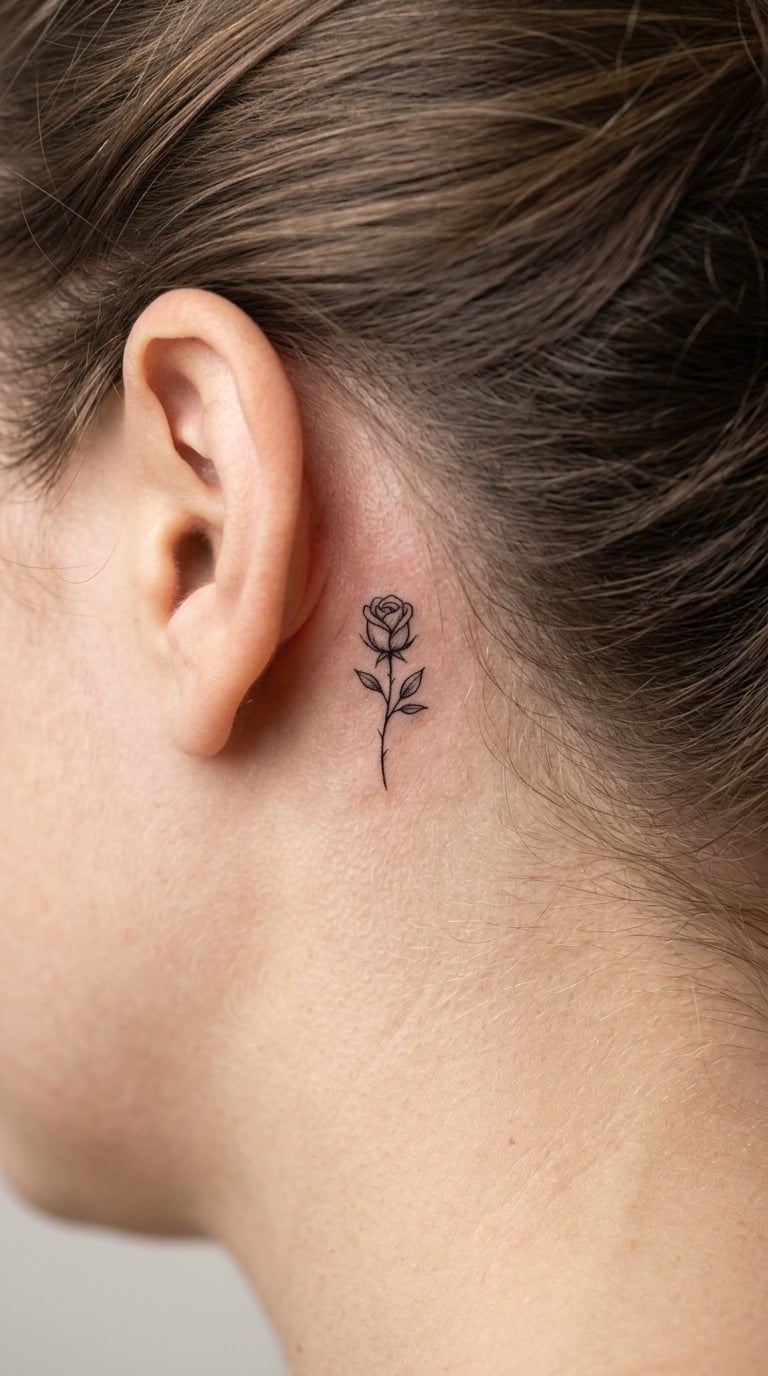
A rose bud that never opened is the most quietly meaningful thing you can put here. Buds stand for something still growing, a person you carry, a year that changed you.
Keep it small — a bud and one short stem with a single leaf, about half an inch tall — and place it level with the top of your earlobe, drifting back toward the neck. Single-needle florals here need a steady hand, and the stem should taper to nothing rather than end in a blunt line. Petals soften fastest, so expect a touch-up on the bud’s outer edge and leave the stem alone.
Pain and time: The sting of a single needle is constant, so it feels more like a scratch you cannot stop noticing. An hour, maybe less.
3. Micro Butterfly With Outstretched Wings
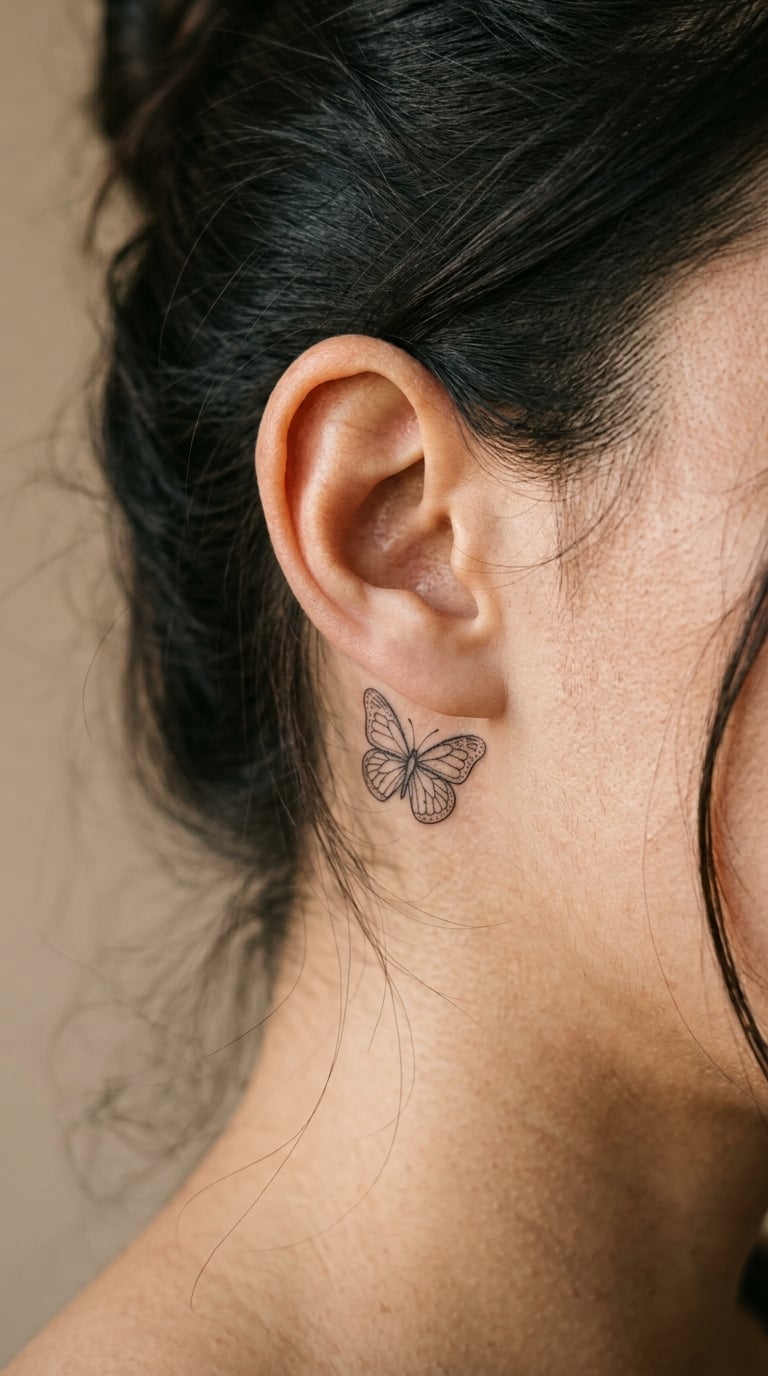
A butterfly reads as transformation, and it is the design people point at first when they say the word dainty. Drawn with four thin wings and no body detail, it stays legible at small scale.
Keep the wingspan to about one inch and let the lower wing tip cross the curve of the ear so it wraps rather than floats. Left-side butterflies and right-side ones mirror each other only if the artist flips the stencil carefully — check the healed photos of both. Black fine line ages better than pale colour here, since sun barely reaches the spot but hair dye and bleach do.
Pain and time: Fine line butterflies are one of the quicker pieces in this area. Thirty to forty-five minutes is normal.
4. Cursive Word Curving Along the Ear
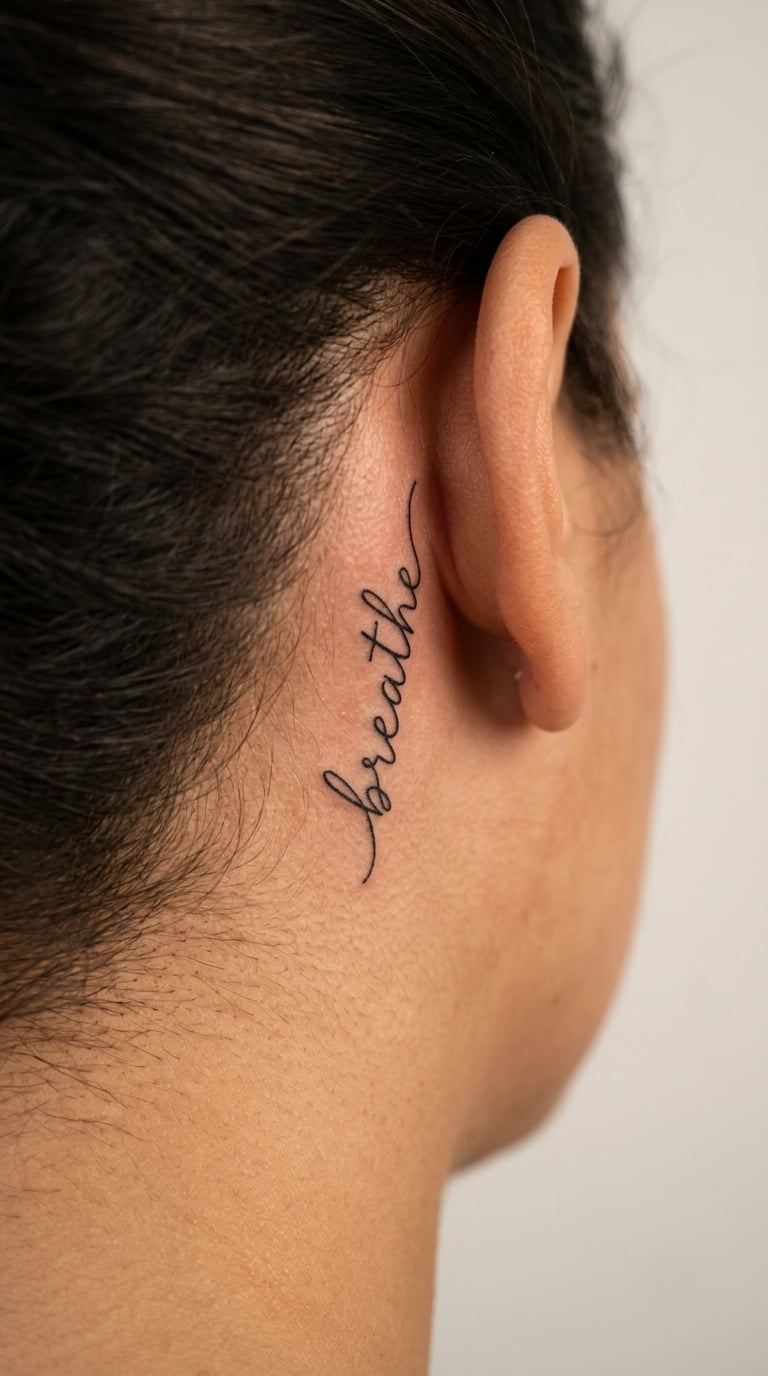
A single cursive word — a name, a place, a promise — is the most personal option on this list. Placed so the first letter starts near the earlobe and the last letter rests on the neck, it becomes something only you and people standing close can read.
One or two words maximum. Four letters per inch is about the limit for readable script, and the artist should map the word onto the curve of your neck before transferring it — a flat stencil on a curved surface produces letters that swell and shrink. Script is the design that softens fastest in this placement because of hair contact, so plan a touch-up at six months. Ask for healed examples before booking, not fresh ones.
Pain and time: Constant low-level discomfort for the length of the word. An hour covers two short words in fine line.
5. Angel Number 444 in Thin Numerals
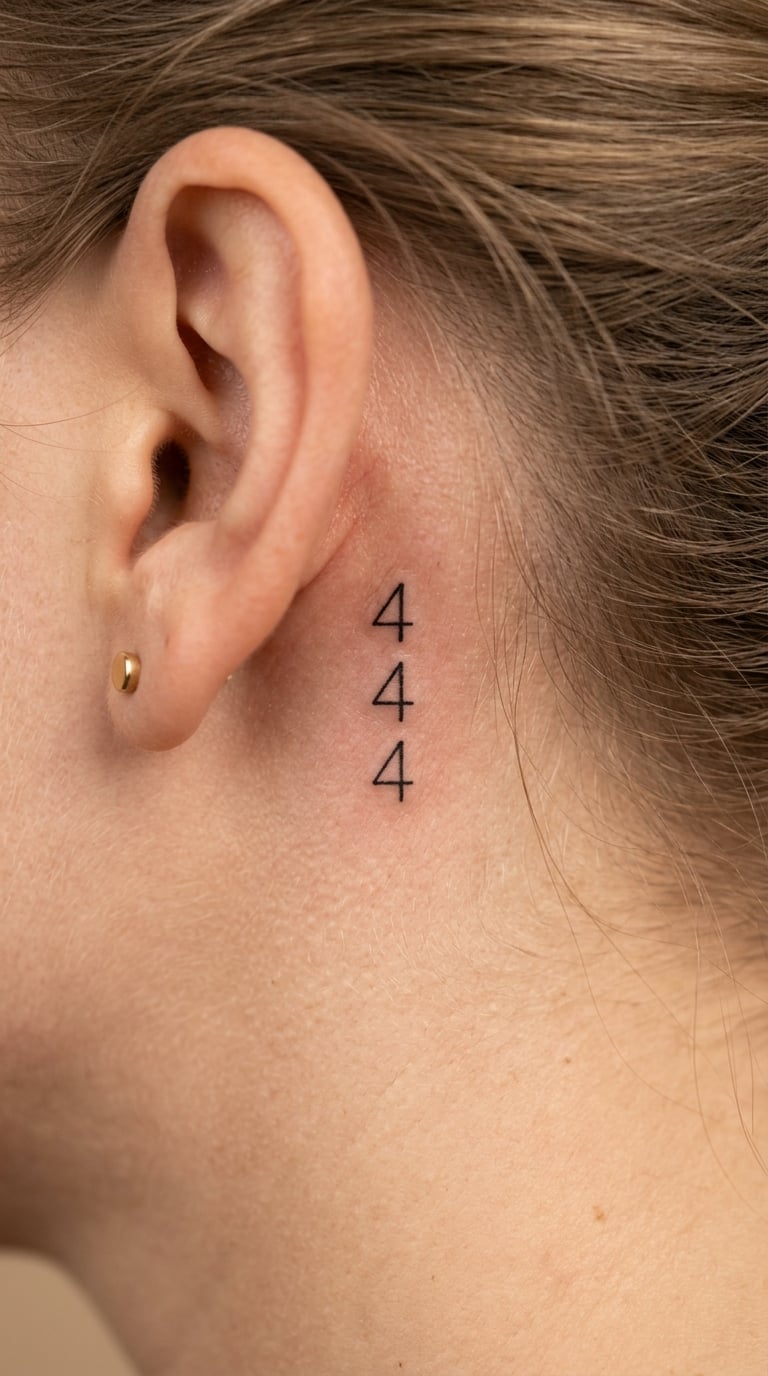
Angel numbers went mainstream a few years ago and never really left. 444 is read as a sign of protection and that someone, or something, is watching over you. Plenty of women carry it as a quiet promise to themselves.
Three small numerals in a clean sans or a fine handwritten serif, each about a quarter inch tall, stacked or running in a short line. Stacking them vertically down the neck works better than a horizontal row because the horizontal line crosses a curve and each digit lands on a slightly different plane. Numerals hold ink well and barely fade, which makes this a good first choice if you want low upkeep.
Pain and time: Three tiny digits take about half an hour. The sting stops registering quickly.
6. Dragonfly Hovering at the Hairline
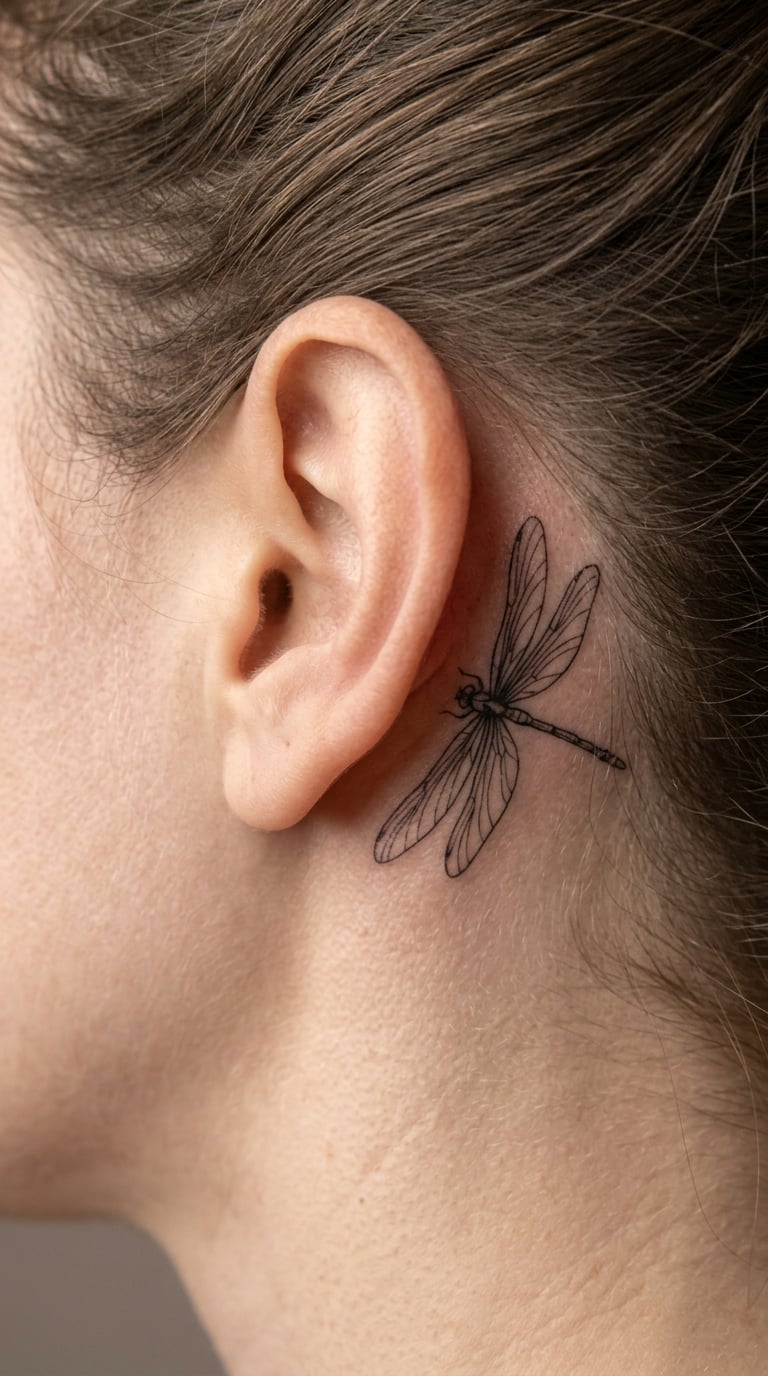
A dragonfly is the one design in this gallery that reads as movement. People usually associate it with change that happens quietly, without anyone noticing, which is a fair description of most of the turning points that matter.
Draw it in profile, body vertical, wings angled up and out, and place it so the top wing reaches the hairline. That crossing point is what sells the illusion that it is hovering. Two to three inches long is the practical limit here — bigger and you run out of skin before the wings finish. Wings are the weak point over time, so ask for a little extra saturation in them from the start.
Pain and time: Line work on a curved surface takes patience, usually an hour to ninety minutes.
7. Delicate Vine Climbing Behind the Ear
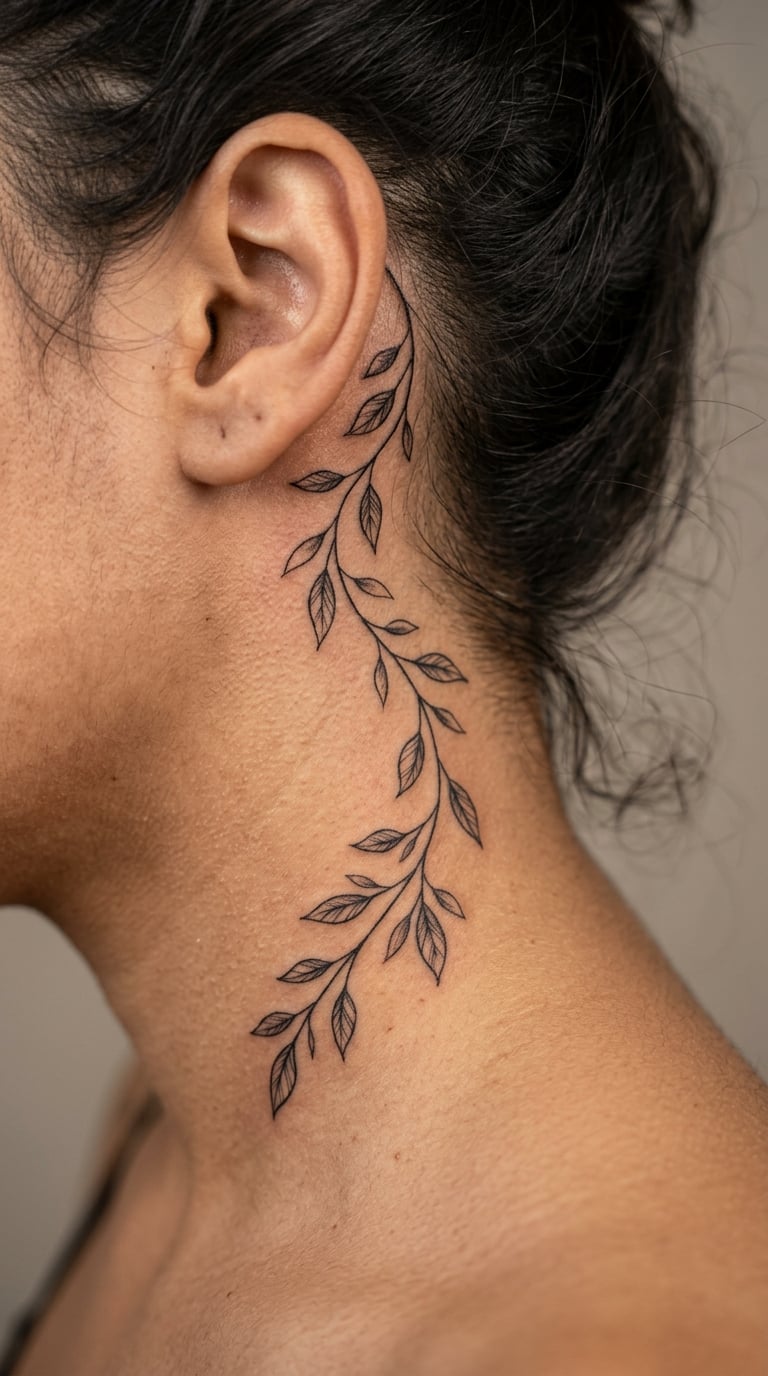
A vine that starts behind the ear and runs down the neck is the version of botanical ink that makes people ask what it is. Curling growth, endurance, a slow unfurling — every one of those readings is on offer and none of them is wrong.
Let the stem follow the line where the ear meets the jaw and let one or two leaves break away from it. Keep every leaf under a quarter inch; leaves larger than that go blotchy as they heal. Plan where the vine stops before you start, because the hard part is not drawing a leaf, it is deciding the vine should end at the collarbone and not lower. Sparse is the look. Nobody ever regretted a vine with room left on it.
Pain and time: Stops and starts as the artist changes angle, which people find easier than steady needle work. One to two hours.
8. Dotwork Sunburst Radiating From Behind the Ear
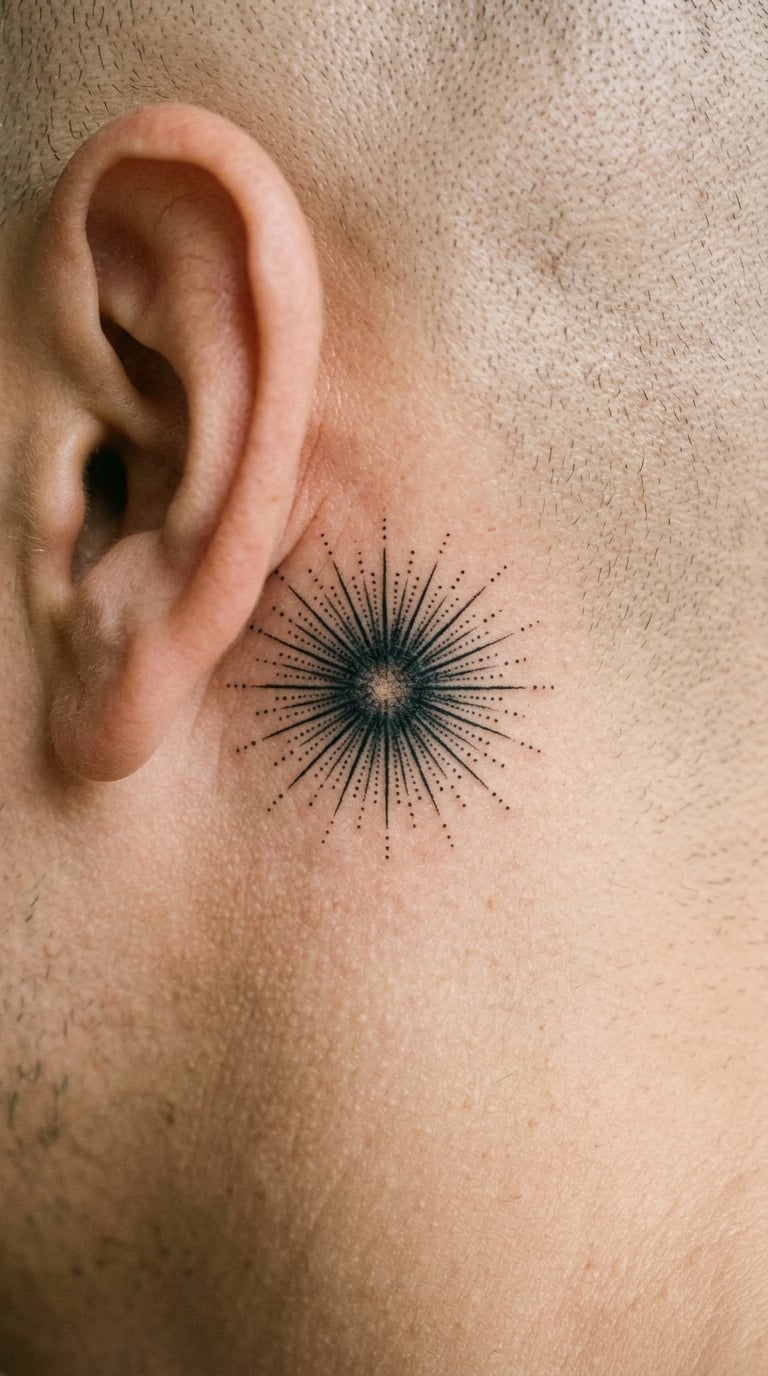
When the sun sits behind the ear it feels like light coming from somewhere behind you, which some people read as optimism and others as a memorial for someone they cannot see. Dotwork gives the burst its texture without adding a gram of weight to the lines.
Ask for rays of alternating length fanning upward and back, no longer than an inch and a half, with dot shading thickest at the base and thinning at the tips. Dots fade at a different rate from lines, so the shading usually outlasts the rays and the design can look softer than the artist’s original drawing. Choose a light hand here. Heavy dotwork in a warm area can raise more of a skin reaction than the same work on an arm.
Pain and time: Dotting is repetitive and mildly maddening rather than painful. An hour, give or take.
9. Hummingbird in a Hovering Pose
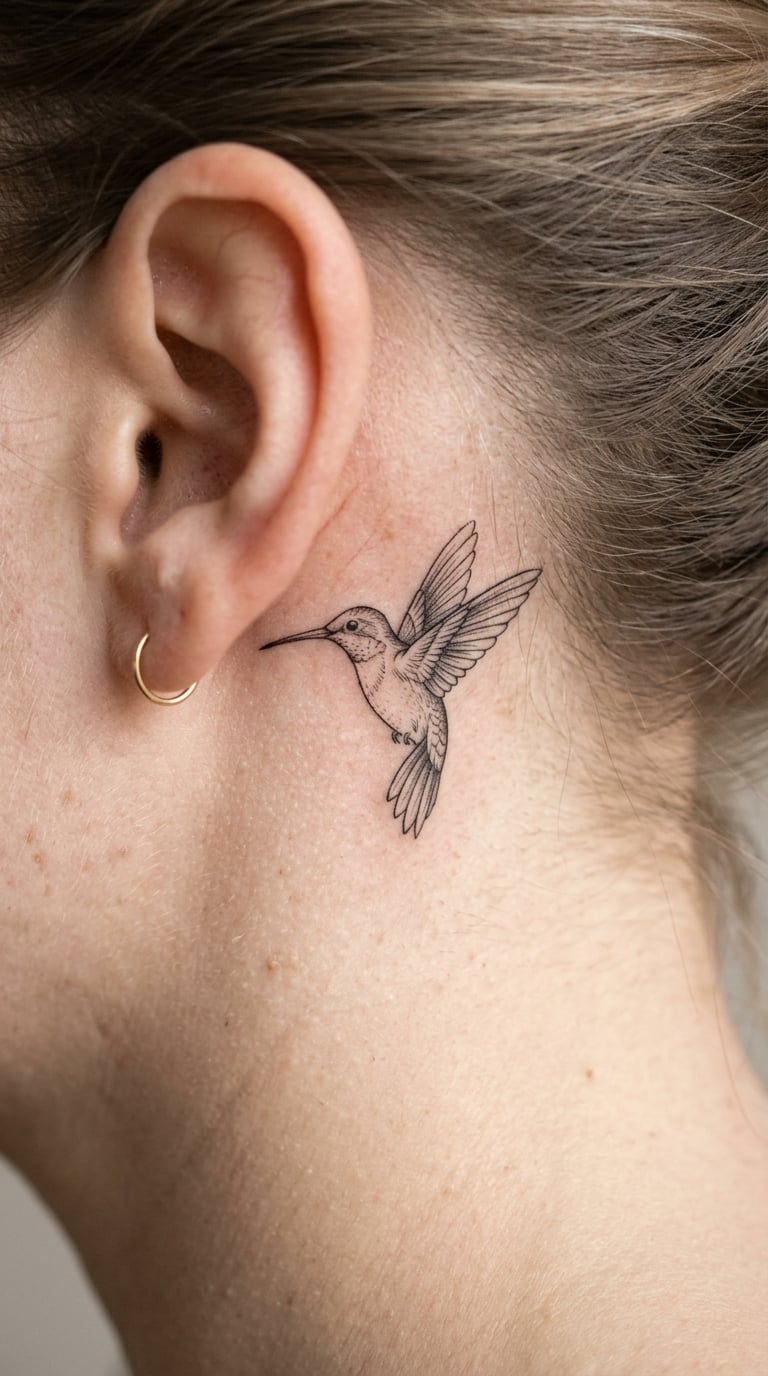
A hummingbird is the most feminine-looking design in this gallery and the one women ask about most. It carries the idea of joy, endurance, returning to the same flower. It also has feathers, and feathers are detail, so the artist matters more here than almost anywhere else.
Place it with the beak pointing forward toward your jaw and the tail running back toward the neck, body about one and a quarter inches long. The wing nearest the head is the part that gets overworked, because it sits on the fold where the ear opens. Ask the artist to simplify that wing rather than render every feather, and accept the simplification. This is a design that rewards restraint, and the same image in bolder black line will outlast a fully detailed version every time.
Pain and time: One to one and a half hours. Expect to sit still more than you expect to flinch.
10. Lotus Outline in Clean Blackwork
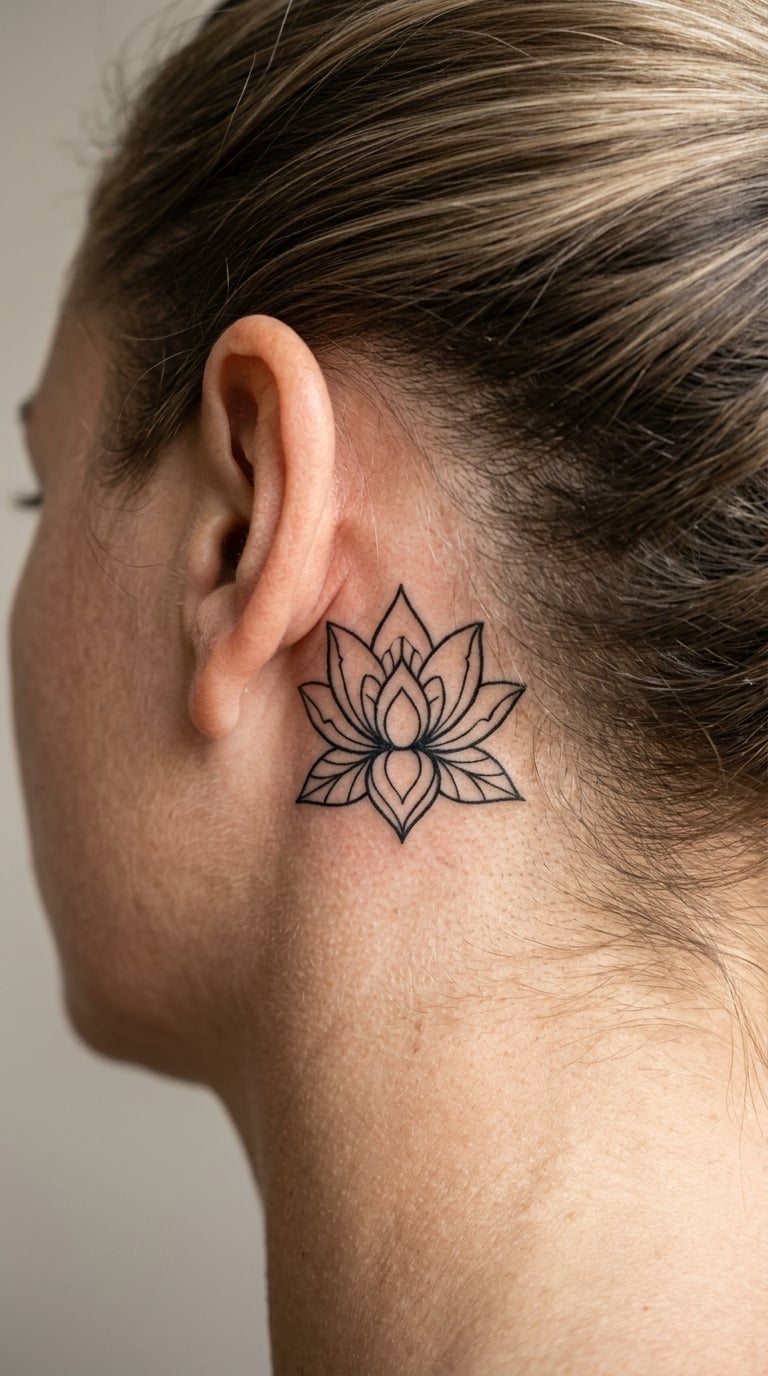
The lotus is the most requested flower in this area after the rose, and its meaning is well known enough that nobody has to explain it to you: rebirth, a difficult chapter that ended well, coming out the other side.
An outline lotus, symmetrical, sitting in the ear hollow, no more than an inch across. Symmetry is the hard part on a curved surface, because the far side of the flower is further from your eye and reads smaller. Artists fix it by placing the stencil with a slight tilt, so ask to see it in position before the first line goes in. Blackwork outline holds its edges well and needs very little upkeep here.
Pain and time: Outline work is quick to lay down and the session is over before your attention drifts. About forty-five minutes.
11. Shooting Star With a Fine Trail
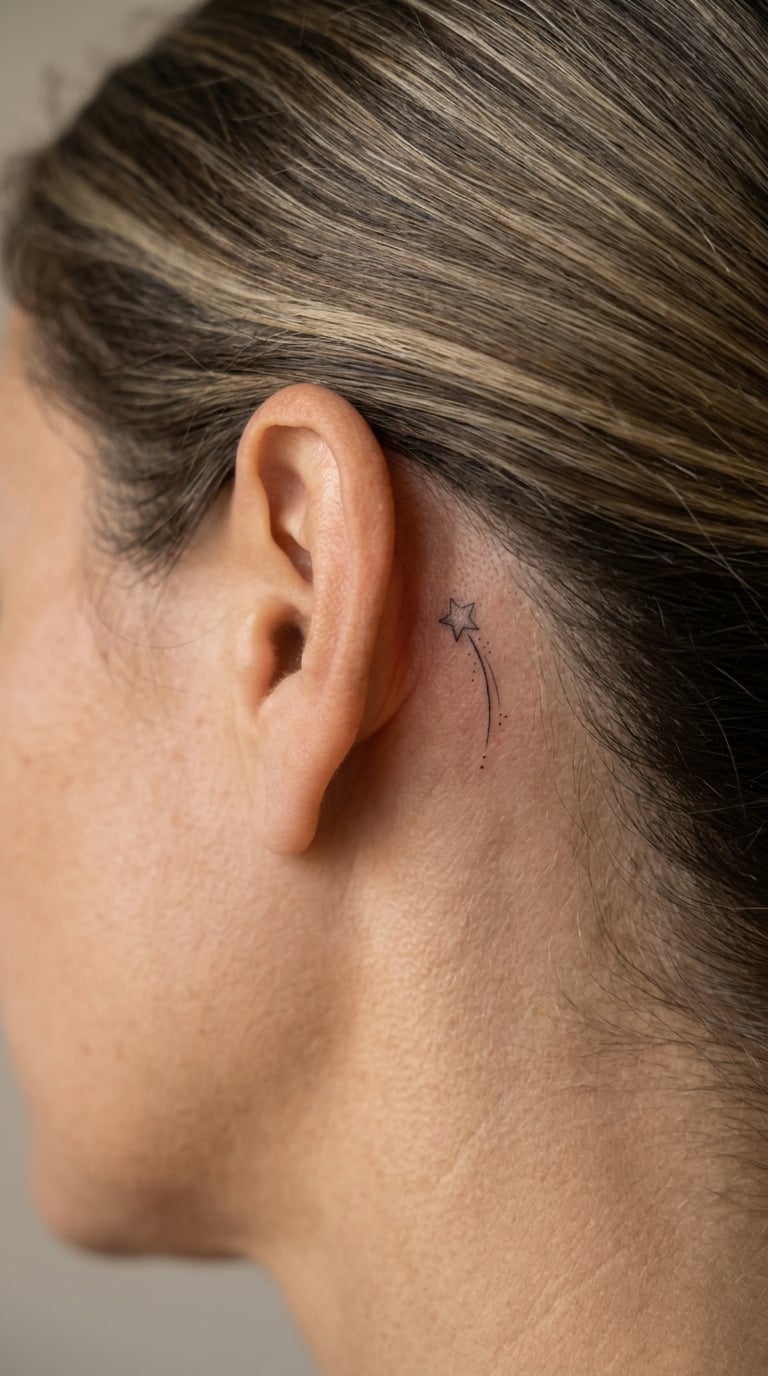
A shooting star is wish-making made wearable, and it is a genuinely good first tattoo because it is small, it has a clear shape, and it does not need to mean anything to anyone who sees it. The trail is what makes it beautiful and what makes it risky.
Keep the trail to two or three tiny dots rather than a long line, and let the star sit above the earlobe at the top of the hollow. A tapering trail disappears faster than the star because it is the thinnest ink on the design, and a trail that vanishes leaves a star with a stub. A five-point star with a solid outline gives you something to keep. Star points in a tiny piece are also the first thing to blur into a blob, so ask for slightly rounded tips.
Pain and time: Very quick, because there is so little of it. Half an hour, often less.
12. Three Small Hearts in a Vertical Line
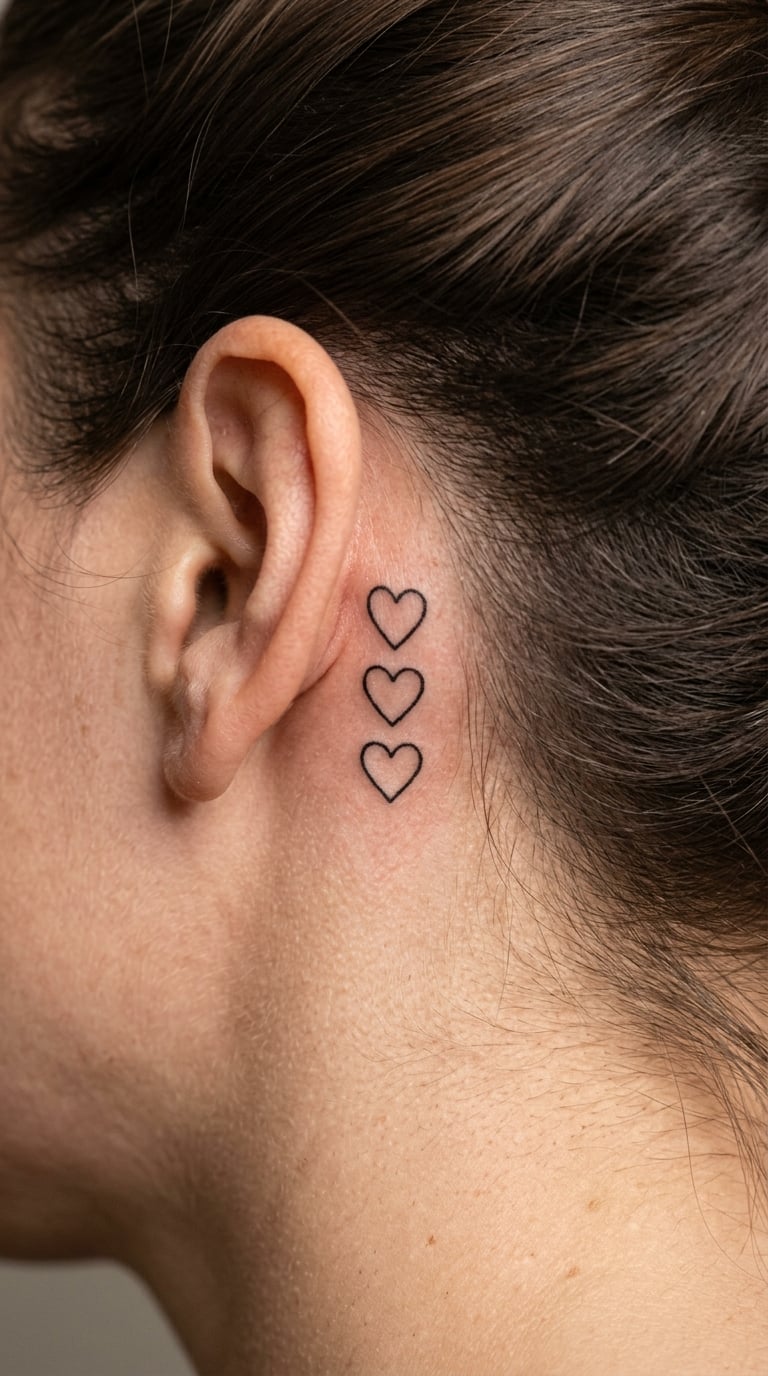
Three hearts is not a placeholder design. It is a specific one: a person, a child, a date, a promise you made to yourself. People who get it usually already know the count before they start looking at galleries.
Stack them vertically so they follow the neck rather than the jaw, each heart a quarter inch tall, spaced so there is clear skin between them. Vertical stacking also uses the direction the neck naturally runs, so the piece looks intentional instead of pasted on. Outlines in black are the right call because filled hearts this small turn into solid dots within a year or two. If you are adding a short word, put it on the neck below the hearts, not beside them.
Pain and time: The least demanding design here, and one of the fastest. Twenty to thirty minutes.
13. One Date in a Small Typewriter Font
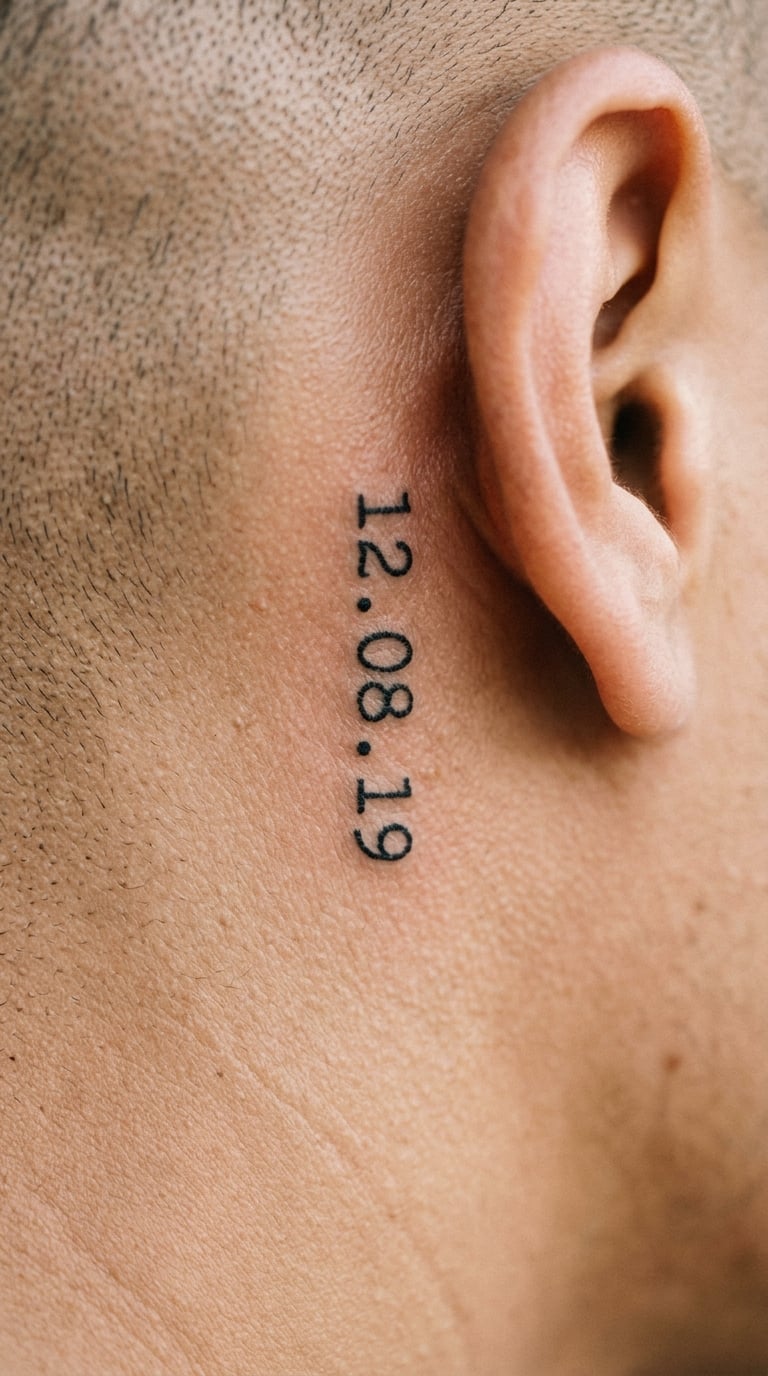
Dates are the most requested meaningful design in this placement, and the reason is that a date is short enough to fit. A wedding date, a birth date, the day something ended. The typeface does more work than the numbers do.
Typewriter font is easier to place on a curve than cursive, because the letters are the same height and the spacing is mechanical — the artist can lay it out almost like typing. Keep it to one line of small black capitals, about half an inch tall, sitting level with the earlobe and running straight back. Nothing in a date design should be thinner than the other parts, and capitals are naturally thicker than the cursive loops people usually choose instead.
Pain and time: Mechanical lettering, so the rhythm is even. Forty minutes to an hour.
14. Fox Head in Minimal Black Linework
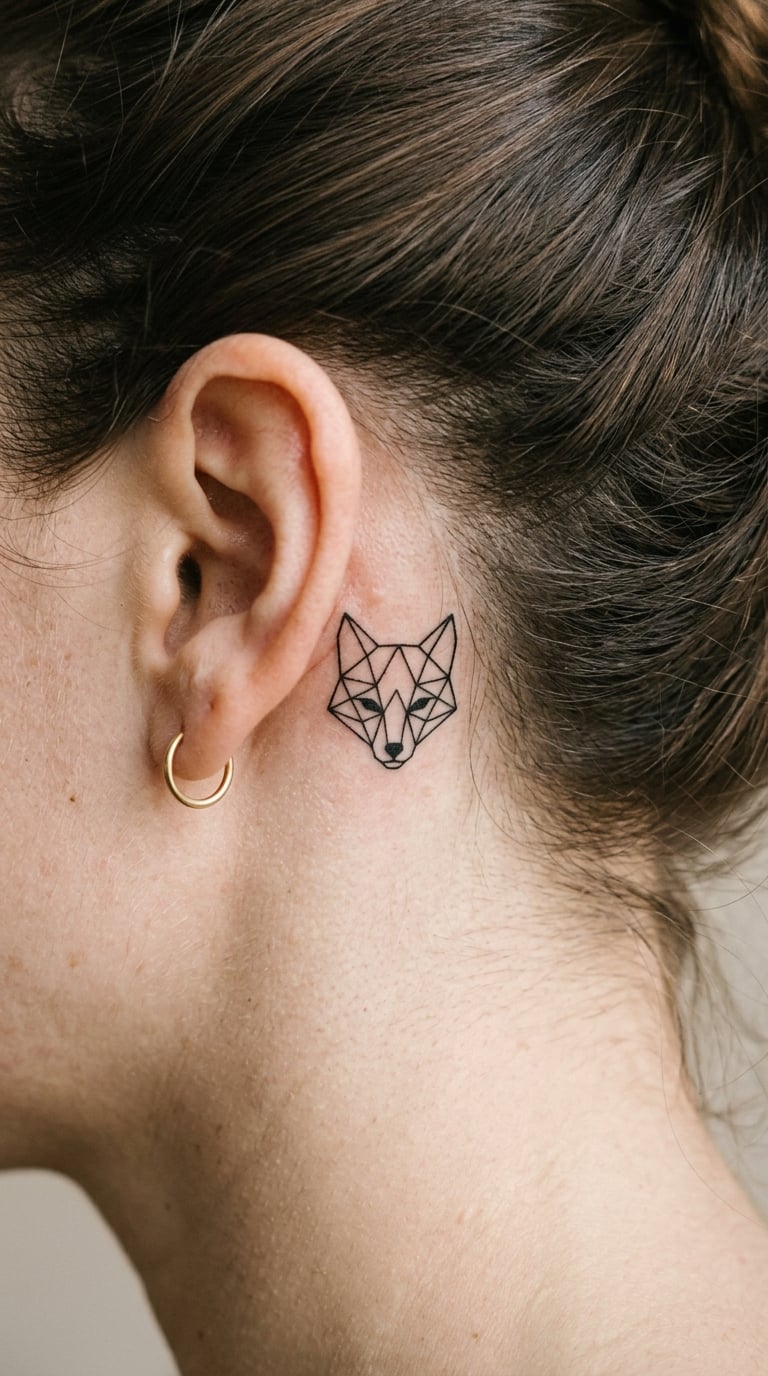
The fox carries cunning and self-possession, and lately it has been drawn in a geometric style with a few clean triangles for ears and a single angular face. It is the boldest-looking design in this gallery while still being small, which is a rare combination.
Geometric fox heads need about an inch and a half of width, so this is one of the few designs that can be too small behind the ear rather than too large. Place it so the ears point back toward your hairline and the chin points down toward the neck. Angular shapes stay sharper than curves, and the straight edges of a geometric fox are the reason this one holds up in a high-friction area better than a soft botanical piece would.
Pain and time: Heavier lines mean fewer passes, so it stings harder and finishes faster. Around an hour.
15. Olive Branch With Small Leaves
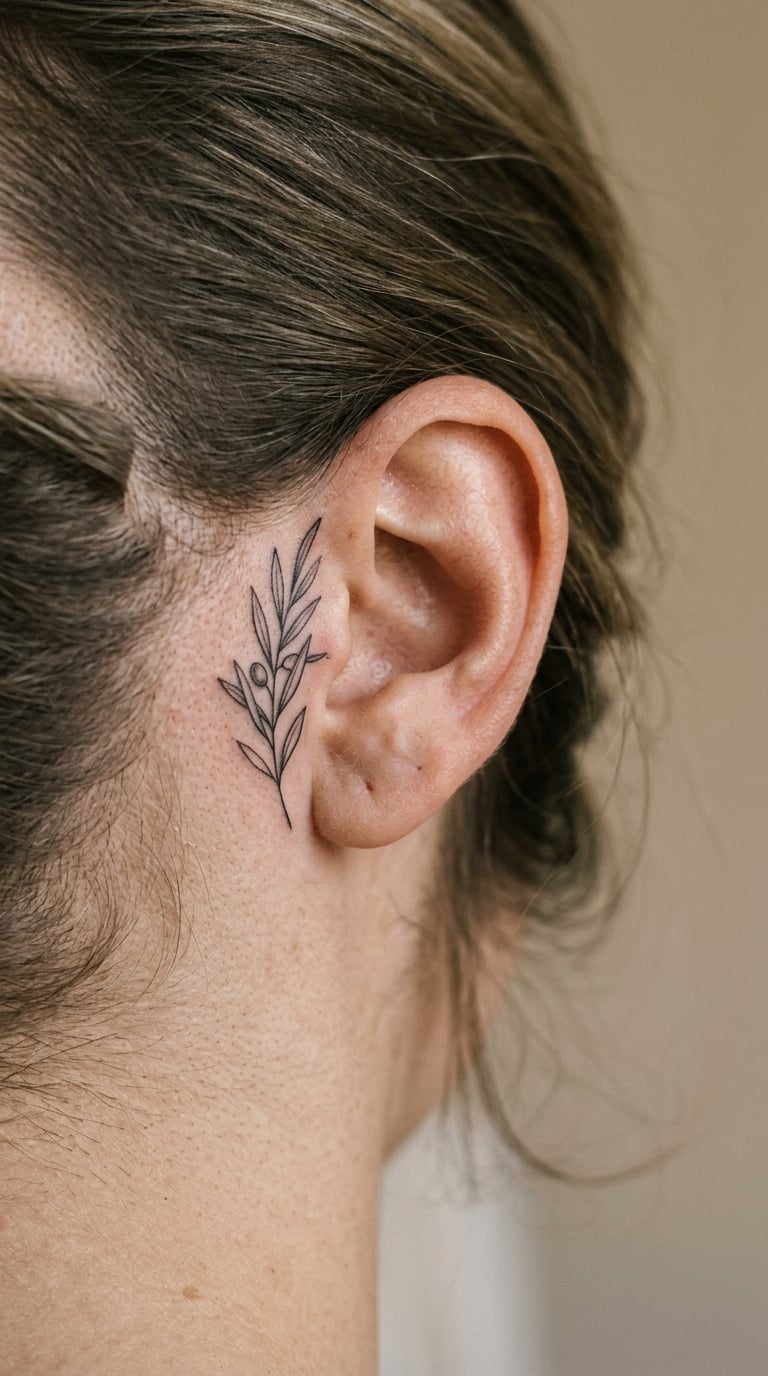
An olive branch is peace, and it is the quietest design here — no symbolism anyone will challenge, no meaning you have to defend. People choose it when they want ink for the look of it.
Draw it as one stem with five to seven narrow leaves, angled so the branch sits diagonally rather than straight, tucked into the hollow and pointing back toward the neck. Olive leaves are long and thin, which is helpful: a narrow shape survives in a tight area where a round rose would not fit. Keep each leaf under a quarter inch and give the stem a visible taper, because the stem is the first part of a branch design to blur.
Pain and time: Steady, low-level needle work. Forty-five minutes to an hour.
16. Coordinates of a Place That Mattered
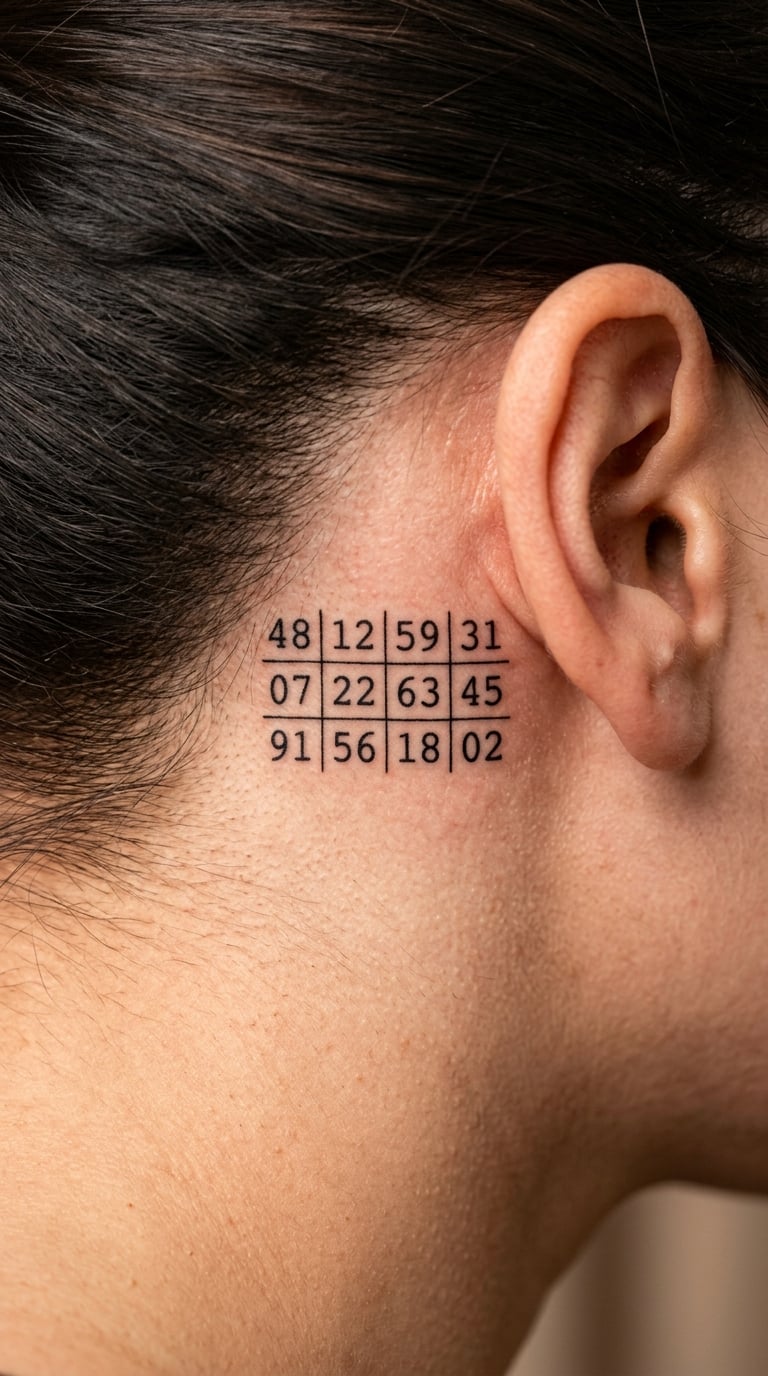
Coordinates are the private option. A set of latitude and longitude numbers points at a beach, a hospital, a house, a stretch of road, and means nothing at all to anyone who does not already have the reference. Couples and friends use matching sets, and so do people carrying a place that no longer exists.
Set them in two lines of small black numerals, about a quarter inch tall each, tucked into the hollow so they sit square to the skull rather than sloping down the neck. Line them up in a grid because that is what coordinates are, and a neat block reads as intentional where a scattered one reads as a smudge. The numerals themselves are durable; the dashes and decimal points are the first marks to go soft, so ask for them to be slightly heavier.
Pain and time: Two short lines of numerals, so about forty minutes and no movement needed.
What a Behind-the-Ear Tattoo Means
When a woman has a tattoo behind her ear, the placement itself is usually part of the message. It is a spot you cannot see in a mirror and cannot show off easily, which reads as deliberate privacy, and it is one of the few locations hidden in a low bun and fully visible in a high ponytail. People describe it as something kept close rather than displayed, and that is accurate.
The motif decides the rest. Small florals lean toward growth and tenderness, moons and stars toward cycles and protection, insects toward change, and script or numbers toward something personal and specific. A tiny floral behind the ear usually means a private kind of softness, not decoration for its own sake. There is no fixed code, and anyone who tells you a placement has one meaning is guessing.
Two details get overlooked. First, the spot sits right next to the head, so people who want to be alone with a design choose it deliberately, while people who want a tattoo seen often do not. Second, it is a small, workable canvas, which makes it popular for a first tattoo. Clients with ornamental fine line pieces in this spot are common enough that you will find examples in almost any portfolio that shows behind-ear work.
Behind the Ear Tattoo Ideas for Women: How to Size and Place Yours
Before you fall in love with a design, know the canvas. The usable skin behind an ear is roughly an inch in each direction from the centre, and it curves. Anything that works at two inches on a flat forearm will not fit here without being cropped, and that cropping is what makes a tattoo look off-centre later. The questions below come up more than any others at consultations.
How big should a behind the ear tattoo be?
Most pieces in this gallery land between half an inch and two and a half inches. Micro florals, numerals and hearts sit at the small end; hummingbirds, dragonflies and geometric fox heads need the larger end. If a design only reads at four inches, it is a forearm piece, not an ear piece, and a good artist will tell you so at the consultation rather than after.
What is the 1/3 rule tattoo?
The one-third rule is a sizing guideline, not a placement rule: a tattoo should cover roughly a third of the available area of whatever body part you are putting it on, so it reads clearly without crowding the space. Applied here, it means a design filling about a third of that one-inch radius is well proportioned. Filling the whole hollow looks cramped. Filling a corner of it looks like an afterthought.
Placement mistakes that ruin the look
- Too high, above the top of the ear, where it catches hair and reads as floating.
- Too small to hold detail, so a butterfly turns into a smudge inside a year.
- Flat across the curve rather than following it, so the far side reads smaller than the near side.
- Centred on the earlobe instead of in the hollow, which puts it where glasses arms and earbuds land.
- Unplanned endings — a vine or a word with no considered stopping point.
Hidden Behind the Ear or Trailing Down the Neck
These are two different plans and people mean different things by each. A fully hidden design sits in the hollow and behind the ear itself, and is visible only when someone stands behind you or when you tie your hair up. A trailing design starts behind the ear and runs down the side of the neck, and it is visible from the front in profile. That is a bigger decision than most people realise before the stencil goes on.
Trailing designs give you more canvas, which is the practical win. Vines, script, a long stem of flowers and constellation lines all work in a trailing format and look better for it. The trade-offs are equally real: more ink means more time in the chair, a larger area to fade, a design that shows in photographs from the front, and a longer conversation with your future selves about neck ink. Hidden designs are the easier thing to live with and the easier thing to keep private. Most first-tattoo clients in this spot want hidden, and that is a perfectly good reason.
Will Your Hair Show It? Visibility by Hairstyle
This is the question nobody asks at the consultation and everybody notices afterwards. How much of your behind-ear tattoo people see depends almost entirely on your hair, not on the tattoo. Before you book, try it: put your hair up the way you wear it most days and look at a side profile in a photo.
Behind the ear tattoo ideas for women with short or curly hair
Short cuts and curls show more of this area than straight hair worn down, which usually means a bolder design gets a longer life here. Short crops expose the hollow completely, so anything too fine disappears against the background of hair above it. Curly hair covers and uncovers unpredictably depending on the day and the style, so a trailing vine or a star cluster reads better than fine script that gets hidden under a coil.
Glasses, earbuds and masks
Glasses arms and earbuds both land in or beside this hollow, and they rub fresh ink during healing. Sleep does the same if you turn your face into that pillow. Pick frames that clear the spot, avoid earbuds on that side for a couple of weeks, and change the side of the pillow you sleep on. Masks sit lower and rarely touch the ink itself.
Things to Know Before You Book
- Look at healed work, never fresh work. Ask an artist for behind-ear pieces that are six months to a year old. A tattoo photographed the same day looks nothing like what you will live with.
- Healing runs faster here than elsewhere. The skin is thin and the area is small, so most pieces are surface-healed in two to three weeks. It stays tender and slightly raised for longer than that, and looks duller than it will ever look.
- Keep it drier than a normal tattoo. This spot collects hair washing, product and sweat behind the ear. Wash gently, pat rather than rub, and do not let conditioner or dye sit on it during healing.
- Fine line fades faster here. Hair, pillows, earbuds and glasses all rub the same patch daily. Expect a softener look at a year and plan a free touch-up with your artist around six months.
- Handpoke gives a gentler heal. Tattooists and clients both report less skin trauma and calmer healing from handpoke work, which is why it is common in this placement.
- Cost follows size, detail and city. A small single-needle design sits at the affordable end of any artist’s book; large neck-trailing pieces and custom cursive push toward the top of it. A good artist will quote the whole design before the first line, not after.
How to Choose an Artist and What to Ask at the Consultation
The design matters less than the person drawing it. Fine line in this placement is unforgiving, because a curved surface plus daily friction is a hard combination, and you cannot undo either. Find someone whose portfolio already contains healed behind-ear work at the size you want, not just someone who says they can do it.
At the consultation, ask to see healed photographs of similar work in a similar size, and ask what the artist would change about your idea. A good answer involves your hairstyle, the shape of your ear and how often the piece will be seen. Ask about the line weight they plan to use and why it is heavier than the reference image. Ask about the touch-up, and whether it is included.
One more thing worth asking: what happens if you do not love it. This placement is close to the head, near the lymph nodes and the ear itself, so removal is not always simple. Artists who ask about your hairstyle and your lifestyle before they draw are the ones worth booking.
Frequently Asked Questions
What does it mean when a woman has a tattoo behind her ear?
Usually the placement is part of the message. Behind the ear is a spot you cannot easily show off, so it reads as something kept private and personal, and it is hidden in a low bun while fully visible in a high ponytail. The motif carries the rest: florals lean toward growth, moons and stars toward cycles and protection, insects toward change, and numbers or script toward something specific and personal.
Are tattoos behind the ear very painful?
Not really. Owners in tattoo forums consistently describe the behind-ear placement as one of the least painful spots they have been tattooed, because the area is small, the skin is thin and there is little muscle over bone. It feels more sharply uncomfortable than genuinely painful, and single-needle fine line registers as a constant scratch. Most people sit still easily for a short session.
Do behind ear tattoos fade faster?
Yes, relative to an arm or a thigh, and the reason is friction rather than sun. Hair washing, product, pillows, earbuds and glasses arms all rub the same small patch every day. Fine line and script soften first, and the detail that disappears is usually the thinnest part: a star trail, a leaf outline, a cursive loop. Plan a touch-up with your artist at around six months.
How fast does a tattoo behind the ear heal?
Faster than most placements, because the skin is thin and the area is small. The surface is usually healed in two to three weeks, though the skin can stay slightly raised, tender and dull-looking for several months after that. It also needs to stay drier than a normal tattoo site. Expect the final settled look, colour and all, at six to twelve months, not three weeks.
How big should a tattoo behind the ear be?
Most good designs in this placement fall between half an inch and two and a half inches. Numerals, hearts, single roses and crescent moons work at the small end; hummingbirds, dragonflies and geometric fox heads need the larger end. As a rule of thumb, a design should fill about a third of the usable area around the ear hollow, which is roughly an inch in every direction from the centre.
How much does a behind the ear tattoo cost?
Cost follows size, detail and location. A small single-needle design usually sits at the affordable end of an artist’s book, while large pieces trailing down the neck, custom cursive and colour work push toward the top of it. City matters as much as anything else. Ask for the full design to be quoted before the first line is drawn, and ask whether a touch-up is included.
Conclusion
Start with size, not style. Pick three designs from this list, check each one against the roughly one inch of usable space behind your ear, and see which still reads at that scale. Then bring the winners to a consultation and ask to see healed work at the same size before you commit to anything.
Behind the ear tattoo ideas for women reward restraint more than almost any other placement. Choose the one that fits the space, follow the curve of the ear, and keep in mind that the first thing to do is book an artist who shows healed behind-ear work. Tell us your motif and whether you want black or colour, and we will narrow the list with you.