
14 Best Leg Tattoo Ideas for Men With Meaning (September 2026)
Leg tattoo ideas for men fall into a few clear families: single pieces on the calf or shin, statement panels on the thigh, and full or half sleeves that run the whole limb. The leg works so well because it is a long, mostly flat surface that hides under a trouser leg, heals predictably, and takes a lot of detail without a cramped shoulder or forearm getting in the way.
Most men I talk to about this end up doing it in autumn. Book in September or October, spend a few weeks healing properly, and the leg is settled and healed flat before the first hot weekend of 2026. The first step is picking a concept that suits the shape of the leg, not just a picture you like.
Where men put leg tattoos, and why the anatomy decides the design
Five areas do most of the work, and each one behaves differently under ink. The thigh (quad and hamstring) is the flattest and largest area, so it takes wide, detailed pieces. The calf is a curved muscle that catches shadows, which makes it good for anything that should look three-dimensional. The shin is long and narrow, essentially a vertical strip. The kneecap is small, bony and awkward, so designs there either ignore it entirely or use it as a deliberate centrepiece. The ankle sits low and disappears in shoes, which makes it the easiest place to keep a piece quiet.
That is really the whole trick. A portrait that works on a flat thigh will look stretched on a calf, and a small detailed piece that reads nicely on a shin will turn to mush on the side of a knee. Artists think about flow and composition before they think about subject, and the good ones will redraw your idea around whichever bone and muscle you have.
1. Fine-Line Compass Running Vertical Up the Shin
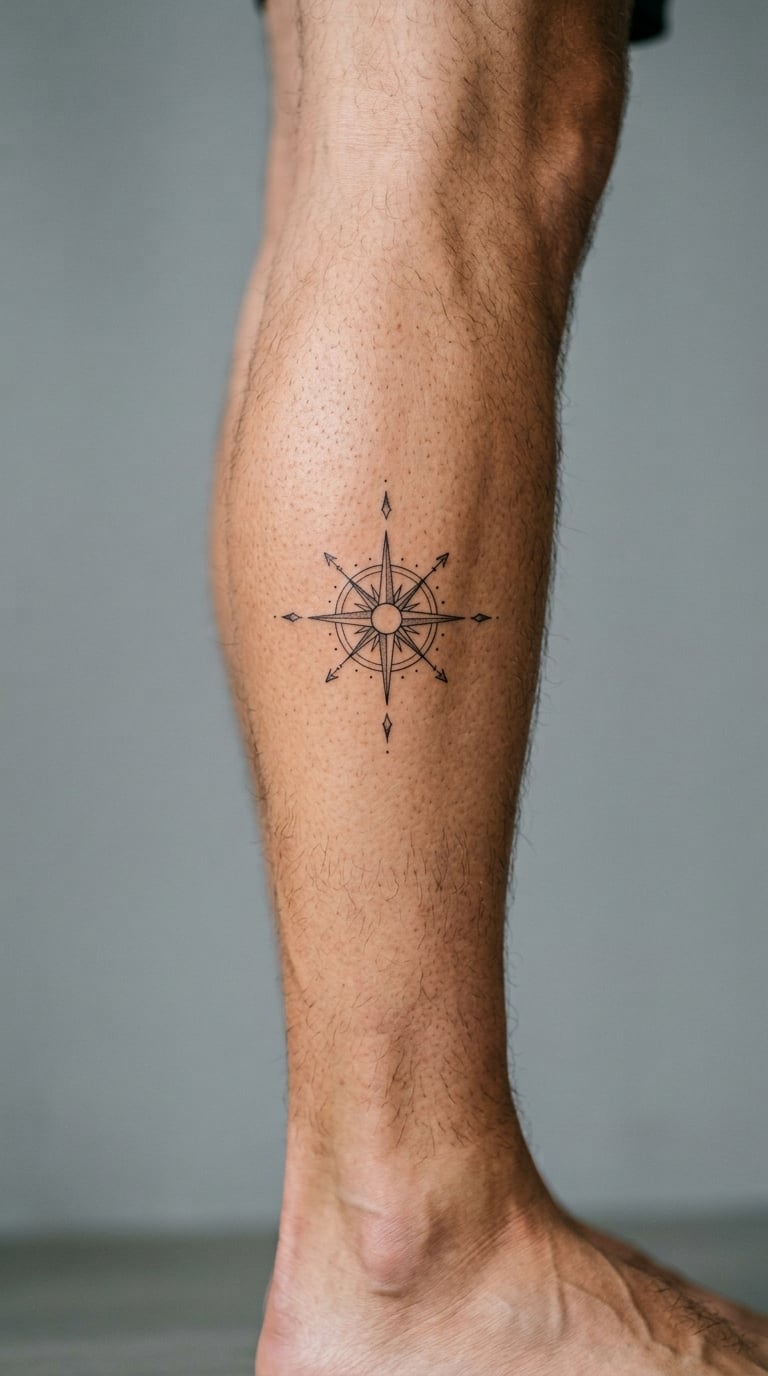
A compass pointing north is one of the most requested leg tattoo ideas for men, and the shin is where it belongs. The vertical line of the tibia gives you a natural centreline, so a slim compass needle with a ring and four small points sits up the leg without looking stretched. The meaning is straightforward — direction, home, a trip you still think about — and a lot of men like that it reads as navigational rather than sentimental.
Keep it fine line, roughly four to six inches tall, and let the spacing between the compass and the collar of your boot do the framing. Fine line on the shin ages quietly: the hairlines soften first, so this is the sort of design that looks good slightly soft rather than slightly hard. Black ink holds up fine here because there is little colour to fade.
Pain and time: the shin is bone-heavy, so expect a sharp sting, and a six-inch piece is a short session of under two hours.
2. Black and Grey Calf Portrait That Wraps the Muscle
A portrait on the calf is the strongest single piece in this list, and it is the one people notice from across a room. The calf’s bulge means you can design a face that turns with the muscle rather than sitting flat on it, so the subject looks alive from every angle. Black and grey realism is the right call, because shading does the heavy lifting and there is no colour to lose later.
Ask the artist to keep the background controlled — smoke or a soft fade rather than a busy scene — because detail behind a face competes with the face. Set your lighting direction in the drawing: one consistent source, so the shadows on the portrait agree with the shadows on the leg. It weathers well over years; contrast drops in the first month and then holds steady for a long time.
Pain and time: the outer calf is muscle over bone, medium-high on the sting, and a detailed portrait takes three to five hours, so plan an early start and a break.
3. Japanese Dragon Wrapping Thigh to Calf
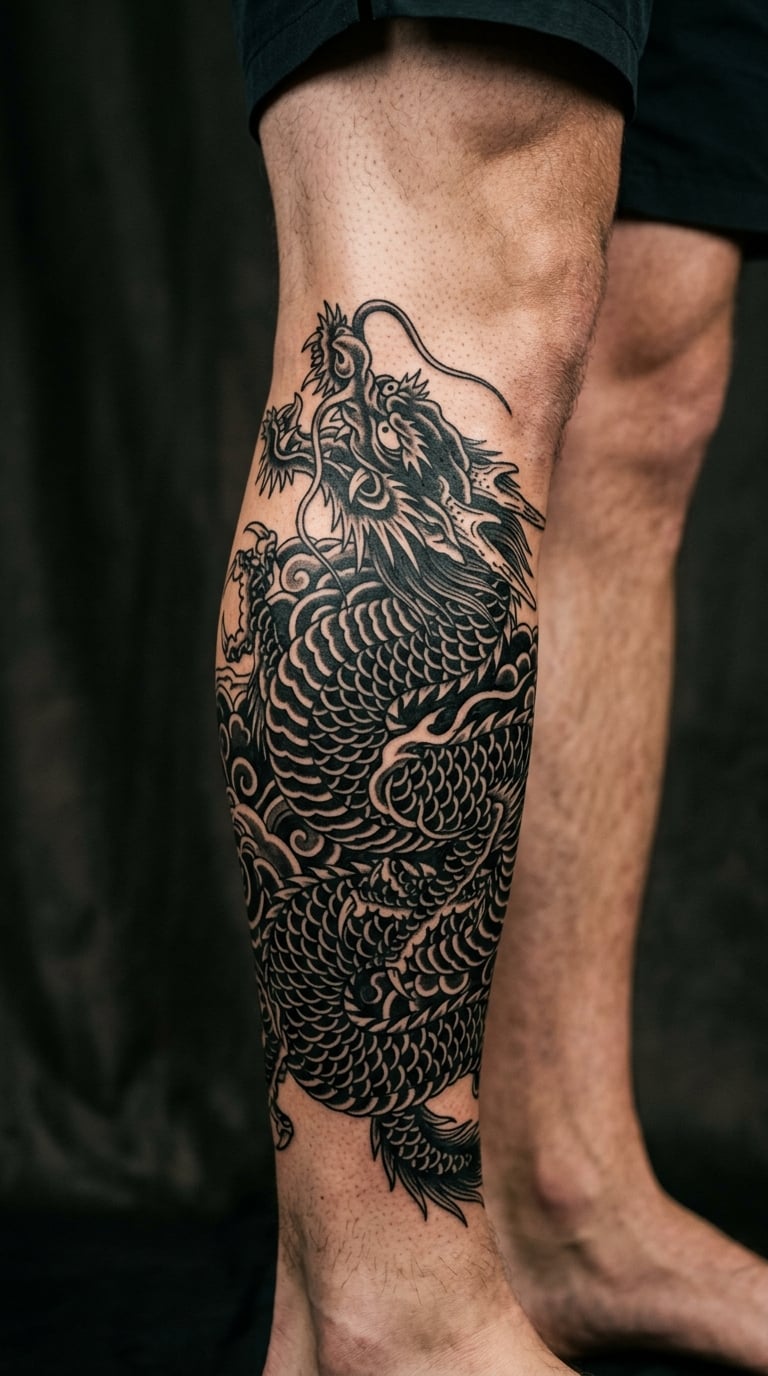
A dragon is the traditional answer for a full leg, and for good reason. The body gives it somewhere to travel: the head sits on the thigh, the body curves around the knee, and the tail finishes on the calf, so the design follows the limb instead of fighting it. The most common mistake is a dragon that treats the leg as a flat sheet, which flattens the whole thing.
Japanese work earns respect when it is composed properly, so keep the negative space, keep the wave and cloud patterns traditional rather than invented, and let the artist handle the flow. It is a large commitment — a wrap dragon is usually a full sleeve across several sessions. Colours on a leg hold up reasonably well if you cover up, but the reds go first, so plan on a touch-up every a few years.
Pain and time: the knee and inner thigh are the roughest parts of a leg session, and this one is usually split into three to four sittings of four to five hours.
4. Small Blackwork Thigh Panel With Meaning
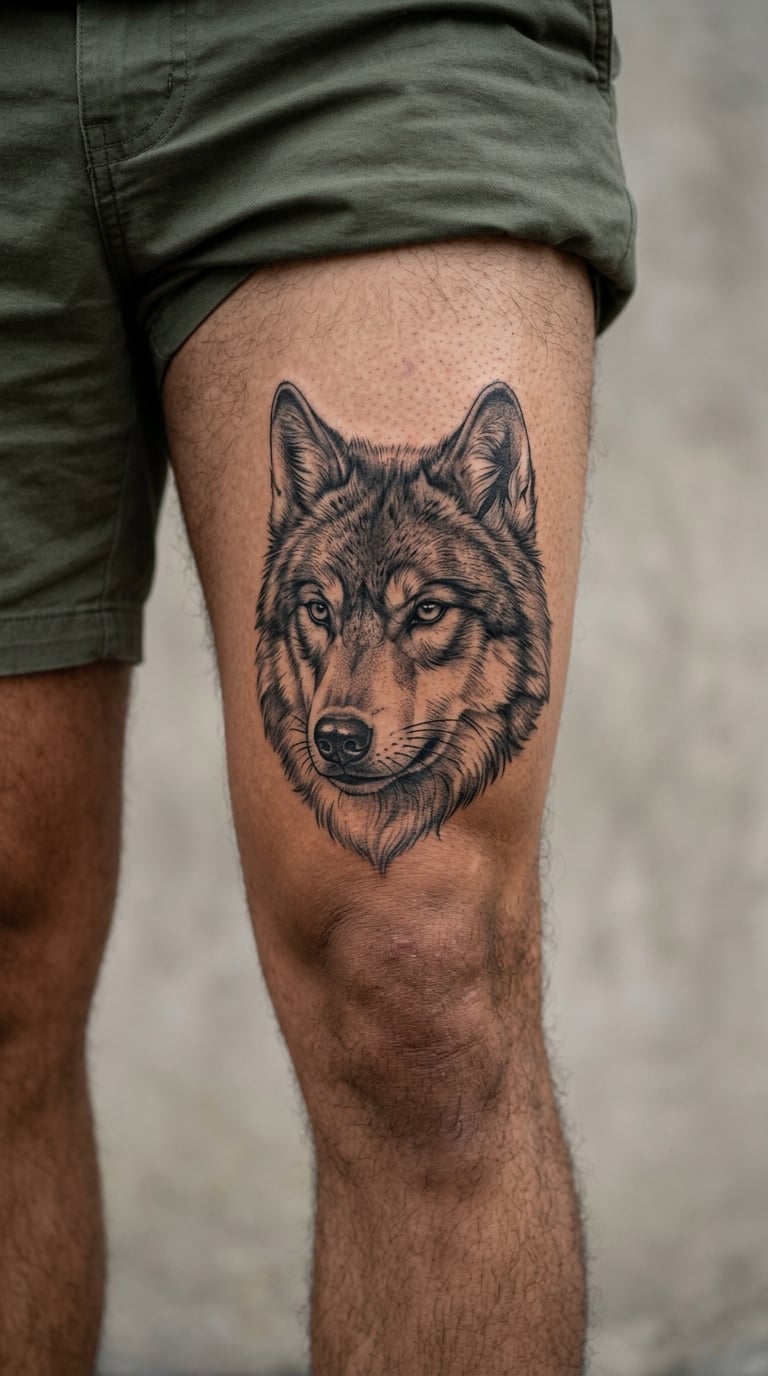
Not every leg tattoo has to fill the leg. A small blackwork panel on the outer thigh, four or five inches, with one image that means something specific — a bird, a hand, a date set in type — is the sensible first leg tattoo. It sits where trousers cover it, it hides a scar well, and it gives you a few years to decide whether you actually want more ink on that limb.
Blackwork is the right style at this size because solid shapes read from a distance and do not depend on shading. Line weight has to be consistent, and anything smaller than about an inch across turns into a smudge within a few years, so ask the artist to scale the idea up slightly. Ask your artist to set the design in type or script that actually exists rather than something a generator invented.
Pain and time: the outer thigh is one of the more forgiving spots, and a piece this size is an hour or so.
5. Geometric Shin Mandala in Solid Blackwork
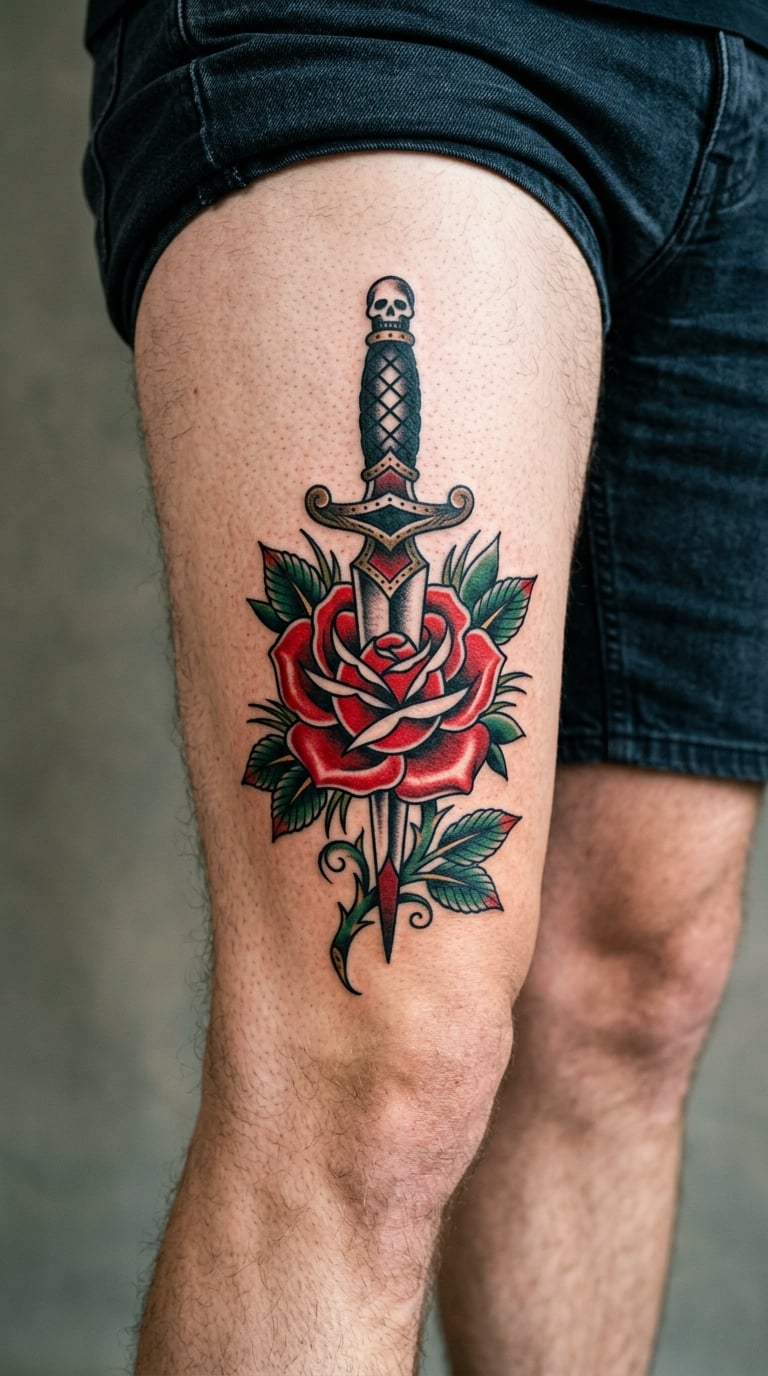
A mandala is built for symmetry, and the shin is the most symmetric flat surface on the leg, which is why the two go together so well. Black triangles, fine radiating lines and a tight circular centre all work vertically without stretching. Symmetric geometric work is one of the easier styles to keep looking sharp as it ages, because there is nothing soft in it to blur.
Sizing matters more than usual. A mandala smaller than about three inches across loses its inner detail, and one pushed over the shin bone will follow the curve of the bone in a way that looks off from the side. Keep the outer ring clean and let the pattern stack from the centre outward. If you already have leg tattoos, a mandala is also a good knee-area connector between two pieces.
Pain and time: the front of the shin is the most bone-sensitive area of the leg, and a three-inch mandala is roughly ninety minutes.
6. Traditional American Eagle on the Outer Thigh
American traditional still does leg work better than most people expect, and the eagle is the anchor piece most men picture. Bold outline, saturated colour and a flat shaded background are all well suited to a large thigh, which is the flattest surface you will ever tattoo. The style also does not demand a huge amount of fine detail, so it heals well and keeps its shape over a decade.
Size it big enough to read as one image — the small ones look like stickers once the outline softens. Keep the background as a single flat colour rather than clouds and banners, because a busy background is what makes traditional pieces on legs look dated. If you want the tattoo to age gracefully, ask for colour that is mixed from scratch in the studio rather than off-the-shelf ink.
Pain and time: the outer thigh is moderate, and a thigh-sized eagle is two to three hours in one sitting.
7. Biomechanical Calf Panel With Metal and Cable
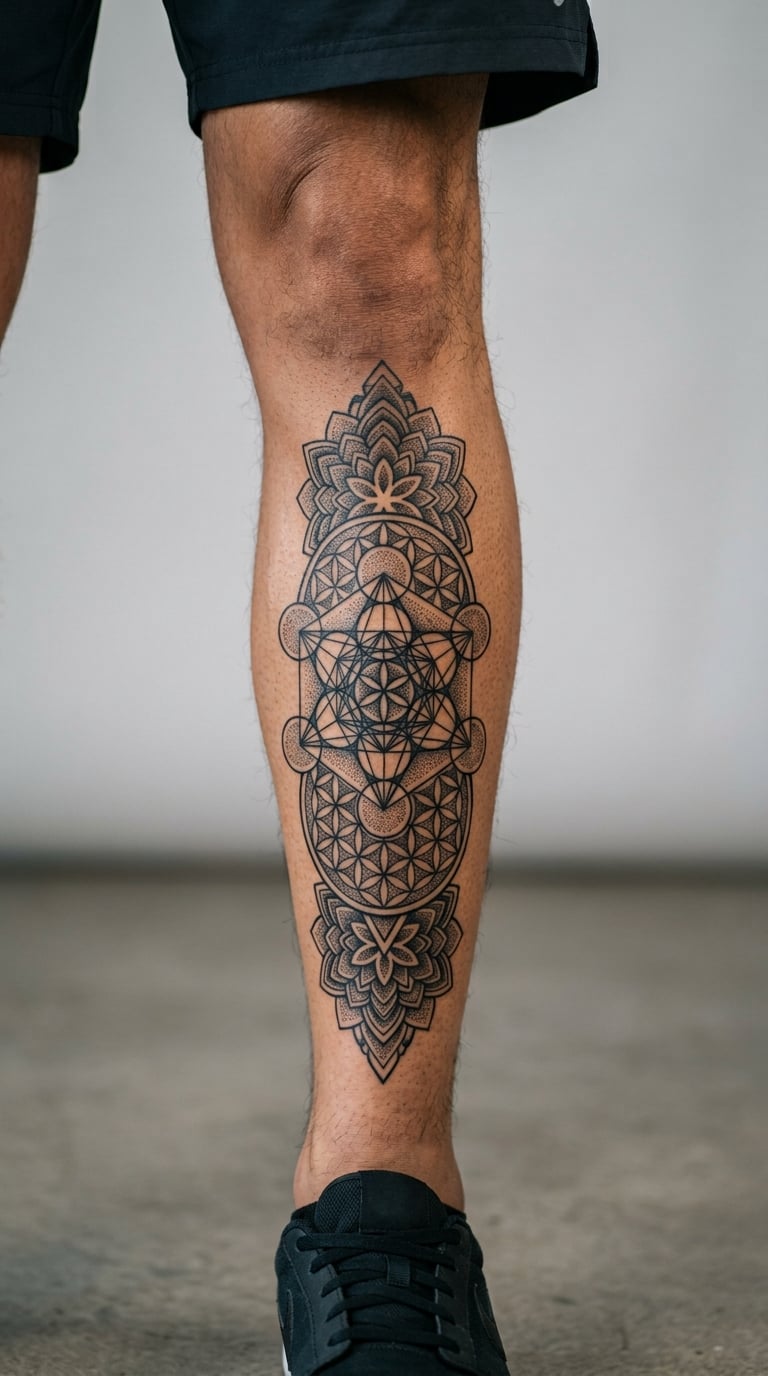
Biomechanical work treats the leg as a machine, and the calf is the best place to do it because the muscle already has that engineered look. Steel plates, pistons, cable bundles and gearwork sit naturally where the gastrocnemius is, and the design gains depth as the leg moves. In grey and black it stays tasteful; that matters, because fully rendered colour biomechanical can go cartoonish fast.
The design has to be built around the actual shape of your calf, not a generic arm template an artist downloads. Cable runs should follow the direction the muscle runs, or the whole thing looks like armour strapped on. This is a solid underlayer for a sleeve too — a biomechanical calf leaves sensible gaps above the ankle and below the knee for other pieces.
Pain and time: the calf is sensitive where the machine detail sits over bone, and a full panel is two to four hours.
8. Side Leg Quarter Sleeve With a Connector Theme
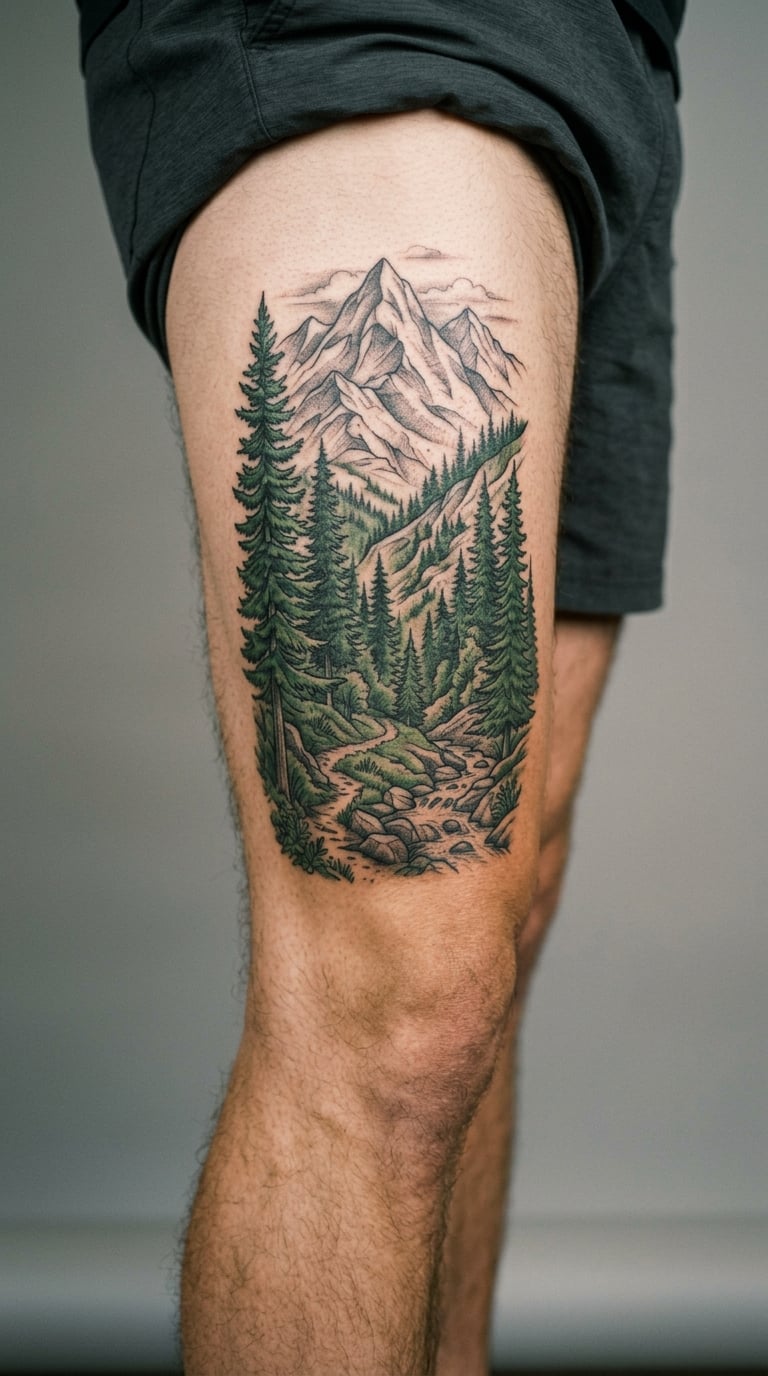
A quarter sleeve covers the outer leg from hip to ankle without wrapping around, and it is the shape most men start a leg project with. The connector theme is what holds it together: one running motif, such as a forest, a wave pattern or drifting smoke, links a subject on the thigh with a subject on the calf so the leg reads as a single image rather than two tattoos that happen to share a limb.
Plan it as anchors, not fragments. Decide what the main thigh subject is, what the calf subject is, and what the connector does, then keep those three ideas consistent in line weight and shading. People who hate their leg tattoos usually hated the planning stage, not the artwork. This style also leaves the front of the leg free, so you can wear shorts without it looking busy from the front.
Pain and time: spread over four to six sessions of three to four hours, with at least a week between each one.
9. Knee Anchor Mandala to Build a Sleeve Around
Tattooing the kneecap is a commitment, which is exactly why it makes such a good anchor. A compact mandala or rosette centred on the cap gives a later sleeve a centre to grow from, and a leg without a knee design often looks like it stops halfway. If you are not ready for a full leg, this is the piece that stops people regretting the gaps later.
The bone sits right under the skin, so expect it to be one of the more uncomfortable spots, and the skin below the knee creases every time you bend. Anything too fine there will soften quickly for that reason, so keep it simple and bold. Artists often recommend a design with a clear circular edge for exactly this reason — it stays legible even when the shading fades.
Pain and time: high sting, short duration, around an hour to an hour and a half for a design this size.
10. Minimalist Fine-Line Ankle Linework
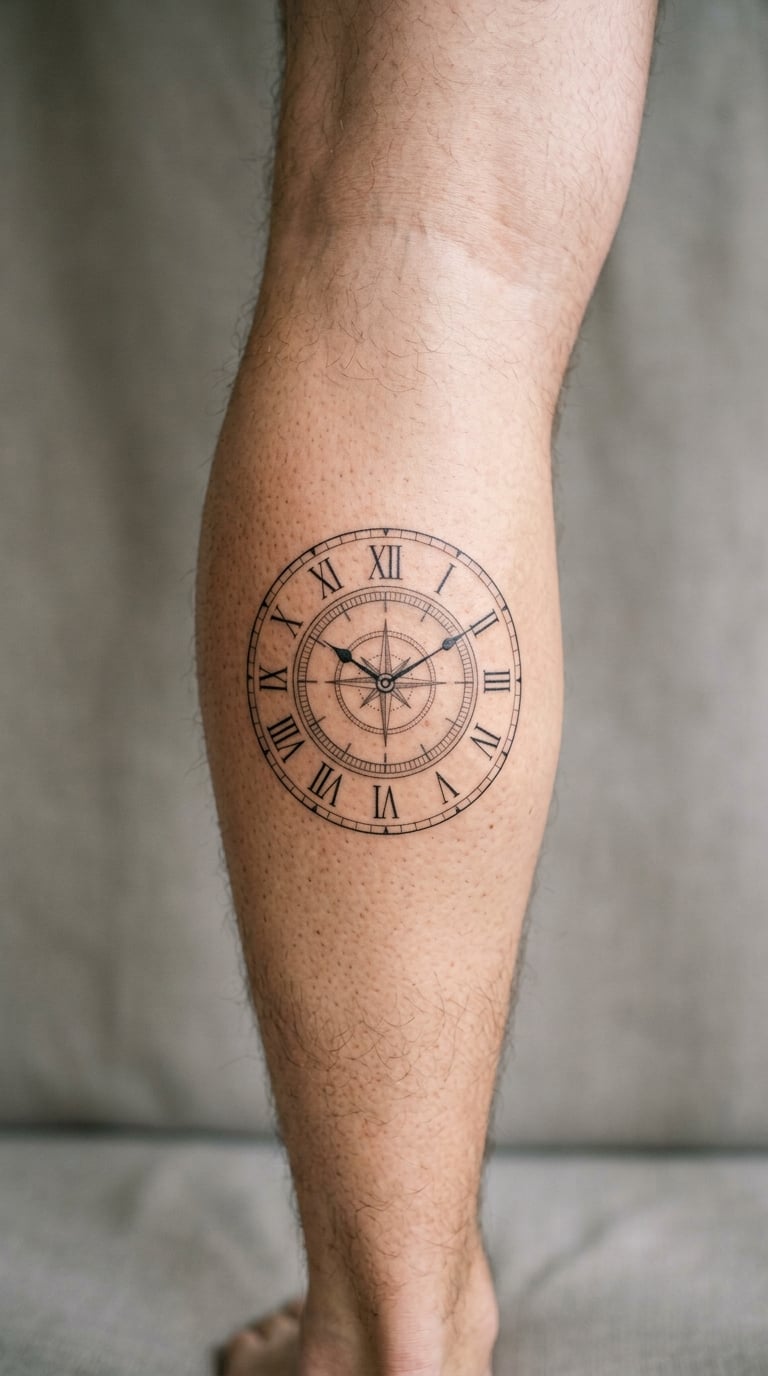
The ankle is where men put the tattoo they want to keep private, and fine line is the natural choice there. A small sprig, a single line of script, or one geometric mark that follows the bone reads as considered rather than loud, and it disappears entirely in a boot. It is also the easiest place to get wrong at a large size, because ankle skin moves constantly with the foot.
Keep anything on the inner ankle above the bone and away from the joint crease, and expect a refresh every two or three years if you go fine line. The positive is that this is a low-commitment placement. Plenty of men use an ankle piece to test how they handle being tattooed before committing to a leg sleeve.
Pain and time: the ankle is bony and twitchy, hard to hold still, but the piece itself is short — about forty minutes.
11. Tribal Band Wrapping the Upper Thigh
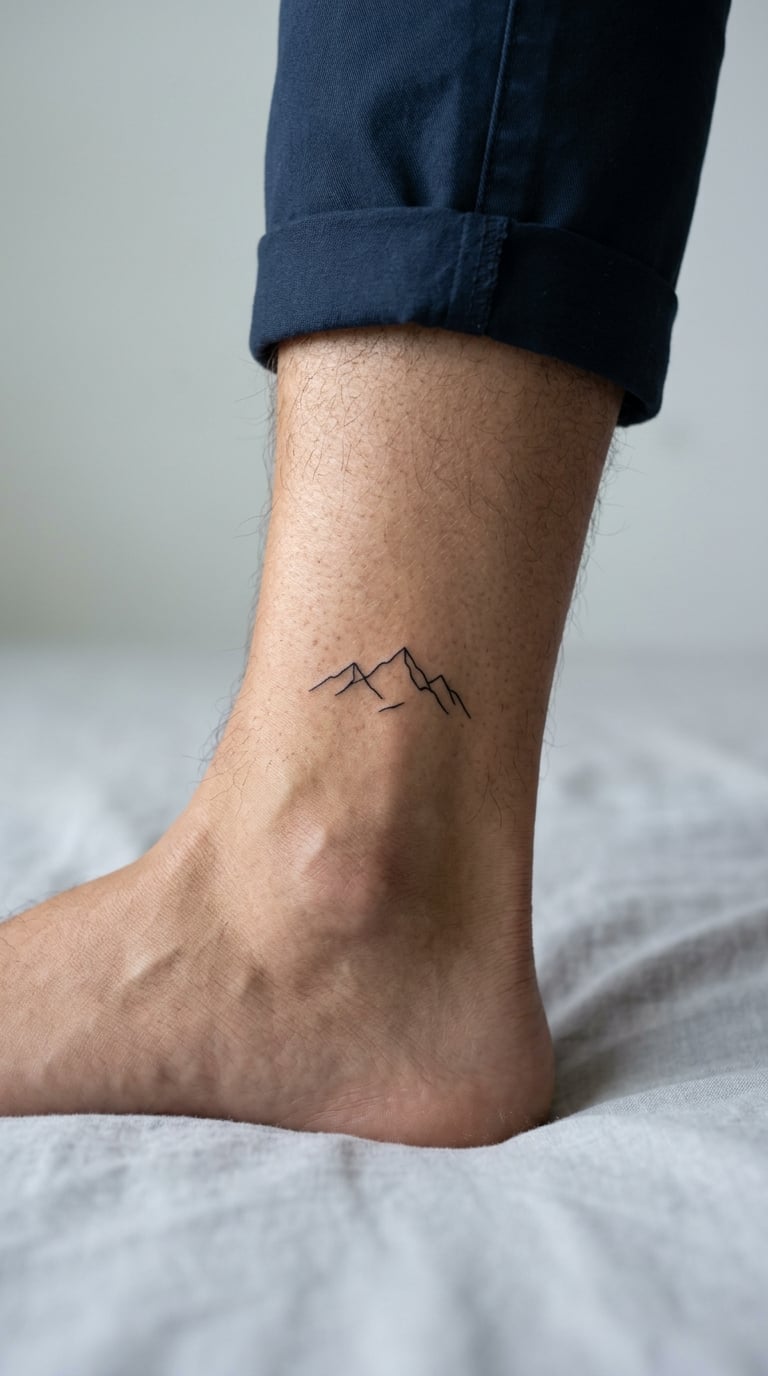
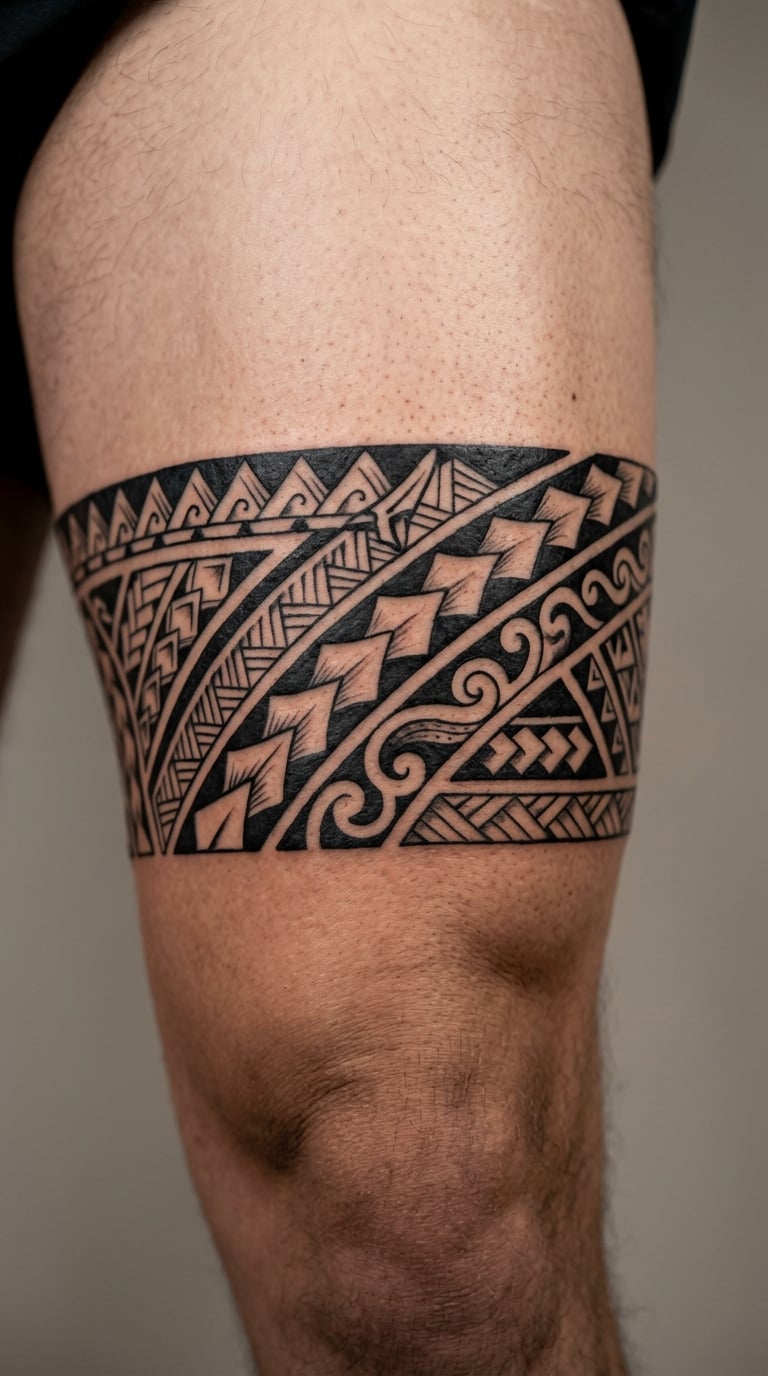
A tribal band is a compact way to make the leg look intentional, and the upper thigh takes one well because the band can follow the leg’s curve and read as designed from every side. It also sits under a pair of shorts, which makes it a reasonable first commitment for a working man who needs the ink covered at work.
Two things to get right. First, the band should be broad enough to hold together — a thin strip of repeated shapes turns to noise within a few years. Second, these designs come from living cultural traditions, and a pattern copied from a search result without context or credit is worth avoiding, however good it looks. If a studio offers Polynesian-influenced work, ask where they learned the motifs.
Pain and time: the upper thigh is relatively easy, and a full band is one to two hours.
12. Blackwork Tiger Straddling the Calf
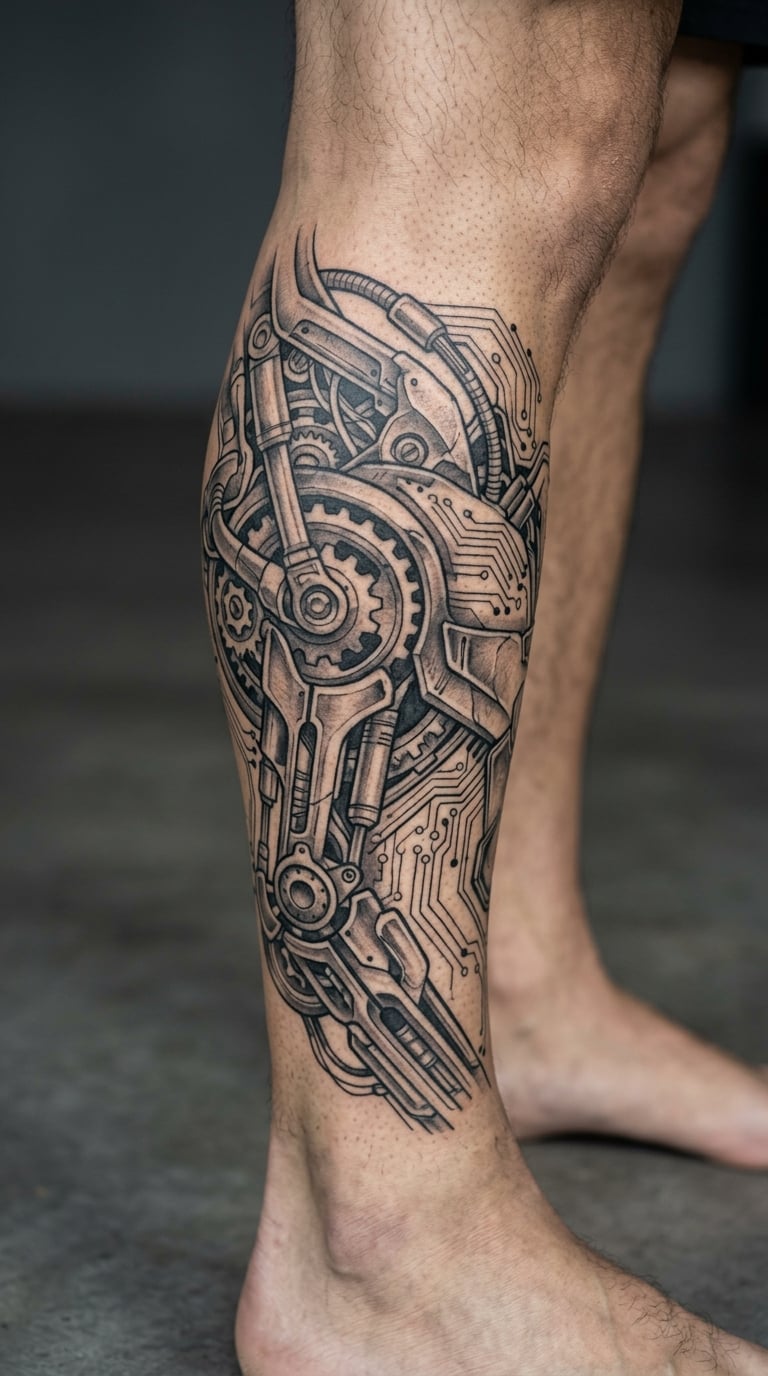
A tiger across the calf is a design that only works in one place, and that is part of the appeal. The muscle becomes the body of the animal, the stripes follow the curve, and from behind the leg it looks like the tiger is walking around your leg. Blackwork with heavy stippling suits the density of fur without the soft edges that shading would give you.
Ask the artist to check the composition in a mirror at the side as well as from the front, because a design that works from the front can look like nothing from the side. The striping is what ages best, and the fine fur detail is what softens first, so keep the stripes confident. If you later build a sleeve, the tiger leaves room at the top of the calf for clouds or foliage to connect it upward.
Pain and time: the calf is moderate to high, and a full-wrap tiger is three to four hours.
13. Watercolour Koi and Waves Down the Shin
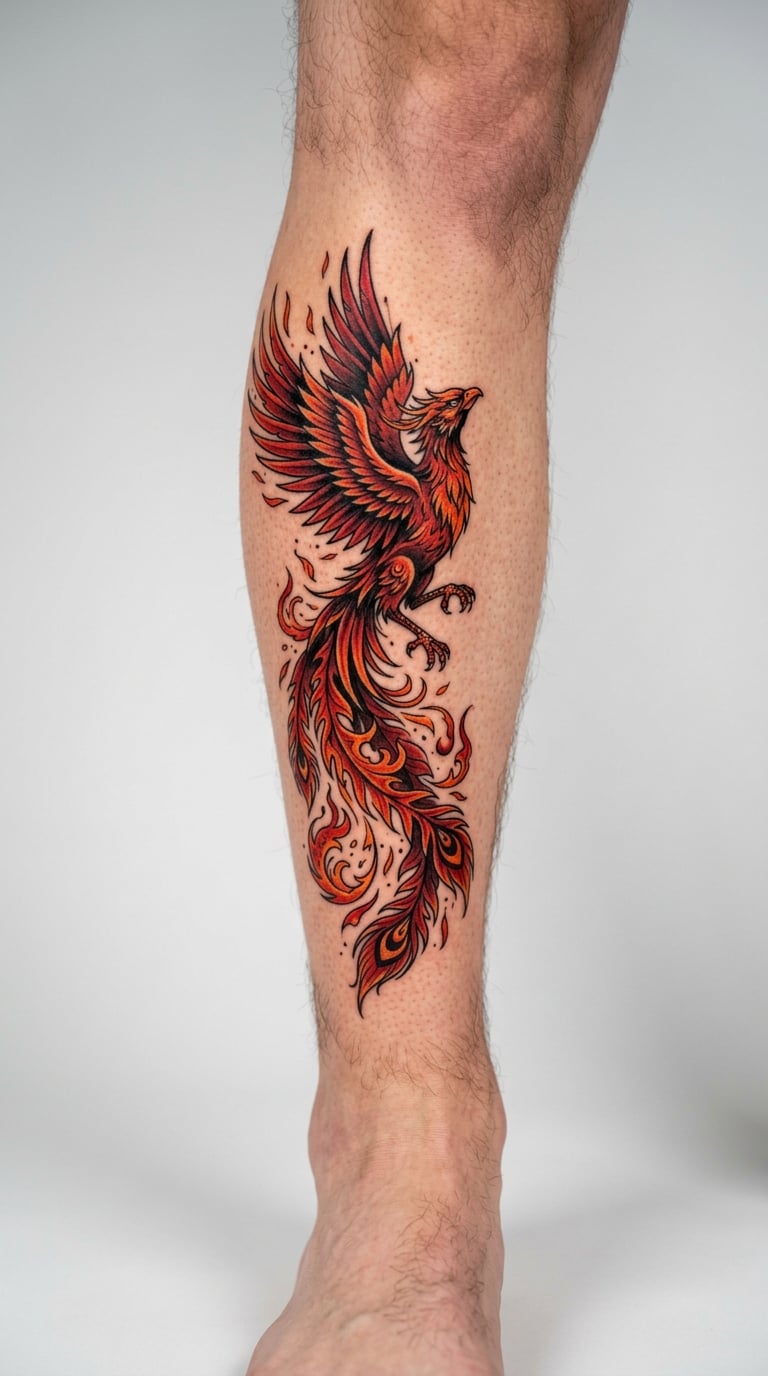
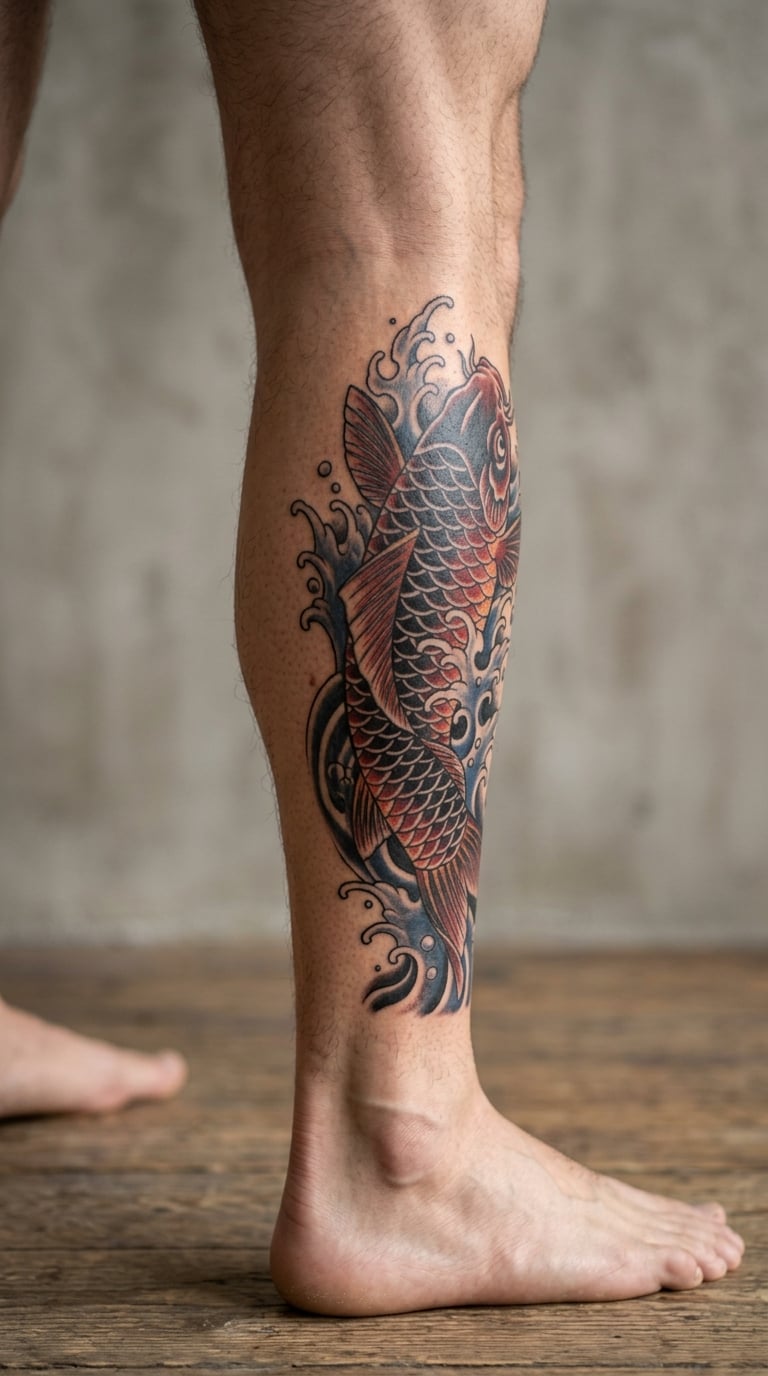
Watercolour on a leg is a quieter choice than most of this list, and it is one of the few styles that genuinely suits a narrow vertical surface. A koi moving up the shin with loose wash edges behind it uses the length of the bone instead of fighting it, and no two watercolour pieces come out the same, so the design is effectively custom even if the composition is familiar.
The trade-off is fading. Pale washes and soft gradients are the first thing to fade, so this style changes character noticeably within a few years, usually in the direction of being subtler than it started. If you like that, go for it. If you want the piece to look identical in ten years, blackwork will serve you better. The same care applies on darker skin, where a light wash needs more pigment depth to read at all.
Pain and time: the shin is bone-sensitive, and a full watercolour shin piece is two to three hours.
14. Matching Small Leg Tattoos on Both Legs
Matching pieces beat a mirrored sleeve for anyone who wants the idea to register without the commitment. The same small motif on both outer ankles or both calves reads as deliberate from across a room, takes under an hour per side, and gives you a natural template if you decide to build outward over the years. It is also the version most tattoo shops can do well in a single sitting.
The trap is making the two sides identical when your legs are not. Legs differ in muscle shape and in how they sit, so ask the artist to adjust the size of each piece to the limb rather than copying one drawing twice. Very fine matching linework ages unevenly for the same reason any fine line does, so choose a motif that still reads when softened — a star, an arrow, a small geometric mark.
Pain and time: both ankles together take around an hour and a half, and the pain arrives in short sharp bursts.
Things to know before you book a leg tattoo
Turning your leg tattoo ideas for men into a design an artist can use
Bring a concept, not a finished picture. A folder of saved images tends to produce a tattoo that looks generic on the leg, because those designs were drawn flat for a screen and the artist has to re-solve them on a curved limb. Tell the artist the subject, the placement, the size, and the feeling, and let them draw it for your shape. If you have references, three or four that share a style is more useful than twenty.
Look at healed work, not fresh work. Fresh tattoos are swollen, red and lifted, so ask to see pieces at two years and five years on legs. That is the only way to judge whether a line weight and a shading style will hold up on you.
Pain, sessions and what a leg piece actually involves
Roughly, least to most uncomfortable: the outer thigh, the hamstring, the outer calf, the inner calf, the ankle, the front of the shin, and the kneecap. Thigh and hamstring have more soft tissue, which genuinely helps. The shin and the kneecap sit almost on bone and feel sharper and more exposed.
A small single piece is one session of one to two hours. A half sleeve is three to four sittings. A full leg sleeve is commonly six to eight sessions of four to five hours, sometimes more, and it is a project measured in months rather than afternoons. Plan the order so the largest, most detailed work happens in the sessions when you are fresh, and give each area time to settle before you go back over it.
Healing, sun and an active routine
Legs take longer than most placements to fully settle, partly because they swell when you are on your feet all day. Follow the aftercare your artist gives you: wash it gently, keep it moisturised, leave the film or dressing on for as long as they told you, and do not soak it in a pool or a bath for a few weeks.
If you run, cycle, lift or play a sport, plan around it. Skip the gym for the first week or two, keep workouts to low impact while the leg is tender, and stay out of hot tubs and saunas while the skin is still pink. Sun is the thing that ruins leg tattoos fastest: cover a new leg piece for the first two weeks, and cover the thigh especially, because a covered trouser leg is exactly the mistake people make in summer. Loose trousers and long sleeves for a month or two do more for your tattoo than any product.
What it costs and how long it takes
Cost follows size, detail and how long you want the artist to take. A small single piece is the cheapest way in, a half sleeve sits in the middle, and a full leg sleeve done properly is one of the larger projects you can commission, with a deposit and several sessions ahead of you. Ask for a total, not a per-hour rate alone, and be suspicious of anyone who quotes a full sleeve at a price that would only cover a small piece.
Book a consultation before anything else. If the artist talks about flow, line weight and how the design will age, you are in the right place. If they only talk about how fast they can get it on you, you are not.
Frequently Asked Questions
What leg tattoo styles look best on men?
Black and grey realism on the calf, Japanese work for a full wrap, solid blackwork and geometric linework on the shin, and American traditional on the thigh all suit the leg. The deciding factor is not the style itself but whether the artist has adapted the design to the shape of the leg, because a design drawn flat for a screen will look stretched once it is on a calf.
Should guys get leg tattoos?
Plenty of men do, and the leg is one of the easier places to keep private since a long trouser leg covers almost all of it. What matters more is picking a concept that fits the anatomy of the leg, budgeting time for a project that can run to several sessions, and deciding honestly whether you want ink that large before you start. A small first piece on the thigh or ankle is a reasonable way to find out.
What are some cool thigh tattoos for men?
The thigh takes wide, detailed work better than any other part of the leg. An American traditional eagle, a black and grey portrait, a small blackwork panel with a specific meaning, or a bold tribal band all sit well here because the quad is flat and large. The inner thigh and the crease above the knee are the most sensitive parts, so designs that wrap under the leg are more demanding than they look.
What is the most painful part of the leg to tattoo?
The kneecap and the front of the shin are usually the worst, because very little tissue sits between the skin and the bone there. The ankle comes close, especially on the inner side, partly from the bone and partly because it is hard to keep still. The outer thigh and hamstring are the most forgiving spots on the leg because of the muscle underneath.
Can you work out after getting a leg tattoo?
Wait around a week before lifting heavy again, and longer before anything that makes you sweat heavily or soak the leg. Keep the first few sessions to low impact movement, skip hot tubs and saunas while the skin is still pink, and wash the area after training. The leg stays sore and tender for longer than most placements, so give it more time than you think you need.
How long does a leg tattoo take to heal?
The surface usually settles within two to three weeks, but a leg takes several months to look truly final because it swells during the day and settles overnight. Expect the colour to soften noticeably at around one month before it settles again. A full leg sleeve healed from the last session looks different from the first day, and it is worth booking a free check-up a few months after you finish.
Conclusion
Pick one of the fourteen leg tattoo ideas for men above that matches the shape of the leg you actually have, and bring the artist a concept rather than a copied image. The calf takes portraits and biomechanical work, the shin takes verticals and geometry, the thigh takes wide detail, and the ankle keeps things quiet.
Then book the consultation. An hour of talking through flow, line weight and what the piece will look like in five years saves a lot of regret later, and if you are getting it done this autumn your leg will be healed and ready by the time the weather turns.